
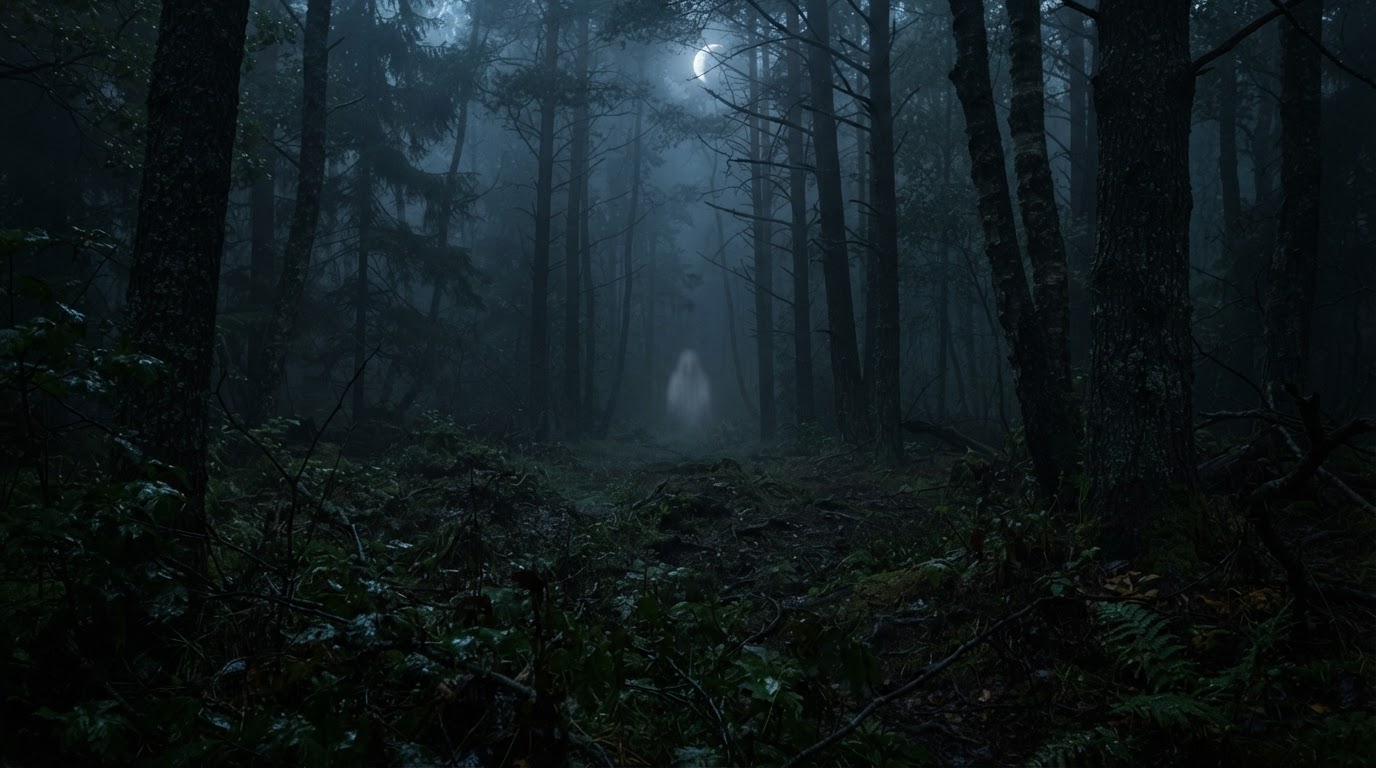
Deep in the woods of Jangsan, a mountain that rises over the eastern edge of the coastal city of Busan, something is said to be listening. It does not hunt the way other predators hunt. It has no roar to give it away, no charge from the dark. Instead, it waits, and it learns. It learns the voices of the people who go missing on that mountain — a hiker who never came back, a child who wandered off the trail — and then, on the quietest nights, it uses those voices to call out to the living. "I'm over here. Come help me." And it waits to see who will step off the path, into the trees, toward the thing that is waiting there.
This is the Jangsanbeom (장산범), a name that translates roughly to "the tiger of Jangsan." It is arguably the most famous Korean monster of the internet age, and its power has nothing to do with claws or size. It lives in a single, deeply human fear: hearing a voice you trust, coming from a place it has no business being.
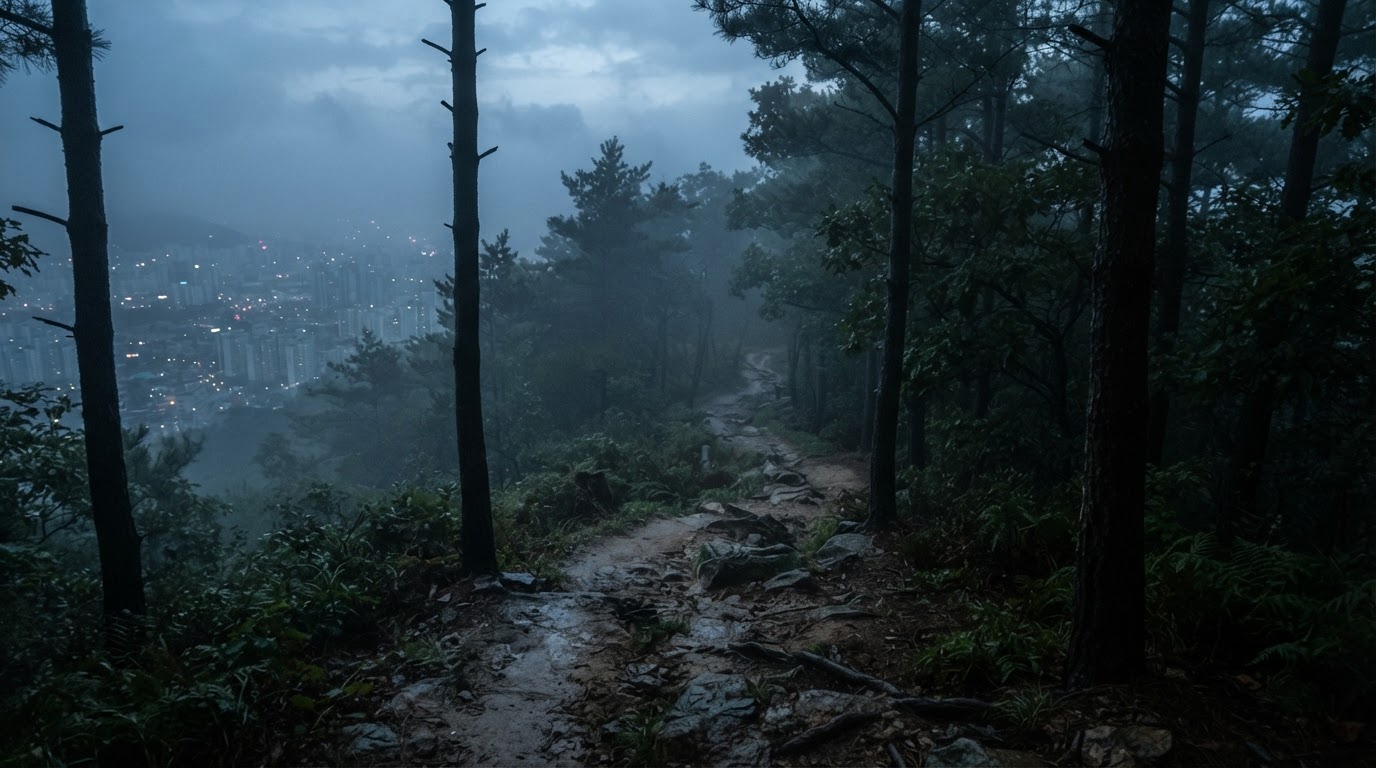
This is the first file in our Urban Legends series, and the Jangsanbeom is a perfect place to begin, because it does something most monsters can't. It reaches a Korean listener and a foreign one in exactly the same place — the instinct to answer when someone you love cries for help — while carrying a very specific, very local flavor of dread. To understand it, we have to separate three things that the legend deliberately tangles together: what the creature is said to be, where the story actually came from, and why it works on you whether or not you believe a word of it.
I came to this one as a cataloguing problem rather than a story. Sorting the accounts by date, I expected the descriptions to drift the way anonymous retellings always do — and they did, except for the limbs. Long in front, shorter behind. That detail is in the earliest posts I can date and it is still in the latest, unchanged, in the words of people who have plainly never read one another. It is a strange thing to keep, because it is not the frightening part. Nobody embellishes it. They just carry it forward.
What the legend describes
For a monster with no confirmed sighting, the Jangsanbeom is described with unnerving consistency. Across the forum posts, the retellings, and the later films, the same handful of traits keep surfacing:
- It is covered in long, pale hair — white or silver — hanging so low it hides the face entirely. Witnesses compare it to a large, matted animal, something between a dog and a sloth, with long front limbs and shorter back ones.
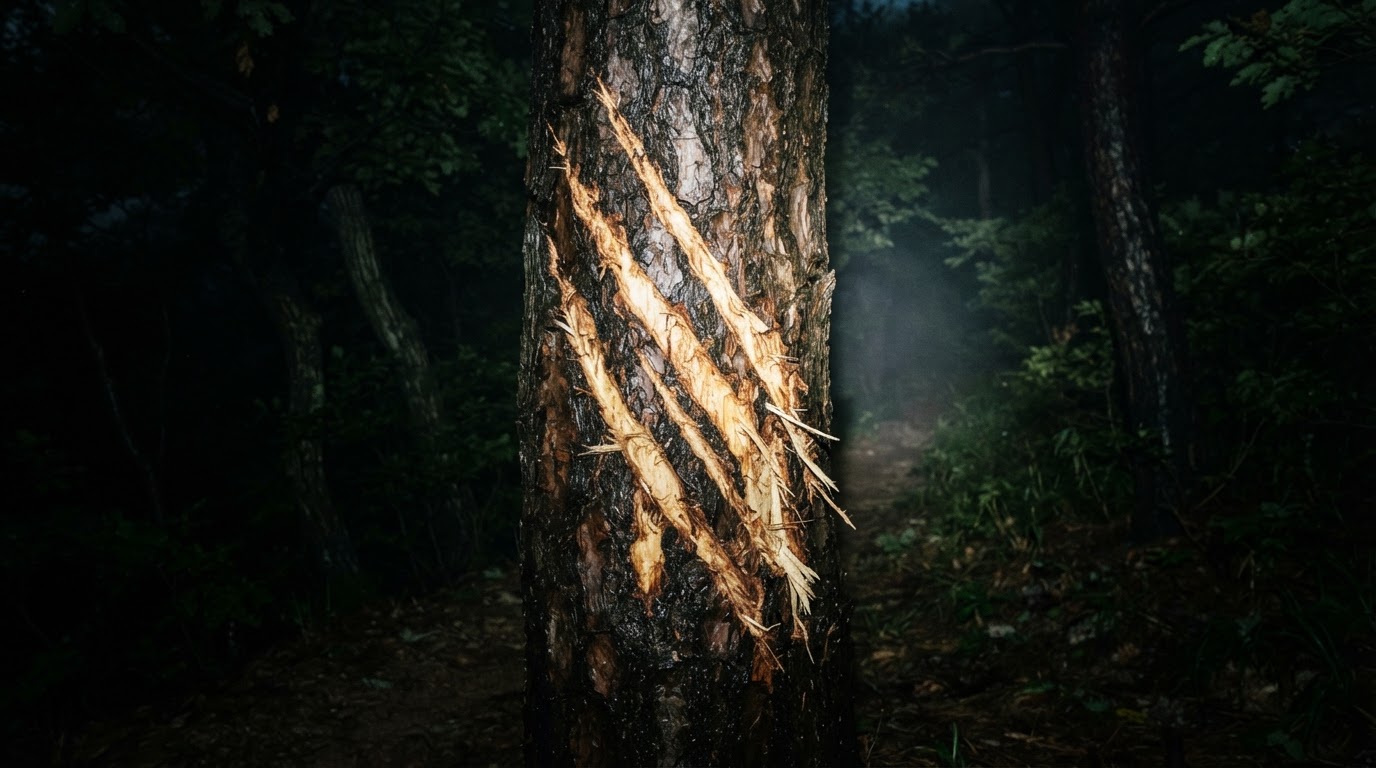
- It moves with impossible speed across any terrain, including steep mountainside, and can flatten or compress its body to slip through gaps that should be far too narrow for it.
- Its natural cry is horrible — described as the screech of nails on a chalkboard, or a train braking, or scraping iron.
- And above all, it imitates the human voice. Not badly, not roughly. Perfectly. It reproduces the voices of specific people, especially family members, and uses them to call your name out of the darkness.
That last trait is the whole engine of the horror. The Jangsanbeom is not said to lunge or ambush. It calls — softly, patiently, in a voice you would recognize anywhere — and then it lets your own compassion do the work. You don't die because you were careless. You die because you cared enough to answer.
A monster younger than it feels
Here is the part that surprises almost everyone, and it is the single most important fact in the whole case: the Jangsanbeom, in the form we know today, is not an ancient myth. It has no clear footprint in Korea's classical folklore. You will not find it in the old records the way you find the fox-spirit or the tiger.
The legend as it now exists coalesced online. It began drawing serious attention around 2010, when accounts and descriptions started circulating on South Korean internet forums devoted to ghost stories, unexplained phenomena, and local mysteries. From there it grew the way modern legends grow — retold, embellished, screenshotted, argued over — until it had the weight of something old.
Two pieces of pop culture then locked it into the national imagination. A 2013 webtoon built around the creature spread the imagery to a much wider audience. And in 2017, the South Korean horror film The Mimic (장산범) put the core idea — an entity that perfectly copies human voices to lure its victims — onto cinema screens across the country. By the time it reached YouTube and streaming horror culture, the Jangsanbeom was fully formed: a "voice-mimicking beast of Jangsan" that felt like it had been haunting that mountain for centuries.
It hadn't. And that matters, because it tells you what kind of thing you're really looking at. The Jangsanbeom is a digital-age folk creation — a legend assembled by strangers, in text and audio, passed between phones late at night. It borrowed its bones from older Korean traditions of shape-shifting beasts (Korea has a long lineage of foxes and tigers taking human form or human voice), but the specific creature is new.
Being new doesn't make it weaker. In some ways it makes it stronger. This is a legend engineered — even if by accident — for the exact medium in which it lives.
For readers outside Korea: why the mountain matters
If you didn't grow up in Korea, one piece of context makes the Jangsanbeom hit much harder. Mountains are not background scenery in Korean life; they are woven through the culture, from centuries-old mountain-spirit worship to the fact that a huge share of the country is forested highland pressed right up against dense cities. Jangsan itself sits directly above Busan, a metropolis of millions. You can be surrounded by apartment towers and, twenty minutes later, be alone under a canopy so thick the city noise dies completely.
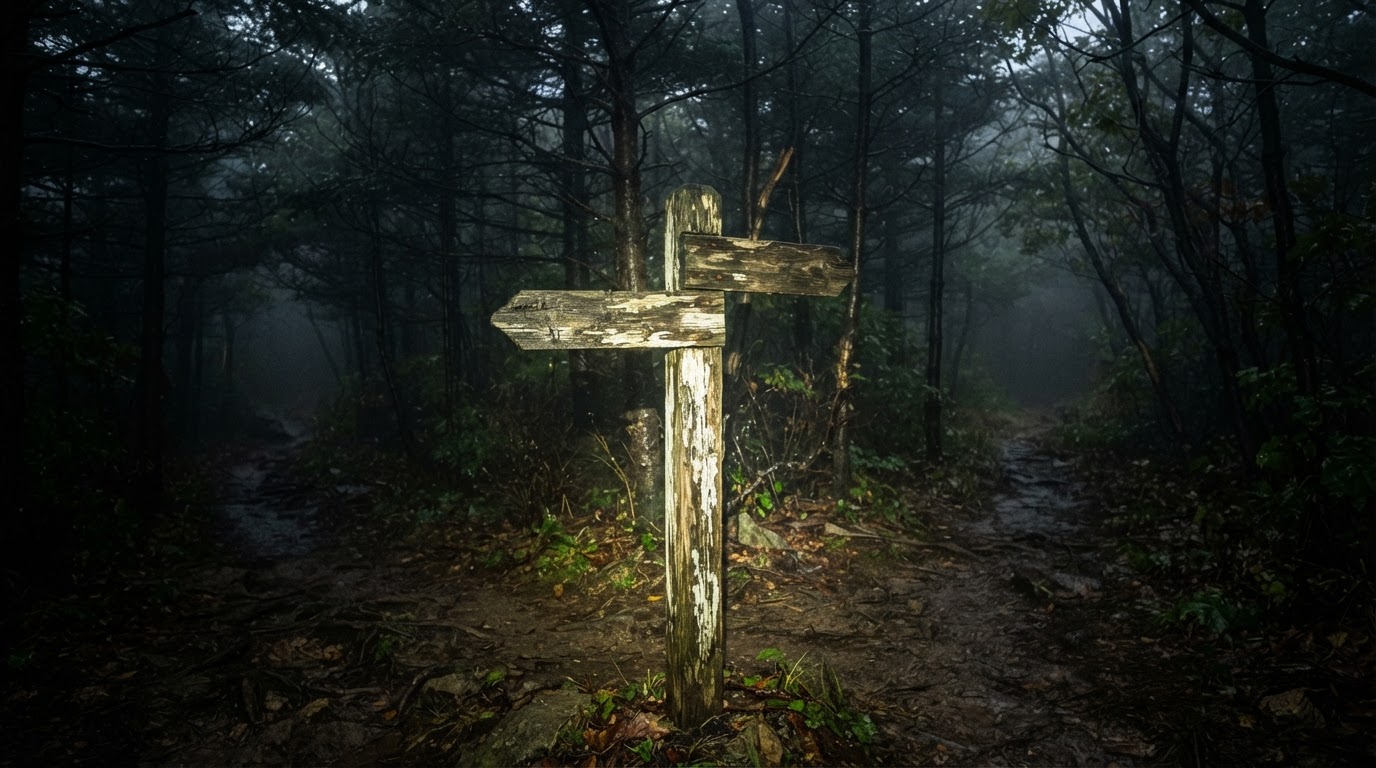
That collision — a crowded, hyper-modern country with wild, silent forest folded into its edges — is the natural habitat of a story like this. The Jangsanbeom lives in the gap between the two worlds: the moment the trail lights end, the phone signal drops, and the only sound left is something calling your name in a voice you know.

Why the "mimicked voice" fear works
Strip away the fur and the folklore, and the Jangsanbeom is built around one genuinely brilliant piece of psychological engineering: it weaponizes a hardwired human reflex.
Human beings are built to respond to a familiar voice in distress. A parent's voice, a sibling's, a partner's — when it calls for help, something older than reason moves you toward it. That reflex has kept our species alive for a very long time. The Jangsanbeom turns it into a trap. It doesn't have to overpower you. It only has to sound like someone you would run toward without thinking.
That inversion — love and trust converted into bait — is what lifts the Jangsanbeom above a simple "scary animal in the woods." A bear is frightening. A voice you trust, lying to you from the dark, is something worse. It corrupts the very instinct you'd rely on to save someone. The horror isn't that the forest wants to eat you. It's that the forest has learned to sound like the people you love.
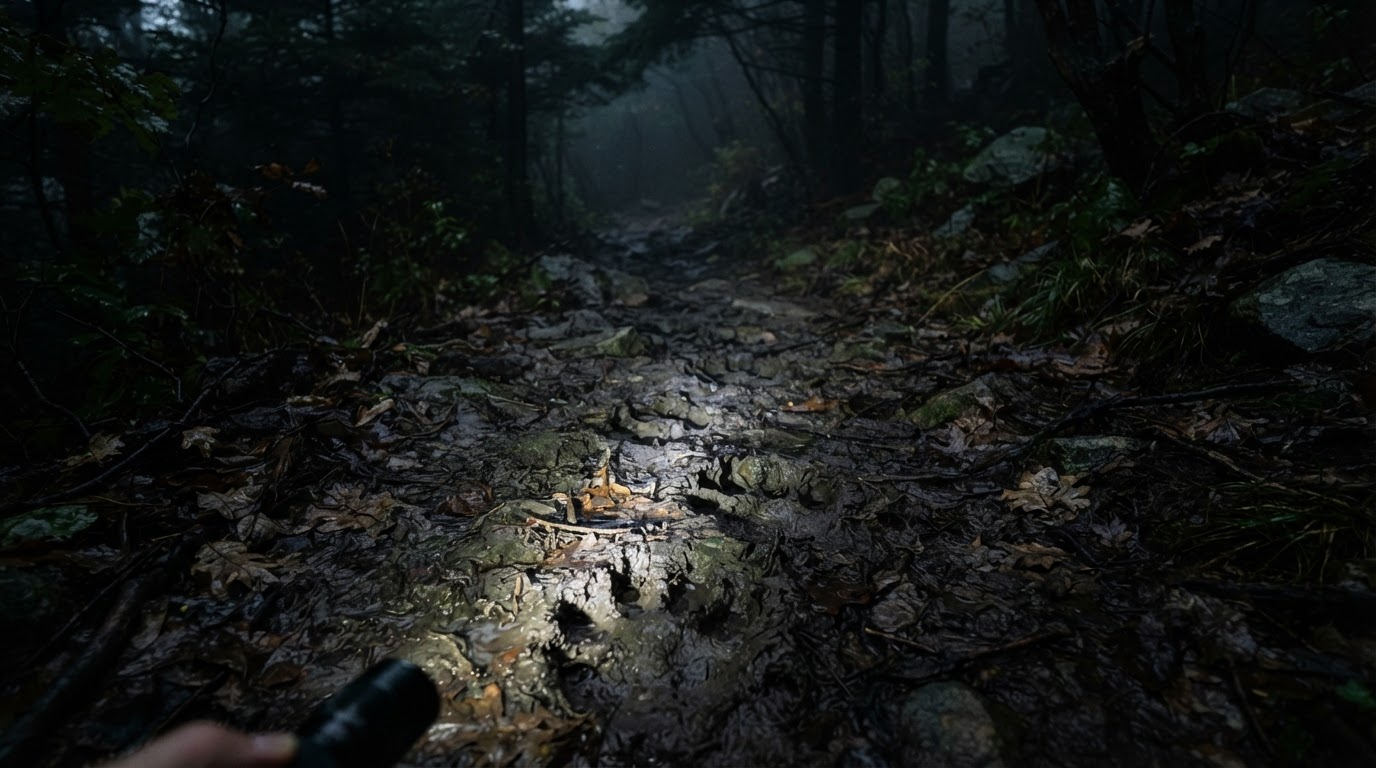
There's a second, quieter layer to it as well. In dense, disorienting woods, sound genuinely misbehaves. Wind moving through terrain, echoes bending off slopes, distant voices carrying strangely — a stressed, frightened brain will pattern-match all of it into speech, sometimes into a specific voice. The Jangsanbeom gives a name and a shape to an experience people have actually had on that mountain: the certainty, for one cold moment, that something called them.
Fact, folklore, or something in between?
Let's be completely clear about what this is. There is no documented evidence of a real creature on Jangsan Mountain. No body, no verified footage, no scientific record — nothing that survives scrutiny. The "voices in the woods" that seed the legend have ordinary, well-understood explanations: acoustics, wildlife, wind, and the human mind's relentless habit of turning ambiguous noise into meaning.
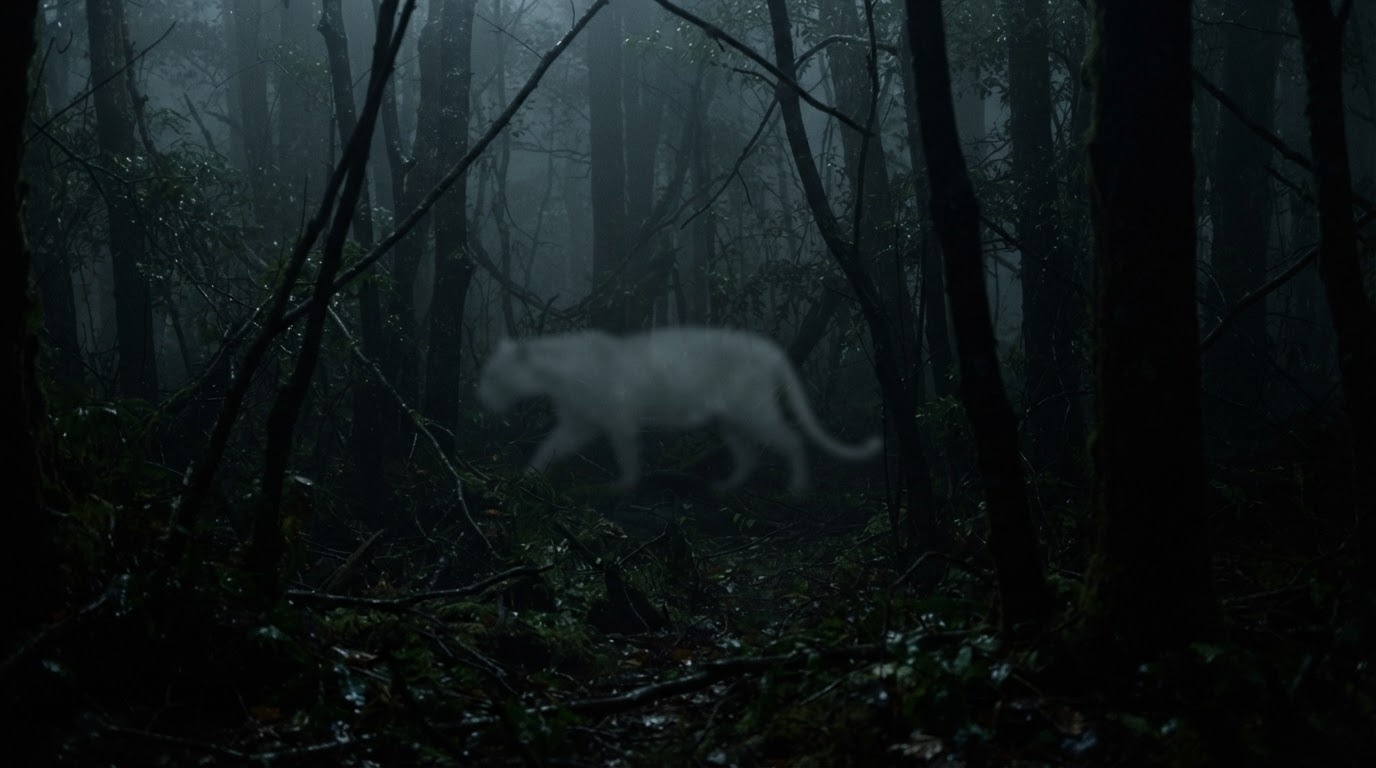
But the Jangsanbeom was never really a claim about zoology. It's a claim about a feeling — the specific, prickling wrongness of a place that seems to be paying attention to you, of a fear that feels ancient even when the story is barely older than the smartphone you're reading it on. And underneath all of it sits the oldest trick in any predator's playbook, dressed in modern clothes: use the thing the victim loves most to draw the victim in.
What we know vs. what we don't
What we know:
- The Jangsanbeom is a modern internet-era legend, not a creature from Korea's classical folklore. It rose to prominence around 2010 through online horror communities.
- Its imagery and fame were amplified by a 2013 webtoon and the **2017 film The Mimic (장산범)**.
- The consistent description — pale long-haired beast, fast-moving, body that flattens to fit through gaps, perfect human-voice mimicry — comes from those online retellings, not from any verified sighting.
- It draws on older Korean shape-shifting traditions (foxes and tigers taking human form or voice) but is a distinct, newer creation.
- There is no scientific evidence the creature exists.
What we don't know:
- Exactly who started it, and where. Like most forum-born legends, the Jangsanbeom has no single confirmed author or origin post — it emerged from a swirl of anonymous accounts.
- What real experiences seeded it. Something made people start telling this specific story about this specific mountain. Whether it was a particular disappearance, a viral post, or simply the eerie acoustics of Jangsan itself, the exact spark is lost in the internet's noise.
- Why the voice detail landed so hard. We can explain that the mimicry fear works; we can't fully explain why this creature, out of countless online horror stories, became the one that stuck to a real place on the map.
The Other "Mimic": What English-Language Readers Think They Already Know
If you spend time on English-language horror forums, the word "mimic" probably already means something to you: a thing in the woods that sounds like your family, usually filed under Appalachia or borrowed from Navajo skinwalker lore. The Jangsanbeom is easy to mistake for a Korean import of that idea. The paper trail points the other way. One writer who tried to date the English-language internet "mimic" found almost nothing before 2017 and an explosion of posts after 2020. Meanwhile, by 30 July 2013, a Korean business daily was already explaining the Jangsanbeom to its readers.
That 2013 piece ties the creature's rise to an episode of a Naver webtoon, the sixth chapter of a series called 2013 Hometown Legends, which pushed it into portal search rankings. It describes a body covered in fine white fur, sharp teeth, a long face, a height somewhere between 1.5 and 3 meters, and a range that covers Jangsan, the 634-meter peak above Busan's Haeundae district, and the Sobaek mountain chain.
A 2018 academic study by Lee So Yun gathered 24 versions of the story and found that the creature cannot be settled as either human or animal, and that the narrators keep describing themselves as bewitched. In 11 of the 24 versions, the creature is linked to feminine traits. Several of the original websites, the paper notes, had already vanished, so the legend survives mostly in copies other people made of it.
There is an older Korean ancestor that English readers rarely meet. In the folktale usually translated as "The Sun and the Moon," a tiger comes to a house and imitates the children's mother. The children see through it and escape. When the film The Mimic opened in Korea on 17 August 2017, it had already been sold to 122 countries, and English-language critics split on it, some praising its mix of myth and grief, others calling it "highly reminiscent of a lot of other films."
In my notes, the Korean accounts lean on a verb I have never found a clean English equivalent for: hollida, to be taken in, enchanted, led off. It carries charm and blame at once. The person who answered the voice was fooled, and also was, somehow, at fault.
In the old tale, the children see through the voice. In nearly every retelling of the Jangsanbeom, it gets it right.
The takeaway
The Jangsanbeom is a case study in how a legend can be brand new and feel a thousand years old at the same time. It has no ancient text behind it, no fossil, no verified witness — only a mountain, a fear, and a story that spread because it plugged directly into something human and unchangeable. That, arguably, is the more unsettling truth. We didn't inherit this monster from the distant past. We built it ourselves, out of the dark edges of our own cities, and it took root because it tells us something true about how easily our love can be used against us.
There is one line in my notes on this creature that I have never managed to file properly. The legend says it learns the voices of those who disappeared on that mountain. Which means every account I have collected is, in its own internal logic, a record of someone whose absence was never entered anywhere else. I have gone back through the material looking for the missing person the story implies, and of course there is nothing to find. The archive is the only place that voice exists.
So if you ever find yourself alone on a mountain at night, and you hear your name called from somewhere in the trees — in a voice you know, a voice you trust — the legend offers exactly one piece of advice.
Do not answer.
---
The images and video in this article are AI-generated works produced to convey the mood of the story, and are not photographs of any actual person or event.


Comments
No comments yet — leave the first one.