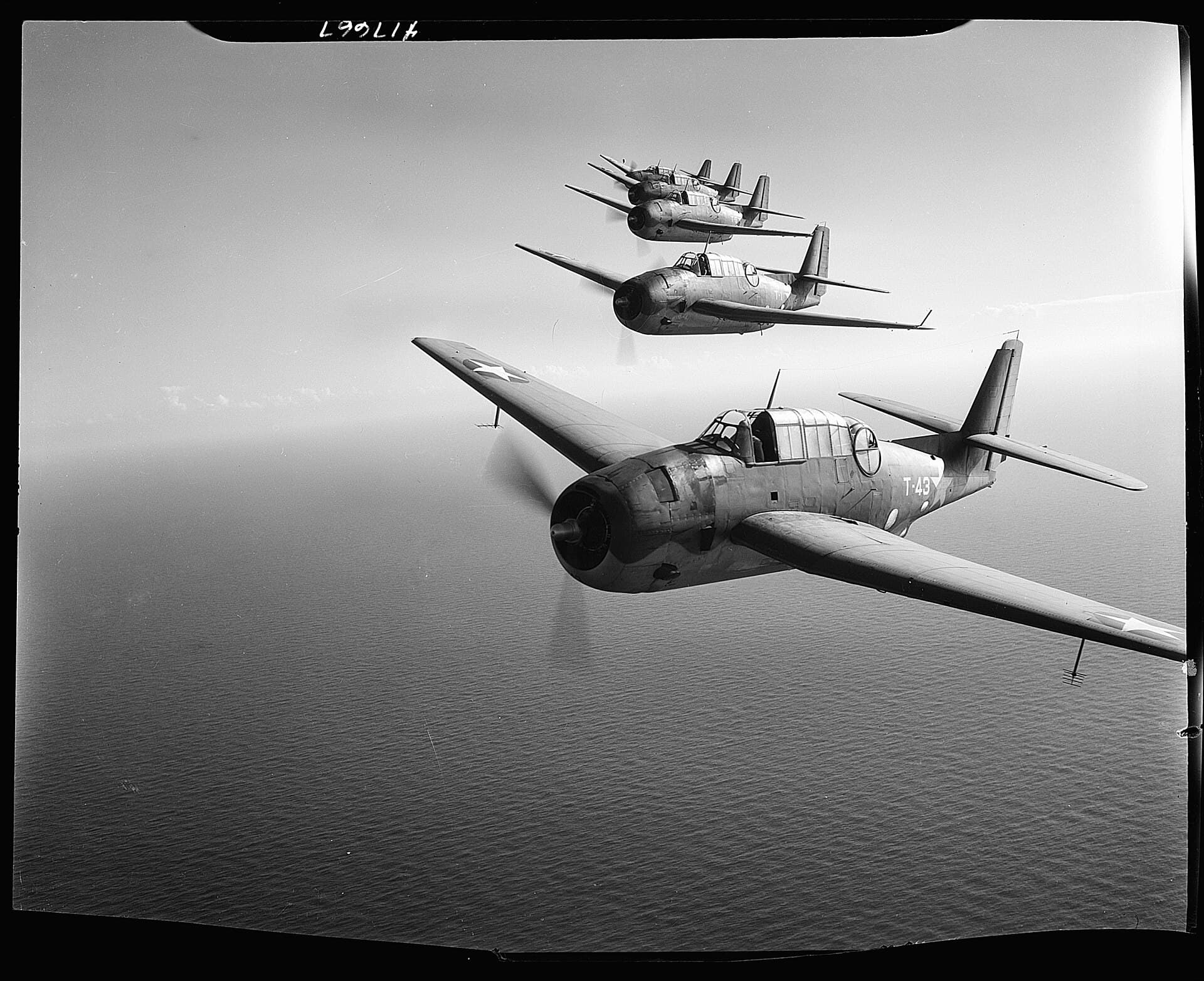
In the western Atlantic, three points — the tip of the Florida peninsula, the island cluster of Bermuda far out in the ocean, and Puerto Rico in the Caribbean — trace out a broad triangle of sea. Draw the lines on a map with a ruler and you enclose roughly 1.3 million square kilometers of water. At some point people began calling it the Bermuda Triangle, and one image always came attached to the name: that ships, aircraft, and the people aboard them vanish here without leaving a trace. No distress signal, no wreckage, no bodies. By the middle of the 20th century, this triangle had become the most famous "mystery sea" in the world. But if you trace how the legend was made, and how science regards it today, you meet a second story every bit as interesting as the disappearances themselves — a story about how a "mystery" is born, and how it comes undone.
Half the work on this file was subtraction. I went through the standard list of losses the way you go through an inventory, checking each one against the coordinates and the weather logs, and I kept crossing entries out — this one sank three hundred miles east of the line, this one went down in a storm that is fully documented, this one has a date that does not survive contact with the original report. What is left after that is a much shorter list. I had expected to feel relieved by it. Instead I found the shortening itself was the more disturbing thing: somebody had moved those wrecks onto the map on purpose, one at a time, and nobody checked for fifty years.
The Birth of a Name
Surprisingly, the term "Bermuda Triangle" itself is not very old. It first appeared in print in 1964, in an article by a writer named Vincent Gaddis. He argued that this stretch of sea, with Florida, Bermuda, and Puerto Rico as its corners, saw an unusual number of accidents, and he gave it the dramatic label "the deadly triangle." Before that the water had simply been one of the Atlantic's busy shipping lanes, not a cursed place.
What truly gave the name wings was Charles Berlitz's 1974 book The Bermuda Triangle. It sold millions of copies worldwide, became a massive bestseller, and its collection of disappearances and supernatural speculation captured the public imagination. As books, broadcasts, and documentaries rushed to cover the subject, the Bermuda Triangle became a cultural icon almost overnight. The striking thing is that this legend did not grow naturally out of ancient lore or sailors' oral tradition — it was, in large part, manufactured in the popular publishing market of the late 20th century, passing through the hands of a few authors. Once the name existed, incidents gathered under it; and the gathered incidents, in turn, made the name grow.
Flight 19 — The Squadron That Vanished
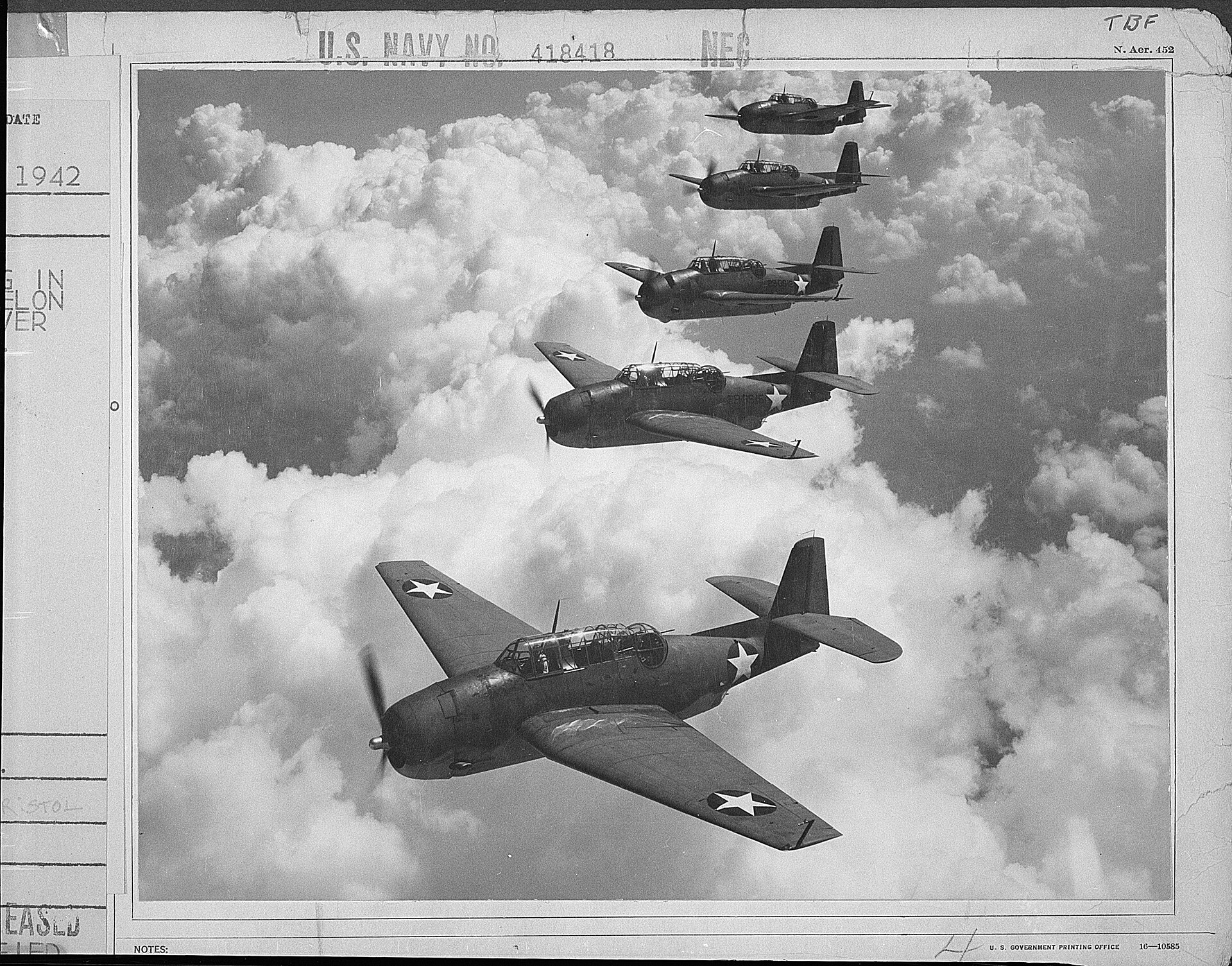
At the heart of the Bermuda Triangle legend there is always one case: Flight 19. On the afternoon of December 5, 1945, not long after the end of the Second World War, five U.S. Navy Avenger torpedo bombers took off from Naval Air Station Fort Lauderdale in Florida. It was a training flight, with fourteen crew aboard. Leading the formation was Lieutenant Charles Taylor, a pilot with more than 2,500 flying hours who had seen combat in the Pacific.
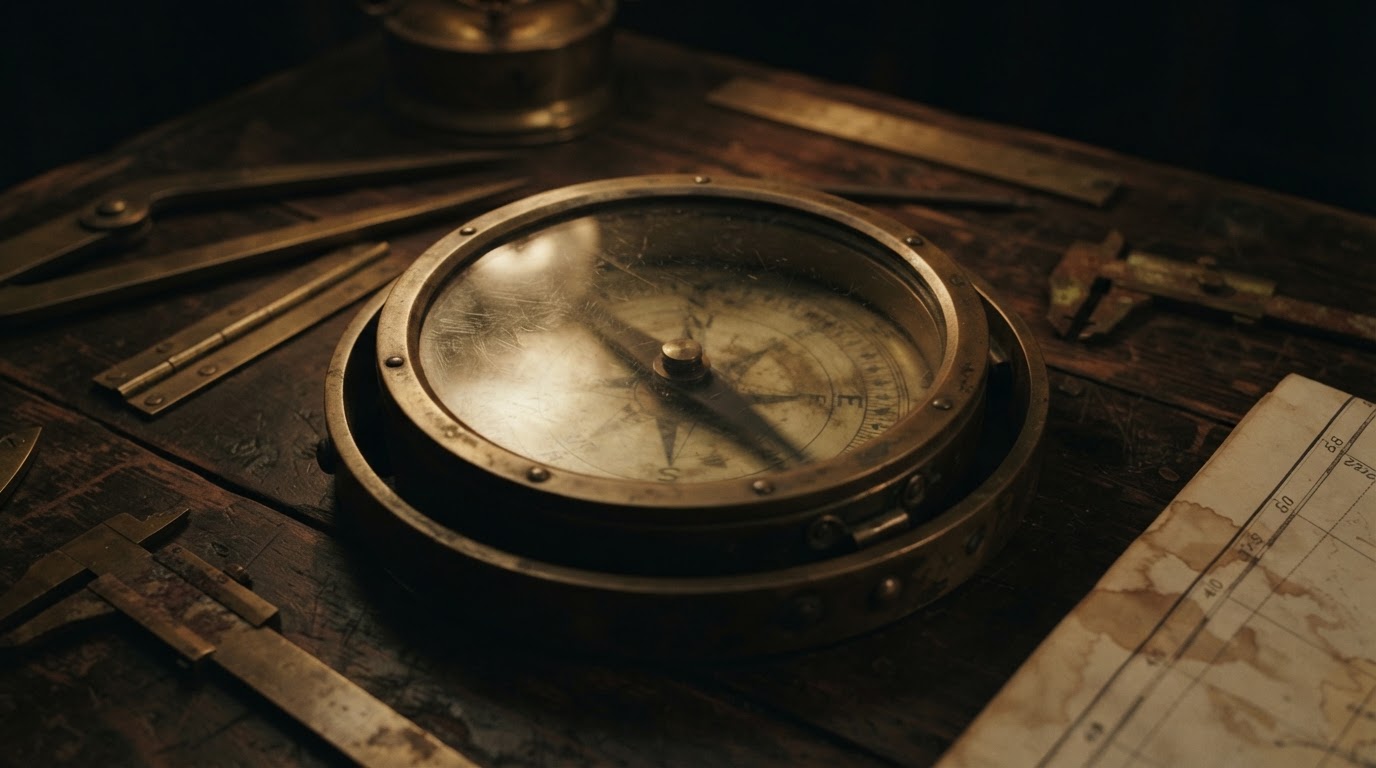
About two hours into the flight, a strange voice came over the radio. Lieutenant Taylor reported that both his primary and backup compasses had failed and that he did not know his position. The other pilots' instruments showed similar trouble. A later Navy investigation concluded that, once his compasses stopped working, Taylor most likely mistook small islands ahead for the Florida Keys and led the formation the wrong way — away from land and out over open ocean. After two more hours of confused transmissions, a final message from the flight leader was heard around 6:20 p.m.: apparently an instruction for all five aircraft to ditch together in the sea as their fuel ran out. That was the last of them. To make matters worse, one of the Martin Mariner search planes sent to find the missing squadron also failed to return, taking thirteen more crew with it. Over the following five days, some 300,000 square miles of sea were searched, but neither the aircraft nor the men were ever found.
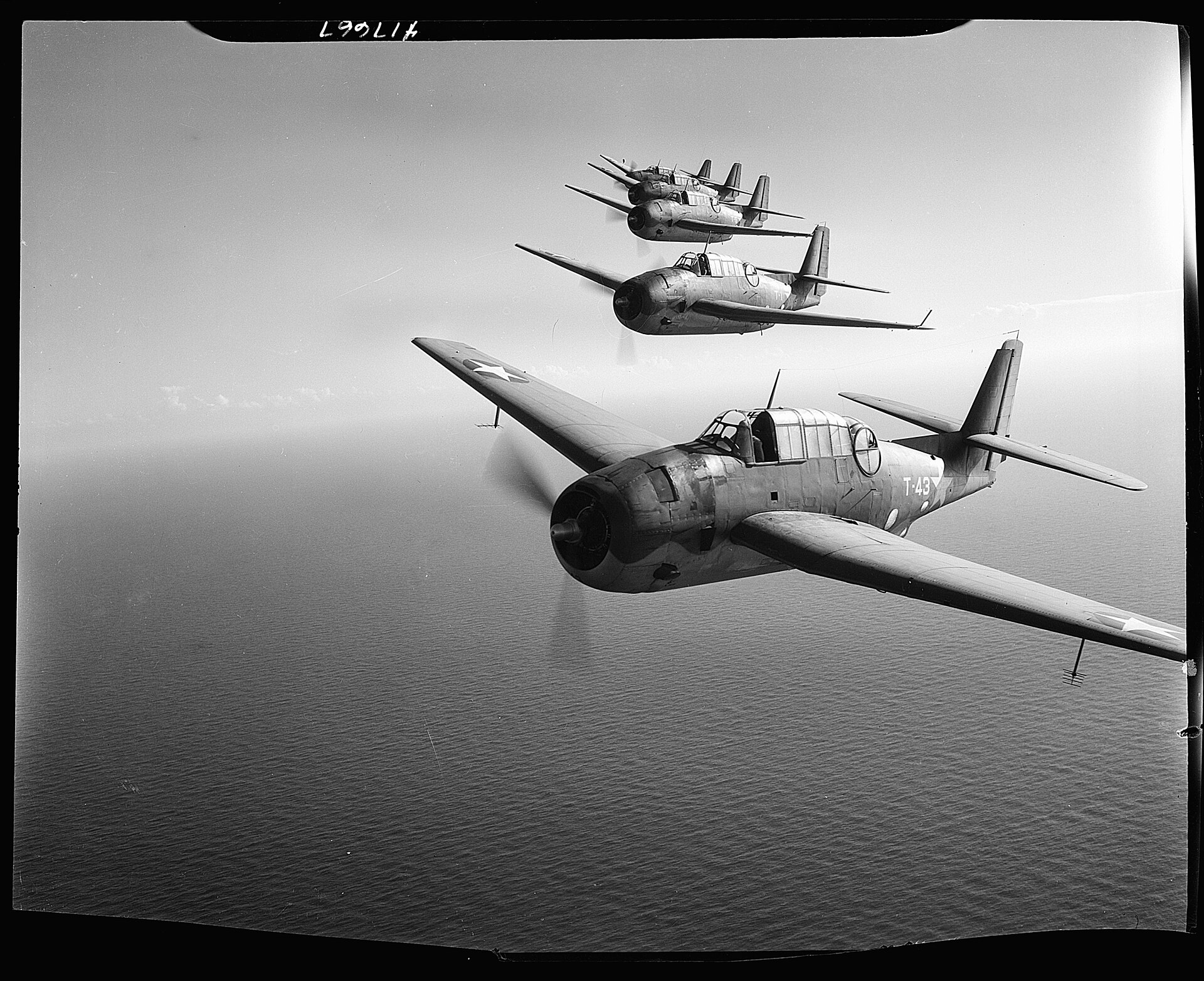
Six aircraft and twenty-seven lives lost over the Atlantic in a single day — the event was shocking in itself. And when the name "Bermuda Triangle" later emerged, Flight 19 was summoned as its most powerful evidence. The detail that the compasses failed at once, and that not even a trace was left behind, made ideal fuel for supernatural readings. Yet viewed coldly, on the facts alone, the case already held everything needed to explain a tragedy: a disoriented pilot, a fading winter sun, exhausted fuel, and a rough night sea.
The Cyclops and Other Disappearances
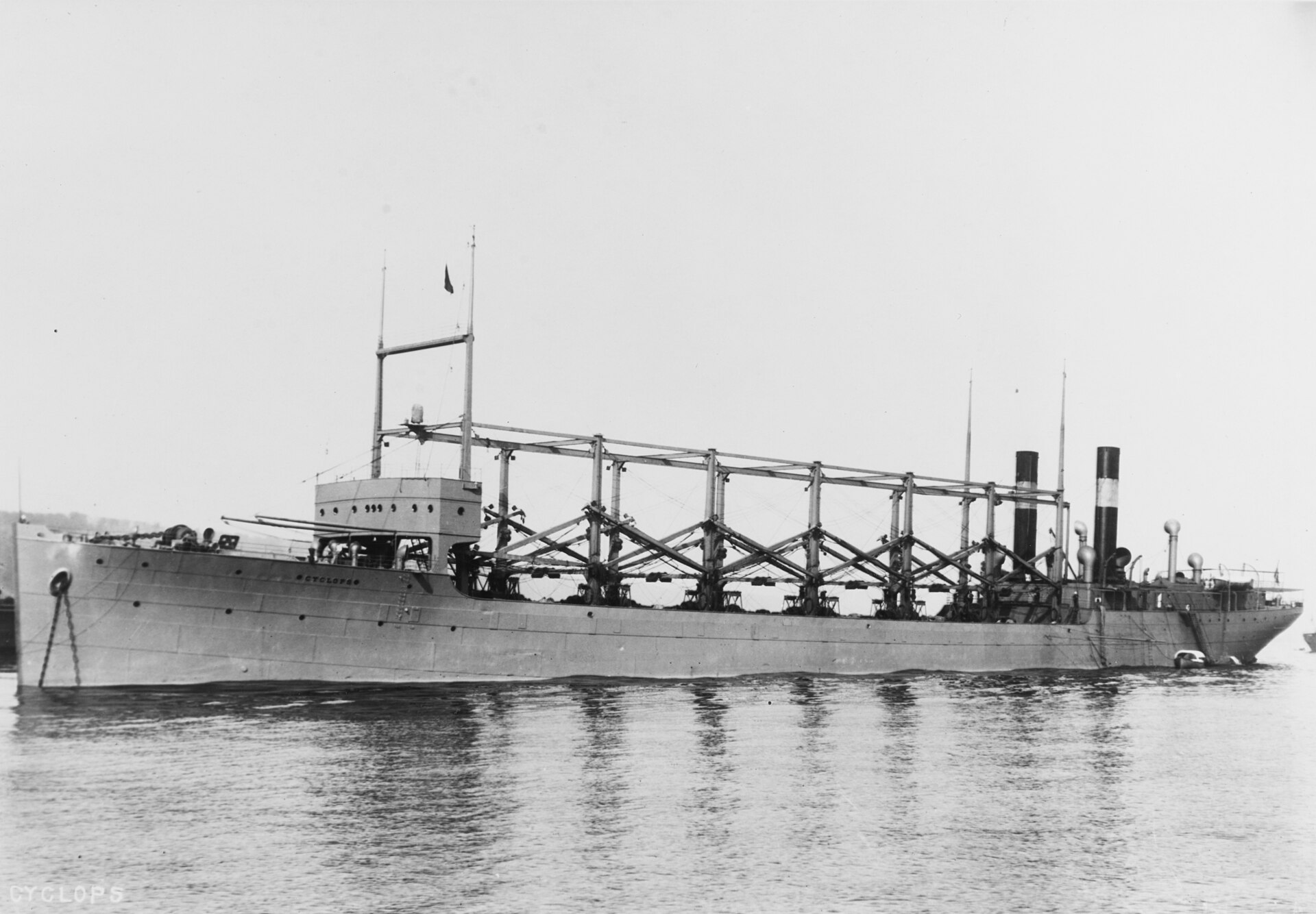
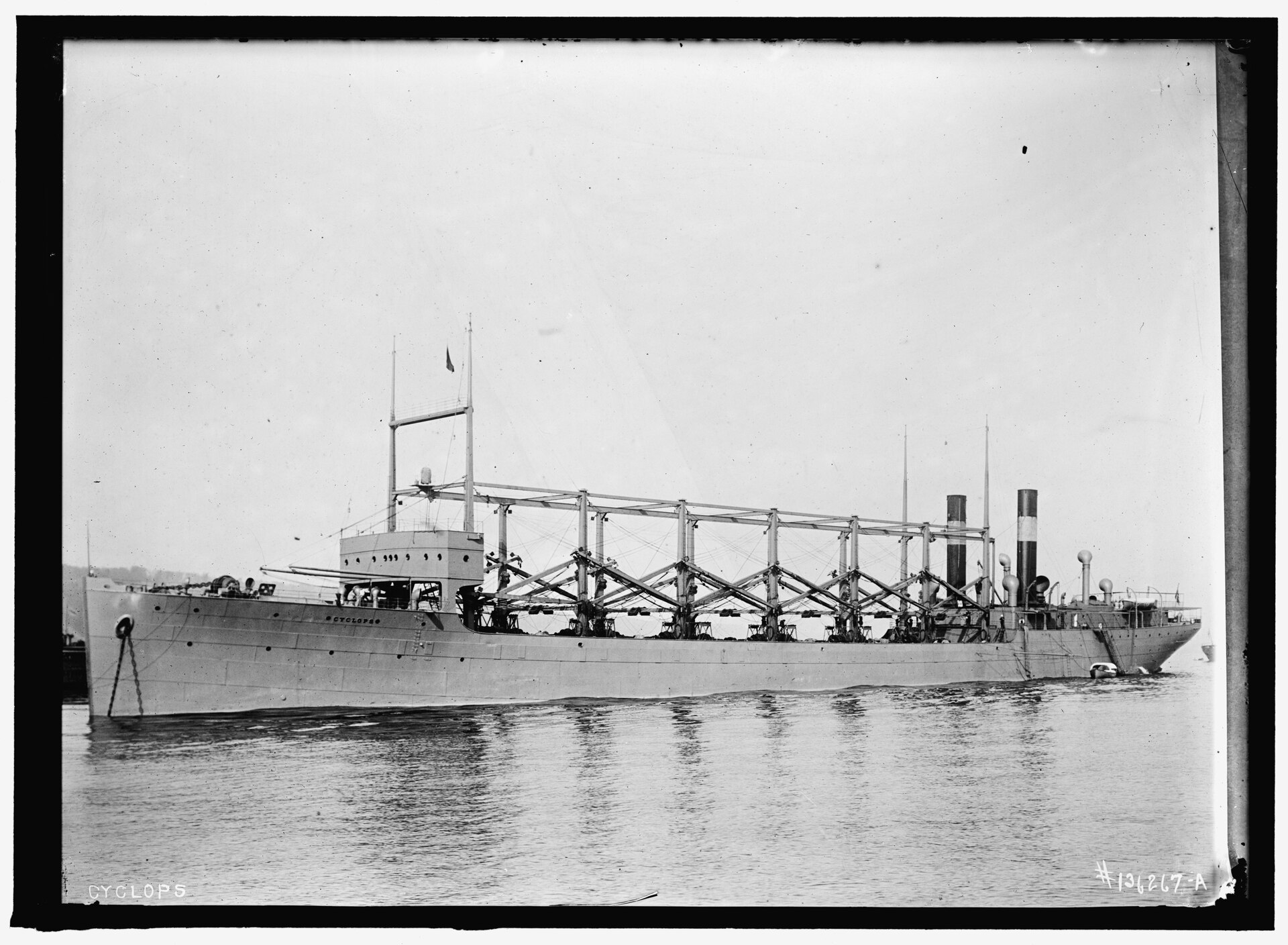
If Flight 19 is the symbol of aerial disappearance, the case most often raised on the maritime side is the USS Cyclops. The Cyclops was a large U.S. Navy collier and cargo ship about 165 meters long. In March 1918, during the First World War, she was carrying some 10,000 tons of manganese ore from Brazil toward Baltimore. After a brief stop at Barbados in the Caribbean she pushed out into the Atlantic — and simply vanished. There was no distress call, and not one of the roughly 306 people aboard, nor any wreckage, was ever found. It remains the largest loss of life in U.S. Navy history not connected to combat, and its cause has never been officially established.
But "unexplained" and "left unexplained" are two different things. Researchers have long pointed to realistic causes: a severe storm that struck the area at the time; the possibility that the heavy, corrosive manganese cargo shifted during the voyage and capsized the ship; and structural flaws in the hull that were in fact discovered in the Cyclops's sister ships. The absence of any trace is not evidence of the supernatural — it is exactly what can happen when a ship goes down so fast there is no time even to send an SOS. Over the years, many other ships and aircraft have been added to the Bermuda Triangle's "list" of losses. But examined one by one, a great many turn out to have occurred outside the triangle, or in foul weather, or to rest on records that were simply inaccurate to begin with.
The Theories That Circulate — Methane, Magnetism, and the Supernatural
As the cases piled up and the name grew famous, all sorts of theories followed to explain what happens in these waters. A few of the most popularly discussed are worth examining.
The first is the methane gas theory. The idea is that if methane hydrate buried on the seafloor erupts in large quantities, the density of the seawater drops sharply, so that a ship passing over it loses buoyancy and sinks in an instant. It sounds plausible at first, but there is no geological evidence that eruptions on such a scale — large enough to swallow a ship — actually occur in these waters. The second is the magnetic anomaly theory, which holds that the Bermuda Triangle is one of the few places on Earth where a compass points to true north, and that this magnetic quality throws instruments into disarray. The phenomenon of a compass pointing to true rather than magnetic north does exist, but it is an ordinary variation seen in many parts of the world, not some magical force that makes navigation impossible. The third is the supernatural and alien theory most familiar to us: energy radiating from the remnants of a sunken Atlantis, warps in space and time, abduction by alien craft. Endlessly reworked in popular culture, none of these ideas has ever produced verifiable evidence.
What Science Says
So what lies at the bottom of all these stories? Here the legend turns dramatically on its head, because the position of the agencies that actually manage and record these waters is the opposite of the popular image.
The U.S. National Oceanic and Atmospheric Administration (NOAA) states officially: "There is no evidence that mysterious disappearances occur with any greater frequency in the Bermuda Triangle than in any other large, well-traveled area of the ocean." In other words, statistically this triangle is not an especially dangerous sea. These waters are among the busiest shipping lanes in the world; the powerful and unpredictable Gulf Stream runs through them; hurricanes are frequent; and shallow shoals surround the Caribbean islands. With so much traffic and so many harsh conditions overlapping, it is only natural that the raw number of accidents is not small. But measured as accidents relative to traffic, the rate is no different from other busy waters.
The attitude of the insurance market shows this in the most practical terms. Lloyd's of London, the world's largest ship insurance market, does not charge specially higher premiums for voyages through these waters. If this were truly a cursed sea that devoured ships, the famously cold-eyed underwriters would hardly have missed the risk. The U.S. Coast Guard, too, drawing on decades of accumulated casualty records, has maintained that there is no evidence the area is unusually dangerous. Going further, in 1975 the author Larry Kusche traced famous disappearances back to their original sources one by one and found that many of the stories were exaggerated or inaccurate — and that some had even transplanted events from outside the triangle to make them appear to have happened within it. The mystery of the Bermuda Triangle, in large part, was never a mystery of facts but a mystery of storytelling.
The Questions That Remain
Does that mean the Bermuda Triangle is nothing but an illusion, wrongly inflated? For most of the stories, that is indeed how they resolve. And yet it is hard to deny that a few corners remain not entirely settled.
In the last moments of Flight 19, for instance, why an experienced pilot lost his sense of direction so completely still leaves room for the imagination. The precise circumstances in which the Cyclops vanished without a single distress signal likewise have strong hypotheses but no confirmed answer. In a sea crossed by so many vessels, there are certainly disappearances whose cause has never been cleanly established. Such "cases where the explanation never quite finished" keep tugging at a corner of the human mind, no matter how ordinary the statistics may be. Perhaps this is the very nature of mystery: even when most of it is explained, as long as the last few percent of silence remains, the imagination keeps flowing in through that gap. The real power of the Bermuda Triangle may lie not in the sea itself, but in the human mind that cannot bear what is left unexplained.
A Balanced Conclusion
Let us sum up. The Bermuda Triangle is a broad stretch of Atlantic water linking Florida, Bermuda, and Puerto Rico, and in the mid-20th century it acquired the image of a "deadly triangle" through a handful of real disappearances and a wave of popular publishing. Flight 19 and the Cyclops were genuine tragedies, and it is a plain fact that people lost their lives. But explanations such as supernatural forces, methane gas, magnetic anomalies, and aliens, however widely discussed, are weak on scientific grounds or have never been confirmed. And above all — as NOAA, the U.S. Coast Guard, and the Lloyd's insurance market say with one voice — there is no statistical evidence that the disappearance rate in these waters is unusually high compared with other busy seas.
So the true story of the Bermuda Triangle is less "the sea swallows ships" and more "how we build and come to believe in mysteries." Once the name existed, incidents gathered; once incidents gathered, the story swelled; and the swollen story drew new events into itself. Along the way facts were quietly dramatized, and even events from outside the triangle were moved within it. At the same time, however ordinary the statistics are said to be, a few cases that were never fully explained still remain where they are. In the end the Bermuda Triangle teaches two things at once. One: that even the most frightening legend, examined calmly, is mostly explained by human error and the forces of nature. The other: that even so, we are creatures who cannot stop filling that last gap with our imagination. Somewhere between those two truths lies the old allure of this sea.
The one page I have never been able to file away cleanly is the radio traffic from the afternoon of 5 December 1945. Taylor had over two thousand five hundred hours and combat behind him, and the transmissions show a man losing hold of where he is by degrees, over four hours, in daylight, with the coast of Florida somewhere behind his shoulder. I have read those exchanges more times than the case requires. Every statistical argument in this article is correct, and none of them explains why I keep going back to a man who could not find a coastline he had flown from that morning.
---
This article uses both genuine archival and on-site photographs and AI-generated images and video produced to convey the mood of the story.

Comments
No comments yet — leave the first one.