On January 4, 2012, a plain black-and-white image quietly appeared on one of 4chan's message boards. Against the black background, in white text, was a single short line: "Hello. We are looking for highly intelligent individuals." Beneath it came a promise — that anyone who could find the message hidden inside the image would be allowed to move on to the next stage. It was signed simply "3301." There was nothing to say who had posted it, or what it was for. To most people it probably looked like an ordinary prank or piece of bait. But that one image was the opening move of what would become the most elaborate puzzle in the history of the internet — a puzzle that would keep cryptographers, hackers, programmers, and mathematicians around the world awake for years. People came to call the unknown group behind it Cicada 3301. A cicada is an insect that spends years hidden underground, emerges all at once in a single summer, and then disappears. This group behaved in almost exactly the same way.
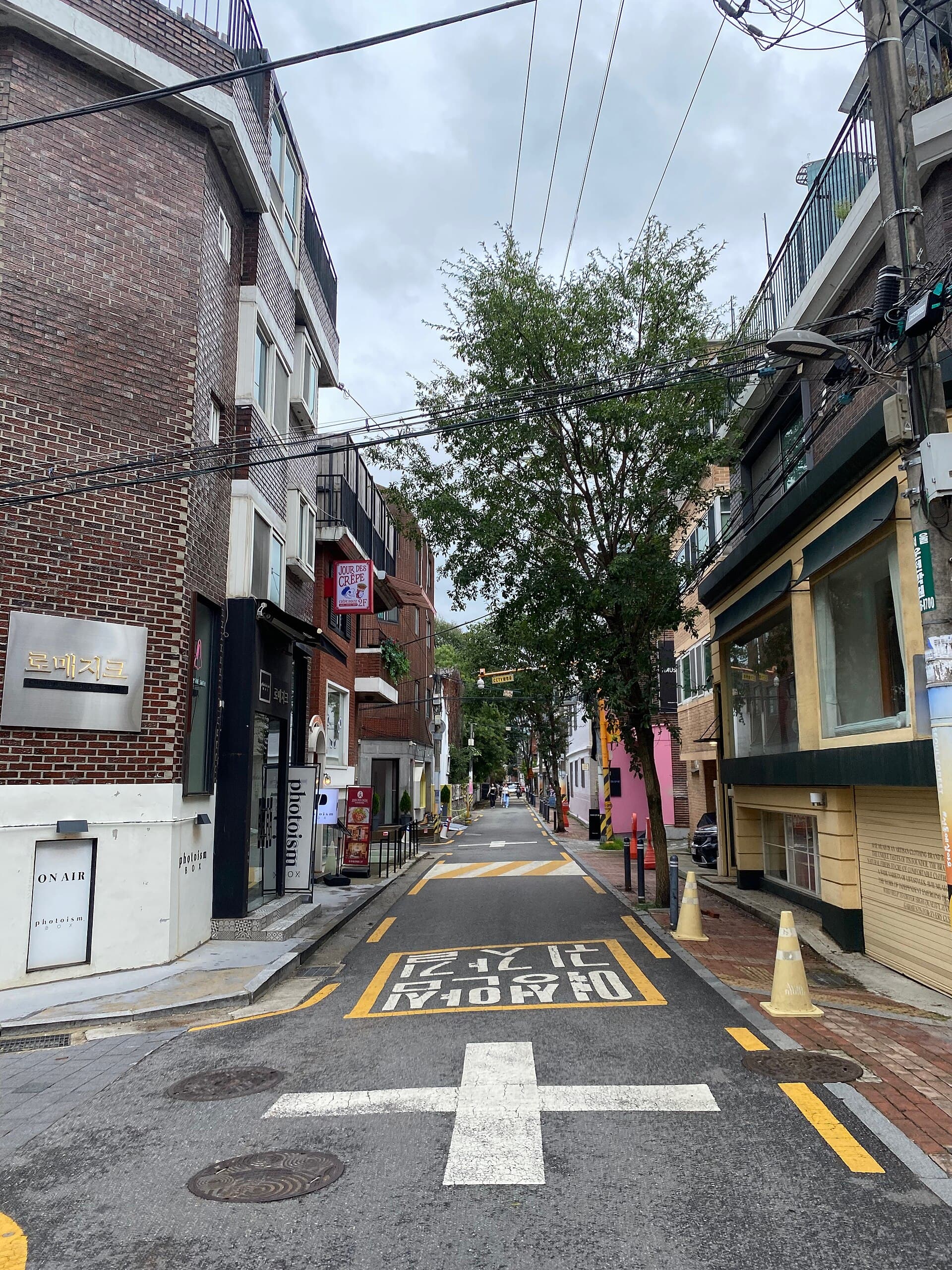
My name is K. Woo and I archive things that refuse to resolve. This one belongs here for a reason peculiar to it: almost everything is preserved and it helps not at all. I have the images, the mirrors, the solver logs, the signed messages. What stopped me, early on, was the Seoul coordinate. Someone printed a sheet of paper and taped it to a fixture in a Korean city, and the only record that it ever existed is a photograph taken by a stranger who then went home. I have looked for a second photograph of that particular sheet for a long time.
A Rabbit Hole That Began With a Single Image
The first thing people did when they encountered the puzzle was to open that black-and-white image in a tool like a text editor. On the surface it was just a picture file — but a picture file can carry information that the eye cannot see. The technique of hiding one message inside another file, such as an image or an audio clip, is called steganography. If encryption is about scrambling a message so it can't be read, steganography is closer to hiding the very fact that a message exists at all. What looks like an ordinary photograph can have letters woven into the spaces between its pixels.
Sure enough, there was hidden text inside the image. It carried the name of a Roman emperor — "TIBERIVS CLAVDIVS CAESAR" — followed by a string of characters that seemed to mean nothing. The name "CAESAR" was the clue. One of the oldest known ciphers, said to have been used by Julius Caesar himself, is the Caesar cipher. It works by shifting every letter of the alphabet a fixed number of places, so that with a shift of three, A becomes D and B becomes E. Solvers applied a Caesar cipher to the string, rolling each letter back by four places, and the gibberish resolved into a web address. The first gate had opened.
Deeper and Deeper — A Book Code and a Number Made of Primes
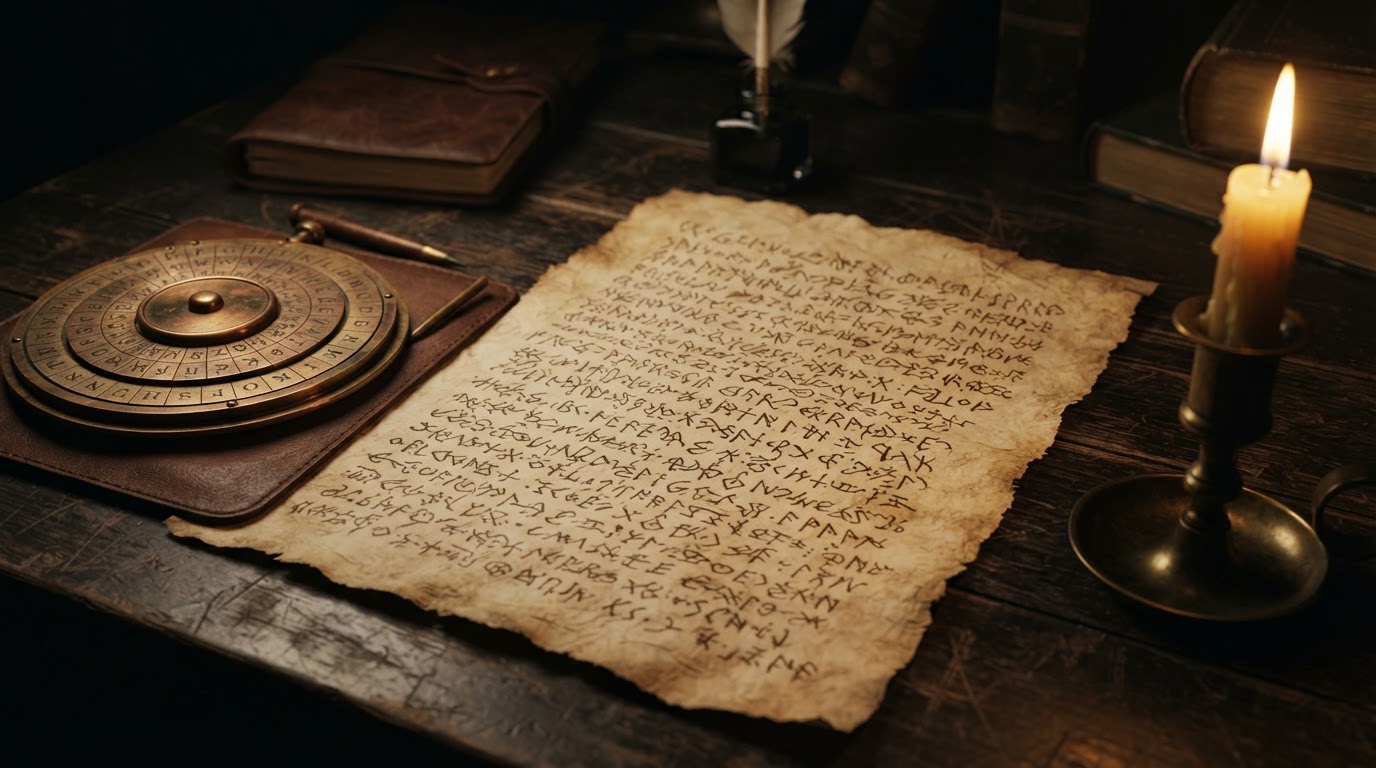
The address led to another image, and this one gave up its secrets only to a specialized steganography tool called OutGuess. What came out was a list of number pairs — a book cipher. A book cipher uses a specific book as its key. Point to a location with numbers — a page, a line, a word — and only someone holding the right book can look up the corresponding word and reconstruct the original message. Without knowing which book is the key, the numbers are just a meaningless list. The book Cicada had chosen was a classic collection of myth and legend, and solvers laid it open and matched the numbers one by one to bring the sentences back to life.
One clue from this stage proved decisive: a U.S. phone number, 214-390-9608. Half in disbelief, the people who dialed it heard a recorded message. It said there were three prime numbers associated with the original image, and that 3301 was one of them. A prime number is one divisible only by 1 and itself. Holding onto that hint, solvers went back to the very first image. Its width and height — 509 by 503 pixels — were both prime numbers, and they multiplied those by the group's own number, 3301. The result was the address of the next website. To solve the puzzle you had to not only break the cipher but circle all the way back to the dimensions of a picture you had glanced past at the start. It is a detail that shows just how meticulously this thing had been built.
The new address showed an image of a cicada with a countdown clock ticking beside it. Until the timer ran out, nothing happened at all. People gathered from around the world and waited for the clock to hit zero. It was the moment they began to sense that this was no ordinary online prank — and that the next stage might lead off the screen entirely, into the physical world.
Liber Primus and Real Coordinates Around the Globe
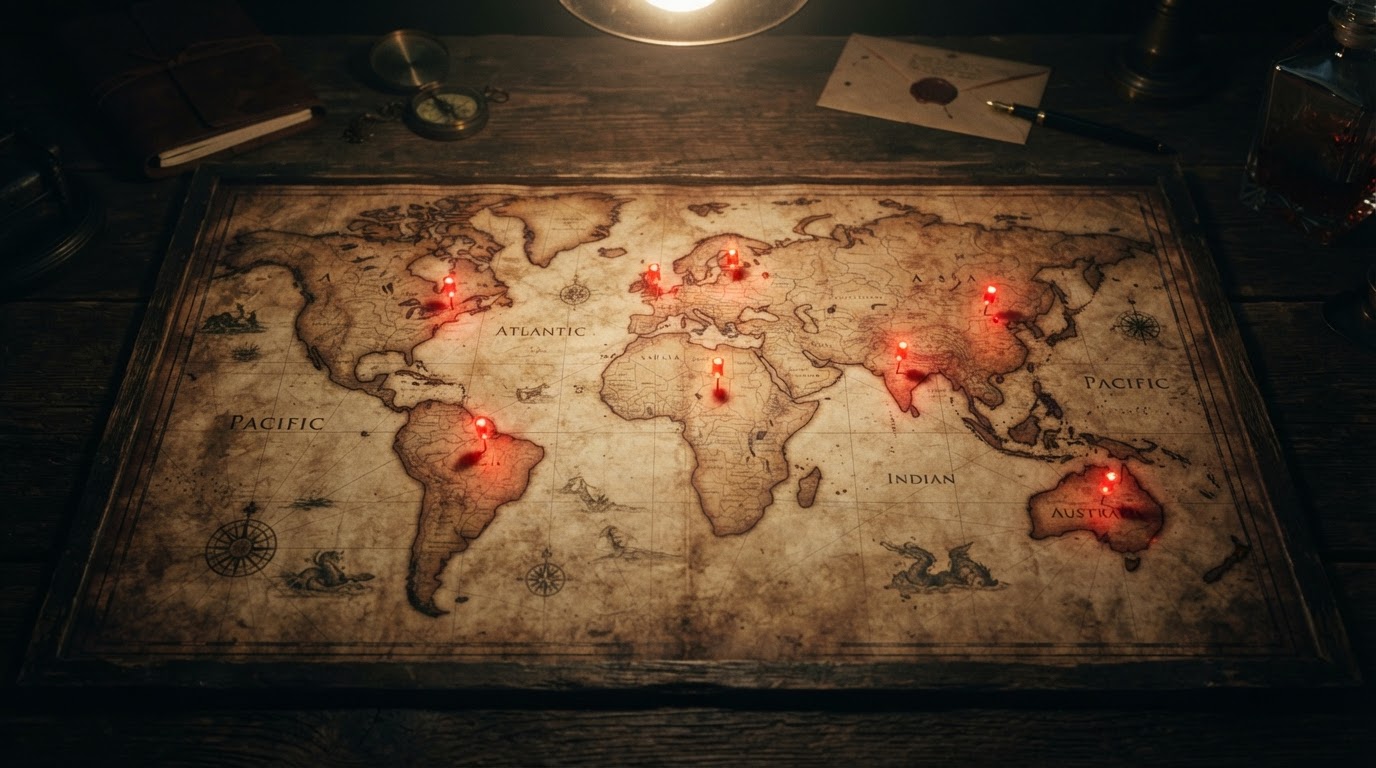
When the countdown ended, fourteen GPS coordinates appeared on the site — and not in one country, but scattered across the planet. California, Hawaii, Miami, New Orleans, and Seattle in the United States, along with Warsaw in Poland, Paris in France, Sydney in Australia, and Seoul in South Korea. An online puzzle had suddenly spilled out into physical reality. At each of the locations the coordinates pointed to, a sheet of paper had been taped up bearing an image of a cicada and a QR code. Solvers working the puzzle in every corner of the world went to the sites themselves, or asked another participant living in that city to go, photographed the paper stuck to a lamppost or a wall, and scanned the QR code. Strangers who had never seen each other's faces began cooperating across continents.
The addresses the QR codes pointed to carried a line borrowed from a poem by the science-fiction author William Gibson, and that clue led solvers back down into the deep internet. This time the destination was somewhere ordinary search engines can't reach — an ".onion" address accessible only over the anonymous network called Tor, the region commonly known as the dark web. Here, participants received puzzles encrypted individually to each of them, and even a cryptogram encoded as music. The puzzle passed through steganography, classical ciphers, a book code, prime numbers, physical coordinates, and an anonymous network in turn, stacking wall after wall that no single person could ever have climbed alone.
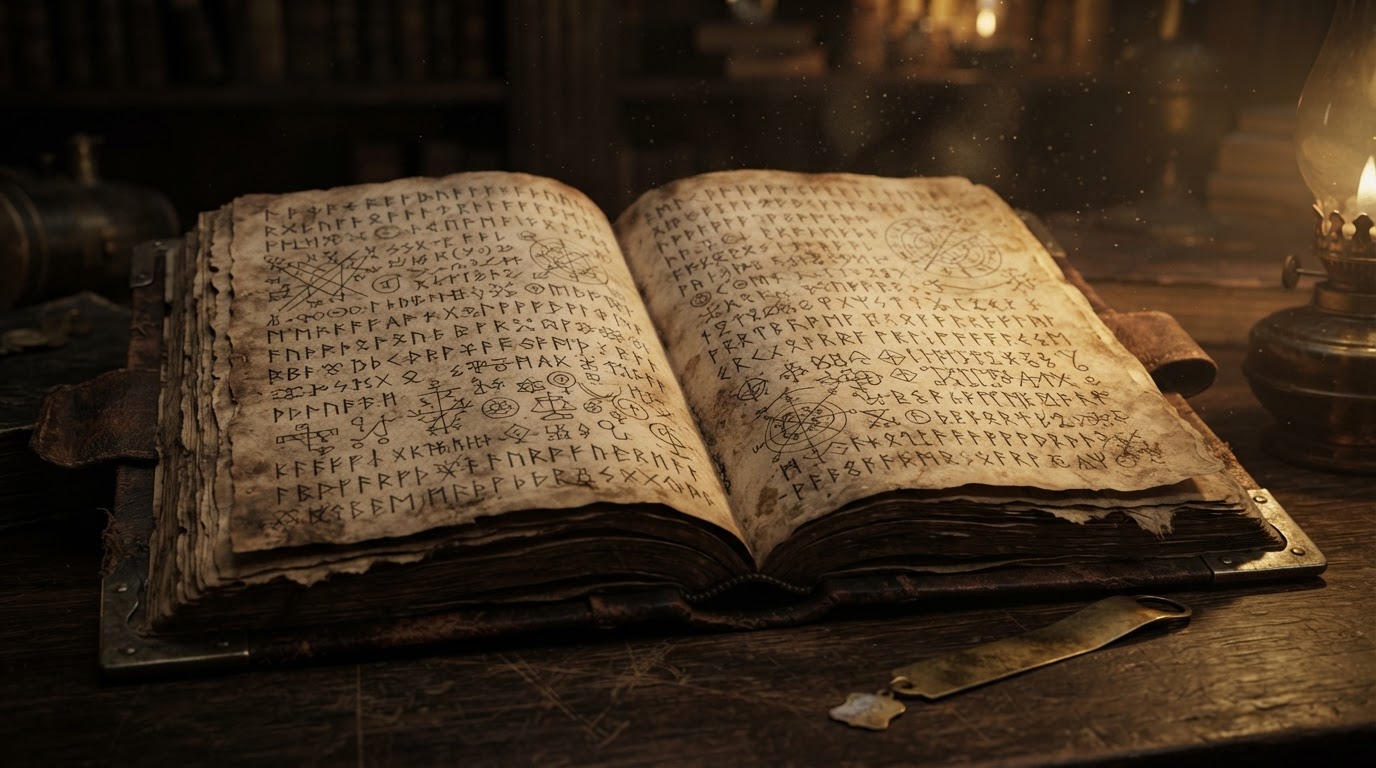
The following year, in 2013, Cicada put forward something far larger: the Liber Primus — Latin for "First Book." It was a cipher book packed with runic characters. Running to many pages, the book was itself a single enormous mass of code, and to this day only part of it has been decrypted, with most of its pages still unsolved. What Cicada was trying to say, and what lies at the end of the book, no one yet knows.
The Final Gate and the Chosen Few
The most tantalizing part comes next. To the tiny handful of people who passed through gate after gate and reached the final stage, Cicada is said to have reached out individually. According to real people who solved the puzzle — among them Marcus Wanner, who cracked the 2013 challenge — those who made it to the end were not simply admitted to the group. They were first asked a set of questions. Did they support the free flow of information? What did they think about privacy and freedom online? Did they oppose censorship? Only those who answered to Cicada's satisfaction were invited to a private forum, where they were reportedly asked to design and complete some project meant to advance the group's ideals.
But this is where the story slips into fog. Exactly what the chosen ones did, and what happened inside that forum, has largely remained under wraps. Some stayed silent; others shared only the barest fragments. If the opening declaration — that they were looking for "highly intelligent individuals" — was genuine, then where are those recruits now, and what are they doing? That question has proven a far harder riddle than any of the surface ciphers of the Cicada puzzle.

2013, 2014, and Then Silence
Cicada lived up to its name. The first puzzle appeared on January 4, 2012; the second exactly one year later, on January 4, 2013; and the third another year after that, on January 4, 2014, this time posted on Twitter. Every year, on the same date, it returned as precisely as an insect that knows the seasons. But the third puzzle, in 2014, was never fully solved, and on January 4, 2015, nothing happened at all. The cicada that had been so regular did not come up from the ground that year.
Afterward, fake puzzles and scams impersonating Cicada's name began cropping up everywhere. To separate the real from the counterfeit, Cicada attached a digital signature — using a cryptographic technique called OpenPGP — to all of its genuine messages. Because that signature cannot be forged, any message without it could be judged not to belong to Cicada. The last message from Cicada carrying a verified signature appeared in April 2017, declaring that any unsigned puzzle had nothing to do with them. After that, the real Cicada never surfaced again.
The Theories About Who They Were
So who, exactly, was Cicada 3301? From here it has to be said plainly that we are no longer in the territory of confirmed fact, but of speculation and theory. To this day no individual or organization has proven, in any credible way, that they were Cicada.
The most commonly cited theory is that it was a recruiting tool for an agency like the U.S. National Security Agency (NSA), the Central Intelligence Agency (CIA), or Britain's MI6, quietly scouting for elite cryptography and security talent. Intelligence agencies do always need people with the highest level of code-breaking ability, so it sounds plausible enough. But there is no solid evidence for it, and no agency has confirmed or denied it. A second theory holds that it was some secret society or underground group devoted to cryptography, privacy, and internet anonymity — a reading that fits with the testimony that the chosen solvers were questioned about the free flow of information and their opposition to censorship. A third view casts it as a kind of cult or religion; a fourth sees it as nothing more than an elaborate alternate reality game (ARG), a vast piece of play and art. Some have even guessed it was set up by a bank or a cybersecurity firm to recruit staff. Each of these theories offers its own reasoning, but not one of them has ever been established as fact. Cicada has never once spoken directly about its own identity.
The Puzzle With No Author Versus the Sculpture With One
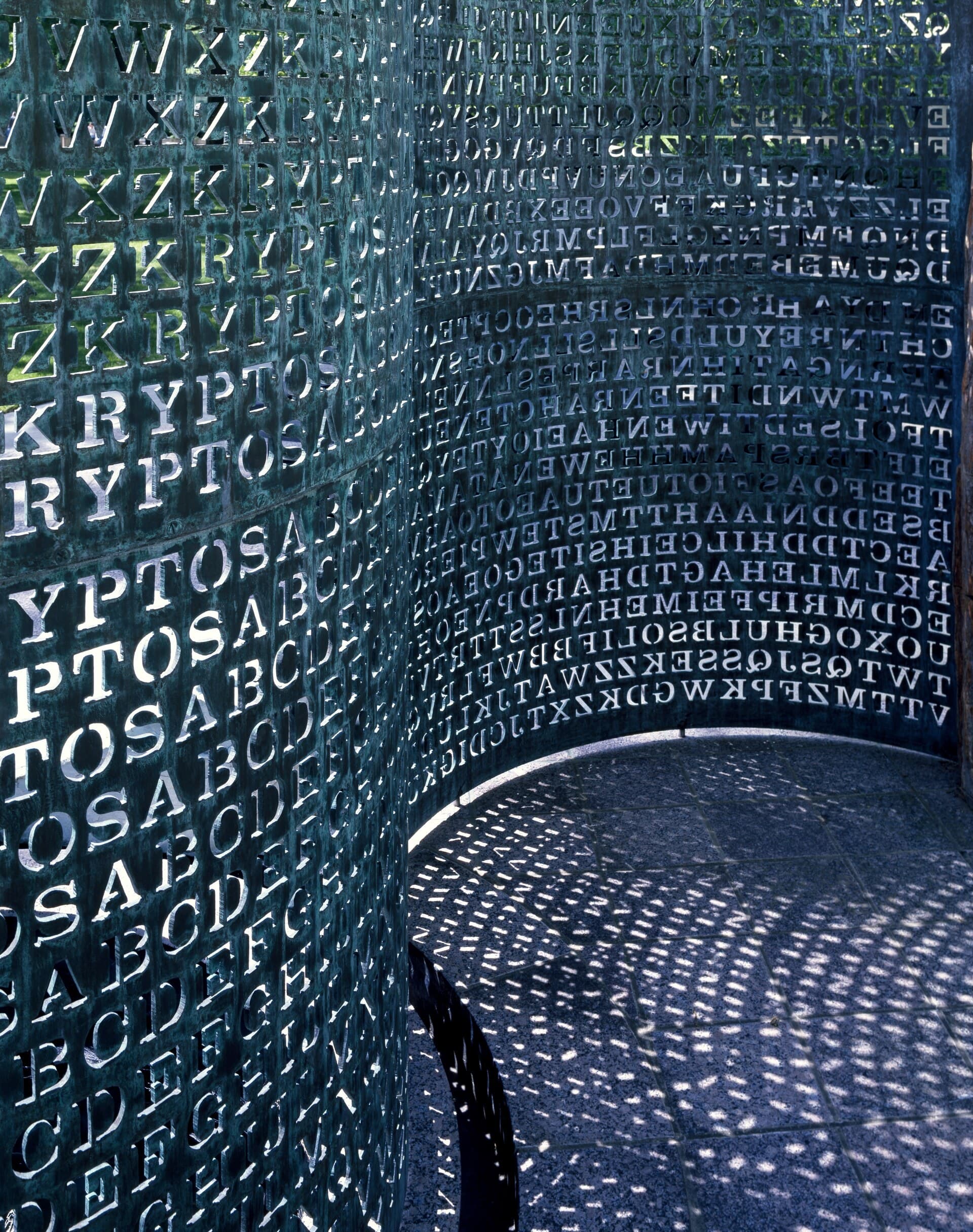
English-speaking readers already had a famous unsolved cipher before Cicada appeared, and the comparison is the quickest way to see what was new. In 1990 the sculptor Jim Sanborn installed Kryptos at the CIA's headquarters in Langley, Virginia: four encrypted passages. In 1999 the computer scientist Jim Gillogly publicly announced solutions to the first three. A CIA analyst, David Stein, had reportedly solved them by hand in 1998. The fourth passage, K4, stayed unbroken for decades. Sanborn eventually released hints that positions 64 to 69 read BERLIN, 70 to 74 CLOCK, and 26 to 34 NORTHEAST. The answer itself went to auction in November 2025: RR Auction sold Sanborn's archive, including the K4 solution, for $962,500, and the buyer, Paradigm, did not publish it but set up a site where anyone could pay a dollar to test a guess.
Set that against 3301. Kryptos has a named author, a street address and, as it turned out, an answer sitting in a private archive that could be bought. Cicada had none of those. Its first round opened on 4chan on January 4, 2012 and ran for close to a month. The second began on the same date in 2013. The third was posted on Twitter on January 4, 2014 and, per the Wikipedia account, remains unsolved. A further clue appeared on January 5, 2016. The last verified message, in April 2017, was signed with OpenPGP. With Kryptos the open question is whether the puzzle can be solved. With Cicada it was never certain that anyone was left to ask.
The English-language press noticed. Wikipedia's account cites coverage from The Daily Telegraph, The Guardian, Rolling Stone, The Washington Post and Channel 4 News, which says something about how a 4chan image became a story that British and American newsrooms felt they had to explain. What those outlets could not do was interview the other party. What reached print came from solvers, and the best-known of them, Marcus Wanner, who solved the first 2013 puzzle, described the finalists being asked about their support for information freedom, online privacy and opposition to censorship. That is all the public has. Everything Cicada said about itself passed through someone it had selected.
One more difference deserves a sentence. Kryptos was made to be walked past every day by the people whose building it stands in. Cicada was built so that no one could stand beside it. Having read the Wikipedia account against the community timelines, what I keep returning to is the 2016 date: a smaller clue, then a signed denial the next year, then nothing. In the Kryptos story the silence belongs to a man who is alive, named, and willing to sell. Here it belongs to a key.
The Questions That Still Remain
What we can say for certain today is, surprisingly, simple. Between 2012 and 2014, someone signing themselves "3301" threw three extraordinarily intricate puzzles out into the world. Those puzzles ran through steganography, classical ciphers, and a book code, and on into the coordinates of real cities around the globe and the dark web. The tiny few who solved them all the way to the end were quietly invited somewhere. And then, with a final message in 2017, Cicada disappeared back underground.
The April 2017 message is the last item in my folder, and I have read it more times than its four sentences deserve. What unsettles me is its function. It exists only to say: that other thing was not us. Someone with the private key still in their possession, years after the puzzles stopped, was watching closely enough to notice an impostor and to care about the distinction. Then nothing. The runes of the Liber Primus are still unread on my screen, and somewhere a key that can prove authorship is being kept by a person who has decided to stop authenticating anything.
What we still don't know is far greater. Did this group really exist, or was it one vast, meticulously scripted piece of theater? What purpose were the "highly intelligent individuals" they sought put to? What is written behind the unsolved pages of the Liber Primus? Why did the cicada appear only on January 4 each year, and why did it fall completely silent at a certain point? The internet holds no shortage of mysteries, but few are as intricate, as global in reach, and as thoroughly unexplained as Cicada 3301. The cicada, after all, is an insect that returns after a long silence. Perhaps even now, somewhere we cannot see, it is waiting for the next summer.
---
The images and video in this article are AI-generated works produced to convey the mood of the story, and are not photographs of any actual person or event.
Comments
No comments yet — leave the first one.