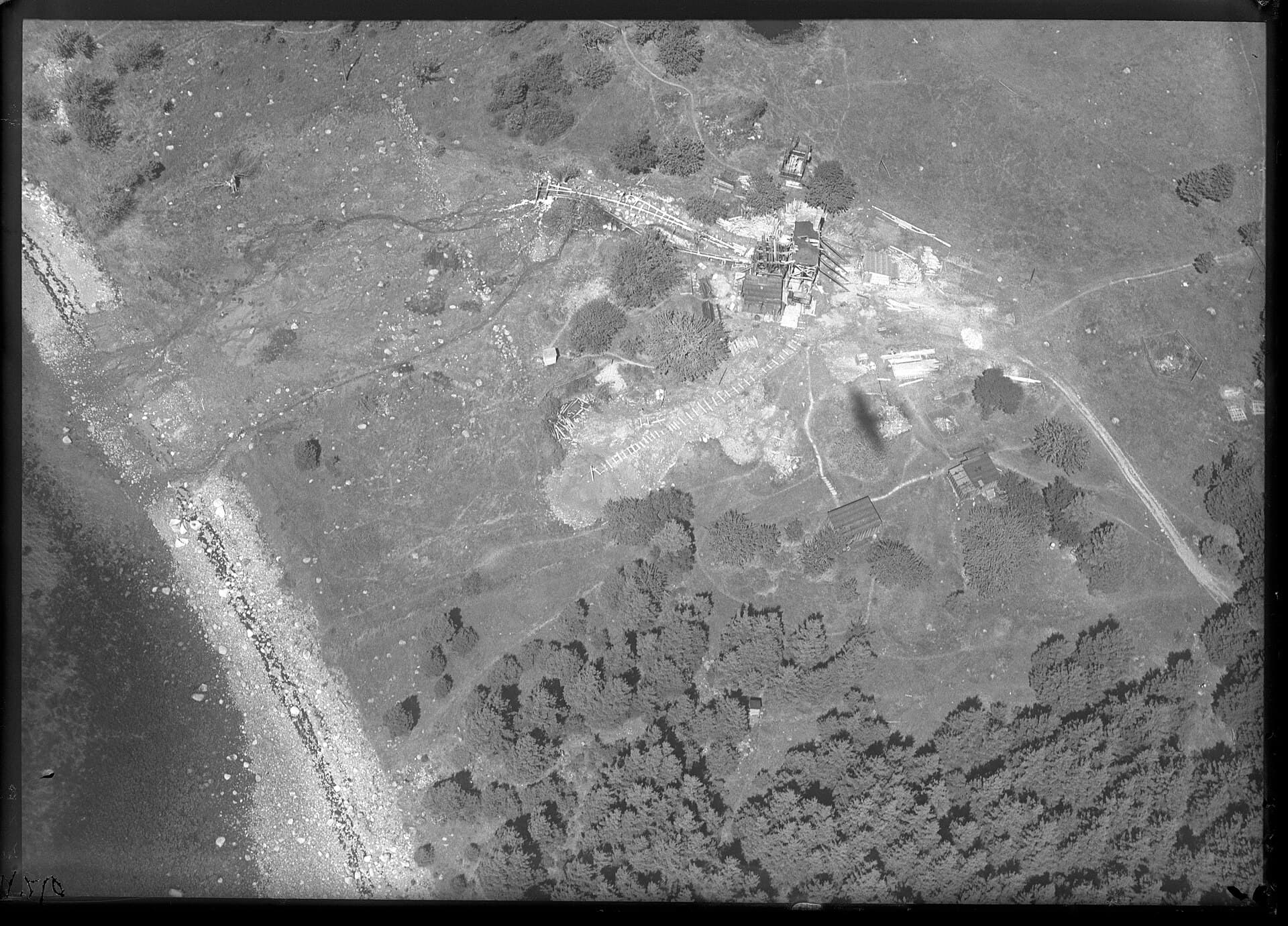
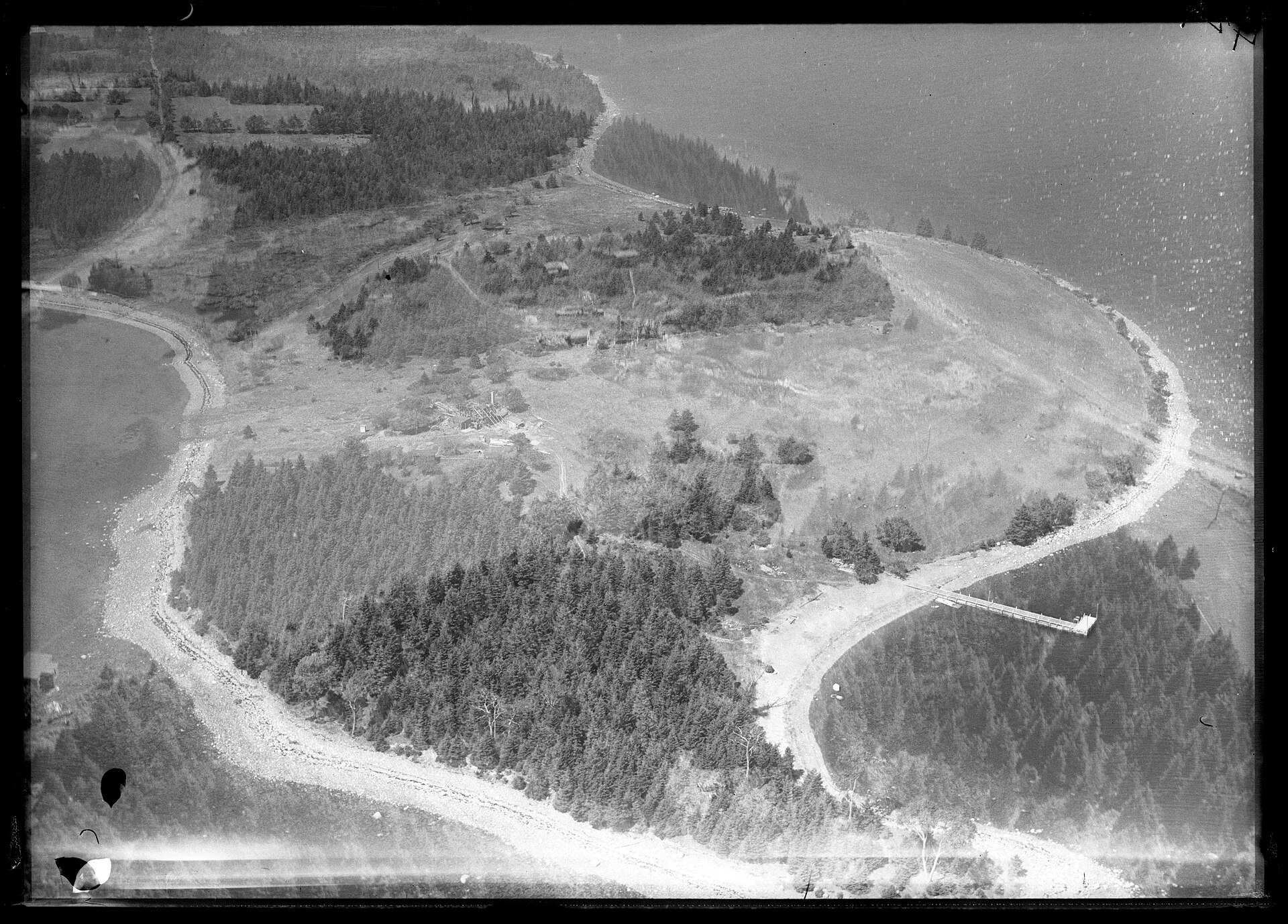
Off the eastern edge of Canada, in Nova Scotia's Mahone Bay, hundreds of tiny islands dot the water. One of them is Oak Island — a modest, oak-covered patch of land no bigger than a few football fields. In 1795, a boy exploring that island noticed a shallow depression in the ground, and with that discovery began one of the most obsessive and expensive treasure hunts in the world. As diggers went down, they found wooden platforms — clearly man-made — set roughly every ten feet. At one depth they claimed to find a stone carved with unknown symbols. And past a certain point, no matter how hard they bailed, seawater rose endlessly to fill the shaft. It looked as though someone had buried something and then engineered an elaborate trap to keep it safe. For more than two hundred years, people have poured fortunes and lives into this hole. Six have died. Enormous sums have vanished. And to this day, not one piece of the fabled treasure has ever been recovered. This is the mystery of Oak Island — the pit that swallows money, known simply as the Money Pit.
I have a rule for this archive: a case earns its place by getting stranger the more paperwork you put against it. Oak Island does the opposite, and that is why I kept it. Every time I trace one of its famous details back — the inscribed stone, the pick marks, the ten-foot platforms — the citation trail gets shorter and later than it should be, until it thins out into a book from the 1950s repeating a book from the 1860s. Two hundred years of digging has produced an enormous quantity of record and almost no primary source. That, to me, is its own kind of pit. — K. Woo
A Summer Day, and a Boy Who Found a Sunken Patch of Ground
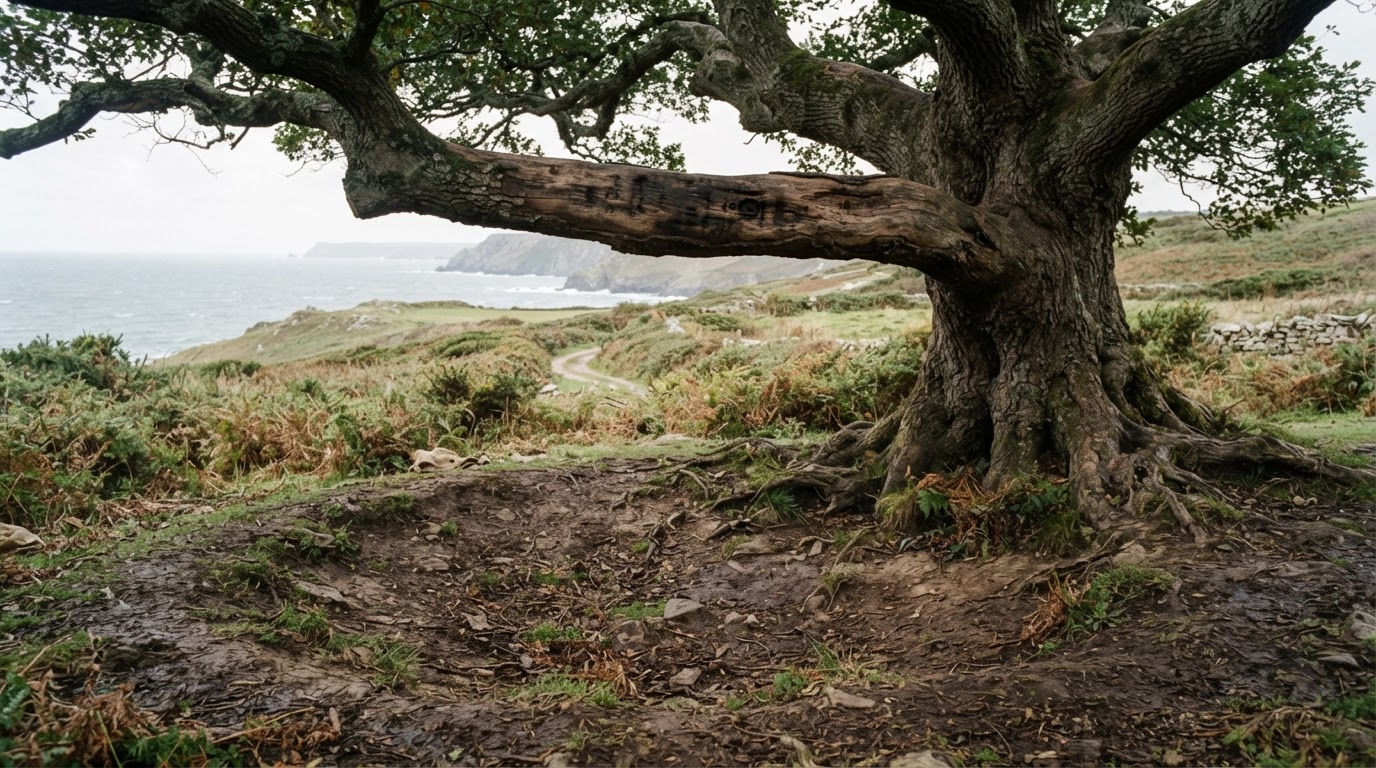
The story begins in the summer of 1795. A local youth named Daniel McGinnis was wandering across Oak Island when he came upon a circular, saucer-like depression in the earth beneath an old oak tree. On a branch nearby, it was said, there were marks suggesting a pulley had once been rigged there — the kind of tackle used to lower or raise something heavy. In those days the region was thick with rumors that pirates had hidden loot plundered from the Caribbean on remote, unpeopled islands. McGinnis was convinced that this sunken patch of ground marked the spot where treasure had been buried.
The next day he returned with two friends, John Smith and Anthony Vaughan, and the three began to dig. Almost at once they struck things that were not ordinary soil. About two feet down they hit a layer of flagstones, and as they dug deeper, they found the clay walls of the shaft marked with distinct pick strokes — proof that someone had already dug here and filled it back in. At roughly ten feet, they reached a tightly laid platform of oak logs. Ten feet farther down, and again at thirty, the same layers of timber appeared. The three boys were certain this was no natural hollow but a shaft in which someone had hidden something very deep. But three young hands could dig no further, and they abandoned the work — for the time being.
What Emerged As They Dug Deeper — Layers of Wood and a Carved Stone
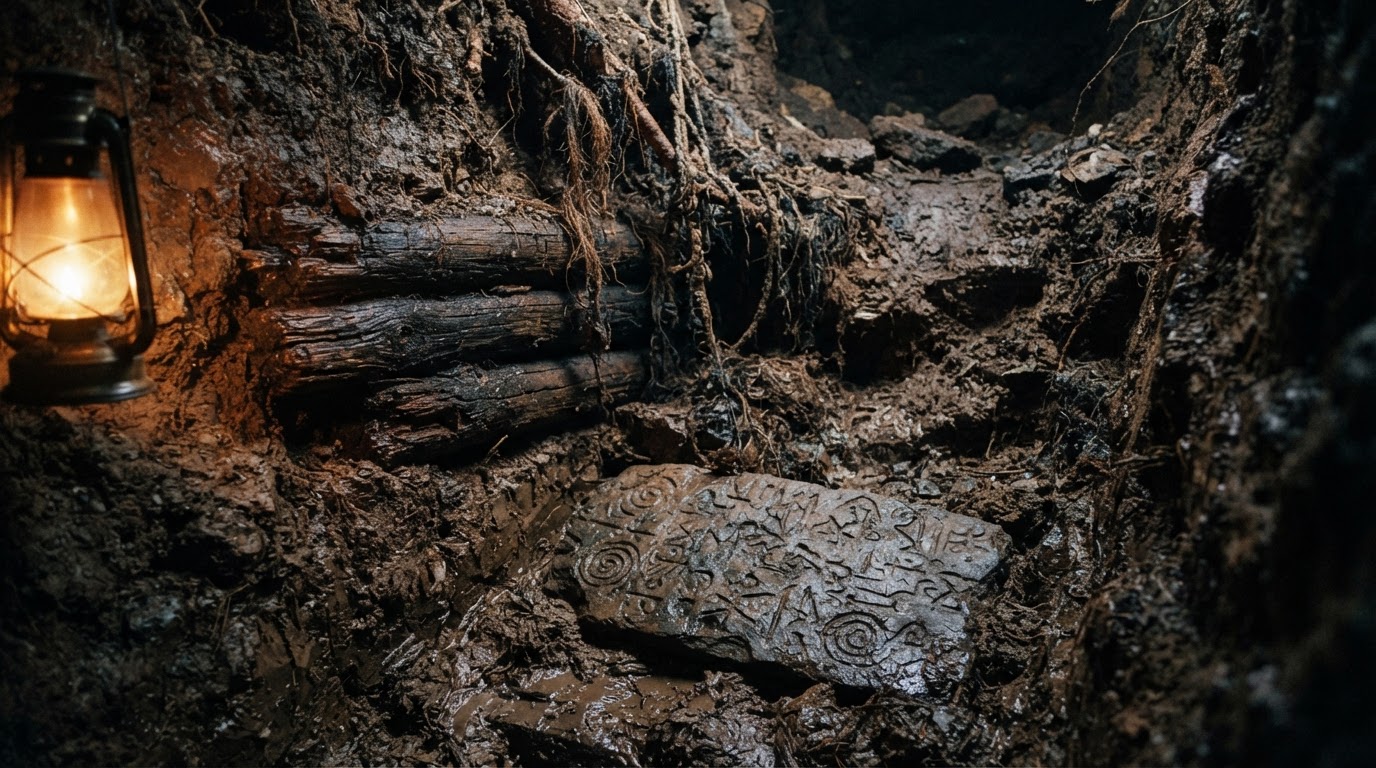
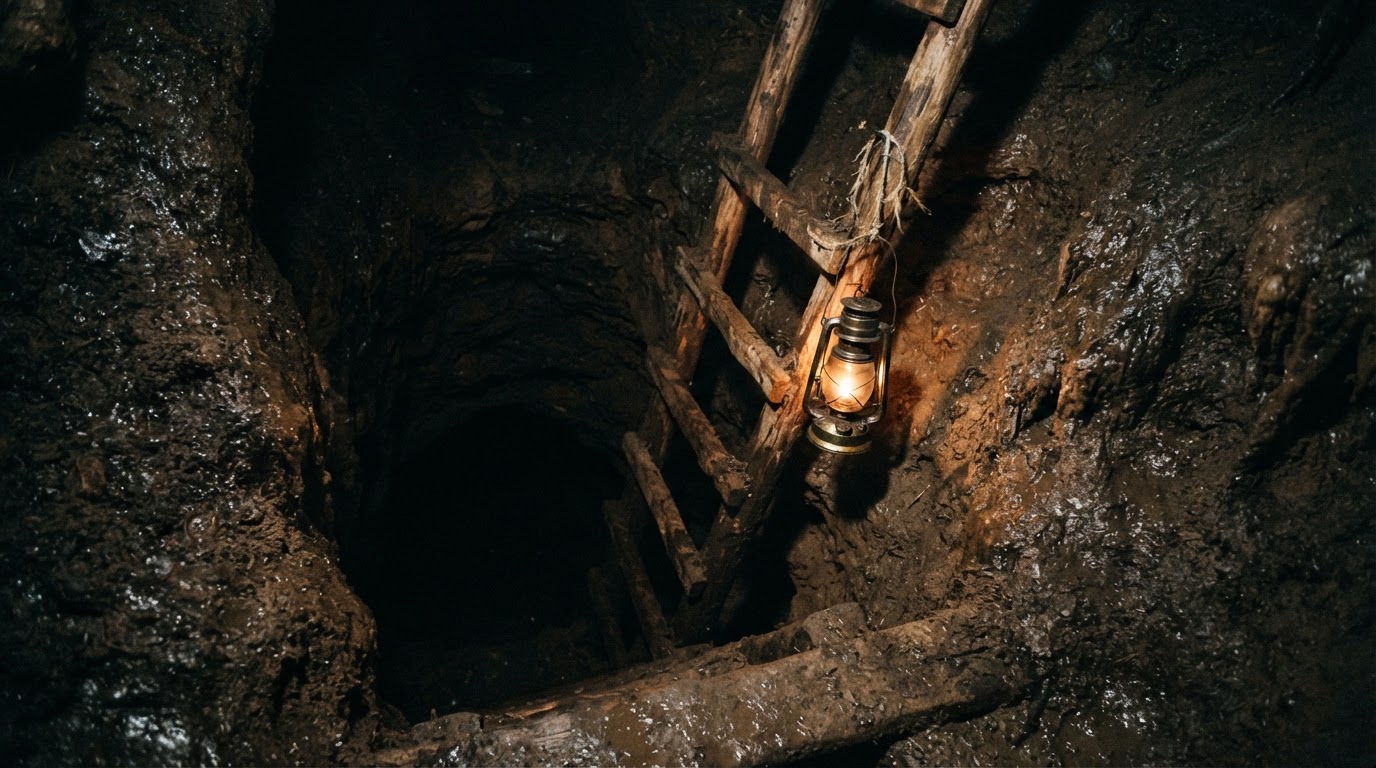
The boys' discovery was largely forgotten until, in the 1800s, proper excavation companies took up the search and the story returned to the world. One of them, the Onslow Company, is said to have dug the pit down to about ninety feet. All the way down, astonishingly, wooden platforms kept appearing at regular intervals of roughly ten feet. Some accounts describe charcoal, putty, and — most remarkably — tropical coconut fiber found between the layers of wood. Coconut fiber does not grow anywhere in Nova Scotia, and its presence deep in this shaft has long been cited as a hint that people from far across the sea had once worked here.
And then there is the detail that cemented the legend: the so-called inscribed stone. At about ninety feet, the story goes, diggers pulled out a flat stone marked with rows of strange symbols. It was later claimed that a man decoded these symbols to read, "Forty feet below, two million pounds are buried." That single sentence became the heart of the Oak Island legend. But there is an important caveat. The stone itself later vanished, and the drawing of its supposed symbols only first appears in a book from the mid-twentieth century. As early as 1911, an investigator who actually examined the stone testified that it bore "no symbols at all." In other words, this dramatic translation is far less a verified fact than a layer of legend added over long years — a distinction worth keeping in mind.
Water That Rose No Matter How Much They Bailed — The Sophistication of the "Flood Trap"
What truly drove the diggers to despair was the water. When the pit reached about ninety feet, it filled overnight with seawater. No amount of bailing with buckets — and later, with pumps — made any difference. The water rose as fast as they could remove it. Stranger still, the level of water in the pit rose and fell in time with the tides of the sea outside. That could only mean the pit was secretly connected to the ocean somewhere.
In 1849, the Truro Company set out to find that connection. Surveying a beach called Smith's Cove, some distance from the pit, they are said to have discovered, beneath the sand, five stone-lined box drains branching out like fingers. These drains merged into a single channel that ran toward the pit. From this, the diggers drew a chilling conclusion: someone had artificially channeled seawater so that any shaft dug past a certain depth would automatically flood — a deliberate flood trap. If that were true, whoever built this pit must have possessed a remarkably advanced level of engineering, having turned the sea itself into a defensive mechanism to guard their treasure. It is precisely this idea of an "ingenious trap" that transformed Oak Island from a mere hole in the ground into a genuine mystery.
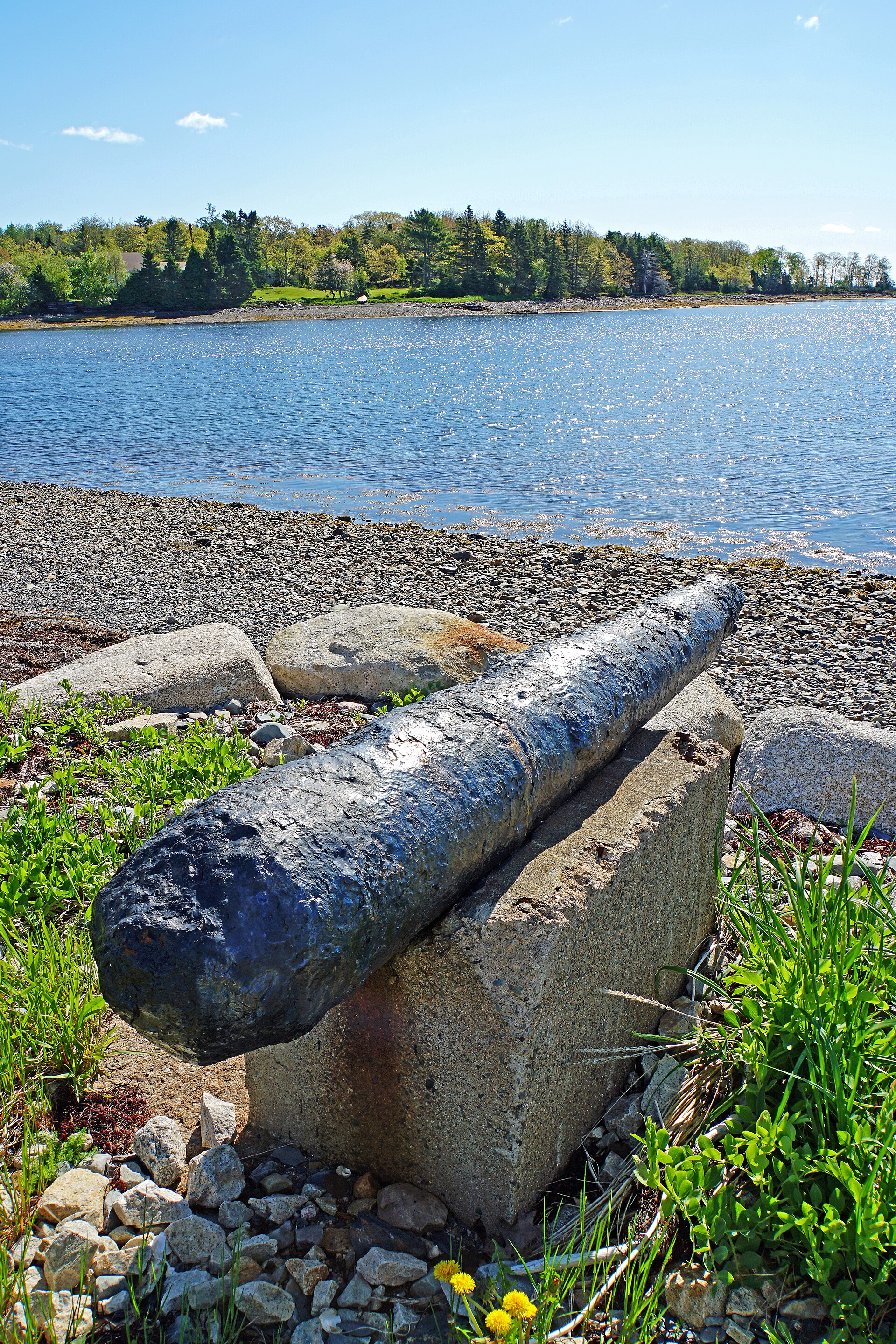
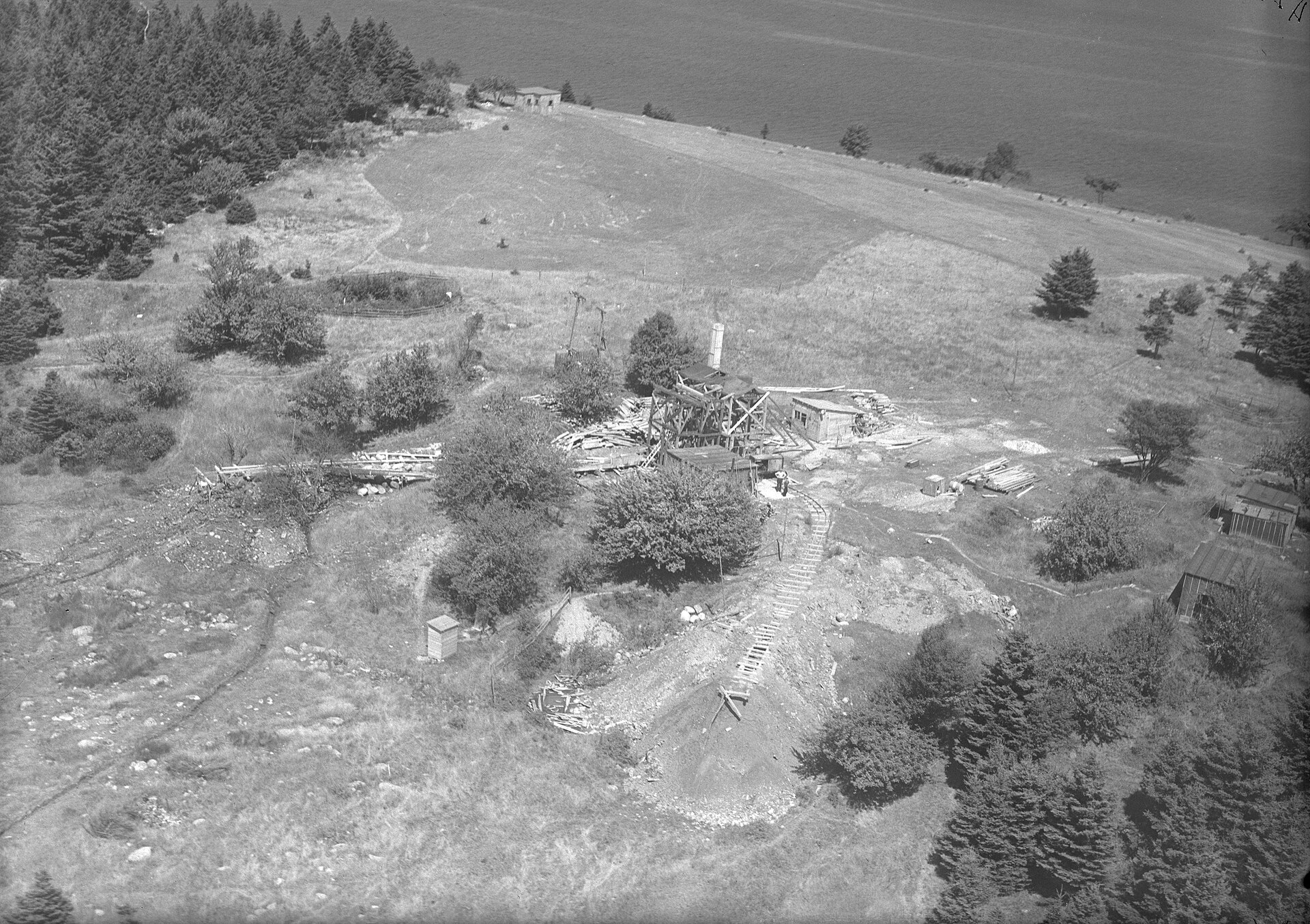
Photo: Wikimedia Commons, CC BY-SA 2.0
What Could Possibly Be Down There — The Treasure Theories That Circulate
What lies buried in this bottomless pit? For more than two hundred years, people have filled that darkness with their own imaginations. It must be stressed, however, that none of the following is established fact — they are all, without exception, theories and conjecture.
The oldest and most famous is the pirate-treasure theory. It grew entangled with the legend that the notorious pirate Captain William Kidd hid an immense fortune somewhere before his execution, and the tale spread that Oak Island was that very hiding place. The second is the Knights Templar theory — the idea that this medieval order, dissolved centuries ago, crossed the Atlantic to hide sacred relics such as the Holy Grail or the Ark of the Covenant on this island. The third is a curious hypothesis tied to literary history: linked to the long-running debate that the true author of Shakespeare's plays was the philosopher Francis Bacon, it holds that Bacon's manuscripts, which would prove this, are stored in the pit. Beyond these, imagination has run without limit — some even claim the missing jewels of Marie Antoinette, lost during the French Revolution, lie here. All these stories share one thing in common: not one of them has ever been proven.
Two Centuries of Sacrifice — Six Lives and Vanished Fortunes
There is a reason Oak Island is called the Money Pit. This island has taken from people not only their fortunes but their lives. The first death on record came in 1861, when the boiler of a pumping engine used to drain the water burst, killing a worker. On March 26, 1897, a laborer named Maynard Kaiser fell to his death inside the pit.
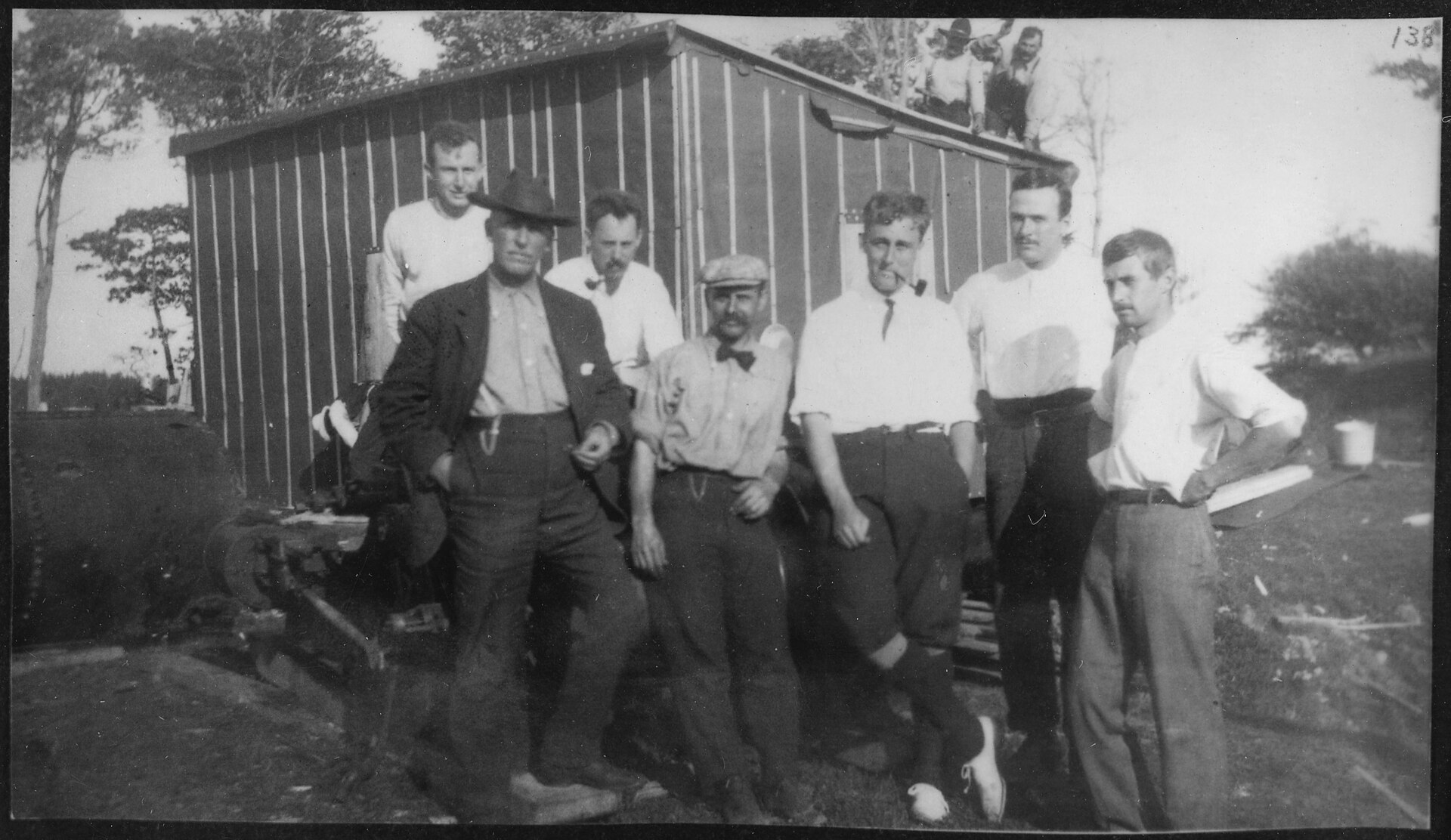
The most tragic accident came on August 17, 1965. Robert Restall, a treasure hunter who had devoted years to the island, suddenly collapsed inside the shaft. His eighteen-year-old son and two other men went down to save him — and one after another they too collapsed, until all four were dead. The cause was thought to be toxic gases, including hydrogen sulfide, that had pooled inside the pit. With this disaster, in which those who rushed to save a father fell beside him, Oak Island's death toll reached six. The money that has gone into it is beyond reckoning. Countless excavation companies were founded and went bankrupt, and even Franklin D. Roosevelt — who would later become president of the United States — invested in the digging in his youth and followed the mystery for the rest of his life. Across the generations, Oak Island has drained the money and captured the hearts of those who came near it.
Perhaps It Is Just a Hole — The Voice of the Skeptics
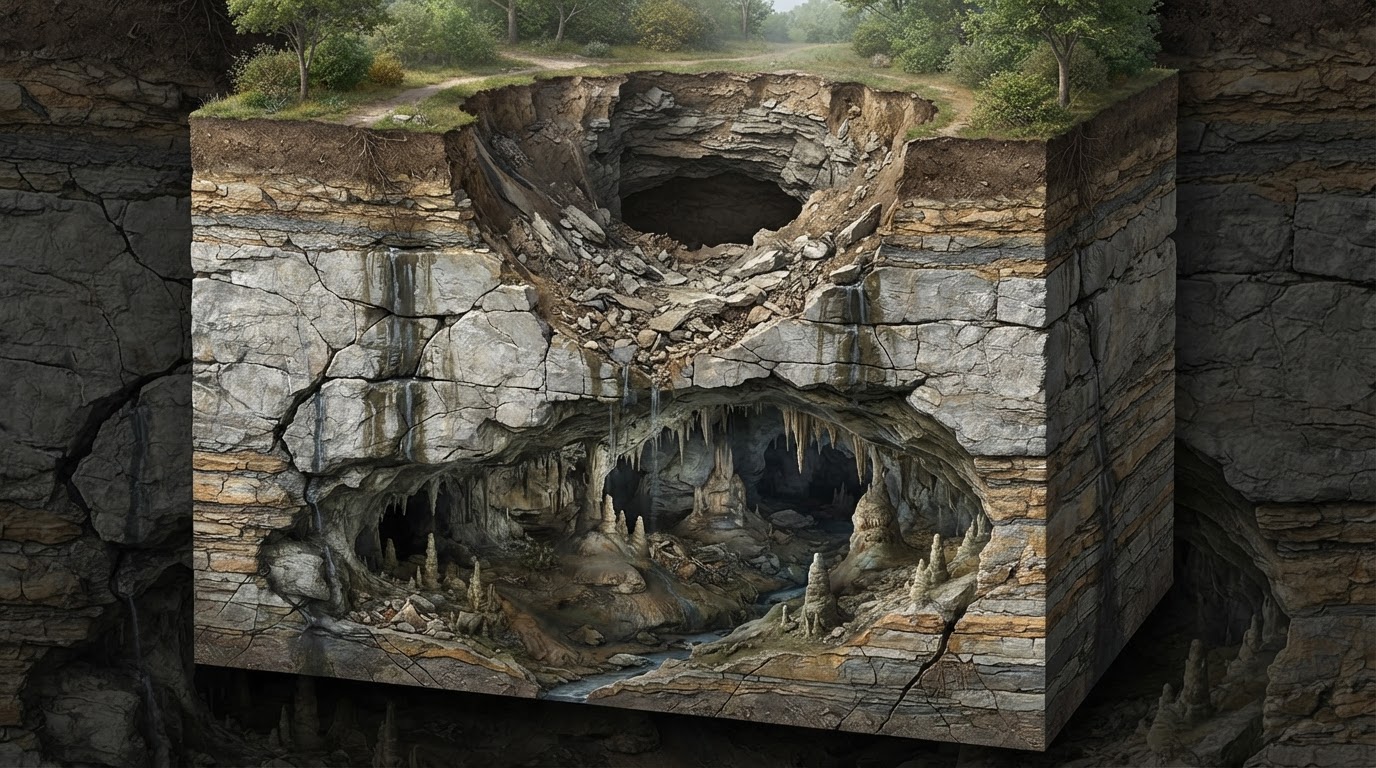
Against this glittering legend, it is worth also hearing the cool voice of science. Quite a few geologists believe the Oak Island Money Pit is not a man-made structure at all, but simply a natural sinkhole. The bedrock beneath the island's eastern side is made of water-soluble limestone and gypsum, and such rock slowly dissolves in groundwater, leaving hollow caves underground. When the roof of one of these caves collapses, the surface above sinks into a saucer-shaped hollow — a sinkhole. In fact, several such natural depressions exist elsewhere on and around Oak Island.
Seen this way, the very clues that amazed the diggers read differently. The loosely packed soil left as a sinkhole collapses can look exactly like ground that was already dug out and refilled, and trees sucked in during the collapse could have stacked up to resemble "wooden platforms." Even the endlessly rising water needs no man-made trap to explain it. A 1995 survey by the Woods Hole Oceanographic Institution concluded that the flooding resulted from a natural interaction between the island's underground freshwater lens and the tidal pressure of the sea — that seawater may simply be seeping in and out through gaps in the underground rock, rather than through some engineered channel. This skepticism does not, of course, explain everything perfectly. But setting this sober geological possibility alongside two centuries of romantic imagining is surely the more balanced way to look.
A Mystery Not Yet Ended
The Oak Island story is still unfolding. In 2006, brothers Rick and Marty Lagina bought a stake in the island's excavation rights, and from 2014 the documentary series The Curse of Oak Island, broadcast on the History Channel in the United States, turned this old riddle into a story watched by millions around the world. The latest drilling equipment, metal detectors, and underwater cameras have all been brought to bear — and yet, astonishingly, after more than two hundred years the conclusion of this hunt is little different from where it began. There have been countless reports of small artifacts and fragments recovered, but "the treasure" the legend speaks of — whether two million pounds, sacred relics, or manuscripts — has still never appeared.
The Woods Hole conclusion ought to settle me, and it does not. I can follow the geology as far as the freshwater lens and the tidal pressure; the sinkhole reading accounts for the loose fill and the timber and the water. What it does not touch is August 17, 1965 — Robert Restall going down and not coming up, and his son going after him, and then two more men, each one making the same decision in the same few minutes. A natural formation is allowed to be dangerous. It is not supposed to be patient. I have read that sequence of four descents more times than is useful, and I still cannot make the word "sinkhole" cover it.
What we can say with certainty is this: on a small island in Nova Scotia there is a strange pit, and since 1795 people have staked their fortunes and their lives on the belief that something lies within it; six have died, and still no decisive treasure has emerged. Whether the pit is a treasure vault designed by some brilliant hand, or merely an ordinary sinkhole shaped by nature over long ages onto which two centuries of human imagination have been layered — we do not yet know. Perhaps the real treasure of Oak Island is not anything buried in the earth, but the stubborn human curiosity that, for more than two hundred years, has never stopped digging toward a hole whose answer no one can know.
---
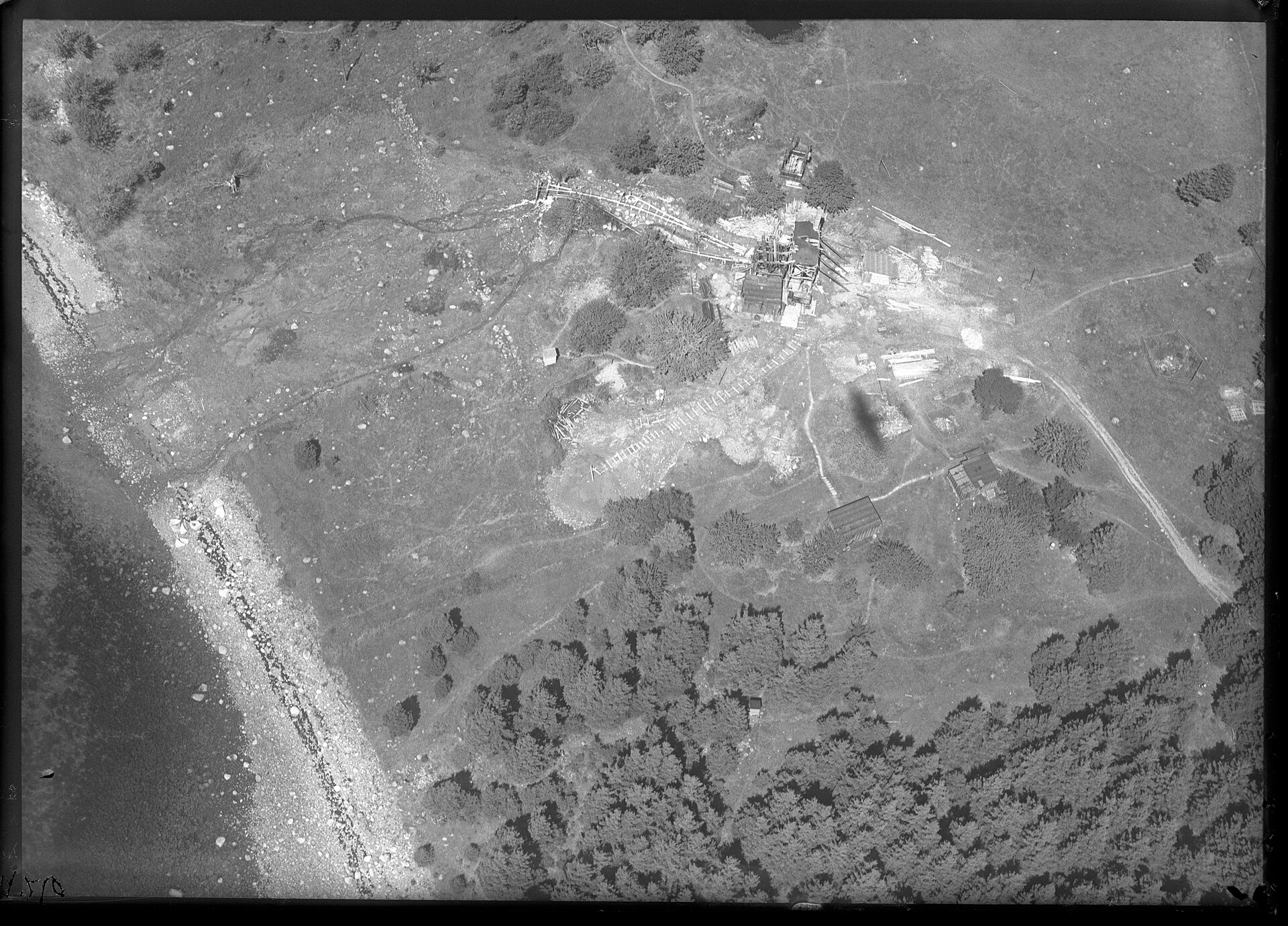
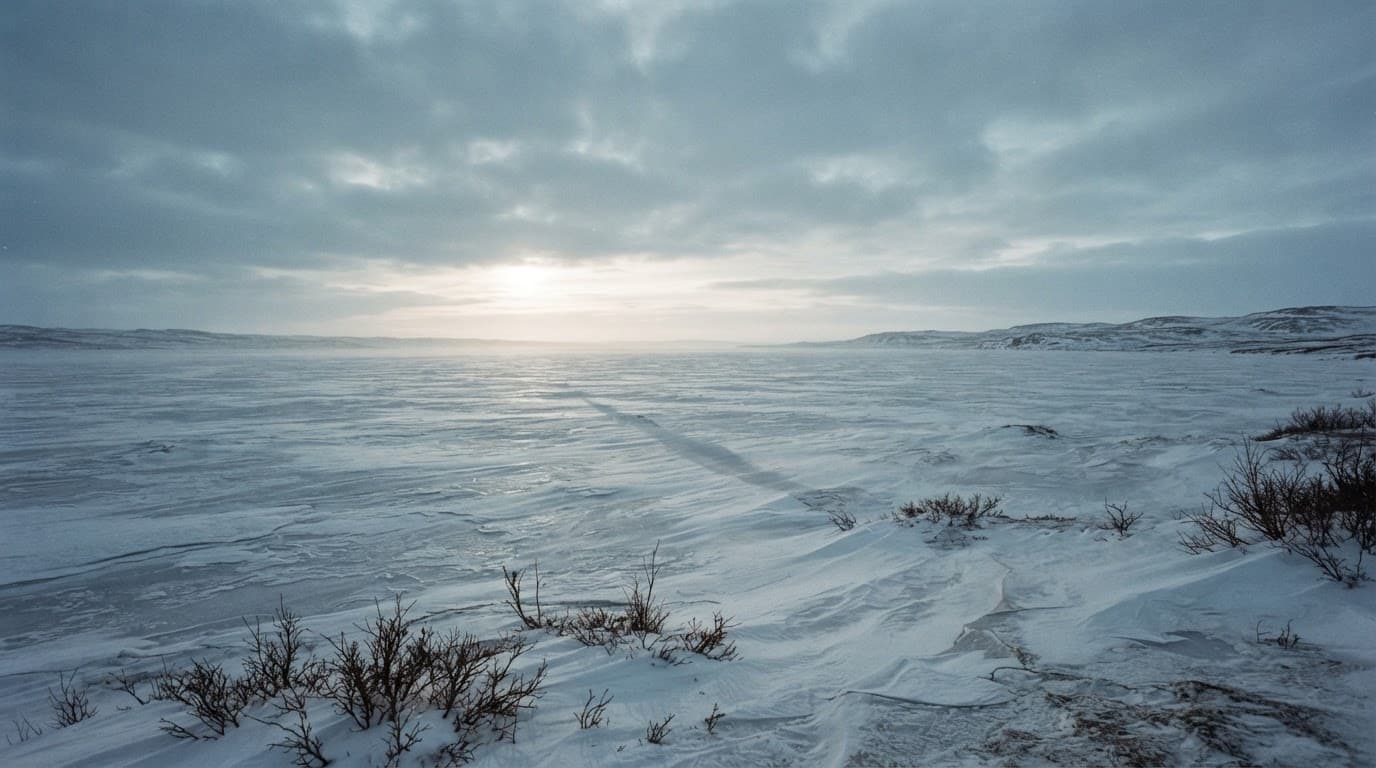
This article combines real documentary photographs of the 1931 dig site and present-day photographs of the island with AI-generated images produced to convey the mood of the story.

Comments
No comments yet — leave the first one.