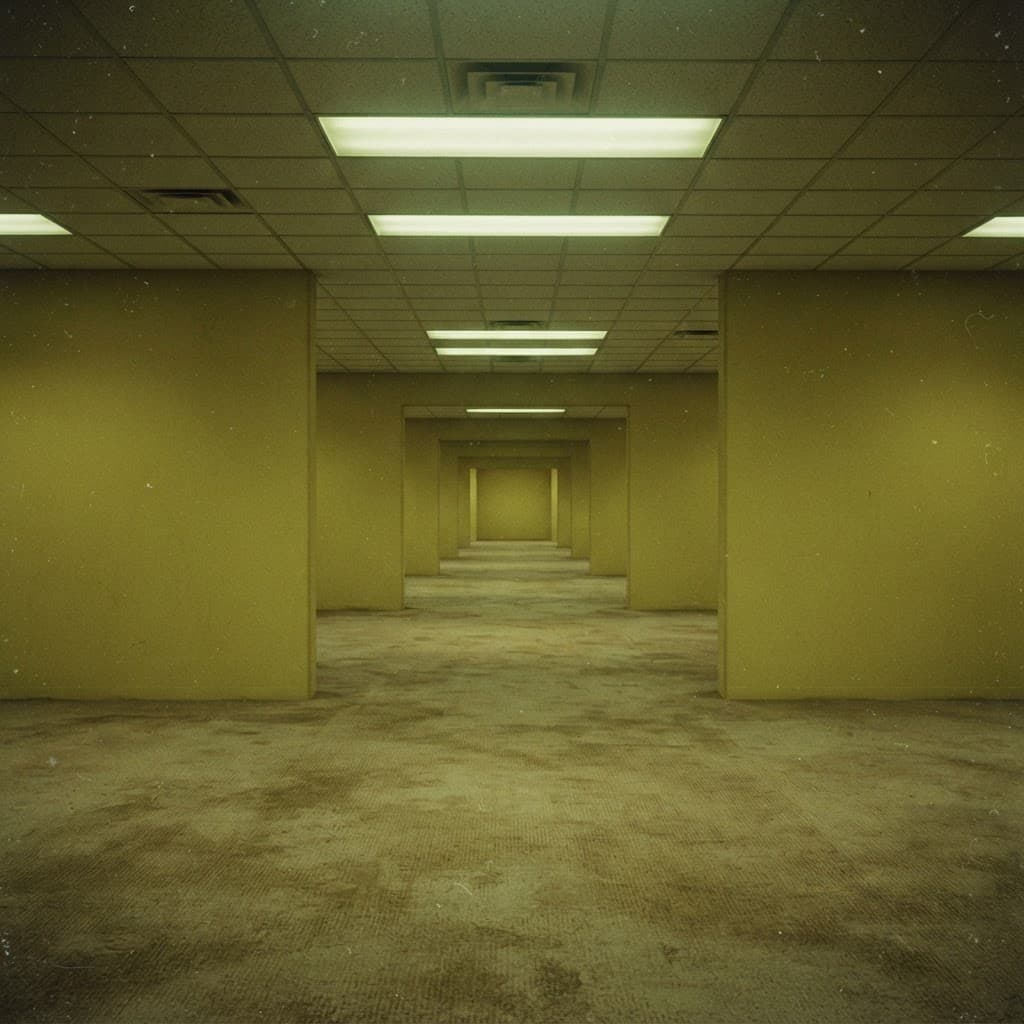
Before we go any further, one thing has to be clear: nobody ever fell into the Backrooms. There is no missing-person report, no coroner, no confirmed victim. What there is, instead, is a single blurry photograph of an empty yellow room and a caption written by an anonymous stranger in 2019 — and out of those two things, the internet built one of the most enduring horror mythologies of its generation. This is the story of how a throwaway post became a place that millions of people can picture with their eyes closed, why the dread of an empty room refuses to let go, and where that first photo really came from. Because in 2024, after five years of the room being treated as a portal to nowhere, someone finally found the door it came through — and it opened onto a furniture store in Wisconsin.
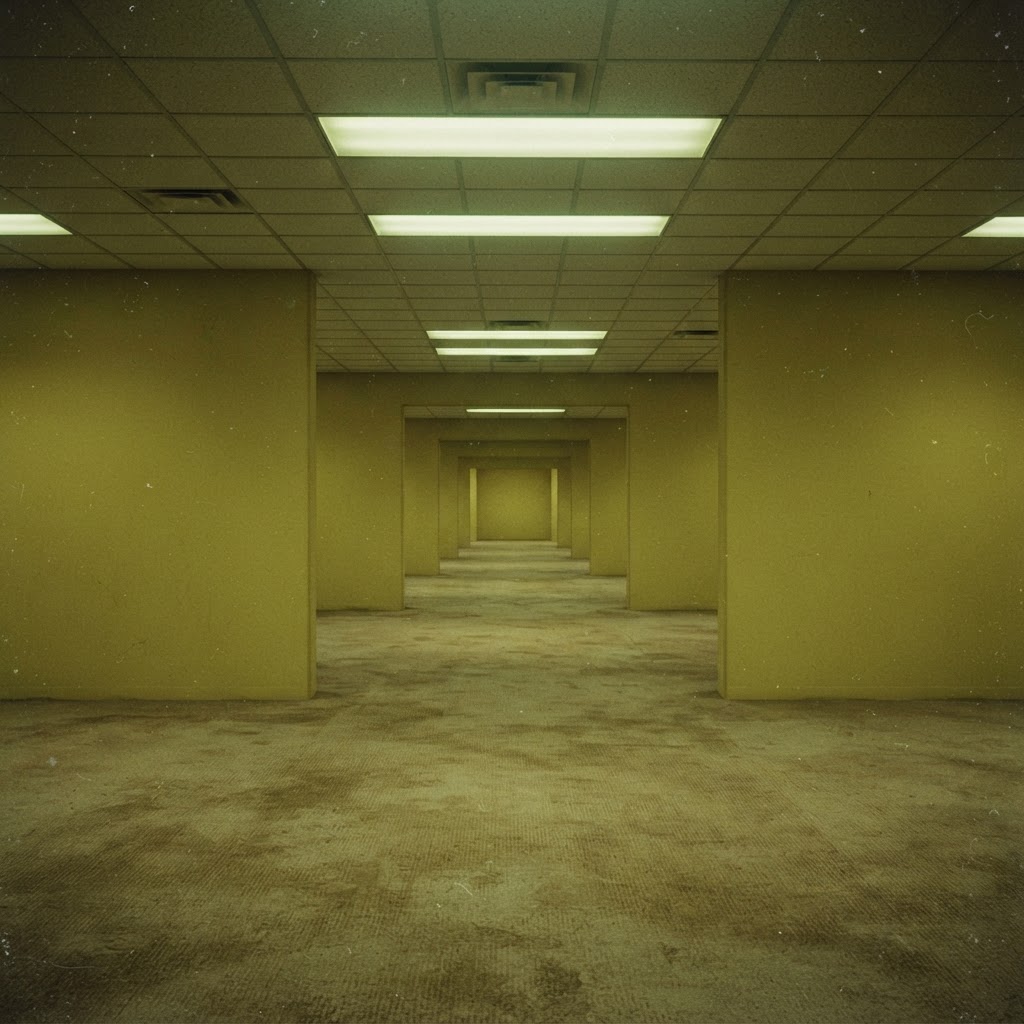
Nothing in my collection resists being archived quite like this one. Everything else in these files has a victim, a date, a place — something a record can be built around. Here the whole object is two artifacts: a photograph with no author and a caption written the following day by someone who was not the photographer. I have spent a fair amount of time with that split, because it is the part people forget. The image and the words that made it terrifying came from two different strangers who never met, and neither of them had any idea what they had made.
The Post That Started Everything
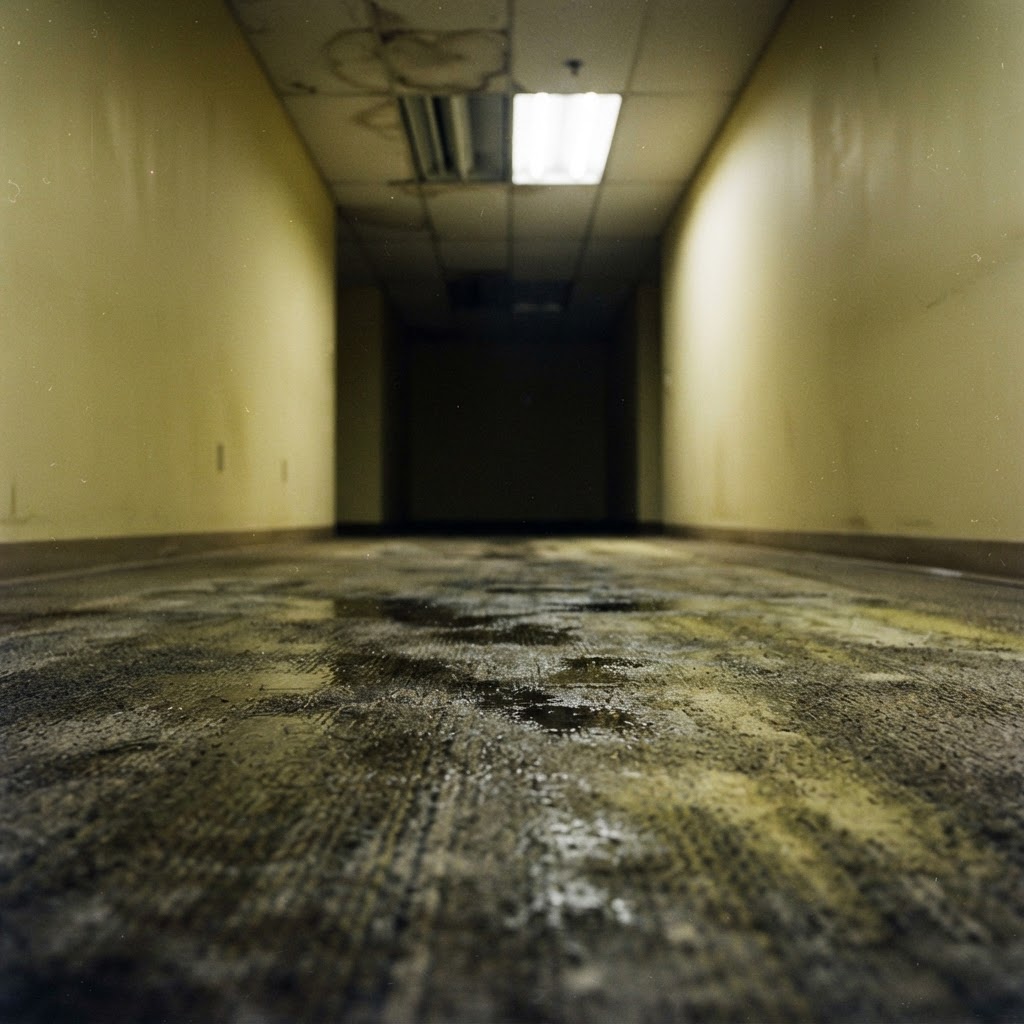
On May 12, 2019, a thread on 4chan's /x/ board — the paranormal board — asked users to post images that felt "off." Unsettling. Wrong in a way that was hard to name. Among the replies, one anonymous user posted a low-resolution photograph: an empty room with mono-yellow walls, damp-looking carpet, and rows of fluorescent ceiling panels. No people. No furniture. No windows. Just a corner, a bit of wall, and the sick fluorescent glow of a place that seemed to go on past the edges of the frame.
The photo alone might have scrolled past. What fixed it in place was the caption another user attached the next day, a few lines that have since been recited, reworded, and re-recorded thousands of times. It read:
"If you're not careful and you noclip out of reality in the wrong areas, you'll end up in the Backrooms, where it's nothing but the stink of old moist carpet, the madness of mono-yellow, the endless background noise of fluorescent lights at maximum hum-buzz, and approximately six hundred million square miles of randomly segmented empty rooms to be trapped in. God save you if you hear something wandering around nearby, because it sure as hell has heard you."
That was it. No monster described, no rules, no map. But the caption did something clever. "Noclip" is a term from video games — the cheat that lets a character pass through solid walls, slipping outside the level into the empty grey void the designers never meant you to see. By borrowing that word, the anonymous writer told a whole generation raised on games exactly what the Backrooms were: not a haunted house you enter, but a place you fall out of the world into. A glitch. A room behind the room.
Why an Empty Room Is So Frightening
There is nothing in that first photo. That is precisely why it works.
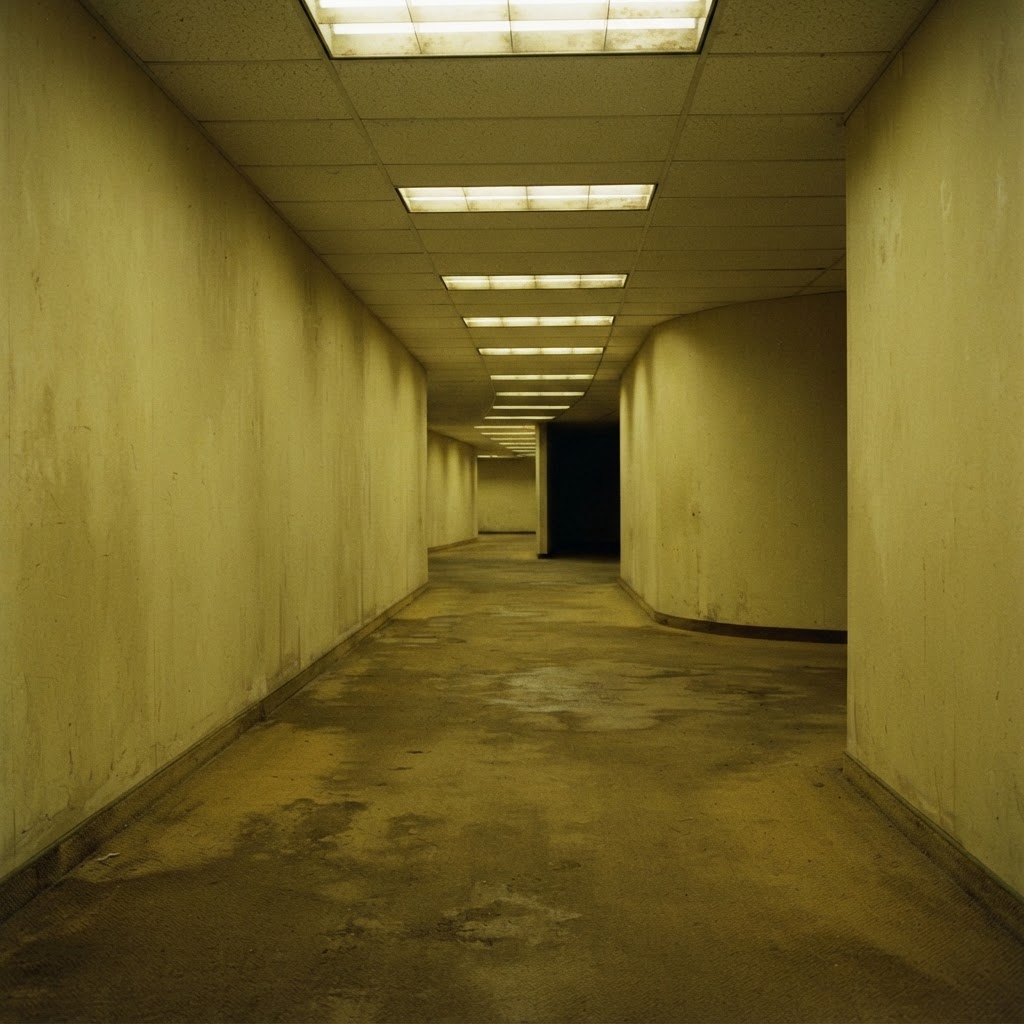
Psychologists and designers have a name for the feeling: the dread of liminal space. A liminal space is a transitional place — a corridor, a stairwell, an empty office at midnight, a hotel hallway, a school after everyone has gone home. These are places built for people, defined entirely by human presence and movement, photographed at the exact moment when all of that is absent. Our brains know these rooms are supposed to be full. When they are empty and lit and silent, some deep pattern-matching part of us reads the absence as wrongness — as if the people didn't just leave, but were taken, and we are next.
The Backrooms photo is liminal space distilled. The yellow is not a warm yellow; it is the exhausted, sun-faded yellow of a waiting room nobody has updated in decades. The carpet looks damp — you can almost smell it. The fluorescent hum is implied so strongly that people swear they can hear it while looking at a still image. And crucially, the space has no exit and no scale. You cannot tell how big it is. The caption's "six hundred million square miles" tells you: infinite. A room you cannot leave, that looks exactly like a room you have already been in, forever. That is the whole horror, and it needs no monster to land.
From One Photo to an Infinite Building
Here is where the Backrooms became something no single author could have written, because no single author did.
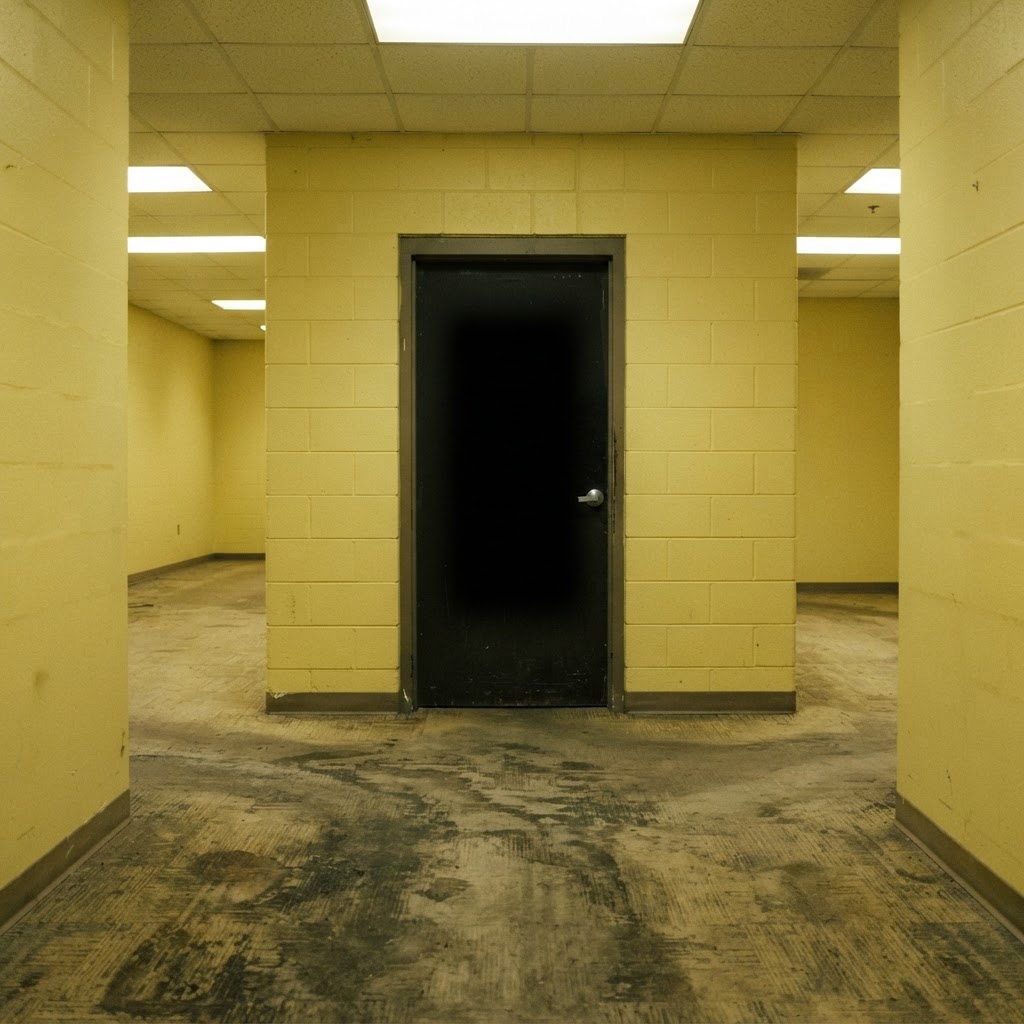
Almost immediately, users began to expand it. If the first room was infinite, what was behind it? Other users invented new areas and called them "Levels." Level 0 was the original yellow rooms. Level 1 became a dim concrete warehouse. Further levels grew stranger — flooded parking garages, endless suburban houses, oceans of office cubicles — each documented on collaborative wikis in the deadpan, clinical voice of an official archive. Then came the "entities": things that wandered the levels, described with the same fake-bureaucratic seriousness. None of this was planned. It grew the way the SCP Foundation had grown before it, and the way folklore has always grown: many hands, no author, everyone adding a room to a house that can never be finished.
It is worth stating plainly, because a good mythos is designed to blur this line: the Levels and entities are fan-canon. They are collaborative fiction, invented after the fact, layered onto a photograph that was never meant to carry any of it. There is no master document, no original source that "confirms" Level 3 or names a creature. The Backrooms is folklore in real time — and knowing that does not make walking through it any less unnerving, which is exactly the point.
The Teenager Who Made It Move
For three years the Backrooms lived as images and text. Then, on January 7, 2022, a sixteen-year-old from Northern California named Kane Parsons uploaded a short film to his YouTube channel, Kane Pixels.
His version reframed the mythos as found footage. Shot to look like a camcorder tape from the late 1990s, it followed someone who noclips out of reality mid-recording and stumbles, terrified, through the yellow rooms — and then past them, into a vast industrial complex where something is very clearly hunting. Parsons had taught himself visual effects, and the craft was startling: the grain, the shaky handheld camera, the entity that moved wrong. The video went viral almost instantly, and the series that followed turned a static meme into a moving, breathing place. It is not an exaggeration to say Parsons gave the Backrooms its definitive on-screen form.
Hollywood noticed fast. In February 2023, A24 announced a feature film adaptation with Parsons directing — his feature debut, making him the youngest director in the studio's history. The finished film, Backrooms, starring Chiwetel Ejiofor and Renate Reinsve, was released in 2026 to strong reviews and became a genuine box-office success. A story that began as an anonymous caption on a paranormal message board had traveled all the way to a wide theatrical release, without ever having a single confirmed fact behind it.
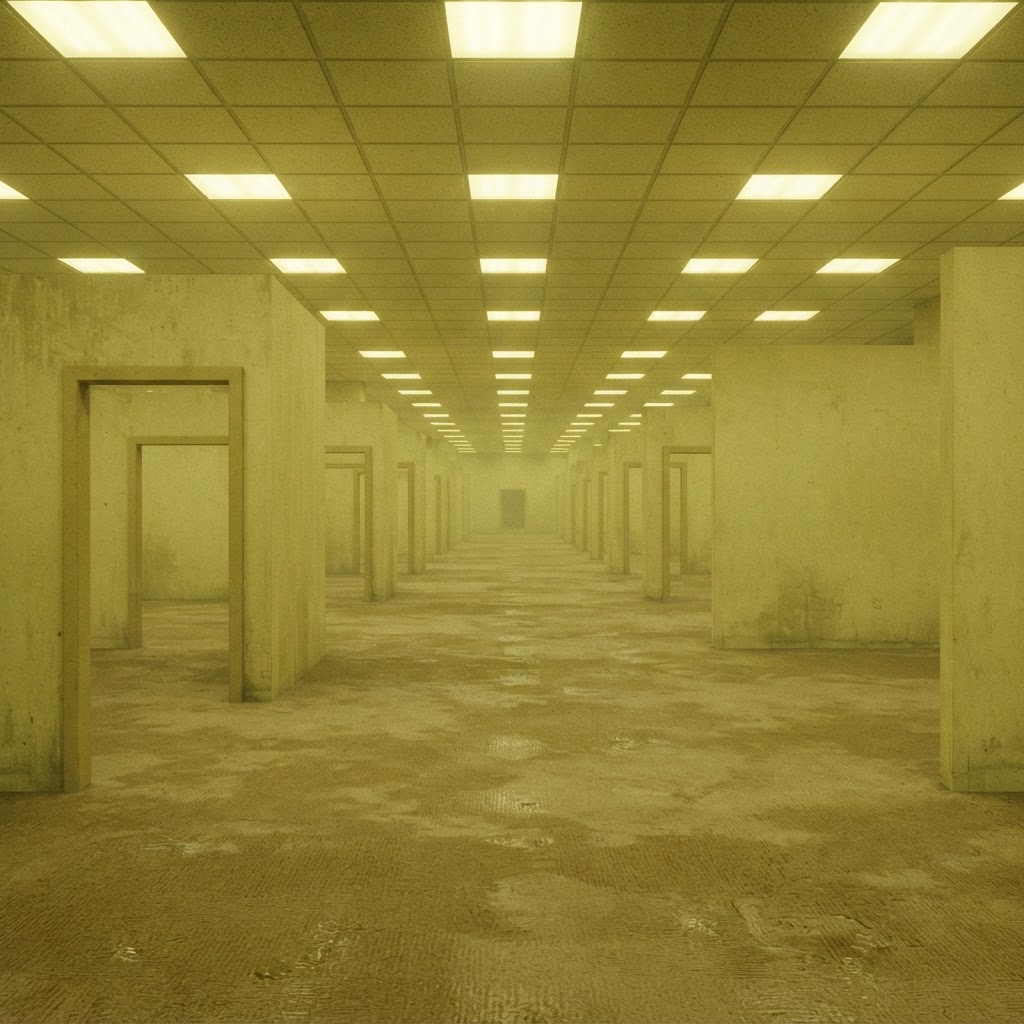
Here is the strange part about the film's power, and about the whole mythos: everyone knew it wasn't real, and it frightened them anyway. That is the signature of internet folklore. Nobody watching believes they will literally noclip through a wall. But the feeling — that a wrong turn in a familiar building could drop you somewhere with no exit — is real enough to raise the hair on your arms. The Backrooms works the way the best campfire stories work: the events are fiction, but the dread is completely genuine, and the two live side by side in your head the entire time.
A slow drift forward through the empty yellow rooms, the fluorescent light stuttering overhead — a mood recreation, not real footage.
The Door Behind the Room
For five years, the original photograph sat at the center of all of it like a sealed box. Where was that room? Who took the picture? Nobody knew, and the not-knowing suited the legend perfectly. A room from nowhere, a photo with no author — it was almost better as a mystery.
Then, in May 2024, a group of dedicated fans in a Backrooms Discord community finally cracked it. Working like detectives, they traced the image back to a tweet from 2019 that had casually named the location and been ignored by the entire internet. The link was dead — but they used the Internet Archive's Wayback Machine to pull up the old, deleted page. What surfaced was a renovation blog from 2003, documenting the remodeling of a HobbyTown store at 807 Oregon Street in Oshkosh, Wisconsin. In an eerie touch, nearly every image on the archived blog had rotted away over the years — except the Backrooms photo itself, and one more shot of the very same room from another angle.
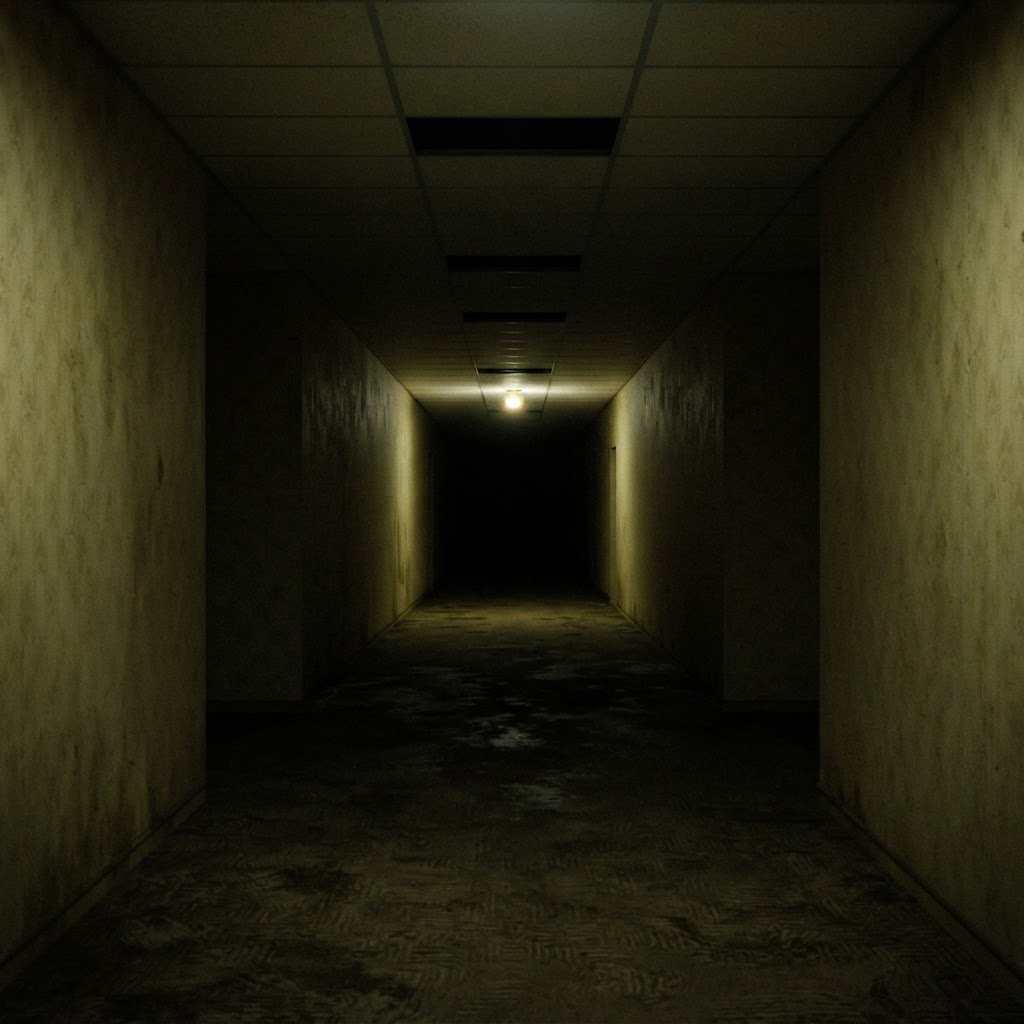
The truth was almost aggressively ordinary. The photograph was taken during renovation, most likely in 2002. The space had earlier been a furniture store; the yellow walls were temporary partitions, the missing windows and harsh fluorescent lighting simply the reality of a mid-remodel commercial interior, cleared out after water damage. The room that had haunted millions of people was a home-furnishings and hobby shop in a small Wisconsin city, caught in the least glamorous moment of its life. Today the space has been renovated again into a radio-controlled car racing track — the infinite sick-yellow void repainted in clean, ordinary white.
What the Backrooms Actually Is
So it is worth saying clearly, the way it is worth saying at the end of any good piece of folklore, because a well-built mythos can quietly convince you of the opposite: the Backrooms is not a real place, and no one has ever been lost in it. The photo is real — it is a genuine snapshot of a genuine room in Oshkosh, Wisconsin. Everything else — the noclip, the infinite levels, the wandering entities — is a story, built collaboratively by strangers over half a decade, layered onto an ordinary image until it became something that could scare a teenager into making a film and a studio into financing one.
And yet the fear does not diminish once you know all this. That is what makes the Backrooms such a pure specimen of the internet age. It proves that a nightmare no longer needs a witness, a body, or a single verifiable fact. It only needs a photograph of an empty room, a caption in the right voice, and enough strangers willing to keep walking deeper into it together. The next time you find yourself alone in a fluorescent-lit hallway late at night — an office after hours, a school on a weekend, a waiting room with nobody in it — you may feel the pull of it: the quiet, absurd, impossible-to-shake thought that if you turned the wrong corner, the room might simply keep going, and going, and never let you out.
The detail I have not been able to shake is from the archived blog itself. When those fans pulled the 2003 HobbyTown page out of the Wayback Machine, nearly every photograph on it had rotted off the server over two decades — dead links, broken images, an ordinary page quietly emptying itself out. Two survived. The Backrooms photo, and one more frame of the same room from another angle. I have gone back to look at that page a few times, at all the missing pictures around the two that stayed, and I still cannot make the word coincidence sit down properly.
---
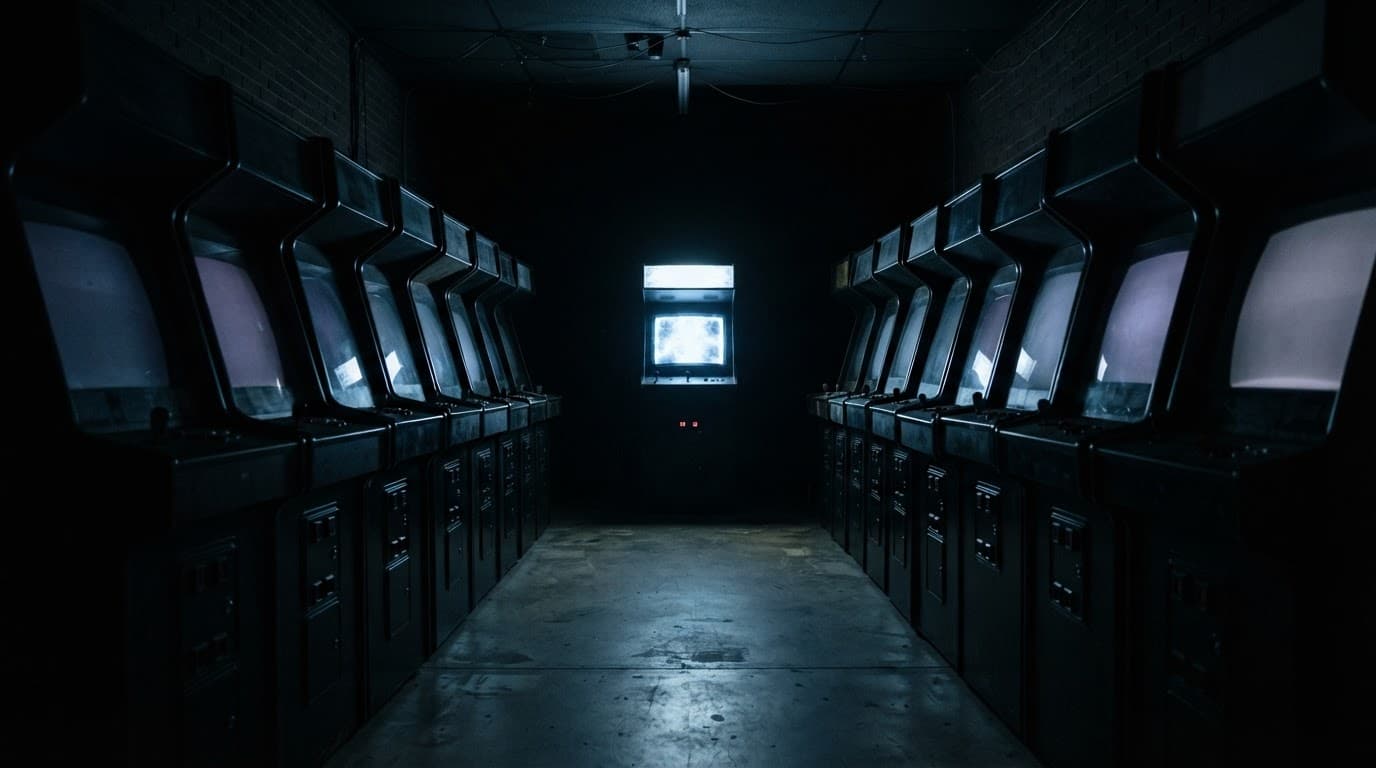
The images and video in this article are AI-generated works produced to convey the mood of the story, and are not photographs of any actual person or event.

Comments
No comments yet — leave the first one.