Before we go any further, one thing has to be clear: there was never a puppet show called Candle Cove. No local station broadcast it, no child ever watched it, no marionette named Horace Horrible ever crossed a screen. What there is, instead, is a short piece of fiction — a fake forum thread written by a single author in 2009 — that convinced a startling number of people they had almost remembered it too. This is the story of how a few hundred words, formatted to look like strangers swapping childhood memories, became one of the most quietly disturbing pieces of internet horror ever written, why the idea of a shared false memory reaches somewhere older stories can't, and why knowing it's fiction does nothing to loosen its grip. Because the real horror of Candle Cove was never the puppets. It was the last line — and what it says about how memory actually works.
A note on why this one sits in an archive of ostensibly real cases. I am K. Woo, and I file fiction only when the fiction has started behaving like evidence. Candle Cove qualifies. Tracing the copies that spread after 2009, I kept finding versions with Straub's byline stripped off and extra replies appended — strangers adding their own remembered episodes to a thread that was never a thread. At some point I stopped being able to tell which posts belonged to the original and which had been grafted on later by people who thought they were confirming something.
The Thread That Looked Like a Memory
Candle Cove is not written as a story. It is written as a forum thread — the kind that used to fill nostalgia boards, where adults dredge up the names of half-forgotten TV shows from their childhoods and help each other fill in the gaps. It opens with a user named Skyshale033 asking whether anyone else remembers a strange local kids' program from around 1971, a low-budget pirate puppet show called Candle Cove that seemed to air only in his area.
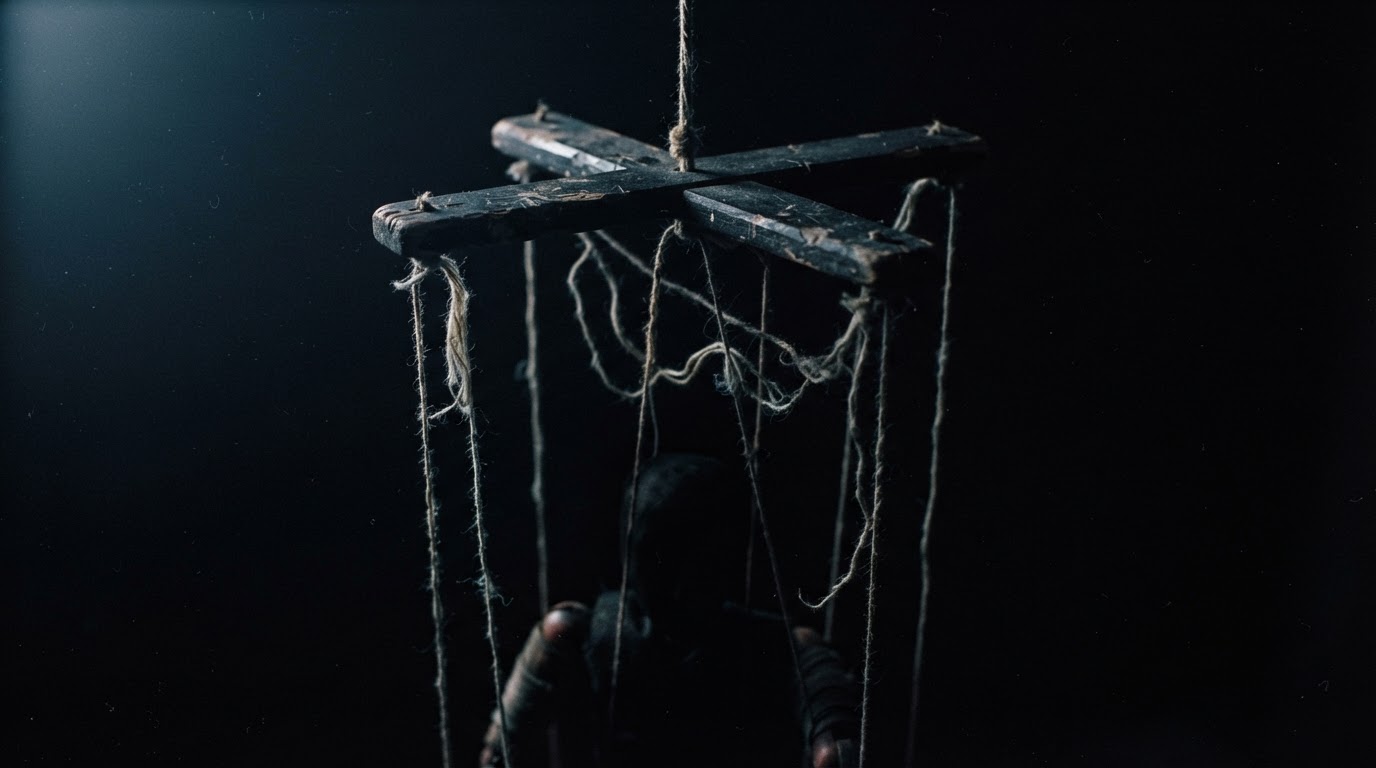
Another user, mike_painter65, replies that yes — he remembers it. And from there the thread does the thing that makes it work: the memories start returning, one poster at a time, each new reply adding a detail the others suddenly recognize too. They remember the girl protagonist, Janice, and her ship. They remember the villain, a pirate called Horace Horrible with a monocle and a pencil-thin moustache. They remember his sidekick — a horrible thing called the Skin-Taker, a marionette made of what looked like bones and skin, whose jaw clacked when he talked. The recognition builds the way real memory does, warm and collaborative, everyone delighted to find that a strange little fragment of their childhood was real after all, and shared.
That format is the whole trick. Straub understood that a horror story told at you keeps you at arm's length, but a horror story you seem to be remembering alongside other people gets inside, because it borrows the authority of your own past. You are not being told a scary thing happened. You are being invited to recall it.
Where the Warmth Curdles
At first the remembered show is merely cheap and odd. Then, detail by detail, the posters recall things that a children's program should never have contained.
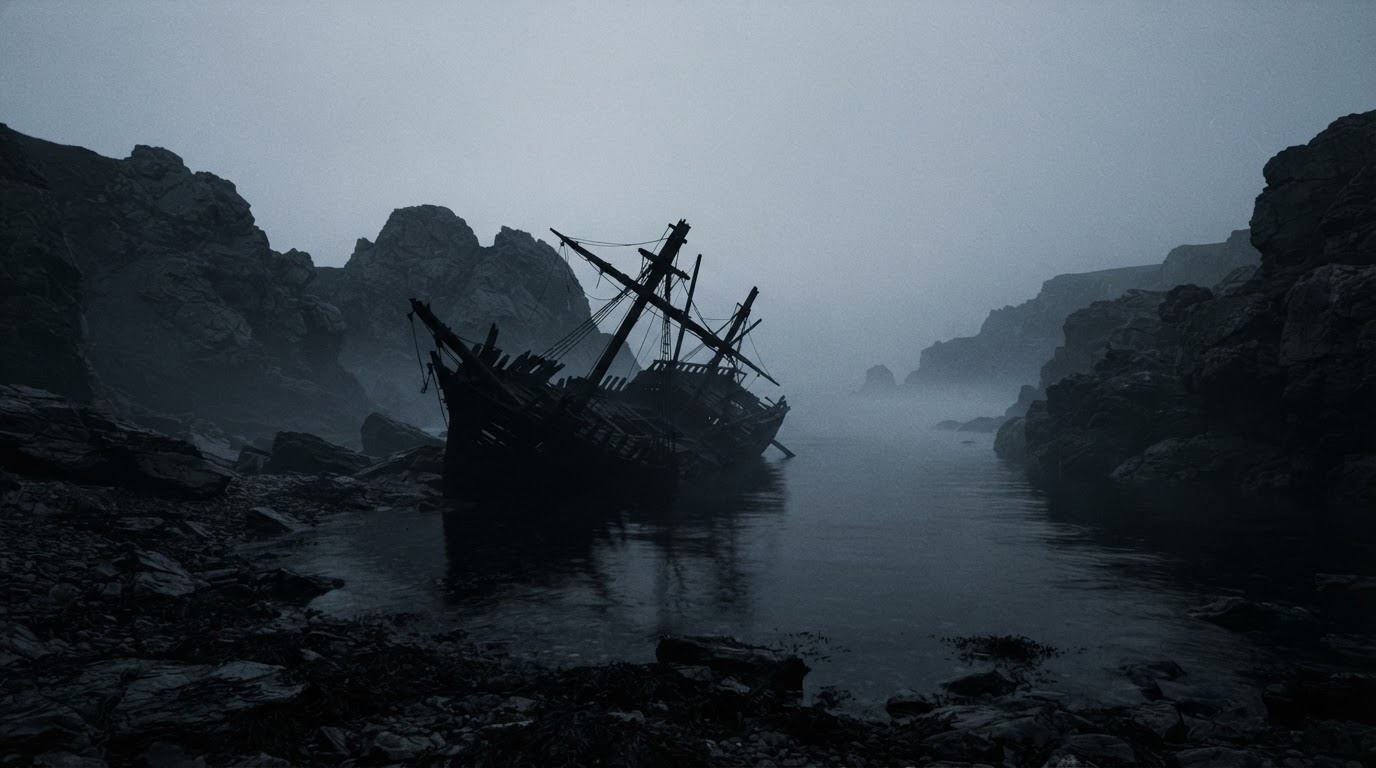
They remember the sets: not a jaunty cartoon ocean but a dark, grey seaside cove, the ship moving across black water past the silhouette of a wrecked hull. They remember that the Skin-Taker's song was about "going to sea" in a way that made no sense and frightened them. One poster, PhillipJ8, recalls the episode that stayed with him worst of all — the one where the picture cut to Janice, the child heroine, tied up while the Skin-Taker slowly ground his teeth, and then the show simply held on her face while she screamed. Not a scene. Not dialogue. Just a child, screaming, for what felt like the entire episode.
The others go quiet, and then agree. They remember that one too.
This is the pivot of the whole piece, and it is executed with real craft. The nostalgia never breaks character — the posters keep talking in the fond, casual voice of adults reminiscing — but what they are fondly reminiscing about slides, sentence by sentence, from a corny puppet show into something that should not have been broadcast to children, or perhaps at all. Nobody in the thread panics. That is what makes the reader's skin crawl. They are describing a nightmare in the tone you'd use to remember a Saturday-morning cartoon.
The Line That Made It a Legend
Then comes the ending, and it is the reason Candle Cove is remembered at all.
The poster who started it all, Skyshale033, writes that the conversation unsettled him enough that he asked his mother about it — she was the one who used to sit him in front of the TV to watch it. And his mother remembers something. She remembers being glad he had a show he liked. She remembers him running to the television when it came on.
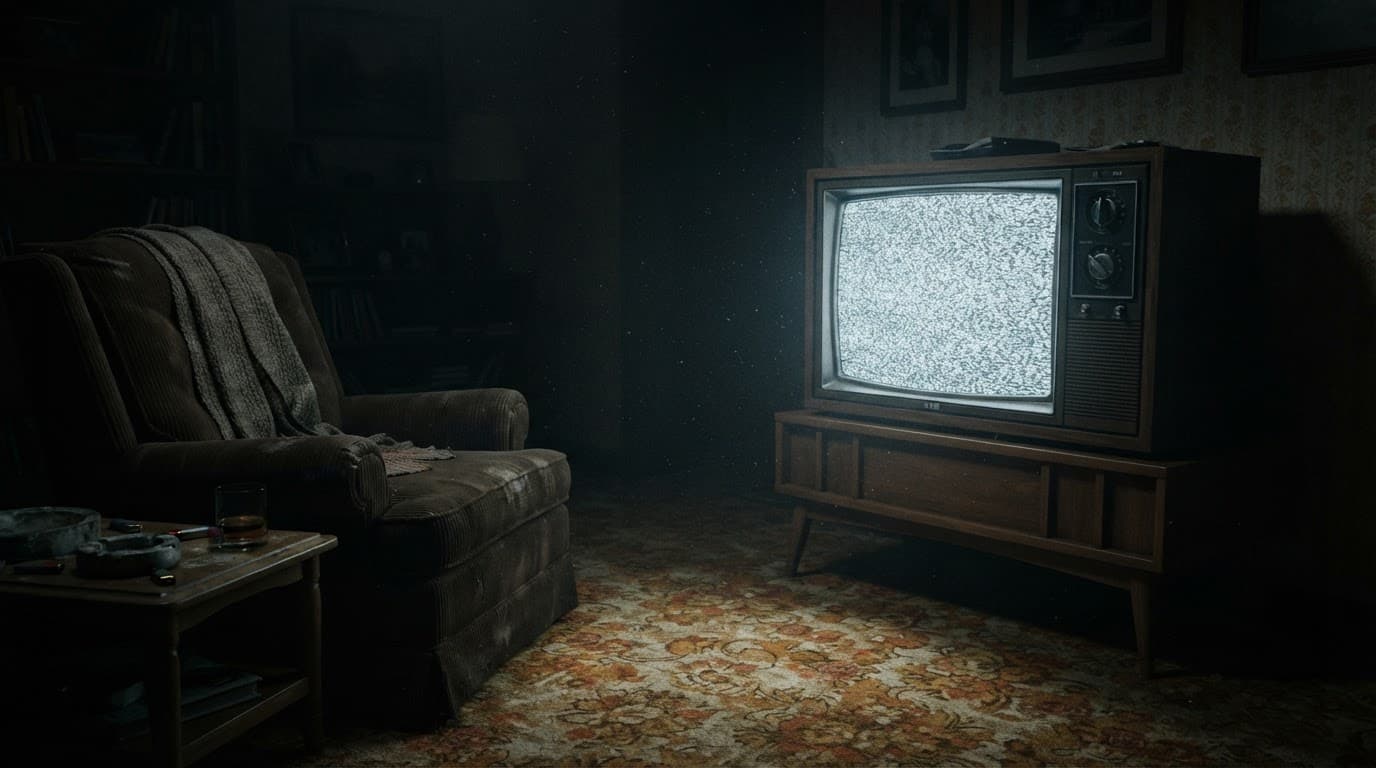
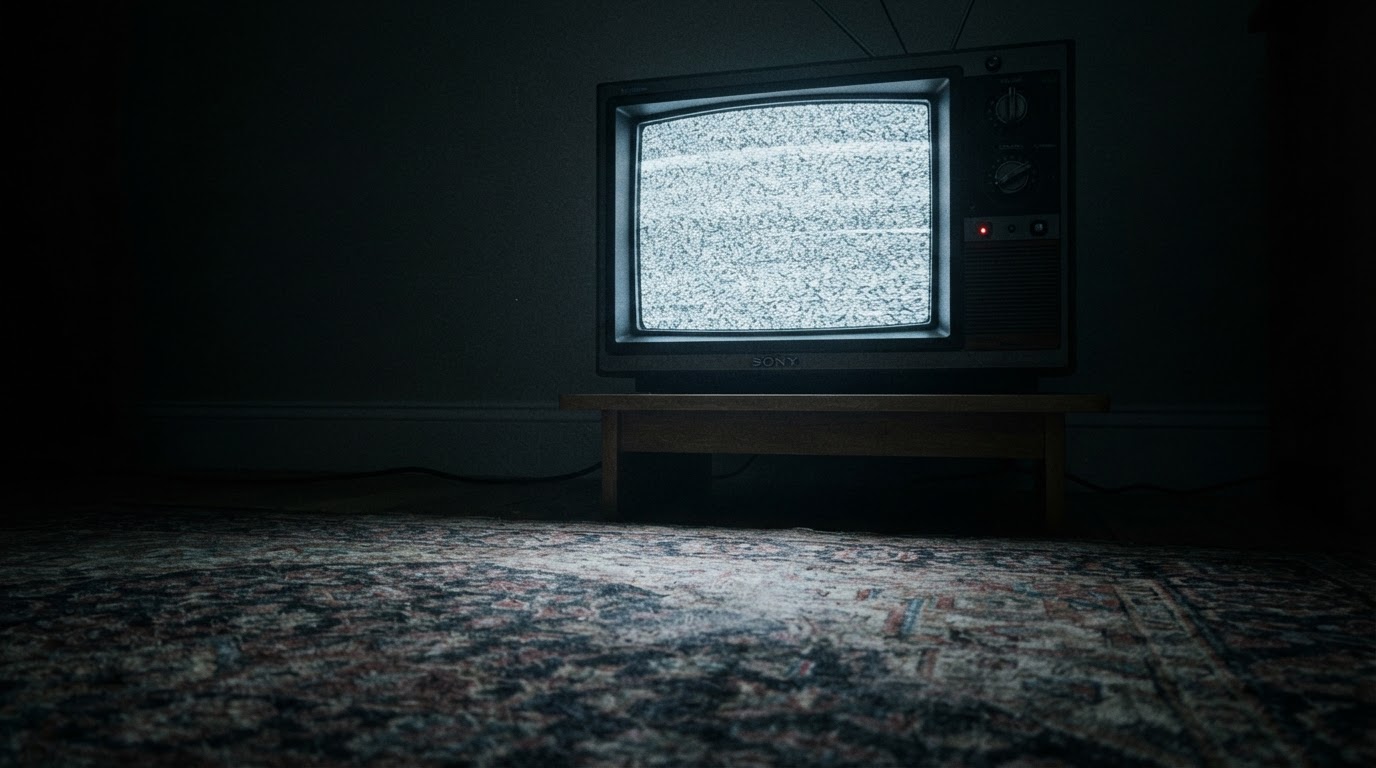
But she does not remember Candle Cove. She never saw a pirate, or a girl named Janice, or a puppet made of skin. What she remembers is walking in to find her small son sitting on the floor, staring at the television, delighted, watching a channel that was broadcasting nothing but static. Snow. Grey noise. For half an hour at a time, she says, he would sit and watch static, and smile, and say he was watching Candle Cove.
That is the last line. The thread ends there. And in a single sentence it reframes everything above it: the ship, the Skin-Taker, the screaming child were never on television at all. Something else was — or nothing was — and a room full of children saw the same impossible show inside the same grey hiss, and carried it, half-buried, into adulthood, until a forum thread let them dig it back up together.
Why a Shared False Memory Is Worse Than a Ghost
A haunted house frightens you because something is in the room with you. Candle Cove frightens you because the room is your own head, and it may not be telling the truth.
The story taps a real and deeply unsettling phenomenon. Human memory is not a recording; it is a reconstruction, rebuilt a little differently every time we recall it, and remarkably easy to seed with things that never happened. Psychologists have implanted entire false childhood memories in test subjects with nothing more than suggestion and a few confident details. And there is a documented tendency for groups to converge on the same false memory — a shared certainty about an event that provably did not occur. Candle Cove takes that quiet scientific fact and dresses it as horror. What if the thing you all remember, the thing that feels most solidly like your own past, was never there?
That is why the format matters so much. A monster you can close the book on. But Candle Cove installs a small, permanent doubt: the suspicion that some warm, specific memory of your own childhood — a show, a song, a face — might be static that your young mind, desperate to make the noise into something, painted over with a picture. The dread doesn't stay on the page. It follows you home and starts quietly auditing your memories.
From Forum Thread to Television
Candle Cove was written by Kris Straub, a cartoonist and horror writer, and posted on March 15, 2009, on his site Ichor Falls — a project explicitly devoted to original horror fiction. It was fiction from the first word, and its author has never pretended otherwise. But like the best creepypasta, it was built to pass as authentic, and it did. Copied and pasted across forums and image boards, stripped of its byline, it spread as the very thing it imitated: a real thread by real strangers remembering a real show. People began to write, half-joking and half-not, that they thought they remembered Candle Cove too.
Its influence outgrew the page. In 2016, the SyFy anthology series Channel Zero adapted Candle Cove as its entire first season — six episodes that took Straub's few hundred words and expanded them into a full narrative about a man returning to his hometown and the buried memory of the show, and the children who once watched it. That a piece of anonymous-looking web fiction could become a prestige-television season is a measure of how deep its central idea cut. The adaptation kept the essential machinery intact: the corroded nostalgia, the puppets that should not exist, the screaming, and above all the terrible suggestion that the show was watching the children as much as they were watching it.
A slow push toward an old television glowing with static in a dark room, the grey snow faintly crawling — a mood recreation, not real footage.
What Candle Cove Actually Is
So it is worth saying plainly, the way it is worth saying at the end of any good piece of folklore, because the whole thing is engineered to make you doubt it: there was no Candle Cove. Kris Straub wrote it. No local station in the 1970s aired a pirate puppet show with a monocled villain and a marionette made of skin. No group of children sat watching static and seeing the same phantom program. The screaming episode never existed because the show never existed. Every "I think I remember that too" that ever appeared under a copy of the story was the mind doing exactly what the story is about — filling a suggested blank with a picture, and mistaking it for memory.
Verification is my whole method, and here it is worth nothing. I can establish the date, the site, the author, the byline — every fact a file requires — and it does not touch the thing itself. What I cannot verify is the only claim that matters to me now: whether PhillipJ8's screaming episode was invented by Straub or added by a later hand and absorbed back into the canonical text. I have compared the earliest copies I could locate and the wording differs. Which means somewhere in the record there is an episode that no one wrote, remembered by people who never saw it.
And yet the fear does not lift once you know all this — if anything, knowing makes it worse, because the story has just demonstrated its own thesis on you. That is what makes Candle Cove such a pure specimen of internet horror. It doesn't need a haunted place or a body or a single true event. It only needs a plausible format, a slow curdle from warmth to dread, and one last line that turns the reader's own memory into the haunted house. The next time a vivid fragment of your childhood surfaces — a jingle, a face, a show you're sure was on — you may feel the smallest cold pause before you trust it: the quiet, absurd, impossible-to-shake thought that behind the picture, there might only ever have been static.
---
The images and video in this article are AI-generated works produced to convey the mood of the story, and are not photographs of any actual person or event.

Comments
No comments yet — leave the first one.