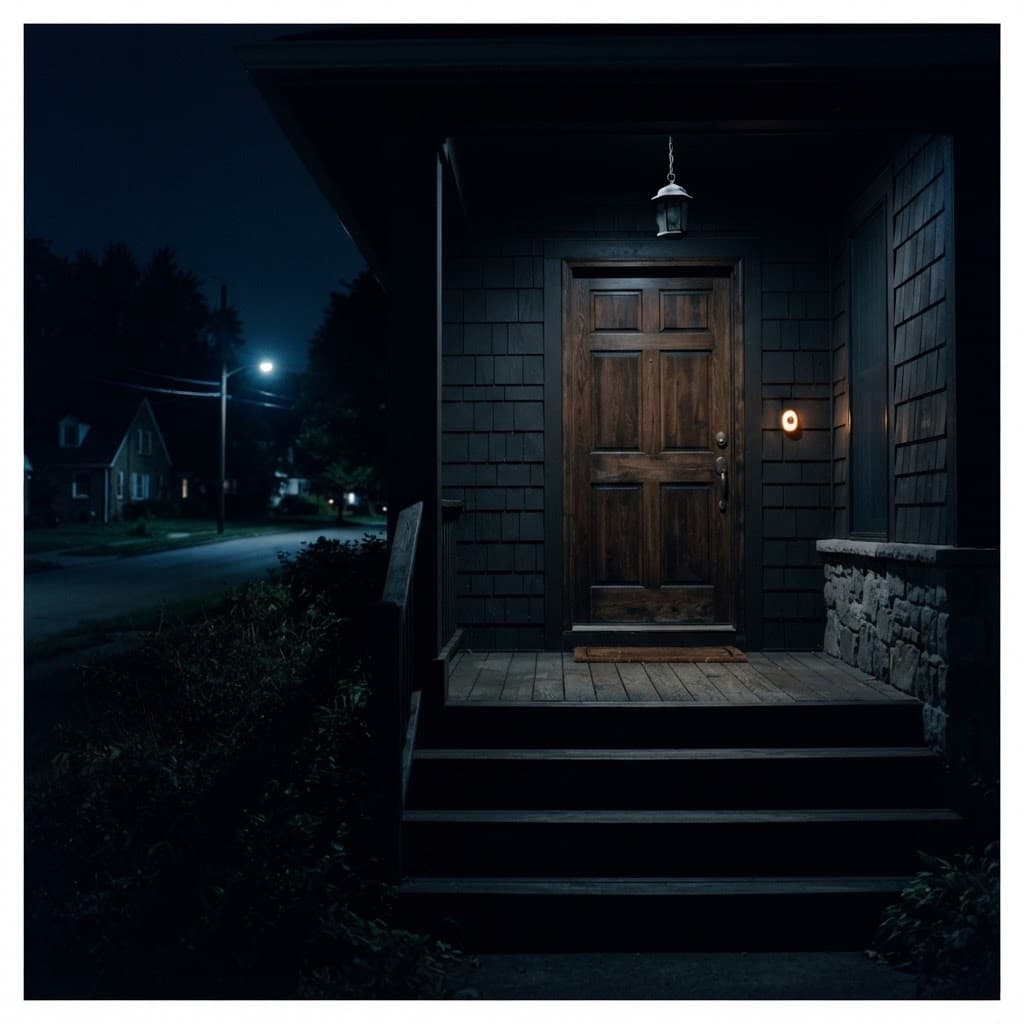
One evening in 1996, a man sat in his car in a movie-theater parking lot in Abilene, Texas, writing out a check. There was a soft knock at the window. Two boys, perhaps ten and fourteen years old, stood beside the car and asked, in oddly polite and measured voices, for a ride home to get money for the movie. It was an ordinary enough request — until he looked directly at their faces. Their eyes were completely black. No whites. No irises. Just black, from lid to lid. A sudden, crushing wave of dread rose in his chest, and one of the boys spoke again, his voice turning insistent: "We can't come in unless you tell us it's okay. Let us in." The man rolled up his window, started the engine, and drove away. When he glanced back, the parking lot was empty. Two years later, he wrote the whole thing down and posted it to an internet mailing list — and from that single post grew one of the most persistent legends of the online age: the Black-Eyed Children.
Internet legends usually arrive at my desk without an author, which is what makes this one difficult. Bethel's post is dated, attributed, and signed by a man who held a byline at a real Texas paper and had a career to lose by it — the opposite of every anonymous origin I normally deal with. So I went at the text instead, and what stopped me was not the eyes. It was the showtime. He notes that the last screening had already started, which makes the boys' stated reason for needing a ride collapse on contact. A fabricator does not hand you the detail that ruins the pretext. Somebody remembering does.
The First Post — Brian Bethel, 1996
The man was Brian Bethel, a working newspaper reporter for the Abilene Reporter-News in Texas — a real journalist, not an anonymous online storyteller. According to his account, in 1996 he pulled into a movie-theater parking lot to write a check to cover a bill. The theater was showing Mortal Kombat. As he sat with the check on his knee, the two boys approached and knocked on the glass.
What unsettled him first was not their eyes but their manner. For children, they spoke too smoothly, too formally, choosing their words like adults reading from a script. They said they needed a ride to their mother's house to fetch money for tickets — yet the last showing had already begun, which made the request make no sense. A vague unease crept over him even before he understood why. Then he looked at their faces and saw the black eyes, and the unease became raw terror. He drove off, and the boys were simply gone.
In January 1998, Bethel typed the story out and shared it on an early internet ghost-story mailing list. He noted that a second person claimed to have had a similar, entirely separate encounter in Portland, Oregon. That post is regarded as the origin point of the entire phenomenon.
The Pattern the Reports Settled Into
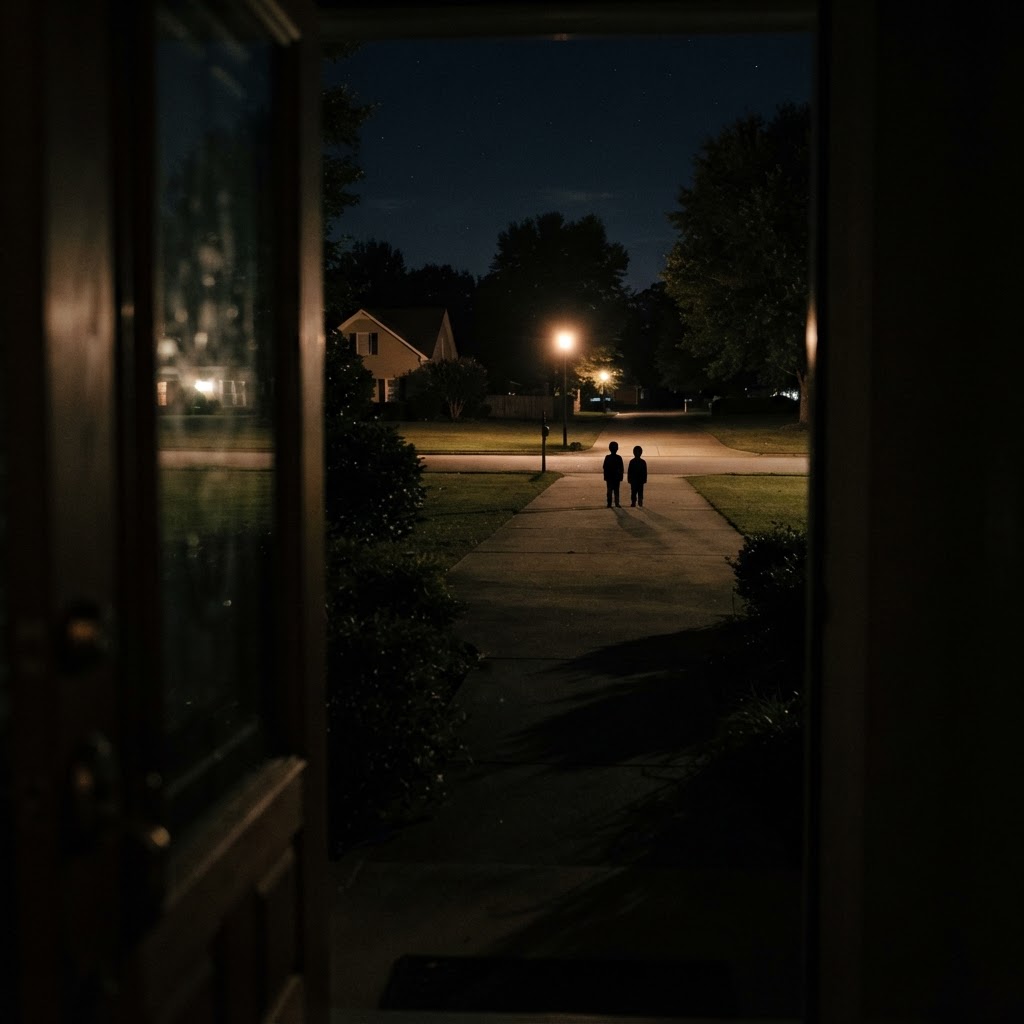
Once Bethel's account spread, other people began to report their own encounters, and the stories converged on a remarkably consistent template. The children are almost always described as pale-skinned and calm, ranging from small kids to teenagers, and they appear at the boundary of a private space — a car window, a front porch, a hotel-room door. They come mostly at night.
And then comes the detail that gives the legend its particular dread. They ask to be let in. A ride in the car, a glass of water, the use of a telephone, permission to step inside "just for a moment" — always some small pretext that ends with an invitation across the threshold. They never force their way. They wait, and they repeat the request, and their tone grows heavier the longer you hesitate: "We can't come in unless you say it's okay." Almost everyone who tells one of these stories reports the same thing — a flood of instinctive, physical dread that arrives before any rational reason for it, as if the body knows something the mind has not yet worked out.
The Voice That Persuades
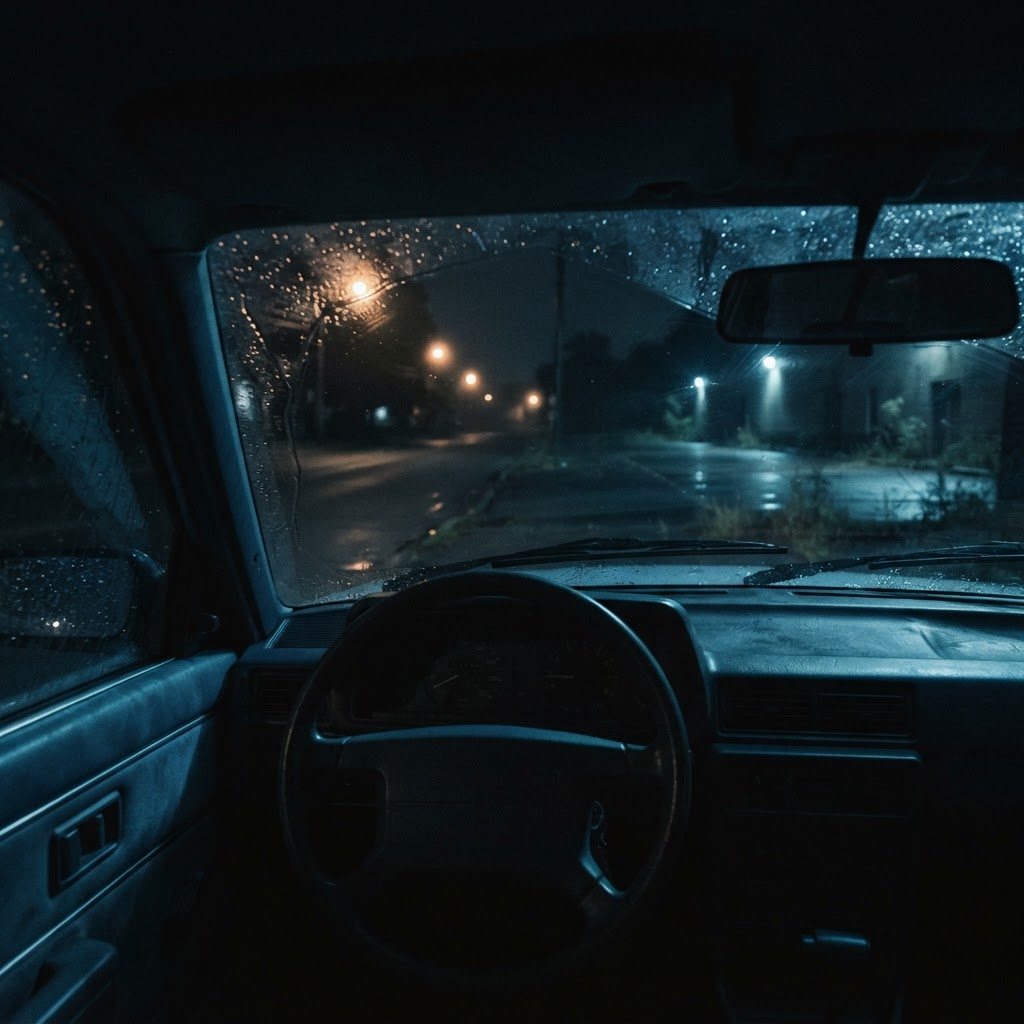
A recurring thread in the accounts is the strange authority in the children's voices. Witnesses describe a calm, almost hypnotic insistence — a pressure that feels less like a child begging and more like something patiently working to talk its way past a locked door. In Bethel's telling, the older boy's tone shifted mid-conversation, becoming commanding in a way that did not fit his small frame, and it was that shift, as much as the black eyes, that broke the spell of ordinariness and sent him reaching for the ignition.
That single mechanic — that the entity cannot enter unless you consent — is what elevated the tale from a passing scare into a lasting piece of folklore. It hands the victim a terrible responsibility. Nothing bad happens unless you, of your own free will, say the word.
Cannock Chase, 2014 — The Legend Crosses the Atlantic
For years the Black-Eyed Children were an American internet story. Then, in September 2014, they surfaced in England. Around a wooded area called Cannock Chase in Staffordshire — a place already steeped in decades of ghost and monster lore — a local woman reported that her daughter had cried out after seeing a girl standing nearby; when she turned, the child had vanished, and where the eyes should have been there were only black hollows.
The UK tabloid Daily Star seized on the story, running it on the front page three times that month and declaring a "shock rise in sightings around the world." A local paranormal enthusiast, Lee Brickley, gathered and publicised the reports and later wrote a book about the Cannock Chase black-eyed child. Whatever one makes of the accounts, the 2014 wave showed how efficiently a modern legend can leap continents: a story born on a Texas mailing list in the 1990s reappearing, fully formed, in an English wood twenty years later.
Where the Legend Comes From
Folklorists who have looked at the Black-Eyed Children tend to see something old wearing new clothes. The single most defining feature of the legend — that the being cannot cross the threshold until it is invited — is one of the oldest motifs in supernatural folklore. It is the same rule that governs the classical vampire, which by tradition cannot enter a home unless a resident welcomes it in. The threshold, the door, the spoken "yes": these are ancient boundaries between the safe inside and the dangerous outside, and the Black-Eyed Children slot neatly into that tradition.
There is a second, more modern kinship, too — with the "phantom hitchhiker," the American roadside legend of a stranger who asks for a ride and then impossibly disappears. Bethel's boys, asking for a lift at a car window before vanishing from an empty parking lot, are recognisably cousins of that older tale. Seen this way, the Black-Eyed Children are less a discovery than a recombination — familiar folk-fears reassembled for the age of the internet.
The Skeptical View
For all the accounts, no black-eyed child has ever been photographed, recorded, or physically documented. Every case rests on subjective testimony, and the skeptical reading is straightforward. Science writer Sharon A. Hill, who examined the phenomenon, found no verifiable documentation at all and concluded that the tales are classic "friend of a friend" ghost stories — the kind of spooky folklore that circulates precisely because it cannot be pinned down, close kin to legends like the phantom black dog. The fact-checking site Snopes files the whole thing under legend: no evidence of existence, only anecdote.
The likeliest explanation for the sheer number of reports is simpler still. Brian Bethel's 1998 post was vivid, well-written, and genuinely frightening, and it landed at the exact moment the internet was learning to spread stories at speed. Once the template existed — pale children, black eyes, a request to be let in, a wave of dread — it was easy to recognise, easy to retell, and easy to unconsciously map onto one's own half-remembered unease at a knock in the dark. Some of the underlying experiences may even be ordinary: a strange encounter at night, a moment of sleep-fogged confusion, a trick of poor light on a child's eyes, later reshaped by a story the teller already knew. The legend, in other words, may be spreading not because black-eyed children are real, but because the story is very, very good at spreading.
What remains, in the end, is that first post: a real journalist, a real newspaper, a parking lot in Abilene, and two boys who — by his account — asked to be let in and could not come unless he said it was okay. He never claimed to know what they were. Neither does anyone else. And so, every so often, someone somewhere reports a soft knock in the dark, looks up, and sees two black eyes waiting on the other side of the door — waiting, as always, for a single word.
Sorting these accounts by year, as I have done a few times now, I noticed something about how the reports change that I would rather not have noticed. The eyes drift. The pale skin drifts. The flat, adult cadence drifts. One element never does: the permission. Whatever else a teller gets wrong or embroiders or borrows from the last version they read, nobody ever forgets that it has to be invited. I have come to think that is the part of this story that is actually alive — and it survives by making sure every person who repeats it understands, precisely, where the door is and who is standing on which side of it.
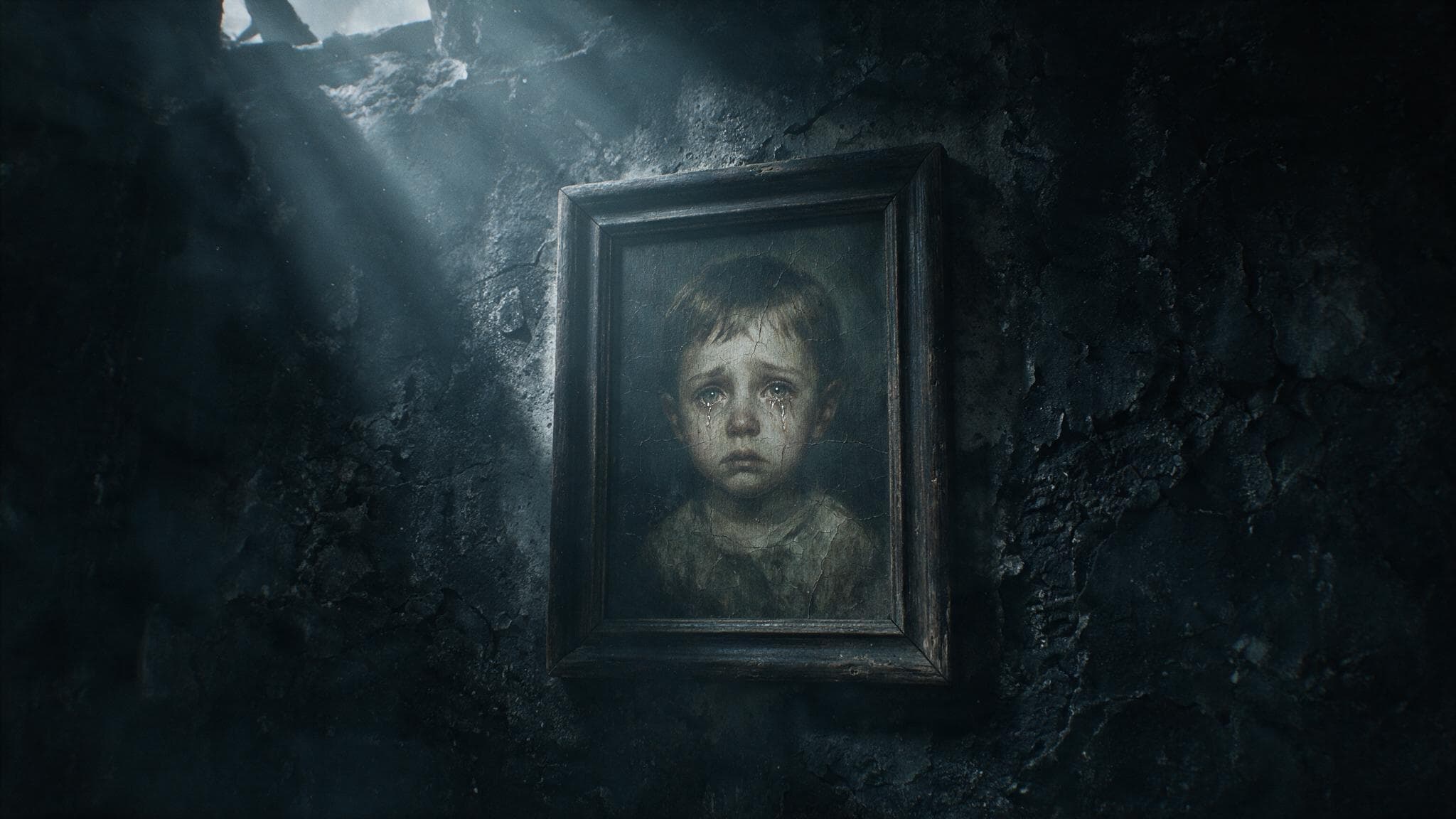
The images and video in this article are AI-generated works produced to convey the mood of the story, and are not photographs of any actual person or event.


Comments
No comments yet — leave the first one.