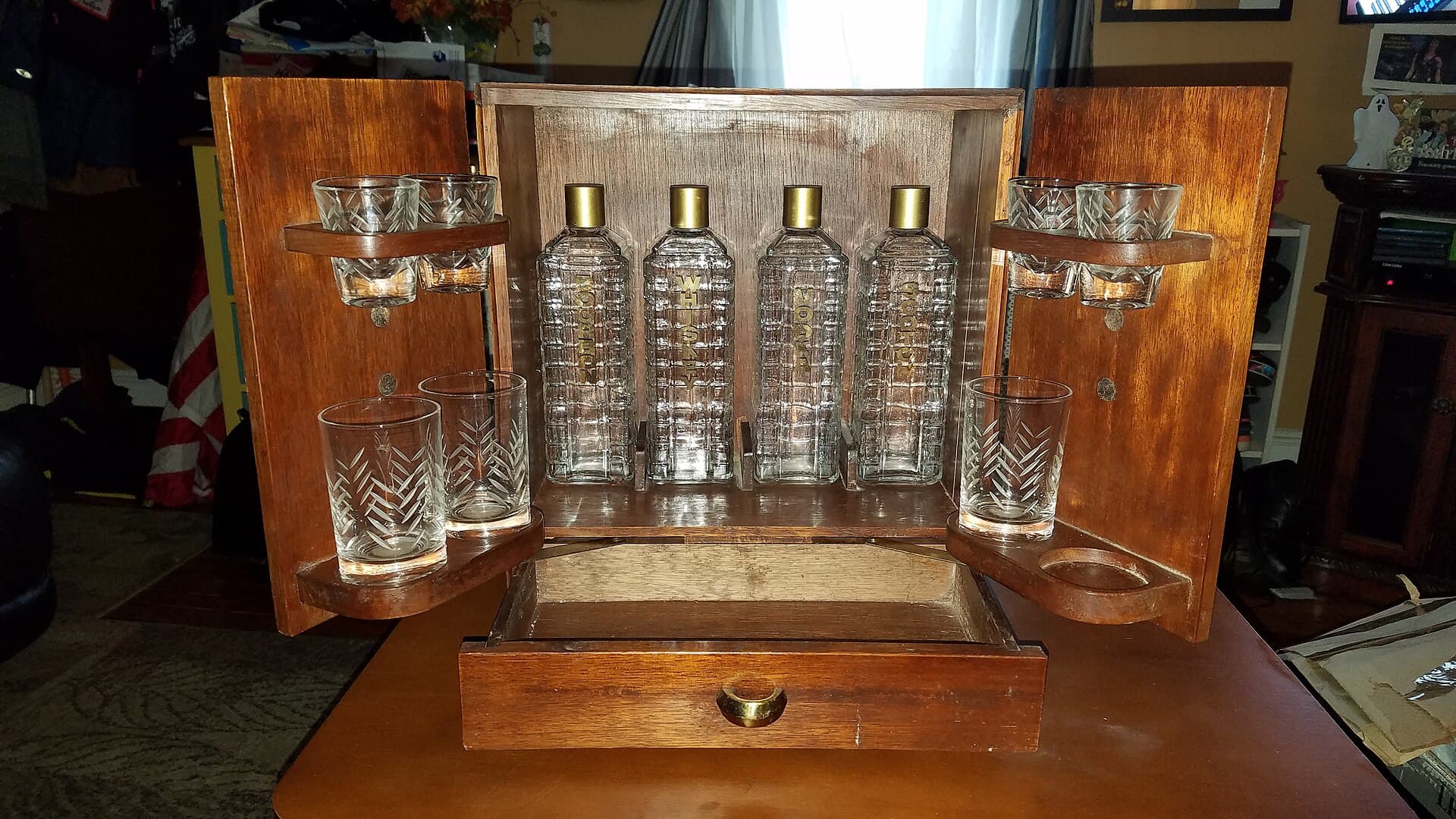
To look at it, it is only an old wooden box. Dark, aged timber; a small cabinet with a hinged door — the kind of thing you might pass in the corner of an antique shop without a second glance. And yet this weathered wine cabinet is bound up with one of the most famous ghost stories the internet age has ever produced. From the moment it went up for auction on an American website in 2003, it earned itself a title: the most cursed object in the world. According to the tale, sealed inside this box is a dybbuk — a malevolent spirit from Jewish folklore. And everyone who came to own it, the story says, was tormented by nightmares, by inexplicable bruises, by the stench of ammonia hanging in the air. The Dybbuk Box. This is the story of that old wooden box, and of the question that clings to it still.
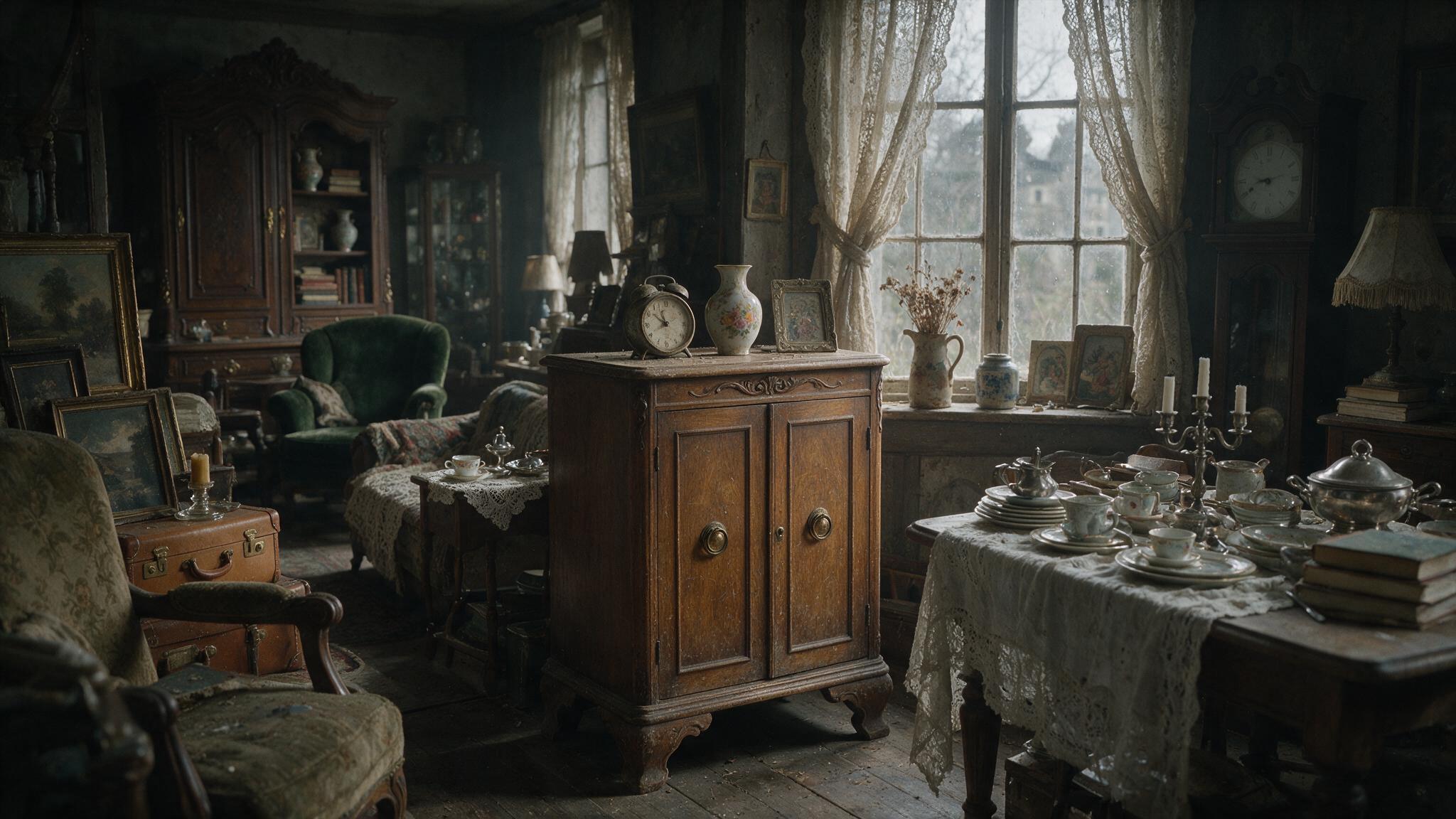
I came to this case backwards, the way I come to most of them. I was working through archived auction listings for a different matter entirely — provenance claims on estate-sale furniture — and the inventory line stopped me: two dried rosebuds, a wine goblet, a candlestick, a pouch of hair, a granite slab with Hebrew letters. It is a strange list to invent. Too specific to be lazy, too tidy to be found. I have gone back to that list a dozen times since, and each reading leaves me less sure which of those two things it is.
An Old Box on eBay
The story begins in 2003, in Portland, Oregon. There was a man named Kevin Mannis. He made his living restoring and reselling furniture, and one day, at an estate sale, he bought an old wooden wine cabinet — a small cabinet with a hinged door, an unremarkable piece of aged furniture with nothing to distinguish it. But the story Mannis attached to it when he listed it on eBay turned this ordinary wooden box, almost overnight, into a legend.
The tale Mannis wrote into the auction went like this. The cabinet, he said, had belonged to an elderly Jewish woman who had survived the Nazi Holocaust in Poland. After she died and her belongings were sorted, her granddaughter had begged that this one box never be opened. Inside it, she said, was a dybbuk. When Mannis bought the cabinet and opened it, he claimed to find a strange assortment of objects within: two dried rosebuds, a wine goblet, a candlestick, a small pouch of hair, and a granite slab engraved with Hebrew letters. From that point on, according to the story, strange things began to happen — to Mannis, and to those around him.
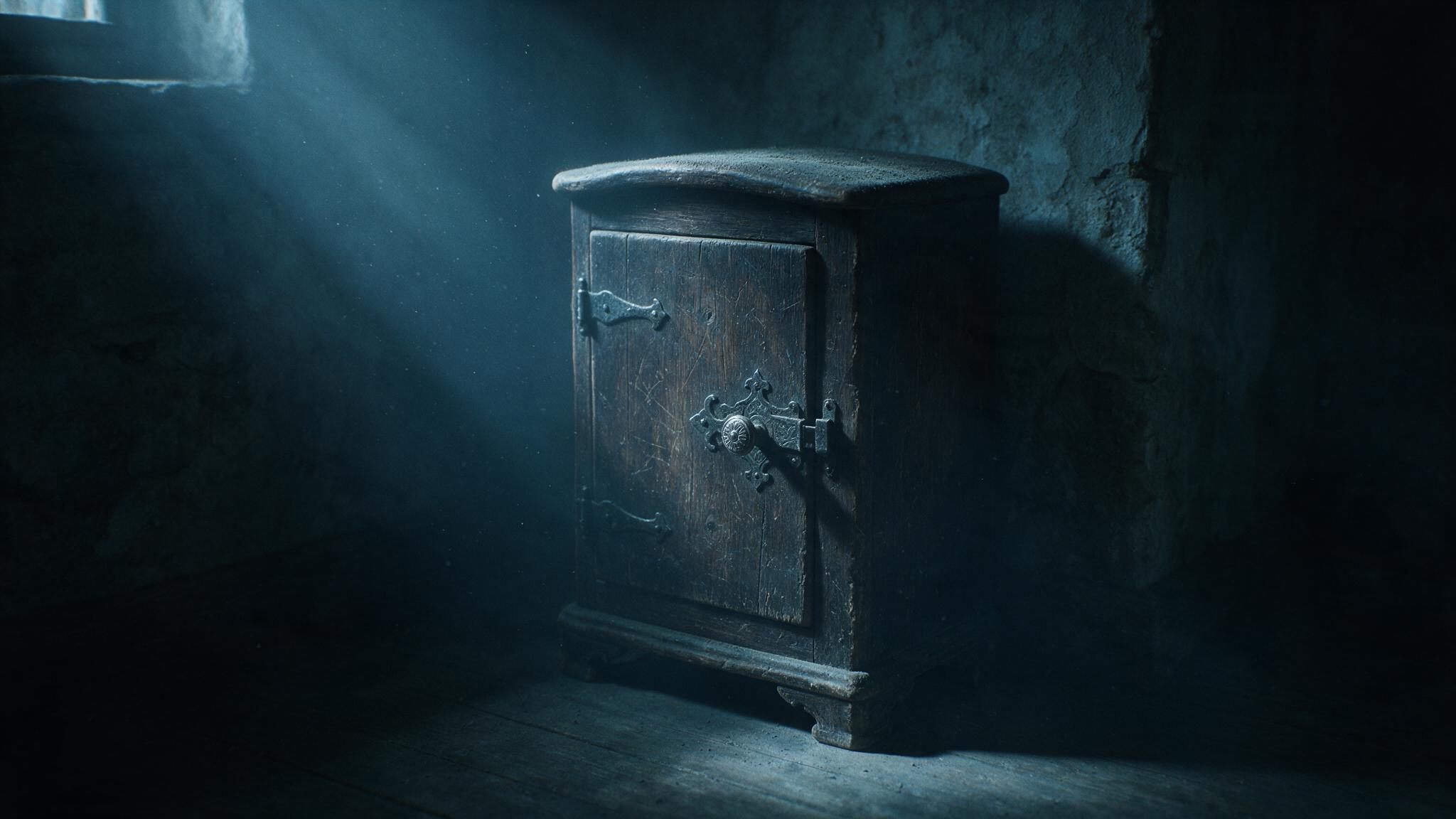
The Dybbuk — a Spirit That Clings to the Living
Here we should pause to ask what a dybbuk actually is. The dybbuk belongs to Jewish mystical tradition, a figure of folk belief handed down especially among the Jews of Eastern Europe. According to the lore, a dybbuk is the restless soul of a dead person, unable to leave this world, that fastens itself onto a living body and speaks and acts through that person. The name itself comes from a Hebrew word meaning "to cling" or "to adhere." It is, in a sense, the Jewish ancestor of the demonic possession that runs through so much of Western horror.
And here the first crack in the whole tale appears. The dybbuk of Jewish tradition is, without exception, a spirit that clings to a person — to a living body. The idea of a dybbuk sealed inside a wooden box or a piece of furniture appears nowhere in the authentic folkloric literature. This is precisely the point skeptics raise first. The very premise — a dybbuk trapped in a box — does not fit the traditional concept at all; it is a later invention, a story grafted on after the fact. And yet, despite this mismatch, the chilling accounts surrounding the box spread across the internet like wildfire.
What Each Owner Endured
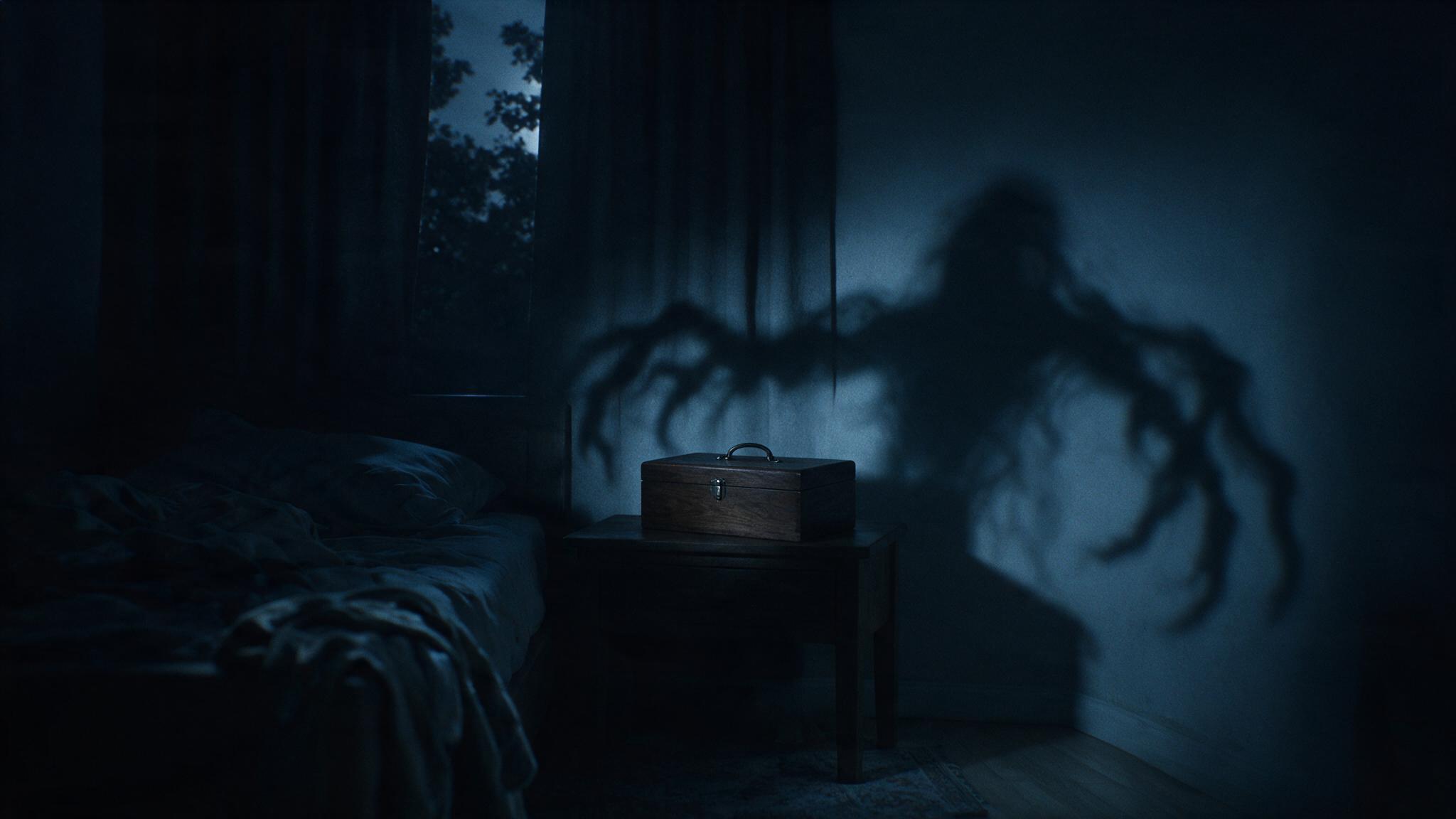
In the story, everyone who passed the box along claimed to have suffered something strange. It began with Mannis himself. On the very day he gave the box to his mother as a birthday gift, she is said to have suffered a stroke on the spot. From there, the accounts of subsequent owners settle into a shared pattern. The same nightmare, night after night. In the dream, the figure of an old hag appears, glaring or striking at the sleeper. And in the morning, they would wake to find bruises on their bodies they could not account for.
The reported phenomena did not stop there. In the rooms where the box was kept, a foul smell like cat urine or ammonia is said to have filled the air, a stench that no amount of cleaning could remove. In one office, light bulbs are said to have burst all at once; there were reports of knocking on doors when no one was there, of shadowy shapes flickering past the edge of vision. The owners spoke, one after another, of crushing lethargy, of depression, of unexplained illness. And so, like passing a hot potato, each of them hurried to sell the box on to the next person.
Into the Hands of a Museum Curator
The man who finally took possession of the box was named Jason Haxton. He was the curator of a medical museum in Missouri, and, drawn in by the story of this cursed box circulating online, he ended up buying it. And Haxton too, by his own account, began to suffer unexplained health problems after the box came into his hands — hives, a worsening cough, trouble with his eyes. In the end, he said, he sought out the help of Jewish rabbis, had a sealing ritual performed over the box, and hid it away somewhere safe.
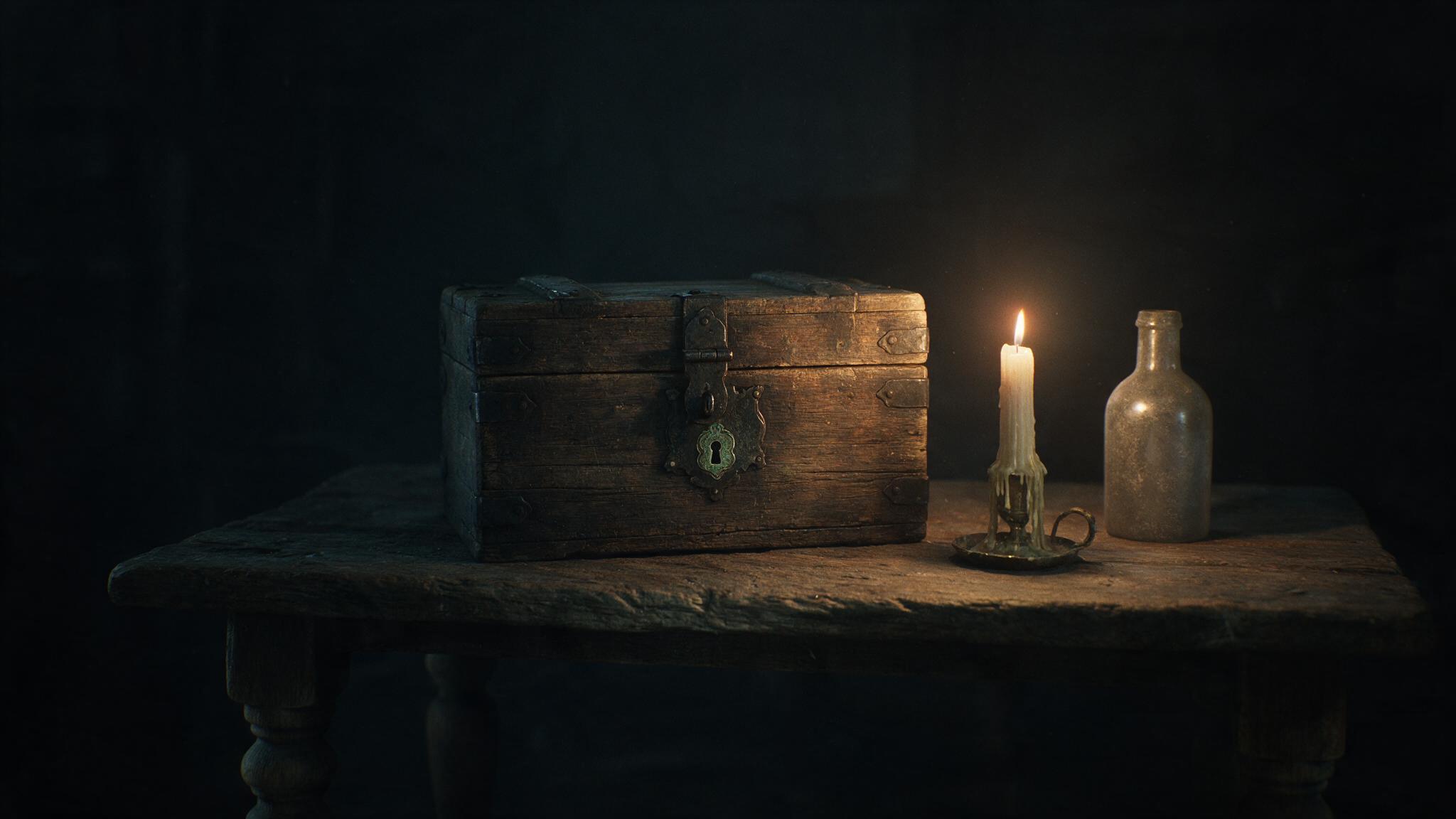
An old wooden box, faintly revealed by a single candle in the dark — a mood recreation, not real footage.
A Curse Bought by Hollywood
Spreading through internet forums and word of mouth, the story eventually caught Hollywood's eye. The 2012 horror film The Possession was based directly on the Dybbuk Box legend. Produced with the involvement of Sam Raimi, the director famous for the Spider-Man films, it followed a young girl who buys an old wooden box at a yard sale and is slowly taken over by the spirit within it. The film's success carried the name of the Dybbuk Box far beyond the United States and around the world, cementing the box's place as, in name and reputation, the most famous cursed object on earth. An old cabinet that had gone up on eBay had become, in less than a decade, a global icon of horror.
Nor did the story stop growing there. A flood of YouTube videos followed — "experiments" in which people claimed to open the box, footage of supposed paranormal events occurring in its vicinity, an endless stream of content built around it. What had started as a single rumor about a cursed box had swelled into a full-blown cultural phenomenon. And it was right around then that the one man standing at the origin of all of it finally spoke up.
"It's a Story That I Created"
In 2021, a remarkable confession came — from the very first seller, Kevin Mannis himself. In an interview with a magazine, he admitted plainly: "The Dybbuk Box is a story that I created." Mannis, it turned out, was also a writer of fiction and screenplays. By his own explanation, he had conceived the eBay listing as a kind of interactive horror story — dressing up an old box with a plausible backstory and then watching how it took on a life of its own, growing and mutating as it passed from person to person. It was, in other words, a creative experiment.
The confession lines up neatly with the holes skeptics had been pointing to for years. As we have seen, the dybbuk of authentic Jewish tradition does not inhabit inanimate objects. The dramatic backdrop — the box as the heirloom of a Holocaust survivor — has never been supported by any verifiable evidence. The nightmares, the bruises, the ammonia smell reported by the owners were, every one of them, subjective testimony, never objectively confirmed. Even the "wine cabinet" itself, a later investigation suggested, was nothing more than a mass-produced, ordinary minibar. It was not some supernatural force at work, but a well-crafted story that grew on its own inside people's imaginations.
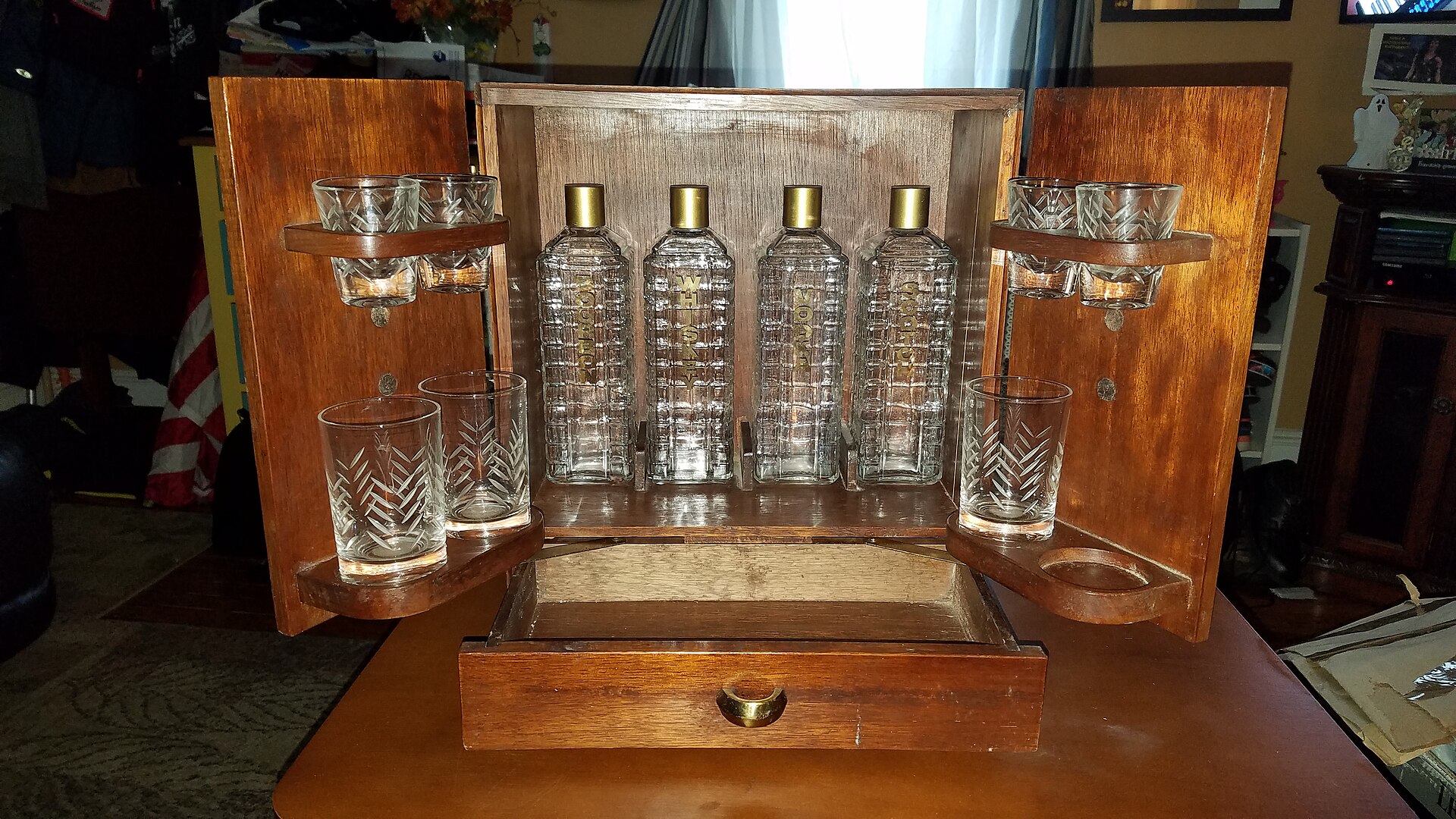
Photo: Wikimedia Commons, CC BY-SA
The Question That Remains
So does the story end there, cleanly? Not quite. It is true beyond doubt that Kevin Mannis invented the original tale — but that does not mean he fabricated the experiences that the people who actually owned the box afterward claim to have had. Once the story was loose in the world, those who took the box home genuinely dreamed the nightmares, genuinely fell ill, genuinely believed they had seen and heard something. The belief itself was real. Whether that experience was caused by a spirit sealed in the box, or by the powerful suggestion of having "acquired a cursed object" working on the mind — that line is not an easy one to draw.
Perhaps the real horror of the Dybbuk Box lies not in what sits inside the box, but in how a single story seeps into the human mind. One sentence — "this box is cursed" — is enough to make the one who believes it dream real nightmares, believe real bruises have risen on their skin, smell something in an empty room. Even if no supernatural spirit exists at all, the fear that spreads this way can be entirely real. The question this old wine cabinet poses turns, in the end, back on us. Are we afraid of the box — or of the story wrapped around it?
What I have never been able to file away cleanly is Mannis's confession itself. He said he built the story. He did not say he built the smell — and the ammonia reek is the detail that recurs in accounts written by people who had no contact with each other, in years when the legend had not yet spread far enough to teach them what to expect. I keep the 2021 interview in the same folder as the earliest owner testimonies, and I have never once managed to read them in an order that makes them agree.
Even now, the Dybbuk Box is said to sit sealed away somewhere. Whether something is truly trapped inside it, or whether it was empty from the very start — the box says nothing. Only one thing is certain. Whatever the truth, the fear that a single old wooden box set loose has long been living and breathing in the minds of people the world over. So let us return to the question we began with. Was this box truly cursed — or was it only that we wanted to believe it was? The truth, perhaps, lies quietly somewhere between the two.
Photo: Wikimedia Commons, CC BY-SA
---
This article combines photographs of the actual locations with AI-generated images produced to convey the mood of the story.



Comments
No comments yet — leave the first one.