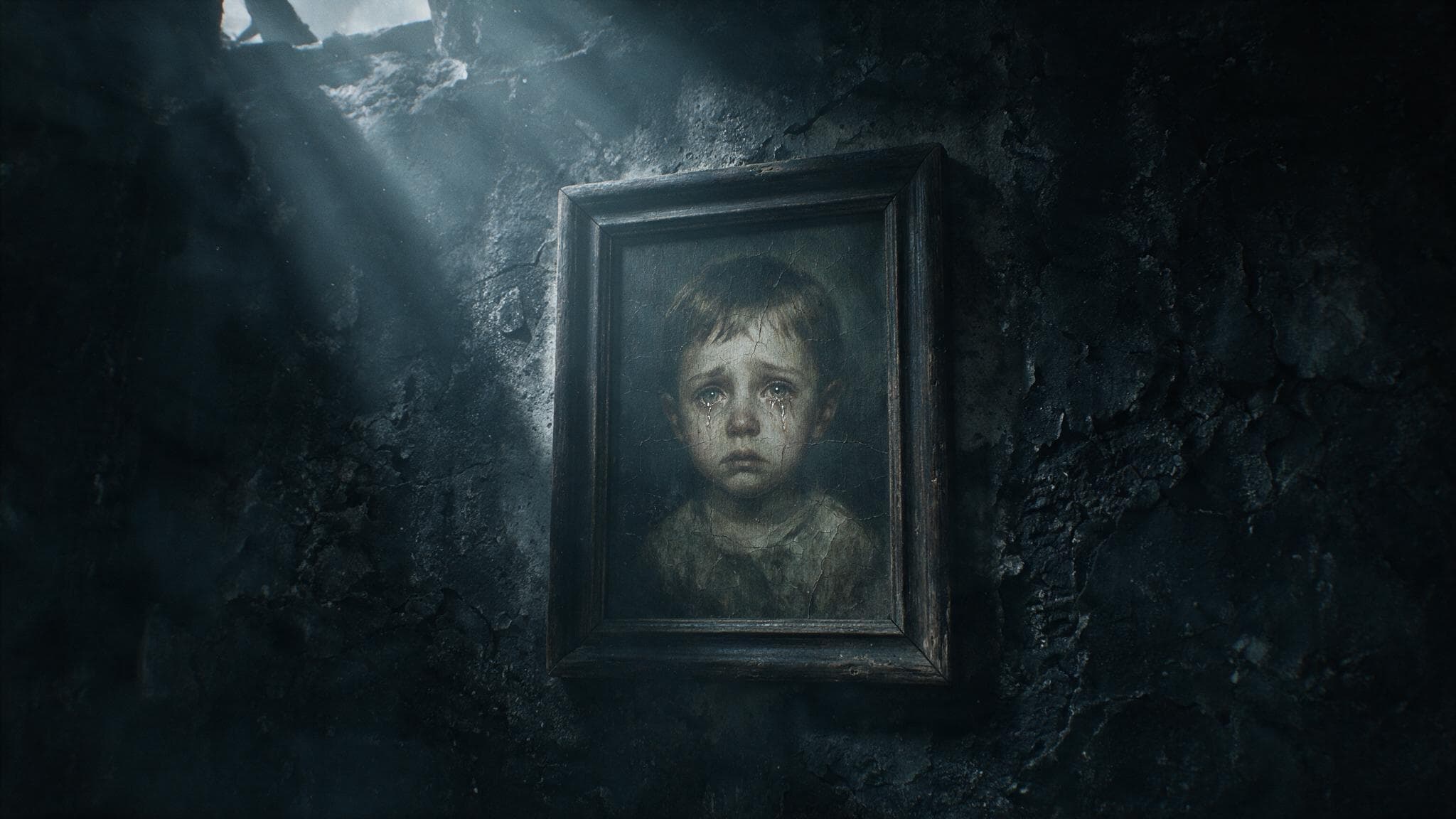
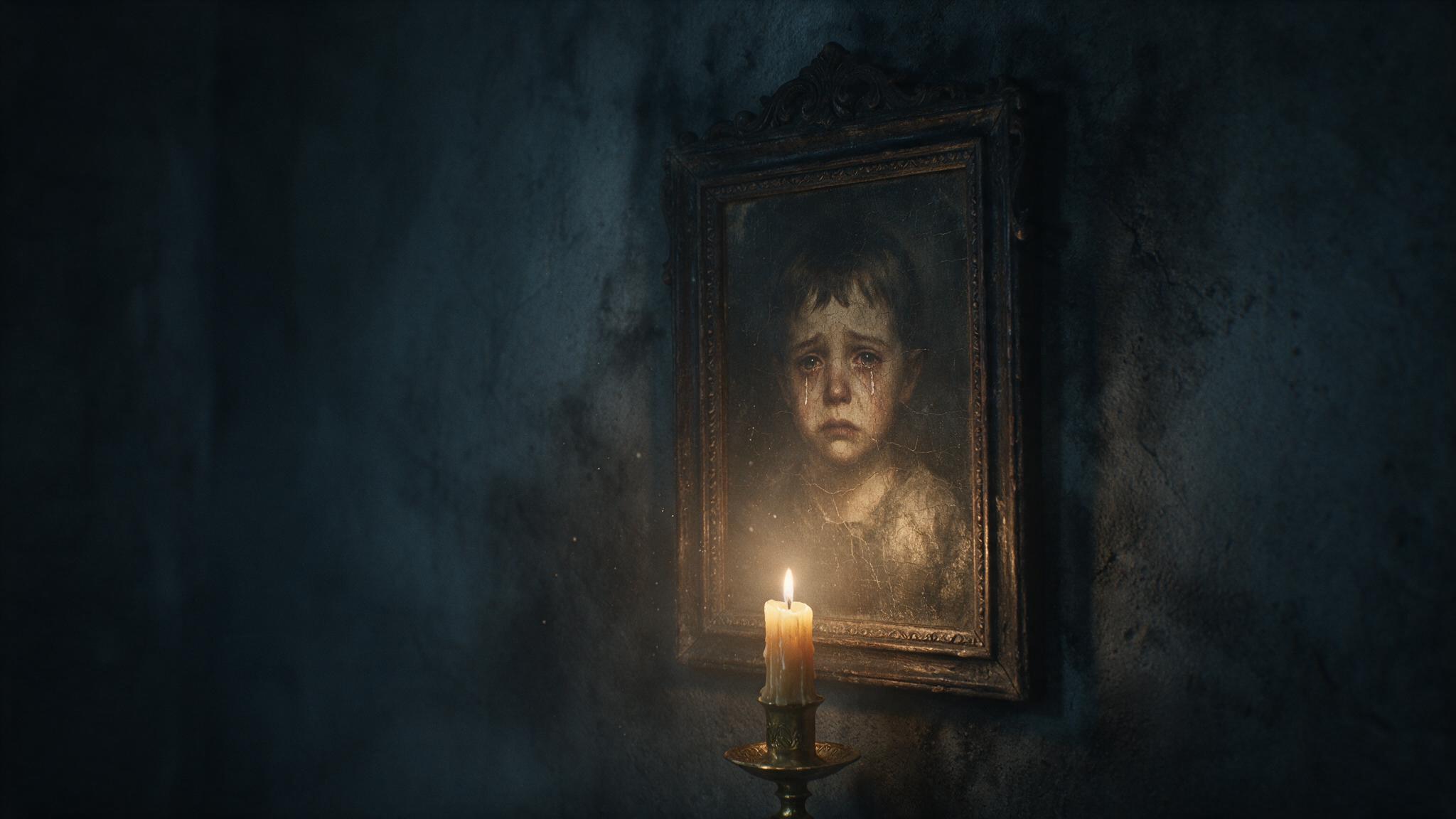
There is a cheap little painting. Against a dark background, the portrait of a boy, his great eyes brimming with tears. There is something pitiful about the face — and something that turns cold the longer you look at it. Mass-printed across Europe from the 1950s onward, this print was once nothing more than an ordinary bit of decoration, hanging on the living-room walls of countless British homes. And then, in 1980s Britain, a rumour that raised the hairs on the back of the neck began to spread around this most ordinary of pictures. When a house caught fire and burned to the ground, this one painting — "The Crying Boy" — would be found intact among the ashes. Not in one house, but in many. Firefighters started to murmur quietly among themselves: the houses where this picture hangs burn down. This is the story of that weeping face on the wall.
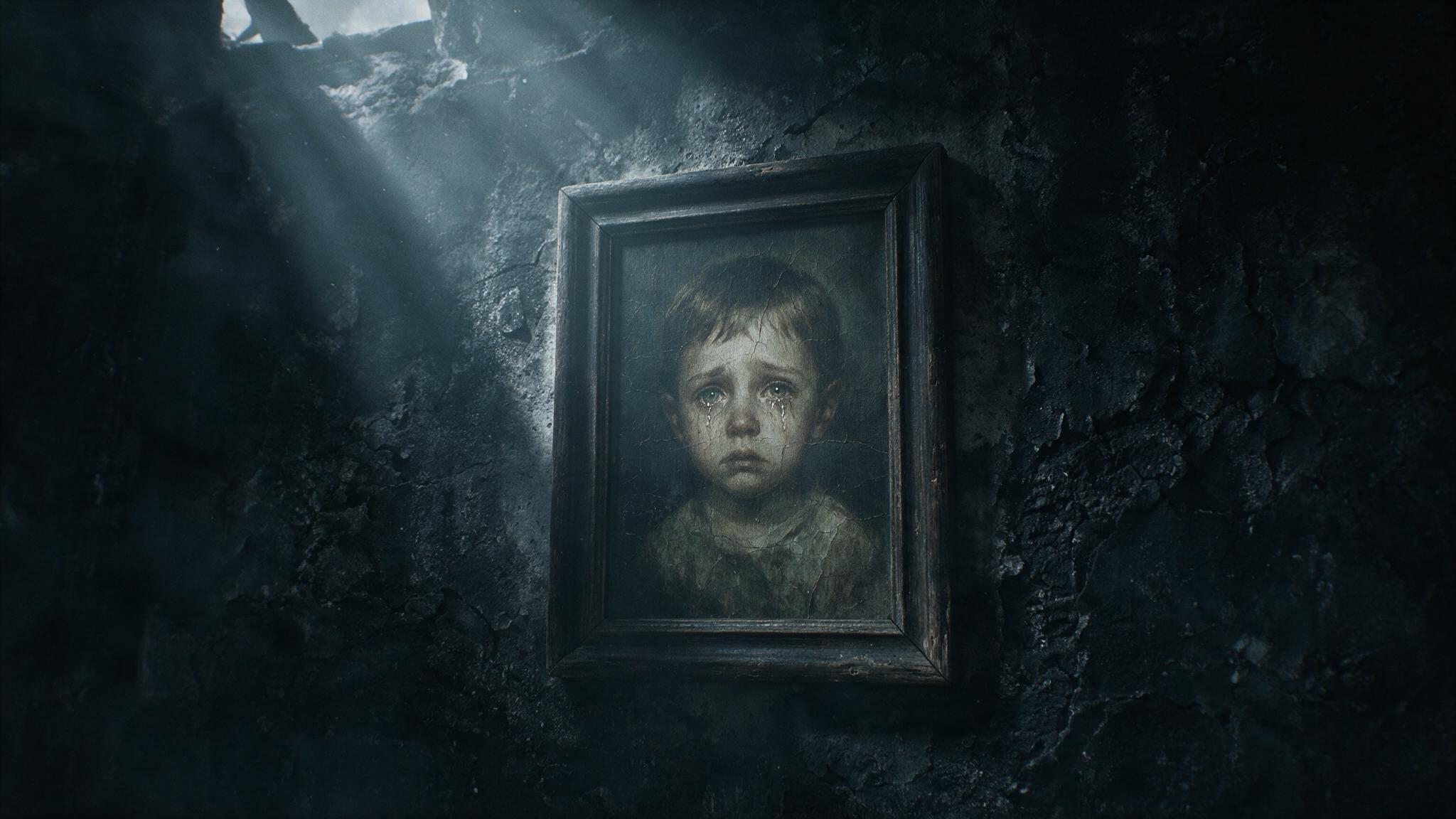
There is a category in my archive I think of as objects that outlived their houses, and this print is the one I have spent the most hours on. K. Woo is the name I keep these files under. What drew me in was not the fires but the versions — Amadio painted crying girls as well, and they were sold in the same shops, in the same numbers, on the same coated paper. Not one of them was ever accused of anything. I have gone through the 1985 correspondence looking for a single reader who wrote in about a surviving crying girl, and I have not found one.
The Painting Left Among the Ashes
The story properly entered the world in 1985, through an article in the British tabloid The Sun. That September, the paper ran a strange account said to come from a firefighter in Essex, in the southeast of England. According to this firefighter, when he was called out to houses that had been gutted by fire, one particular kind of painting would frequently be found untouched by the flames. It was none other than the cheap print known as "The Crying Boy," depicting a tearful child. In the middle of a room where the wallpaper had burned black and peeled away and the furniture had melted beyond recognition, that one picture would hang there, frame and all, perfectly intact.
When the article ran, the response was explosive. Reports poured into the paper from every corner of the country: "The same thing happened to us." Stories of losing everything to a fire while the Crying Boy alone survived. Stories of misfortune piling up in a household after the picture was hung. Stories of people trying and somehow failing to burn the thing away. The reports all traced the same shape. The face of this boy on the wall, it seemed, somehow drew fire to itself.
The Man Who Painted It
Here we should pause to ask what this "Crying Boy" actually is. The portrait was painted by the Italian artist Bruno Amadio, who is said to have worked under the pen name "Giovanni Bragolin." Born in 1911 and dying in 1981, he was known for a series of portraits of tearful children. Crying boys, crying girls — pictures of weeping children exist in numerous versions, and from the 1950s onward they were mass-produced as cheap prints and sold across Europe.
In other words, "The Crying Boy" is not a one-of-a-kind original. The same picture was printed tens of thousands, hundreds of thousands of times over, and hung in countless homes across many countries — an utterly common piece of decorative print. It is precisely this commonness that would later become the central rebuttal to the curse, but let us leave that thread for a moment. At the time, in Britain, this cheaply priced, faintly sentimental picture was genuinely popular — and so it hung in a great many homes.
The Rumour Among Firefighters
After The Sun's report, the rumour spread especially fast within the fire brigades — for it was firefighters, more than anyone, who witnessed the aftermath of fires. One after another, firefighters began to speak up: "Now that you mention it, I've seen a scene like that myself." In some stations, it is said, the advice not to hang this picture in your home was passed around half in jest and half in earnest. The face of the Crying Boy, surviving untouched amid the ashes, had become an unsettling thing even to those whose living was to fight fire.
The rumour swelled into ever more dramatic forms. Stories that the picture somehow would not catch fire when you tried to burn it. Stories that a household's run of bad luck only ended once the picture was gone. Even a backstory of unknown origin, claiming that the boy in the painting had been an orphan who lost his parents in a fire, and that his grief-stricken grudge had steeped into the picture. One rumour bred another, and that rumour summoned yet another tale, until "The Crying Boy" had become, almost without anyone noticing, the most famous cursed painting in Britain.
The Pictures the Newspaper Burned
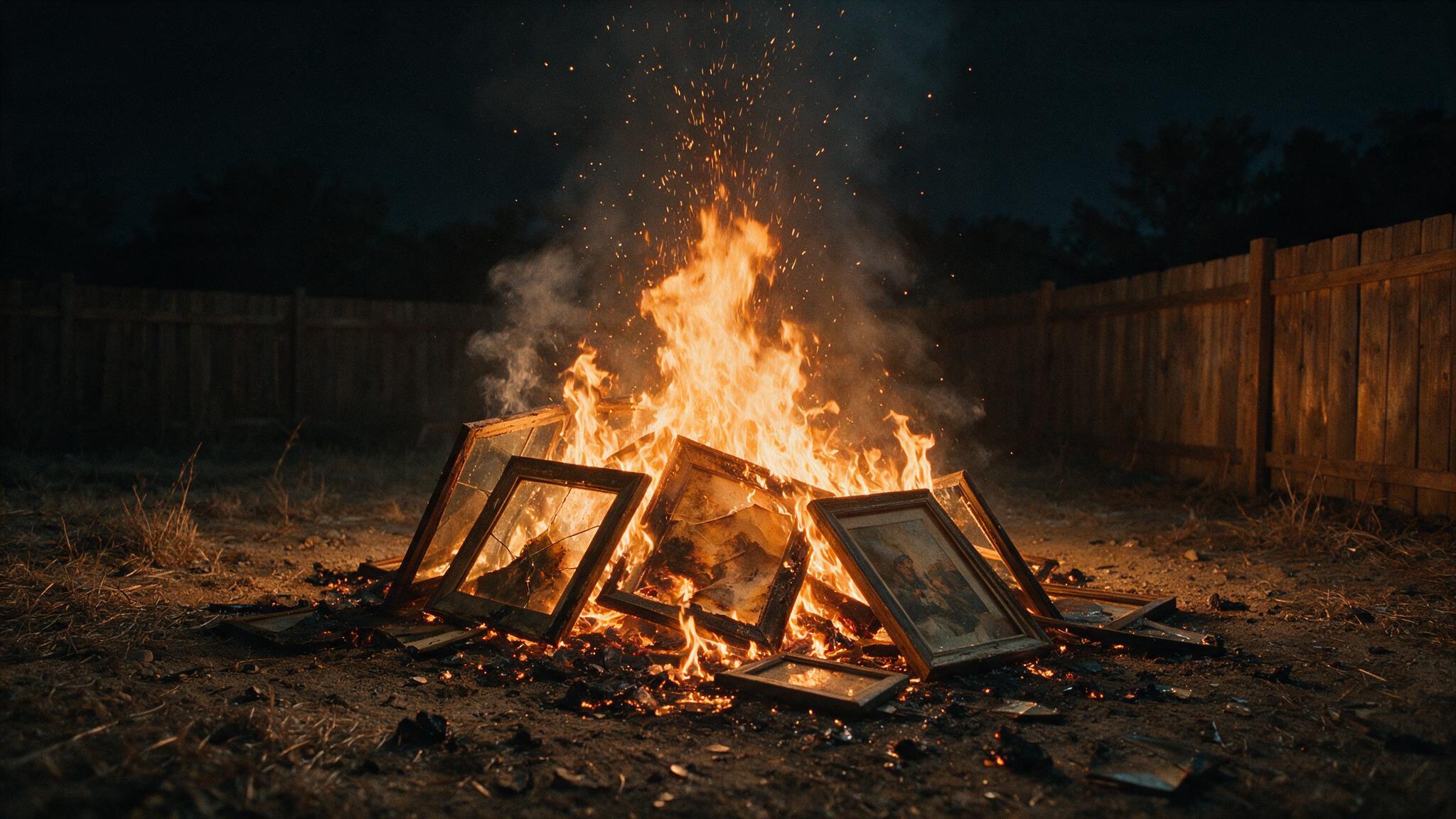
As the rumour grew beyond all control, The Sun staged a full-blown event of its own. That November, the paper urged its readers to send in any Crying Boy pictures they had at home, and gathered the hundreds of paintings that arrived into a great bonfire. The idea was to publicly burn away the cursed pictures and so soothe the readers' anxiety. Hundreds of "Crying Boys," thrown one after another into the roaring flames. The scene became a spectacle in its own right — and far from laying the curse to rest, it made the story live on all the wider and all the longer.
When you think about it, it was a strange sight. To put down a rumour about "a cursed painting that will not burn," people went out of their way to burn the paintings. But no matter how many were burned, another Crying Boy would turn up on another house's wall, and the paper would run another report each time. The fear fed on the flames of the burning, and spread all the larger for it.
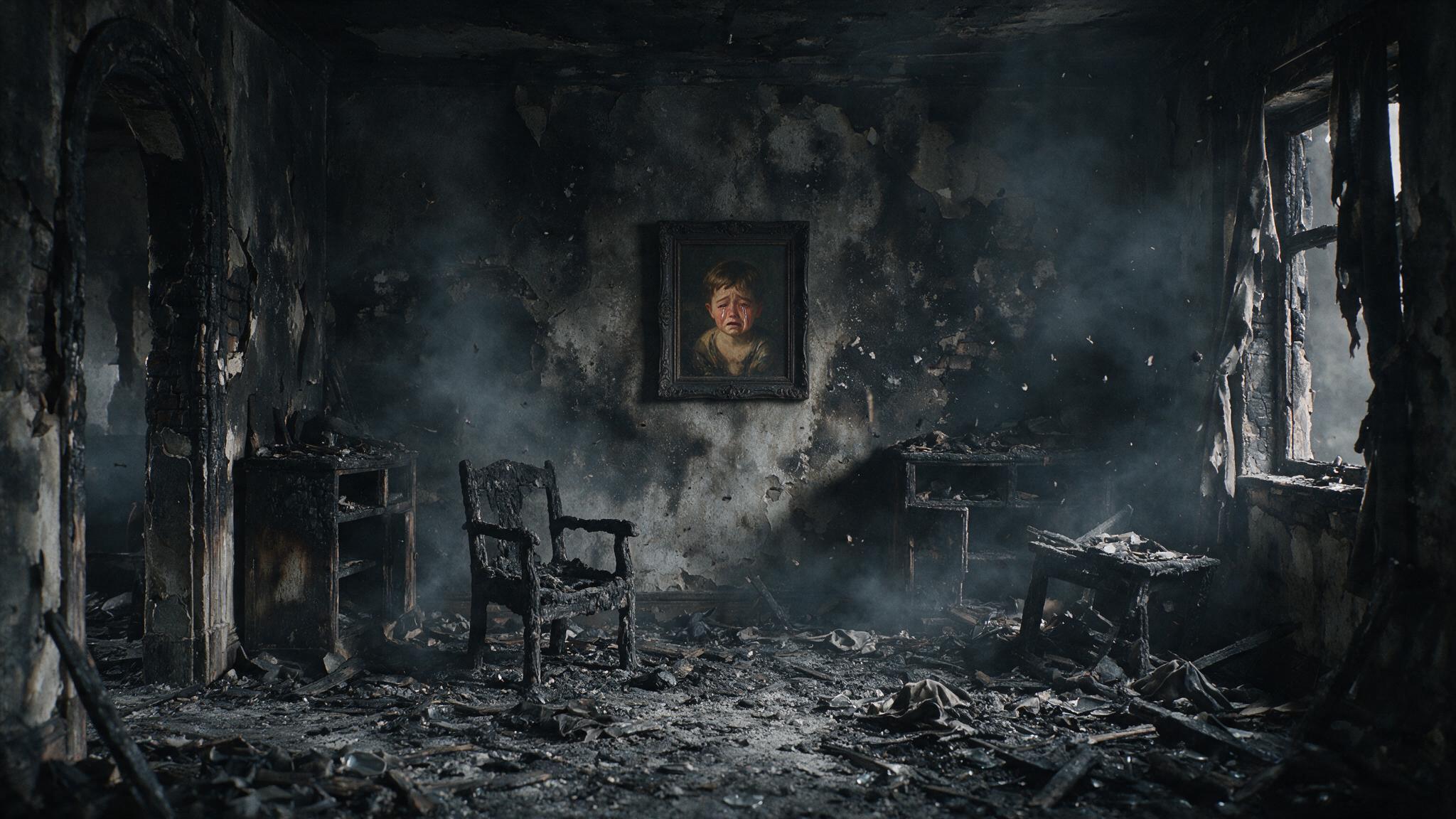
The portrait of the Crying Boy, faintly revealed by candlelight as it hangs on a scorched wall — a mood recreation, not real footage.
The Face That Watches You From the Wall
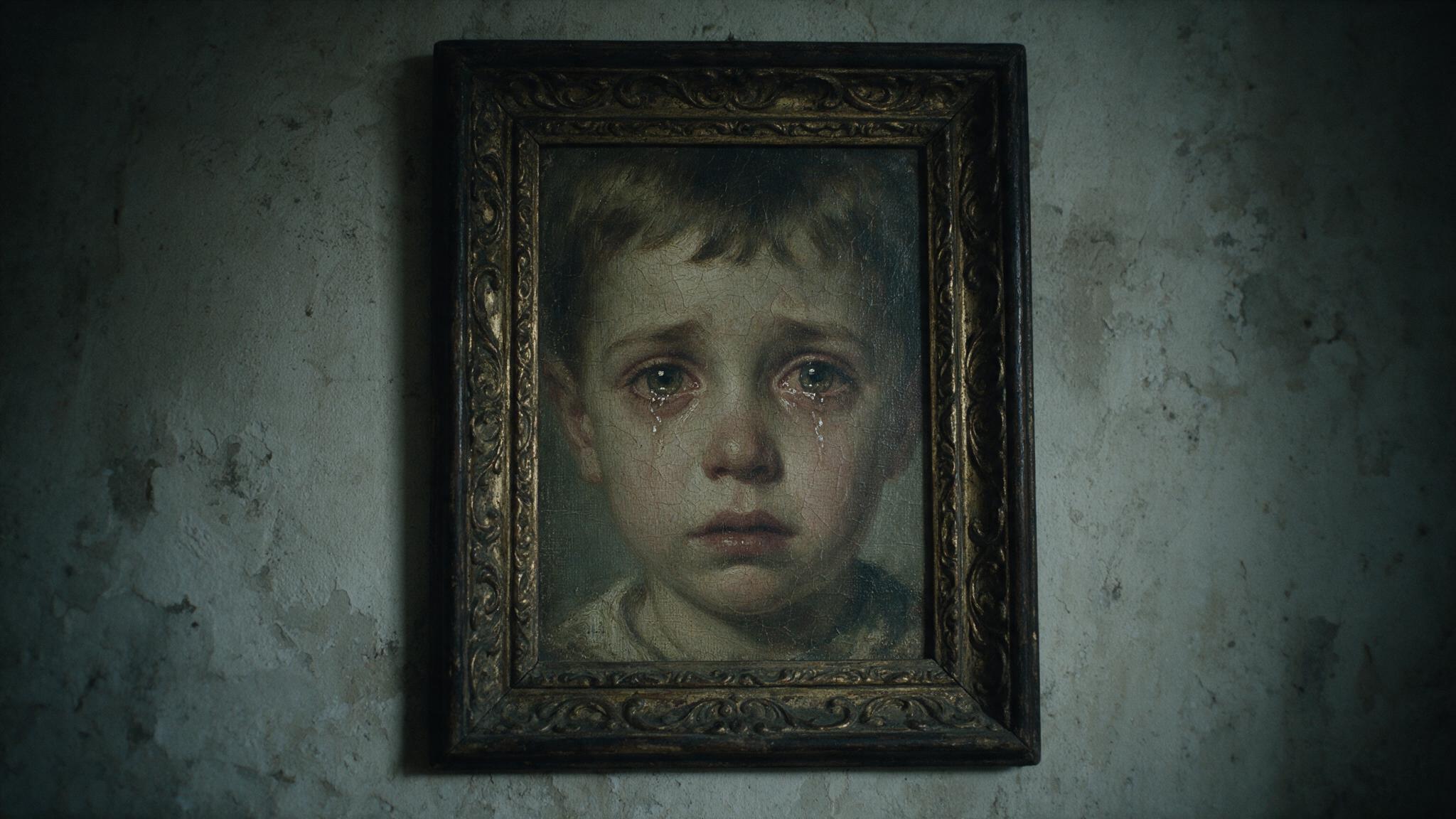
Part of what held people's minds for so long was the chill given off by the picture itself. The Crying Boy was not merely a painting that would not burn. It was a face. Out of a dark background, its great eyes brimming with tears, the face of a child gazing steadily back at whoever looked upon it. Hang this picture on the wall of a room, people said, and night after night in the dark you felt those wet eyes watching you.
The testimonies tied to the pictures that survived the fires all touched the same nerve. In the middle of a ruin where everything had burned, that one boy's face alone would be looking down at you from the wall, as if nothing had happened. To someone who had lost their home, the sight was not a comfort but a shudder. For the child in the picture seemed to have watched the fire, weeping all the while, and calmly endured the whole of it. That sensation — of a weeping face on the wall watching you — may be where the true power of the curse lay, more than in the fires themselves.
So — Was It a Curse?
Now it is time to look at the other side of the story. Was a curse truly bound into the picture? To give the conclusion first: this phenomenon has thoroughly rational explanations. And those explanations fill in the mystery just as tightly as the curse does — more tightly, in fact.
The first key lies in how the pictures were made. In 2010, on a BBC Radio programme in Britain, the presenter Steve Punt set out to dig into the mystery himself. He had the prints in question tested at a British building research establishment, actually setting them alight. What emerged was this: the mass-produced prints had been treated on their surface with a kind of fire-retardant coating — a varnish that made them slow to catch fire. That coating, which gave cheap prints their smooth and glossy finish, happened also to repel the flames to some degree.
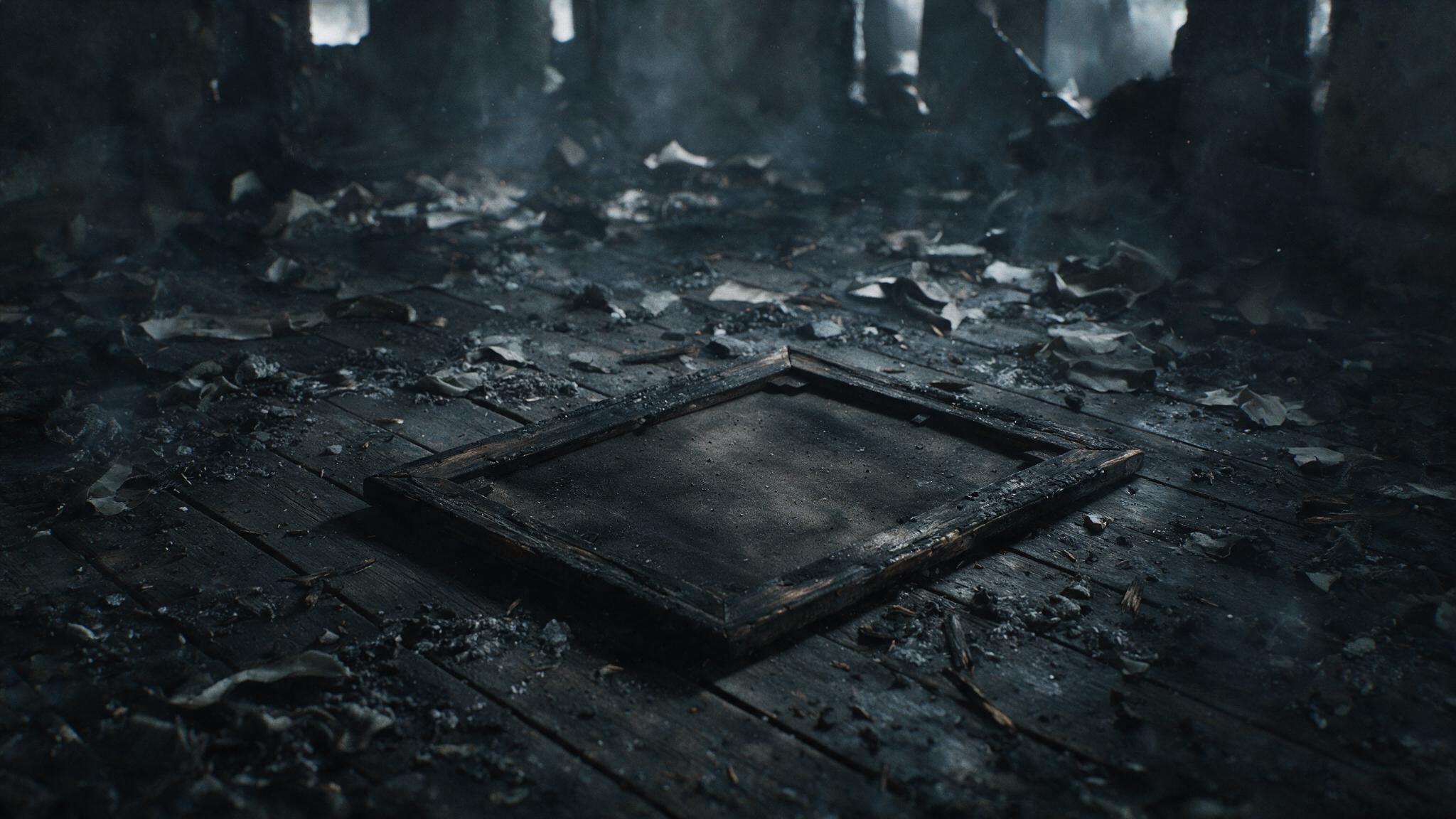
The second key is more decisive still. The testing revealed that the string or hook holding the painting to the wall would be among the first things to burn through in a fire. Once the string burned away, the painting would fall from the wall — and it would tend to land face down on the floor. When that happened, the flames and heat reached only the back of the picture and its frame, while the front, where the boy's face was painted, lay pressed against the floor and was shielded. When the fire was put out and someone turned the picture over while clearing the debris, the front alone would be astonishingly unharmed. The identity of the "cursed painting that would not burn" was, in large part, this simple piece of physics.
The Fear a Tabloid Fed
The third key lies outside the picture altogether — in the nature of the outlet that spread the story to the world. The Sun, which reported the Crying Boy curse so lavishly, was one of Britain's foremost tabloids: a popular paper that drove up its circulation on sensational stories. A cursed painting left intact among the ashes was perfect fodder for such a newspaper. The more reports came in, the bigger the story grew; and the bigger the story grew, the more reports came in. Paper and reader fed each other's fear, growing the tale together.
To this we must add one statistical fact. As noted, hundreds of thousands of Crying Boy prints were sold and hung in a great many British homes. That being so, it is only natural that some of those homes would catch fire. The picture was so common that the odds of it being found in a burned house were bound to be high. People remembered — and reported to the newspaper — only the cases of "there was a Crying Boy in the house that burned," while nobody counted the hundreds of thousands of ordinary homes where a Crying Boy hung and nothing whatsoever happened. A journalist would later dismiss the dramatic backstories — the notion of the boy in the painting as an orphan who died in a fire — flatly stating that there was "absolutely no truth whatsoever" to any of it. Most of those tales, it turned out, were only invented and grafted on belatedly, in the 2000s.
And Still, the Chill Remains
So does the story end here, cleanly? Fire-retardant coating and paintings falling face down, tabloid exaggeration and the illusion of statistics — these four things alone account, in truth, for most of the Crying Boy mystery. There was no supernatural curse to begin with; it was an urban legend woven from coincidence, physics and human imagination. Weighed coldly, that is the most plausible conclusion.
The varnish and the burned picture-wire close the case, and I have written that conclusion into my notes without reservation. What the notes cannot dispose of is November 1985. Hundreds of people took a picture down off a wall in their own home, wrapped it, paid to post it to a newspaper, and asked strangers to set fire to it on their behalf. Every one of them could have simply thrown it in a bin. I keep the list of what was sent in, and it is the only part of this file that still reads to me as evidence of something.
And yet, even after everything has been explained, a certain chill somehow refuses to be wiped away. That, perhaps, is because at the heart of this story lies a face. Not a box, not a doll, but the face of a weeping child. Those wet eyes, alone surviving in a ruin where everything else has burned, looking out at you from the wall — no matter how rational the explanation you are given, they leave a corner of the mind cold. Perhaps the true horror of the Crying Boy lies not in the painting refusing to burn, but in the very image of that face still gazing back at us from the wall of a ruined home.
Even today, prints of the Crying Boy hang quietly on old walls somewhere in the world. They are only cheap old pictures — common portraits printed on fire-retardant paper, of which hundreds of thousands exist. But imagine that face, left alone on a fire-scorched wall. The face of a child, tears brimming, gazing steadily at us through the ash and the smoke. Perhaps there was no curse. But the chill that face calls up — that, still, is real.
---
The images and video in this article are AI-generated works produced to convey the mood of the story, and are not photographs of any actual person or event.



Comments
No comments yet — leave the first one.