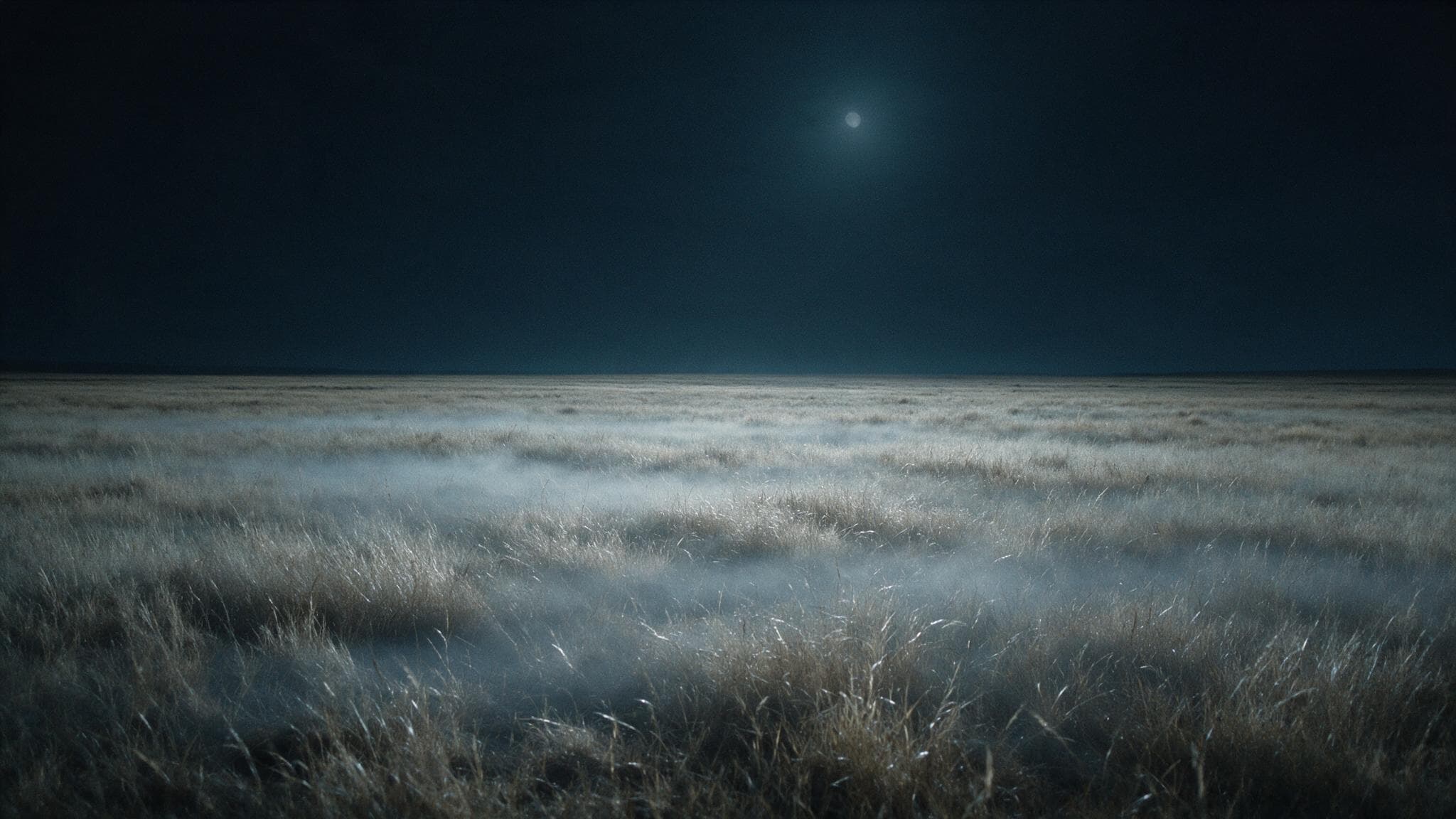
Some kinds of fear reach us through the ear before ever meeting the eye. In the north of South America, across the endless grasslands that spread over Venezuela and Colombia — a great plain called the Llanos — there is said to live just such a being. His name is El Silbón, which in our tongue means "the Whistler." People rarely see him with their eyes. Instead, when the night grows deep and everything sinks into total darkness, a thin whistle drifts out from among the sounds of dry grass rustling in the wind. That whistle carries a rule that has been handed down on these plains for more than a hundred years: when the sound comes from far away, he is near; when it comes from close by, he is far. What we mean to tell today is a strange and chilling legend of Latin America, one almost unknown in Asia — the tale of the whistle on the nighttime plain. Let us say from the outset that this is, from beginning to end, folklore and oral tradition passed from mouth to mouth. But that it has no basis does nothing to lessen the dread of the story — as you will understand once you have read to the end.
Most of the folklore that reaches my desk arrives flattened — a monster, a warning, a moral. This one arrived with an instruction, and that is why I kept it. Far means near. Near means far. I have collected a great many stories about things that follow people home, but very few that hand the listener a rule and then make the rule useless, since obeying it requires trusting the one sense the plain has already corrupted. It took me some weeks of cross-reading before I understood that the rule is not information. It is the trap.
The Llanos, a Land of Nothing but Sky and Grass
To understand the tale of El Silbón, you must first know the land where he wanders. The Llanos is a vast tropical grassland stretching across west-central Venezuela and eastern Colombia. Following the waters of the Orinoco River across hundreds of thousands of square kilometers, it is a place where, whichever way you turn your eyes, there is only grass and sky. On this plain — flooded in the rainy season, cracked bone-dry in the drought — people have long lived by herding cattle. The cowherds of the Llanos are called llaneros, men so at home in the rough life of the plain that it was said they were born on horseback and died on horseback.
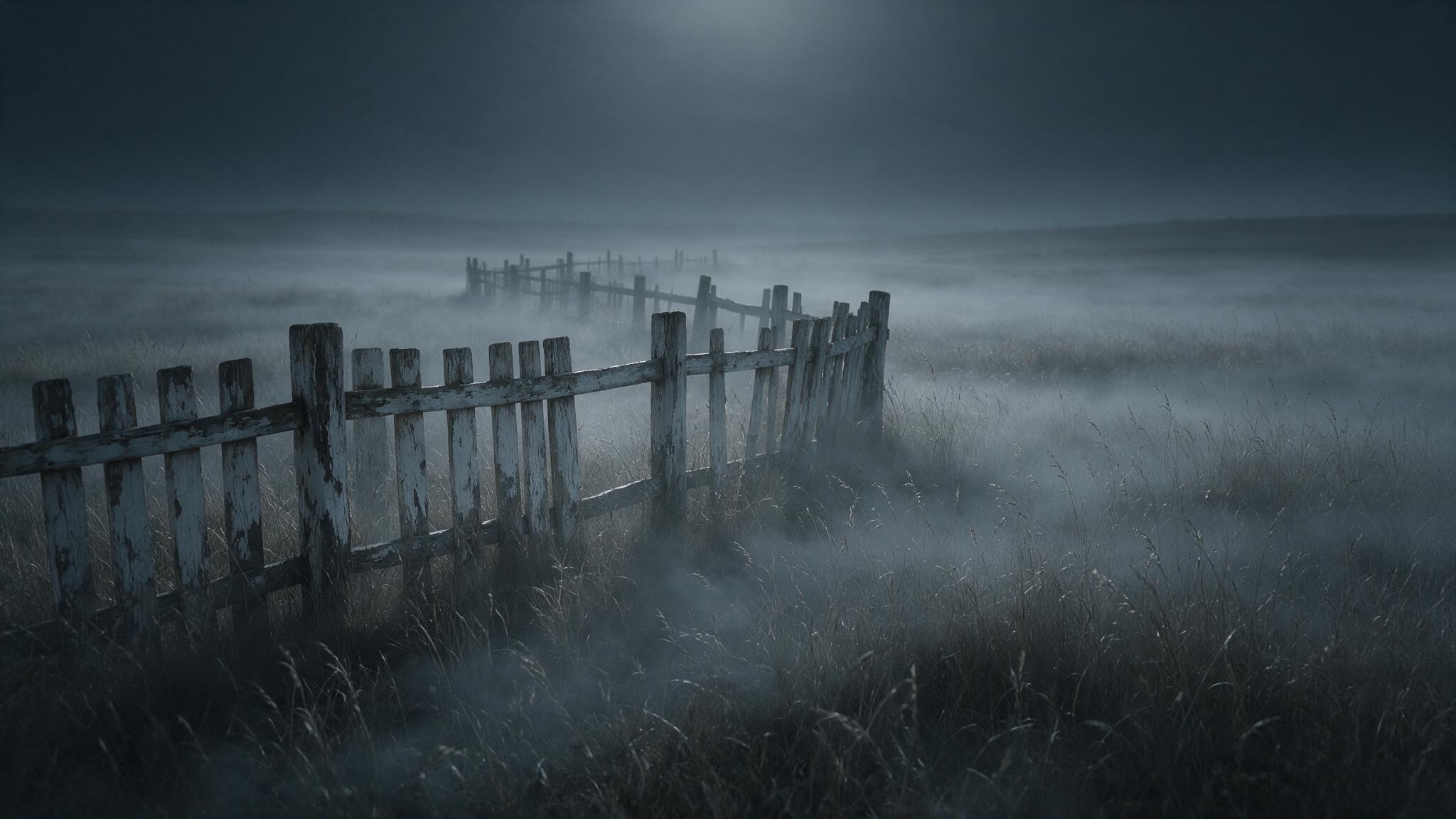
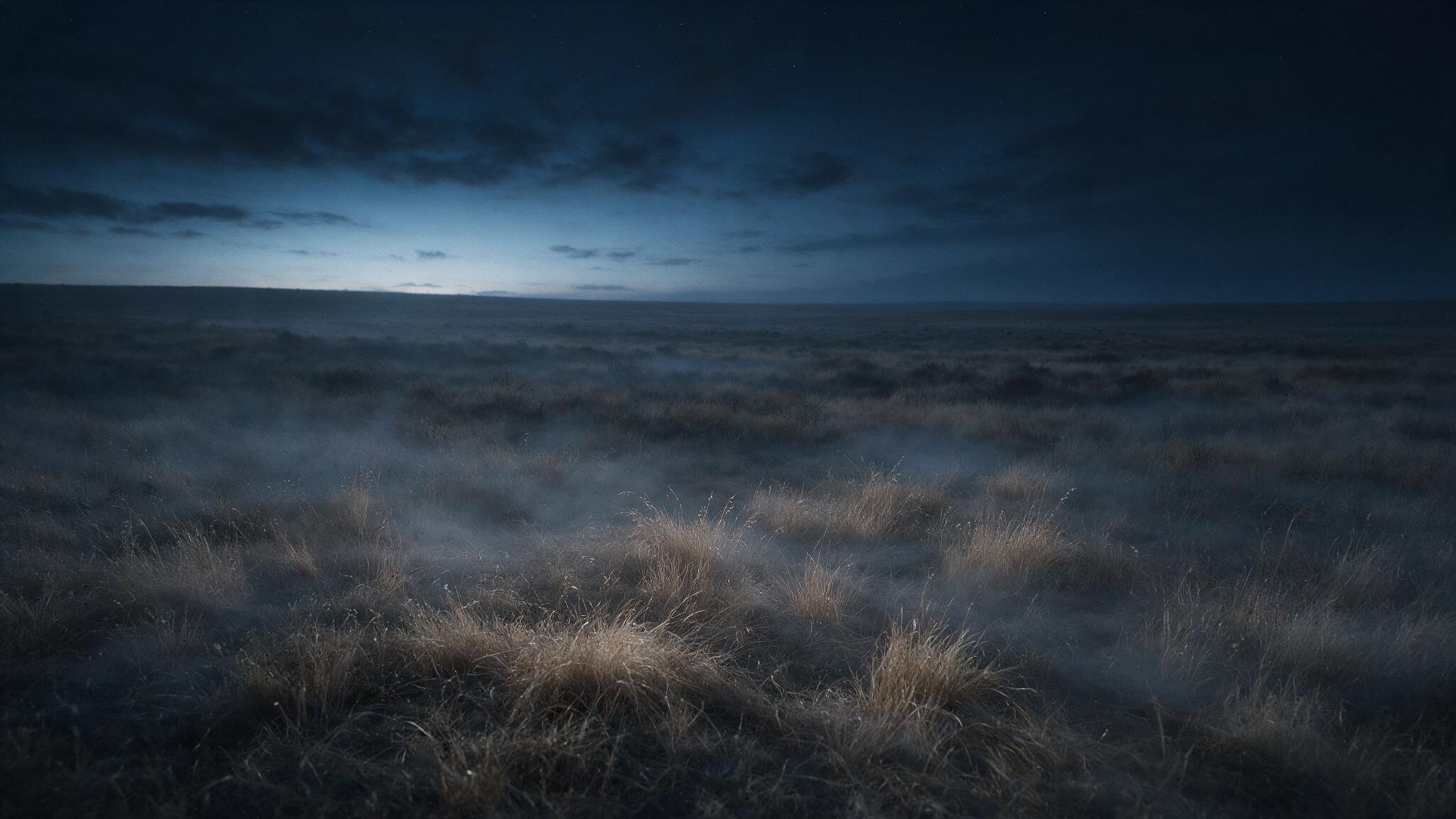
Night here is nothing like the night of a city. The only man-made light is the lamp of some distant, isolated ranch, and where even that lamp cannot be seen, the world sinks into complete darkness. The earth, baked hot through the day, cools and breathes out a thin fog, and each time the wind sweeps across the dry grass, a dry rustling fills the whole plain. It was on nights exactly like this, driving his horse alone through a darkness empty of any human presence for kilometers in every direction, that the llanero would hear a whistle coming from somewhere — and it was never a welcome sound.
The land itself could not have made a better stage for fear. On a plain where nothing stands to block the view, sound carries strangely. A noise from far away can ring out as sharply as if it came from right beside you; a noise from right beside you can arrive faint, as though echoing from a great distance. On this plain, where night and fog and wind scramble every sense of how far away a sound is, the paradoxical rule that "a whistle heard far means he is near" may not be mere invention at all. It may be the faithful record of the very confusion of the senses that people lived through, night after night.
The Paradox of the Whistle
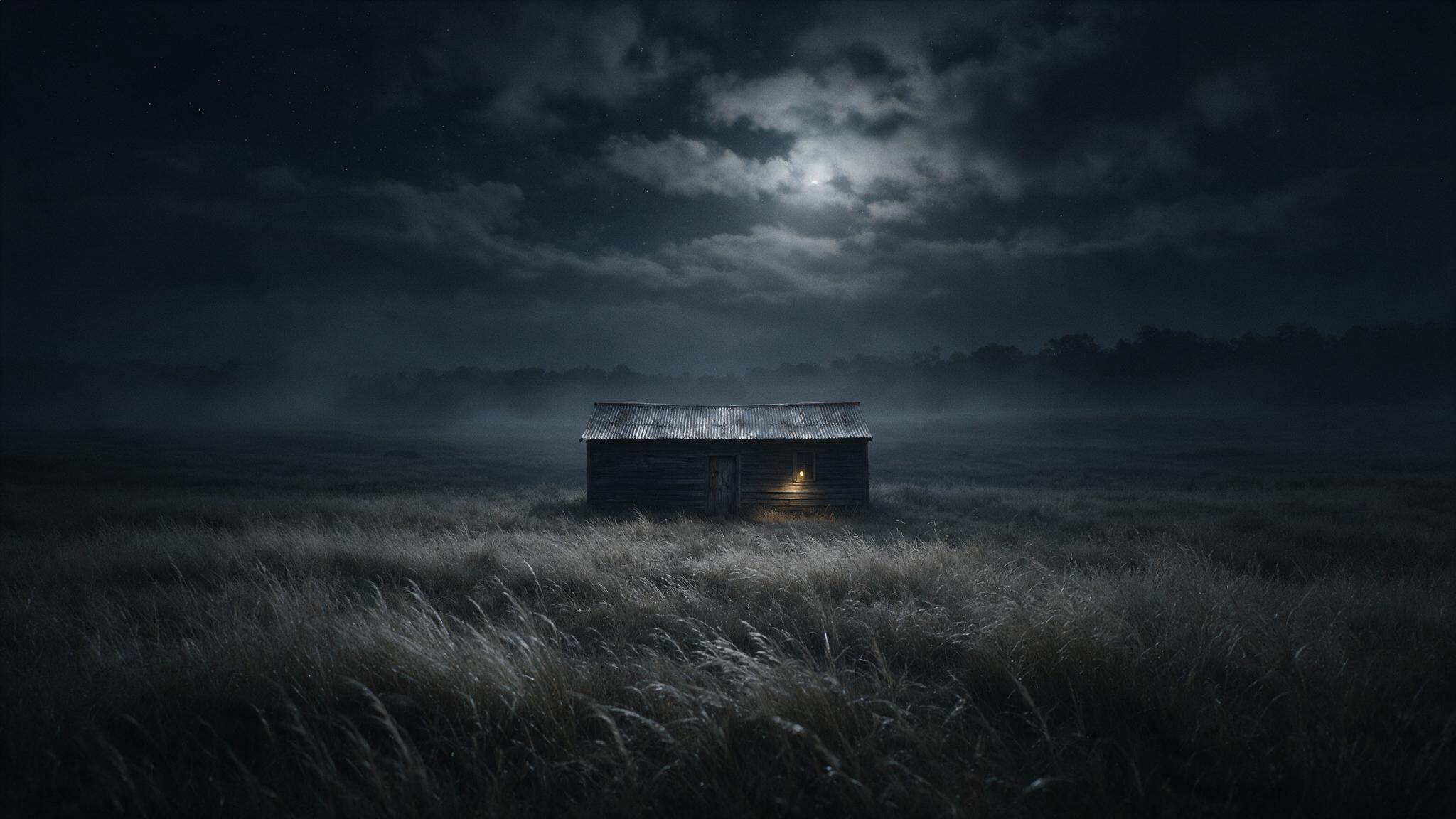
The single most decisive feature that sets El Silbón apart from the countless other ghosts is that he announces his presence through sound — and in a most peculiar way. According to the legend, he leaves behind a short whistled tune, several notes strung together. And the moment a person who hears this sound ought truly to be afraid is the exact opposite of common sense. If the whistle comes drifting faint and far away, that is the sign that he has already crept up to the very space behind your back. If, on the other hand, the whistle rings out loud and clear right at your ear, it means he is far off, and you are still safe.
This paradox is the very heart of the El Silbón legend. Most fear rests on our instinctive expectation that as danger draws nearer, its signal grows louder and clearer. Footsteps growing louder mean something is approaching; a sound fading away means the danger, too, is receding. But El Silbón turns that expectation precisely on its head. The farther the sound recedes, the more your dread should grow, not ease; the nearer it comes, the more you should let yourself relax. Before this inverted rule, a person can no longer trust their own ears. That confusion of not knowing how to read the sound you hear, that paralysis of the instant when the signals of safety and danger have been swapped — that is the true fear this story offers.
Picture a person standing alone on the plain at night. From far off comes a thin whistle. In your head, you know: for it to sound far means he is near. But however wide you open your eyes and glare into the dark, all you see is the black plain and the low-lying fog. The sound is plainly there, yet no shape appears. Whether to turn around, to run, or to stand still — unable to be sure of any of it, the person is wholly seized by the twisted signal their ears deliver. A ghost story that renders someone this helpless through the single sense of hearing alone is rare anywhere in the world.
The Figure with the Sack
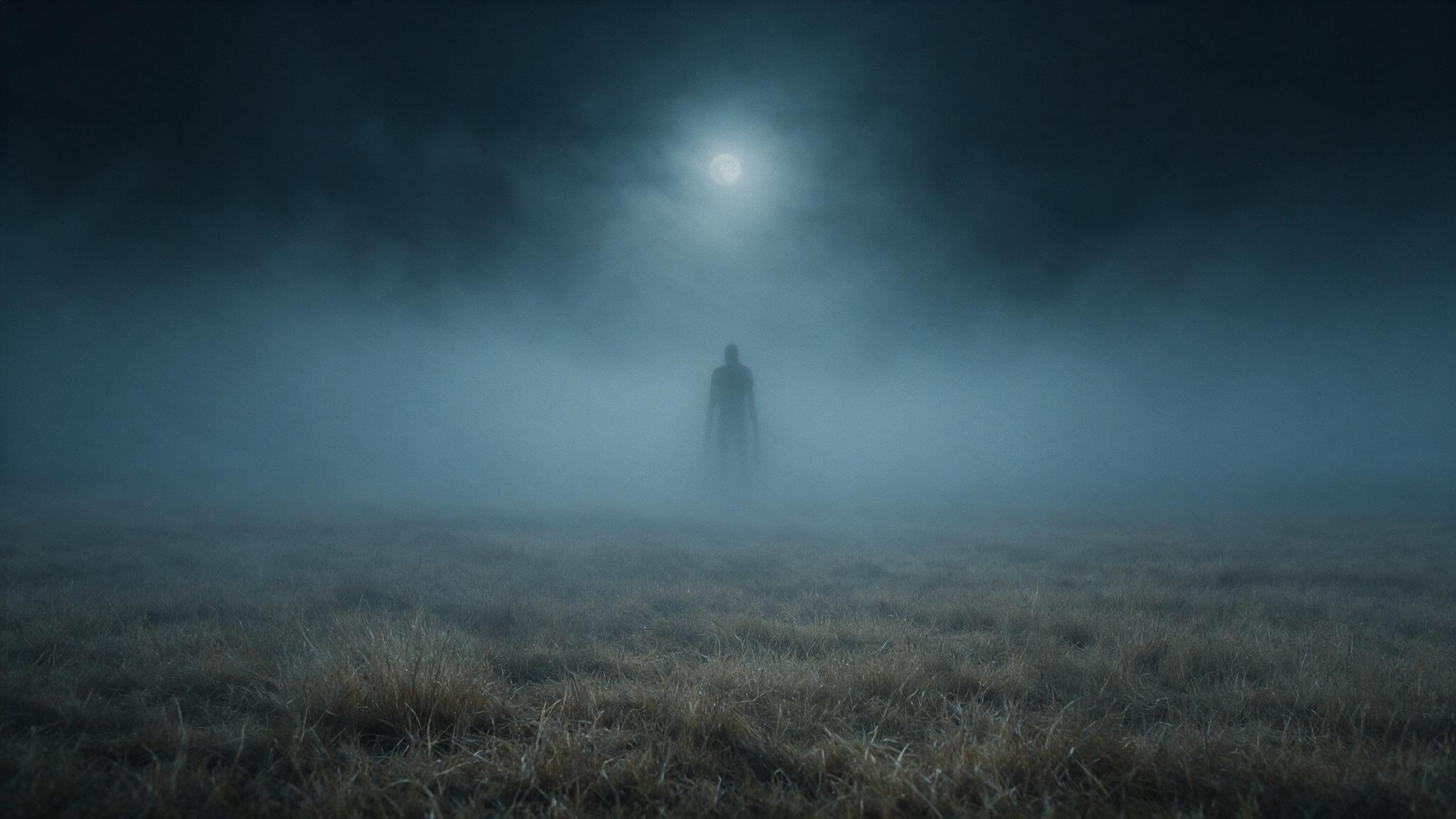
The accounts of those said to have glimpsed El Silbón draw one remarkably consistent picture. He is a figure abnormally tall and gaunt, an old hat pulled low, walking the nighttime plain. In some tellings he is drawn as a being so enormous he moves through the tops of the trees; in others he is described simply as the shadow of a tall man in a hat. But whichever version it is, one thing they share: he carries a great sack slung over his back.
The story of what lies inside that sack casts the darkest shadow over this whole legend. By what is passed down, the sack is full of bones. And those bones, it is said, are none other than his own father's. Night after night he wanders this vast plain without end, that heavy sack on his back, as though bearing a punishment that will never be finished. The sound of the bones knocking together inside the sack, people say, lingers eerily in the place where he has passed.
Here we come to the origin of the story — how he became such a being in the first place. But let us note something in advance. This origin tale, as old folklore so often does, holds cruelty within it. Rather than laying that part bare in full, we mean to touch it only as much as is needed to understand what the story is trying to convey, only as a dark outline. It is enough to look into the grain of feeling behind why an old oral tradition would fashion an image of so heavy a punishment.
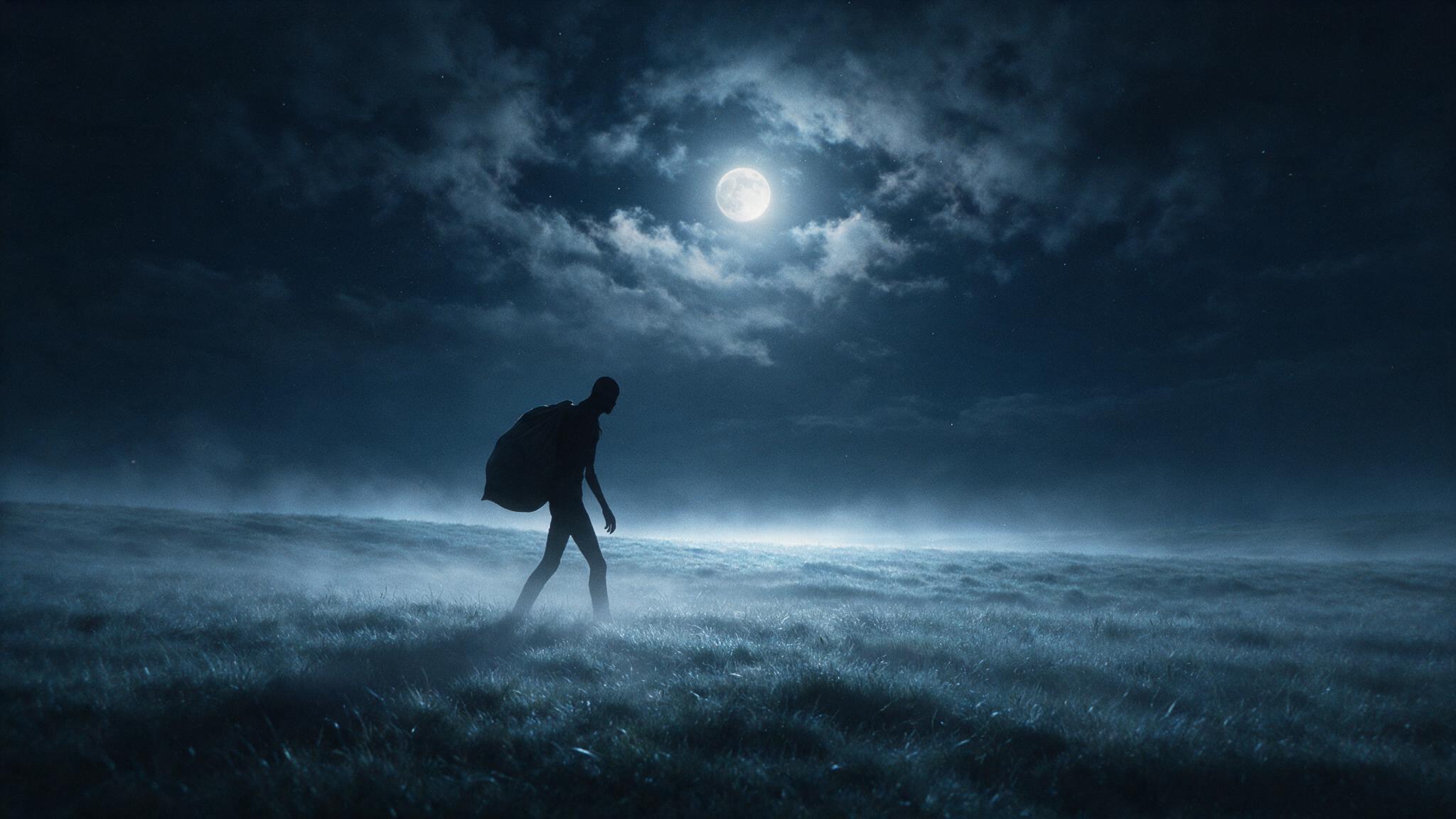
A short clip of thin fog drifting slowly over a moonlit nighttime plain — a recreation of the legend's mood, not real footage.
The Tale of the Cursed Son
The origin of El Silbón, as the people of the Llanos tell it, begins with the story of a young man. Long ago on this plain, they say, there lived a spoiled son. He was headstrong and knew no respect for his elders, and one day, between himself and his father, he committed a terrible and irreversible act. The specific scenes of that event, as the old story tells them, are deeply harrowing, and here we will leave it only at this: that the son committed the unforgivable crime of taking his own father's life by his own hand.
When the crime came to light, the grandfather — the greatest elder of the household — laid down a fearsome punishment. He set upon his grandson a curse from which he could never again escape. Gathering the dead father's bones into a sack, he loaded them onto his grandson's back and commanded him to wander this world for all eternity, bearing those bones. In some tellings, a savage whipping and fierce hunting dogs were added on top of it. And so the cursed son became a being neither wholly human nor wholly ghost, walking through the darkness of the Llanos every night with the sack of his father's bones upon his back.
What this origin tale holds is not fear alone. Woven within it is an old warning that the people who lived on this plain meant to pass to their children, and to the young in particular. Honor your parents; do not raise your hand in violence; do not lose your judgment to drink — these rules of life the elders of the Llanos handed down clothed in the garment of a frightening story. The young man who does not come home till late in the night, the one given to drink and to brawling, the one who treats his parents roughly — to these, they said, El Silbón draws especially near. So this ghost was not merely a thing to startle people, but a kind of guardian of morality, carving the order the community wished to keep into the form of a punishment out of the dark.
How an Oral Tradition Survives
Now let us look at this story from a little distance. El Silbón is not a ghost that truly exists. He is no historical figure found in any document, no phenomenon confirmed by science. He is a story that the singular land of the Llanos, over long ages, shaped into a single form out of the fears and hopes and wariness of the people who live upon it. This legend, which began to pass from mouth to mouth in the ranches and villages of the Llanos around the nineteenth century, had already swelled in size, repeated beside countless nighttime campfires, long before it was ever written down.
So how has a story with no basis survived more than a hundred years to keep chilling people's spines to this day? The secret lies in how firmly this legend is locked into the real sensations of this land. On the nighttime plain, sound really does carry strangely; the darkness on every side really does render a person helpless; the wind sweeping across the dry grass really does sound, somehow, like a person's whistle. Anyone who has spent a night in the Llanos knows in their body that the setting of this story is no wild fancy. The more a ghost story is rooted in real sensation, the longer and the deeper it survives.
There is one more thing that gives this legend its power: the rule contained within it. That paradoxical rule — far means near, near means far — hands the listener a kind of game. If, at this very moment, a whistle were to come from somewhere, would it be near, or far? Before this question, a person becomes no longer a bystander standing outside the story, but, before they know it, a party to it, standing in the very middle of the nighttime plain. In exactly that moment of participation, the hundred-year-old story comes alive again and draws quietly up behind you, the one reading these very words.
Comparing the variant tellings, I found one thing the tellers never varied and never explained. The sack is described as full — always full, in every version, however many decades have passed since the grandfather loaded it. A man carrying bones for a century should have set some of them down by now, or lost them, or worn through the cloth. Nobody in the oral record permits that. I have gone back over the transcriptions looking for a version where the weight lessens, and there isn't one, and I would rather not think too long about why the tellers all refused it.
So let us close the tale this way. El Silbón is not a real cursed ghost. He is only the shape of an old fear, made by the vast plain and the deep darkness and the twisted sound. Tonight, you are unlikely to hear any whistle at all. But if someday, on some unfamiliar night, you find yourself standing alone on a wide field sunk in total darkness, and from far off a thin whistle comes drifting faintly toward you — the chill that then climbs your spine is no curse. It is only the voices of those who, for a hundred years, have kept watch over the nights of this plain, briefly stirring again within you. Those voices, whispering low, that the farther the sound is heard, the nearer he stands.
---
The images and video in this article are AI-generated works produced to convey the mood of the story, and are not photographs of any actual person or event.


Comments
No comments yet — leave the first one.