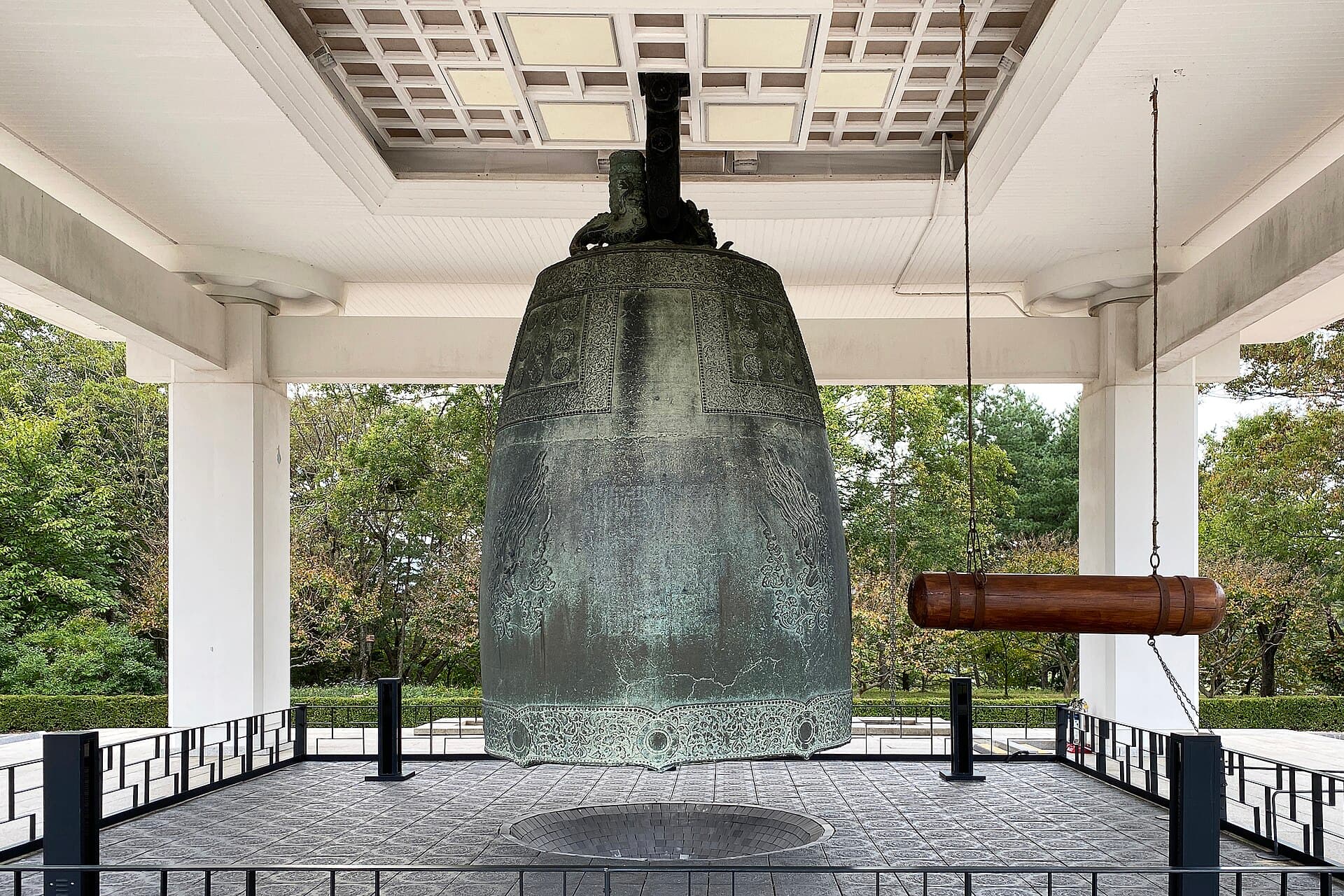
In the garden of the Gyeongju National Museum hangs the largest and most beautiful bell the kingdom of Silla ever left behind. It is an immense bronze bell — 3.66 meters tall and weighing nearly nineteen tons. Across its surface, apsaras, heavenly beings, drift with their robes streaming, and a bronze inscription running to almost a thousand characters carries the mind of Silla down to us today. Its proper name is the Divine Bell of King Seongdeok. Yet for centuries people have called it by another name: the Emille Bell. The name comes from a story that says when the bell is struck, in the trailing echo you can hear a child calling for its mother — "em-i-le, em-i-le." And the legend told to explain that sound is a terrible one: that to complete the bell, a child was offered up to it. The tale we mean to tell today is the tale of that legend — and, at the same time, the tale of why it is not true.
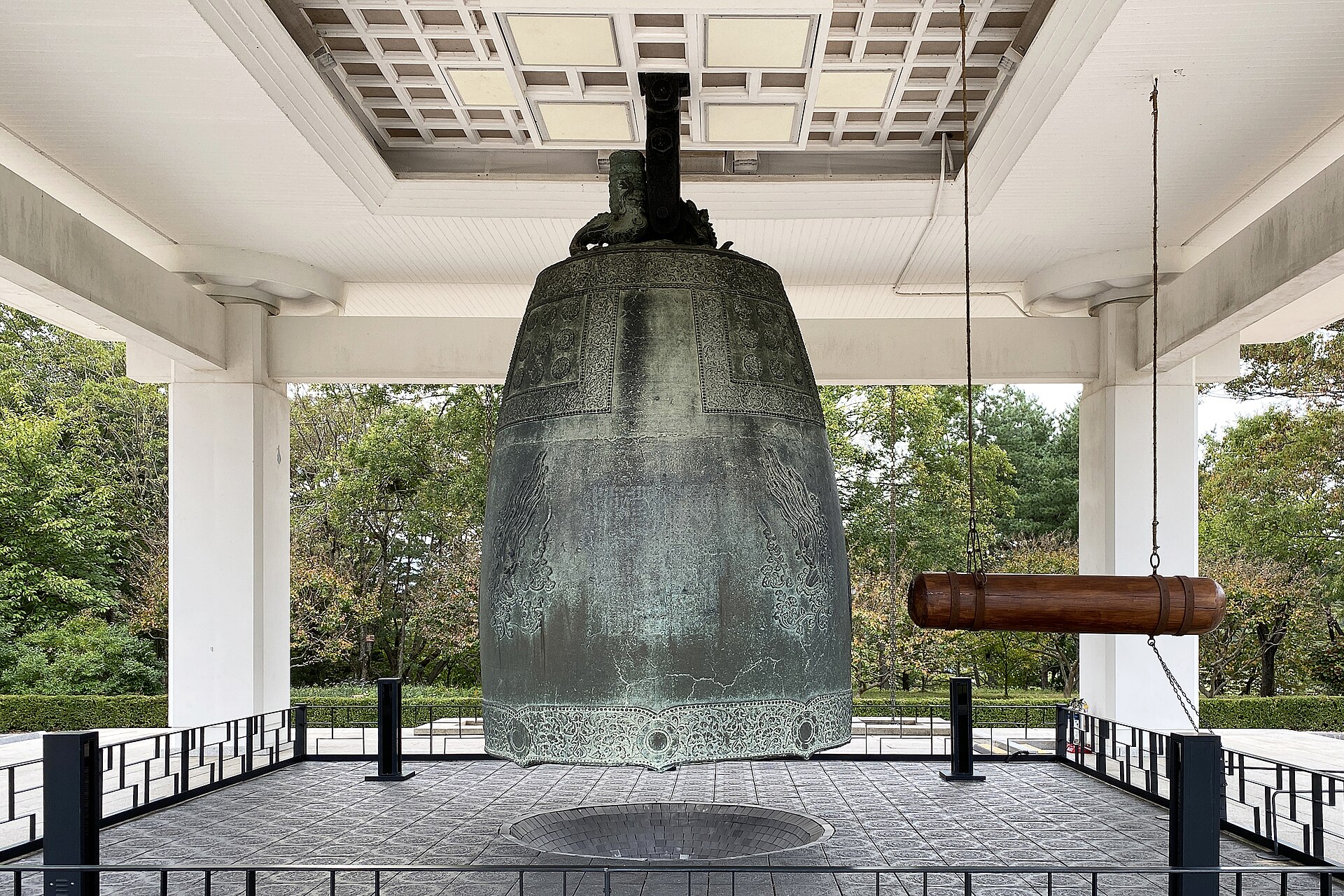
Photo: Wikimedia Commons
The thing that pulled me into this file was not the legend but the inscription. Nearly a thousand characters run around that bell, listing offices, names, the reasons for the casting — one of the most talkative objects to survive from Silla. And the story everyone knows about it says nothing that the bell itself says. I have spent longer than I should have comparing the two texts, the bronze one and the spoken one, and what holds my attention is not that they disagree. It is how completely the spoken one won.
What the Legend Says
The story, as it has come down to us, begins like this. A king of Silla resolved to cast the grandest bell in the land, to pray for the peace of his late father's soul. Bronze was gathered from across the kingdom and the finest artisans set to work, yet the bell would not come. Each time the molten metal was poured, the bell cracked, or it came out mute and gave no sound. Again and again they recast it, and again and again it failed. The years wore on, the bronze ran low, and worry deepened on the craftsmen's faces.
Here the legend introduces a wandering monk seeking alms. When he came to one poor household, the story goes, there was nothing there to give. A mother holding her infant answered, half in passing, that she had nothing in the house but this child. As the bell kept failing, people are said to have recalled those words — and in the cruel logic of the tale, the child was taken and the bell was at last completed. The bell that emerged finally rang out with a deep and magnificent tone, and its lingering echo, they said, sounded like a child crying "em-i-le." The word was read in old speech as something close to "because of mother" — as if the child were calling out in reproach to the one who had let it go.
We will not press further into the details of this scene. This is not a story to be told for the thrill of a child's death. But one thing must be made plain: the legend is not true. And that truth we can confirm not through storytelling, but through the bell itself.
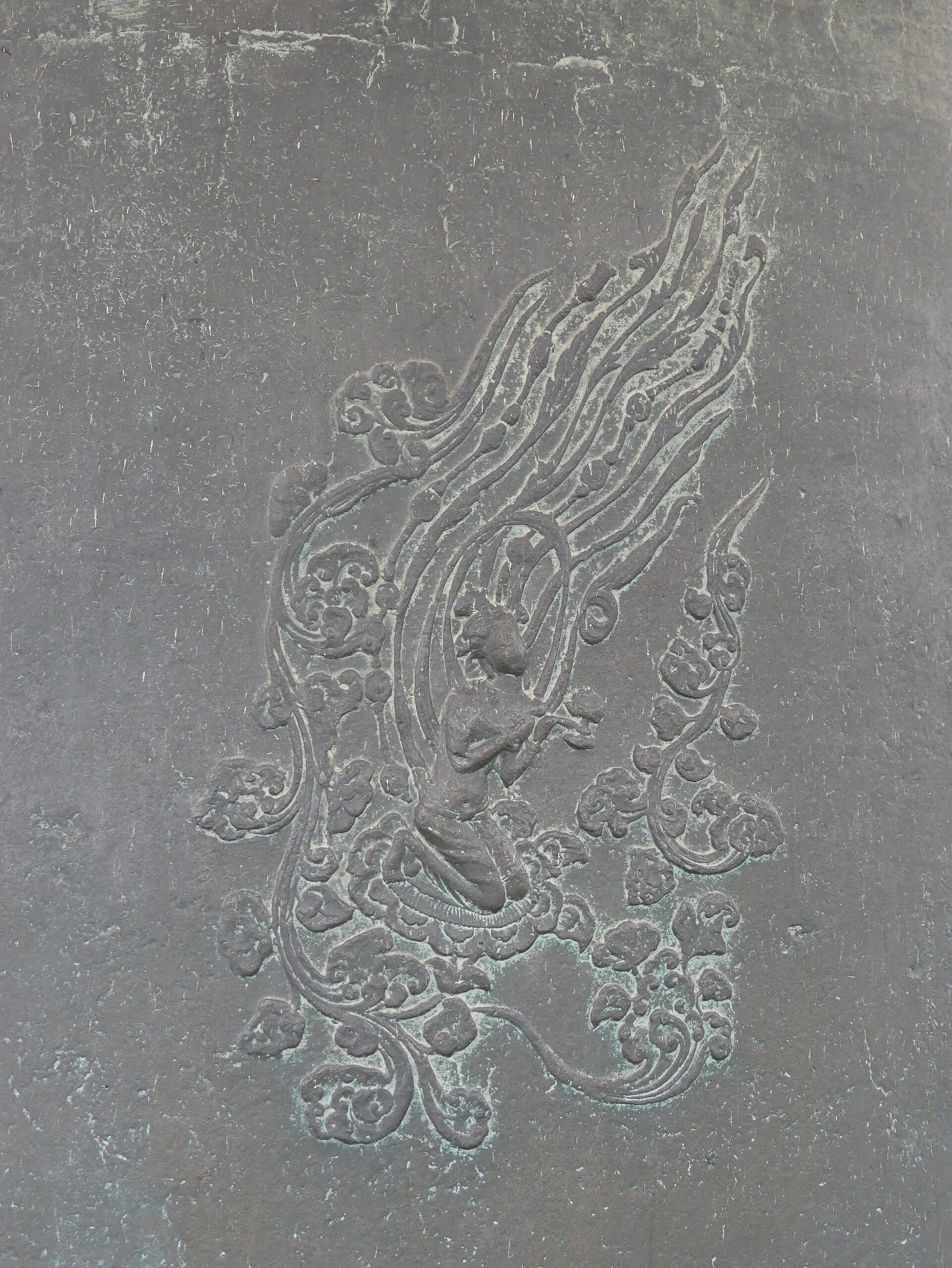
Photo: Wikimedia Commons
When, and Why, the Bell Was Made
Strip away the legend and return to the record. King Gyeongdeok of Silla wished to cast a great bell in honor of the merit of his father, King Seongdeok, but did not live to see it done; it was his son, King Hyegong, who completed the bell in the year 771. It was also called the Bongdeoksa Bell, after the temple where it was first enshrined. Around the body of the bell runs an inscription of nearly a thousand characters recording how and why the bell was made — a document that remains a precious window into the society of Silla.
The inscription sets down the names and offices of those who cast the bell, and the devotion that went into completing it, in a plain and measured voice. Nowhere in it is there any mention of a child cast into the metal. Nor could there be. This bell was the fruit of a Buddhist vow — a prayer for the repose of a dead king and the peace of the realm. Within the Buddhist world, where the taking of life is held to be the gravest of sins, to sacrifice a living child while casting a bell meant to honor the merit of the Buddha would run directly against the very meaning of that vow. The bell was a vessel meant to hold compassion — not its opposite.
Why, then, was the bell so hard to make? The truth is that casting a single bronze bell of nearly nineteen tons in one pour was an extraordinarily difficult feat for the technology of the age. If the molten metal did not spread evenly, air pockets formed, and where those pockets formed the bell would ring dead or crack apart. The "bell that keeps failing" of the legend was not the result of any human sacrifice, but the long and grueling trial and error of craftsmen struggling to draw a perfect giant out of the fire.
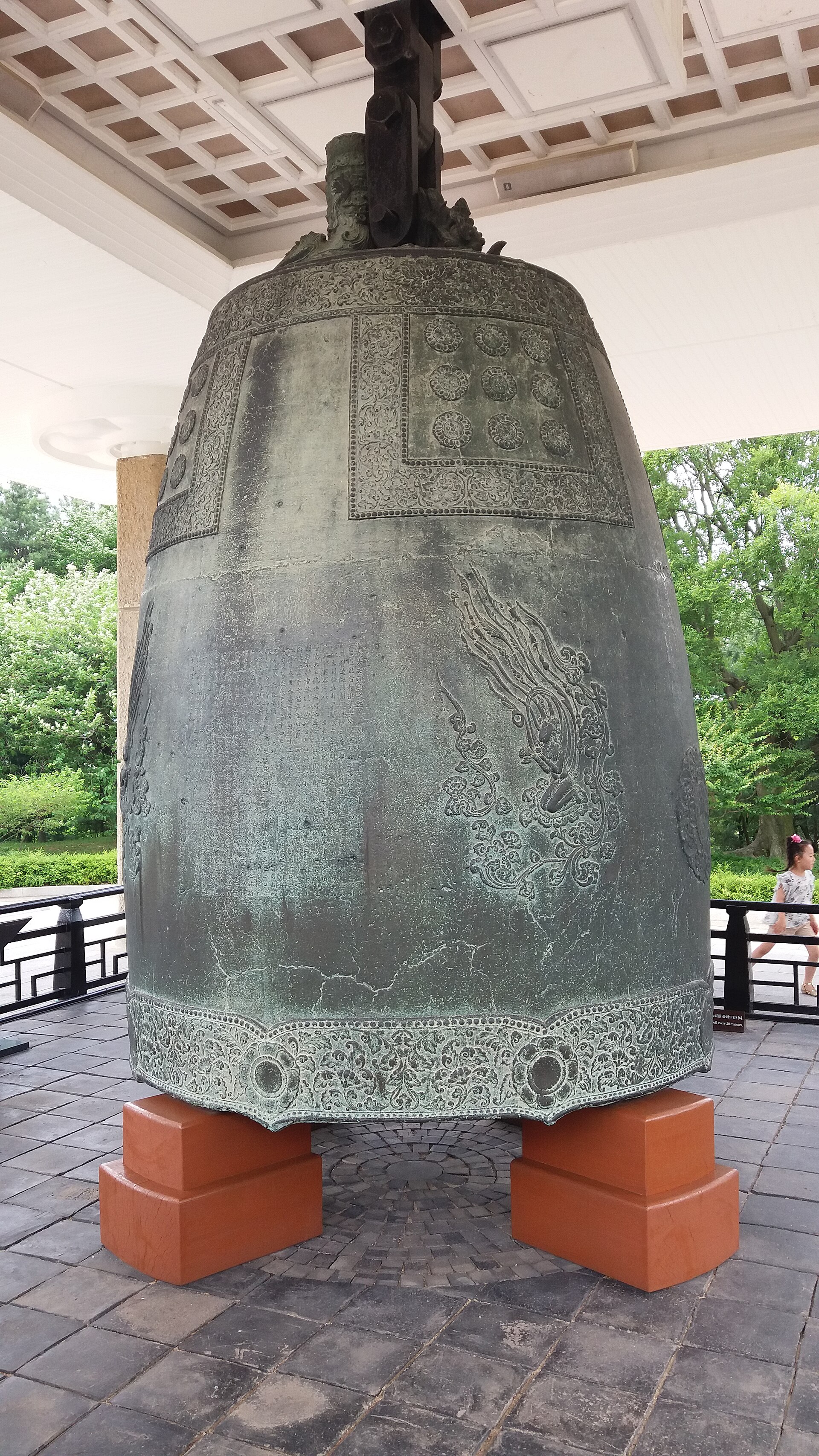
Photo: Wikimedia Commons
What Science Found Inside the Bell
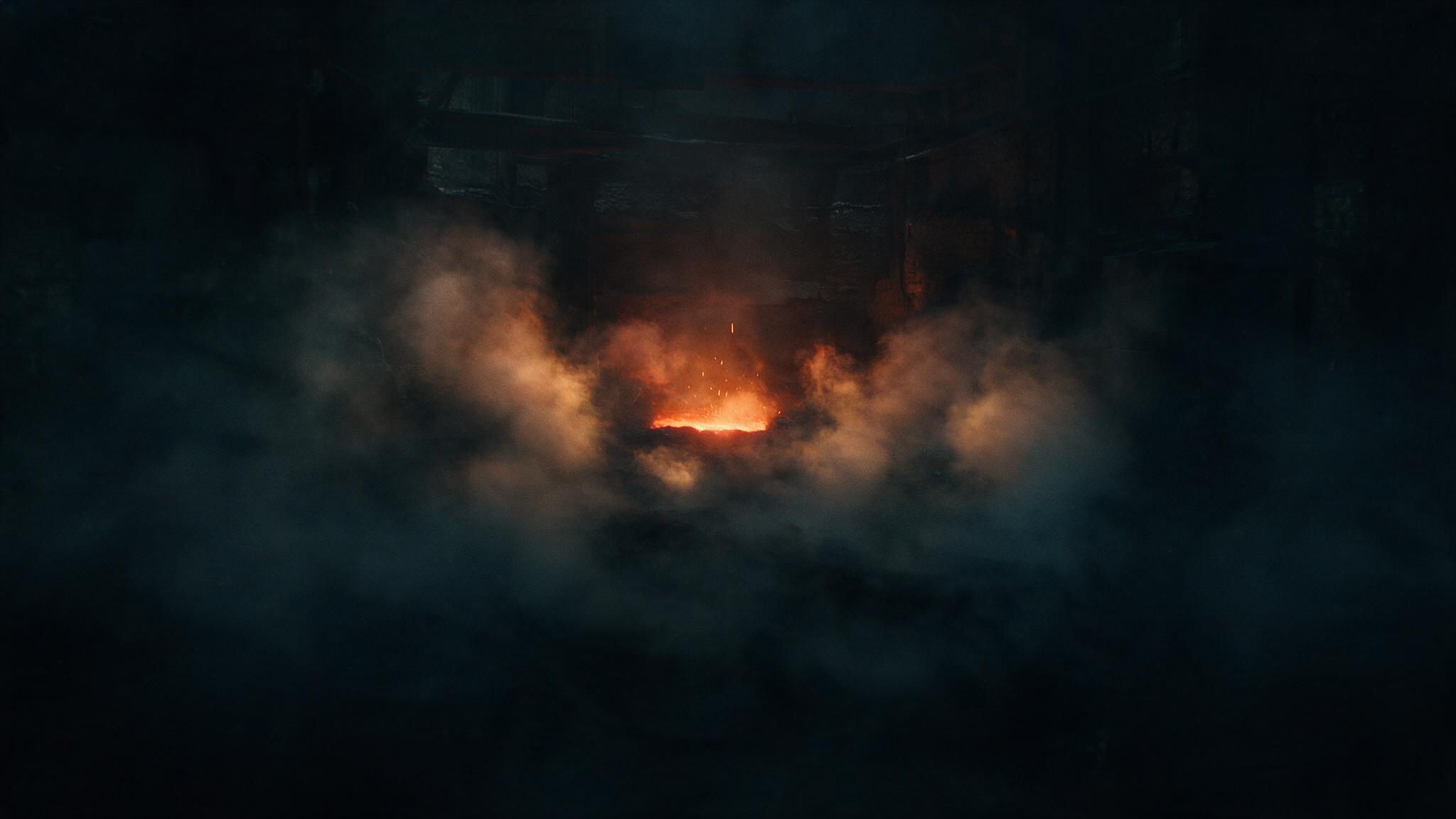
What decisively disproved the legend was a compositional analysis carried out in 1998. In that year an industrial science and technology research institute examined the metal of the Divine Bell of King Seongdeok in detail, and the result placed a quiet but firm full stop on the old legend. In the bell's composition, phosphorus was not detected at all.
Why is this decisive? Phosphorus is a core component of human bone. If a child had truly been cast into the molten bronze as the legend claims, then some faint trace of bone-derived phosphorus should remain within the metal. Yet the precise analysis found not a single particle of it. The bell was simply a pure bronze alloy of copper and tin, with nothing in it that could be called human.
A basic fact of metallurgy tears down the legend still further. To cast a bell as large and as clear-voiced as the Divine Bell of King Seongdeok, the molten metal must be free of air bubbles. But drop something rich in moisture and organic matter — a human body, say — into boiling bronze, and steam and gas erupt in an instant, riddling the metal with bubbles and producing precisely the kind of "failed bell" the story dreads. In other words, completing a bell by casting a child into it is not only monstrous but technically impossible; a bell made that way could never ring with such a clear tone. That the Divine Bell of King Seongdeok has kept its deep, long-trailing resonance for more than twelve centuries is itself already a refutation of the legend.
So When Was the Legend Born?
If science denies the legend, one question remains. Where, and when, did so sorrowful and vivid a story come from? Remarkably, there is not a single historian who regards the Emille Bell legend as an actual event of the Silla era. No record from the year 771, when the bell was cast, and no document from Silla or Goryeo, contains any account of a child placed in the metal. The story first appears clearly in writing only in the twentieth century — in a work of creative fiction published in 1925. For more than a thousand years the bell was simply a bell, and the legend was laid over it only much later.
Why, then, would such a tale be made at all? Here an intriguing reading offers itself. The Silla of King Hyegong's reign, when the bell was finished, was a time of deep political disorder. Having come to the throne as a child, the king was overshadowed by his mother, who involved herself deeply in affairs of state, until it all spiraled into a coup in which a treacherous subject seized the throne. The memory of that turbulent age, the reading suggests, condensed over the centuries into a single story. The legend's shape — a mother sacrificing her own child to accomplish something — may have been the muffled voice of a people obliquely satirizing and reproaching an era: a king's mother who wielded power behind a boy on the throne, and the subjects who betrayed that king. The child's death was not a real event but a metaphor, a vessel for the tragedy of an age.
The bell's own sound surely helped the tale survive so long. The voice of the Divine Bell of King Seongdeok trails unusually long and deep, trembling almost like a human voice. Listen to that lingering echo and something in you cannot help but ache. People wanted to attach a story to that inexplicably mournful ring, and gave it the piteous name "Emille." A sorrowful sound, they felt, deserved a sorrowful tale. The legend, in this way, was a shadow cast by people's feeling for the bell.
What We Ought to Hear in the Bell
Reaching this point, the story of the Emille Bell wears a very different face from the chill it first carried. This is not the record of a cruel event in which a child was offered up as a sacrifice. There was no such event. This is the story of a vessel of compassion, made twelve centuries ago by the people of Silla who gathered all their devotion to pray for the soul of a dead king. And it is the story of a story — one that far later generations laid over the bell, adding to it the pain of an age and the sorrow of a sound.
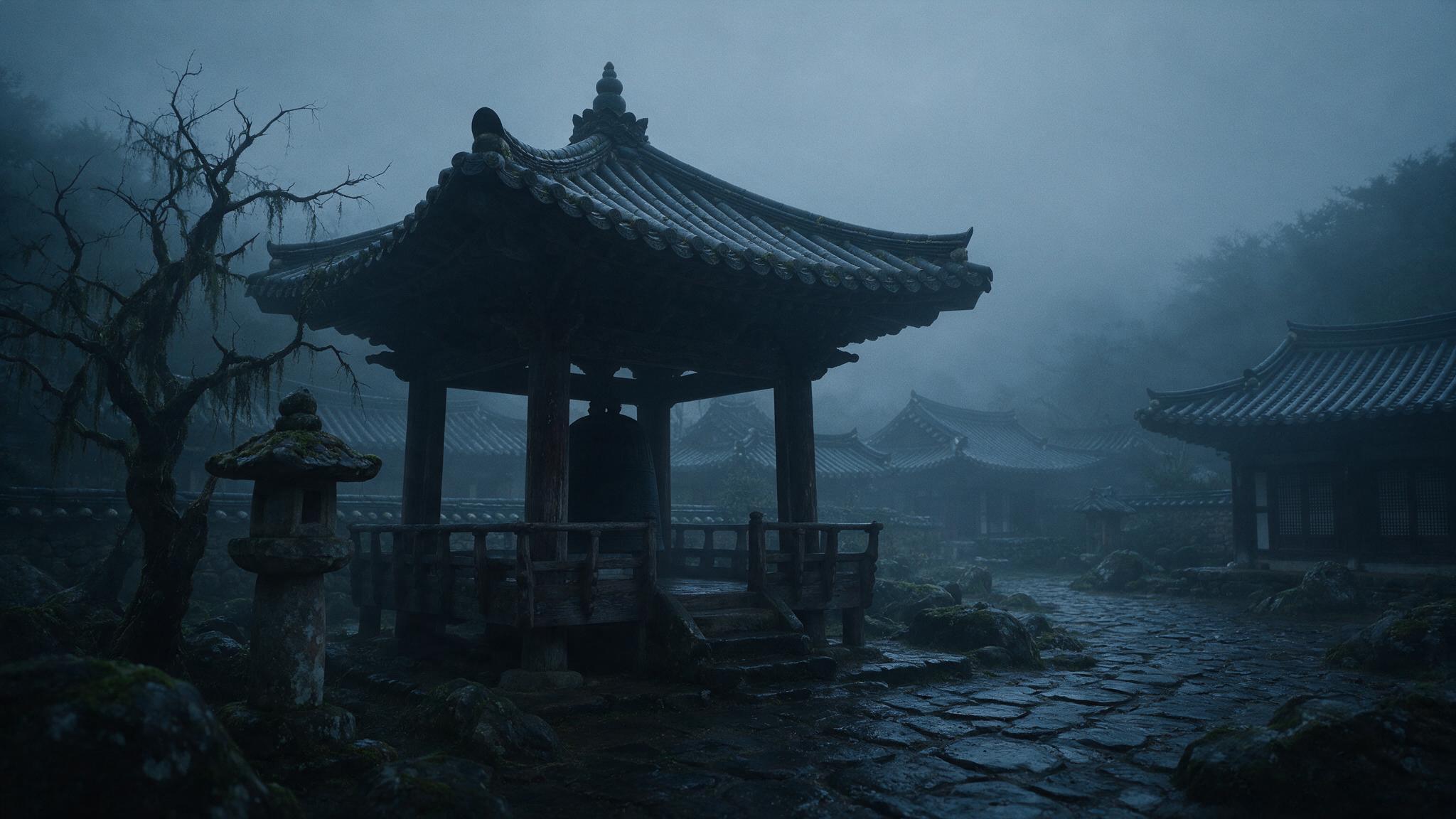
A short clip drifting slowly toward a bell pavilion in the fog — a mood recreation, not real footage.
To take the legend at face value is to lay upon an innocent bronze bell a crime it never committed, and above all to keep retelling, again and again, the death of a child who never died. So we mean to end this story differently. The bell did not swallow a child. Science has proven it; the Buddhist heart that made it never permitted it; and history does not say it ever happened.
Still, the 1998 finding closes less than it appears to. Phosphorus settles what is in the metal; it says nothing about what was in the minds of the people who, twelve hundred years later, decided this particular bell needed that particular explanation. A 1925 novel gave the story its written form, but a novelist does not invent a name that a whole country recognizes on sight. Somewhere between the casting and the printing, people were already calling it Emille. That gap is the part of the file I have never been able to fill, and I no longer expect to.
Today the Divine Bell of King Seongdeok still rings. Its long, deep resonance is not reproach but a vow, not sorrow but a prayer. Looking up at that great bronze hanging in its misted pavilion, what we ought truly to hear is not a child's cry. It is the earnest heart of those who, twelve hundred years ago, made this bell to pray for someone's peace — and the weight of the time that has carried that heart down to us. A legend is, in the end, only a legend. The bell remains, quietly, only a bell.
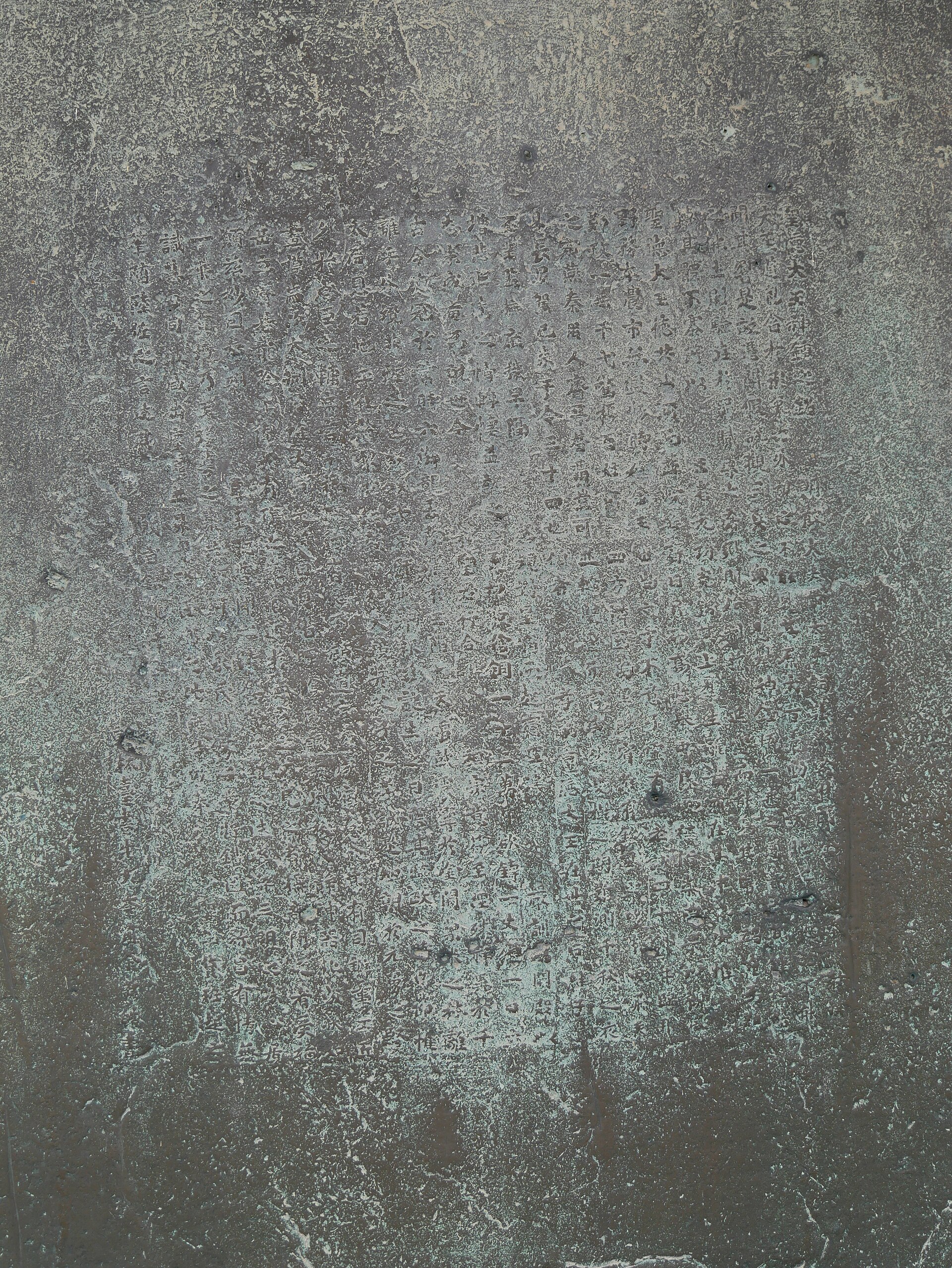
Photo: Wikimedia Commons
---
This article combines documentary photographs of the actual Divine Bell of King Seongdeok with AI-generated images and video made to convey the mood of the story.



Comments
No comments yet — leave the first one.