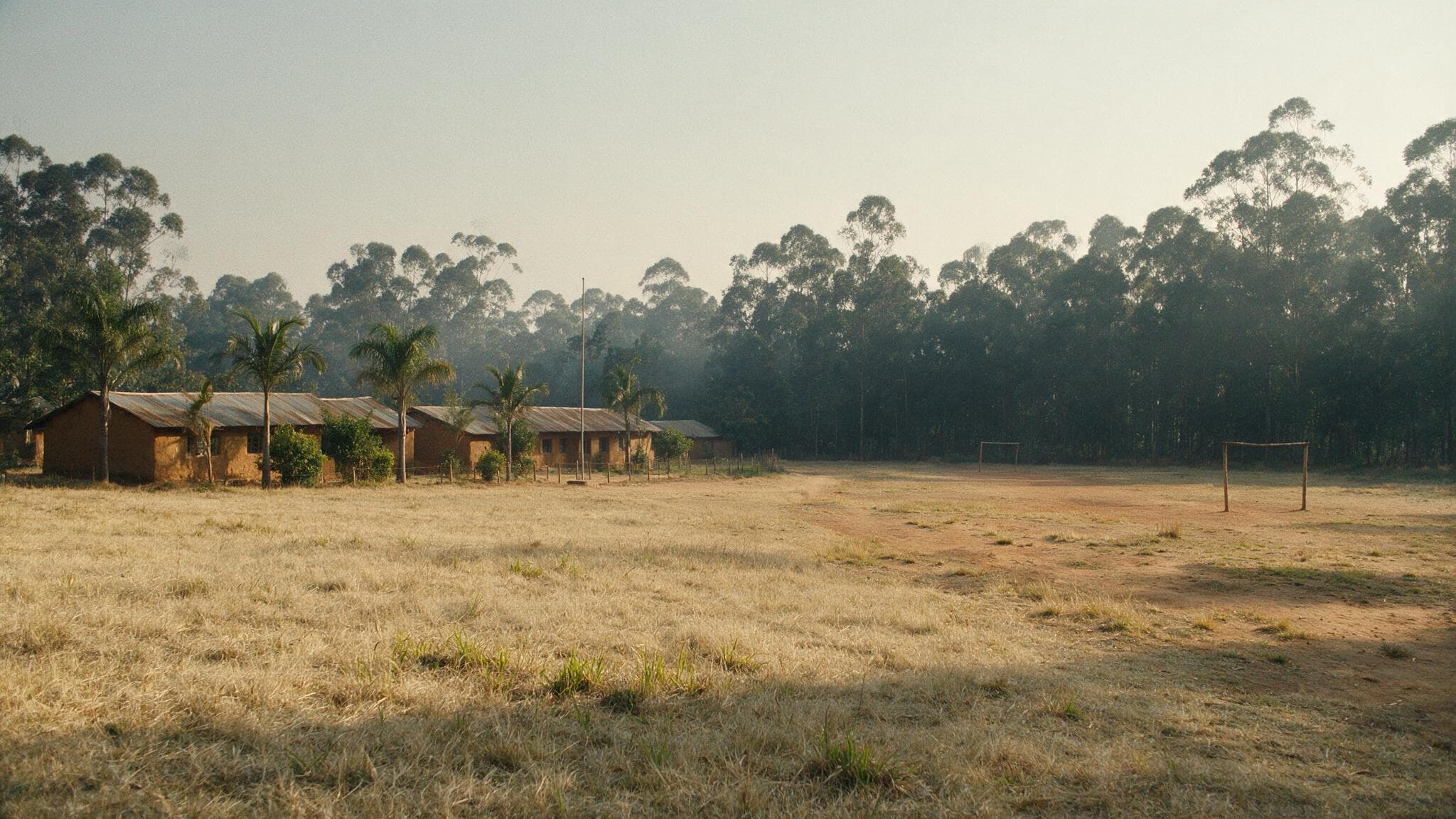
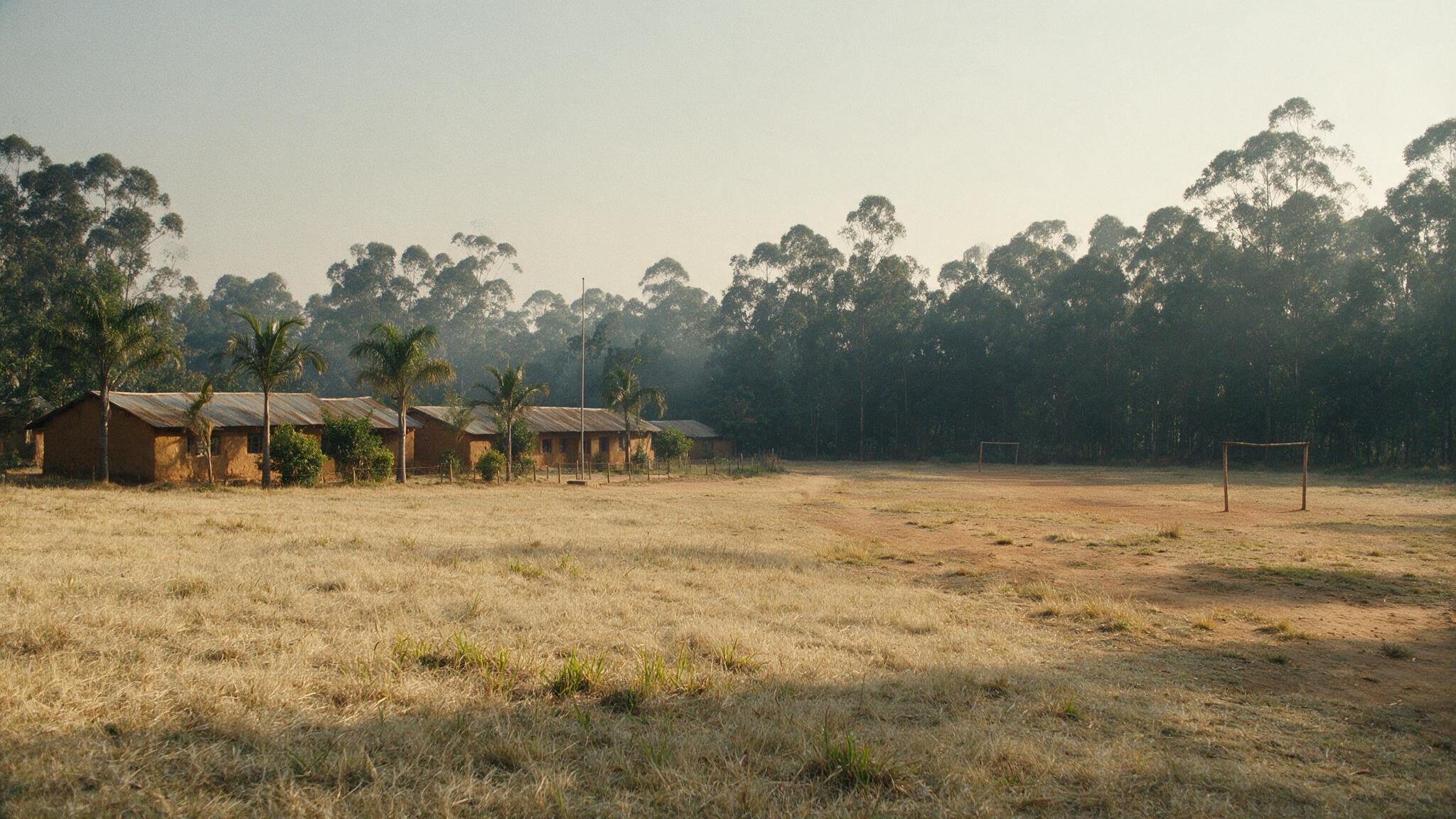
At around ten o'clock on the morning of 16 September 1994, the children of the Ariel School in Ruwa, a small town outside Harare, Zimbabwe, were out on their mid-morning break. The teachers were indoors, gathered in a staff meeting. The playground backed onto a patch of rough scrubland — long grass, thorn bushes, a line of trees. What the children said happened next has never been satisfactorily explained, argued away, or proven. Something silver, they said, came down out of the sky and settled at the edge of the field. And then, one or more small figures with pale skin and huge black eyes were suddenly there among the bushes, looking at them. Some sixty-two children, aged roughly six to twelve, ran back inside with the same impossible story. A Harvard psychiatrist would later fly across the world to sit with them. Thirty years on, those children are adults now, spread across continents, and when you ask them what they saw, most of them still say the same thing. This is the story of the Ariel School sighting — and of why, three decades later, it refuses to close.
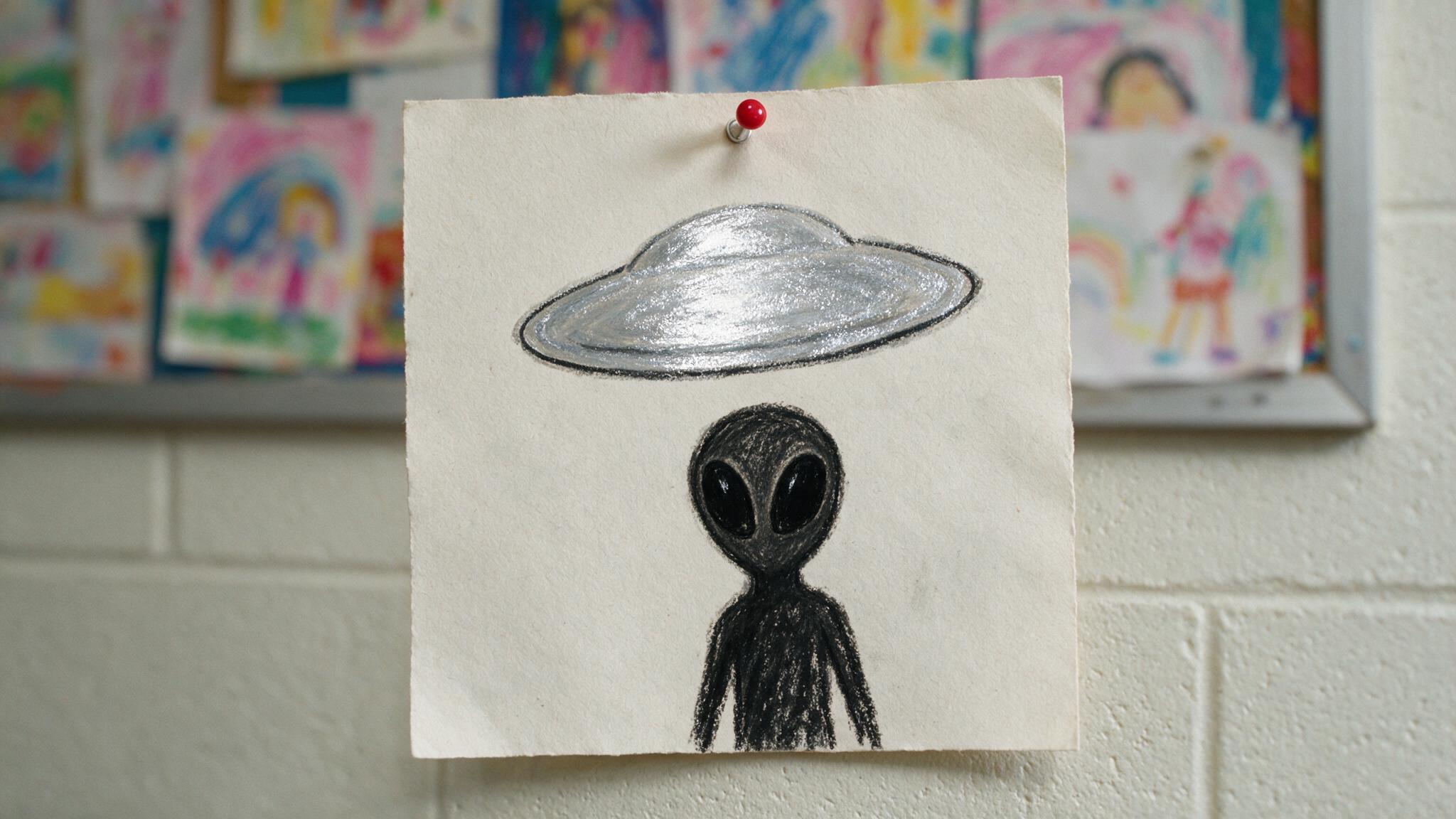
My own way into this case was through the crayon drawings, which I had expected to be the weakest evidence in the folder and found to be the part I could not put down. Children draw what they are told to draw; that is the whole skeptical argument, and it is a good one. But I spread the Ruwa drawings out and what struck me was not the discs. It was that the eyes are wrong in the same specific way across sheets by children years apart in age — too large, too long, and pointedly white-less, drawn by hands that had not yet learned to leave a highlight. I have looked at a lot of children's testimony. That is not usually how a suggested detail propagates.
A Morning Like Any Other
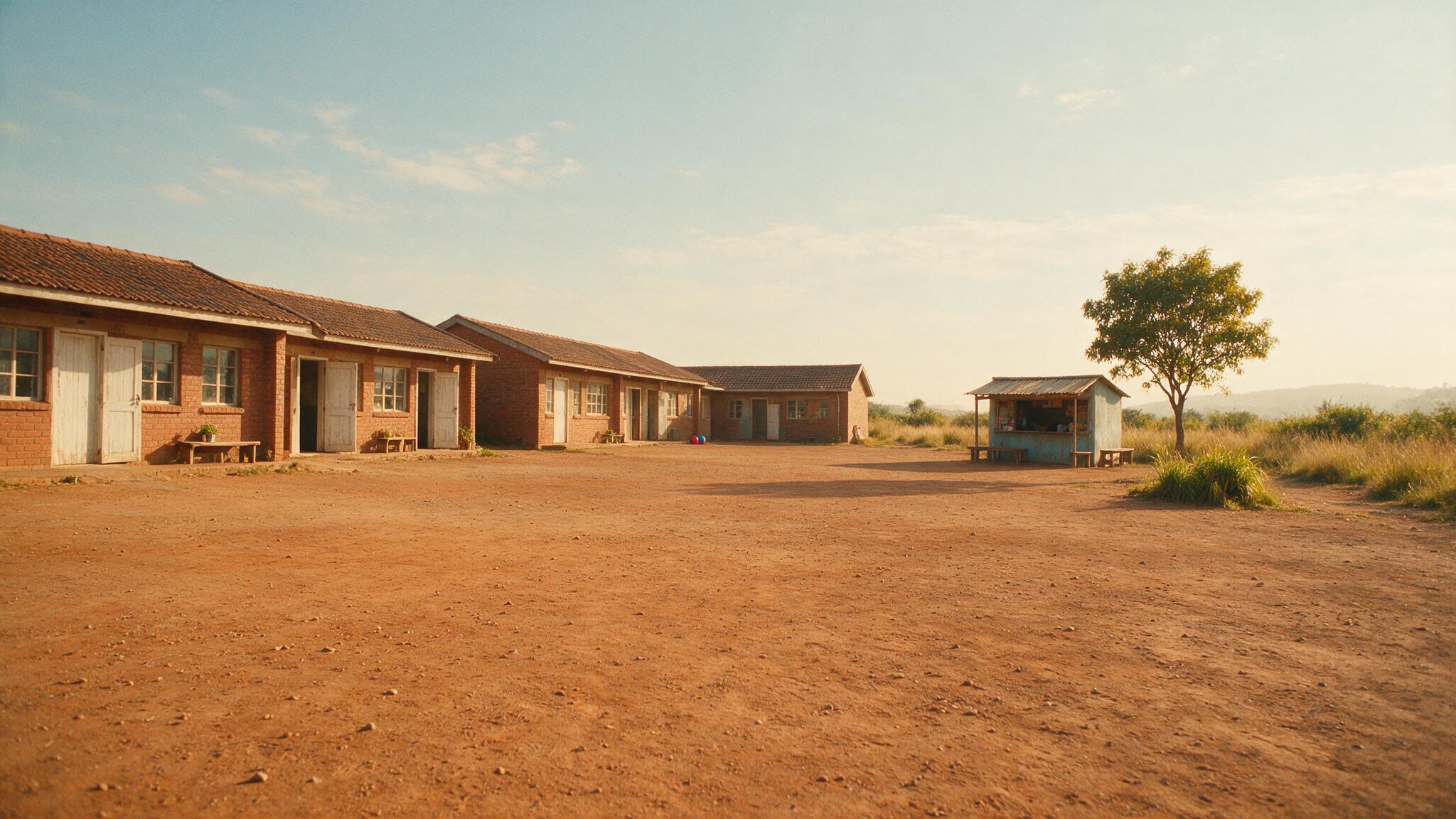
Ariel School was, in 1994, a private primary school serving families in and around Ruwa, a farming town about twenty kilometres east of the capital. The pupils were a mix of Zimbabwean, British and other expatriate children, most of them from ordinary middle-class households. It was, by every account, an unremarkable place — a cluster of low buildings, a tuck shop, a field where the children played at break.
The morning of 16 September began like any other. At around ten, the bell rang for the mid-morning break and the children spilled out onto the playground while the teaching staff withdrew for a meeting. That detail matters, and the children would repeat it again and again in the days that followed: the adults were inside. Whatever happened in the next quarter of an hour happened almost entirely without a single grown-up watching. The only adult on the scene was a woman running the tuck shop, who later said she saw the frightened children but not, at first, what had frightened them. For fifteen minutes or so, the field belonged to the children alone.
What the Children Said They Saw
The accounts, when they came, were remarkably consistent in their core, and it is the core that has kept the case alive. The children said they saw one or more silvery, disc-shaped objects in the sky, which descended and came to rest — or hovered just above the ground — at the far edge of the playing field, beyond the fence, among the scrub. Several described smaller lights or craft as well.
Then, they said, there were figures. Most spoke of one small being, some of two, standing near the craft or moving toward the children in an oddly gliding, unhurried way. The descriptions the children gave — separately, and to more than one interviewer — clustered around the same details: a slight figure, roughly the size of a person but thin, with skin that looked pale or shiny, dressed in a tight black or dark suit, and long dark hair in some versions. But the feature every account returned to, the thing the children drew over and over in their crayon pictures, was the eyes. Enormous. Elongated. Black, and utterly without white. The eyes, the children said, were far too big for the face, and they were looking right at them.
Many of the children were badly frightened. Some cried. Some froze. A few of the older ones tried to get closer; the younger ones ran. And a number of them reported something stranger still than the sight of the being — a feeling, a message, that seemed to arrive inside their own heads without a word being spoken.
The Message
This is the part of the Ariel story that is hardest to fit into any tidy explanation, and the part that unsettles even people inclined to dismiss the whole thing. Several of the children — not all, but a striking number — said that as they looked at the being, a thought or a feeling was pressed into their minds. It did not come as spoken words in any language. It came, as one child later put it, "like he was talking inside my head."
And the content of that wordless message, as the children reported it, was startlingly uniform: something about the Earth. Something about the way people were treating the planet, the air, the trees. A sense of warning, or of sorrow — that the world was being poisoned, or spoiled, and that this could not go on. Some children came away with an impression of impending catastrophe, of pollution and technology gone wrong, delivered not as an idea they'd had but as something shown to them, sombre and heavy, by the figure with the black eyes.
It is easy to see why this detail is a battleground. To believers, a shared environmental warning received telepathically by dozens of children who had not compared notes is the beating heart of the case — evidence of something real and intelligent. To skeptics, it is precisely the sort of message a generation of early-nineties children, steeped in "save the planet" messaging, might reconstruct together, especially once an adult asked them leading questions about it. What is not in dispute is that the children said it, and that they said it early, and often.
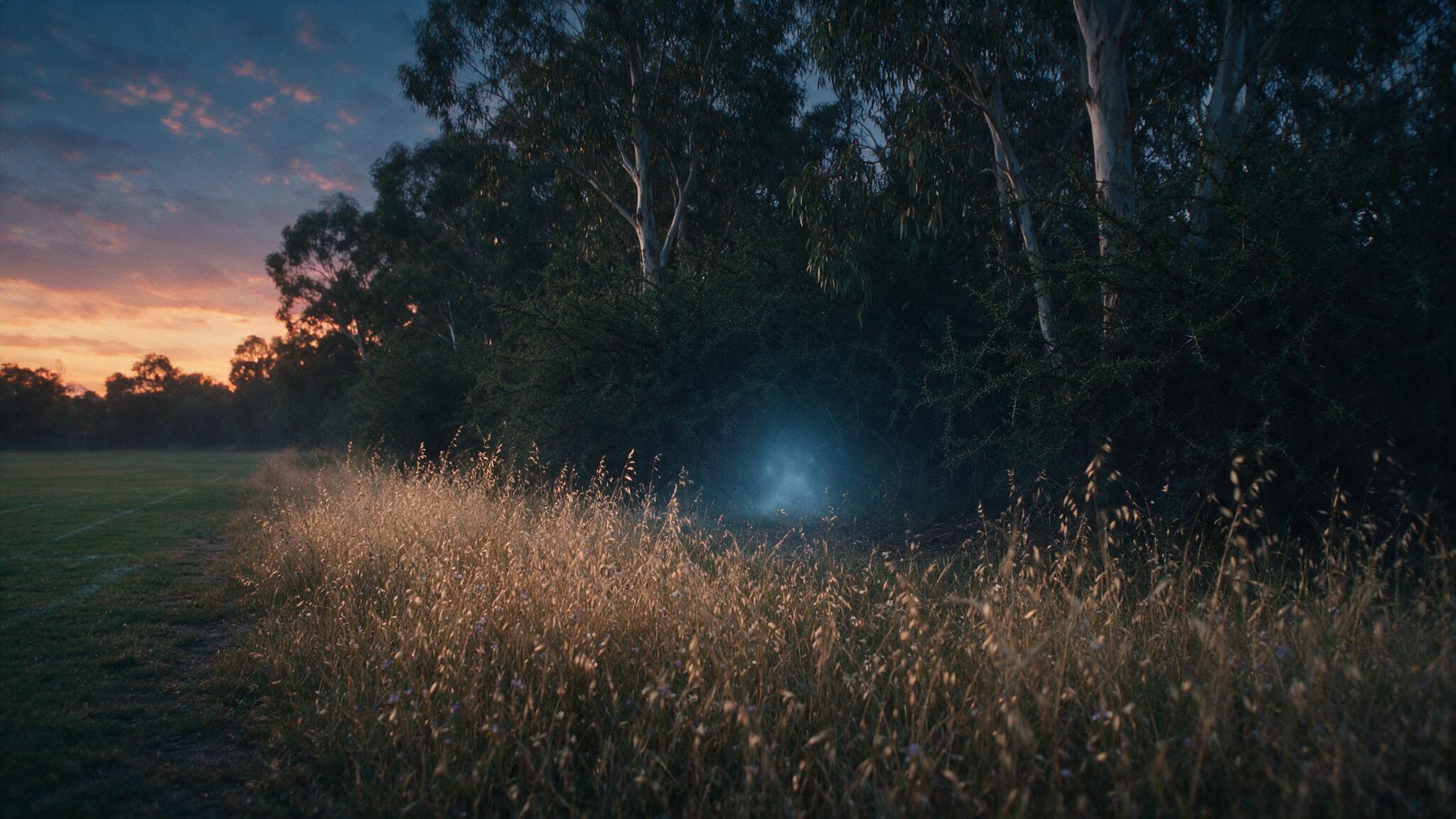
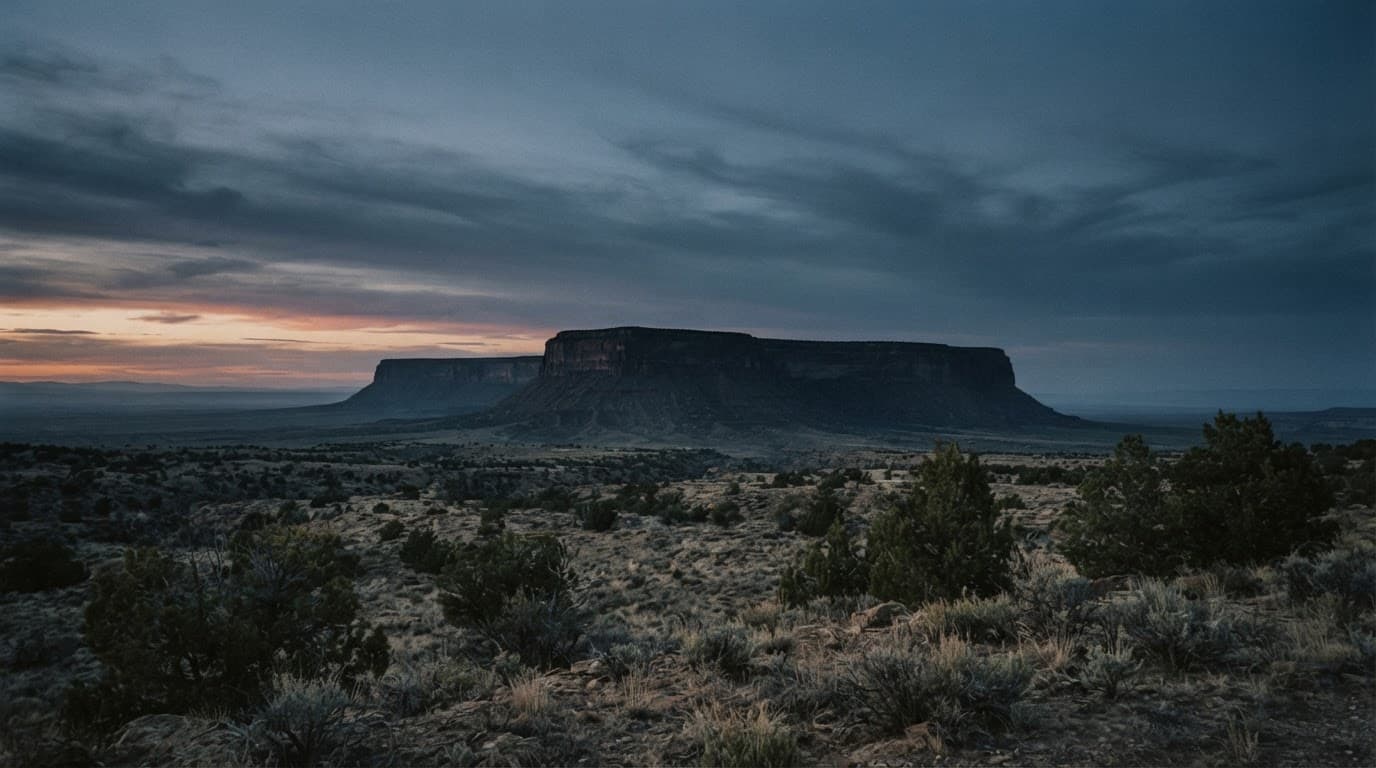
A slow drift across the treeline at the edge of the field, a pale light settling low in the scrub — a mood recreation, not real footage.
The Man From Harvard
The story might have stayed a strange local newspaper item — the Ariel children were interviewed within days by the BBC and by a Zimbabwean UFO researcher named Cynthia Hind — had it not drawn the attention of one very unlikely figure. John E. Mack was a professor of psychiatry at Harvard Medical School, a Pulitzer Prize-winning author, a man with a serious clinical and academic reputation. He had also, controversially, begun studying people who claimed to have been abducted by aliens — not because he believed the abductions were literally real at first, but because he suspected the experiencers were suffering from some identifiable psychological disorder, and he wanted to understand it.
What unsettled Mack was that, the more of these people he interviewed, the fewer signs of mental illness he found. They seemed, by and large, to be ordinary, sane people describing something that had genuinely happened to them — whatever it was. When he heard about a schoolyard full of children in Zimbabwe all reporting the same encounter, he flew out to Ruwa a couple of months after the event to interview them himself, on camera.
Mack did not tell the world the children had met aliens. He was more careful than that, and the caution cost him among true believers and skeptics alike. What he said was that these children had plainly experienced something that was profoundly real to them, that their affect and their consistency were not what he would expect from a simple lie or a game, and that whatever it was deserved to be taken seriously rather than laughed off. Mack died in 2004, hit by a car in London, and never resolved the question he'd staked so much of his late career on.
The Case for Doubt
For all its strangeness, the Ariel School sighting is not un-explainable, and honesty demands that the skeptical case be laid out at its strongest. It is a genuinely powerful case.
Start with the interviews. The children were spoken to, in the crucial first days, in groups — often four to six at a time — by adults who already believed something extraordinary had occurred. Group interviews are exactly the condition under which children's memories converge: the loudest or most confident child speaks first, and the others, wanting to agree and to please the grown-up, fold their vaguer impressions into that account. Researchers documenting the case have noted that questions were sometimes leading, and that suggestive details — a comparison of the figure's clothing to a "diving suit," for instance — were introduced by the interviewer rather than volunteered by the child. Once a detail like that is planted, it can spread through a room of children and harden into "what everyone saw."
Then there is the cultural backdrop. Zimbabwe was, in the weeks before the sighting, in the grip of a minor UFO wave; there had been sightings and press reports in the region. The idea that these children arrived at the playground with no template for "spaceship" or "big-eyed alien" — in 1994, after a decade of such imagery saturating film and television worldwide — is hard to credit. And the environmental message, so haunting on first hearing, maps almost too neatly onto the ecological anxieties being taught to exactly that generation of schoolchildren.
Skeptics don't need to call the children liars. The likeliest deflationary account is subtler and, in its way, sadder: a genuine but ambiguous stimulus — a light, a bird, a trick of heat-haze at the treeline, or one imaginative child's game — amplified by fright, by the herd dynamics of a crowded playground, and then locked into permanent "memory" by well-meaning adults who interviewed the children in exactly the wrong way. Mass suggestion, in short, dressed up over the years as mass sighting.
The Case That Won't Close
And yet. The unusual thing about Ariel — the reason it is not merely another faded UFO footnote — is what happened next, which is to say, what has kept not happening for thirty years.
The children grew up. They left Zimbabwe; many scattered to Britain, Canada, elsewhere. They lost touch with one another. They built ordinary lives, careers, families. And when filmmakers, journalists and researchers tracked them down as adults — most extensively in Randall Nickerson's documentary Ariel Phenomenon, self-released in 2022 after some fifteen years of work — the great majority of them did not laugh the episode off as a childhood fantasy they'd long outgrown. They told the same story. Older, more measured, sometimes visibly reluctant to be dragged back to it, sometimes emotional to the point of tears — but the same story. The silver craft. The figure. The eyes. The message about the Earth. Several said it remained the most vivid and unshakeable memory of their lives, more real to them than events they'd witnessed as adults.
That durability is the crux. Memories confabulated by suggestion tend to soften, drift, and quietly disown themselves over decades; a lie told by a child usually decays or gets recanted. What the Ariel witnesses describe has done neither. Whether that proves anything about the sky over Ruwa, or only about how deeply a shared childhood terror can be burned into a mind, is precisely the question no one has been able to settle.
What can be said for certain is only this. On a September morning in 1994, some sixty-two children at a school in Zimbabwe came in from break saying they had watched a craft land and a being look into their eyes, and had felt it grieve for the world. A respected Harvard psychiatrist heard them out and could not explain them away. And three decades later, grown and scattered and with nothing left to gain, they are still saying it. The playground at Ruwa has never given its answer — and the people who were standing on it that morning have never taken theirs back.
Filing this one, I found myself less interested in the craft than in the fifteen minutes. Every account I cross-checked agrees on the staff meeting — that the teachers were indoors, that the one adult present was minding the tuck shop and saw only the running. Whatever the truth of the field, the record has a hole in it exactly the width of an adult's absence, and the case has spent thirty years growing in that hole. I have gone back through the interview material more than once looking for the grown-up who could close it. There isn't one. There never was.
---
The images and video in this article are AI-generated works produced to convey the mood of the story, and are not photographs of any actual person or event.

Comments
No comments yet — leave the first one.