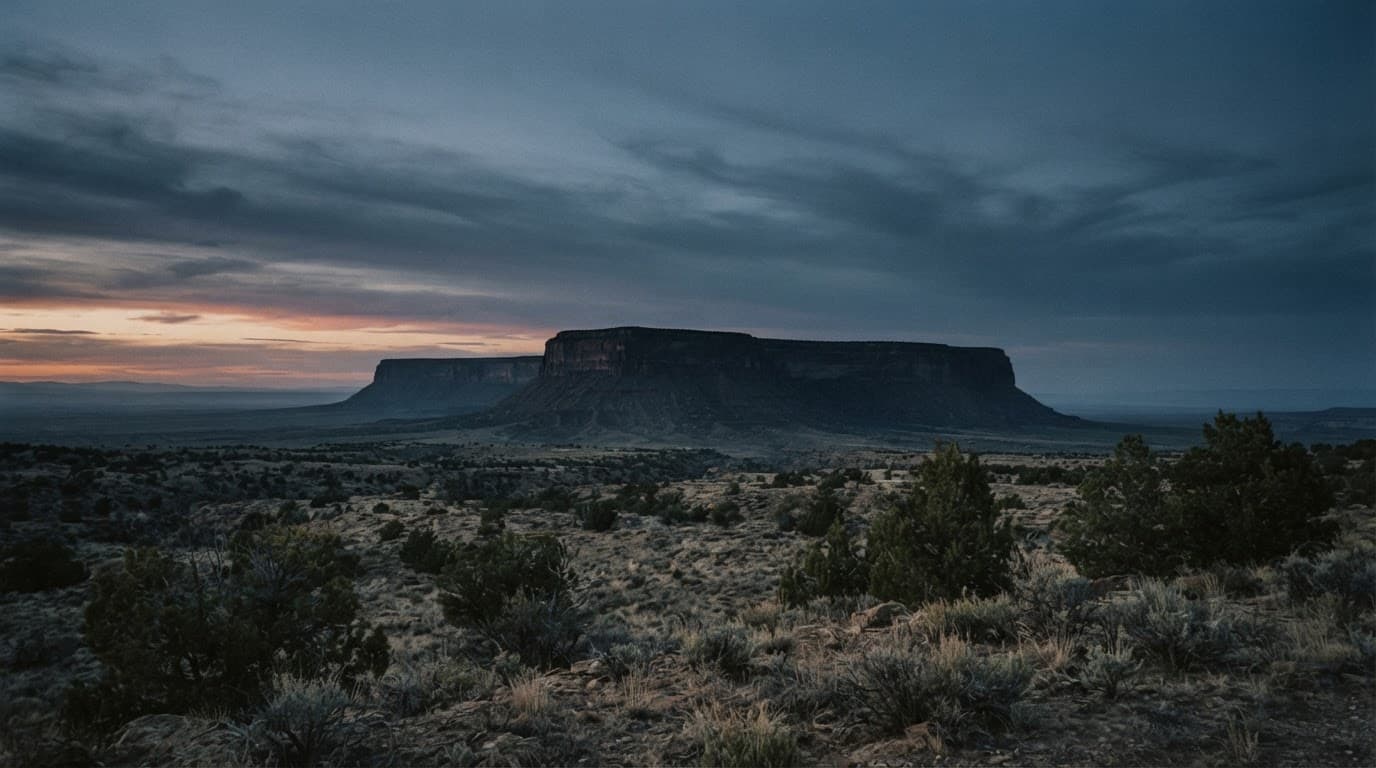
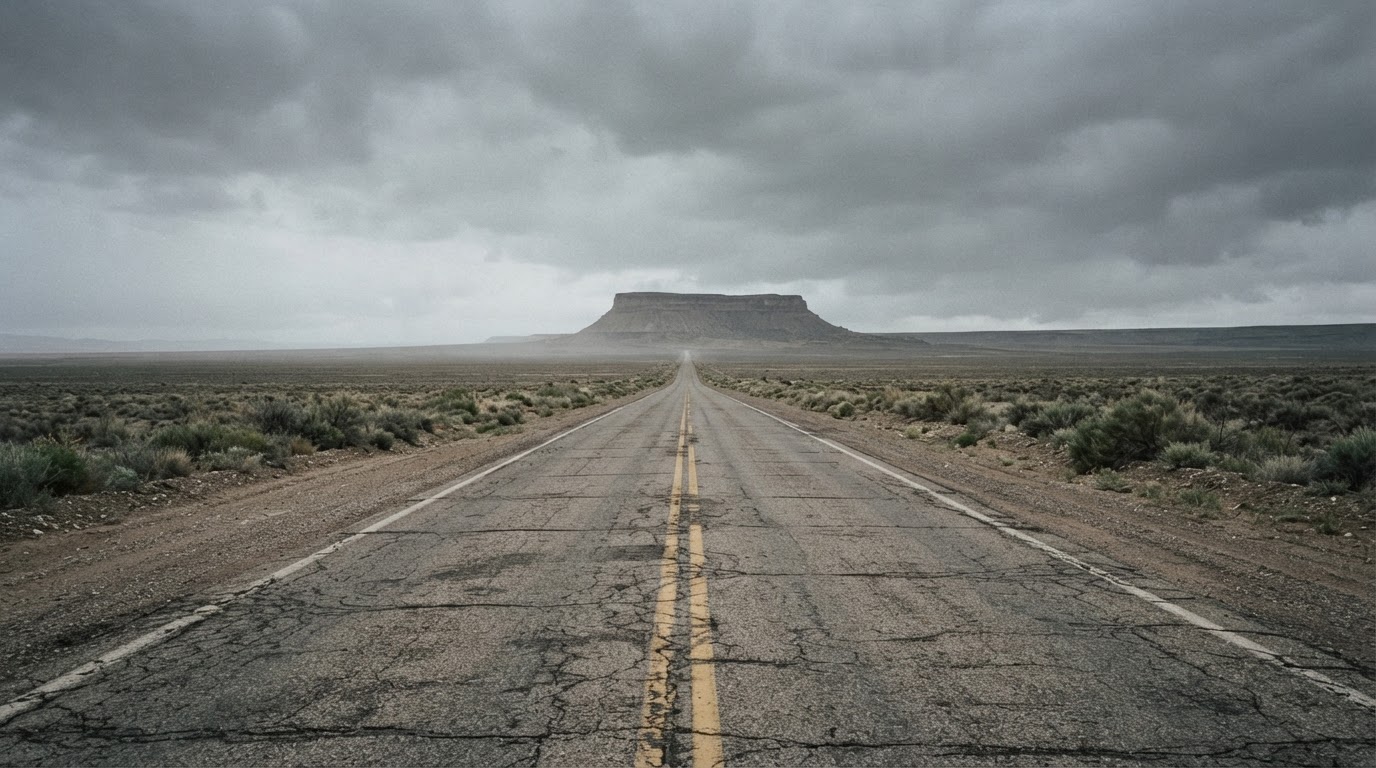
Drive far enough into the high country of northern New Mexico and you reach Dulce, a small town on the Jicarilla Apache reservation, hard against the Colorado line. There is not much here — a gas station, a lodge, a scatter of houses under an enormous sky, and behind it all a flat-topped mountain called Archuleta Mesa. It is the kind of place a person passes through without a second glance. And yet, for more than forty years, Dulce has carried a reputation out of all proportion to its size. According to one of the most elaborate legends in American UFO lore, seven levels of a secret base descend into the rock beneath that mesa — a facility run jointly by the U.S. government and an alien species, where human abductees are held in tanks, genetic experiments are carried out on the lower floors, and where, sometime around 1979, soldiers and the aliens fought a hidden battle that left dozens dead. This is the Dulce Base. Nothing of it has ever been located, photographed, or proven. But the story of how it came to exist is real, and it is stranger and more human than the myth it produced.
The Town, the Mesa, and the Legend
Dulce sits at around seven thousand feet, surrounded by pine forest and open range. Archuleta Mesa rises just to the north of the town, straddling the New Mexico–Colorado border, and it is beneath this ordinary-looking mountain that the base is supposed to lie.
The legend, in its fully grown form, is remarkably specific. The facility is said to run seven stories deep, each level dedicated to a different function, connected by high-speed tunnels to other secret installations across the American Southwest. The upper levels are described as human-run offices and security. Further down, the story turns nightmarish: laboratories where humans and animals are genetically spliced, vats holding half-formed creatures, and cages — "Level Six" is nicknamed "Nightmare Hall" in the telling — where the products of these experiments are kept. On the deepest levels, the greys themselves are said to live and work alongside human scientists in an uneasy partnership. It is a fully imagined underworld, and every retelling adds another corridor to it.
There is no verified entrance. No leaked photograph that survives scrutiny. No document that confirms any of it. What there is, instead, is an origin — a specific chain of events, beginning with one Albuquerque businessman in the late 1970s, that turned a quiet reservation town into the capital of underground-alien mythology.
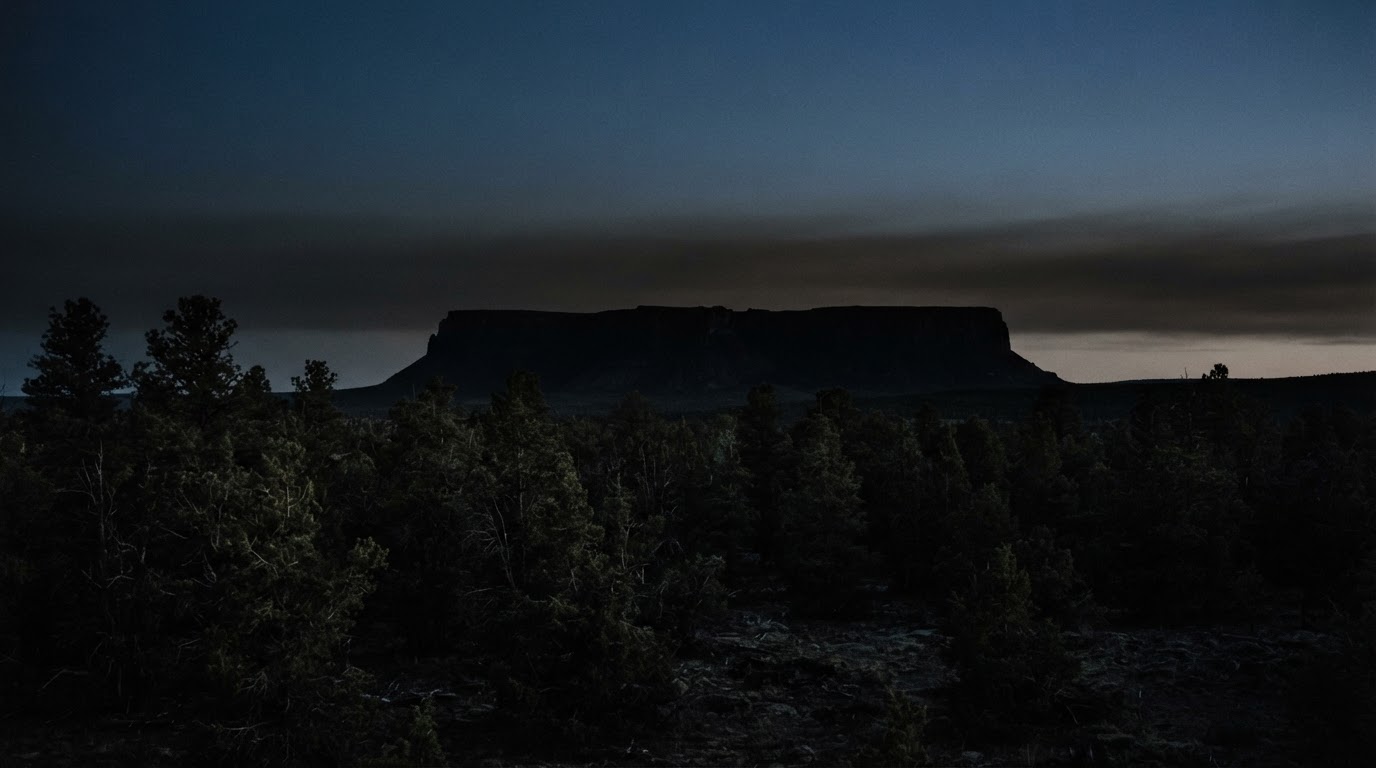
For a long time I kept Dulce in the same folder as the other underground-base material, and I was wrong to. What separated it out, when I finally read the Bennewitz sequence in order rather than in fragments, was Thunder Scientific — an actual company, selling actual instruments, to the actual air base down the road. Nothing else in the folder has that. Every other hidden facility begins with a rumor. This one begins with an invoice.
Paul Bennewitz and the Signals in the Air
The story of Dulce is, before anything else, the story of a man named Paul Bennewitz.
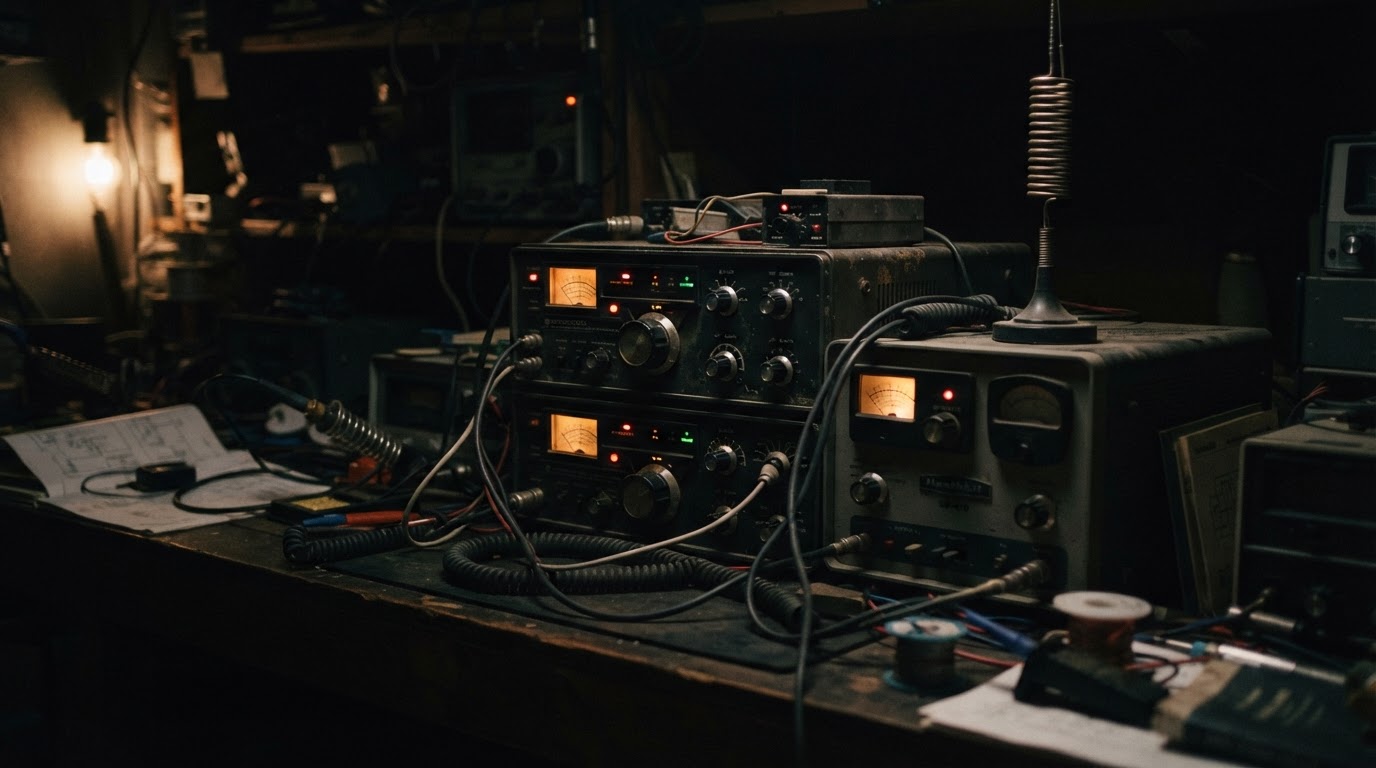
Bennewitz was not a fringe figure by background. He was an accomplished physicist and the owner of an electronics company called Thunder Scientific, based in Albuquerque, New Mexico — a real business that supplied instruments to, among others, the nearby Kirtland Air Force Base. He was, by every account, intelligent, technically capable, and sincere. In the late 1970s, from his home near Kirtland, Bennewitz began detecting strange electronic signals and low-frequency emissions with his own equipment. He also began photographing and filming unusual lights in the night sky over the base and the surrounding desert.
Convinced he had stumbled onto something enormous, Bennewitz set out to decode it. He built receivers, logged the signals, and became certain that the transmissions were communications — that he was intercepting messages being sent to alien craft, and that these craft were operating out of a hidden underground base in the New Mexico wilderness. Over months and then years, the object of his fixation settled on Archuleta Mesa near Dulce. In his reconstruction, the signals, the lights, and reports of cattle mutilations in the region all pointed to the same conclusion: an extraterrestrial installation buried beneath the mesa, in active contact with something in the sky. He was, in his own mind, uncovering the single greatest secret of the age.
What the Air Force Did Next
Here the story takes the turn that makes it genuinely disturbing — and it is the part that is best documented.
Bennewitz was not quietly monitoring signals in isolation; he was living beside a major military installation, and he was loudly, insistently reporting that he had cracked alien communications originating from it. He contacted the authorities. He wanted them to know what he had found. From the perspective of Air Force counterintelligence, a civilian with sophisticated equipment, camped next to Kirtland, claiming to intercept and decode transmissions, was a problem — whatever the transmissions actually were. Some of what he was picking up may well have been genuine but entirely terrestrial and classified: ordinary military electronic activity that the base had no wish to see discussed by an excitable outsider.
According to accounts that later emerged from within the intelligence community itself — most prominently from a special agent named Richard Doty — the response was not to reassure Bennewitz or to shut him down directly. It was to feed him. Officials, the account goes, deliberately supplied Bennewitz with fabricated documents and staged information that seemed to confirm his wildest theories: papers describing alien bases, treaties between the government and extraterrestrials, underground facilities. The purpose was disinformation — to bury whatever real, mundane secret he had brushed against beneath a mountain of spectacular nonsense, and, in the process, to discredit and destabilize the man himself. If everything Bennewitz believed was outlandish, then nothing he said needed to be taken seriously. The alien story was, in this reading, a smokescreen deliberately pumped into a vulnerable man's mind.

The Unraveling of a Man
Whatever the exact truth of the disinformation campaign — and its details are still argued over — the outcome for Paul Bennewitz was not in dispute. He was destroyed by it.
As the fabricated material poured in and his own theories spiraled, Bennewitz descended into acute paranoia and terror. He came to believe that the aliens were entering his home, that he was under constant surveillance, that his life was in danger. He grew convinced of imminent invasion. By the early 1980s his mental health had collapsed to the point that he was hospitalized. The physicist who had begun with real equipment and a real curiosity ended as a broken man, consumed by a fear that had, at least in part, been manufactured and fed to him on purpose. He largely withdrew from the subject and died years later, in 2003, out of the public eye. Whatever else the Dulce legend is, at its foundation lies a genuine human tragedy: a capable, sincere person taken apart by a story that others found it convenient for him to believe.
Phil Schneider and the Dulce Wars
The base needed a battle, and in the 1990s it got one.
The most lurid layer of the Dulce mythology — the firefight between humans and aliens known as the "Dulce Wars" — comes largely from a man named Phil Schneider. Beginning around 1993, Schneider gave a series of public lectures in which he claimed to be a former government geologist and engineer who had helped construct deep underground military bases, Dulce among them. His central story was dramatic: in 1979, he said, while drilling into the rock to expand the facility, his team broke through into a cavern already occupied by greys. A firefight erupted. Schneider claimed that dozens of people — soldiers and workers — were killed in the clash, that he himself was one of only a handful of survivors, and that he bore scars and a missing finger from wounds sustained when an alien weapon struck him. He displayed what he said were fragments of alien metal and photographs to his audiences.
Schneider's lectures spread rapidly through the emerging UFO-conference and early-internet ecosystem, and it was largely through him that the seven-level base, "Nightmare Hall," and the 1979 battle hardened into the fixed features of the legend. But his account does not survive examination. No records support his claimed employment history or security clearances; the specifics of his story shifted between tellings; and no independent evidence has ever corroborated a battle, the casualties, or the base itself. In January 1996, Schneider was found dead in his apartment. The death was ruled a suicide, though his supporters have long insisted he was killed to silence him — a claim that, like the base, rests on conviction rather than evidence, and which folded neatly back into the mythology, giving the Dulce story its martyr.
Why the Story Never Dies
Dulce should, by rights, have faded. The base has never been found. The disinformation origin is a matter of record. The war rests on a single uncorroborated witness now decades dead. And yet the legend is arguably stronger today than it has ever been, and it is worth being honest about why.
Part of it is that the story is unfalsifiable in the most literal way: the base is, by definition, secret and underground, so its absence from every map, photograph, and record proves nothing to a believer — of course you cannot find it, that is the point. Part of it is timing. In recent years the U.S. government has, for the first time, openly acknowledged programs studying unidentified aerial phenomena — the Pentagon effort once known by names like AATIP, and the congressional hearings and official reports that followed. To most people this is cautious, sober disclosure about unexplained sensor data. But to a mind already primed by Dulce, official admission that "something" is being studied reads as partial confirmation: the government hid things, and now it is admitting it hid things, so what else is buried? Renewed mainstream interest in UFOs has poured fresh oxygen onto a very old fire. And part of it, simply, is that the story is good — a secret mountain, a hidden war, a whistleblower who died, a physicist driven mad. It has everything.
What's Real, and What Isn't
Set the two columns side by side, and the shape of the Dulce legend becomes clear.
What is real: Dulce and Archuleta Mesa exist, remote and unremarkable. Paul Bennewitz was a real physicist who really did detect signals and film lights near Kirtland Air Force Base in the late 1970s. Something classified and terrestrial may genuinely have been among what he intercepted. A disinformation effort aimed at him is described in detail by people who say they took part in it, and the collapse of his mental health is documented and undisputed. The region has a long, real history of reported cattle mutilations that were never fully explained. The U.S. government has, recently and genuinely, acknowledged studying unidentified aerial phenomena. These threads are all authentic, and their density is exactly why the legend feels so solid.
The question I have never been able to close, and I have gone at it from several directions, is what was actually on those tapes. Bennewitz logged real emissions with real equipment; the accepted reading is that he caught something classified and mundane. But nobody has ever said what. The disinformation is described in some detail by the people who admit to running it, and the thing the disinformation was built to cover is still, forty-odd years on, a blank space in the record. Somewhere there is a boring answer that nobody has ever given.
What is invented is the base itself, and everything hung upon it. There is no verified seven-level facility, no "Nightmare Hall," no tanks of hybrids, no confirmed 1979 firefight, no bodies, no alien metal that has withstood analysis. The strongest single source for the war — Phil Schneider — cannot be substantiated on even the basic facts of his life. What Bennewitz actually stumbled onto was, most likely, ordinary secret military activity, magnified into an interstellar conspiracy by fabricated documents fed to a man who was losing his grip. Strip the invention away and the true story remains, and it is the more haunting one: not a hidden alien war, but a real government deception that took a real, sincere human being and, by handing him the monster he was looking for, quietly destroyed him. The mesa keeps no aliens. It keeps, if anything, the memory of that.
---
The images and video in this article are AI-generated works produced to convey the mood of the story, and are not photographs of any actual person or event.

Comments
No comments yet — leave the first one.