
September 4, 1995. A late-summer afternoon tipping over into early autumn. In a rural village in Gapyeong, Gyeonggi Province, cosmos flowers nodded along the roadside and the sky was an unusually deep blue. A newspaper photojournalist had come with his film camera to capture the mood of the season. As it happened, an elderly couple was threshing sesame in their yard, and the photographer pressed the shutter toward that ordinary rural moment — four times in quick succession, roughly a fifth of a second apart. What he wanted to capture was not the sky, and certainly not a UFO. It was just autumn.
Days later, when the prints came out of the darkroom, one of those four frames held something at its right edge that no one had expected to be there. A bright, smooth, tilted object of unknown identity. Neither the photographer nor the editors who summoned him knew what it was. And thirty years on, no one knows for certain still.

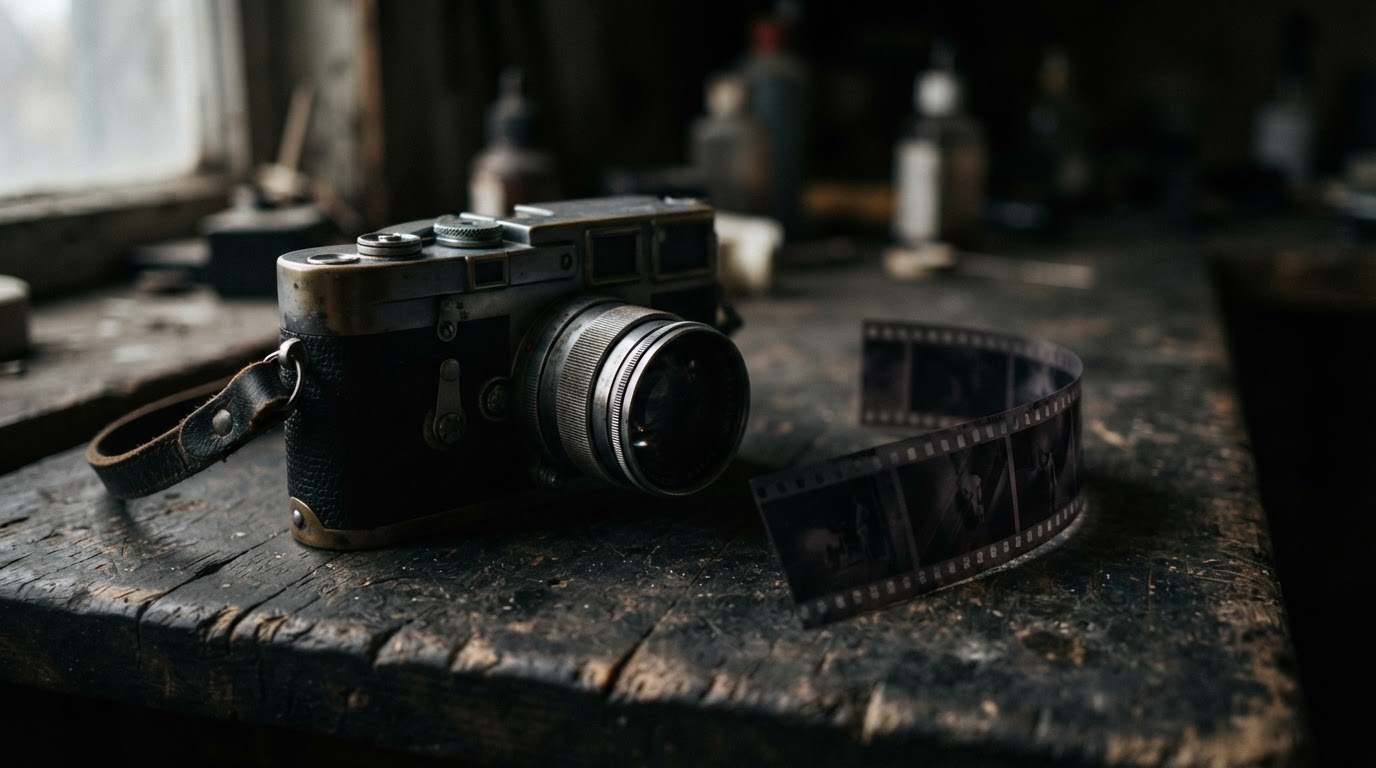
Almost everything in my sightings folder is worthless, and I say that as the person who keeps it. Blur, compression, a light at the edge of a lens. The Gapyeong material is in the folder for one reason: three frames of the burst are empty and the fourth is not. Whatever passed through that fifth of a second was there and then was not, and unlike nearly every other case I hold, there is a physical negative someone can still pull out of a sleeve and hold to the light. I have found that far more unsettling than any photograph of a shape.
Four Frames Out of the Darkroom
What makes this photograph exceptional lies less in what it shows than in when it was taken. In 1995, neither digital cameras nor Photoshop belonged to ordinary people. What the photojournalist held was film, and film survives as a physical original. Not just the printed paper but the negative itself — the record light burned into silver-halide grains — is preserved intact. To fake it you would have to paint, double-expose, or otherwise physically intervene, and that intervention always leaves a trace in the grain structure of the film.
This photograph carried no such trace. The object in question appeared on only one of the four burst frames. It is absent from the others. That means, in the brief instant the shutter opened, something really did pass across that spot. And judging by its position and angle across the frames, the object was not sitting still — it was moving and tilted. Too smooth and too artificial in form to be a bird or an insect.
The photographer himself was baffled at first. He had not gone looking for a UFO. He had never aimed at the sky. All he meant to record was an old couple threshing sesame and a rural autumn — and that accidental quality is exactly what has kept this photograph alive. Because it was never taken in order to photograph anything in the air, the very motive for fakery barely holds together.

Two days after it was taken, on September 6, 1995, the photograph ran on the front page of a daily newspaper. The response was explosive. The paper's phones rang off the hook, and interest spread beyond Korea to the wider world. So was born the single most famous UFO photograph ever taken in Korea.
Verification — and the Exact Weight of "Not Faked"
What decisively separates this image from countless other blurry UFO photographs is that the original film survived intact and underwent a rarely thorough round of verification. A number of institutions at home and abroad examined the film.
A broadcast team took the film directly to Kodak's headquarters in the United States and commissioned an analysis; Kodak, it was reported, found no trace of any artificial manipulation. Korean UFO research groups and academics took part in the analysis, and even a unit under France's National Centre for Space Studies (CNES) devoted to investigating unidentified phenomena is said to have reviewed the image. One Korean UFO research association calculated that the object was roughly 100 meters in diameter, flying at an altitude of 4–5 kilometers at some four kilometers per second. The French side analyzed a 450-meter object moving at 3,500 meters altitude at a far greater speed. The numbers diverged wildly, but they shared one thing: neither side could ever say what the object was.
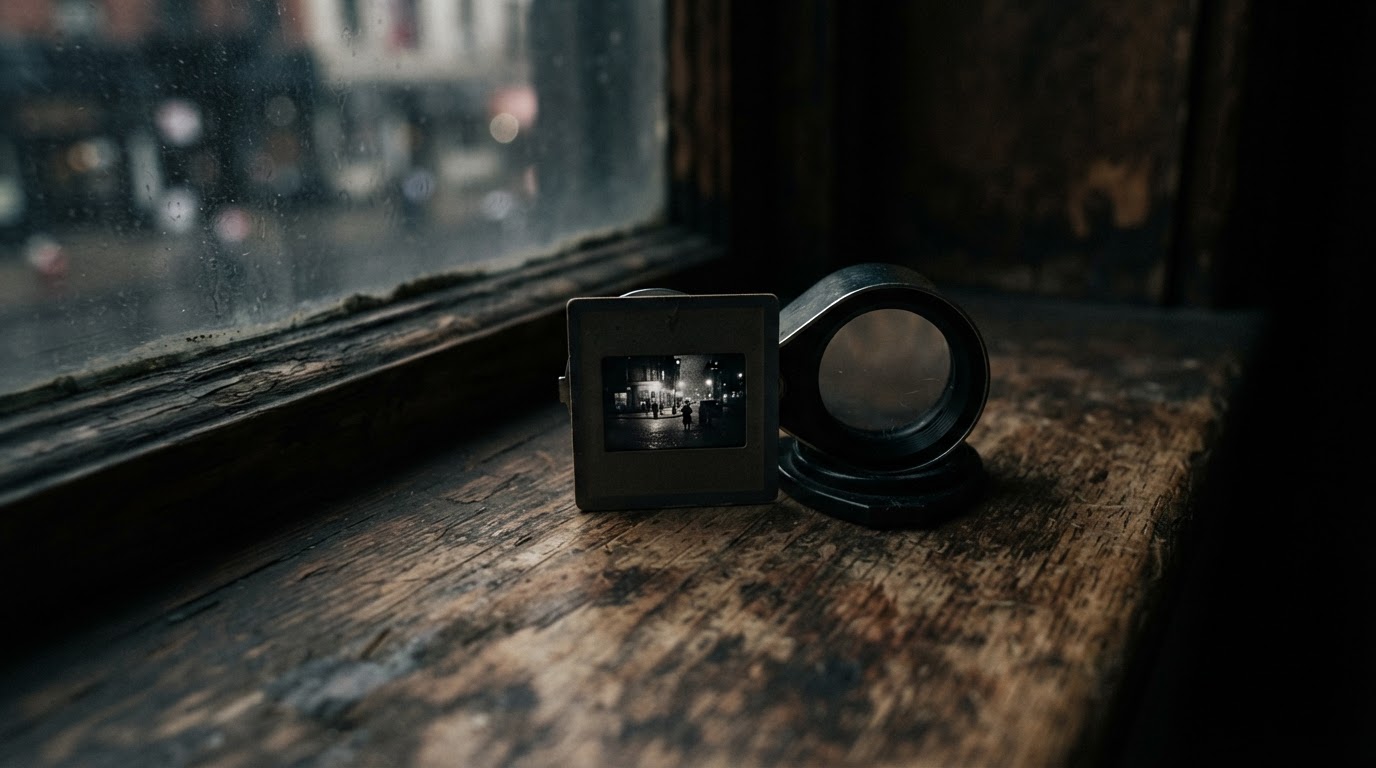
Here is a distinction that must be pinned down. "Not faked" and "an alien craft" are entirely different sentences. All the verification confirmed was the former: that this photograph is not a forgery built by brushwork or compositing, but a real scene that film genuinely recorded in light. But the fact that something real was captured on film does not prove that the something was an extraterrestrial vessel banking hard at high altitude. Perfectly ordinary things can be captured on real film too.
This distinction is very nearly the whole task of treating UFO stories honestly. It is the same logic that governed the Roswell incident. There, too, one fact the government admitted — that its first announcement was a lie — did not translate straight into "there were aliens." Between a fact and a conclusion there is always a gap you must not leap across.
The Counterarguments, and the Rebuttal to Each
Various earthbound explanations have long trailed the Gapyeong photograph.
The bird hypothesis. The claim is that a single bird crossed in front of the camera in the instant the shutter was open. The fact that it appeared on only one burst frame fits the bird idea well. But there is a rebuttal: enlarged, the object's form is too smooth and too nearly bilaterally symmetric to read as the silhouette of a wing or feathers.
The lens-flare / processing-defect hypothesis. The explanation here is that strong sunlight reflected inside the lens produced a phantom, or that a smudge crept in during film or printing. But lens flare typically appears at regular positions along the line joining the light source and the lens center — and the object's position and form, it was argued, do not fit that pattern well.
The thrown-object hypothesis. This skeptical take holds that someone tossed a hat or a plate into the frame from off-camera. The core rebuttal is, again, motive. The photographer had no intention of shooting the sky or a UFO to begin with, and only learned what he had captured after developing. A person out to hoax has no reason to hide the object in the corner of a sesame-threshing photo.
Each counterargument, in trying to explain one thing perfectly, drops another. The bird idea snags on form, the flare idea on position, the thrown-object idea on motive. That does not mean all of them are wrong. The balanced conclusion is this: the Gapyeong photograph has not yet been fully explained. And "unexplained" is not the same phrase as "came from another world." There is no shortage of perfectly ordinary somethings out there for which we simply have not yet found the answer.
The Lineage of Korean Sightings — the Year 1609 in the Annals
Records of strange things in Korea's skies are far older than the film camera. The most famous is preserved in the Annals of the Joseon Dynasty, from 1609, the first year of King Gwanghae's reign.
On the 25th day of the eighth lunar month that year, reports came in of strange lights and objects seen in broad daylight in Hanseong and several other places. The Gangwon Province cases are especially striking. Yi Hyeong-uk, the provincial governor of Gangwon, gathered the sightings from the counties under his charge and submitted them to the court — and astonishingly, five counties reported the sky anomaly at nearly the same hour. Those five were Ganseong, Wonju, Gangneung, Chuncheon, and Yangyang.

The archive's rarity lies precisely in this simultaneity. The Annals described the shape each county saw by likening it to a different object. In Ganseong it was said to look like a solar halo; in Wonju, like a length of red cloth; in Gangneung, like a great gourd-bottle; in Chuncheon, like a large earthen jar; in Yangyang, like a washbasin. Different metaphors, every one — yet each describes a round or elongated bright object hanging in the sky. And all these sightings clustered in one region, on nearly the same day, between morning and afternoon.
The officials had no reason to lie to the king about what they had seen. Unable to name the thing, they simply recorded it by likening it to the vessels and tools they knew. Today most astronomers and historians file this record under a large meteor — a fireball — that exploded as it entered the atmosphere. A bright fireball observed simultaneously across several counties, its shape described differently by each observer, fits the meteor phenomenon well. Even so, the reason this record endures in retelling is that the calm, concrete prose left by officials four centuries ago so closely resembles the human response to what we now call an "unidentified object": the effort to hold a nameless thing inside a language we know.

Modern Sightings — the Ones That Were Reported
From the Annals to film, and on to the smartphone. Korea's history of sightings continued, changing its medium each time.
The most dramatically reported modern case unfolded in October 1976, over the northern skies of Seoul. An unidentified craft was reported to have entered the airspace over Seoul — reaching even the no-fly zone near the presidential residence — and in an unprecedented situation, air force fighters scrambled and anti-aircraft guns opened fire from the ground. Witnesses reported seeing tracer rounds streak across the night sky. Afterward, before the National Assembly's defense committee, the Ministry of Defense and the Ministry of Transportation explained it as warning fire directed at a civilian cargo plane that had strayed off course into the no-fly zone. Yet the account diverged from what citizens said they saw, and the incident is retold as a textbook case where "an explanation was given but did not satisfy everyone."
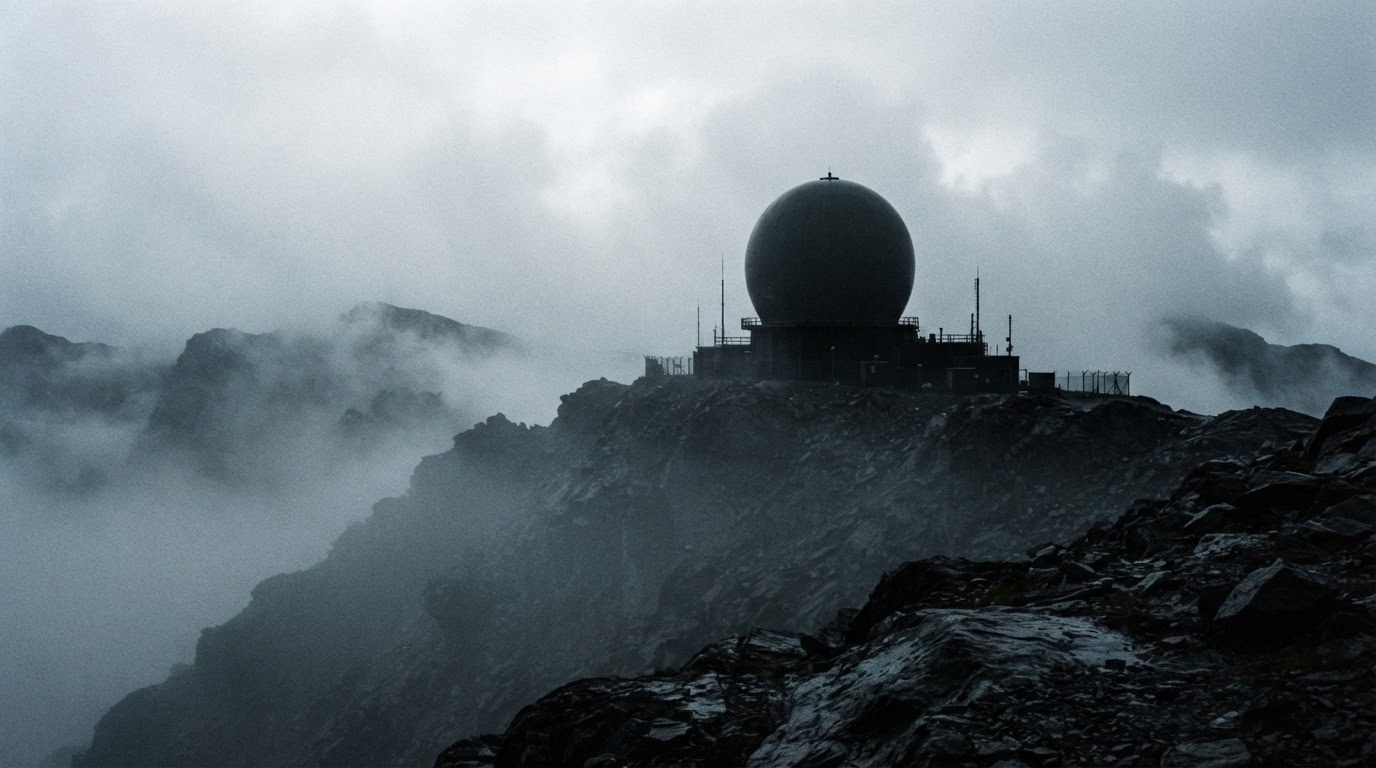
From the 2010s onward, the stage of sighting shifted to smartphones and social media. Videos of unidentified lights or objects, said to have been filmed over Seoul and the capital region, spread across the internet from time to time. Sighting accounts from Ilsan, Pangyo, and other areas circulated online as well. But the videos of this era tended to meet the opposite fate of the film-era Gapyeong photo. Digital footage had become far too easy to edit, and in verification a great many turned out to be drones, balloons, aircraft lights, lens reflections, or outright composites. Paradoxically, in an age when everyone holds a high-resolution camera, telling the "real" apart grew harder. According to one civilian UFO investigation group, several hundred sighting reports are still filed in Korea each year. Most are soon explained as ordinary; only a very few remain unresolved.
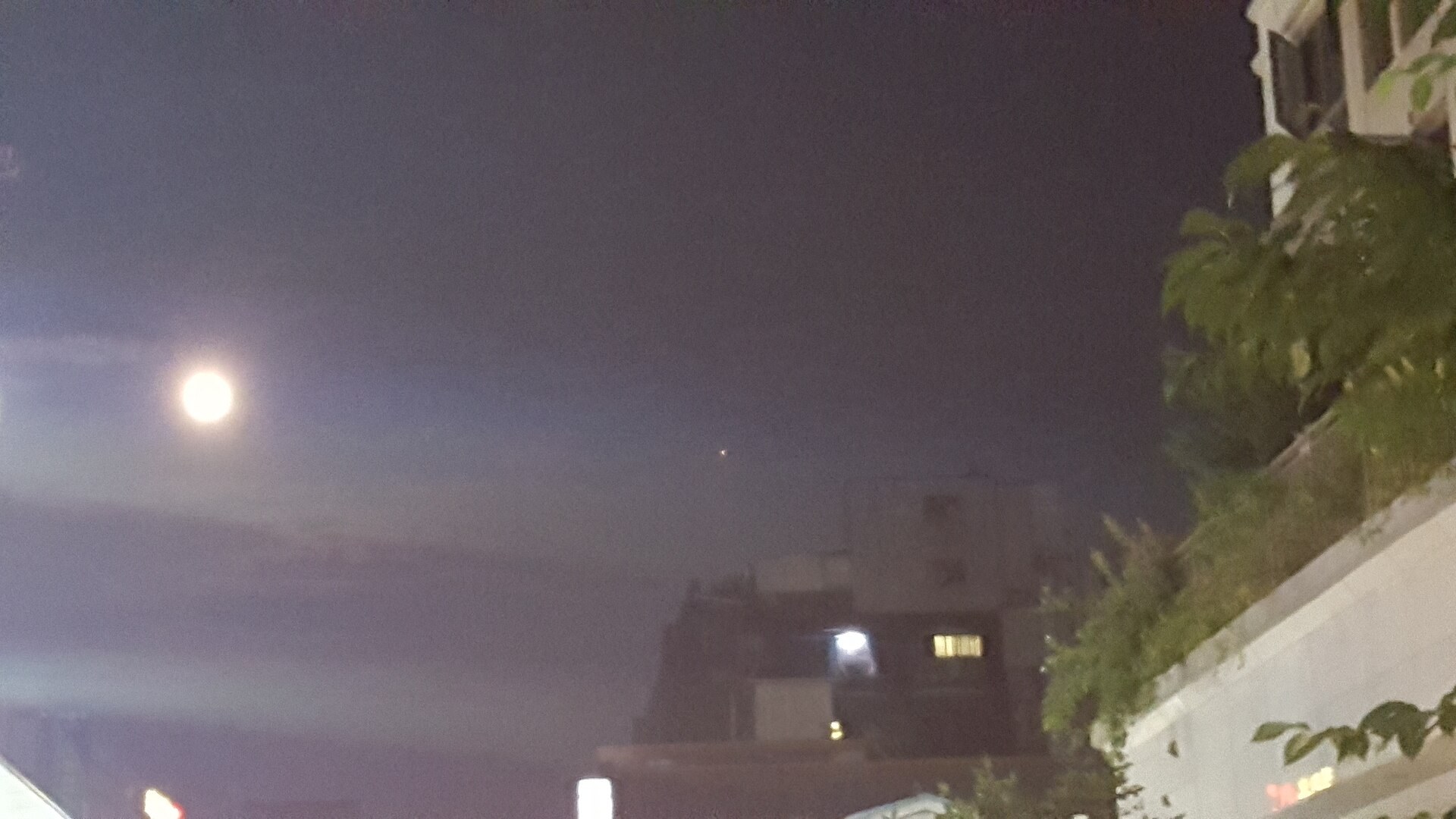
Photo: Wikimedia Commons, CC BY-SA 3.0
Why UFO Discourse Runs Shallow in Korea
America has a vast subculture surrounding UFOs — sighting databases, research groups, documentaries, and now government hearings. Korea's UFO discourse, by contrast, is relatively shallow and scattered. Conditions specific to this country are at work.
First, the sky of a divided nation is military intelligence. On a peninsula where North and South face off across an armistice line, an unidentified object in the sky is treated as a security matter before it is ever a subject of romance or curiosity. Intelligence that an unidentified craft has appeared is handled with sensitivity, and its raw data rarely flows into free civilian research. This circumstance is part of why the 1976 Seoul incident was filed away so quickly as "a misidentified civilian aircraft."
Second, the difference in press culture. In mainstream Korean media, UFOs have long been consumed as light gossip rather than treated as serious reporting. That the Gapyeong photo ran on a front page was itself the exception. Treat the subject seriously and you were ridiculed as "unscientific"; treat it lightly and it became mere summer chiller fodder — and between those two, the discourse could find no room to deepen.
Third, the imaginative map of religion and folklore runs differently. Western UFO culture grew atop the Cold War space race, the explosive growth of science fiction, and the Roswell myth. Korea's old imagination of the sky was closer to a traditional astronomy that read meteors and comets as omens of the nation's fortune. Just as the 1609 record in the Annals was read not as "an alien visit" but as "a sign of some anomaly."
The Age of UAP Hearings, and a Non-Position
In the 2020s, a tectonic shift occurred in the United States. The UFO, long an object of ridicule, was renamed with the neutral term "UAP" (Unidentified Anomalous Phenomena) and stepped onto an official stage. The U.S. Department of Defense officially confirmed the authenticity of pilots' footage of unidentified objects, and Congress held open hearings on UAP. The conclusion was not "alien." What made it a turning point was that the very posture — that unexplained phenomena genuinely exist and deserve serious investigation — was formalized at the level of the state.

Set against this, Korea's situation is quiet. The Ministry of Defense and the air force have, in effect, no official, systematic position on UFOs or UAP. Even when sighting reports come in, there is no clear standing channel to compile, analyze, and disclose them, and civilian investigation proceeds sporadically without institutional backing. There is no basis to declare this a cover-up. It is closer to a natural vacuum where the conditions named above — security sensitivity, shallow discourse, a different lineage of imagination — overlap. While America moves "from non-position to official investigation," Korea has largely remained at non-position.
The Scientific View — Most Get Explained, a Few Remain
The best way to take UFOs seriously is, paradoxically, to admit that most of them are not UFOs. Investigation data from around the world draws a remarkably consistent picture. The overwhelming majority of sighting reports turn out, in the end, to be ordinary things.
The most common object of misidentification is Venus. Blazing unusually bright near the horizon, Venus has always generated the most UFO reports. Next come drones, weather balloons, satellites (and lately satellite constellations passing in a line), aircraft landing lights, and lens flare or camera defects. Filter these out and the absolute majority of reports vanish.
But not every report gets filtered out. However diligently you run the statistics, a small residue of cases remains that no known thing cleanly explains. The Gapyeong photograph belongs to that residue. What matters is how you treat this "remaining few." Turning it straight into "evidence of aliens" is not an honest posture, but neither is shutting your eyes with "it was surely an illusion anyway." The most scientific stance is this: let the unexplained stay unexplained. To bear not knowing the answer yet, and to refrain from naming too hastily. That is, in the end, the same lesson the moon-landing hoax teaches — how to resist the temptation to rush and fill a gap in explanation with the most dramatic story available.
Under the skies of the peninsula lie other unexplained legends too. Like the long-told sightings of the Heaven Lake monster said to be glimpsed beneath the waters of Baekdu Mountain's crater lake, humans have always filled the empty space with story whenever they face a nature too vast and deep to fully know. The sky, like the water below, is far less known than we think.
The Oregon Photographs, and What They Teach About Gapyeong
Readers in the English-speaking world already own a famous case built on a farmer's negatives, and it makes a useful ruler for Gapyeong. On May 11, 1950, Paul Trent photographed a disc-shaped object from his farm near Sheridan, Oregon. Life magazine ran the pictures on June 26, 1950. Seventeen years later the Condon Committee sent the astronomer William K. Hartmann to look at them, and his report said that this was one of the few UFO reports in which "all factors investigated, geometric, psychological, and physical" appeared consistent with an extraordinary, artificial flying object. That is a remarkable sentence to find in a government-funded study that ended up dismissing the subject. Yet Hartmann also allowed that a small model hanging from a wire could not be fully ruled out.
The skeptics did not go away. In the 1980s Philip Klass and Robert Sheaffer argued from the shadows that the photographs were taken in the morning rather than the evening, and proposed a small model hanging from the power lines, or even a detached vehicle mirror. The negatives were re-examined in 1967, in 1975 by Bruce Maccabee, and again in 2013 by researchers at IPACO. Each generation of analysts had better tools than the last. The argument is still running seventy-odd years later.
Set that beside what we can say about Gapyeong. The photographer was Kim Seon-gyu of the daily Munhwa Ilbo, a staff news photographer working a seasonal assignment, which is a rather different witness from a farmer with a camera. The place was Seolgok-ri, in Seorak-myeon, Gapyeong County. The picture ran on the paper's front page on September 6, 1995, two days after the shutter clicked. And the burst of four frames survives as film. I find this contrast clarifying. The Oregon case shows what happens to a "not faked" verdict over time: it does not settle anything, because the argument simply moves from the negative to the shadows, the wires and the motive. Gapyeong's expert verdicts, the Kodak analysis and the CNES-linked unit in France, were reached once, in the 1990s, and I have found no comparable round of fresh forensic work published since.
That is the part I would flag for any English-language reader tempted to rank the two cases. McMinnville has been argued over for decades by named investigators with published objections. Gapyeong has the opposite problem: a clean-looking chain of custody, a respectable photographer, a front page, and then thirty years of relative quiet, mostly in Korean. Quiet is not confirmation. A case nobody is re-testing is not a case that has passed, only one that has not been pushed.
Here, the lesson from Oregon runs in both directions. A verdict of "no trace of manipulation" tells you the film is real. It cannot tell you what the film recorded. The Oregon negatives have been called genuine for decades, and people still disagree about whether a spacecraft or a dangling model is on them. I suspect Gapyeong will meet the same fate if anyone ever reopens it.
What the Four Frames Left Behind
The four frames from Gapyeong have gone unrefuted for thirty years. Kodak, the French space center, and Korea's own researchers reached as far as "it is not a fake," but none reached "what it is." And what this old unresolved case proves may be the very opposite of what people hope.
The four film frames do not prove that aliens exist. What they prove is a far more humble and far more honest fact: that we do not know the sky well. Over the yard of an old couple threshing sesame, in a late-summer Gapyeong, something no one expected passed across in a fifth of a second, and even the finest analytical tools humanity possesses could not put a name to it. Before that fact, the honest person can say only one thing. We don't know. Not yet.
Perhaps that is the most frightening part of this story, and at the same time its most beautiful. The sky is still not fully open to us. Like that bright object the five counties of Gangwon each likened to a different vessel four centuries ago, we still grope at the unknown in a language we know. And so long as no answer comes, the cosmos of the autumn sky will bloom again each year, and someone will again, by chance, press the shutter.
The entry I keep coming back to is not the photograph. It is the 1609 report out of Gangwon: five counties, one afternoon, five different household objects. A halo, a bolt of red cloth, a gourd-bottle, an earthen jar, a washbasin. Provincial officials with no reason on earth to lie to a king, each reaching for the nearest thing in their own kitchen because the language had nothing else to offer. The meteor explanation is almost certainly correct and it has never once made the passage easier to read. Four hundred years later a photographer in Gapyeong aimed at an old couple threshing sesame, and we are still doing precisely what those five men did — holding up the nearest familiar object and saying, it was something like this.

---
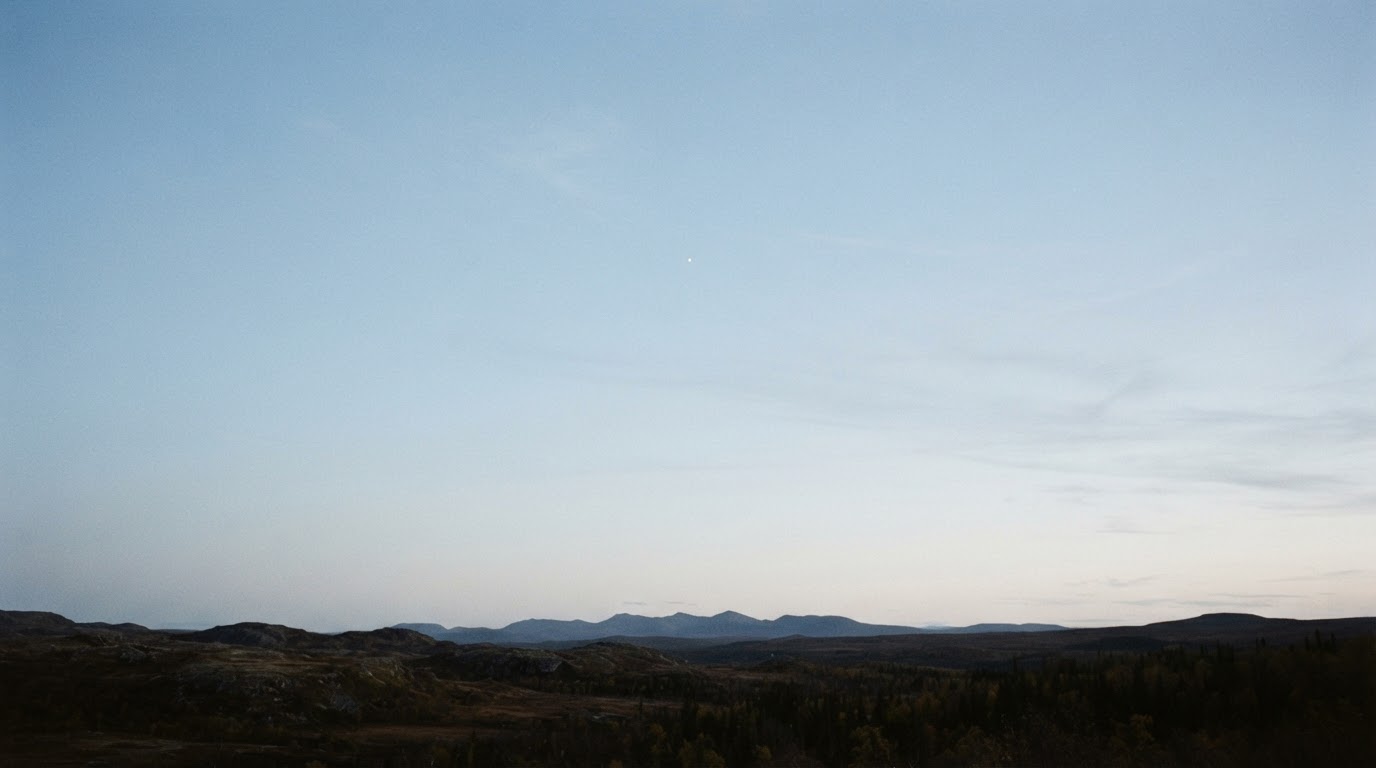
This article uses real photographs of the sighting locations and of actual celestial objects, together with AI-generated images produced to convey the mood of the story. None of the real photographs shows a UFO.


Comments
No comments yet — leave the first one.