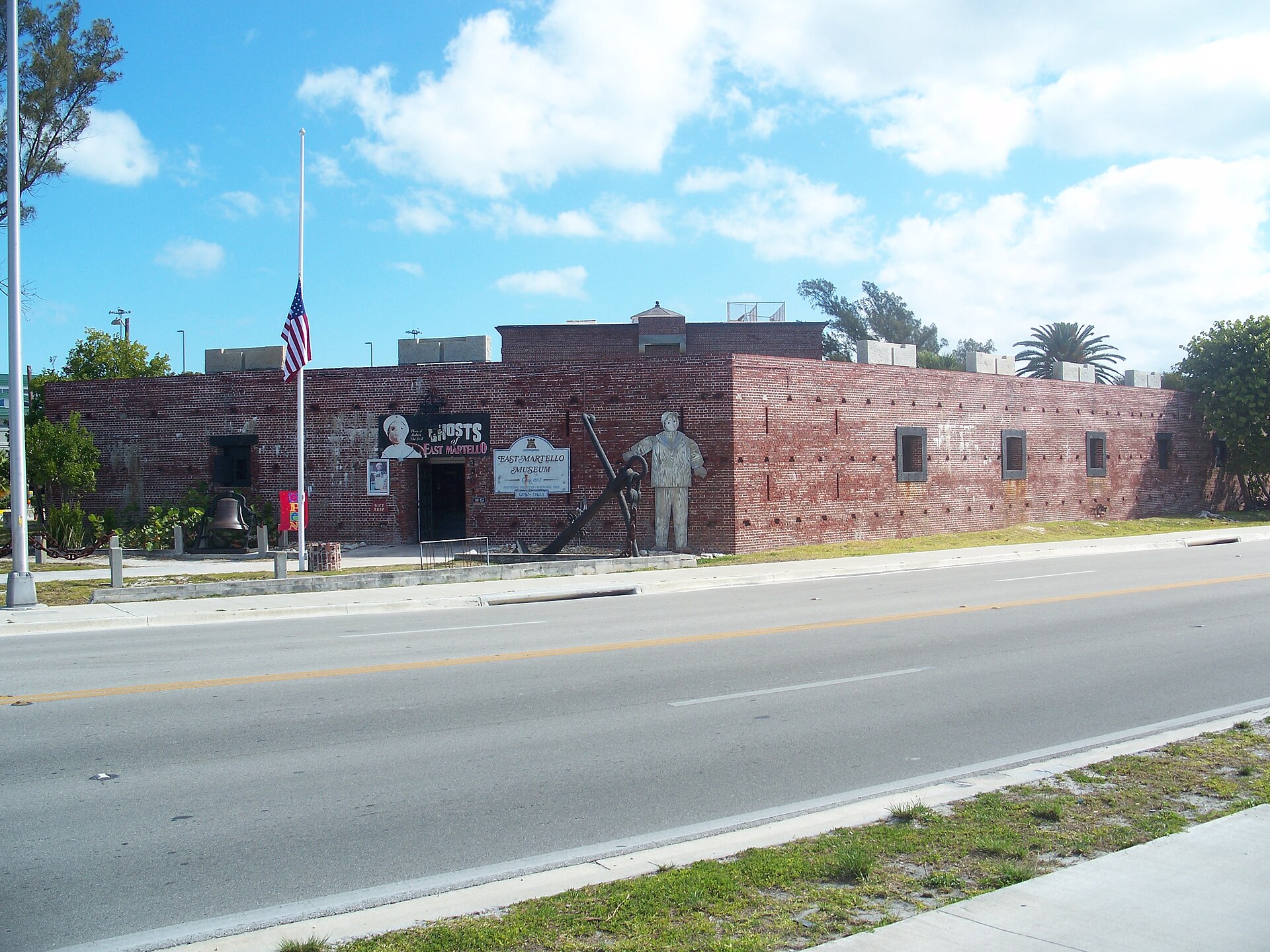
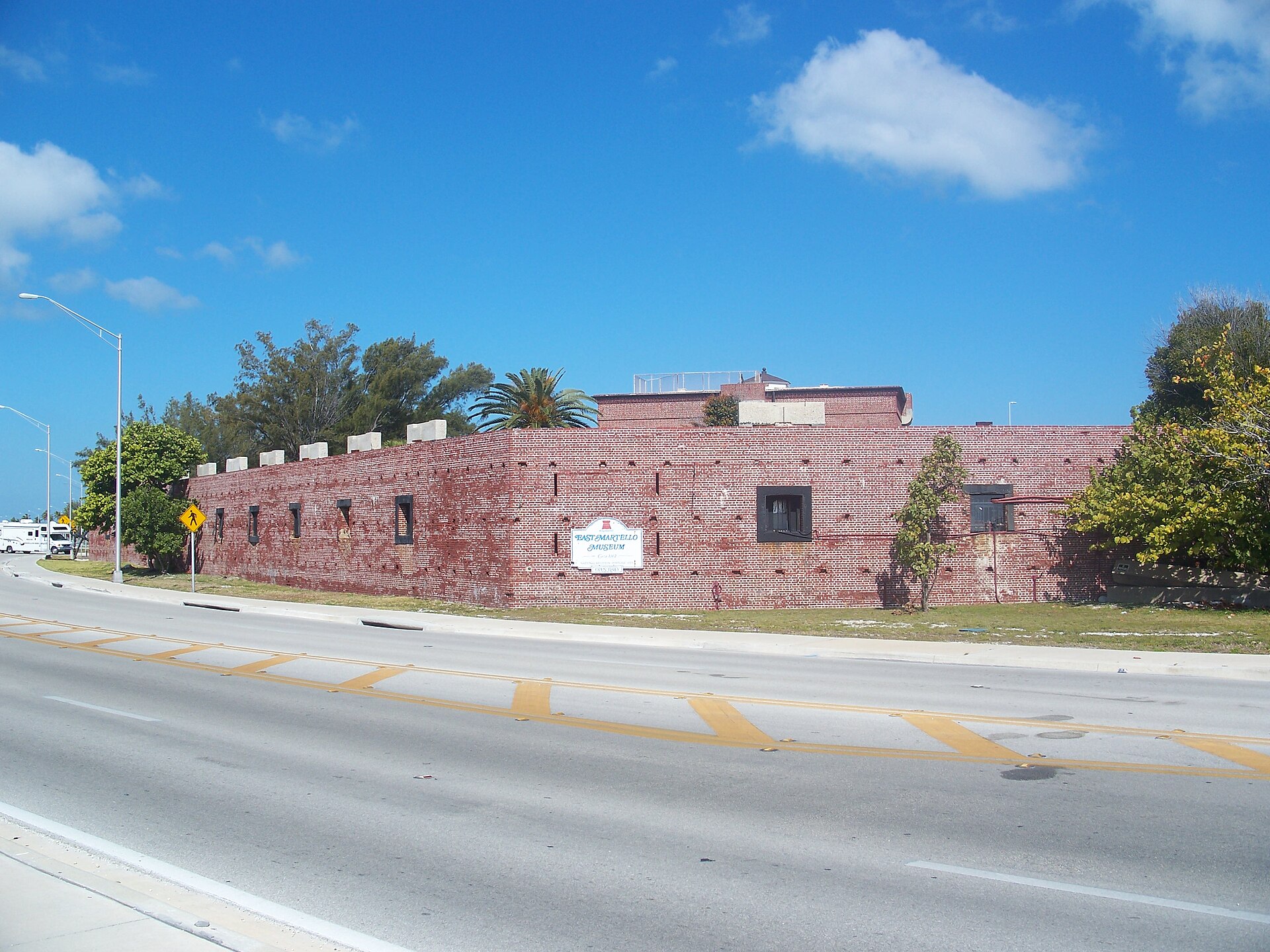
At the southernmost tip of Florida lies Key West, a resort town ringed by emerald water. On one side of it stands an old fortress, the East Martello Museum, and inside it is a rather unusual exhibit. Behind thick glass sits a stuffed doll dressed in a faded sailor suit. It stands about as tall as a small child, and the years have worn its face down to almost no expression at all. And yet, many people say that standing before it, they feel an inexplicable chill. The doll's name is Robert. For more than a hundred years it has carried the title of the most cursed doll in America — and it is entirely real. This is the story of the doll that is said to move on its own after dark, to change its pose at the window, and to have taken the blame for every misfortune that ever befell its household.
A Stuffed Doll for a Boy
The story begins in a mansion in Key West, early in the twentieth century. At 534 Eaton Street — the old house now known as the Artist House — lived the Otto family. And in that house was a young boy named Robert Eugene Otto. This boy, who would grow up to become a painter, was given a doll one day. As the story is told, his grandfather bought it for him while traveling in Germany. The doll is believed to have been made by Steiff, the famous German soft-toy company, and its manufacture is dated to somewhere in the early 1900s. The boy gave the doll his own name. The doll became "Robert," and the boy began calling himself by his middle name, "Gene" — as though he had surrendered his own place to the doll.
The worn sailor suit the doll wore was, it is said, an outfit the boy himself had worn as a small child. A doll the size of a small child, dressed in a small child's clothes. The boy carried it everywhere, and spoke to it, so they say, as if it were a living friend. Up to here it is only the ordinary story of a child who loves his doll. But among the Otto family's servants and neighbors, strange tales about this doll began, one by one, to circulate.
The record that unsettles me here is not a ghost report. It is a name change. The boy was Robert Eugene Otto; he gave the doll the first name and went through the rest of his life as Gene. I have sorted a great many haunted-object files, and the objects are almost always given something — a room, a chair, a place at the table. This is the only one I have logged where a child handed over what he was called and then kept the arrangement for sixty years.
"Robert Did It"
According to the story, inexplicable things began to happen in the Otto house. Objects were overturned, toys strewn about, and strange sounds came from the boy's room in the dead of night. Whenever something went wrong, young Gene Otto always said the same thing: "I didn't do it. Robert did it." At first the adults took it for a child's excuse. But the sounds that came from the boy's room, night after night, were not so easily dismissed. When his parents approached the door, they would hear their son speaking to someone in a frightened voice — and, some accounts say, a different, lower voice seeming to answer him back.
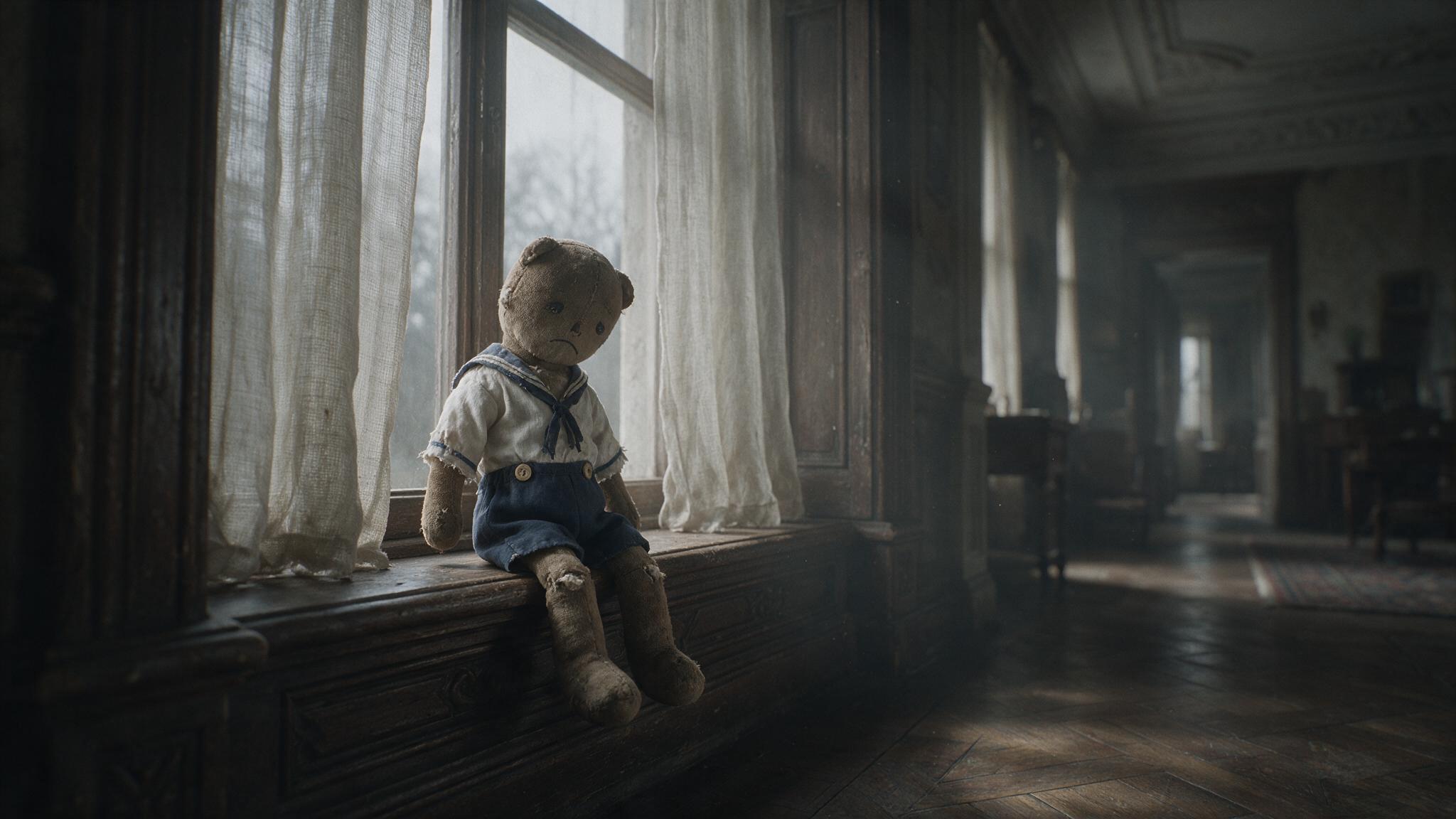
The most widely told version goes like this. The household's servants and visitors heard a child's laughter coming from empty rooms. Small footsteps sounded on the stairs and in the halls. And when a room was left with no one in it, Robert — set down by the window — would somehow be found in a different pose, facing another direction. People passing by outside, looking up at the window, claimed to see Robert peering down at them from behind the curtains. The doll changed its expression, they whispered, and roamed the house at night. All of this, of course, is nothing more than eyewitness claims and rumor; none of it was ever objectively recorded or verified. And yet few things chill the spine quite like the story of a thing shaped like a small child that moves, on its own, in the dark.
The Misfortune Pinned on a Doll
Robert Eugene Otto grew up to be a painter, and in 1930 he married a woman named Annette Parker in Paris. The couple returned to live in that same Key West mansion — and Robert the doll came back with them. Otto is said to have given over a room in the attic as the doll's own, and to have set Robert up there. According to the story, Annette loathed the doll. The sight of it, sitting alone in the attic and seeming to gaze down at people passing beneath the window, was something she could not bear.
After Otto died in 1974, the house passed to new owners. And for the new family too, the story goes, the same things repeated themselves. The doll in the attic shifted its pose at night; laughter was heard; and misfortunes great and small kept striking the household. People began to blame the doll for everything — car accidents, broken bones, lost jobs, divorces. Whenever something went wrong, they thought of Robert, sitting alone in the attic. Finally, in 1994, the doll left the mansion and was moved to the East Martello Museum. And it was there, inside a glass case, that Robert's true fame began.
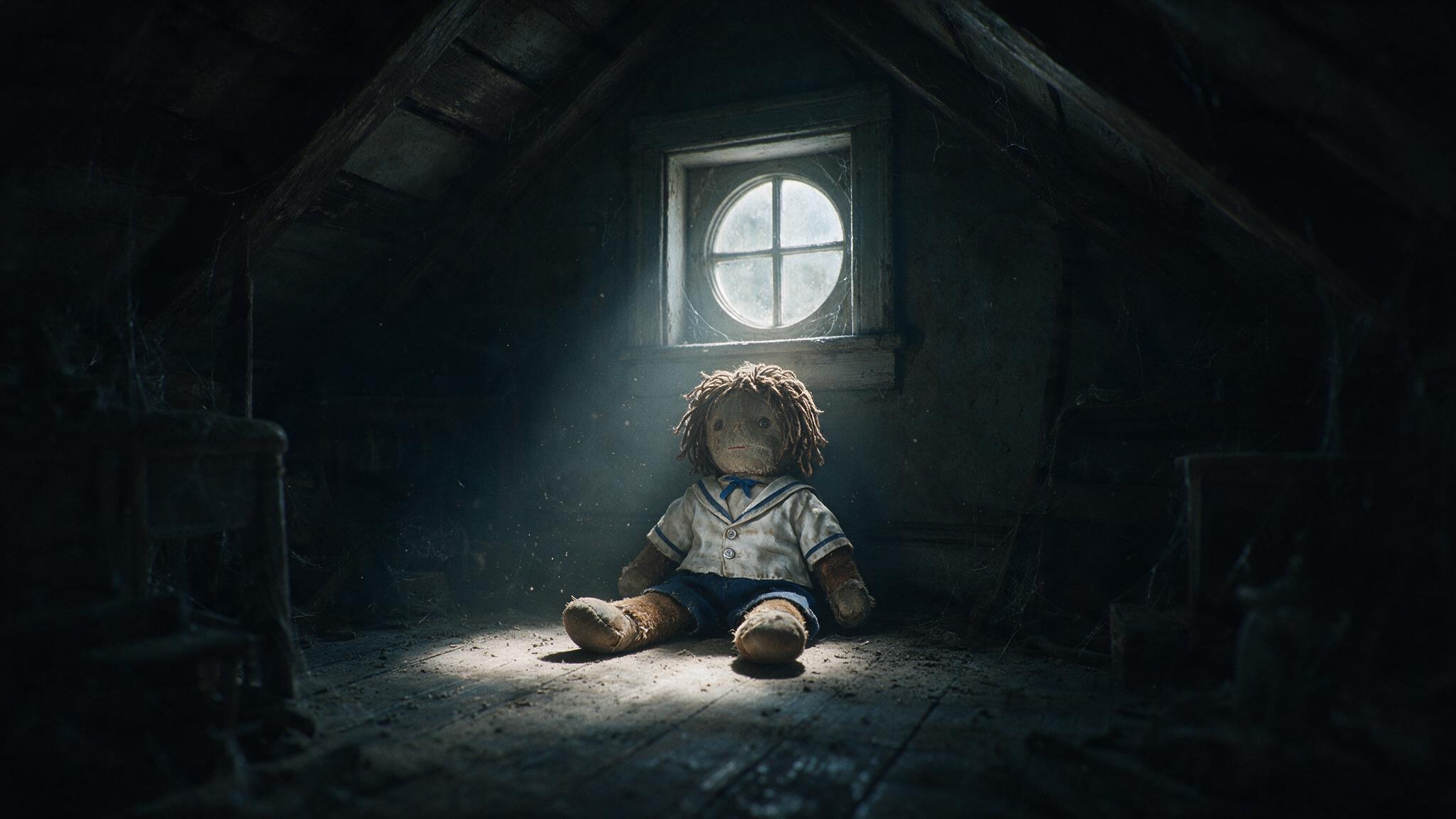
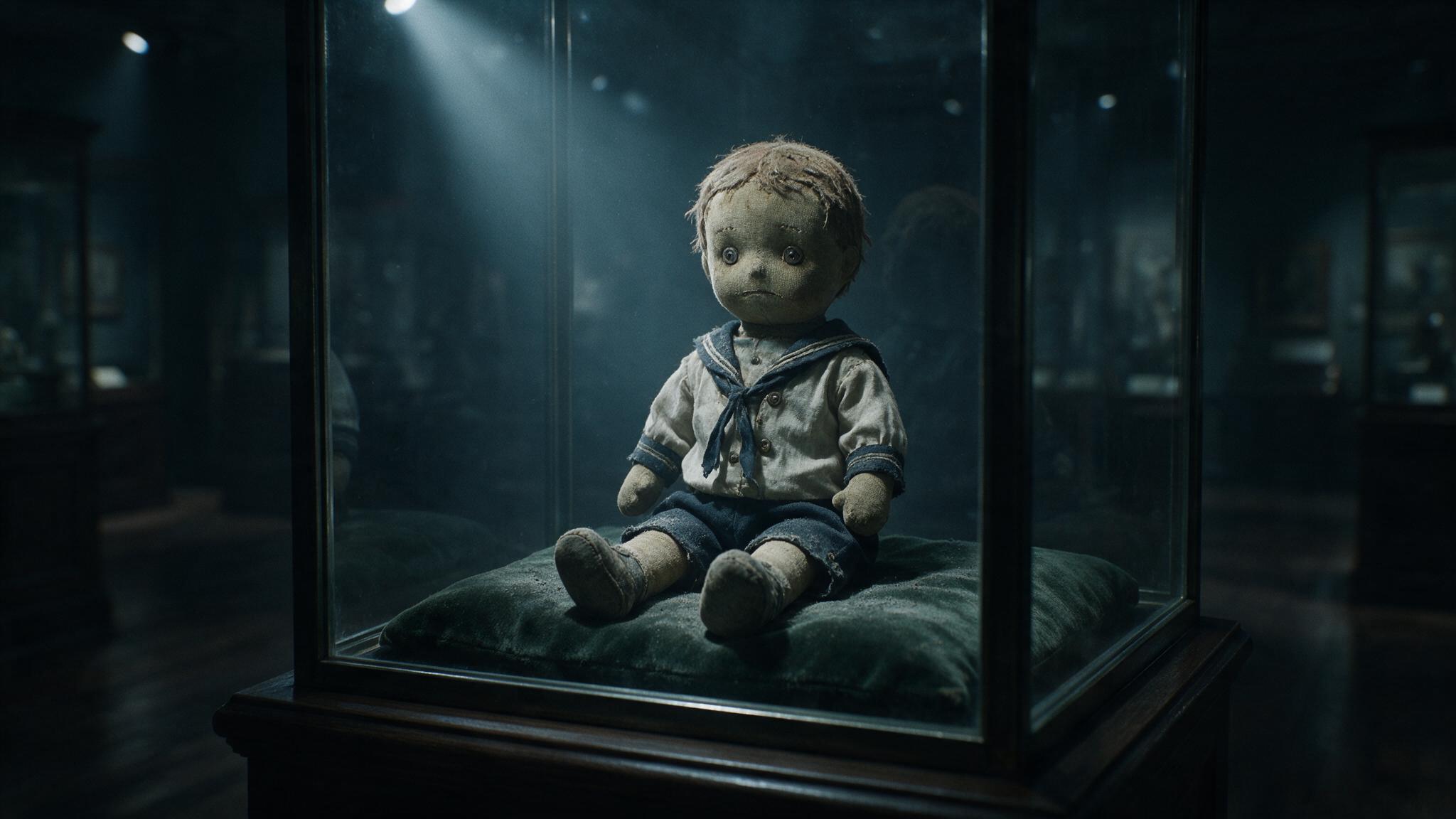
An old sailor-suit doll faintly revealed through the glass of its case in a dim room — a mood recreation, not real footage.
The Photograph Taken Without Asking
After the doll was moved to the museum, the most famous legend of all grew up around it. To photograph Robert, they say, you must first ask his permission, politely. "Robert, may I take your photograph?" — and only if the doll gives some sign of consent may you press the shutter. If you fail to ask, or if you mock him, or take his picture carelessly with no respect at all, then from that moment, so the tale goes, Robert's curse begins.
And here comes the most chilling part of the story. Legend has it that visitors who wronged Robert began, once they returned home, to be plagued by every kind of misfortune. Cars broke down, legs were broken, jobs were lost, lovers left — and people who came to believe it was all Robert's anger began, in the end, to write letters to the museum. Letters of apology, begging the doll's forgiveness. "I'm sorry. I was rude to you. Please lift the curse." To this day, it is said, these apology letters are displayed along one wall of the museum — heartfelt notes of contrition, sent to a doll by people afraid of its curse. Grown adults writing letters of apology to a toy: perhaps that strange sight is the most powerful thing about the whole story of Robert.
Why Dolls Frighten Us
So is Robert truly a cursed doll? Something living, that moves on its own after dark and visits misfortune on those who photograph it? Here it is worth pausing to ask why it is that we find dolls, of all things, so uniquely frightening. In psychology and robotics there is a concept called the "uncanny valley." The theory holds that a thing resembling a human feels endearing up to a point — but when it grows almost, yet not quite, human, something subtly off, we feel instead a sharp revulsion and dread. A thing shaped like a person that does not blink, does not breathe, whose expression is frozen still. This is precisely why old dolls feel so unsettling.
Robert is shaped like a small child. Dressed in a child's clothes, the size of a child, he has sat in the same pose for over a century, staring straight ahead. The human brain has an instinct: shown anything resembling a face, it tries to read expression and emotion into it. And so even in the blank face of a doll we keep reading a smile, an anger, a gaze. Sit alone in a dim room, face to face with an old doll, and you fall prey to the illusion that it is looking at you, that it just this moment moved its eyes. Much of the testimony — that the doll shifted its pose in the night, that laughter was heard — may well be something conjured together by this trick of human perception and fear. The stories of misfortune after taking a photograph, too, are closer to an old human habit: threading the bad things that have already happened onto a single story called "Robert's curse."
Robert Beyond the Glass
Of course, explaining it all this way does not make the fear surrounding Robert disappear. People who visit the East Martello Museum still ask Robert's permission, politely, and still bow a courteous goodbye after taking his picture. Not so much because they truly believe in the curse, but because, before the unfathomable air a hundred-year-old doll gives off, there is simply no reason to take the risk. Letters of apology to Robert, it is said, still arrive at the museum from time to time. Whether or not the curse is real, the fear of the person who writes such a letter most certainly is.
Of everything attached to this case, the material I keep coming back to is the letters. They are the one part of the Robert file that is unambiguously real — not a rumour, not a servant's account at second hand, but paper, written by adults, addressed to a stuffed toy in a case, and still arriving. I can account for the moving poses and the laughter in an empty hall. I have no comfortable way to account for a wall of apologies that keeps getting longer.
As with the Dybbuk Box, perhaps the real horror of Robert the doll lies not in the doll itself but in the story wrapped around it. A single tale — "this doll moves at night and curses those who disrespect it" — is enough to send a genuine chill through anyone who knows it, to make them ask permission politely, to make them pin the misfortunes that follow them home on the doll. A single stuffed doll in a faded sailor suit has gone on living and moving, for over a century, in the minds of countless people. Today Robert sits quietly in his glass case at the East Martello, gazing straight out at us on the other side of the glass. Whether he is truly looking at something, or whether it is only that we wish to feel he is — the answer, perhaps, lies not in the doll, but in the mind of whoever stands before it.
---
This article uses both real archival and on-site photographs and AI-generated images and video produced to convey the mood of the story.

Comments
No comments yet — leave the first one.