
"Po... po... po..."
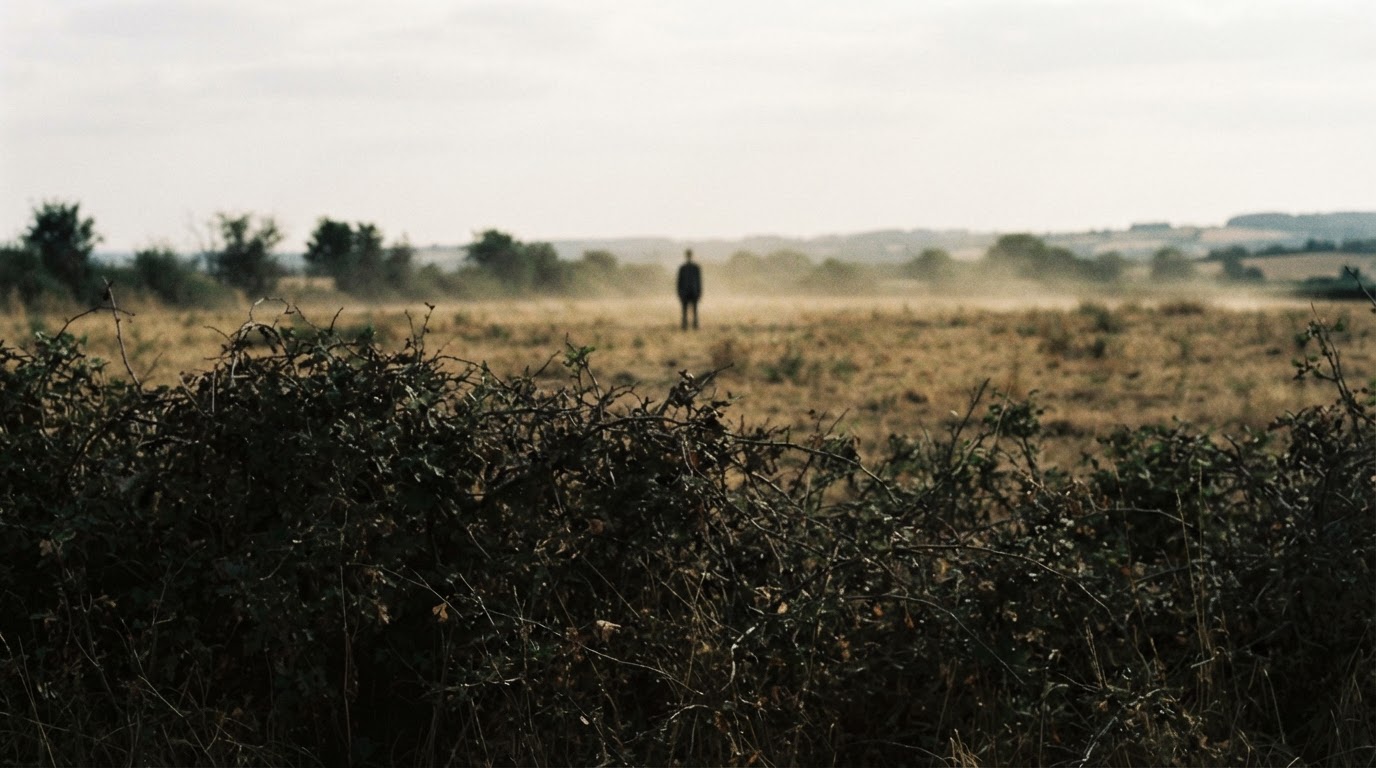
It is a sound with no meaning. Low, guttural, repeated at an even rhythm, like a machine that has forgotten how to be a voice. In the story that first appeared on a Japanese message board one summer, this is the sound a boy hears drifting across a hot, still afternoon in his grandparents' countryside village. He looks toward the hedge, and beyond it he sees a woman. She is wearing a white dress and a wide-brimmed white hat. She is far too tall — taller than the fence, taller than any woman should be. And she is looking at him.
That is where it begins. Her name, the villagers will tell him, is Hachishakusama — the Eight Feet Tall.


Archiving internet folklore is a different discipline from archiving anything else, because the source material rots. I have been through the surviving mirrors of that 2008 thread more than once, and what strikes me every time is the sound. Not the height, which anyone could invent — the po... po... po... A writer trying to frighten a message board would have reached for a scream or a whisper. Choosing a flat, meaningless syllable and repeating it is a decision I still cannot fully account for, and it is the part of the story that has outlived every retelling.
A Story Born on 2channel
To understand Hachishakusama, you first have to understand where she came from — not a temple record, not an old village legend passed down for centuries, but a single anonymous thread on the internet.
In August 2008, on Japan's sprawling text board 2channel (2ちゃんねる, usually just "2ch"), someone opened a post in a genre the board's regulars called 洒落怖 — share-kowa, short for "scary stories told at a level too good to laugh off." A poster claiming to be recounting something that happened to him as a child began to type out an experience from his grandparents' home in the countryside.
The story was written the way the best 洒落怖 posts always were: in the plain, slightly clumsy voice of an ordinary person, full of small hesitations and half-remembered details, as if the writer were still frightened by his own memory. It did not read like a polished piece of fiction. It read like a confession. And that, more than anything, is why it worked.
Over a series of posts, the anonymous author built one of the most complete and internally consistent ghost stories the board would ever produce — a creature with a name, a form, a sound, a set of rules, and a ritual to escape it. By the time the thread ended, Hachishakusama was no longer one man's story. She belonged to the internet.

The Boy Who Saw Her
Here is the story, retold — not translated line for line, but carried in its shape, the way it has been passed from reader to reader for more than fifteen years.
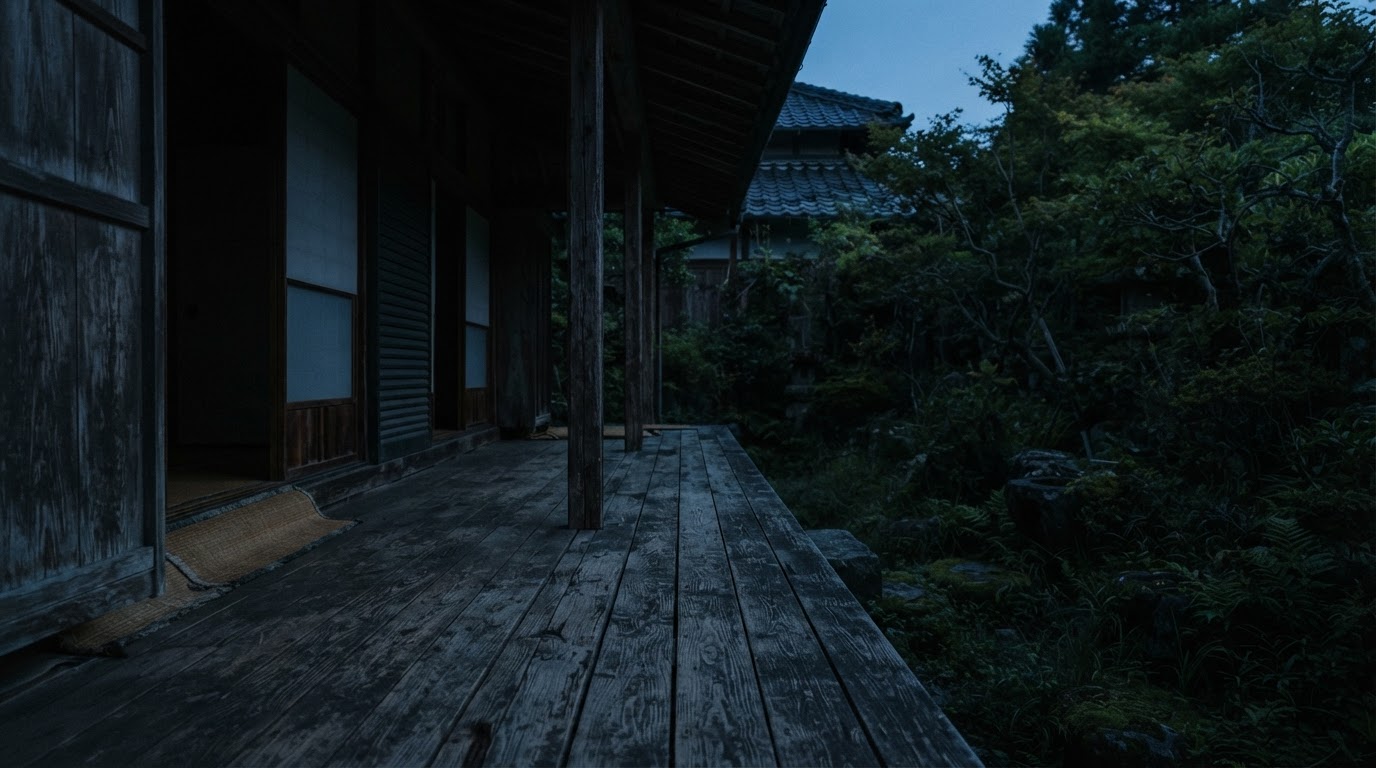
A boy is spending part of his summer at his grandparents' house, deep in a rural village ringed by mountains and rice fields. One drowsy afternoon he is alone near the garden when he hears it — that flat, wrong sound, po... po... po... — coming from beyond the hedge. He looks up. On the far side of the fence, gliding past with an unnatural smoothness, is a woman in white. A long pale dress. A wide-brimmed hat that hides her face. And her height — she is enormous, tall enough to see clean over a fence that no ordinary person could look over. For a moment their eyes seem to meet. Then she is gone.
He tells his grandfather, half-laughing, about the strange tall lady. The old man's face changes at once. He does not laugh. He asks, very seriously, whether the woman looked at the boy — and when the answer is yes, he moves fast.
The grandfather makes calls. The boy is not allowed outside. He is put into a room and told, above all, that he must not leave it until morning, no matter what he hears. That evening the whole household changes. The adults are grim and quiet. And as darkness falls, the boy begins to hear things at the edge of the house — a voice at the window that sounds like his grandfather, calling him to come out; the flat repeating sound again, closer now; the sense of something enormous standing just beyond the thin wall, patient, waiting for him to open the door.
He does not open it. He survives the night. And in the morning, he is bundled into a car and driven out of the village at speed, told never to look back, never to look out the rear window — because she may be following, and she must not be allowed to see where he goes.

The Rules of Surviving Her
What raised Hachishakusama above a thousand other campfire ghosts was that she came with rules — a coherent, almost procedural set of protections, the kind of specific instructions that make a story feel like leaked truth rather than invention.
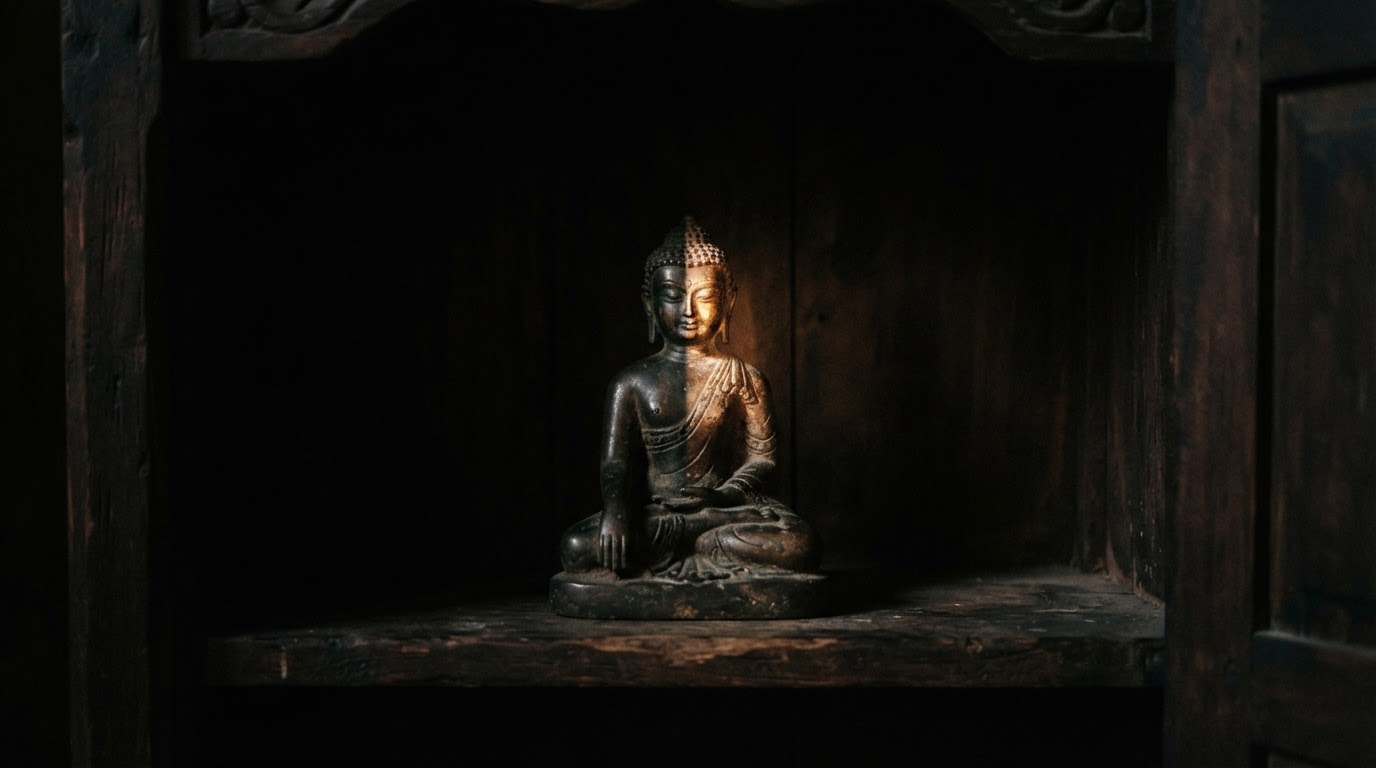
The grandfather's household follows a ritual. The boy is kept inside a room protected by paper charms — ofuda, the printed talismans of Japanese folk religion — stuck to the door and walls. A small statue of the Buddha is placed in a cupboard or alcove, and the boy is told to watch over it through the night; if it should crack or fall, something has gone wrong. Salt is set out in small dishes at the thresholds, salt being the oldest purifier in Japanese custom. The boy must not answer any voice that calls to him, even one that sounds exactly like family — Hachishakusama can imitate the people you trust. And when the time comes to flee at dawn, the escape must be perfect: leave without looking back, and put distance between the child and the village before she can follow.
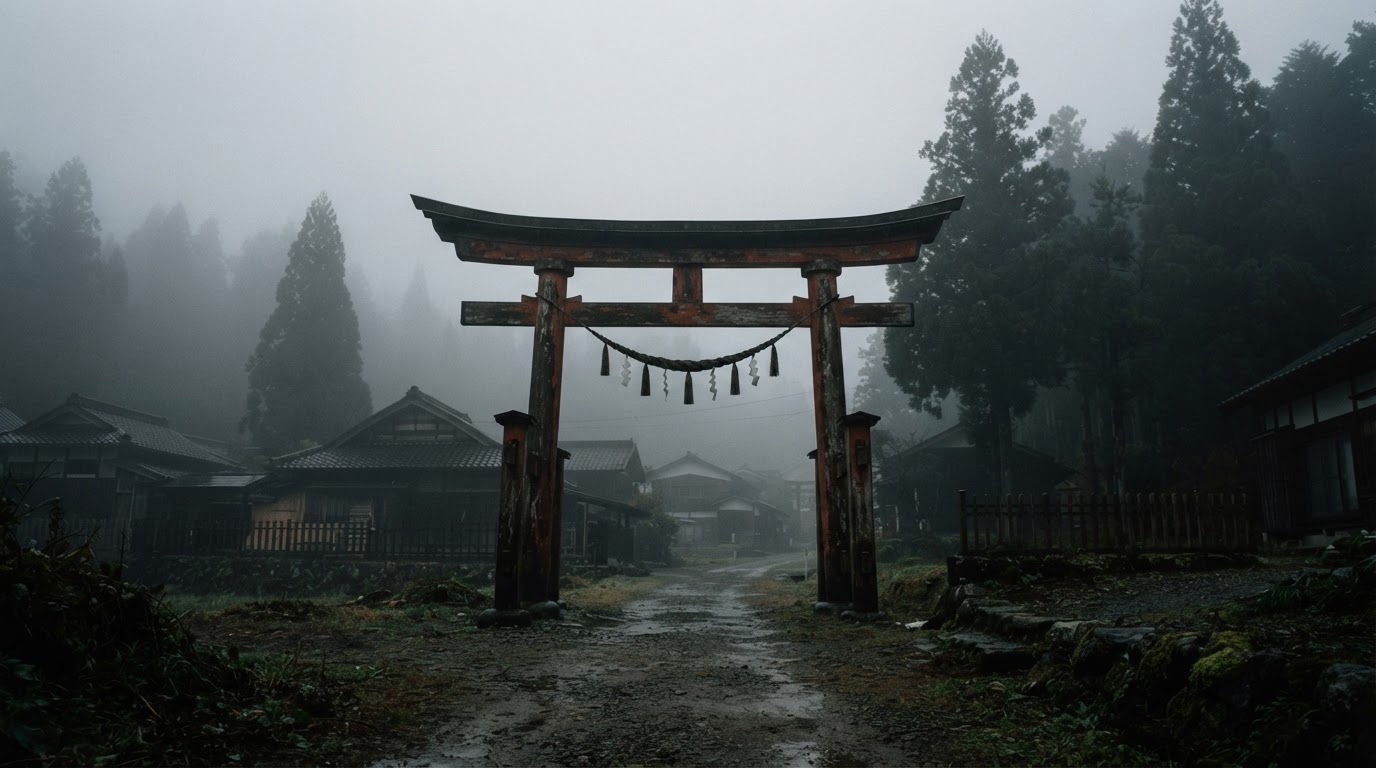
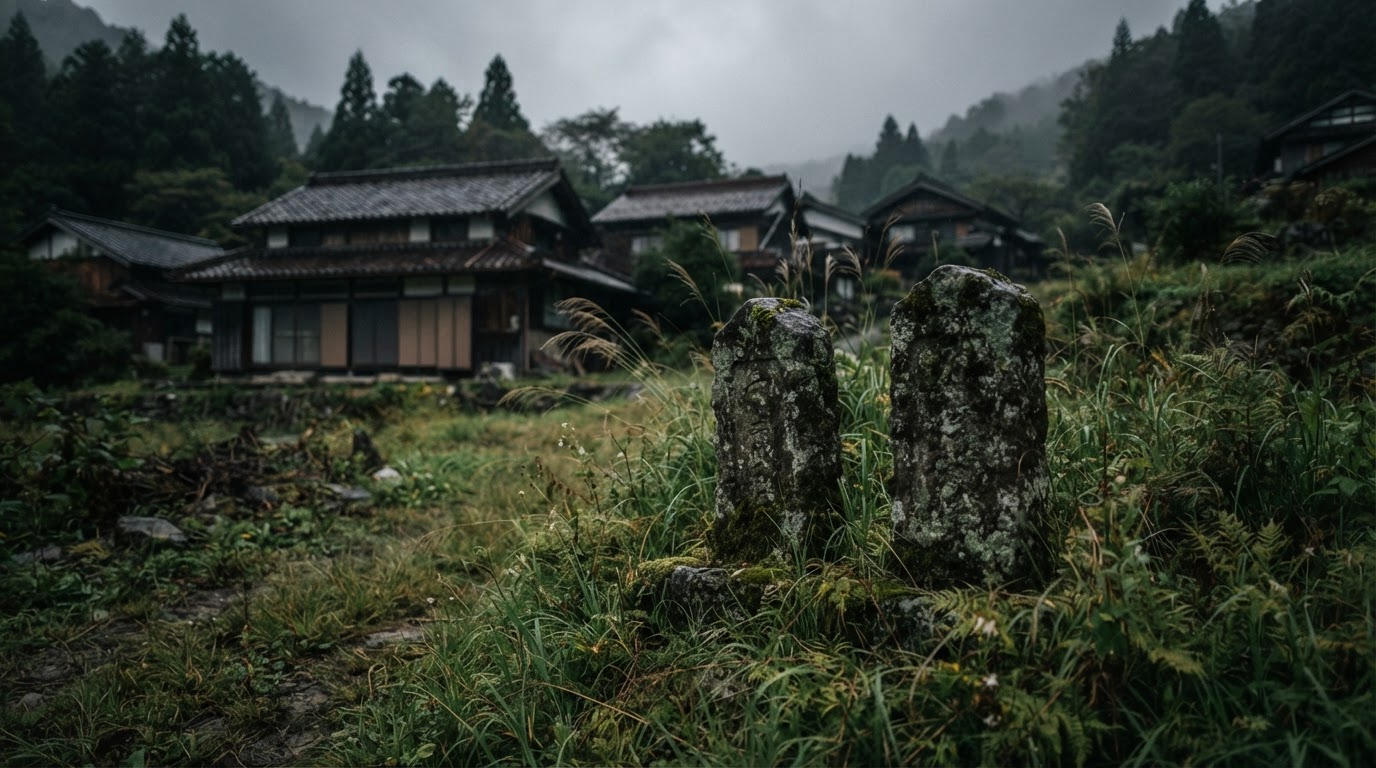
The village itself, in the story, has long known about her. She is said to be sealed inside its boundaries by stone markers — jizō statues and boundary stones placed at the edges of the settlement generations ago, a kind of spiritual fence to keep her from wandering out into the wider world. As long as the stones stand and the rituals are kept, she is confined. It is only when an outsider child wanders in and catches her eye that the danger begins.
There is a terrible logic to all of it. The rules do not promise safety — they promise a procedure, and the horror lies in how easily the procedure could fail. One answered voice, one backward glance, one cracked statue, and the night is lost.


洒落怖 and the Golden Age of 2008
Hachishakusama did not appear out of nowhere. She was the product of a very particular culture at a very particular moment.
By the mid-2000s, 2channel was the beating heart of the Japanese-language internet — a vast, anonymous, text-only forum where millions of users posted without names, without accounts, without reputation. Within it, the horror board and its 洒落怖 threads had developed into a genuine folk tradition. Anonymous writers competed, night after night, to tell the story that would give the whole board goosebumps. Readers replied in real time, reacting, doubting, begging for the next part. A great 洒落怖 post was a collaborative performance: the writer supplied the tale, and the crowd supplied the belief.
The years around 2008 are remembered as the golden age of this culture. Broadband had spread; a generation had grown up fluent in the board's rhythms and in-jokes; and the anonymity of 2channel gave every story the same weight, whether it came from a gifted writer or a frightened teenager. There were no verified accounts to check, no author to hold responsible. A story could be pure fiction and still feel, in the moment of reading it at 3 a.m., like something a real person had truly lived through.
Hachishakusama was the perfect 洒落怖 story because she was built for that medium. She had lore you could argue about. She had rules you could quiz each other on. She had gaps the readers themselves rushed to fill — and fill them they did, with sequels, "related experiences," and fan theories that expanded her mythology far beyond the original thread. The board did not just read the story. It adopted her.
Crossing the Ocean as "Eight Feet Tall"
For a few years, Hachishakusama belonged to the Japanese internet alone. Then she crossed over.
As English-speaking horror communities discovered the treasures buried in 2channel's archives, translators began carrying the best 洒落怖 stories into English. Hachishakusama's tale was rendered under the literal translation of her name — "Eight Feet Tall" — and posted to the creepypasta ecosystem, the sprawling web of forums, wikis, and YouTube narration channels where user-written horror is shared and reshared. There, stripped of some of its Japanese cultural specifics but keeping its core dread intact, it found an entirely new audience.
The translation traveled fast because the story was so portable. You did not need to know what an ofuda was to understand the terror of a room you cannot leave. You did not need to grow up in rural Japan to feel the wrongness of a figure too tall to be human, drifting past a fence, making a sound that is almost — but not quite — a word. Narrated over dim footage on late-night horror channels, "Eight Feet Tall" reached millions who had never heard of 2channel and never would.
In Korea she took on yet another name — 팔척귀신, the "Eight-Foot Ghost" — and became a fixture of Korean horror communities in her own right. Everywhere she went, she kept her essential shape: the height, the white dress, the hat, the sound, and the child who must not look back.
The Slender Man in the Mirror
It is impossible to talk about Hachishakusama abroad without someone mentioning the Slender Man — and the comparison is more revealing than it first appears.
The two were born within a year of each other, on opposite sides of the world, in almost identical circumstances. Slender Man emerged in 2009 from an American forum, Something Awful, as an entry in a Photoshop contest — an unnaturally tall, faceless figure in a black suit, glimpsed at the edges of old photographs. Hachishakusama emerged in 2008 from 2channel as an anonymous confession — an unnaturally tall figure in a white dress, glimpsed beyond a hedge. Both are impossibly elongated. Both are faceless or hidden-faced. Both stalk the young. Both move without ever seeming to run. And both were created not by a single author but by an anonymous online crowd that adopted, expanded, and mythologized them until they felt older and truer than they were.
The differences are just as telling. Slender Man wears the black suit of the modern city — the authority figure, the man in the corridor, the stranger at the edge of the schoolyard. Hachishakusama wears the white of the traditional Japanese countryside, of mourning and of the old religious world; she belongs not to the office block but to the rice field and the ancestral village. One is the terror of the anonymous urban stranger; the other is the terror of the rural place your family came from, where the old rules still hold and the old things are still, barely, sealed away. Together they show how the same age — the age of the anonymous, participatory internet — grew nearly identical monsters out of very different soil.
Why a Tall Woman in White Terrifies
Set the internet history aside for a moment and ask a simpler question: why does this particular figure frighten people so reliably, across languages and cultures? Pull the story apart, and you find fears far older than any message board.
Start with the height. Human beings are calibrated from infancy to read the size of the things around us. A figure that is subtly, wrongly too tall trips an ancient alarm — it is the silhouette of something that looms, something that could look down into an upstairs window, something built to a scale that does not belong to us. Eight feet is not monstrous in the way of fangs and claws; it is monstrous in the way of a thing that is almost human and off by just enough to be unbearable. This is the same instinct Slender Man exploits, and it is why "too tall" recurs in frightening figures the world over.
Then the white dress and hat. In Japanese tradition white is not the color of weddings but of death — of burial garments, of the world beyond. A woman in flowing white has meant a ghost in Japanese storytelling for centuries, from the classical yūrei to the vengeful spirits of the theater. The wide-brimmed hat that hides the face adds the final touch: we are wired to seek out faces, and a figure that denies us one becomes an unsolvable puzzle our minds keep worrying at. You cannot read her expression, so you cannot know her intent, so you cannot stop being afraid.
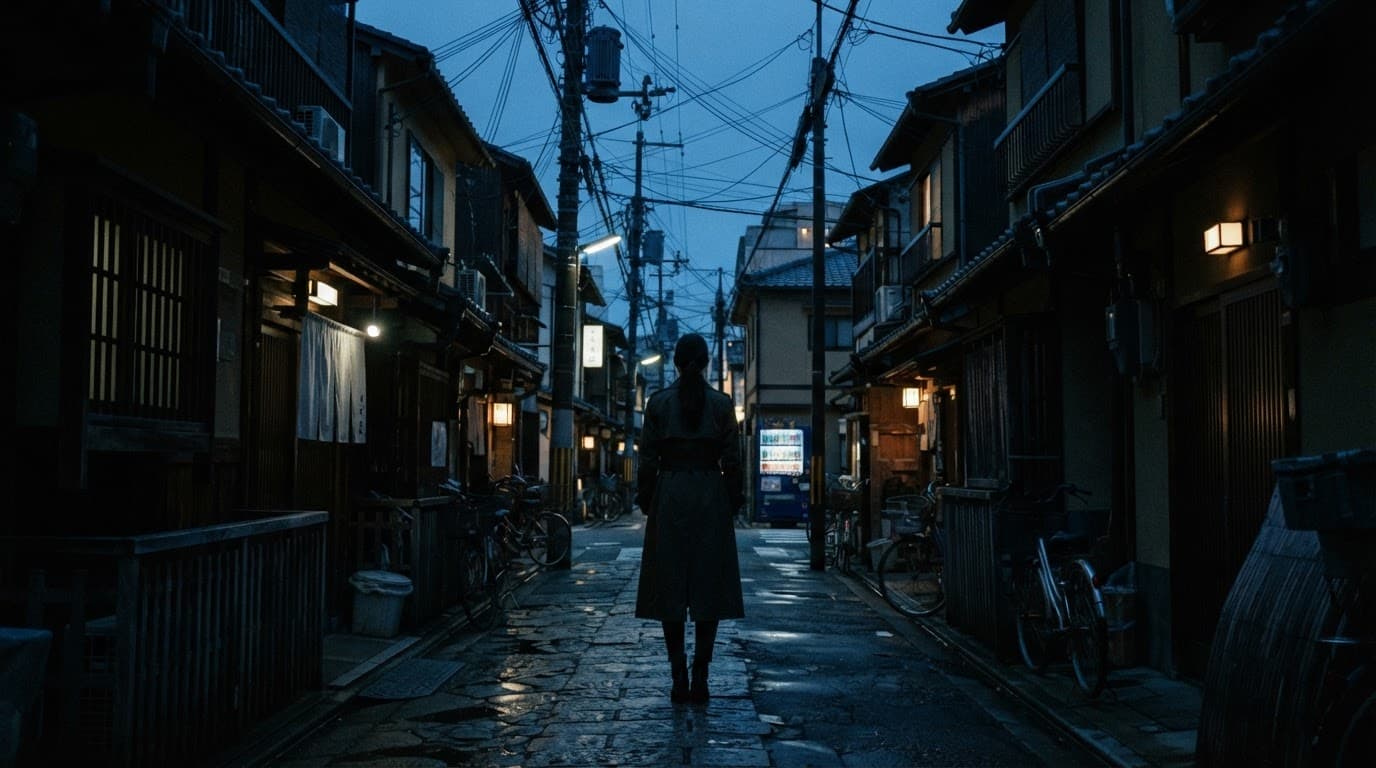
The rural setting matters as much as the figure. The story does not happen in the city where the reader lives; it happens in the grandparents' village, the half-remembered countryside of summer visits, a place that feels safe and nostalgic precisely because it is old — and because it is old, it is where the old, sealed-away things still live. And the grandparents themselves carry a quiet power: it is the grandfather, keeper of rituals the modern child has forgotten, who knows the salt and the charms and the rules. The protector is the old generation; the vulnerable one is the young. Buried in the horror is something almost tender — a story about the knowledge that keeps a family safe passing, just barely in time, from the old to the young.
Where She Appears Now
Like every great piece of folklore, Hachishakusama outgrew the thread that made her.
She has seeped deep into the wider pop-cultural bloodstream of Japanese horror. She recurs across manga, indie games, and countless YouTube retellings; her figure — tall, white-dressed, hat-shadowed — has become instantly legible shorthand for a certain kind of Japanese dread. Each new version reshapes her a little, sharpens or softens her, adds or drops a rule. That is exactly what folklore does. A living legend is never told the same way twice.
What is remarkable is how faithfully the essentials survive every retelling. Strip away the film budgets and the game mechanics and you are left, every time, with the same handful of images: the height, the white, the sound, the room you must not leave, the road you must not look back down. Those are the load-bearing pillars of the story, and they have not moved since 2008.

The Sound That Stays
There was never an eight-foot woman. No child was taken; no village sealed a monster behind its stones. Somewhere on 2channel in the summer of 2008, an anonymous person sat at a keyboard and typed a story good enough that the internet decided to believe it — and, in a sense, to keep it.
That is the strange power of internet kaidan. Older ghost stories came down to us through temples and grandmothers and the slow accumulation of centuries; Hachishakusama arrived fully formed in a single thread, authored by no one and everyone, and spread across the planet in a handful of years. She has no origin village you could visit, no historical incident you could check. She has only the story — and the story turned out to be enough. It gave her a name, a face we are not allowed to see, a set of rules, and a sound.
Somewhere in the files I keep on this one there is a version I cannot source — a retelling in which the boy, years later as a grown man, is told the stones at the village boundary have begun to lean. I have never found where it originated, and I suspect it was written by a reader rather than the original poster. That is the trouble with cataloguing something the crowd owns. The story is still growing while I try to file it, and I have no way of knowing which parts arrived after I last looked.
Perhaps that is what the best of these stories really do. They take something that never existed and lodge it more firmly in the mind than most things that did. Years from now, someone who read "Eight Feet Tall" once, late at night, will stand in a quiet countryside on a hot afternoon, hear an insect drone flatten into an even, repeating hum — po... po... po... — and feel, against all reason, the sudden urge not to look toward the hedge.
She was only ever a story. But some stories, once you have heard them, never quite leave the field.
---
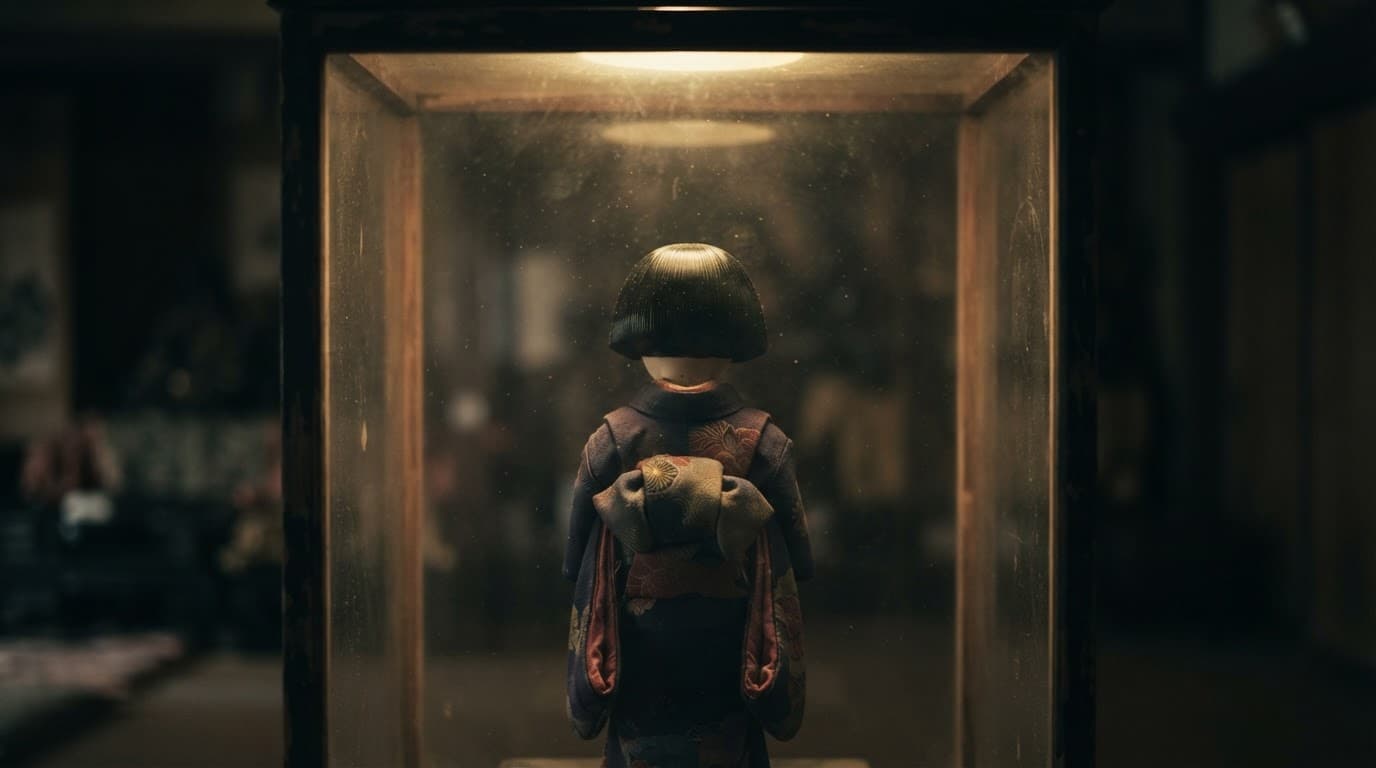
The images and video in this article are AI-generated works produced to convey the mood of the story, and are not photographs of any actual person or event.

Comments
No comments yet — leave the first one.