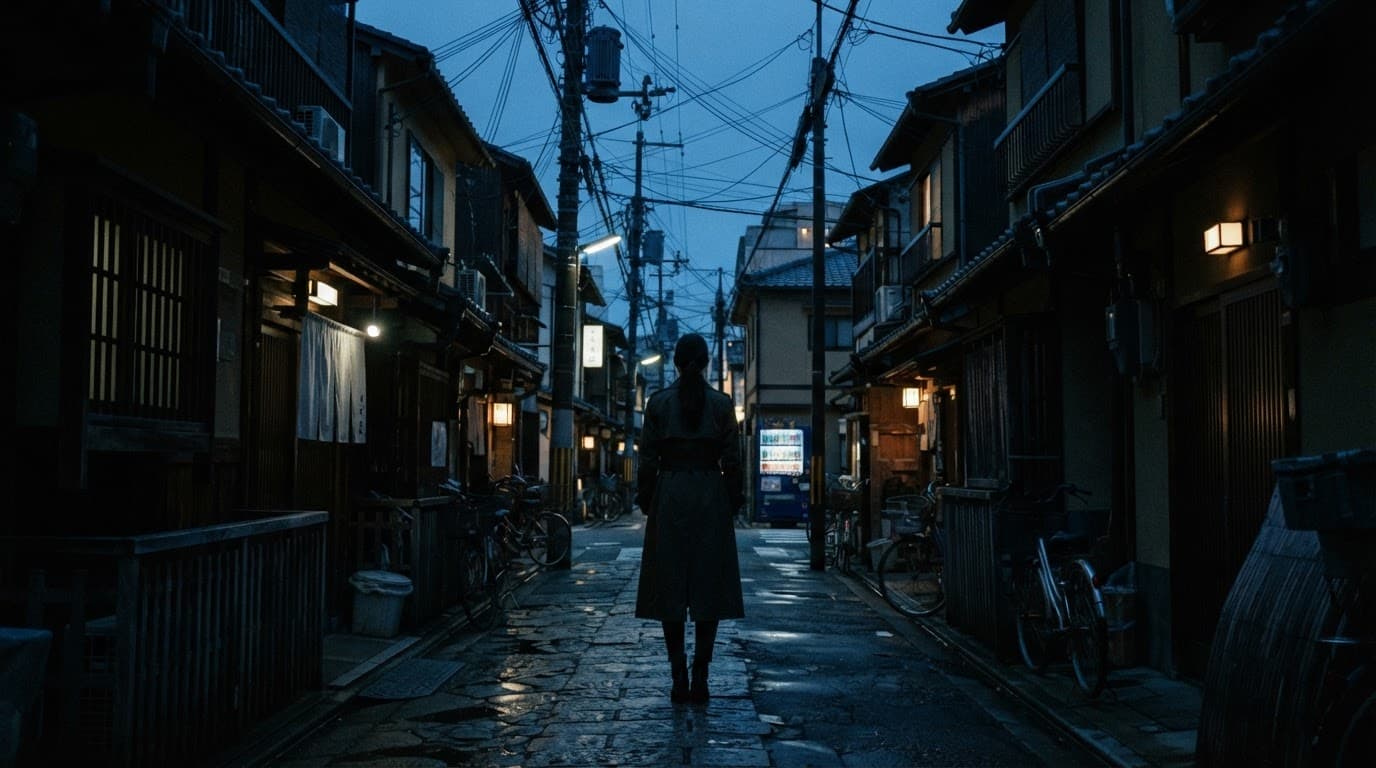
"Am I pretty?"
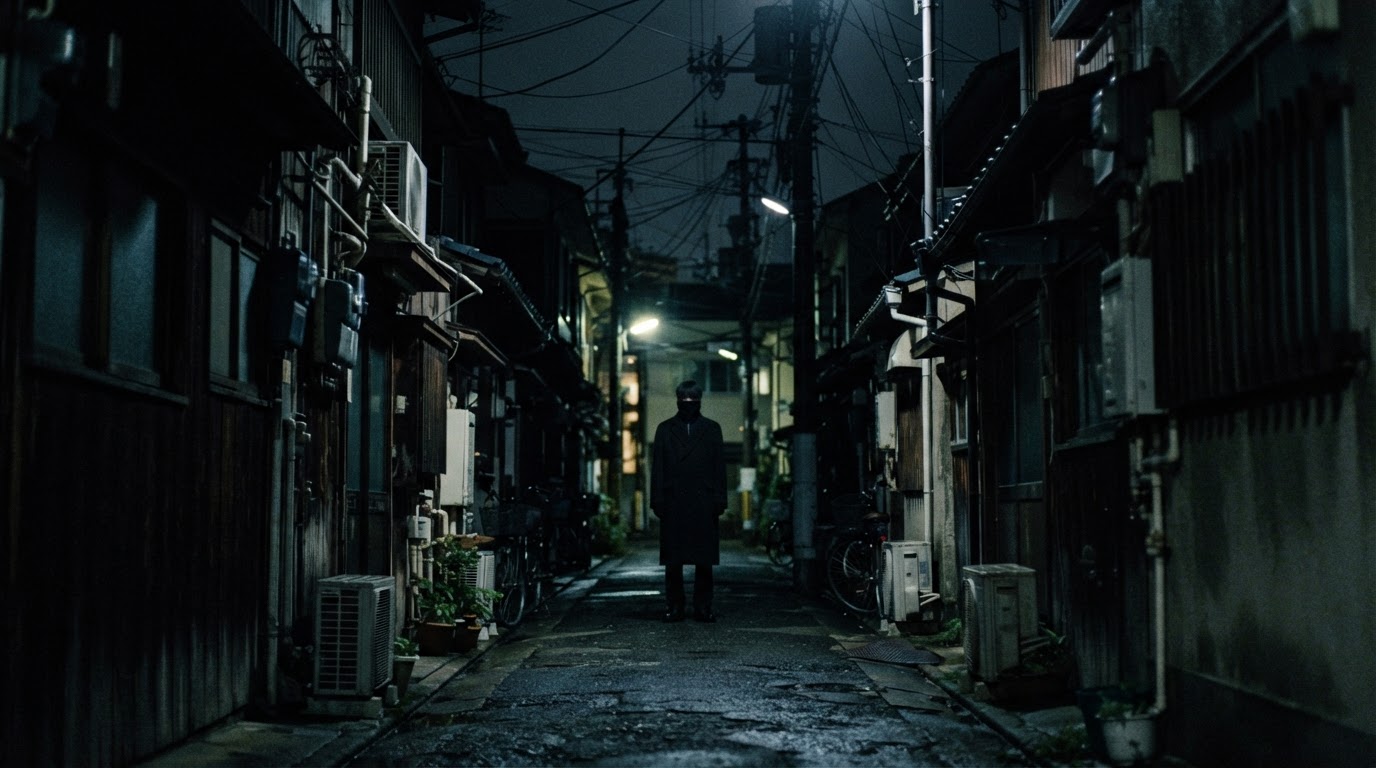
In the spring of 1979, in a small city in central Japan, that question was a trap with no way out. A tall woman would step out of the evening shadows, a long coat over her shoulders, a white surgical mask covering the lower half of her face. She would fix a child in place and ask it. Say she was ugly, the children whispered, and she cut you down on the spot. Say she was pretty, and she peeled the mask away — revealing a mouth torn open from ear to ear — and asked once more: Am I still pretty now?

I came to this case sideways, through a stack of 1979 Japanese weekly-magazine scans I was reading for something else entirely, and what stopped me was not the woman but the date: January 26, and a regional paper in Gifu printing a schoolyard rumor as news. In my files, that is normally the shape of a hoax collapsing. Here it is the shape of one taking hold. I have gone back through those pages more than once looking for the first named witness, the one child who actually met her, and there is no such child anywhere in the record — only the rumor, already fully formed, already moving.
The Question That Emptied the Streets
To a reader meeting her for the first time, she may sound like any campfire ghost. But to a Japanese person who was a child in 1979, the name Kuchisake-onna — the slit-mouthed woman — needs no explanation. She is one of the defining terrors of a whole generation's childhood, and one of the very few urban legends powerful enough to change how an entire country walked its children home.
The panic began, by most accounts, in Gifu Prefecture around 1978, and boiled over the following year. It did not stay local for long. On January 26, 1979, a regional paper, the Gifu Nichi Nichi Shinbun, ran the story in print. Within weeks it had jumped to national weeklies, and by that summer the slit-mouthed woman was standing at the end of every child's walk home, everywhere in Japan.
What spread was not a printed tale handed down by adults. It moved the way the most frightening stories always move — mouth to mouth, from one child to the next, in the corridor and the schoolyard and on the road home in the failing light.
The Woman in the Mask
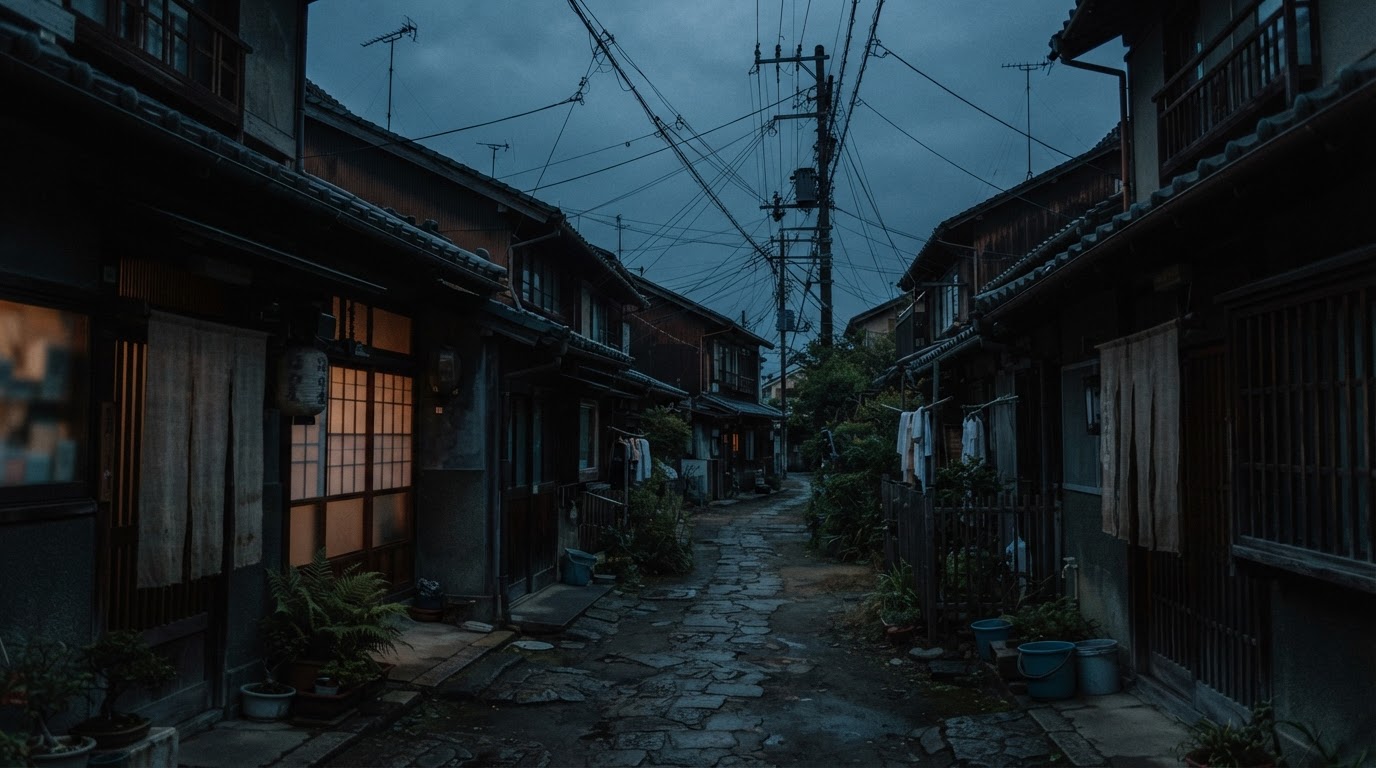
The heart of the legend was her face — and the fact that you could not see it until it was too late.
She appeared, the children said, as a tall woman, sometimes strikingly so. She wore a long coat, and over her mouth a plain white surgical mask, the kind so ordinary in Japan that no one would look at it twice. That was the horror of it. On any winter street, half the passers-by wore one against the cold or a cough. She hid in plain sight, indistinguishable from a hundred harmless strangers, until she chose you.
She would ask her question. And when a child answered that yes, she was pretty, she would draw the mask down. Beneath it, the mouth was slit from one ear to the other, the corners cut back in a wound that never healed into anything but a grin. In some tellings she carried a pair of scissors, or a long blade, held low at her side beneath the coat. In others her weapon was never named at all — only the certainty that you would not outrun her.


The Rules, and the Escape Hatches
What lifted the slit-mouthed woman above an ordinary ghost story were her rules — the strange, precise conditions passed from child to child, differing town to town.
The core was the question itself: Am I pretty? Answer plainly and you lost. "No" brought the blade at once. "Yes" only bought a second question, the mask pulled aside, and the same trap sprung again. Say "yes" the second time, they said, and she would cut your mouth to match her own, so that you too would spend your life asking strangers the question.
But the rules came with loopholes, and children traded them like charms. Answer neither yes nor no — say she was "so-so," "average," "ordinary" — and she was said to freeze, confused, long enough for you to run. Tell her, apologetically, that you were late for something, and in some versions she would bow, apologize herself, and let you pass. Throw down money or hard bekko candy at her feet, and she would stoop to gather it while you fled. And strangest of all: chant the word pomade three times — from an old story that her ruined face was the work of a botched surgery, and that the smell of a doctor's hair pomade drove her back.
The cruelty of these rules was the same cruelty every good urban legend runs on: none of them was truly safe. One town's escape word was another town's fatal mistake. You could do everything right and still be told, afterward, that you had answered wrong. That gap — a rule you could never quite satisfy — is exactly what kept her waiting in the imagination at the end of every alley.
Children Walked Home in Groups
The legend did not stay a game.
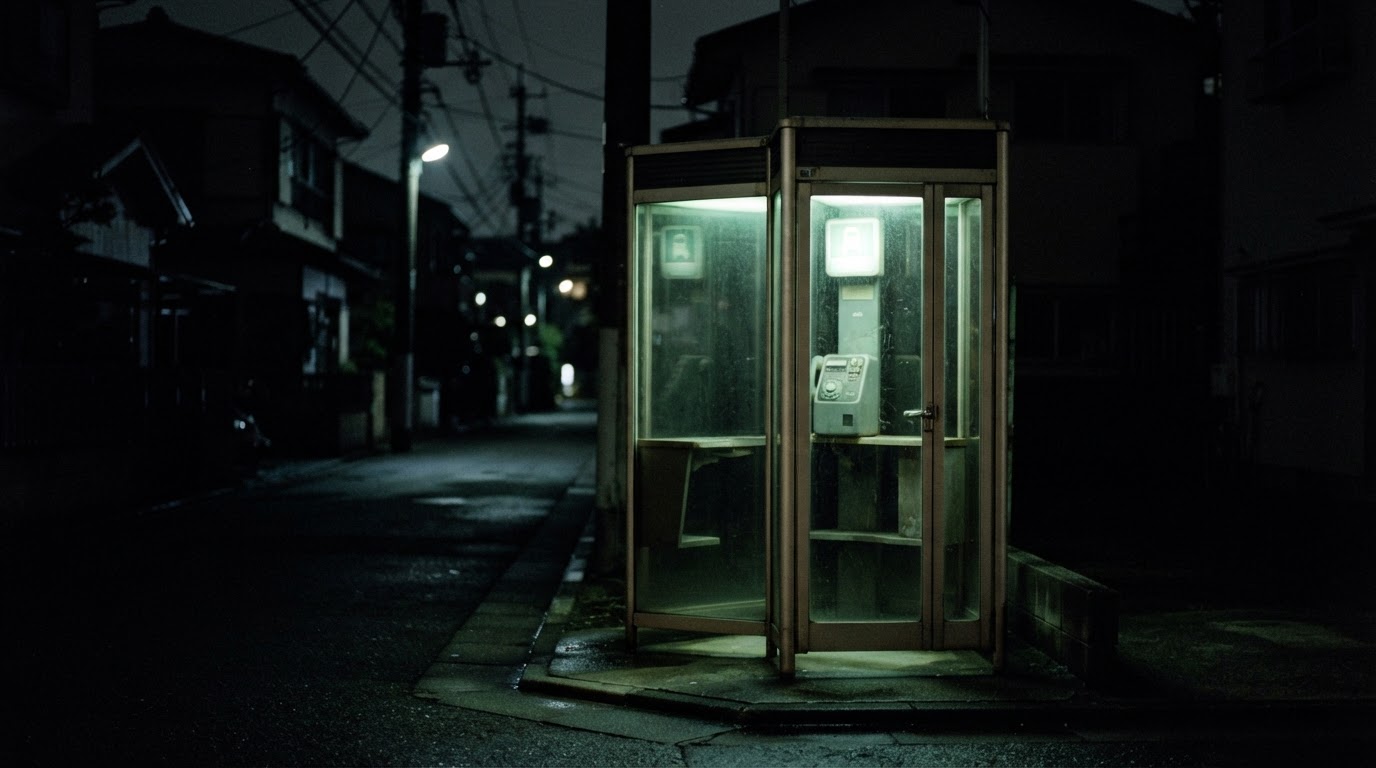
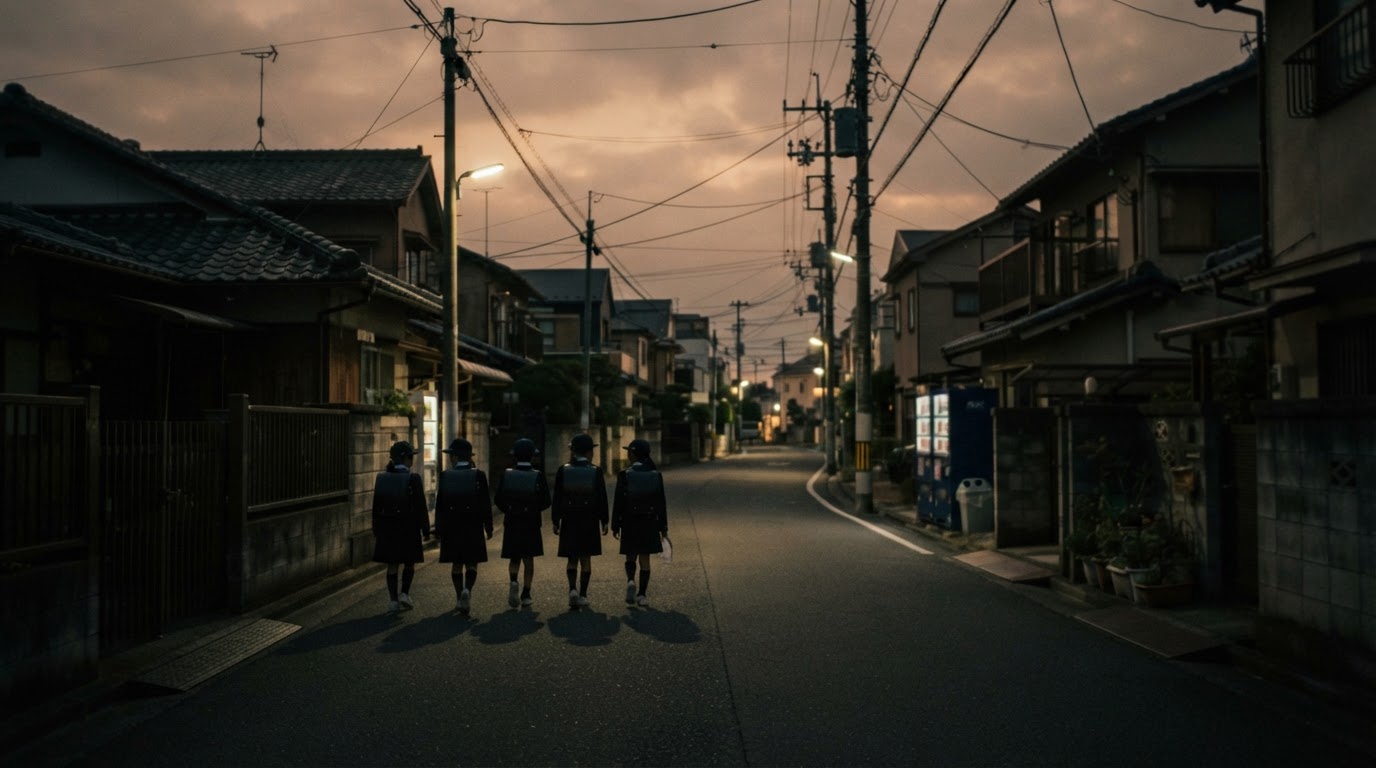
As the rumor swept the country, the fear became visible on the streets. Children genuinely refused to walk to and from school alone. In many areas, parents' associations and teachers organized group walks — adults escorting clusters of children home so that no child faced the dusk by themselves. Reports from that spring describe stepped-up patrols and a general unease that a schoolyard rumor had somehow reached into the real world.
There is one detail from 1979 that is often repeated, and worth stating carefully. Amid the height of the panic, it was reported at the time that a woman was taken in by police after being seen near a school carrying a bladed object, her face partly covered. What is fact and what is the panic feeding on itself is nearly impossible to untangle at this distance; accounts vary, and the story has been retold so many times that it has half-dissolved into the legend itself. What is certain is the atmosphere it belonged to — a season when a rumor was solid enough that grown adults changed the route of a child's ordinary day.
That an entire country rearranged the walk home over a slit-mouthed woman tells you how much weight the story had come to carry. And, as with so many panics, the coverage meant to calm it may only have fed it. Printed in newspapers, discussed by adults, she became not a child's fancy but "a real thing even the grown-ups are talking about."

Older Than 1979
Where did she come from? Here the trail splits, and honest folklorists disagree.
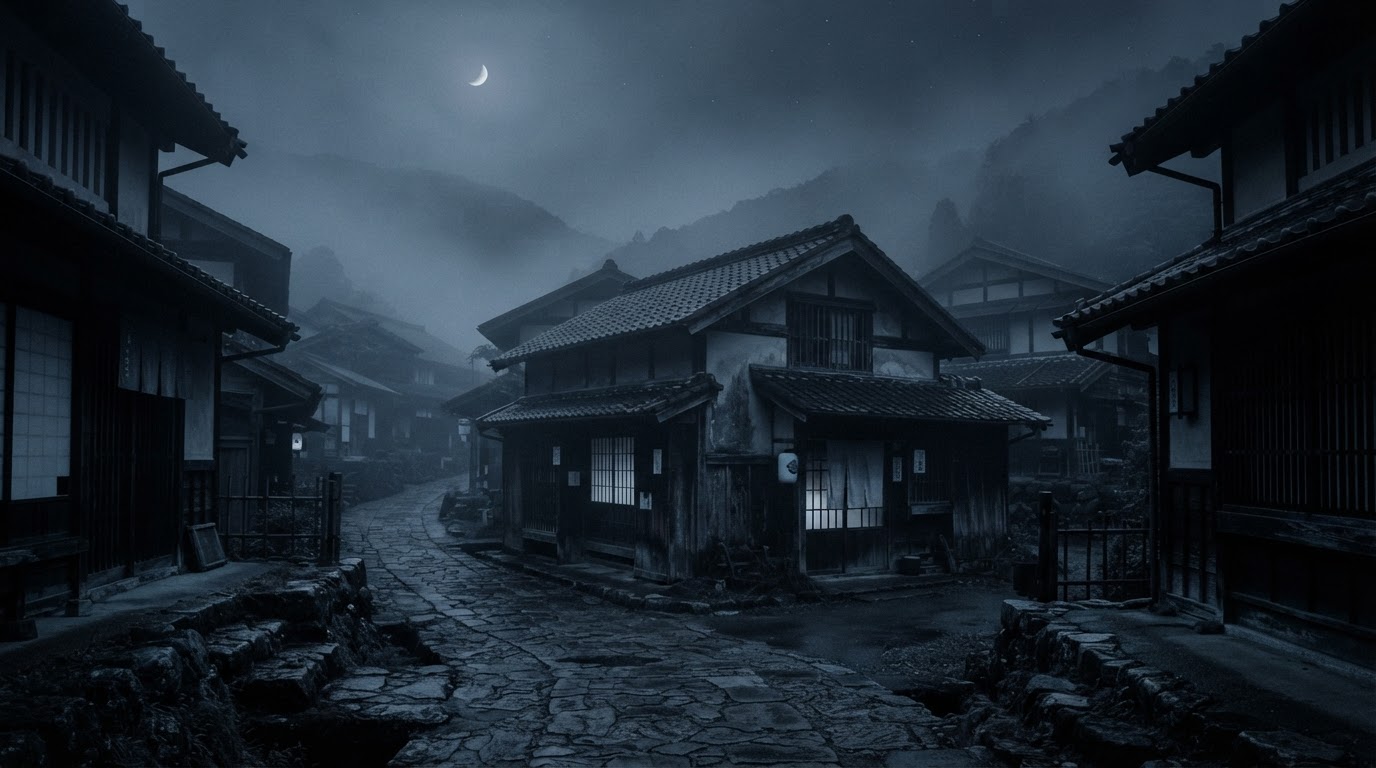
One line of thinking places her roots deep in the Edo period, the long centuries before Japan's modern age. Tales of women with ruined or monstrous mouths, of vengeful female spirits punished with disfigurement, run through old Japanese folklore, and some see the slit-mouthed woman as a modern face on a very old fear. The folklorist Matthew Meyer notes this Edo dating alongside the doubts about it.
Others push back. The Japanese literature scholar Iikura Yoshiyuki has argued that the figure as we know her — the coat, the mask, the question, the scissors — is essentially a creation of the 1970s, assembled from the anxieties of that specific moment rather than handed down intact across centuries. On this reading the Edo "ancestors" are cousins at best, and the 1979 woman is new.
Both may be true in their way. Urban legends rarely have a single author or a clean birthday. They gather older fragments, snap them into the shape of the present, and pass on as if they had always existed. The slit mouth may be ancient; the surgical mask and the pomade are unmistakably modern.
Why It Spread: The Skeptic's Reading
Set the ghost aside, and the slit-mouthed woman becomes a near-perfect specimen for the study of how rumors move.
Start with the mask. The surgical mask, worn everywhere in Japan against colds, pollen, and cold air, was the legend's genius stroke. It made the monster invisible. Any masked woman on any street could, for a heartbeat, be her — which meant the fear had a fresh trigger on every corner, renewing itself faster than reason could put it down. A ghost you can only meet in a haunted house is contained. A ghost who might be the ordinary woman ahead of you is everywhere.
Then the mechanics of transmission. The story carried its own rules — the question, the answers, the escape words — which gave children something to do with it: to debate, to test, to teach the younger ones. A legend you can act on spreads faster than one you can only hear. And the timing mattered. Late-1970s Japan carried its own quiet anxieties about safety, about strangers, about children moving through a rapidly changing urban landscape. The slit-mouthed woman gave those formless worries a face — a tall figure at the end of the alley, at the exact hour a child was walking home unwatched.
Media did the rest. Each newspaper item, each weekly-magazine feature, handed the rumor a stamp of adult seriousness. A report meant to explain the panic instead certified it. It is one of the cleaner early illustrations of a rule researchers of rumor know well: coverage does not only describe a scare, it can amplify it.

The Crossing to Korea: The Red Mask
The slit-mouthed woman did not stay in Japan.
By the early 1980s the story had crossed to Korea, where it took on a new name and a new color: bbalgan mask, the Red Mask. The essentials survived the journey — a masked woman, the impossible question about her looks, the ruined mouth beneath — but Korean children reshaped her. The mask, in the retellings, was red because it was soaked with blood, and that image stuck hard enough to become the name.
Curiously, in 1990s Korea the Red Mask spread most fiercely not among the youngest children but among high-school girls, before roaring back around 2004 among elementary schoolers. That second wave came riding a flood of cheap, mass-produced horror comics — publishers spinning the internet rumors and their own inventions into booklets to sell to frightened kids, each version adding new rules until the Red Mask had as many faces as the Kuchisake-onna ever did. She could be outrun, some said, only if you were faster than she was; she asked whether you found her pretty; she carried scissors. The same trap, the same question, wearing Korean clothes.
It is a clean example of how these stories migrate. A legend crosses a border, sheds the details that no longer fit, keeps the terror at its core, and puts down roots as if it had grown there all along. Korean children of the 2000s feared the Red Mask as their own — few knowing, or caring, that she had walked out of a Japanese dusk two decades before.

She Never Really Left
Every panic burns down, and the slit-mouthed woman's did too. By the 1980s the fever in Japan had broken; the group walks ended, the patrols wound down, the newspapers moved on. But she did not disappear so much as change medium.
She lived on in film — horror movies built around her in Japan and Korea alike — and then, inevitably, online. On the internet she found a second country: chain messages, forum threads, creepypasta retellings, short videos where a masked figure asks the old question in the dark. Each generation that thinks it invented her is really just answering Am I pretty? one more time. The tools change; the trap does not.
And that may be the truest thing about her. A rumor with no first author and no proven victim outlived the era that made it, jumped a language, survived the death of the newspapers that carried it, and walked straight into the internet. She needs no crash, no crime, no body. She needs only a masked stranger, a failing light, and a child alone on the way home.
The Answer That Was Never Safe
Ask a Japanese adult who was small in 1979, or a Korean one who was small in 2004, and something crosses the face at the name. Not quite belief. Not quite laughter. The memory of a walk home when the wrong answer to a stranger's question felt like it might genuinely cost you your life.
What I could never close, cross-referencing the Japanese accounts against the Korean ones from 2004, was the word pomade. Every other rule mutated on the crossing — the mask turned red, the scissors came and went, the escape phrases were traded out wholesale. The pomade did not travel. It stayed behind in Japan, attached to an operating table nobody can produce, in a story about a surgery nobody performed. I have a folder of variants two decades wide and that one detail sits in all the early ones like a splinter under the skin of the legend, too specific to be invented and too senseless to be true.
No one was ever taken by the slit-mouthed woman. There was no confirmed victim, no monster behind the mask, no wound that could not be explained. She was fear without a body — and yet, for a season, whole cities walked their children home because of her.
Perhaps that is what these stories are for: to lodge a thing that never existed more deeply in memory than most things that did. Somewhere out there, at the end of an alley in the last of the light, a tall woman in a coat is still asking the question that has no safe answer. Am I pretty? A generation learned there was no right way to reply. And so she is still waiting — masked, patient, just out of the streetlight — for someone to try.

---
The images and video in this article are AI-generated works produced to convey the mood of the story, and are not photographs of any actual person or event.



Comments
No comments yet — leave the first one.