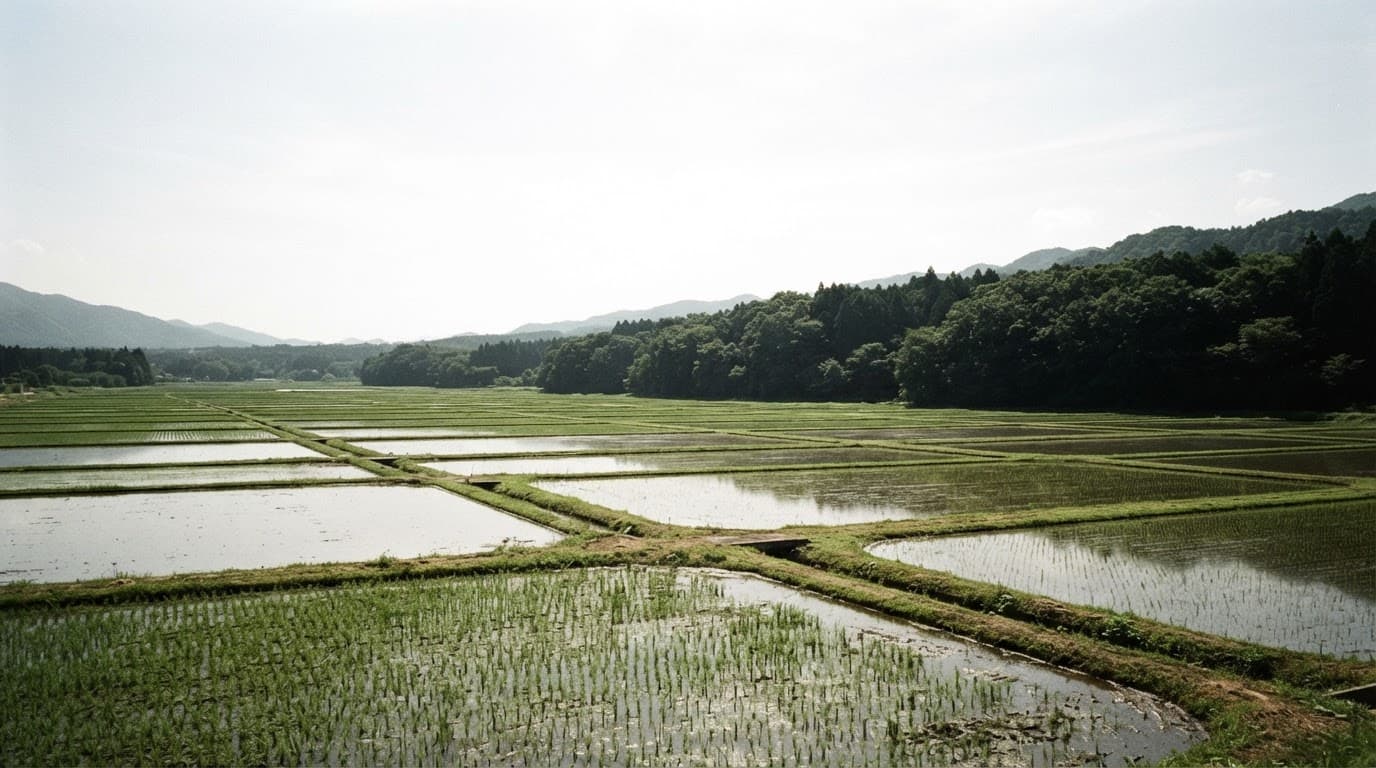
There is no wind. That is the first thing wrong.
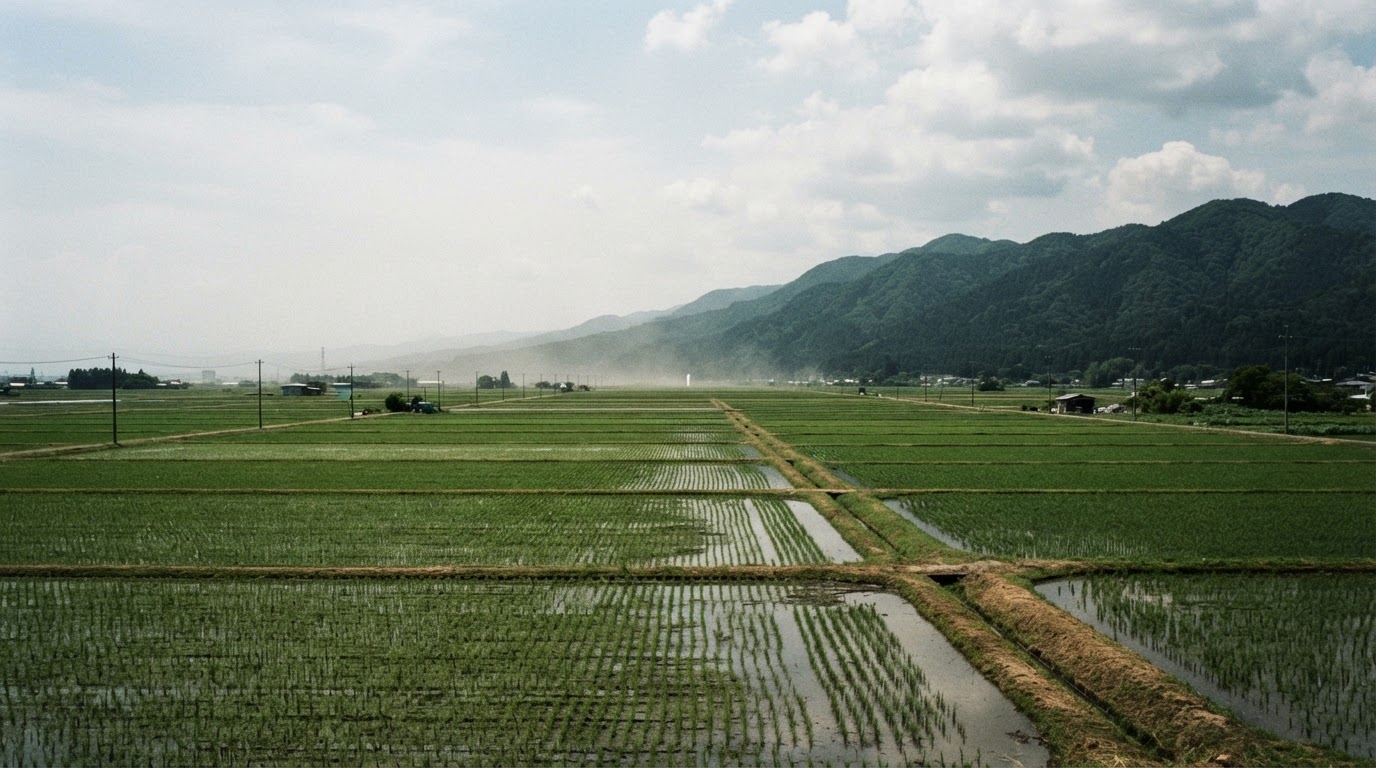
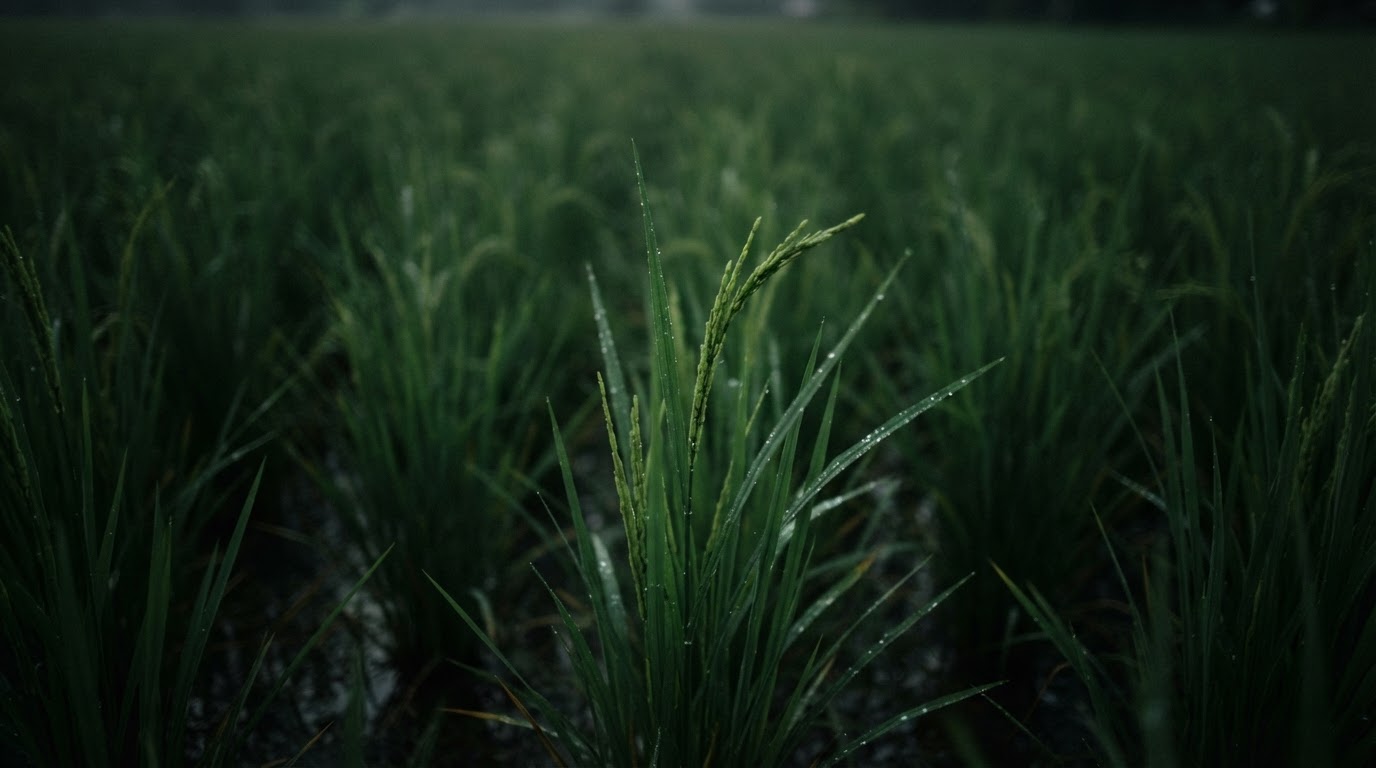
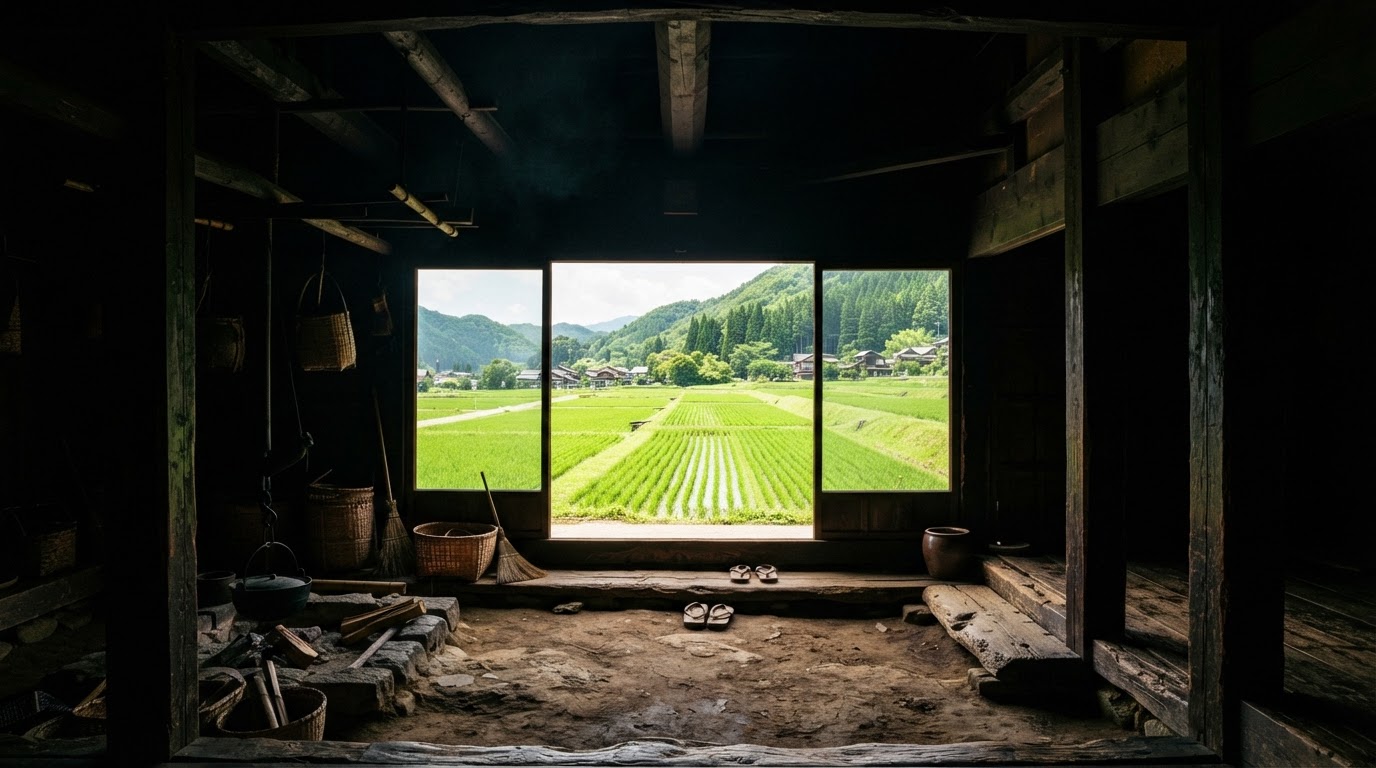
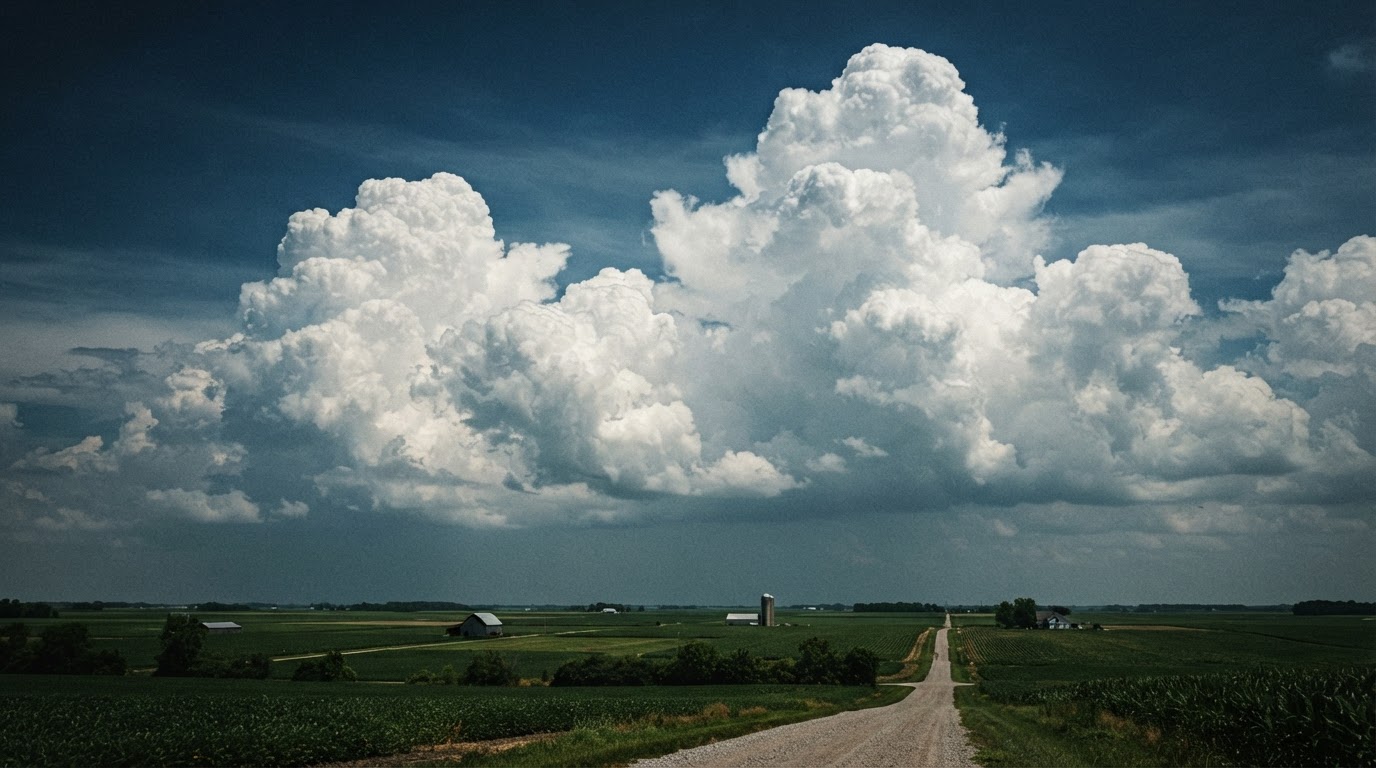
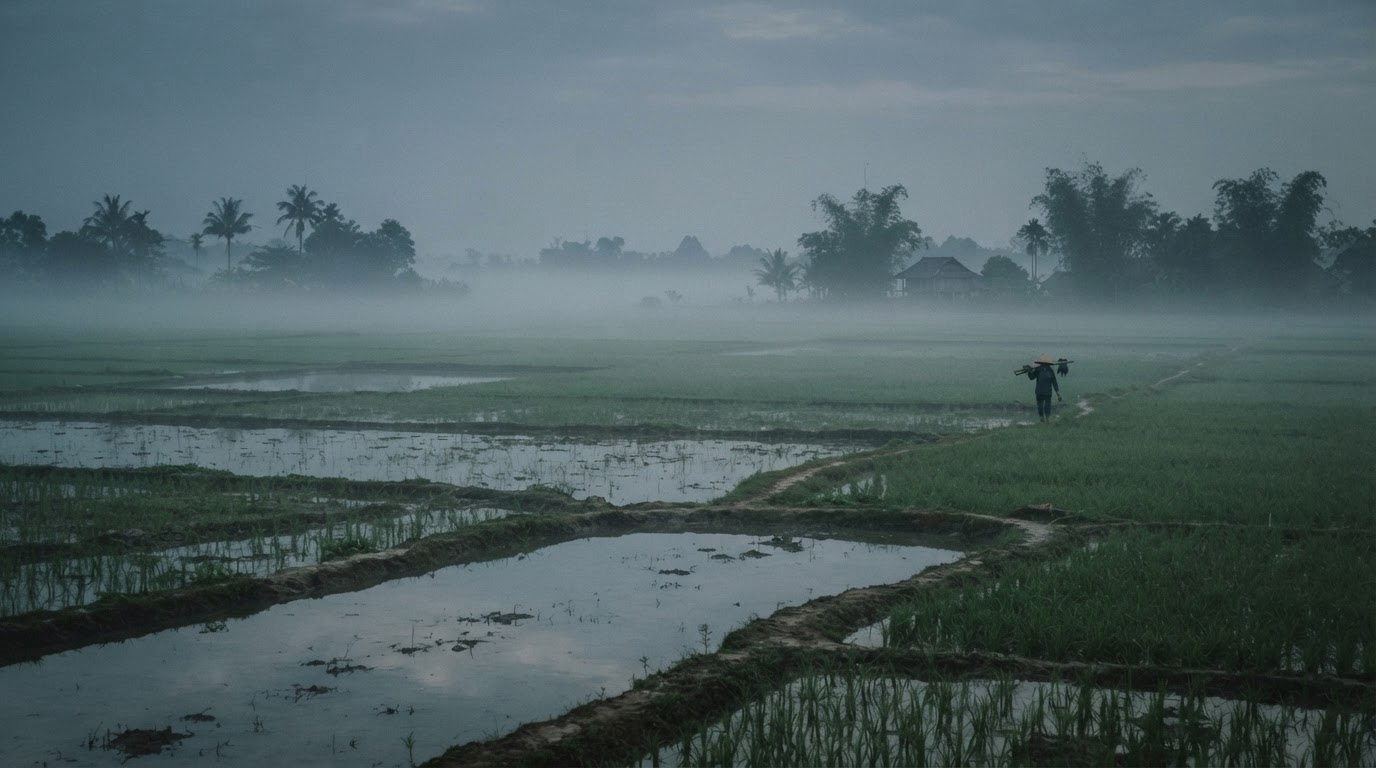
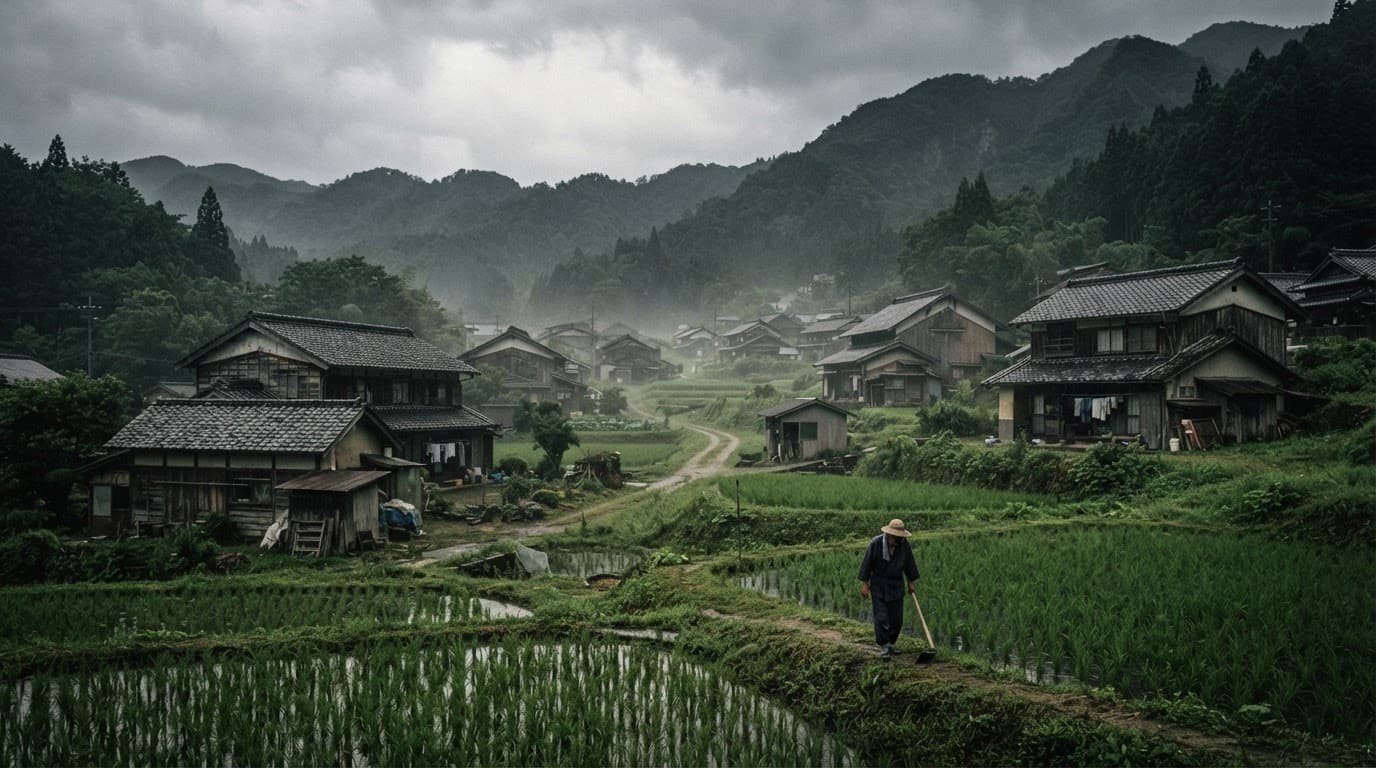
It is the hottest hour of a country afternoon, the air standing still and thick over the rice paddies, the whole valley pinned flat under a white summer sky. The green stretches out to the tree line without a single stalk moving. And out there, far across the fields — so far you cannot say how far — something tall and pale is standing. Thin. Impossibly thin, like a strip of white cloth hung in the air. And it is moving. Not swaying, because nothing else is swaying. It bends, it folds, it loops and coils in on itself in slow, boneless waves. Kune kune. Writhe, writhe. You squint. You lift your hand to shade your eyes. You want, more than anything, to see it properly.
That wanting is the danger. That is the whole legend.
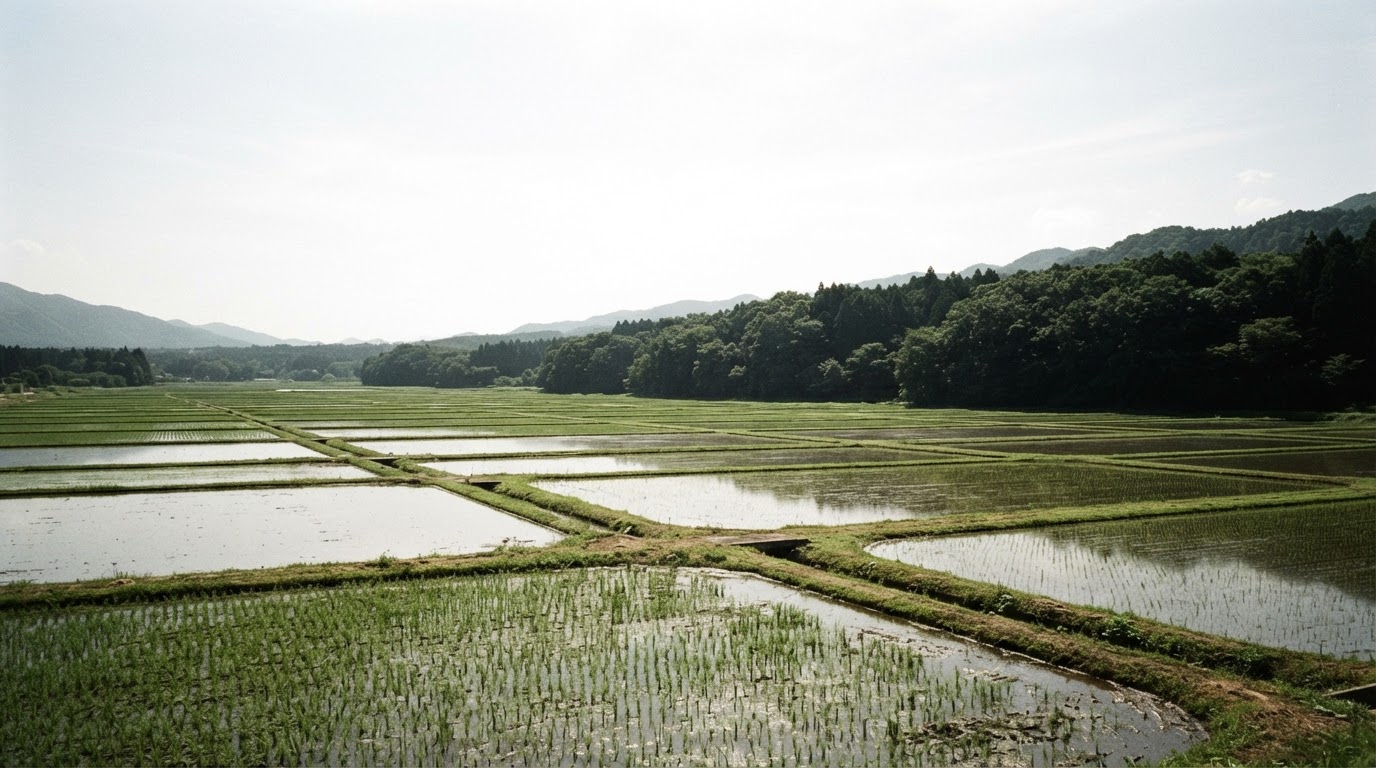
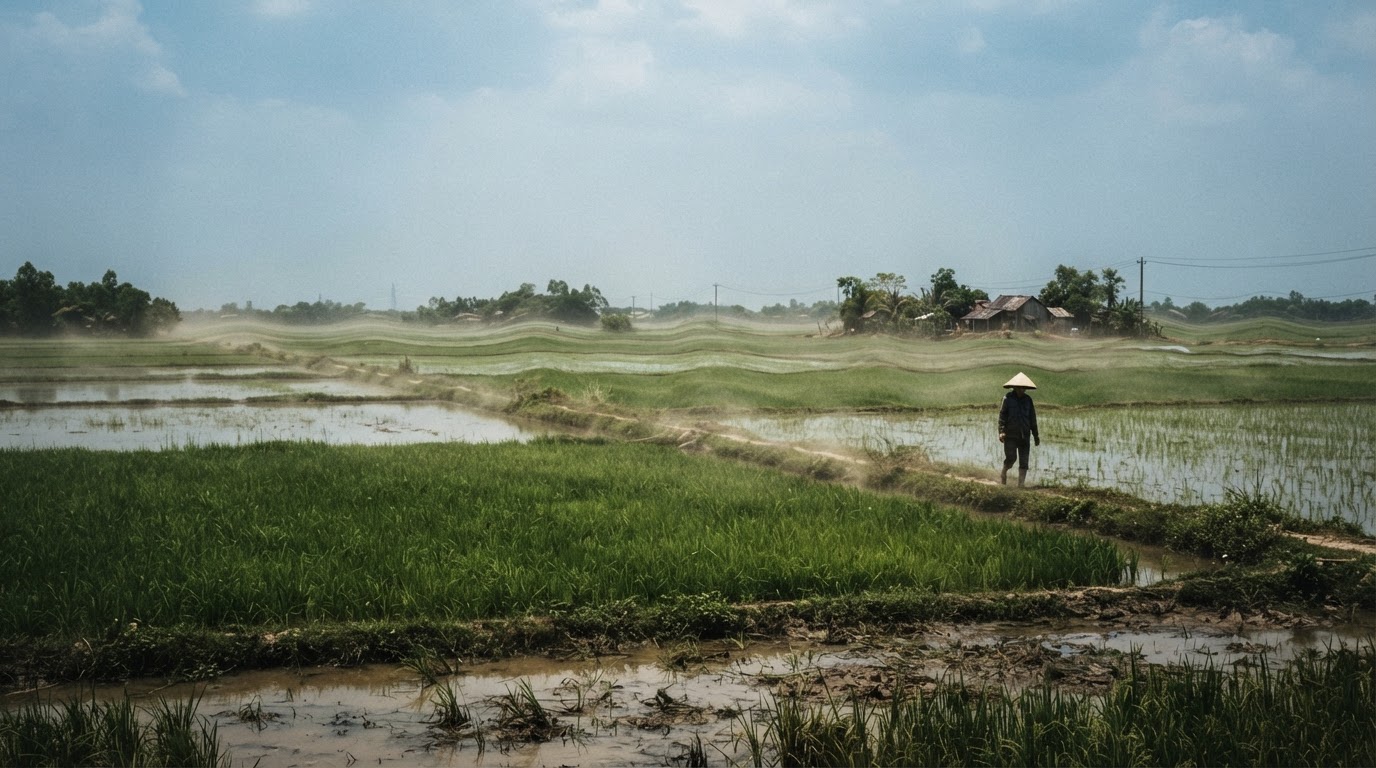
Assembling this entry did something to me that assembling the others did not. Tracing the 2003 board posts backward through mirrors and copy-pastes, I was hunting for the version that still carried the fiction tag — I wanted to find the moment the disclaimer fell off. I never found it. What I found instead was myself, three hours in, enlarging low-quality screenshots of a text thread about a thing you are not supposed to enlarge, and I understood that I had spent the evening being the older brother with the binoculars. That is the only case in this archive where researching it and falling for it are the same action.
The Rule Before the Story
Most monsters are frightening because of what they do to you. Kunekune is frightening because of what you do to yourself. It does not chase. It does not approach. It does not, in most tellings, ever come any closer than the far side of a field. It simply stands where it stands, wriggling in the heat, and it lets you decide how much you need to know.
The rule that travels with it is short enough to carry in a single breath: at a distance, it is harmless. Look too closely, and you break. Not "it will hurt you." You will break — your mind, your speech, the ordinary machinery of a self — the moment you understand what the thing actually is. Comprehension is the injury. To grasp Kunekune is to be undone by it.
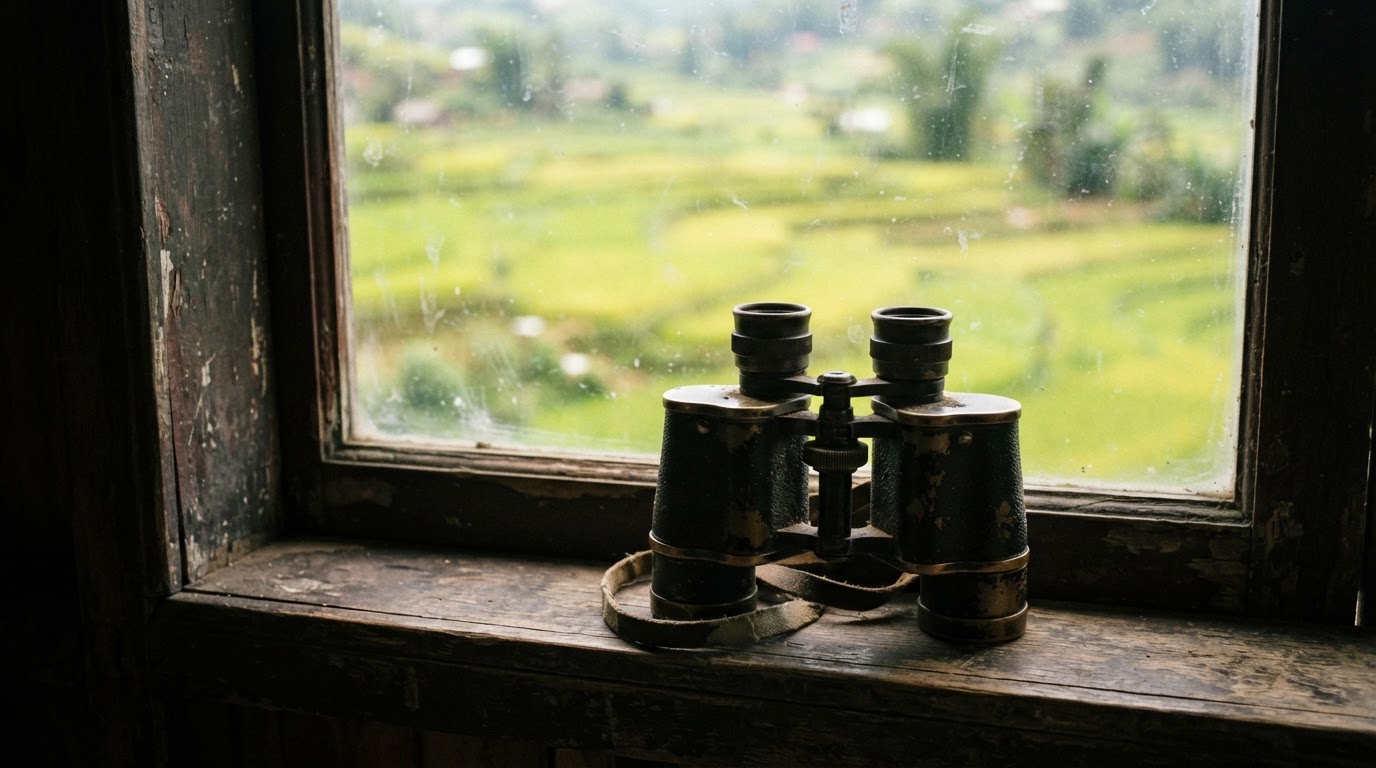
This is why the legend's most famous prop is not a weapon or a charm but a pair of binoculars. The distance the fields give you is protection. The binoculars are the temptation to throw that protection away. And in the story that made Kunekune famous, one boy could not resist.
The Two Brothers at the Grandparents' House
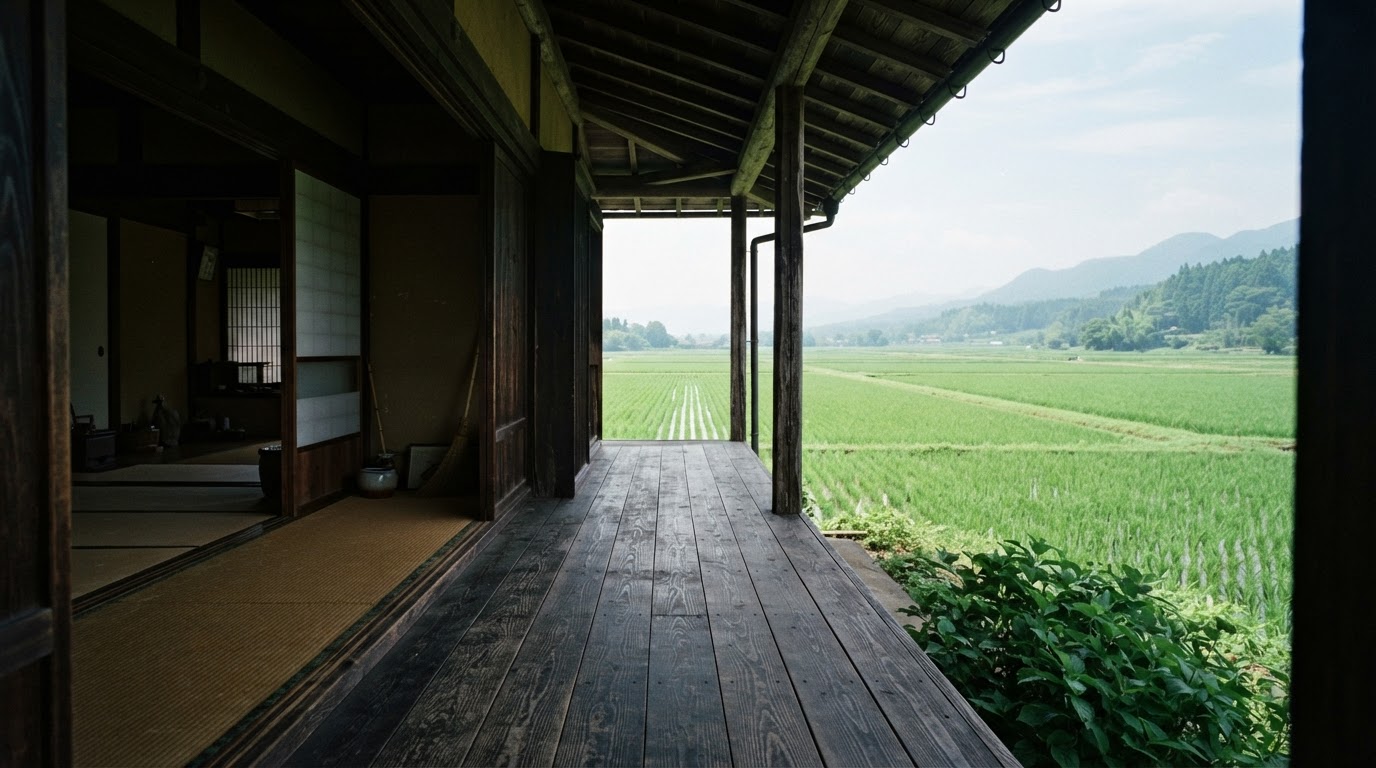
The version nearly everyone means when they say "Kunekune" appeared on the Japanese internet in the early 2000s, told in the first person by a boy remembering a summer at his grandparents' farmhouse in the countryside. It reads less like a ghost story than like a memory the narrator would give anything to un-remember.
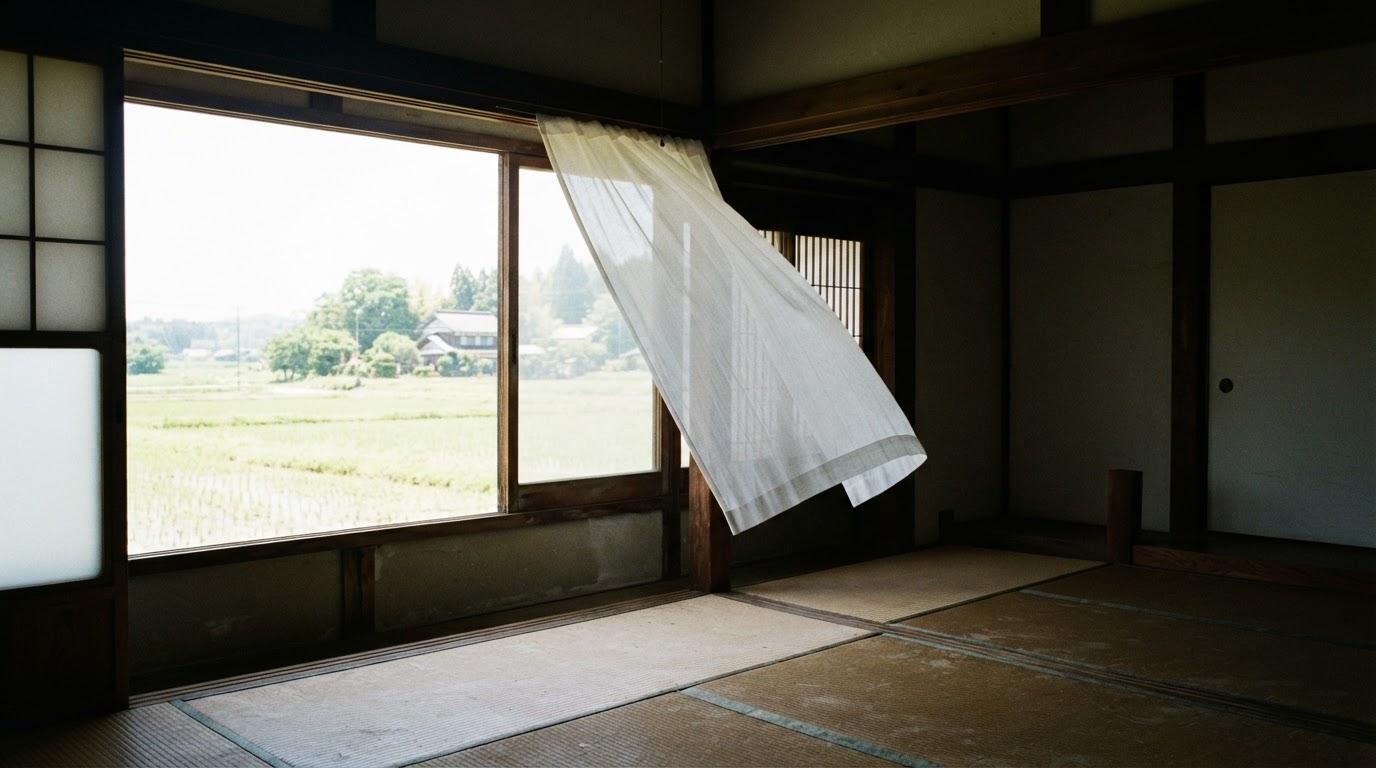
Two brothers are staying with their grandparents over the summer holiday. The days are the endless, sun-bleached kind that only childhood summers are — cicadas roaring in the trees, the heat lying heavy on the paddies, nothing to do and all day to do it in. The older brother is the steadier of the two; the younger is the one telling the story. From the farmhouse they can see the rice fields spreading out toward the hills.
And out in the fields, one afternoon, there is something white.
At first they take it for a scrap of cloth, or a plastic bag, or a scarecrow's rag caught on a pole. But it moves wrong. It bends and writhes with no wind to bend it, folding in slow curves that no cloth and no scarecrow could make. The younger boy cannot make it out at that distance and says so. The older brother goes to fetch their grandfather's binoculars.
What happens next is the hinge of the whole legend, and the tellings are careful about it. The older brother raises the binoculars. He looks. He holds the look for a long moment — long enough to see, long enough to understand. And when he lowers them, he is not the same. Something behind his face has changed. He does not scream, does not run. He goes quiet in a way that is far worse than either.
The younger boy, frightened, asks what it was — what did you see, what is it. And his brother will not tell him. In the most-quoted version he answers only, in a voice that no longer sounds quite like his own, that it is better not to know. Better not to understand. He will not describe the thing, will not name it, will not let his little brother make the same mistake he has already made. The kindest thing the ruined boy can still do is refuse to pass the ruin along.
The grandfather, when he understands what has happened, does not treat it as a childish fright. He treats it as something known — an old, quiet dread that belongs to these fields and this heat and this white shape that visits them. The older brother is taken away, and in the versions that follow him further, he never fully returns to himself. He is handled by the legend not as a figure to be mocked but as its casualty: the one who looked, who understood, and who paid the price the rule always promised. The tragedy is the whole point. The distance was mercy, and he gave it up.
What It Looks Like — As Far As Anyone Will Say
Describing Kunekune is a problem the legend builds on purpose, because to describe it clearly would be to look at it clearly, and that is precisely what you are not supposed to do. So its portrait is always assembled from the edges of vision, from the glimpse rather than the stare.
It is white, most often — a flat, papery, uniform white, with no features anyone reports: no face, no eyes, no seam where a face would go. It is very tall and very thin, less a body than a line drawn upright in the air, a slender pale column standing where the rice meets the sky. And it moves in the manner that gave it its name. Kunekune is a Japanese word for a wriggling, winding, snaking motion — the way a road bends through mountains, the way a worm folds, the way a ribbon writhes when you shake one end. The thing in the field moves like that. Endlessly, softly, with no wind to move it and no muscles anyone can see, it bends and loops and coils in on itself, patient as heat.
A darker strand of the tradition speaks of a black kunekune. Where the white one is said to drive the mind to collapse, the black one, in these tellings, is worse: to look closely at the black kunekune is not to lose your mind but to lose your life. Whether black and white are two beings, two moods of one being, or simply the same dread wearing two colors, the legend never settles — and its refusal to settle is, as always, the source of its power.
The Theories: What the Thing in the Field Might Really Be
Part of what makes Kunekune endure is that it invites explanation and then quietly outlasts every explanation offered. Each theory is reasonable. None of them closes the door. And the more sensible the explanation, the more the story seems to smile and wait.
The heat-haze theory
The most rational reading, and the most quietly unsettling, is that Kunekune is a mirage. On a windless, blazing summer day, the air directly above sun-heated ground becomes a shifting lens. Layers of hot and cooler air bend light unevenly, and distant objects seen through them appear to ripple, stretch, waver, and swim. This is kagerou, the heat shimmer — the same effect that lays false pools of water across a hot road and makes the far end of a runway melt and tremble. A pale marker in a far paddy, a strip of vinyl tape strung to scare birds, a length of agricultural sheeting, even a distant scarecrow — filtered through a column of rising heat, any of these could seem to bend and writhe with a slow, boneless life it does not have.
Give this theory its full weight, because it explains almost everything — and then notice the one thing it explains too well. If Kunekune is only heat haze, then the rule makes perfect, terrible sense. Seen from a distance, through shimmering air, the shape is genuinely ambiguous, and ambiguity is safe. Raise the binoculars, cut through the haze, resolve the blur into whatever mundane object is actually out there — and the mystery should die. But in the story it does not die. The boy who resolves the image does not relax; he breaks. Which means the horror was never in the thing at all. It was in the resolving. The haze theory doesn't dissolve Kunekune. It relocates it — out of the field, and into the act of looking.
The scarecrow theory
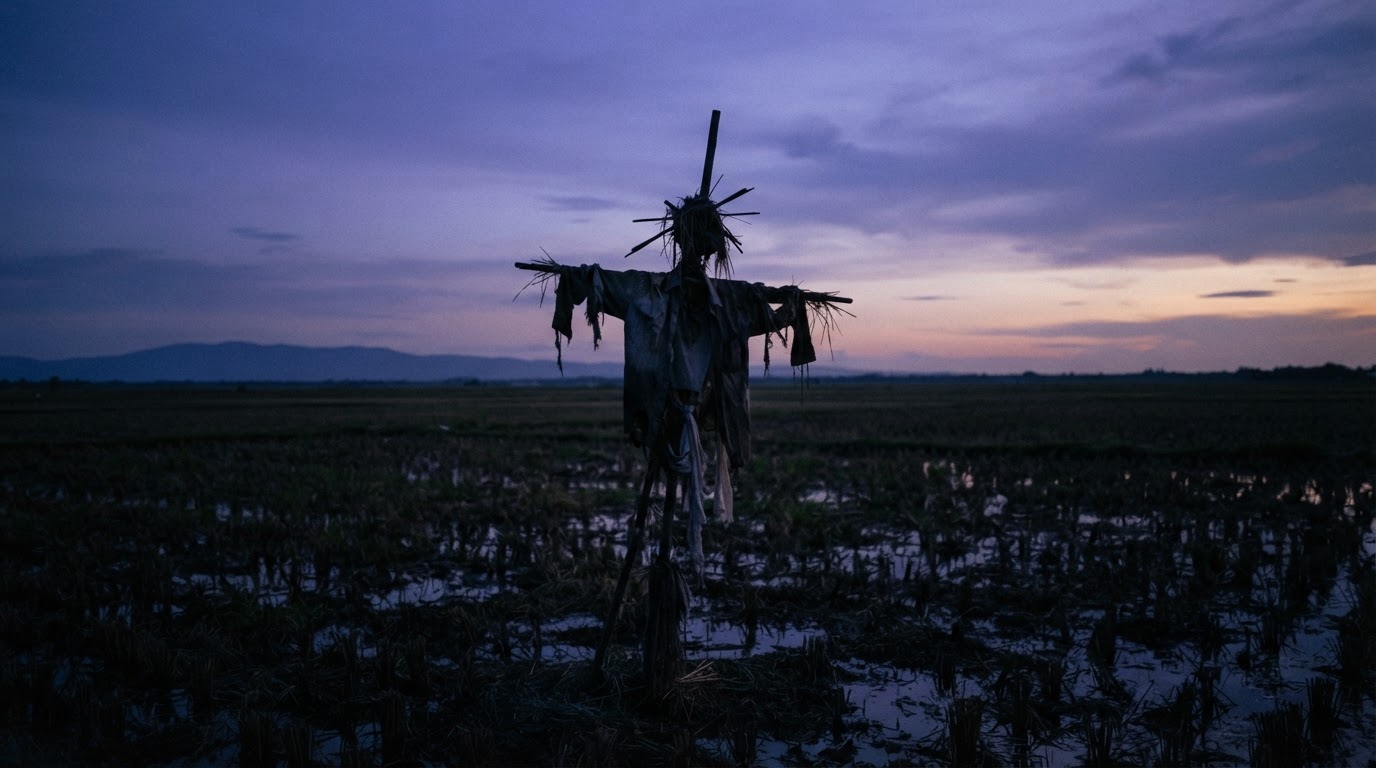
Closely related: that Kunekune is nothing but a scarecrow, or a bird-scaring streamer, or some other pale agricultural object left standing in the rice. Japanese paddies are full of pale, roughly human shapes put there to frighten off animals — and there is an old, uneasy poetry in that. The scarecrow is a false person, a body made of straw and cloth, standing in the field precisely to be seen from a distance and mistaken for something watchful. Kunekune, in this reading, is a scarecrow that the mind, straining across too much bright distance, has quietly finished into a living thing.
The older dread
Folklorists reach further back. Rice culture in Japan is threaded with unseen presences — the paddy is a place of small gods and thin snake-spirits and the dead who tend the harvest. A tall white writhing form standing in the summer rice slots neatly into that far older imagination: the field-spirit glimpsed, the thing that belongs to the land and does not belong to you, the visitor you are not meant to look at directly. Kunekune may be new to the internet, but the shape it fills — the thing in the field you must not stare at — is very, very old.
And there is the simplest reading of all: sunstroke. A child, out too long in killing heat, the head swimming, the eyes tricked, the mind reaching for a story to explain a shimmer it cannot resolve. That the danger of Kunekune and the danger of a summer paddy at noon are, physiologically, nearly the same danger is a coincidence the legend wears like a smile.
Born on the Board: Kunekune and the Golden Age of 2ch Net-Kaidan
Kunekune did not come down through generations of grandmothers. It came up out of a text box, on the message boards that were, in the early 2000s, the anonymous nervous system of the Japanese internet.
The era is worth setting properly, because it produced a whole small canon and Kunekune is one of its crown jewels. On 2channel — 2ch, the vast anonymous forum where nobody posted under a real name — an entire native genre of horror flourished: net-kaidan, internet ghost stories, posted live and first-person by users who might be inventing every word or might, just possibly, be telling the truth. Readers couldn't tell, because there was no author to look up, no profile, no face — only text arriving one line at a time from a stranger in the dark. That anonymity was the engine. A named writer you can dismiss. A nameless voice describing a white thing in a field it swears it saw is much harder to wave away.
This is the same soil, and roughly the same season, that gave the world Japan's other famous board-born terrors. Hachishakusama, the eight-foot woman in white who fixes on a child and cannot be escaped, is a net-kaidan cousin of Kunekune — our full account of her is here. So is Kotoribako, the "child-box," the most cursed object the boards ever produced — we've written about it too. And Kisaragi Station, the vanishing narrated in real time from a train that would not stop, came from the very same world. Kunekune belongs in that company: a story with no confirmed author, no first witness, no origin you can walk back to, which grew on its own from one anonymous post into something a whole internet now half-believes.
Fittingly, its birth is itself uncertain. The best accounts trace the modern Kunekune to horror boards around 2003, possibly seeded by an earlier post a few years before, and — this is the detail that matters most — originally tagged, quietly, as fiction. Somewhere in the endless copying and re-posting, that tag fell off. The story kept traveling; the disclaimer did not. What began as an admitted invention arrived, a few thousand re-tellings later, as a thing that happened to someone's brother, one real summer, in a real field. That is precisely how a piece of writing becomes a legend: not by convincing anyone it is true, but by outliving the moment when anyone remembered to say it wasn't.
The Forbidden Gaze: Why "Don't Look Too Closely" Reaches So Deep
Kunekune's central rule — you may look, but not too closely; you may know it is there, but not what it is — does not feel like a message-board invention when you sit with it. It feels ancient. And that is because it is. The taboo on the forbidden look is one of the oldest and most widely shared devices in human storytelling, and Kunekune is only its newest wearer.
Turn to the West and it is everywhere. Lot's wife, fleeing the burning city, is given one rule — do not look back — and looks back, and is turned to a pillar of salt for it. Orpheus climbs up out of the underworld with his wife behind him and one condition, not to look at her until they reach the light, and turns to look one step too soon, and loses her forever. Perseus cannot look at Medusa directly or her gaze will turn him to stone, and so must fight her sidelong, through the reflection in a polished shield — the exact posture Kunekune demands, safety in the indirect glance, ruin in the direct one. Psyche is forbidden to look upon the face of her sleeping husband and cannot bear not to. Bluebeard's wife is given every key and forbidden one door. In tale after tale the structure is identical: here is a threshold; you may live comfortably right up against it; the one thing you may not do is cross.
Why does this shape recur across cultures that never met? Because it names something true about being a mind. Curiosity is not a small appetite; it is close to the root of what we are, the engine that pulls a species out over every horizon it can see. And a story that forbids a look weaponizes that engine against us. It does not have to invent a threat — it only has to draw a line and trust us to cross it, because we always, always want to know. Kunekune understood this before its author could have named it. The monster in the field barely has to be a monster. The real trap is already inside the watcher: the certainty that you would be fine, that you'd only take one quick look, that understanding couldn't possibly cost as much as the rule says. The older brother thought that too. So do you. That is the point of him.
Modern Appearances
For a legend that lives on refusing to be seen clearly, Kunekune has traveled remarkably far. It became a fixture of Japanese net-horror culture — endlessly retold, adapted into short films and comics, absorbed into games, and exported into the English-speaking creepypasta world, where it sits alongside the tall pale figures that internet horror keeps producing, as if the collective imagination cannot stop generating thin white things that watch from the edge of the frame.
Its appeal to modern eyes is easy to understand. In an age of high-resolution everything, of zoom and enhance and the endless invitation to look closer, Kunekune is a story built entirely against the impulse. Every other horror wants to show you the monster in the last reel. Kunekune's whole art is to keep the monster at the far side of a bright field forever, and to make your own longing to close that distance the thing you should fear. It is horror perfectly tuned to a culture that has forgotten how not to look.
And every so often, in the real world, someone driving past flat farmland on a scorching afternoon sees a pale shape standing far out in the rice, wavering in the risen heat — and feels, before reason catches up, the small cold prickle of not wanting to look any closer. That flinch is the legend working. It doesn't need to be true to reach you. It only needs a hot day, a distant white something, and the very human certainty that one closer look couldn't hurt.

On Distance and Knowing
There is a reason Kunekune stays with people long after the fright of it fades, and it is not the white shape in the field. It is the rule.
Almost everything we are taught tells us that knowing is good — that to look closer, to resolve the blur, to understand the thing that frightens us, is how we master it and set ourselves free. Kunekune says something quieter and stranger: that some distances are not obstacles but mercies. That there are things whose only harmlessness lies in your not understanding them. That the blur, sometimes, is the safety, and to sharpen it is to be hurt by it.
The older brother did what we would all be tempted to do. He had a shape he couldn't quite make out and a pair of binoculars in reach, and the small unbearable itch of not-knowing, and he did the natural thing, the human thing, the thing curiosity was built to make us do. He closed the distance. And whatever he then understood, he spent what was left of himself trying to keep his little brother from understanding too. Better not to know. It is almost the only thing he says. It may be the truest thing in the legend.
The detail I cannot file properly is the black one. Every account of the white kunekune agrees on what it costs you, and the tellings are almost tender about the ruined boy — he is a casualty, he is grieved over, he is given a last kind sentence to say. The black kunekune has no such story attached. It has no brothers, no farmhouse, no summer. It appears in the record as a bare line, mentioned and then dropped, and in twenty-odd variants I have set side by side, nobody has ever written down what happened to the person who looked at it. There is no witness because the rule does not permit one.
So the story leaves you with a white shape wriggling at the far edge of a green field on a windless day, and a choice you make every time you retell it. You can stay where you are, in the safe blur, and let the thing be a distant, harmless mystery. Or you can lift the glass and finally see. Kunekune only asks the question. It trusts what it knows about you to answer it — that you, like the boy, like all of us, will not be able to leave the distance alone.
---
The images and video in this article are AI-generated works produced to convey the mood of the story, and are not photographs of any actual person or event.
Comments
No comments yet — leave the first one.