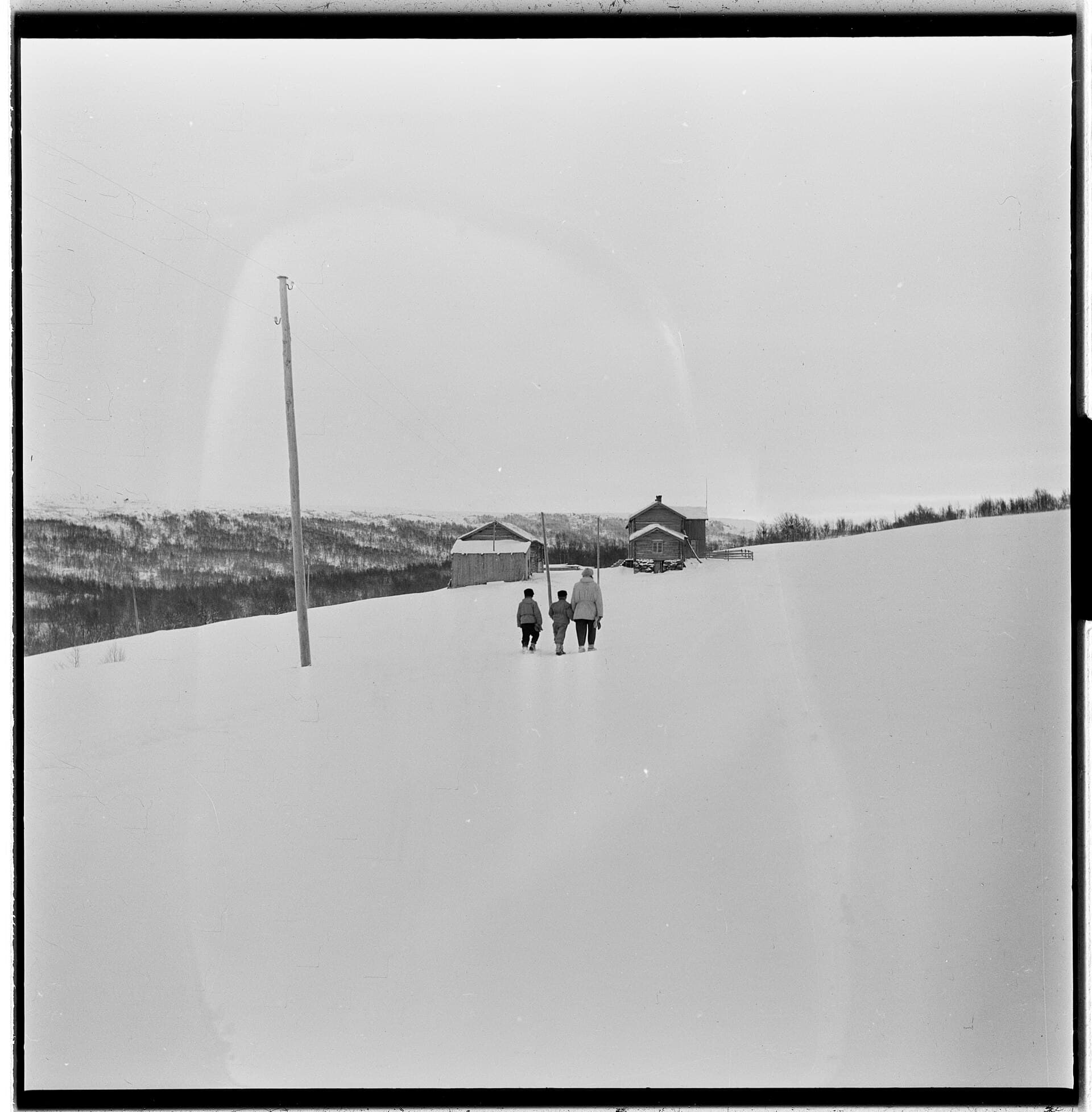
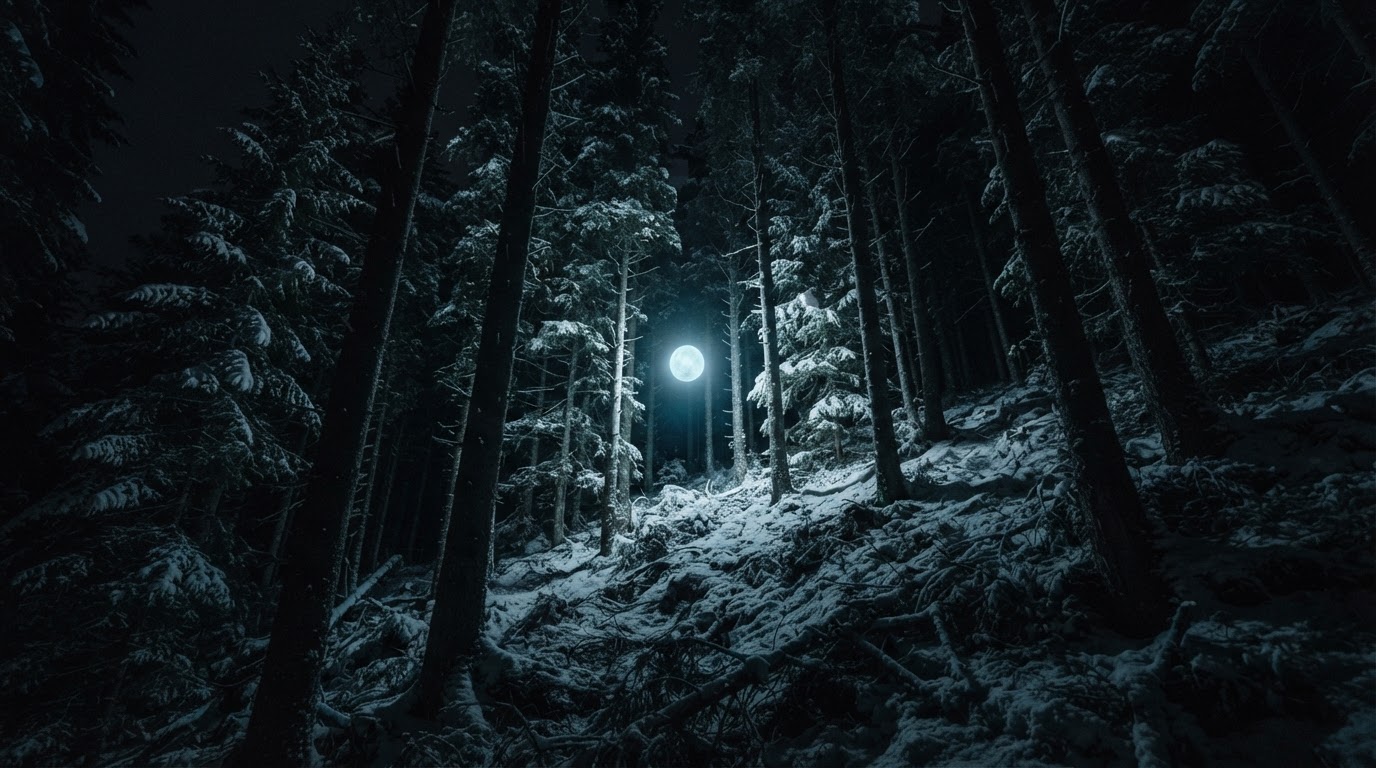
Deep in the mountains of central Norway lies a long, thinly populated valley called Hessdalen. A handful of farms, dark spruce forest, snow for much of the year, and almost no one around — an ordinary, quiet place, at least by day. But for the better part of a century, something else has appeared over this valley at night. Bright lights, sometimes white, sometimes yellow or red, sometimes hanging motionless above the ground and sometimes racing across the sky, have been seen here again and again. What sets Hessdalen apart from every other tale of strange lights is this: scientists took it seriously. They came with cameras and radar and spectrometers, they built a permanent automated station to watch the valley, and they caught the lights, over and over, on real instruments. And still, after more than forty years, no one can say for certain what they are. This is the story of the Hessdalen Lights — a genuine, ongoing scientific mystery.
Nearly everything else in this archive suffers from the same defect: no instruments, no record, only people saying what they saw. Hessdalen is the file I keep for the opposite reason. There has been a station in that valley photographing the sky automatically since 1998, running whether anyone is watching or not, and the accumulated result of all that patient machinery is that the question got harder. I have gone back over the project's published material several times now expecting to find the answer buried in a footnote. It is not there.
A Valley That Lights Up at Night
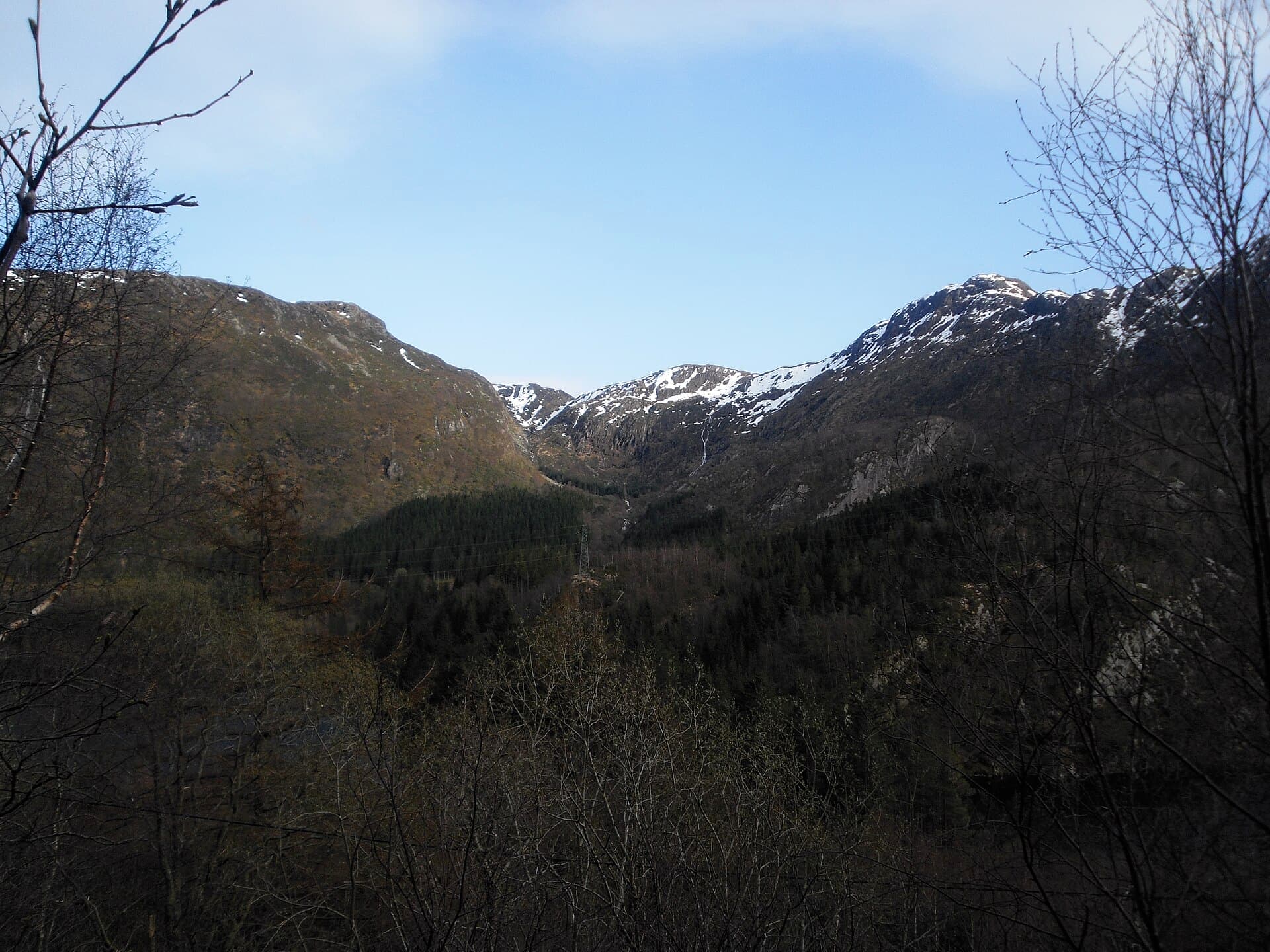
Hessdalen sits in the municipality of Holtålen, in the county of Trøndelag, a remote highland valley roughly 12 kilometres long with only a few hundred residents. Reports of unusual lights here go back a long way — locals speak of strange glows seen in the valley as far back as the 1930s and 40s. For most of that time the sightings were just that: quiet local stories, passed between neighbours, never really leaving the valley.
That changed dramatically at the end of 1981. From around December of that year, the lights began to appear with startling frequency — by some accounts as often as fifteen to twenty times a week. Residents watched glowing shapes drift down the valley, hover above rooftops and fields, and sometimes shoot away at speed. The lights came in different forms: brilliant white or yellow-white spheres, smaller red flashes, and larger formations that seemed to hang in the air for many minutes at a time. The surge lasted, at its most intense, through roughly 1984, and it was frequent and public enough that it could no longer be dismissed as the imagination of one or two people. Something was happening over Hessdalen, and word of it began to spread beyond the valley.
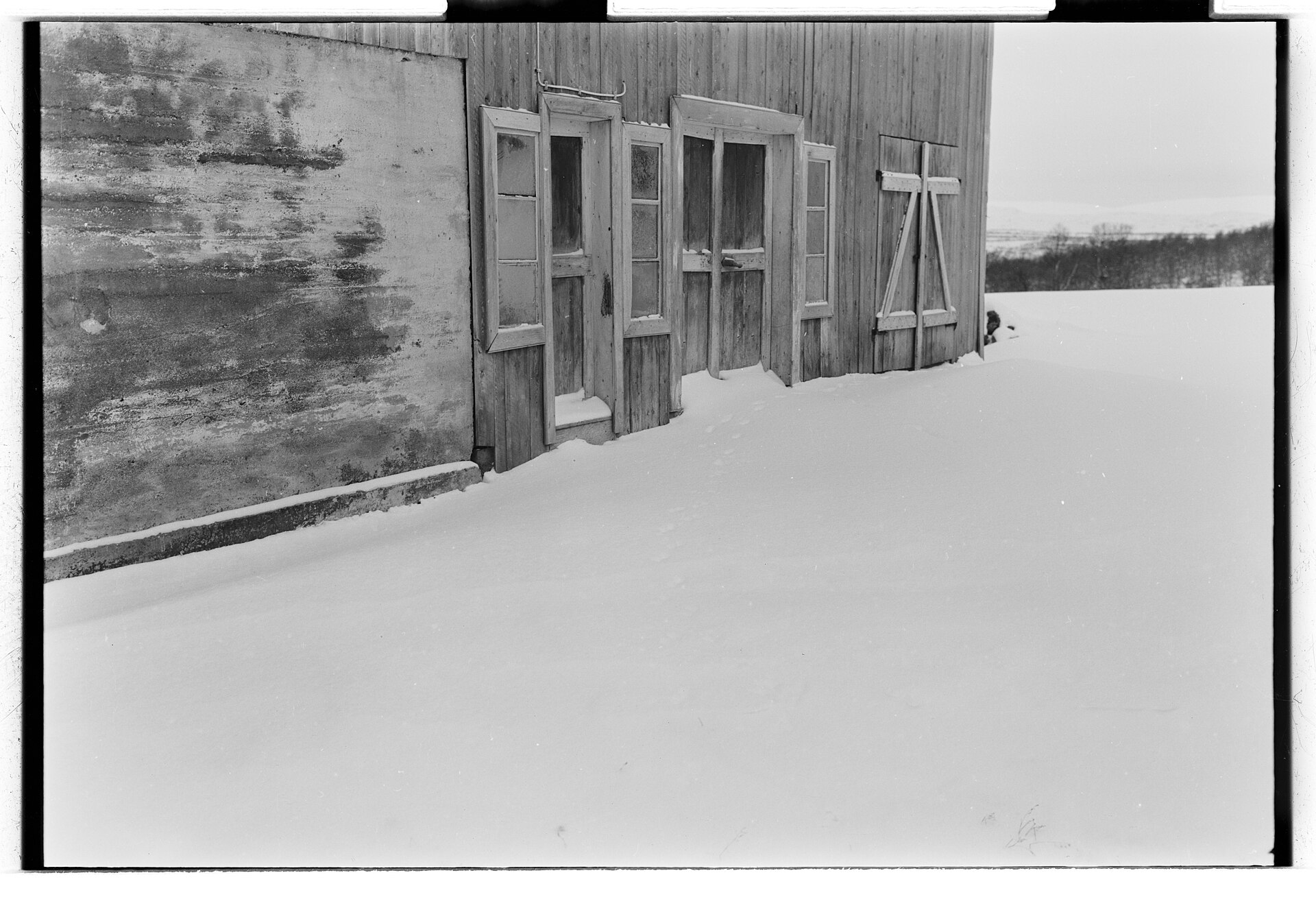
Photo: Wikimedia Commons, CC BY-SA 4.0
Scientists Come to Watch
What happened next is what makes Hessdalen so unusual. Rather than leaving the lights to rumour and folklore, a group of scientists and researchers decided to go and measure them. In 1983 they launched a field investigation known as Project Hessdalen, led on the Norwegian side by researchers including Erling Strand, and set up instruments in the valley to try to record the phenomenon directly.
They did not go in with arms folded in scepticism, nor with wide-eyed belief. They went in with equipment. Over a winter field campaign they deployed cameras, a radar unit, a seismograph, magnetometers, and a spectrum analyser, and stationed observers in the valley through the cold, dark nights. And crucially, they got results. During the campaign the team logged a substantial number of light observations, captured images of the lights on film, and on several occasions recorded radar echoes and magnetic disturbances that appeared to coincide with sightings. This was no longer anecdote. There were now measurements — data points gathered by instruments, describing something real that was moving through the valley air.
The Automated Station
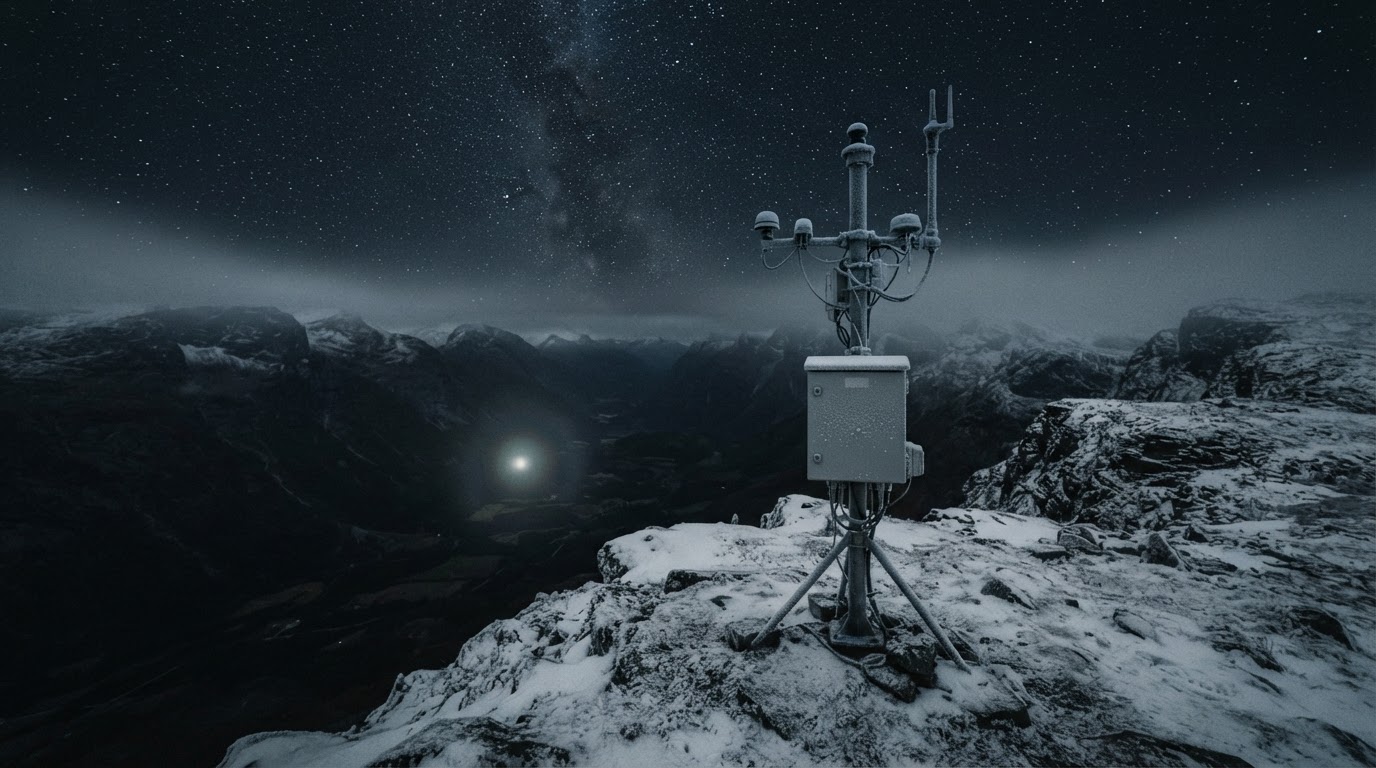
The early campaigns proved the lights were real and recordable, but they had an obvious limit: the phenomenon is unpredictable, and human observers cannot sit in a freezing valley every night for years on the chance that something appears. So in 1998 the project took a decisive step. Working with Østfold University College, researchers built an automated measurement station in the valley — a permanent installation designed to watch Hessdalen continuously and record any lights automatically, whether anyone was there or not.
The station carried cameras to photograph the lights, and over the years the project added further instrumentation aimed at pinning down what the lights actually are: measuring their light spectrum to learn their composition, tracking magnetic and radio activity, and time-stamping every event. Yearly research gatherings brought scientists to the valley to compare notes and run new experiments. Since 1998, then, Hessdalen has been under near-continuous scientific watch — one of the very few places on Earth where an unexplained aerial phenomenon is monitored around the clock by a dedicated station. The lights kept appearing, though less often than in the 1981–84 peak, and the station kept recording them.
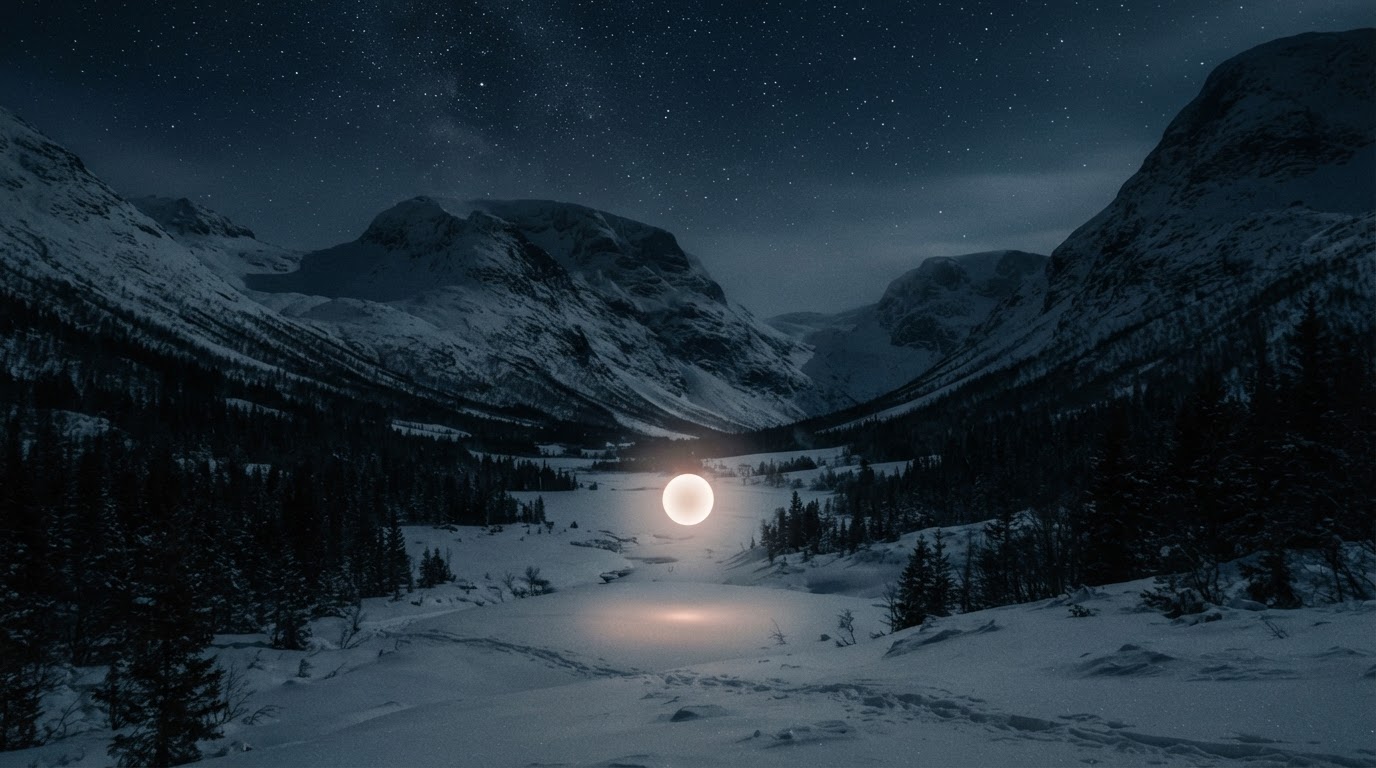
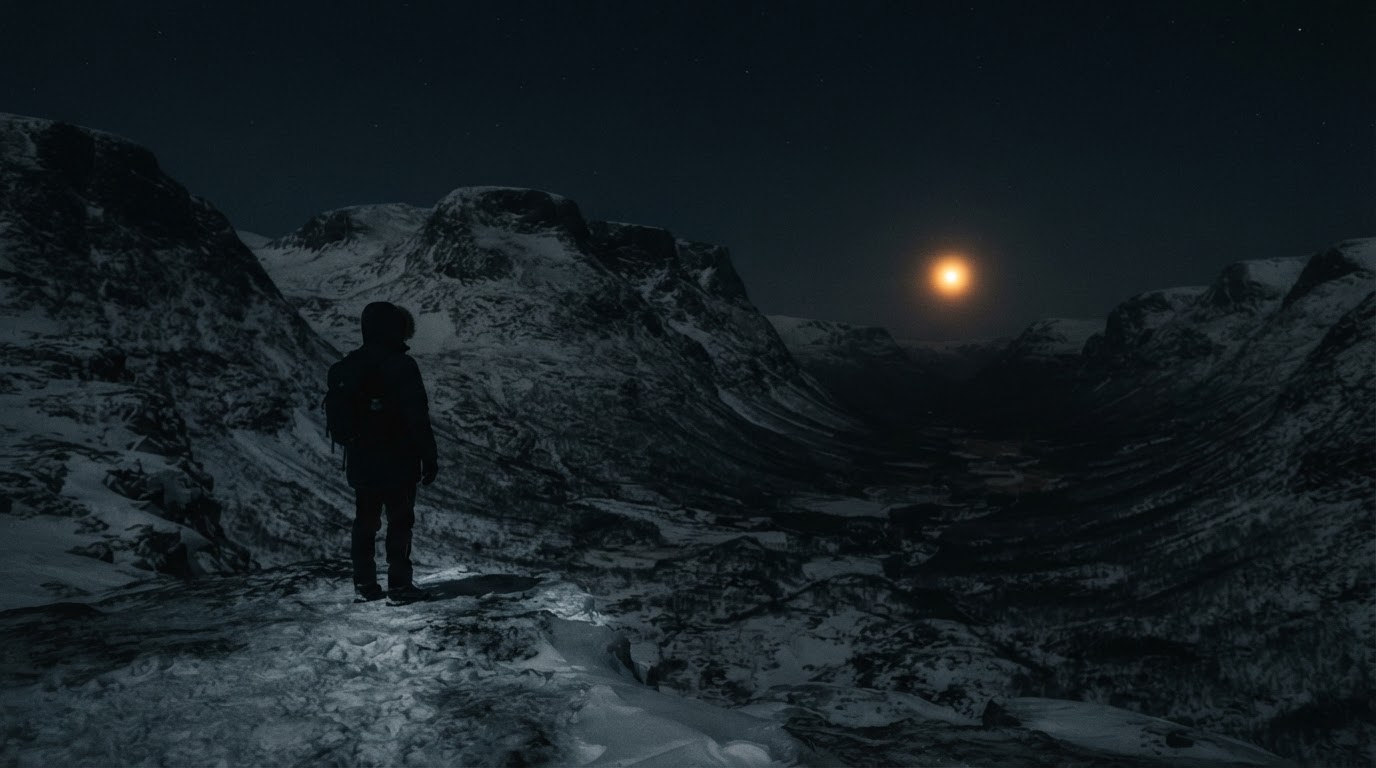
A single unexplained light hovering and slowly drifting above the snowfield — the kind of event the Hessdalen station has recorded for decades.
What the Instruments Saw
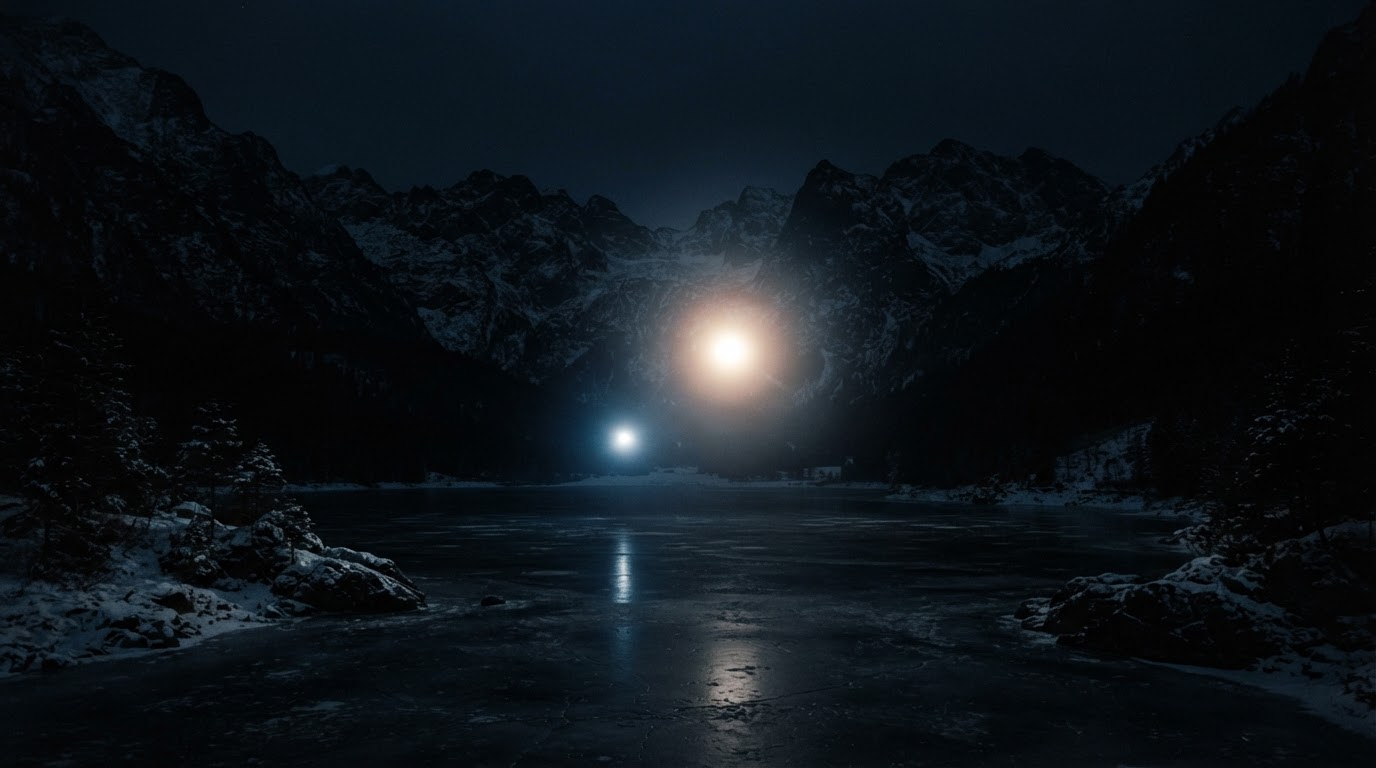
So what, exactly, did all these years of measurement reveal? Enough to make the mystery deeper, not shallower. The lights are not a single, uniform thing. Observers and instruments have documented several distinct types: small, brief flashes; steady white or yellow-white lights that hover for many minutes; and, most dramatically, large luminous objects that drift slowly along the valley. Some pulse or change colour. Some appear to move in ways that seem to respond to their surroundings.
Instrument readings only added to the strangeness. Spectral measurements suggested the presence of glowing, ionised material — light being emitted by something more like a plasma than a simple reflection or a distant aircraft. Some radar returns implied a solid or dense target where the eye saw only light. And yet, for all these numbers, no single measurement ever closed the case. The lights did not behave consistently enough to be filed neatly under one known cause. Each field season produced more data, and each new batch of data raised as many questions as it answered. The instruments proved beyond reasonable doubt that something real and luminous was there — but never quite what it was.
The Theories
With decades of data and still no settled answer, Hessdalen has drawn a whole spectrum of explanations, ranging from the sober to the speculative. On the more scientific end, the leading candidates involve some form of natural plasma or ionised gas — luminous clouds of charged particles produced by processes in the valley itself. One much-discussed idea points to the local geology and dust: the valley floor is rich in metals, and it has been proposed that dust particles containing metals such as iron or copper could, under the right electrical conditions in the air, form a kind of glowing, battery-like plasma. Others have looked to the rocks themselves, suggesting that stresses in the mineral-rich bedrock might release energy or charge that manifests as light. These ideas are serious, testable, and actively studied — but none has been confirmed as the answer.
At the other end sit the explanations that have made Hessdalen famous well beyond scientific circles. Because the lights move, hover, and sometimes seem to react, they have long been claimed as UFO or extraterrestrial activity, and the valley has become a pilgrimage site for those who believe. More cautious sceptics have argued the lights are simply misidentified ordinary things — car headlights on distant roads, aircraft, planets low on the horizon, or reflections. But this explanation, too, runs into a wall: it cannot account for the many close-range sightings by trained observers, nor for the instrument readings that describe something with real luminous substance. The plainest theories and the wildest theories both fail, in the end, to explain everything Hessdalen has shown.
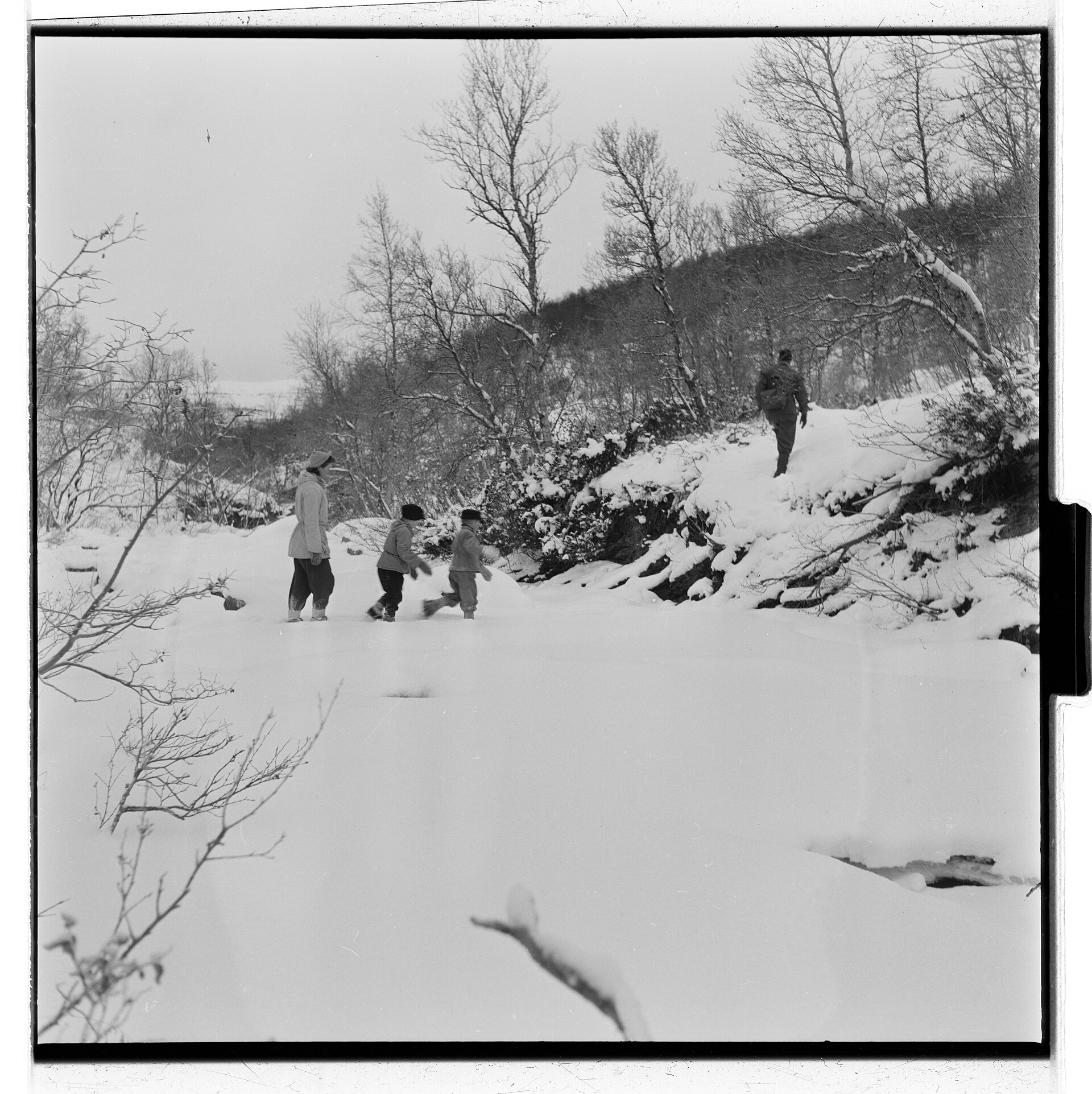
Photo: Wikimedia Commons, CC BY-SA 4.0
A Mystery Still Being Measured
What makes Hessdalen so haunting is not that it is unexplained — plenty of things are unexplained. It is that it has been studied properly, with real science, for more than forty years, and remains unexplained anyway. This is not a blurry photograph and a secondhand story. It is cameras, radar, spectrometers, and a permanent station, run by universities, producing genuine data. And the honest conclusion of all that work is not a triumphant reveal but a shrug: the lights are real, they are recorded, and we do not know what they are.
One line from the early campaigns has stayed with me longer than the photographs: radar returns implying a solid target where the eye registered only light. I do not know what to do with that, and neither, apparently, does anyone else — it sits in the record year after year, cited and never resolved. Somewhere in central Norway tonight a camera nobody is looking through is pointed at an empty valley, and it will keep taking pictures until something enters the frame.
Perhaps one day a field season will catch the crucial reading, and Hessdalen will finally be explained — a natural plasma, a geological quirk, some subtle process we simply hadn't understood. Or perhaps the valley will keep its secret for another century, its lights drifting silently over the snow while instruments hum in the dark and record everything except the answer. For now, high in the mountains of central Norway, the automated station still watches, the lights still come, and the most careful measurements humanity can bring to bear have produced the strangest result of all: proof that the mystery is real, and no solution to it. Hessdalen is lit, and waiting, still.
---
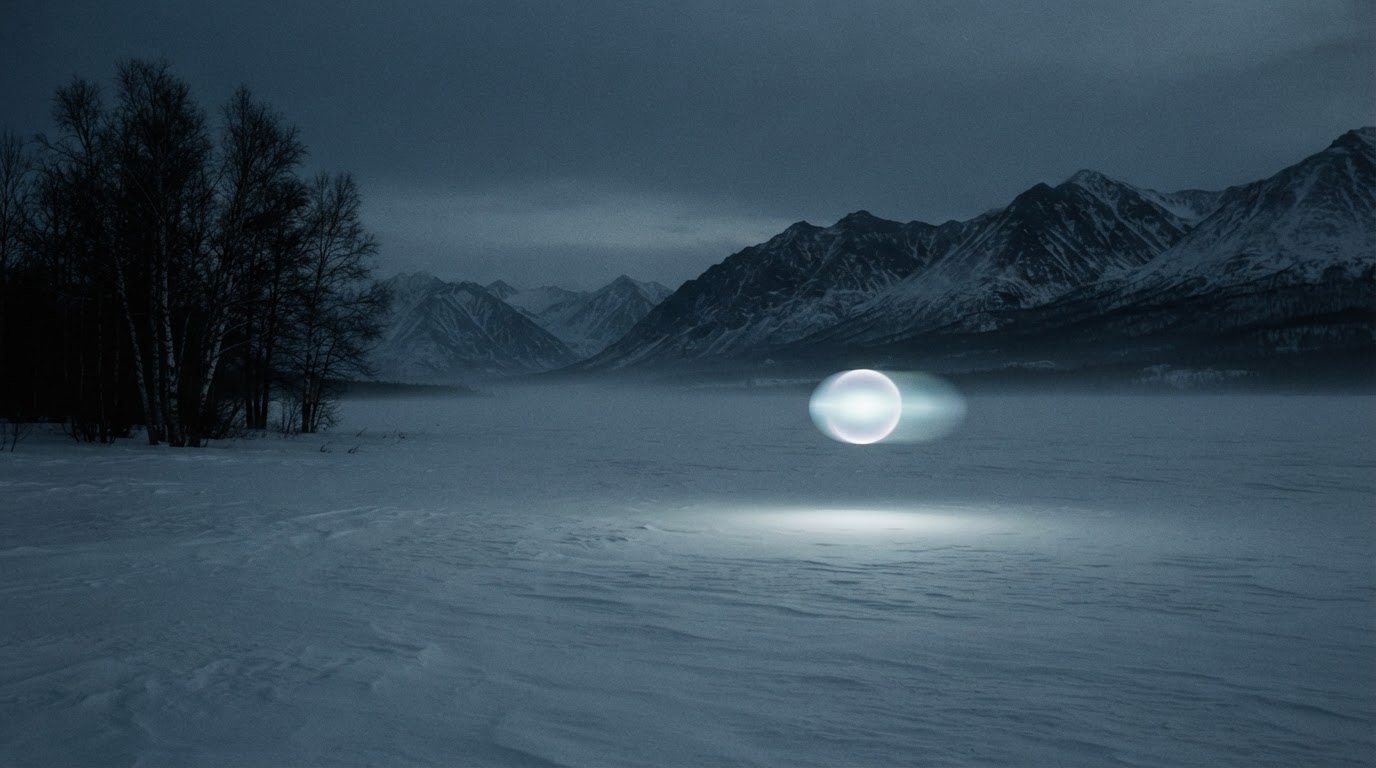
This article combines real photographs of the Hessdalen valley with AI-generated images and video produced to convey the mood of the light phenomenon. The pictures showing the lights themselves are recreations, not actual observation records.
Comments
No comments yet — leave the first one.