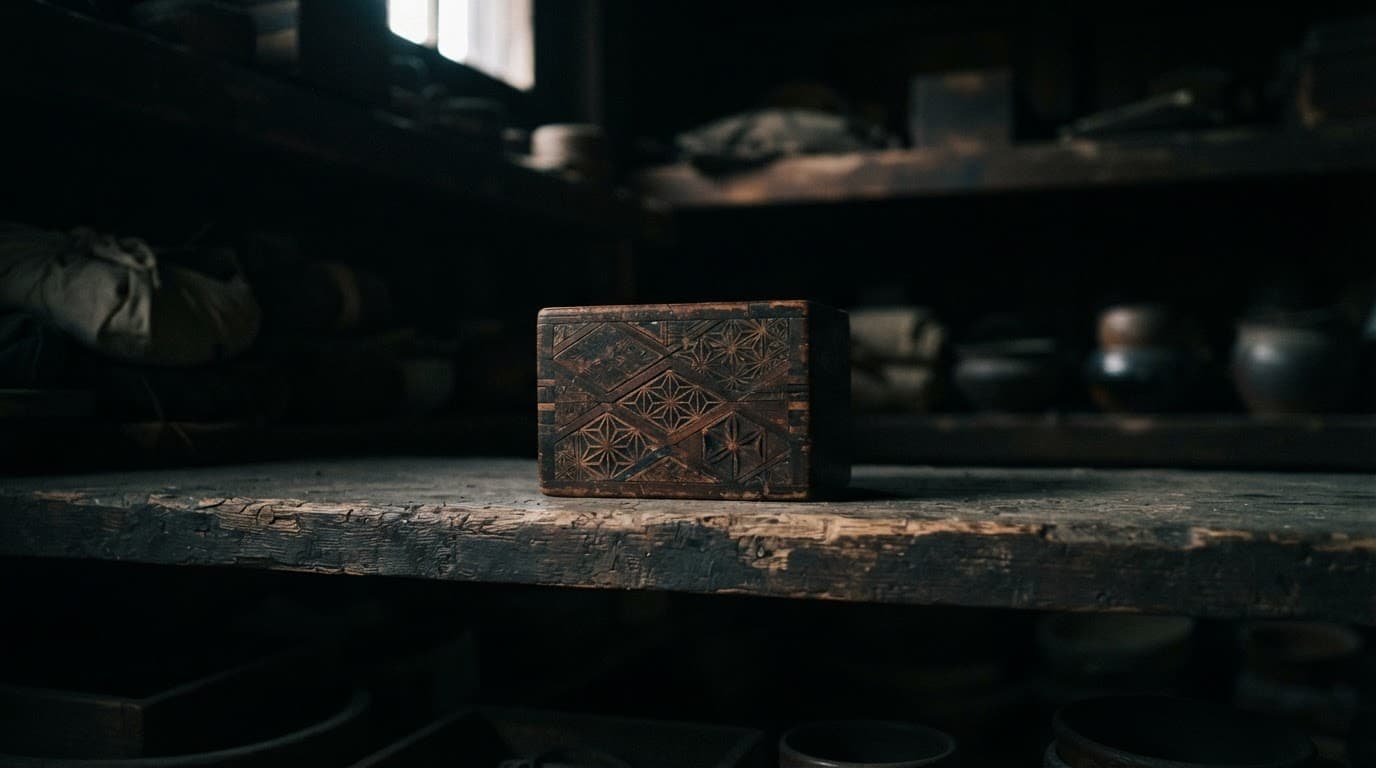
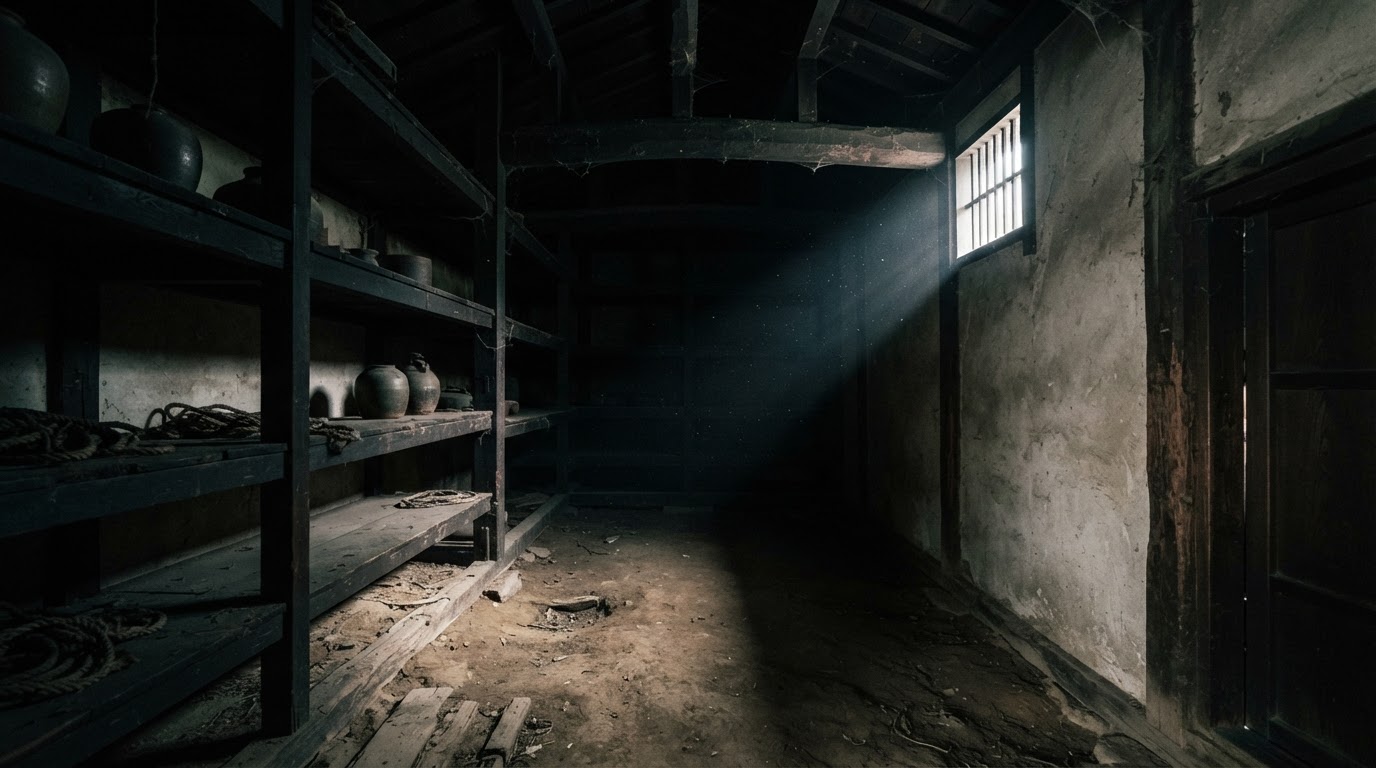
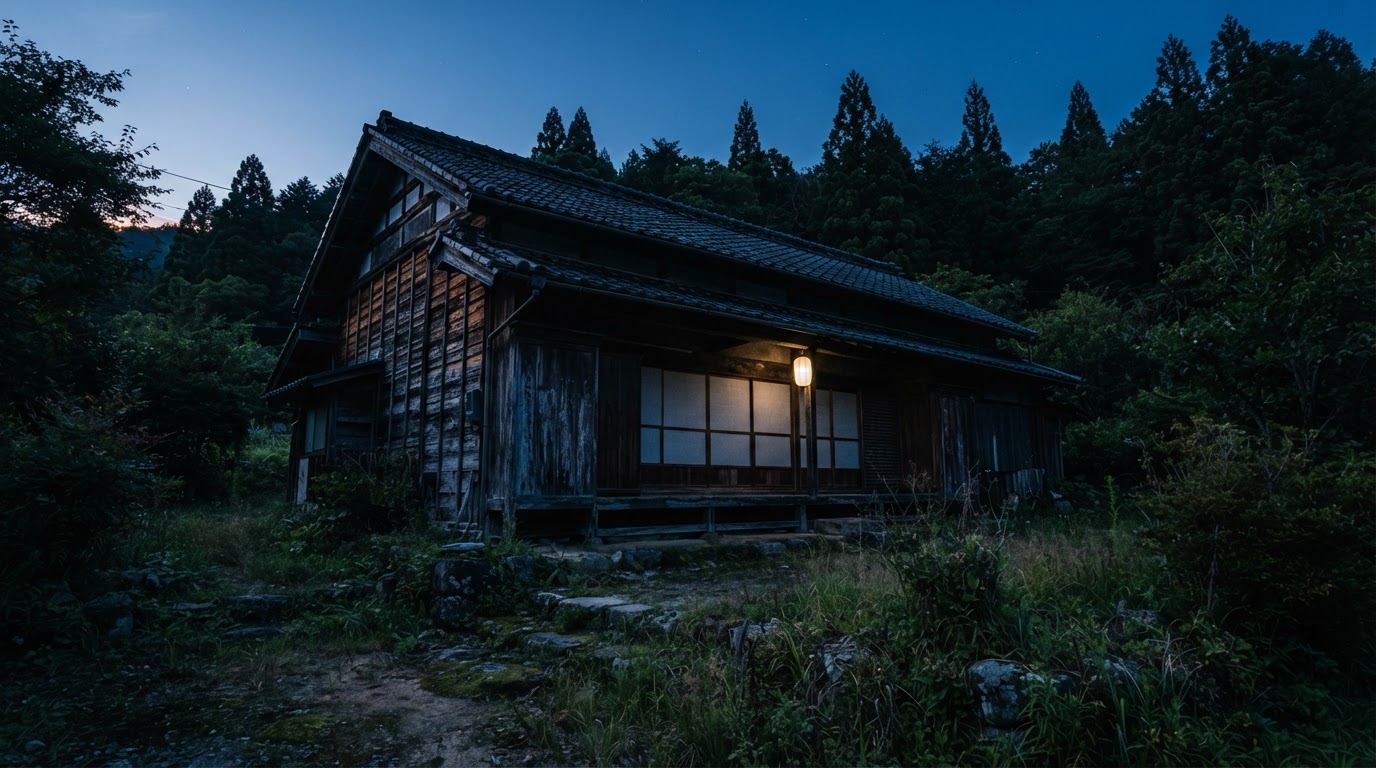
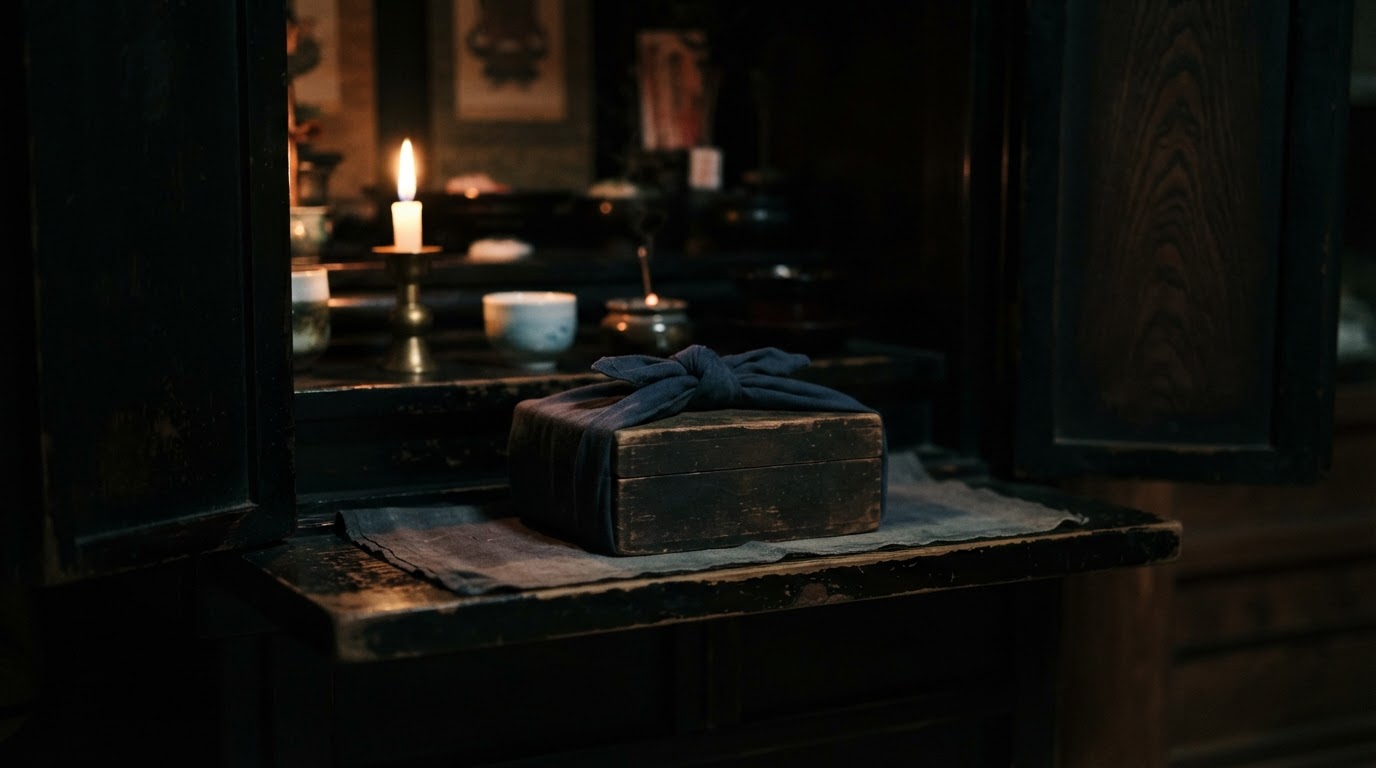
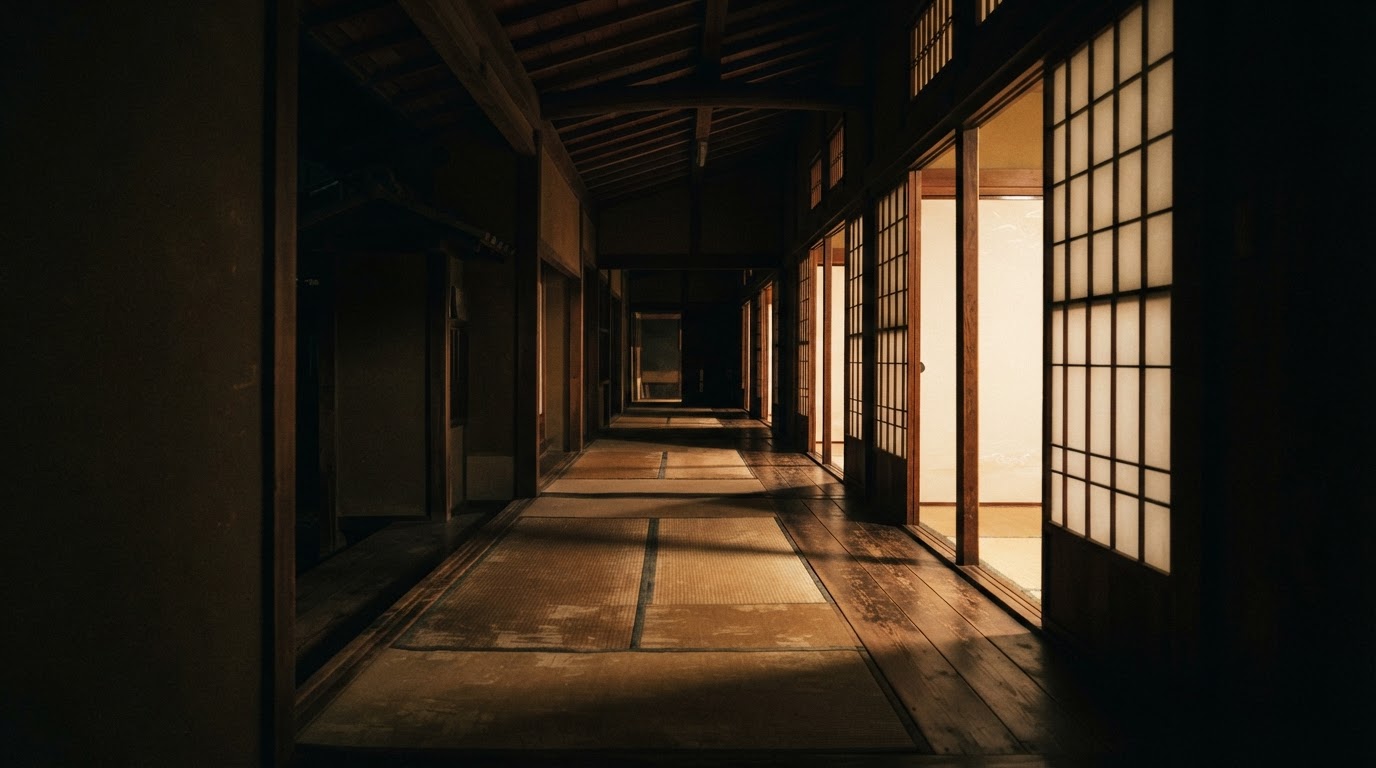
On a shelf in an old storehouse sits a small wooden box.
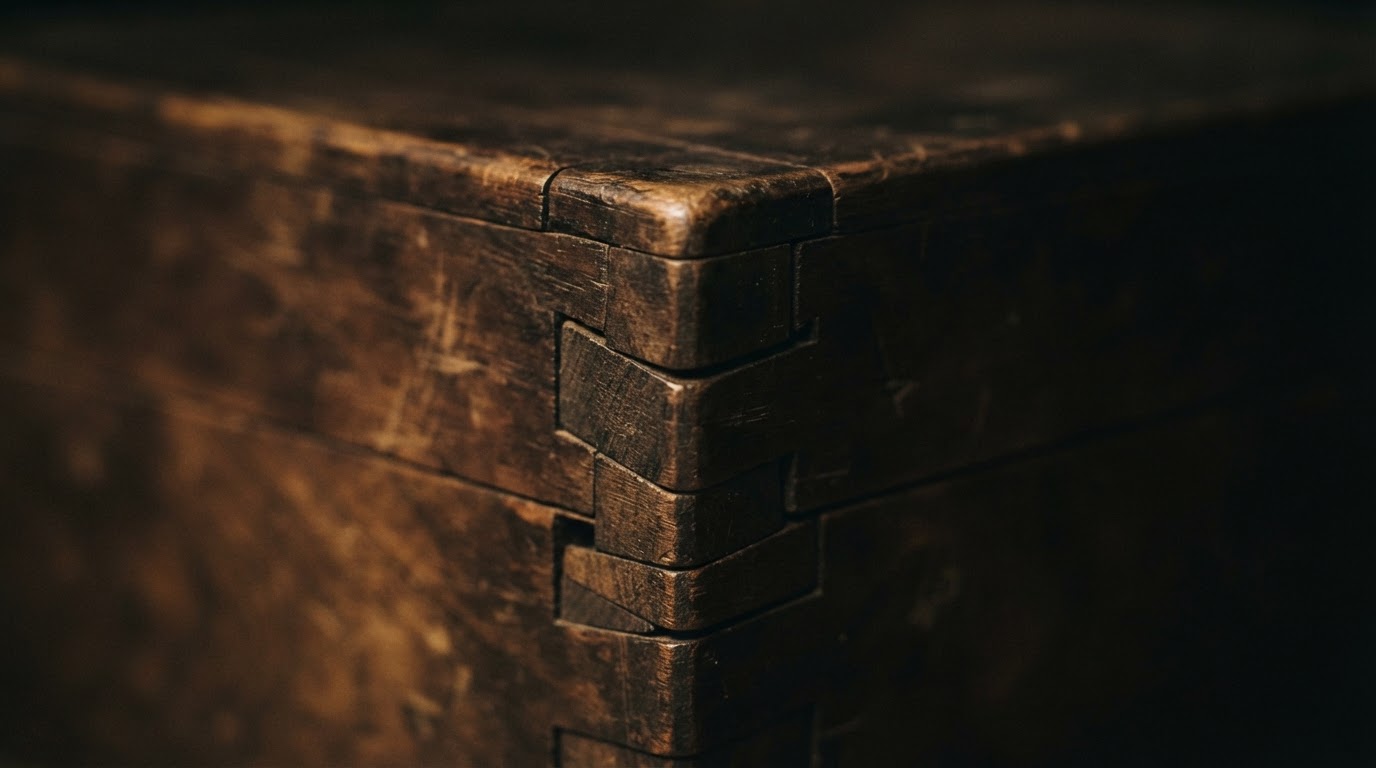
It is beautifully made — the joints fitted so tightly that no seam shows, the wood darkened with age, the surface worn smooth by hands long dead. There is nothing written on it. There is no lock. To anyone passing through the dim, earthen-floored room, it looks like an old puzzle box, the kind a craftsman might have made to hold a treasured letter or a set of go stones. You could pick it up and turn it over in your hands, admiring the work.
You should not. If the story is true, a woman who touches it, or a child who comes too close, will begin to die. And the box was built for exactly that.
I keep a section of the archive for things I am certain never happened, and this entry sits at the front of it. What earned it that position is the grading system. Ippou through chippou — a scale, with specifications, written in the register of a trade. Invented horrors almost never bother with administration; they go straight for the effect. Whoever composed this understood that nothing convinces a reader faster than the sense that somebody once had to keep records on it, and I have never entirely forgiven them for how well it works on me.
The Thread That Started It
The story called Kotoribako — コトリバコ, written to be read as "the child-taking box" — first appeared in the summer of 2005, on a corner of the Japanese internet devoted to true-scary stories.
For readers outside Japan, some background is needed. 2channel (2ちゃんねる, now largely 5channel) was, in its era, the largest anonymous message board in the world — a vast text forum where no one used a real name and no post carried an author. Within it lived a genre with its own devoted following: 洒落怖 (share-kowa), short for "stories scary enough to laugh off" (洒落にならないほど怖い話). These were reader-submitted horror tales, posted anonymously, often framed as personal experience: something that happened to me, or to a friend, or to someone my friend knew. The best of them were passed around, saved, retold, and canonized. Kotoribako became the most famous of all of them.
It did not arrive as a polished tale. It arrived the way the best 洒落怖 always did — as a conversation. A poster began recounting an experience, another asked questions, the story unspooled in fragments across replies, with hesitations and corrections and moments where the teller seemed reluctant to go on. That texture is the first reason it feels real, and we will return to it.
The Framing Story
The modern part of the tale is simple, and it is where most people first meet the box.
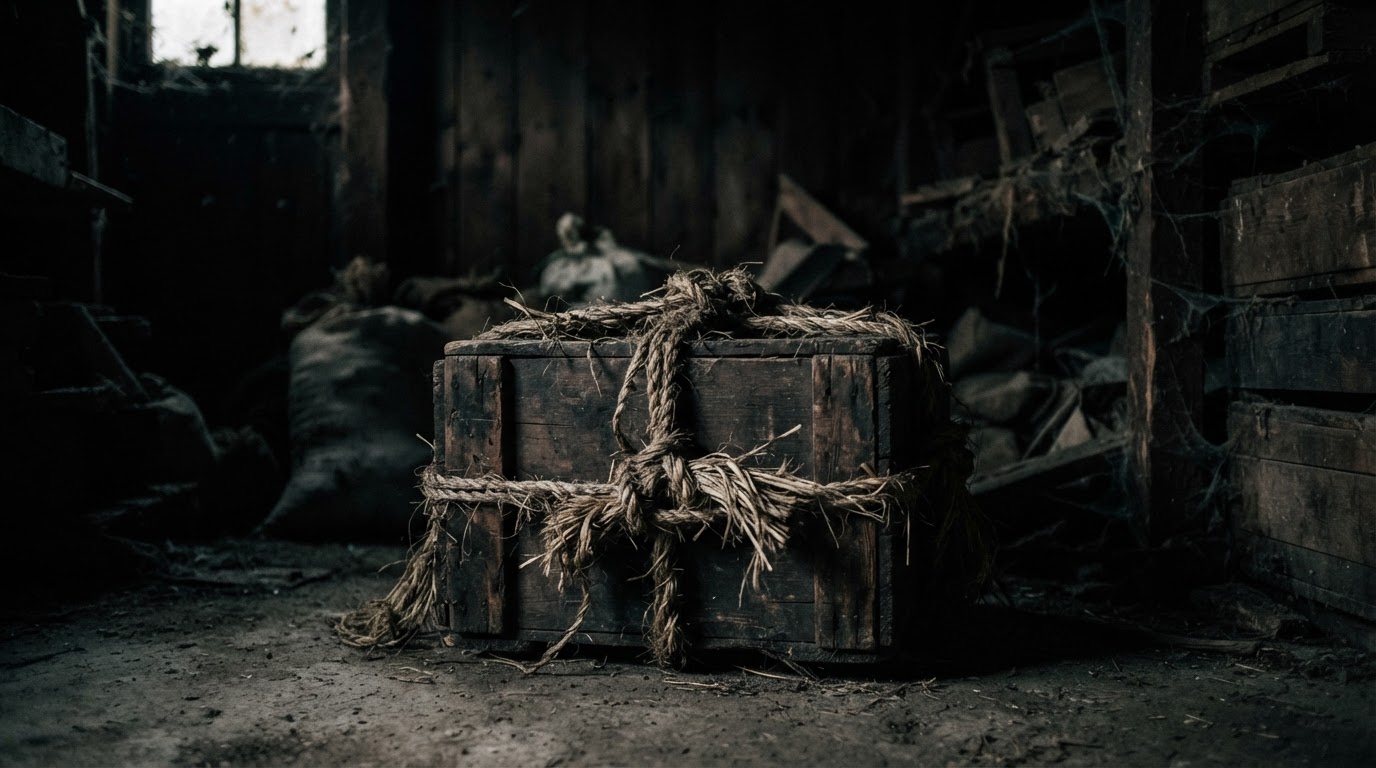
The narrator describes a friend — call him the man who found it — who had gone back to his home region in the countryside. An old acquaintance of his, a woman, was in some kind of trouble and needed to hide something, or dispose of it. In the course of this, the group of friends comes into contact with an object retrieved from an old storehouse: a small, well-made wooden box.
At first it means nothing to them. It is just an old box. But something is wrong around it. One of the women in the group becomes violently ill in its presence — a wrongness that no one can explain, centered on the box, worse for the women and worse still for anyone younger. It is only when an older man from the area, someone who knows the old things, sees the box that the blood drains from his face. He recognizes it. He knows what it is called, what it was made for, and why no one in the group should have been anywhere near it.
What follows is his explanation — and the explanation is the real story.
The History It Invents
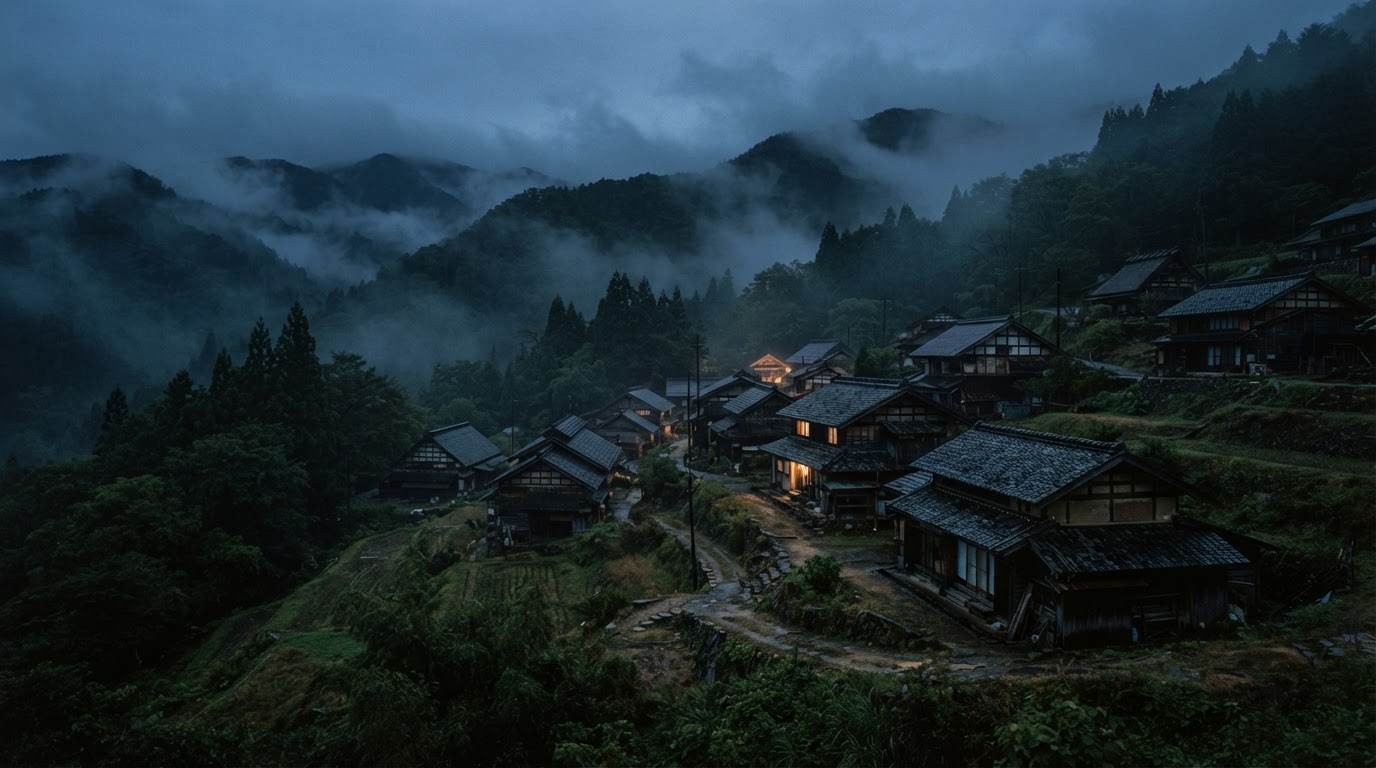
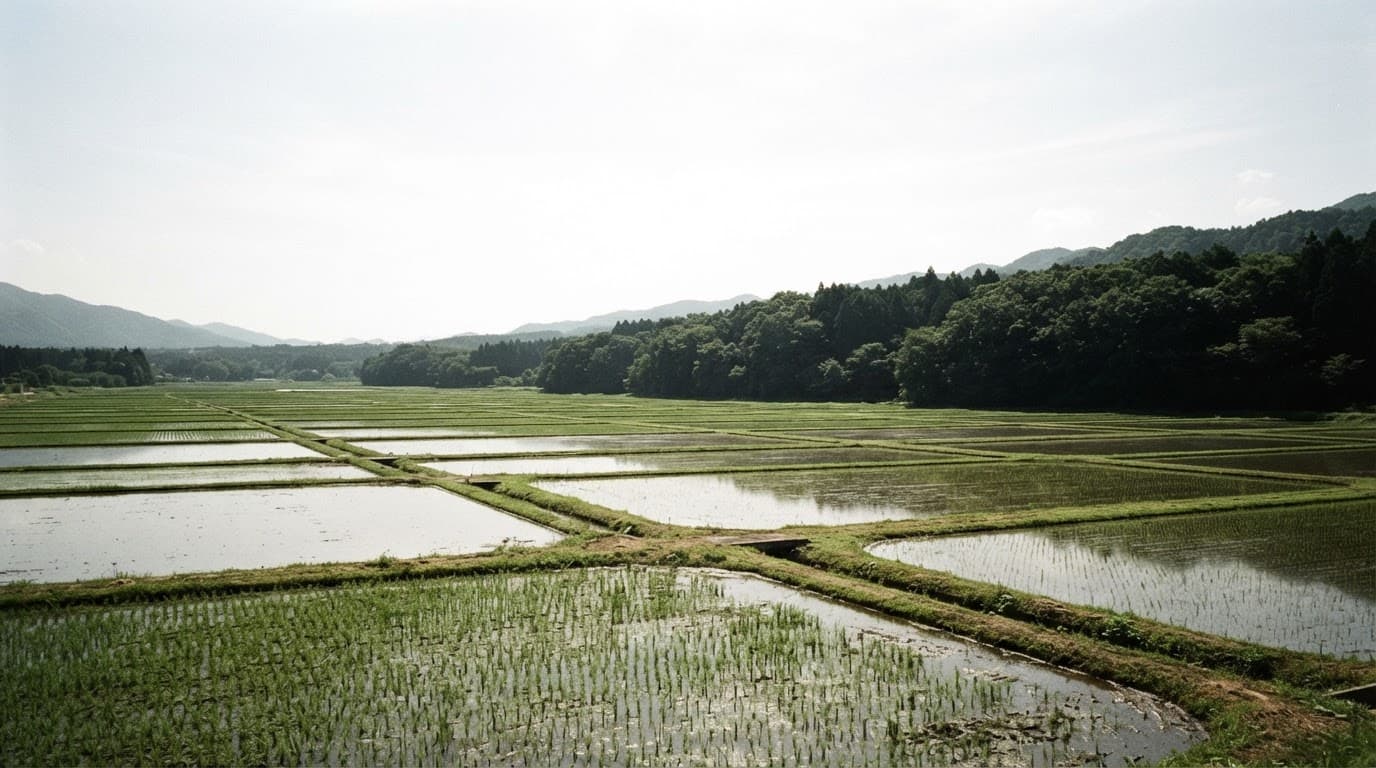
The old man's account reaches back to the second half of the 19th century — the closing years of Japan's Edo period and the turbulent early Meiji era, a time of upheaval, poverty, and violent reprisal in the provinces. The setting is the San'in region on the Japan Sea coast, around present-day Shimane Prefecture — a remote, mountainous, thinly populated corner of the country, exactly the kind of place where a local secret could stay local for a hundred years.
In the story, a certain community there had long lived under persecution — an outcast village, despised by its neighbors, pushed to the margins of society and denied ordinary protection. (The tale handles the specifics carefully, and so will we; we will return to what this element means.) Into this village, so the account goes, came an outsider — a man fleeing his own troubles — who, in gratitude or desperation, taught the villagers a method. A way to make a thing that could strike back at the people who had wronged them. A way to concentrate suffering into an object and aim it.
That thing was the box.
The method is where the sensitivity of the story lies, and it is important to be clear about how to speak of it. To make one of these boxes, the account says, required materials no one should ever gather — the remains and the suffering of the youngest and most defenseless, assembled in a manner that the original thread described in grim, deliberate detail that cannot and will not be repeated here. It is enough to say that the box was, quite literally, made out of harm done to children, and that its power was believed to come from the enormity of that harm. Everything chilling about Kotoribako flows from this single, unspeakable premise — and the story's craft is precisely that it lets you understand the horror without ever needing you to look at it directly.
Ippou to Chippou: The Ranking of the Boxes
Here the tale does something that lifts it above an ordinary ghost story. It gives the boxes a classification system — a cold, bureaucratic-sounding hierarchy, as if the making of them were a craft with grades and specifications.
The boxes were ranked by how much went into them. The smallest and weakest was called ippou (一宝) — "one treasure." Above it came larger, more terrible grades, escalating in a sequence the story lays out step by step: nippou (二宝), sanpou (三宝), and onward, each requiring more than the last, up to the most dreadful of all, chippou (七宝) — a box whose potency was on another order entirely. The word for "treasure," 宝 (hō), used to name these things is the story's cruelest touch: it frames the contents as something precious, hoarded, and counted, the way one might describe an heirloom.
Each grade was said to poison a bloodline over years. A box did not kill at once. It worked slowly, generation by generation — women who came near it would lose their children before they were born, or lose the ability to bear them at all, and the family line would thin and wither and die out. The higher the grade, the faster and more complete the ruin. A single box, patiently passed down or hidden in an enemy's home, could erase a family from the earth.
This is why the box was aimed at women and children in the telling — not through gore on the page, but through this quiet, awful logic of extinction. The weapon was designed to end futures.
The Rules
Like every great cursed-object legend, Kotoribako comes with rules — and the rules are what make it operational, the thing that turns an idea into a dread you carry out of the room.
Women and children must not go near it. This is the first and absolute rule. The curse acts most strongly on exactly those it was built to destroy. Men are affected far less, if at all — which is why, in the framing story, it is a woman who collapses first, and why the old man's first act is to get the women and the young away from the box. To the reader, this rule does something clever: it means the danger is invisible and selective. The box sits there, inert, harmless-looking, and only certain people in the room are quietly dying.
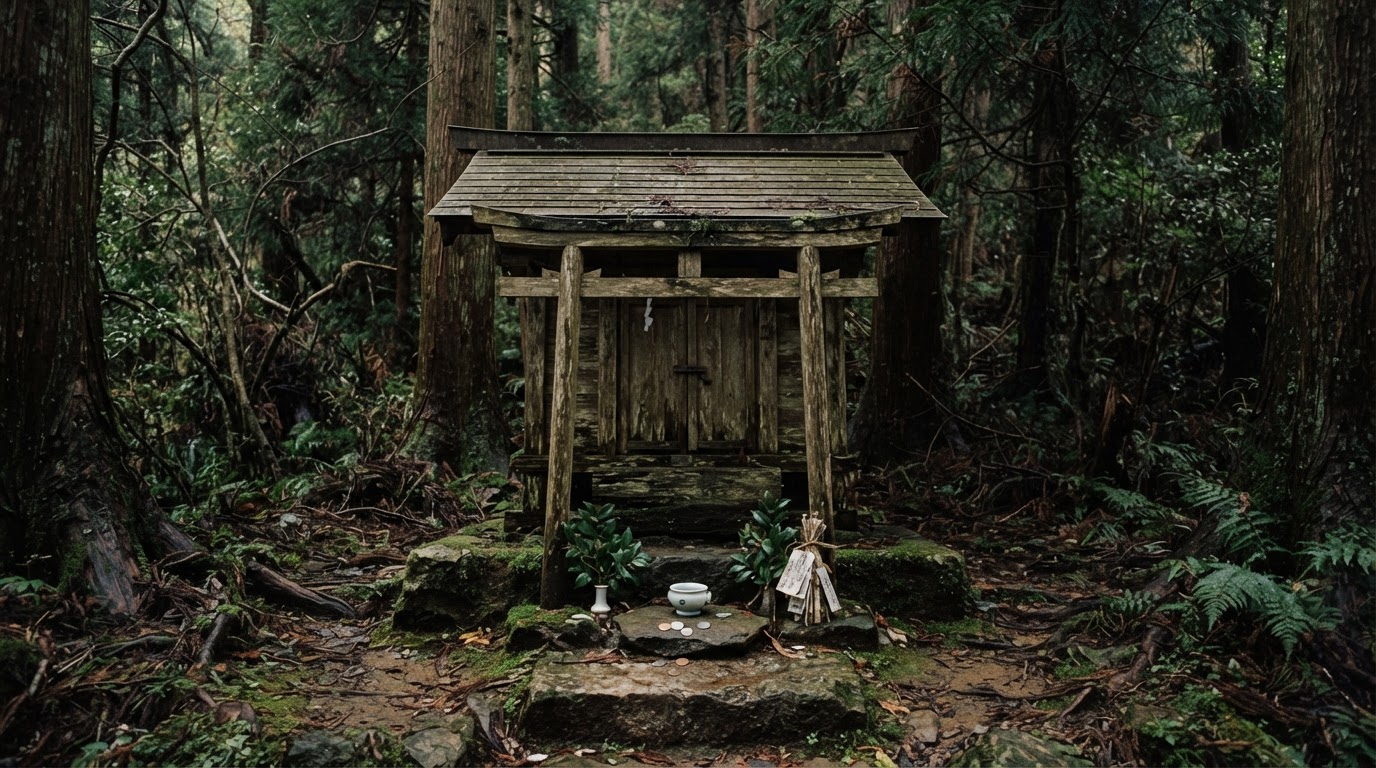
It cannot simply be thrown away. A thing made this way cannot be destroyed by ordinary means, and to abandon it is only to pass the horror to whoever finds it next. Disposal requires ritual — it must be taken to a shrine, to those who know the proper rites, and neutralized over time under religious care. In the story, the resolution comes not from a hero but from an institution: a shrine, a priest, the old machinery of Japanese folk religion, quietly doing the work of containment that individuals cannot.
It takes more than a hundred years to decay. The curse does not lapse in a human lifetime. A box will hold its power for well over a century, its malice barely dimming — which is precisely how one comes to be found, still dangerous, on a storehouse shelf in the present day by people who have no idea what they are looking at.
Together these rules do something the best horror always does: they close every exit. You cannot destroy it, you cannot safely leave it, you cannot wait it out, and the people most at risk are the ones least able to sense the danger.
Why the Craft Is Admired
Ask fans of Japanese horror to name the single greatest 洒落怖 story, and a very large number will say Kotoribako without hesitation. It is worth understanding why — because the reasons are a masterclass in how fiction earns belief.
It reads like documentation, not like a story. The account is delivered flat, almost reluctantly, through the mouth of a knowledgeable old man who is not trying to scare anyone — he is trying to explain a danger and get people to safety. There is no spooky narrator, no atmosphere laid on thick, no promise that this will be frightening. Horror that announces itself is easy to disbelieve. Horror delivered as sober information is not.
It uses dialect and regional texture. The telling is grounded in a specific place — the San'in coast, a real and recognizable part of Japan — and colored with the cadence of how an older rural person actually speaks. To a Japanese reader, this is enormously persuasive. The story does not feel invented in a bedroom; it feels remembered in a village.
It withholds and reveals in stages. The horror does not arrive all at once. First there is only a box and a sick woman. Then a name. Then a purpose. Then, slowly, the full weight of what the box is and how it was made — each revelation landing after you have already been made to care. And crucially, the very worst of it is stated obliquely, gestured at rather than displayed, so that your own imagination does the work the text refuses to do. This is the oldest trick in horror and Kotoribako executes it perfectly: the most frightening thing on the page is the thing that is never quite shown.
It never breaks character. From beginning to end, the tale behaves as though it is true. It offers no wink, no reveal, no author stepping forward. In the anonymous world of 2channel, where there is no byline to check and every story is told as experience, that consistency is everything. The absence of an author is not a weakness here — it is the whole engine of belief.
The Folklore Underneath
Kotoribako is modern internet fiction, but it did not come from nowhere. It works because it is built on genuinely old bedrock — patterns of belief that a Japanese reader recognizes at a level deeper than conscious thought.
The cursed vessel. Across Japanese tradition, the idea that objects hold power — and can hold malice — runs very deep. The concept of tsukumogami, tools and objects that gain a spirit and a will after long years, means that in the folk imagination an old, handmade thing is never wholly inert. A box that has been made with intent, and has aged for a century, is exactly the kind of object that tradition says can become something more than wood.
Containment magic. Just as old is the belief that dangerous forces can be sealed — bound into an object, a box, a talisman, a shrine — and that the seal must be maintained by ritual, not broken casually. Japanese folk religion is full of things that are safe only so long as they are left closed, honored, and kept in their proper place. Kotoribako inverts this comfortingly familiar idea: here the sealed thing is not a protection but a weapon, and opening the region's memory of it is what puts everyone in danger. The box is a containment vessel — but of concentrated harm, aimed outward.
The shrine as the last defense. That the only safe disposal runs through a shrine and a priest is not a plot convenience; it reflects a real structure of Japanese belief, in which the boundary between the ordinary world and the dangerous unseen is managed by religious institutions and the rites they keep. The story trusts that its reader already believes, at least a little, that some things can only be handled by the people who tend the old shrines. That belief is what makes the ending feel not like a rescue but like a return to order.
The Subtext That Must Be Handled With Care
There is a dimension of Kotoribako that deserves careful, respectful treatment, because it touches real history rather than invented horror.
The persecuted village at the story's heart is not a neutral invention. Japan has a real and painful history of hereditary social discrimination against outcast communities — people who, for centuries, were pushed to the margins, denied ordinary rights and dignity, and treated as beneath their neighbors on the basis of birth. This is genuine history, and its wounds are not entirely closed even now. The Kotoribako story reaches into that history and uses it as the emotional foundation for its horror: the box is born of a community's real, historically grounded suffering and rage, turned into a weapon against the society that wronged it.
Handled thoughtlessly, this could be ugly — and it is worth stating plainly that the discrimination itself is the true injustice in the story's background, not the people who suffered it. But handled with care, the subtext is also part of why the tale carries such weight. It is not merely a spooky object; it is a story about what accumulated cruelty does, about vengeance curdling into something that destroys the innocent on both sides, about a wrong so deep that the response to it becomes its own horror. The best reading of Kotoribako is not that the persecuted are monstrous, but that persecution makes monstrous things — that a society which does this to people plants, in its own soil, the seed of something terrible. That is a far older and more serious idea than a haunted box, and it is why the story lingers.
We raise this not to dwell on it, but because a reader deserves to know that the fear at the center of Kotoribako is borrowed, in part, from a real historical grief — and that this borrowing is exactly what gives an anonymous internet tale its terrible gravity.
The Skeptical Reckoning
Now the necessary cold water, because it matters.
There is no Kotoribako. There is no evidence that any such box was ever made, that any such method ever existed, or that any village ever practiced it. The names of the grades, the persecuted community, the wandering outsider, the shrine that neutralized the box — all of it appears, so far as anyone has ever been able to show, for the first time in an anonymous post in 2005. No box has been produced. No priest has come forward. No family has been documented dying in the manner described. The "old man who knew" is a character in a story, and the friend who found the box is a character in a story, and the story has no author because it was posted, like all 洒落怖, under no name at all.
This is fiction. Skilled, deliberate, anonymous fiction — a piece of collaborative horror craft born on a message board, written to be read as testimony. Its power comes not from being true but from being built to feel true: the flat delivery, the real geography, the plausible dialect, the staggered reveals, the borrowed weight of real history, the refusal to ever show you the worst of it. Every technique that makes Kotoribako frightening is a technique of verisimilitude — the art of making the invented indistinguishable from the remembered.
And that is the honest reason to be unsettled by it. Not because a cursed box waits on some real shelf, but because a few paragraphs of anonymous text, written by someone whose name we will never know, can plant a dread that outlives the reading. The box was never real. The craftsmanship was.
Its Long Shadow
Kotoribako did not stay on 2channel. Over the years it was translated, retold, and carried out into the wider world of internet horror — onto the English-language creepypasta scene, into countless retellings on video, into the reference libraries of horror fans across Asia and beyond. It became one of the small handful of Japanese web-horror stories that non-Japanese audiences actually know by name, alongside the likes of the slit-mouthed woman and the "true scary story" canon that 洒落怖 produced.
Its influence is felt less in direct imitation than in a lesson learned. Kotoribako demonstrated, more cleanly than almost anything before it, that the most effective internet horror is not the most explicit but the most documented — that a story which behaves like reluctant testimony, grounded in real places and real history and withholding its worst image, will frighten longer and deeper than one that simply describes something terrible. A great deal of the "found account" and "unexplained rules" style that dominates online horror today owes something to what this thread proved could be done with plain text and patience.
That a piece of anonymous fiction from 2005 is still discussed, still translated, still ranked at the very top of its genre two decades on is its own kind of proof. The box decays over a hundred years, the story says. The story shows no sign of decaying at all.
Two Posts in June, and What English Readers Were Given
Most English-language retellings say only that Kotoribako appeared "in 2005." The Japanese Wikipedia entry is more exact. It dates the original post to June 6, 2005, in the 2channel occult board thread titled 死ぬほど洒落にならない怖い話を集めてみない? 99, with a follow-up on June 8 that supplied the backstory about the box's history and the curse. Two posts, two days apart: the whole architecture of the legend, including the part that makes it feel like research, was laid down almost at once. The same entry says that by 2007 the story was being listed among "words you shouldn't search for," because of reports of readers feeling physical symptoms while reading about it.
It also lists the story's descendants: a 2017 novel, Urasekai Picnic; a 2021 film, Jukai Village; and a 2021 children's horror book. And it records something English retellings rarely mention. Researchers, it says, point to historical inaccuracies in the story's account of infanticide practices in the 1860s to 1880s and argue that it reflects modern anxieties rather than documented folklore from Shimane or the Oki Islands. The box is not a memory of something that happened. It is a fear about what rural Japan might be hiding.
The English version most readers meet has its own history. On Kowabana.net, a site run by the translator Tara A. Devlin, the story was posted on January 28, 2018, after she came across it while working on the second volume of her Kowabana book series. Full English translations of the 2channel posts are also hosted elsewhere, on a site called The Haunted Bar. In Devlin's rendering the ladder of grades does not stop where many summaries say it does: ippou, nihou, sanpou, shippou, gohou, roppou, chippou, and then one more rung, hakkai, for the strongest box. The grades are counted in children, and the translation places the story in Matsue, in Shimane, with a fictional "Yoshida Village" and references to the Oki Islands.
Setting those details beside the popular summary, I was left with a small, unsettling effect. A reader who has only seen the short version thinks the scale ends at seven. A reader of the full translation finds an eighth grade, worse than the one everyone remembers. I have not been able to trace who first trimmed it from the popular summaries, and I would not guess. I only note that the rung most retellings omit sits exactly where most people stop reading.
The Box on the Shelf
Return, at the end, to the box.
It is still sitting there on its shelf in the storehouse — in the story, and now in your memory of the story, which may amount to the same thing. Beautifully made. Silent. Harmless to look at. A small wooden object that someone, long ago, is said to have built with terrible care, out of the worst thing human beings can do, and aimed across a century at people not yet born.
None of it happened. There was no village, no method, no ranking of boxes from ippou to chippou, no bloodline quietly ending because a woman stood too close to a beautiful piece of joinery. It is a tale typed out by a stranger on a summer night in 2005 and read, ever since, by people who half-believe it against their own better judgment.
Perhaps that is the truest thing Kotoribako has to teach. The most frightening object is not the one that is dangerous, but the one that only might be — the plain box on the shelf that you now, having read this far, would not quite dare to pick up. The craft of Kotoribako was to build that box in the reader's mind so well that it hardly matters it was never real. It sits there still, unopened, in the imagination of everyone who has heard the story — waiting, exactly as designed, to be left alone.
One line has stayed with me longer than the rest of this file, and it is not the method and not the rules. The box takes more than a hundred years to lose its power. I have now spent enough time with the 2005 thread and its descendants to notice that the story built its own decay clock, set it at a century, and then went out into the world and started running. Two decades of that century have gone. Whether anything is actually counting down is not a question I can put to a document. I only note that the tale gave itself a lifespan, and that so far it has kept to it exactly.
---
The images and video in this article are AI-generated works produced to convey the mood of the story, and are not photographs of any actual person or event.
Comments
No comments yet — leave the first one.