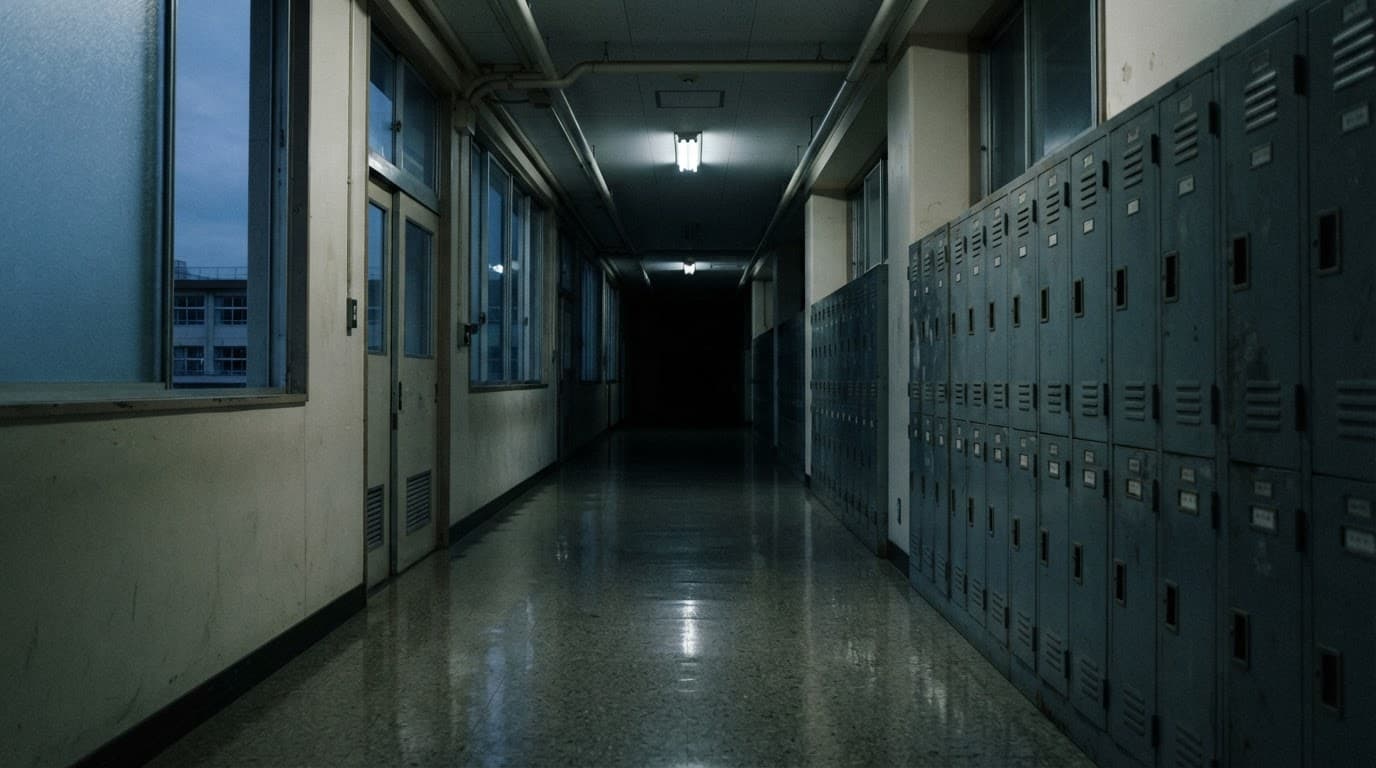
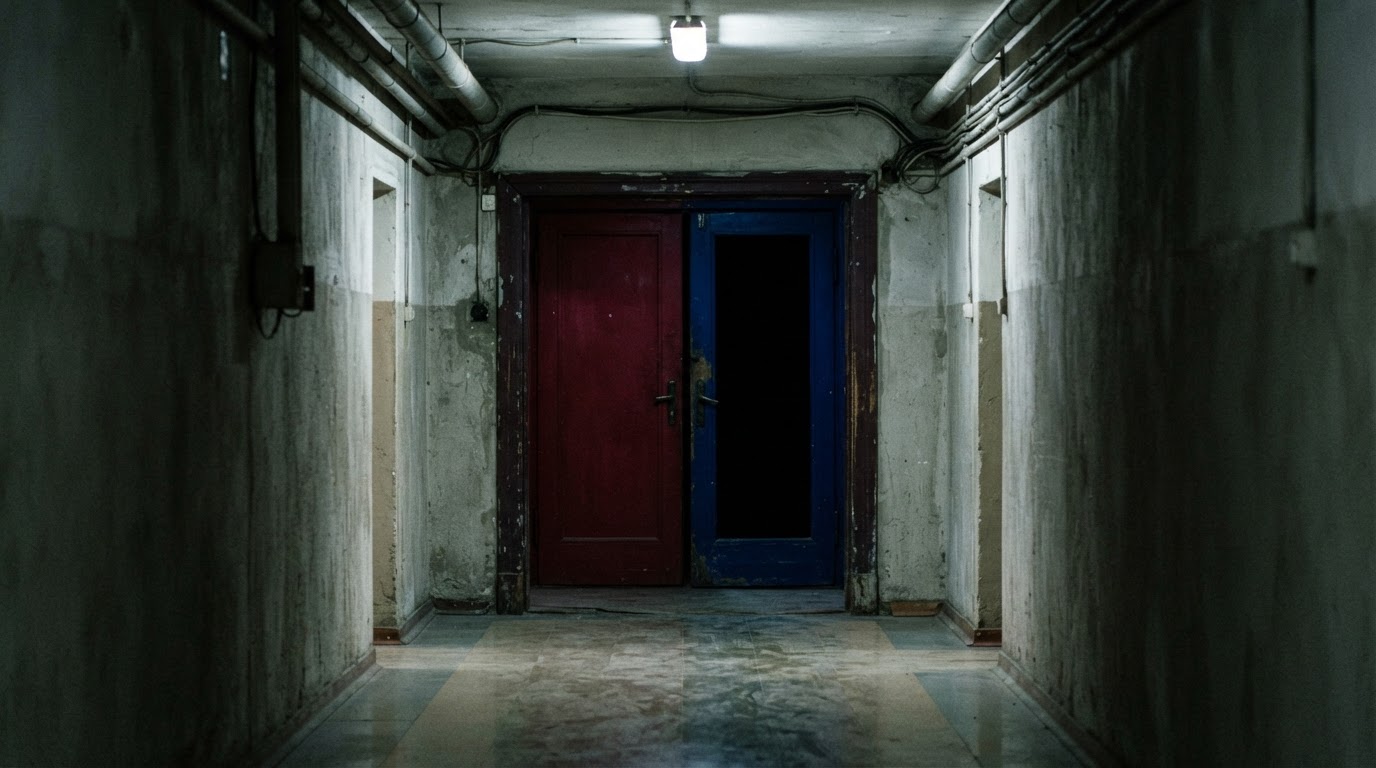
The corridor is empty, and it is too quiet.
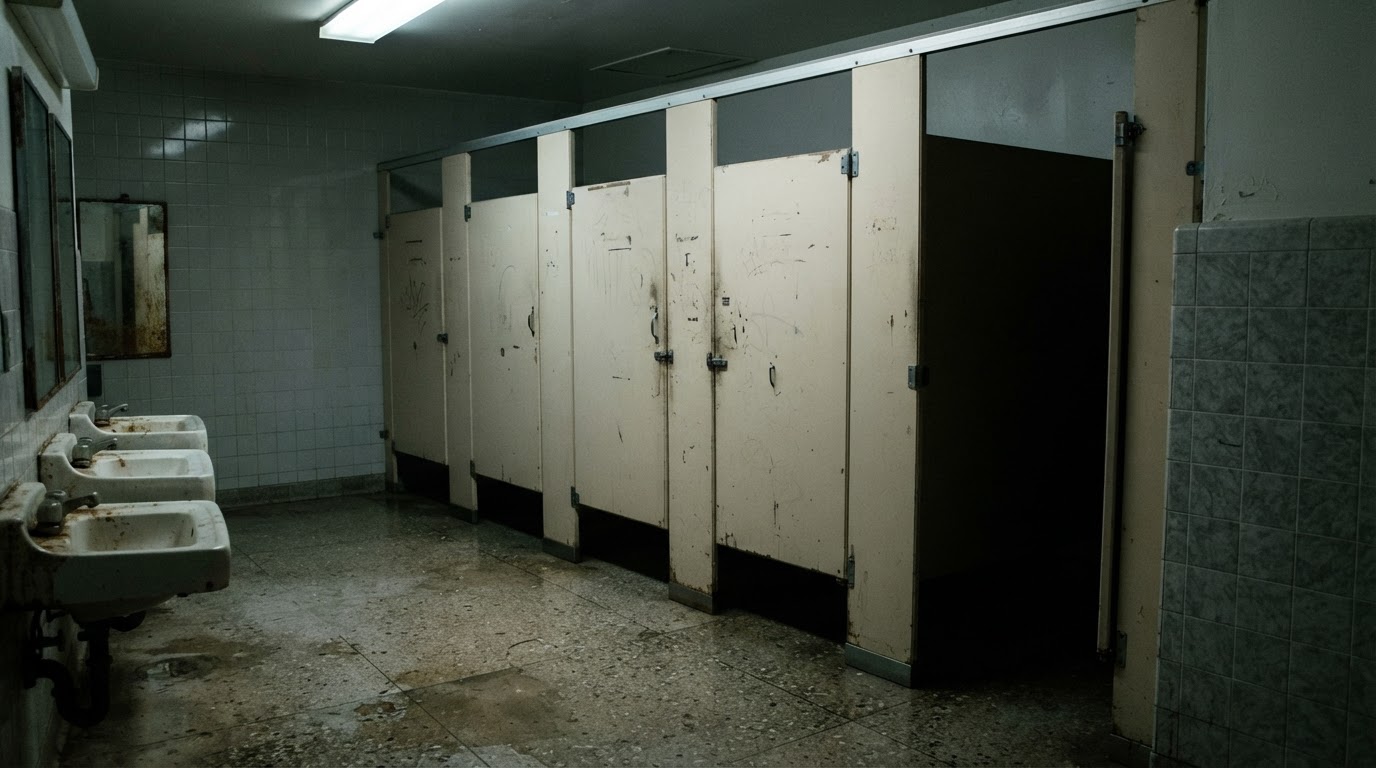
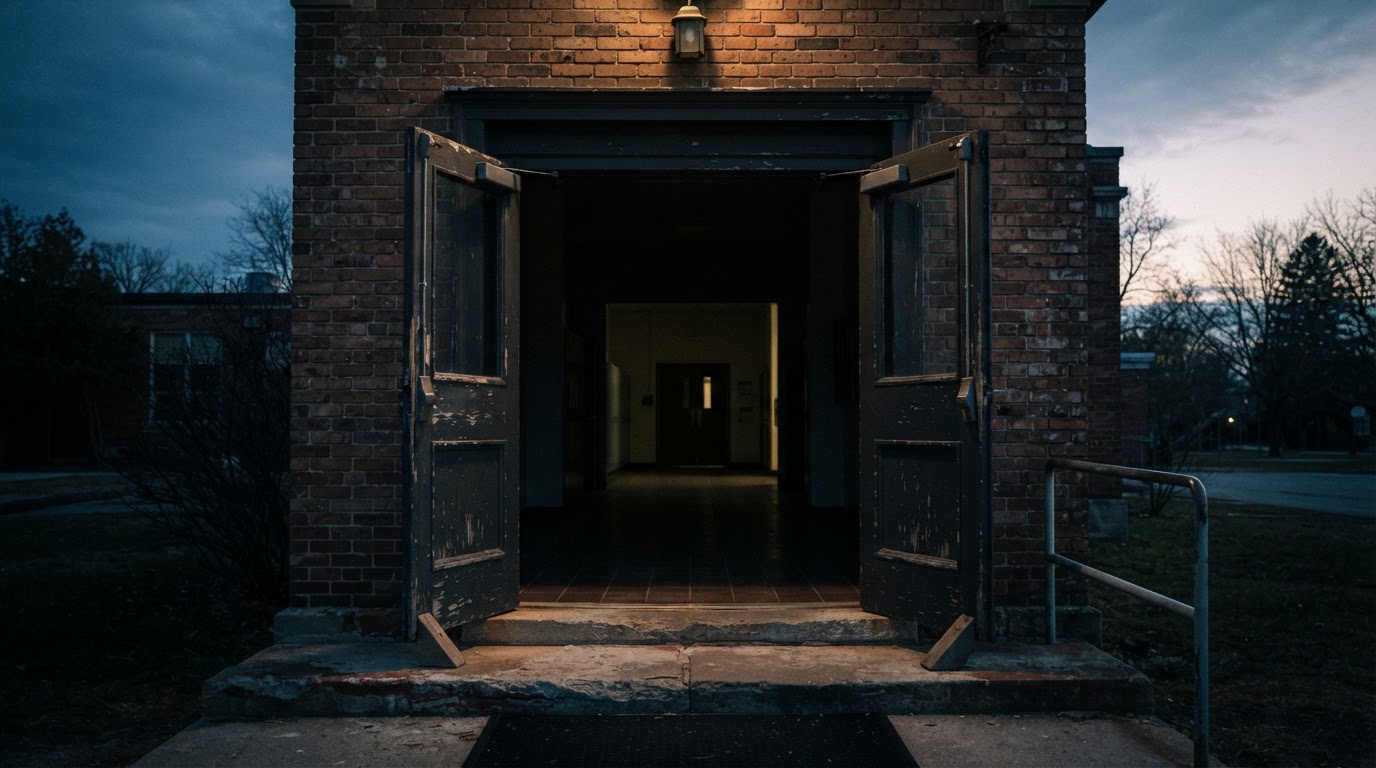
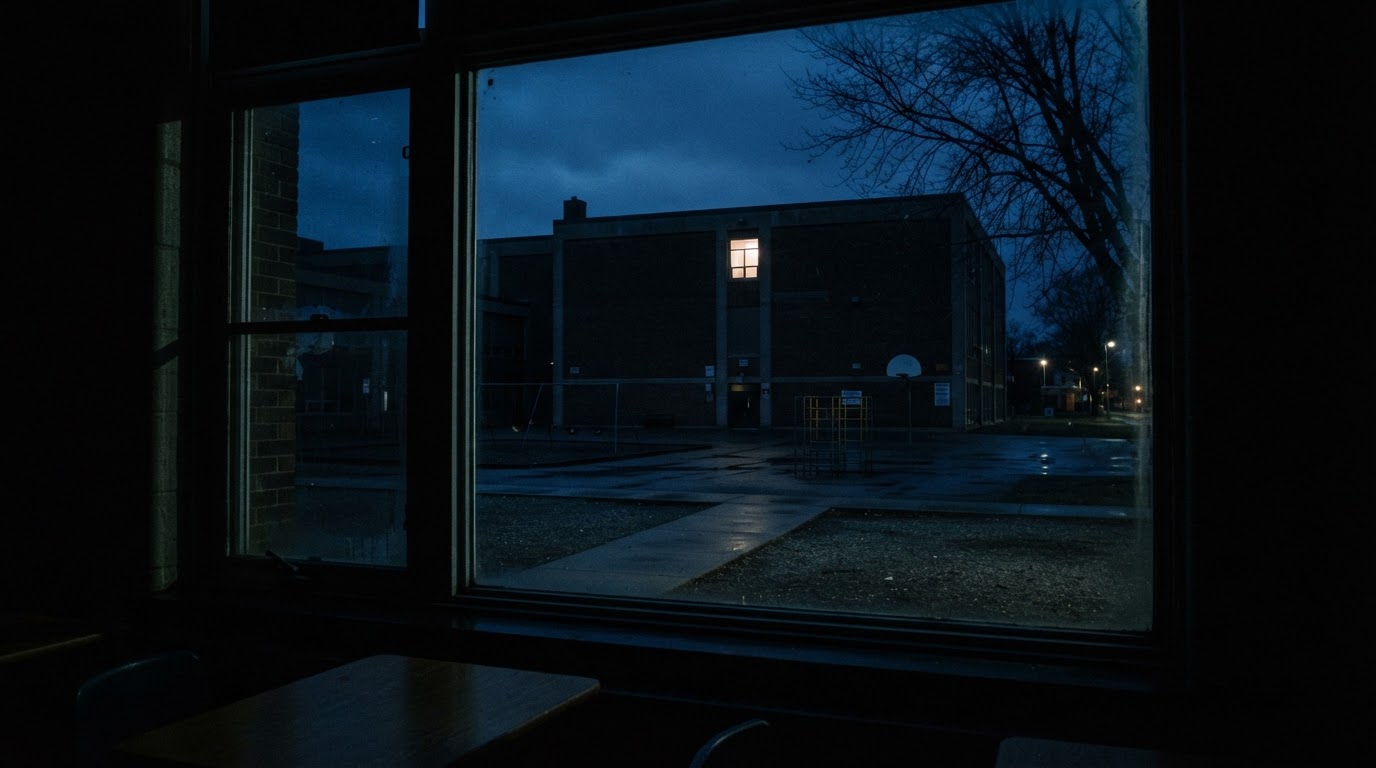
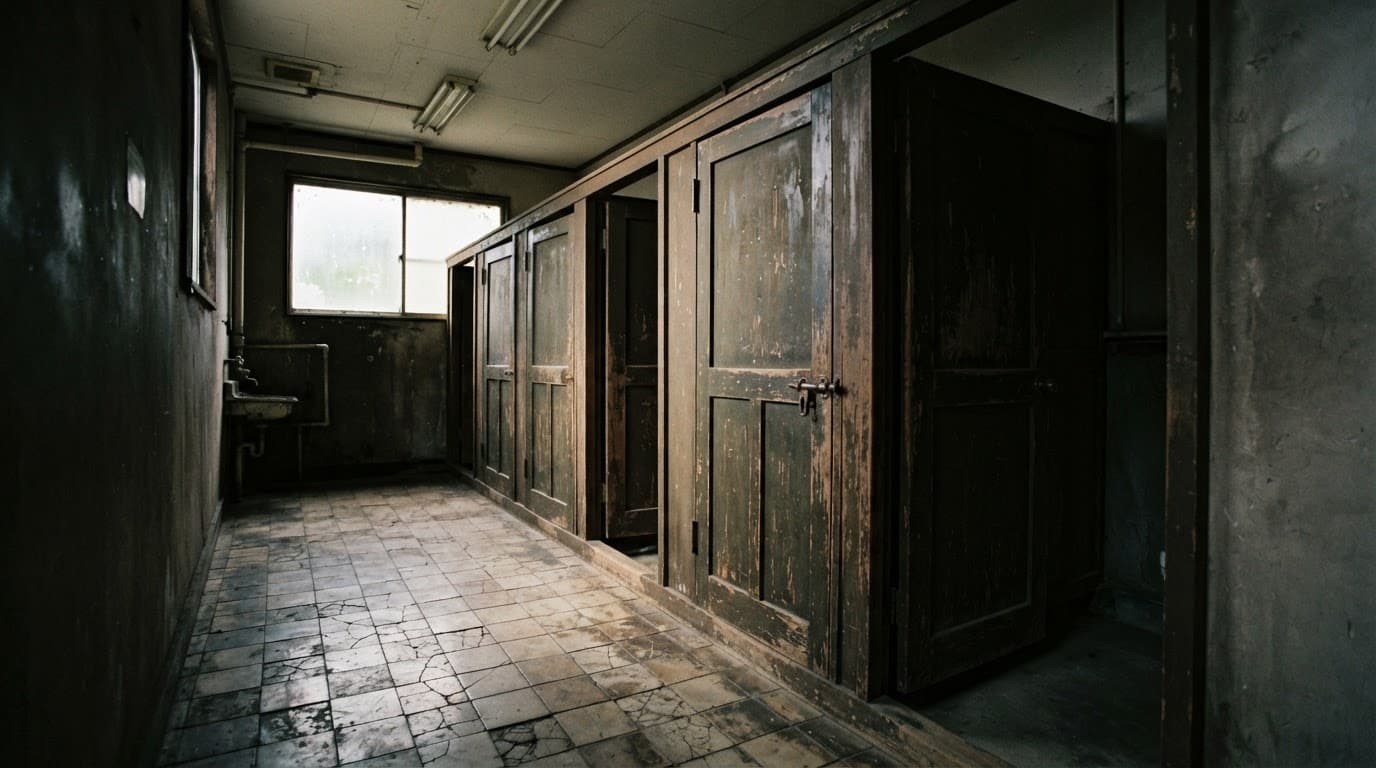
School has let out. The last bus is gone, the classrooms are dark, and the long hallway runs off into a grey that the failing afternoon light no longer reaches. You only meant to be a minute. You went to the far bathroom, the one nobody uses, because it was closest — and now you are in the end stall, the last one in the row, and the building around you has gone so still that you can hear the tap dripping two rooms away. Somewhere a window is loose in the wind. And then, from the empty stall beside you, or from just behind the door, or from nowhere you can point to, a voice speaks. It is calm. It is almost polite. And it asks you a question.
Do you want the red cloak, or the blue cloak?
There is no right answer. That is the whole legend.
This file sat in my drafts longer than most, and the reason was a single line in the older accounts: that the rumor moved eastward along the old highway routes. I had filed Aka Manto with the schoolyard material, the things children invent and discard, and that one detail refused to sit there. Rumors do not have travel routes. Diseases do. I kept re-reading the 1935 Osaka notices and the 1940 Tokyo ones side by side, trying to make them behave like folklore, and they kept behaving like a map.
The Question in the Stall
Every version of Aka Manto — the Red Cloak — turns on the same moment. You are alone, in a toilet stall, most often in a school but sometimes in a public restroom, and a voice you cannot place asks you to choose. The wording drifts from telling to telling, but the shape never changes: it offers you two options, red or blue, and it waits for you to pick one.
Red cloak or blue cloak. Red paper or blue paper. Red vest or blue vest.
And here is the trap that has kept this story alive for the better part of a century: both answers are said to end the same way, only differently. The tellings are careful, and we will be careful too — this is legend, not fact, and the details are always left in shadow. But the tradition is consistent. Choose red, and the story goes that you are marked in red — the color arrives, so to speak, from the inside. Choose blue, and the tellings turn the other way: the color that takes you is the blue of no air, of the breath pressed slowly out. Red is the warm death and blue is the cold one, and the voice does not care which you prefer. It only wants you to choose.
So the seasoned child — because this is, above all, a children's legend, traded in whispers on the way home from school — knows that the answer is not to answer. You do not pick red. You do not pick blue. You do not try to be clever, because cleverness has its own punishments in the older tellings: ask for a different color, name yellow, name a third thing, and the legend has a fate waiting for that too, usually something to do with the water rising in the bowl beneath you. The only move that saves you, in most versions, is the one that is hardest to make when a calm voice is waiting in the dark for a reply. You say nothing. You want nothing. You refuse the choice entirely, stand, and walk out without looking back — and the Red Cloak, denied its answer, lets you go.

Why It Is Always the Toilet
Of all the places a legend could choose, why does the Red Cloak wait in the school bathroom? The answer explains not only Aka Manto but an entire national genre of fear.
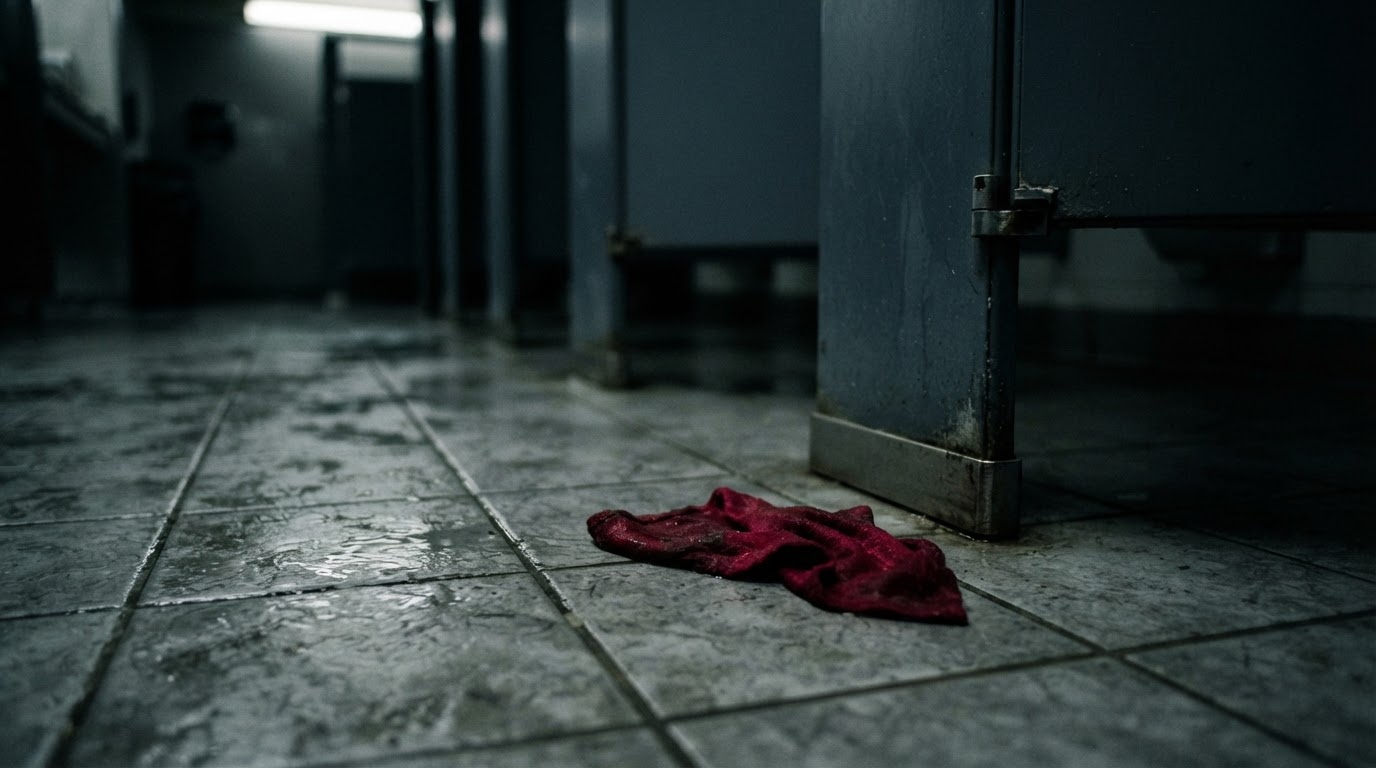
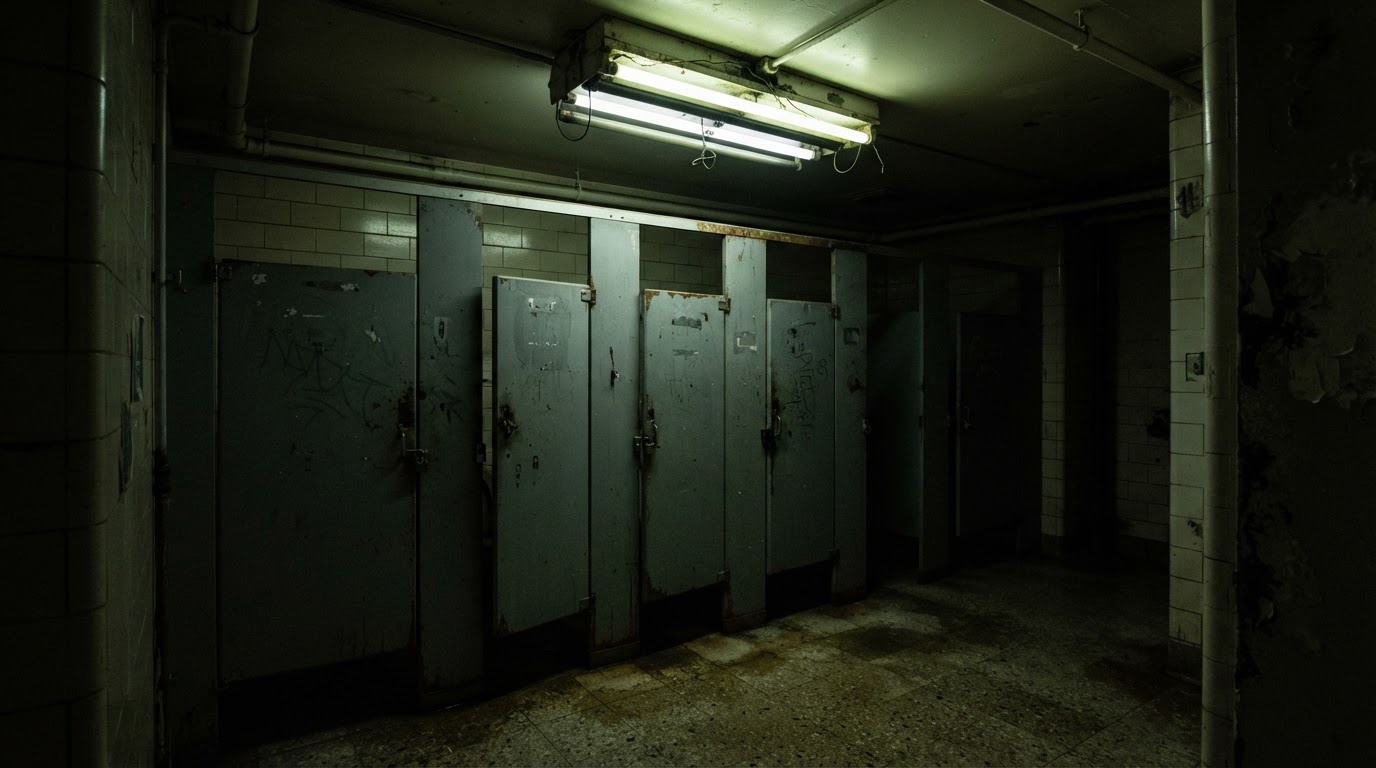
Japanese school horror — gakkou no kaidan, the ghost stories of the school — is one of the richest veins of modern folklore anywhere, and its beating heart is almost always the toilet. There is the music room where a portrait's eyes follow you, the anatomy model that moves at night, the third step on the stairwell that isn't there in the dark. But the toilet comes up again and again, and Aka Manto is its patriarch. The reasons are almost embarrassingly human. A school toilet is the one place a child is required to be alone, behind a locked door, in a large institutional building that is frightening the moment it empties of other children. It is tiled, echoing, often at the end of a corridor, often cold, and lit by the kind of flickering fluorescent tube that seems designed to make a shadow twitch. You are, for a few minutes, as vulnerable and as solitary as a child ever is inside a school — pinned in place, half-undressed, unable to run without a fumble. If you wanted to build a room to frighten a child in, you could not do better than the one every school already has.
Japanese folklore leaned into this so completely that the toilet spirit became a fixture. Aka Manto shares that haunted stall with other famous residents of the school bathroom in the wider tradition — the pale girl-ghost who answers when you knock and call her name in the third stall, and the many local variants that every region and generation seem to grow their own version of. The bathroom, in the Japanese imagination, is a threshold: a small private box where the ordinary world thins out and something can reach through. Aka Manto is simply the oldest and most frightening thing that reaches.
The Rumor That Emptied the Schools
Here is what lifts Aka Manto above an ordinary ghost story: it is not only a legend. It is a documented episode of real mass panic, and one of the earliest and best-recorded cases of a rumor sweeping through a modern society like a fever.
The Red Cloak was not born on the internet. It is old — its roots reach back into the prewar Showa era, the 1930s, a full lifetime before the message boards that produced Japan's more recent terrors. And in those years it was not a story children merely told; it was a fear that moved through the country like weather. The accounts trace an early surge to around 1935, with reports of a caped figure lurking near an Osaka elementary school, and over the following months and years the rumor rolled eastward along the old highway routes toward the capital. By January 1940, Tokyo had become the epicenter. The city talked of little else for a spell: a man in a red cloak — or a red mask, or a red cape, the details shifting mouth to mouth — who preyed on children, above all on young girls, appearing where they were most alone.
What makes this remarkable is what it did. This was not a quiet superstition. Children were reportedly too frightened to walk to school or to use the toilets; parents kept them home; whole schools felt the drag of the rumor's grip. And — this is the detail that turns a folk tale into a genuine historical event — the panic grew large enough that the police were drawn in, treating the phantom in the red cloak not as a nursery tale but as a public-order problem that had to be managed. From Tokyo the rumor spread out again along the same routes it had arrived by, reaching down into northern Kyushu and outward to Japanese communities on the Korean Peninsula, then under colonial rule, by around 1940. A caped bogeyman, existing only in speech, had propagated across an empire.
That is the strangest and most instructive thing about Aka Manto. Before anyone spoke of things "going viral," here was a rumor that behaved exactly like a virus — with a point of origin, a route of transmission along roads and rail, a peak, and a reach that outran any single teller. The Red Cloak is a rare, early, almost clinical specimen of a fear that became contagious. The monster was frightening. But the truly uncanny thing was the speed and completeness with which the mere idea of the monster moved from mind to mind.
Where It Came From
Trace the Red Cloak back far enough and, like all the deepest legends, it dissolves into competing origins that never quite resolve — which is part of why it endures.
One thread reaches back to the late nineteenth century, to a rumored incident sometimes cited from the 1890s in the provinces, a story of a stranger in a foreign-style cape suspected of doing harm to children. Whether that has any real connection to the later panic is disputed, and honestly unknowable; folklore stitches such things together in hindsight. Another thread is more literary and, in its way, more telling: the accounts connect the 1930s outbreak to a kamishibai — a paper-theater street performance, the picture-card storytelling that entertained Japanese children in the prewar decades — bearing the very name "Aka Manto," which itself is said to have drawn on a work by the great author Ryunosuke Akutagawa. If that lineage is real, then the Red Cloak was, at its root, a piece of children's entertainment: a performer's spooky serial that leapt off the picture-cards, out of the storyteller's frame, and into the real bathrooms of real schools, where it stopped being a show and started being a fear.
That crossing — from performance to belief, from a story you paid to be scared by into a thing you were genuinely afraid of on the walk home — is the true birth of the legend, and it hardly matters which specific tale lit the fuse. What matters is that the red cloak itself was, in that era, an image loaded with unease. A cape, a manto, was foreign, Western, uncommon — a silhouette that did not belong, a figure marked out from the ordinary crowd by a single dramatic garment. And red is the color the eye cannot ignore, the color of alarm and of blood, the one hue that turns a shadow into a threat. Dress a lurking stranger in a red cloak and you have built, in two words, a nightmare optimized for a child's imagination.
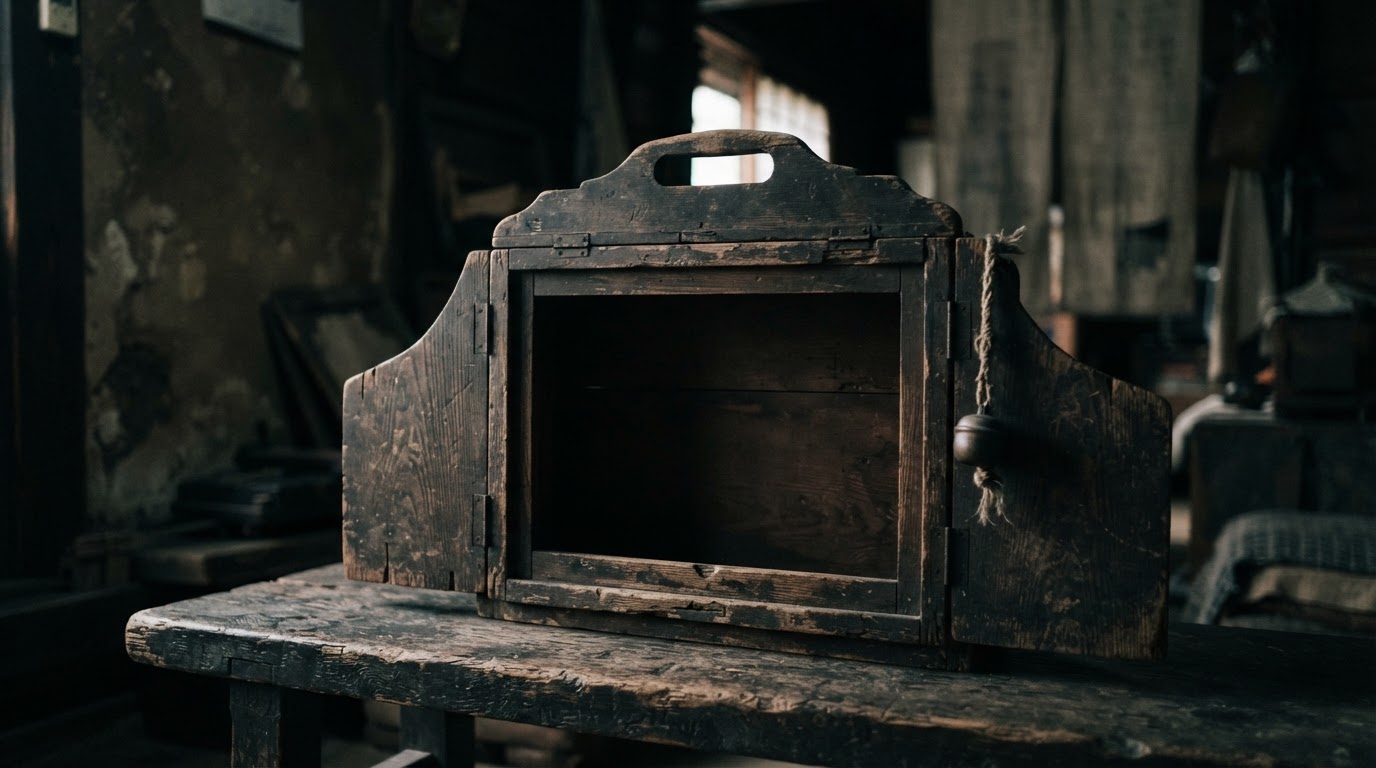
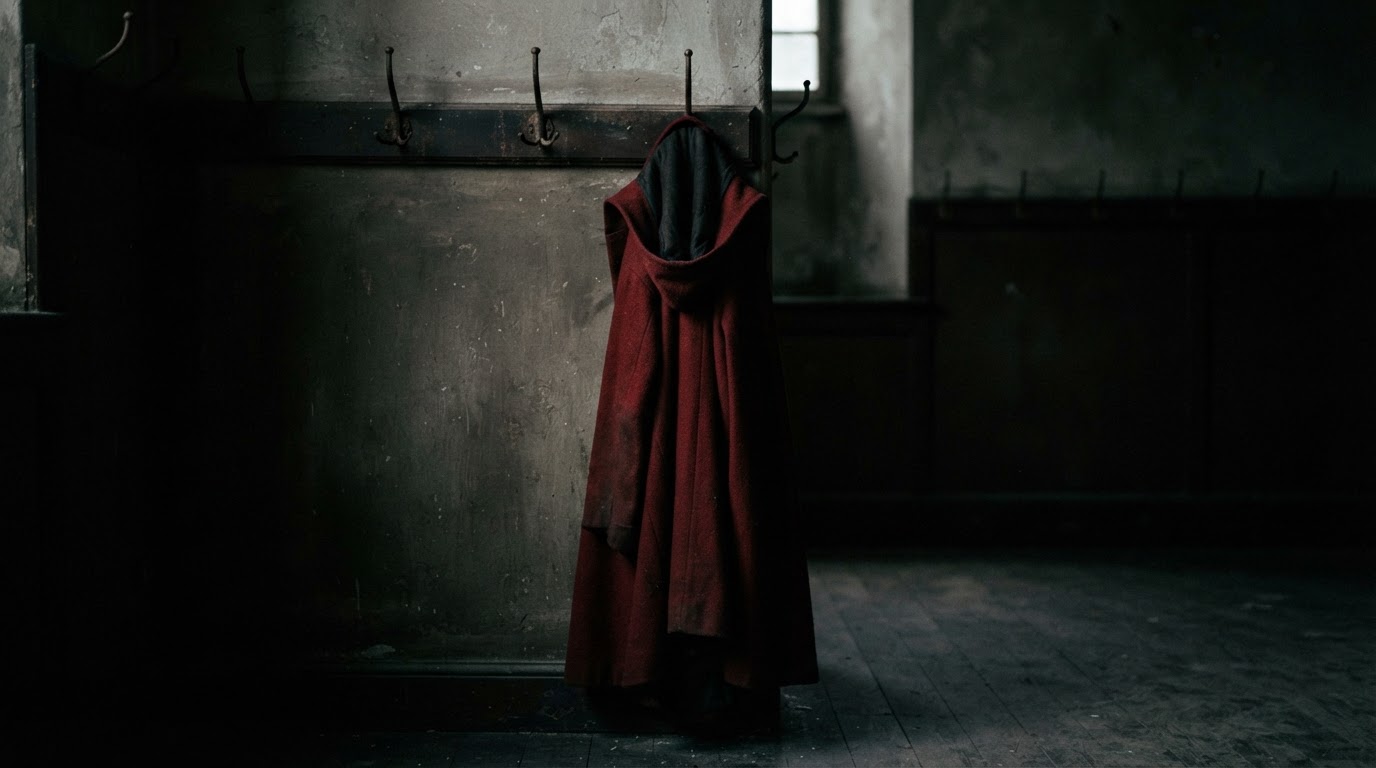
Red Paper, Blue Paper: The Many Faces of the Cloak
Because Aka Manto lived so long and travelled so far, it did not stay one thing. It fractured, region by region and decade by decade, into a family of related terrors that all share the same lethal grammar of the forced choice.
The best-known descendant is the version that swaps the cloak for paper. In this telling — aka-i-kami, ao-i-kami, red paper or blue paper — the voice in the stall asks not which cloak you want but which color of toilet paper, and the outcomes track the colors just as darkly as before: the red that stains, the blue that drains. It is the same trap in humbler clothing, and to a child sitting in exactly the place the question describes, arguably a more intimate horror. Other regional variants change the garment — a red vest, a red hanten, the short traditional jacket — or change the voice's opening line, or fold in a local flavor: in some tellings the thing behind the stall is less a caped man than an older kind of creature out of the yokai bestiary, a hairy hand or a low presence reaching from beneath. The colors themselves sometimes shift, red and white in place of red and blue, with their own paired fates.
But strip away the costume changes and the engine underneath is always identical, and always the source of the dread: a voice, a choice of two, and the slowly dawning understanding that both doors in front of you open onto the same dark room. The variants are just the legend testing which surface frightens best. The machine beneath them never changes.
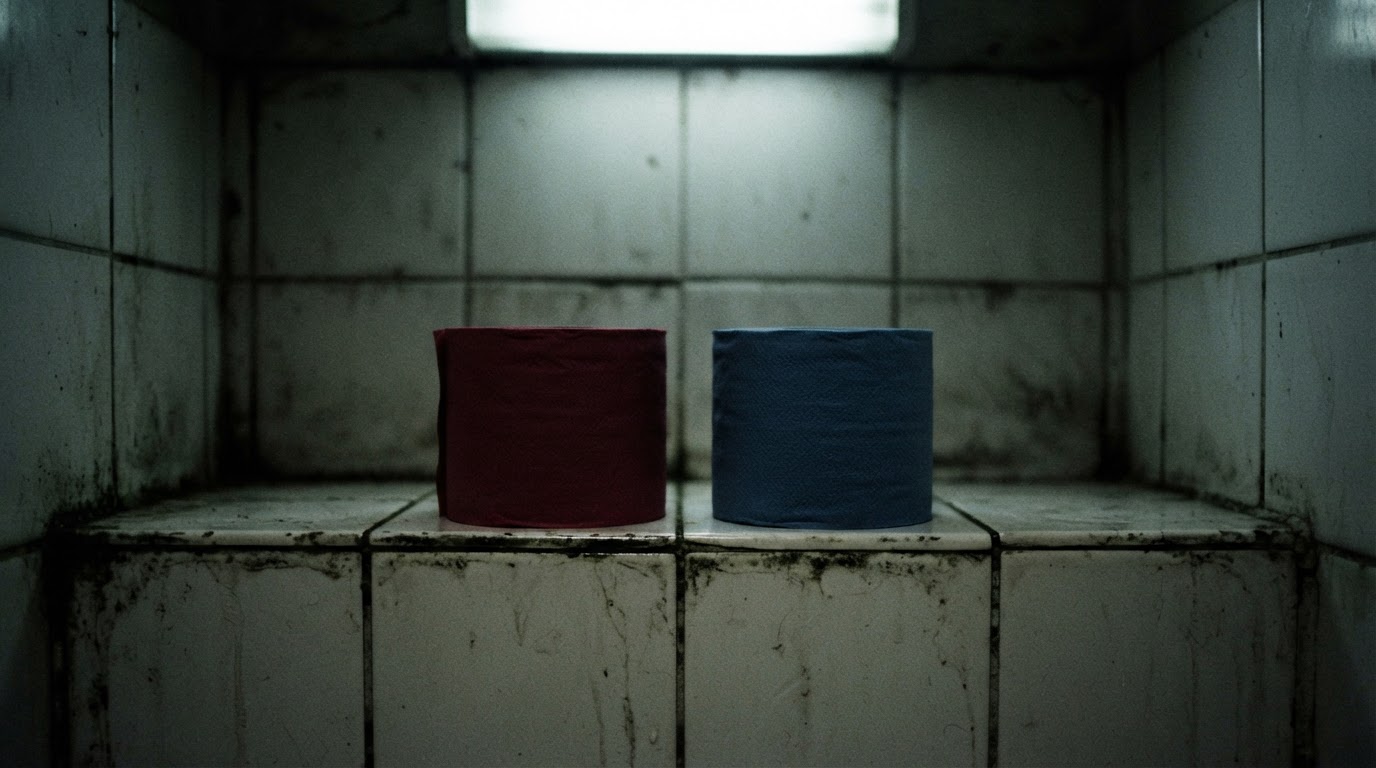
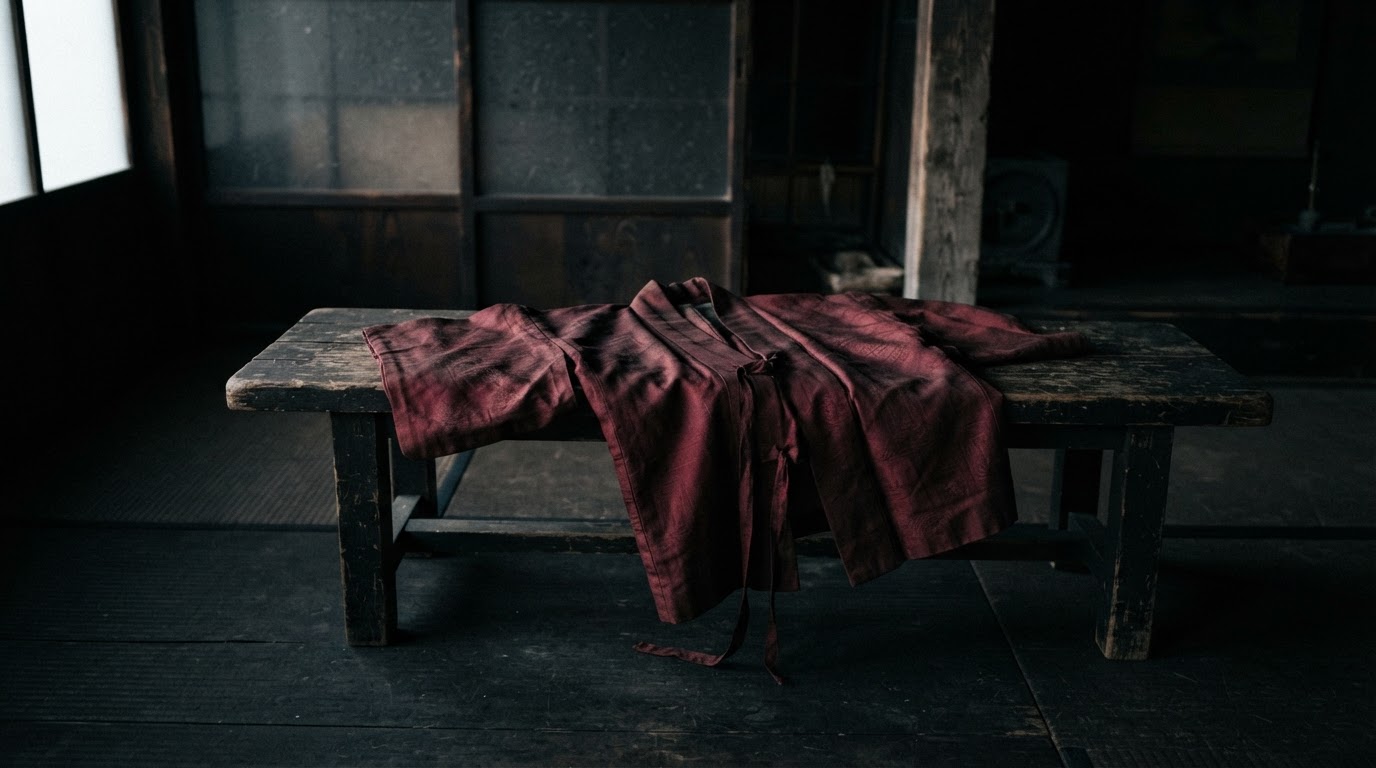
The Horror of the No-Win Question
Sit with Aka Manto long enough and you realize its true monster is not the figure in the cloak at all. It is the question. And the reason the question works — the reason it has frightened children for ninety years and still prickles the neck of an adult reading it in daylight — is that it belongs to one of the oldest and cruelest patterns in human storytelling: the choice that cannot be won.
We are built, deep down, to believe that a choice is a form of power. To be offered options is to be handed a little agency, a chance to steer our own fate; the whole comfort of a decision is the belief that one path is better than the other and that we are clever enough to find it. Aka Manto takes that comfort and turns it inside out. It presents the form of a choice — two clear options, politely offered, time to decide — while quietly removing the thing that makes a choice worth anything: a good outcome to aim for. Red and blue look like alternatives. They are the same fate wearing two coats. And the victim's frantic search for the "right" answer, the yellow, the trick reply, the loophole, is exactly the flailing the trap is designed to produce. Every attempt to be smart is another way of playing a game that was built to be unwinnable.
This shape is everywhere in the world's dark folklore, because it names something we all fear more than any monster: the situation with no exit, the demand we cannot satisfy, the bargain rigged so that agreeing and refusing both cost us. It is the riddling sphinx who kills either way, the deal with the devil whose fine print always wins, the folk-tale bargain that traps you in the accepting of it. And in our own century it surfaced again in a form millions recognized — the childhood games in Squid Game, whose creator has said outright that the show's red-and-blue choices were inspired by exactly this kind of no-win Korean and Japanese schoolyard dread. The pink guards and the two-colored doors are Aka Manto's grandchildren. The cloak changed. The trap did not.
And the escape, when the legend offers one, is quietly profound. You survive the Red Cloak not by choosing better but by refusing to choose at all — by recognizing that the only winning move in a rigged game is to decline to play it. The voice needs your answer. Give it nothing, and its power over you collapses. There is a whole small philosophy folded into a bathroom ghost story: that the deadliest questions are the ones we must learn not to dignify with a reply.
The Cloak in the Modern World
For a rumor that peaked before the Second World War, Aka Manto has aged with unusual grace. It never left. It slid out of the panic of the 1930s and settled into the permanent bloodstream of Japanese school lore, retold on every generation's walk home, refreshed in every era's playground. It appears in the anime that catalogued these school ghosts for a new audience at the turn of the millennium; it lends its name to video games built entirely around that fatal question in the stall; it shows up in manga, in short films, in the endless online retellings where old folklore finds its newest campfire. The Red Cloak sits comfortably in the same modern pantheon as Japan's other exported terrors — the slit-mouthed woman of Kuchisake-onna, who asks her own trap of a question; the impossibly fast Teke Teke; the eight-foot figure of Hachishakusama — legends that crossed the ocean intact because the fear inside them needs no translation.
And that, finally, is why the cloak still hangs there in the dark at the end of the corridor. Not because anyone truly believes a caped phantom waits in the last stall — but because the thing it dramatizes is real and permanent. Every one of us has stood, at some point, before a choice with no good answer, a question designed so that we lose either way, a voice that wants a reply we cannot safely give. Aka Manto took that universal, sourceless dread and gave it a red cloak and a locked stall and a polite, patient voice, and in doing so made it small enough to whisper on the way home from school and large enough to outlive the century that birthed it.
So the next time you find yourself alone in a too-quiet building, in the last room at the end of the hall, and the silence seems to lean in a little too close — remember the one rule the legend leaves you. If a calm voice offers you a choice between two colors, do not weigh them. Do not search for the clever third answer. Want neither. Say nothing at all, and walk out into the light. That refusal is the only thing the Red Cloak has never learned to answer.
What I cannot get past, closing this one, is the kamishibai. If that lineage holds, then somewhere in the 1930s a street performer stood over his picture-cards and asked a paying crowd of children which colour they wanted, and the question walked out of the frame and did not come back. I have gone looking for where the performance ends and the fear begins, and there is no seam. Only a story that stopped needing a storyteller.
---
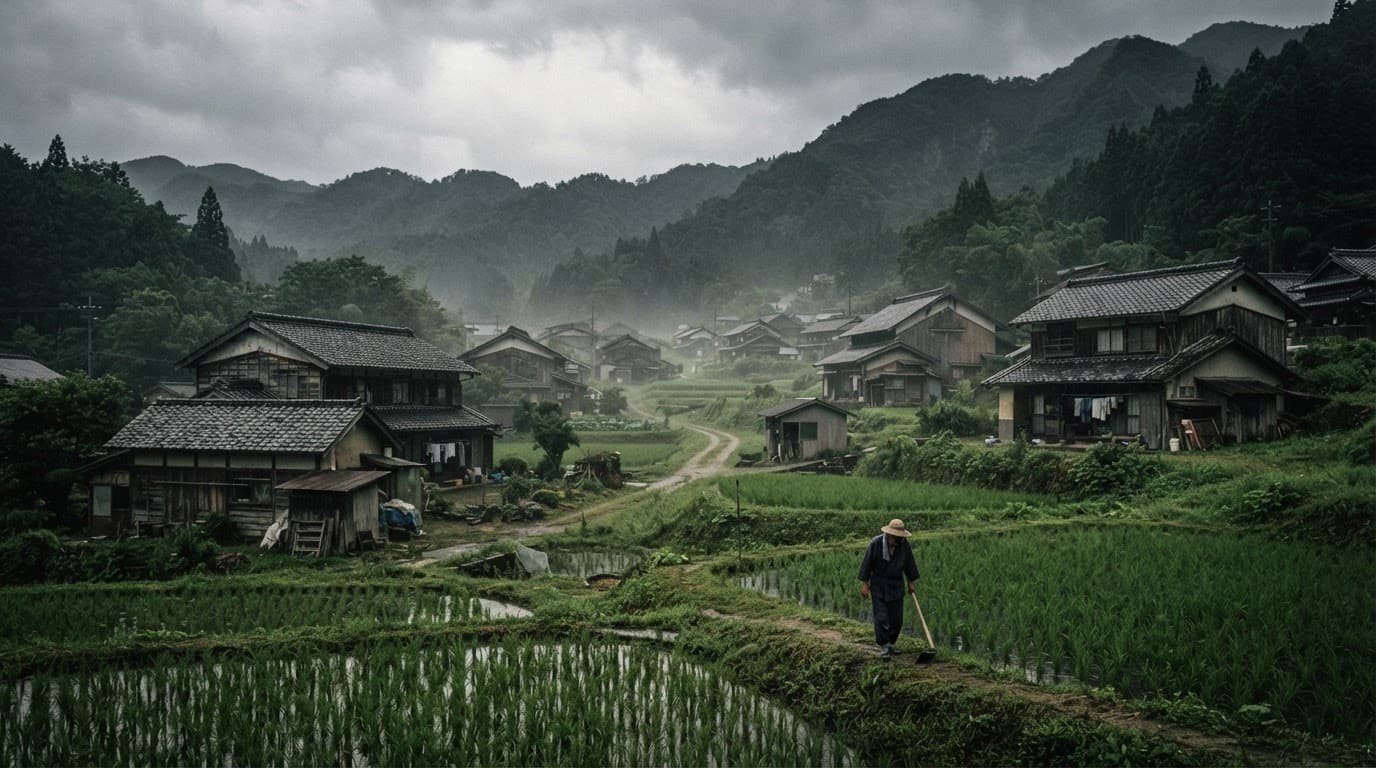
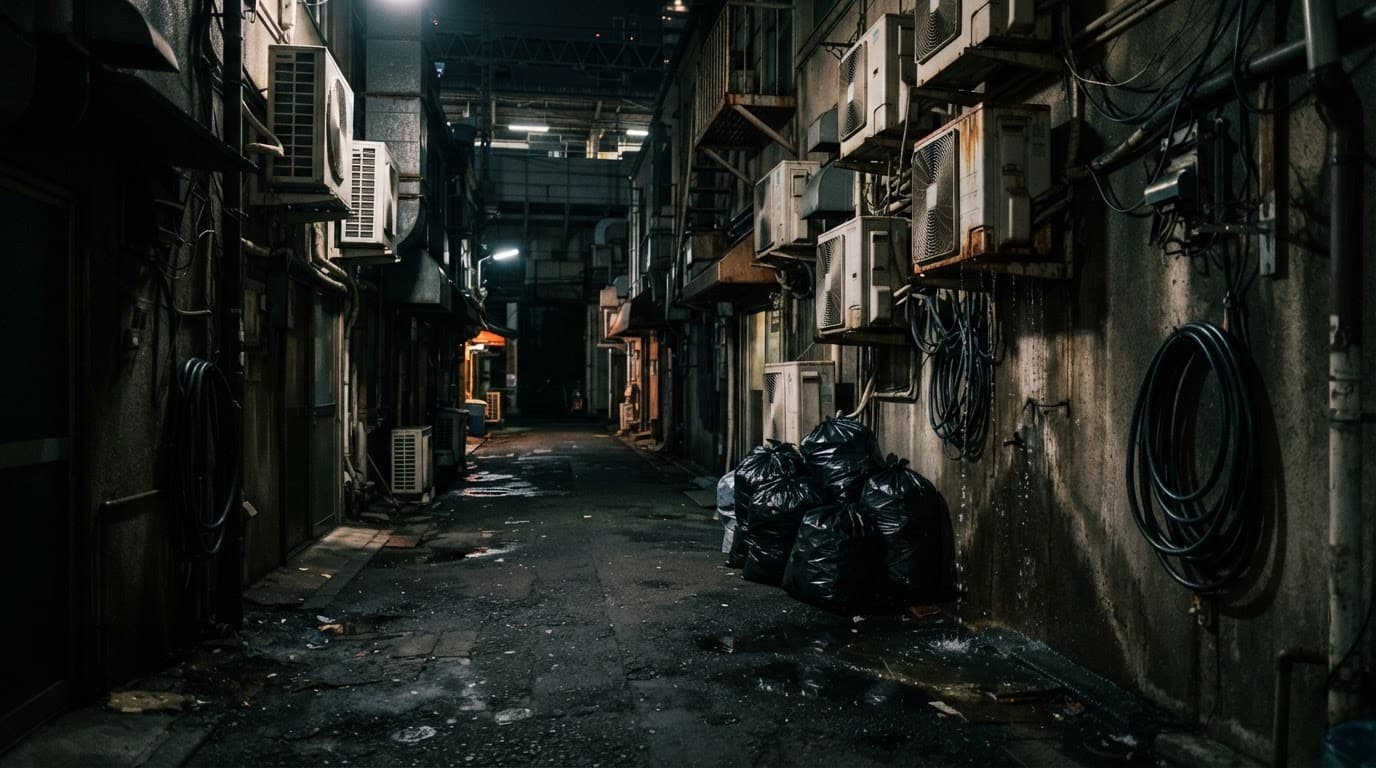
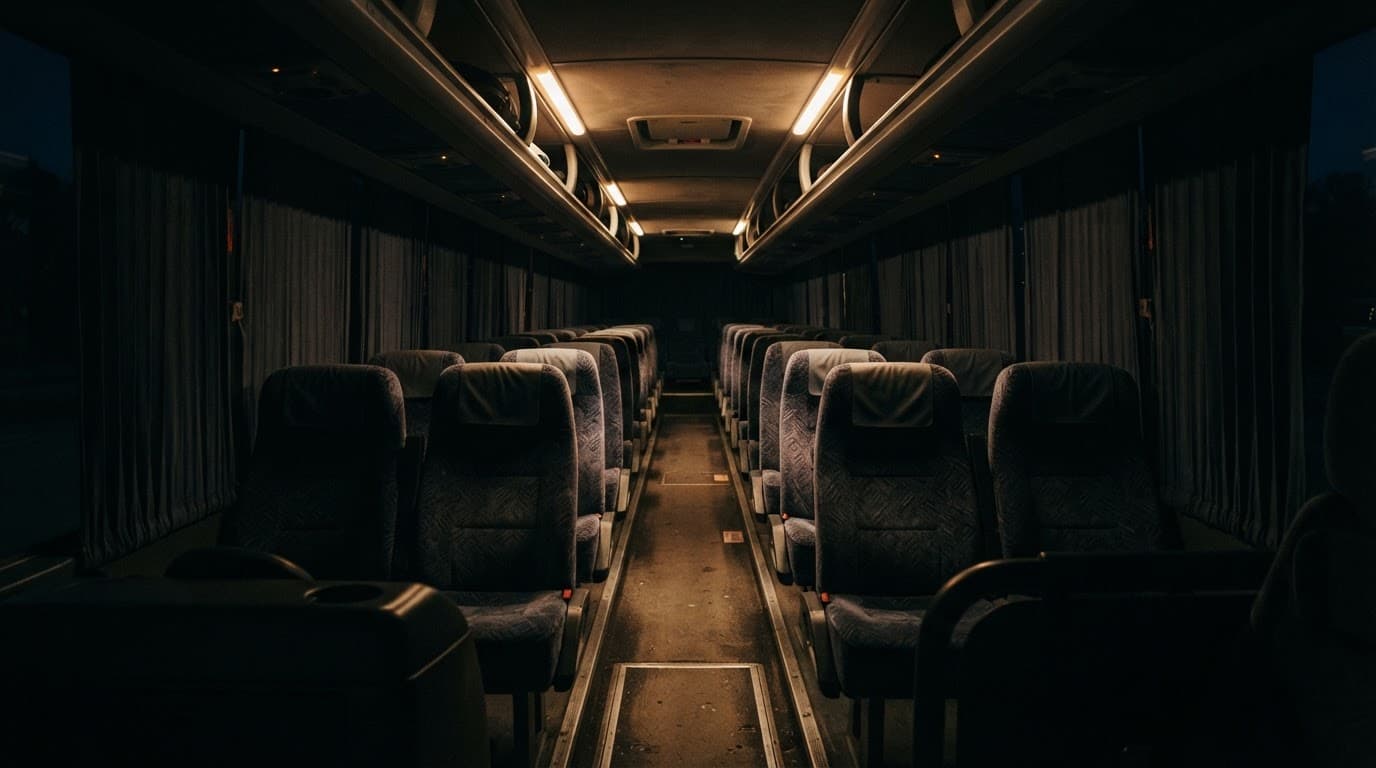
The images and video in this article are AI-generated works produced to convey the mood of the story, and are not photographs of any actual person or event.
Comments
No comments yet — leave the first one.