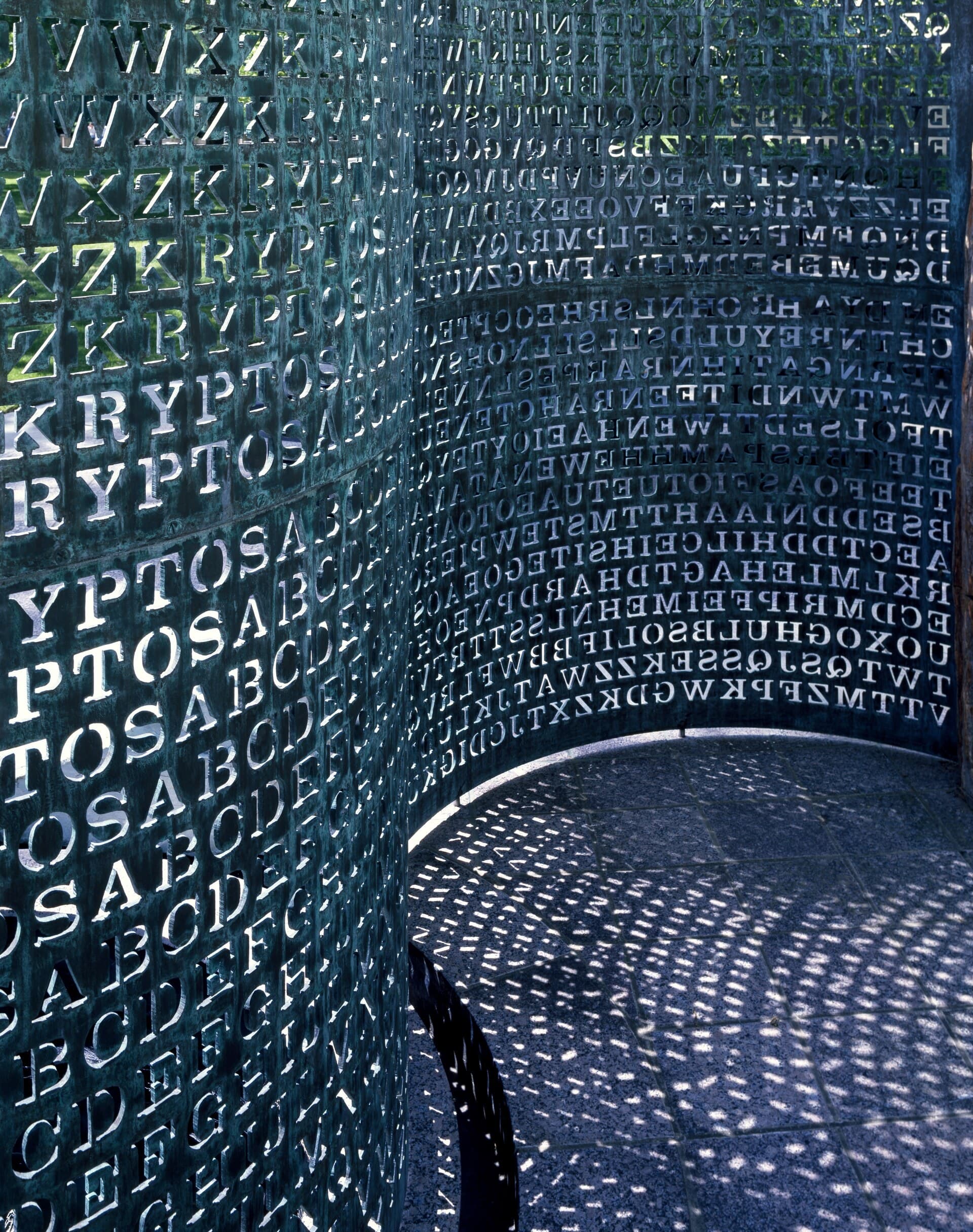
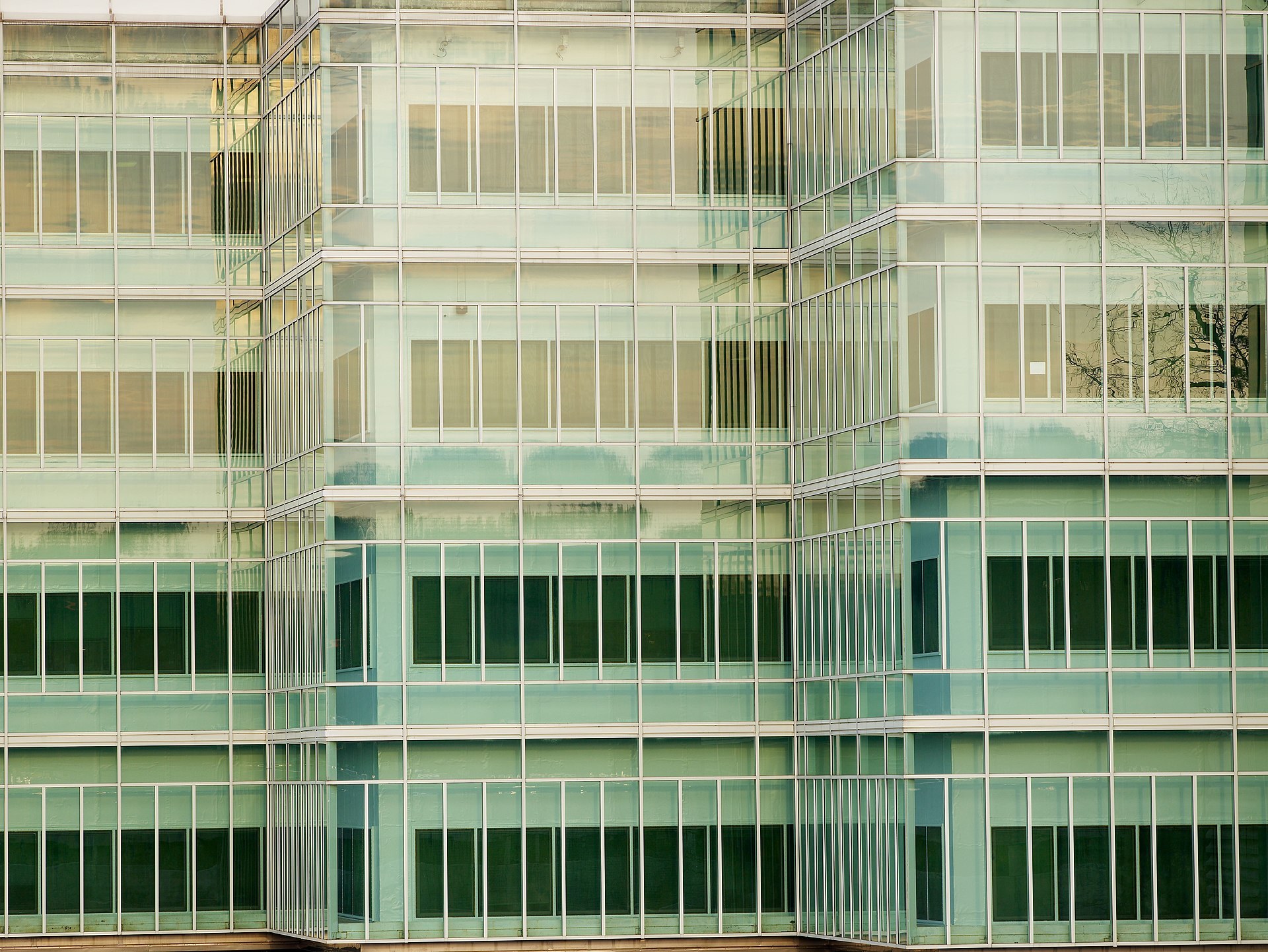
In a quiet courtyard behind the headquarters of the Central Intelligence Agency in Langley, Virginia, there stands a strange sculpture. A tall sheet of copper, curved like a scroll of paper feeding out of a machine, catches the light, and across its whole surface run row upon row of letters — nearly eighteen hundred of them, cut clean through the metal. To a passing eye it might read as abstract art. It is not. Every one of those letters is part of a cipher, and hidden inside the copper are four separate coded messages. Three of them have been read. The fourth has resisted the world's cryptographers, the analysts of the CIA and the NSA, and a global crowd of obsessives for more than three decades. The man who made it, an artist named Jim Sanborn, has spent that entire time as the only living person who could say what the last passage means. This is the story of Kryptos — a puzzle that the intelligence agency built into its own front yard, and then could not solve.
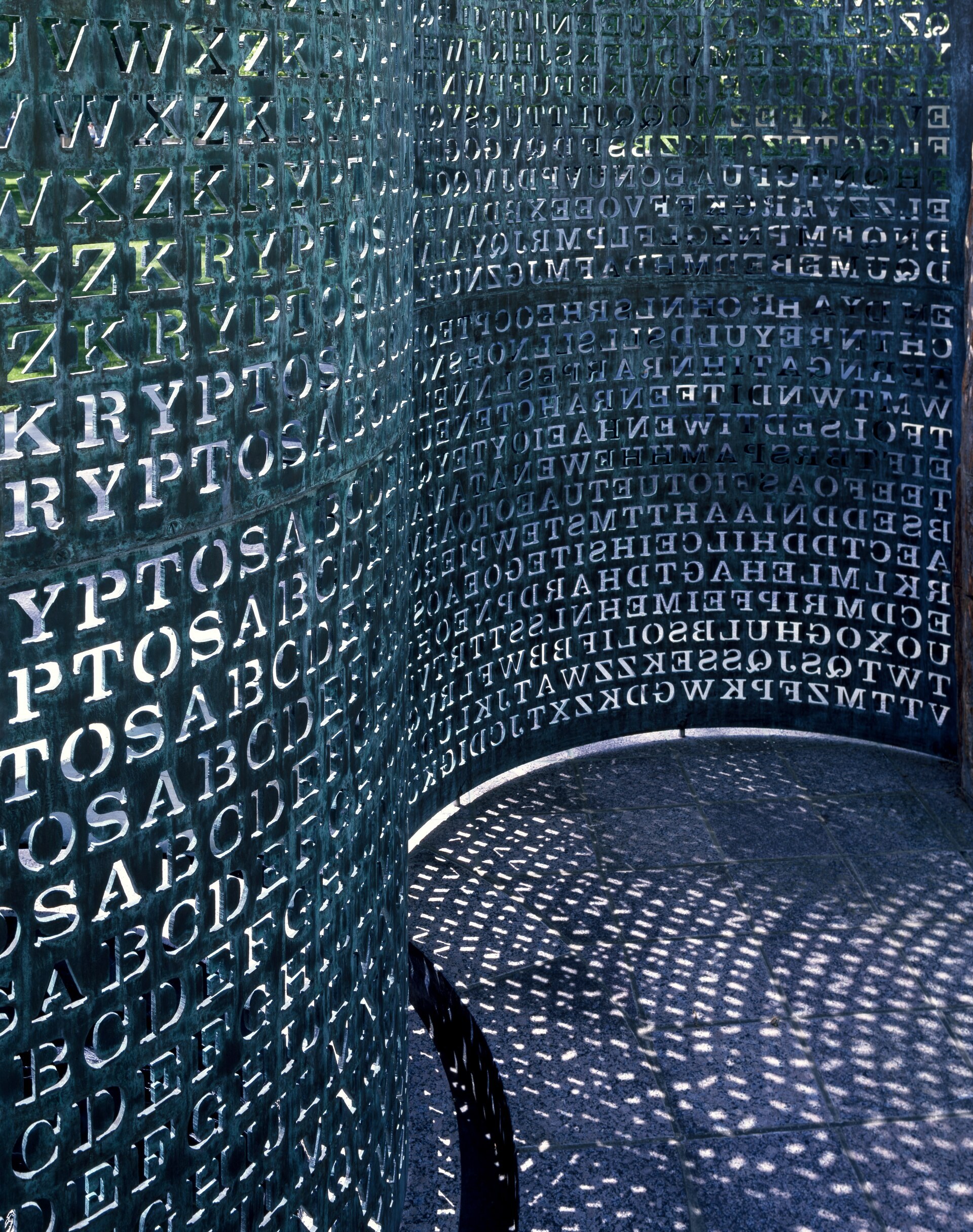
Most of what I keep in this archive is missing people and unexplained deaths, and Kryptos sat in a folder marked "pending" for a long time because it seemed too clean to belong here — a puzzle, not a wound. What moved it into the collection was a misspelling. When I first went through the solved plaintexts and found iqlusion sitting there in K1, deliberately wrong, I stopped and read the line four or five times. Codes are made to be opened. A man who salts his own cipher with errors is not making a lock; he is making a thing that will answer you incorrectly forever, and mean to.
The Sculpture in the Courtyard
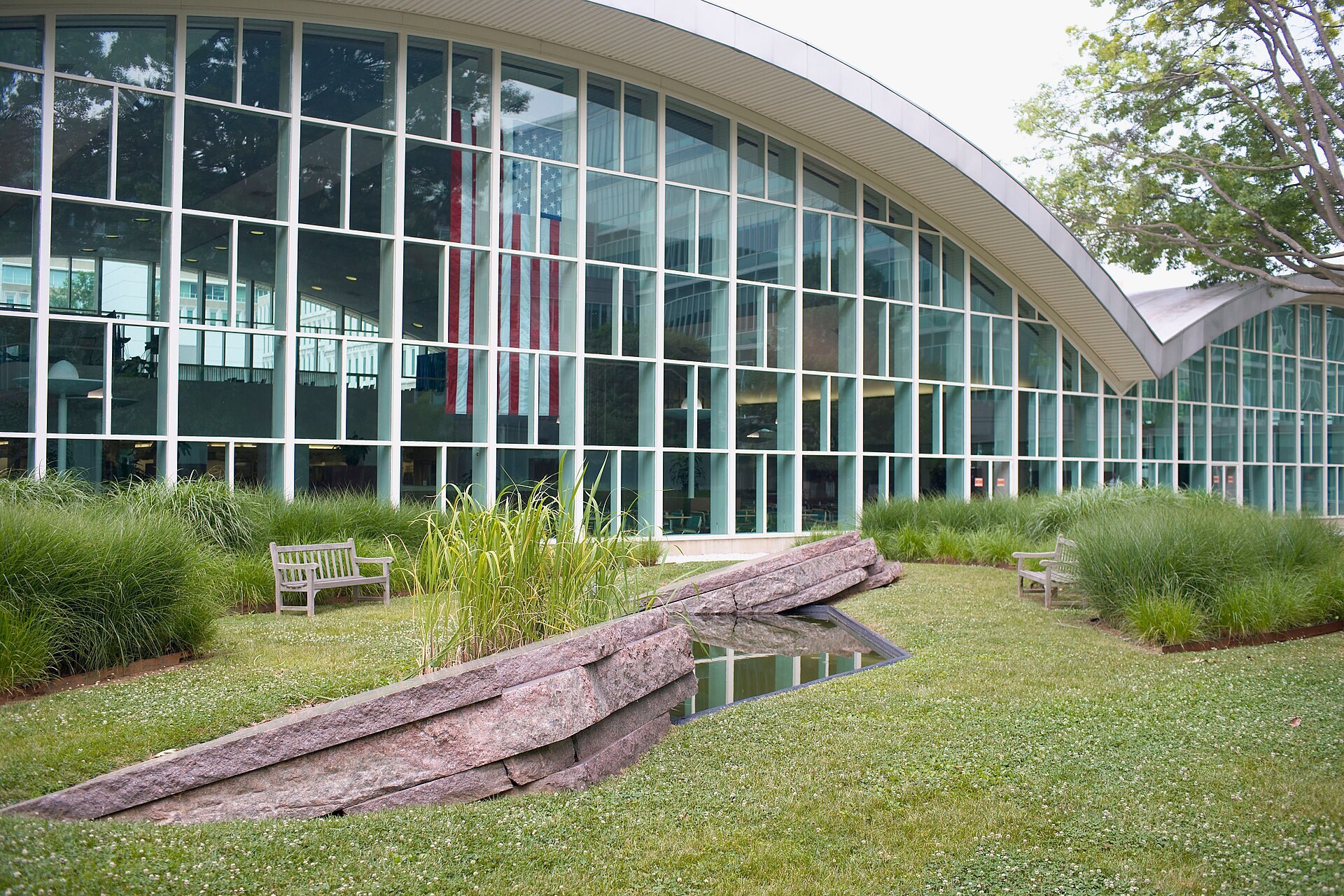
Kryptos — the word is Greek for "hidden" — was dedicated on November 3, 1990, in a landscaped courtyard at the newly built western wing of CIA headquarters. It is the work of Jim Sanborn, a sculptor from Washington who had made his name working with natural materials and the language of science, and who was commissioned to create a piece for the agency's new campus. What he delivered was not a monument or a figure but a machine for keeping a secret.
The main element is a large S-shaped screen of copper, standing around ten feet tall, that curves gently as though a long sheet were peeling away and rolling over on itself. Through this copper sheet, letters have been cut clean out — a dense field of characters, roughly 1,800 in all, so that light passes through the gaps and throws the text as shadow onto the ground and the surrounding stone. Around the sculpture Sanborn set other elements: slabs of petrified wood, a pool of water, pieces of polished granite, and a copper plate engraved with a Vigenère table, a classic tool of encryption. The courtyard itself was designed as part of the work. But it is the letters on the great copper scroll that have made Kryptos famous. They are not decoration. They are a code — four of them, in fact, laid one after another down the screen, which cryptographers came to label K1, K2, K3, and K4.
The Man Who Built the Secret
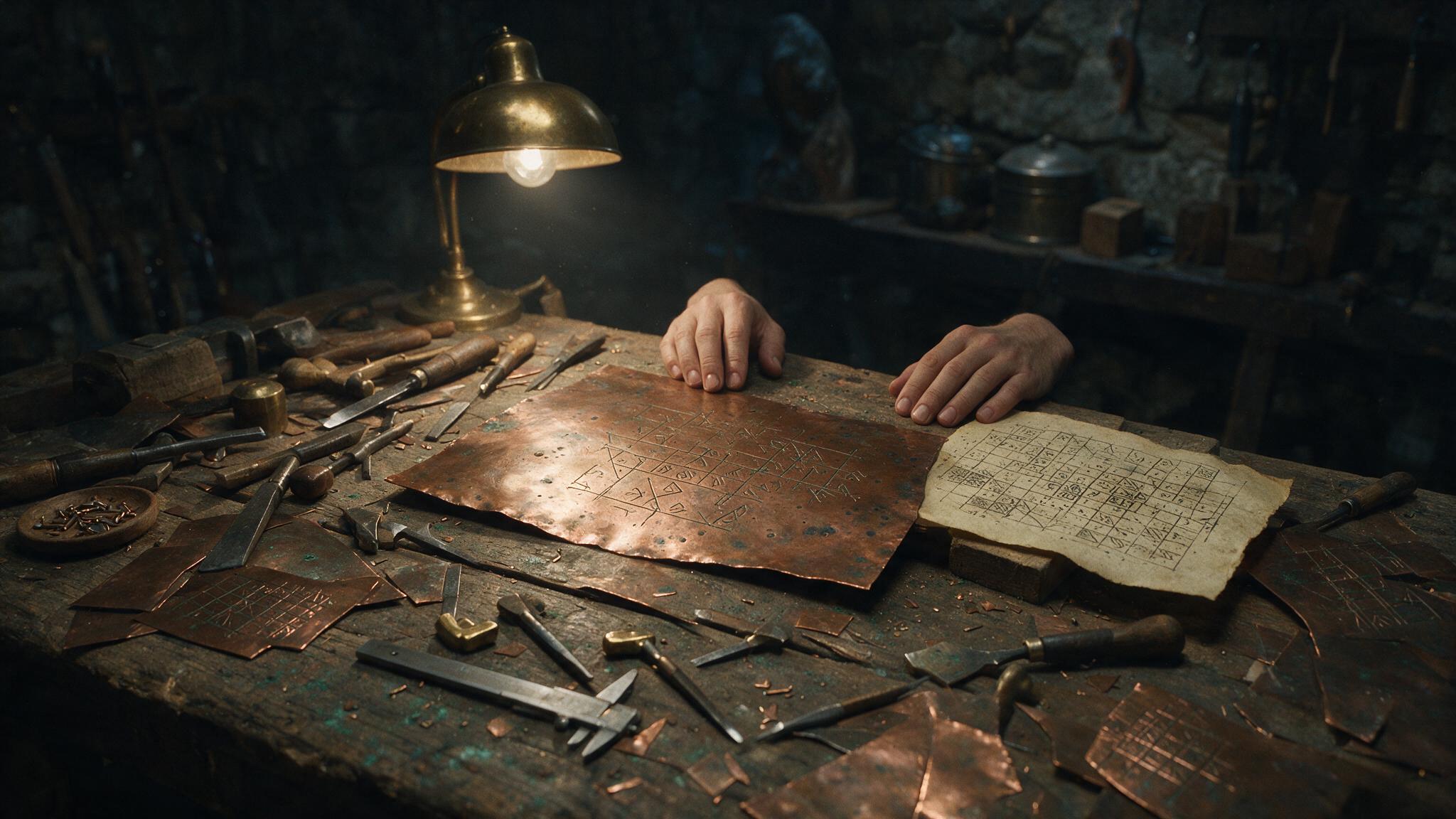
To encode the messages, Sanborn did not work alone. He was an artist, not a cryptographer, and so before he cut a single letter he sought out someone who knew how codes were really made. That man was Ed Scheidt, a recently retired chairman of the CIA's Cryptographic Center — in effect, the agency's departing chief of codes. Over a series of meetings, Scheidt taught Sanborn a range of encryption techniques, from methods a century or more old to variations of his own, and the two worked out how the four messages of Kryptos would be locked away.
What Scheidt gave Sanborn was a toolkit, not the finished answers. Sanborn chose the plaintext of each passage himself, wrote it in his own words, and then applied the ciphers — and, crucially, he made his own alterations along the way, sliding in deliberate misspellings and small irregularities that would later torment the people trying to read the work. By design, only two people ever knew everything about how Kryptos was built: Sanborn, who wrote and encoded it, and Scheidt, who taught him the methods. And Scheidt, by his own account, was never told the actual plaintext of the messages. That left exactly one person on earth who knew, in full, what the copper scroll was saying. It has stayed that way, more or less, for thirty-five years.
Three Codes Broken
For the first nine years, Kryptos kept all its secrets. Then, in 1998, an analyst at the CIA named David Stein cracked the first three passages by hand, working in his own time over many months — though the agency kept his achievement quiet internally. The public breakthrough came in 1999, when Jim Gillogly, a computer scientist in California, announced that he had used a computer to solve the same three sections, K1 through K3. Only afterward did the CIA acknowledge that one of its own had gotten there first. A separate team at the NSA, it later emerged, had also quietly solved the same three by the early 1990s.
The three solved passages read like fragments of something half-remembered. K1, deciphered with the keyword PALIMPSEST, is a line of Sanborn's own writing: "Between subtle shading and the absence of light lies the nuance of iqlusion" — the last word misspelled on purpose. K2, unlocked with the keyword ABSCISSA, speaks of something invisible, of information gathered and transmitted "undergruund" — again a deliberate error — and buried "out there somewhere," ending with the question, "Who knows the exact location? Only WW." K3 is a route-transposition cipher, and its plaintext is a paraphrase of the archaeologist Howard Carter's account of first peering into the tomb of Tutankhamun — "slowly, desparatly slowly," Sanborn wrote, misspelling once more, until "details emerge." Three passages down, their strange half-poetry decoded. And then the trail ran cold at the fourth.
K4: The Ninety-Seven Characters
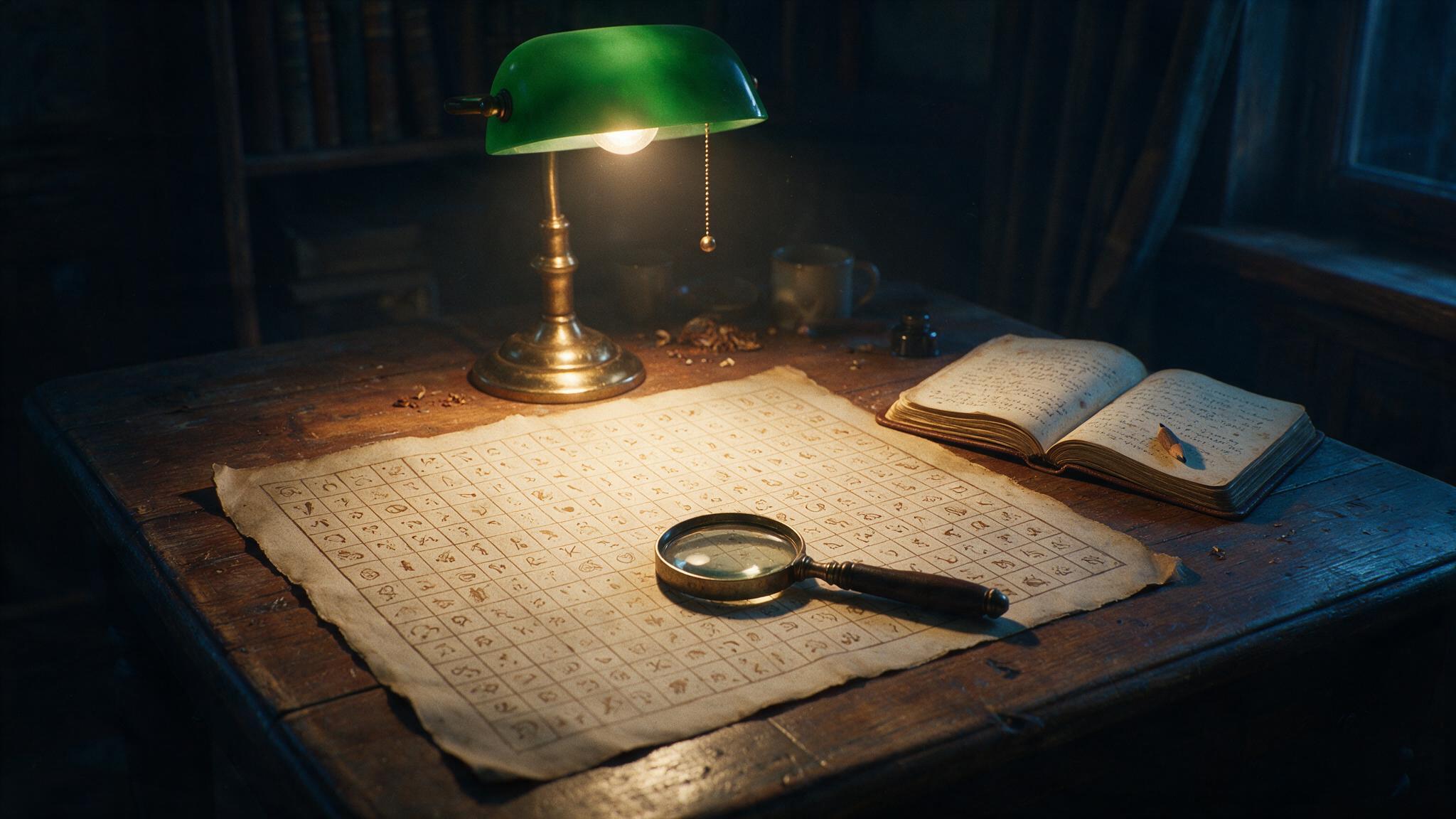
What remained was the final passage, K4 — a block of just 97 letters near the bottom of the copper scroll. On the face of it, ninety-seven characters should have been the easy part; there was less of it than any of the others. Instead it became one of the most famous unsolved ciphers in the world. Whatever method Sanborn used on K4, it did not yield to the techniques that had opened the first three. Computers were thrown at it. Professional cryptanalysts, hobbyists, mathematicians, and whole online communities picked over those ninety-seven characters, year after year, and got nowhere.
As the decades passed and no one broke it, Sanborn began, very slowly, to release clues. In 2010 he revealed that six of the letters in K4, at a certain position, decode to the word BERLIN. In 2014 he added that the letters immediately following spell CLOCK — together, BERLIN CLOCK, a reference to the elaborate Weltzeituhr world-time clock in Berlin. In 2020 he gave up one more fragment, NORTHEAST, and confirmed an earlier stretch reading EAST. Each hint narrowed the field a little, and each time a fresh wave of would-be solvers descended on the problem — and still the full 97 characters would not fall. Sanborn, meanwhile, grew weary of the flood of proposed solutions sent to him by strangers, most of them wrong, some accompanied by unsettling certainty. He was, he said, the only person who could confirm an answer, and for thirty years no one had sent him the right one.
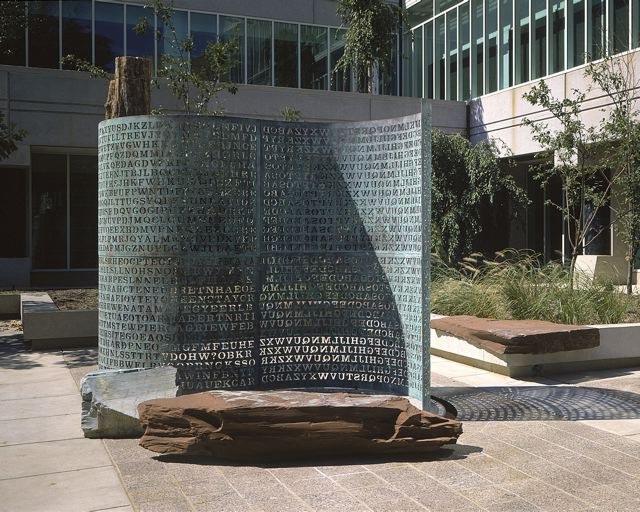
Photo: Wikimedia Commons, CC BY-SA 3.0
The Secret That Slipped Out
For most of its life, the safest place for the K4 solution was inside Jim Sanborn's own head. But in 2025 the story took a turn that no cryptographer had planned for. Sanborn, by then in his late seventies and tired of maintaining the puzzle, decided to sell his complete Kryptos archive — the charts, the coding notes, the record of how the sculpture was made, and with them the answer to K4 — at auction, so that the burden of the secret would pass to someone else.
Then the secret nearly escaped on its own. In the run-up to the sale, two determined sleuths noticed a detail in the auction catalog: a reference to Sanborn's original coding charts, which had at one point been deposited in his archive at the Smithsonian. Following that thread, they tracked down the material and reconstructed the plaintext of K4 before anyone had bid a cent. In early September 2025, Sanborn opened his email to find a message from a journalist containing the full decoded text of the passage he had guarded for thirty-five years. The archive was hastily sealed. When the auction went ahead that November, Sanborn's complete Kryptos archive sold to an anonymous buyer for $962,500 — and the winning bidder agreed to honor Sanborn's wish and keep the K4 answer secret, so that the public competition to crack it by cryptography alone could go on. And so the strange situation stands: the plaintext of K4 has technically been recovered, yet it remains locked away, known only to a tiny circle who have promised not to tell.
A slow drift across the letters of a coded copper screen in a silent courtyard — a mood recreation, not real footage.
What K4 Actually Says
If the answer was recovered, what does it say? According to the reporting around the 2025 leak and auction, the reconstructed 97-character plaintext of K4 is a short, almost anticlimactic instruction. It reads, in essence, as a direction: that there is something positioned to the east-north-east of the sculpture, a reference to the Berlin Clock, and a pointer to a location — the message functioning less as a grand revelation than as another clue, a signpost pointing onward. In other words, cracking K4 does not end the puzzle so much as open the next door. Sanborn has long hinted that beyond the four passages lies a further riddle, a K5 — a final layer that the words of K4 are meant to set in motion, and that even a full decryption of the sculpture may not resolve.
The part of the record I keep returning to is not the cipher but the auction line: $962,500, an anonymous buyer, and a promise to say nothing. I have filed a great many secrets that were kept by accident — papers lost, witnesses dead, offices burned. This is the only one I have that is being kept on purpose, by someone whose name I cannot write down, in a country where the answer is now legally property. Somewhere there is a person who knows what the ninety-seven letters say and has agreed, for money, to let the rest of us keep guessing.
This is the peculiar cruelty of Kryptos. It was built to be solved, and yet its maker layered it so that solving it only deepens the mystery. Three passages of half-poetry about light and illusion, about something invisible buried out there somewhere, about an archaeologist staring into a tomb. A fourth passage that took thirty-five years and, in the end, was not so much broken as leaked. And behind it all, the suggestion of one more secret still waiting. The copper scroll has stood in that courtyard for over three decades, in plain view of the world's most secretive agency, quietly holding a message that almost no one is allowed to read. What the last of it truly means — and whether anyone will ever crack it honestly, letter by letter, rather than find it slipped out of a sealed archive — is a question the sculpture keeps to itself.
---
This article combines actual photographs of the Kryptos sculpture and CIA headquarters with AI-generated images and video produced to convey the mood of the story.
Comments
No comments yet — leave the first one.