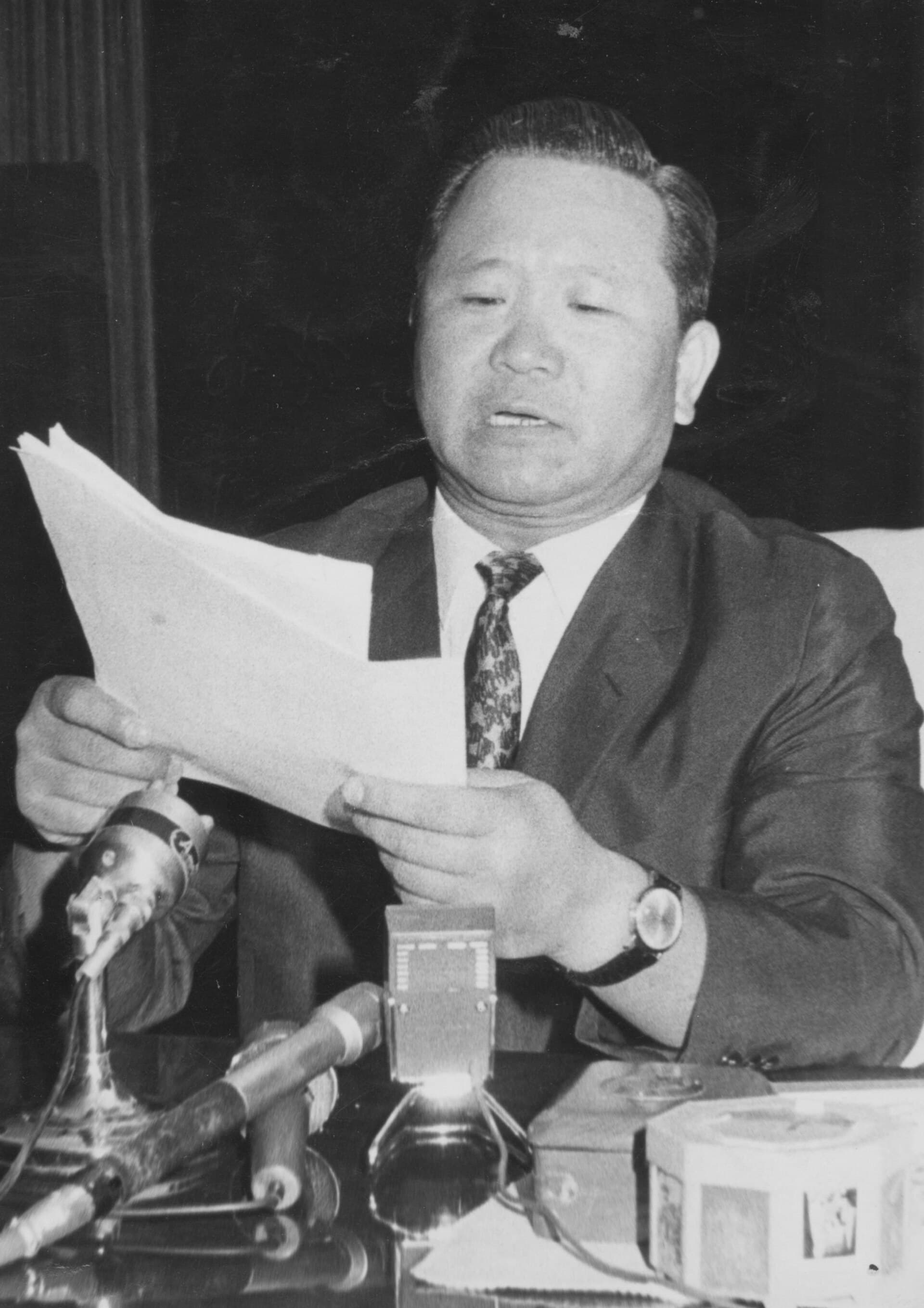
On the evening of October 7, 1979, a heavy-set Korean man in his early fifties left a Paris hotel and walked out into the autumn dark. He had money in his pockets, a habit for the gambling tables, and more secrets in his head than almost any living person. He was last seen near a private club in the city. Then he was gone — no goodbye, no note, no ransom call, no body. He had once commanded the most feared institution in South Korea, an intelligence service that could make citizens vanish at will. Now he had vanished himself, into a foreign city, on a night that has never fully given up its answer. Twenty days after he disappeared, the president who had reason to want him dead was assassinated at a dinner table in Seoul, and the country fell into chaos. This is the story of Kim Hyung-wook — the spy chief who knew too much, wrote it all down, and was erased before the world could finish reading.
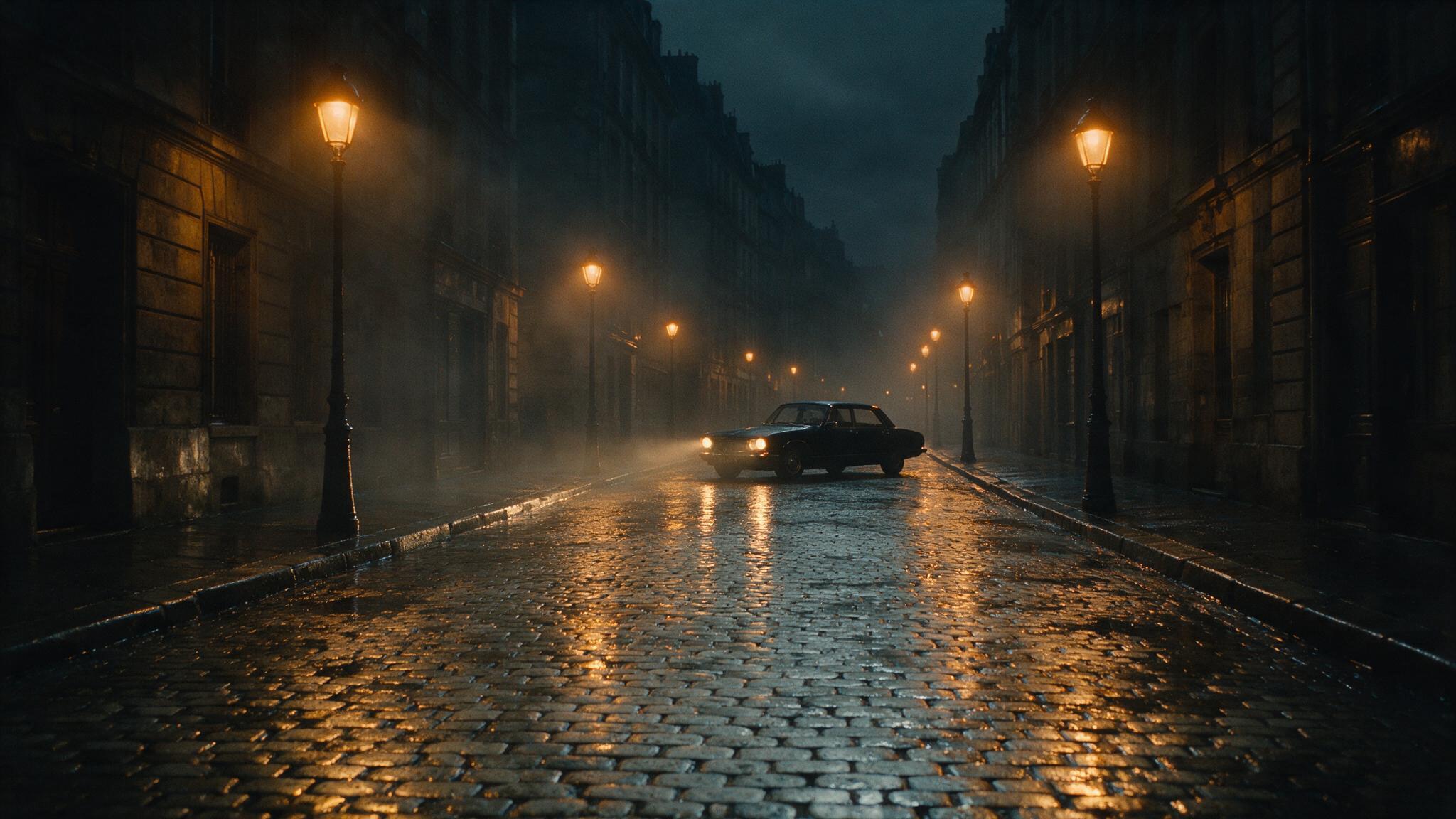
Certain files in this collection are difficult to build because the sources contradict each other. This one was difficult because so much of it is on the record and it still leads nowhere. I opened it while working through the Koreagate testimony, where you can read the former director of the KCIA describing his own government's operations under oath, in a foreign capital, in his own words. Six years later he steps out of a Paris hotel and the documentary trail simply stops. I have assembled entries out of far thinner material than this. I have rarely assembled one where the paperwork is so abundant and the man so completely absent from the end of it.
The Shadow of Namsan
To understand why a man disappears, you first have to understand why so many people might want him gone. Kim Hyung-wook was not a bystander to South Korea's darkest decade. He built part of it.
In 1961, a young army general named Park Chung-hee seized power in a military coup, and the men around him moved quickly to build the machinery that would keep that power in place. At the center of that machinery was the Korea Central Intelligence Agency — the KCIA — headquartered on Namsan, the mountain that rises over central Seoul. For six years, from 1963 to 1969, Kim Hyung-wook ran it. He was the longest-serving director in the agency's history, and by most accounts its most brutal.
Under his command, the KCIA became a state within the state. It surveilled, detained, and interrogated. It manufactured spy cases against opposition figures. Its basement rooms on Namsan became a byword for what happened to people who crossed the regime, and the mountain itself entered the language as a place of dread. Kim was the man who made it run. He was, for those years, one of the two or three most powerful people in the country, and he served the president with a loyalty that looked absolute.
Then, as it does with almost everyone in that kind of orbit, the loyalty ran out — or was thrown away.
The Fall and the Flight
By 1969, Kim had been pushed out of the agency he had built. The precise reasons are tangled in palace politics, but the shape of it is familiar: he had grown too powerful, he had opinions the president no longer wanted to hear, and in an authoritarian court there is no comfortable retirement for a man who knows where the bodies are buried. He held a seat in the National Assembly for a time, but his standing kept eroding, and the distance between him and the regime kept growing.
In 1973, Kim did the thing that turned him from a discarded insider into a marked man. He left the country and settled in the United States. From the safety of American soil, the former head of the Korean CIA began to talk.
And he had a great deal to say. In the mid-1970s, a corruption scandal known as "Koreagate" erupted in Washington, centered on allegations that the South Korean government had funneled money to members of the U.S. Congress to buy influence. Kim Hyung-wook, the man who had once run the very operations now under the microscope, testified before the United States Congress. He described his old government's illegal lobbying and its abuses of power to the American political establishment — and to the world's press. For the regime in Seoul, a former spy chief testifying under oath in a foreign capital was close to the worst thing imaginable. He knew the operations from the inside. He could name names. And unlike almost anyone else, he was beyond their reach.
The Memoir That Was Worth a Life
Testimony was dangerous enough. But Kim went further. He began to write a memoir.
It was to be a full accounting — his life at the top of the KCIA, the inner workings of the Park regime, the constitutional maneuvering that had let the president extend his rule, the secrets of a government that survived on secrecy. For a state built on controlling its own story, a book like that was not embarrassment. It was a threat to the foundation.
According to accounts that later surfaced, agents of the regime pressured and threatened Kim to stop the book from coming out. His wife would later state that in the period before he vanished, threats had been made against his life precisely to keep the memoir from being published. Here was a man who had helped build a machine for making people disappear, now writing the manual that would expose it — and the machine was turning back toward him.
He kept writing anyway. Portions of his memoirs did circulate, exposing details of the regime's inner life, including the manipulation surrounding the president's grip on power. He was, in the most literal sense, a man trading his own safety for the words on the page. And then, in the autumn of 1979, he flew to Paris.

Six Days in Paris
Kim arrived in Paris on October 1, 1979. He checked into a hotel and, over the following days, moved through the city with the restless energy of a man who had always lived close to power and never quite left the tables. He was a known gambler, and Paris in that era had its private clubs where money changed hands late into the night.
On the night of October 7 — his sixth day in the city — Kim went out. Later reconstructions, drawn from his wife's account and the work of Paris police and a private investigator she hired, placed him at a private gambling club in the city that evening. And there, according to those accounts, he was seen in the company of an official from the Korean consulate — a man described as being known to work for the KCIA, the agency Kim himself had once led.
After that, the trail simply ends. He did not return to his hotel. He made no contact with his family. There was no demand, no sighting, no explanation. A man who had spent his life understanding how people were made to disappear had been made to disappear himself, in a foreign city, on an ordinary autumn night. His wife would eventually go to court to have him declared legally dead as of October 7, 1979 — the last day anyone could say for certain he had been alive.
A slow, silent glide through a fog-bound Paris night toward a waiting car — a mood recreation, not real footage.
Twenty Days Later
To feel the full strangeness of the timing, hold October 7 in one hand and October 26 in the other.
Nineteen days after Kim Hyung-wook vanished in Paris, on the night of October 26, 1979, President Park Chung-hee sat down to dinner at a KCIA safe house in Seoul. Across the table was Kim Jae-gyu — the sitting director of the KCIA, the very agency at the heart of Kim Hyung-wook's disappearance. Before the night was over, Kim Jae-gyu drew a pistol and shot the president dead, ending eighteen years of Park's rule in a spray of gunfire and setting off a political earthquake that would reshape the country.
The two events are separate. One man vanished in Europe; three weeks later another man was assassinated in Seoul by a different hand. But they are bound together by the same institution and the same suffocating final weeks of a regime that had run out of room. In the space of twenty days, the man who had built the KCIA disappeared, and the man who ran it killed the president it served. Whatever else the autumn of 1979 was, it was the season the machine turned on its own makers.
What the State Finally Said
For a quarter of a century, the disappearance sat unresolved, thick with rumor and denial. Then, in 2005, under the government of President Roh Moo-hyun, a truth commission established within the National Intelligence Service — the modern successor to the KCIA — reopened the case and examined the agency's own past.
Its finding was, for an intelligence service investigating itself, remarkable. The commission concluded that on October 7, 1979, Kim Hyung-wook had been killed near Paris by two foreign nationals acting at the instigation of the KCIA. In the accounts surrounding the investigation, the operation was traced to the agency then headed by Kim Jae-gyu, with a minister at the Korean embassy in France named as having directed and overseen matters on the ground.
But it is important to be precise about what that finding is, and what it is not. It was the conclusion of an official commission, decades after the fact, working largely from testimony and internal records rather than physical proof. No body was ever recovered. No one was ever tried in a court of law for the killing. There was no forensic scene, no remains, no verdict. The state had, in effect, admitted that its own machinery was responsible — and yet the most basic evidence that would let anyone say exactly how, and by whose hand, Kim Hyung-wook died has never surfaced. The official answer named the culprit institution while leaving the physical truth buried.
The Rumors That Fill the Silence
Where there is no body and no trial, the darkest stories move in to occupy the empty space — and the disappearance of Kim Hyung-wook has attracted some of the most lurid in modern Korean memory.
The most notorious is what became known as the "chicken farm" theory. In this account, associated with the claims of a man who identified himself as a former KCIA operative, Kim was drugged inside a car after being taken from near a Paris casino, driven to an isolated poultry farm on the northwestern outskirts of the city, and destroyed in an industrial grinder, his remains disposed of as feed. It is a story engineered for maximum horror — a man who ran a machine for erasing people, erased so completely that nothing physical remained. And precisely because it is so extreme, it has been sharply challenged: later scrutiny concluded that the specifics did not hold up, that no such grinding operation was ever substantiated, and that the tale had spread as an unverified and irresponsible account rather than an established fact. It must be treated as exactly that — a rumor (說), not a finding.
Other theories drift in different directions entirely. Some hold that he was buried somewhere in the countryside outside Paris, in a grave no search has ever located. Others, over the years, have claimed sightings that would place him alive elsewhere in the world — versions of the wishful, persistent legend that attaches to almost every famous disappearance, that the man simply slipped his own death and lived on unseen. None of these has ever been proven. Each is a different shape poured into the same void.
What can be said without embellishment is only this. In October 1979, Kim Hyung-wook — spy chief, defector, witness, memoirist — walked out of a Paris hotel and was never seen again. A state investigation decades later found that the agency he had once commanded was responsible for his death. No body was ever found. No one was ever brought to trial. And the exact manner of his end, along with the final resting place of a man who once knew where everyone else's secrets were kept, remains lost — somewhere in the dark between a Paris night and the last page of a book he did not live to finish.
When I closed this file I did not stop at the chicken farm, which is where most readers stop and which the record does not support. I stopped at the unfinished memoir. Portions circulated; the whole never did. Somewhere there was a manuscript in progress, and a man who kept adding to it while being told plainly that it would cost him, and then one October evening the writing stopped mid-book and the pages that would have named the rest of it were never filed anywhere I have been able to reach. The 2005 commission gave the case a culprit. It did not give me the missing chapters. I have gone back to the index of that memoir more than once, looking at the headings for sections that no longer exist, and each time I am left with the same small unpleasant arithmetic: whoever ordered it done in Paris only had to be quick enough to beat a man to the end of his own sentence.
---
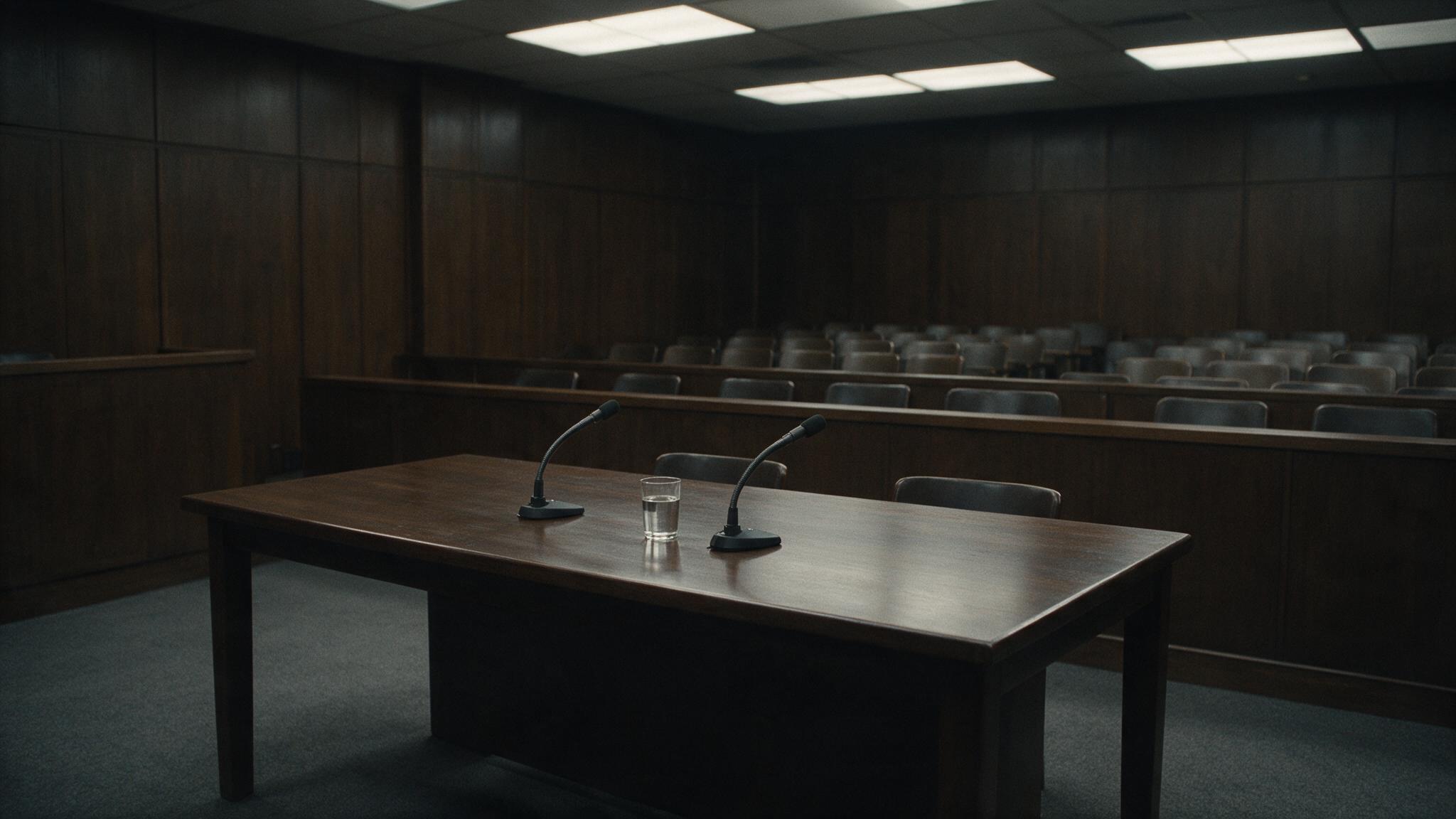
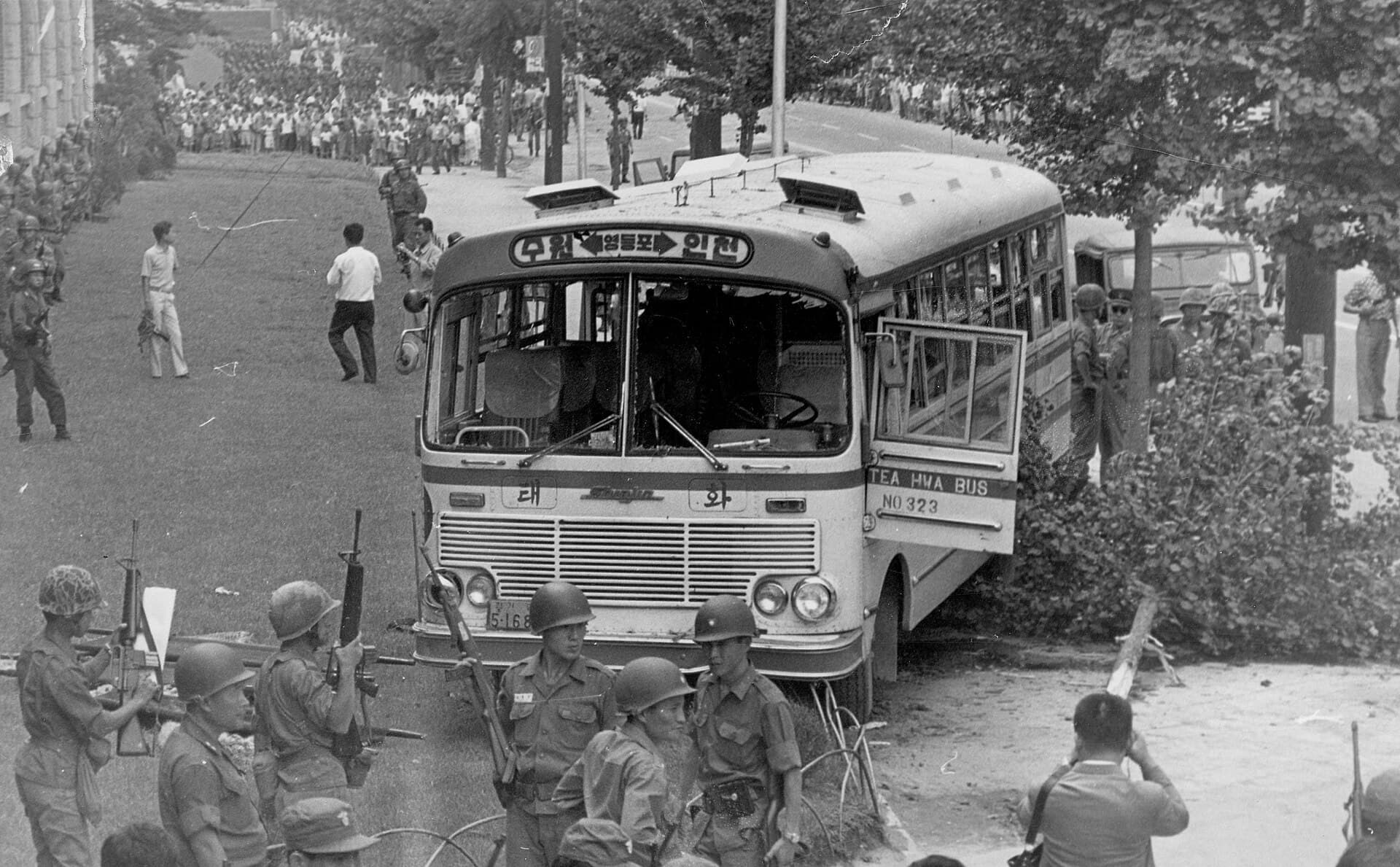
This article uses one real archival photograph together with AI-generated images and video produced to convey the mood of the story.
Comments
No comments yet — leave the first one.