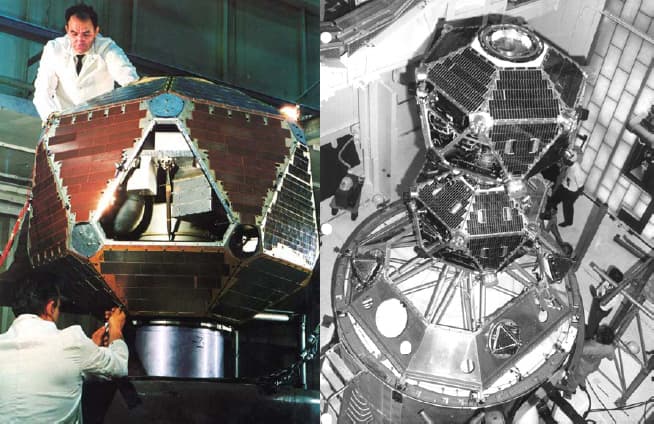
In the early hours of September 22, 1979, somewhere over the empty ocean where the South Atlantic meets the Indian Ocean, the sky flashed twice, very briefly. No human eye saw it. What saw it was an aging American spy satellite, Vela 6911, already orbiting well past the end of its designed lifespan. Aboard the satellite, a light sensor called a "bhangmeter" recorded a distinctive double-flash curve: a very bright first flash, followed almost at once by a second, fainter one. That signal is not something nature throws off by accident. It was the exact fingerprint the Vela satellites had been watching for across nearly twenty years — the whole reason they existed: to detect a nuclear explosion in the atmosphere. And yet, more than half a century after that night, who detonated a nuclear device over that ocean — or whether a device was detonated at all — has never been officially resolved. This is the story the Cold War sealed inside its classified files and still refuses to open: the Vela Incident.
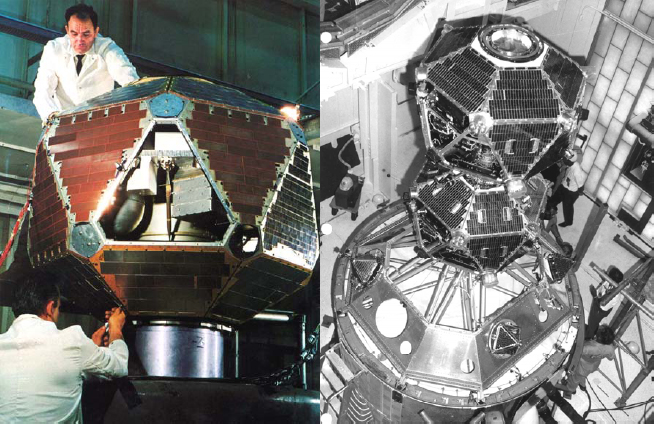
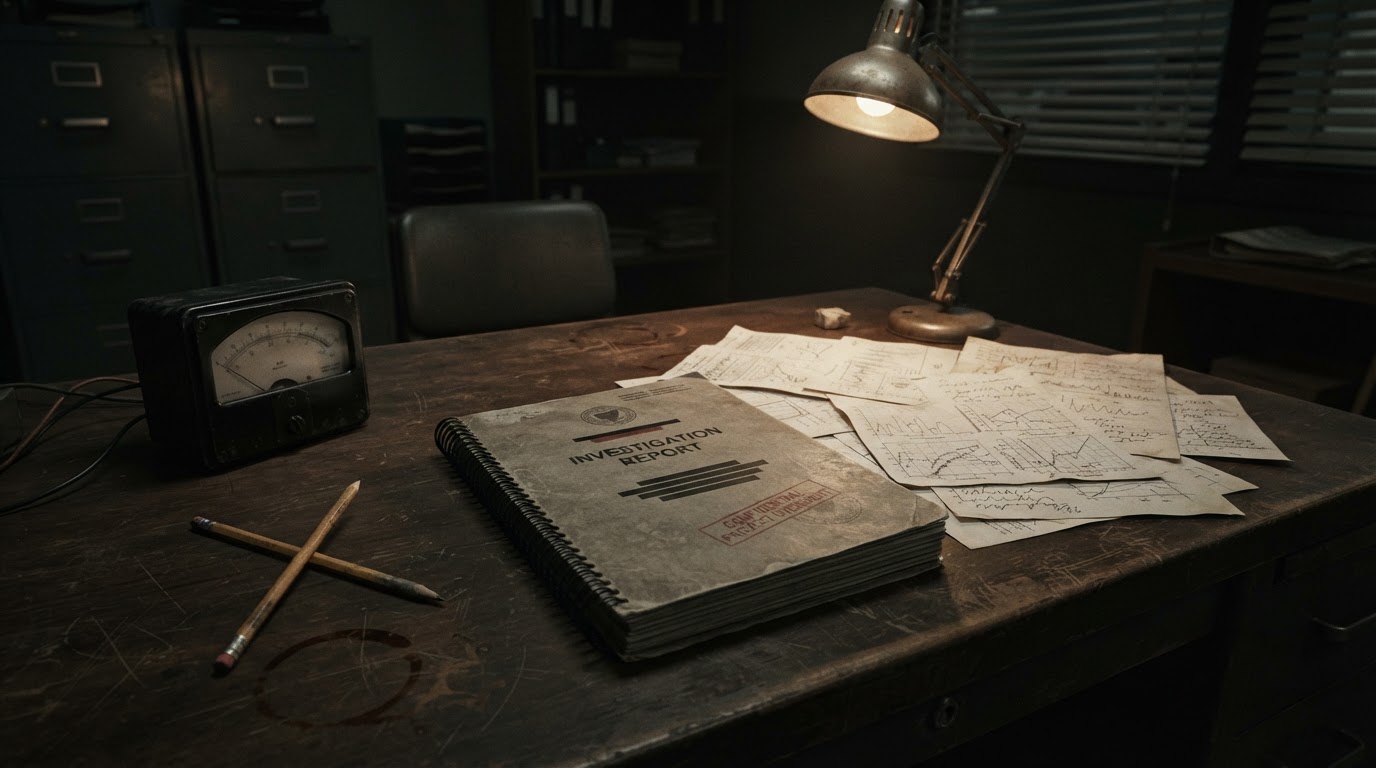
The folder I keep for this case began with a single photocopied page: a bhangmeter trace, two peaks and a trough between them, reproduced so many times over the decades that the ink had gone soft at the edges. I had been reading through declassified Cold War material for something else entirely when I found it, and I stopped there for most of an afternoon. What held me was not the curve itself but the annotation beside it — a hand from 1979 marking a reading that the same government would later describe as possibly nothing at all. I have gone back to that page more often than I can justify.
Vela — An Eye Built to Watch for Nuclear Tests
To understand this case, you first have to understand what the Vela satellites were. Vela was a surveillance program the United States launched shortly after the 1963 Partial Test Ban Treaty, in which the US, Britain, and the Soviet Union agreed to ban nuclear testing in the atmosphere, in space, and underwater. Signing a treaty was not the same as trusting the other side not to cheat. So the US put an "eye" into orbit to watch the planet for the telltale flash and radiation of an atmospheric nuclear blast. Even the name comes from the Spanish velar — "to keep watch."
The heart of a Vela satellite was a light sensor called a bhangmeter. A nuclear explosion produces a signature of light unlike any other natural or man-made event. An intensely bright first flash bursts out at the instant of detonation, then dims for a moment as the expanding fireball briefly masks itself, then brightens a second time as the fireball grows again. This "bright, then dark, then bright again" double-flash curve is a fingerprint drawn by nuclear weapons alone. Vela 6911 was built to catch exactly that curve, and it was a proven machine — it had accurately detected real nuclear tests on multiple occasions before. On that night in 1979, this veteran eye traced precisely that curve over a lonely stretch of southern ocean.
The Empty Southern Ocean
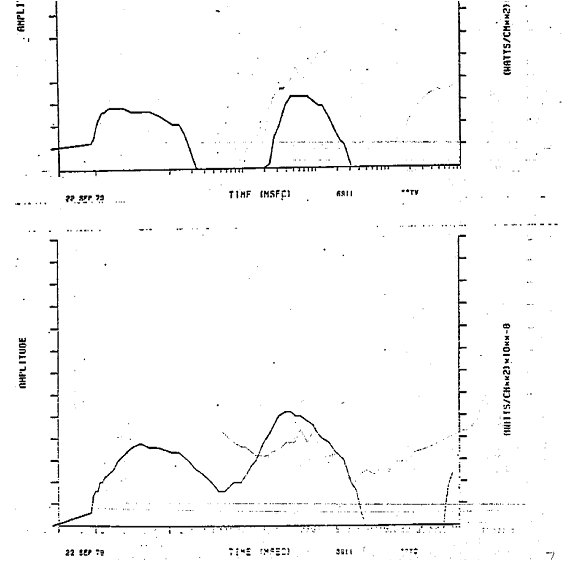
What made the puzzle stranger still was the place where the flash was caught. Vela 6911 pointed to the vast ocean where the South Atlantic meets the Indian Ocean, between the southern tip of Africa and Antarctica. Near Bouvet Island and the scattered Prince Edward Islands, this is one of the least-watched patches of the entire planet. Almost no ships pass through, almost no one lives anywhere near, and the closest land is nothing but frozen, uninhabited rock. If someone wanted to set something off completely out of the world's sight, they would have struggled to find a better stage anywhere on Earth.
That is precisely what made it impossible to wave the incident away as a simple observation error. If it really had been a nuclear test, then it was a test carried out in secret over an unwatched sea, one that no nation on Earth ever officially admitted to. The empty southern ocean was not an answer but a heavier question. The very fact that so remote a spot had been chosen read like evidence that someone had been desperate to hide it.
The Prime Suspects — Israel and South Africa
As investigators narrowed the field to nations with both the capability and the motive to set off a nuclear device, two names quickly rose to the surface: Israel and South Africa. At the time, South Africa was internationally isolated under its apartheid regime and was quietly pursuing nuclear weapons of its own. Israel, though it has never officially acknowledged it, was already widely assumed to possess nuclear weapons. And the two countries were cooperating closely on military and technological matters under the shadow of international sanctions.
Out of this came the theory of a "secret joint Israel–South Africa nuclear test" — that the two had combined their efforts to trial-detonate a warhead over an unwatched southern sea. In fact, many intelligence figures and researchers later regarded this as the single most plausible scenario. It was supported by circumstantial threads: South African naval vessels reportedly moving near the ocean in question around that time, and analyses arguing that Israel had reason to verify the performance of a compact nuclear weapon. To this day, however, neither country has ever officially confirmed it. The theory sits there with exactly that weight — strong, but unproven.

The Carter Administration's Ambiguous Ruling
When the flash was detected, the US government was thrown into turmoil. If this was a genuine nuclear test — and one involving an American ally, no less — it was a diplomatically explosive matter. President Jimmy Carter in particular had made non-proliferation a centerpiece of his foreign policy, and it was a delicate moment with re-election looming. The instant the United States acknowledged that an ally had secretly set off a nuclear device, it would be obliged to sanction them.
The White House assembled a special panel of eminent scientists. After closely analyzing the Vela signal, the panel issued an extremely cautious conclusion: that this double flash might not have been a nuclear explosion at all, but instead a spurious signal produced when something like a tiny micrometeoroid fragment struck the satellite. Yet this ruling was mired in controversy from the start. Vela had been a proven machine, having accurately detected nuclear tests several times before; and physical evidence pointing toward a nuclear test conflicted with the panel's finding — a New Zealand observatory recorded an anomalous acoustic wave arriving from the south around that time, and radioactive iodine was later detected near Australia. Within several intelligence agencies, no small number of people disagreed with the panel's "maybe not a nuclear test" verdict. Rather than closing the case, the ruling opened a new suspicion: that the government had been trying to cover something up.
The Files That Still Won't Open
There is a decisive reason this case has stayed unsolved for more than half a century: much of the relevant documentation remains sealed as classified, and even what has been released came out with its most important passages blacked out. As the years passed, a number of American documents were declassified, and some of them revealed that intelligence analyses inside the government at the time had in fact judged the flash to be a real nuclear test. But much of the raw data underlying those judgments, the intelligence on the movements of the countries involved, and the fine detail of the satellite signal itself has still never been made public.
Stitch the declassified fragments together and you begin to sense a substantial gap between the official conclusion presented to the world and the actual judgments passed inside the government. Too many circumstances pointed at a nuclear test for the flash over that southern sea to be dismissed as a mere satellite malfunction — but the diplomatic price of admitting it was too high. Whatever the truth was, it stayed sealed deep in the archives. And a sealed file, always, invites the imagination rather than answering it.
The Mystery That Remains
Over the two flashes an aging satellite caught above the South Atlantic that night, several strands of story now overlap in place of any firm answer. Vela 6911 traced, precisely, the double flash known as the fingerprint of a nuclear blast. The light burst over the most remote sea on Earth, and around that hour, in that vicinity, hovered the shadows of nations with both the capability and the motive to carry out a nuclear test. A range of physical evidence pointed toward a test, and yet the Carter administration's panel handed down its ambiguous ruling that it may not have been one — while the key documents still lie in the archives, their crucial passages blacked out.
What we can say for certain today is only this. On September 22, 1979, a Vela satellite caught a signal identical to that of a nuclear explosion, and the US government never clearly established what it was. Whether it was truly a secret Israeli–South African nuclear test, or truly a chance malfunction of the satellite — the truth remains sealed somewhere between the empty southern ocean and the blacked-out files. A single flash in the sky, left behind by the Cold War, still refuses to give up its answer more than half a century on.
Cross-referencing the releases of one decade against the releases of the next is a slow and mostly thankless exercise, and with this case it produced only one consistent result: the passages that get unblacked are never the ones that would settle anything. The acoustic reading from New Zealand is there. The iodine near Australia is there. The line that would tell you what the analysts actually believed is still a rectangle of ink. I have made my peace with most unsolved files in this archive, but not with this one, because this one was never lost — it is being kept, deliberately, by people who know exactly what it says.
---
This article uses a mix of real documentary and location photographs and AI-generated images made to convey the mood of the story.


Comments
No comments yet — leave the first one.