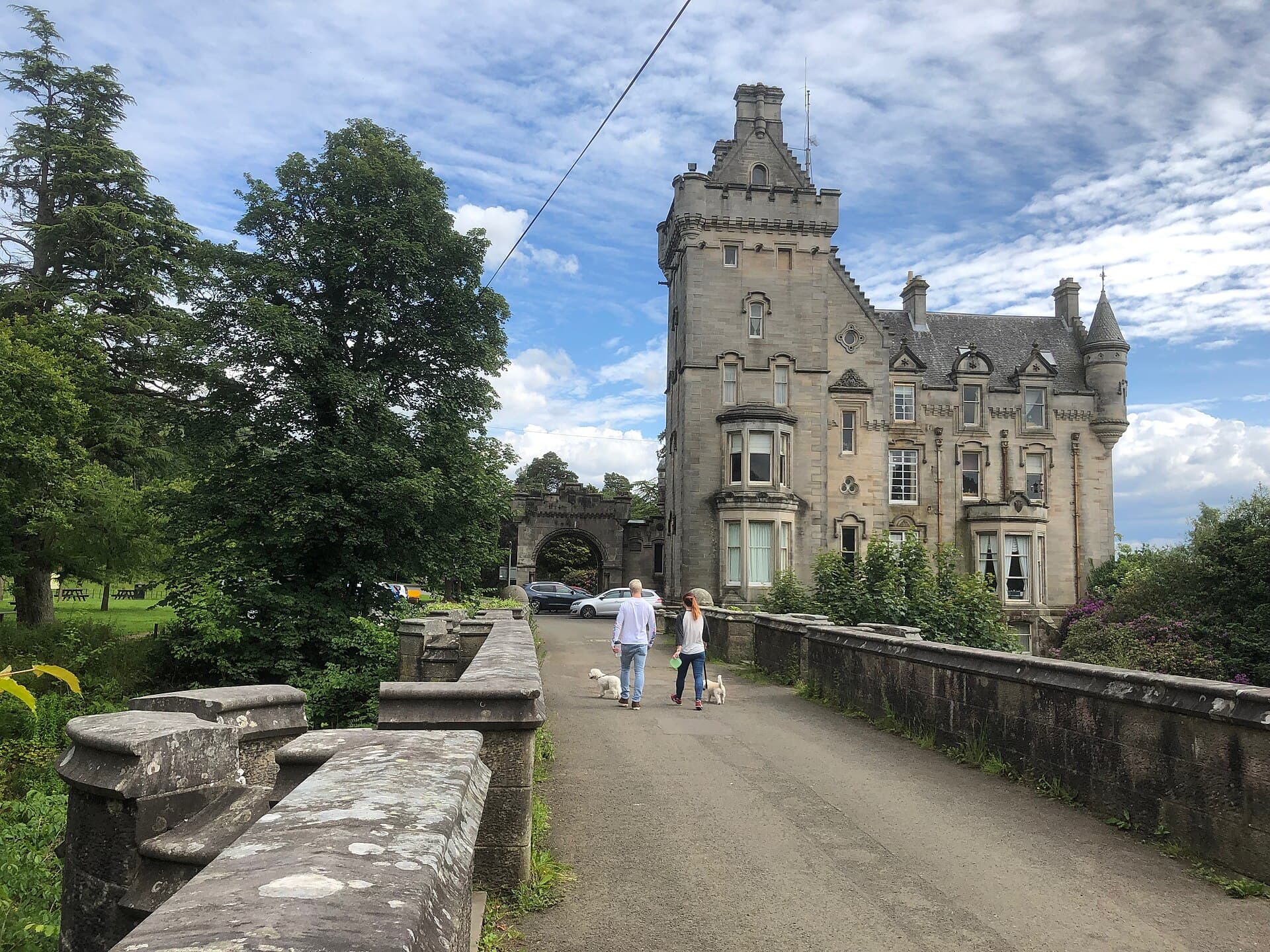
Picture yourself walking a dog you have walked a hundred times, along an ordinary country lane in the west of Scotland, toward an old stone bridge. It is a bright, dry morning. Your dog trots ahead, tail up, nose working — and then, without a sound, without a stumble, it gathers itself at the parapet and vaults clean over the wall. Below is a fifty-foot drop onto bare rock and a shallow stream. This has happened here not once, but hundreds of times, over roughly seventy years, at almost exactly the same spot on the same bridge. Some of the dogs died. Some survived, broken, and — if you believe the accounts that keep resurfacing — dragged themselves back up the bank and jumped a second time. This is Overtoun Bridge, near Dumbarton, and no one has ever agreed on why the dogs go over.
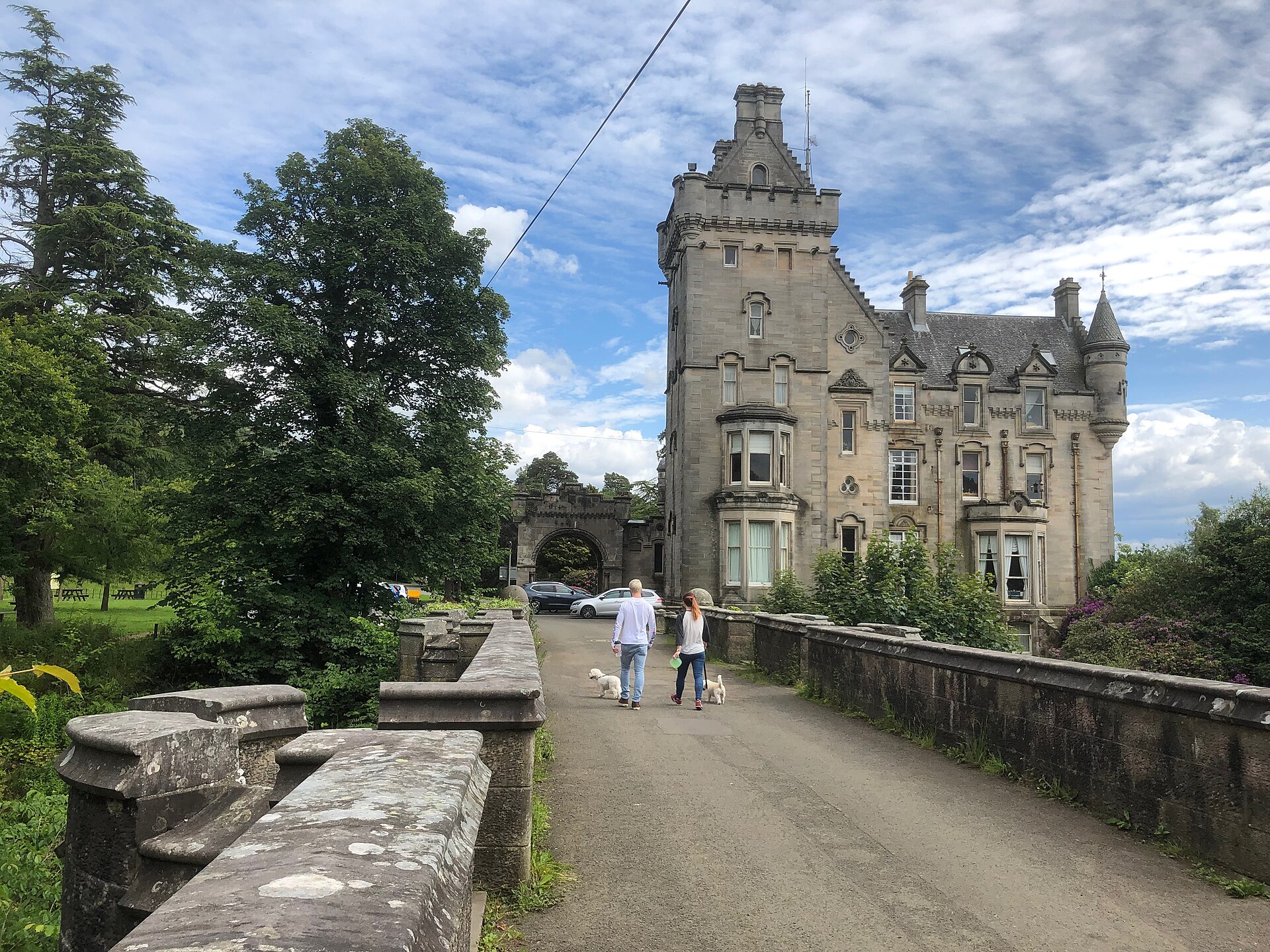
Photo: Wikimedia Commons, CC BY-SA 4.0
I am K. Woo, and I have a bad habit of sorting cases by how specific they are. Overtoun sits at the top of that list. Most of what I collect is vague by nature — a shape in the dark, a sound nobody else heard. This one has coordinates. The right-hand side walking away from the house, the last two parapet stones before the far end of the span. I have never worked on anything else where the anomaly can be described to within a couple of feet of dressed sandstone, and I find that harder to sit with, not easier.
A Beautiful Bridge in a Quiet Estate
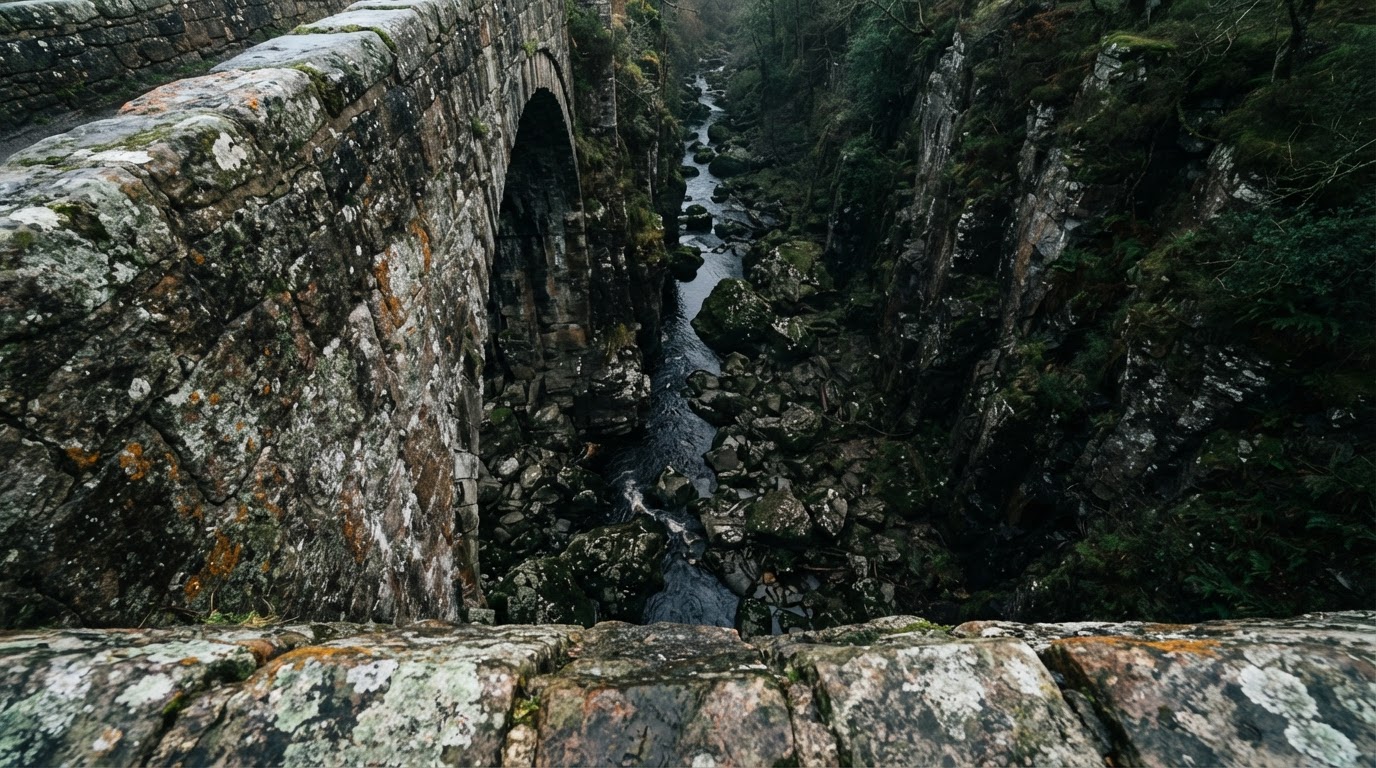
Overtoun Bridge is not a ruin, and it is not sinister to look at. It was completed in 1895 to a design by the landscape architect Henry Ernest Milner, a handsome three-arch structure of dressed stone carrying the approach road to Overtoun House, a Victorian baronial mansion set in wooded grounds above the town of Dumbarton in West Dunbartonshire. The bridge spans a burn — a Scottish stream — that runs far below through a narrow, rocky ravine. Stand at the low parapet and look over, and the ground simply falls away: some fifty feet, about fifteen metres, down to moss-black boulders and running water. It is the kind of view that makes you rest a steadying hand on the stone. It is also, for reasons no one fully understands, the last thing a great many dogs have ever seen.
For most of the year it is a place people come to walk. Families, ramblers, and above all dog owners follow the estate paths across the bridge and on toward the house. And it is precisely those unremarkable walks, repeated for decades, that produced one of Britain's strangest recurring phenomena.
The Dogs That Go Over
Since at least the 1950s, dogs have been leaping from Overtoun Bridge. Not slipping, not being blown off — leaping, deliberately and with purpose, up and over a parapet that comes to roughly chest height on a large dog. Estimates of the total are difficult to pin down and have grown in the retelling, but the figures most often cited are sobering enough on their own: something on the order of at least 300 dogs recorded going over the years, with at least 50 killed by the fall onto the rocks below. Some accounts push the running total far higher.
What unsettles people most is not the number but the pattern. The jumps happen from the same part of the bridge almost every time — the right-hand side as you walk away from Overtoun House, within the last two parapet stones before the far end of the span. They tend to happen on clear, dry, still days rather than in wind or rain. And they overwhelmingly involve long-nosed breeds: collies, Labradors, retrievers, spaniels — dogs built to follow a scent. Flat-faced breeds like pugs and bulldogs barely feature. A single dog going over a wall is an accident. The same wall, the same side, the same weather, the same kind of dog, again and again for seventy years, is something else. And then there are the dogs that survived the fall, were carried home to recover — and, brought back to the bridge, went straight for the same spot and jumped again.
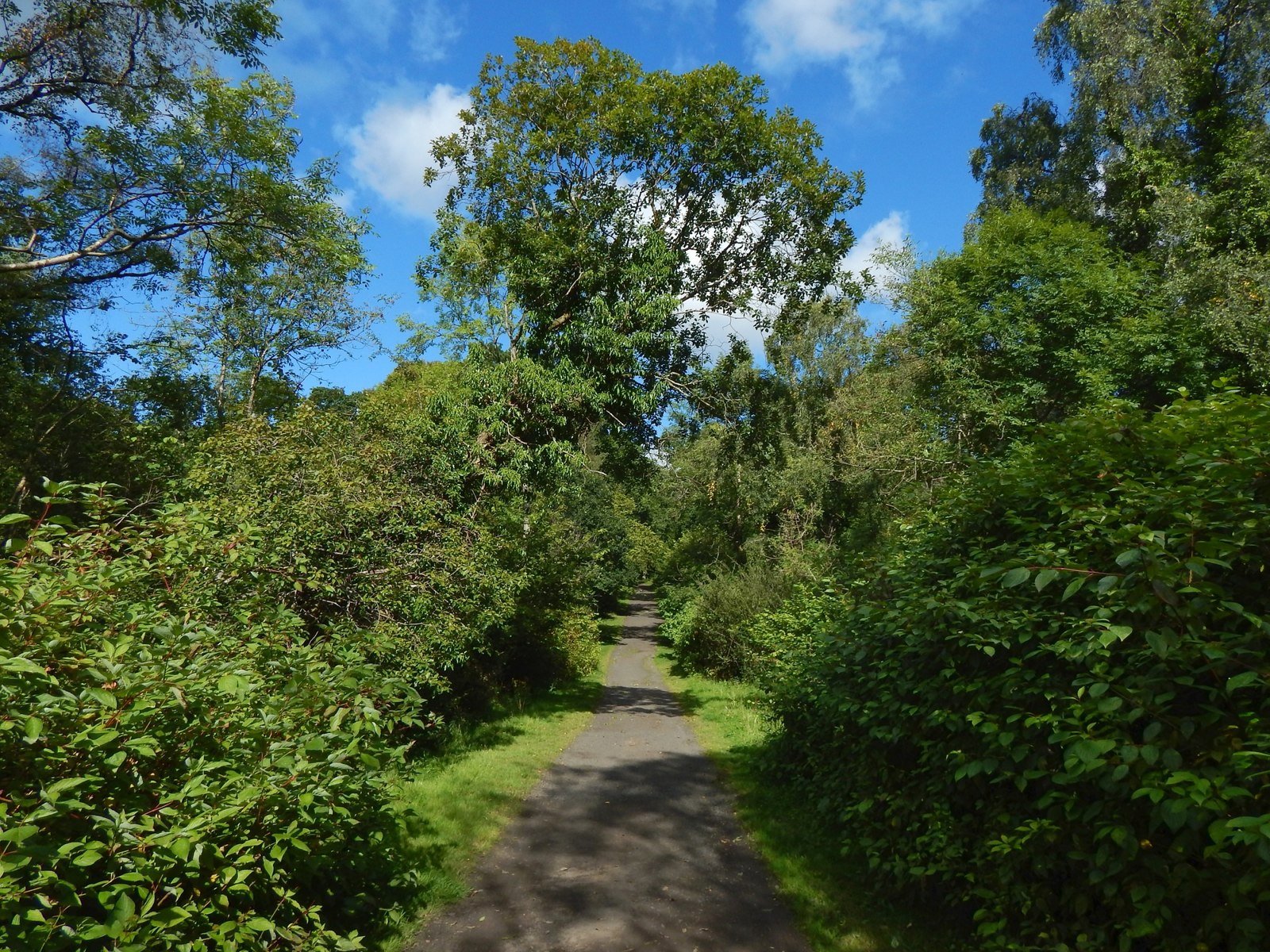
Photo: Wikimedia Commons, CC BY-SA 2.0
The Scent Beneath the Stones
In 2005 the Scottish Society for the Prevention of Cruelty to Animals took the phenomenon seriously enough to commission an investigation. The canine behaviourist Dr David Sands was brought in, together with the naturalist David Sexton, to look at the bridge — quite literally — from a dog's point of view.
The first findings were about ruling things out. Acoustic testing found nothing abnormal about the sound levels on the bridge; there was no hidden note or ultrasonic whine to drive an animal to panic. But when the investigators got down beneath the parapet, into the world of scent that a dog actually inhabits, they found something. The undergrowth and crevices below the bridge were alive with small mammals — mice, squirrels, and in particular mink, whose musky secretions are among the most pungent in the natural world. In a controlled follow-up, dogs were presented with the scents of mouse, squirrel and mink; of ten dogs tested, seven made straight for the mink scent, several of them "quite dramatically." The theory that emerged is disarmingly ordinary. On a dry, still day, mink musk rises up the sandstone and pools at around the height of a dog's nose. A long-nosed dog crossing the bridge catches that thread of scent, cannot see over the high parapet to understand where it leads, and does what instinct built it to do — it goes over the wall to chase, exactly as it would leap a garden fence after a rabbit. It never sees the drop.
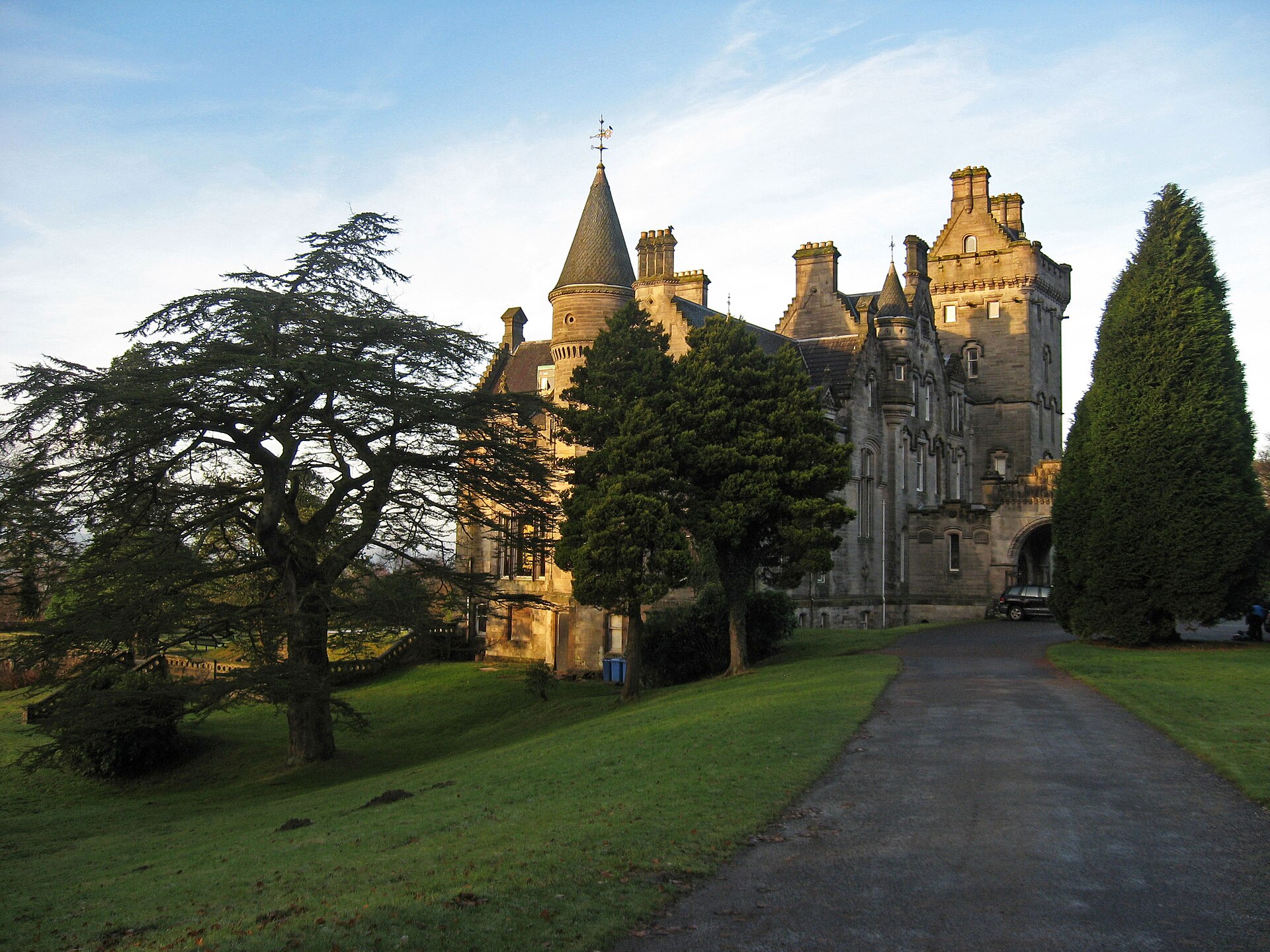
Photo: Wikimedia Commons, CC BY-SA 3.0
The Holes in the Explanation
It is a tidy answer, and for many people it closes the case. But it does not close it cleanly. A local man, John Joyce, who had lived near the bridge for around fifty years, flatly disputed the premise: "There is no mink around here," he said. If the mink population is thinner than the theory needs it to be, the neat picture starts to wobble.
Other questions linger just as stubbornly. If it is simply a matter of scent, why this bridge and not the countless other stone bridges over Scottish burns teeming with the same small mammals? Why has the behaviour clustered so tightly at one bridge, on one side, for seventy years? And the mink theory struggles most with the detail that disturbs people the most — the survivors that returned to the same parapet and jumped again. A dog chasing a scent over a wall and being badly hurt might reasonably be expected to learn from it. To go back to the exact spot and repeat the leap looks less like a mistake and more like a compulsion. The SSPCA's own investigation was ultimately recorded as inconclusive. The mink hypothesis remains the best natural explanation available — plausible, testable, and unproven.
A Thin Place
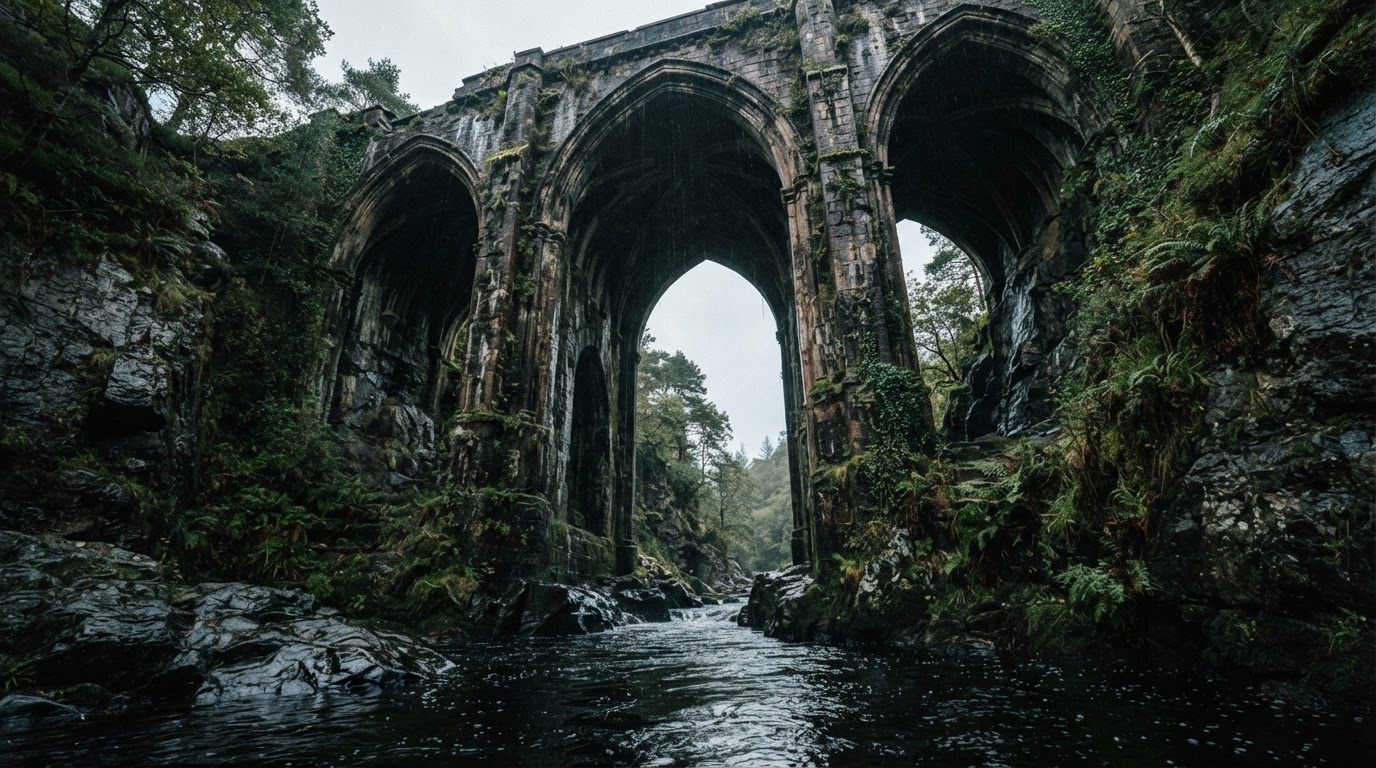
Where science stops short, older explanations move in — and around Overtoun they were there long before the scientists arrived. In Celtic tradition there is an idea called a "thin place": a spot where the membrane between this world and whatever lies beyond wears thin, where the living and the dead are said to stand unusually close. Overtoun Bridge, and the ground around it, has long carried that reputation. To those who believe it, the dogs are not chasing a smell at all; they are sensing something at the parapet that people cannot — and being drawn, or driven, toward it.
The bridge has its ghost, too. Overtoun House was the home of the Whites, and after the death of Lord Overtoun in 1908 his widow, Grace, is said to have walked the grounds and the bridge in her grief. The figure reported on and around the bridge over the years — a pale, silent woman drifting along the parapet — has come to be called the White Lady of Overtoun. None of this can be verified, and all of it should be held as exactly what it is: folklore, the stories a strange place gathers to itself over a century. But standing on that bridge in the mist, with the drop at your side and a dog straining at the same worn stones where so many others went over, folklore is a hard thing to shake off.
The One Human Tragedy
The bridge's dark reputation is not built only on animals, and one human episode has to be told — plainly, and without dwelling on it. In October 1994, a man named Kevin Moy, who was suffering from paranoid schizophrenia and believed his newborn son was an incarnation of evil, threw the two-week-old child from Overtoun Bridge, from the same side the dogs go over. The baby died of his injuries. Moy then attempted to take his own life by jumping after the child, and survived. It was a psychiatric tragedy, not a supernatural one, and it belongs to the record only because it happened here, at this bridge, and because it deepened the shadow the place already carried. It deserves to be remembered soberly, as the death of a child, and nothing more sensational than that.
How a Local Rumour Became a Global Number
Ask three English-language sources how many dogs have died at Overtoun and you get three different bridges. An Atlas Obscura piece republished by Slate in November 2014 put it at roughly 50 dogs dead since the 1960s, with hundreds more surviving the fall. A tabloid-style headline in the International Business Times spoke of 600 dogs. The figure I quoted earlier, at least 300 jumps and at least 50 deaths, sits between the two, and I have not found any version of it traced back to a published register. Nobody seems to have kept one.
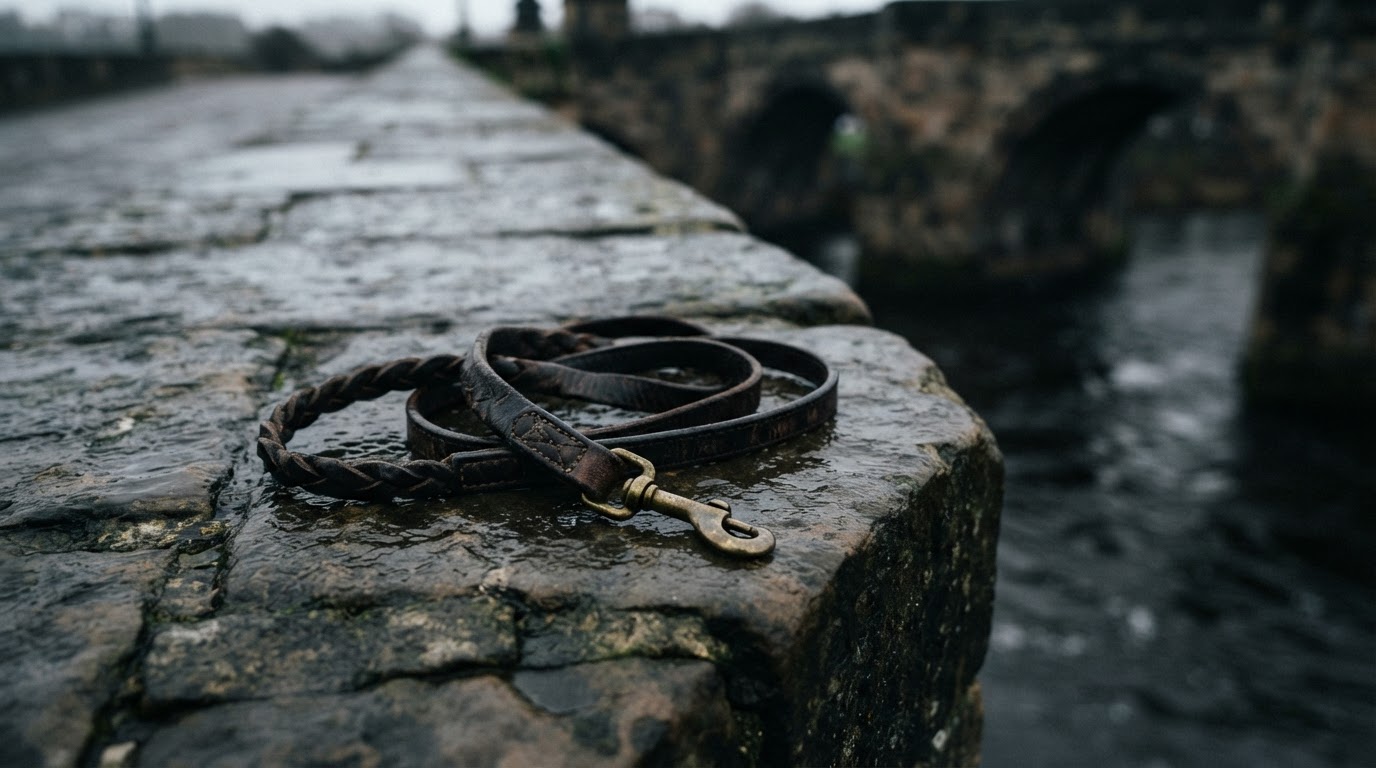
What the story did have, in 2014, was a face. Alice Trevorrow was walking her springer spaniel Cassie across the bridge when the dog jumped. Cassie survived the drop, and by the accounts I have read she spent six days in an animal hospital. Trevorrow said afterwards that the dog "definitely saw something that made her jump," and added, "There is something sinister going on." She then pressed West Dunbartonshire Council to put up warnings, and the notices that now stand at the bridge ask walkers to keep their dogs on a lead. It is a small, practical sentence to find beside a place with this reputation, and I find it more unsettling than any of the ghost stories. A council would not put up a sign for a legend.
Then there is the counter-voice, which the English-speaking internet tends to drop because it ruins the headline. A local piece in the Glasgow Bell quotes Jennifer and John Scullion, who run a dog-walking business and take eight to ten dogs across the bridge daily. After six years, Jennifer says, "We are probably talking hundreds and hundreds and hundreds of dogs and not one's jumped." The same piece notes that the story has been amplified by celebrities and social media accounts, and that the one case it can verify is Cassie's.
So the English-language record splits into two stories that cannot both be the whole truth. In one, a bridge draws dogs to their deaths on bright mornings, season after season. In the other, a single spaniel in 2014 and a handful of older reports have been multiplied by every retelling until a figure appeared that no one can source. I do not think the second story erases the first. The 2005 mink study, the repeat jumpers and the worn spot on the parapet all predate the viral headlines. But I have stopped treating any total as a measurement. At Overtoun, the number is part of the legend, and it grows each time someone repeats it.
What Stays Unanswered
Seven of ten dogs went to the mink scent. I have written that figure in my notes several times, and each time I find myself putting a bracket after it, because the study measured interest and the bridge measures something else entirely. Interest is a dog crossing a room. What Overtoun records is a dog that has already been carried home broken, walked back onto the same span months later, and gone over the same two stones a second time. No scent trial I have found accounts for the second jump. The behaviourists tested what draws a dog. Nobody has tested what a dog does after the drop has already taught it.
So we are left where the story always leaves us — with a beautiful Victorian bridge over a Scottish gorge, and no explanation that quite covers everything. The mink theory is the most rational account we have, and it may well be right; a rising thread of scent, a high wall, a dog built to chase, and a drop it cannot see. But the theory frays at the edges. It cannot fully answer why this bridge alone, why the same two stones, why the survivors climb back and jump again. And so the older name for such a place — a thin place, a threshold worn thin — keeps its quiet hold, not because it has been proven, but because nothing else has been either. Hundreds of dogs have gone over the parapet at Overtoun on bright, ordinary mornings, and the stone gives up no answer. Whether they were chasing a scent no human nose could catch, or something no human sense can name, the bridge is not saying.
---
This article combines real photographs of Overtoun Bridge and Overtoun House with AI-generated images and video produced to convey the mood of the story.
Comments
No comments yet — leave the first one.