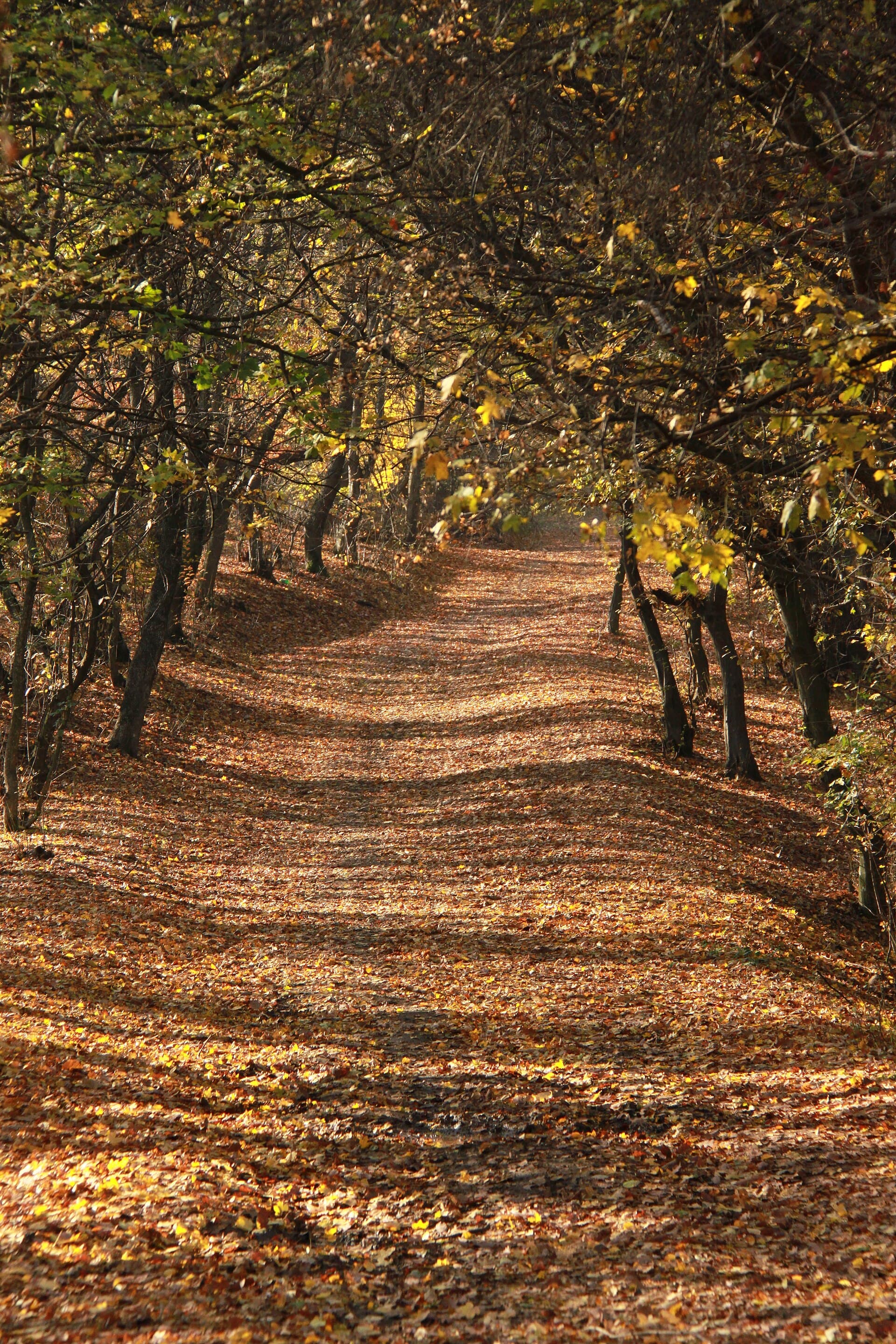
You have driven maybe ten minutes out of Cluj-Napoca, and the city is already gone behind you. The road narrows, then ends, and the forest begins — small on the map, no more than three square kilometres, the kind of woodland you could cross on foot in an afternoon. But you notice the trees first. They do not stand the way trees should. Their trunks bend hard to one side, curl back on themselves, corkscrew upward as if something invisible had taken them by the crown and wrung them like cloth. There is no wind to explain it, no slope. Further in, you come to a clearing — a wide, almost perfect circle of open grass, ringed by dark trees on every side, and inside that circle nothing grows. No saplings. No scrub. Just bare grass and a silence that feels a little too complete. Your phone shows the wrong direction. And somewhere in the back of your mind is the thing they told you before you came: that a shepherd once walked into these woods with two hundred sheep, and that none of them — not the man, not a single animal — ever walked back out. This is Hoia Baciu, the forest that Romanians call the Bermuda Triangle of Transylvania, and it has never given a straight answer to anyone.
A Small Forest With a Large Reputation
Hoia Baciu sits on the western edge of Cluj-Napoca, in the heart of Transylvania. By the numbers it is unremarkable — a patch of deciduous woodland of roughly three square kilometres, hemmed in by farmland and the outskirts of a modern city, close enough that joggers and mountain bikers use its trails on ordinary afternoons. There is nothing about its size or location that should make it famous. Yet over the past half-century it has become one of the most talked-about "haunted" places in Europe, drawing paranormal investigators, television crews, and dark-tourism travellers from across the world to a forest most Romanians could walk across before lunch.
The land itself is old in a way that has nothing to do with ghosts. Just to the north of the forest, archaeologists have uncovered some of Romania's earliest Neolithic settlement remains, traces of people who lived and farmed here thousands of years ago. That is verifiable history. Everything else — the vanishings, the lights, the failing instruments — belongs to a murkier register, a body of stories that has grown around these trees for generations and that no one has ever quite been able to confirm or to lay to rest.
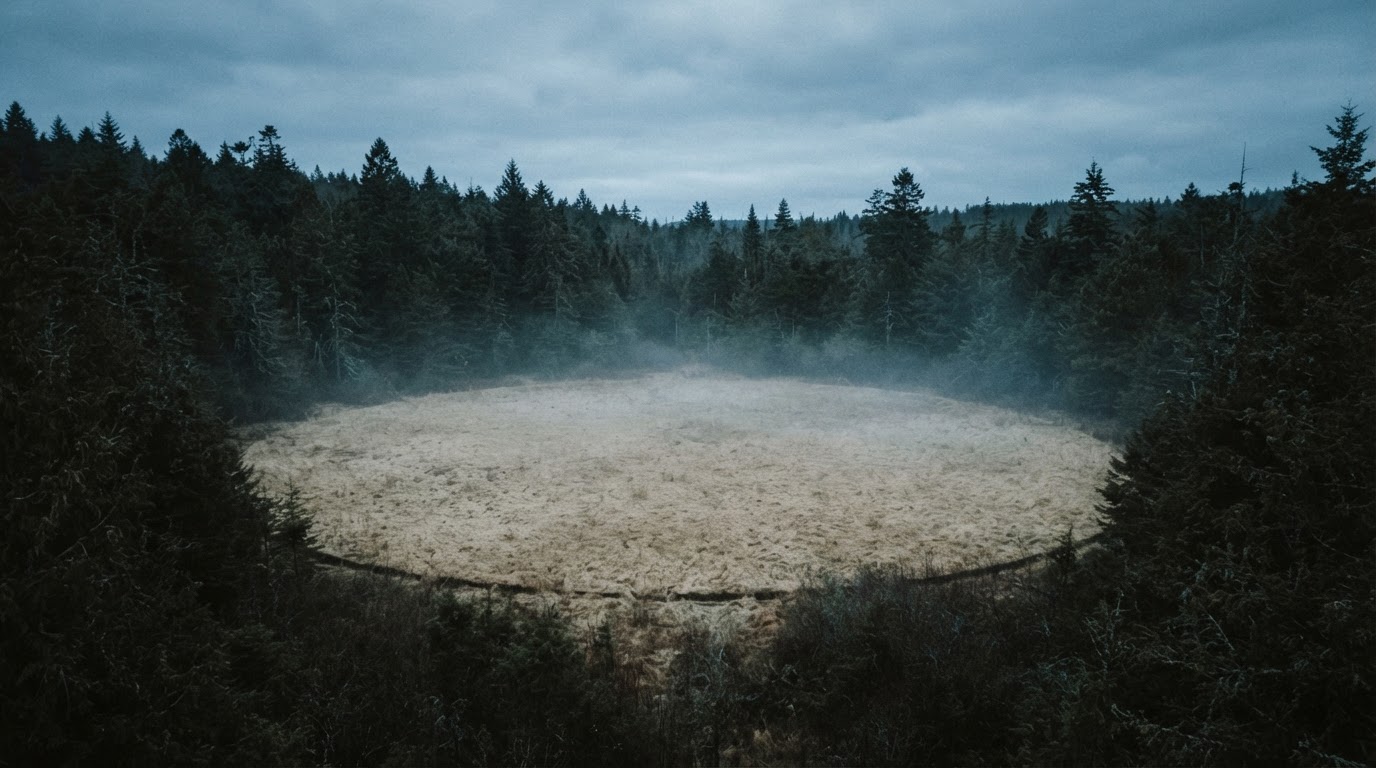
Haunted-forest material usually collapses under sorting, because the claims are all testimony and testimony contradicts itself. Hoia Baciu resisted that, and the reason is Poiana Rotundă. The clearing is on satellite imagery. Anyone can pull it up and look at a bald green disc set into a canopy, and no soil sample taken from it has produced a reason. I keep this file open not for the shepherd or the lights but because the one element I can actually verify from a desk is the element nobody can explain.
The Clearing Where Nothing Grows
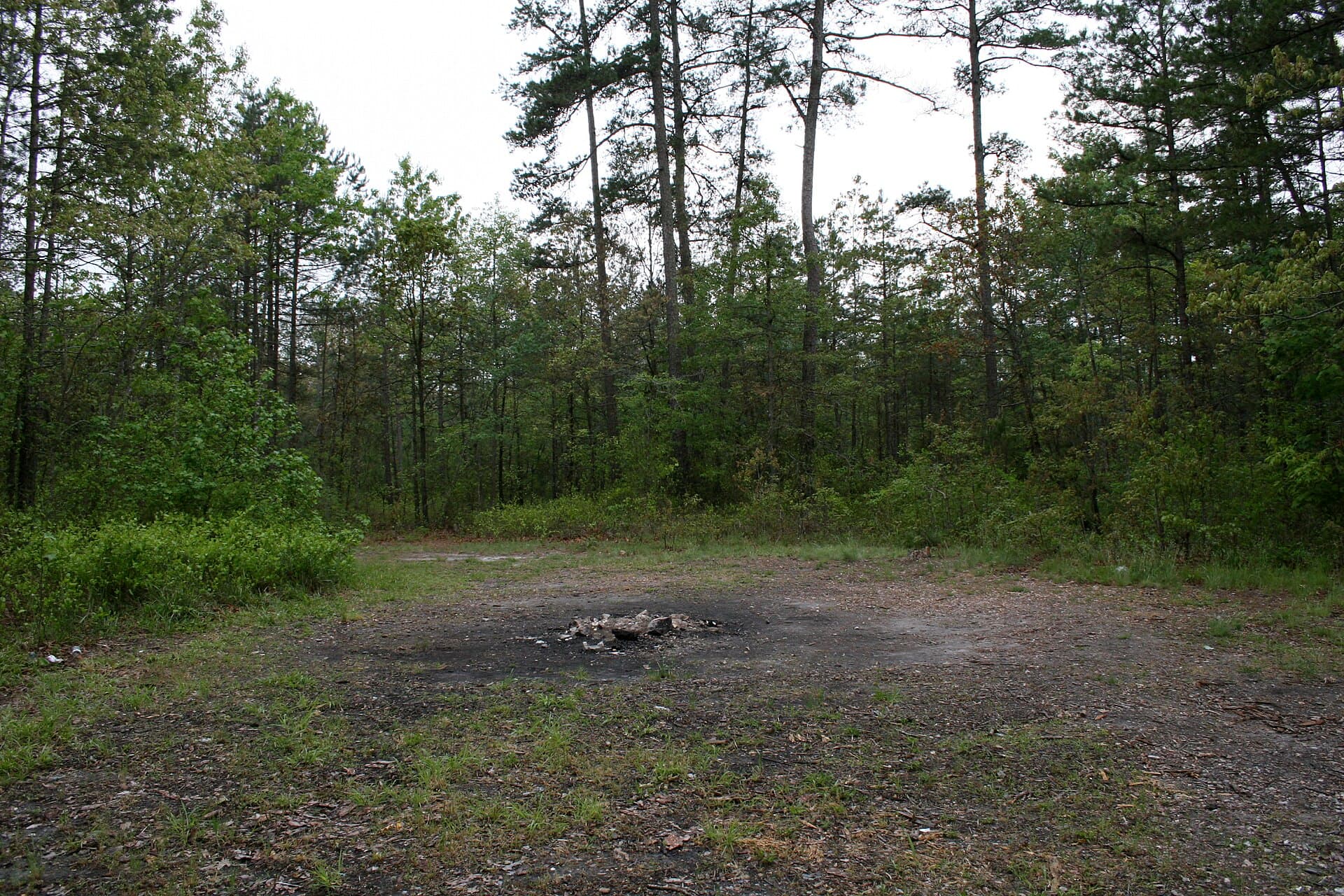
If Hoia Baciu has a heart, it is a place called Poiana Rotundă — "the round meadow." It is exactly what the name promises: a broad clearing inside the dense forest, close to a perfect circle, where the grass grows but the trees do not. On satellite imagery the ring is plainly visible, a bald green disc set into the surrounding canopy. Stand at its edge and the geometry is genuinely unsettling — the forest presses in on all sides, thick and dark, and then simply stops at an invisible line, as though the ground inside the circle had been forbidden to it.
Why nothing takes root there is the question no one has answered. Soil samples have been taken from the clearing over the years, and none has produced a definitive explanation — no obvious contamination, no reason the trees should refuse it. Visitors who spend time inside the ring sometimes report a vague nausea, headaches, a sense of unease, though such feelings are easy to summon in a place you have already been told is haunted. What can be said plainly is only this: there is a round, treeless clearing in the middle of a forest that grows everywhere else, and the reason for it is not known. The rest is what people have filled the silence with.
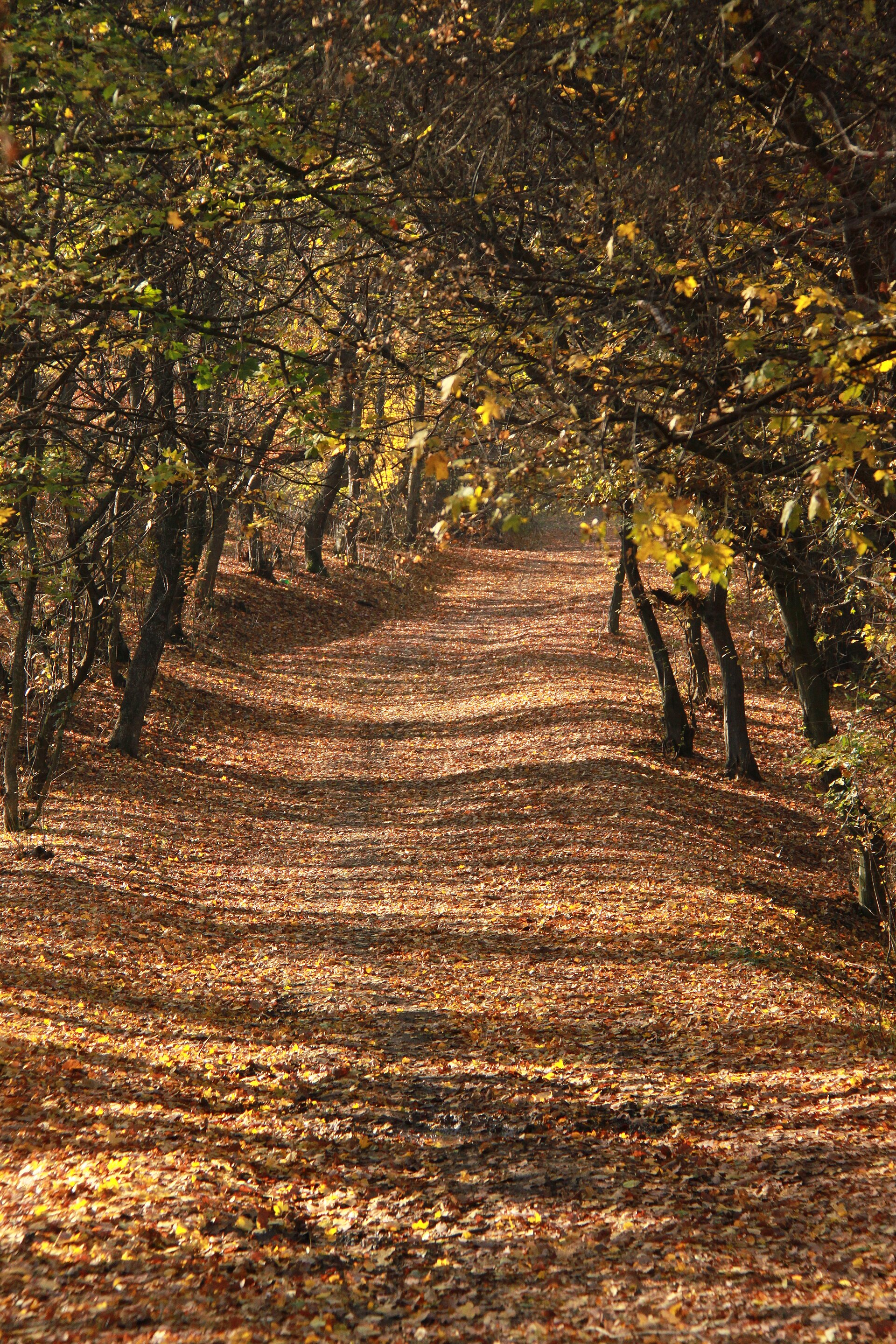
Photo: Wikimedia Commons, CC BY 2.0
The Trees That Grow Wrong
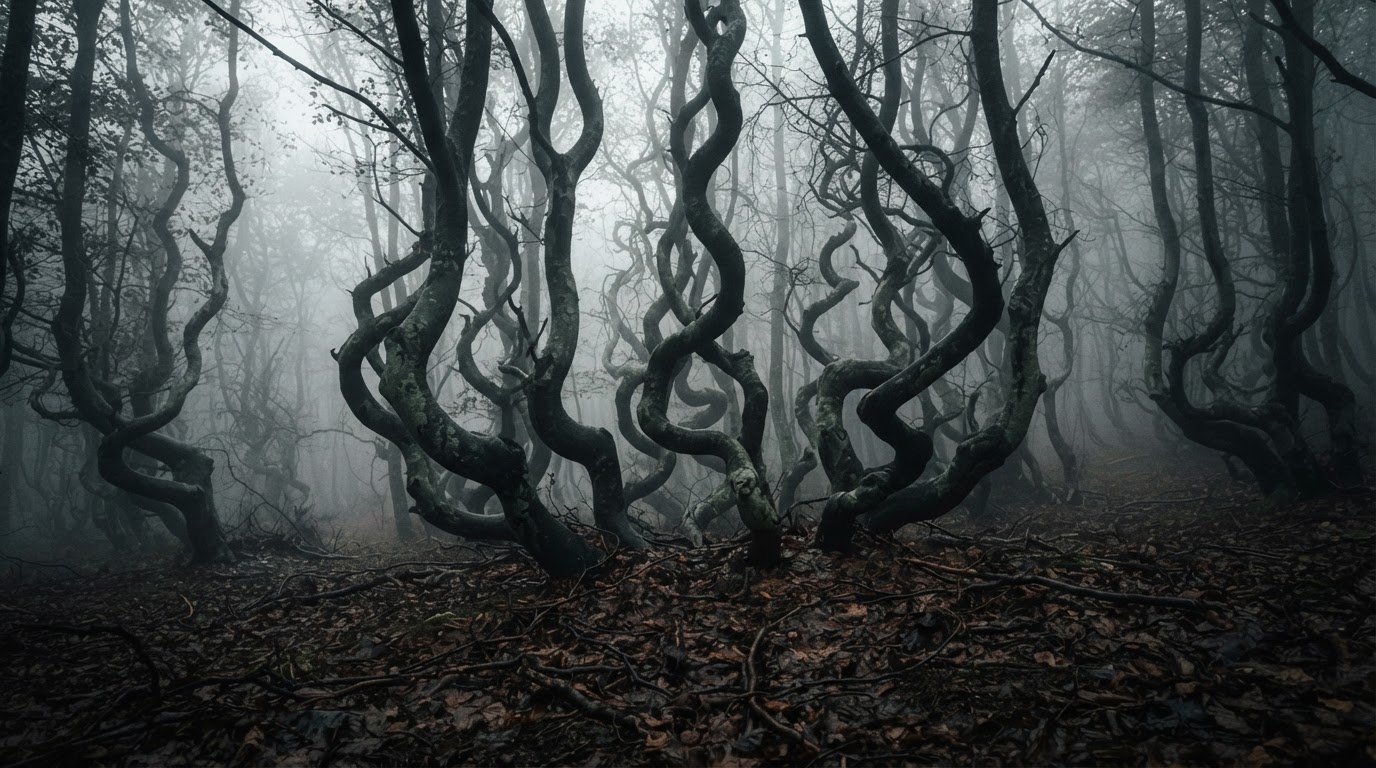
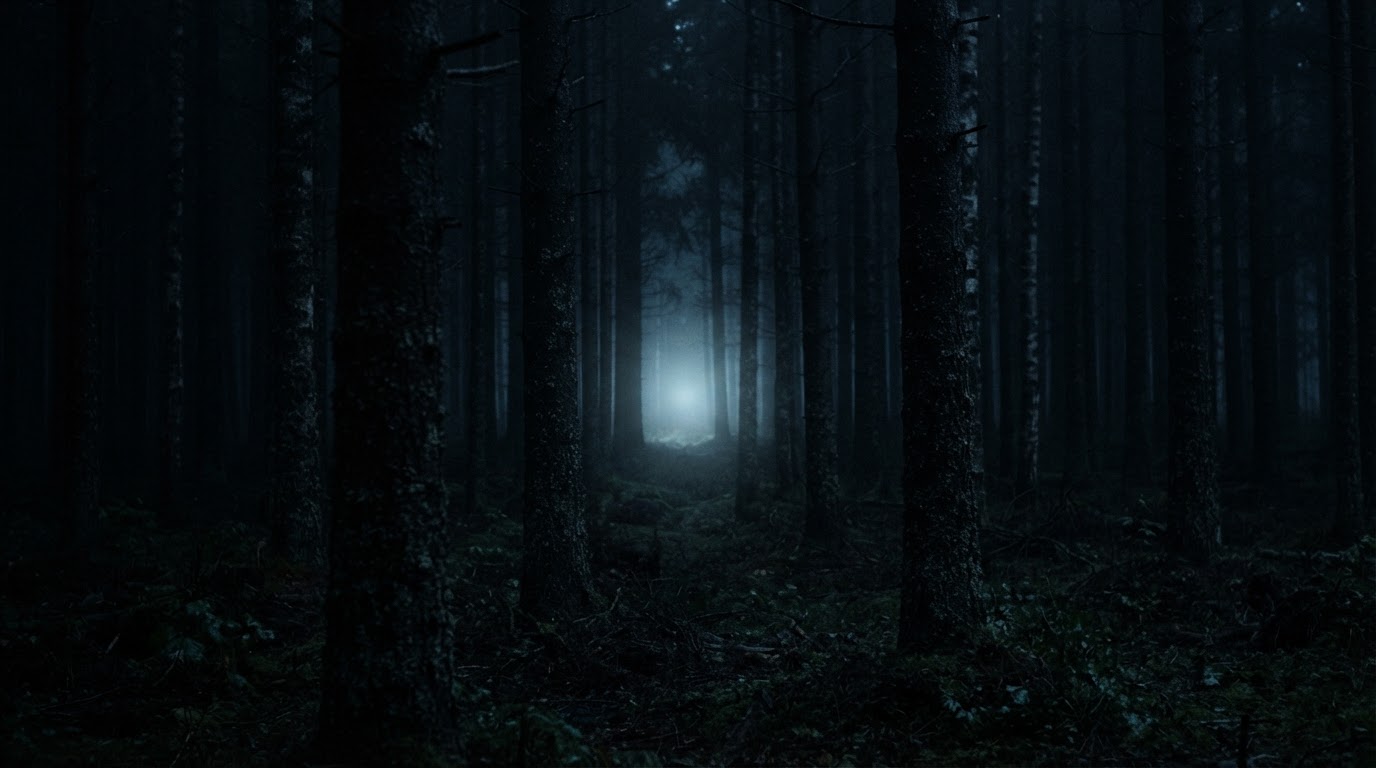
Then there are the trees. Throughout Hoia Baciu — and most strikingly near the clearing — the trunks twist, arc and spiral in shapes no healthy forest should produce. Some bend at sharp angles close to the ground and grow sideways; others corkscrew as they rise, or double back toward the earth. Photographs of these trees are what first made the forest famous online, and they are not faked: the trees really do grow this way. What is genuinely unresolved is why.
There are ordinary explanations on offer. Trees can grow strangely from disease, from fungal infection, from soil chemistry, from damage sustained young, or from a phenomenon sometimes seen in stands of pine and other species where whole groups of trunks bend in unison — a still-debated effect that has nothing to do with the supernatural. Any or all of these could account for what grows in Hoia Baciu. But standing among them in the fog, with the clearing nearby and the stories in your head, botany is not what comes to mind. The trees look less grown than wrenched, and that impression — more than any measurement — is what keeps people coming.
The Man Who Photographed the Disc
The moment that lifted Hoia Baciu from local legend to international curiosity came on 18 August 1968. A military technician named Emil Barnea was out near the forest — most accounts place him camping in the western section — when he saw a metallic, disc-shaped object hanging in the sky above the trees. He had a simple camera with him, and he used it, firing off several frames before the object moved off and was gone. The resulting photographs of a silver disc above Hoia Baciu were published, and they spread far beyond the town.
What makes Barnea's story more than a snapshot is the price he paid for it. This was Romania under the Ceaușescu regime, where reporting an inexplicable phenomenon was not a harmless hobby but a professional and political risk. Barnea published his pictures anyway — and, by the accounts that survive, lost his job for it. The images have never been definitively proven or debunked; they remain among the more discussed UFO photographs of the era. But the detail that lingers is the man himself: someone who saw something over these woods, photographed it, and paid for telling the truth as he understood it, whatever that truth was.
The Biologist and His Lost Archive
Barnea was not the only one watching the forest. Beginning in the 1950s and 1960s, a Romanian biologist named Alexandru Sift ventured into Hoia Baciu again and again, initially — by some accounts — studying its vegetation, and increasingly documenting the strange things he said he encountered there. Over the years he is reported to have built up a substantial archive of photographs of anomalous lights and shapes above the trees, becoming the forest's most dedicated chronicler.
There is a bleak coda to his work. Sift died in 1993, and much of the material he had spent decades gathering is said to have been lost in the days after his death — the archive, according to the story, effectively vanishing along with the man who kept it. How much of Sift's collection genuinely documented anything, and how much has simply been swallowed by the legend, cannot now be checked, precisely because the record is gone. It is a fitting pattern for Hoia Baciu: the evidence that might have settled something disappears, and only the story it left behind survives.
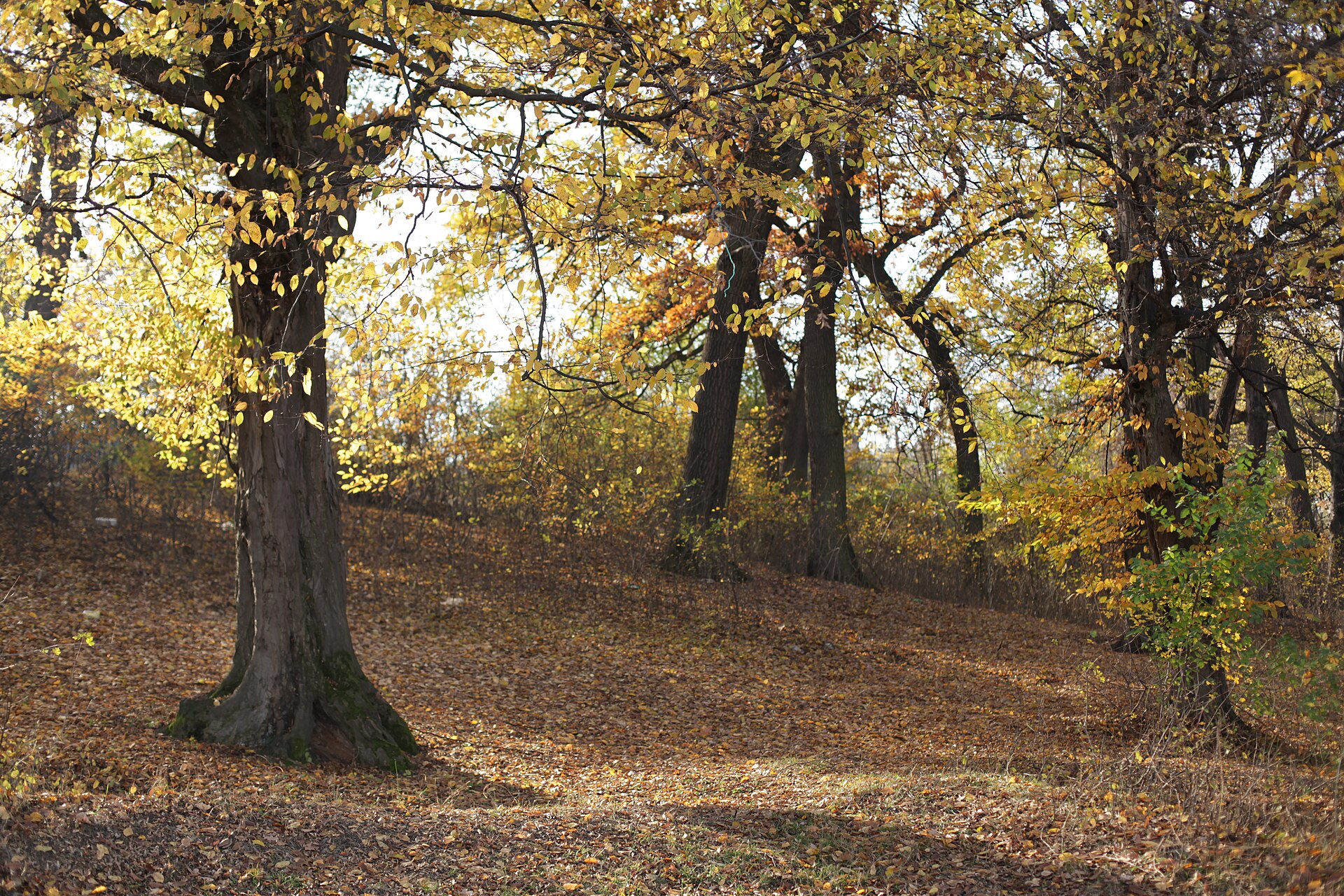
Photo: Wikimedia Commons, CC BY 2.0
The Shepherd, the Girl, and the Missing Time
The oldest story of all is the one that gave the forest its name. As it is usually told, a shepherd once drove a flock of around two hundred sheep into these woods and never emerged — man and animals gone without a trace — and it is from this vanished herdsman, "Baciu" being a word bound up with shepherding, that Hoia Baciu is said to take its name. It is a genuinely eerie tale, and it should be flagged for exactly what it is: a legend. No historical chronicle has ever confirmed that such a disappearance took place, and it survives as folklore rather than record.
The same caution applies to the story most often repeated after it. A five-year-old girl, it is said, wandered into Hoia Baciu and vanished — and then, five years later, walked out again, unaged, wearing the same clothes she had disappeared in, with no memory of where she had been. It is the purest form of the "missing time" motif that clings to the forest, alongside the standard modern reports: compasses that spin, electronics that die, cameras and phones that fail without reason. None of it is documented in any verifiable way. What is real is that people keep having these experiences, or keep saying they do, and that a small forest outside Cluj-Napoca has become a magnet for exactly that kind of story.
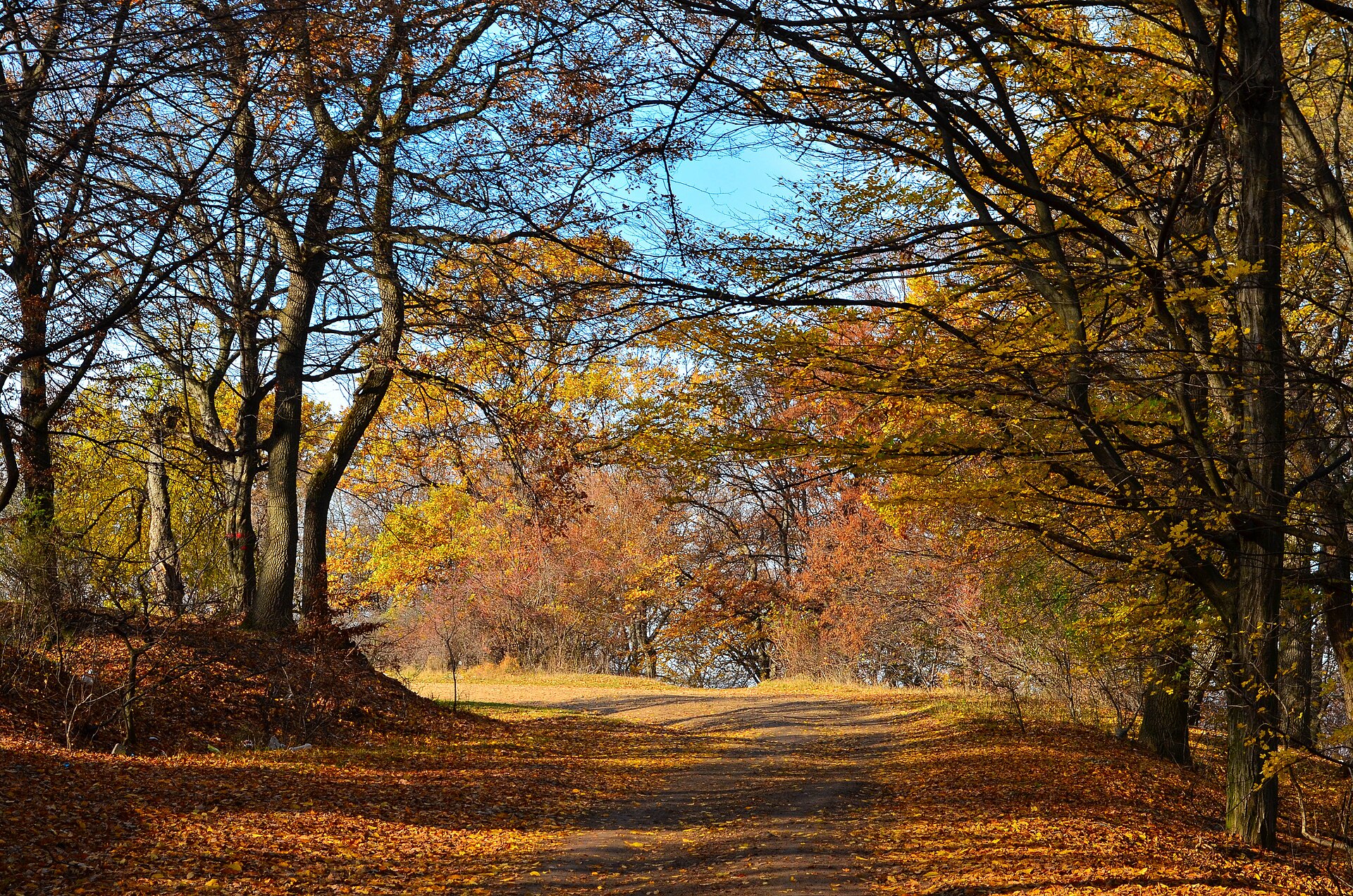
Photo: Wikimedia Commons, CC BY 3.0
The Forest They Come to Be Unsettled By
The nickname that stuck — the Bermuda Triangle of Transylvania — is credited to a Romanian biologist, Adrian Pătruț, who studied and popularised the forest's strange reputation. Whatever the science ultimately says, the name did its work. Today Hoia Baciu is a fixture of the dark-tourism map: guided night walks, ghost-hunting tours, documentary crews, and travellers who come specifically to stand in the round clearing and wait to feel afraid. The forest that Romanians once simply avoided is now a destination, its unease packaged and its trails well worn.
Alexandru Sift is the part I have never been able to leave alone. Decades of photographs, the most complete record anyone ever assembled of that forest, dispersed within days of his death in 1993 — and so the one archive that might have settled something is itself now only a story, told by people who say they saw it. I have gone looking for surviving fragments more than once. What I find each time is other people's accounts of what the collection contained, which is precisely the kind of evidence the collection was supposed to replace.
And yet the core of it refuses to resolve. Strip away the tours and the television, and what remains is stubbornly, genuinely unexplained: a circle of ground where trees will not grow, and no one knows why. Trunks that spiral and bend for reasons botany can guess at but not confirm. A photograph of something over the trees that a man lost his career to publish. An archive of anomalies that vanished with the man who kept it. And underneath all of it the oldest question, the one the forest is named for — where did the shepherd go, and his two hundred sheep, when they walked into these woods and the trees closed behind them? Hoia Baciu has never said. You can walk in yourself, as thousands do. Getting a straight answer back out is another matter entirely.
---
This article combines real photographs of the Hoia-Baciu forest with AI-generated images and video produced to convey the mood of the story.
Comments
No comments yet — leave the first one.