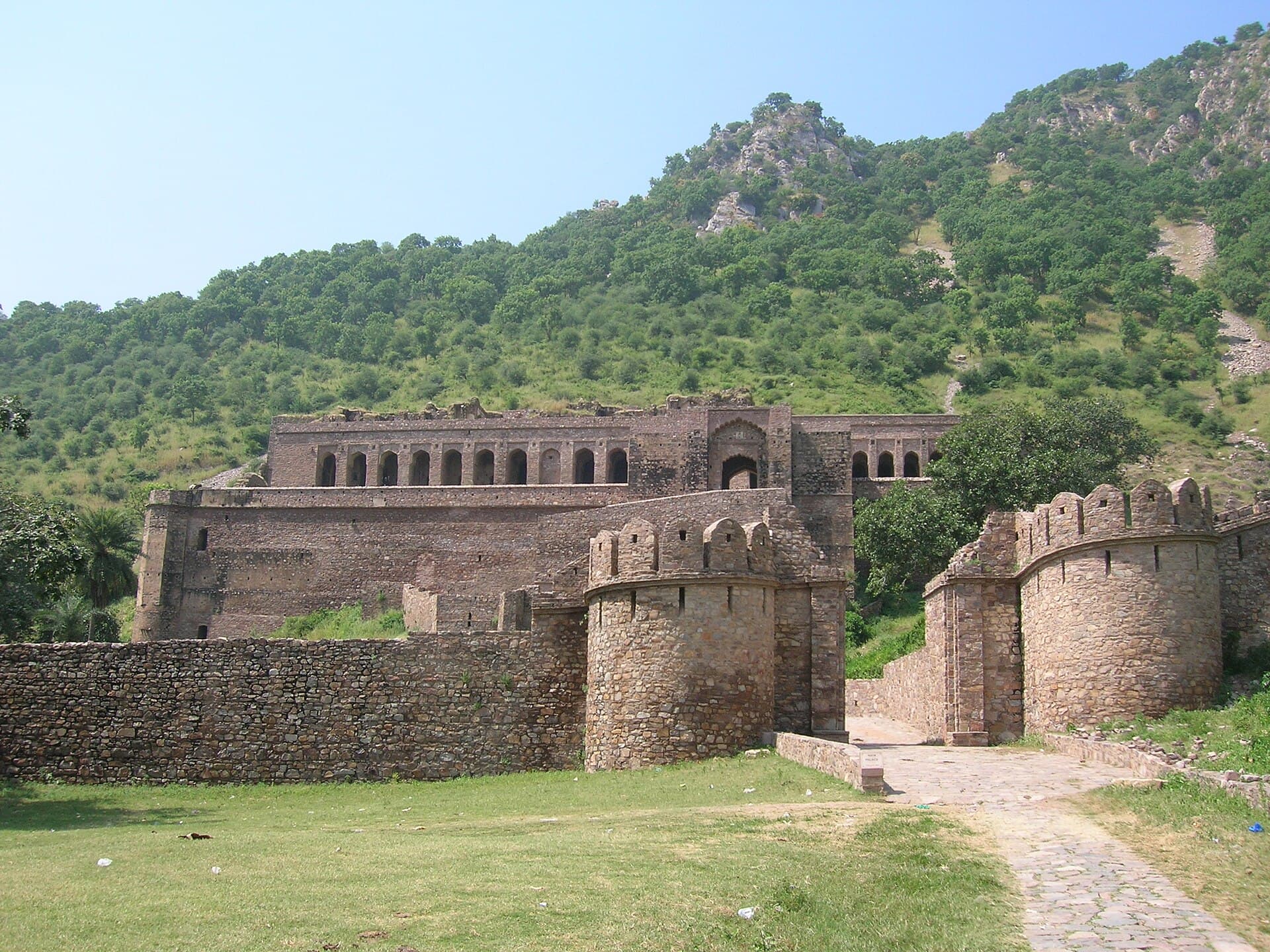
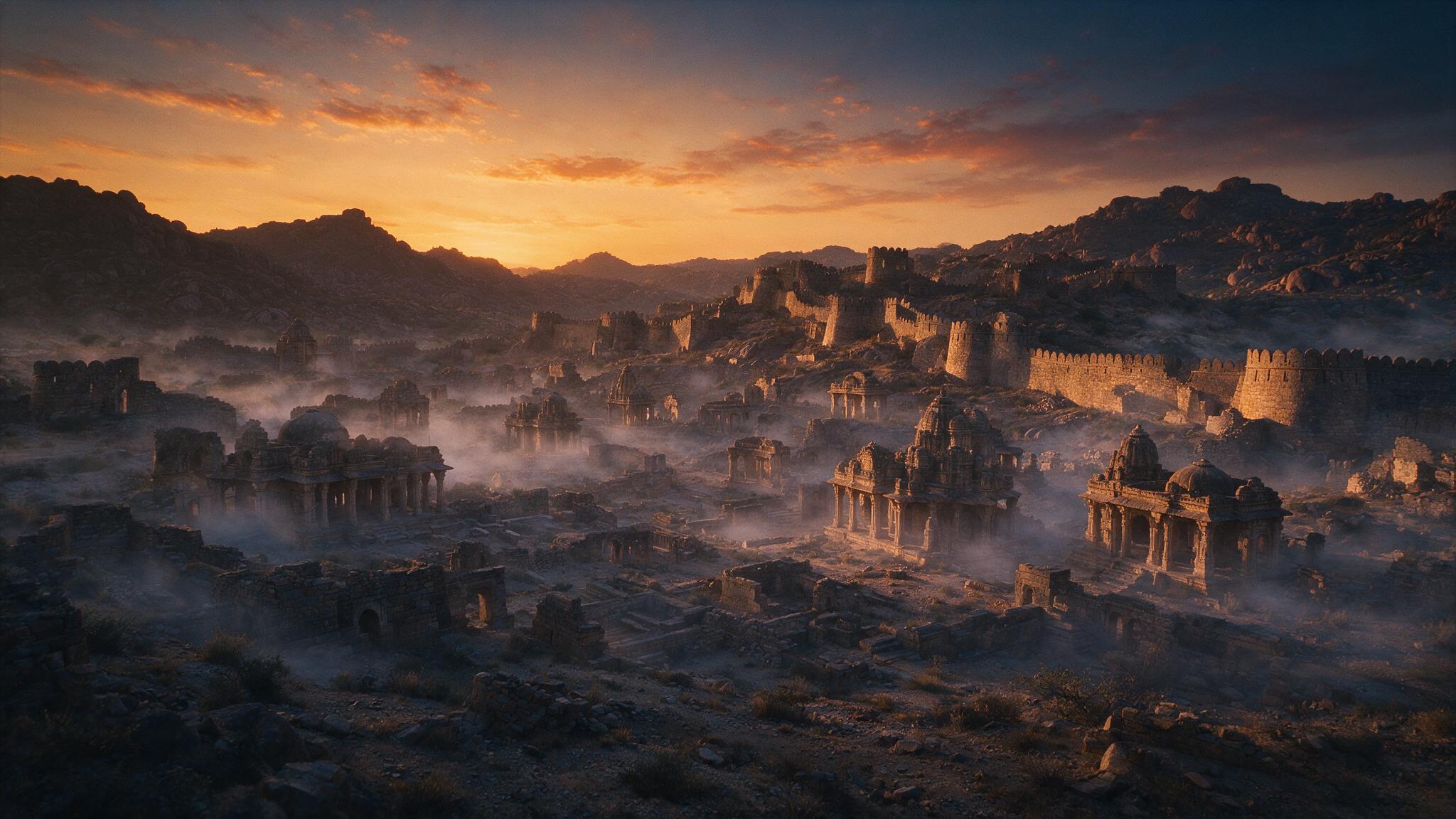
Turn down into the arid ridges of the Aravalli range, in the Alwar district of Rajasthan, India, and a ruined city of stone rises up before you. Walls of red sandstone and grey rock run long along the mountainside, and within them lie the wreckage of temples and markets and palaces, layer upon layer. On the surface it looks like any old ruin anywhere in India — collapsed walls, weed-choked stairways, carvings worn shapeless by time. Yet this quiet ruin is the most famously terrifying place in all of India. This is Bhangarh Fort: the fort where, they say, an entire town died in a single night; the fort where every roof that is built comes crashing down; and the one fort in this country that the Indian government has officially forbidden anyone to enter after dark.
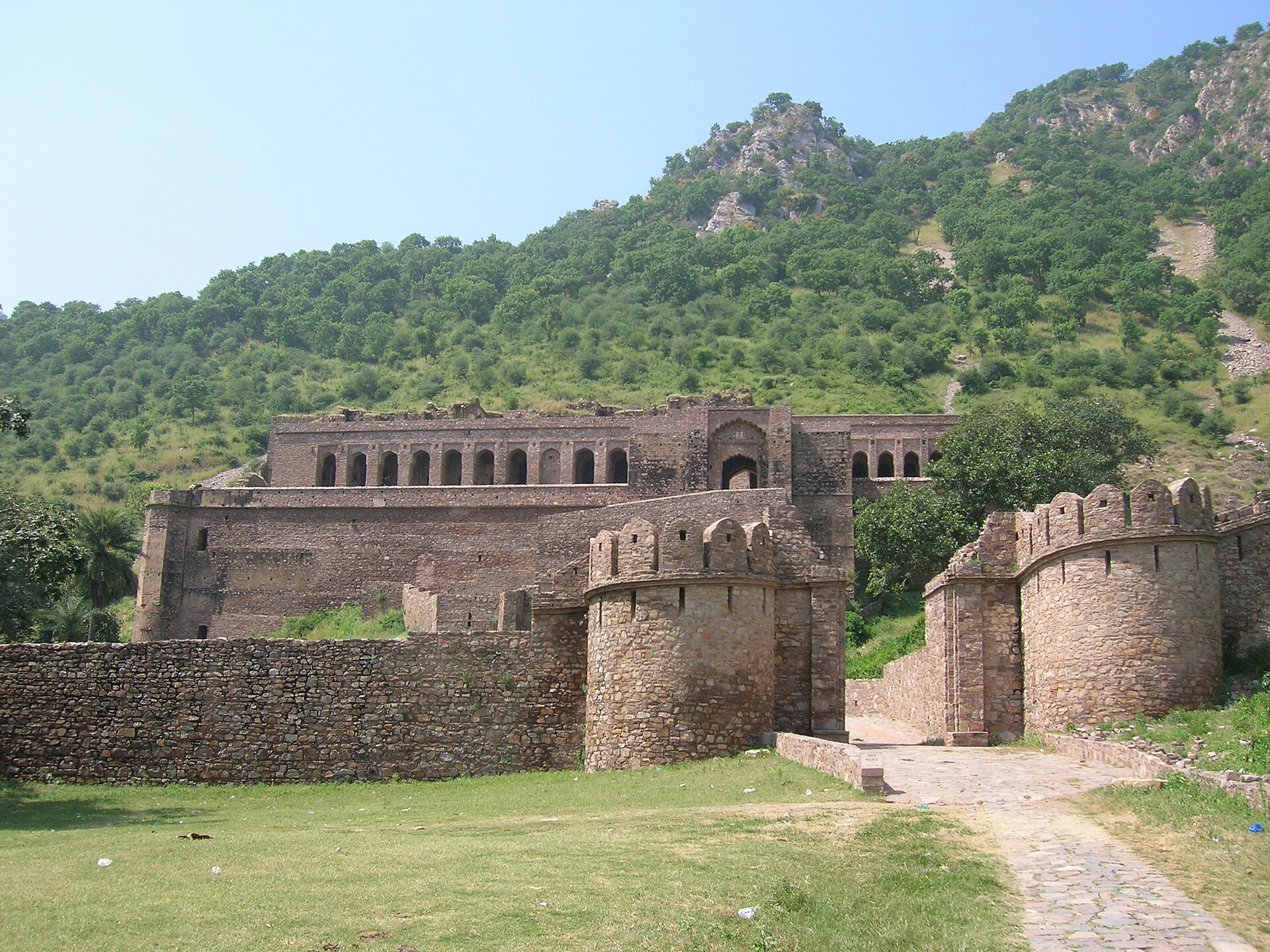
Photo: Wikimedia Commons, CC BY-SA 3.0
Curse legends are cheap and I hold most of them lightly, so what pulled Bhangarh into my files was not the sorcerer or the ascetic. It was a piece of signage. Somewhere in the paperwork of a national archaeological body, an ordinary official set out a rule about sunset and sunrise for this one site, and whatever reasoning sat behind it — safety, wells, broken stairs, all of it perfectly sound — the effect is that a government has put in writing the exact hours during which a place is closed to human beings. I have never found another entry quite like it, and I have looked.
A City That Died in a Single Night
Bhangarh Fort is said to have been built in 1573 by Bhagwant Das of the house of Amber, as a residence for his second son, Madho Singh. Once this was not a ruin but a living city. Within its walls stood temples and palaces; a market rose and thronged with people; water gathered in the reservoir and lamps were lit down every lane. It was a place full of sound and warmth, no different from any other thriving fortress-town of India.
But all that remains of Bhangarh today is silence and stone. What makes this place terrifying is not the ruin itself, but the story of how it became a ruin. Legend says Bhangarh did not decline slowly — that it died all at once, in the space of a single night. What happened that night, no one knows for certain. Only that when morning broke, not a soul remained in that once-crowded city. And two ancient tales of a curse, each accounting for that single night, still rest upon these heaps of stone.
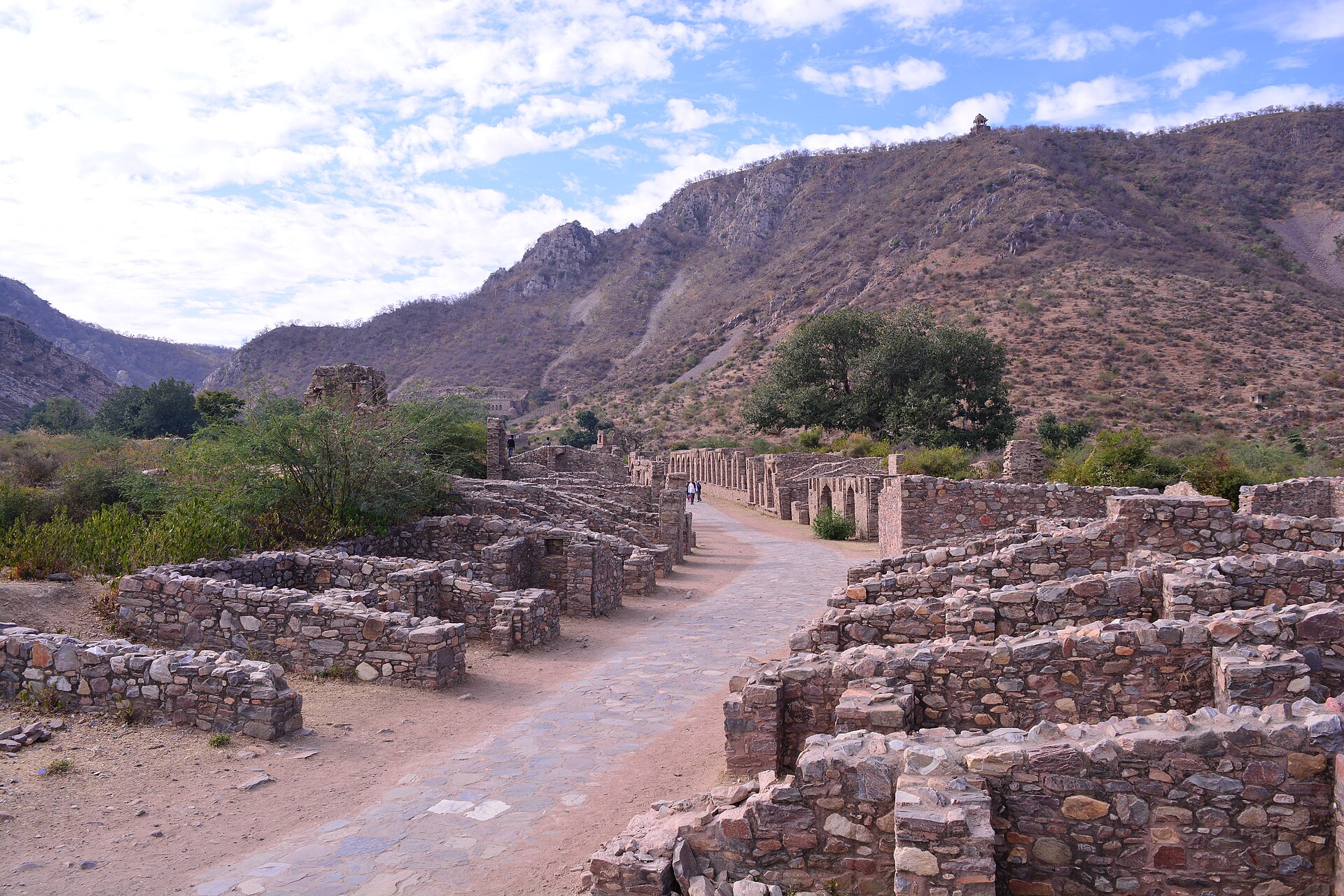
Photo: Wikimedia Commons, CC BY-SA 4.0
The First Curse — The Black Magician Who Loved a Princess
The first tale begins with a woman, and with a sorcerer who coveted her. According to legend, Bhangarh was home to a beautiful princess named Ratnavati. Her beauty was known across all of Rajasthan, and countless suitors sought her hand. But among those who set their hearts on her was a man said to practice black magic. Knowing he could never win the princess by ordinary means, he turned to dark arts.
The story goes like this. The magician brewed a love potion and meant to make the princess drink it. But the princess, seeing through his scheme, poured the potion out onto a rock instead of drinking it — and the moment the cursed draught touched it, a great boulder rolled down and crushed the magician to death. And in his final breath, with the last of his strength, he spat out a curse: a curse that this city and all within it be condemned to ruin and desolation. Legend says that soon after this curse fell, all of Bhangarh became a city of the dead in the span of a single night.
This is a story handed down by word of mouth — not a historical record, but folklore widespread throughout Rajasthan. And yet, standing before Bhangarh's collapsed walls and roofless palaces, this tale does not let the silence of the ruins sound ordinary. To this day, people believe the magician's curse still lingers upon these stones.
The Second Curse — The Fort Where No Roof Can Stand
Over Bhangarh lies a second tale of a curse. This one begins not with a sorcerer but with an ascetic who lived on this land before anyone else. According to legend, before the fort was raised here, a holy man had long dwelt on this spot in solitary devotion. When the royal house came to build its fort, he laid down one condition: that no building of the fort should rise higher than his own dwelling, and that no shadow of it should ever fall across his place.
But as the years passed, that promise was not kept. The palaces and buildings of Bhangarh climbed higher and higher, until at last their shadow fell upon the holy man's dwelling. Legend says that in that very moment his curse came down — a curse that no roof of this fort would ever stand whole again. From then on, so the tale goes, every roof raised in Bhangarh came crashing down.
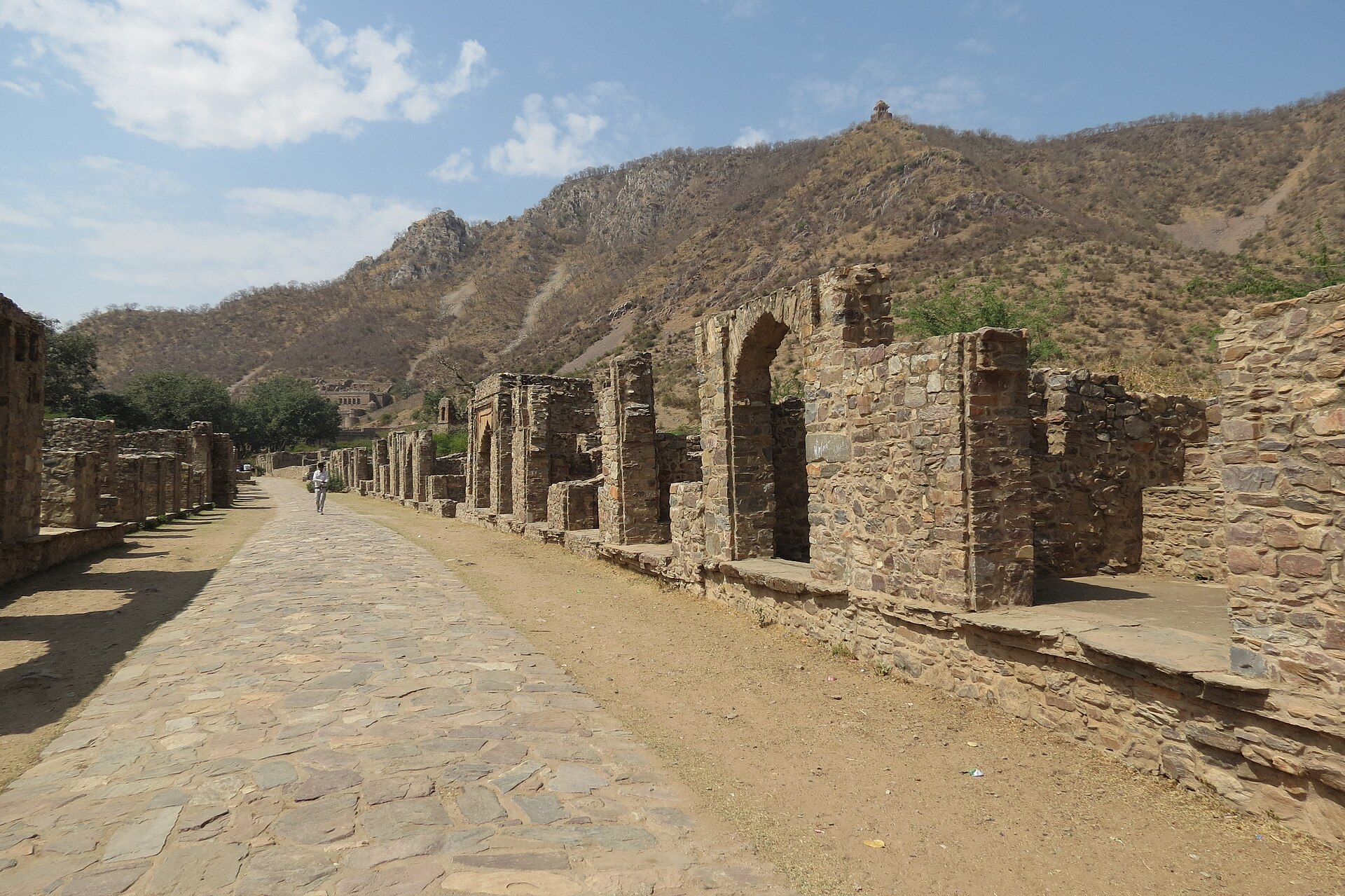
Strangely enough, walk through the ruins of Bhangarh today and you will find this curse written in visible form. The walls stand, the pillars stand, the stairs stand — yet of the roofs alone, almost none remain intact. Across the ruins stand the shells of palaces and temples gaping open to the sky, their roofs long gone. This may, of course, be the natural collapse wrought by centuries of weather and neglect. Given that the roof is the first thing to fall in any old stone building, it is an entirely realistic explanation. And yet, gazing up at those empty roofs while hearing the tale of the holy man's curse, a chill remains that no rational account quite fills.
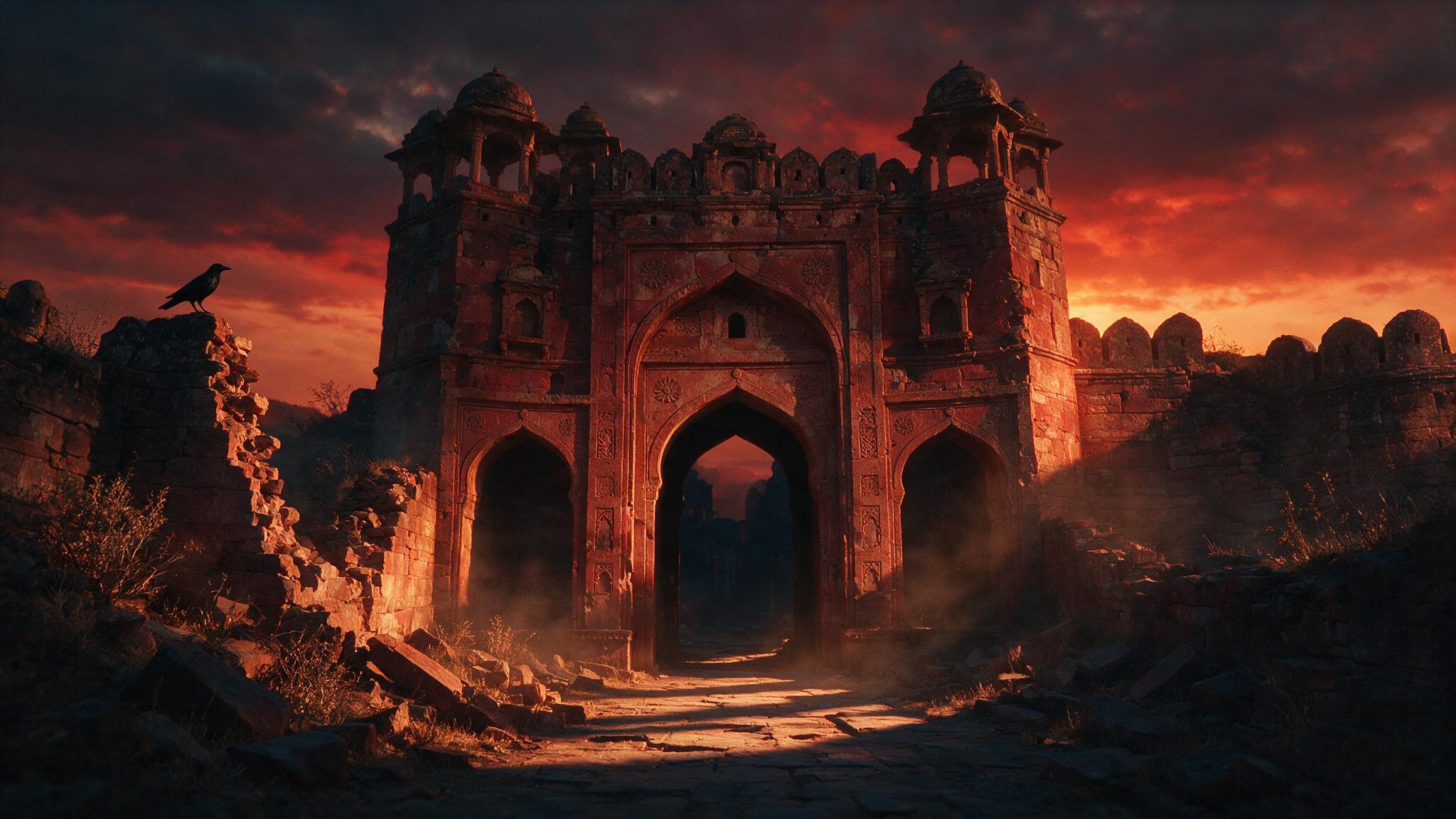
Dusk settling over the ruins of Bhangarh, mist drifting low over roofless palaces and a crow taking wing — a mood recreation, not real footage.
The Fort That Closes Its Gate When the Sun Goes Down
What sets Bhangarh decisively apart from India's other haunted houses and ruins is not the curse legends themselves. It is a single signboard that stands at the entrance to this fort. The Archaeological Survey of India (ASI), which manages the site, prohibits entry to Bhangarh Fort from sunset until sunrise — that is, throughout the hours of night. By day, tourists may wander the ruins freely; but once the sun has set, the gate is closed and no one is permitted to go inside.
There is no shortage of places across India rumored to be cursed. But a place where a government body has stepped in to officially bar entry by night, and nailed that ban down on a signboard, is very nearly unique to Bhangarh. Of course, one cannot conclude from this that the authorities have acknowledged some supernatural danger. To wander an unmanaged ruin alone at night is dangerous in itself — one is all too likely to be injured on collapsed stairs, wells, and broken stone floors in the dark, and there is the risk of wildlife and accidents besides. There are entirely practical reasons enough to control a ruin by night.
Yet to those who visit Bhangarh, this signboard carries a weight greater than a mere safety warning. A city that died in a single night; a curse under which no roof can stand; and an official ban that says "you must not go inside after the sun sets." The moment these three converge in one place, Bhangarh — which by day looks like nothing but an old ruin — reveals an entirely different face. As the sun slips behind the mountains and shadows stretch long across the ruins, visitors quicken their steps toward the gate. No one wishes to meet the night in this place.
What Remains — Temples, a Reservoir, and Silence
Strangely, within this cursed ruin there still stand the places where gods were once worshipped. Scattered inside Bhangarh's walls lie the remains of several temples, and some of them hold their shape even with their roofs collapsed, drawing the eye amid the ruins. Places where incense was once burned and prayers once offered now stand in silence, leaving behind only empty stone pillars and fallen shrine-niches. Beside them remain the traces of a dried-up reservoir and stepped wells, quietly bearing witness that this was once a city where thousands drew water and lived.
Walk through the ruins and you pass in turn what was once a market, what was once a house, what was once a palace. The walls remain but the people who lived within them are gone; the stairs remain but the footsteps that climbed them are gone. What emptied this city so utterly — whether the black magician's curse, or the holy man's wrath, or famine and war, or the entirely mundane decline of a place as its water ran dry and its people drifted away one by one — no one now can say for certain.
Historians point not to a curse but to practical causes for Bhangarh's fall: famine in the surrounding region, a shortage of water, and the gradual decline of the town, which is likely what drove its people away. Unlike the legend of a death in a single night, in reality it was most probably abandoned slowly, over long years. But what makes Bhangarh into Bhangarh is not this cold history — it is the stories laid over it.
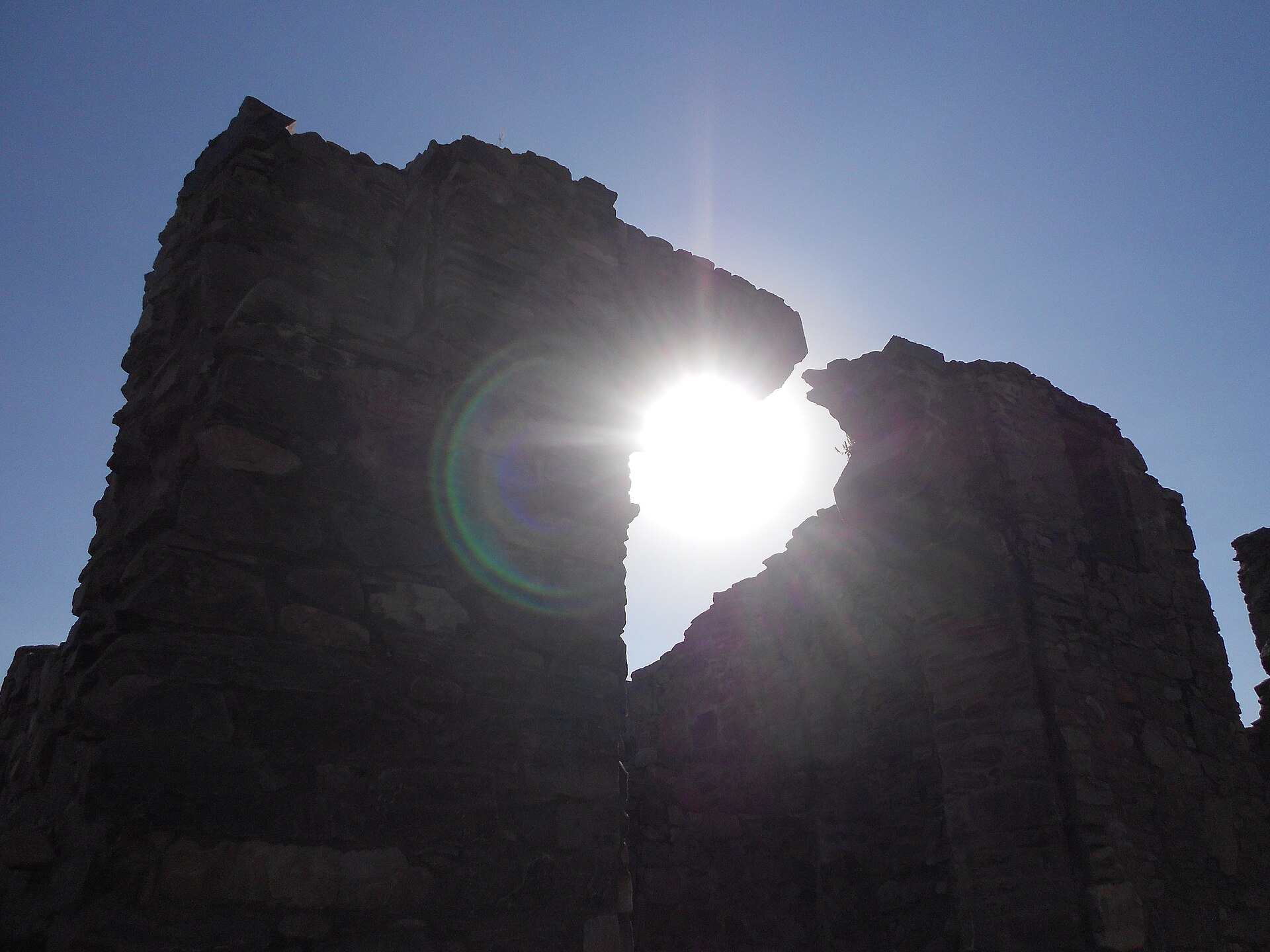
Photo: Wikimedia Commons, CC BY-SA 3.0
The Question That Remains Above the Ruins
Today Bhangarh Fort remains India's most famous tourist site and, at the same time, its most notoriously terrifying place. By day it teems with people come to see the ruins. Travelers with cameras cross between the collapsed walls, peering into the empty windows of roofless palaces and trading curse-tales among themselves. But as the sun begins to sink, the mood slowly shifts. Shadows lengthen, dusk settles over the ruins, and as the hour nears for the keeper to close the gate, every footstep turns as one toward the world outside the walls.
Whether Bhangarh's curse is real — whether the magician's last curse truly killed a city in a single night, whether the holy man's wrath truly brings down the roofs — no one can prove. These are the old folktales of Rajasthan, belonging to the realm of legend rather than history. Yet the reason these stories will not let people go is that beside them sits one undeniable fact: that a government body has stepped in and officially declared that this fort, above all, must not be entered after the sun goes down.
No one who enters after dark comes out alive — whether that saying is superstition or warning, Bhangarh does not answer. It only says this: when the red sunset falls over the Aravalli range and darkness comes down over the roofless palaces of the ruins, Bhangarh sinks into a silence with a face utterly unlike the one it wears by day. And in that silence, the story of a city said to have died in a single night is, four hundred years on, still breathing.
The historians' account satisfies me almost entirely: the water failed, the famine came, and the people left over years, the way towns actually die. Almost entirely. What that account does not touch is the roofs. Walls upright, pillars upright, stairs upright — and above them, across temple and market and palace alike, nothing. I know what weather does to old stone and I know which part of a building surrenders first. I have written that explanation out myself, more than once, and it has never yet made the photographs stop looking deliberate.
---
This article combines genuine archival and on-site photographs with AI-generated images and video produced to convey the mood of the story.

Comments
No comments yet — leave the first one.