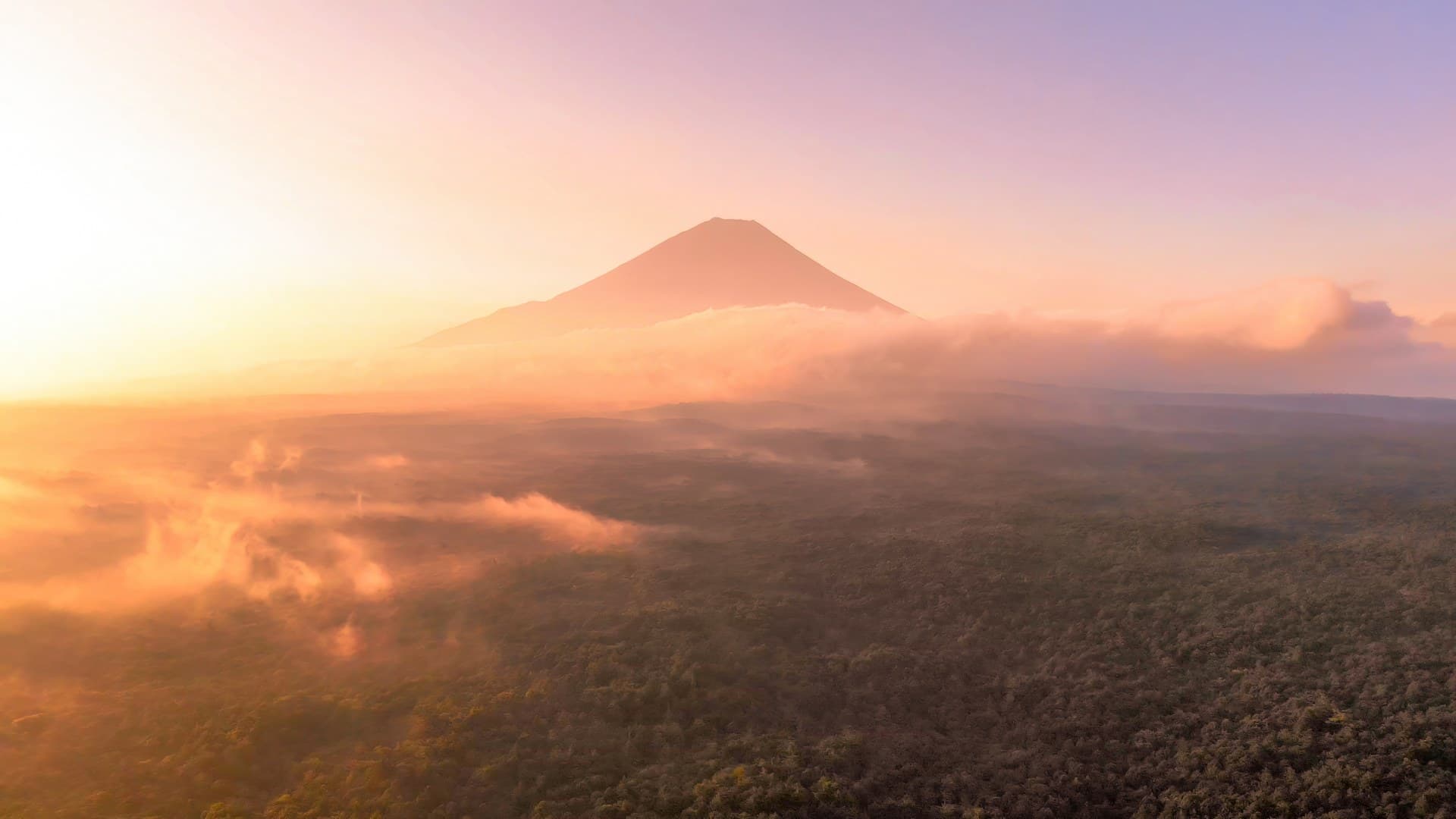
I, K. Woo, who collects these files, opened this one and closed it several times. It is not a ghost story. There is no curse here, no sighting that defies explanation. There are numbers instead — police tallies, a novel's print run, and the length of tape tied around trees. Everything frightening about this forest was made by people, and that is why I could never hold this file for long.
Photo: Wikimedia Commons, CC BY-SA 4.0
The Sign at the Entrance
A wooden sign stands at the trailhead. It is not a tourist board. It reads:
Your life is a precious gift from your parents. Think quietly once more about your parents, your brothers and sisters, your children. Do not suffer alone — please talk to someone.
Beneath it is a phone number. Past this sign is the forest.
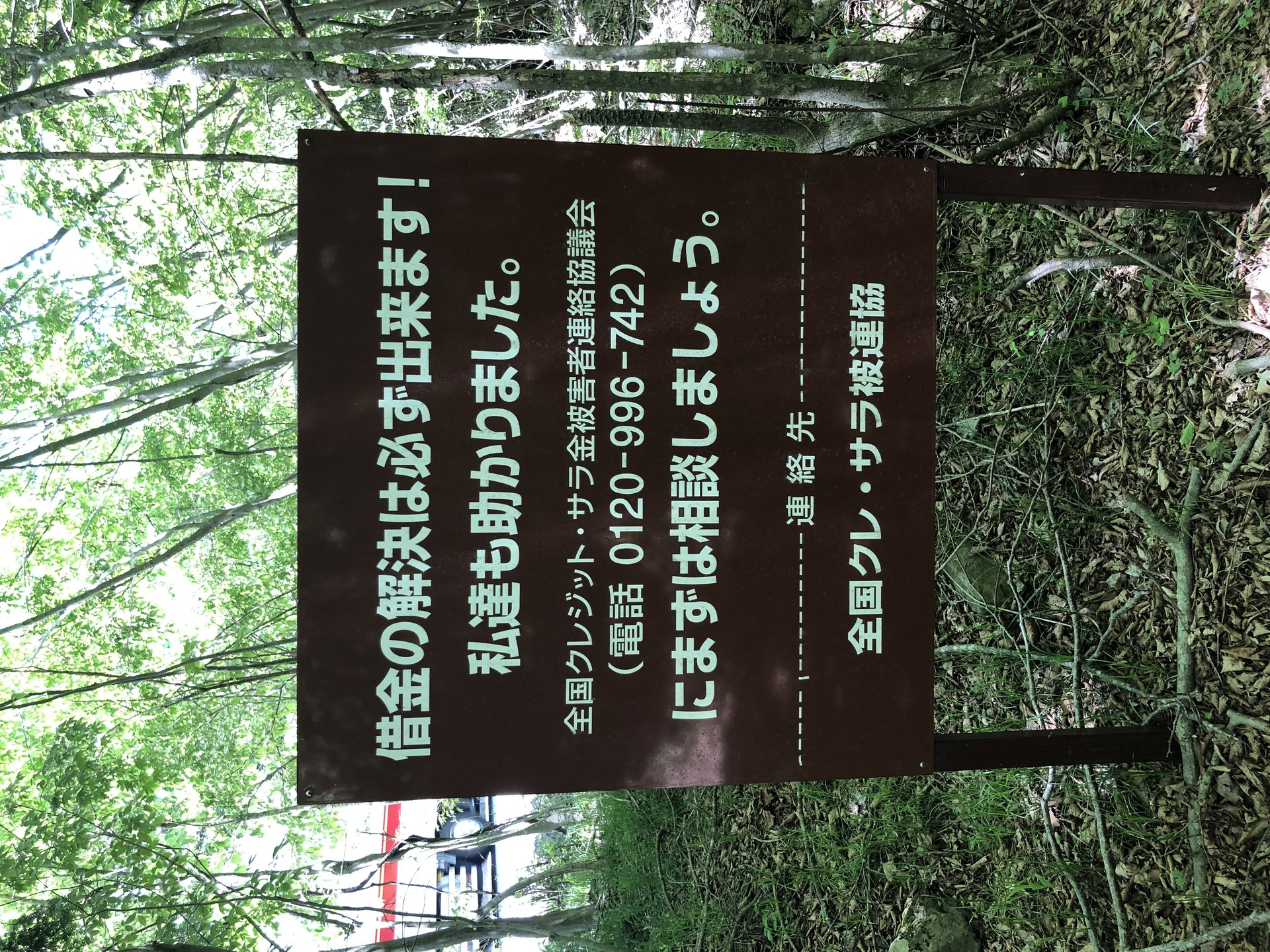
Photo: Wikimedia Commons, CC BY-SA 4.0
The first thing I thought when I saw these signs was simple. This forest already knows who comes here.
The Sea of Trees
Aokigahara lies in Yamanashi Prefecture, on the northwest foot of Mount Fuji, and covers roughly thirty square kilometers. In the year 864 Fuji erupted violently. Lava poured down the northwest slope, and for a thousand years trees grew on top of it. Seen from far away it looks like a green ocean, which is why the Japanese call it Jukai — the Sea of Trees.
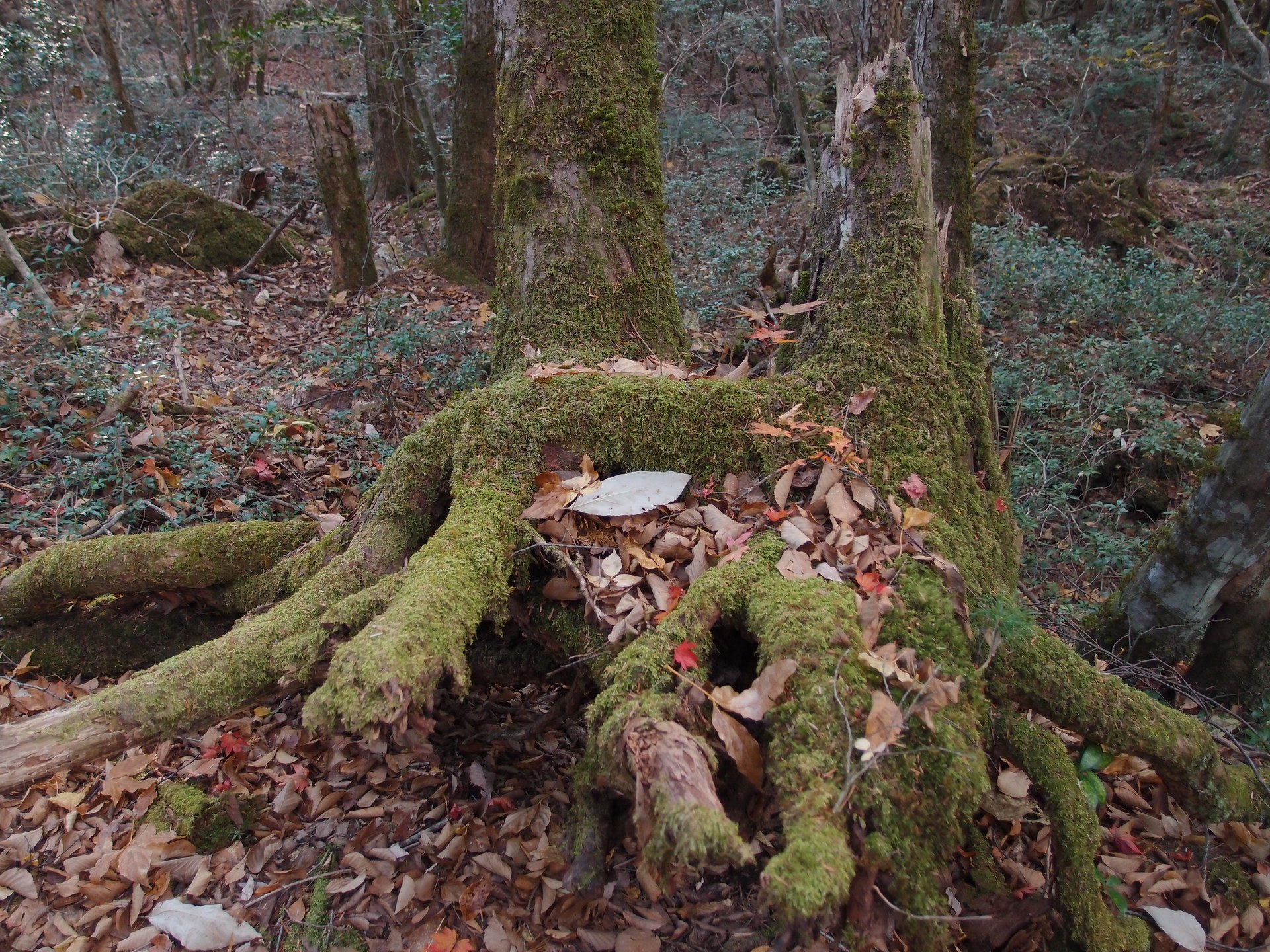
Photo: Wikimedia Commons, CC BY 2.0
Step inside and there is no ground. Instead of soil there is black volcanic rock under a skin of moss, and the roots, unable to dig down, clutch the rock and lie exposed. The trees are so dense that wind cannot get in and sound is swallowed. Even the birds rarely call.
People who have been in say the same thing. It is too quiet.
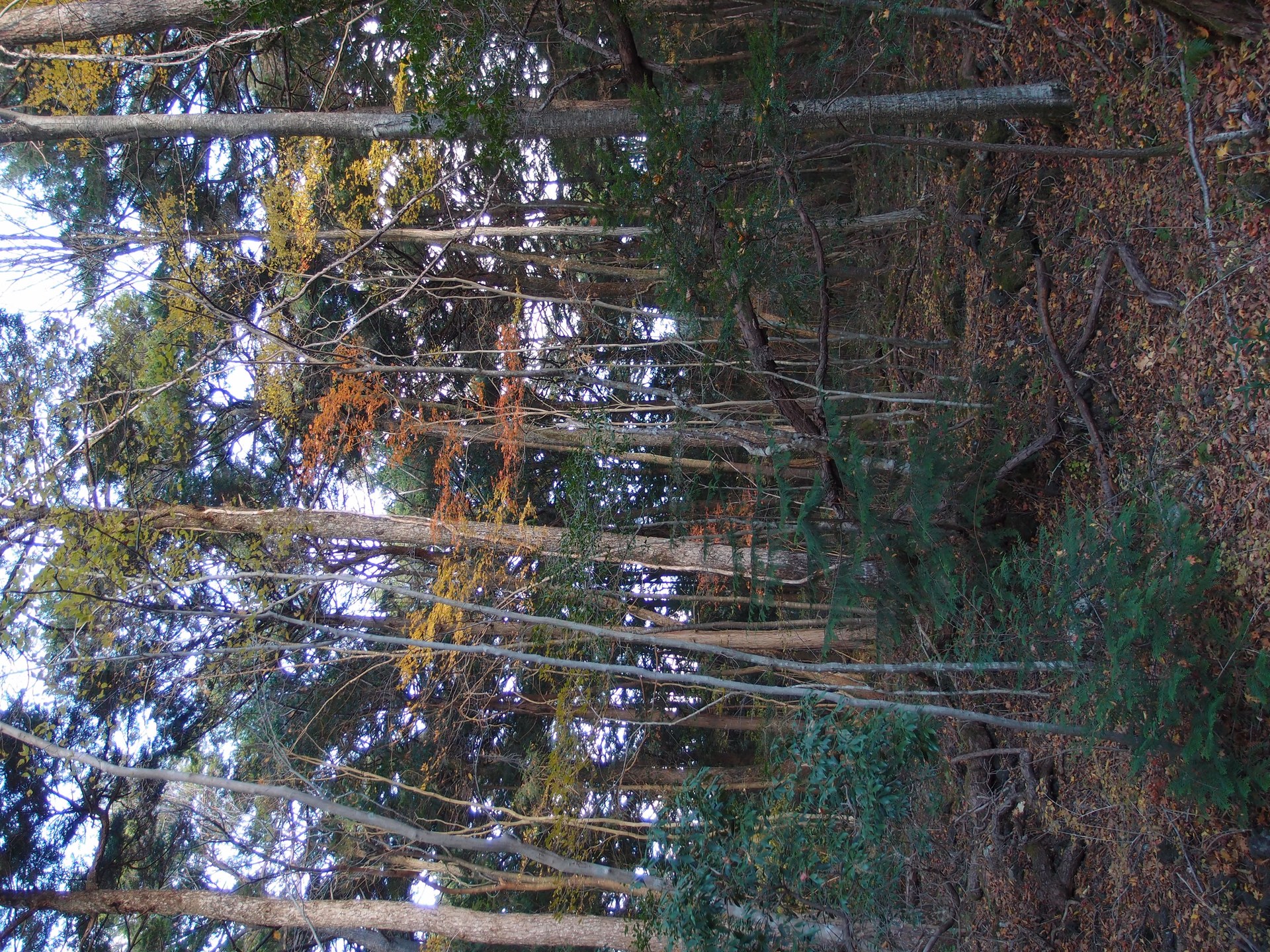
Photo: Wikimedia Commons, CC BY 2.0
The Story About the Compass
The most repeated claim about this forest is that compasses go wild inside it — that magnetite in the lava sends the needle spinning.
It is half true. Hold a compass flat against the rock and it wavers; carry it in your hand and it works fine. But the part about getting lost is not exaggerated. Every tree looks the same, every patch of ground looks the same, and you cannot see the sky. Ten steps off the path and you no longer know which way you came from.
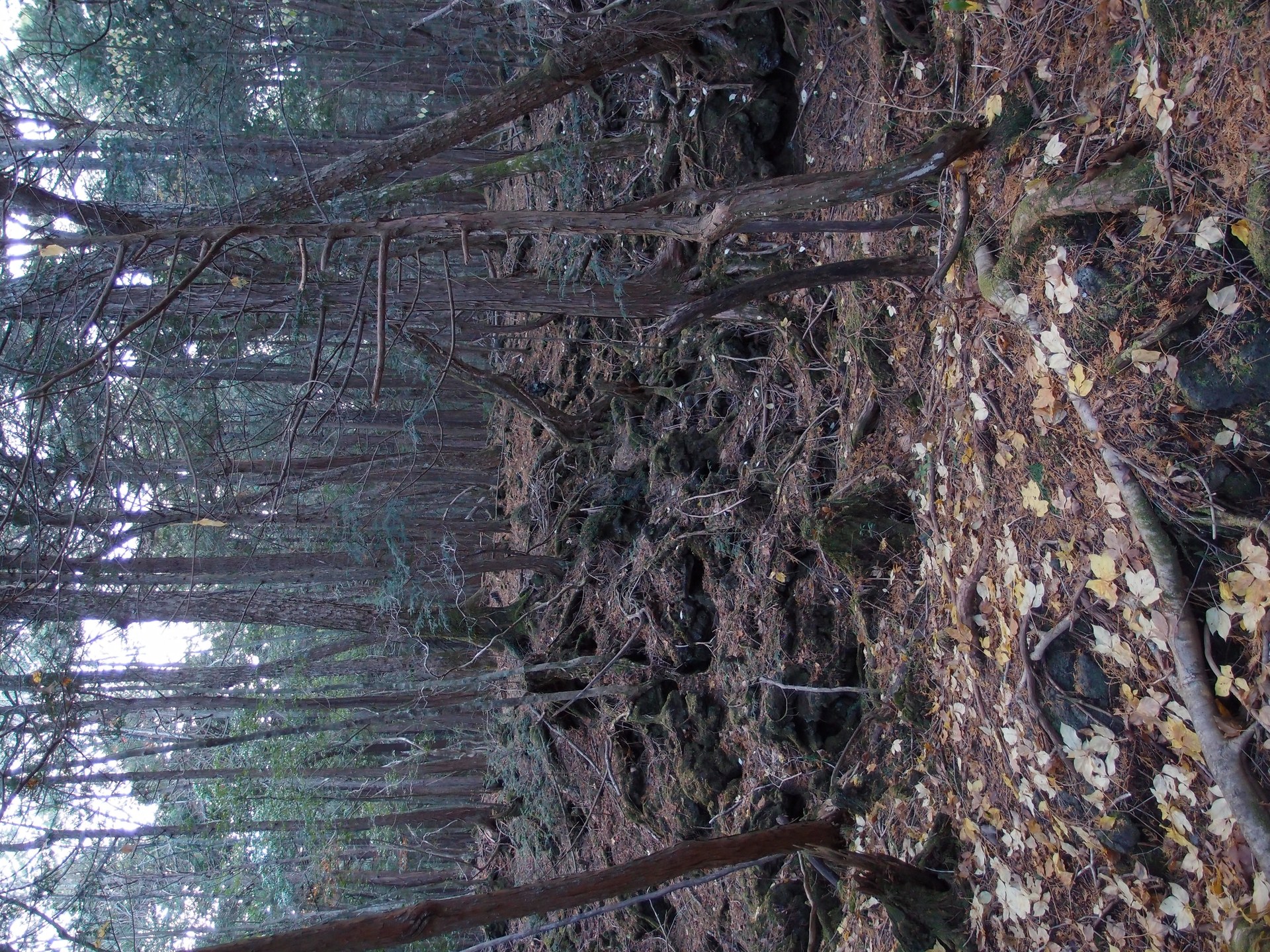
Photo: Wikimedia Commons, CC BY 2.0
This was, originally, an ordinary forest with walking trails. There are caves, there are lakes, tourists come. Even now, if you keep to the marked paths, nothing happens. The trouble begins the moment you step one foot off them.
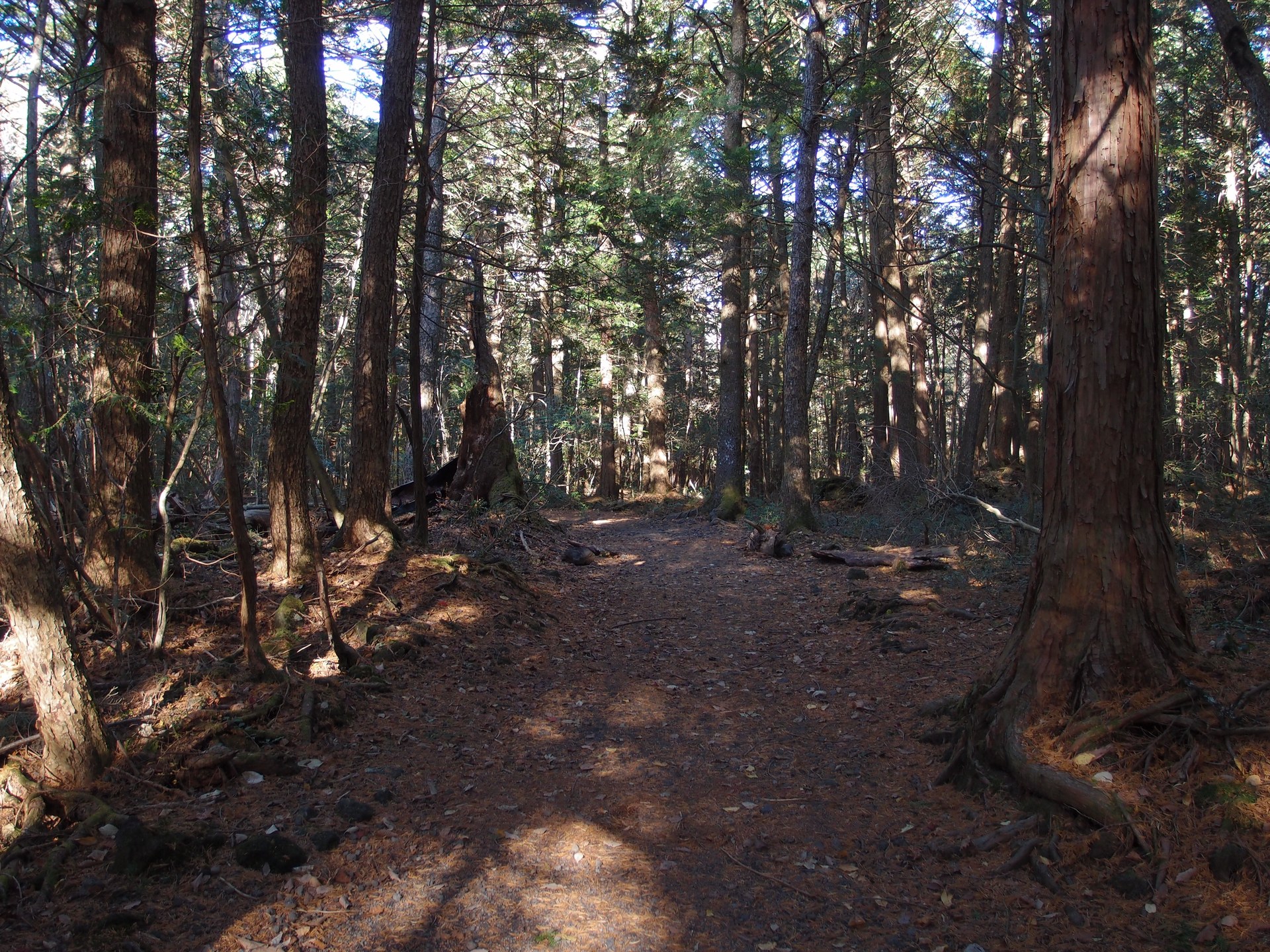
Photo: Wikimedia Commons, CC BY 2.0
One Novel
In 1960 the writer Seicho Matsumoto published a novel, Tower of Waves. At the end, the heroine walks into this forest and does not come back. The book became a bestseller, and from that year on, people began not coming out of the forest.

The forest did not call people. A book told them where it was.
In 1993 another book appeared: The Complete Manual of Suicide, a catalogue of methods and places that sold 1.2 million copies. This forest was in it. For years afterward, copies of that book kept turning up among the trees.
In 2010, by police count, 247 people went into the forest with that intent. Fifty-four did not come back. The rest were talked out of it, or walked out on their own.
The Tape
Some of the people who go in tie tape to the trees as they walk. Yellow, white, red. So that if they change their minds, they can follow it back out. The forest is strung with it, more than anyone can count.
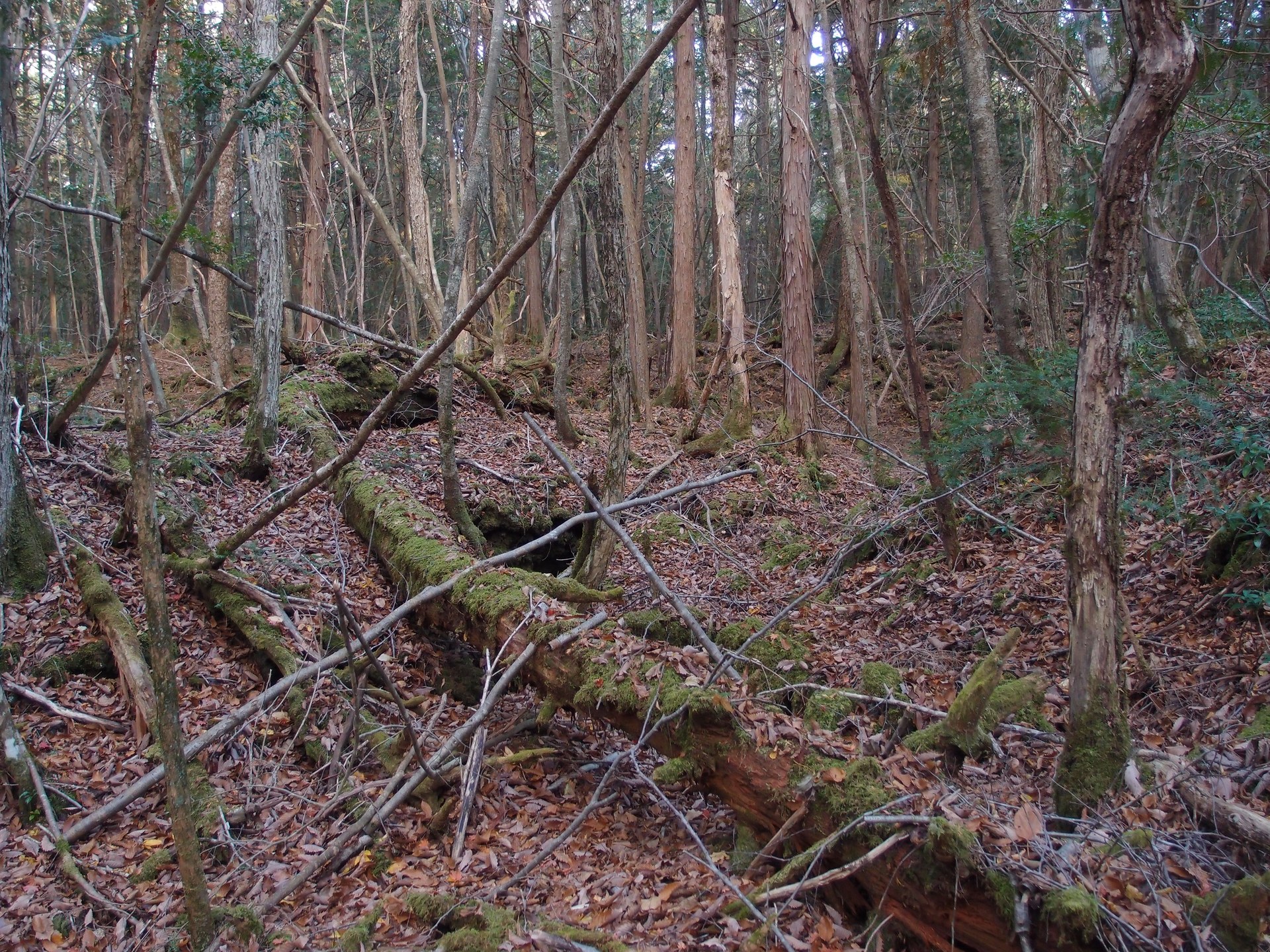
Photo: Wikimedia Commons, CC BY 2.0
Follow a strand to its end and you find one of two things. A loose end of tape. Or someone who did not go back.
Things are found in the forest. Tents. Shoes. Umbrellas. Bags. Pill bottles. Wallets. Traces of days spent inside. Almost no one does it right away. Most pitch a tent and sit for days. Thinking. Some walk back out. Some do not.
Sometimes a rope is left on a tree. Nothing beneath it. It is a place where the recovery has already been done. The rope is not untied, because there is no one to untie it for.
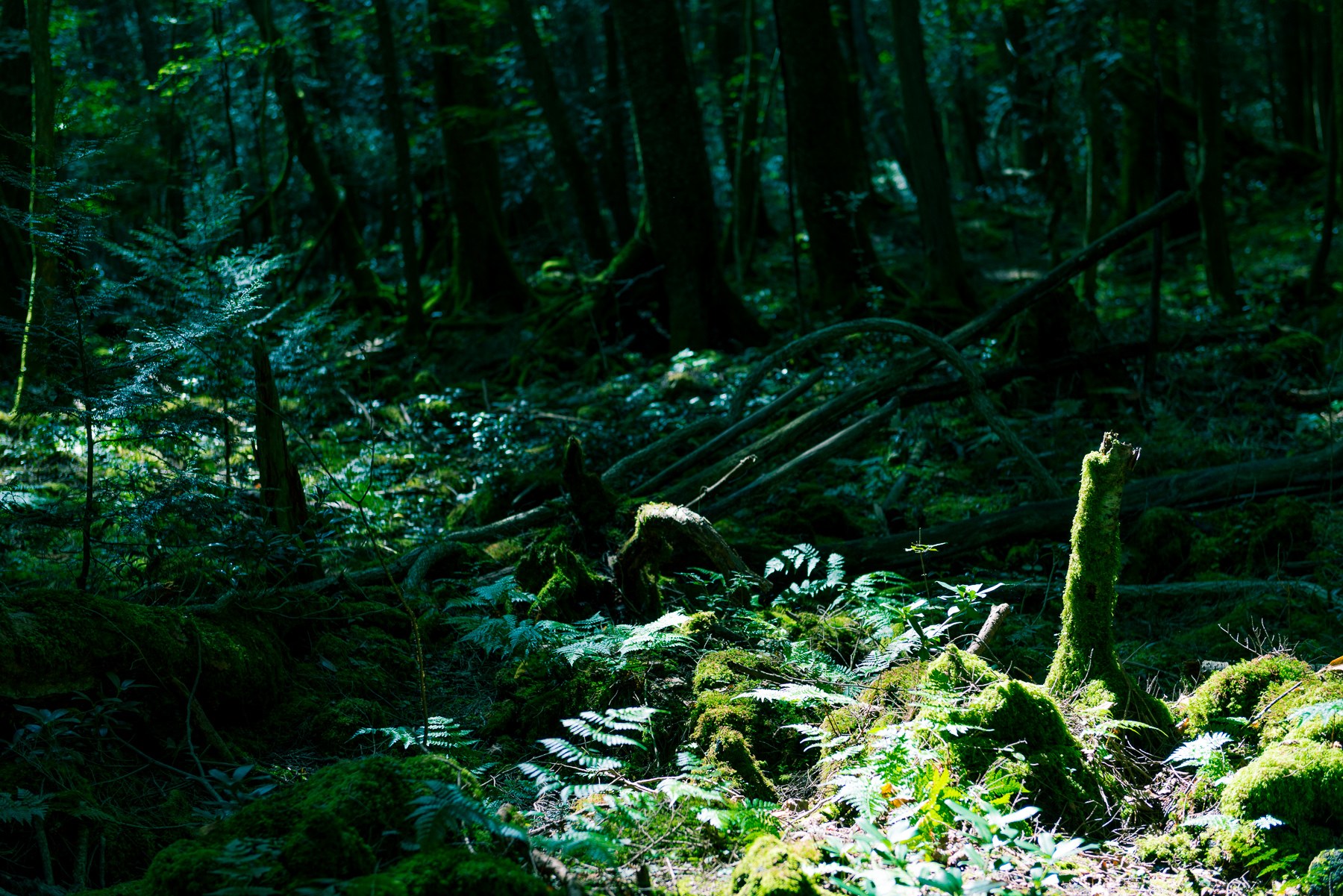
Photo: Wikimedia Commons, CC BY-SA 3.0
They Stopped Publishing the Number
From the 1970s, police, firefighters and volunteers lined up once a year and swept the forest. In 2003 they recovered 105 bodies. After that, Yamanashi Prefecture stopped announcing the figure. They had decided the number itself was drawing people.
Now patrols walk the forest every day. Their job is less to find than to stop. They speak to anyone sitting alone at the entrance. The first thing they ask is "Where did you come from?" — not "Where are you going?"
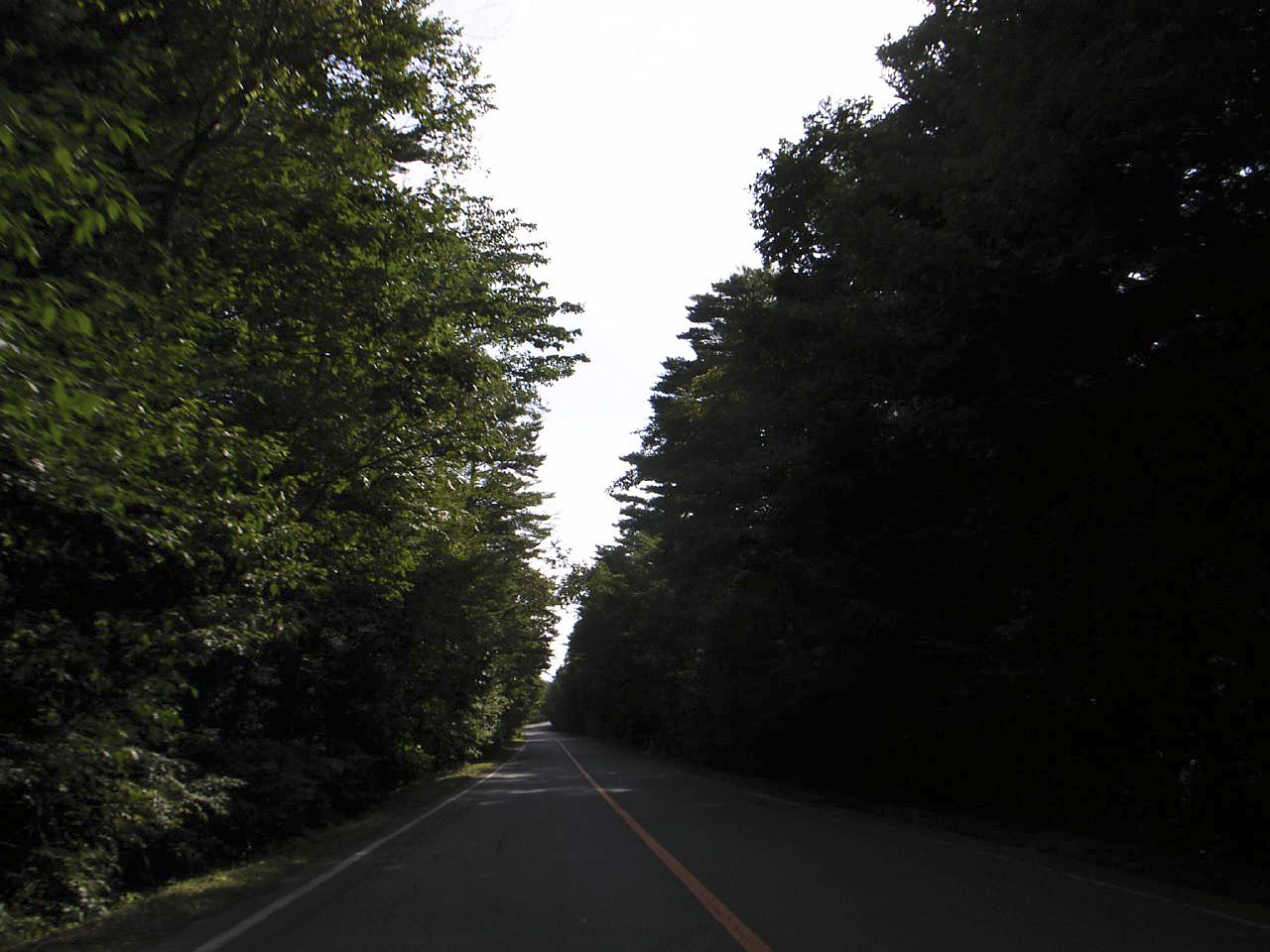
Photo: Wikimedia Commons, CC BY 2.0
December 31, 2017
The American YouTuber Logan Paul walked into this forest with a camera. Fifteen million subscribers. A few dozen meters off the trail he found a man hanging from a tree. He did not turn the camera off. He laughed, he joked, and he uploaded it.
The video was seen six million times in a day, then deleted, and he apologized. After that the forest became the most famous suicide site in the world. The only thing he had erased was the video.
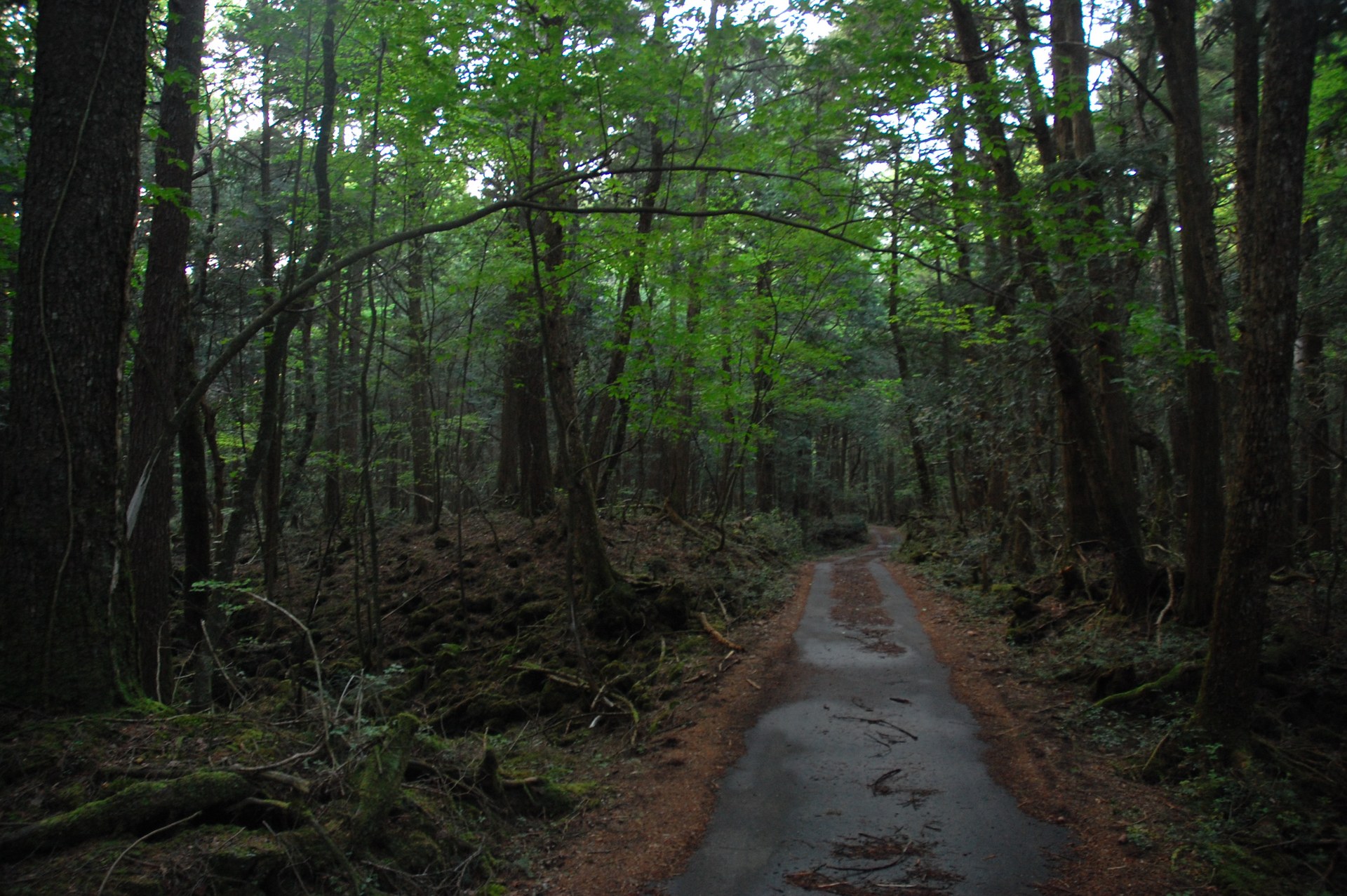
Photo: Wikimedia Commons, CC BY-SA 2.0
There are still ownerless tents in the forest. When a patrol finds one, they leave it for a few days and watch. Whether someone is inside. Whether they will come back. If they do not, the tent is taken down.
Seen From Across the Lake
Beside the forest is Lake Saiko, where Fuji reflects upside down in the water. It is where the tourists take their pictures. Look toward the forest from there and it is just a green wall. What is inside cannot be seen from outside.
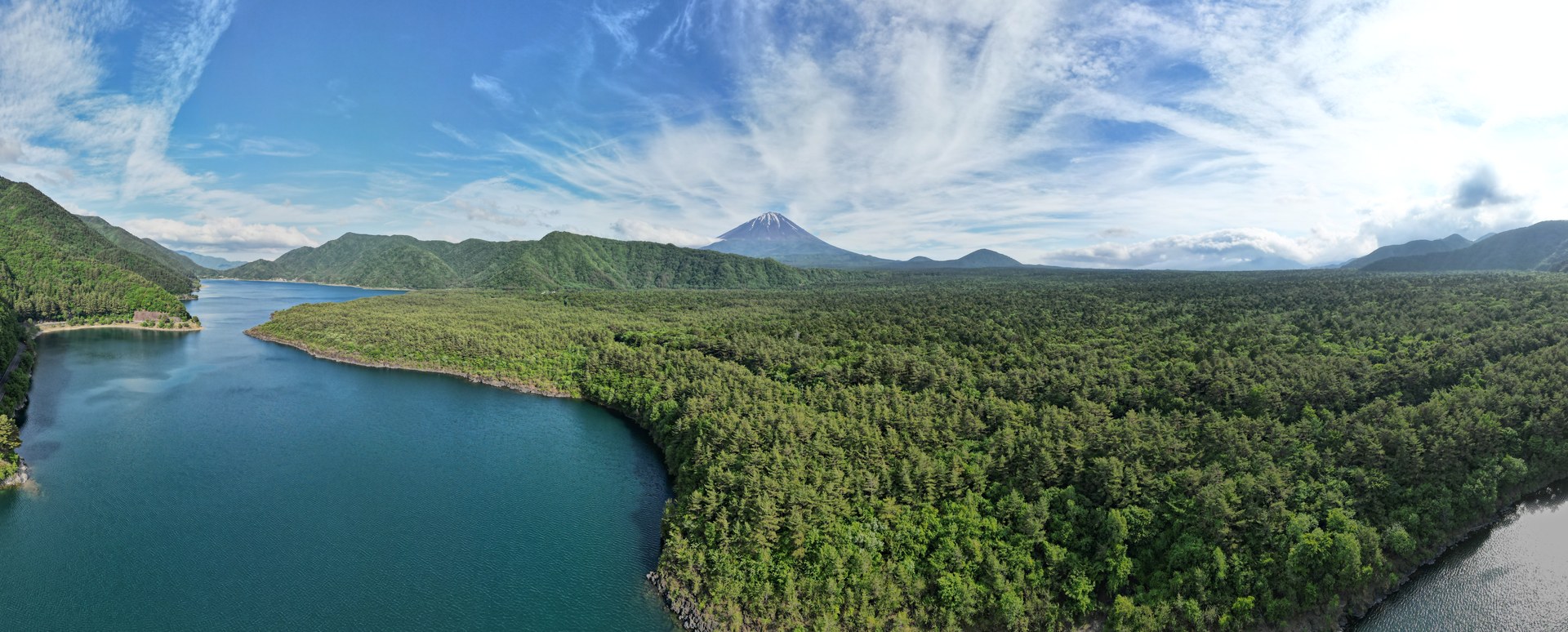
Photo: Wikimedia Commons, CC BY 4.0
Closing the File
What makes this forest frightening is not ghosts. Putting this file together, I could not include a single supernatural thing. There was none to include.
That it is too quiet. That everything looks the same. And that some of the people who went in tied tape to the trees so they could find their way back.
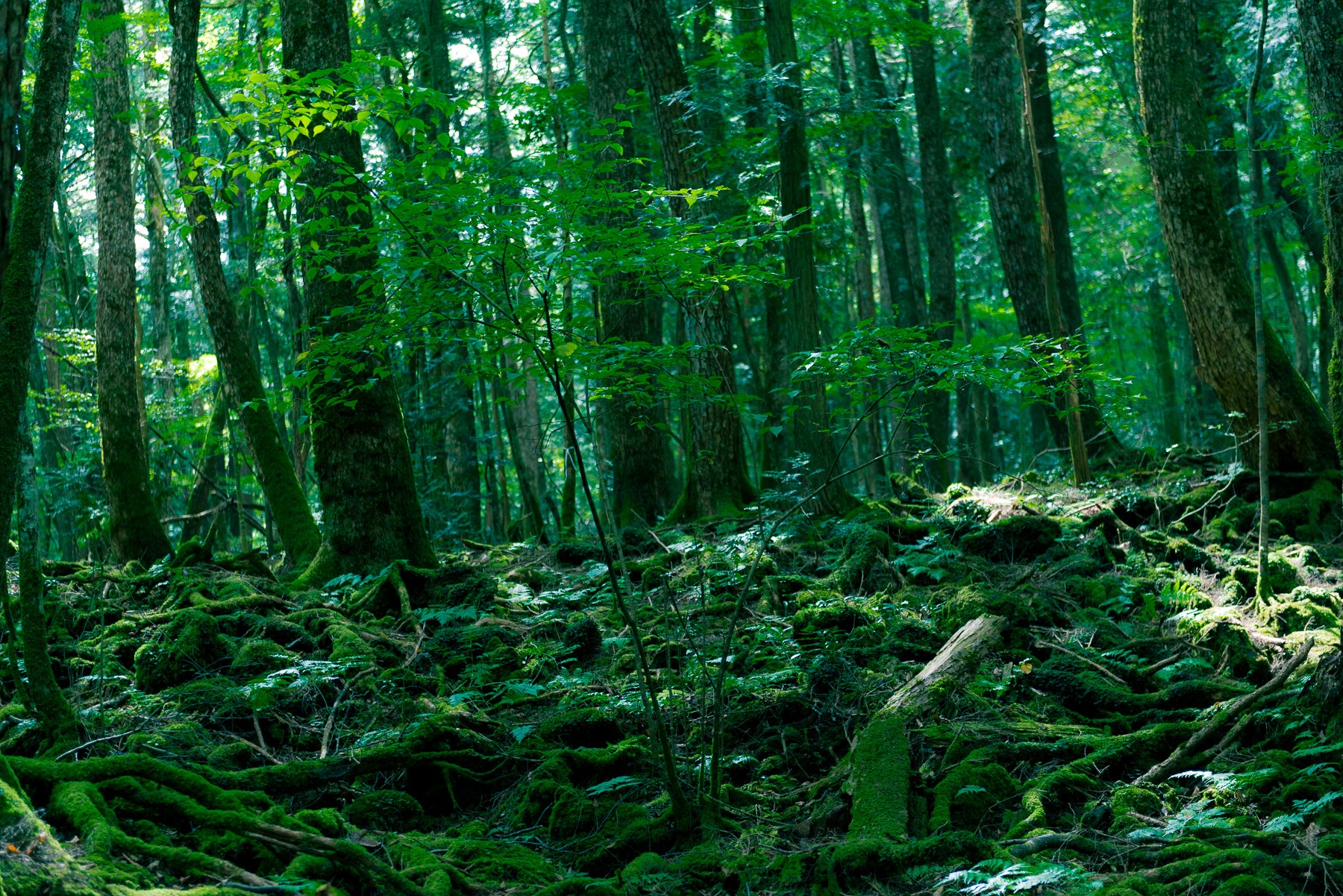
Photo: Wikimedia Commons, CC BY-SA 3.0
And that the tape is still tied there……
---
The images in this article are real photographs of the site and archival records.

Comments
No comments yet — leave the first one.