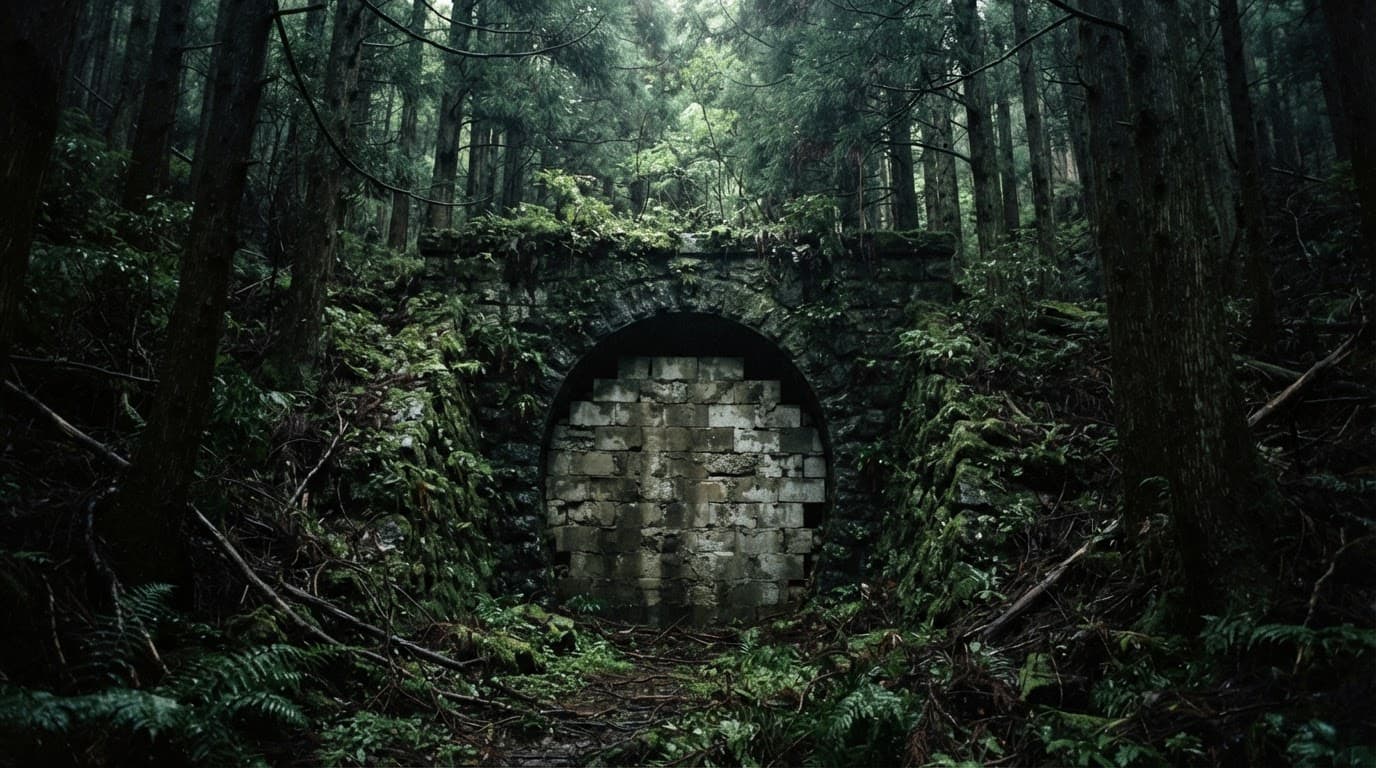
They say there is a sign at the mouth of the tunnel.
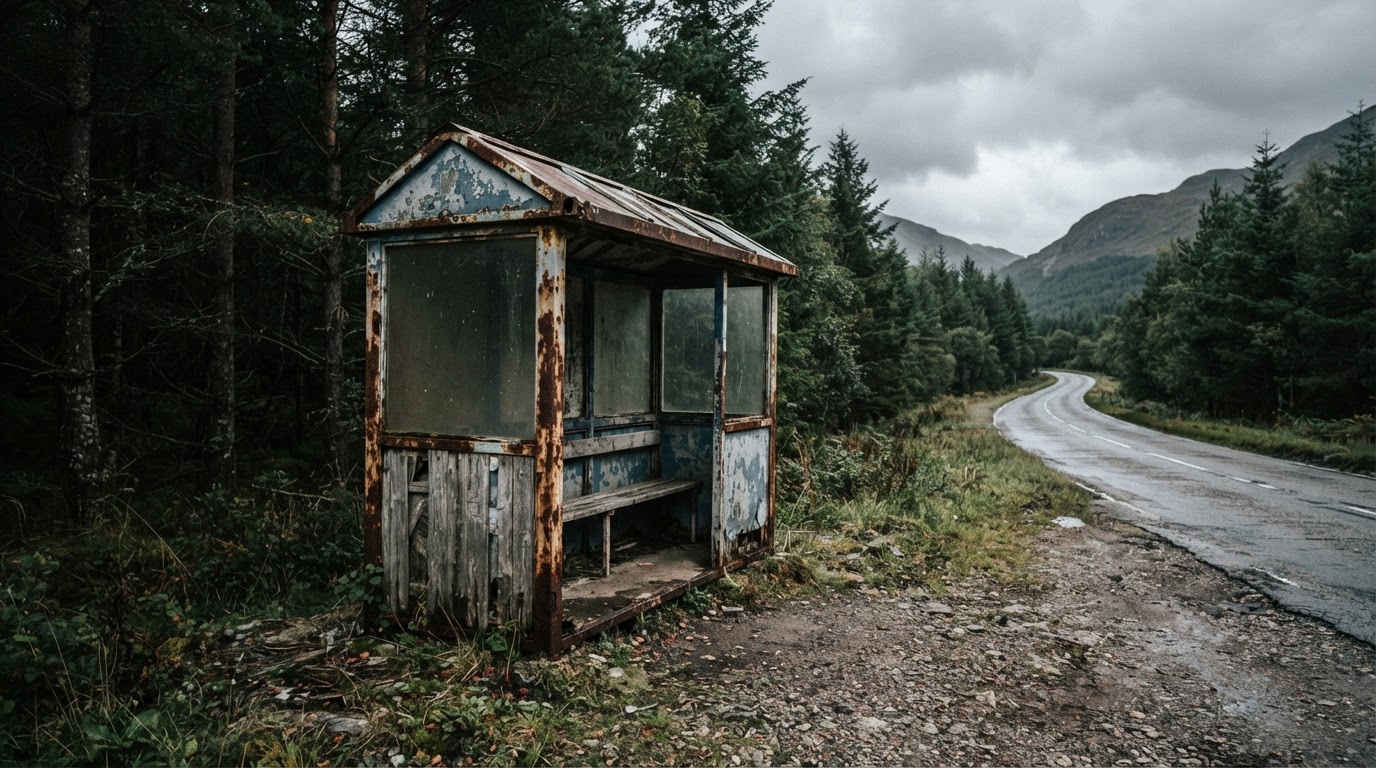
Old, rusted, half-swallowed by moss, nailed to a post where the pavement gives out and the forest closes in. And on it, the legend goes, are words that should not exist anywhere in a modern country: "The Constitution of Japan does not apply beyond this point." Drive past it, past the black arch of the old tunnel, and you are said to leave Japan behind entirely — not its territory, but its law, its order, its very presence on the map. Beyond lies Inunaki Village, a place that answers to no government, appears on no chart, and does not want you there.
The Legend at the Tunnel Mouth
Ask anyone in Japan about the most famous "forbidden place" in the country, and one name comes up again and again: Inunaki. The word means "howling dog," and it belongs to a pass in the mountains of Fukuoka Prefecture, on the southern island of Kyushu. There is a real place here — a real tunnel, a real valley — but the thing that made Inunaki notorious is not on any tourist map. It is a story, passed hand to hand across Japan's internet for more than two decades.
The story runs like this. Deep past the old Inunaki Tunnel, hidden in the folds of the mountains, there is a village that time and law forgot. The people who live there are said to be the descendants of outcasts who fled into the hills generations ago and never came back down. They have their own rules. They do not recognize the government in Tokyo. And they will not tolerate a stranger.
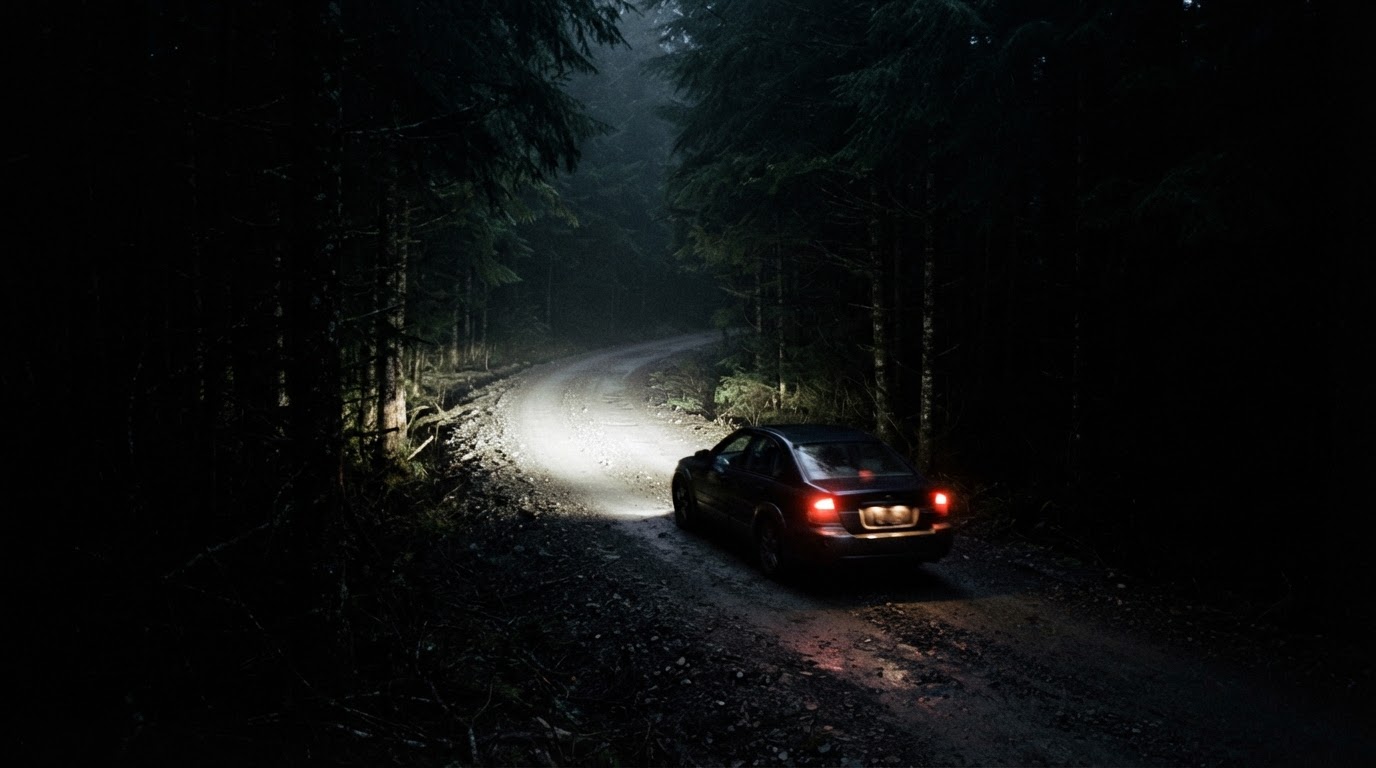
The sign is the heart of the legend — that impossible notice declaring the national constitution void. Beyond it, the tellers say, a driver's phone goes dead the instant they cross the threshold. The road unspools into places no navigation system will render. And if you go far enough, the villagers find you: figures emerging from the treeline carrying farm tools — sickles, hatchets, whatever the mountains provide — moving toward your headlights.
What drew me into this file was not the sign but the phone. I was sorting Japanese forbidden-place stories by decade and noticed that the loss-of-signal detail simply is not present in the older tellings; it enters with the 2000s and then becomes the pivot of the whole thing. Someone updated a ghost story to account for cellular coverage. I have watched a legend revise itself for new technology before, but rarely with a date I could nearly put a finger on.
The Ruleset of a Forbidden Place
What makes the Inunaki legend so durable is that it comes with rules, the way the best urban legends always do. It is not a single haunting but a system — a set of thresholds you cross one by one, each one worse than the last.
First, the boundary. The sign marks the point of no return. To pass it is not trespassing in the ordinary sense; it is stepping outside the country's protection. Whatever happens beyond it, the legend implies, no law will answer for.
Second, the silence. Your phone loses signal. This detail matters more than it seems. In the version of the story that spread through the 2000s, the moment your bars vanish is the moment you are truly cut off — no call for help, no map, no way to prove to anyone where you are. The modern traveler's lifeline is severed at the door.
Third, the map itself. The village does not appear on official maps, the story insists. Search for it and you find only blank mountain, a gap in the grid where a place should be. In an age when every corner of the earth has supposedly been photographed from orbit, a settlement that refuses to be charted is its own kind of horror.
And finally, the villagers. Present clearly, as the legend does, as figures who do not want witnesses — who come out of the trees with tools in hand when a car lingers too long. This is the part that turned a spooky-tunnel story into something people genuinely frightened one another with online: the idea that the danger is not a ghost you can flee, but people who live there and have decided you should not leave.
All of this — the sign, the dead phone, the missing map, the tool-carrying figures — is legend. None of it describes anything a visitor will actually find. But the reason the story took root so deep, and the reason it still unsettles, is that underneath every invented detail sits a layer of real history. And that history is genuinely dark.
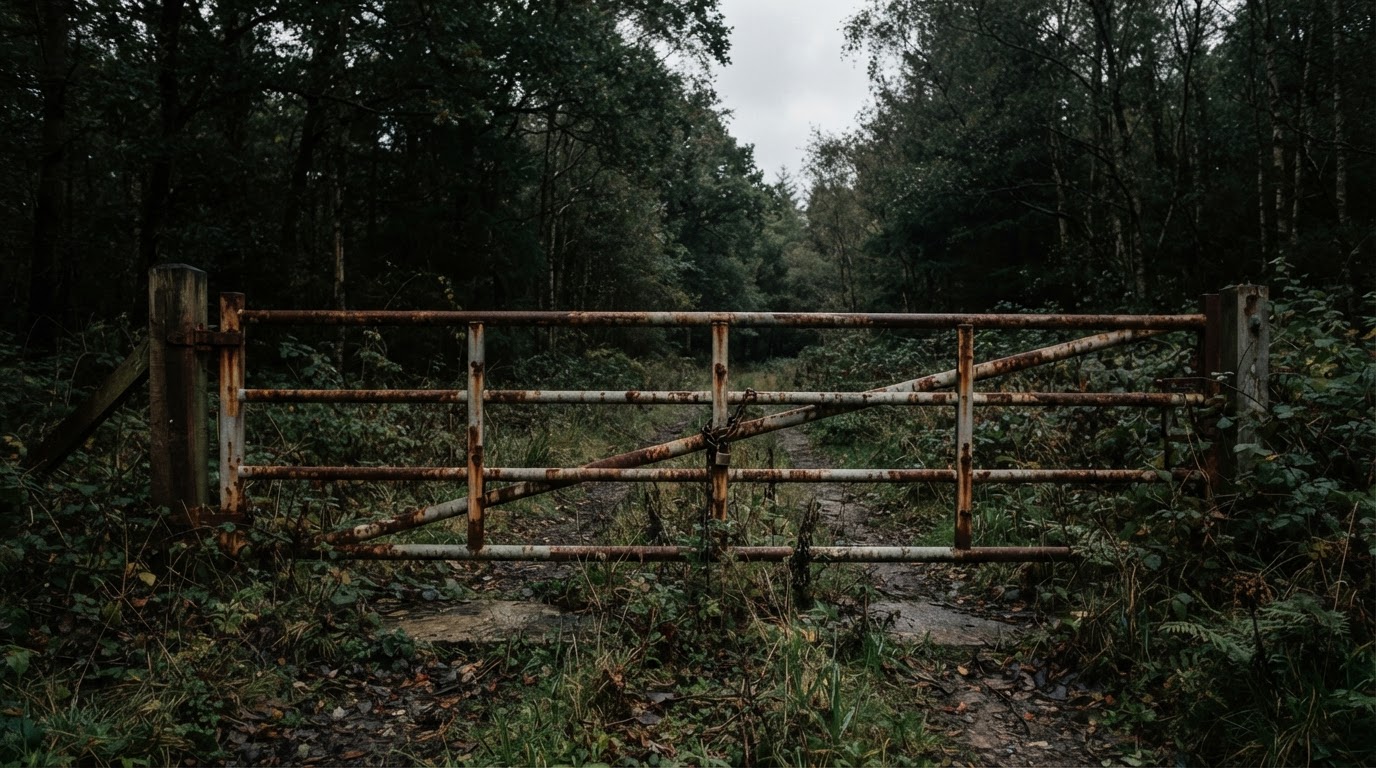
The Documentary Turn: What Inunaki Really Is
Here the story has to change tone, because the truth of Inunaki is not supernatural. It is geography, engineering, and a single terrible crime — and knowing the truth makes the legend more haunting, not less.
There was, in fact, a real Inunaki district. Not a lawless colony of outcasts, but an ordinary mountain hamlet in the valley below the pass — a scattering of houses, fields, and family graves, the kind of small upland settlement that has existed in Japan for centuries. People lived there. They farmed the slopes and buried their dead in the hills.
And then the water came for it.
The Hamlet Beneath the Water
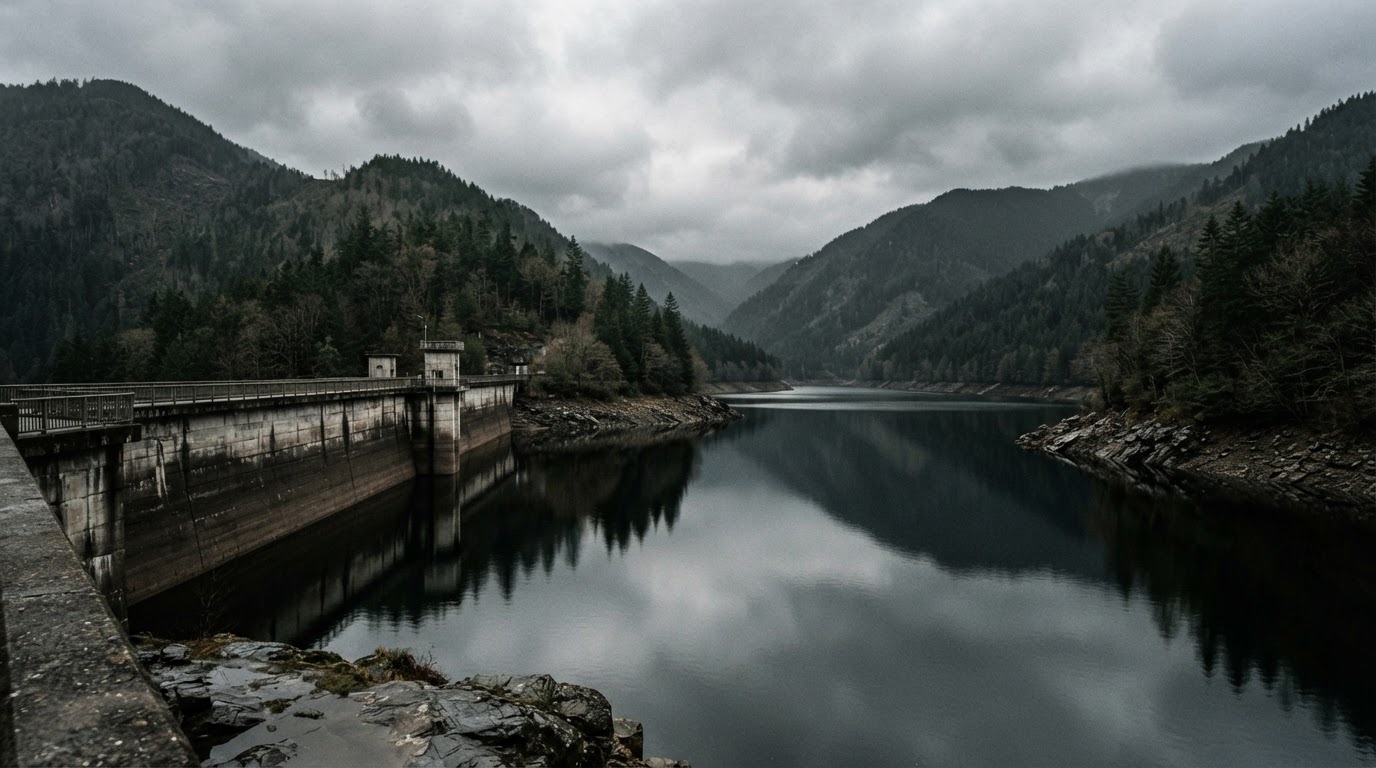
In the latter part of the twentieth century, plans were laid to build a dam across the Inunaki valley — the Inunaki Dam, a flood-control and water-supply project of the kind Japan built by the hundreds in its postwar decades. A dam needs a reservoir, and a reservoir needs a valley to fill. The valley chosen was the one where the old Inunaki hamlet stood.
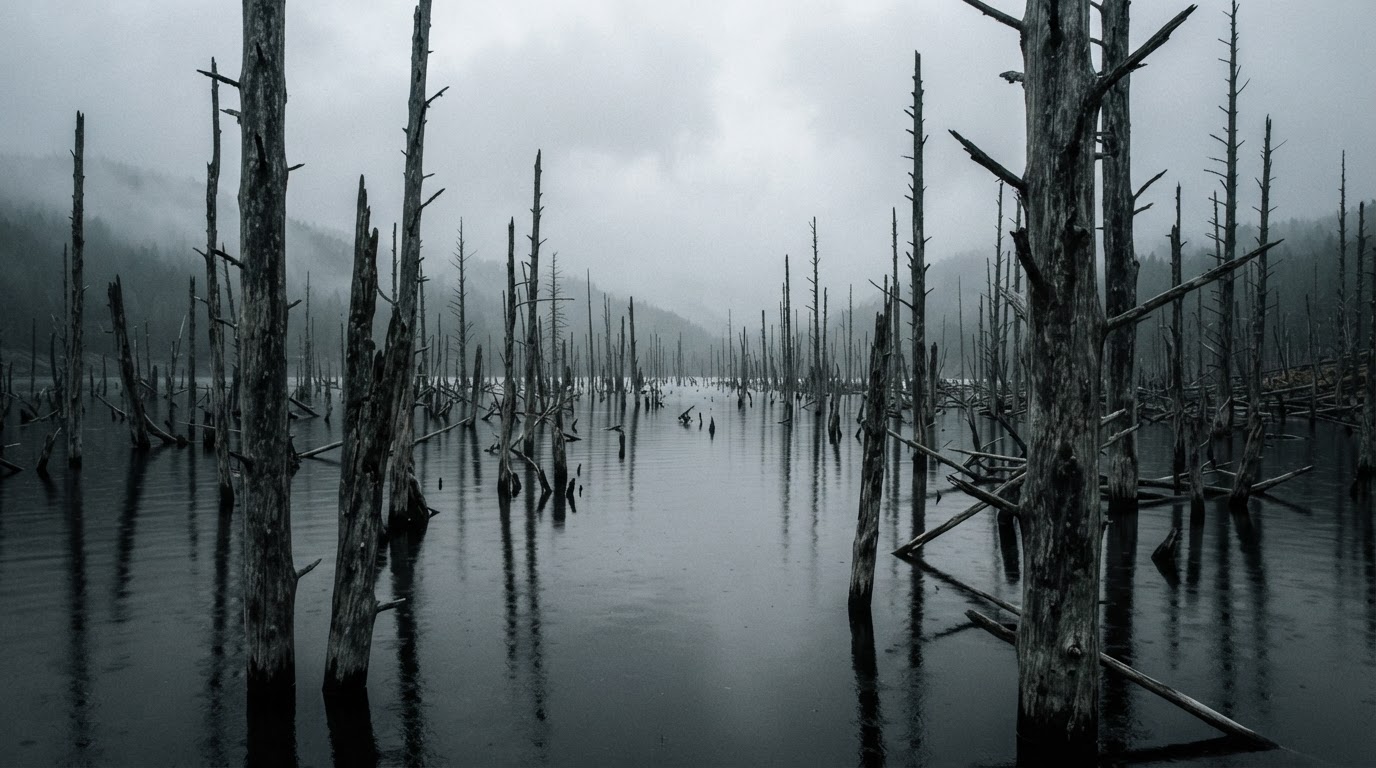
So the people were moved. Their homes were emptied, their fields abandoned, and when the dam was completed the water rose and covered the place where they had lived. What had been a village became a lake bottom. The old Inunaki, the real one, did not vanish into legend — it drowned, quietly, beneath a reservoir that is still there today, its surface calm and dark, hiding whatever remains of stone walls and foundations under the water.
This is the first thing the legend feeds on. A community really did disappear here. It really did stop appearing on the maps — not because it was hidden by lawless villagers, but because it was submerged by a public works project. The literal truth, "there was a village here and now there is none," is exactly the shape the ghost story needed. All the legend did was supply a sinister reason for an ordinary, bureaucratic erasure.
Two Tunnels, One Sealed
The tunnels tell the second half of the true story.
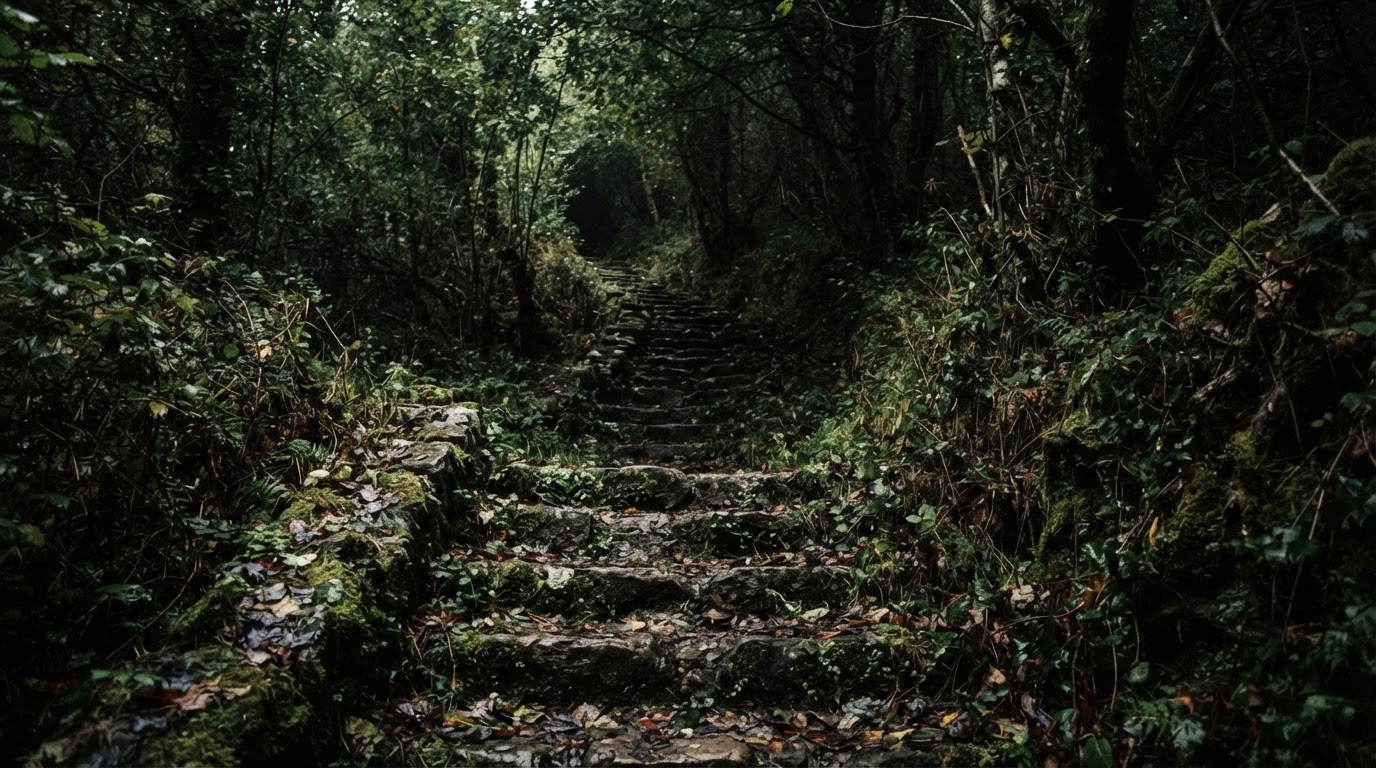
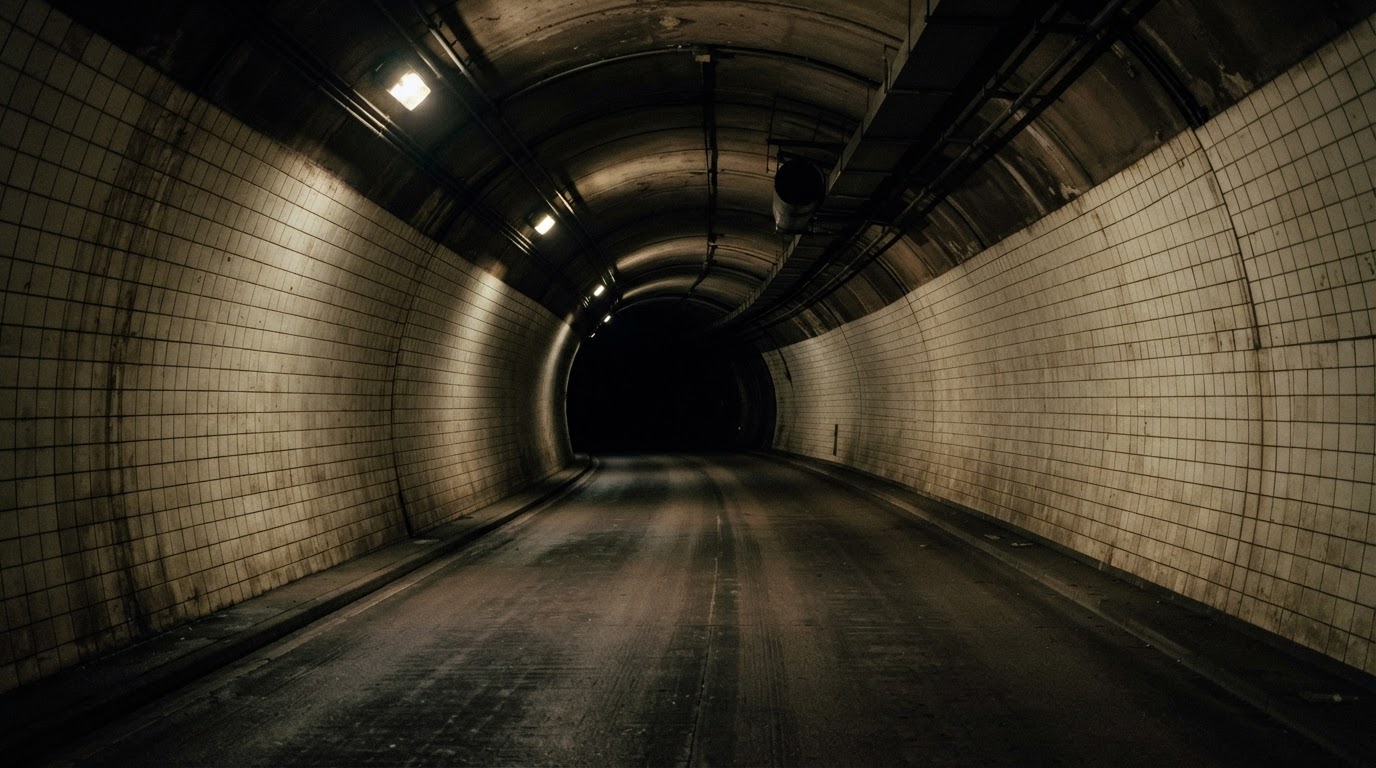
There are, in fact, two Inunaki tunnels. The new one is an ordinary modern road tunnel, well lit and busy, carrying traffic over the pass without incident. But the legend does not care about the new tunnel. Its power lives in the old one — the earlier, narrower tunnel that the new road replaced, abandoned when it was no longer needed.
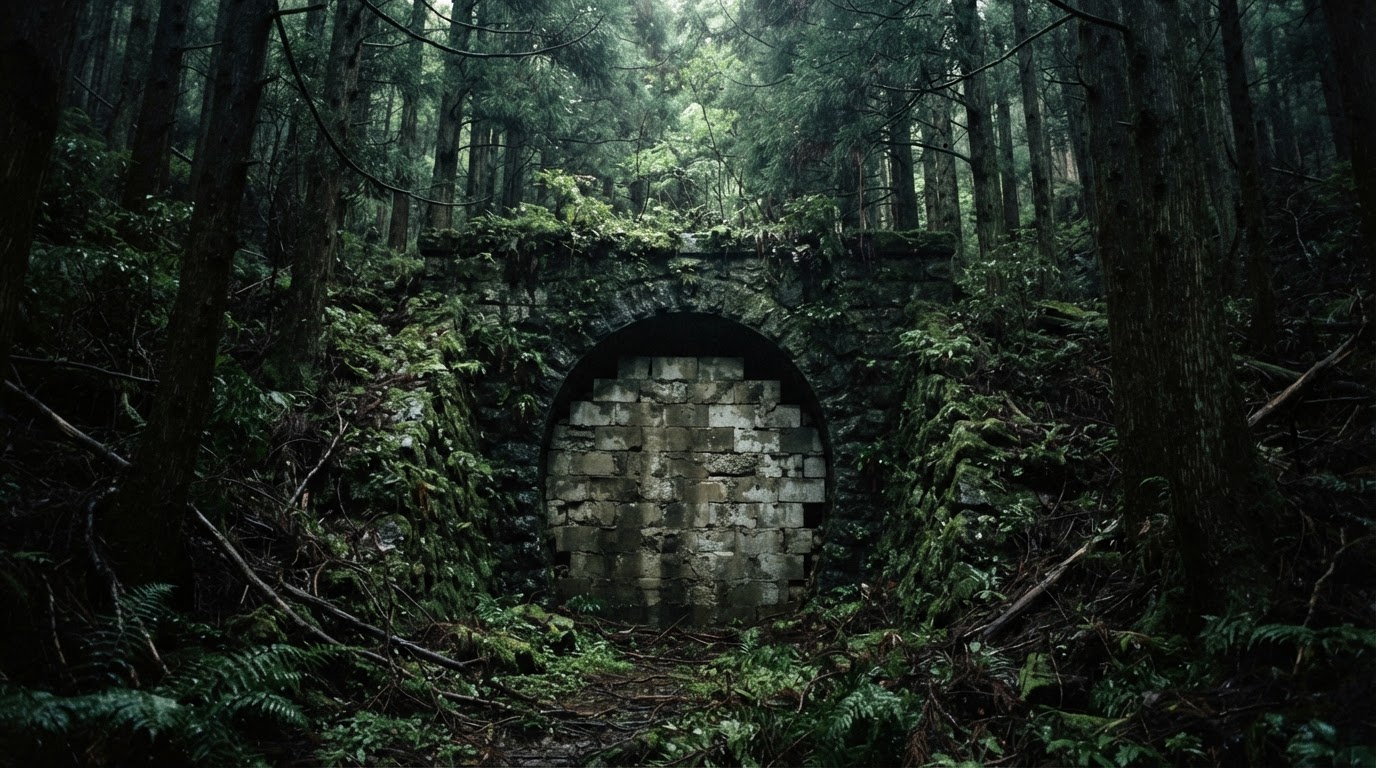
The old Inunaki Tunnel is a low, dark, stone-and-brick passage from an earlier era of road-building, the kind of cramped tube that feels claustrophobic the moment you step inside. After it was decommissioned it became exactly the sort of place that draws thrill-seekers: sealed off, off-limits, and rumored. And at some point the authorities did something that only deepened its mystique — they blocked the old entrance. The mouth of the abandoned tunnel was sealed with concrete blocks, walled shut against the trespassers who kept coming.
Think about what that image does to a legend. A tunnel is a threshold, a way through. A sealed tunnel is a threshold slammed shut — a door someone deliberately closed, with something on the other side. The concrete blocks were put there to keep people out, for reasons of safety and to stop trespassing. But to a mind primed by the legend, a sealed door reads one way and one way only: not "kept out," but "kept in." The very act of closing the tunnel became proof, to believers, that there was something back there worth closing off.
The Real Crime That Anchored the Dark
There is one more piece of the truth, and it must be handled carefully, because it was not a rumor. It happened.
In 1988, at the old Inunaki Tunnel, a young man was attacked and killed by a group of assailants who set upon him at the site. It was a real crime, prosecuted in real courts, and it was genuinely horrific — the kind of case that shocked the region and left a permanent stain on the place where it occurred. Out of respect for the victim and his family, the details do not belong in a story like this, and they will not be dwelt on here. What matters, for understanding the legend, is only this: a real and terrible act of violence took place at the mouth of that tunnel.
That single fact changed everything. Before 1988, Inunaki was a spooky abandoned tunnel like many others. After it, the place carried the weight of an actual death — the knowledge that something genuinely evil had happened there, to a real person. When the internet legend of the lawless village and the constitution-canceling sign began to spread years later, it did not spread onto blank ground. It fused with the memory of a real crime. The story of a place "outside the law" gained a terrible plausibility from the fact that lawlessness had, once, literally visited that tunnel.
This is the uncomfortable core of Inunaki: the legend borrows its dread from a real victim. The sealed concrete, the drowned hamlet, the genuine crime — these true things gave the invented village its foundation. The horror was never supernatural. It was human, and it was real, and the legend grew over it like the moss over the tunnel stones.
Trespassers, Warnings, and Arrests
For years, the legend has produced a steady stream of real-world consequences.
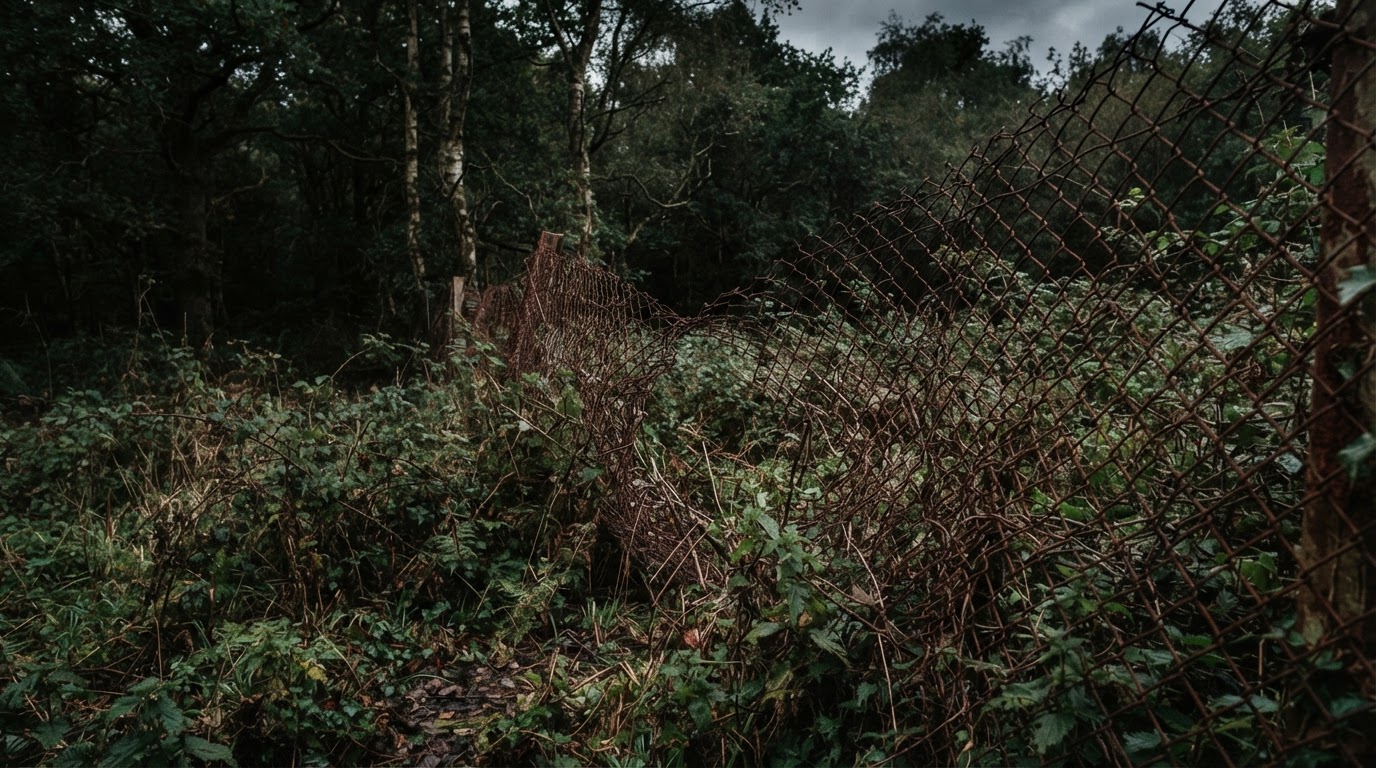
Drawn by the story, waves of young people — thrill-seekers, amateur ghost-hunters, students daring one another — have made the trip up the pass to see the forbidden tunnel for themselves. Many come at night, which is when the legend says it matters. They climb over barriers, push past fences, and try to reach the sealed old tunnel or wander the forest looking for a village that was never there.
The authorities have not been amused. Trespassing into blocked and dangerous areas is illegal, and over the years there have been warnings posted, patrols, and reports of people questioned or taken in for pushing past the barriers. The pass is a genuinely hazardous place — steep, dark, with unstable abandoned structures and a road that turns treacherous in fog. The dangers there are not spectral. They are cliffs, collapsing concrete, and cars on a mountain road at night.
That is the quiet irony of Inunaki. The legend warns of villagers with sickles. The real risk is a young person, phone dead not by curse but by simple lack of reception, climbing over a barrier in the dark near an unstable structure and a drop into the trees.
The Film That Told the World
For most of its life, Inunaki was a domestic legend — something Japanese internet users passed among themselves. Then, in 2020, it went global.
That year, the acclaimed horror director Takashi Shimizu — the man behind Ju-On, the franchise that became The Grudge and gave the world one of its most recognizable modern ghosts — released a film called Howling Village (犬鳴村). It took the legend of Inunaki as its raw material: the cursed pass, the vanished village, the sense of a place sealed off from the ordinary world, and built a horror story on top of it. The film was a hit, and it did what films do — it carried the name Inunaki far beyond Japan, to audiences who had never heard the original legend but now knew the shape of it.
The movie's success sharpened a problem that already existed. A famous horror film about a real, named, findable place is an engraved invitation to visit it. In the wake of the film, interest in the pass surged, and with it the trespassing, the night visits, the young people chasing a scare at a site where a real person had died and where the ground itself is dangerous. A story meant to thrill an audience in a cinema became, for some, a set of directions to a hazardous mountainside.
Why Places That Aren't on the Map Terrify Us
Strip away the specifics and ask why Inunaki works — why a sealed tunnel and an off-map village grip the imagination so hard — and you arrive at something older than any single legend.
We are creatures who navigate by knowing where we are. The map is a promise: the world is charted, ordered, accounted for, and if you know your position you are, in some sense, safe. A place that refuses the map breaks that promise. If a village can exist and not be charted, then the map is not complete — and if the map is not complete, then the order it represents is a fiction, and there are gaps in the known world where anything might be. The horror of the "place that isn't on the map" is really the horror of discovering that the world is not fully known, and that the unknown parts are close enough to drive to.
The sealed tunnel does the same work in a smaller frame. A door exists to be opened or closed at will. A door sealed with concrete is a decision made permanent — someone looked at that threshold and judged that it must never be crossed again. We cannot help but ask why. The mind fills a sealed door with the worst reason it can invent, because the alternative — that it was closed for mundane reasons of safety and liability — is not a story, and we are built for stories.
And the dead phone is the modern refinement. Older forbidden-place legends relied on isolation that everyone understood viscerally: no one knows you are here. But we no longer feel that isolation, because we carry a device that connects us to everyone, always. So the legend evolved. It does not put you somewhere no one could reach you; it puts you somewhere your phone stops working — and that specific, contemporary helplessness, the sudden blankness where the signal was, lands harder on a modern listener than any older darkness could.
The Letter, the Village Struck Off the Map in 1889, and the Late Arrival in English
The legend is usually described as old. The paper trail is not. According to accounts of the first online appearance, in 1999 an anonymous viewer wrote to Nippon TV with a letter titled "The Village in Japan That Isn't Part of Japan," and the story reached the textboards from there; one 2channel thread dated 30 October 1999 is cited as carrying the line about the Japanese Constitution not applying past the sign. The earliest version I can trace tells of a murdered couple, not of the 1988 killing at the old tunnel. The two stories seem to have fused afterward.
What makes the phrase "not part of Japan" quietly strange is the administrative record. A settlement called Inunaki-dani Village was established in 1691. On 1 April 1889 it merged with neighboring hamlets to form Yoshikawa Village, and in 1955 that, in turn, was absorbed into Wakamiya Town. So there has not been a municipality named Inunaki on the map for well over a century, long before the first letter arrived. The village that "isn't on the map" was removed from it by an ordinary merger, in an ordinary year.
The valley emptied later and in stages. Residents were moved together to the Wakita district in 1986, the local shrine followed in October 1987, and the dam that drowned most of the old settlement was completed in 1994, with the reservoir reaching full level in May 1997. In other words, the physical hamlet vanished in the same decade that the story of a vanished hamlet began to circulate.
English-language audiences came to all of this late. The film Howling Village opened in Japan on 7 February 2020, and an English-language review dated August 2021 notes it arriving on streaming platforms on 13 August. Box Office Mojo lists roughly US$12.9 million in Japan and $13.4 million worldwide. For many English readers, the film was therefore the first version they met, a ghost story with a sealed tunnel in it, with no earlier layers underneath.
Takashi Shimizu told Rue Morgue that he wanted something beyond "just episodes such as 'where and how I was scared like this.'" While developing the script he hired a local driver, and the man turned out to have been a classmate of the boys involved in the 1988 case. I think about that detail more than I should. The people who knew the tunnel's real history were already driving filmmakers to it.
My copy of the 1999 story is a retelling of a retelling. The letter itself I have never seen.
What Remains at the Pass
There is no village beyond the Inunaki Tunnel. There is no sign canceling the constitution, no colony of outcasts, no figures waiting in the trees with sickles. Search the maps as long as you like; the lawless settlement was never there to find.
But something is there, and it is heavier than the legend. There is a reservoir with a real hamlet drowned beneath it, its people scattered and its houses under the water. There is an old tunnel sealed with concrete, its mouth walled shut in a dark forest. And there is the memory of a real young man who died there in 1988, a fact no film or forum thread should be allowed to blur into entertainment. The legend of Inunaki is frightening. The truth of Inunaki is sadder, and it asks for something the legend never does — a little respect for the place, and for the people it actually cost.
I have kept the 1988 case in a separate folder from the legend material, deliberately, and I check periodically that the two have not bled together in my own indexing. They do anyway. Every account of the sealed tunnel I collect arrives already carrying the crime inside it, usually unattributed, sometimes garbled beyond recognition. A young man's death has become texture in somebody else's ghost story. I do not have a way to file that which feels honest.
Perhaps that is why the story endures. Not because anyone truly believes in the constitution-voiding sign, but because Inunaki is one of those rare places where the invented horror and the real one sit side by side, and you cannot look at the sealed tunnel without feeling the weight of both. A village that isn't on the map. A door someone closed on purpose. And the quiet, dark water of a valley that was once somebody's home.
---
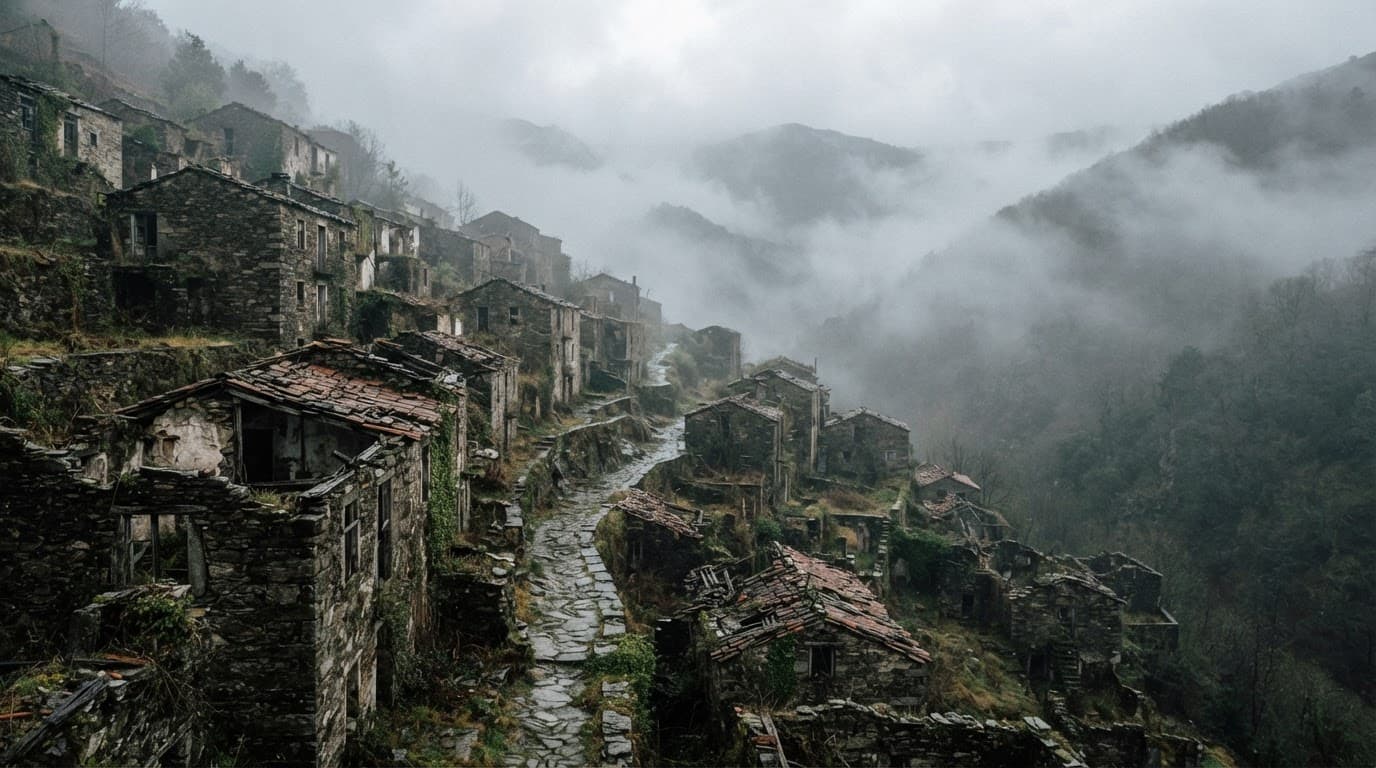
The images and video in this article are AI-generated works produced to convey the mood of the story, and are not photographs of any actual person or event.

Comments
No comments yet — leave the first one.