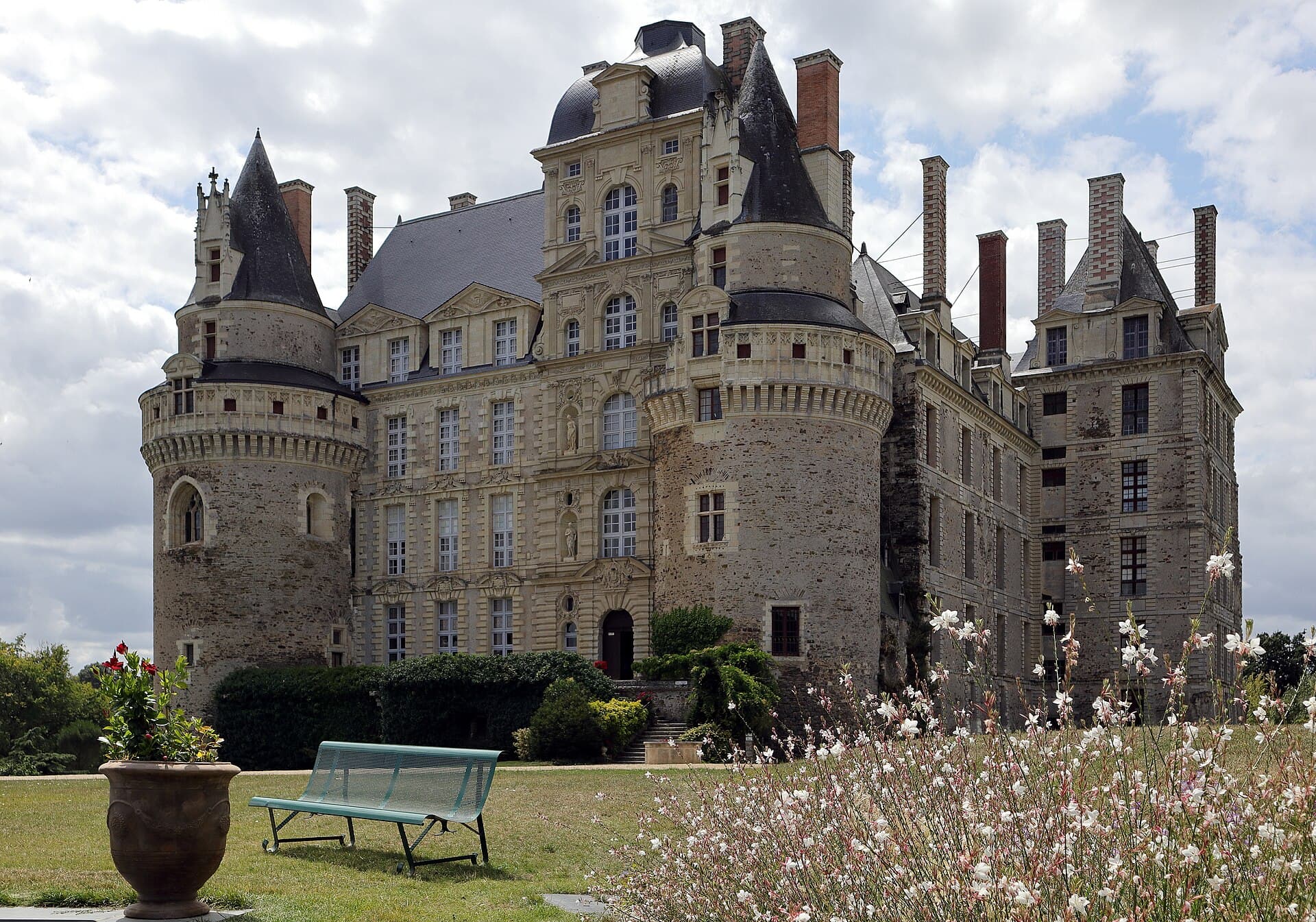
Turn in among the gentle vineyard slopes of Anjou, in western France where the Loire winds its way through, and a silhouette rises against the sky that is quite unlike any other French château. Where most castles spread wide to make their statement, this one grew only upward. Storey stacked upon storey, seven in all, in pale grey stone — this is the Château de Brissac. The tallest château in the Loire Valley, and commonly called the tallest in all of France, this vast house welcomes visitors by day as the elegant, opulent seat of a noble family. But when the sun goes down and darkness settles over those seven storeys, another story wakes here — one that has run on for five hundred years. The story of a faceless woman in green who walks and weeps in the tower before dawn.
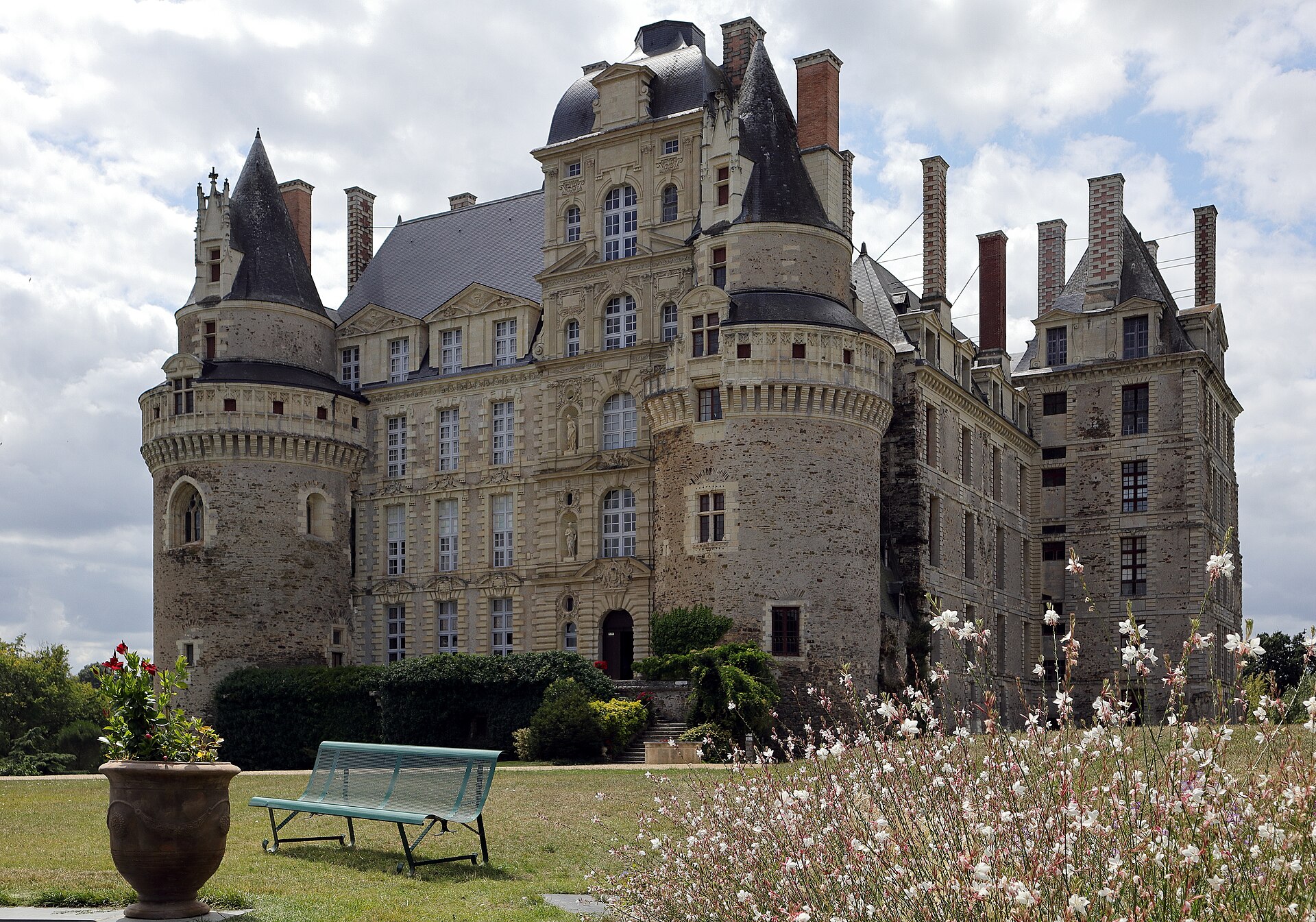
Photo: Wikimedia Commons
Most haunted-house material I file away and rarely open again. This one keeps working its way back to the top of the stack, and I think it is because of the gown. Not a white lady, not a grey one — a green one, faded and fraying at the hem, described that way in account after account across centuries by people who had no reason to coordinate. Ghosts in the folklore I collect are almost never specific about their clothing. Charlotte is.
A Château That Grew Toward the Sky
Brissac's history runs deep. A fortress first rose on this spot in the eleventh century, in the age of the Counts of Anjou. In the fifteenth century the château was greatly rebuilt, and over long years it passed through the hands of many owners, taking on its present form little by little. In the seventeenth century, the family that had received the title of Duke of Brissac remade the house on a grand scale — and in doing so gave it a shape found in no other château. Rather than spreading wide, it was raised high, rising to a full seven storeys.
The result was that Brissac became the tallest château in the Loire Valley, and today it is commonly called the tallest château in France. With well over a hundred rooms, sumptuous tapestries and old portraits, gilded ceilings and even a private theatre, it seems on the face of it the place least likely to harbour ghosts or curses. And indeed the château is still owned and kept by the descendants of that family, and by day travellers wander its grand halls and bedchambers in admiration.
Yet what makes this château remarkable is not its height or its splendour alone. Brissac carries within it a legend as old as its seven storeys of rooms and corridors and stairs. And that legend, they say, wakes each dawn in the highest tower of this elegant house.
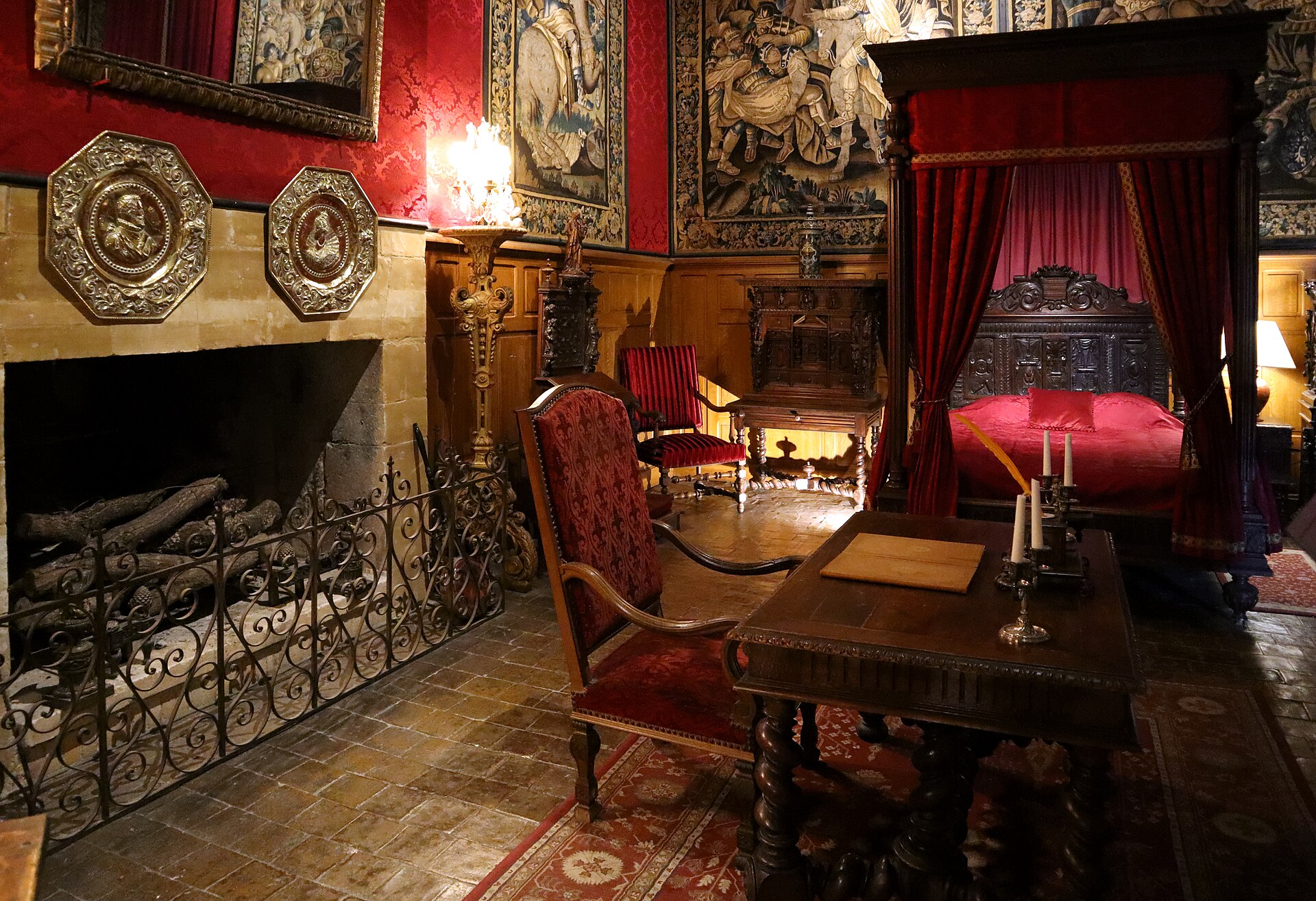
Photo: Wikimedia Commons
Five Hundred Years Ago, in the Tower
Brissac's ghost legend reaches back long before the château took its present form, to a night in the fifteenth century. From here on, let it be said plainly, this is not a matter of historical record but a legend long handed down in the Anjou country. What actually happened — or whether any of it happened at all — no one can now say for certain. Only this is the tale that people have passed from mouth to mouth down the generations.
The legend tells that a woman named Charlotte once lived in this château. In the story she was a woman of high birth, but her heart belonged to someone other than her husband. When night grew deep and the château's lamps went out one by one, she would secretly meet her lover. Those hidden meetings, held within the old walls, remained for a long time a secret no one knew.
But a secret in a château, in the end, cannot outlast even the château's walls. One night, the affair was at last discovered. Of what happened in a certain room of the tower that night, the legend is sparing with its words. It says only that after that dawn Charlotte was seen no more within the château, and no one knew where she had gone. As is often the way with old tales, this part is left in a thick fog. Only one thing is certain — that after that night, something remained in the tower and could not leave.
The Lady in the Green Gown
In the five hundred years since that dawn, a single ghost story has settled over Brissac. People call her La Dame Verte — the Green Lady. The name comes from the colour of the gown she is said to wear. In the legend she always appears in a faded, worn green dress. Old, its colour dimmed and its hem frayed, yet green still — it is that gown that has made her the most vividly remembered of all the château's many tales.
But it is not the colour of the gown that makes this lady truly frightening. The one point on which every account agrees is her face. The legend says she has none. More precisely, no face remains where a face should be. Where the eyes should be, where the nose should be, there is only an empty darkness, they say. A woman in a green gown draws near — but try to meet her face, and only a ruined blur of darkness looks back. This, more than anything, is what has made La Dame Verte one of the most chilling ghost legends in France.
This is, of course, only legend and only hearsay. Whether a faceless woman truly walks this tower, or whether it is a tale spun from the shadows and sounds and imaginings that any old château is bound to hold, there is no way to prove. Yet the fact that those who have kept vigil through Brissac's nights have told of the same figure, generation after generation, lends this Green Lady something more than mere invention. The older the château, the more its walls remember.
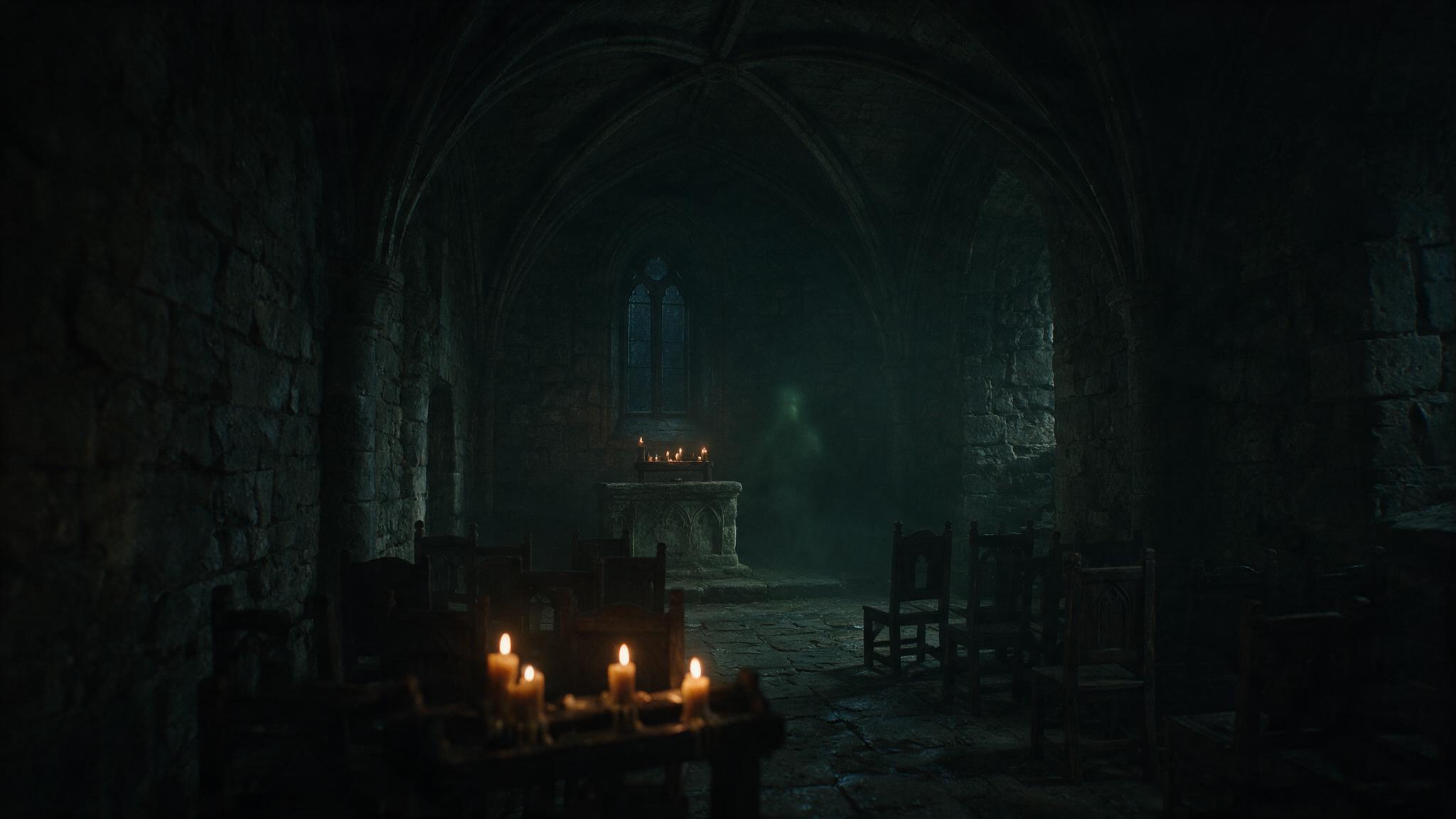
Three in the Morning, and the Weeping in the Chapel
The place where La Dame Verte appears is not just anywhere in the château. The legend holds that she shows herself in one place only — near the chapel set within the château's old tower. That tower is among the oldest parts of this tall house, one of the few places that remembers that night in the fifteenth century. By day it is merely an old and quiet chapel, but as night deepens, people say, the air here changes.
The hour of her appearing is always before dawn. At the time when the château sinks into its deepest darkness and silence, when every sound in the world has died away and only the creak of old walls remains, a weeping is said to seep out of the tower chapel. The low, drawn-out sobbing of a woman. Follow the sound up into the tower, they say, and a figure in a green gown is found walking the chapel. And the moment that figure turns its head, in place of the face that should be there, an empty darkness looks back.
Why that weeping has not ceased in five hundred years, the legend does not clearly say. People only guess. That whatever happened in the tower that night has bound her to this place. That, unable to leave, she walks the same spot each dawn and weeps. Whether it is sorrow or a grudge, or whether it is only the night wind of an old château upon which people have laid a story — the tower of Brissac gives no answer.
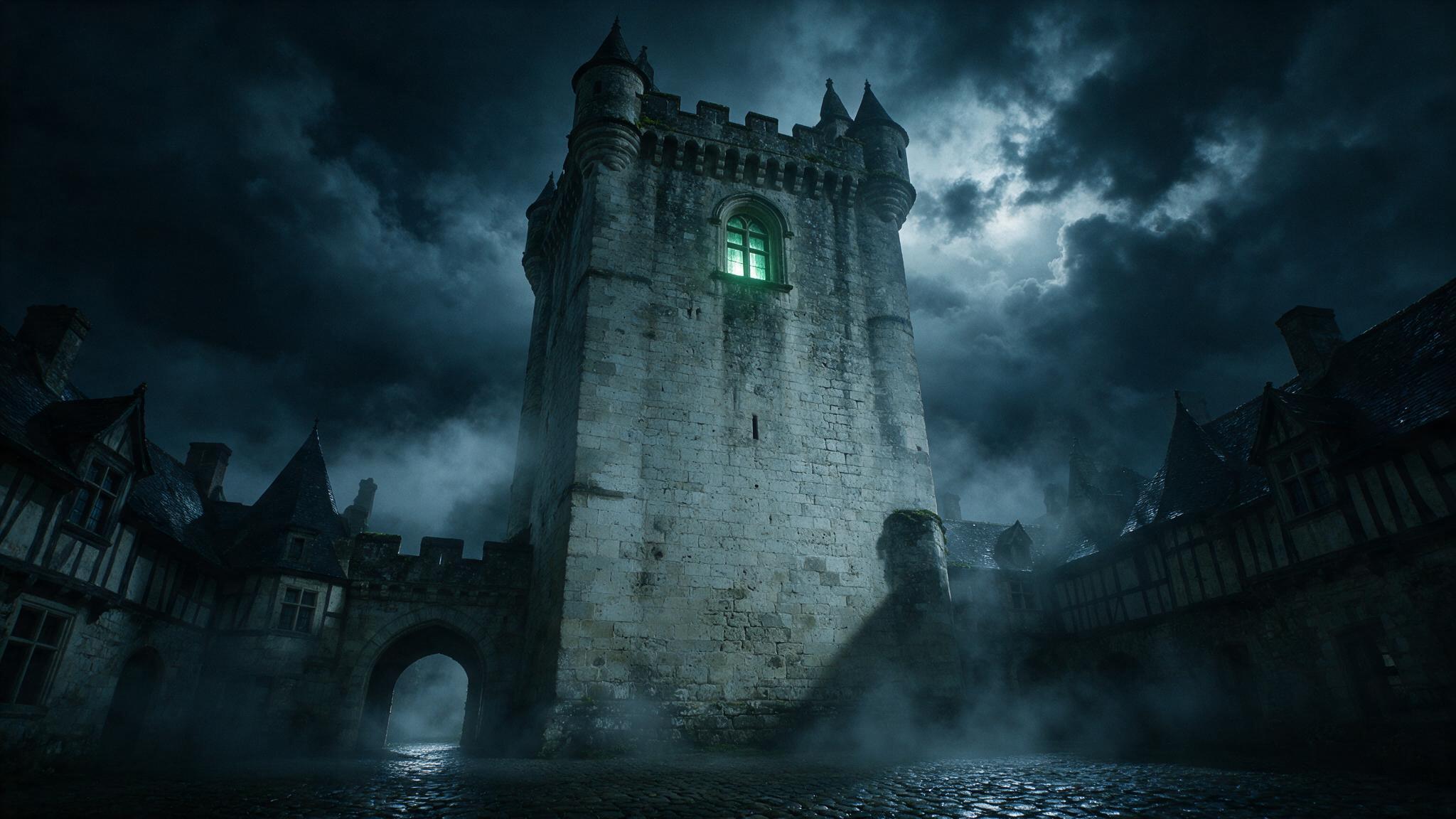
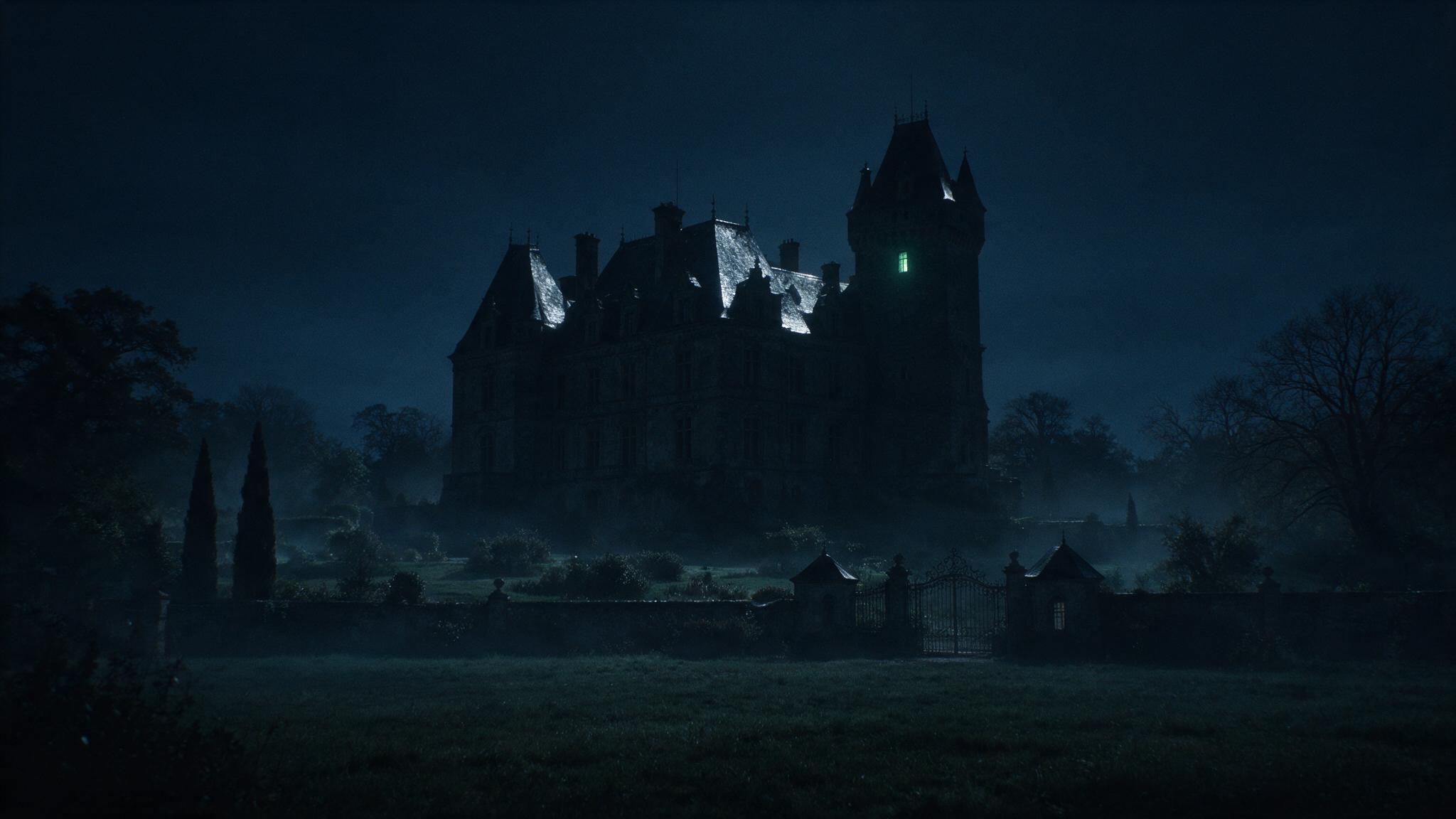
The Château de Brissac before dawn, low mist drifting past, a faint green glow at one window of the tower and a candle wavering in the dark chapel — a mood recreation, not real footage.
A Story the Noble House Kept
The strange thing is that this Green Lady legend, far from being erased by the family that owns the château, has instead been kept and cherished alongside it. A rumour of a resident ghost usually lowers a house's worth and troubles its owner — but at Brissac it has been the opposite. This tale of a faceless lady, five hundred years old, has been passed down the generations almost as another point of pride belonging to the tallest château in France.
Perhaps that is how an old château survives. Its sumptuous tapestries and gilded ceilings, its private theatre and its hundred-odd rooms — Brissac has much to boast of, yet none of it stays in the memory the way the weeping at three in the morning does. People think first not of the château's storeys, nor of its tapestries, but of the tale of the faceless lady in green. Legend, in that way, outlives stone and wall.
Even today, those who come to Brissac walk its elegant halls by day in admiration and hear from their guide the tale of La Dame Verte. Most take it, smiling, for the sort of romantic ghost story an old château is bound to hold. And yet, before they leave, they cannot help glancing up once at that high tower. Especially when the sun sinks low and shadows begin to stretch long across the seven storeys, that tower — which seemed only elegant by day — begins to look a little different.
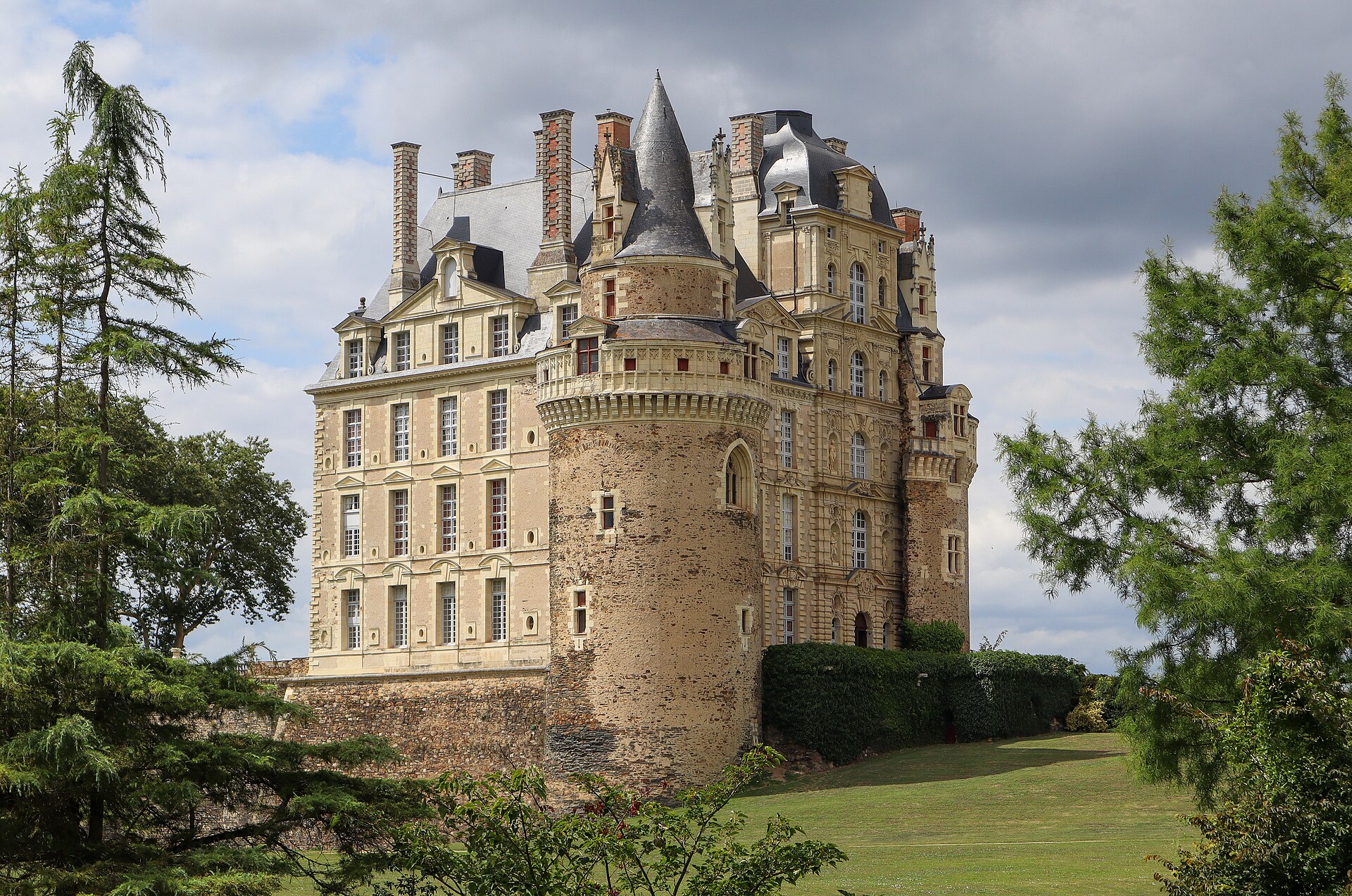
Photo: Wikimedia Commons
The Weeping That Remains in the Tower
The Château de Brissac still stands where it always has. The tallest château in the Loire Valley, commonly called the tallest in France, seven storeys high — welcoming travellers by day, sunk into the Anjou dark by night. What this château holds is not five hundred years of history and splendid works of art alone. In its highest tower there lives, alongside them, a single weeping that has passed through more mouths than the château's own history.
Whether La Dame Verte is real — whether a faceless lady in green truly walks that chapel each dawn, or whether it is only a story woven together by an old château and an old sorrow — no one can prove. It is an old legend of the Anjou country, belonging more to the realm of story than of history. What truly happened on that night in the fifteenth century, whether a woman named Charlotte ever even existed — all of it, now, lies in fog.
Working back through the versions of this legend, I kept expecting to find the moment someone gave her a face — a portrait, a description of features, anything. It never comes. Five hundred years of retelling, and the one thing storytellers reliably invent is the one thing nobody has dared to fill in. I have started to wonder whether the absence is not a gap in the record at all, but the whole of what was actually witnessed.
But there is a reason the story does not let people go. The tallest château in France, its highest and oldest tower, and three in the morning, when the world sinks into its deepest dark. The moment those three come together in one place, the Brissac that seemed only elegant by day shows an entirely different face. Or perhaps, like that faceless lady, it shows no face at all — leaving only a weeping in the dark. Five hundred years on, in the tower of Brissac, that weeping is still waiting for the dawn.
---
This article combines real on-site photographs of the Château de Brissac with AI-generated images and video produced to convey the mood of the story.

Comments
No comments yet — leave the first one.