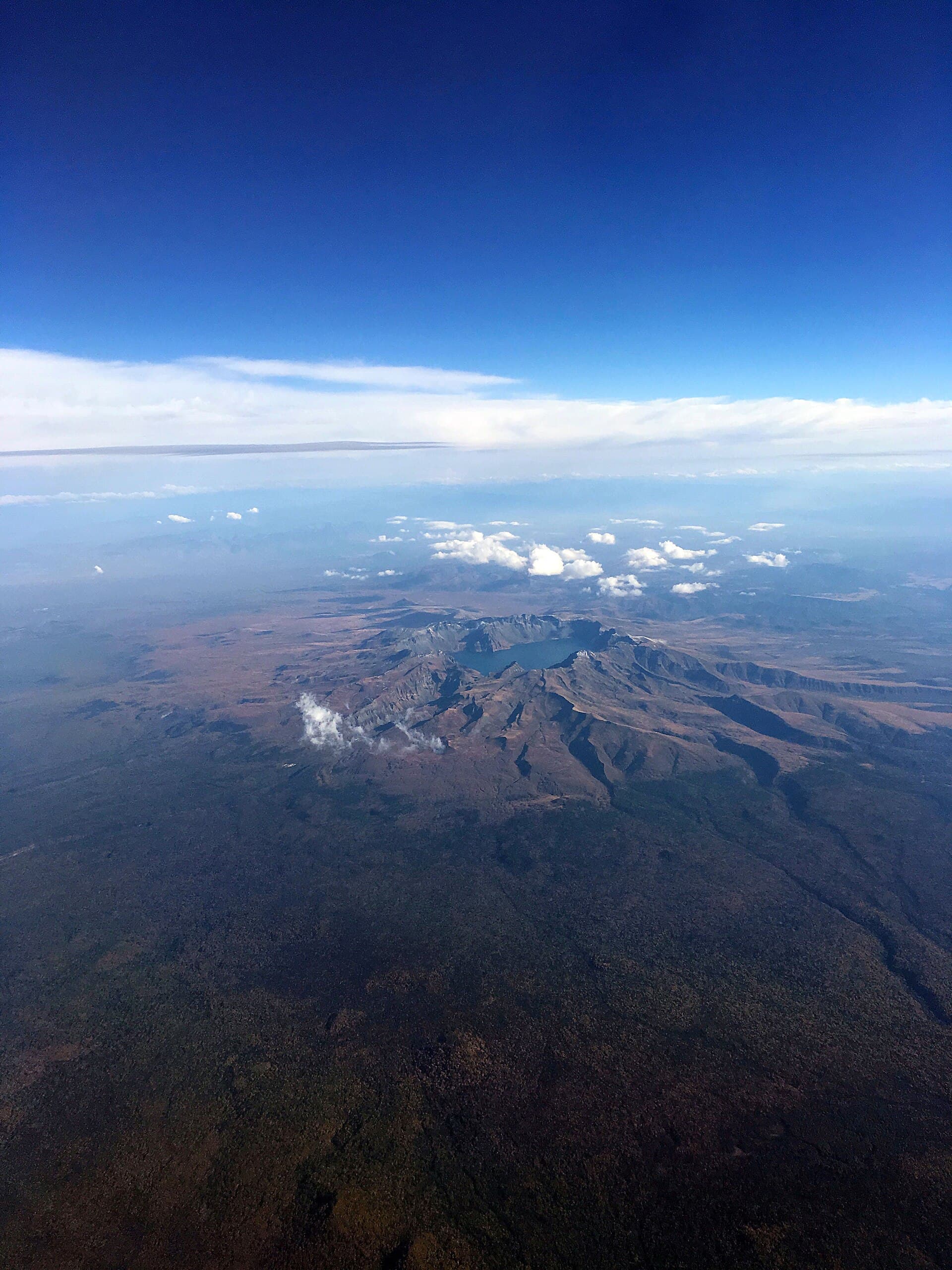
The collapse of a kingdom usually takes time. It festers from within, the frontiers peel away, the royal house splits, and only after decades of slow decline does the final hour arrive. Balhae was not like that. This vast realm, which had endured for 228 years, vanished in a matter of days — as though the stage lights had been cut all at once. A frontier fortress fell in three days; the capital opened its gates in less than a fortnight. Even the chronicles of the time fell strangely quiet before the speed of it. And around that same moment, Mount Baekdu — rising on the border between Manchuria and the northern Korean peninsula — unleashed one of the mightiest volcanic eruptions of the entire historical age. It buried the sky in ash and blew away an entire snow-capped summit, leaving behind the immense caldera lake we know today as Cheonji, the Heavenly Lake. The two events stood terribly close together. And so, for a very long time, people have asked one question: did the mountain swallow the kingdom? But that question carries a gap of twenty years that no one has yet been able to fill.
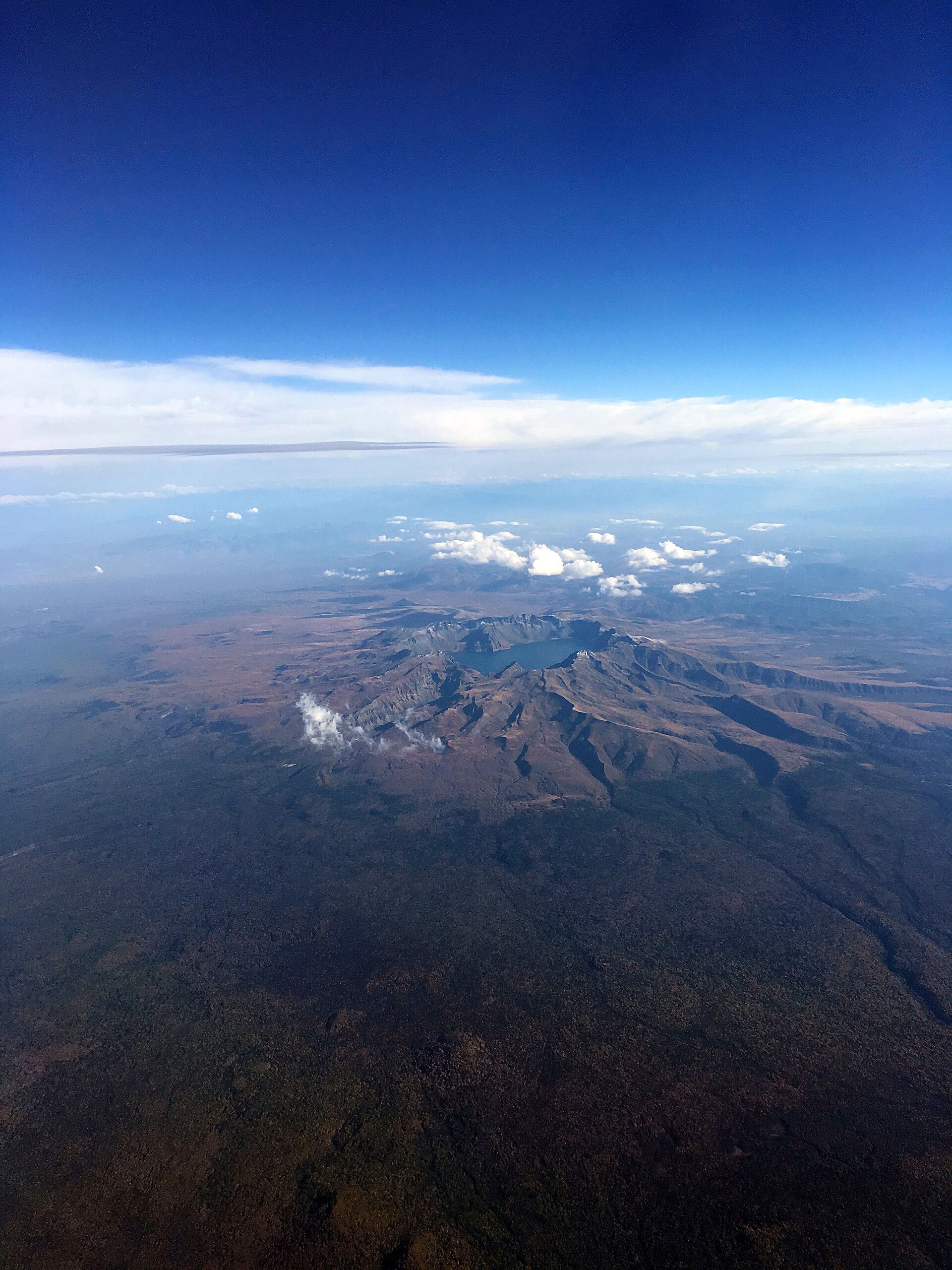
Photo: Wikimedia Commons, CC BY-SA 4.0
I came to this file sideways, through ash. I had been reading about tephra layers turning up in the Japanese archipelago and in Greenland ice, which is dry work and ordinarily stays dry, and somewhere in it I stopped at the figure of three days. Buyeo Fortress — the stronghold built for the express purpose of holding the Khitan back — held for three days. I checked it against every account I could reach because I assumed I had misread a numeral. I had not. A kingdom keeps records of its long wars; it does not usually leave a number that small.
The Flourishing Land East of the Sea
Balhae was founded in the year 698 by Dae Joyeong, a man descended from the refugees of fallen Goguryeo, out on the eastern plains of Manchuria. Barely a generation after Goguryeo's destruction, he had gathered its old lands and scattered people and bound them once more into a single state. It began cautiously, hemmed in by the wariness of Tang China, but reign after reign Balhae grew swiftly. To the south it shared a border with Silla; to the north it drew together the many Mohe tribes; to the east it exchanged envoys with Japan across the sea. At its height, Balhae was a great power spanning thousands of li in every direction, commanding five capitals and a host of prefectures and provinces.
Even the people of Tang called this kingdom the "Flourishing Land East of the Sea." Balhae's envoys jostled with Silla's for precedence in the Tang capital of Chang'an; Balhae's students sat the Tang imperial examinations and had their names entered on the rolls. This was no minor power on the margins, but one of the pillars of Northeast Asia, standing shoulder to shoulder with Tang, Silla, and Japan. And this kingdom had lasted 228 long years. Just as Rome did not fall in a single day, it is scarcely conceivable that a state of such size and history could vanish in a matter of days. And yet, for Balhae, that very inconceivable thing came to pass.
A Fortress Lost in Three Days, a Capital Opened in a Fortnight
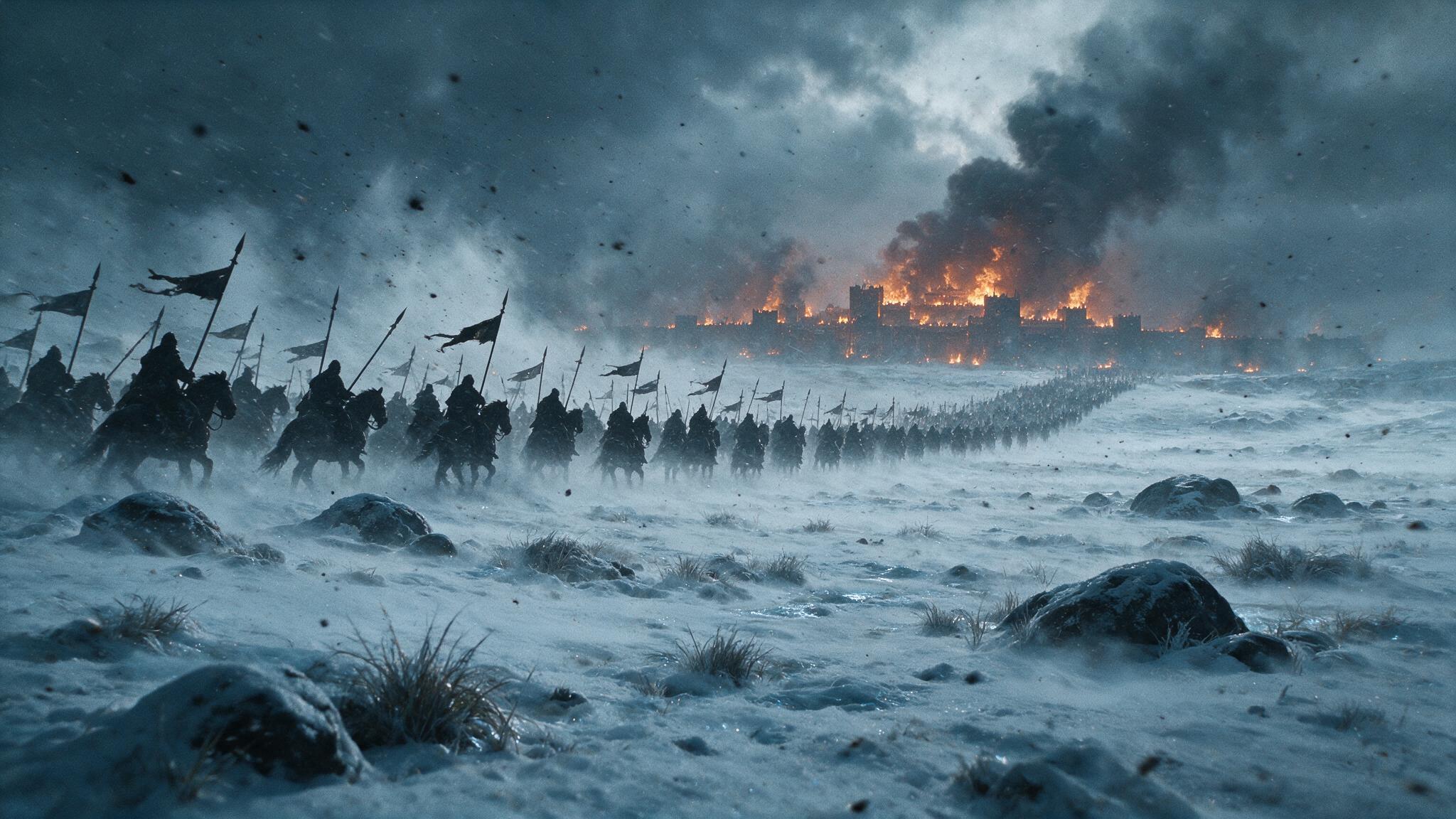
In the winter of 925, the Khitan came pouring in from the west. By then the Khitan had, under the powerful ruler Yelü Abaoji, united the many tribes of the steppe and were rising as the new hegemon of East Asia. That spearpoint turned toward Balhae. In the twelfth month, a great Khitan host crossed the border and flooded into the kingdom.
The collapse unfolded at a speed that defies belief. The Khitan army drove straight for Buyeo Fortress, the key stronghold of the western frontier. Buyeo was the heart of Balhae's western defenses, the very place it had fortified specifically to hold back the Khitan. And yet this fortress fell after a siege of just three days, in the first month of 926. Once the heart of the defensive line had been pierced so instantly, nothing could stem what followed. The moment they took Buyeo, the Khitan pushed on straight for Balhae's capital, Sanggyeong — the walled city of Holhan. The capital was surrounded, and before even a few days had passed, Balhae's last king, Dae Inseon, threw open the gates and surrendered. From the day the frontier fortress fell to the day the capital gave in, less than a fortnight had elapsed.
A great kingdom that had endured for 228 years came apart in under a month. This was no ordinary military defeat. It was not that a defensive line had crumbled, but that the entire kingdom had sat down under a single blow like an empty shell. It is precisely this uncanny speed that, a thousand years on, still stirs the imagination — the first riddle of them all. Was this great realm, perhaps, already dead from the inside before it ever fell?
And Then Baekdu Split the Sky Open
At the very heart of Balhae's old territory stands Mount Baekdu. This immense mountain, rising on the boundary of Manchuria and the Korean peninsula, appears from without to be a serene, snow-crowned holy peak — but within it holds a vast magma chamber, an active volcano. And in the tenth century, this mountain awoke.
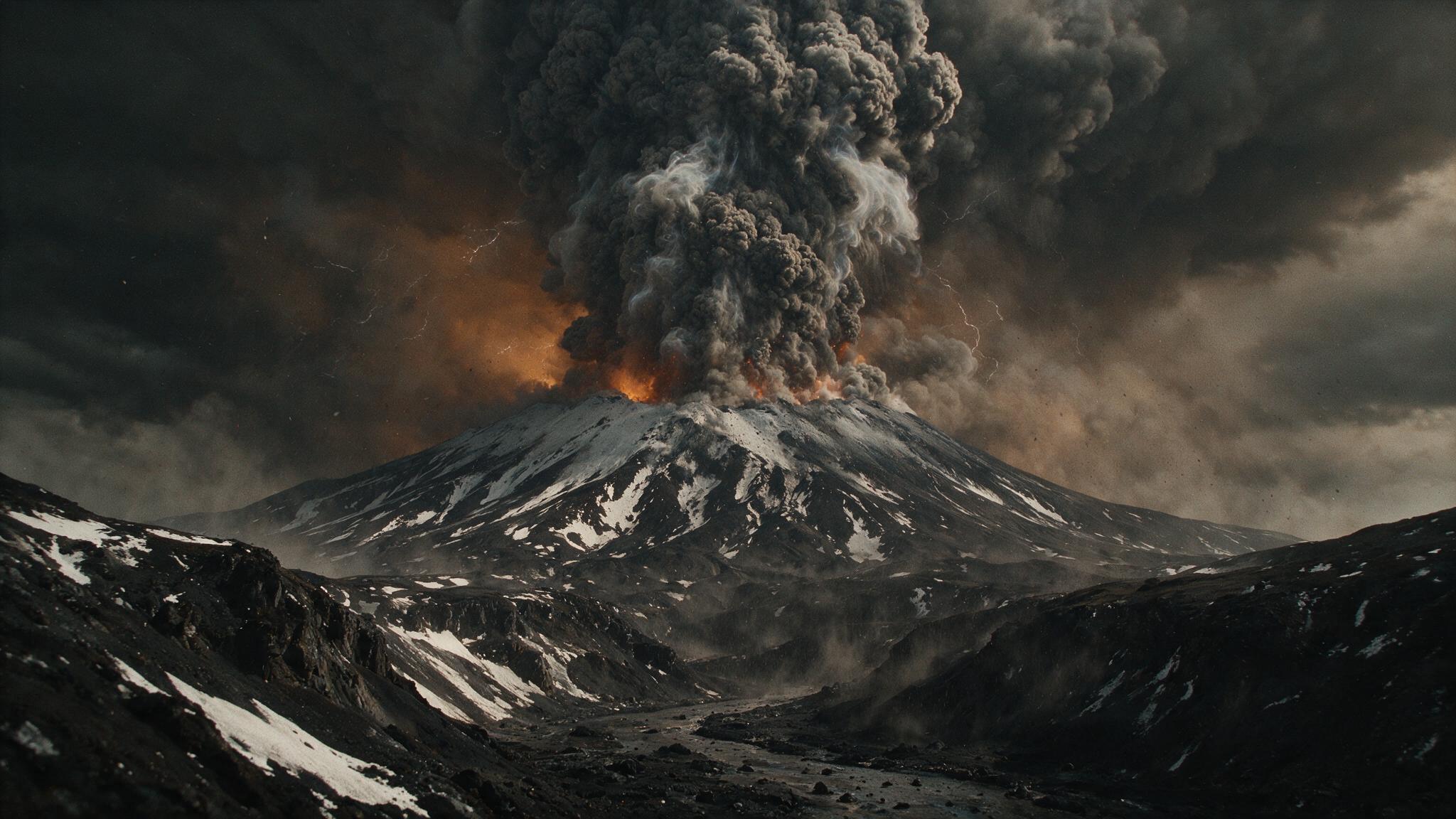
The eruption that geologists call the Millennium Eruption ranks among the most powerful volcanic events of the entire historical age. On the Volcanic Explosivity Index it reached a magnitude of 6 to 7, and the volume of ash and pumice — tephra — it hurled into the world is estimated at more than 100 cubic kilometers. That is several times the eruption of Vesuvius that swallowed Pompeii in the year 79, and places it among the very largest eruptions the Earth has known in the past two thousand years. The ash Baekdu threw up rode the winds for hundreds of kilometers and settled thickly across the Japanese archipelago beyond the sea; its traces are found as far away as the ice sheets of Greenland. That deep blue caldera lake, Cheonji, that sits atop Baekdu's summit today is the scar left when this eruption blew away an entire mountain peak and water pooled in the wound.
If this eruption struck at the very center of Balhae's territory, then to the people living beneath it, it must have looked like the end of the world. The sky sealing itself black in broad daylight, hot ash falling like snow, fields and rivers buried in grey, and crops frozen dead in the volcanic winter that followed — a scene from the apocalypse. Would a catastrophe of this scale not have been enough to shake a kingdom to its very roots? And it is here that the tale binding the mountain to the kingdom was born.
The Hypothesis That "the Volcano Destroyed Balhae"
The first to lift this beguiling story of mountain and kingdom into the realm of scholarship was the Japanese volcanologist Hiroshi Machida. In the early 1990s, while studying the scale and timing of Baekdu's Millennium Eruption, he advanced the hypothesis that this titanic blast was deeply bound up with the fall of the kingdom of Balhae. His logic was as intuitive as it was striking. If the largest volcanic eruption of the historical age had occurred, of all places, in the very heartland of Balhae, and if around that same time this great realm had collapsed with impossible speed, then would it not be more unnatural to suppose the two had nothing to do with each other?
The hypothesis seemed to offer a plausible answer to that first riddle of Balhae's sudden collapse. If the vast ash the eruption threw up had buried the farmland and ruined the harvests, and the volcanic winter that followed had brought years of famine, then Balhae's society would have been quietly rotting from within. The people would have starved and scattered, the treasury emptied, the armies dissolved, and the central authority reduced to a hollow shell. It was because the kingdom was thus hollowed out, the argument runs, that a single Khitan blow could take one fortress in three days and open the capital in a fortnight. In this picture, the volcano had already cut off the kingdom's breath in advance, and the Khitan merely dealt the final blow to a body that was already dying. It seemed, convincingly, to fill in Balhae's strange speed of collapse.
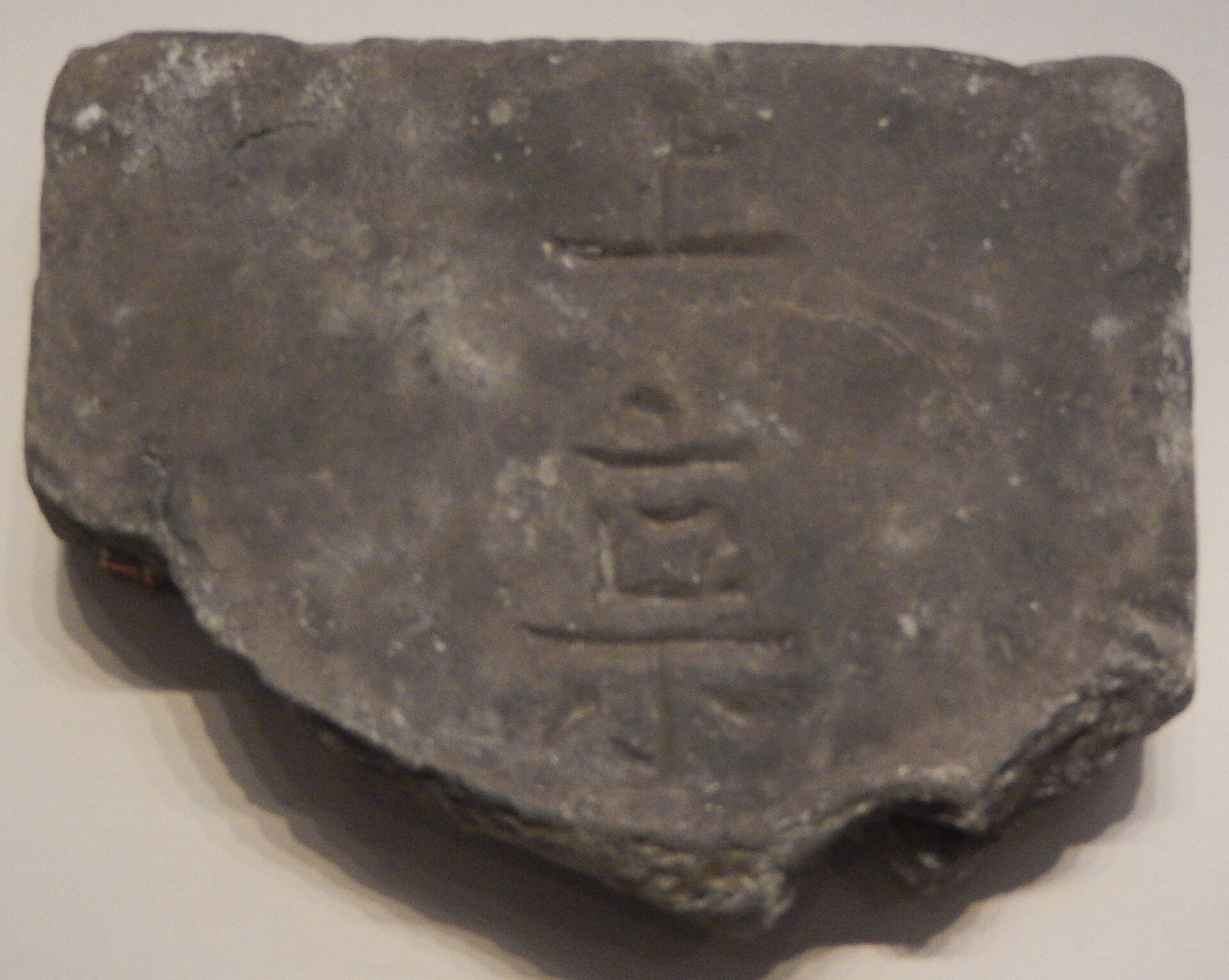
Photo: Wikimedia Commons, CC BY-SA 3.0
But the Twenty Years That Will Not Close
If the story ended here, it would be complete. A volcano brought down a great kingdom — majestic, tragic, and above all plausible. But this tale has one decisive fracture running through it, and that fracture is time.
The year Balhae fell was 926. This is a comparatively firm date, supported by several documentary records. The problem lies in the timing of Baekdu's great eruption. The latest research, drawing together geology, radiocarbon dating, and the records held in tree rings and glacial ice, generally places the Millennium Eruption of Baekdu around the year 946. That is to say, the mountain erupted a full twenty years after Balhae had already fallen. If this dating is correct, then the story that the volcano destroyed Balhae cannot stand. How could a blast that had not yet even happened have brought down a kingdom that was already gone? The cause would come after the effect — the very order of cause and consequence is turned upside down.
To be sure, the debate over the eruption's timing is not entirely settled. In the past some held the eruption to have occurred earlier, around the year 929, and there is research suggesting Baekdu may not have erupted all at once but was active in several phases. If there were smaller precursor eruptions or volcanic activity before the main event, then there remains room for such activity to have cast some shadow over late Balhae society. But whether activity of that degree was decisive enough to bring down a kingdom of 228 years in a matter of days is a wholly different question. The great eruption of 946 itself, however far forward one pulls its date, still leaves twenty years to spare in explaining a collapse in 926. It is precisely this twenty-year gap that holds the "volcanic collapse" idea back from ever rising from a beguiling hypothesis into a confirmed account.
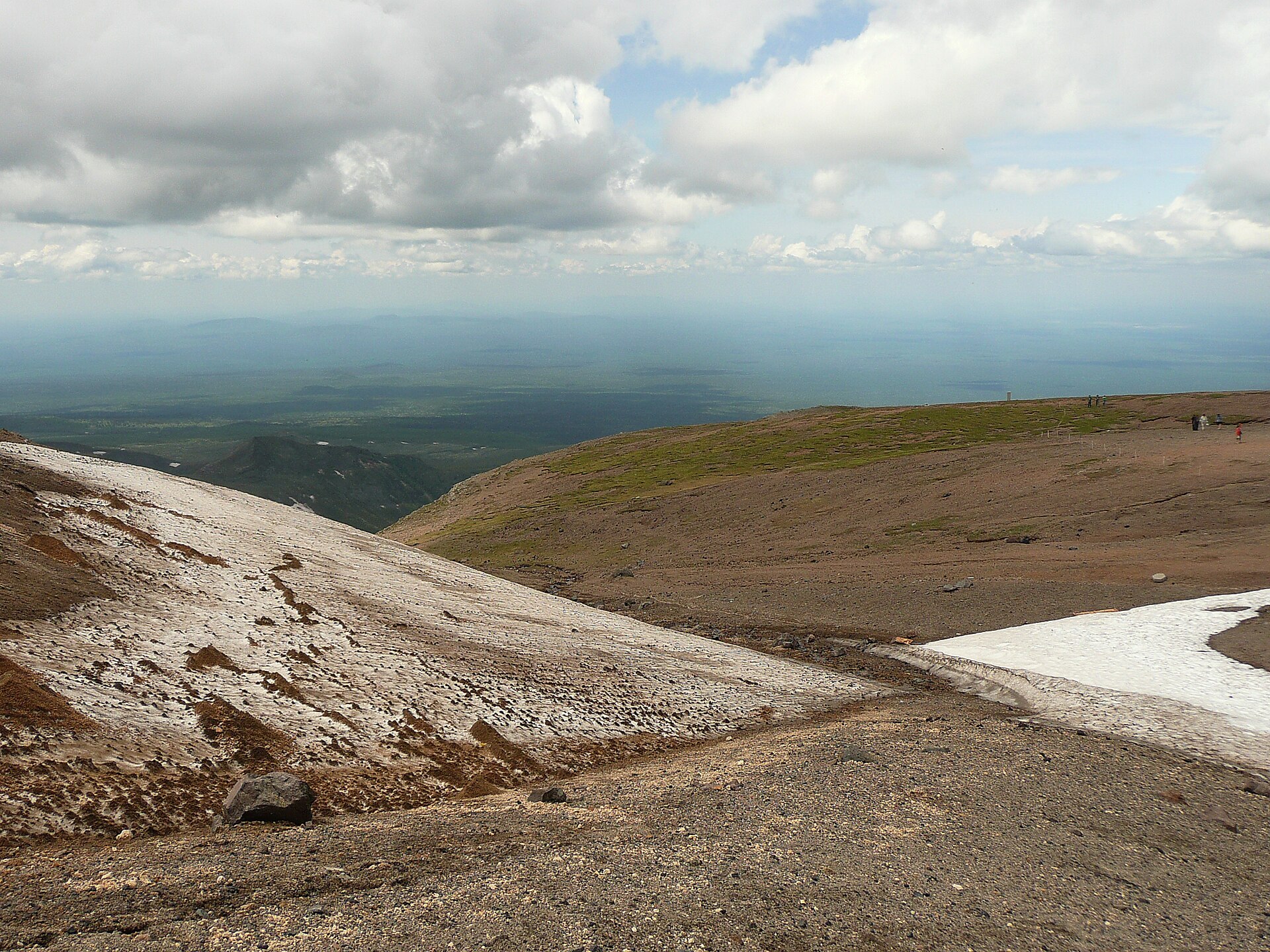
Photo: Wikimedia Commons, CC BY 3.0
Then What Brought the Great Kingdom Down?
Snow-capped caldera peaks emerging slowly through the volcanic haze — a mood recreation, not real footage.
If the volcano was not the decisive cause, then what was it that made this great kingdom collapse in a matter of days? Obscured by the allure of the volcanic theory, other threads for explaining Balhae's sudden fall plainly exist. Many historians point to the possibility that Balhae was already ailing from within. There were the power struggles and factional splits of a dynasty's final years, the loose cohesion peculiar to a state that had gathered many tribes together under one roof, and above all the presence of a fearsome adversary in the Khitan, who had just united the steppe and were expanding at terrifying speed. Indeed, there are accounts that in the very last days before Balhae's fall, part of its ruling class abandoned the kingdom and sought exile among its neighbors. That a state vast on the outside but already cracked within should collapse under a single blow from a Khitan power just come to its peak — this explanation goes a long way toward making sense of the speed of the fall, without ever needing to invoke a volcano.
But here one thing must be made plain. That the volcano was the direct cause of Balhae's fall is not an established fact — and, conversely, there is no ground on which to declare with certainty that the volcano had no effect at all. The great eruption of 946 itself came after the fall of 926, yet the question of what pressures the geological activity and climatic shifts around the Baekdu region before then may have placed on late Balhae society remains open. Perhaps the truth lies not at either extreme, but in the place where politics rotting from within, a fearsome enemy pressing from without, and a convulsion of the earth itself are all layered one upon another.
What we can say for certain today is only this. Balhae, the Flourishing Land East of the Sea, which had endured for 228 years, collapsed as if by a magic trick in early 926 — one fortress falling in three days, the capital surrendering in under a fortnight. And around that same time, Mount Baekdu unleashed one of the greatest eruptions of the historical age, blowing away an entire summit and leaving behind that immense scar we call Cheonji. The two events stand chillingly close in time and space, and yet between them lies a gap of twenty years that no one has ever fully closed. Whether the true reason a great kingdom was swallowed lies submerged beneath that deep blue surface of the Heavenly Lake — Baekdu has kept that answer for more than a thousand years, and keeps it still.
What I am left holding, after laying the datings side by side more times than was useful, is the shape of the twenty years rather than its length. 926, then silence, then 946 and the sky going out. Whatever emptied that kingdom had already finished its work before the mountain ever spoke, and the eruption arrived afterward like a signature on a document nobody has found. I keep the two dates in the same file because I do not know where else to put them. They have never explained each other, and they have never once let me separate them either.
---
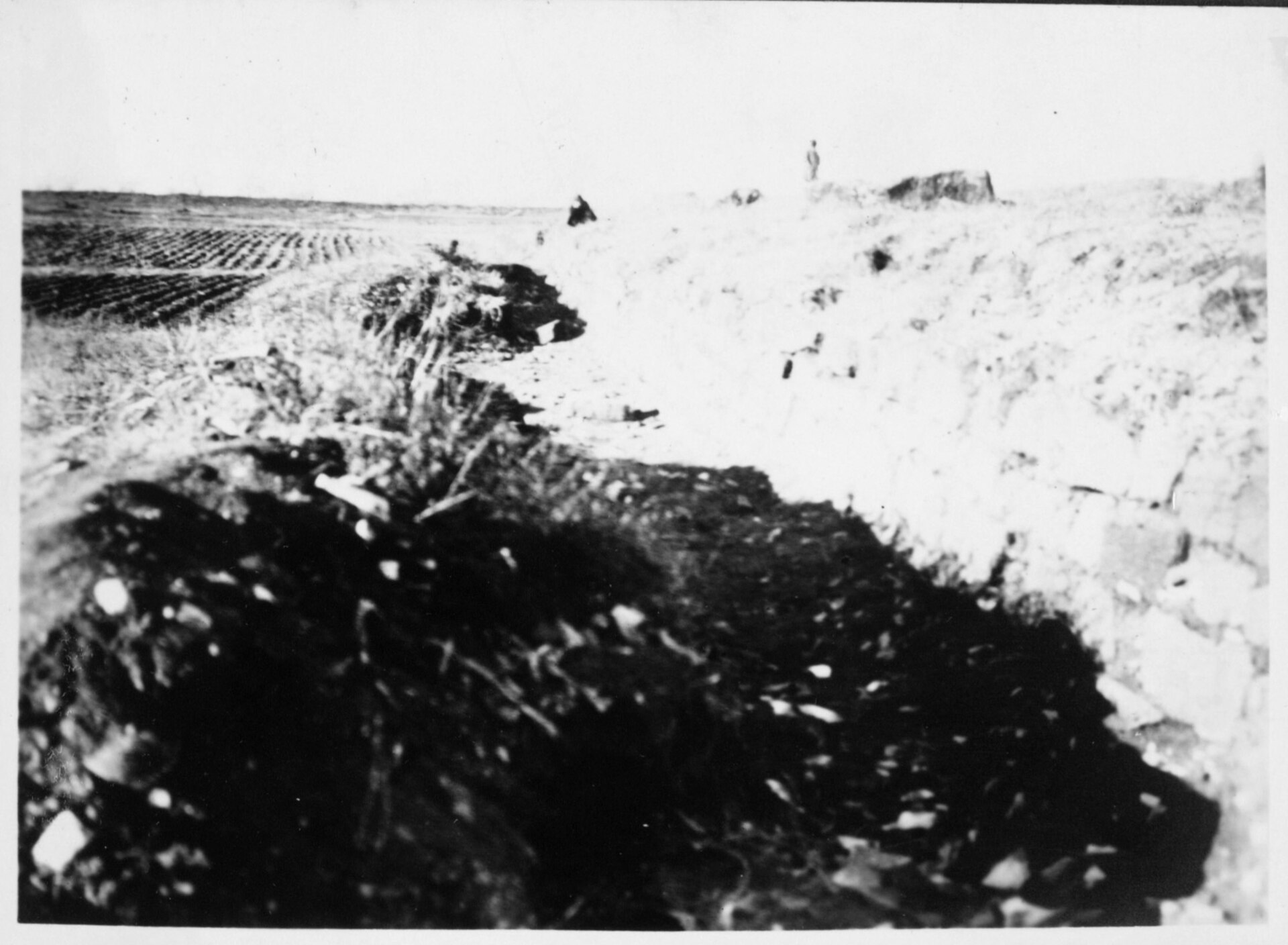
This article uses both genuine archival and on-site photographs and AI-generated images and video produced to convey the mood of the story.
Comments
No comments yet — leave the first one.