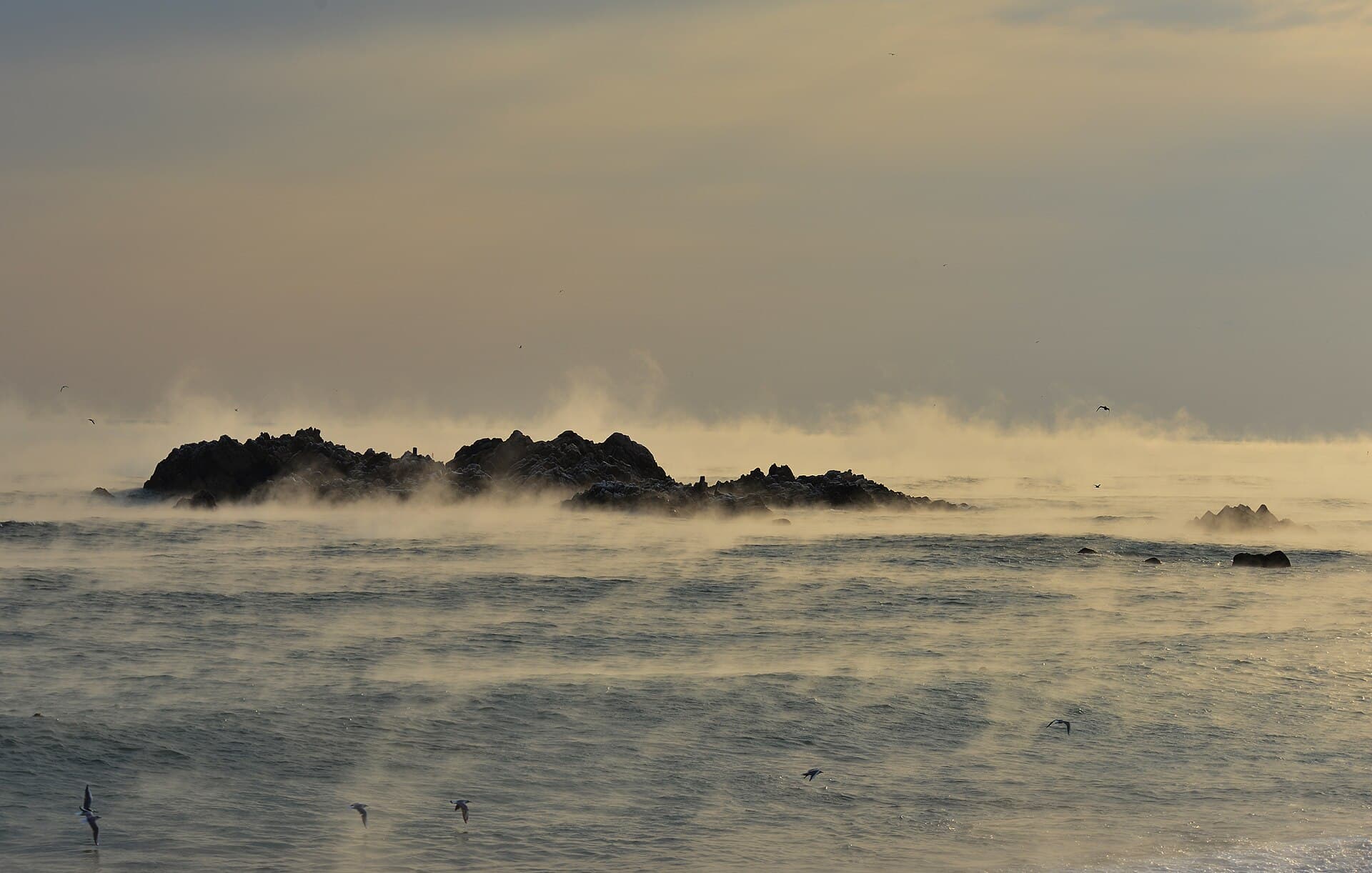
Off the coast of Bonggil-ri, in Gyeongju, Gyeongsangbuk-do, some 200 meters out into the sea, there sits a low rocky islet. From a distance it looks like nothing more than an ordinary wave-worn crag, but this rock carries a story that has endured for more than thirteen centuries. King Munmu, the ruler who forged the Three Kingdoms of Korea into one under Silla, is said to have left these words before he died: "When I am gone, cremate me and lay my remains in the East Sea. I shall become a dragon and defend this nation." And the place his dying wish pointed to is this very islet — Daewangam, the "Great King's Rock." Approach it by boat and climb onto the stone, and at its center you will find a channel cut in the shape of a cross. Seawater flows in and out of it from every direction, and inside, half-drowned and utterly still, rests a broad flat slab shaped like the shell of a turtle. The mark of human hands is unmistakable. It is the only "undersea royal tomb" to be found anywhere on Earth. And yet, to this day, no scholar can say with certainty that a king truly sleeps beneath that stone — because in every survey ever conducted, the king's bones have never once shown themselves.
Most of what I collect is modern and badly documented. This one is the reverse — thirteen centuries old and written down carefully by people who had no reason to lie about it, and it still refuses to close. What drew it into the archive was a single physical measurement: 3.7 meters, the length of the slab. I went looking for that figure expecting it to be an approximation passed hand to hand, and instead found it holding steady across account after account. Somebody measured a stone at the bottom of a channel in the sea, and the number has stayed the same ever since, and still nobody can say what it covers.
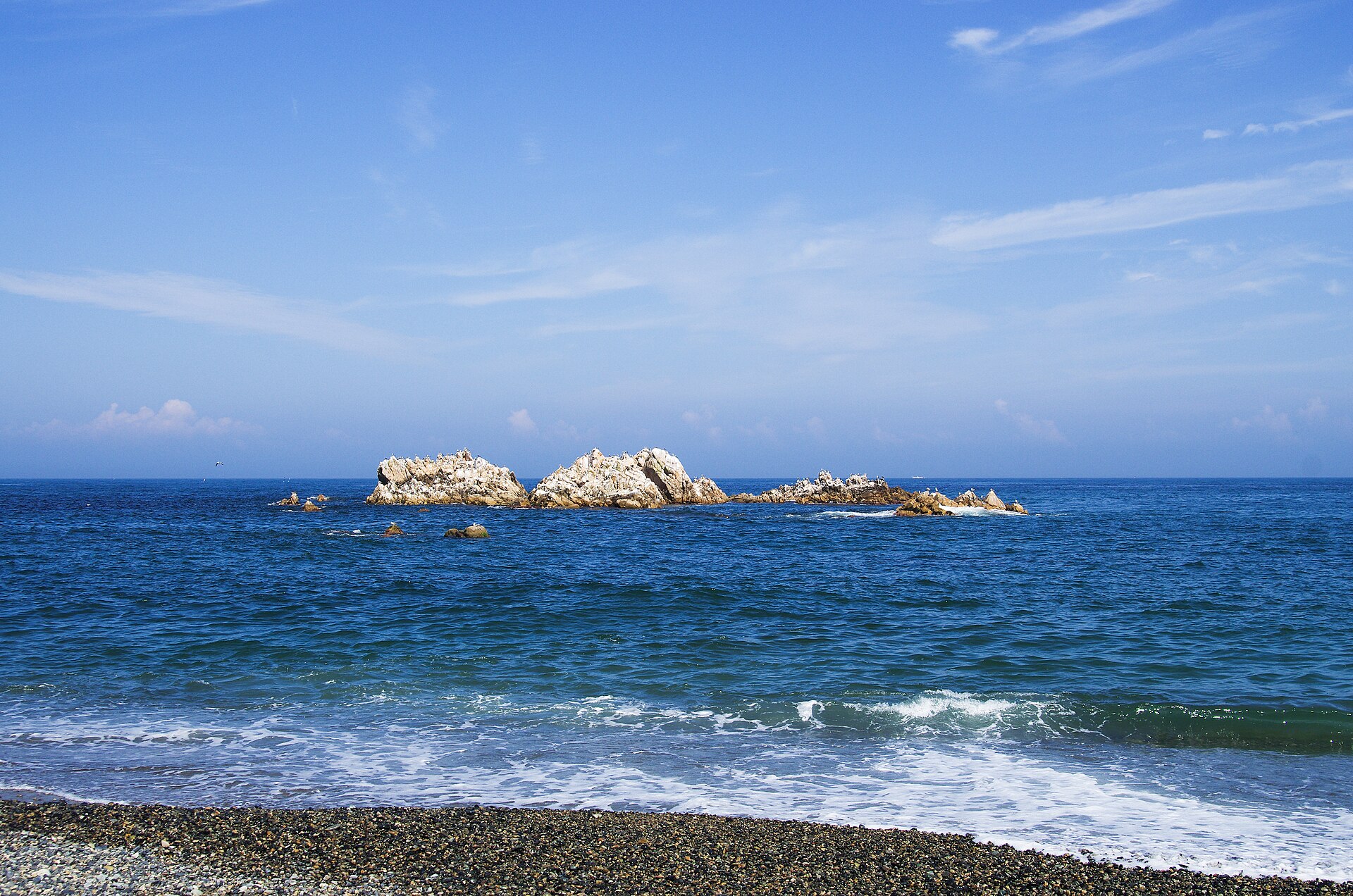
Photo: Wikimedia Commons, CC BY-SA 3.0
The King Who United the Three Kingdoms
To understand the story, we must first meet its central figure. Munmu was the thirtieth ruler of Silla, ascending the throne in 661 and reigning for two decades until his death in 681. His era coincides with one of the most violent chapters in the history of the Korean peninsula. After his father, King Taejong Muyeol, brought down the kingdom of Baekje, Munmu carried the war forward — destroying Goguryeo, and then pushing out the Tang Chinese armies that lingered on the peninsula, until at last he completed the unification of the Three Kingdoms.
Two decades of war and rule are no light burden for one man. Guarding the borders of a nation was a task that did not end even in the moment the king closed his eyes. What tormented Silla most in those years were the raiders who came across the eastern waters — invaders from the direction of the Japanese isles. And so the dying wish this lifelong warrior-king is said to have left carries a weight that is both chilling and grand. His body might crumble to ash, but the will to protect his country, he vowed, would not cease even in death.
"In Death I Shall Become a Dragon and Guard This Land"
Old chronicles such as the Samguk Sagi and the Samguk Yusa record Munmu's final days with relative clarity. As he prepared to depart the world, the king asked that his funeral be kept simple and that he be cremated in the Buddhist manner. Rather than raising a heavy, ornate burial mound that would drain the strength of his people, he ordered that his body be burned and his ashes laid in the East Sea. For its time, this was a startling decision. In an age when enormous earthen tombs proclaimed a ruler's authority, here was a king who cast aside the mound altogether and chose the sea.
And to this he added his most famous words: "In death I shall become a dragon of the East Sea, and I shall drive off those who would violate this land." When a courtier asked how so exalted a person could wish to become a lowly beast such as a dragon, the king is said to have answered, "If it is for the sake of the nation, what shame is there in becoming even a beast?" He did not ask to be reborn a king, nor to ascend to the heavens. He asked instead to become a creature of the sea, if that was what it took to guard the waves of his homeland. And so his remains, once the flames had done their work, were carried not to the land but out to that rocky islet in the East Sea.
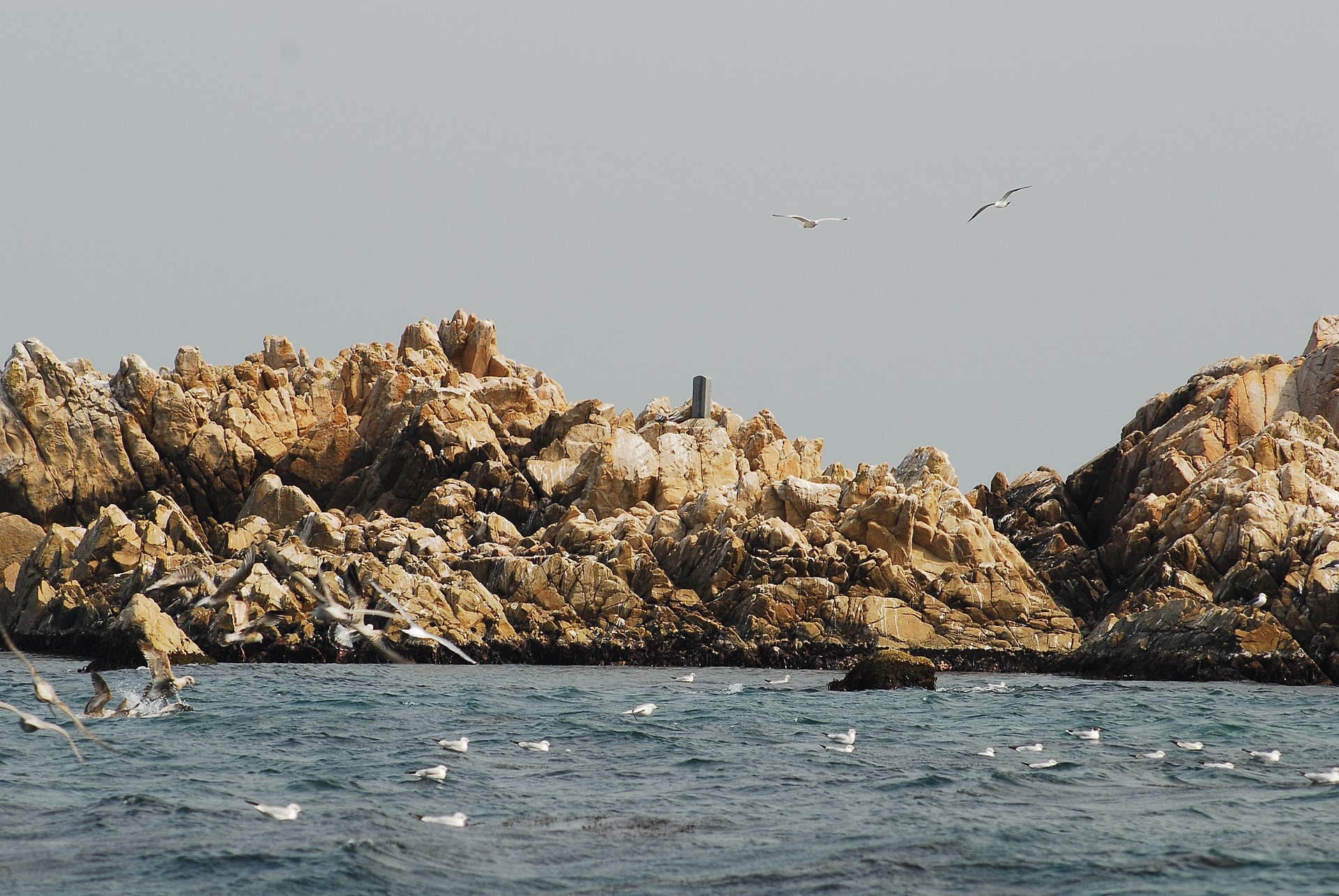
Photo: Wikimedia Commons, CC BY 2.0
A Rock Cut by Human Hands — The Interior of Daewangam
The true reason Daewangam grips the imagination is that it is no mere "rock with a legend laid over it." Those who have actually climbed onto this small islet come away struck by the same thing: unmistakable signs of human handiwork, marks too deliberate to have been shaped by nature alone. Through the middle of the rock run channels in the four directions — north, south, east, and west — forming a cross, so that when the tide rises the seawater flows in from every side, and when it falls it drains away again. Left to nature, a rock would not by chance develop a channel so evenly open on all four sides. This matches the record that in the reign of Munmu's son, King Sinmun, the waterway was shaped so that the sea would always pass gently through the interior.
And where those channels meet, at the submerged center, lies a broad, flat slab roughly 3.7 meters long. Stretched out on a north–south axis, this stone has been said to resemble the shell of a turtle, and for centuries it has stirred the imaginations of those who see it. The trace of a natural boulder hollowed out from within, with this broad capstone laid over it, is comparatively clear. The seawater covers the slab and uncovers it in turn, rarely allowing anyone a glimpse of what lies beneath. This single wave-washed stone sits at the very heart of a question people have carried for thirteen hundred years.
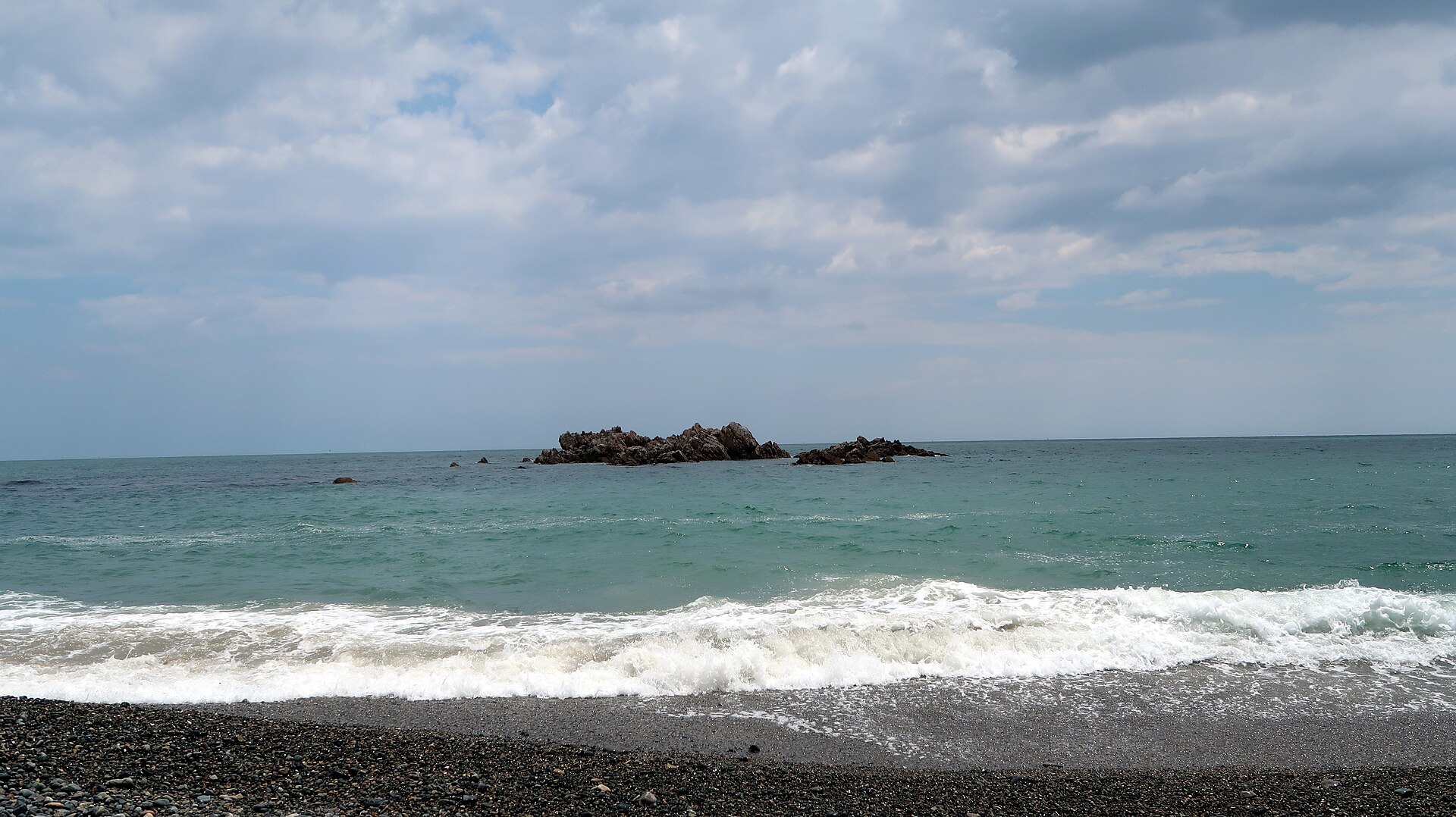
Photo: Wikimedia Commons, CC BY-SA 4.0
And Yet the Bones Were Never Found
To call this islet "the only undersea royal tomb in the world," one question must in the end be answered: does the king's body truly lie beneath that stone? And it is precisely here that the grand tale runs headlong into an unsolved scholarly puzzle.
It is not that no one has tried to look beneath the slab. The best-known attempt came in 2001, when a broadcast program, working with scholars, temporarily held back the incoming tide and examined the area around and beneath that broad stone. The survey found no trace of the urn people had hoped for, nor of any structure built to hold one. Beneath the slab there appeared to be no separate chamber prepared to inter a body. What was clear, however, was that the interior of the natural rock had indeed been artificially hollowed to seat the capstone. Human hands had plainly touched the place — but what those hands had laid beneath it never came to light. Compounded by the genuine difficulty of surveying beneath the sea over long stretches of time, the question of whether any remains exist has, to this day, never received a settled answer.
A Tomb, or a Place Where Ashes Were Scattered?
The fact that no remains have been confirmed became the seed of a long-running debate over Daewangam. Scholarly opinion divides broadly into two camps.
One side reads the site literally as the king's tomb — a burial place. On this view, the cremated remains were placed in a vessel or box and genuinely laid beneath that broad stone; it is only that over the course of more than thirteen centuries, the fierce sea and its currents washed the traces away, or that we have simply not yet found them. The clear intent behind the artificial channels and the capstone, they argue, shows that this was no plain natural rock but a place shaped for the purpose of burial.
The other side reads the site as a place where the ashes were scattered. If the remains were never interred in one spot to begin with — if, in the Buddhist manner, the cremated ashes were scattered into this sea — then it stands to reason that no urn would be found beneath the stone. On this reading, Daewangam is less a "tomb where a body lies buried" than a symbolic sanctuary infused with the king's will and spirit. Which of the two is correct, no one can yet declare. So long as the decisive physical evidence of remains is absent, the two interpretations stand side by side in taut balance. And it is precisely that unresolved state that keeps this rocky islet a place of mystery even now.
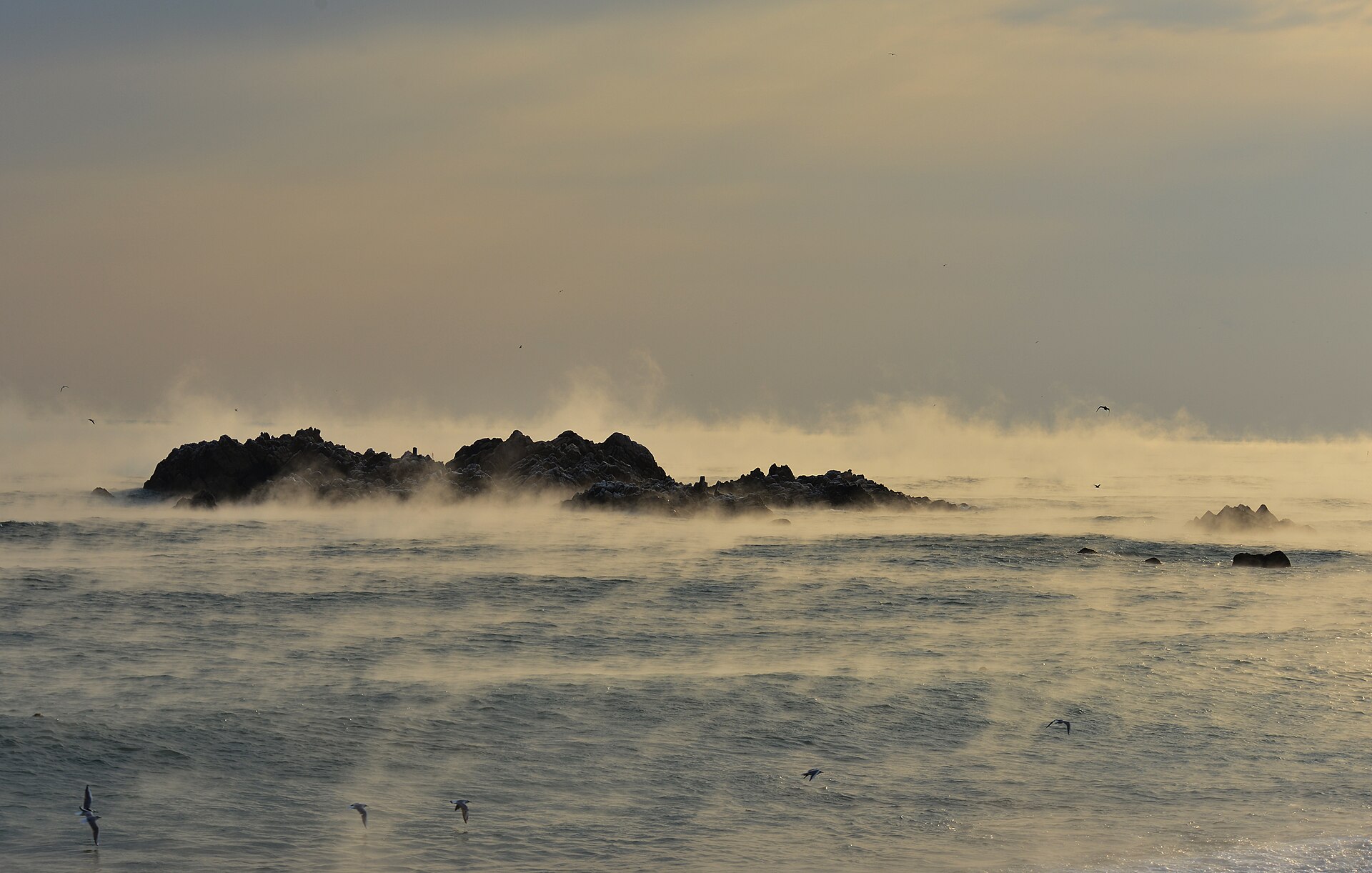
Photo: Wikimedia Commons, CC BY-SA 4.0
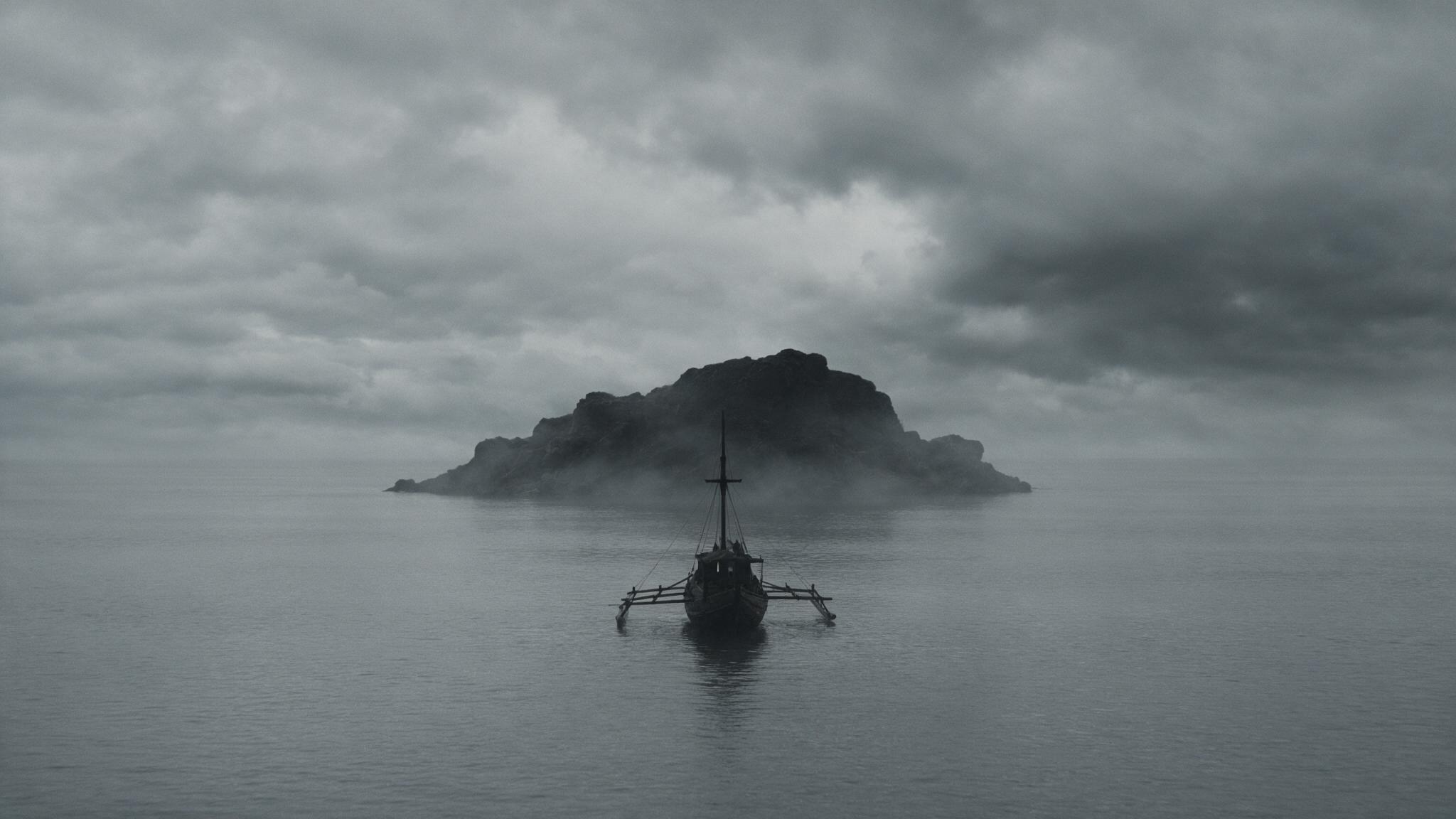
A slow approach through the dawn mist toward the wave-washed islet — a mood recreation, not real footage.
Thirteen Centuries of a Question Kept by the Sea
When the story reaches this point, its many threads gather in one place. The dying wish of a king who vowed to guard his nation even in death; the body that crumbled to ash in obedience to that wish; the artificial undersea channel and the turtle-shell slab plainly shaped by human hands; and the bones that, beneath it all, were never found. Each of these fragments is clear on its own, yet strung together they remain a single question mark.
There is a curious detail here. The day this islet was officially designated a national Historic Site was July 24, 1967 — this very time of year. Then, and still now more than half a century on, the question of "whether this is truly the king's tomb" has never been fully laid to rest. There is no need to rush to smother that open question with a supernatural curse or a legend of dragons. If anything, the reason the story holds people for so long lies in the fact that two truths sit side by side: the clear presence of human handiwork, and the clear absence of any bones. Someone plainly shaped this stretch of sea — and there is, as yet, no proof that anyone was laid to rest beneath it.
Even now the waves roll in off the coast of Bonggil-ri. When the tide rises, the broad stone slips back beneath the water; when it falls, it surfaces for a moment and then vanishes again. Whether the king who united the Three Kingdoms truly sleeps below and became a dragon, or whether his ashes long ago scattered somewhere across this sea and became the waves themselves — the East Sea, for more than thirteen hundred years, has offered no answer, and washes that rocky islet quietly still.
The 2001 survey is the entry in my notes I have revised most often, and it never comes out right. They held the tide back. They looked under the slab. They found no urn and no chamber — and they confirmed that the rock beneath had been hollowed by hand to seat that capstone. I keep writing that down as a negative result and it keeps reading as something else. Somebody went to the trouble of carving a hollow in a rock in the sea, and then, as far as anyone has ever been able to establish, put nothing in it.
---
This article uses actual archival and on-site photographs alongside AI-generated images and video produced to convey the mood of the story.
Comments
No comments yet — leave the first one.