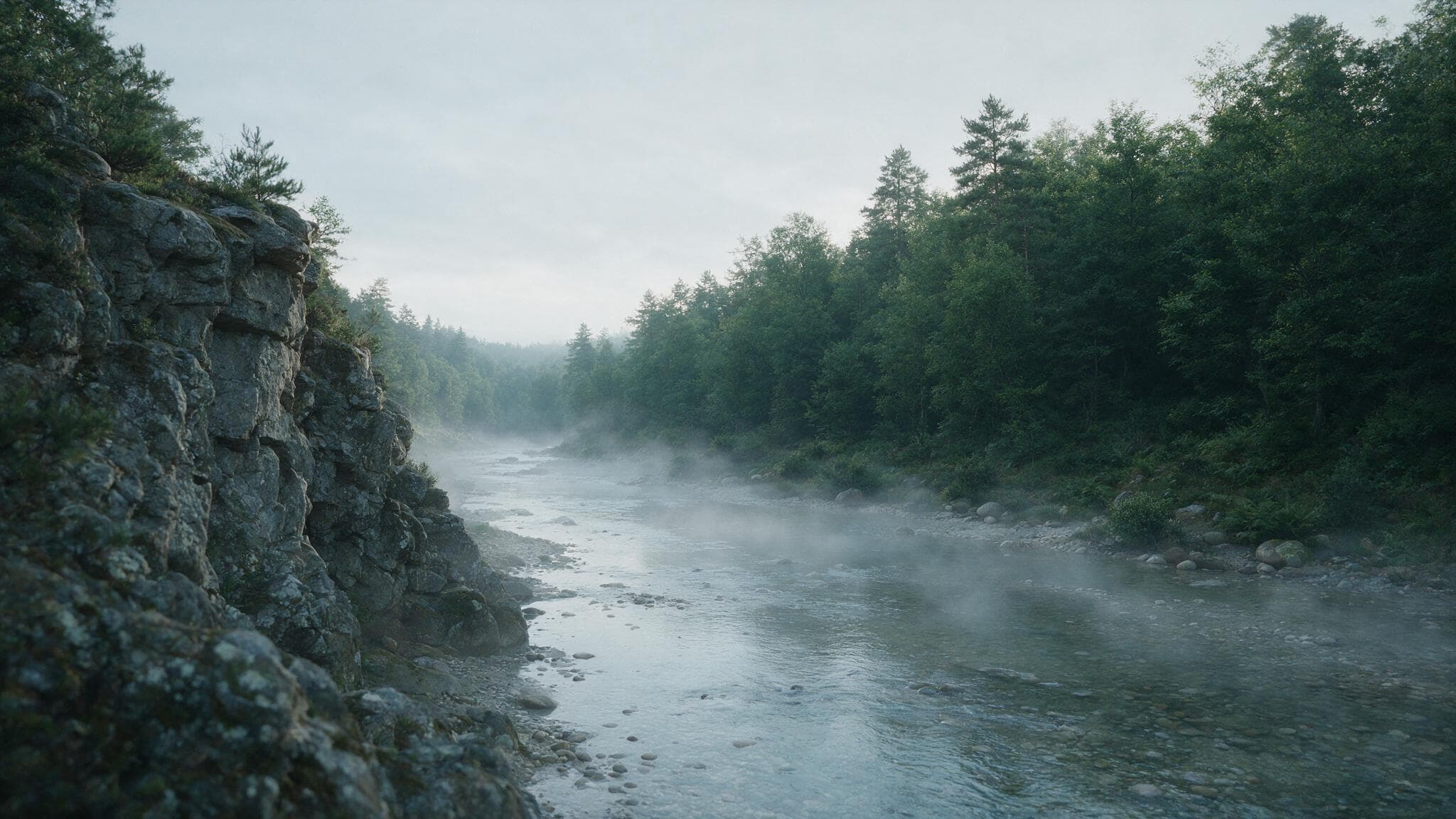
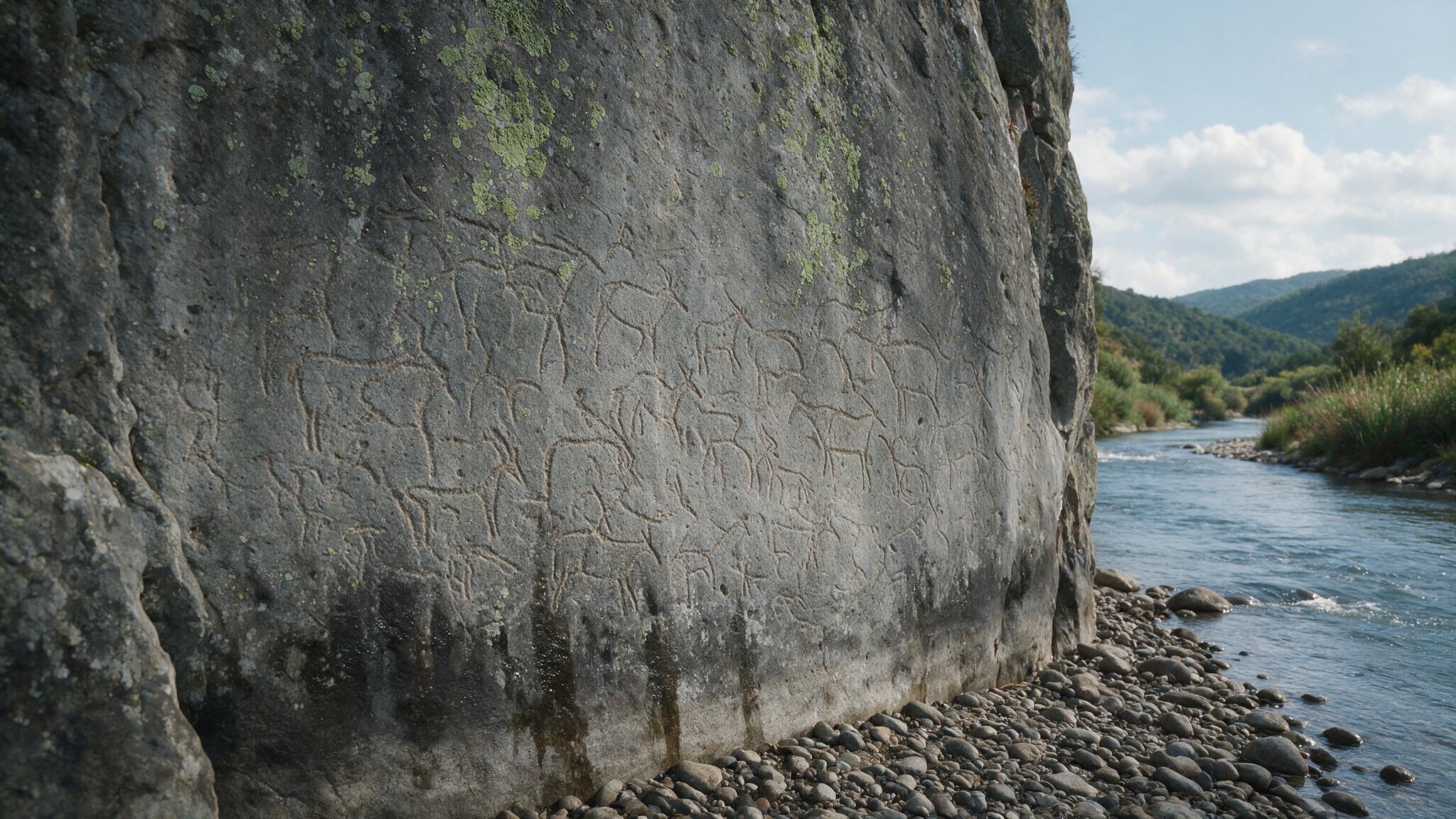
In Ulju County, near the city of Ulsan, the Daegokcheon stream makes a wide bend, and where it turns there stands a low cliff. For a handful of days each dry season, when the water sinks back and drains away from its foot, one face of that cliff — a smooth panel of rock about three meters high and ten meters wide — briefly comes into view. And across it are carvings that seem impossible to place in their own time. A whale twisting its body against the pull of a harpoon. A mother whale cutting through the water with a calf on her back. A beast caught in a net, a figure drawing a bow, a herd of animals penned behind a fence. Some are no larger than a thumbnail, some as tall as a person, and there are more than three hundred of them, layered one over another on this single narrow wall. Scholars date the carvings anywhere from roughly three thousand to seven thousand years ago. Which means that nowhere else on Earth is there an older picture of humans hunting whales. This is the story of the Bangudae Petroglyphs of Daegok-ri — a wonder that sits right beside us, yet, half-sunk in a river, rarely shows itself whole.
Seven Thousand Years, Revealed by Accident
Bangudae has been known to the world for a surprisingly short time. In late 1970, a university survey team was working its way up the Daegokcheon in search of Buddhist remains scattered through the valley. The following year, in 1971, the art historian leading the expedition and his researchers came upon something they had not expected on the riverside cliff: regular, deliberate lines cut into a water-stained face of rock. When they cleared away the moss and river slime, those lines resolved into whales, into deer, into people. The man who led the discovery would later bring another engraved rock face nearby to light as well, and throughout the search the testimony of villagers who had long known this valley proved to be the decisive guide.
The find was close to chance, but what that chance revealed was anything but slight. The first survey alone recorded more than three hundred figures, land and sea creatures mingled and alive across one panel of stone. The cliff soon became a national treasure — designated a local monument in 1982, and formally listed as National Treasure No. 285 in 1995. In the half-century since, it has drawn scholars and pilgrims without number, yet most who stood before it had to turn away without ever seeing the carvings whole. The water was always the problem. Always the water.
A Sea Carved Into Stone
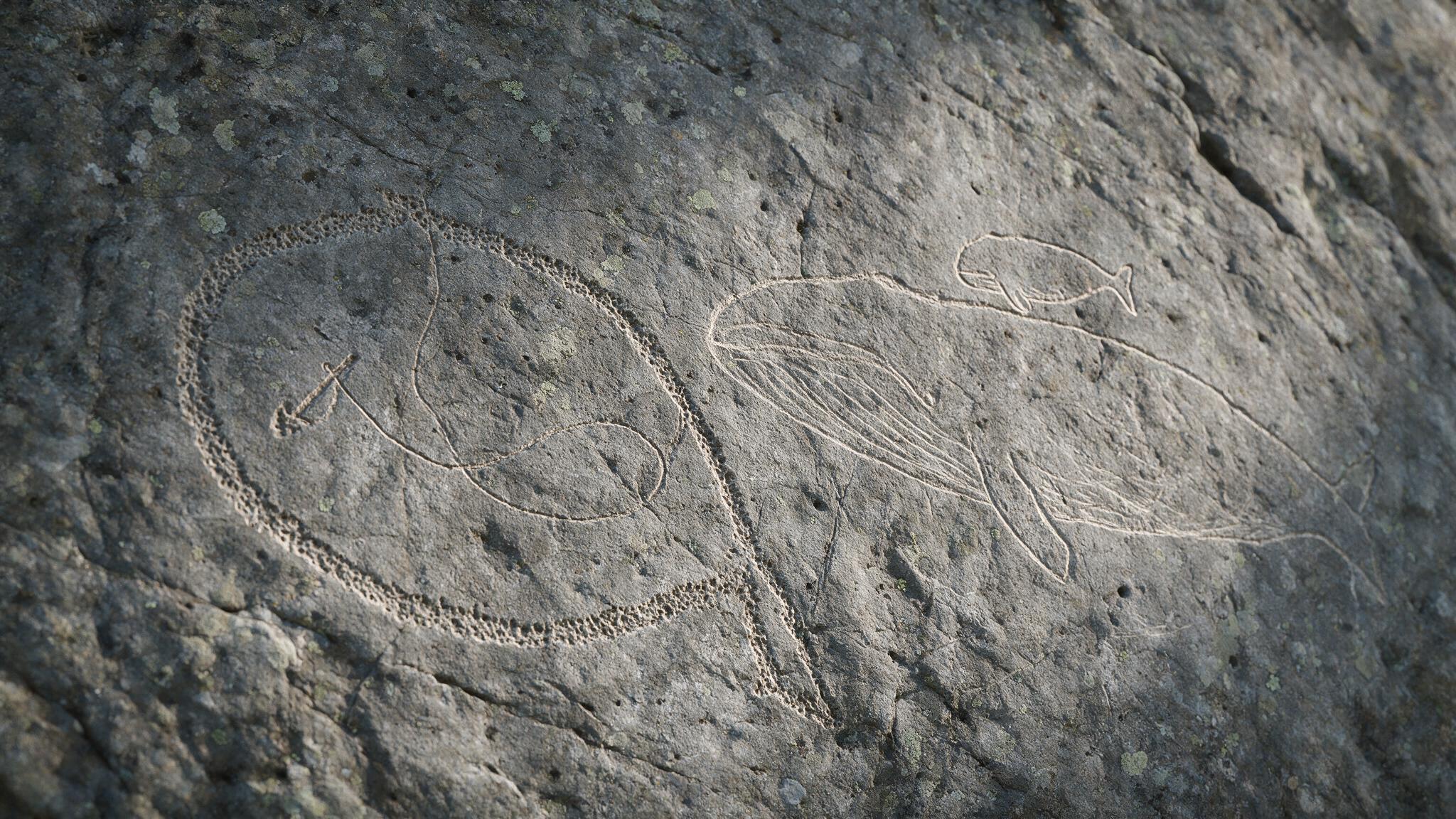
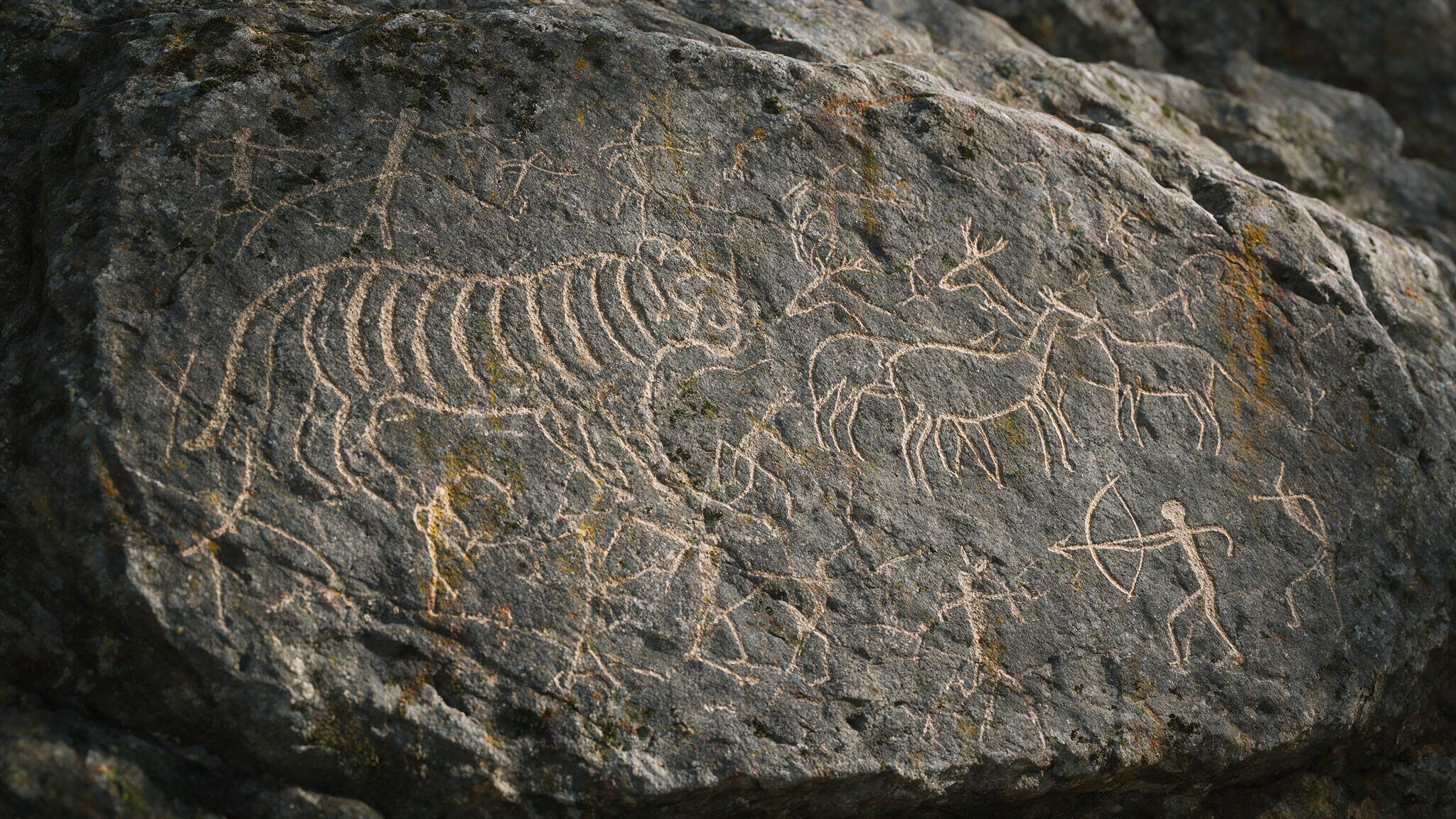
What sets Bangudae apart from every other rock carving in the world is that it tells the story of a hunt at sea. Whales fill nearly half the panel — and not as mere outlines. One whale is shown with the blowhole on its back spouting water; another is a mother with a calf riding on her; still another is caught in the very moment of being dragged away, a harpoon and rope driven into its flank. Scholars have distinguished right whales, humpbacks, sperm whales, even dolphins among them. To carve a creature so that its species can be read from a handful of lines is to reveal how closely, and for how long, the people who made these images must have watched the whales.
And it is not only whales. There are boats with several figures aboard, a boat tethered by rope to a whale, a harpoon fitted with what looks like a float — this is not simply a picture but a record of a technique. An organized hunt in which many people put out in a boat, drove a harpoon into a great whale, hung floats to tire it, and hauled it in. The very blueprint of whaling as we know it is already carved into this cliff. Nowhere in the world has an older depiction of whale hunting been found. When did humankind first dare to challenge the largest beast in the sea? The earliest answer we have to that question survives here, on a narrow Korean riverside rock.
<video controls preload="metadata" poster="/media/bangudae-3.jpg" style="width:100%;height:auto;border-radius:8px;"> <source src="/media/bangudae-clip.mp4" type="video/mp4"> </video>
The cliff carvings slowly surfacing as the river draws back — this is not footage of the actual site, but a mood recreation.
The Beasts of the Land, and the People
If the sea is half of this picture, the land is the other half. The tiger is among the clearest land creatures on the cliff. There are tigers striped in close bands along the body, a tiger crouched as if fallen into a trap, and a tiger with another shape carried within its belly, as though pregnant. Deer, wild boar, and roe move in herds; a dog-like animal seems to drive the beasts along as if aiding a hunt. People appear too — a hunter drawing a bow, a figure blowing on something like a horn, a shape with both arms flung wide as if dancing, and a face carved large on its own, like a mask.
The way these beasts and people are jumbled together looks disordered, but stare long enough and a worldview rises out of it. The full-bellied animal, the whale carrying its calf, the tiger in the trap — these images seem to record not only what was hunted, but what was wished for in abundance. That is why many scholars read this rock face as a kind of sanctuary, a place of ritual where people prayed for plenty and for success in the hunt. These carvings, which must have taken lifetimes to make, may be the traces of people from different ages coming to the same rock and laying their own prayers over the images that came before. A single cliff became a wall of prayer spanning thousands of years.
A National Treasure Underwater
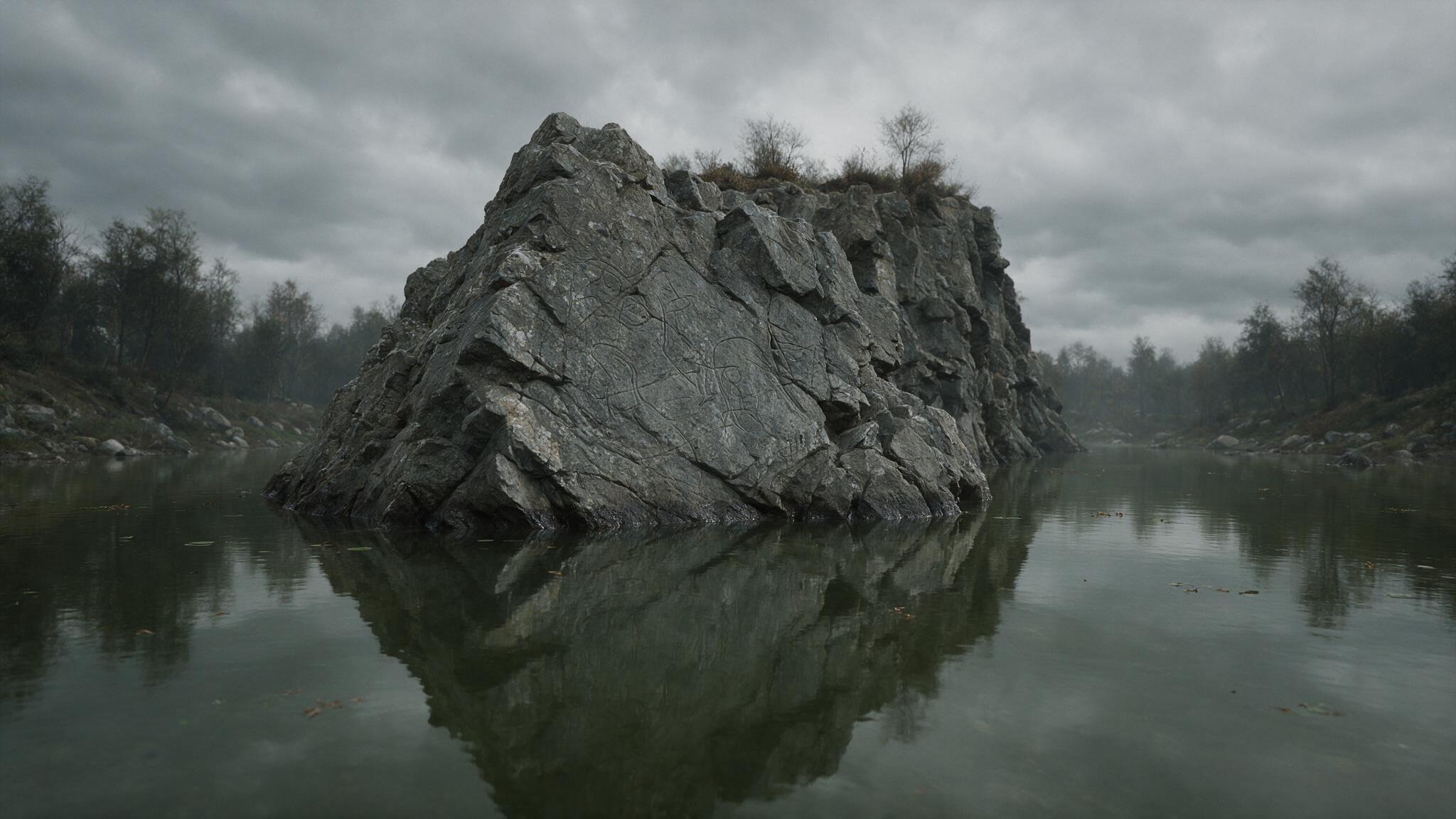
Yet this precious cliff has carried one problem like a shadow from the moment it was found: water. Downstream of the carvings on the Daegokcheon stands the Sayeon Dam, completed in 1965. When the dam holds back the water, the panel of carved rock spends most of its time submerged. Once the reservoir rises past a certain level, the lower carvings begin to drown; a little higher, and the whole cliff vanishes beneath the river. Reckon it up, and this national treasure spends more than half of every year underwater — in some years, six or seven months.
And the water does not merely hide the pictures. As the rock is drowned and exposed, drowned and exposed, year after year, it freezes and thaws and crumbles and cracks a little more each time. Slime settles, the surface flakes, the grooves of the carvings fill in. Experts believe a large share of these images has already been damaged by this repeated flooding. A picture that endured seven thousand years is wearing away fastest in the half-century since it was found. Here too plays out a paradox not unknown in the world of heritage: that the discovery was also the beginning of the danger.
Is There More Beneath the Water? — The Riddles That Remain
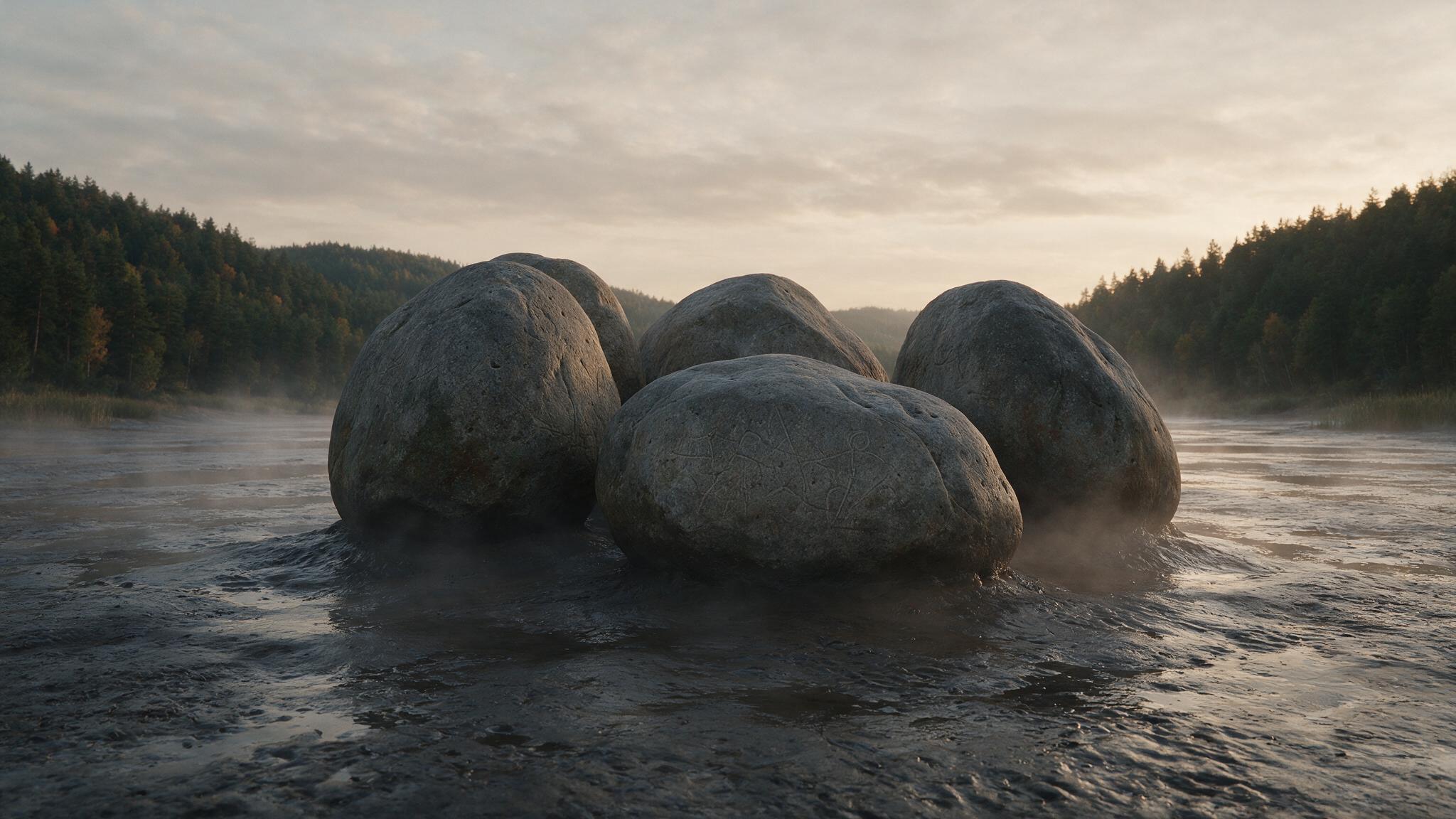
The mystery of Bangudae does not lie in the carvings alone. We do not fully know what more the water hides. What we see is only the one rock face that emerges when the river falls. But among those who have long watched this valley, there has long been testimony that beyond the carvings we know, other rocks now drowned once bore carvings of their own — that before the dam filled the valley, similar markings could be seen on other faces of rock along the bank. Some researchers give these accounts weight, but the rock now lies underwater, beyond any way of checking. If it is true, then at this very moment we are keeping seven-thousand-year-old images we have never even counted asleep beneath the river.
The debate over their age has not settled either. Some scholars push the carvings back to the Neolithic, seven thousand years or so; others bring them down to the Bronze Age, closer to three thousand. It is even suggested that the sea creatures and the land animals and people were carved in different eras. The depth of the cuts, the order in which figures overlap, the artifacts found alongside them — for all these clues, no single answer emerges. Perhaps the cliff was never the work of one age at all, but a "grown picture," continued by many generations across thousands of years. If so, then resting on this rock is not one story but the layered voices of many forgotten generations, sleeping one over another.
The Question the Cliff Puts to Us
In the summer of 2025, Bangudae was at last inscribed on the UNESCO World Heritage List — recognized by the world as a treasure all of humankind must protect together. And yet, with a bitter irony, in that very summer of its inscription the cliff lay drowned beneath the river for more than a month. The very picture the world had declared it must protect, we were still leaving half-submerged in water. Lower the dam, and a city's drinking supply is at stake; save the carvings, and people's water is at stake. Between a seven-thousand-year-old whale and today's tap water, this cliff has waited more than half a century for an answer.
What we can say for certain is only this. In some distant age, people who left not even their names climbed to this riverside cliff and carved into the stone the greatest beast of the sea they pursued. It was the oldest memory of whale hunting humankind has left behind, and it endured seven thousand years to reach us. What were they praying for as they cut these whales into the hard rock? For a rich catch, for a safe return — or simply not to be forgotten? The cliff on the Daegokcheon still shows its face for a moment when the water falls, then quietly hides itself again beneath the river. And on that brief face, the whale from seven thousand years ago goes on twisting against the harpoon still.

Comments
No comments yet — leave the first one.