On the morning of June 12, 1995, in an apartment in Bulgwang-dong, Eunpyeong District, Seoul, white smoke began seeping out of a unit on the seventh floor.
A report came in. Firefighters arrived and put out the blaze.
It was a small fire.
But when they stepped into the bathroom afterward, they froze.
In the bathtub, there were two people.
A young woman, and a very small child.
The dentist who lived there, and her daughter.
I came to this file sideways, through a stack of material on initial-investigation reform, where the case appears as a teaching example. It took me a long time to notice what was actually being taught.
The lesson was two numbers that nobody wrote down — the water in the tub, and the body in the water.
It Should Have Been an Ordinary Morning
The victim was a woman in her early thirties, a dentist.
Her daughter was just two years old.
That day was supposed to be special.
It was the morning the husband was opening his own clinic for the very first time.
He was a surgeon, a graduate of a provincial medical school, who had just set up a private practice in Banghwa-dong, on the other side of the city.
Both parents were doctors. The child was two. It was meant to be the morning of a fresh start.
That is how it should have gone.
In 1990s Korea, being a doctor carried enormous social weight — a symbol of respectability, stability, a secure future. This was a family that seemed to have everything ahead of it.
The Locked Door
Police arrived and examined the scene.
An oddity surfaced almost immediately.
The front door was locked from the inside.
There were no signs that anyone had forced their way in.
No windows, no other entrances showed any marks of a break-in.
The fire had started inside the home — and it looked like an attempt to disguise the deaths as an accident.
Someone had harmed the two of them, and then set the fire on top.
If that was true, the question narrowed to a single point.
A home locked from the inside. No sign of intrusion.
Who had been inside?
The Person Closest to Them
The investigation turned, naturally, toward the person closest to the victims.
The husband.
His statement was this:
"When I left the house at 7 a.m., my wife and daughter were alive. They saw me off as I left for the clinic."
He was confirmed to have arrived at his clinic in Banghwa-dong around 8 a.m.
And here the entire case came to hang on one single question.
Exactly what time did the mother and daughter die?
If they had died before 7 a.m., then the husband — still in the house at that hour — became the prime suspect.
If they had died after 7 a.m., he had already left, and his alibi held.
Time of death.
That one point became the line dividing a man's life from his ruin.

The Things That Were Never Measured
This is where the trouble began.
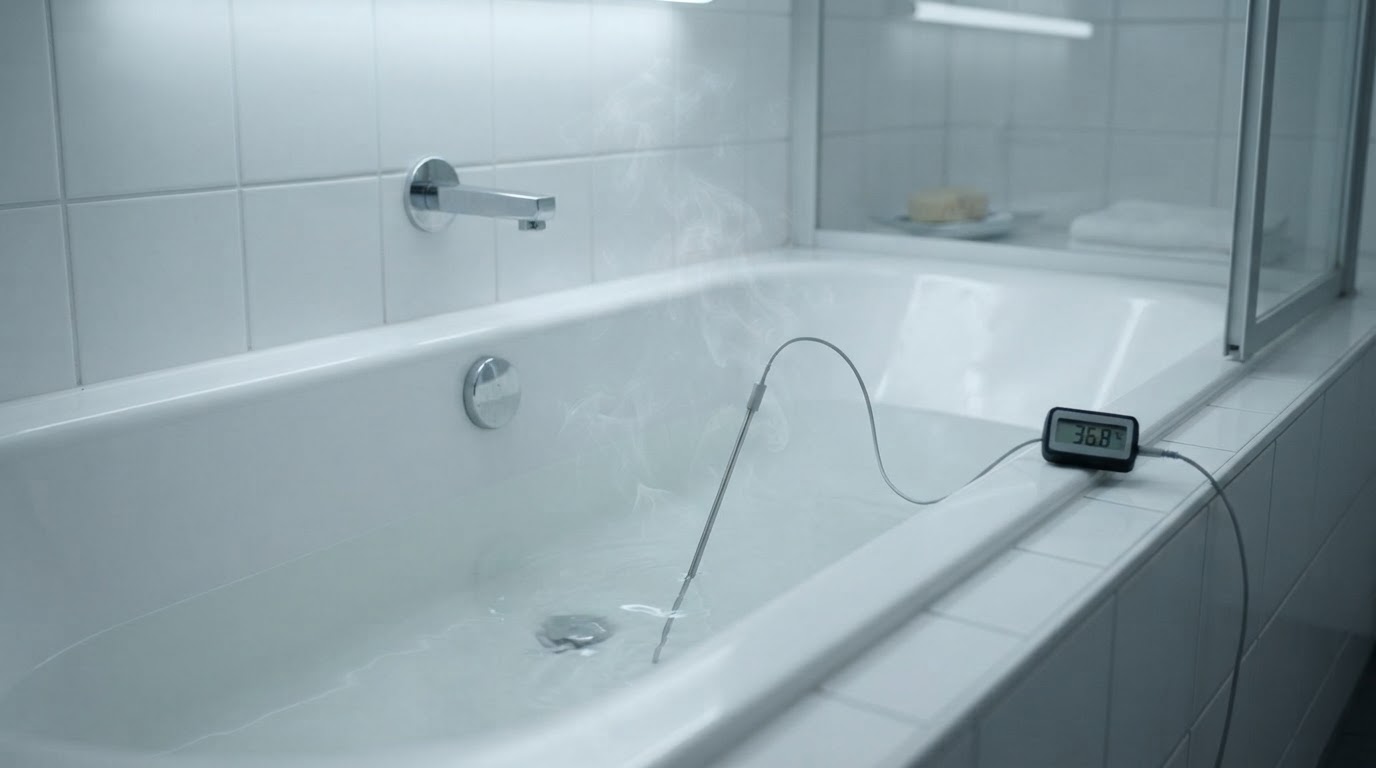
To estimate time of death accurately, there are things that must be measured at the scene:
the body's core temperature, and the temperature of the bathwater the body had been submerged in.
The rate at which a body cools is a key clue for estimating time of death.
But the officer who processed the scene reportedly never measured those temperatures.
The single most important set of numbers simply never existed.
This gap in the initial investigation would haunt the case for the next eight years.
The point where forensic science began to collapse was not the courtroom — it was this crime scene.
The Clock Inside the Stomach
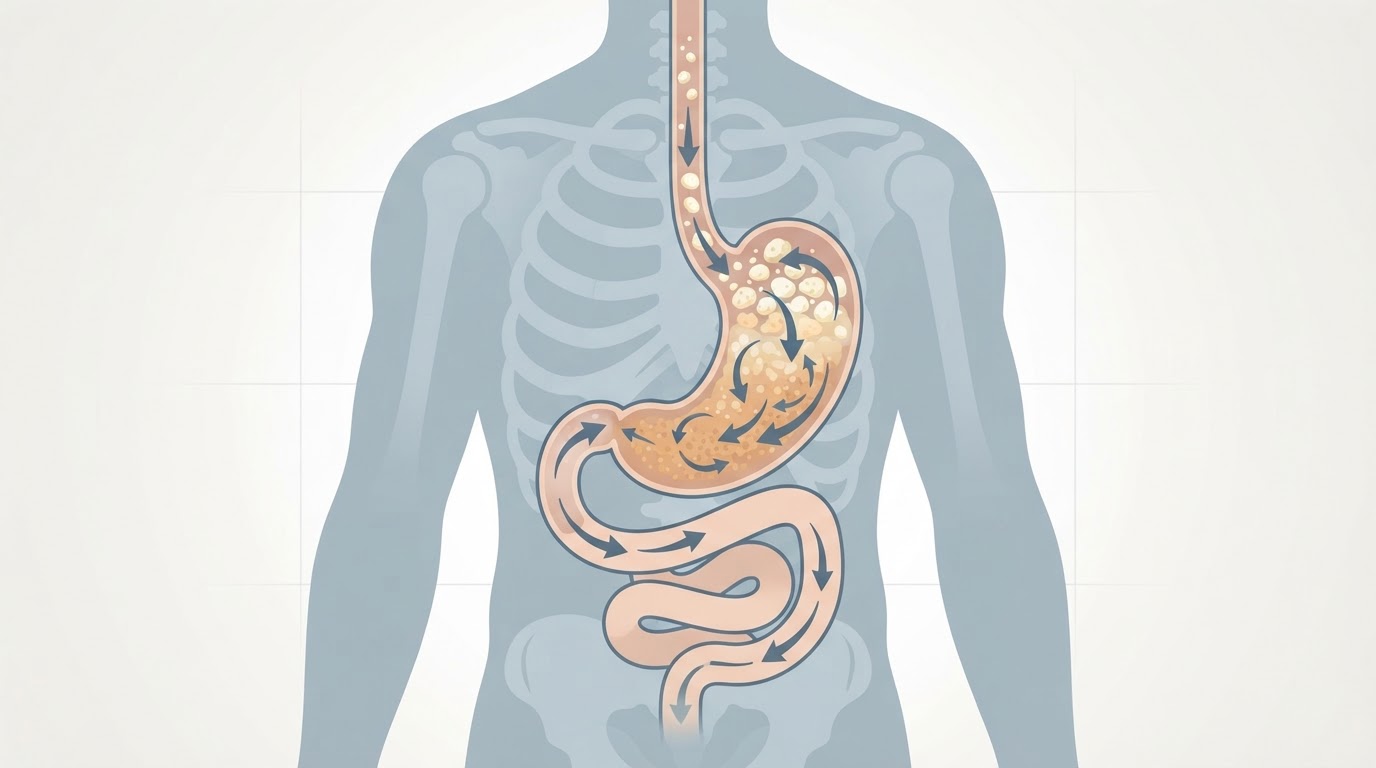
With no temperature readings to work from, prosecutors leaned on a different clue:
the degree to which the food in the victim's stomach had been digested.
When a person eats, the stomach's contents break down and move on at a roughly steady rate.
By comparing the previous evening's last meal with the state of the food still in the stomach, one could, in theory, work backward to an approximate time of death.
Prosecutors commissioned three of the country's most respected forensic experts.
All three concluded, in effect, that the victim had died before 7 a.m. — during the hours the husband was still at home.
On the strength of these opinions, the husband was put on trial.
First Trial: Death Sentence
February 1996.
The trial court sentenced the husband to death.
A home locked from within. The absence of any intrusion. The estimated time of death. The apparent attempt to disguise it all as a fire.
Everything seemed to point in one direction.
There were no eyewitnesses and no decisive physical evidence, yet the web of circumstances looked tight.
A man was sentenced to die.
Had it ended here, this case would have been recorded as just another tragic domestic horror.
But this case was only beginning.
Reversal After Reversal
A few months later, in June 1996, the appeals court flipped the verdict entirely.
Not guilty.
The appellate judges found the basis for the estimated time of death unreliable.
The degree of stomach digestion, they reasoned, varies greatly from person to person, and without knowing exactly when and how much the victim had eaten the night before, no precise calculation was possible.
In 1998, the Supreme Court reversed again, sending the case back to a lower court on the premise that a guilty verdict was warranted.
Then, in 2001, the retrial once more returned a verdict of not guilty.
Death sentence → acquittal → remand → acquittal.
It was rare for the courts to disagree so many times over a single case.
The Witness from Switzerland
In the middle of this grinding legal war, a foreign forensic scientist appeared.
The defense called Thomas Krompecher, a forensic expert from Switzerland, to the witness stand.
He had spent years studying rigor mortis, post-mortem changes, and the estimation of time of death, and was regarded internationally as an authority.
His testimony was unambiguous:
"With current scientific methods, it is impossible to pin down the time of death to a single moment. The possibility that death occurred after 7 a.m. cannot be excluded."
The very point the prosecution's experts had fixed as "before 7 a.m." was now struck head-on.
The moment a post-7 a.m. death remained possible, the husband's alibi came back to life.
Science was set against science in the courtroom, and in the space between them, "reasonable doubt" began to grow.
What It Means to Have No Evidence
Criminal trials rest on an old principle.
When in doubt, rule in favor of the accused.
To convict, guilt must be proven "beyond a reasonable doubt."
In this case, there was no evidence that directly proved the husband was the killer.
No eyewitness. No decisive physical proof.
What remained was only circumstance.
And the core of that circumstance — the time of death — had itself arrived at the conclusion "cannot be determined."
The courts' reasoning came down to this:
Yes, the suspicion is real. But suspicion alone cannot punish a person.
Even gathering every piece of indirect evidence, it was not enough to erase reasonable doubt.

Eight Years, and the Supreme Court
February 27, 2003.
The Supreme Court at last confirmed the acquittal.
From the crime in 1995, roughly eight years had passed.
Across five trials, one man had been a death-row inmate, then a free man, then a defendant again, and finally acquitted.
Legally, only one thing became clear.
The husband is not guilty.
He was not punished as the perpetrator of this case.
And here the coldest question remains.
Then who killed the mother and daughter?

What Remains Unsolved
If the husband is not guilty, then the real killer must be someone else.
But that killer was never found.
A home locked from within, no sign of intrusion, no decisive physical evidence, and the temperature records lost in the botched initial investigation.
Because the most important clues had already vanished at the very start, the investigation could never rebuild them.
As time passed, the scene disappeared and memories faded.
The case remains one of Korea's most notorious cold cases.
The law concluded that one man was not the killer, but the place where the true killer should stand has stayed empty right up to the present.

What Actually Collapsed
The reason this case is still cited so often is not simply its cruelty.
It is because it shows, more clearly than almost any other, how forensic science can collapse inside a courtroom.
The estimate of time of death looked like science.
After all, three of the finest experts had reached the same conclusion.
But that science lost its "absolute certainty" in the face of temperatures never measured at the scene, a meal time that was never pinned down, and the variable of individual difference.
The instant one opposing witness said "it is not certain," that estimate became too weak to serve as grounds for punishing a person.
The case later became a lasting reference point in debates over standardizing initial investigations and strengthening forensic capacity.

A Death for Which No One Was Punished
Two people died.
A young dentist and her two-year-old daughter.
This is not a matter of debate. It is an established fact.
And yet, for those deaths, no one was legally punished.
The husband's acquittal was confirmed, and no one else was ever identified as the killer.
A perpetrator exists, but legally there is no perpetrator.
This strange void is what keeps the case lodged in people's memory for so long.

Before We Close This File
One thing must be made clear.
The Supreme Court confirmed the husband's acquittal.
That he was not the killer in this case is the final conclusion the law reached.
To speak of him as if he were the culprit would be neither factual nor fair.
At the same time, the real killer was never identified.
Someone clearly harmed two people inside that home, yet the name of that "someone" remains blank, even now, three decades later.
What this case leaves behind is not an answer, but a question.
How far can we trust science? What can suspicion do without evidence? And a death for which no one was punished — who is left to remember it?
The two of them remained neither forgotten nor made whole.
Someone killed them, and the law could punish no one.
In the empty space between those two facts, one truth, still unrevealed, lies quietly.
Every time I go back through the trial record, I stop at the same place.
Not the death sentence. Not the acquittal.
The morning of June 12, when someone stood in that bathroom holding a thermometer he never used, and the case was already over before anyone knew it had begun.
I have re-read that section more times than it deserves, looking for a line that says he took the reading and lost it.
There is no such line.
Thirty years have passed.
The house where it happened is gone, the people involved have grown old, and much has been forgotten.
But this one file has not yet closed.
On the day the true killer is finally known, the empty space beside the two names will, at last, be filled.
Until that day comes, this story stays open.

---
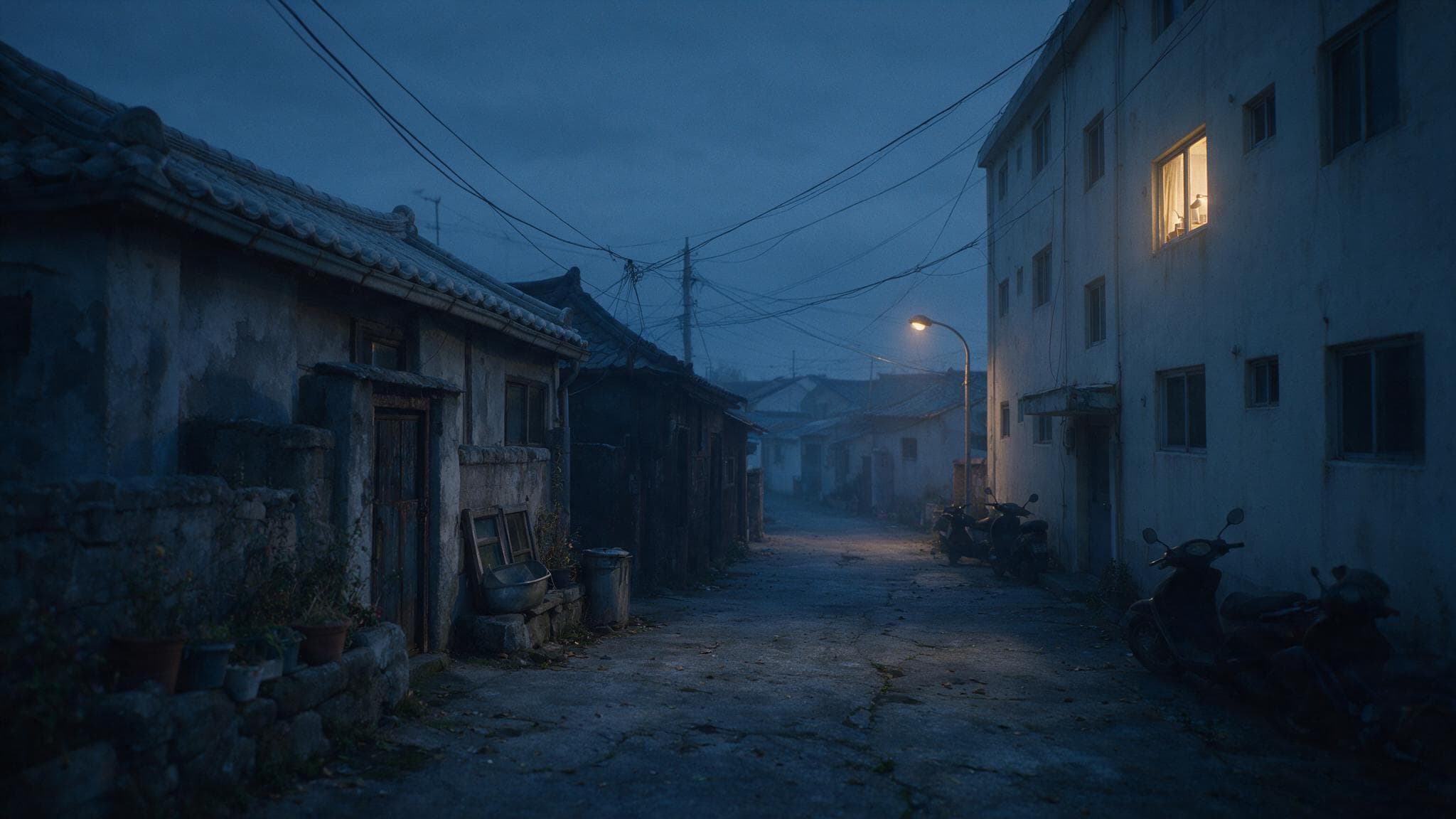
The images and video in this article are AI-generated works produced to convey the mood of the story, and are not photographs of any actual person or event.
Comments
No comments yet — leave the first one.