On the night of November 19, 1995, a young singer stepped onto a stage.
He was one half of DEUX, the duo that had shaken Korean popular music in the early nineties. The group had just broken up, and this was his first performance standing alone — his solo debut.
The song he sang was titled "So to Speak."
The performance went well. He was twenty-three, at the very beginning of a new chapter.
And the next morning, he did not wake up.
Of all the Korean files I maintain, this is the one I have rewritten most often, and always for the same reason: nearly everything I would want to say about it is something I am not permitted to say. The record allows me two things — a body and a blank. I keep returning to the number twenty-eight. Not the drug, not the hotel, the count itself. Twenty-eight separate punctures in one arm is not a moment; it is a duration. Somebody spent time on that. That is as far as any document I have been able to obtain will carry me, and I have stopped expecting it to carry me further.
DEUX, and a Person Named Kim Sung-jae
Before anything else, we should say who the person at the center of this story actually was.
Kim Sung-jae was born in 1972. In 1993, together with Lee Hyun-do, he debuted under the name DEUX. Looking back now, the two of them were something close to pioneers of Korean hip-hop and dance music.
At a time when their rhythms, their choreography, and their sound were still unfamiliar in the Korean music scene, DEUX brought a new sensibility that captured a generation of young listeners. With songs that became touchstones of the era, the two rose to stardom quickly, and Kim Sung-jae became one of the faces of nineties youth.
But DEUX did not last long. In 1995, the two members disbanded the group. And Kim Sung-jae began preparing a fresh start as a solo artist.
The Debut Stage, and That Night
November 19, 1995. Kim Sung-jae took the stage as a solo artist for the first time.
It was the occasion on which he introduced his new music — including "So to Speak" — to the public. The performance ended well. It was a successful first step toward a new beginning.
After the show, he traveled to a hotel in the Hongeun-dong area of Seodaemun-gu, Seoul. He spent that night in a room there.
And the next day — the morning of November 20, 1995 — he was found dead in that room.
He was twenty-three years old.
The Morning He Was Found
From here, we will move carefully, and speak only of what has been reported and preserved in the record.
Kim Sung-jae spent the night at the hotel after finishing his debut performance. When he had not risen by the following morning, people around him checked the room and discovered that he had already died.
At first, a sudden, natural cause — perhaps something like a cardiac event — might have seemed possible. The news that a young, healthy star had died so abruptly was, in itself, a shock.
But once the autopsy began, this death became something that could not simply be filed away as a sudden collapse.
What the Autopsy Found
The autopsy findings left people bewildered.
The first thing that stood out was the needle marks. On Kim Sung-jae's right arm, investigators found as many as 28 injection sites. Not one or two — twenty-eight.
And it was the location of these marks that immediately became the heart of the debate.
Kim Sung-jae was right-handed. For a right-handed person to inject himself in his own right arm is not an easy thing to do — the hand that manages the syringe and the arm receiving the needle end up on the same side.
His family and some experts pointed precisely to this in raising a question: that it was difficult to see how he could have administered these himself. This is, of course, only a "question" that was raised — not in itself proof of anything. But the placement on the right arm became, for a long time afterward, the single largest question mark hanging over the case.
A Strange Drug in the Body
The needle marks were not the only thing.
From Kim Sung-jae's body, investigators detected a substance called Zoletil.
Zoletil is not a medication for humans. It is a veterinary anesthetic, used mainly to sedate animals — and at the time in Korea it was an exceedingly rare substance, not something an ordinary person could easily obtain.
Here, several questions overlap at once.
First: how did this unfamiliar animal anesthetic end up in the body of a young singer?
Second: was the amount detected at a level that could threaten a human life? Even the question of whether it constituted a lethal dose was a matter of dispute among experts.
Third: by the accounts of those around him, Kim Sung-jae had no history of habitual drug use.
So the body of a person who, by those accounts, kept his distance from drugs, held a hard-to-obtain animal anesthetic — together with twenty-eight needle marks in a position difficult to reach on his own. It was this combination that made the death difficult to read as a simple accident.
The Path Through Investigation and Trial
The investigation by police and prosecutors turned toward one person.
A woman who was Kim Sung-jae's partner at the time was named as a suspect and, ultimately, charged.
Of this person, this article will disclose nothing — no name, no personal details, nothing of the life that followed. There is a reason for that, and it is best explained by stating the outcome of the trial first.
The trial swung dramatically.
First instance. The court found her guilty and sentenced her to life imprisonment.
Appeal. The judgment was completely overturned. The appellate court held that no clear motive and no clear evidence to establish that she had killed Kim Sung-jae could be found — and it returned a verdict of not guilty.
Supreme Court. In 1998, the Supreme Court finalized the acquittal.
That is: life imprisonment, then not guilty, then acquittal made final.
The final conclusion the law reached is clear. The person who had been charged is not guilty. No one has been legally punished as the perpetrator in this case.
Why the Court Ruled Not Guilty
This part matters.
A verdict of not guilty does not mean "nothing happened."
Criminal trials rest on a very old principle: to convict, guilt must be proven "beyond a reasonable doubt." And where doubt remains, the ruling must fall in favor of the defendant.
This case did contain circumstances that invited suspicion. An unfamiliar animal anesthetic. Needle marks in a position difficult to reach oneself. Testimony that there was no history of drug use.
But "circumstance" and "proof beyond a reasonable doubt" are not the same thing.
The court found that there was no direct evidence. No direct proof — establishing who administered those injections, when, and how, beyond a reasonable doubt — was presented in the courtroom. The circumstances were heavy, but the court held that circumstance alone was not enough to establish, without reasonable doubt, that this person was a killer.
For that reason, the case takes its place in a lineage of Korean criminal trials that show where the boundary between circumstance and proof actually lies. Our account of the dentist-family murder case describes another case in which there was a clear harm, yet the law was unable to punish anyone — the same kind of blank space left behind.

What Remained After the Acquittal
Here the peculiar, chilling emptiness of this case comes into view.
In legal terms, it comes to this. The person who was charged is not guilty. Therefore, legally, there is no "perpetrator" in this case.
At the same time, the cause of death was never cleanly and officially resolved either.
Was it an accident caused by a drug he administered himself? Or an incident in which someone else was involved? To that fundamental question, no "conclusion" was ever finalized by a court.
An acquittal is a finding that "the person charged was not proven to be the perpetrator" — it is not an answer to the question of "so what, in fact, actually happened."
And so this death remains in a strange condition.
There is a clear victim, but legally there is no case.
A person died. The circumstances of that death hold much that goes unexplained. No one was punished in court, and the determination of the cause of death was never officially closed. Several blank spaces are left open at once.
2019: The Line the Court Drew
Much later, in 2019, this case returned to the news in an entirely different way.
A current-affairs program was preparing a broadcast about the case. But the former partner — the person whose acquittal had been finalized — petitioned the court for an injunction to block the broadcast, on the grounds of protecting her reputation and personal rights.
And the court granted the petition (in part). The broadcast, in the end, could not air.
The court's reasoning was summarized roughly as follows: the broadcast contained unverified facts, could seriously damage the reputation of a person whose acquittal had been finalized, and could not be justified as a mere invocation of the "public interest."
That decision, in itself, left behind a large question — how a country talks about the unsolved.
On one side stands freedom of expression, and a society's desire to bring a "death not yet explained" into public discussion. On the other stands the presumption of innocence, and a wariness of a broadcast pointing, even by implication, at a person the law has already declared not guilty as though that person were the perpetrator.
The line the court drew in 2019 fell exactly where those two values collide. A broadcast that points to an acquitted person as the perpetrator — even by suggestion — may be restricted. That, in effect, is what the court said.
And so the case came to carry a second question, beyond "what happened": the question of "how we are permitted to tell it at all."
The Line This Article Keeps
This article follows the spirit of that court decision exactly. So let us be clear.
The person who was charged was acquitted, and that acquittal was made final. Therefore this article does not point to that person as the perpetrator, nor does it imply it.
The only fact that can be stated is this: "The partner at the time was charged, but was ultimately and finally acquitted."
Her name, her personal details, the life she led afterward — this article does not address any of it.
In this case, what we can talk about is not "who did it." It is "what was revealed, and what remained blank."
What was revealed: a young star died, and from his body came an unfamiliar drug and needle marks that go unexplained.
What remained blank: how that drug entered his body, whether anyone was involved, and what, precisely, the cause of death was.
What this article sets out to do is not to fill those blanks recklessly, but to look plainly at the fact that the blanks exist.
Thirty Years of Fandom, and Remembrance
Set the law and the arguments down for a moment, and a person remains in their place.
Kim Sung-jae.
To those who remember him, he was music before he was ever a case. For the generation that lived through the nineties, DEUX's music was the soundtrack of their youth, and Kim Sung-jae was one of the faces that symbolized the sensibility of that era.
Long after the years had passed, his songs were sung again, his choreography revisited, and documentaries and tributes to him continued to appear. Three decades after his death, his fandom has not fully faded. On the anniversary of his passing, remembrances are still written, and the stories tracing the musical lineage he opened are told again and again.
It is true that the mystery of his death keeps hold of his name. But the real force that keeps him remembered is, in the end, the music he left behind — and the possibility of an artist that stopped at twenty-three.
Cases Where There Is Evidence, but the Story Never Completes
There are deaths in the world that share this case's structure. There is clear "evidence" that something went terribly wrong, yet it never resolves into a single, completed "story." The fragments of evidence remain, but the final link needed to thread them together and say "this is the truth" is never supplied.
Korea's dentist-family murder case was likewise a case with a clear harm, in which the law punished no one and the "seat of the true perpetrator" was left empty. And cases like the Itaewon murder, where the harm and circumstances are vivid but the final box of "who" takes years to fill — or is never fully filled — belong to the same family.
The Kim Sung-jae case sits in the middle of that lineage. The physical traces — the drug and the needle marks left in the body — and the many questions surrounding them: there is so much material, and yet no decisive fragment to seal it all into a single, settled account.
What the English-Language Record Holds, and What It Does Not
For English-speaking readers, this case exists mostly in thin form. The English Wikipedia entry on Kim Sung-jae describes DEUX as an influential early K-pop and Korean hip hop group of the early 1990s and gives the date of his death as November 20, 1995, at age 23. It says police first attributed the death to a myocardial infarction from overwork, then records the autopsy details: 28 needle marks on the right arm and traces of an animal anesthetic. The entry itself flags those autopsy details as coming from an unreliable source. I raise this not to doubt the Korean record but to be honest about how it reads in English. When I trace how this case appears to an English-speaking reader, the most visible version hedges its own central facts.
The anesthetic is where those readers have something to compare. Zoletil is a brand of tiletamine combined with zolazepam, and its American counterpart, Telazol, is sold as an injectable anesthetic for cats and dogs. Tiletamine is a dissociative anesthetic structurally related to ketamine, and in laboratory binding terms is reported to be six to eight times more potent than ketamine at the NMDA receptor. In the United States the combination product is a Schedule III controlled substance, and recreational use of Telazol has been documented. None of that explains a room in Seoul in 1995. It only confirms the point already in the file: this was not a common thing to have.
The English-language case readers tend to reach for is Michael Jackson's. He died on June 25, 2009, of acute propofol intoxication with a contributory benzodiazepine effect. His physician, Conrad Murray, was convicted of involuntary manslaughter on November 7, 2011, sentenced to four years, and paroled on October 28, 2013. In that case the drug, the room, the hand that administered it and the conviction all end up in the same account. I put the two side by side not for resemblance but for the gap. In the Kim Sung-jae file, the court found that the person charged was not proven to have done it, and the chain from substance to hand was never completed in a verdict.
I will not pretend to know what that chain contained. What I can say is that an English-speaking reader may well meet this case first as a short encyclopedia entry with a warning label, and so underestimate how long the argument in Korea ran: a life sentence, an acquittal, a Supreme Court ruling in 1998, and a 2019 court order that kept a broadcast off the air. The case is not obscure. Its English-language record is.
So to Speak, Not Yet Spoken
Putting this case in order, what keeps coming back is, in the end, that song title. "So to Speak."
The song Kim Sung-jae sang at his solo debut — and that stopped, the next dawn.
"So to speak" is a phrase we use when something has not yet been fully said. It is a phrase for setting up an explanation, whose meaning is only filled once a completed sentence arrives behind it.
This case is exactly like that.
The facts that were revealed are enough to set up the sentence. A star died the morning after his debut, in a hotel, and from his body came things that go unexplained.
But the sentence that should follow — "and so, what happened?" — is still blank.
The law judged the charged person not guilty, and that judgment must be respected. The cause of death was never officially resolved, and to declare it recklessly is likewise not just.
What remains is not an answer but a question that must be carefully kept. How do we speak of a person's death with respect? How do we avoid wounding again a person whose acquittal is final? And how do we look at a blank not yet filled without carelessly filling it?
The twenty-three-year-old star finished his song at his debut and, the next dawn, did not wake up.
Like the title of the last song he sang, this case is still stopped at "so to speak." The setup was spoken; the sentence was never completed.
Keeping the line the law must keep, and honoring the person who is gone, all we can do is leave this blank open and remember him.
There is one thing I noticed only after cataloguing this alongside the other unresolved Korean files, and it is not evidence of anything. A veterinary anesthetic. Not a street drug, not a pharmacy bottle — a compound almost nobody in the country could put their hands on in 1995. Whatever else remains uncertain about that room, this much is not: the substance did not arrive there by chance. It had to be sought out, from somewhere, by somebody. Thirty years of records, and the question I cannot close is the smallest one in the file. Where did it come from.
So to speak — this story has not yet been fully told.

---
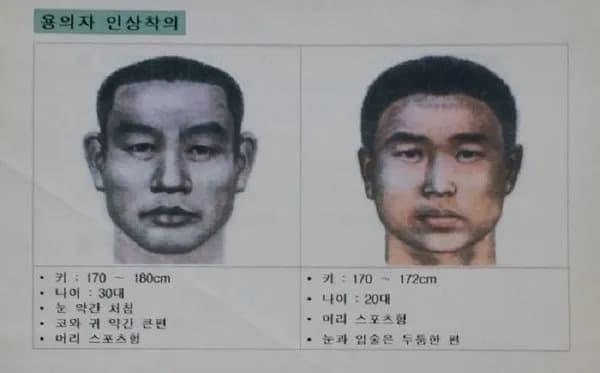
The images and video in this article are AI-generated works produced to convey the mood of the story, and are not photographs of any actual person or event.
Comments
No comments yet — leave the first one.