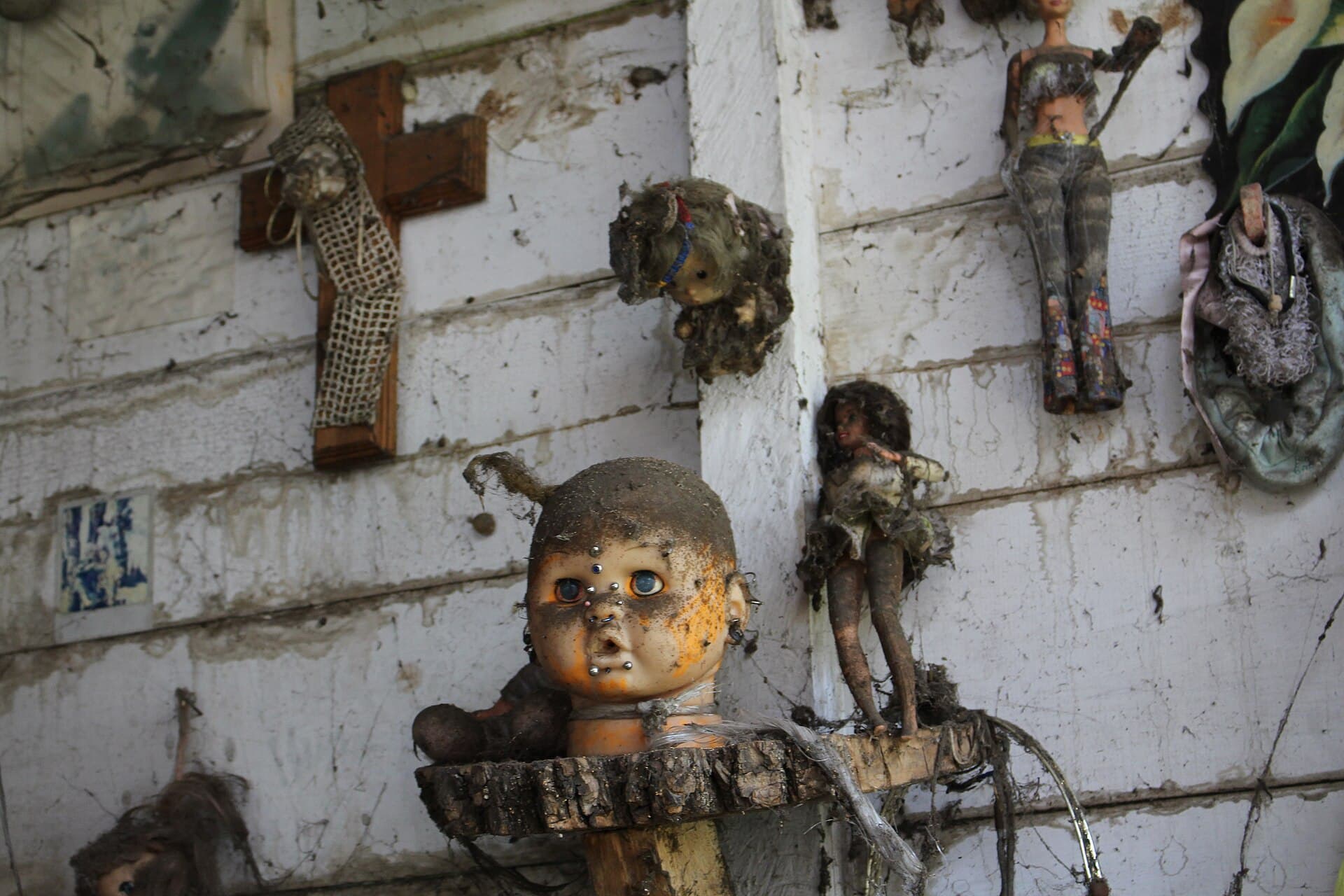
Head far south of the noise of Mexico City and you reach Xochimilco, where green canals tangle into a maze of waterways. Brightly painted boats ferry visitors along the wider channels; but turn off into the narrow ones and follow them deep enough, and at some point a small island emerges from the mist — an island the boats seem reluctant to touch. Built on a chinampa, one of the artificial garden-islands the people of Xochimilco have farmed for generations, it looks at first like any other patch of marshland. But the moment you look up into its trees, all desire to linger drains away. From every tree, every branch, every twist of wire — hundreds of dolls hang by the neck, swaying. Dolls with their eyes fallen out and their arms torn off, faces overgrown with moss, cobwebs strung across hollow eye sockets. This is the place often called the most unsettling on earth: the Island of the Dolls, Isla de las Muñecas.
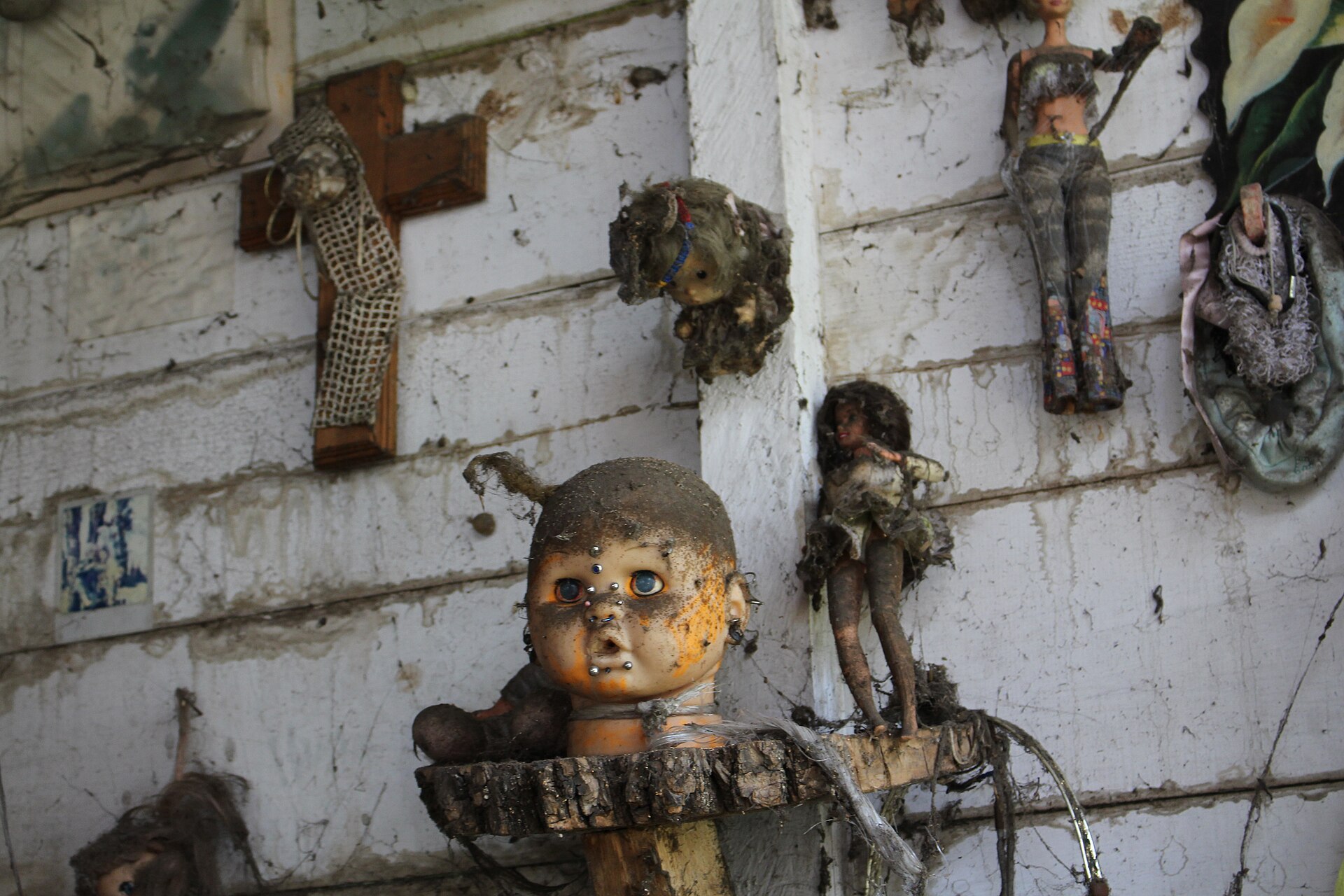
Photo: Wikimedia Commons, CC BY-SA 4.0
The Water Where a Girl Surfaced
The story begins with one man: Julián Santana Barrera. He was a recluse who had come alone to this remote island to farm and live out his days. One day in the middle of the twentieth century, he came upon a young girl who had drowned in the canal beside the island. The accounts split into two versions. In one, he found her body floating on the water; in the other, he failed to save her as she drowned before his eyes. Either way, from that day on, Julián's life turned onto an entirely different course.
One caution is worth noting. No evidence that this girl ever existed has been confirmed anywhere to this day. She is a nameless story adrift on the waters of Xochimilco — no name, no record left behind. Yet to Julián she was no invention. He believed her spirit could not leave the island and lingered along the water's edge; that at night her weeping spread across the canal. And to soothe that spirit, he chose the strangest method the world has ever seen.
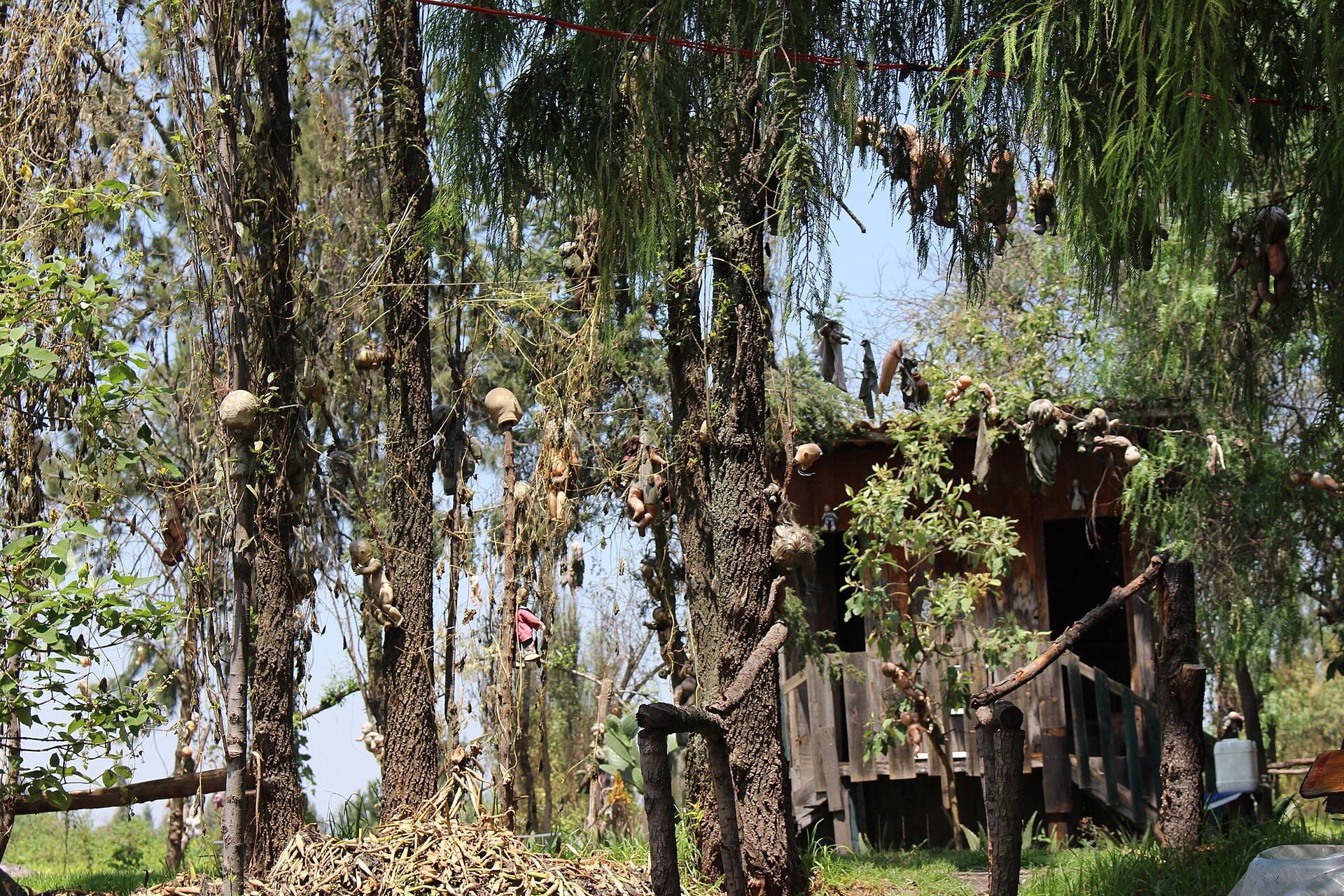
Photo: Wikimedia Commons, CC BY-SA 4.0
I spent an unreasonable stretch of time trying to find the girl. That was how this entered my archive — not with the dolls, but with a search for a drowning in the Xochimilco canals that would match Julián's account. Municipal records, period newspapers, anything. There is nothing. She has no name and no date, and the two versions of the story cannot even agree on whether he found her floating or watched her go under. Half a century of labor hangs in those trees on the strength of an event I cannot document at all.
The Man Who Began to Hang Dolls
Julián started gathering dolls one by one — some drifting in the canals, others cast off in heaps of refuse. Almost none of them were whole. A doll with a single eye, one with matted hair, one with its limbs snapped away, one soaked in muddy water until its skin had blackened. He wound wire around the necks of these broken things and hung them from every tree on the island. He believed the girl's spirit would love them, that the dolls would keep her lonely soul company.
As the years passed, the dolls multiplied from dozens into hundreds. Julián did not stop for nearly half a century. He said the dolls came alive at night — that they turned their heads, opened their eyes, and whispered among themselves. To him this was not a terror but a comfort. That the dolls moved was, in his mind, proof that the girl's spirit still lingered here, still ran her fingers over them. Visitors shuddered at the sense that the hollow eyes filling the trees seemed to follow them, but Julián lived on in the very middle of it, alone with a dead girl and her dolls.
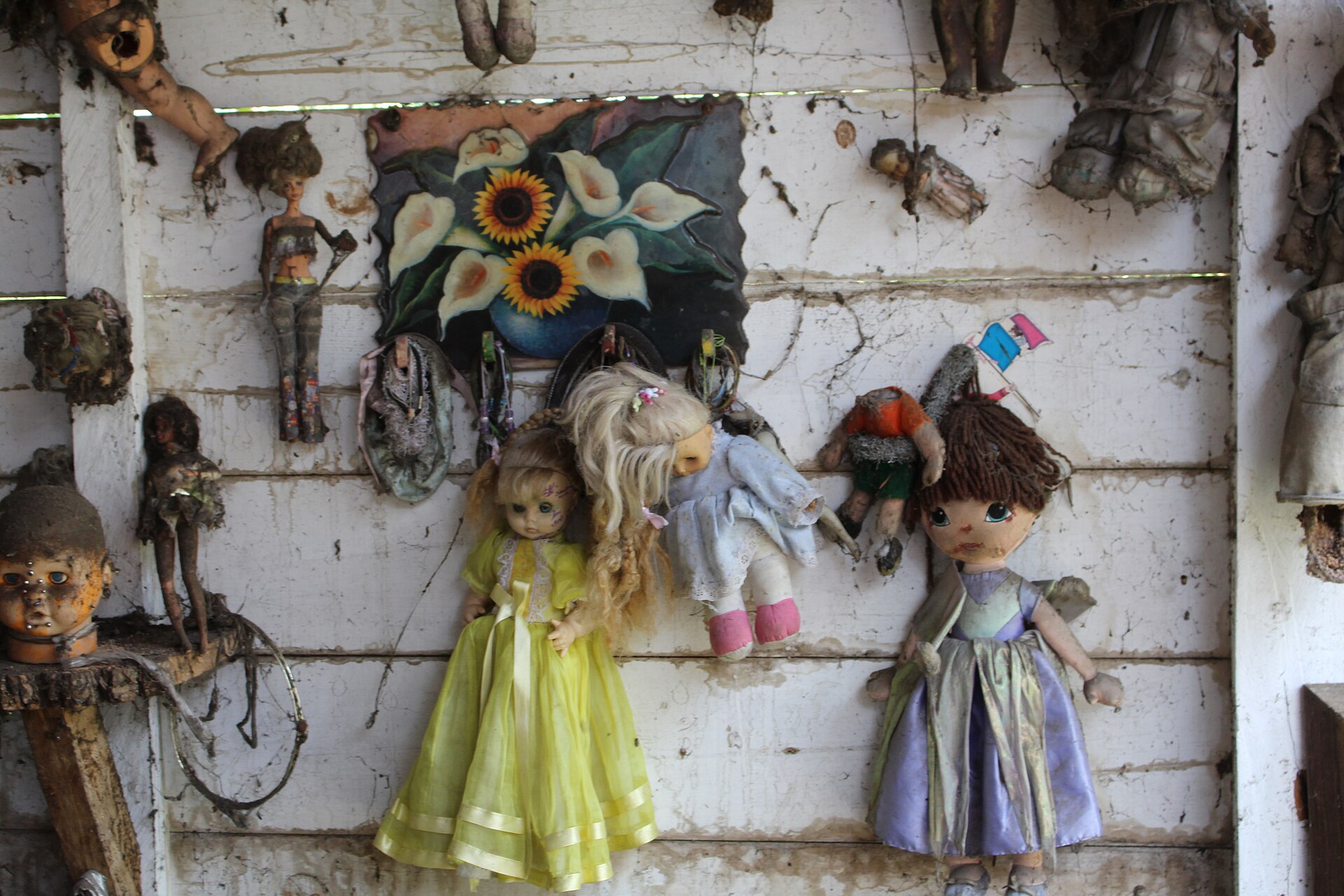
Photo: Wikimedia Commons, CC BY-SA 4.0
At Night, the Dolls Move
As the island became known and visitors began to come and go, the sightings tied to the dolls hardened into a legend of their own. People said the dolls turned their heads, moved their arms, and slowly opened eyes that had been shut. Some said the dolls stirred faintly even when there was no wind; others said they heard the dolls whispering low to one another. Even by day the island's air hangs heavy. Beneath the gaze of hundreds of dead faces staring down from every side, the black water of the canal laps soundlessly underfoot.
Seen coolly, of course, the explanations are not hard to find. The joints of a half-rotted doll creak of their own accord in the damp and the wind; an insect crawling through an eye socket can make an eye seem to roll; the sound of water in the narrow canal and the rustle of the reeds can easily pass for whispering. Yet no rational explanation quite erases the chill of the moment you find yourself ringed by hundreds of ruined faces in the mist. The true hold this island has on people lies not in whether the dolls really moved, but in the fact itself — that a man spent half a century raising this grotesque altar for a dead girl.
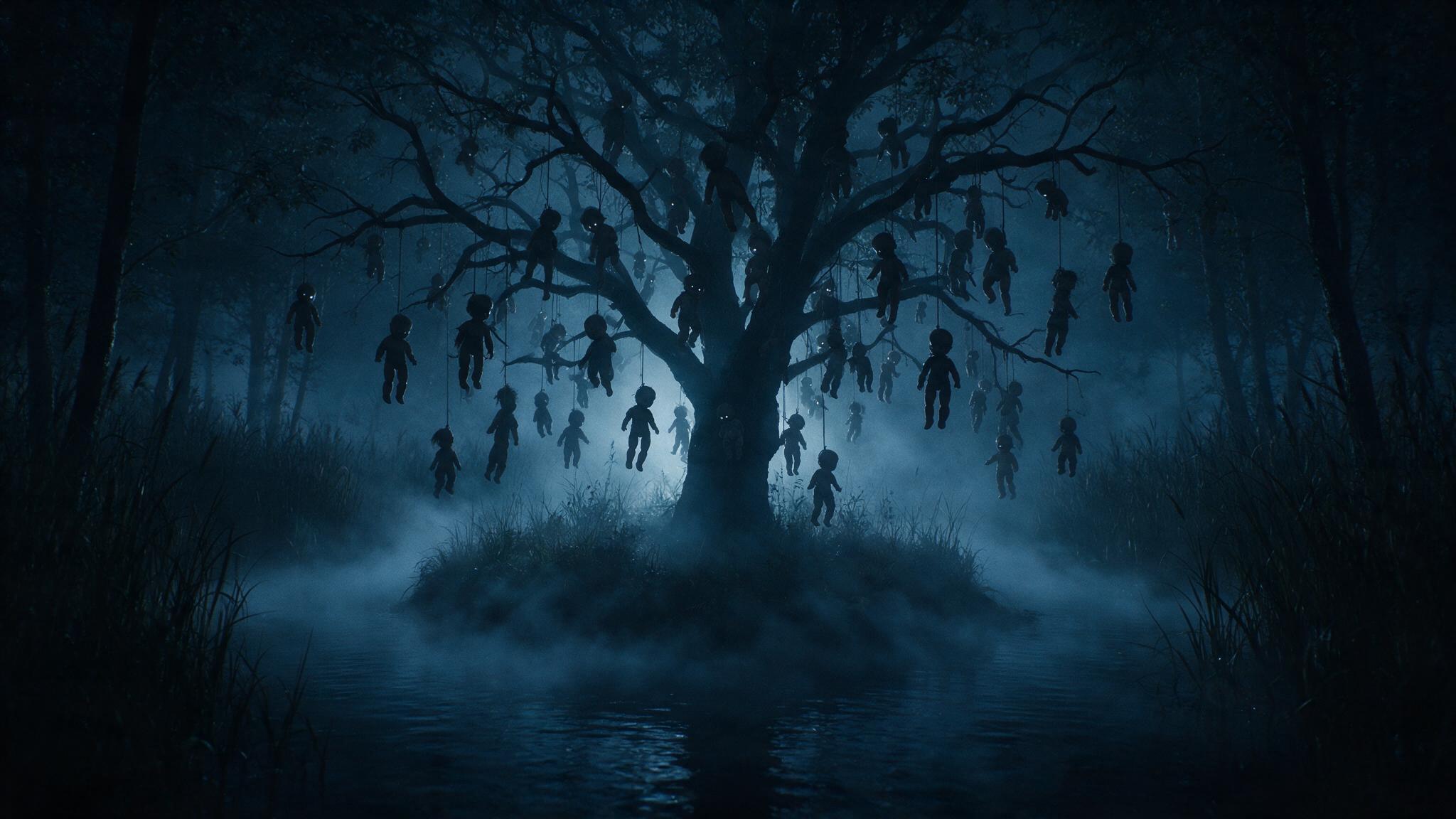
The Island of the Dolls swaying quietly in the mist — a mood recreation, not real footage.
The Man Who Drowned in the Same Spot
The detail that keeps this story from being brushed aside as a mere ghost tale comes at the very end. In 2001, Julián Santana Barrera, by then eighty years old, was working on the island with his nephew. While the nephew stepped briefly away, Julián was found dead in the canal, face down in the water. The man who had hung dolls for half a century to soothe the spirit of a drowned girl had himself drowned — in the very spot where that girl was said to have drowned.
This final coincidence set a chilling full stop on the island's legend. At last, people murmured, the girl's spirit had come to take him — had called him down into the water as the price for the half-century he had kept her company. Of course, an eighty-year-old working alone in a canal can lose his footing and drown with no supernatural hand in it at all. Yet the fact that he met the same end in the same water he had given his life to soothe sends a cold shiver down the spine no matter how you try to reason it away. Whether he truly went to the girl's side, or the water simply swallowed an old man — the black canals of Xochimilco give no answer.
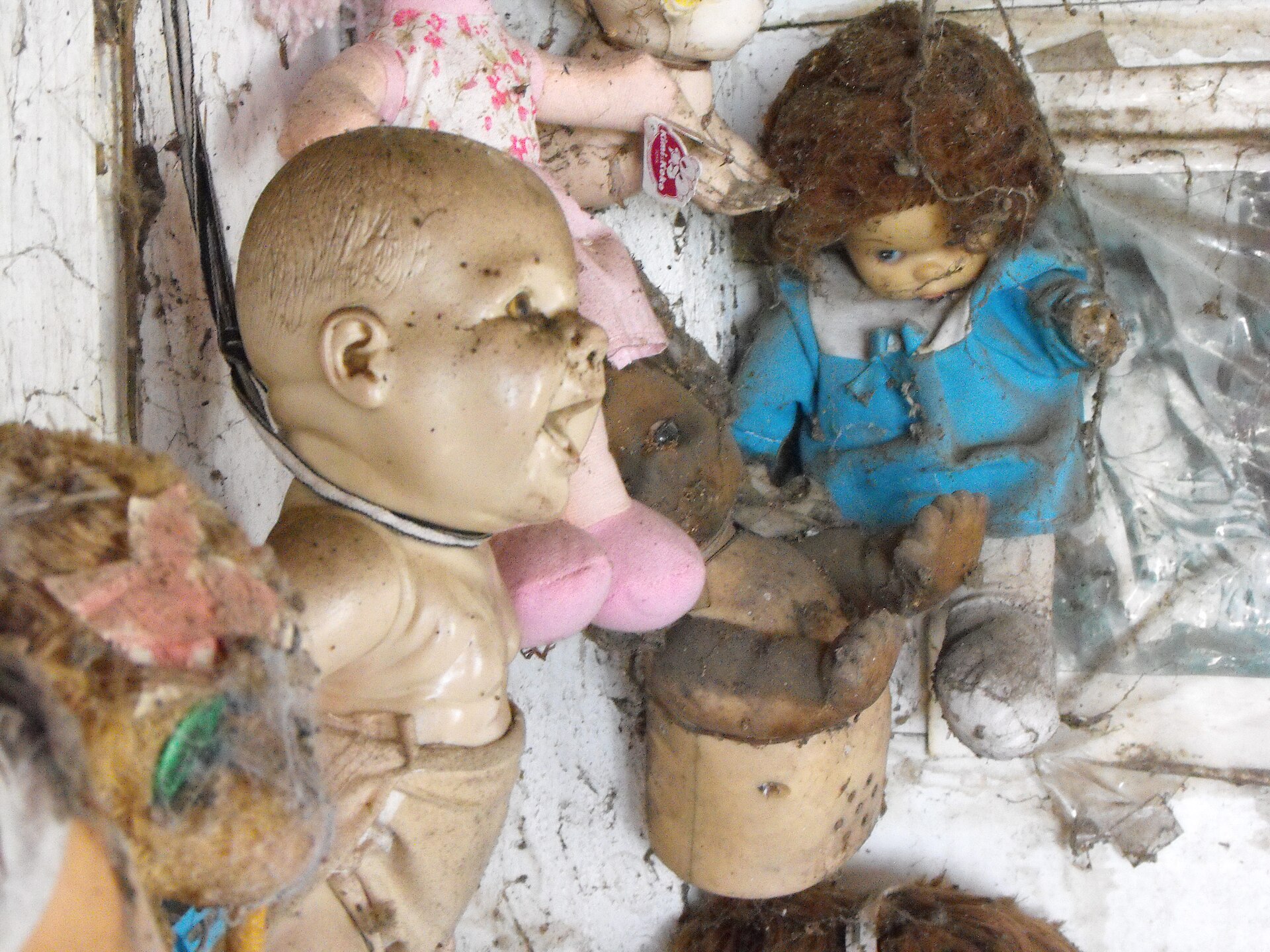
Photo: Wikimedia Commons, CC BY-SA 4.0
The Faces That Still Hang There Today
After Julián's death, the Island of the Dolls became widely known to the world, quite apart from any wish of his own. His nephew inherited the island and took over its care, and people who had heard the stories began to make their way up the waterways of Xochimilco to find it. Visitors each brought a doll of their own and hung it from the trees, and the numbers kept climbing. In 2022 the island's dolls were even entered into the official record as the world's largest collection of haunted dolls. What one recluse began half a century ago for a dead girl has become a place of pilgrimage that draws people from across the globe.
But becoming a tourist site has done nothing to thin the gloom of the place. On a misty morning, hundreds of dolls still sway quietly, hung by the neck from every tree. Faces with their eyes fallen out, cheeks overgrown with moss, hollow sockets strung with cobwebs look down on the visitor from every side. Some dolls have melted so far into the years that neither their sex nor their original expression can be made out. They were hung to console — but to the one who looks at them, they are faces that can never console anyone.
The entry I find hardest to reconcile is the 2022 one — the dolls formally recorded as the world's largest collection of haunted dolls, catalogued and certified. I understand the impulse; it is roughly what I do. But the count keeps rising, because every visitor brings another, and none of them are for the girl. Julián hung his to be looked at by someone specific. The rest were hung to be looked at by us.
The hold the Island of the Dolls keeps on people may lie, in the end, not in supernatural dread itself but in the sorrow beneath it. A nameless girl drowned in the water; a lonely man who gave half a century to soothe her spirit; and the ending in which that man too was swallowed by the same water. The hundreds of ruined faces swaying in the mist are, in truth, the shape into which one person's grief and obsession hardened over fifty years. Even now the black canals of Xochimilco wrap quietly around the island, and the dolls hung from every tree still look down on the water's edge with their hollow eyes. Whether they really turn their heads at night — no one, most likely, will ever stay the night on that island to find out.
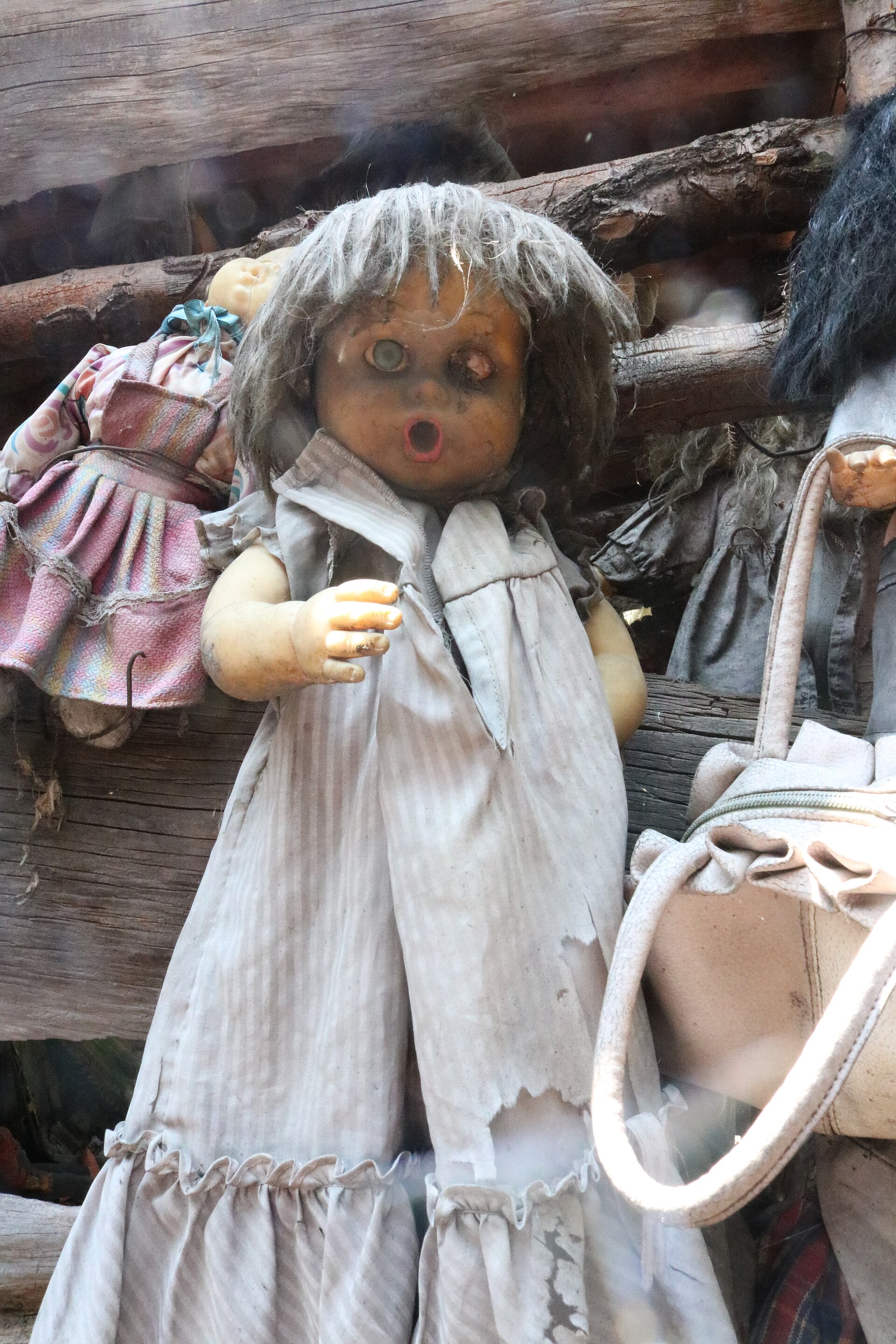
Photo: Wikimedia Commons, CC BY-SA 4.0
---
This article uses both real photographs taken on the Island of the Dolls and AI-generated images and video produced to convey the mood of the story.


Comments
No comments yet — leave the first one.