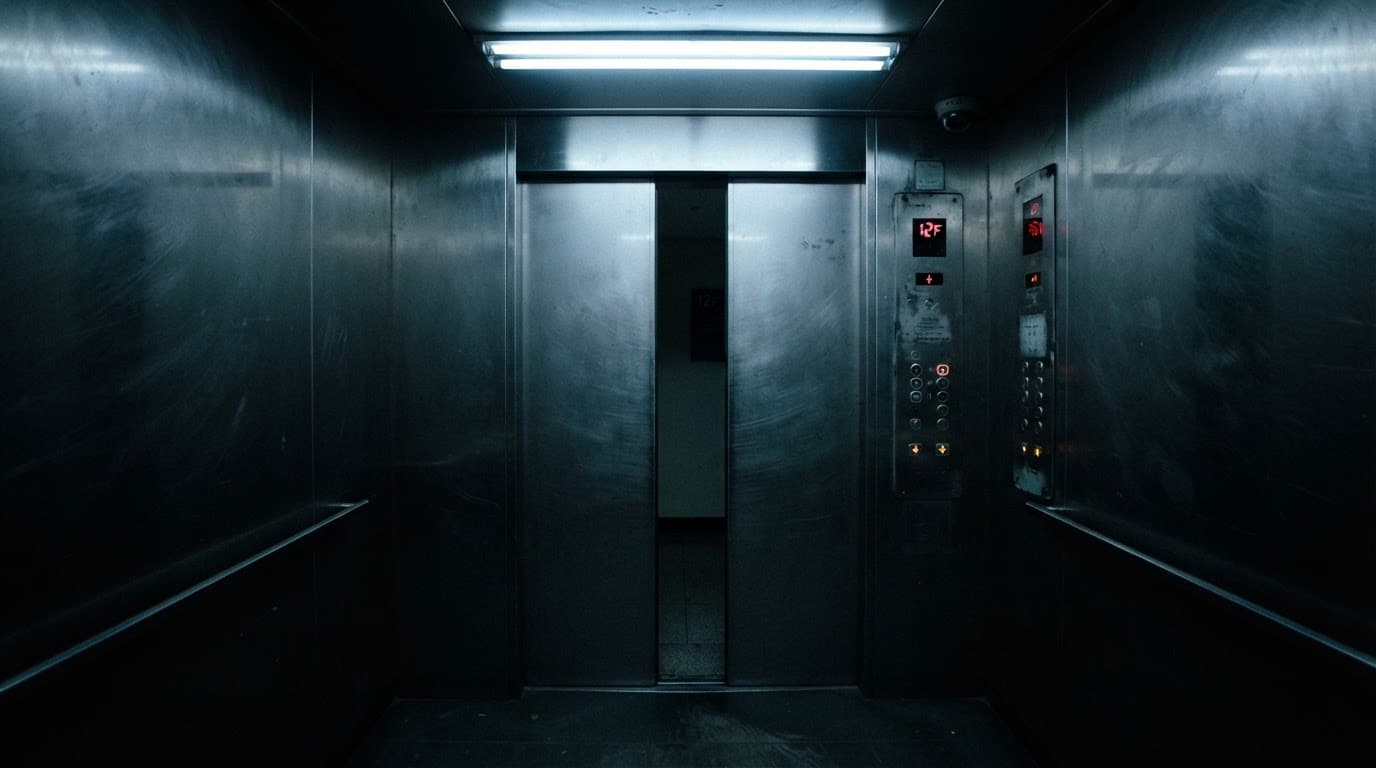
It has to be night, and you have to be alone.
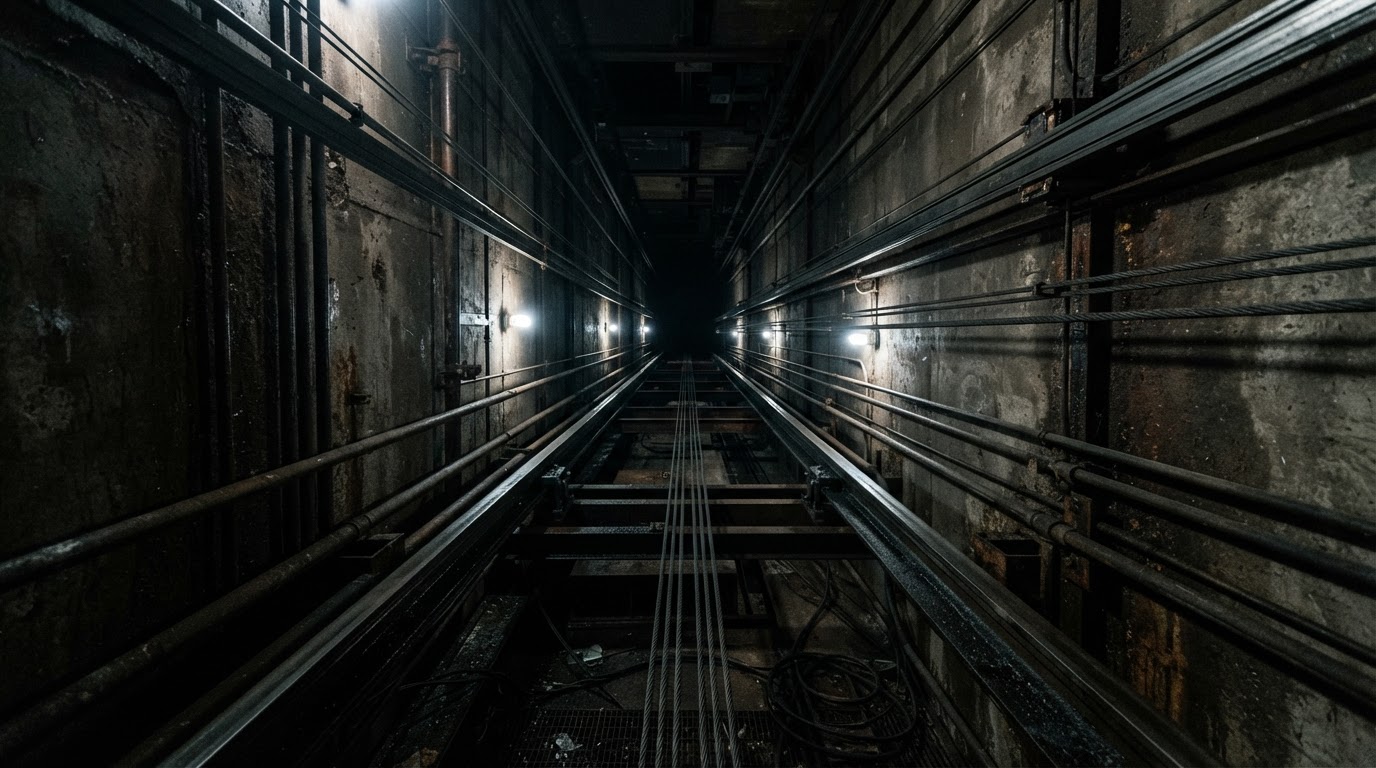
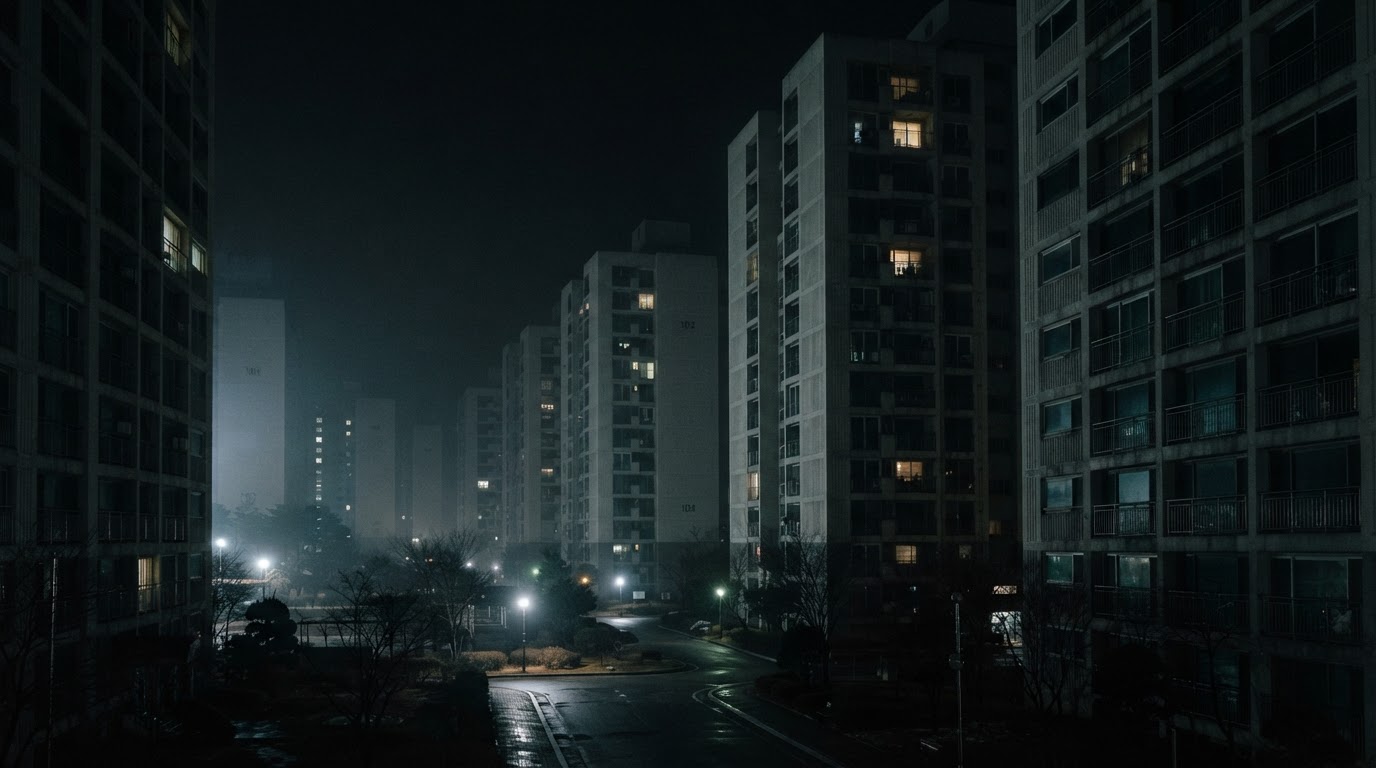
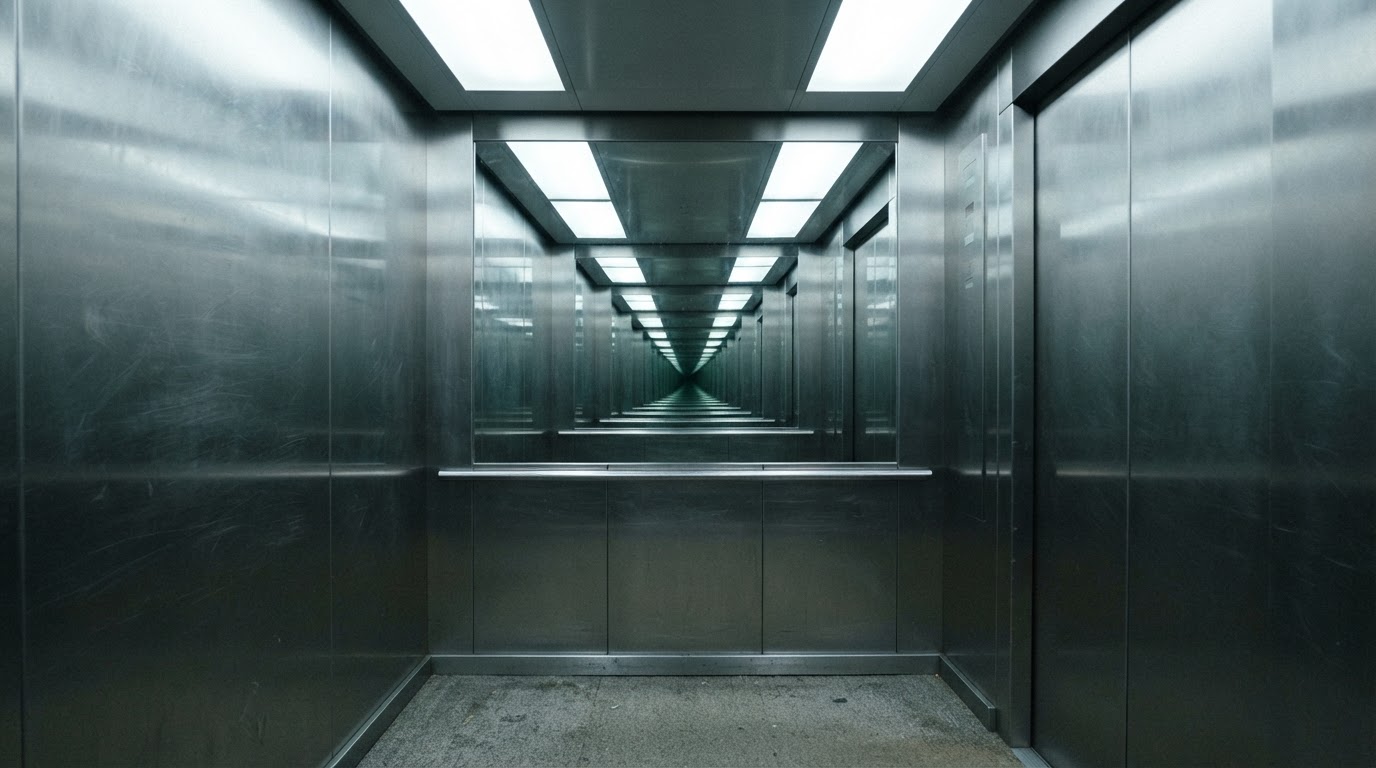
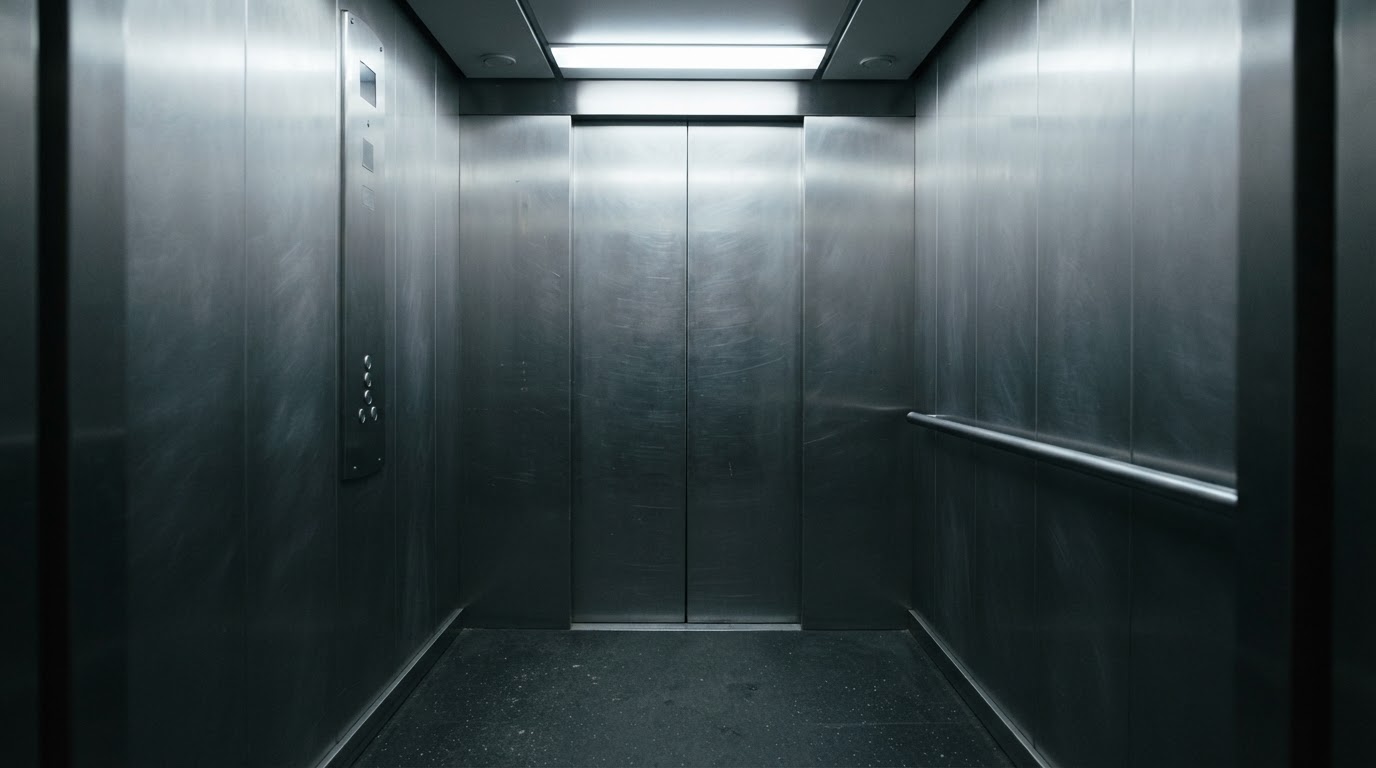
That is where every version of the ritual begins, and the smallness of the setting is the first thing that gets under your skin. Not a graveyard, not a forest, not a haunted house — an apartment elevator, the most ordinary box in the world. It is a little after three in the morning. The building is tall, more than ten stories, the kind that stands in clusters across every Korean city, glowing faintly against the dark. The lobby is empty. The corridor behind you is empty. You step into the elevator, the doors slide shut on their brushed steel seam, and you are sealed into a lit metal room the size of a closet, hanging on a cable over a shaft of pure black.
Then you begin to press the buttons in order. Not to go anywhere. To go elsewhere.
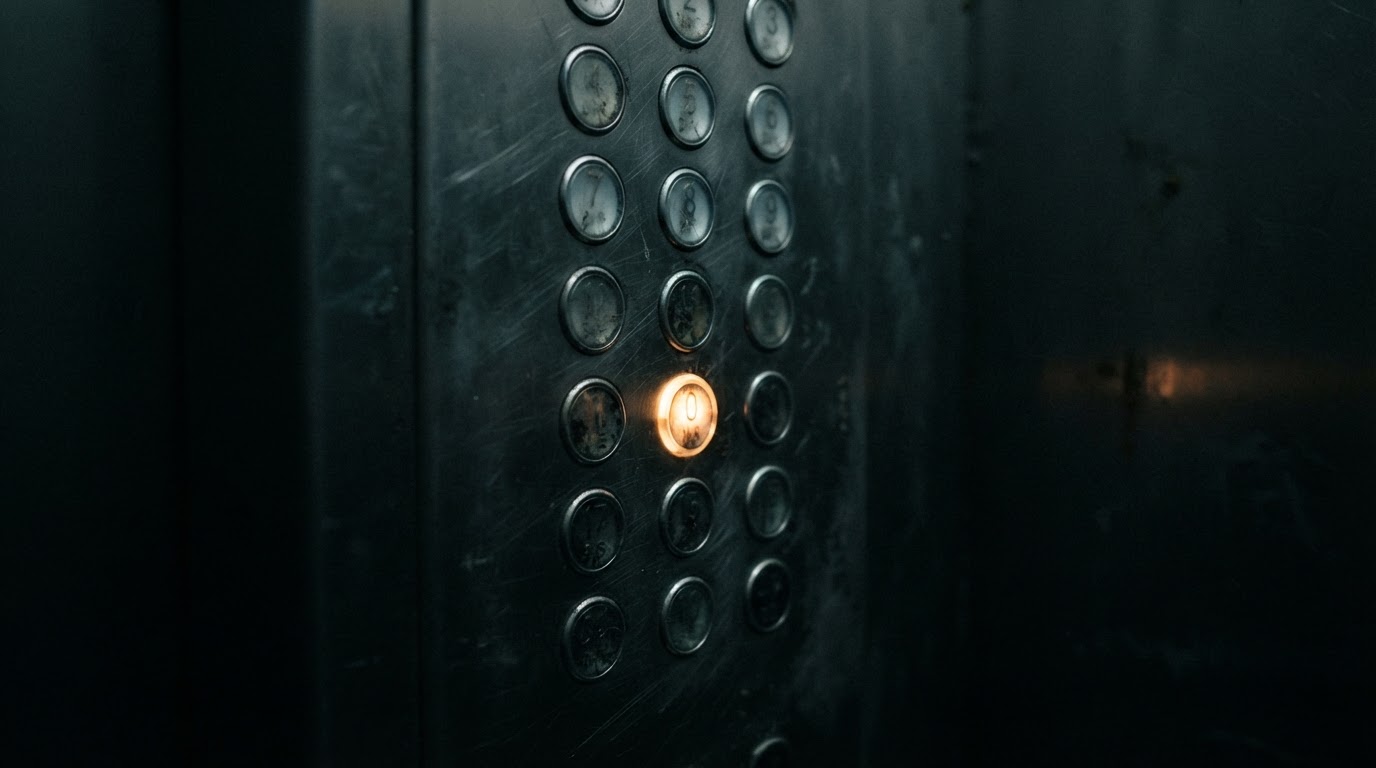
Sorting the archived Korean board posts for this one was a peculiar job, because there is almost nothing to sort in the usual sense — no witness, no date, no place. What survives is a procedure, copied and recopied, and the copies drift. Floors swap. A version loses the tenth and gains a ninth. What never drifts is the fourth floor at the head of the sequence: every variant I have logged, in every language it passed through, begins there. Whoever wrote the first version knew exactly which button to put first, and everyone who retyped it since has agreed without discussion.
The Rules, As the Legend Records Them
The Elevator Game is unusual among internet horror stories because it is not really a story at all. It is a set of instructions — a ritual written down with the flat, procedural seriousness of a recipe or a fire-drill notice. That format is a large part of why it spread and why it disturbs. A tale you can dismiss. A numbered procedure sitting there on the screen, daring you, is much harder to close the tab on. What follows is the ritual as folklore has recorded it. It is presented here as documentation, not instruction. Do not attempt it. The point of writing it down is to understand the fear, not to feed it.
You must be alone. If anyone else enters the elevator at any point before the ritual is complete, it is said to break, and breaking it midway is where the tellings turn most ominous. You enter on the first floor. Then you travel, without stepping out, through a fixed sequence of floors, pressing each in turn and letting the elevator carry you to it before pressing the next: fourth floor, second floor, sixth floor, second floor again, tenth floor, fifth floor. The exact numbers drift a little between versions — the internet has copied and re-copied this for over a decade — but the shape is always the same: an unnatural, back-and-forth pattern that no ordinary rider would ever have reason to press, a sequence whose only purpose is to be a sequence.
If you have done it correctly, the legend says, something changes on the fifth floor. The elevator, which should now carry you down to the first, instead begins to rise — to the tenth floor, unbidden. That upward motion, when you pressed for down, is the sign. It means the crossing has begun.
The Woman on the Fifth Floor
Here is where the ritual stops being a sequence of buttons and becomes something you are not supposed to survive intact.
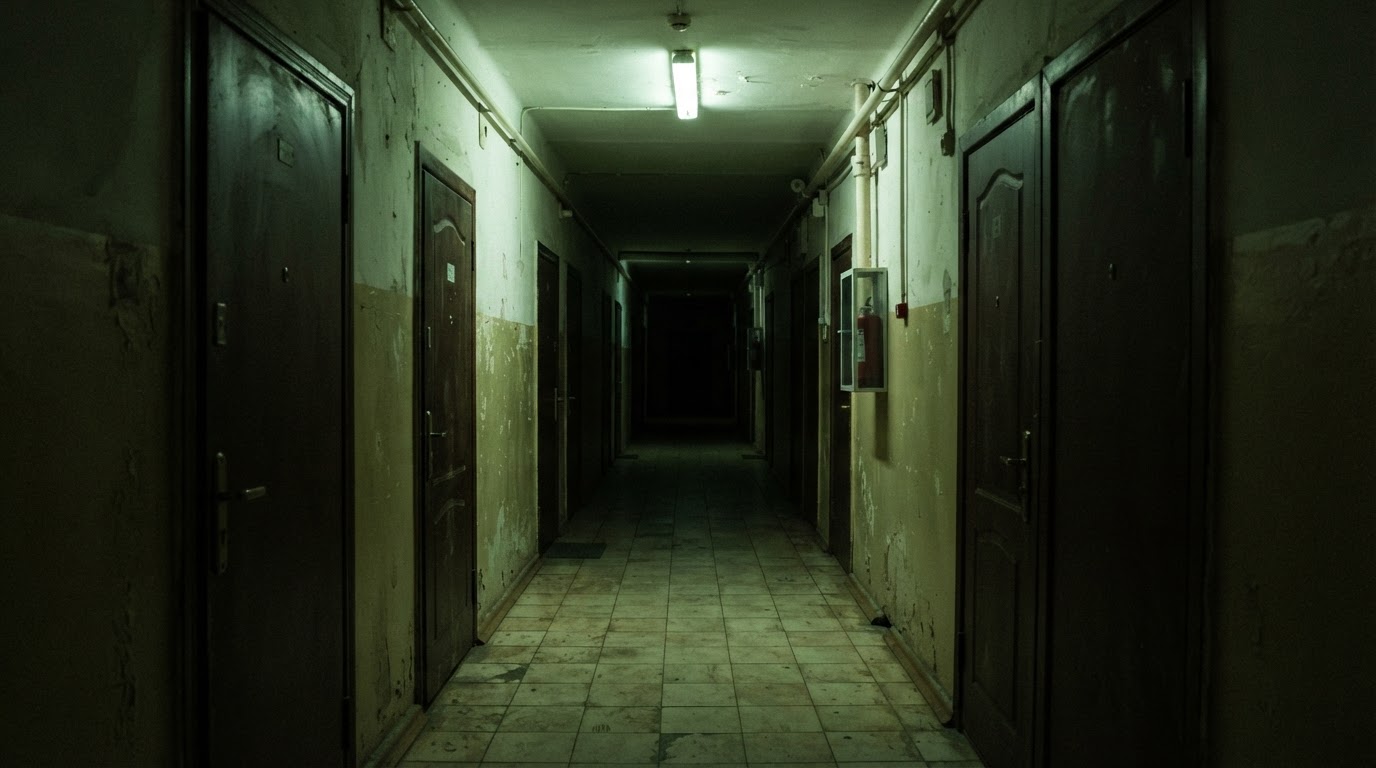
In many tellings, when the elevator stops on the fifth floor during the ritual, a young woman may step in. She was not there before. In the emptied, three-in-the-morning building, no one should be waiting on the fifth floor — and yet the doors open and she enters. The rule that travels with her is spoken in the same flat, absolute voice as everything else: do not speak to her. Do not look at her. Do not acknowledge that she is there at all. Whatever she is, she is not a person, and the folklore is unanimous that engaging with her is the worst mistake you can make. You share the small lit box with her, eyes forward, silent, until the doors open on the destination — and you must never, the legend insists, ask her who she is or where she came from. Some versions say she will ask you a question. You do not answer it.
That she is the one variable the ritual cannot control is exactly what makes her frightening. Every other step is under your hand — you press the buttons, you keep the sequence, you stay alone. She is the part that decides for itself whether to appear. And in the geometry of the ritual she stands precisely at the threshold, on the fifth floor, at the seam between the two worlds, as if she belongs to neither and guards the crossing.
The Other World
When the doors finally open — if they open onto the other place and not the ordinary tenth-floor hallway — you are supposed to know at once that you have crossed.
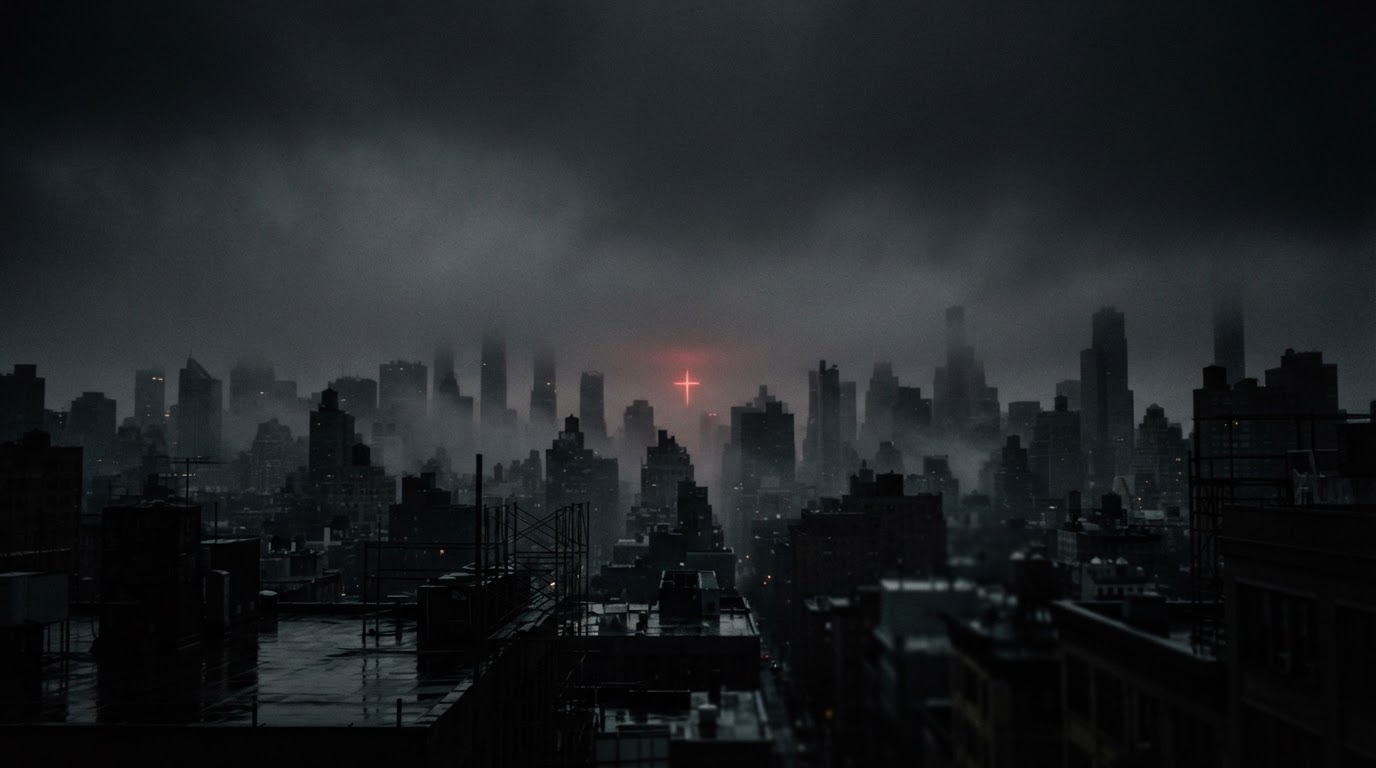
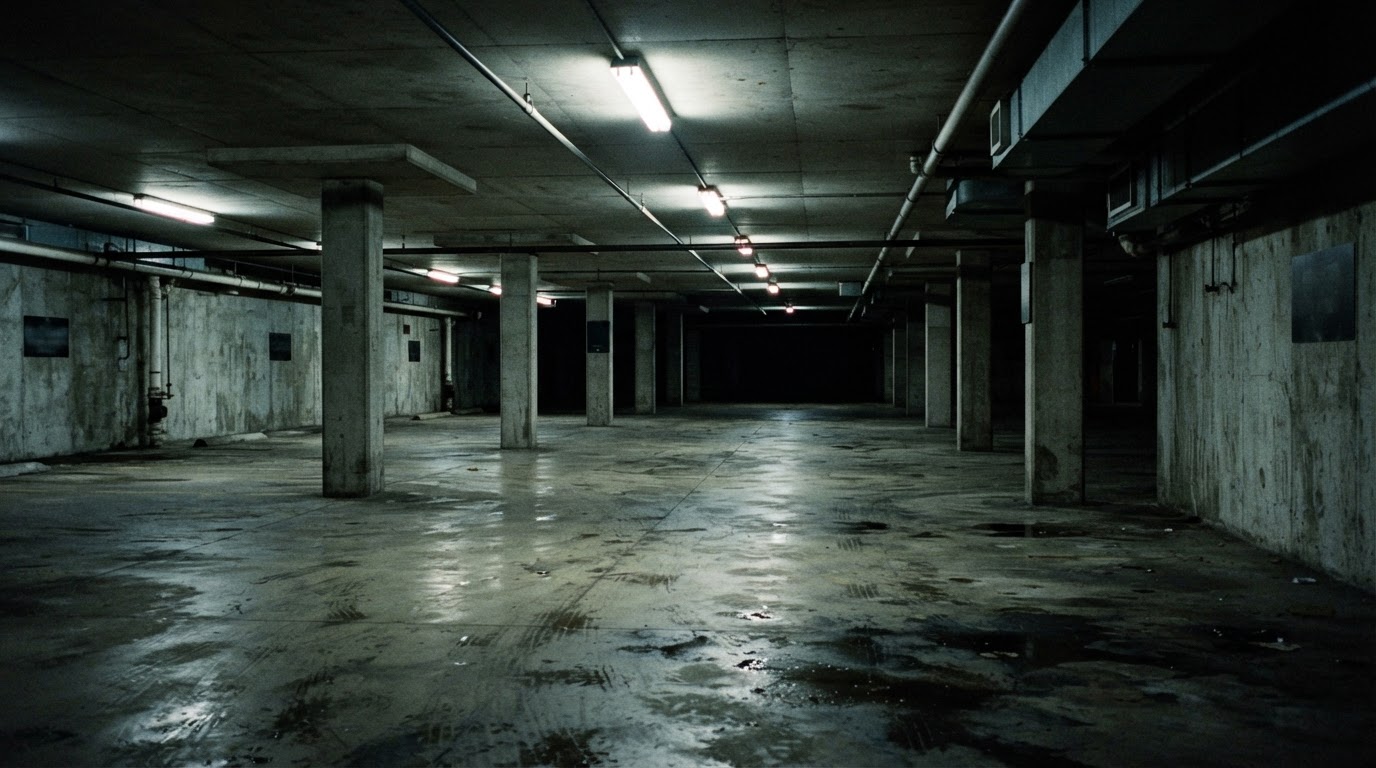
The world on the far side of the doors is, in every account, a version of ours with the life scooped out of it. It looks like a city, or the view from a high building over a city, but there is not a single person in it. No traffic, no voices, no movement. The silence is total, the kind that presses on the ears. And in the distance, where there should be a skyline or a sky, there is a faint red glow — described in many versions as a red cross, hanging far off over the empty streets, the only light and the only landmark in a place that has neither. It is the one detail almost every telling keeps: the red cross on the horizon of a dead city.
The rules of the other world are as strict as the rules for entering it, and they are the rules of a place that does not want you to stay. Electronics do not work there — phones go dark, screens die, anything that should light up simply will not. You are cut off, unreachable, alone in a way that the emptied building at 3 a.m. was only rehearsing. And the warnings are absolute: do not leave the elevator. Some versions allow you to step out and look; most beg you not to. The longer you remain, they say, the harder it becomes to return, as if the empty world slowly forgets you are only visiting.
Coming Back
The return procedure is the strictest part of the ritual, and the folklore treats it with the gravity of an escape rather than a trip home. To come back, you must get into the elevator again — never leaving it is safest — and press the same sequence in reverse, or in some versions the exact sequence that brought you, riding it back down through the floors until the doors open on the ordinary first-floor lobby you started from.
There is a test built into the return, and it is the detail that has kept the legend alive. When the elevator seems to bring you home and the doors open, you are warned to check — carefully, before you step out — that this is truly your own world and not a copy. If anything is wrong, if a light is the wrong color or a detail is off or the woman is somehow still there, you have not come back, and you must not leave the elevator. The horror of the Elevator Game is not the crossing. It is the possibility that you return to a world that looks almost, but not quite, like the one you left — and that you will not notice the difference until it is too late.
That is the whole architecture of the fear, and it is worth naming plainly: this is a ritual with a way in, a way out, and a warning that the way out might deposit you somewhere subtly wrong. It is folklore. Do not try it. Not because the doors will open onto a red-lit city — but because the story exists to be told, not performed, and the only thing pressing those buttons at 3 a.m. reliably produces is a person alone in a metal box, primed by the ritual to read every ordinary creak and flicker as proof.
Born in Korea: The Origin on the Early Korean Internet
The Elevator Game is, at its root, a Korean legend — and this is the part most often lost as it travels, so it is worth setting down clearly. It grew up on the Korean internet in the late 2000s, roughly 2008 to 2010, in the golden age of Korean web horror: the message boards, personal blogs, and community forums where ghost stories and rituals were posted, copied, and argued over. Korea in those years had one of the most wired populations on earth, a dense culture of online communities trading 괴담 — strange tales — and the Elevator Game is one of that culture's most durable exports.
The setting is not incidental. It is Korean to the core. The vast majority of Koreans live in apartment towers, the tall identical high-rises that fill every city — buildings with more than ten floors, with elevators ridden dozens of times a day by everyone, so ordinary they are nearly invisible. A ritual that turns your own apartment elevator into a door to another world is a piece of horror grown directly from Korean daily life. It takes the most familiar, most repeated act — stepping into the lift in your own building, late, alone — and threads a crack of dread through it. That is why it landed so hard at home before it went anywhere else.
From the Korean boards it spread outward, the way the era's best net-legends did. It was adapted on Japanese forums, absorbed into the same online-horror ecosystem that produced so many ritual games there. And around 2013 it broke into the Western creepypasta boom, where it was rewritten in English, stripped of most of its Korean context, and passed around as a generic "ritual to reach another world" — often with no memory that it had a birthplace at all. This is the ordinary life cycle of an internet legend: it travels far and it travels light, shedding its origin as it goes. But the Elevator Game began in Korean, in Korean apartment towers, on the Korean web — and that origin is not a footnote. It is the reason the story feels the way it does.
The Elisa Lam Case
No account of the Elevator Game can honestly avoid the reason it exploded worldwide in 2013 — and that reason must be handled with care, because it involves the death of a real young woman.
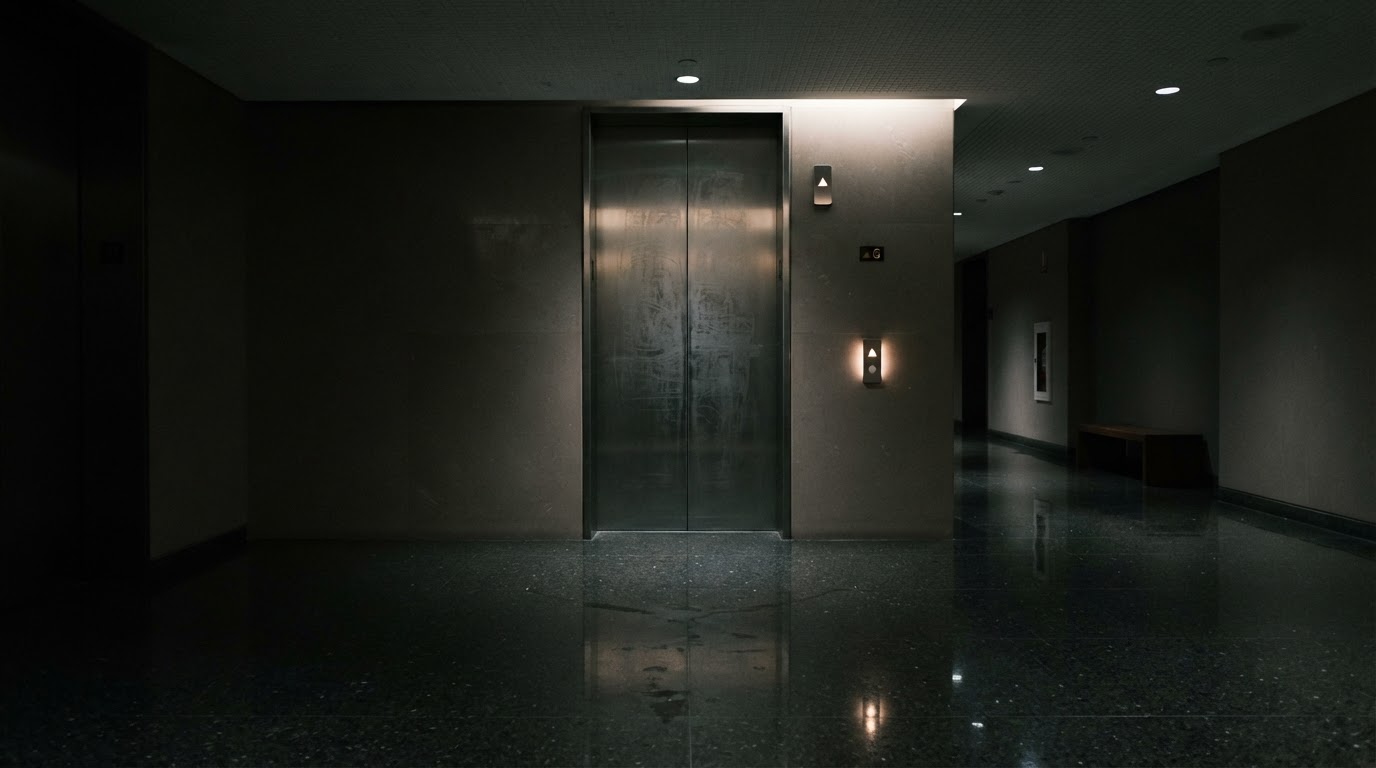
Elisa Lam was a 21-year-old Canadian student who died in early 2013 while staying at the Cecil Hotel in Los Angeles. During the search for her, the hotel released security footage of her in one of the building's elevators, and that video traveled across the internet with extraordinary speed. In it she is alone in the elevator, appearing to press several buttons, stepping in and out, gesturing and moving in ways that many viewers found strange and unsettling. The doors do not seem to close normally. It is a few minutes of ordinary hotel surveillance video, and it became one of the most-watched and most-discussed clips of its year.
Because the footage showed a young woman behaving unusually in an elevator, and because the doors appeared not to close, the internet reached — almost immediately — for the Elevator Game. Here, people said, was the ritual made real: a woman alone in an elevator, the buttons, the doors that would not behave. The connection spread as fast as the video did. It is important to be clear about what that connection is: it is internet folklore, a pattern the online imagination laid over a tragedy, not a finding of fact. The Elevator Game did not kill Elisa Lam. Nothing supernatural did.
The official investigation determined that Elisa Lam's death was an accidental drowning. She was found in a water tank on the hotel's roof, and the coroner ruled the death accidental, noting that she had a documented health condition — bipolar disorder — that was relevant to how she came to be where she was found. The strange behavior in the elevator is, in the sober light of the investigation, the behavior of a person in genuine distress, not a person performing a ritual. She deserves to be remembered as a real human being who died young and tragically, not as a character in a ghost story. The reason her case belongs in an article about the Elevator Game is not that the game explains her death — it does not — but that her death explains the game's fame. The 2013 footage is very likely why a Korean apartment ritual became a legend the whole English-speaking internet knows. That is a fact about how folklore spreads. It is not a fact about what happened to her.
Why Elevators Terrify Us
Step back from the specific ritual and ask the plainer question: why an elevator? Of all the ordinary places to hang a horror story, why did this one stick? The answer is that an elevator is almost a purpose-built machine for dread, and the legend simply names what we already half-feel every time we ride one.
An elevator is a liminal space — a threshold, a between-place. It is not a room you live in and not a hallway you walk through; it is a sealed box you stand inside while it moves you from one world to another, the world of the lobby and the world of the tenth floor. For the length of the ride you are nowhere, suspended, in transit. Every culture's ghosts gather at thresholds — doorways, crossroads, bridges, the top of the stairs — because a threshold is a place that belongs to neither side, and the elevator is a threshold you can be trapped inside. The Elevator Game does nothing more than take that latent quality literally: it says the box that opens onto different floors can, with the right sequence, open onto a different world.
There is the loss of control, too. Inside an elevator you have surrendered your autonomy to a machine. You press a button and then you simply wait, sealed in, while cables and motors you cannot see carry you through a dark shaft you will never look into. If it stopped between floors, you could do nothing. That small, suppressed helplessness — the everyday agreement to let a machine hold your body over a drop — is exactly the nerve the legend touches. And then there is the box itself: a coffin-sized room, mirrored on one side in many buildings so that you are made to look at yourself, or at what is behind you. The claustrophobia is real and physical.
And in Korea and across much of East Asia, there is one more layer folded into the ritual, and it is not an accident that the sequence begins with the fourth floor. The number four is unlucky across the region because in Chinese, Korean, and Japanese the word for "four" sounds nearly identical to the word for "death." This is tetraphobia, and it is not a fringe superstition — it shapes the built world. Many Korean and East Asian apartment buildings and hospitals label the fourth floor not "4" but "F," or skip it in the numbering entirely, the way some Western buildings skip the thirteenth. To ride an elevator in Korea is to ride past a floor that a great many buildings quietly refuse to name. A ritual for crossing into the world of the dead that begins by pressing the death floor is drawing on a dread already wired into the buttons themselves.

The Family of Otherworld Rituals
The Elevator Game does not stand alone. It belongs to a whole family of internet-age ritual games, most of them born in East Asia, that share the same deep structure: a set of precise steps performed alone at night that are supposed to open a door between our world and another — and a set of strict rules for closing that door again.
Its closest cousin is Hitori Kakurenbo, the Japanese "one-person hide-and-seek," in which you play a game of hide-and-seek alone, at night, against a doll you have prepared — and must follow an exacting ritual to end it safely. We have written about it in full: Hitori Kakurenbo. The kinship is obvious once you see it — the solitude, the fixed procedure, the hour after midnight, the absolute importance of the closing steps. Both games are really about the same thing: the terror and the seduction of a door you can open yourself.
And it shares its very destination with another legend of otherworldly transit: Kisaragi Station, the Japanese account of a commuter who boards an ordinary train that simply never stops, carrying her past the last real station and on into a place that should not exist. If you want the sister-story of a person swept out of the ordinary world by an everyday machine, it is here: Kisaragi Station. The train that will not stop and the elevator that rises when you pressed for down are two faces of a single modern fear — that the mundane machinery that moves us through our days might, one night, carry us somewhere off the map.
The Psychology of the Ritual
Why do people play these games — and why, knowing better, do they half-believe them? The answer is not that they are foolish. It is that the rituals are precisely engineered, whether by design or by the slow editing of thousands of retellings, to exploit the way the mind works when it is alone, afraid, and following instructions.
Start with the setting the ritual demands: alone, in a confined space, in the dead of night. Those are the exact conditions under which human perception becomes least reliable and most suggestible. In near-silence the ears strain and begin to find sound; in dim light the eyes fill in shapes; the mild claustrophobia of the box raises the pulse, and a raised pulse is read by the brain as fear looking for a cause. You have, in other words, primed yourself perfectly to misread the ordinary. Every real elevator creaks, every fluorescent tube flickers, every ride has a half-second of odd motion. On a normal day you never notice. Inside the ritual, each of those becomes a sign — because a ritual is a machine for turning noise into meaning.
That is the deeper trick. A ritual gives you a sequence to perform and an outcome to watch for, and the human mind is a relentless pattern-seeker: give it a rule and a thing to look for, and it will find confirmation in randomness every time. Press the buttons in the fated order and you have told your own brain that something should happen — and so the next flicker, the next creak, the next stranger who happens to get on at the fifth floor, is read as the pattern completing. The Elevator Game does not need the other world to be real. It only needs you, alone at 3 a.m., watching hard for it. This is exactly why the honest framing is do not try it — not out of fear of the red-lit city, but because the ritual reliably manufactures dread in a real, breathing person standing in a real, cabled box.
The Revival Waves
For a legend built in the late 2000s, the Elevator Game has been remarkably good at coming back. It surged with the Elisa Lam footage in 2013, and it has surged again since, riding each new platform as it arrives. On YouTube a genre of "I tried the Elevator Game" videos flourished, creators filming themselves riding empty elevators at night, narrating the sequence, jumping at every ordinary sound. On TikTok the ritual found a native home in short, atmospheric clips — the button sequence, the dark corridor, the whispered rules — passed hand to hand by a generation that never saw the original Korean posts and often has no idea the game was born in Seoul.
Each revival wave strips a little more context and keeps the essential engine intact: the sequence, the solitude, the woman on the fifth floor, the red cross over the dead city, the warning about a world that is almost right. That the story survives translation, platform change, and the total loss of its origin tells you the fear underneath it is not about Korea or apartments or elevators specifically. It is about doors. It is about the unbearable, ancient idea that the ordinary passage you take every day might, under the right conditions, open onto somewhere else.
After the Video: Sleuths, a Film, and a Netflix Series
The English-speaking internet did not meet the Elevator Game in a vacuum. It met it through a grainy surveillance clip, and what happened next says more about the audience than about the ritual.
Los Angeles police released the Cecil Hotel elevator footage on February 13, 2013. An autopsy was performed on February 21, and the coroner's full report did not come out until June. Lining up those dates, I was struck by how much room they leave: roughly four months in which a few minutes of silent video were the only public "evidence" of what had happened to Elisa Lam, and in which anyone could project a story onto it. The story many reached for was a ritual with buttons and a door that would not close.
The afterlife of that projection was longer than the news cycle. According to the Wikipedia entry on her death, a 2018 film, Followed, interpreted her behavior in the elevator as someone playing the Korean elevator game. A tragedy was, in other words, retrofitted into a horror premise, and then sold as one.
In February 2021, Netflix released Crime Scene: The Vanishing at the Cecil Hotel, a four-episode series. Reviewers noted how much of it was given over to YouTubers and amateur web sleuths. BuzzFeed News described a pattern of building up conspiracy theories and then knocking them down, and pointed to one man, an amateur heavy-metal musician who had written a song about someone vanishing in water, who became the target of intense online attacks and was driven off the internet. The reviewer found the series unclear about what it was actually saying about online vigilantism beyond the fact that it was bad.
That is the part of the Western story I find hardest to file under folklore. A ritual that begins as a harmless instruction list on a Korean message board becomes, in English, a lens that real people use to look at a dead woman and at each other. The sleuths who read ritual into her movements were not wrong in some clever way. They were wrong in the way the Elevator Game itself invites: give a mind a rule and a thing to watch for, and it will find confirmation in a stranger's gestures. Nothing in the coroner's finding required the legend, and the legend still did a great deal of damage on its own.
I do not think the English-language fascination with the game can be separated from that clip. Strip the clip away and the ritual becomes one more obscure board post. Leave it in, and every retelling carries an uncomfortable passenger: a real person whose last recorded minutes became a plot point.
Doors That Open Somewhere Else
Strip away the sequence and the woman and the red cross, and what is left is the oldest fear wearing new clothes. We spend our lives passing through doors that we trust to lead where they always lead. The elevator in your building has opened onto your floor ten thousand times. The Elevator Game asks a single, quiet, disturbing question: what if, one night, at the wrong hour, in the wrong order, it didn't?
That is why the ritual ends not with a monster but with a mirror-world — a place that looks almost exactly like home. The deepest horror the legend offers is not the empty city or the red glow. It is the return: the possibility that you step out of the elevator into a lobby that seems right, and go on living, and never quite notice that a light is the wrong color, that the world is a copy, that you came back to the wrong floor of reality. The Elevator Game is a story about the terror of thresholds and the seduction of the door you can open yourself — and it leaves you, sensibly, on the side you started on, having never pressed a single button.
Filing this one, I kept catching on the return test rather than anything in the other world. The red cross is spectacle; it is meant to be looked at. The instruction to check the lobby before stepping out is something else — a rule that assumes you will already be home, already relieved, already reaching for the door. In the earliest Korean posts it is a single line, almost an afterthought, and in the English rewrites it has grown into the climax. I notice I have never been able to read that line in my own building's lift without glancing at the panel light on the way up.
So we write it down as what it is: a piece of Korean internet folklore, one of the most enduring rituals the online age has produced, and a story to be read at night and told to friends — never performed. The doors of your own building will open, tonight and tomorrow, onto exactly the floor you asked for. That is the ordinary miracle the legend depends on you half-doubting. Ride up, ride down, and let the box stay a box.
Do not play the Elevator Game. It is folklore. Enjoy the fear, and keep it where it belongs — in the story.
---
The images and video in this article are AI-generated works produced to convey the mood of the story, and are not photographs of any actual person or event.



Comments
No comments yet — leave the first one.