Do not try this. That sentence belongs at the front of this piece, not the end. What follows is a record of a game that countless students once actually played, and this article exists to document it — not to invite anyone to play it again. This is a report on a school legend as folklore and as cultural history. Where the procedure is described, it is not an instruction sheet; it is a window into how this game thinks and out of what borrowed parts it was assembled. We do not recommend it, not even as a game. By the end, why we don't will be clear.
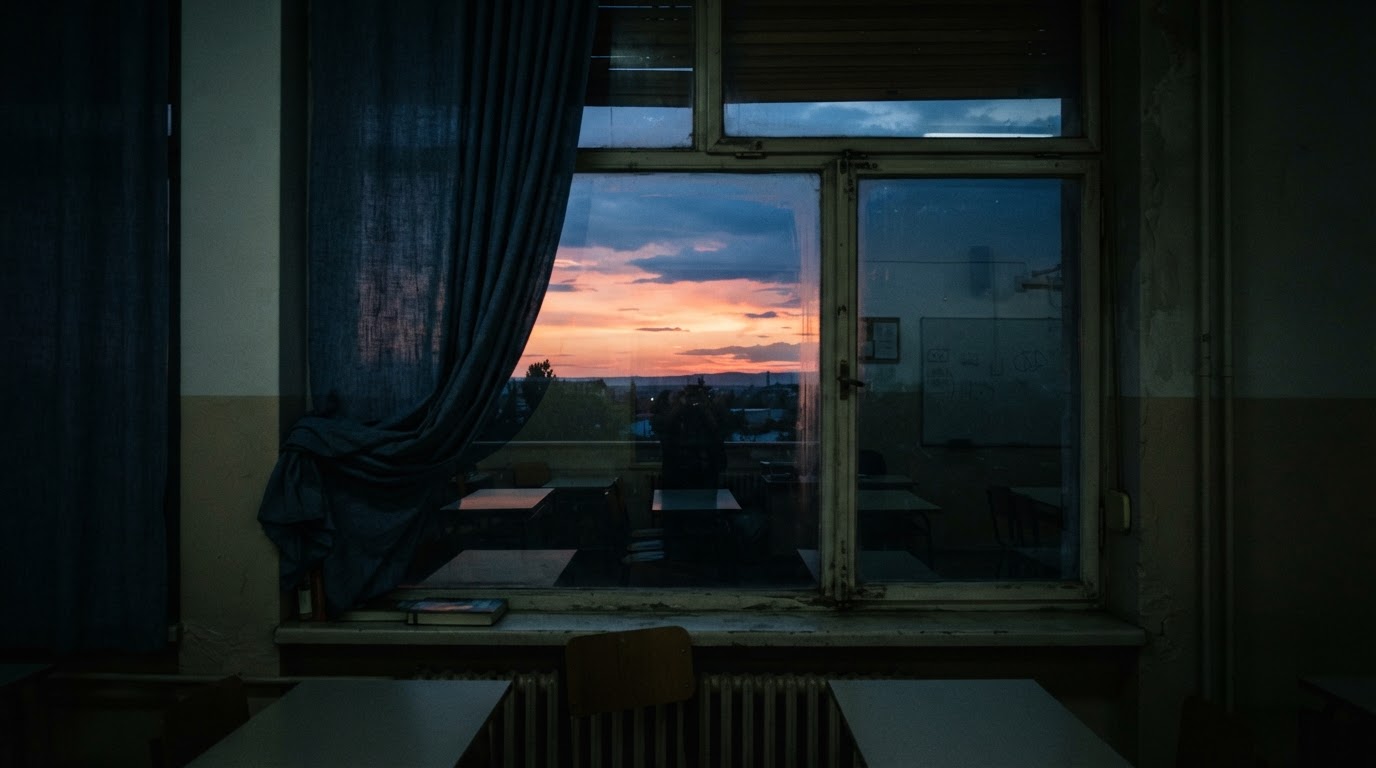
So turn the lights half off, and begin where this legend always began: an emptying classroom, after the last bell of the night.
My name is K. Woo. I gather these cases and sort them, and this one gave me more trouble than any ghost in the collection, because the material is so ordinary. Sorting testimony from message boards of the late 1990s, I found I could not build a clean chronology — the accounts contradict each other on everything except the chant. Oide kudasai. Dozens of writers, none of whom could tell me what the words meant, all transcribing the same four syllables without a single meaningful variation. That was the point where a folklore file stopped feeling like folklore to me.
Cold Open: The Half-Dark Room
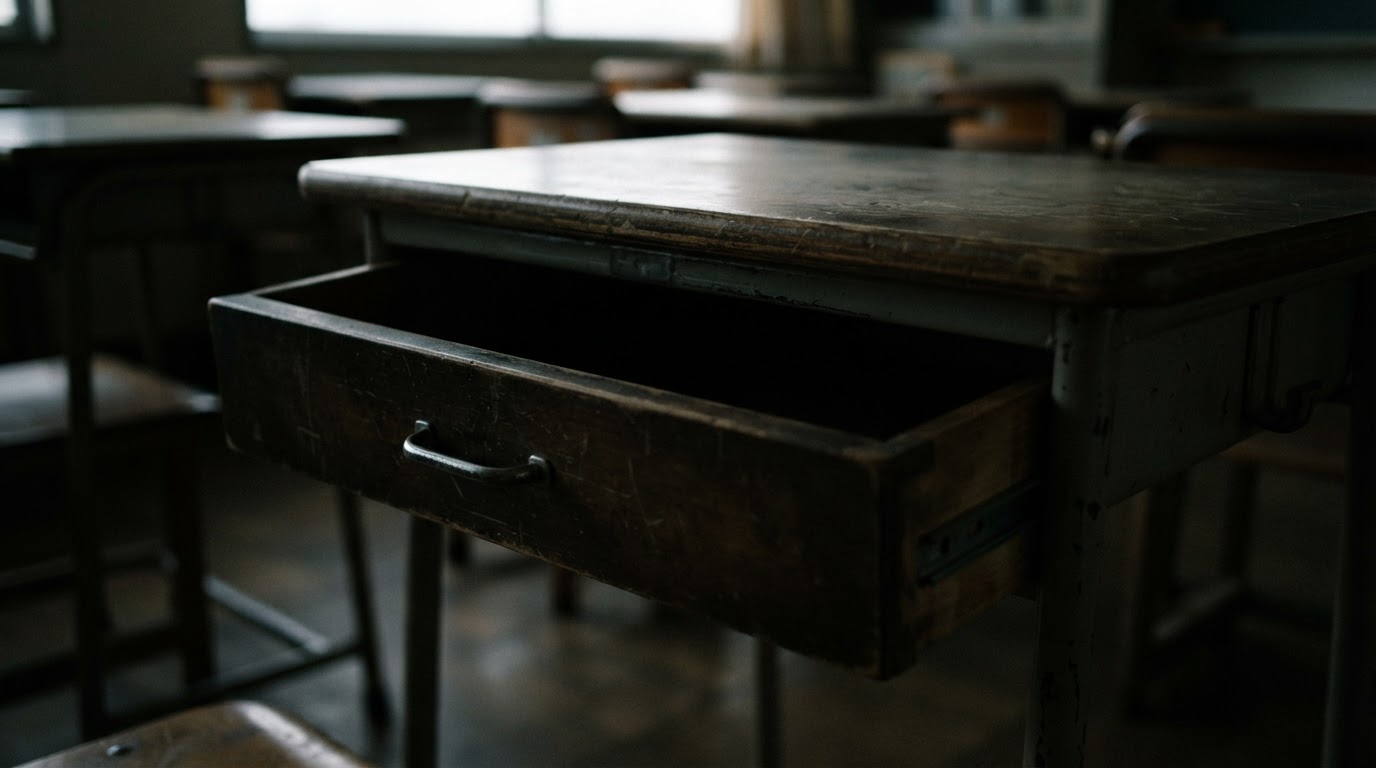
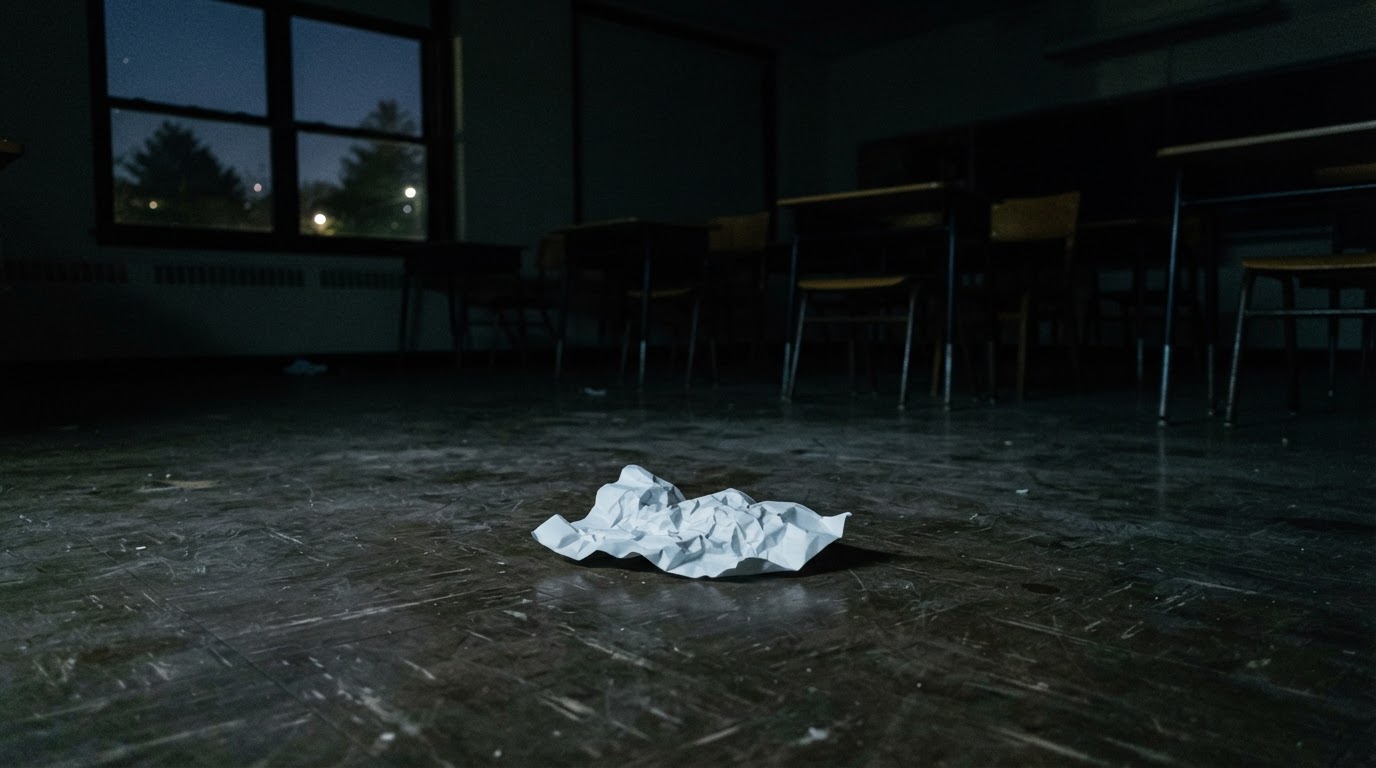
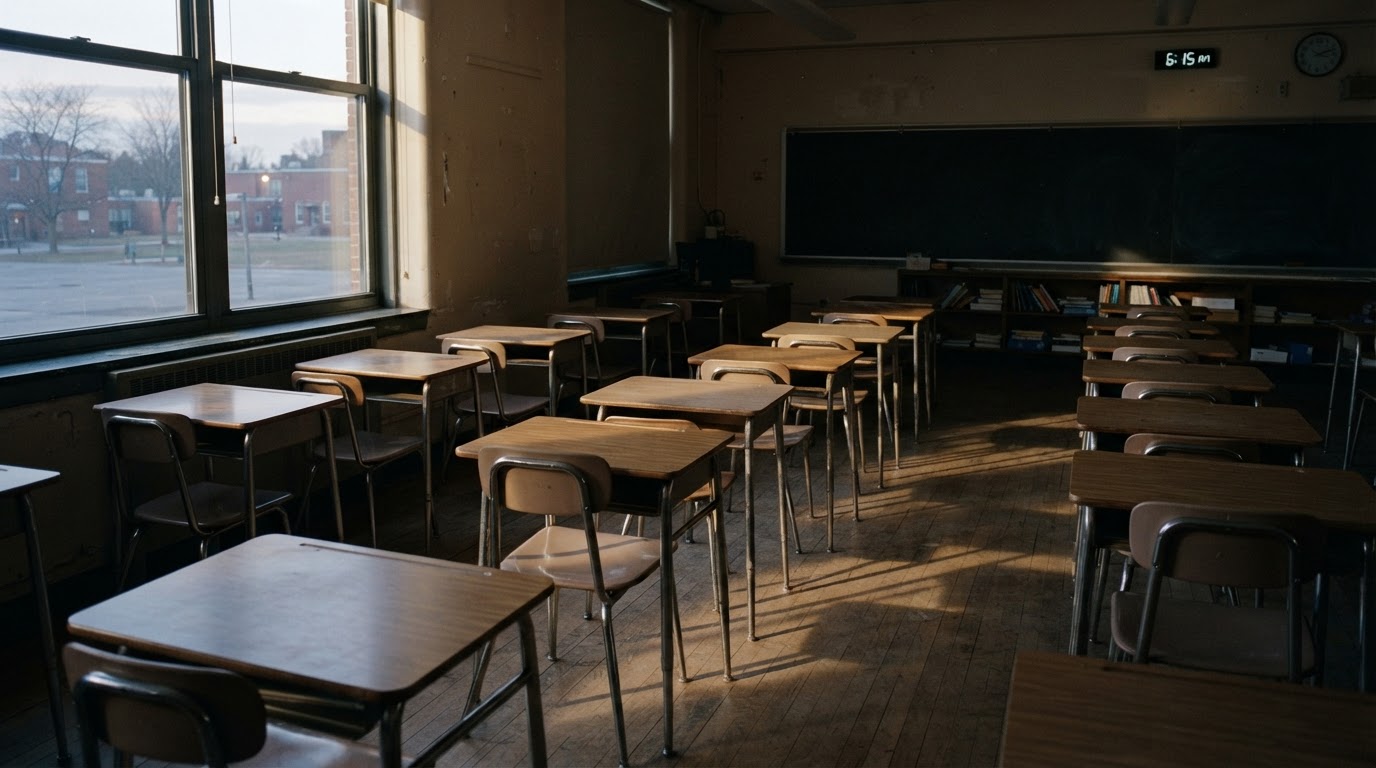
It is nearly ten at night. Night study — yaja, the marathon of self-directed evening study that defines Korean secondary school — is over. Most students have shouldered their bags and slipped out through the school gate. Two are left. Maybe three. They have pulled two desks together at the back of the room, in the zone where only half the fluorescent lights are still on. Outside, the city glows low. Down the corridor, the drag of a slipper comes and goes and stops. A space that was loud all day has turned strange in the dark. That precise moment — when the familiar becomes unfamiliar — is exactly what this game has always hunted.
On the desk lies a single sheet of white paper. Someone drew big boxes on it earlier with a ruler. At one end, an O. At the other, an X. Around the edges, the Korean alphabet, the digits, and the words for yes and no. On top of the paper rests one ballpoint pen, uncapped, its tip angled to barely graze the surface. Two people take hold of that pen together. Two fingers each, very lightly. They both know it can't be gripped too hard.
And in a low voice — half swallowing a laugh, half already afraid — they recite it together: "Bunshinsaba, bunshinsaba, oide kudasai…" A chant whose exact meaning neither of them knows. The pen tip trembles minutely against the paper. Nothing has happened yet. But both hearts are already beating a little faster, and the four fingers wrapped around the pen have begun to feel one another's tremor. The story always starts here — in the words of calling, in the joined hands, and in the pen that has not yet moved.
The Ritual, Exactly as the Legend Set It — And Do Not Follow It
To understand how this game worked, you first have to know what people believed they were doing. What follows is a description of the procedure as it circulated by word of mouth, and later across internet message boards, in Korean classrooms of the 1990s and 2000s. It is set down the way an anthropologist transcribes the rite of an unfamiliar village. It is a record of a belief, not a recipe to follow. Read it only as a window into why each step took the shape it did, and why it gripped so many children.
The board. You draw the board by hand on a single sheet of white paper. In the simplest version, there are only two marks: O and X. In a more elaborate version, you add the Korean alphabet, the digits zero through nine, yes and no, and a symbol meaning the place you return to at the end. It is a miniature spirit board — a Ouija reproduced with nothing but a pen and a notebook page.
The pen. Two people hold a single ballpoint pen together. Each rests only a finger or two on it, lightly enough that the pen can almost stand on its own. That word — lightly — is the crux. Every bit of the psychology we will discuss later plays out on top of that feather-light contact.
The chant. And then you call. "Bunshinsaba, bunshinsaba, oide kudasai." Three times, or a set number. Here, already, half the identity of this legend gives itself away. Oide kudasai is not Korean. It is Japanese — oide kudasai (おいでください), a polite request meaning "please come." Korean children were reciting a Japanese incantation without knowing what it meant. Where that residue came from is revealed at the very heart of this article.
The questions. Once the pen begins to move — or seems to — you ask. At first the questions are usually confirmations: "Are you really here?" The pen slides toward O. From then on, out pour the things the children truly want to know. Crushes, exam grades, who likes whom, when they will die. The pen glides between the letters, touching them one by one, and the two readers spell out the answer. The more the answers seem to fit, the tighter the air in the room grows.
Ending it — the most important rule. And here is the single rule that carries all the weight of this game. You must send the spirit back. To end, you ask politely: "Bunshinsaba, please return now." You keep asking until the pen answers by moving to yes, or to O, or to the place that means departure. Only after that answer do you lift your fingers. Some versions add that you must not carelessly throw the paper away afterward — you burn it or tear it up. The school legends never truly frightened anyone about the children who started the game. They frightened everyone about the children who, for whatever reason, failed to send it back properly. The ones whose pen wouldn't stop. The ones who got scared and fled, leaving the paper on the desk. The ones who forgot the parting chant. What supposedly happened to them next was the real fuel of this legend.

What "Bunshinsaba" Actually Is: Kokkuri-san, Come Over From Japan
Now we go to the heart of it. Where did the name Bunshinsaba — and that strange Japanese chant — come from? The answer is not Korea. It is Japan. And even in Japan, the root is Western. Bunshinsaba is not a purely Korean ghost story. It is a double import, carried from the West into Japan, and from Japan into Korea.
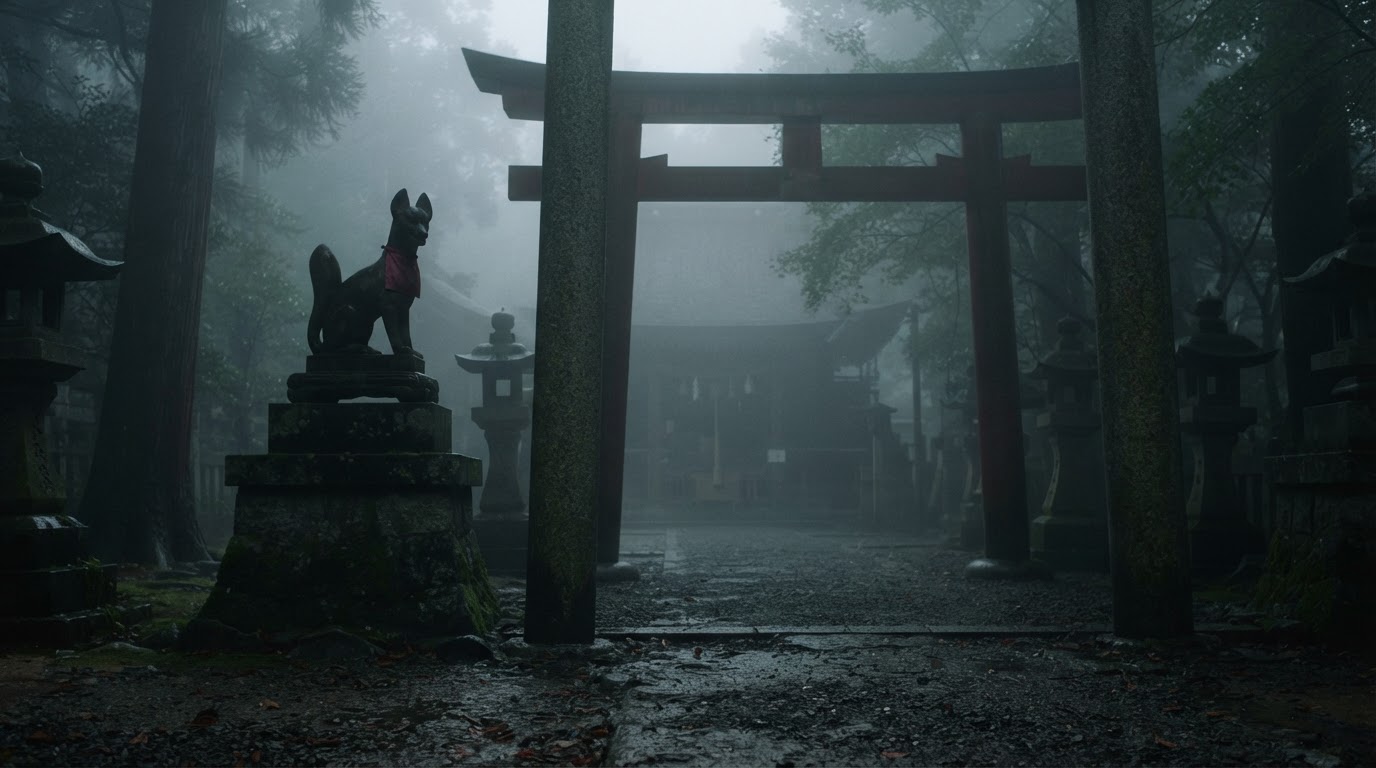
The Japanese game that corresponds to Korea's Bunshinsaba is called Kokkuri-san (コックリさん). You draw a torii (the gate of a Shinto shrine), the words yes and no, the Japanese syllabary, and numbers on a sheet of paper; you place a ten-yen coin on top; and several people rest their fingertips on the coin to question the "Kokkuri-san" who has come. The pen becomes a coin, the O and X become a torii — but the skeleton is exactly Bunshinsaba's. Two or more hands together touching a single light object, a polite calling of something, that something answering by moving across a lettered board, and, at the end, the ironclad rule that it must be sent back.
And here the mystery of the chant dissolves. The Japanese phrases used to summon and dismiss Kokkuri-san are precisely "oide kudasai" (please come) and "okaeri kudasai" (please return). Korea's "Bunshinsaba, bunshinsaba, oide kudasai" is the fossil trace of that Japanese incantation, crossing over as sound without its meaning ever crossing with it. The children were reciting, without knowing it, words of summoning that had drifted over from Japan decades earlier. The Sino-Korean word bunshin (分身) — a second body split off from oneself, a doppelgänger — combined with the sound saba, whose exact origin is hard to pin down, and layered on top gave rise to the Koreanized name "Bunshinsaba." The name became Korean, but the Japanese inside the chant could never quite hide its nationality.
Western Séance → Japan's Fox Faith → the Korean Classroom
Dig one step deeper into the root of Kokkuri-san, and the story reaches, unexpectedly, into the 19th-century West.
In the 1800s, Spiritualism swept the Western world. Believing the dead could be reached, people sat in circles around round tables, laid their hands on the surface, and waited for the table itself to move and answer — a practice called table-turning. In time, a tool was commercialized: a board printed with letters and numbers over which a small triangular pointer, the planchette, was pushed so the answer could be read. This is the Ouija board we know today.
This table-turning culture entered Japan in the Meiji era. A widely told account holds that shipwrecked Western sailors, washed ashore in the Izu region, passed it on. Once in Japan, the game fused with the local faith. Japan had long held a deep fox-worship tradition, and a sensibility that imagined mysterious beings as a blend of fox, dog, and raccoon-dog. So this Western summoning game was given the characters 狐狗狸 (kokkuri — fox, dog, raccoon-dog) and came to be called Kokkuri-san. The West's table-turning met Japan's fox faith and became Kokkuri-san; that Kokkuri-san, generations later, crossed into Korea and became Bunshinsaba.
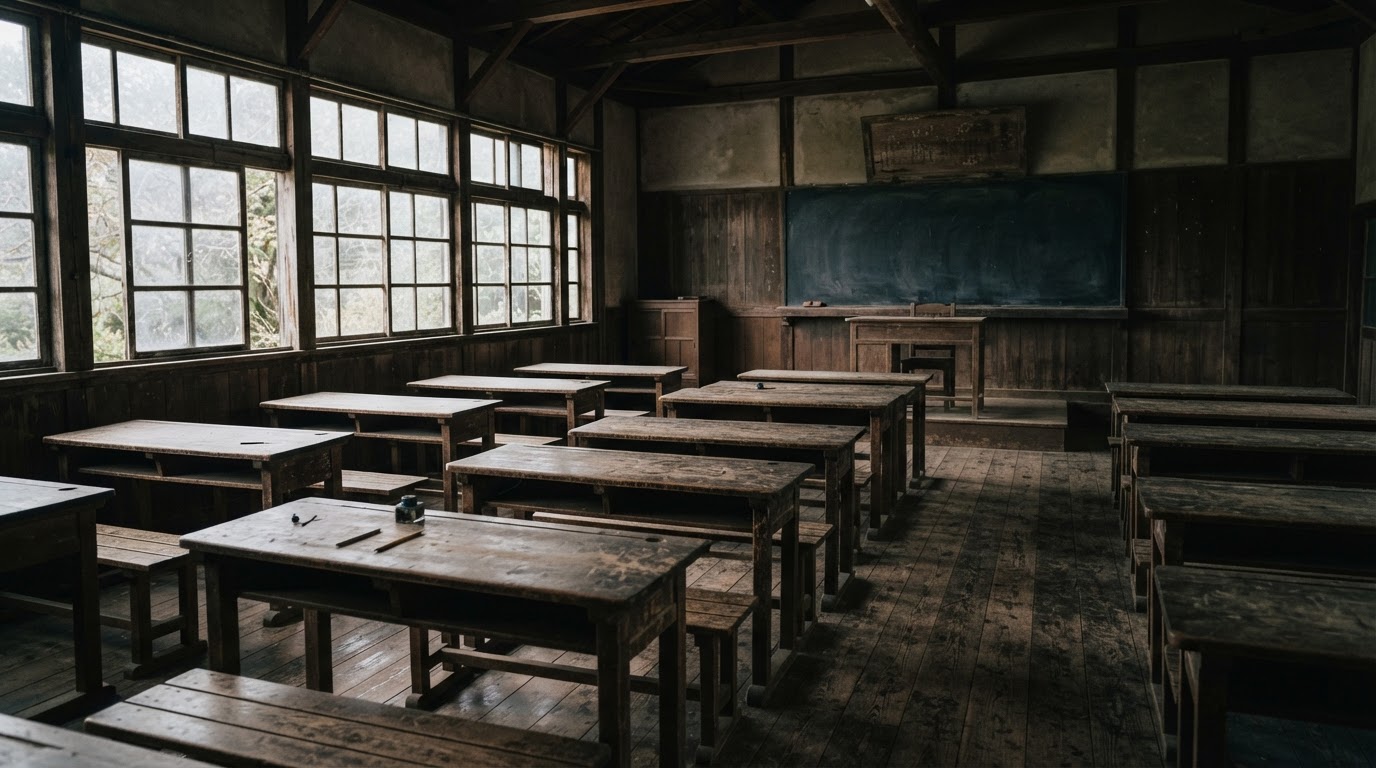
So what those two children were doing, gripping a pen together at the back of the classroom, was in fact a game that had traveled through three cultures and more than a hundred years. A Victorian parlor séance, Meiji fox faith, and the boredom of a 20th-century Korean classroom were all meeting at the tip of a single ballpoint pen. The most widespread summoning game in the world had shrunk to its smallest possible form and settled onto a student's desk as nothing but a sheet of paper and a pen.
Why Schools, and Why Girls' Schools in Particular
There is a reason this game caught fire in schools of all places, and in girls' schools most of all.
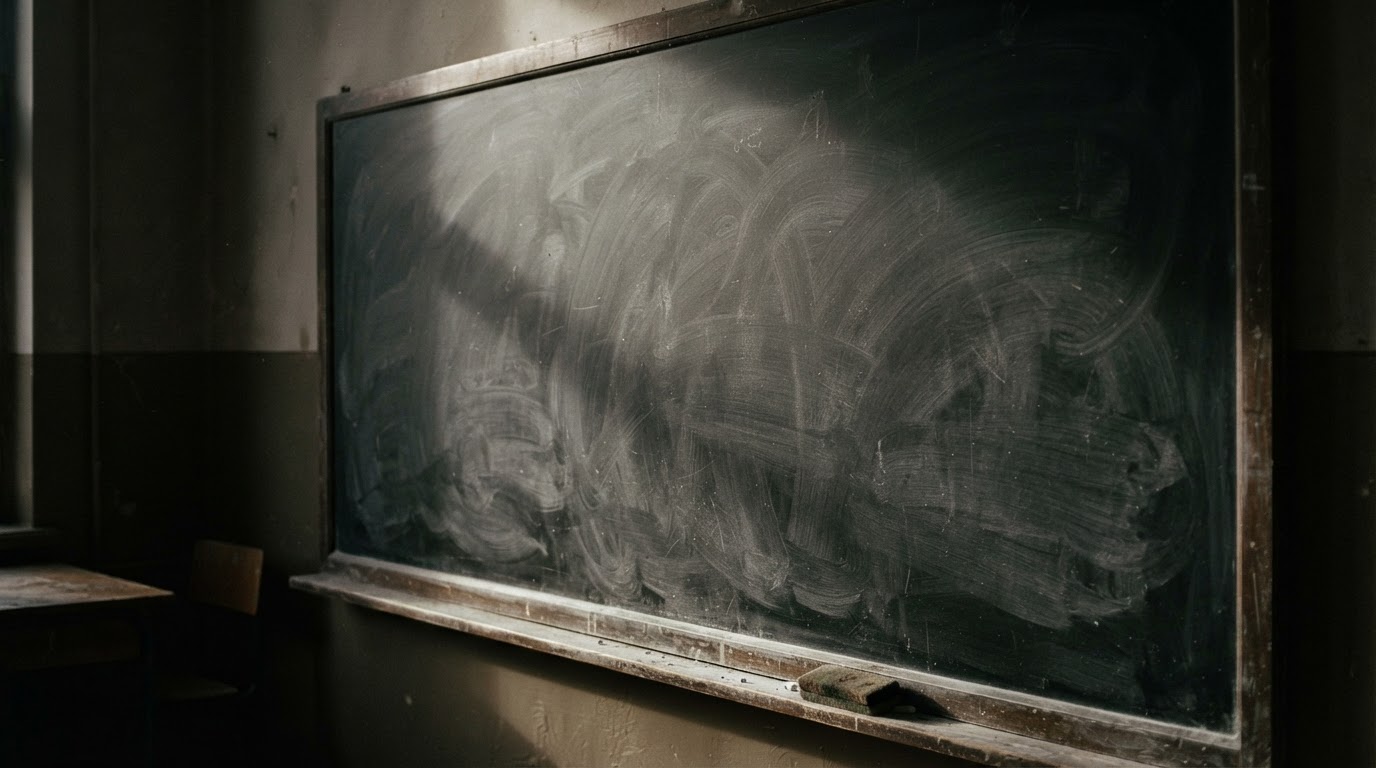
First, a school is perfect soil for a game like this. Peer groups are packed tightly together, information runs mouth to mouth in an instant, and above all, "idle time" exists on a reliable schedule. Break periods, lunch, indoor study on rainy days, the night of a school retreat, and the dim classroom after night study ends. Watch one person do it, and the next classroom copies it, and the story is handed down again to the next grade. The school itself is a perfect transmission medium for a ghost story. The bathroom ghost, the stair-counting spirit, the tale of which step goes wrong — all grew in schools for the same reason.
As for why it spread especially in girls' schools, there are several readings. One is that a peer culture of sharing feelings through story and immersing in them together was strongly at work. There was an atmosphere in which questions about crushes and relationships — and a great many of the questions put to Bunshinsaba were exactly those — could be taken seriously, and a game where several people joined hands and lost themselves in something together suited that atmosphere well. This is, of course, a cultural observation and by no means a claim that any group is more gullible. As we will see, the psychology by which Bunshinsaba "works" operates identically on any human being, regardless of sex or age.
The 1990s–2000s Classroom Craze, and the 2004 Film Bunshinsaba
Bunshinsaba swept Korean classrooms from the late 1990s into the early 2000s. In this period, the break periods of elementary, middle, and high schools, and the nights of school retreats, were Bunshinsaba's stage. A low barrier of entry — all you needed was paper and a pen — a simple procedure easy to spread by word of mouth, and the tantalizing possibility that "something might really happen" all interlocked to make it a generation's shared memory.
Around the time this craze peaked, popular culture lifted it onto the screen. **In 2004, director Ahn Byeong-ki's horror film Bunshinsaba was released.** Ahn was one of the marquee directors driving the Korean horror boom of the era with films like Nightmare and Phone, and Bunshinsaba rode that wave to face the space of the school and this summoning game head-on. It told the tragedy that unfolds when transfer-student girls call up Bunshinsaba to take revenge on a classmate tormenting them. Opinion on the film's quality was divided, but what the film did was clear. It nailed a game that had drifted secretly through classrooms down as an official icon of horror under the name Bunshinsaba, raising its recognition nationally — and beyond the border.
Exported Onward to China: Bi Xian (筆仙)
The story crosses one more border here. This time, China.
In China, this game took root under the name Bi Xian (筆仙). Brush (筆) plus immortal/spirit (仙) — that is, "pen spirit," a spirit called through the pen. The structure of holding a pen together, running it across a lettered board on paper, questioning, and sending it back at the end overlaps exactly with Bunshinsaba and Kokkuri-san. What is striking is that Korea's Bunshinsaba film boom did not simply cool; the material was made into films again in China. In the 2010s, several horror films titled Bi Xian were produced and drew audiences, and among them were works with Korean directors involved or that inherited the grammar of Korean horror. The game that had come down from the West to Japan, and from Japan to Korea, now met a new generation of viewers in China by way of Korea's film boom.
Laid out this way, Bunshinsaba is not a single game but a single cultural circulation orbiting East Asia. The names and props change from country to country — coin or pen or brush, torii or O and X — but the skeleton never changes. Several people together touch a single light object, call politely, read the answer, and always send it back.
So Why Did the Pen Move? The Ideomotor Effect
Now for the most important question. No one pushed it — so how did the ballpoint pen touch the letters on its own? The answer is not the supernatural but a well-established fact about our own bodies: the ideomotor effect.
The ideomotor effect is the phenomenon in which, when we expect or imagine a movement, our muscles make that movement on their own — minutely, involuntarily — to match the imagining. The person feels they applied no force at all. And consciously, they didn't push. But the moment the mind expects "the pen is going to go to O," the fingers unconsciously add a very faint force in that direction. That minute force is enough to move a light ballpoint pen. It is the same principle behind the moving planchette of a Ouija board, the sliding coin of Kokkuri-san, and the swinging of a dowsing rod. In fact, since the 19th century, scientists have repeatedly confirmed that when the experiment is run with the participants blindfolded or unable to see the board, the Ouija pointer fails to produce meaningful answers. What produced the answers was never a spirit — it was the hand of the participant who knew (or expected) them.
To this, Bunshinsaba adds two conditions of its own. First, two people holding hands. One person's minute tremor is amplified through the other's hand, and the other's tremor returns to the first. Both are certain "I wasn't the one pushing" — and truly, consciously, neither was. But when their two unconscious movements combine, the pen moves unmistakably. That eerie experience of a pen moving with no one pushing it is not a lie; it is a genuine sensation. It is only that the cause is not supernatural.
Second, collective suggestion and peer pressure. The half-dark classroom, the lowered voices, the incomprehensible foreign chant — all this stagecraft raises the expectation that "something will happen" to its maximum. Under the pressure of friends sitting in held breath and watching, no one wants to be the first to say "nothing is happening." Instead, at the slightest movement, everyone reacts with "it's here," reinforcing each other's conviction. Just as the darkness of the small hours sharpens the senses, the tension of a classroom after night study sharpens them too.
Why the Answers Feel Right: The Barnum Effect
The ideomotor effect explains as far as the pen moving. But why does the answer that pen touches somehow feel right? Here a second piece of psychology is at work: the Barnum effect.
The Barnum effect is the tendency to accept a vague statement that fits almost anyone as if it were a special answer meant for you alone. It is the same principle that makes blood-type personality readings or horoscopes feel convincing. Bunshinsaba's answers are usually O/X, or a few short letters. When the pen goes to O in response to "Does that person like you?" the child immediately links it to the hope they were already carrying in their heart. The more ambiguous the answer, the more the receiver fills in and completes its meaning themselves. And because, thanks to the ideomotor effect, that answer was in fact touched by the participant's own unconscious, the odds are high that "the answer I secretly wanted" comes up. The instant you believe an answer your own unconscious made was given by a spirit from outside, it feels uncannily accurate.
On top of this, human memory tends to keep the "right answers" vivid and quietly forget the "wrong" ones. Ask ten times and hit once by chance, and people will tell the story of that one hit for years. When the ideomotor effect, the Barnum effect, and selective memory interlock like this, a sheet of paper and one ballpoint pen come to feel like a being that truly knows something. The power of the game was never in the supernatural. From start to finish, it lived inside the minds of the people playing it.
And Yet, the Stories That Remain
That science explains the skeleton of this game does not make the stories piled up beside it disappear. And those stories are worth presenting as ghost stories — with exactly the weight a ghost story deserves.
There are accounts of a pen that would not stop but kept moving just as they tried to lift their hands away. Stories of a pen that touched only no, refusing to return, even as they recited the parting chant. Stories of a pen that, unasked, spelled out a strange name on its own; of a child who ran an unexplained fever and fell ill that same night after the game ended; of odd things following the discarding of a paper that was never properly sent off. These stories were handed down, shifting shape a little from school to school and grade to grade.
How should we read these accounts? The ideomotor effect and collective suggestion, the arousal of late hours, and selective memory that we saw above explain most of them. The unconscious, continuous movement of two frightened hands feels like a pen "refusing to stop." It is no surprise that an already-tense child feels unwell that night. But this article does not end by nailing every one of those stories down as "pure illusion." A ghost story is better left as a ghost story. Leaving a margin of the unexplained is, in fact, the very reason this tale has survived across generations. Only — that margin is one for watching and retelling, not one for trying it yourself.
Bunshinsaba's Place in the School-Ghost Ecosystem
Bunshinsaba never existed alone. It was part of the vast ghost-story ecosystem that the space of the school gave rise to.
Somewhere down the same corridor was a voice that answered if you knocked on the third bathroom stall — a school-bathroom ghost of the same lineage as Japan's Hanako-san. There was the stair spirit whose count never came out right, and stories bound to the cafeteria or the special-subject rooms. And beyond the stage of the school, there were the ritual ghost stories in which several people follow a set of rules to "summon" something or to cross into another world. The one-man hide-and-seek played with a doll at three in the morning; the Elevator Game that supposedly carries you to another world by pressing floors in a set order; and the Hong Kong grandmother ghost said to chase children. Bunshinsaba fed on and was fed by these stories within one ecosystem. A child who feared the bathroom ghost gripped a pen after class, and that experience became nourishment for the next ghost story in turn.
Bunshinsaba's place in this ecosystem is unusual. Most school ghost stories are stories to be afraid of. Don't go to that bathroom; watch that staircase. But Bunshinsaba, like one-man hide-and-seek, was one of the few participatory ghost stories that beckoned children to do it themselves. That is what made this game so especially persistent.
The Siblings of the World, and On the Space of the Classroom
Bunshinsaba has siblings all over the world. Set that lineage side by side and a single root reveals itself. The West's parlor Ouija board, Japan's Kokkuri-san, China's Bi Xian, and the Charlie Charlie challenge that exploded among teenagers worldwide in 2015 — drawing a cross of boxes on paper and balancing two stacked pencils to ask yes/no. The props differ — coin, pen, brush, planchette, pencil — but what humans do is always the same. Several people lay their hands on a single light object, politely call something unknowable, and read its answer together. As with the Ouija board, the same ideomotor effect runs beneath all these games. We call in different languages, but the one that answers is always our own hand.
Which leaves the last question. Why a classroom, of all places? And why, when we grow up, can we no longer do it?
Bunshinsaba was the smallest form the world's oldest summoning game ever reached. It needed no parlor's round table, no shrine, no candle. It needed only a sheet of paper, one ballpoint pen, and boredom. And that boredom does not grow just anywhere. It grows only in the classroom — that space at an age when you don't yet know the whole world and everything is a question, an age when crushes and grades and the future refuse to resolve into answers, and where the friends to share those unanswerable questions with sat right in the next seat. Bunshinsaba was a game, at once frightened and yearning, that tried to load those questions onto the tip of a pen and ask them somewhere.
That is also why, grown up, we can no longer do it. Not only because we've learned about the ideomotor effect. It's because the heart that gripped a pen wide-eyed before an unanswerable question no longer grows so readily. The game worked only when boredom and yearning were present together, and an adult's day rarely brings the two side by side. So Bunshinsaba remains less a frightening story than a wistful one — together with the half-dark classroom, the joined hands, and the chant recited without knowing its meaning.
One thing in my files never resolved, and I have stopped expecting it to. The ideomotor effect accounts for a pen that moves. It does not account for why, across schools that had no contact with each other, the accounts that frightened children most were always the same account — the pen that would not answer the parting chant. Not the summoning. The dismissal. I have re-read those entries looking for a common source and found none; they simply appear, independently, in different grades and different cities, describing the same refusal. Somewhere a sheet of paper was folded away that night without an answer, and the file has no closing line for it.
So this is folklore good for watching, for retelling, for studying its hundred-year journey under a lamp. But it is not a game to try. Not because of real supernatural forces, but because this game was designed from the start to work on a frightened mind. That is why we don't recommend it, even as a game. A ballpoint pen is better left as a ballpoint pen, and paper as paper. That night in the classroom is enough left as a memory.
---
The images and video in this article are AI-generated works produced to convey the mood of the story, and are not photographs of any actual person or event.

Comments
No comments yet — leave the first one.