
Do not try this. That sentence belongs at the top, not the bottom, because the thing this article documents was designed to be done, not merely read — and the whole reason it frightened a generation is that thousands of people did it anyway, on camera, at three in the morning, while strangers watched. What follows is a record of a legend and the online spectacle it became. It is folklore, reported as folklore. It is not an instruction, and nothing here is an endorsement of doing it.
With that said: turn the lights off, and let us start where the legend always starts — late at night, in front of a glowing screen.

The Thread That Started It
It is past midnight on a Japanese message board, and a thread is filling up one line at a time. The board is the Occult forum on 2channel — 2ch, the vast anonymous nervous system of the early Japanese internet — and the post at the top is not a story. It is a set of instructions.
The instructions describe a game. It is called hitori kakurenbo — one-man hide-and-seek — and the premise is simple enough to fit in a breath and strange enough to keep you reading. You do not play it against a friend. You play it against a doll. You prepare the doll a certain way, you begin at a certain hour, you follow certain rules, and then you hide in your own home from a thing you have just, in effect, invited to come looking for you. The rules tell you how to start. More importantly, they tell you how to stop — and they warn you, flatly, that stopping is the part people get wrong.
Somebody in the thread says they are going to try it. They will be back, they say, if they can. And the thread waits.
That waiting — a room full of anonymous strangers holding their breath while one of them walks off into the dark of their own apartment — is the engine of this legend. Unlike almost every ghost story before it, hitori kakurenbo was never really about the doll. It was about the watching. It was the first great horror of the internet that you did not hear so much as attend.
Almost nothing else I collect comes with an off switch. That is what made me open a file on this one. Ghost stories tell you what happened; this one tells you to keep salt water within reach and specifies, with more care than it spends on anything else, exactly how to end the thing you started. Whoever composed those instructions spent their attention on the exit. I have read a great many versions of the text by now and the ending is the part that never gets shortened.
The Ritual, as the Legend Prescribes It
To understand why the streams that followed hit so hard, you have to understand what the streamers were actually doing — and the legend is unusually specific about it. What follows is a description of the procedure as it circulated online, offered here the way an anthropologist would transcribe a folk rite: as documentation of a belief, not a recipe to follow. Read it as a window into how the legend thinks, and why every step is shaped the way it is.
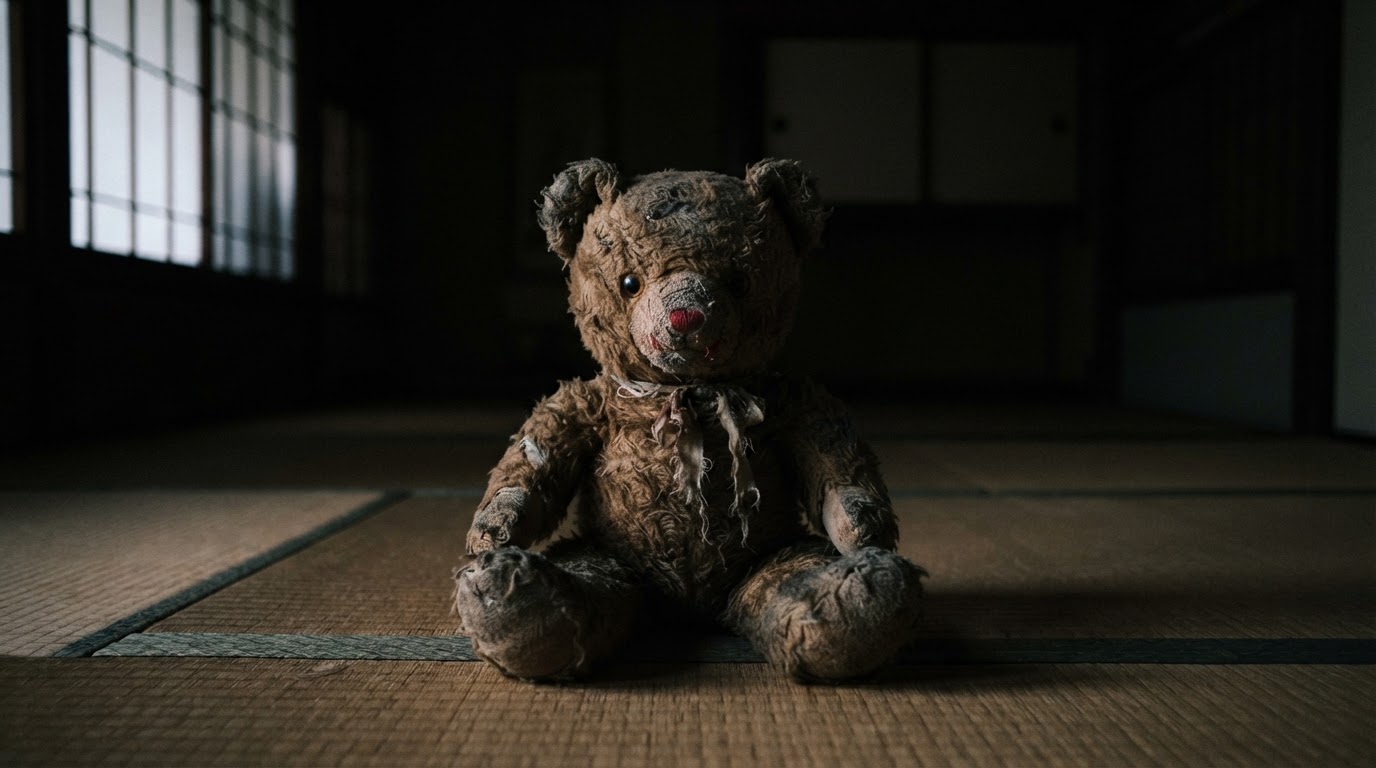
The doll. You begin with a stuffed doll, ideally one with arms and legs — a bear, a rag doll, something that already reads as a small body. You remove its original stuffing and replace it with uncooked rice. Into the rice, the legend says, you add a piece of yourself: fingernail clippings, in the most common telling, so that some fragment of you is sealed inside. Then you sew the doll shut with red thread, and — this is the detail everyone remembers — you wind the leftover thread around the doll's body and knot it, binding it. The old explanations that travel with the ritual are grimly poetic: the rice stands in for viscera, the thread for blood vessels, the nail clippings for the piece of you that makes the doll a stand-in for a person at all. You are not making a toy. You are making a substitute body.
The name. You give the doll a name. Not a random one — traditionally your own, or a name you assign it and speak aloud, because naming is how you hand it a role in the game.
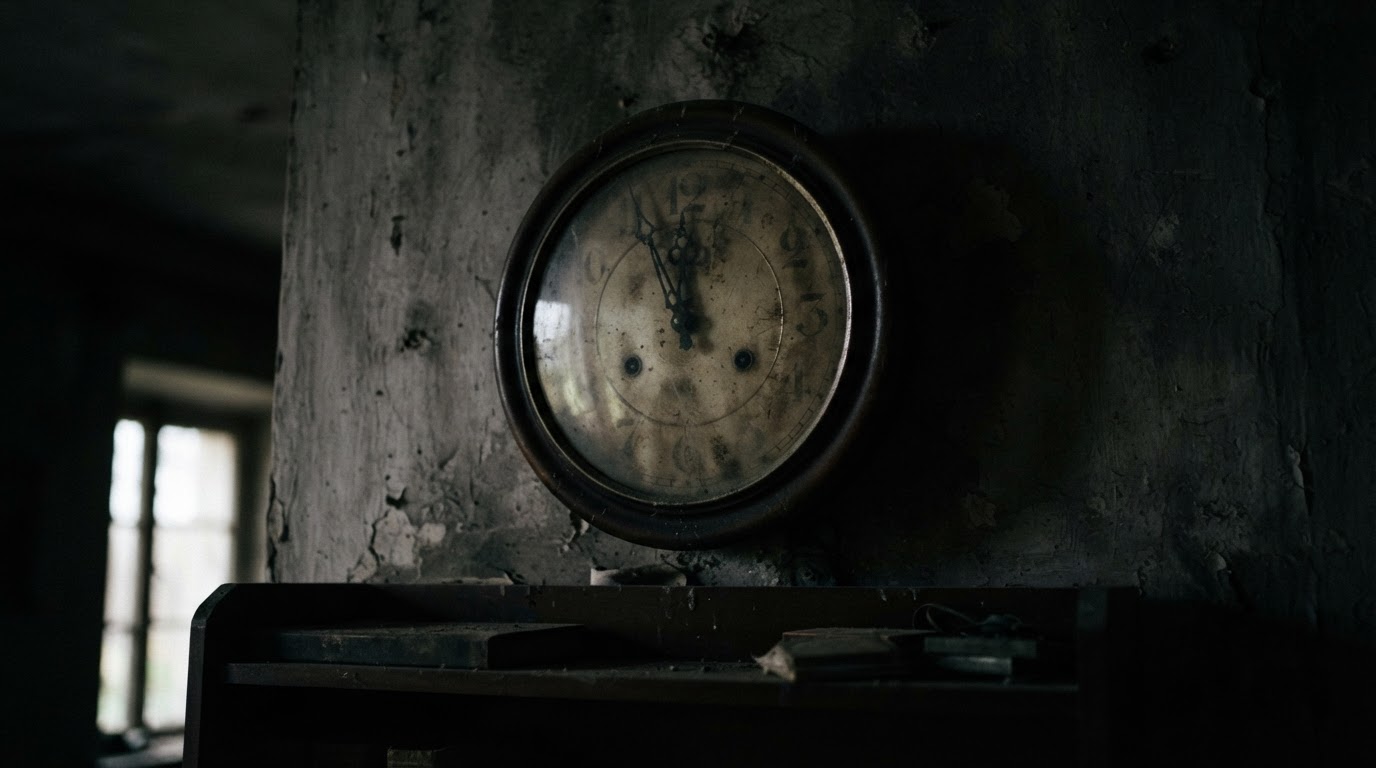
The hour. You wait for the dead center of the night. Three in the morning — in Japanese folk time, the ushi mitsu doki, the "hour of the ox," long held to be the hour when the boundary between worlds runs thinnest. Timing is not decoration here. It is load-bearing.
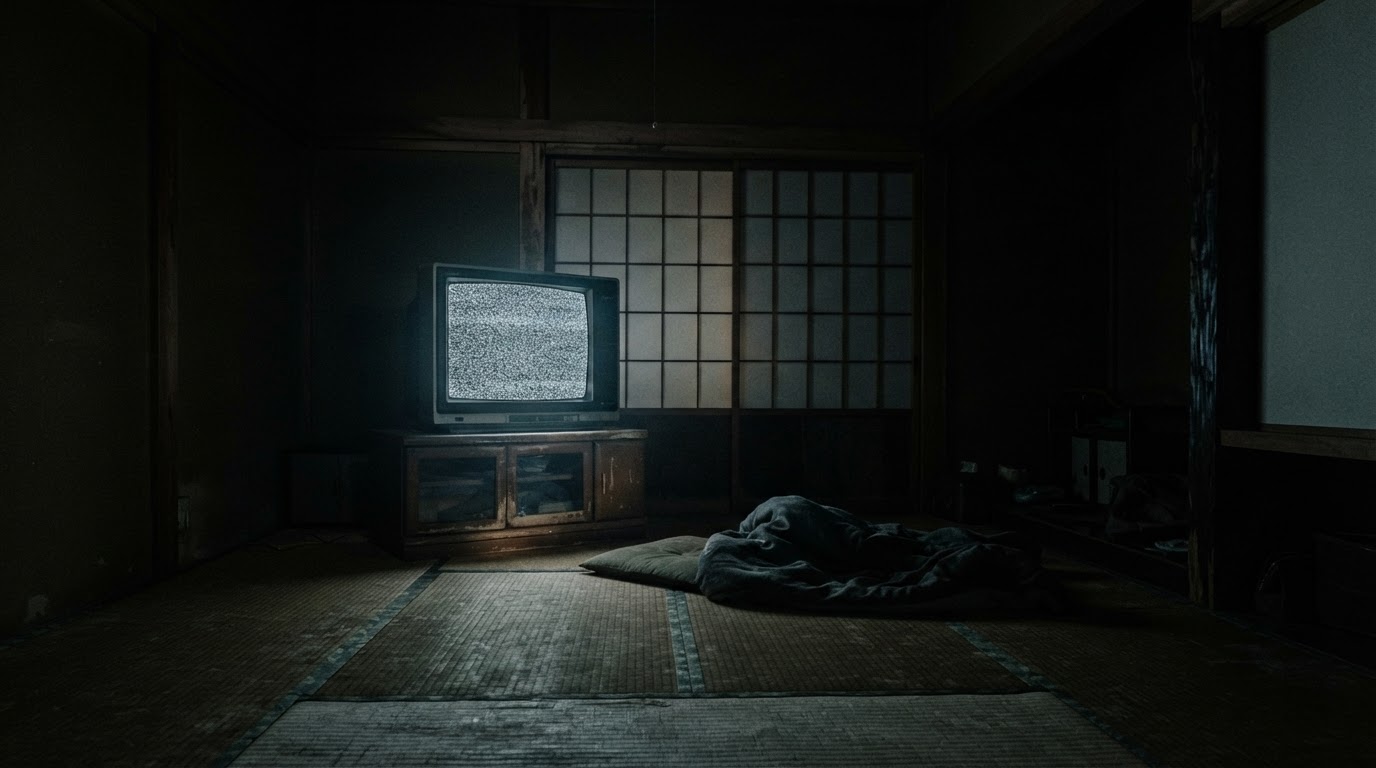
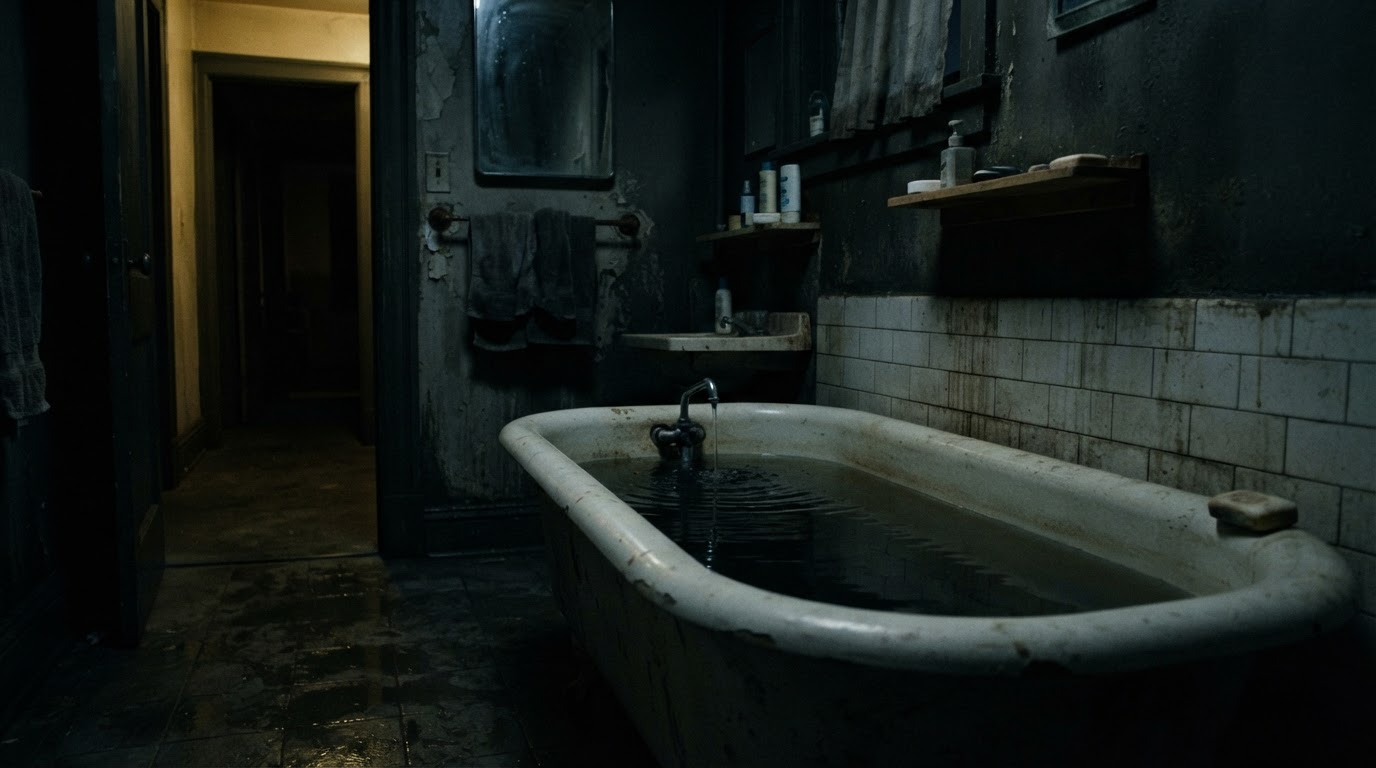
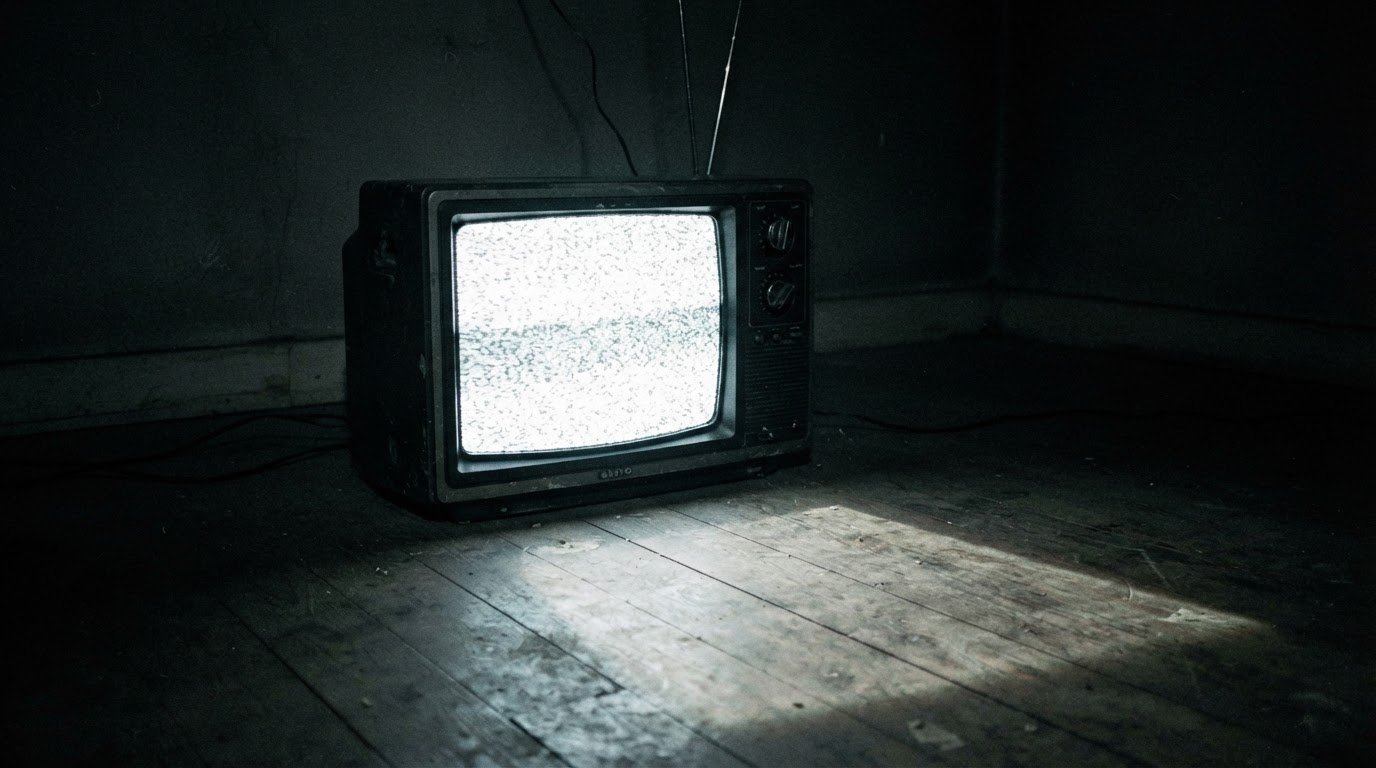
The beginning. At three, you fill the bathtub with water and place the doll in it. You go through the house and turn off every light, leaving only a television tuned to static — that gray snow and hiss that was, to an entire generation, the visual shorthand for a signal leaking in from somewhere it shouldn't. You return to the doll, you say aloud that you will be the first it, you count, and then — with a blade the legend tells you to have ready — you declare that now the doll is it. You leave. You hide.
The salt water. Before any of this, you were supposed to prepare one more thing and keep it close: a glass or a mouthful of salt water. In Japanese tradition salt is purification, the substance you throw to cleanse a space, scatter at a funeral's threshold, pile at a doorway. Here it is your off switch. It is the thing that ends the game.
The hiding, and the ending. Now you hide somewhere in your darkened home and you wait, and — this is the part the legend leans on — you are not supposed to relax. You may hear things. The rules say that if you sense the doll has left the bath, if you hear it moving, you must not simply stay hidden forever. Within a set time you come out, you find the doll, and you end it correctly: you take the salt water into your mouth, you spit it over the doll, you say three times that you have won, and only then do you break the ritual off — the thread cut, the doll disposed of, the salt water finishing what it started. The legend is emphatic on one point above all others: you must end it, and you must end it right. The horror stories are not really about beginning the game. They are about people who could not, for one reason or another, finish it.


Why the Ritual Is Shaped This Way
None of these steps are arbitrary, and that is exactly what makes the legend feel older and heavier than a message-board post has any right to feel. Hitori kakurenbo is a modern invention wearing very old clothes, and once you see the seams, you cannot unsee them.
Start with the doll full of rice and thread and a piece of your own body. This is not a new idea; it is one of the oldest ideas in Japanese folk belief. The hitogata — the "human shape," a paper or straw effigy that stands in for a person — runs deep through Shinto practice. You breathe onto a paper figure, or rub it over your body to transfer your ailments and impurities into it, and then the effigy is cast into a river or burned, carrying the bad away with it. The logic is that a made body, properly linked to you, can substitute for you. The hitori kakurenbo doll is a hitogata built for the opposite purpose: not to carry harm away, but to invite something in.
Then there is the hour. Three a.m., the hour of the ox, is the traditional time of the ushi no koku mairi — the "shrine visit at the hour of the ox," a genuine and genuinely old cursing rite in which a spurned person, dressed in white, drives an iron nail through a straw effigy nailed to a sacred tree, night after night at the same dead hour, to curse an enemy. Straw effigy, hour of the ox, an act of binding and piercing done in the dark: the resemblance to one-man hide-and-seek is not a coincidence so much as an inheritance. The ritual didn't invent its grammar. It borrowed it from curses Japan has been telling itself about for centuries.
And then the salt. In Shinto thought, salt is the great purifier — sumo wrestlers scatter it to cleanse the ring, mourners sprinkle it on themselves after a funeral, businesses set little cones of it at the door to ward off ill fortune. That the ritual makes salt water the one thing that can safely end the game is not a random rule. It is the legend reaching into a real, living purification tradition and using it exactly as that tradition uses it: to close a door you have opened, and to cleanse what came through. Read this way, hitori kakurenbo stops looking like something a bored teenager typed one night and starts looking like folk memory reassembling itself out of spare parts — a purification rite run backwards, then corrected at the last moment with real purification. The dread it produces is old dread wearing a webcam.

The Livestream Boom: 2006–2008
Here is where hitori kakurenbo becomes something no legend before it had ever been.
The written ritual, in the form most people know, is usually traced to a burst of posts on 2channel's occult boards in the mid-2000s — the widely cited seed being a detailed how-to that circulated on the Occult board in the spring of 2007. Almost as soon as the instructions existed, a second thing existed alongside them: people announcing that they were going to do it, right now, and report back. The board format made this irresistible. A thread would open, someone would declare they were starting, and the replies would pile up in real time — encouragement, skepticism, nervous jokes — while the poster went dark for stretches and then returned to type what was happening. I heard the water move. The doll isn't where I left it. I can't find it. Every gap between posts was a held breath shared by everyone reading.
Then the technology caught up with the appetite, and the thing exploded. This was the exact window when Japanese live video was being born — Nico Nico Douga launched in 2006 and its live-streaming culture took off through 2007 and 2008, and Western services like Ustream and Stickam arrived alongside. Suddenly you did not have to trust a stranger's typing. You could watch. Streamers began performing hitori kakurenbo live, on webcam, at three in the morning, narrating each step to a chat window full of thousands of viewers who had stayed up specifically to see it. The static-tuned TV, the doll in the tub, the lights going off one by one — it all played out in a small grainy video box while the chat scrolled faster than anyone could read.
And the audience was not passive. The chat was the point. Viewers counted down to 3 a.m. together. They shouted, in text, when the streamer left the frame to hide. They filled the silences with theories and dares and warnings. When a noise came through the mic — a knock, a creak, a thud from off-screen — the chat would erupt, the same three characters flooding down the screen a thousand times: kita, kita, kita — "it's here, it's here, it's here." Nobody watching could verify anything. That was exactly why it worked. A jump-scare in a film is authored; you know a person built it to get you. A creak on a shaking webcam feed at 3:14 a.m., with a real stranger visibly flinching at it and a thousand other strangers screaming in the chat, feels found. It feels like you are all witnessing something rather than being shown it. Hitori kakurenbo turned an audience into a congregation.

The Nights It "Went Wrong"
Legends need incidents, and the streams supplied them by the hundred. The specific broadcasts have blurred together over the years — copied, re-uploaded, embellished, and impossible now to trace to a single verified source — but the types of incident became the canon, retold so many times they hardened into the legend's set pieces.
There were the sounds. A streamer, hidden and whispering to the mic, goes quiet — and then something knocks, or drags, or thuds somewhere in the apartment, clearly on the audio, and the streamer's whisper cracks. The chat detonates. Whether the noise was the building settling, a neighbor, a pet, a planted effect, or nothing at all, it did not matter: it arrived live, and a thousand people heard it at the same instant.
There were the things that shouldn't switch on. The most retold beat is a television or a light coming on by itself, or the static changing, at a moment no one touched it — the screen the ritual specifically tells you to leave running, doing something the streamer swears they didn't do.
There were the cut streams. The most effective incident of all, because it needs no special effect: the feed simply drops. Mid-ritual, at the worst possible second, the video freezes and dies, and the last frame anyone saw hangs there in memory far more vivid than anything that could have followed. Sometimes the streamer came back minutes later, shaken, blaming a crash. Sometimes — in the versions that traveled furthest — the story went that they didn't come back at all that night, and the chat sat there refreshing an empty channel until dawn. A dropped connection is a mundane thing. A dropped connection during a curse you are watching live is the most frightening cut in cinema, except no one wrote it.
The truth of any single one of these nights is unrecoverable and, honestly, beside the point. What matters is that the format manufactured dread on an assembly line. Every stream carried the permanent possibility that this would be the one where something happened — and that possibility, shared live by a crowd, was scarier than almost any scripted payoff could have been.
Why It Works on the Mind
Strip away the doll and the salt and the hour, and hitori kakurenbo is, among other things, a remarkably efficient machine for making an ordinary human being terrify themselves. The psychology is worth naming plainly — not to explain the fear away, but because the mechanics are half the story.
Start with the hour. Three a.m. is not merely atmospheric; it is when the human animal is at its lowest ebb. A person who has stayed up to that hour — and every participant, by definition, has — is running on frayed attention, degraded judgment, and a nervous system primed to jump. Sleep deprivation famously erodes the brain's ability to tell a real signal from noise. You are, at 3 a.m., already halfway to seeing things.
Onto that, the ritual layers apophenia — the mind's relentless drive to find pattern and intention in randomness. Sit alone in a dark, silent home, told that a thing may be moving toward you, straining to hear it, and your brain will oblige. Every house makes noise: pipes tick as they cool, timber contracts, the fridge cycles, the wind works at a window. Ordinarily you filter all of it out. But once you are listening for footsteps, every one of those neutral sounds is auditioned for the role, and some of them get the part. You are not lying when you say you heard something. You did hear something. You just supplied the meaning.
Then there is the loop of self-induced fear. Fear is physical — heart rate up, breath short, senses cranked to maximum gain. But the body cannot tell dread of a ghost from dread of a burglar; it just floods you with the same alertness, and that heightened state makes the next ambiguous creak land harder, which raises the fear, which sharpens the senses further. Left alone in the dark with an expectation of terror, a person will reliably spiral without any outside help at all. The ritual doesn't have to be real to work. It only has to get you into the dark, at 3 a.m., expecting something.
And the live chat weaponized the last piece: confirmation bias, at scale. A thousand people all told to expect the doll to move will, between them, notice and amplify every stray sound and flicker and swear it means something — and the crowd's certainty feeds back into each individual's. In an empty room your own mind talks you into the fear. In a stream, a thousand minds do it for you, in real time, faster than doubt can keep up.
Across the Water: Korea and the West
A legend this portable was never going to stay in Japan, and it didn't.
In Korea it arrived as 혼자 숨바꼭질 — a direct translation, "playing hide-and-seek alone" — and slotted straight into the country's own thriving culture of online horror and dare videos. The ritual spread through Korean forums and blogs and, later, video platforms in exactly the shape it had in Japan: the doll, the rice, the red thread, the 3 a.m. start, the salt water to end it, the same stern insistence that you finish correctly. Curious teenagers filmed their attempts; the comment sections filled with the same mix of goading and genuine unease. The details survived translation intact because the details are the legend — the procedure is the story.
In the West it traveled as "one-man hide-and-seek," carried by translations of the Japanese instructions into the booming creepypasta ecosystem of the late 2000s and early 2010s. English-language forums, then YouTube channels, passed the ritual around as one of the definitive "Japanese ritual creepypastas" — a category the West found irresistible precisely because these stories came with rules, with the tantalizing implied dare that you could, if you were brave or stupid enough, do it yourself. One-man hide-and-seek became a cornerstone of that genre, sitting alongside the other rules-based rituals the internet loves to whisper about.
Everywhere it landed, the core held: a home-brew rite you perform alone in the dark, a strict procedure, and above all a warning about ending it properly. The costume changed with each language. The bones never did.

The Revival, and Why We Keep Performing It
The livestream boom cooled, as booms do, but the ritual never actually left — it just kept finding new screens to live on. The rise of YouTube horror channels gave it a second life as polished "I tried the one-man hide-and-seek ritual" videos, and the arrival of TikTok gave it a third, compressing the whole thing into breathless sixty-second attempts and 3 a.m. challenge clips for a generation that had never heard of Nico Nico Douga. The technology keeps changing. The impulse it serves does not.
Because hitori kakurenbo endures for a reason that has little to do with dolls or rice, and everything to do with what it asks of you. Nearly every ghost story is something that happens to someone else — you hear it, you shiver, you go on with your evening at a safe remove. Hitori kakurenbo broke that frame. It is a legend you are dared to step inside. It hands you a role and a script and a set of rules and says: your move. Even when you never once light the static-tuned TV — even when all you do is watch someone else do it, or read the instructions and decide, sensibly, not to — the story has already worked on you, because it has made you imagine yourself as the one hiding in the dark. It converts its audience from listeners into potential participants, and that is a far stickier kind of fear.
The material problem with archiving this is that the primary sources destroyed themselves. Nico Nico streams from 2007 were live and then they were over; what I have instead are thousands of re-uploads and retellings of nights I cannot verify ever happened, each one certain about a knock or a television switching on. Somewhere under that sediment are the actual broadcasts, and among them, statistically, at least a few people who genuinely could not find the doll where they had left it. I have no way to tell which. Nobody does, including — by now — the people who were there.
That is why one-man hide-and-seek deserves to be understood as a genuine turning point in the history of the ghost story. It belongs to the same anonymous board culture that gave the world Kunekune, the white thing in the summer fields; Hachishakusama, the towering woman in white; Kotoribako, the most cursed box the internet ever built; Teke Teke, the severed thing that drags itself after you; and Aka Manto, the voice that offers you an impossible choice in a bathroom stall. But hitori kakurenbo is the one that reached out of the screen and put the ritual in your hands. Those others you fear. This one you were invited to become.
So end where the legend does, on its one unbendable rule. If the story leaves you with anything, let it be the warning and not the dare: some doors are easier to open than to close, and the oldest wisdom in every version of this rite is that the beginning was never the dangerous part. It is a piece of folklore. It is best kept that way — watched, retold, studied by lamplight, and never, ever actually played. Leave the doll unmade. Leave the bathtub empty. Let three in the morning pass without you.
---
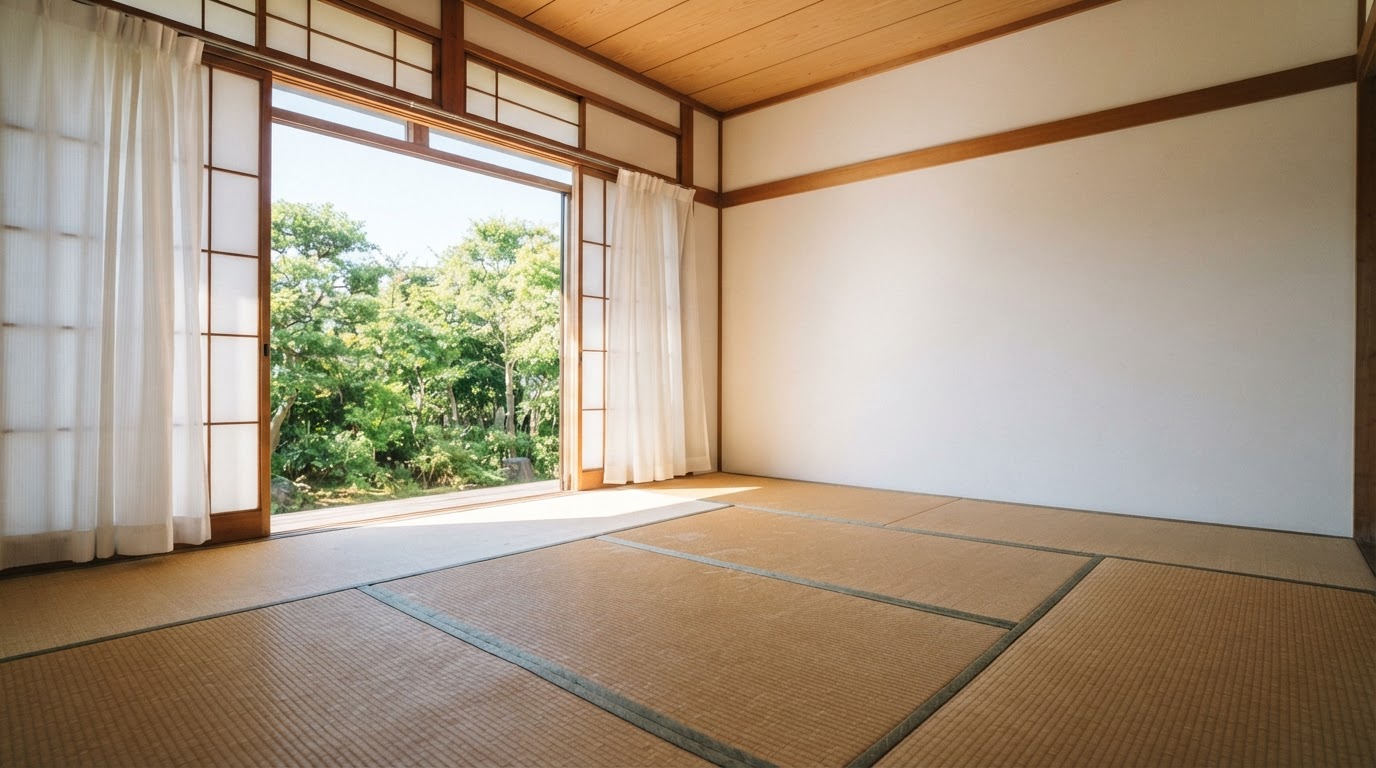
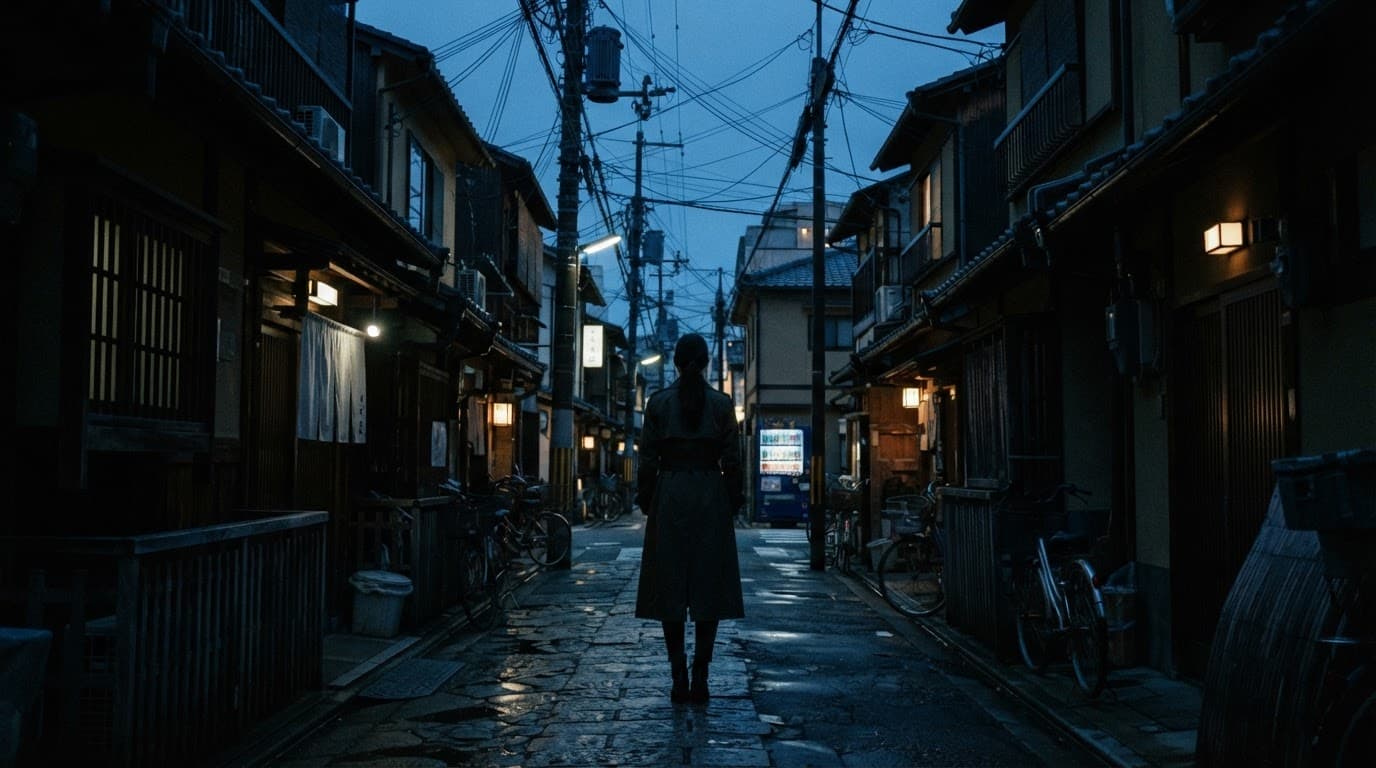
The images and video in this article are AI-generated works produced to convey the mood of the story, and are not photographs of any actual person or event.



Comments
No comments yet — leave the first one.