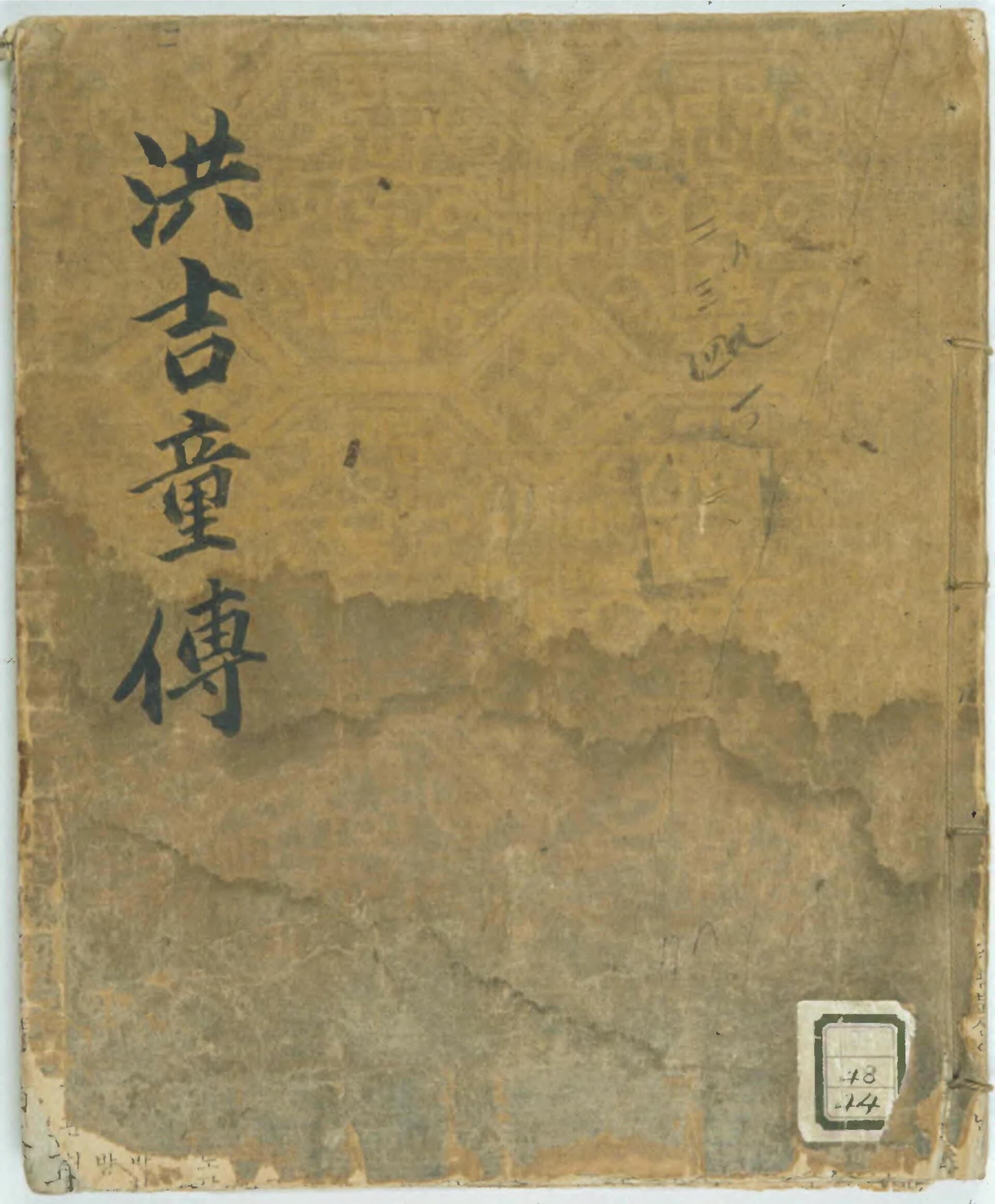
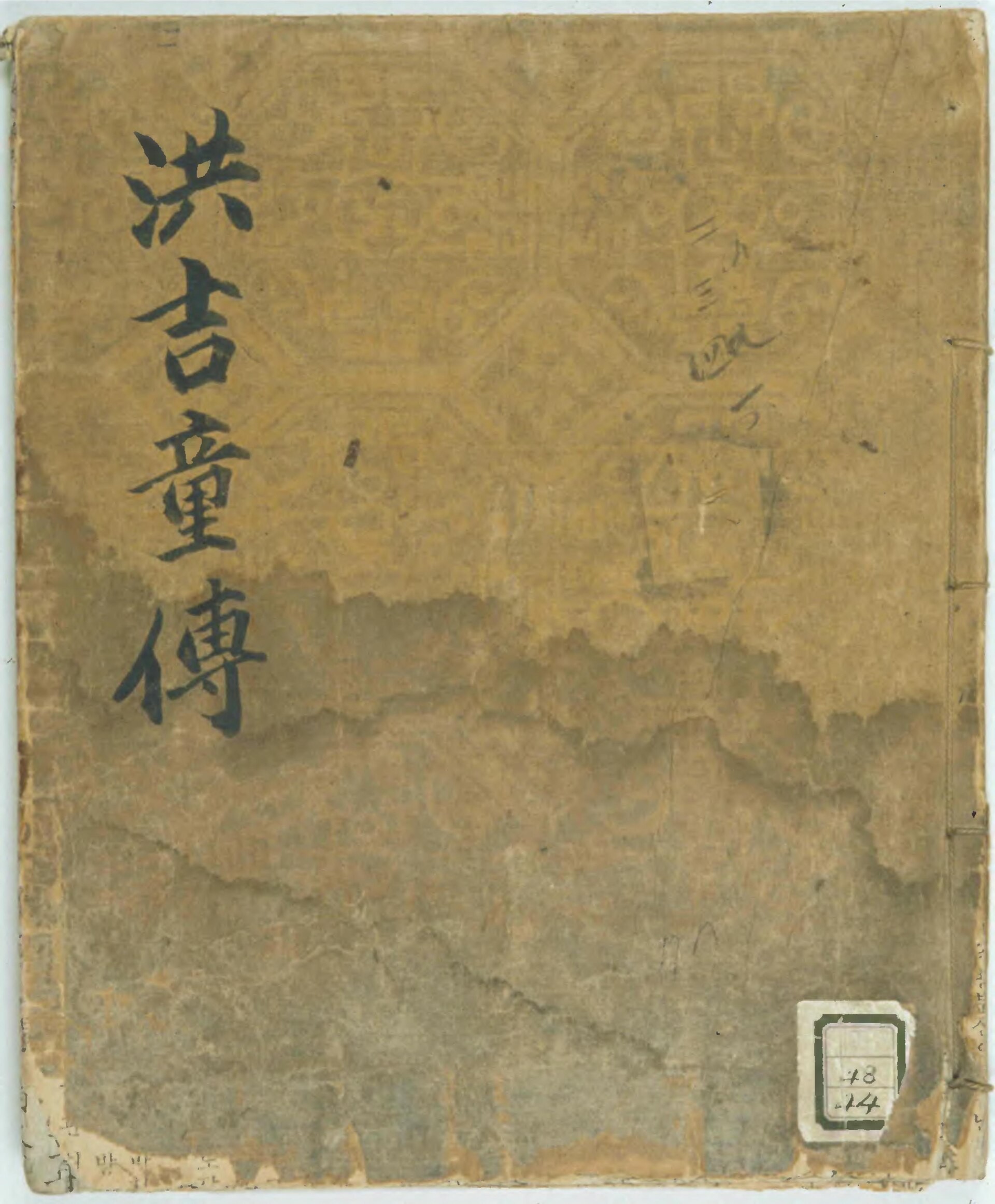
Everyone in Korea knows Hong Gildong. Every child grows up with some version of his story: the illegitimate son who was forbidden to call his own father "father"; the leader of a righteous band who plundered the storehouses of corrupt officials and wealthy families and shared the spoils with the poor; the outlaw who could split himself into eight bodies and call down clouds; the man who, in the end, sailed across the sea to found an ideal kingdom called Yuldoguk and crowned himself its king. We know him as the hero of The Tale of Hong Gildong, a novel traditionally attributed to the scholar Heo Gyun — in other words, as a creature born entirely on paper. And yet, if you open the Annals of the Joseon Dynasty, you run straight into a single line that quietly unsettles that assumption. More than a century before the novel appeared, in a record from an autumn day during the reign of King Yeonsangun, it is written: "The bandit Hong Gildong was captured." A bandit chief bearing almost exactly the same name as the fictional hero had, in fact, been rampaging through the heart of the kingdom.
What opened this file for me — my name is K. Woo, and the archive these articles come from is mine — was not the capture at all. It was the jade ornament on his hat and the red sash. I had been reading through the Yeonsangun-era entries for something else entirely when that clothing description stopped me. Official records rarely bother with what a criminal was wearing. Someone at that desk, five hundred years ago, thought the costume mattered enough to preserve. I have gone back to that sentence more times than the rest of the case combined.
A Single Line in the Annals
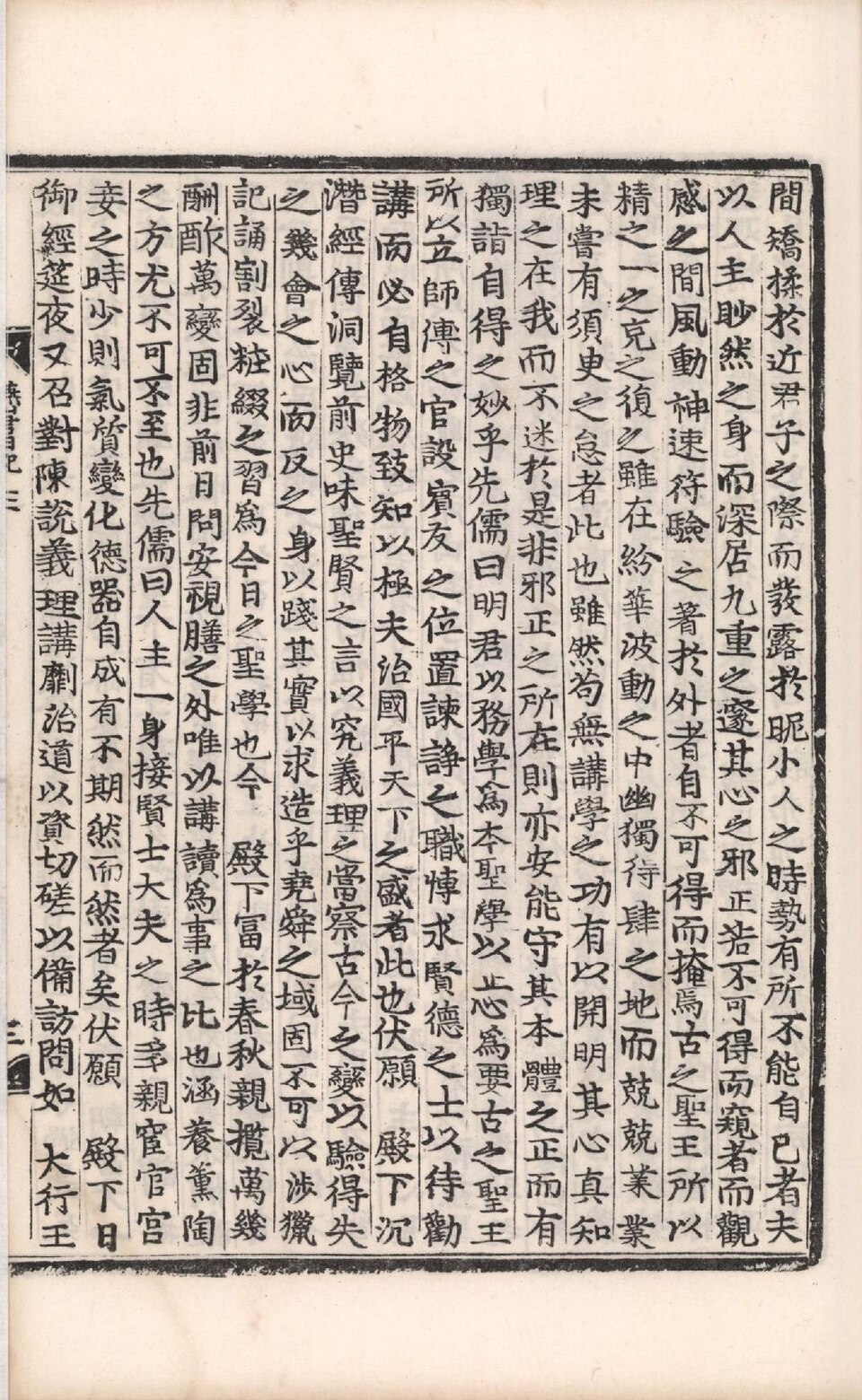
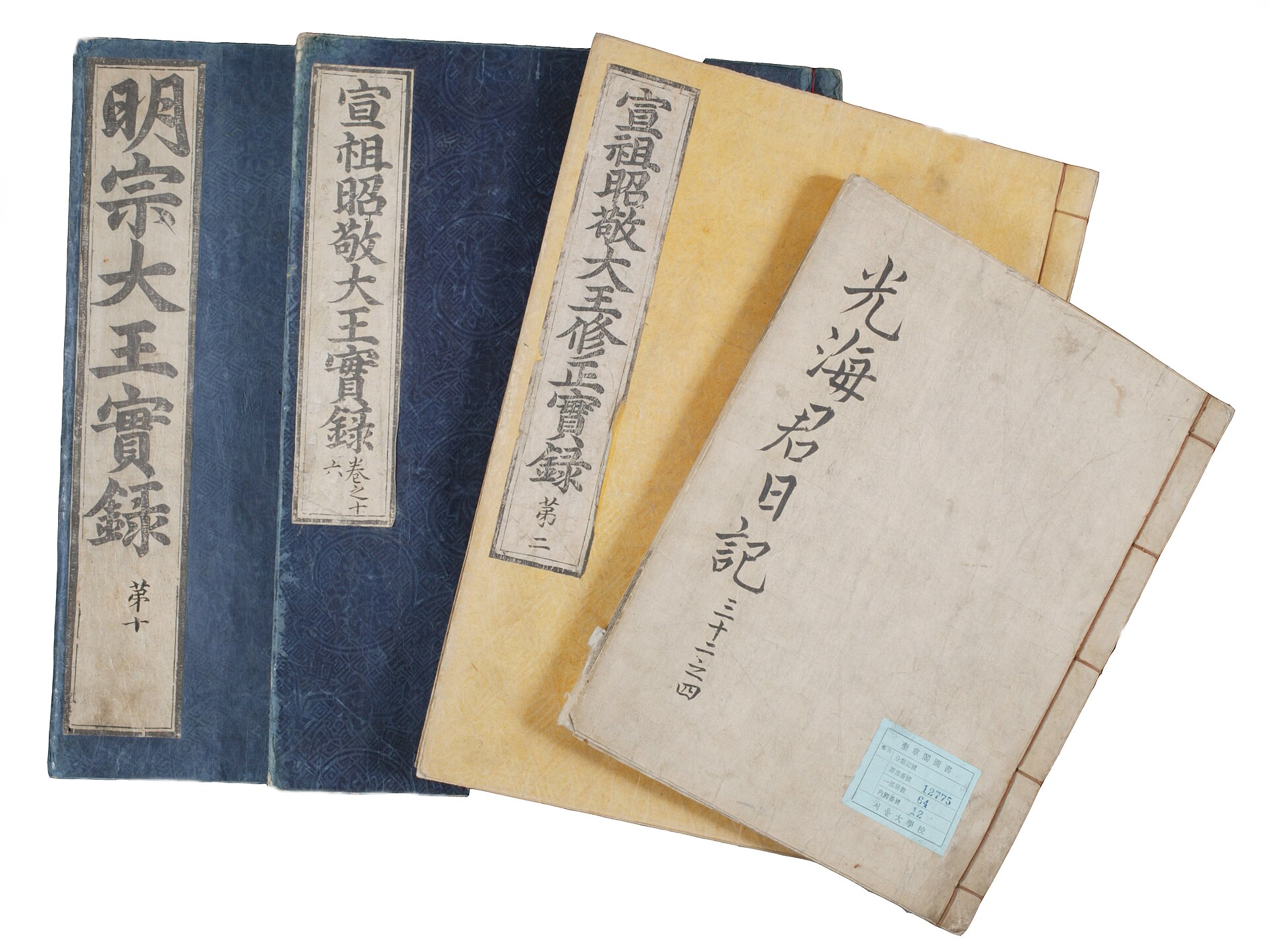
The starting point of this story is not the novel but the Annals. The Annals of the Joseon Dynasty are the official state record, a meticulous accounting of everything a king did as he governed, day by day. And within that rigorous record, on a certain day in the sixth year of King Yeonsangun — the year 1500 — the name of a bandit appears in unmistakable ink. That autumn, the highest ministers of the court, the chief state councillor among them, went before the throne to report that a great bandit who had long thrown the country into disorder had at last been seized: the outlaw Hong Gildong. The name written in the Annals uses one different Chinese character from the one we know today, but it is pronounced exactly the same.
What makes this brief record remarkable is that this was no anonymous petty thief. Hong Gildong wore a hat set with a jade ornament and a red sash, passing himself off as a court official of some rank. He is said to have moved in broad daylight at the head of an armed band, walking boldly in and out of government offices without the slightest hesitation. He was not a shabby night-thief preying on the helpless, but a brazen figure who mimicked the authority of the state in order to mock it. That the nation's official record went out of its way to note even a bandit's dress and his impersonation tells us how strong an impression he left on the court.
The Bandit Who Shook the Court — and the Men Who Sheltered Him
The true reason Hong Gildong was dangerous is that he did not act alone. Follow the Annals and you find a startlingly wide net drawn behind him. Some of the very officials who were supposed to suppress banditry and protect the people had, instead, joined hands with him. One man in particular — Eom Gwison, an official of high rank — was found during the investigation to have accepted hospitality from Hong Gildong, to have bought a house for him, and even to have managed his assets to make them grow. Under interrogation, Hong Gildong named this Eom Gwison as his patron, the man who covered his back.
Here the novel we know and the actual record overlap in a strange way. Where the fictional Hong Gildong mocked a corrupt ruling class and plundered its storehouses, the real Hong Gildong drew part of that ruling class onto his own side, dissolving the very line between the law and the outlaw. His capture, therefore, did not end as the mere arrest of a single bandit. Officials entangled with him were investigated one after another, and the court came to treat the affair as a symbol of the collapse of the nation's discipline, debating it for a long time afterward. His name even resurfaces in the Annals years after his arrest — the shadow of a single bandit trailing the court long after he himself had been seized.

The Outlaw on Paper, the Bandit in the Annals
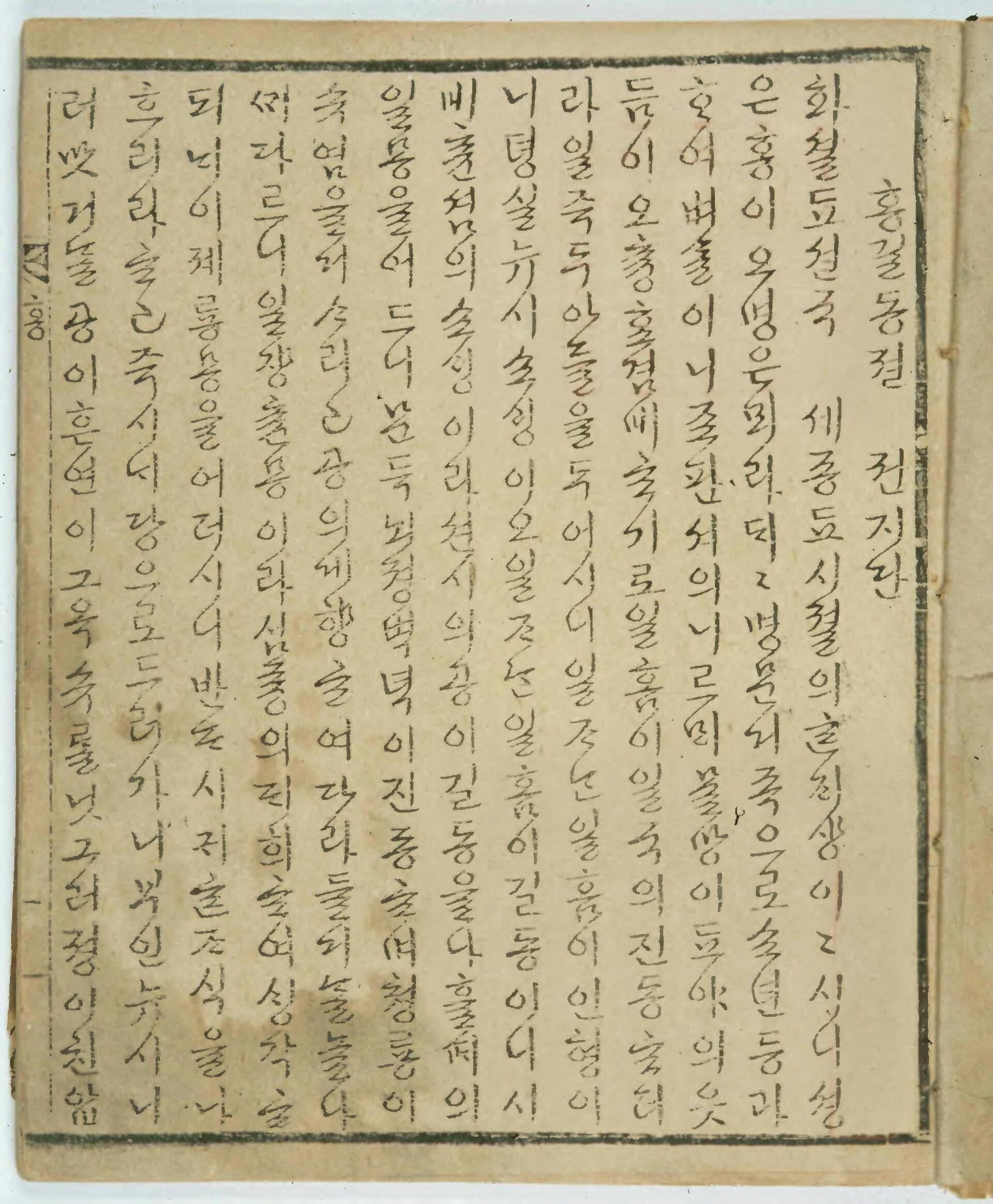
So how does this real man connect to the hero we love from the page? This is where the story turns subtle. The Tale of Hong Gildong has long been attributed to Heo Gyun, a literary figure of the reign of Gwanghaegun. There is, however, an old scholarly debate over whether Heo Gyun truly wrote it, and a fair number of experts consider the attribution far from settled. What is clear is that the novel appeared more than a hundred years after the real Hong Gildong was captured in 1500. And the novel moves its setting away from the reign of King Yeonsangun, when the real bandit lived, back to the earlier reign of King Sejong.
In other words, the author appears to have taken the name of a bandit who had actually existed, shifted the era, and built a new story around him. Where the real Hong Gildong was a "robber" who colluded with officials and threw the country into disorder, the fictional Hong Gildong was reborn as a "righteous outlaw" who stood against a corrupt world to help the weak. Why that name, of all names? Almost certainly because the name Hong Gildong had survived on the lips of ordinary people for more than a century. A brazen bandit who made the court tremble, an uncanny figure with whom even officials had joined hands — that real story swelled and was polished in popular telling until, at last, it was completed on paper as a hero who shatters the walls of caste. On the border of fact and fiction, a single name came to live two lives.
A slow passage along an old mountain path leading toward a stronghold deep in the hills on a misty moonlit night — a mood recreation, not real footage.
The Vanished Ending — What the Annals Never Recorded
And now we come to the coldest part of the story. Hong Gildong was a bandit great enough that the court's highest ministers reported his capture to the king in person. Seizing him was a major event of state, and the punishments of the officials entangled with him were recorded in the Annals in careful detail. Yet about the central figure of the whole affair — Hong Gildong himself — there is no record of how he was punished, what penalty he was made to suffer, or when and how he died. The official record that traced the affair in such fine detail falls silent precisely at the ending of this great bandit.
That gap has stirred the imagination ever since. Perhaps the record was simply lost, or was never thought worth writing down. He may have sickened and died quietly in prison; he may have been executed like any common bandit while the fact went unrecorded. But there were those who could not simply pass over this silence. Does the absence of a death record not, perhaps, mean that he did not die? A bandit for whom there is a record of capture but none of death — and it is in exactly this crevice that a bold theory grew up, reaching beyond the Annals themselves.
The Theory That He Vanished Across the Sea
In the late 1990s, a scholar of Korean literature put forward a daring hypothesis about that vanished ending. The captured Hong Gildong, he suggested, was not executed after all, but slipped free of the state's grasp and fled across the sea to the kingdom of Ryukyu — today's Okinawa islands — where he built a new power base of his own. Intriguingly, this hypothesis overlaps with the novel's ending. Just as the fictional Hong Gildong led his band across the sea to found Yuldoguk and become its king, the real Hong Gildong, on this telling, opened a world of his own on some island beyond the water. The scholar pointed to a figure who appears in old Okinawan records — written in Chinese characters as "Hong the King" and called locally something like Honggawara — as his thread of evidence.
One thing must be said plainly, however. This flight-to-Ryukyu theory is a single hypothesis, not a view widely accepted as established fact. On the contrary, the objections to it are considerable. Above all, critics point out that the dates do not line up: the moment Hong Gildong was captured in Joseon does not fit the period when the figure connected to him in Okinawa was active or had already died. To treat the two as the same man, they argue, the chronology simply does not add up. And yet the reason the theory keeps circulating is that, in the end, it stands upon that very silence the Annals left behind. So long as the record of death remains blank, the imagining that "he vanished somewhere" can never be fully erased.

A Name That Five Centuries Could Not Erase
Follow the story to this point and you realize that several lives lie stacked upon the single name Hong Gildong. In the reign of King Yeonsangun, there was a real and brazen bandit chief who made the court tremble. His name survived on the lips of the people for more than a century, and was at last reborn on paper as a righteous outlaw defying the walls of caste. And overlapping the novel's ending, there followed a theory that the real man had vanished across the sea to found a country of his own. A line in the Annals, a single novel, and a hypothesis about a lost ending — these three threads, tangled beneath one name, have carried down to the present day.
What holds this story is not a supernatural curse or a ghost. It is, rather, two clear facts set side by side. There is the plain record that a bandit named Hong Gildong was captured, and there is the plain absence of any record of what became of him. That one blank space, between the sentence that says he was caught and the sentence that never says he died, has held the human imagination for more than five hundred years. Whether he wasted away in a cell, met his end on the execution ground, or truly opened a new life somewhere across the sea — the Annals never gave the answer.
In my own indexing I file cases by how they close. This one has no closing field, and after cross-checking the entries on Eom Gwison — whose punishment the scribes did record, in detail — I find I cannot let that asymmetry alone. The clerks kept careful account of what happened to the official who sheltered him. They simply stopped writing about the man himself. I have never decided whether that is an accident of preservation or something a person chose, and I am no longer sure I want to know.
Perhaps that is the real reason this name has endured for five centuries. Because his ending was erased, Hong Gildong never quite dies in any age. On paper he lives forever as a hero who breaks the walls of caste; in the margins of the Annals he remains a bandit who vanished somewhere, still uncaught. A man for whom there is a record of capture but none of death — that single blank keeps the fictional outlaw alive, even now, somewhere just out of reach.
---
This article combines real photographs of the Joseon Annals and old manuscripts of Tale of Hong Gildong with AI-generated images and video produced to convey the mood of the story.



Comments
No comments yet — leave the first one.