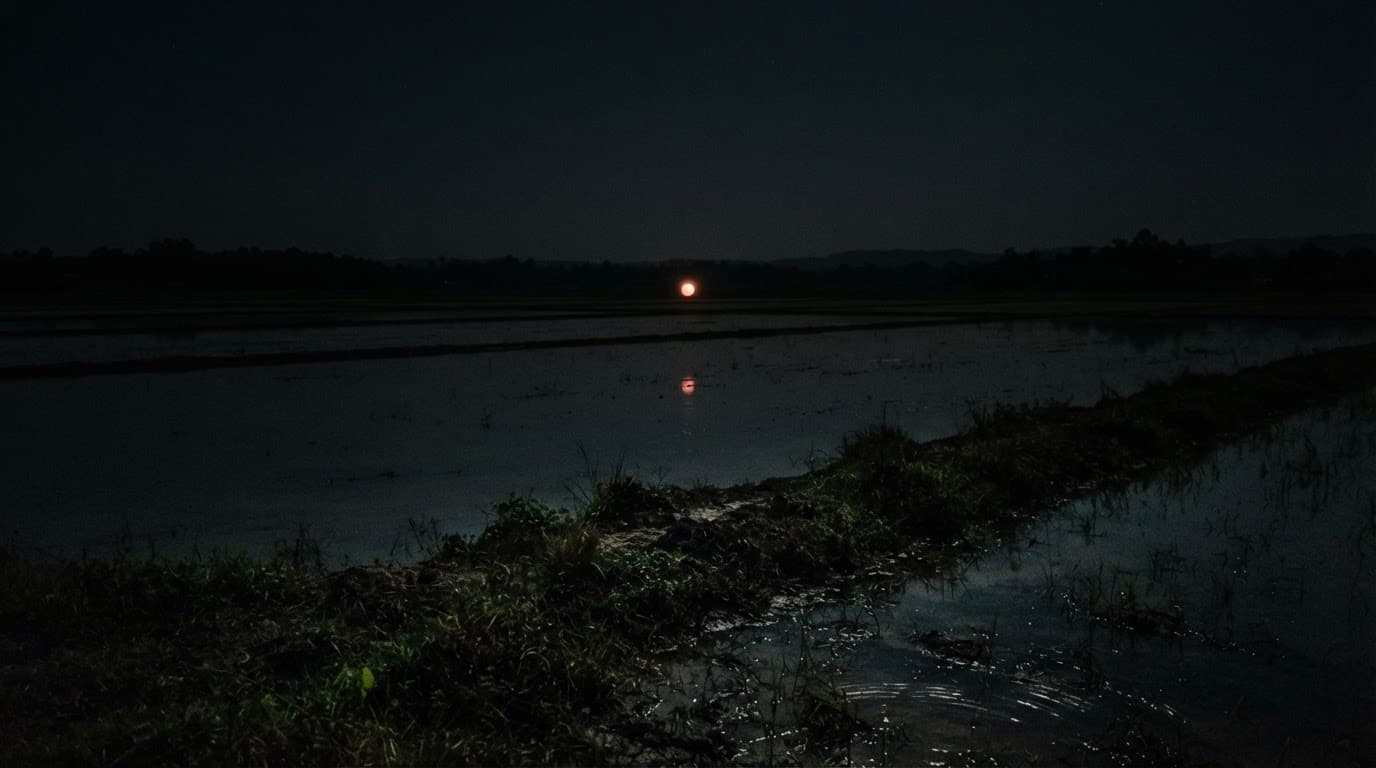
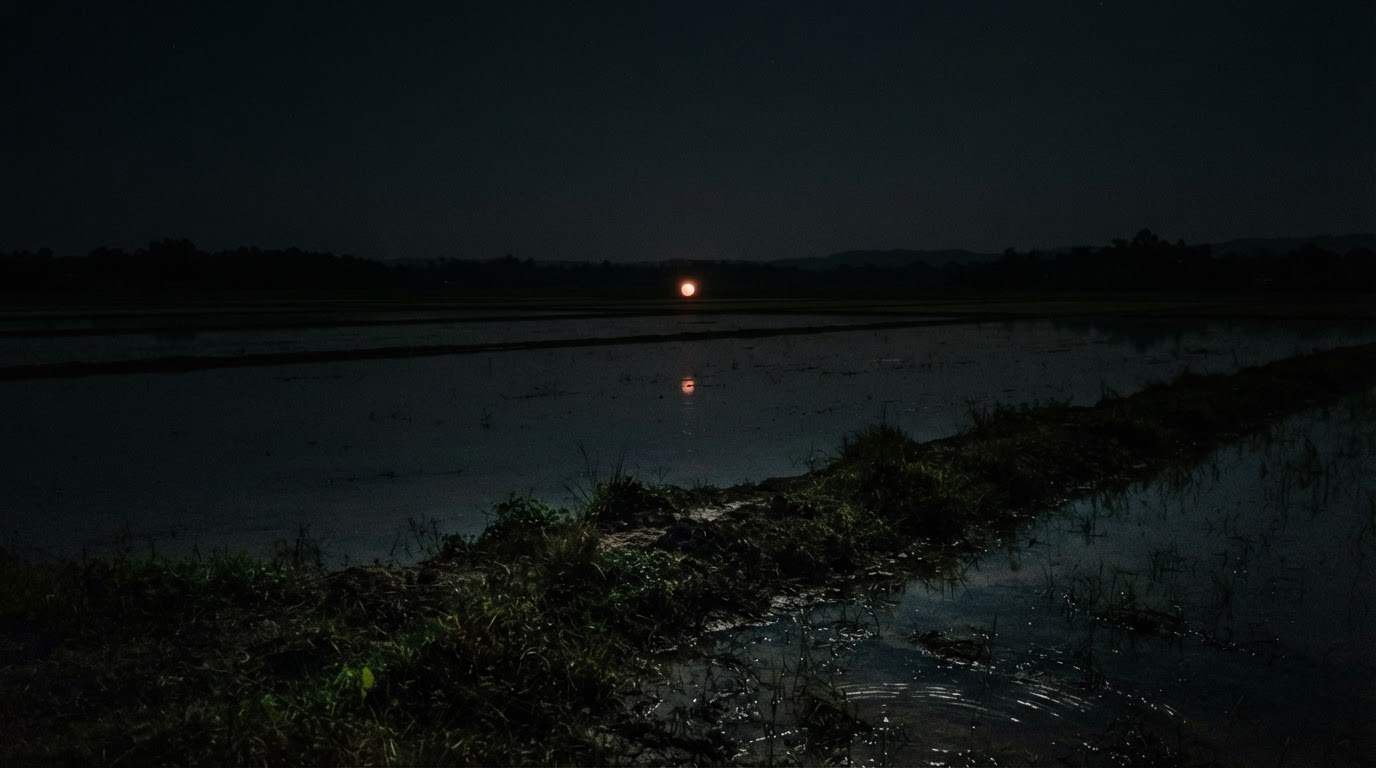
The light comes when the moon is gone. That is the first thing to know.
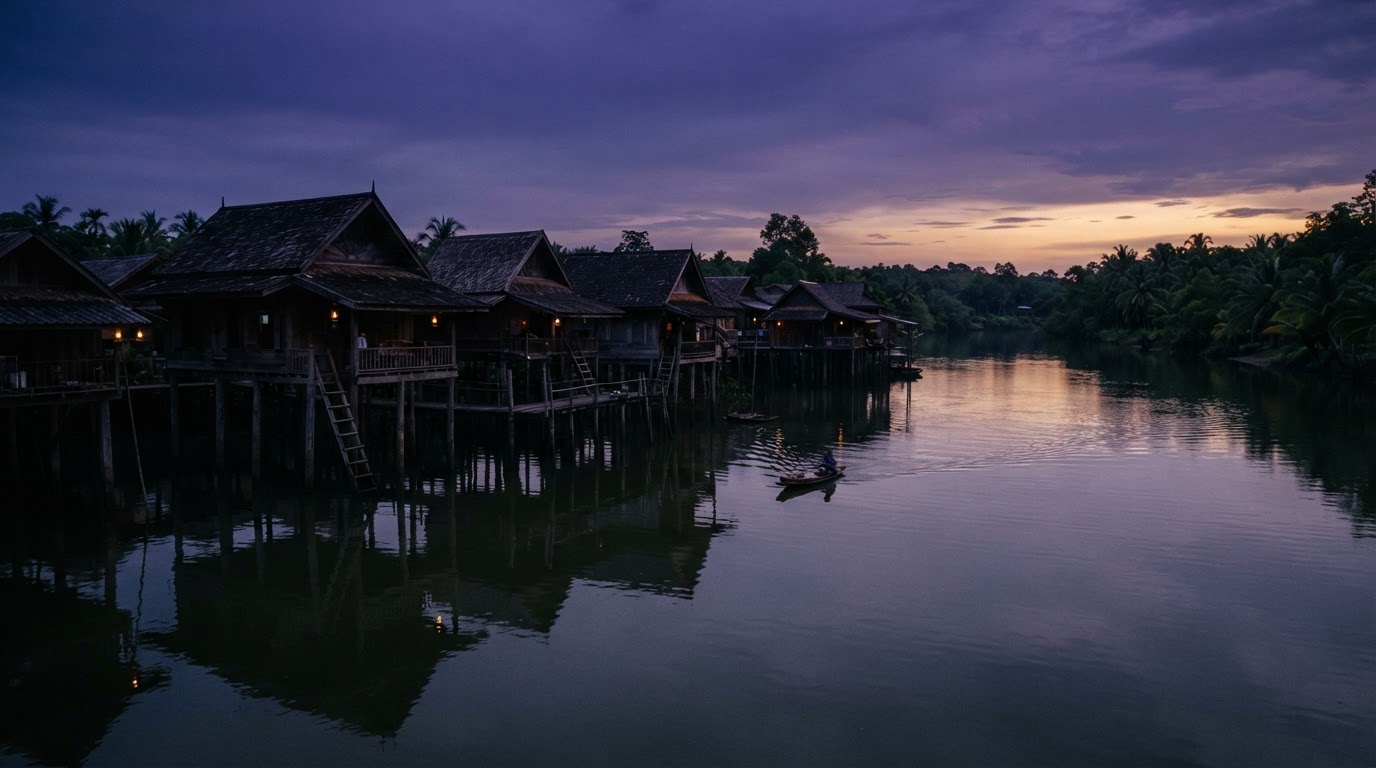
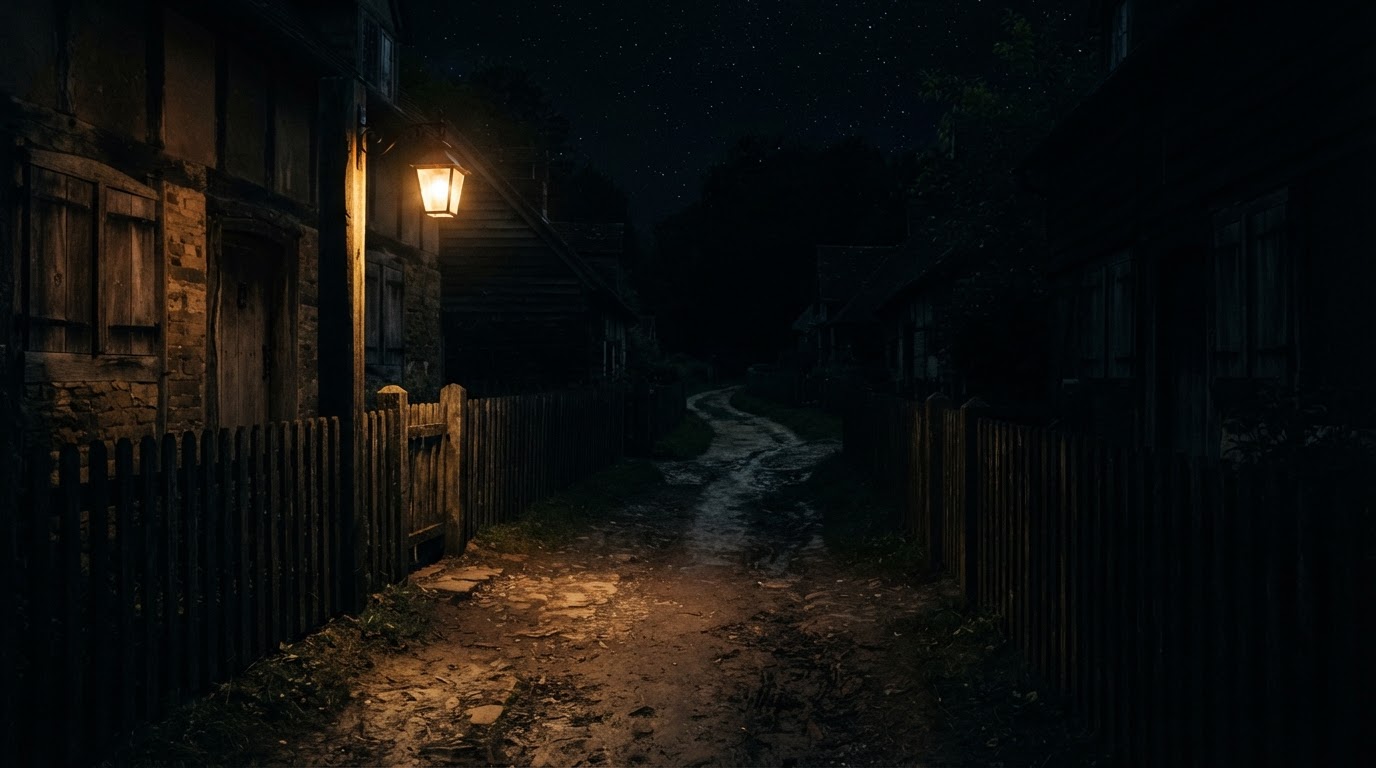
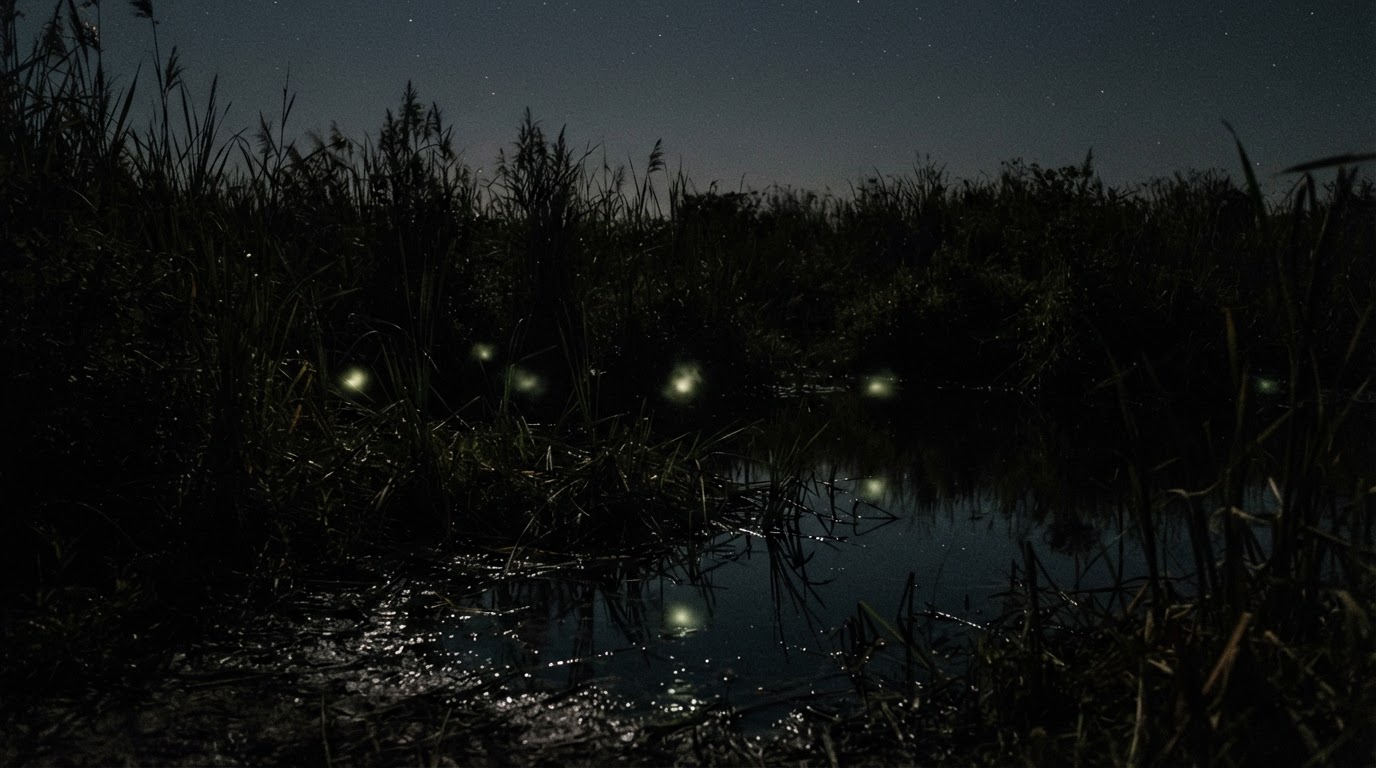
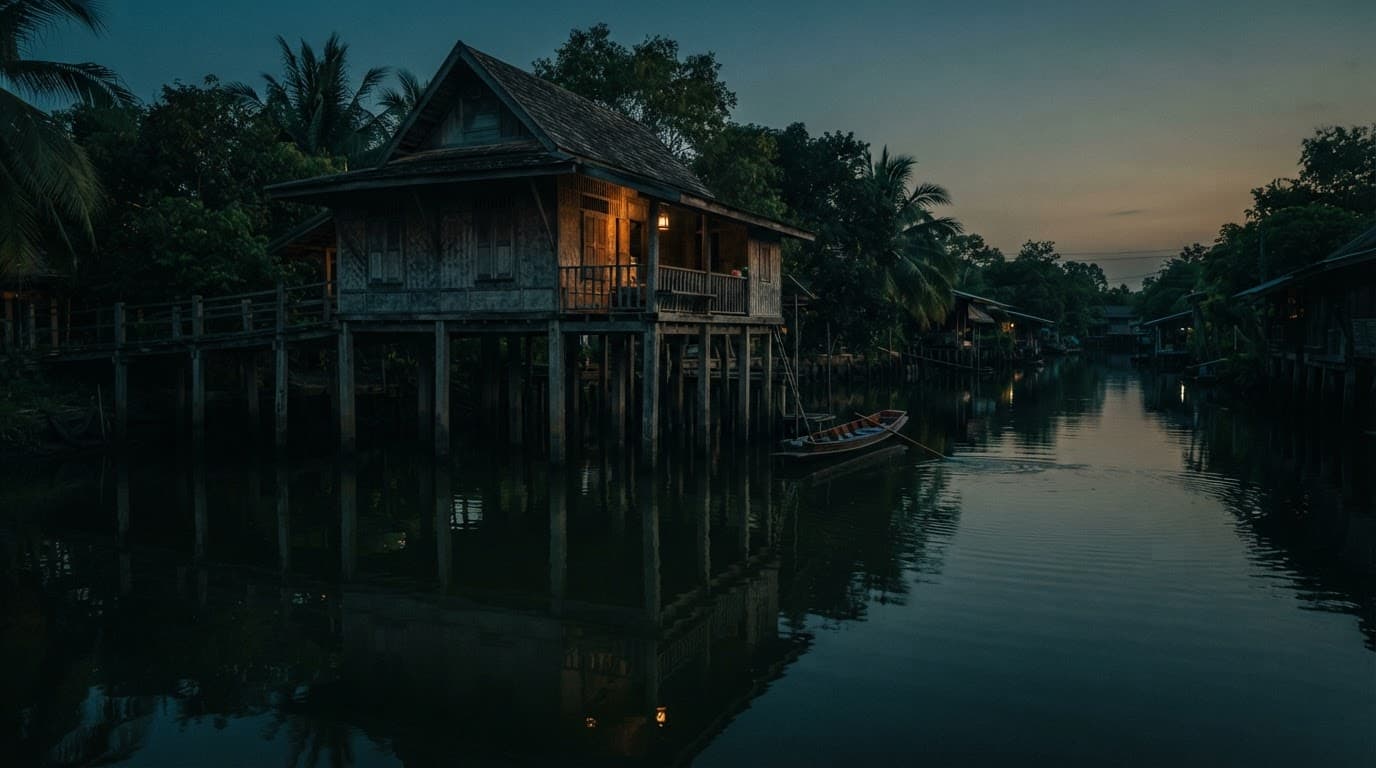
It is well past midnight in the deep countryside, the kind of dark that only settles over rice country far from any town — a warm, breathing dark, thick with frogs and the smell of wet earth. The paddies lie flat and black to the tree line, and the stilt houses stand on their long wooden legs above the standing water, shuttered and quiet. And then, out over the fields, a light appears. Not a lantern, not a torch, not the headlamp of anything on a road. A soft, low, reddish glow, no bigger than a melon, that rises from nowhere and begins to move — drifting slow above the young rice, dipping and bobbing, patient as something that has all night and knows exactly where it is going.
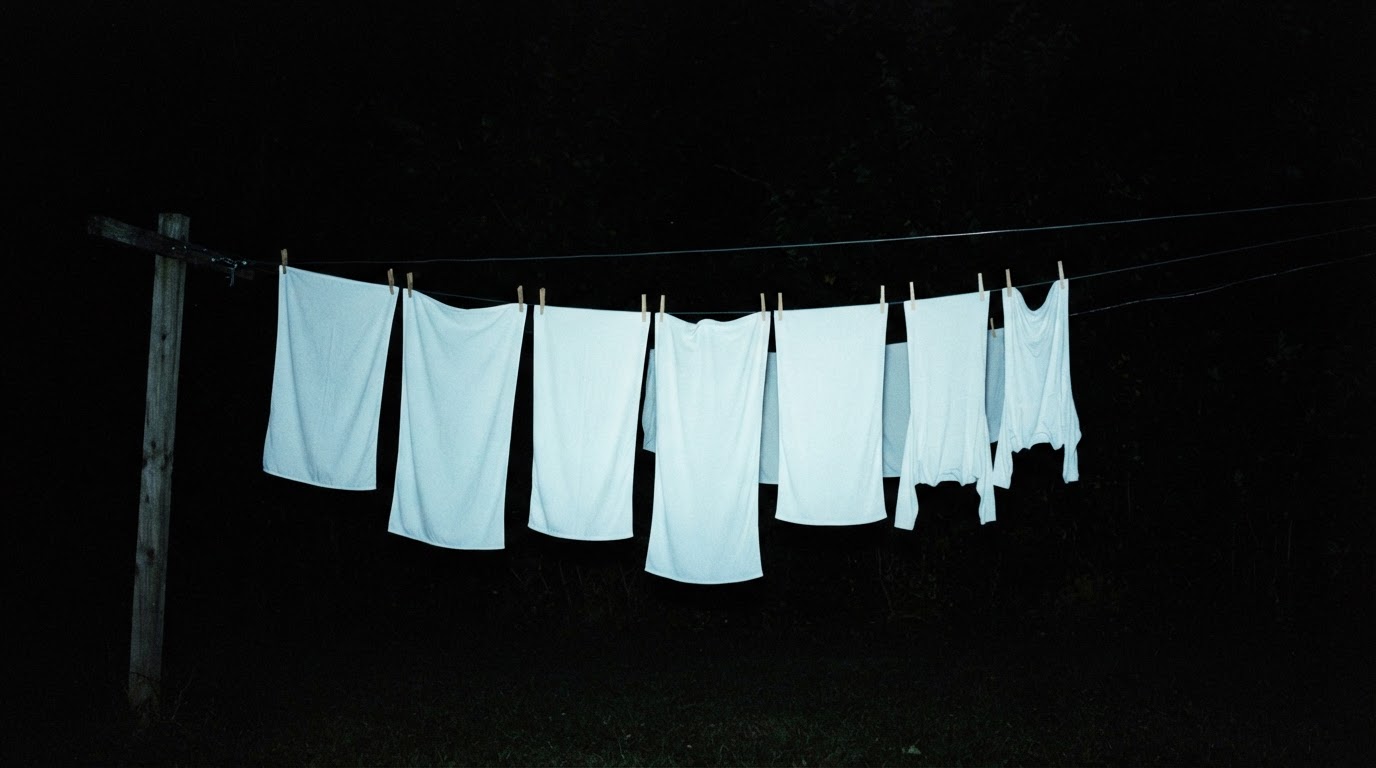
The old woman in the nearest house does not need to look twice. She rises without a word, pulls the shutters tight, takes down the white washing still hanging on the line below, and murmurs the name that the village has whispered for as long as anyone can remember. Krasue. And the light drifts on across the dark water, looking for a house that forgot to close its windows.
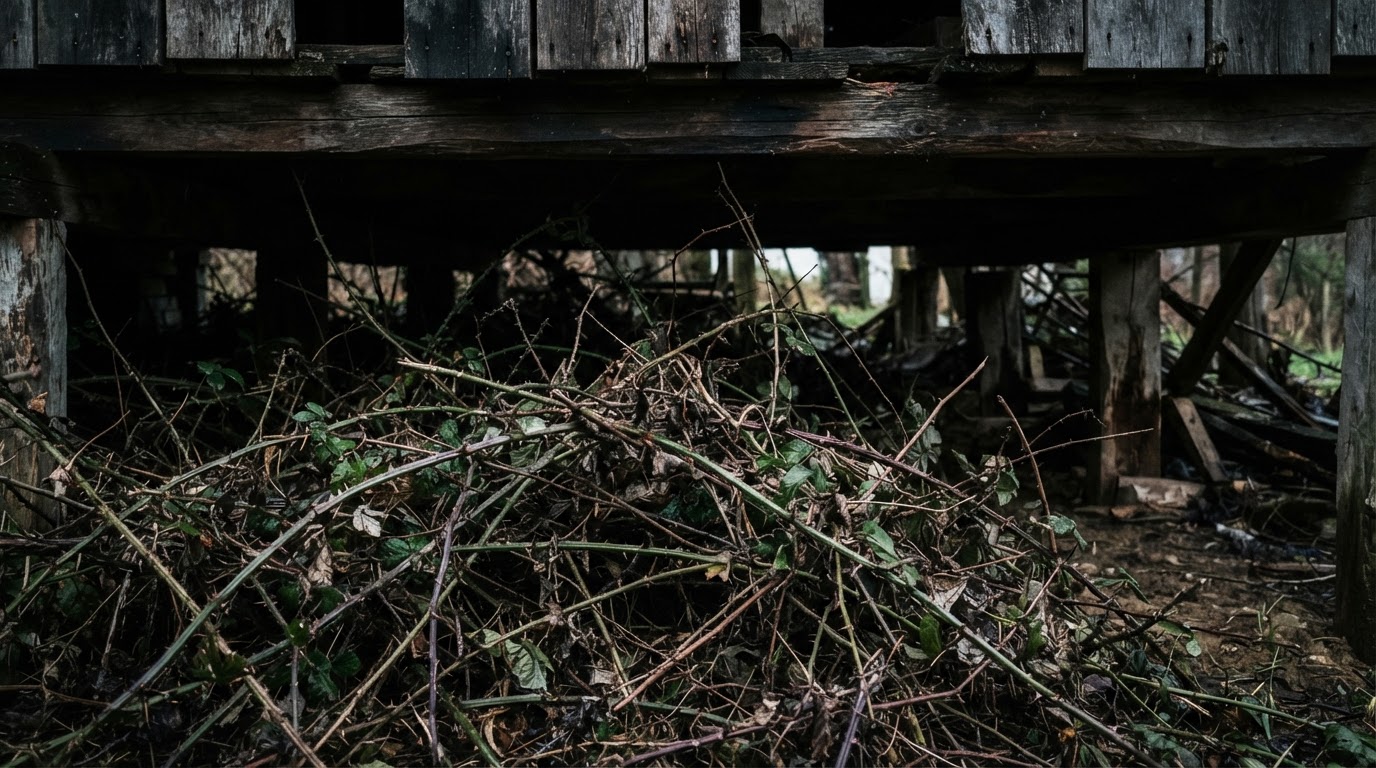
Cross-referencing this one took me longer than the writing did, because the material arrives under a different name in every set of records I could reach. What settled it for me was not any account of the light. It was the thorns. Villages a thousand miles apart, separated by language and sea, independently arrived at the same countermeasure: heap the spined brush under the house, because the thing that comes low will snag on it. When defenses converge that precisely across a region, something older than any one story is being described, and I have not been able to determine what.
The Woman by Day, the Light by Night
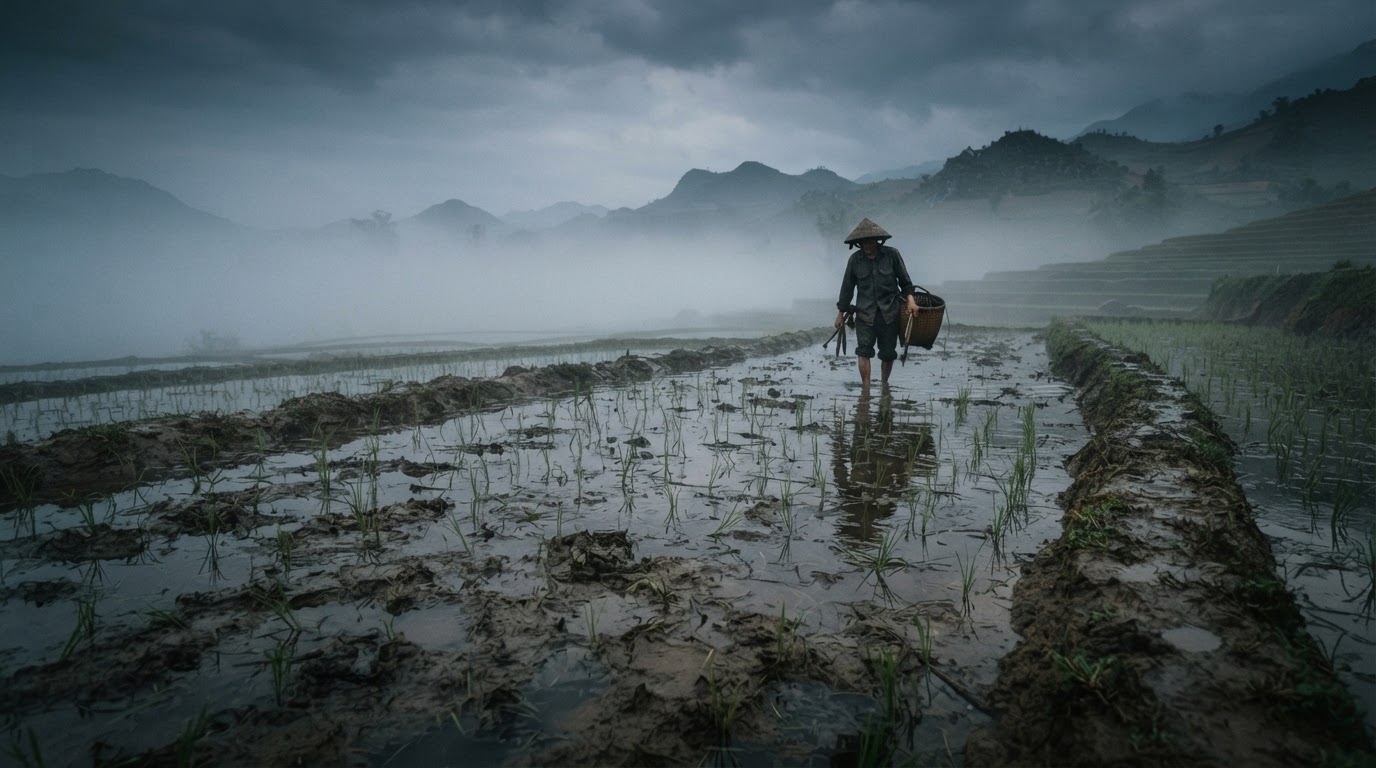
The Krasue — กระสือ in Thai, sometimes romanized Krasue or Krahang's female counterpart — is not a monster that lives in a cave or a forest. That is what makes her frightening in a way the forest things never are. By daylight she is a person. She walks among the villagers, buys fish in the market, smiles at children, works in the fields like everyone else. In many tellings she is not merely ordinary but beautiful — the loveliest young woman anyone has seen, with something faintly distant in her eyes that no one can name. She has a house, a family perhaps, a life stitched into the community like any other thread.
And then night comes, and the thing the daylight hides comes loose.
The legend describes it with a strange, luminous restraint, and the older the telling, the more it prefers glow to gore. When the deepest part of night arrives and the body lies down to sleep, the head of the Krasue detaches and rises free, and beneath it drifts a faint trailing light — a soft internal luminescence, warm and reddish, that the villagers see from far across the fields as that bobbing lantern-glow over the water. The body remains behind, still and asleep, waiting. The head floats out alone into the dark on its quiet errand, lit from within like a paper lamp, and what it seeks is food.
The storytellers are careful here, and we will be too. The horror of the Krasue was never meant to be anatomical. It is meant to be that light — the wrongness of a warm glow moving where no lamp should be, low over black water, drawing near your house in the smallest hours. You are not supposed to picture the thing in detail. You are supposed to hear the frogs go suddenly quiet, and see the reddish light bobbing closer through the dark, and understand, the way the old woman understood, that it is time to bar the shutters.
What the Light Hunts
The Krasue is a creature of appetite, but her hungers are humble and domestic, and that is part of what makes her so believable to the people who live where she is said to fly. She does not tear apart travelers on the road. She comes, instead, for the small vulnerable things of a farming village, drifting low through the night in search of them.
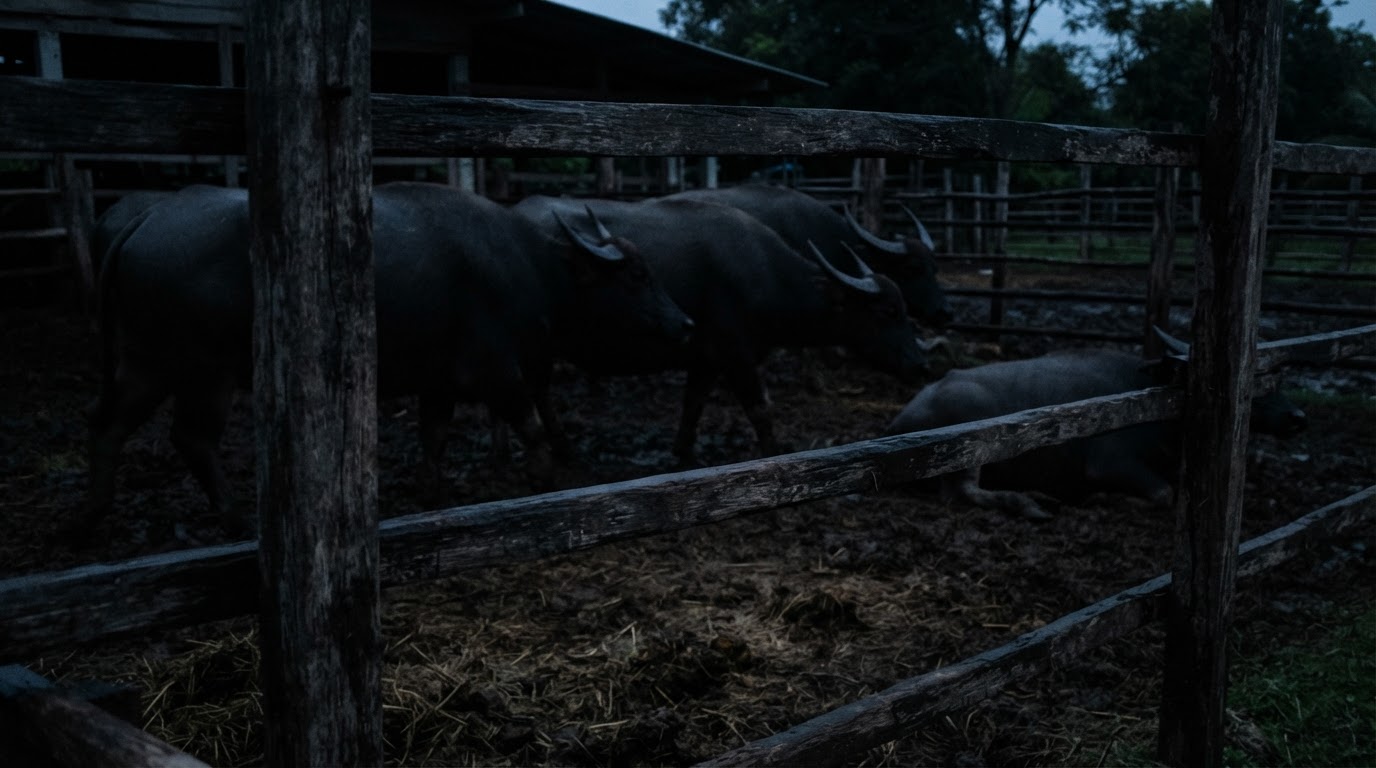
Livestock, first of all. Chickens shut in their coops, and above all the buffalo and cattle penned beneath or beside the stilt houses — the legend says the Krasue is drawn to them, and that a beast found weak and ailing in the morning, or an animal that simply sickened for no clear reason, may have had a night visitor. In a world before veterinary medicine, when a family's few animals were its whole security and could fail overnight from causes no one could see, the drifting light gave a shape to that terror.
Then there is the laundry. This is one of the most specific and haunting of the old warnings: do not leave your white washing on the line overnight. The Krasue, the villages say, is drawn to it, will foul it or worse, and clothes left hanging in the dark are an invitation. So at dusk, across the countryside, the white cloths come down off the lines and are folded away inside — a small nightly ritual, half habit and half fear, that mothers taught daughters for generations without always saying why.
And then there are the warnings that the old women gave to households where a child was expected — the murmured cautions, passed woman to woman, that a home awaiting a new arrival should be especially careful to keep its windows closed and its blessed things in order on the darkest nights. The folklore here is old and oblique, wrapped in ritual and never spoken too plainly, a set of protective customs handed down through the village women more as a shape of care than a thing anyone would describe aloud. It belongs to that deep human instinct to build a wall of small observances around the most fragile and hopeful moments of a life. The Krasue, in this reading, is the name given to everything that could go wrong in the dark — and the closed shutter, the folded cloth, the blessed thread are the village's way of holding the dark off for one more night.
How the Villages Defend Themselves
Against a thing that flies in the dark, the countryside developed a whole quiet architecture of defense, and it is in these defenses that the legend feels most real — because they are practical, physical, and passed down as ordinary household sense rather than mystical lore.
The first and most famous is the thorn. Because the Krasue is said to fly low, trailing her soft light beneath her, and because the space under a stilt house — where the animals shelter and where a body might be vulnerable — is exactly where she is thought to go, villagers pack that space with thorny brush. Sharp brambles, spined branches, the meanest cutting plants they can gather are heaped beneath the house and around the buffalo pen. The idea is simple and grimly clever: a thing that floats low with something delicate trailing below it will not risk the thorns. The bramble is a wall built specifically against the shape of the fear.
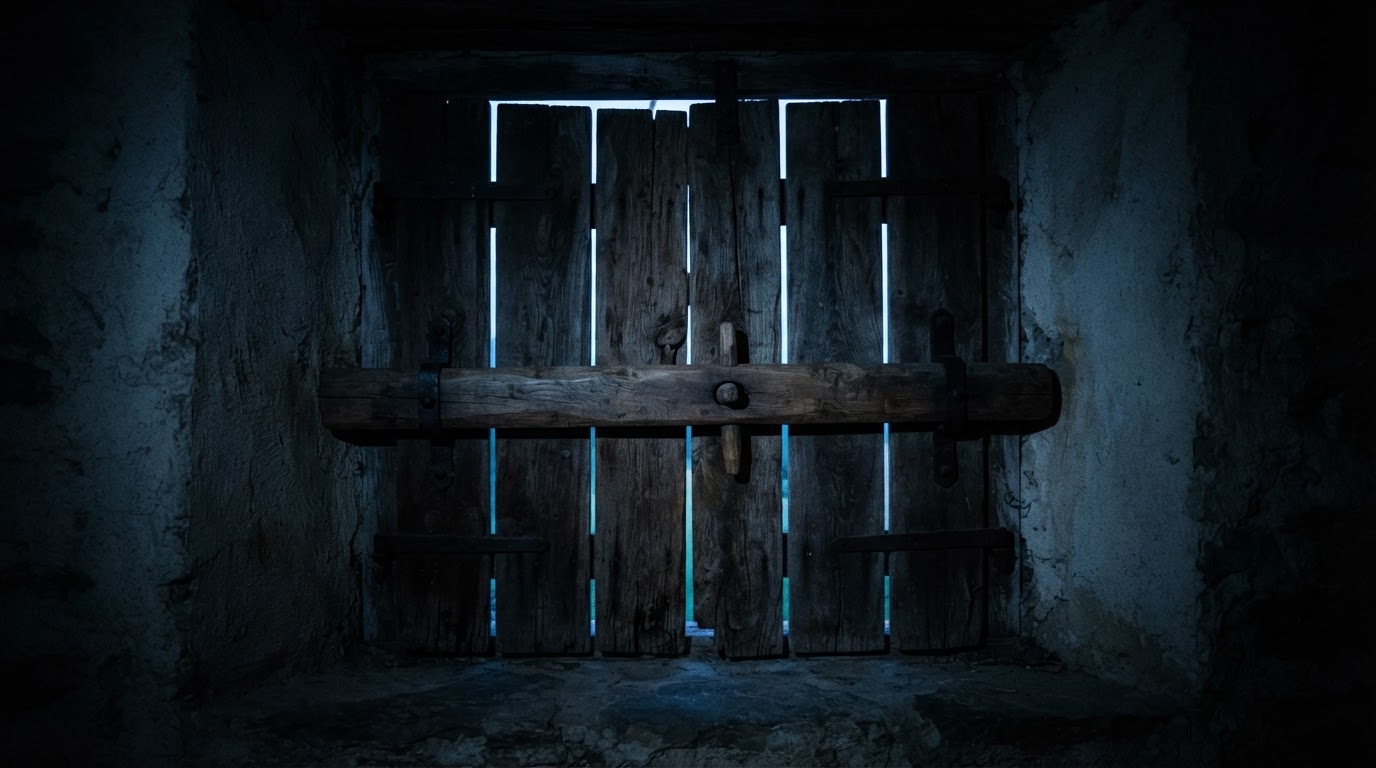
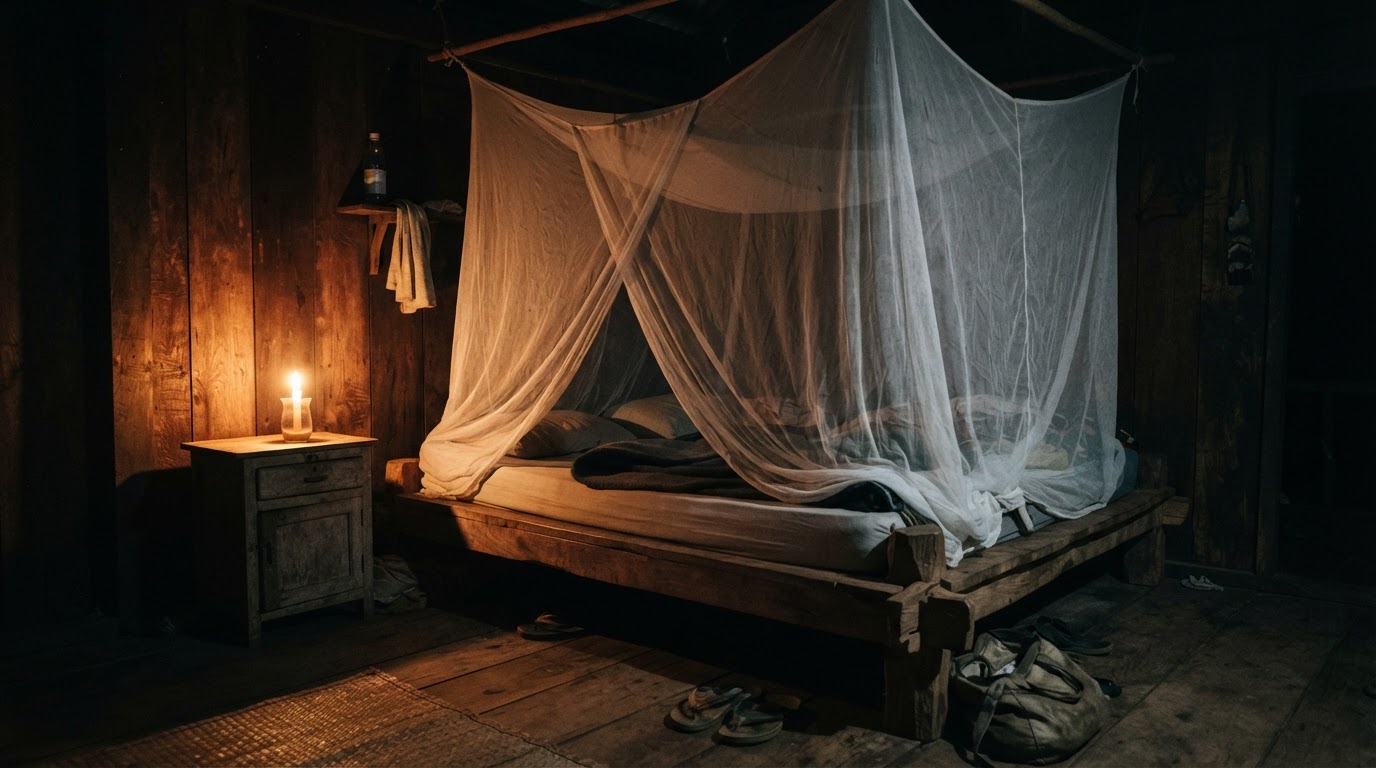
Then there is concealment. Since the white washing draws her, you take it in. Since an open window is a door, you bar the shutters from inside at nightfall — the heavy wooden panels pulled to and pegged, the house sealed into itself until dawn. Some households turn things around, hang mirrors, rearrange the familiar so that a thing coming in the dark is confused by a world subtly wrong.
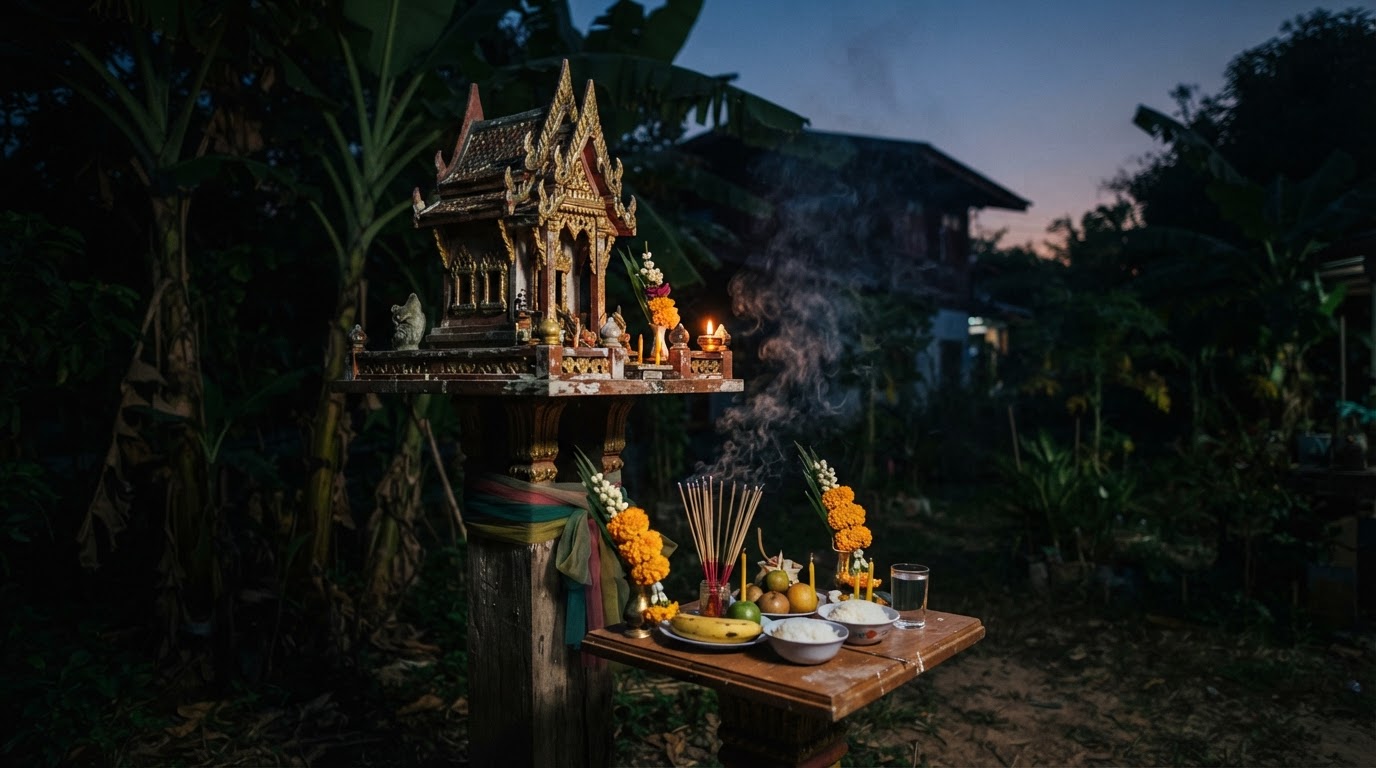
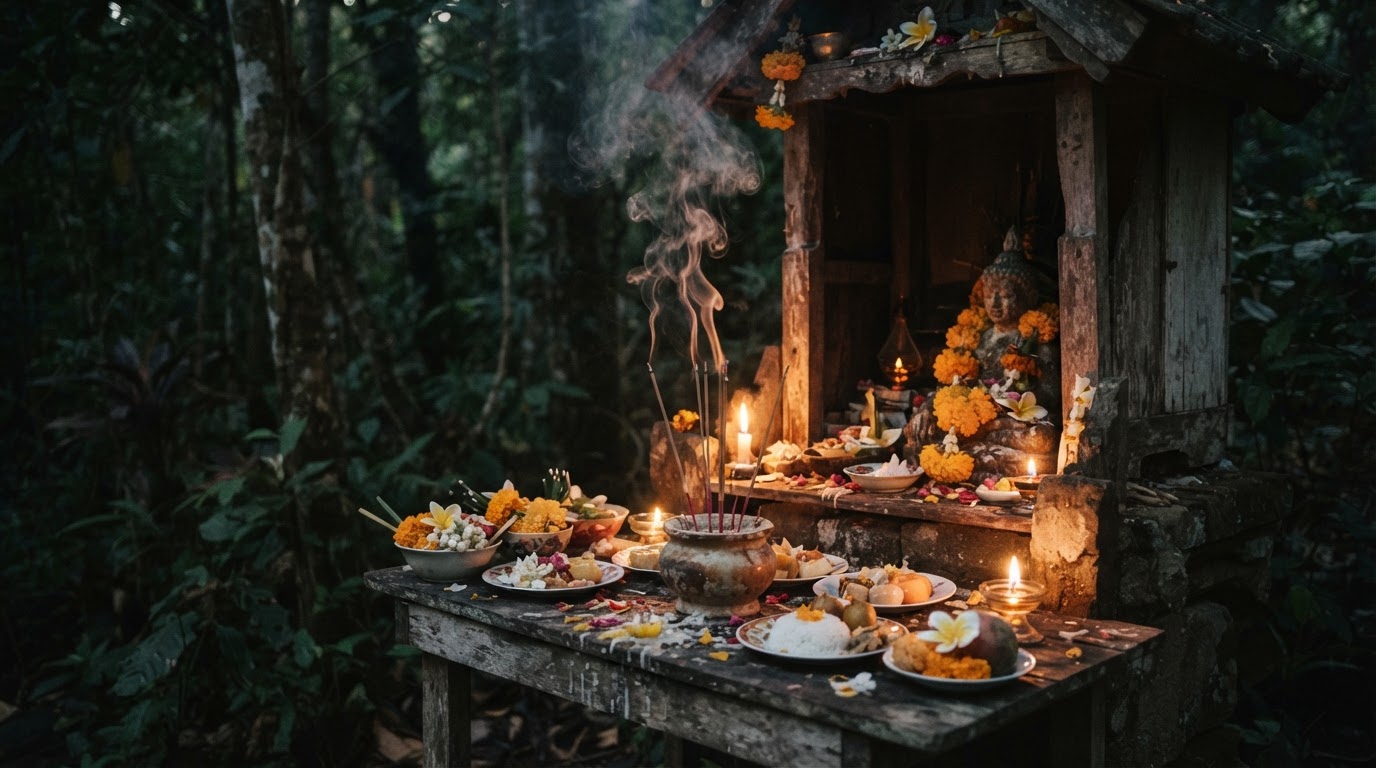
And then there is blessing. Thread blessed by monks and strung around the house or the sleeping space, sacred markings, offerings set out at the small spirit house that stands in the yard of nearly every traditional Thai home — the whole gentle apparatus of Buddhist and older animist protection, brought to bear on the night. The spirit house especially: that little ornate shrine on its post, where incense burns and small offerings are laid, is the household's standing arrangement with the unseen, a place for the spirits so that they will leave the living alone. On the darkest nights, the incense there burns for the light that might be drifting somewhere out over the fields.
Where She Came From: The Curse and the Cursed Princess
Why does a beautiful woman become a light that flies by night? The folklore offers several answers, and they braid together in a way that is very old and very sad.
The most romantic origin is the tale of the cursed princess. In one widespread version she was a highborn Khmer woman — a princess, in the tellings that reach for tragedy — condemned to death for some transgression, often a forbidden love with a man beneath her station. Sentenced to be executed, she is said to have called on a powerful sorcerer, or to have laid a desperate curse of her own so that her spirit would not simply die. The curse worked, but crookedly, the way curses in folklore always do: her body was destroyed, but her head and the light within her survived, condemned to drift the nights forever, neither living nor dead, carrying the appetite of a life that was taken too soon. In this version the Krasue is not a monster who chose evil. She is a woman who was wronged, and whose refusal to simply vanish curdled into a curse she now cannot lay down.
Other traditions make the curse a matter of karma and inheritance rather than romance. A woman becomes Krasue, these tellings say, because of grave misdeeds in a past life or this one — the fate settles on her as a punishment she may not even understand, a debt come due in the ledger of her own actions. And most unsettling of all is the strand of the legend that makes the curse transmissible. A dying Krasue, in these accounts, cannot rest until she has passed the affliction on — through her saliva, through food or drink she prepares, through a bloodline, to some unsuspecting woman or an inheriting daughter. The curse, in this reading, is a kind of contagion that must find a new carrier, so that the light will keep flying long after any one woman is gone. It is the folklore's way of explaining why the Krasue never truly ends: she is not one being but a role, handed down the dark line of the generations.
The Whole Family of the Flying Head
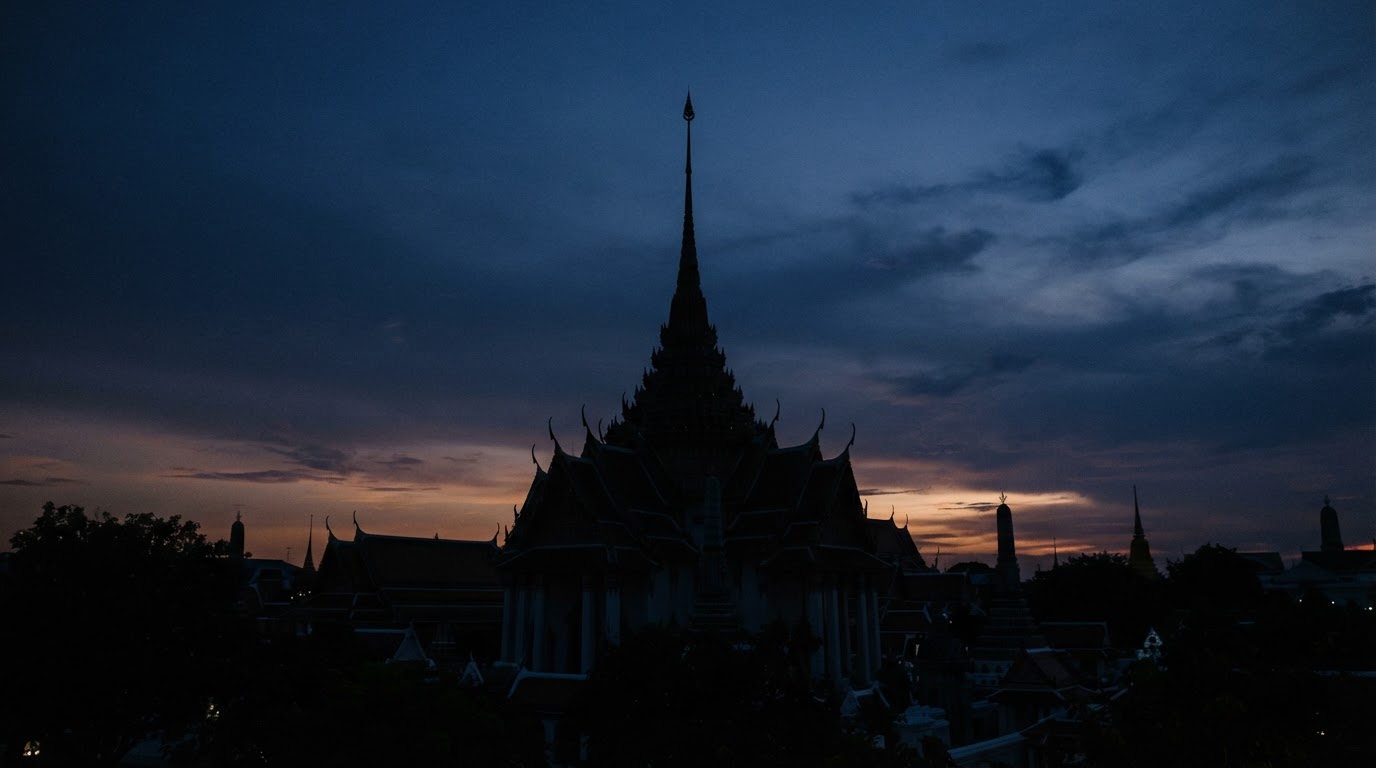
Here is the detail that lifts the Krasue out of local ghost story and into something far stranger and larger: she is not alone. Across almost all of Southeast Asia, in country after country and language after language, the same essential creature appears — a woman whose head or head-and-trailing-light leaves her body to fly by night. The names change at every border. The creature does not. It is one of the most widespread shared legends on Earth, and the map of it traces the deep cultural weave of the whole region.
In Cambodia, she is the Ahp (or Arp) — the near-twin of the Krasue, a Khmer flying head with a luminous trail, feared in the same rice country, defended against in nearly the same ways. Given that the Krasue's own origin legend so often reaches back to a Khmer princess, the two are less like cousins than like the same story told on two sides of one border.
In Laos, she is the Kasu (or Phi Kasu) — again the same nocturnal flying head, the same soft light over the paddies, the same warnings, threaded through Lao village life with only the accent changed.
And then, across the water into the Malay world, the family shifts and deepens. In Malaysia and Indonesia she becomes the Penanggalan — a name that means, chillingly and precisely, "to detach." The Penanggalan is a woman, often a midwife in the oldest tales, whose head separates at night to fly in search of blood, and here the legend leans hardest toward the vampiric. The classic defense against her is beautifully specific: the pandan or thistle, thorny leaves planted around the house and especially around a home with a newborn, because the Penanggalan's trailing form will catch and tangle in them and she cannot get in — the very same logic as the Thai villagers' thorns, arrived at independently across a thousand miles.
And in Bali, she takes her most theatrical and famous form as the Leyak — a creature of black magic, a living practitioner of the dark arts whose head detaches to fly by night, woven deep into Balinese religion, ritual, and the great shadow-play battle between the witch-queen Rangda and the protective lion Barong. The Leyak is not a distant folk memory in Bali but a living presence in ceremony and belief.
Compare the rules across the family and the pattern is uncanny. Everywhere: a woman, not a man. Everywhere: the head that leaves the body, which lies helpless and must be protected — for in nearly every version, if the body is found and moved or blocked, the flying head cannot return to it by dawn and is destroyed. Everywhere: thorns as the great defense. Everywhere: a special dread around childbirth and the newborn. The details drift from country to country — glow here, blood there, curse in one place and black magic in another — but the deep structure holds across the entire region, as if a single very old fear had been planted once and grown up in a dozen local shapes.
The Light Explained: What Really Drifts Over the Paddies
Every enduring legend that lives outdoors eventually meets the people who want to explain it, and the Krasue — being, at heart, a light that moves over wet ground at night — has met some very persuasive ones.
The first is the will-o'-the-wisp, known across the world's marshes and rice lands. Wet, decaying organic matter in paddies and swamps releases gases — methane, and phosphine and diphosphine among them — and phosphine in particular can ignite on contact with air, producing a pale, cold, drifting flame that hovers low over the water and seems to move, to bob, even to flee when approached. For centuries and on every continent, these marsh lights have been read as spirits, lanterns, souls, and lures. A warm glow that rises from the black paddies, drifts without a source, and recedes when you walk toward it is, quite literally, the raw material of the Krasue. The rice country of Southeast Asia — flooded, decaying, hot, and dark — is close to the perfect factory for exactly this phenomenon.
Others reach for ball lightning, that rare and still-debated luminous sphere sometimes reported drifting near the ground during storms, low and glowing and eerily deliberate in its motion. And the simplest explanations invoke nothing exotic at all — a distant torch carried across the fields, a lantern on a far boat, fireflies massing in the warm dark, swamp gas, a trick of tired eyes at the end of a long night. Any of these, glimpsed low over black water by someone raised on the story, becomes the light. As with all the great night-legends, the rational explanation does not so much kill the Krasue as show you exactly the seed from which she grew: a real, strange light over the fields, and a mind reaching in the dark for what it might mean.
Reading the Fear: What the Krasue Is Really About
Legends this widespread are never only about the thing they seem to be about, and folklorists reading the Krasue and her sisters find, beneath the flying light, some very human anxieties given a shape.
There is, first, the fear of the outsider woman. Notice that the Krasue is always a woman, and often a beautiful, independent, or somehow set-apart one — the lovely stranger, the midwife who moves between households, the woman whose eyes hold something no one can place. A tight rural community watches such a figure closely, and a legend that says the beautiful, self-possessed woman among you may be something monstrous by night is, read coldly, a story about the suspicion that gathers around any woman who stands slightly outside the ordinary. The Krasue is the village's unease about the woman it cannot quite account for, made into a light in the dark.
There is disease and misfortune given a face. When an animal sickened overnight, when a person wasted from an illness no one could name, when a longed-for hope in a household failed in the dark — a world without medicine needed somewhere to put that grief and that fear, and the drifting light gave it an address. To blame the Krasue was, in a hard way, to make the unbearable legible: not random cruelty, but a known enemy, with known defenses.
And there is the oldest fear of all, night-hunger — the memory, carried in the bone of every farming culture, of the dark as the time of want, when the animals are vulnerable and the food stores are finite and the difference between surviving the year and not could turn on what the night took. The Krasue is an appetite that comes in the dark for the small precious things a family cannot afford to lose. She is famine and loss and the long fear of the unlit hours, wearing the face of a beautiful woman and carrying a soft red light.
The Krasue on Screen and in the Modern Night
For a creature of old village dread, the Krasue has had a spectacularly long and vivid career in the modern imagination, and nowhere more than in Thai cinema. She is one of the great recurring stars of Thai horror, floating through decades of films — comedies and shockers and everything between, a whole shelf of movies built around the flying light, so familiar to Thai audiences that she is at once a genuine fright and a beloved national icon. For a long time these films played her broadly, as spectacle and scare.
Then, in 2019, the film Inhuman Kiss (Thai: Sang Krasue) did something quietly radical: it took the Krasue seriously as a tragedy. It cast her not as a monster to be defeated but as a young woman who wakes to find the curse has come upon her against her will, who is loved by a young man who knows what she is, and who is hunted by fearful villagers for an affliction she never chose. The film reached back past the shocks to the sorrow that was always in the legend's roots — the wronged princess, the woman punished for what was done to her — and made the Krasue what she had perhaps always half been: a heroine, tragic and luminous, more sinned against than sinning.
Beyond the cinema, she persists in the wild, informal life of a living legend. Every so often a grainy clip surfaces online — a glowing shape filmed over a dark field somewhere in the countryside, passed around with the old delicious mixture of it's fake, obviously and but what if. Some Thai towns have leaned warmly into her, holding Krasue-themed festivals and drawing curious visitors, turning the village fear into a point of local pride and gentle tourism — the flying light of the paddies become a mascot, a statue, a reason to come and hear the story where it is told best.
For the female night-spirits of Southeast Asia, the Krasue keeps company with others we have written about — the beautiful, tragic Indonesian ghost Pontianak, and Thailand's own most beloved phantom, the faithful and terrifying Mae Nak. Together they map a regional imagination in which the most frightening figure in the dark is so often a woman who was loved, or wronged, or lost, and could not let go.
The Pity Beneath the Fear
Bar the shutters, take in the washing, heap the thorns, light the incense at the little house on its post — the whole nightly ritual of the villages assumes that the Krasue is an enemy, and on the darkest nights, when the frogs go quiet and a reddish light lifts off the black water, she surely feels like one. But sit with the legend long enough, past the fright of it, and something turns underneath.
Because in nearly every telling, the Krasue did not choose this. She was a woman who was wronged — a princess condemned, a soul that would not die quietly, a daughter who inherited a curse she never asked for, a wife punished in the ledger of a past she cannot see. The light that drifts over the paddies is not simply hunting. It is doomed. It cannot rest, cannot die, cannot return to any of the ordinary comforts of a human night. She lies down each dawn in a body that is not quite hers anymore, and each nightfall the affliction lifts her out again into the dark, hungering for she knows not what, unable to stop. The villagers fear the light. The oldest storytellers, and the newest films, ask us to grieve for it.
That is the strange gift the Krasue leaves you with, once the shiver has passed. She is a warning made of light, drifting over the black rice at the deep hour of the night — and she is also a beautiful woman who was punished beyond death for something that, in most of the stories, was done to her. The shutters stay barred against the fear. But the pity slips through the cracks anyway, the way the faint glow does, and stays with you long after the light has drifted on across the fields toward some other sleeping house, still looking, still cursed, still unable to come to rest.
The variant I set aside for a long time, and eventually filed anyway, is the transmissible one — the account in which a dying Krasue cannot rest until the affliction has been handed on, through food she prepared, through a daughter, through a bloodline. I had catalogued the curse as a punishment. That version reclassifies it as a vacancy. Somewhere in the ledger of a village there is always a woman who has not yet been told, going about an ordinary day, and the reason the light has drifted over those paddies for four hundred years without interruption is that the post has never once gone unfilled.

---
The images and video in this article are AI-generated works produced to convey the mood of the story, and are not photographs of any actual person or event.
Comments
No comments yet — leave the first one.