The knock comes late, after the lane has gone quiet.
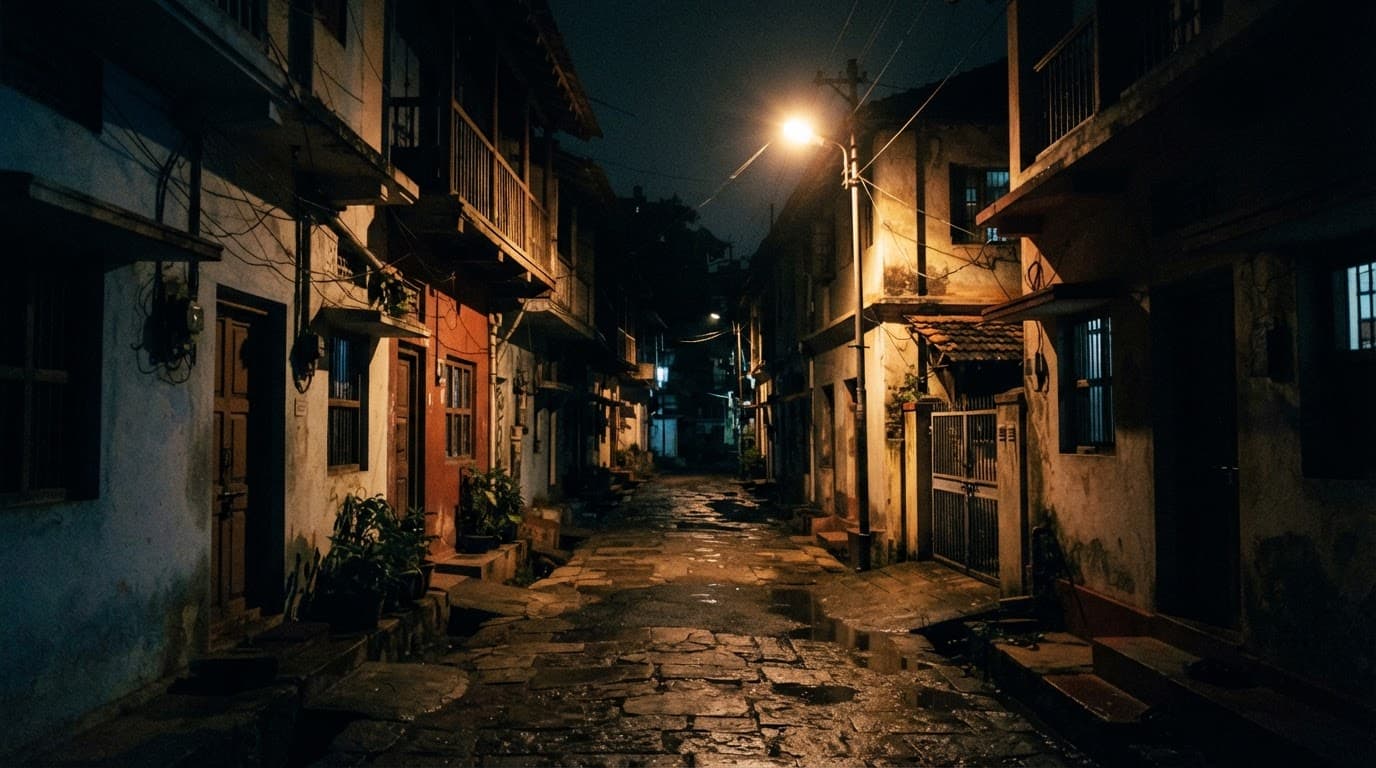
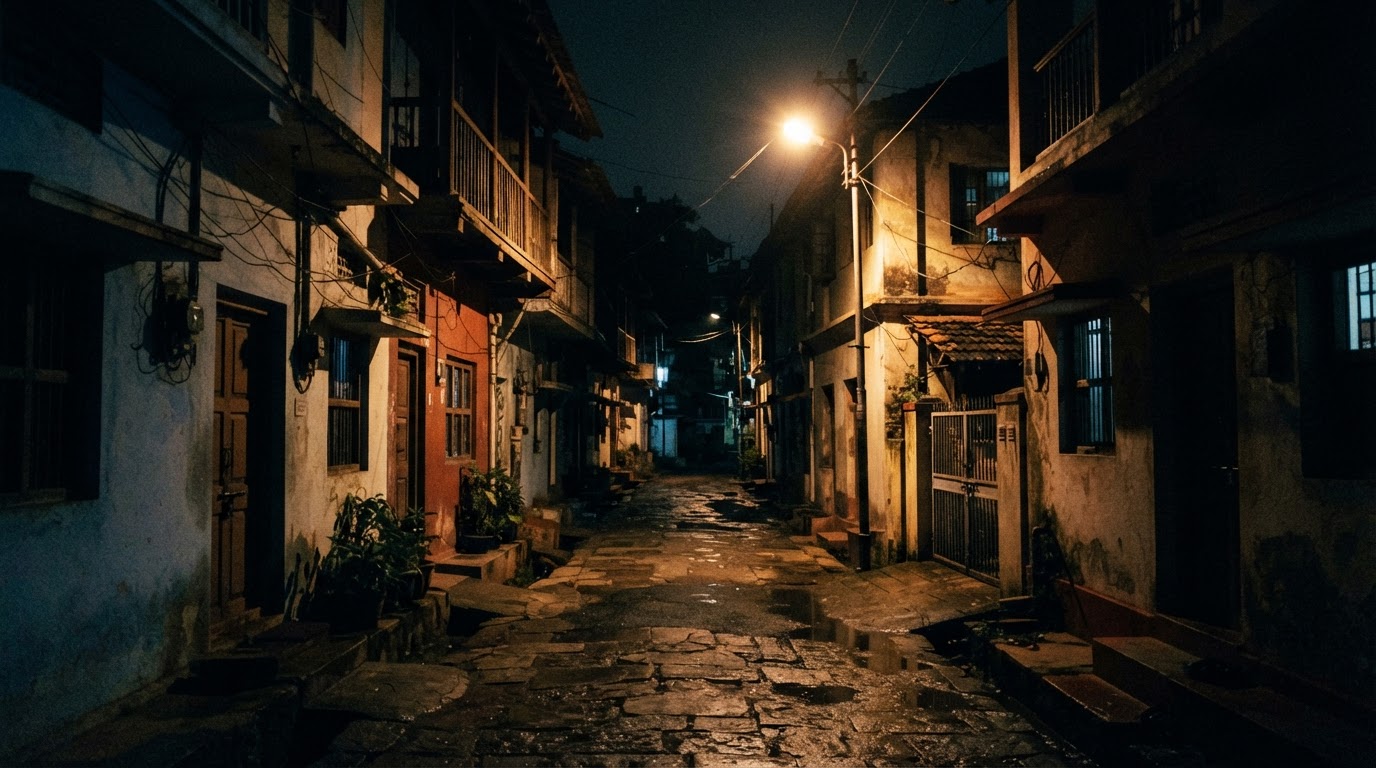
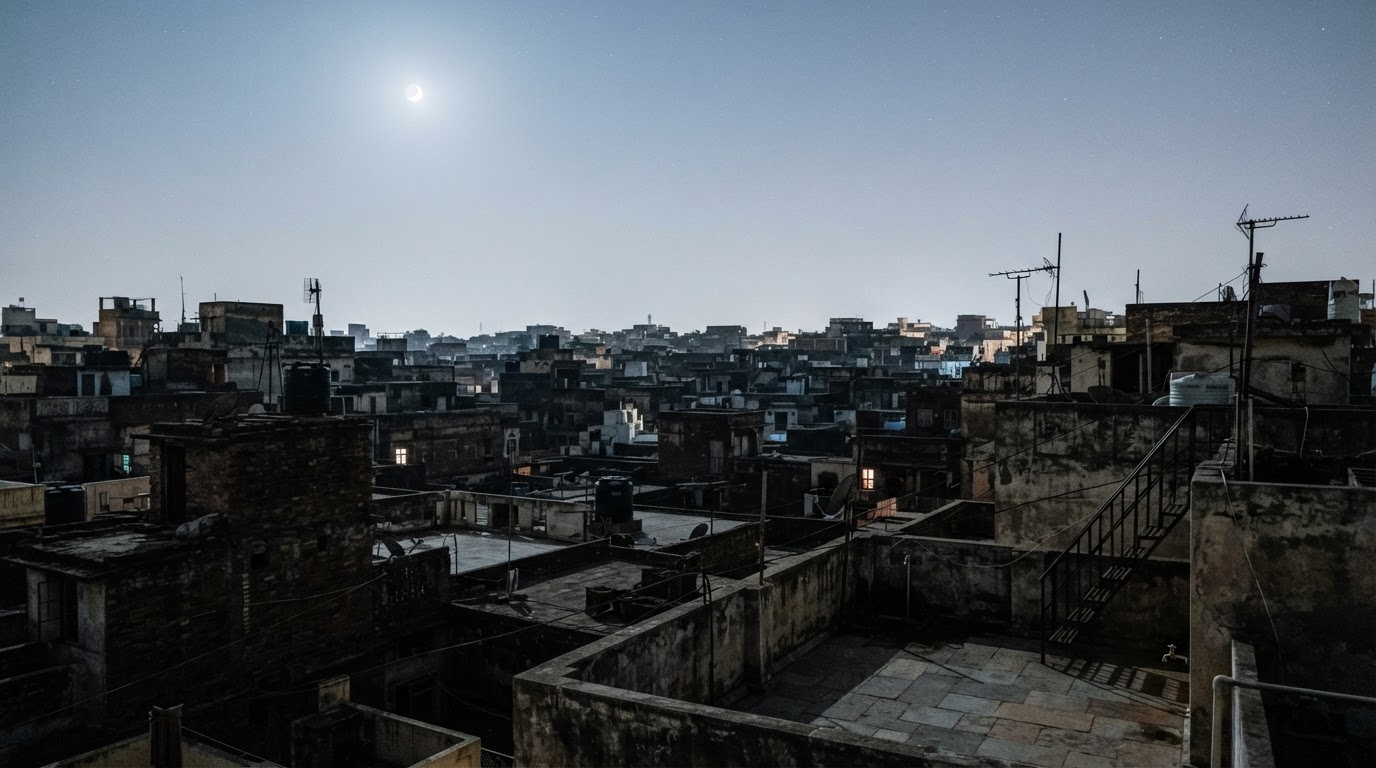
It is a night in the Bangalore of the 1990s, in one of the old residential quarters where the houses lean close and the lanes are barely wide enough for a scooter to pass — Malleswaram, maybe, or Rajajinagar, where the streetlamps are few and the dark pools thick between them. The last bus has long gone. The tea stalls are shuttered. Somewhere a dog settles. And then, against your door, three slow knocks — and a voice.
It is your mother's voice. It says your name, the way only she says it, softened at the end the way she has said it since you were small. It asks you to open the door. It sounds tired, and close, and real.
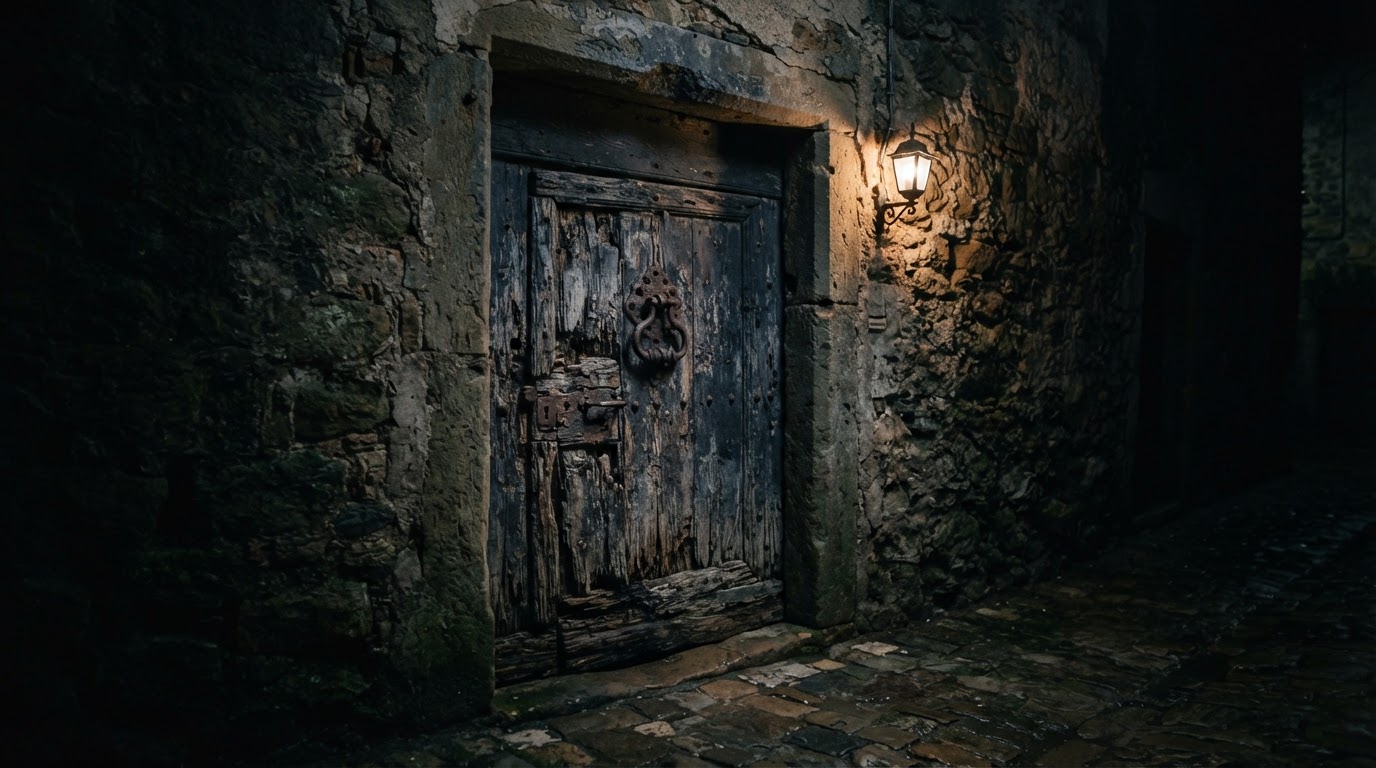
Every nerve in you wants to answer. That wanting is the trap. Because the story says that if you rise, and cross the room, and lift the latch — you will not live to see tomorrow's sunset.
Folklore is the hardest material I handle, because there is no case number to pull and no inquiry to cite — only accounts, and accounts of accounts. When I first began gathering versions of this one, I assumed the variation would sit in the chalk: different words, different scripts, different neighborhoods. It doesn't. The words stay fixed at ನಾಳೆ ಬಾ in nearly every telling I have collected. What changes, teller to teller, is whose voice the thing uses — mother, wife, brother, child — and I have come to think that is the tell. The detail people revise is the one they are supplying from their own house. — K. Woo
The Thing That Called in a Loved One's Voice
The legend has a name, and the name is also its cure. Nale Ba — ನಾಳೆ ಬಾ — is Kannada for come tomorrow. Before we come to why a city wrote those words on ten thousand doors, we have to sit for a moment with what they were writing them against.
The telling is remarkably consistent across the many mouths it passed through. After dark, in the dense old neighborhoods, something moved from door to door. It knocked. And when it spoke, it did not speak in a stranger's voice, or a monster's growl, or any sound that would have warned you. It spoke in the voice of someone you loved and trusted absolutely — most often a mother calling her grown child, but in other tellings a wife calling a husband, a child calling a parent, a sibling's familiar summons from just outside. The voice knew your name. It used it correctly. It sounded exactly, achingly right.
And if you believed it — if the human reflex to answer a beloved voice at your door won out over the small cold doubt underneath — you opened, and you were taken. The story is careful and oblique about what "taken" means, as these stories always are; it says only that those who answered did not last the day, that within a single turning of the sun they were simply gone. No struggle is described, no wound. Just an empty house by morning, and a door that had been opened from the inside.
That is the whole cruelty of it. The Nale Ba does not break down your door. It does not need to. It gets you to open the door yourself, with your own hand, gladly, because it wears the one disguise no lock was ever built to stop: the voice of the person you would run to first.
Two Words on the Door
Against a spirit that cannot be locked out, the people of Bangalore found something stranger than a lock. They found a loophole.
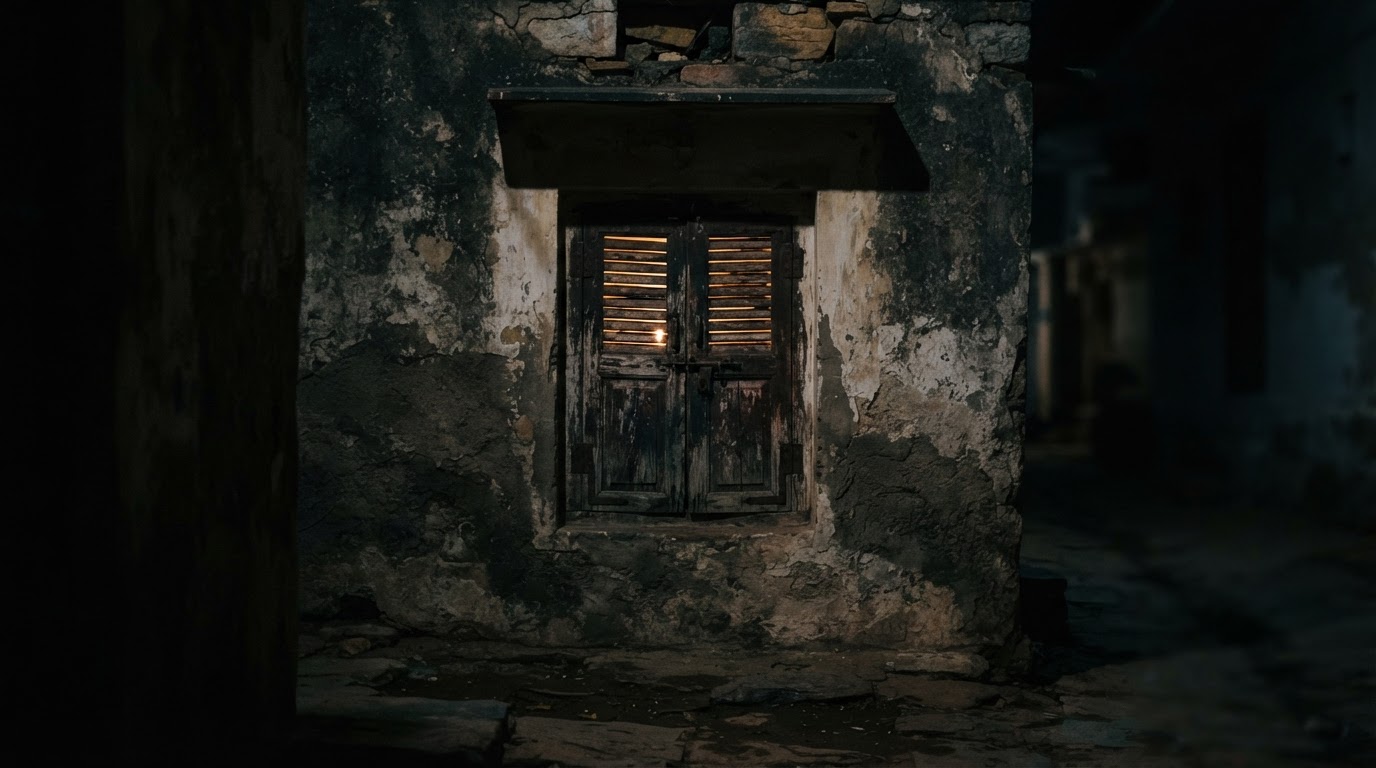
The reasoning ran like this. The Nale Ba was dangerous, yes — but it was not clever. It was a creature of rules, not thought. It could read, but it could not reason its way around what it read. So if you wrote, on your door, the two words Nale Ba — come tomorrow — the spirit arriving in the night would stop, and read, and take the instruction literally. Come tomorrow. Very well. It would turn and leave, deferring its visit by one obedient day.
And here is the beautiful, terrible engine of the thing: tomorrow never arrives for a written word. The chalk still says come tomorrow the next night, too. And the night after. And every night after that. The spirit returns, reads the same two words, receives the same instruction, and dutifully postpones itself again — caught in a loop it cannot see the edges of, turned away forever by a promise that is renewed every time it is read. The door is not locked. The door is scheduled, into an appointment that recedes one day further every single day, for as long as the words survive.
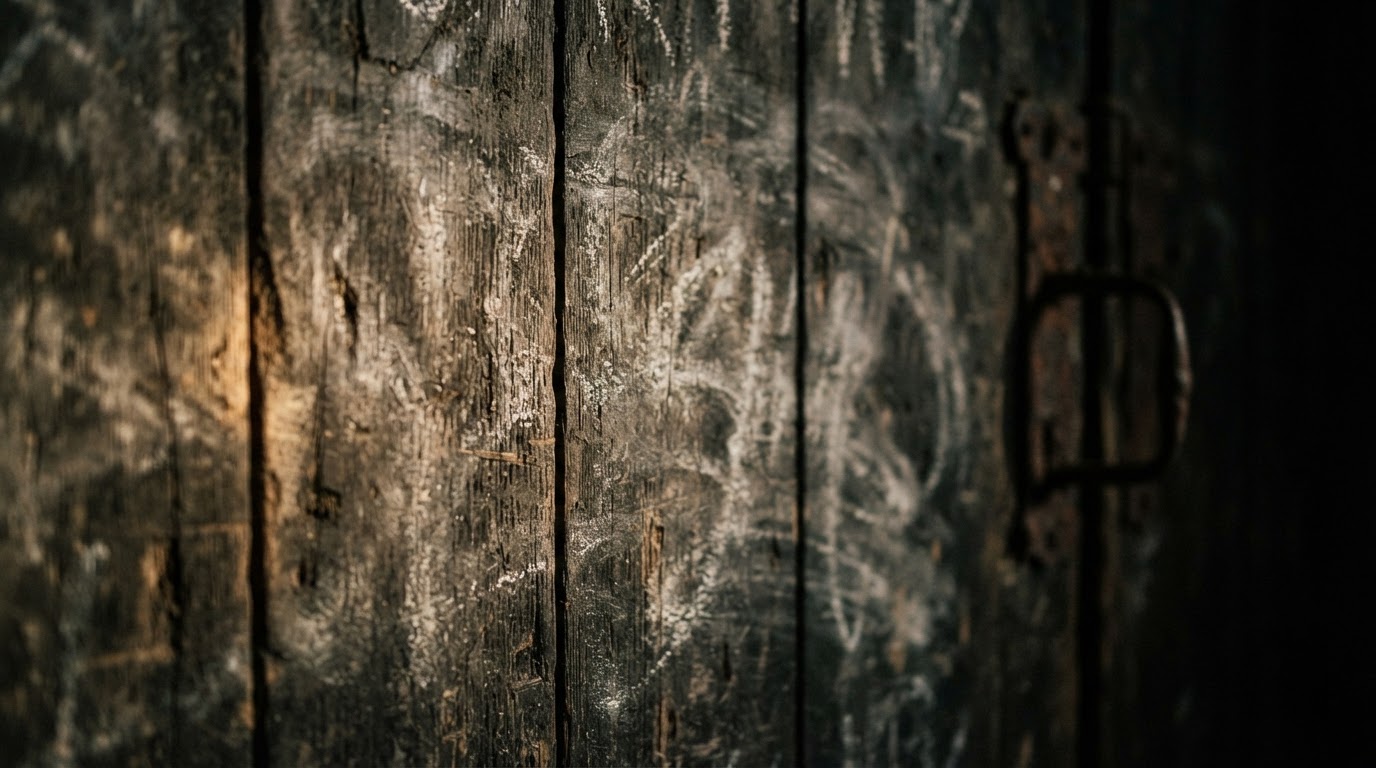
So the chalk went up. On door after door, wall after wall, gate after gate, across whole neighborhoods, in a handwriting that ranged from careful to frantic: ನಾಳೆ ಬಾ. Come tomorrow. A city defending itself not with iron or fire but with a clause — with the discovery that the thing at the door would honor the letter of an instruction even to its own defeat.

The Old Logic of the Literal-Minded Spirit
If the Nale Ba defense feels oddly familiar — if some part of you nods at of course you'd trick it with words — that is because it belongs to one of the oldest and most widespread families of folklore on earth: the demon that cannot resist a rule.
All across the world, the fearsome thing in the dark is imagined not as clever but as compulsive — bound by a fixation it cannot override, a loophole waiting to be exploited by anyone who knows the shape of it. In European vampire lore, you scatter grains of rice, or mustard seed, or millet across the threshold and along the windowsill, because the vampire is compelled to stop and count every single one, grain by grain, and dawn comes before the count is done. In the same tradition you hang a knotted net or a sieve, because the creature must pause to work through every hole, every knot, and cannot pass until it has. In Korean folk belief, the japgwi and wandering spirits are turned at the threshold by gates, by geometric barriers, by the sieve hung to snare them in its endless holes — a spirit set counting cannot come inside.
Folklorists sometimes call this the obsessive-compulsive demon: the supernatural creature whose great power is undone by a mind that cannot let a small task go unfinished. It is a strangely consoling idea, and it recurs because it does two things at once. It makes the terror manageable — here is a monster you can defeat with rice, or a net, or two words of chalk, without ever raising a hand. And it quietly flatters us: whatever waits in the dark may be strong, but we are the ones who can reason, who can plan, who can see a loophole and use it. The Nale Ba's whole defeat is a version of this. It is enormously more powerful than the sleeping family behind the door — and it can be turned away, night after night, forever, by a sentence it is too literal to argue with.
The Panic: How a Rumor Papered a City
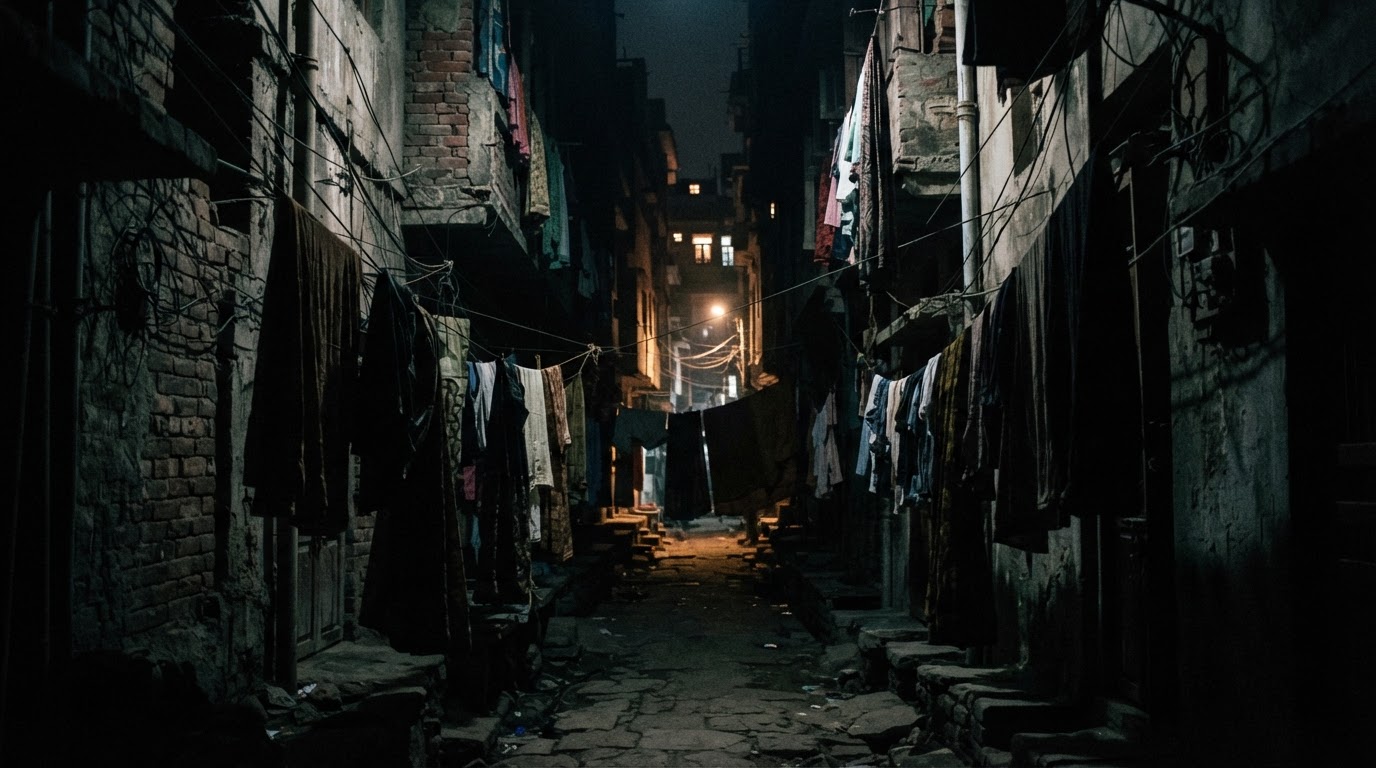
What makes Nale Ba more than a campfire tale is that, for a stretch of the 1990s, a great many people in Bangalore genuinely acted on it — and they did so in an age before the smartphone, before the group chat, before a rumor could cross a city in the time it takes to type. The Nale Ba panic spread the old way, the human way: mouth to mouth, over the compound wall, at the vegetable market, in the queue for the morning milk.
Picture how it would move. One household writes the words, half-believing, better-safe-than-sorry. A neighbor sees the chalk and asks. The story is passed, and with it the instruction — write it on your door, it keeps the thing away — and now there are two doors, then the whole lane, then the next lane over as visitors carry it home. In dense old neighborhoods where everyone shares a wall and a well and an evening's gossip, a piece of protective folklore does not spread like news; it spreads like a reflex. You do not need to believe it fully to write it. You only need to be unwilling to be the one house on the street that didn't — the one door the thing might read and find silent.
And so, the story goes, the chalk appeared in its thousands, and for a while the neighborhoods of Bangalore wore their defense openly on every threshold. In some tellings the panic had an ending as tidy as its charm: the word went round that on the first of April the witch had finally left the city, moved on, gone — and the fear lifted as quickly as it had settled, the way a crowd's mood turns all at once. Whether that date was ever more than a rumor's punctuation hardly matters. What matters is the picture it leaves: an entire city, for one strange season, holding its doors shut against a voice, with nothing but two chalked words standing between the sleeping and the thing that knew their names.

Sisters of the Night Call: Nishir Dak and the Others
The Nale Ba does not stand alone. India is vast and old and layered with regional dreads, and the specific horror at its heart — a voice in the dark that must not be answered — surfaces again and again under other names, as if the same fear had been dreamed independently in a dozen tongues.
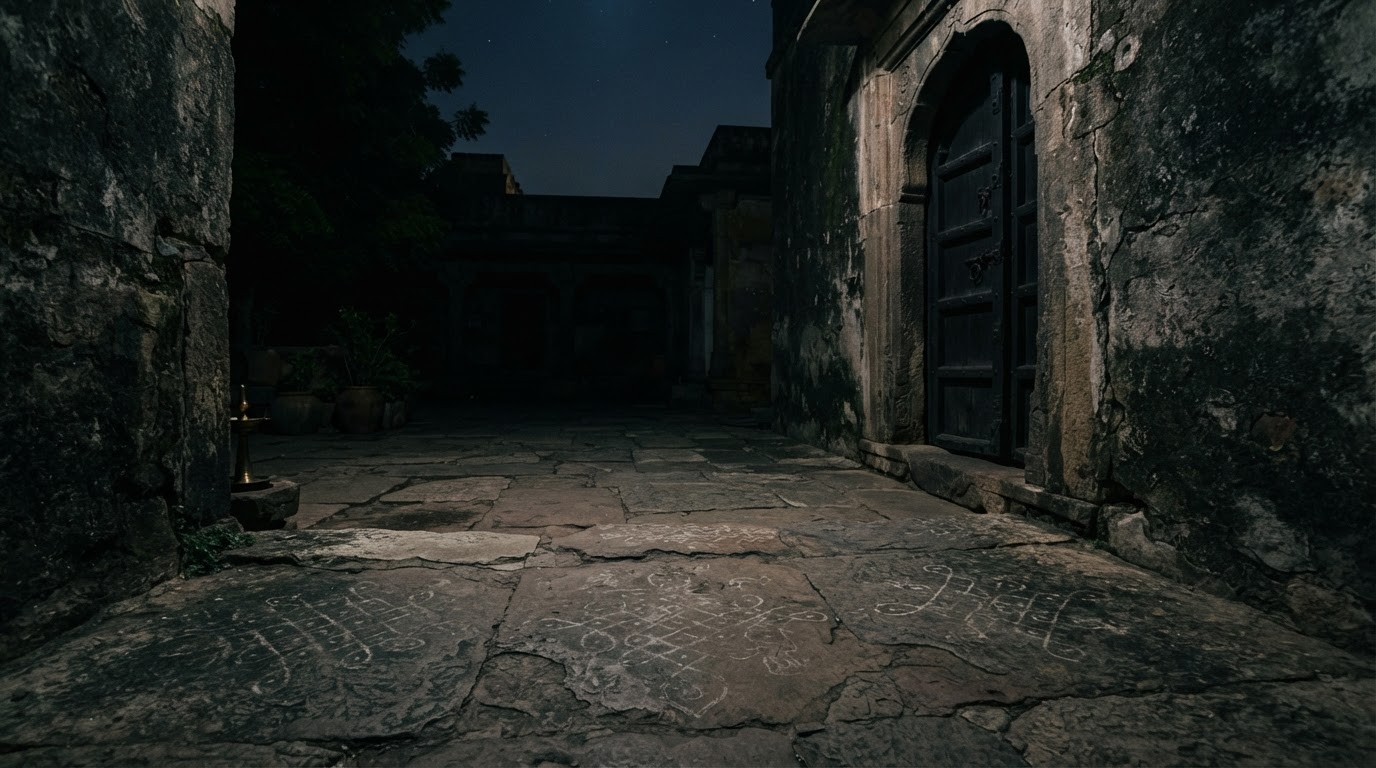
The closest sibling comes from Bengal, in the east: Nishir Dak, "the call of the night." The belief is chillingly precise. On some nights, it is said, you may hear your name called from outside in the dark, in a voice you know and trust. The rule is absolute: you must never answer on the first call, and above all you must never answer twice. To respond — especially to respond a second time — is to be claimed by whatever is calling, drawn out into the night and lost. The wisdom of Nishir Dak is the wisdom of the Bangalore door: the danger is not the thing outside but your own trusting answer, and safety lies in the discipline of not replying, of leaving the beloved voice to call into silence.
Elsewhere the family branches out. Some tellings tie the Nale Ba to older Karnataka beliefs about a female spirit — a bride or widow searching endlessly for a lost husband, knocking at door after door in the shape of grief. Regional versions elsewhere in India layer in their own protective writings; in many places, doors and lintels carry sacred inscriptions — the name of a protective god, a line of scripture, an invocation of Hanuman — set there precisely to turn away what walks at night. The Nale Ba's chalk belongs to that same ancient instinct: the door as the last wall between the family and the dark, and writing as the thing that guards it. What is unusual, and unforgettable, is that the Nale Ba's writing does not invoke a god at all. It simply gives the monster an appointment — and trusts it to keep coming back to a door it will never be allowed to enter.
What the Panic Was Really About
Strip away the chalk and the voice, and the Nale Ba reads like a dream a whole city was having about itself — and it repays a closer look, because urban legends of this kind rarely spread on fear alone. They spread because they say something true that people cannot say plainly.
The 1990s were a time of enormous change for Bangalore. The city was swelling, drawing waves of newcomers, remaking its old residential quarters into something denser, faster, less knowable. Newcomers slept behind doors in lanes where they knew no one; longtime residents watched familiar streets fill with strangers. In a place like that, the deepest anxiety is exactly the one the Nale Ba dramatizes: you cannot trust the knock at your door. The thing outside sounds like family, sounds like someone who belongs to you — and it is not. It is something that has learned your name and put on a familiar voice. For a city anxious about who its new neighbors really were, about what came knocking after dark, there could hardly be a more precise nightmare.
Notice, too, where the horror happens and whose voice it borrows. It happens at the threshold — the doorway, the exact seam between the safe domestic inside and the dangerous public outside, the boundary a household spends its whole life defending. And it works by counterfeiting the voices of the home's own: the mother, the wife. The Nale Ba turns the most intimate sounds of the household — the voices that mean safety, come in, you are loved — into the very instrument of the danger. That inversion is what gives it teeth. And the way it spread — reflexively, neighbor to neighbor, nobody quite believing yet nobody willing to abstain — is itself a near-perfect specimen of how rumor moves through a dense community: not as fact to be verified but as a precaution too cheap to refuse. Like the great chain-panics that sweep populations elsewhere — the way a cursed-video story or a Teresa Fidalgo chain letter propagates on the logic of what's the harm in passing it on — the Nale Ba grew on the arithmetic of a fear that costs almost nothing to honor and feels unbearable to ignore.
O Stree, Kal Aana: The Legend Goes National
For decades the Nale Ba lived where it was born — a Bangalore story, a Karnataka story, half-remembered, passed down in the specific dialect of one city's dread. Then, in 2018, it walked out onto the biggest screen in the country.
The Bollywood horror-comedy Stree took the bones of the Nale Ba and built a national hit on them. The film moves the setting north, to a small town gripped by a spirit — a stree, a woman — who comes on certain nights and calls men out into the dark by name. And the town's defense is the Nale Ba's own genius, translated: the townsfolk paint a plea on their walls in Hindi — "O Stree, kal aana" — O Woman, come tomorrow. Come back tomorrow. The spirit, the film's logic goes, reads the words and obeys, deferring itself by a day that never comes, exactly as the Bangalore chalk deferred its witch. The film knew what it was borrowing; the phrase is the Nale Ba's loophole set to music and made a punchline and a prayer at once.
Stree was a genuine phenomenon, and it did something the legend on its own never could: it carried Nale Ba out of Karnataka and made it national, a thing millions now half-know. Its success spawned a sequel and a whole connected universe of Indian horror-comedy films, each new installment sending audiences back to the source — wait, is this real? was there really a witch? did people really write on their doors? — and pulling the old Bangalore story into the light again and again. A legend that had been quietly aging in one city's memory found itself, three decades on, more widely known than it had ever been in its own heyday. The chalk on those 1990s doors had, in a sense, worked exactly as promised: it kept the story coming back. Tomorrow, and tomorrow, and tomorrow.
Don't Answer: The Voice as the Perfect Lure
Set the Nale Ba beside the world's other "don't answer" legends, and a single, precise fear stands revealed — one so widespread that it clearly touches something in the wiring of the human mind.
Japan's schoolyards whisper of calling-games and answering-spirits: rituals where you must not respond, phantoms like Satoru-kun summoned by a phone call who will answer your one question only at a terrible price, and the whole grim tradition of the entity you contact and then cannot uncontact. Korean children trade rumors of the knock that comes when you are home alone, the shadow at the door, the sound of your name in the corridor of an empty school — and the rule, always the rule, that you do not open, you do not answer, you do not turn around. In legend after legend the pattern holds like a law: the call must not be answered, and above all it must not be answered a second or a third time. To reply once may be a mistake; to reply again is consent, and consent is fatal. It is the same spine that runs through Japan's Aka Manto, the bathroom-stall voice that forces you to answer its question and kills you whichever way you choose — the horror not of a thing that attacks, but of a thing that asks, and traps you in the answering.
Why does the borrowed voice reach so deep? Because a loved one's voice is the one signal we are built never to doubt. From infancy, the sound of a parent's voice means safety, means come, means the danger is over and you can lower your guard — it is wired under thought, a reflex older than reason. A monster that can wear that voice has picked the one key that fits every lock we own. It does not have to overpower you; it only has to sound like the person you would open the door for without thinking. That is why these legends land: they take the most trustworthy sound in the human world and make it the bait. And they leave behind a small, permanent unease that outlives the story — the faint new question, late at night, of whether the voice calling your name from the dark is really the one you think it is.
The Oldest Wall, and the Words That Held It
In the end the Nale Ba is a story about a door — and there may be no older or more human subject than that.
The door is the first boundary we ever drew. Before nations had borders, before there were walls around cities, there was the simple, enormous line between inside and outside: the threshold a family crossed to be home, the last barrier between the small warm world of the sleeping and the cold unknown of the night. Every culture has ringed that boundary with meaning and with magic — the horseshoe nailed above it, the salt across it, the god's name painted on the lintel, the mezuzah, the charm, the ward. We have always known, somewhere beneath knowing, that the door is where we are most exposed: the one place the outside is invited to touch the inside, the seam that must be opened to let in the beloved and kept shut against everything else. And the terror of the Nale Ba is that it collapses that distinction — it makes the beloved and the everything-else sound exactly the same.
Against that, the people of Bangalore raised no army and called no priest. They picked up a piece of chalk and wrote two words. Come tomorrow. It is such a small, almost gentle defense — not a curse hurled at the thing, not a blade or a fire, just a soft-spoken instruction and a bet on the creature's own literal-minded nature. Not tonight. Tomorrow. Come back tomorrow. And the strange grace of it is that it never has to be a lie fulfilled, because tomorrow is a door that opens onto another tomorrow, endlessly, and the words hold as long as the hand that wrote them is willing to write them again.
So the story leaves you where all the best ones do — with your own front door, and the dark on the other side of it, and a knock that has not come. Perhaps it never will. But if it ever does, late, in a voice you know and love, calling your name the way only one person calls it — the old Bangalore wisdom is waiting for you, chalked onto ten thousand vanished doors: do not answer. Do not open. Only tell it, softly, through the wood, to come tomorrow. And trust that tomorrow, mercifully, never comes.
One thing about this case has never sat right with me, and I raise it knowing the archive cannot answer it. The chalk defense only works while someone keeps rewriting it. Chalk goes in the monsoon; whitewash covers it; a house changes hands and the new family scrubs the doorframe clean without ever being told what the marks were for. The tellings all end with the first of April and the witch departing, tidily, as if the arrangement had been dissolved by agreement. But nothing in the logic of the thing says it was. If the story is right about what waits at the door, then the appointment was never cancelled. It was only postponed, one day at a time, by hands that have long since stopped writing.
---
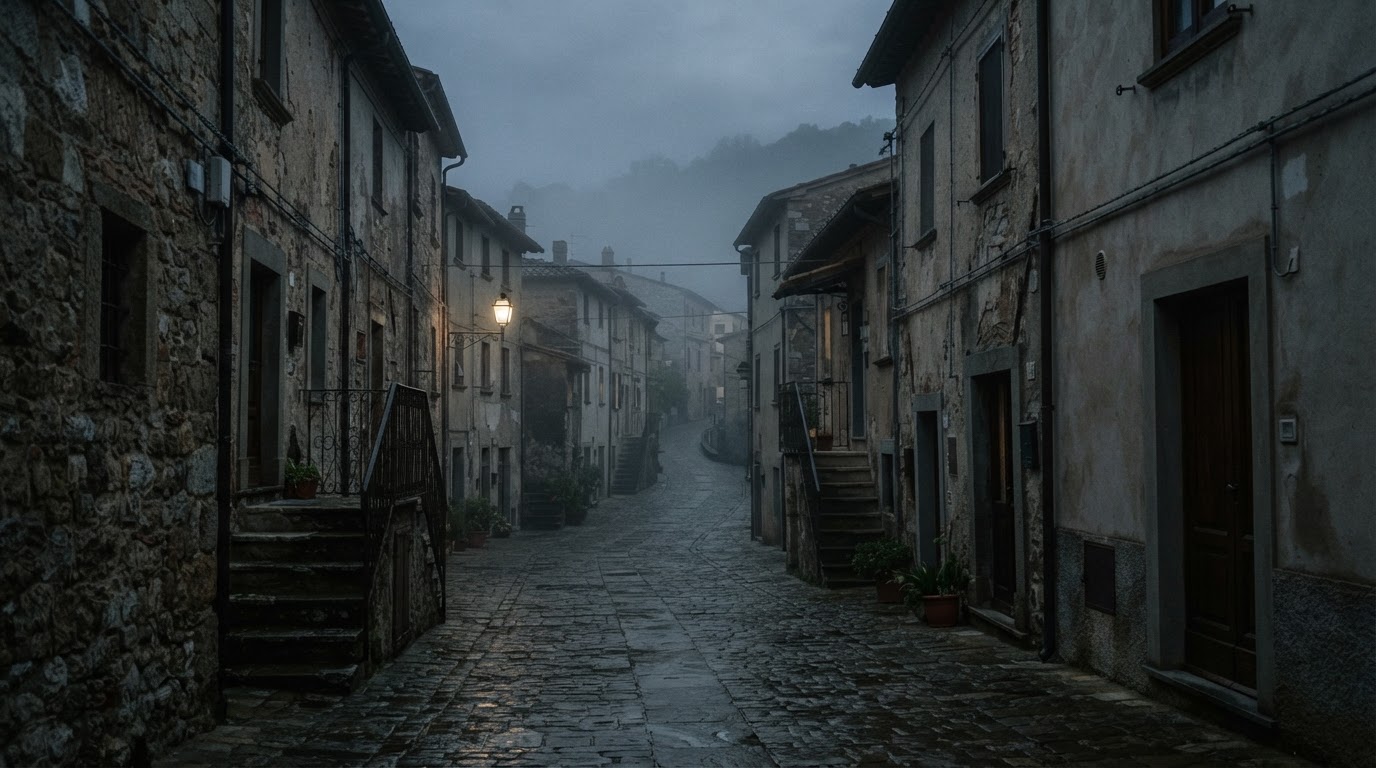
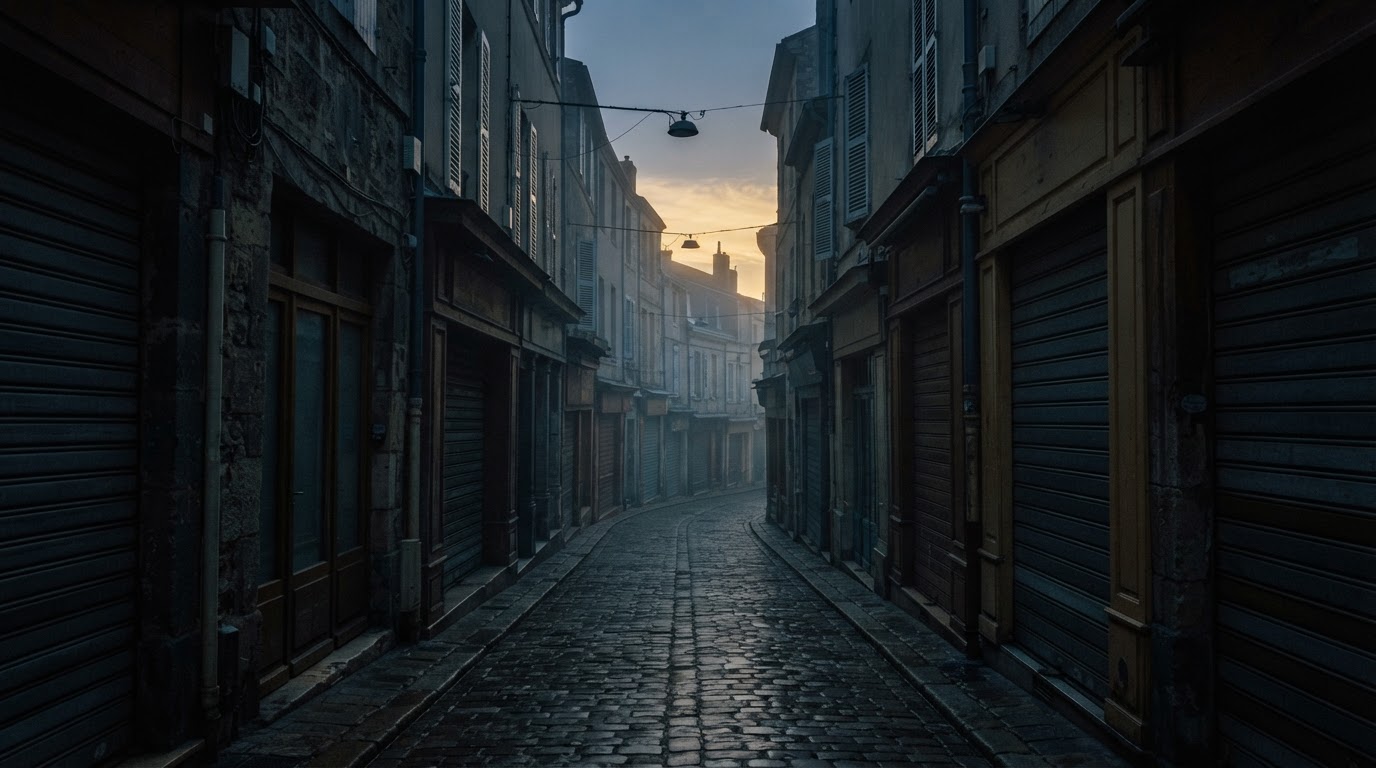
The images and video in this article are AI-generated works produced to convey the mood of the story, and are not photographs of any actual person or event.
Comments
No comments yet — leave the first one.