
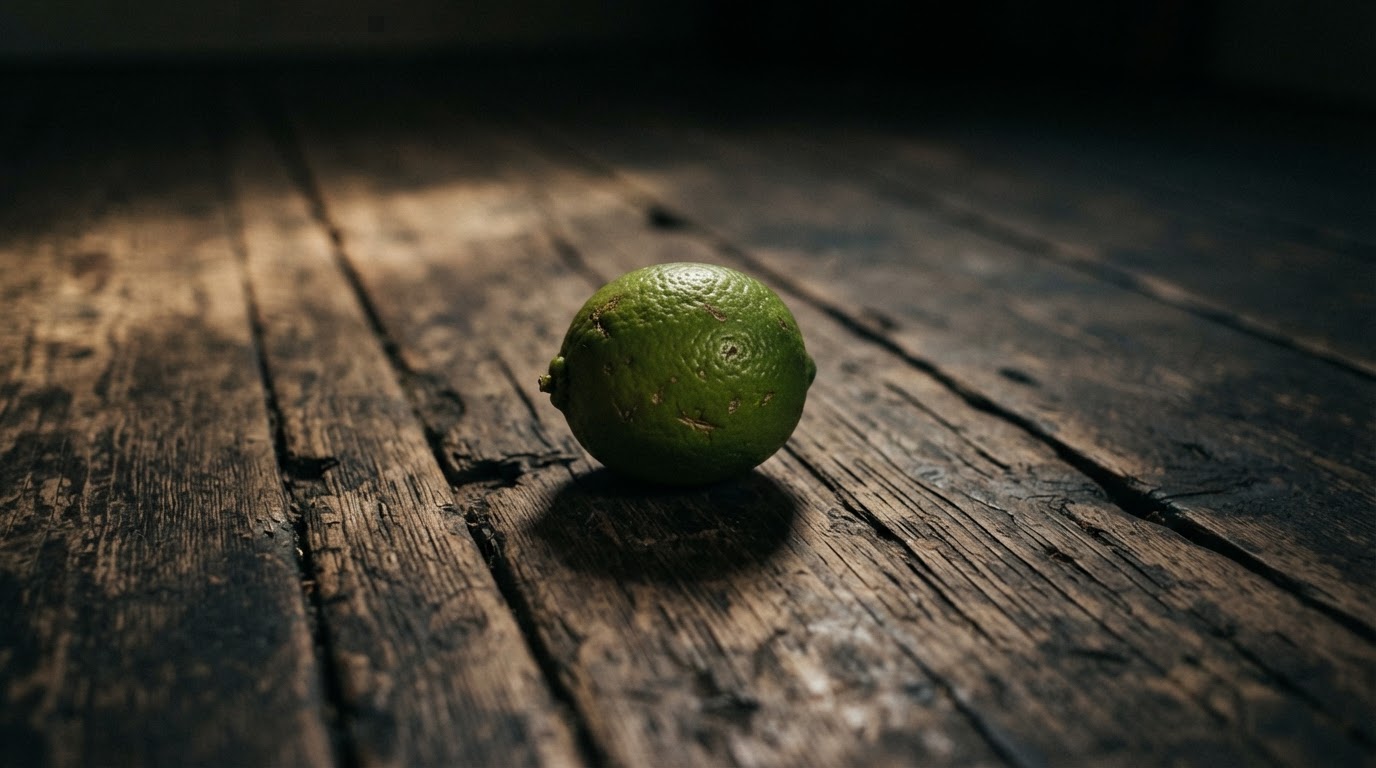
The story goes that a young husband, home at last from the war, sat down to eat the dinner his wife had cooked, and watched her drop a lime.
It rolled off the edge of the raised wooden floor and fell through a gap in the boards to the ground below the house — the way things do in the old Thai stilt homes, built high on posts over the wet earth beside a canal. And his wife, without rising, without so much as leaning forward, reached down after it. Her arm stretched. It stretched too far — down through the gap in the floor, down toward the ground, longer than any arm should reach, thin and pale and certain, closing around the lime in the mud below and drawing it back up as though nothing in the world were strange.
He said nothing. He kept his face still. But in that instant the man understood the thing his neighbors had been trying to tell him for weeks, the thing he had refused to hear: the wife he loved, the wife who had waited for him, the woman who had cooked this meal and would that night lie down beside him — she was dead. She had been dead the whole time. And she had simply declined to accept it.


I have handled a great many hauntings on paper, and almost all of them announce themselves — a cold room, a figure on the stairs, a sound with no source. This one does not. The disclosure is a dropped lime, and a woman not bothering to stand up. When I first worked through the Thai retellings I kept expecting a version in which she is caught doing something monstrous, and instead every version hinges on a small act of household convenience. She is not exposed by malice. She is exposed by being comfortable in her own home.
Phra Khanong
To understand why this ghost has held Thailand's imagination for well over a century, you first have to picture the place that made her.
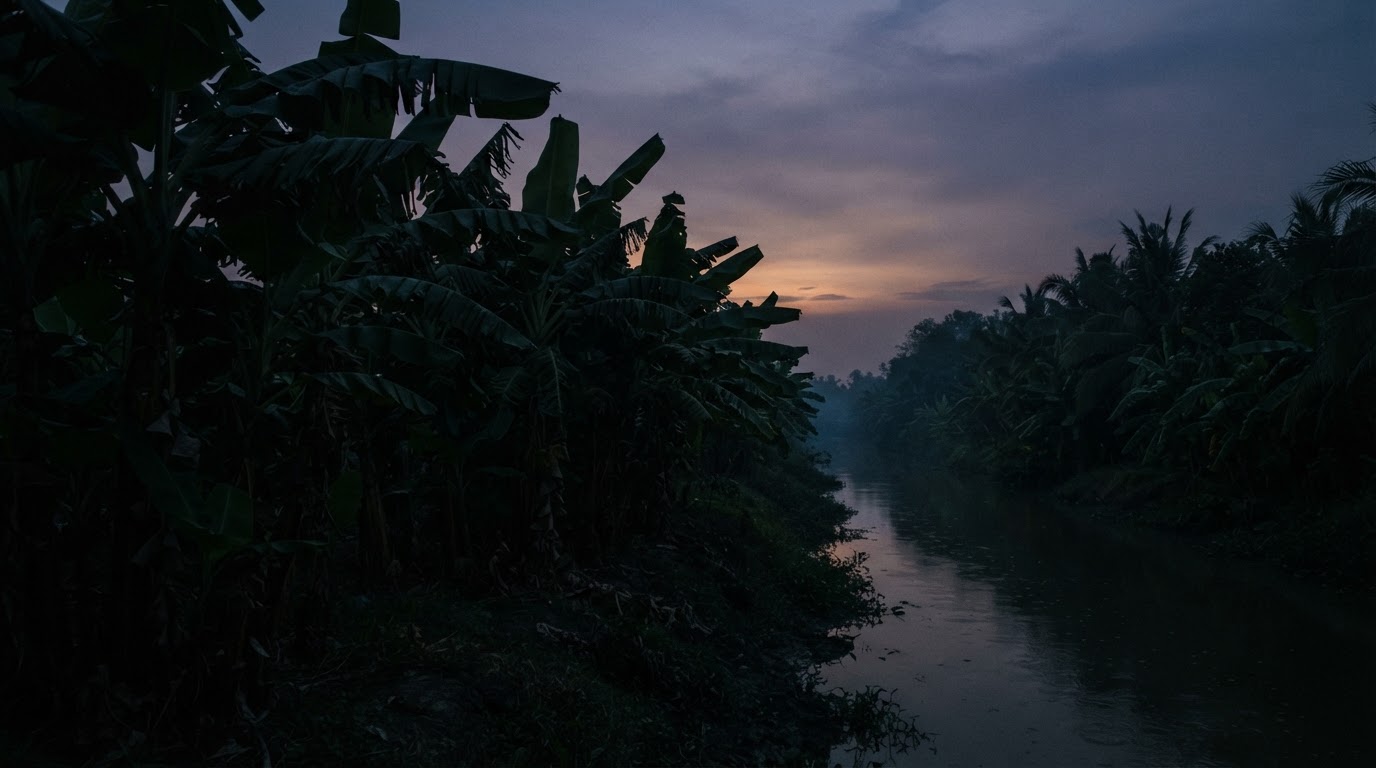
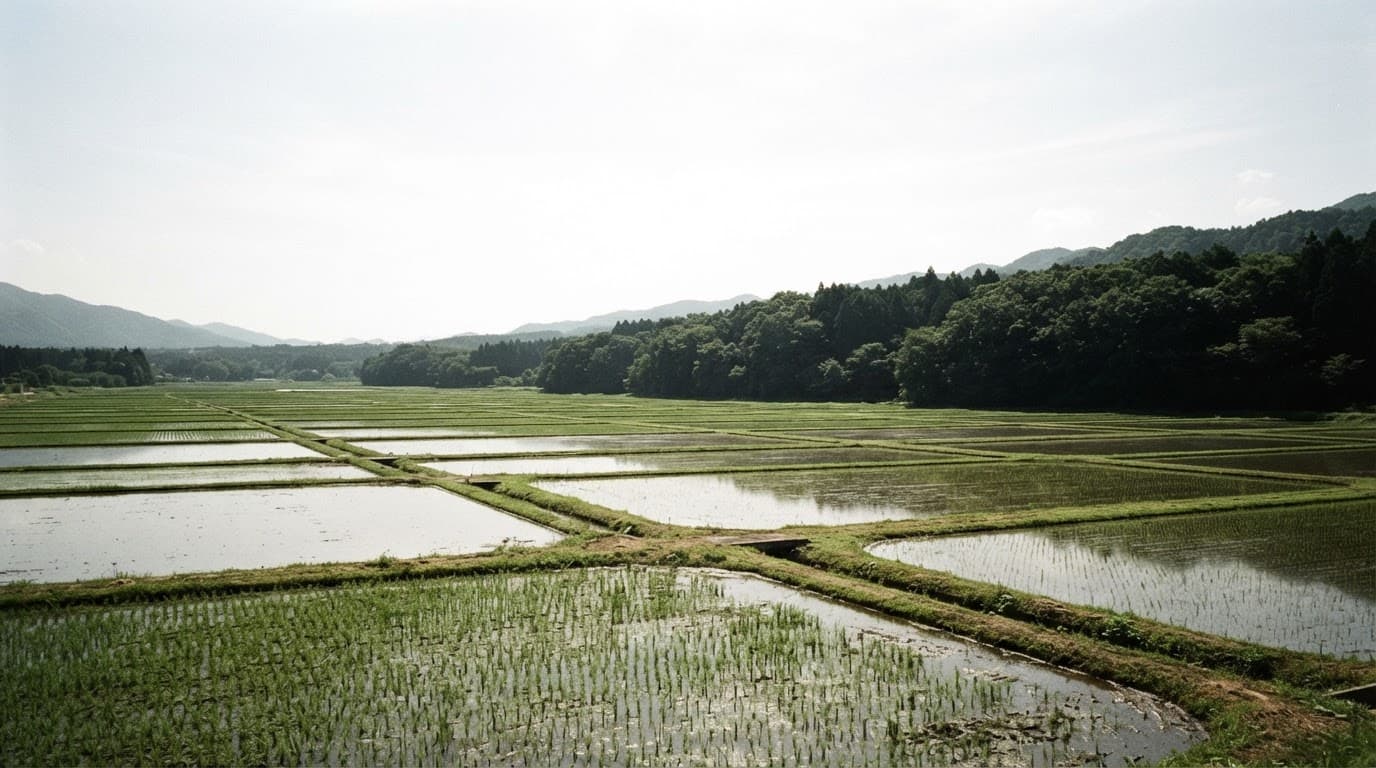
The story is usually set in the reign of King Rama IV or Rama V — the mid-to-late nineteenth century — in a district on the eastern edge of Bangkok called Phra Khanong. This was not the Bangkok of glass towers and elevated trains. It was a landscape of water: a low, green sprawl of rice fields and orchards laced together by khlongs, the canals that were the roads of old Siam. People lived in wooden houses raised on stilts above the flood line, traveled by boat, and knew their neighbors by the sound of a paddle. It was beautiful and it was close, in every sense — a place where a family's joys and troubles belonged to the whole community, and where the line between the seen world and the unseen one was never drawn very hard.
Into this world the legend places a young couple. The wife's name was Nak — in Thai she is honored with the prefix Mae, meaning "mother" or "lady," so the story calls her Mae Nak. Her husband was named Mak. By all accounts they were devoted to each other in the way that becomes, in the telling, almost unbearable to think about: an ordinary, complete, uncomplicated love. And when the story begins, Nak is pregnant with their first child, and Mak is about to be taken away.
The War, and the Death
Mak was conscripted — sent off to war, in most versions to fight in a distant campaign, leaving his pregnant wife behind in the house by the canal. This was the ordinary tragedy of the age: the men called away, the women left to wait, the long silence of a time before letters could reliably follow a soldier into the field.
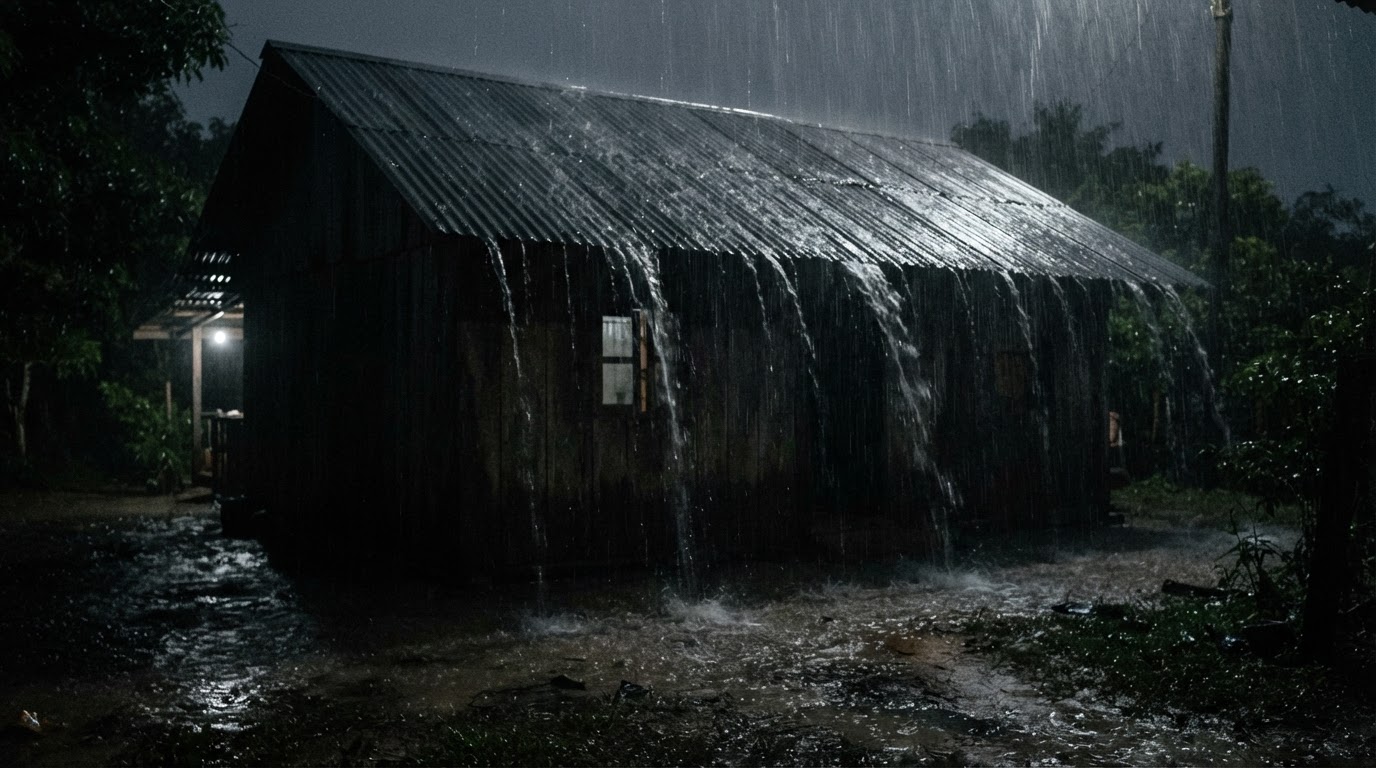
While he was gone, the story goes, Nak went into labor. And something went wrong. In the difficult, dangerous business of childbirth in a nineteenth-century village, both mother and child died — Nak and the baby together, in the house, with her husband hundreds of miles away and no way to reach him. The neighbors buried her, as custom demanded, and the little house on its stilts fell quiet.
But Nak did not go where the dead are supposed to go.
Her love — or her longing, or her sheer refusal — held her to the world. She stayed in the house. She waited. And when her husband finally came walking home from the war, alive, up the path beside the canal, what waited for him at the top of the wooden stairs was his wife, holding their infant son, smiling, exactly as he had dreamed of her every night he was away. To Mak, nothing was wrong. He had come home to his family. He did not know — could not know — that both of them had been laid in the ground while he marched.

The Quiet, Happy Weeks
Here is the part of the legend that gives it its terrible tenderness. For a stretch of days — weeks, in some tellings — Mak simply lived with his ghost, and was happy.
Nak cooked for him. She cared for the baby. She lay beside him at night. To her husband she was warm, present, real — the wife he had crossed a war to come back to. And she asked for nothing except that the two of them, three of them, be left alone together in the house. She had built, out of pure will, the exact life that death had taken from her, and she meant to keep it.
The neighbors, of course, knew. They had buried her. They watched the young man they had grieved for walk home to a wife they had wept over, and they understood, with rising horror, what he was living inside. And so they tried to tell him. One by one, the story says, people from the village attempted to warn Mak that the woman in his house was dead, that he was keeping company with a phi — a spirit.
They did not fare well. In the darker versions of the legend, Nak was fiercely, murderously protective of the life she had reassembled, and anyone who tried to take her husband's illusion from her met a bad end. Neighbors who spoke too plainly, who got too close to the truth, began to die. Some tellings describe bodies found in the canal, or under the house; some describe warnings that simply, permanently, stopped. Whatever the details, the message that traveled through Phra Khanong was clear enough: do not come between Mae Nak and her husband. She had already refused death once. She would not be argued out of him now.
The Lime, and the Arm
And then, the way the story is nearly always told, came the moment of the lime.
The versions differ in their small details — sometimes it is a lime she drops, sometimes another small thing that falls through the floorboards — but the shape of it is fixed, and it is one of the most famous images in all of Thai folklore. Mak sees his wife reach for something that has fallen below the raised floor, and he sees her arm extend to reach it: down through the gap in the boards, down to the ground, far longer and thinner than any living arm, because a ghost has no need to keep to the shape a body keeps. In that single, quiet, domestic instant — a woman picking up something she dropped — Mak finally sees the truth his neighbors died trying to tell him.
He does not scream. He does not confront her. The story is careful here, and it is one reason it endures: Mak's love does not curdle instantly into terror. What he feels first is dread, and grief, and the impossible arithmetic of a man who has just learned that the happiness of the last several weeks was built on a grave. He pretends he saw nothing. He waits. And then, at the first chance — many versions have him excusing himself to relieve himself through a hole in the floor, and slipping away into the dark instead — he runs.
The Flight
Mak runs, and Nak comes after him — because that is what she has always done. She will not be left again.
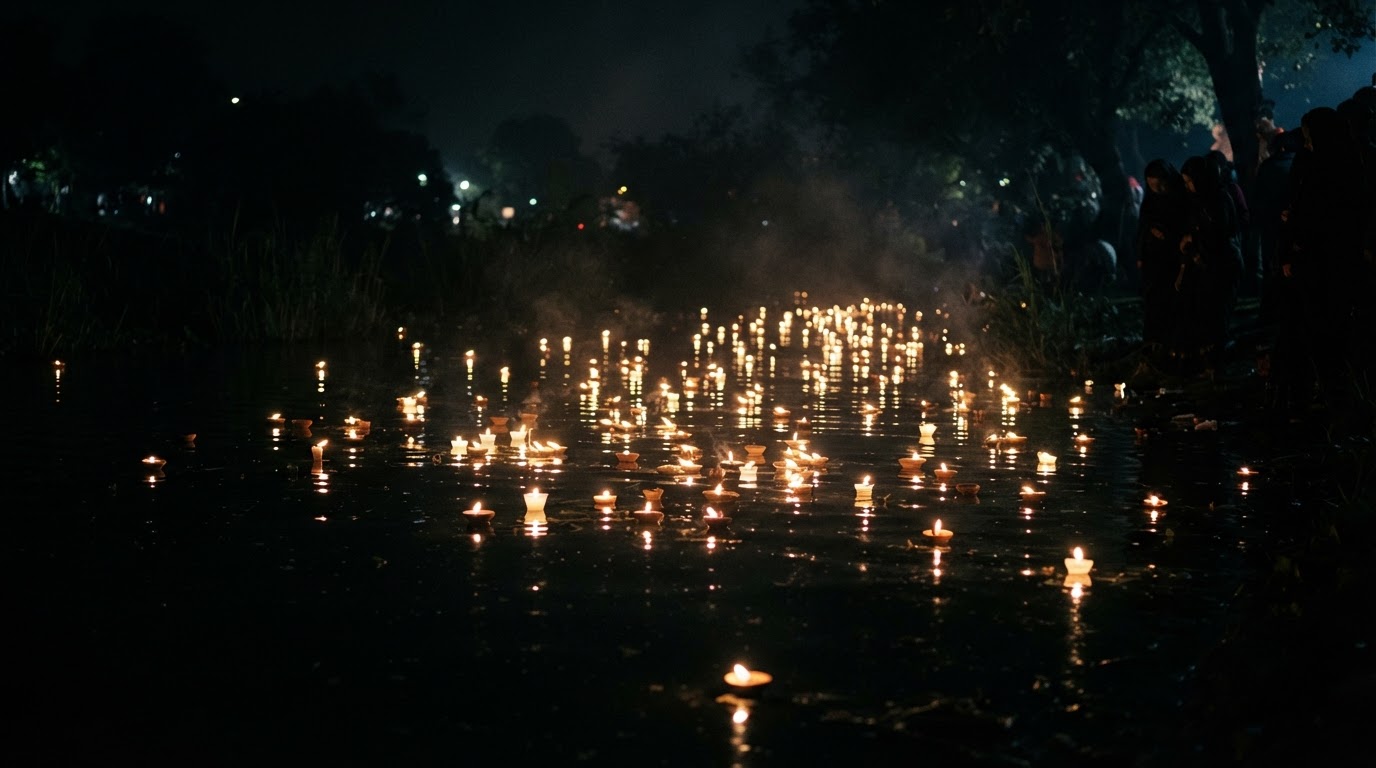
The chase through the night is the story's engine of pure fear, and here it accumulates the small folkloric details that Thai audiences know by heart. Mak flees through the dark, along the canals, and Nak pursues, no longer bothering to look entirely like a living woman. In some versions he hides in a patch of nam nao — blimbing, a sour-fruited shrub — because spirits are said to be repelled by it. In others he takes refuge, at last, inside the walls of a temple, which is holy ground a ghost cannot easily cross. The community that could not warn him now closes ranks to shelter him. And Nak, robbed of the husband who was the whole point of her staying, turns her grief on the district itself. The legend describes Phra Khanong terrorized — a whole neighborhood living in fear of a woman who wanted only one thing and would tear the world apart to keep it.
This is the strange, doubled heart of the Mae Nak story, the thing that makes it more than a jump-scare. She is monstrous. People die around her. And her monstrousness is nothing but love that would not accept an ending — the most human motive there is, curdled by death into something the living cannot survive being near.
The Exorcism
A ghost this powerful needs a power greater than itself to lay her to rest, and here the legend braids itself into real Thai Buddhist history.
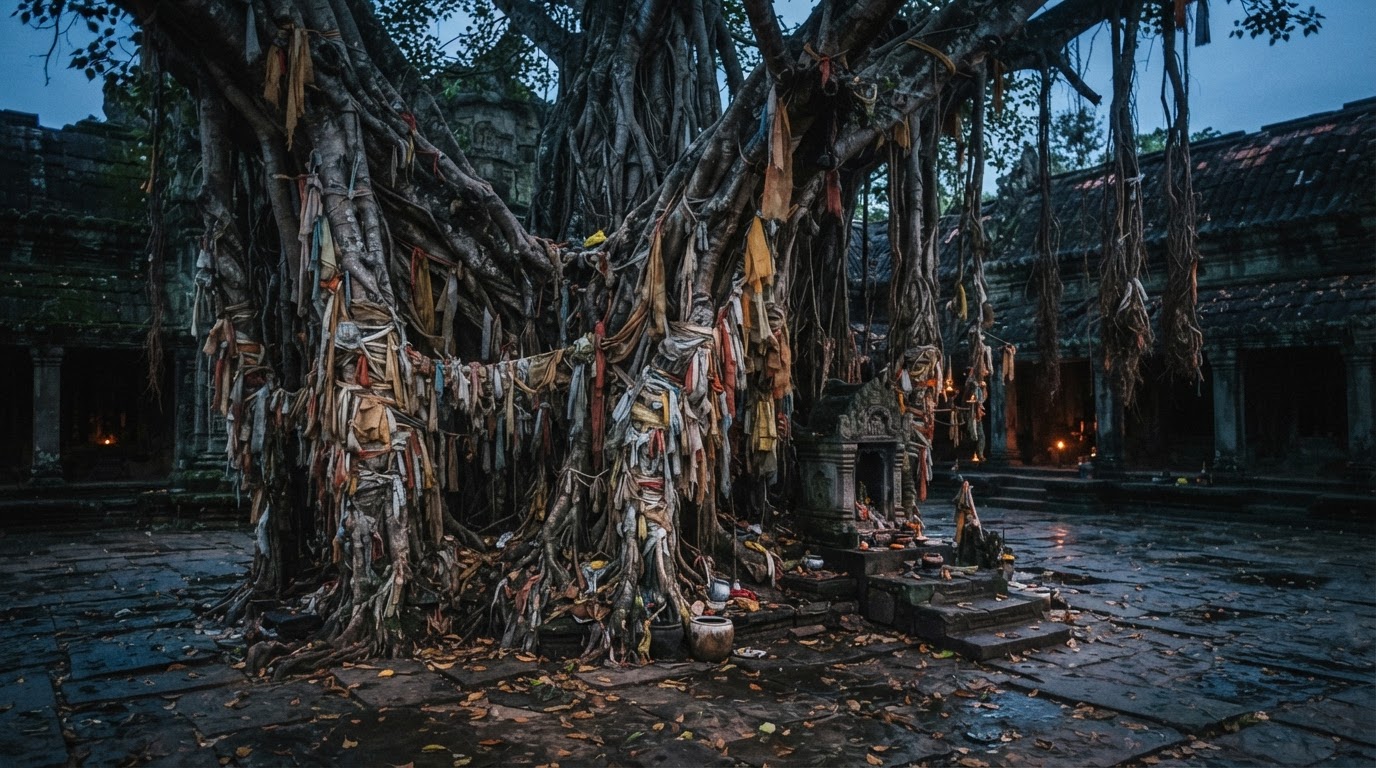
The most famous version credits the subduing of Mae Nak to Somdet Phra Phutthachan (To Phrommarangsi) — usually called Somdet To — a genuine and revered monk of the nineteenth century, one of the most famous figures in Thai Buddhism, renowned for his mastery of the Dhamma and for sacred amulets still prized today. In the story, it is Somdet To who finally confronts Nak's spirit: not to destroy her in anger, but to teach her, in the Buddhist way, that she is dead, that clinging only prolongs suffering, and that she must let go of the husband and the life she cannot have and move on toward rebirth. The horror resolves not in violence but in a kind of terrible compassion — a monk explaining to a grieving ghost that love, held past its ending, becomes a cage.
Other, older strands of the legend are stranger and darker. In some tellings an exorcist confines her restless spirit in an earthen jar and casts it into the canal. And there is the famous, unsettling detail of the brow bone: the story goes that Somdet To (or, in other versions, another monk) took a piece of Nak's forehead — her frontal bone — and fashioned it into a waist band or amulet, binding her spirit into a sacred object he could keep and control. The legend of that brow-bone amulet passing from owner to owner down the years — including, some claim, into prominent hands — is a small dark folk-history all its own, and impossible to verify. As with everything here, the story goes; the truth stays underwater.
Wat Mahabut Today
Here is where a ghost story steps out of the past and into a place you can actually visit.
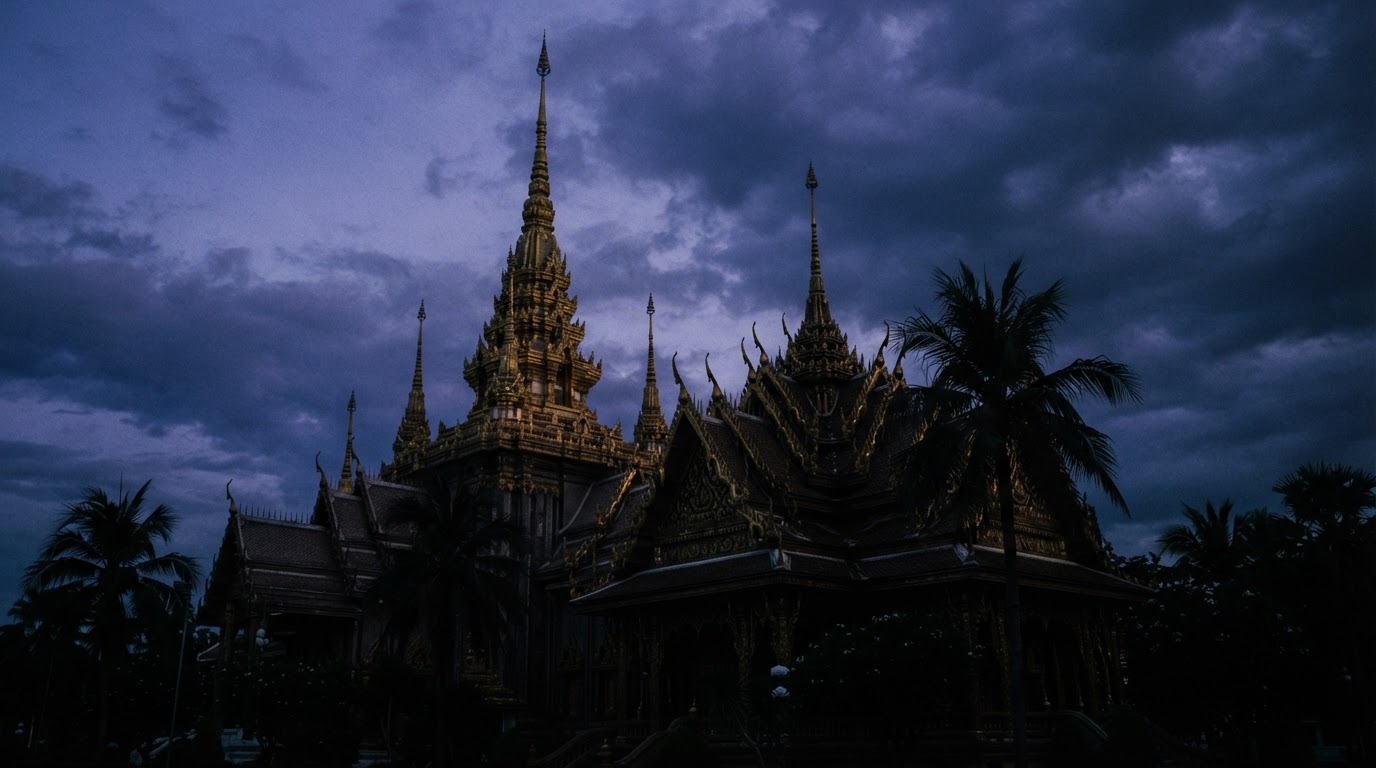
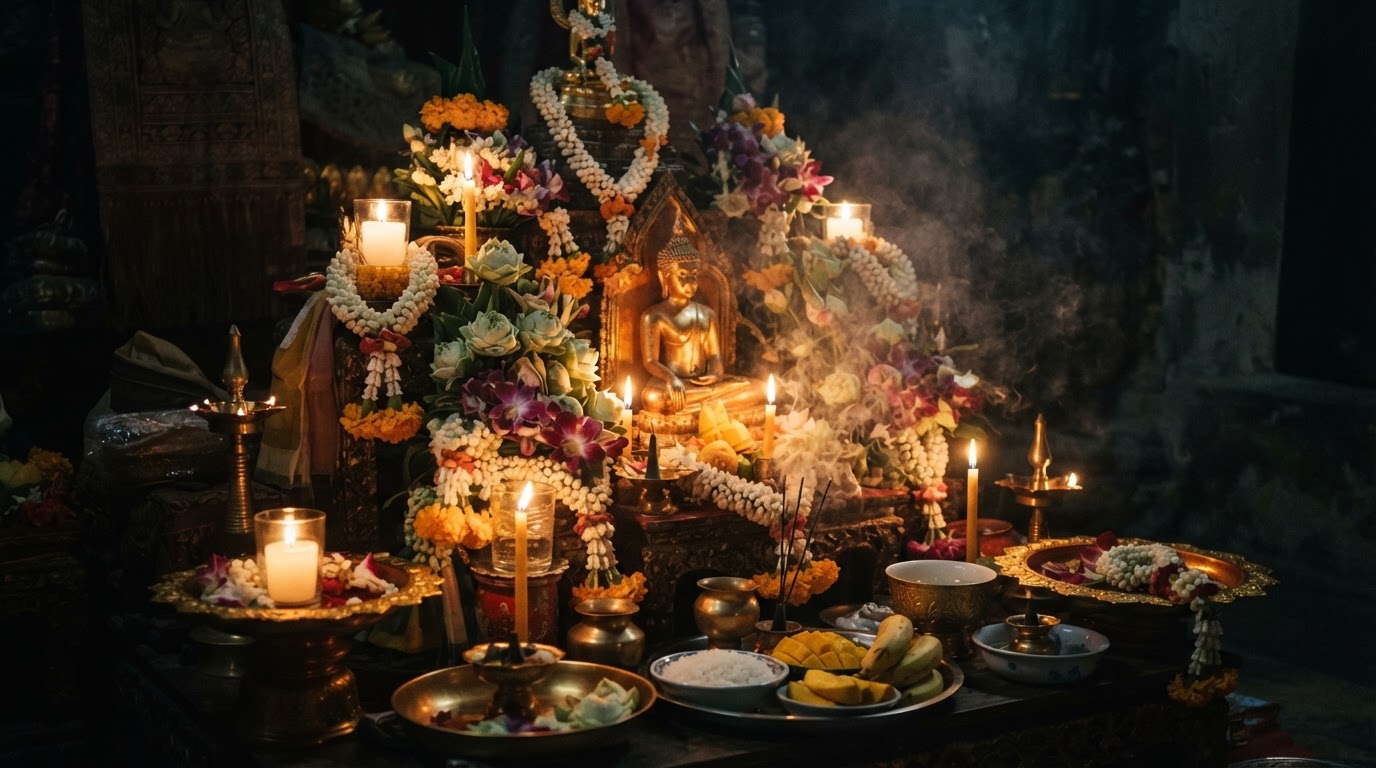
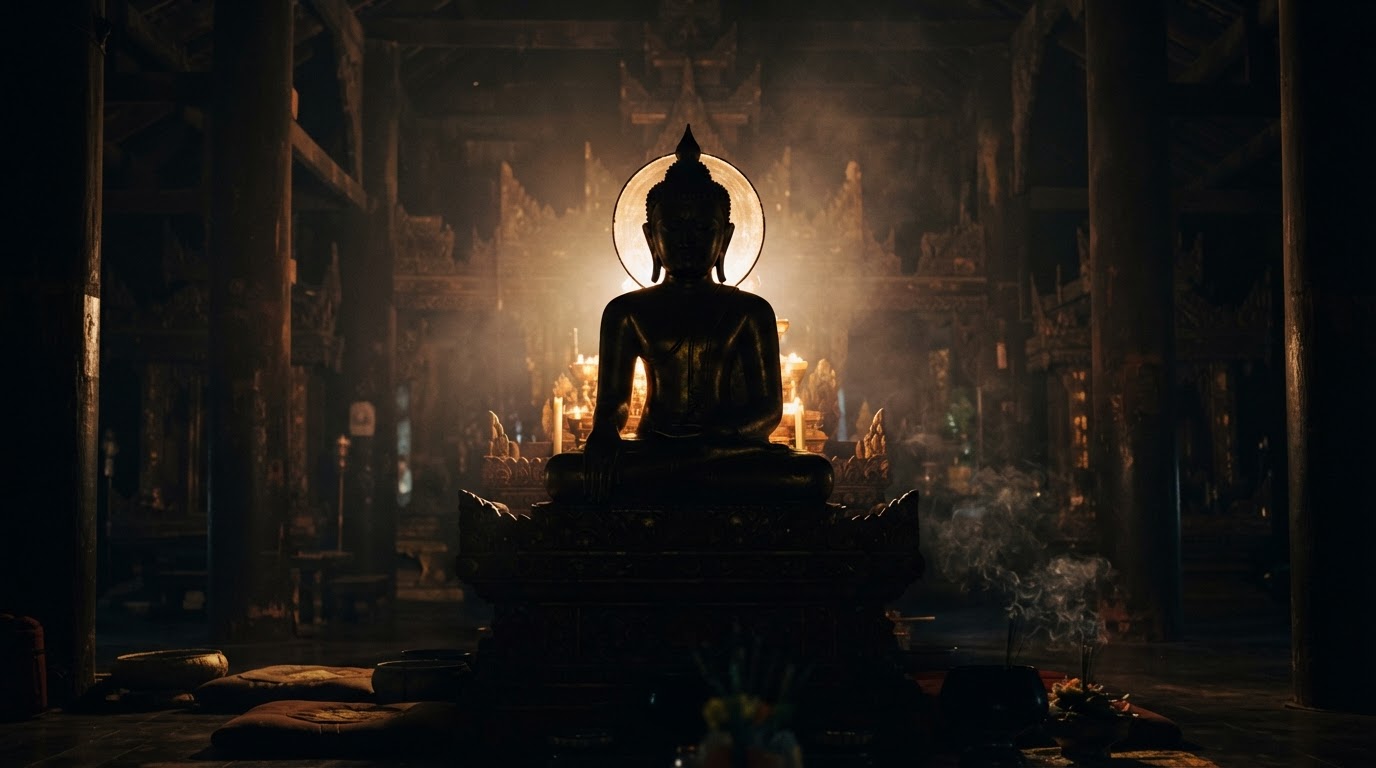
In the Phra Khanong district of Bangkok stands Wat Mahabut, a working Buddhist temple down a lane off Sukhumvit Road, reachable now by the modern city that has grown up over the old canals. Within its grounds is a shrine dedicated to Mae Nak — and it is one of the most visited, most alive spirit shrines in all of Thailand. It is not a museum piece. It is a place people come to ask for things.
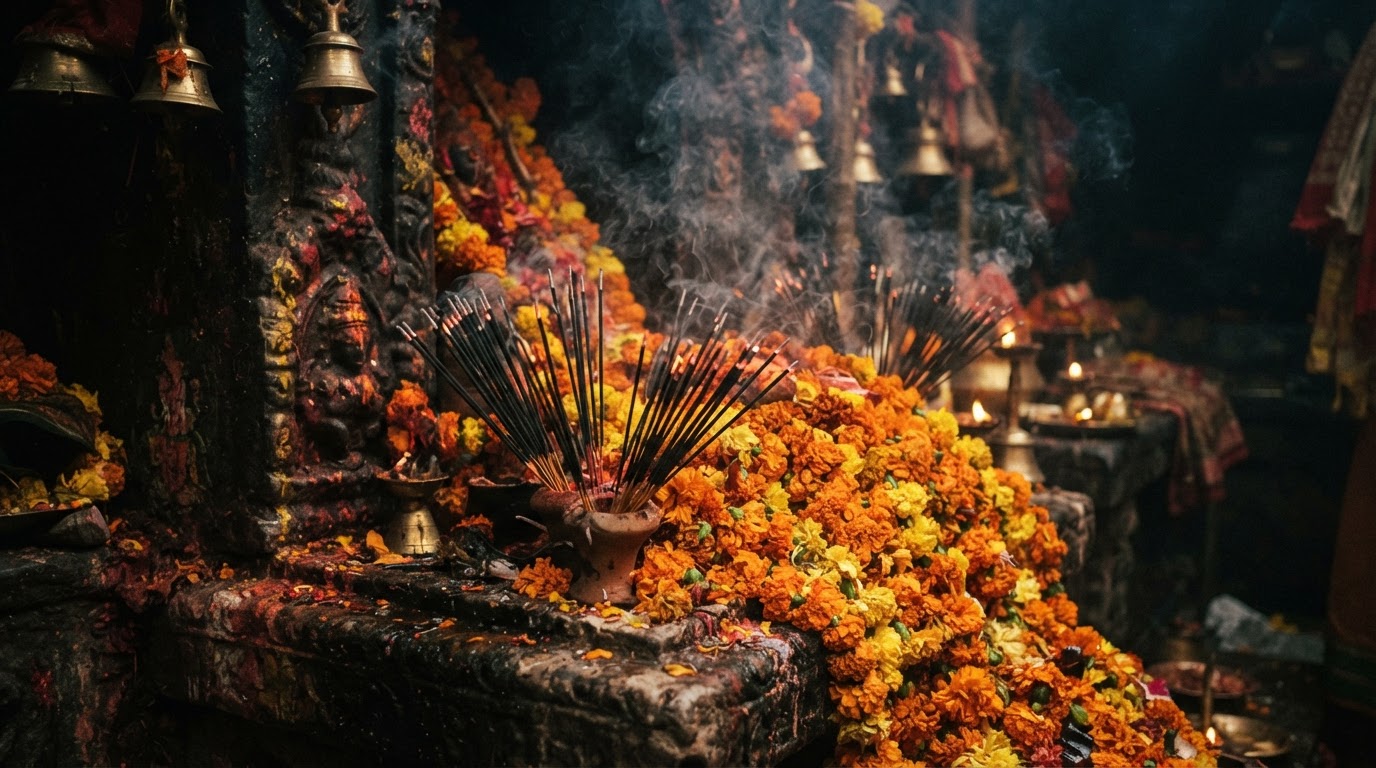
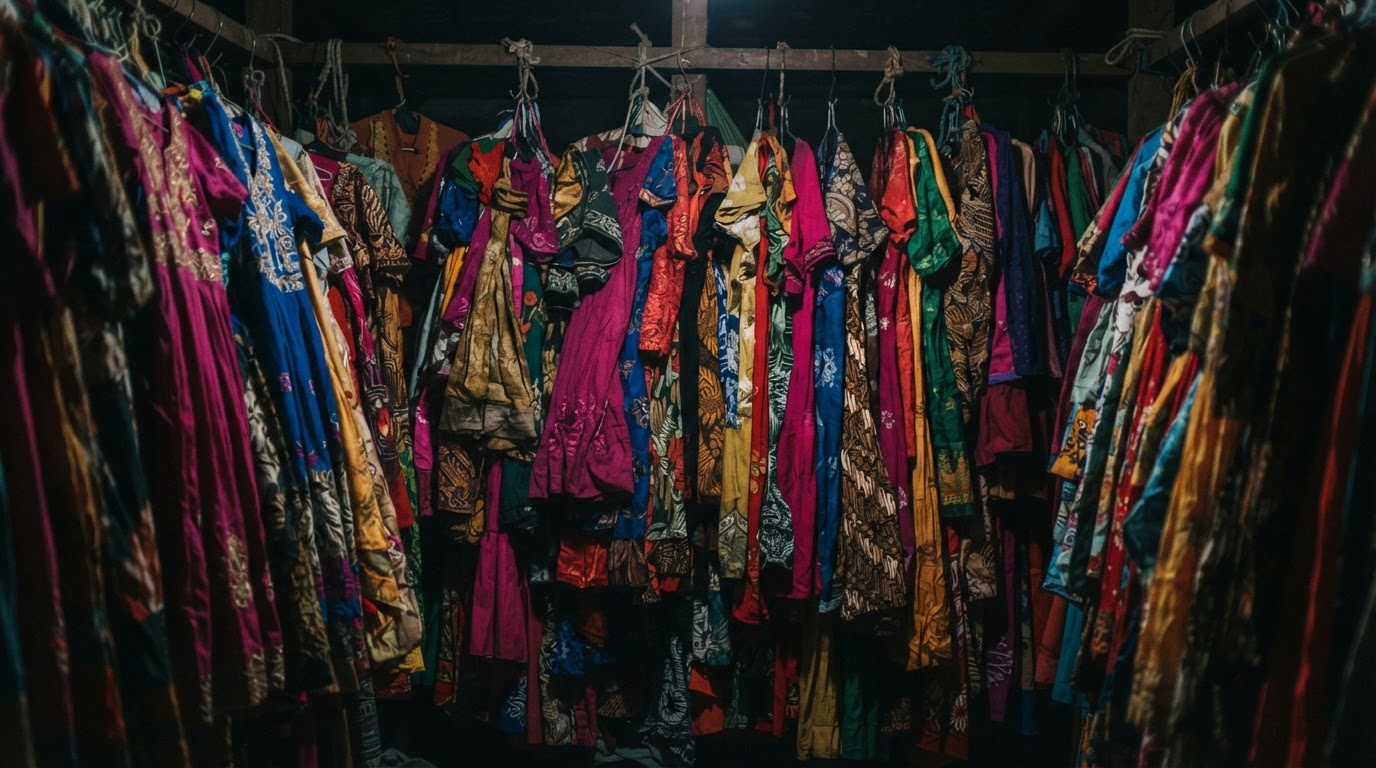
The shrine keeps a gilded statue or figure of Mae Nak, and the offerings that surround her tell you everything about how Thailand feels toward its most terrifying ghost. Because she died a young woman, and because she was, above all, a wife and a mother, people bring her the things a young woman might want: dresses, hung in bright rows; cosmetics and makeup; jewelry; perfume. Because her baby died with her, they bring toys — small figures and dolls left for a child who never grew up. Devotees light incense and lay out food and garlands of marigold. The air is thick with smoke and the particular hush of a place where people believe they are being heard.
And they ask her for help. Two requests come up again and again, and both say something about who prays here. People come to Mae Nak for lottery numbers — it is common to see visitors studying the statue, the candle wax, the incense ash, the trunk of an old tree on the grounds, hunting for the numerals a benevolent ghost might be trying to pass them. And, in a poignant echo of her own tragedy, young men come to pray for exemption from the military draft — asking the wife whose husband was taken away to war to spare them the same fate. A ghost created by conscription, petitioned by conscripts to be spared. The story folds back on itself, and no one at the shrine finds that strange at all.
Was Mae Nak Real?
It is a fair question to ask of a shrine that draws thousands, and the honest answer is: no one can prove it, and the debate is old.
There is a strand of belief in Thailand that Mae Nak was a real woman — that behind the legend lies an actual person who lived and died in nineteenth-century Phra Khanong, her name variously given, her story then swelling over generations into the supernatural tale we have now. Some accounts try to attach her to specific historical figures or families; some point to the grounds of Wat Mahabut itself as the site of a real grave. Against this stands the sober reading favored by folklorists: that Mae Nak is a legend in the truest sense — a story with no reliable documentary anchor, no birth record or death record that closes the case, assembled and reassembled by a culture over more than a century until it became far larger and more detailed than any single life could have been.
What is beyond dispute is that the story is old, and that it was already circulating widely in the nineteenth century, spreading by word of mouth and then in cheap printed verse and stage plays long before film existed. Whether a woman named Nak ever truly reached through her own floorboards, we will never know. What we know is that Thailand decided, long ago, that she was worth believing in — and that the deciding never really stopped.
The Ghost That Became a Nation's Favorite
If the Mae Nak story had merely frightened people, it would be one Southeast Asian ghost legend among many. What makes it singular is its afterlife — the sheer, staggering size of the cultural footprint a single canal-side haunting has left across Thai popular culture.
She is, by a wide margin, the most adapted story in the history of Thai film. Since the silent era, Mae Nak has been brought to the screen dozens of times — as straight horror, as tragic romance, as opera, as television series, as musical theatre, over and over across a full century of Thai cinema, each generation remaking her in its own image. The 1999 film Nang Nak recast her as a sweeping, mournful love story and became a landmark of Thai cinema. And then, in 2013, came the twist that says the most about the country's relationship with its ghost: a horror-comedy called Pee Mak, which retells the legend from the husband's side and plays much of it for warmth and laughter, became the highest-grossing Thai film of all time, a phenomenon that packed theaters across the region. Thailand took its most terrifying ghost story and turned it into its most beloved blockbuster — a comedy about a man who loves his wife so much he doesn't care that she's dead.
That is the tell. You do not make a beloved comedy out of a ghost you are simply afraid of. You make it out of a ghost you have taken into your heart.

Why the Most Terrifying Ghost Is the Most Loved
So we arrive at the paradox at the center of everything. Mae Nak kills. She terrorizes a district. She is, in the strict sense of the genre, a monster. And she is adored — brought dresses and toys, prayed to for luck and mercy, remade lovingly on screen for a hundred years by the very culture she is supposed to haunt.
The resolution is that she was never really a ghost of hatred. She is a ghost of love, and Thailand has always understood the difference. Everything she does, she does because she will not stop being a wife and a mother — because she was robbed, by war and by childbirth, of the ordinary life every person is owed, and she reached back across death to take it anyway. The horror of her is inseparable from the pity of her. When people kneel at Wat Mahabut, they are not appeasing a demon. They are keeping company with a woman who loved too hard to leave, and asking her, one grieving heart to another, to look kindly on them.
The item in this file I have never been able to resolve is the brow bone. Somdet To is a documented monk with a documented life, and the amulet made from Nak's frontal bone is said to have passed from hand to hand ever since, its owners named in whispers and never in records. I have tried to follow that chain and it dissolves within two or three steps, every time, into people who cannot be checked. Which leaves the legend's tidy ending sitting slightly open: she was taught to let go, and released toward rebirth, and a fragment of her skull was kept.
There is a Buddhist truth threaded quietly through the whole legend, and it is why the story has never felt merely macabre to the people who tell it. Mae Nak is what happens when love refuses impermanence — when we clutch at what we cannot keep and turn our longing into a haunting. Somdet To's answer to her was not condemnation but release: you are dead; let go; move on. And yet the same culture that tells that lesson cannot quite bring itself to let her go — keeps her at the temple, keeps her on the screen, keeps bringing her dresses. We understand her clinging because it is our own. We would haunt too, if we could, for the ones we could not keep.
That, in the end, is why Thailand's most terrifying ghost is also its most beloved. Mae Nak is not a warning about death. She is a story about love — about how far it will reach, down through the floorboards, down past the grave, to close its hand around the small ordinary life it was not ready to lose. She never wanted to frighten anyone. She only wanted her husband home, and her baby in her arms, and the evening to go on. And more than a century later, in a temple full of incense and dresses and children's toys, in a country that turned her into its favorite film, that wish is still being honored — by people who know, better than anyone, that the dead do not always agree to stay gone, and that the thing that keeps them here is the thing we would least want to give up ourselves.
---
The images and video in this article are AI-generated works produced to convey the mood of the story, and are not photographs of any actual person or event.

Comments
No comments yet — leave the first one.