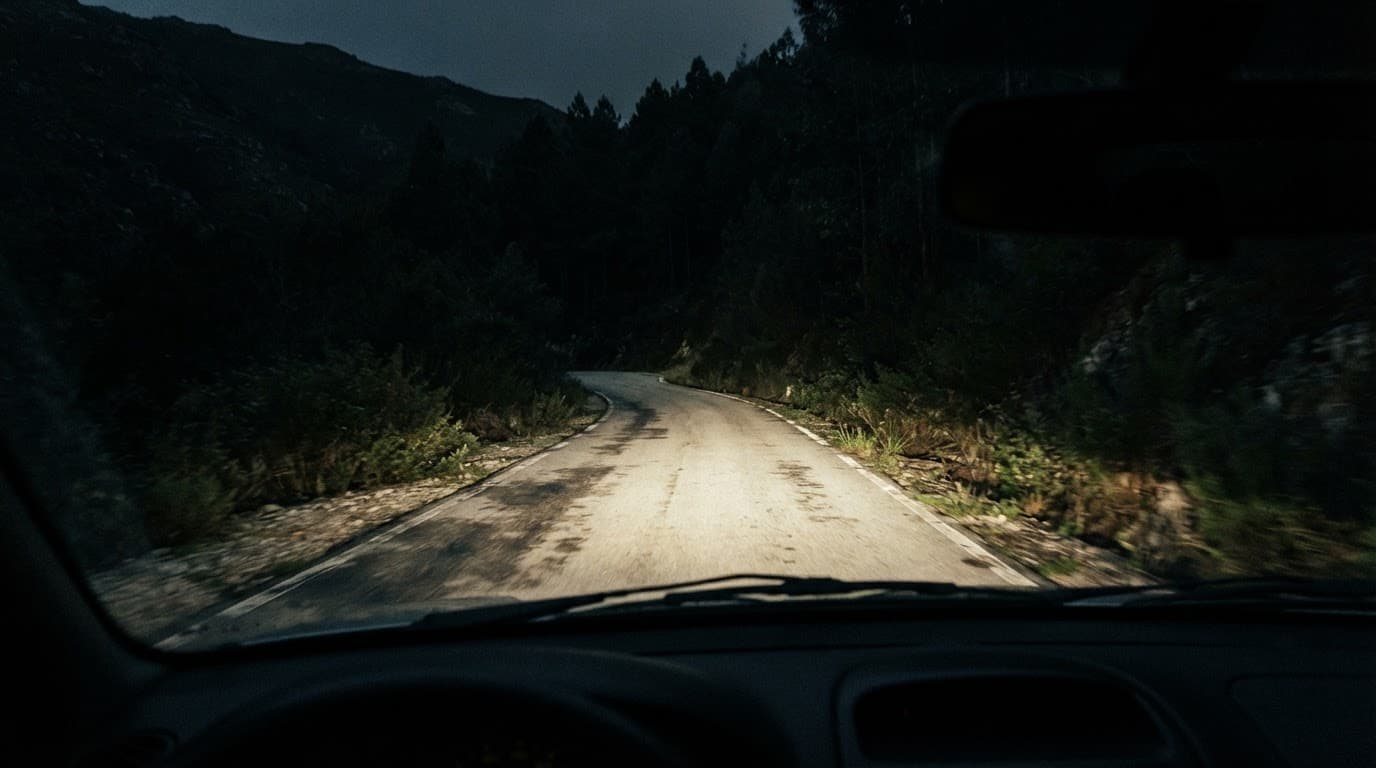
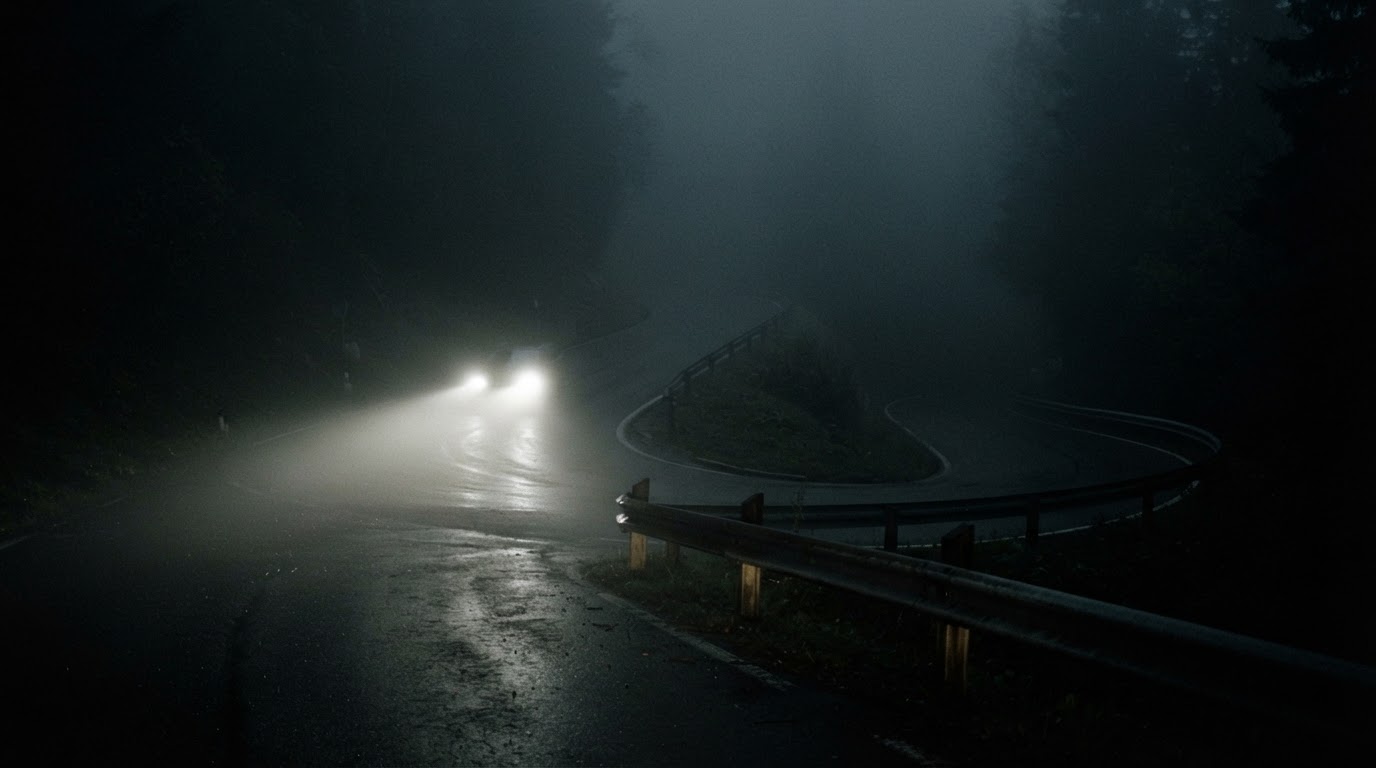
The road is the kind you take at night only because it is the way home.
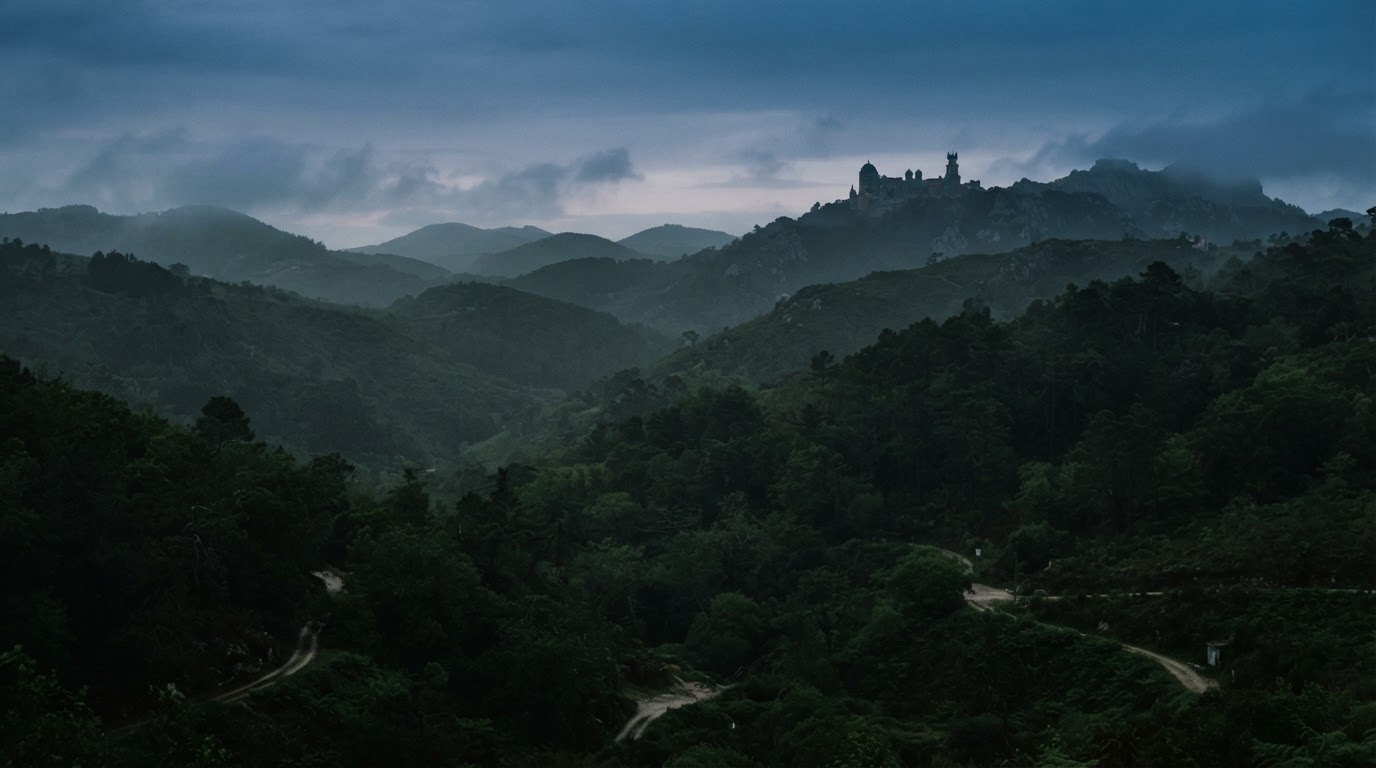
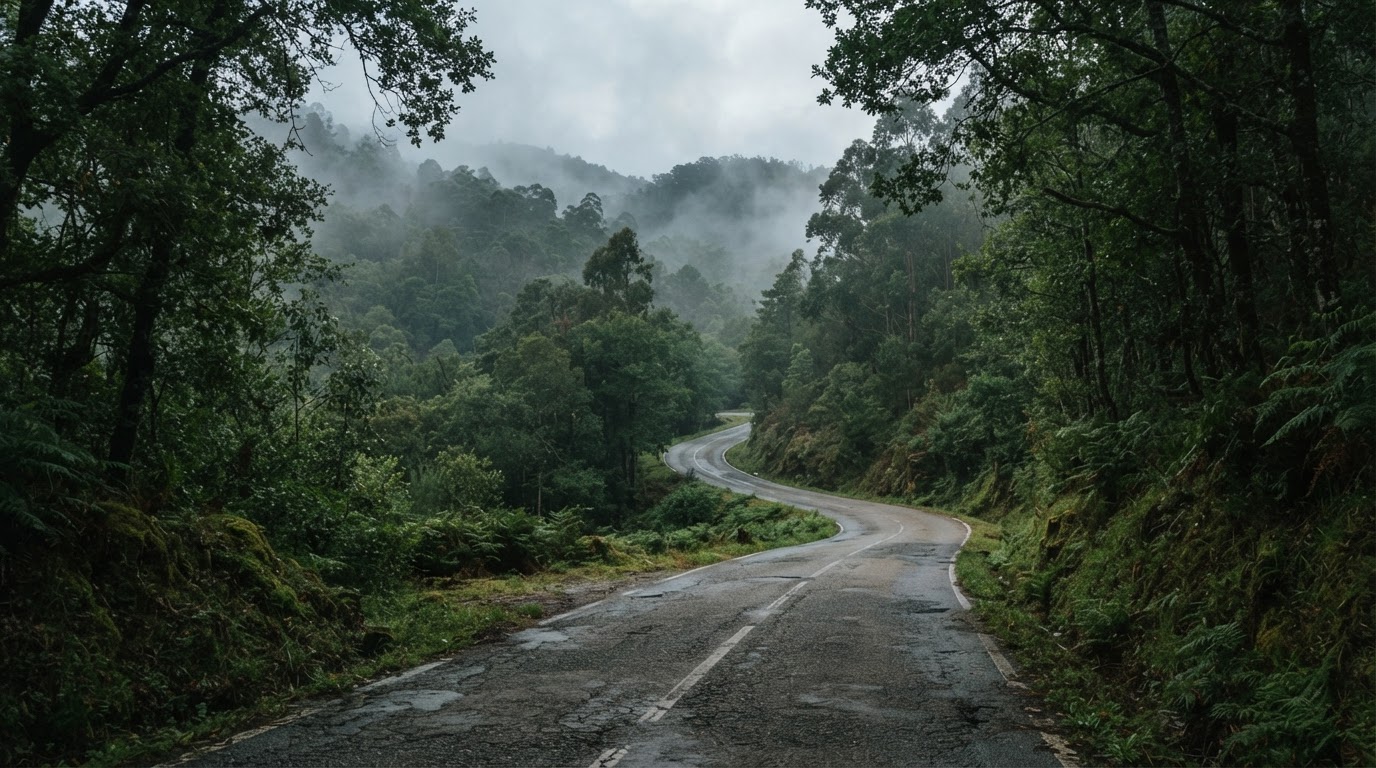
It climbs into the hills outside Sintra, west of Lisbon, where the land folds up into dark ridges and the treeline crowds the shoulder and the streetlights give out long before the houses do. It is 2003. Three friends are driving back late, and one of them is filming — for no reason, the way people had only just started filming everything, a small camera propped up and running while they talk over each other and the headlights carve a narrow tunnel out of the black. The tape catches the ordinary things. The dashboard glow. The banter. The road unspooling curve after curve.
And then, in the far reach of the headlights, standing at the edge of the road where no one should be standing, there is a young woman in white.
This entry sat in my files for years under the wrong heading. I had it filed as a hoax, which is what it is, and hoaxes are usually boring to keep. What changed my mind was trying to trace the year 1983 — the date the retellers attach to her supposed real death — through anything resembling a record. There is nothing. Not a thin record, not a disputed one: nothing at all, anywhere, and yet the number is quoted with total confidence in thousands of copies. Somewhere between the film and the forwarding, a person invented a year and everyone since has treated it as memory.
The Stop
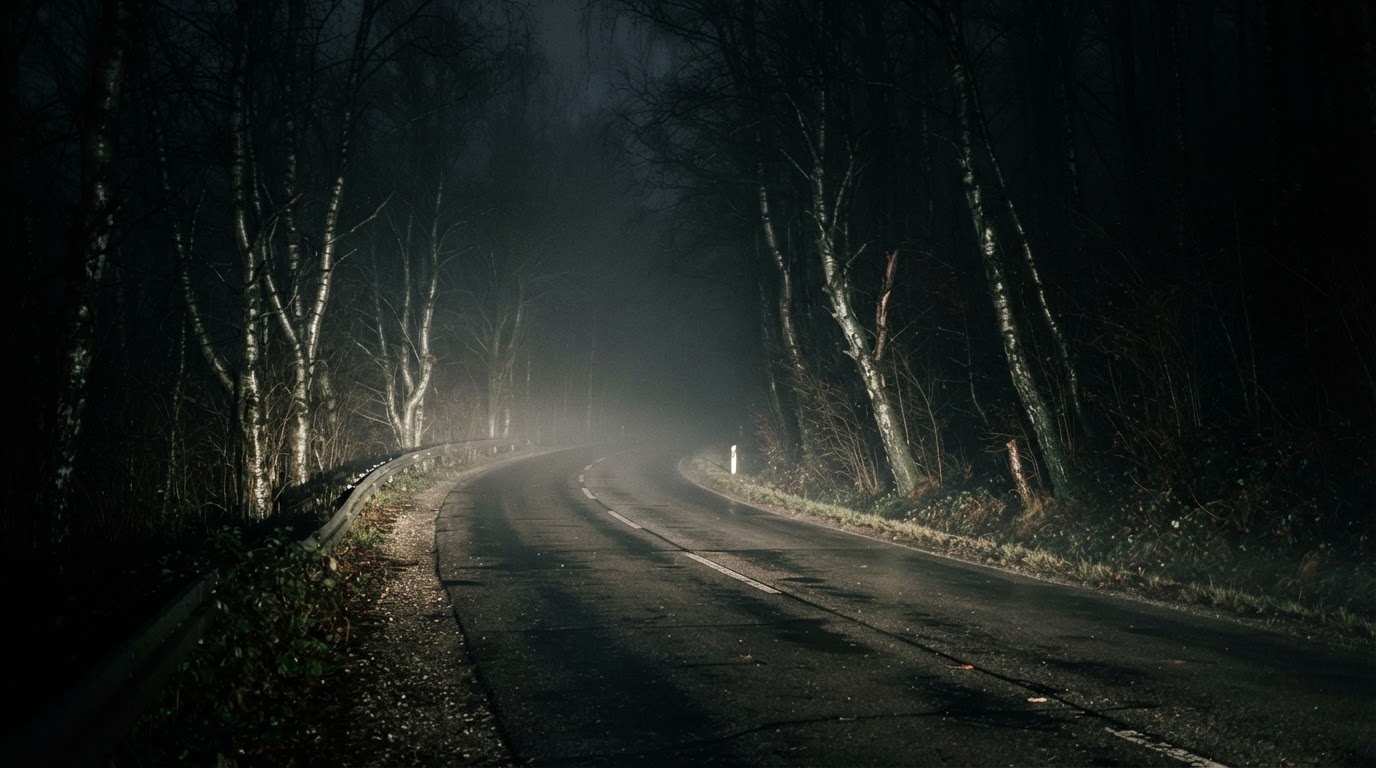
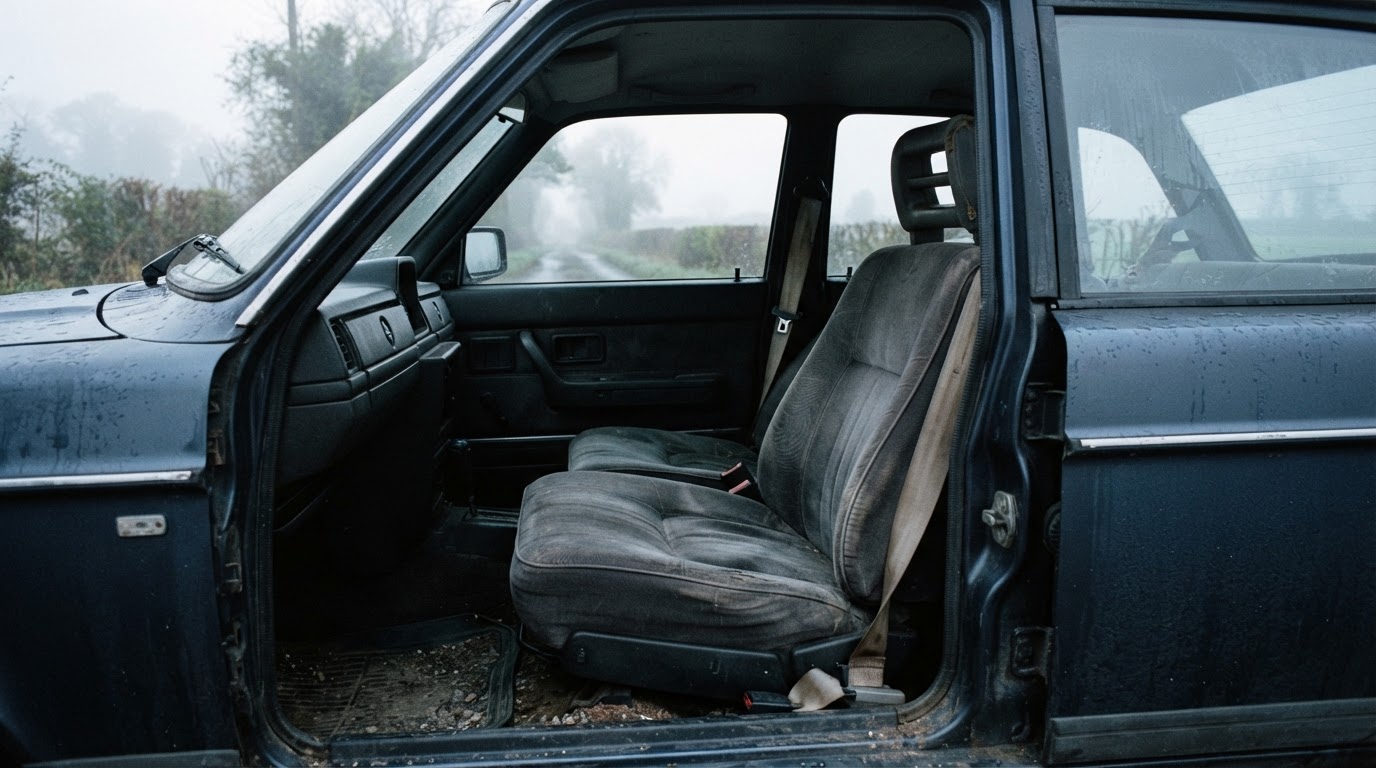
They slow. Of course they slow — she is alone, on foot, miles from anywhere, on a road with no reason to have a person standing beside it in the dark. The camera keeps rolling. Someone rolls a window down. They offer her a ride, the way you would, and she gets in without much said, folding herself into the back seat behind them.
And then she says nothing.
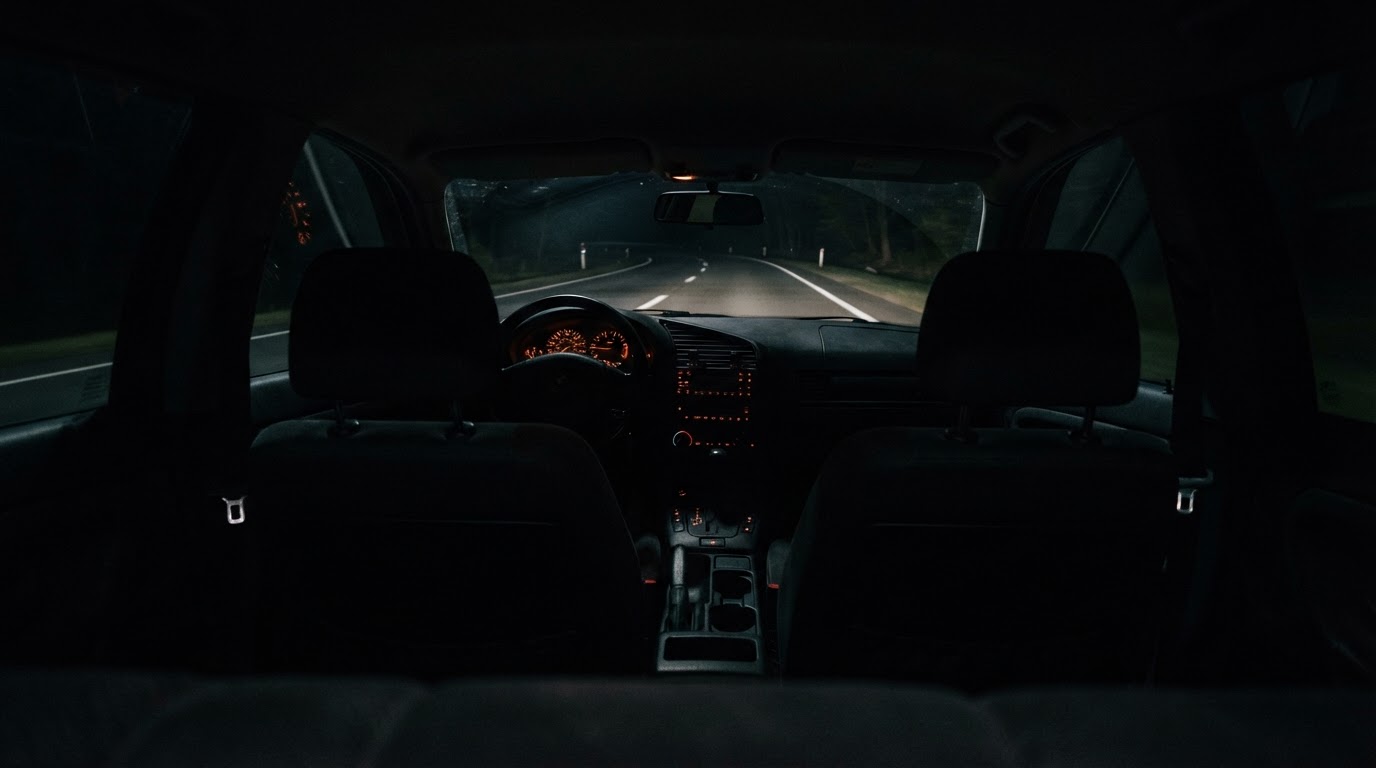
That silence is the first thing that is wrong, and it is worse than any noise could be. The friends chatter — where are you headed, where did you come from, are you okay — and she answers little or not at all. She sits behind them, pale in the dashboard glow, her face half-turned to the window, watching the dark road come and go. The camera, wedged up front, catches only the back of the car and the occasional lean of her shape into frame. The car climbs. The curves keep coming. There is a long stretch where nothing happens at all, and that stretch is the most unbearable part, because you can feel the story leaning toward something and refusing to arrive.
Then she lifts one hand.
She points — forward, into the dark ahead, at a bend in the road none of them can see the end of. And she speaks. In the telling that traveled around the world, it is a single flat sentence, delivered without weight, as if she were naming a town: this is where I died.
The Turn
What happens next is the beat the whole legend is built around, and it is best told plainly, without dwelling on it, because the horror was always in the suggestion and never in the detail.
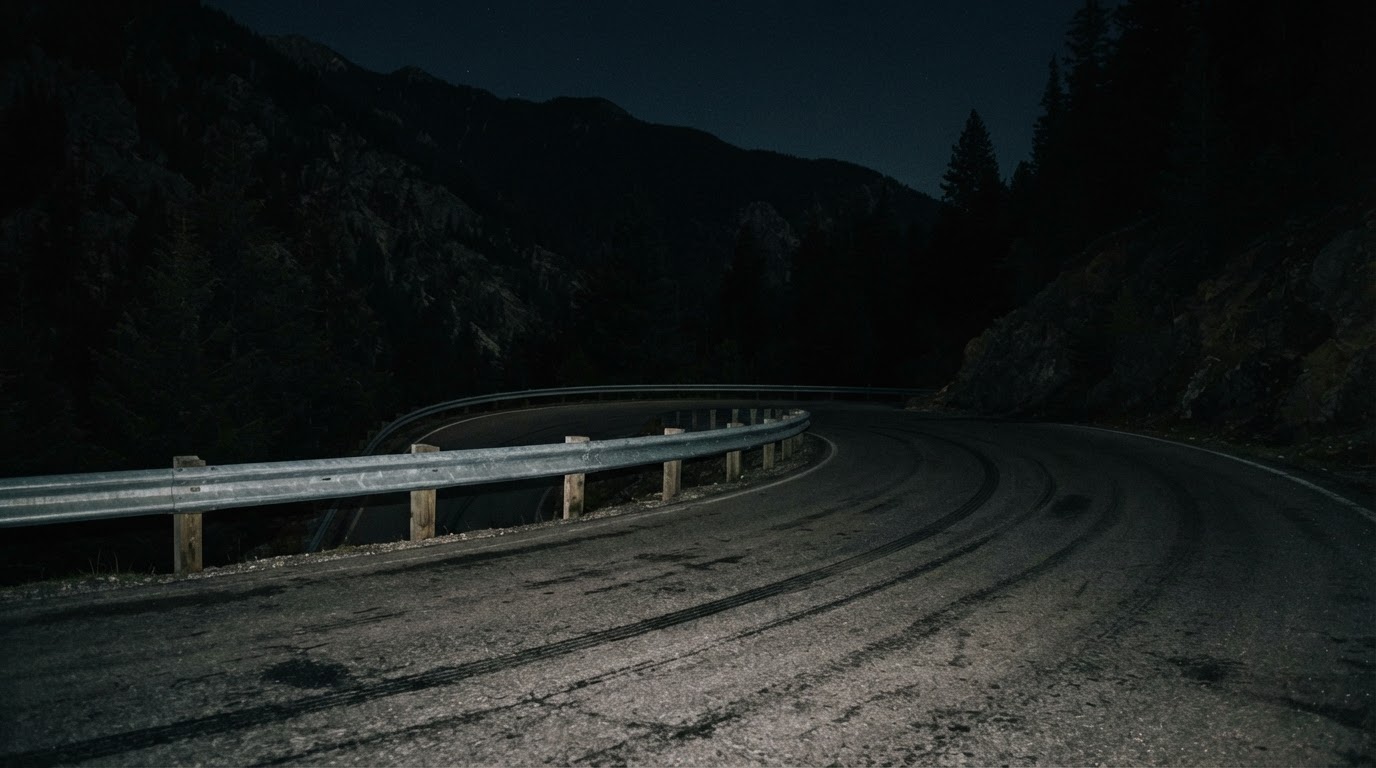
In the video, the driver turns to look at her — the reflex anyone would have, the head swinging around toward the voice. And in the instant he looks, the thing in the back seat is no longer a quiet young woman watching the road. The face turns. There is a scream — the friends' scream, hers, the sound tearing across the small space of the car all at once — and the camera lurches, and the world outside the windshield swings hard as the wheel wrenches. The image goes to violent motion and noise and then to nothing. The tape, in the story, ends there. On the dark road. At the curve she pointed to. At the place she said she died.
That is the entire video. A ride, a silence, a sentence, a turn, a scream, and then black. No wreck is shown. No aftermath. The screen simply stops, and the stopping is the point — the tape runs out at the exact instant the ordinary becomes the unsurvivable, and hands the rest to your imagination, which will always build something worse than any camera could.
The Claim That Made It Immortal
A video alone is just a video. What turned this one into a legend was the sentence wrapped around it — the claim carried in the email that spread it.
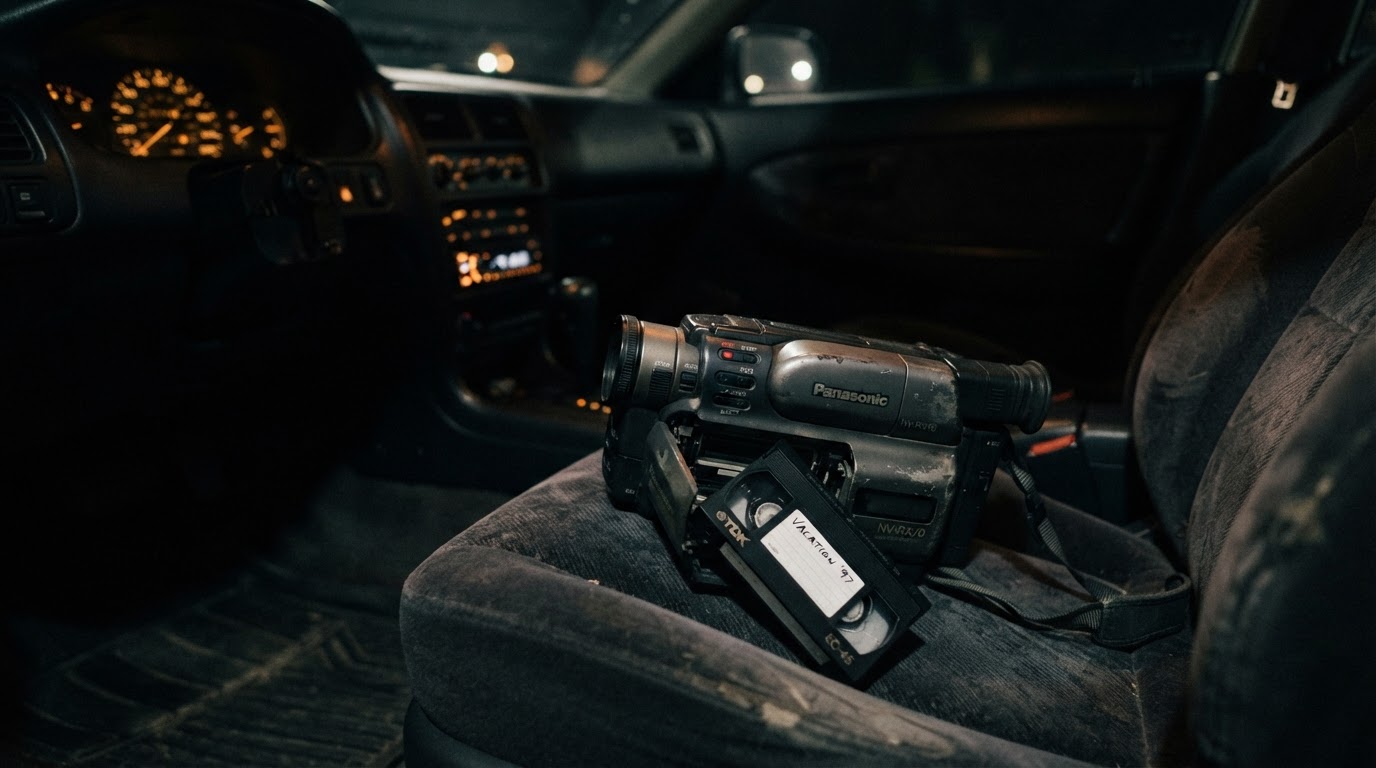
The story attached to the footage was this: it was real. It was found footage. The three friends in the car all died that night, on that curve, in the crash the tape cuts off just before. Their bodies were recovered. And the camera was found afterward in the wreckage, intact, its tape unspooled but readable, and on it was everything you had just watched — the last minutes of three living people and the pale passenger who told them, before it happened, exactly where they were going to die. The woman, the email said, was Teresa Fidalgo, a girl who had herself died in a crash on that same road years before, and who now waited along it at night for drivers foolish enough to stop.
It is a perfect piece of construction, and worth admiring for a moment before taking it apart. Every element is engineered to defeat doubt. Found footage means no author, no filmmaker, no one to blame for making it up — it just exists, the way a security tape exists. They all died removes every witness who could contradict the story. The camera survived intact explains, pre-emptively, why you are able to watch a recording that by all rights should have been destroyed. The story anticipates the exact questions a skeptic would ask and answers each one before it is asked. That is not the signature of something true. It is the signature of something well made.
The Truth: A Short Film Called A Curva
Here is what actually happened, and it is not a secret. It never was.
The footage is a scene from a short film. It was made by a Portuguese filmmaker named David Rebordão, and it belongs to a piece called A Curva — The Curve — released in the mid-2000s. Rebordão and his collaborators built the "found footage" look on purpose: the handheld camera, the dark road, the amateur banter, the abrupt cut. It was designed to be mistaken for real, because being mistaken for real was the whole aesthetic ambition of the thing. The woman in white was played by an actress. The curve was a location. The scream was a performance. Nobody died on that road, because nothing happened on that road except a film crew making a film.
And Rebordão did not hide this. Around 2007, as the clip metastasized across the early internet and people began genuinely believing they were watching three strangers die, he came forward and said plainly what it was: a short film, his short film, fiction. He explained the making of it. There was a website. The truth was available to anyone who went looking — a name, a title, a filmmaker who stood up and said I made that, it is a story, no one was hurt.
It did not matter. The confession traveled a fraction as far as the lie. This is the pattern, and it is the same one that runs under so much internet folklore: the fiction detaches from its author and keeps going without him. We have watched this happen again and again. Japan's Kunekune, the white thing writhing in the summer fields, was posted to a message board originally tagged as fiction — and somewhere in the endless re-posting, the tag fell off and the story arrived as something that happened to someone's brother. The Aka Manto bathroom-stall spirit works the same way, a piece of authored dread that shed its authorship. Teresa Fidalgo is the vanishing-hitchhiker branch of that same tree: a made thing, honestly labeled by its maker, which the internet simply peeled the label off and set loose.
The Layer the Retellers Added
Once a story escapes its author, it does not stay still. It grows. And the growth that attached itself to Teresa Fidalgo is instructive, because you can watch fiction manufacturing its own fake history in real time.
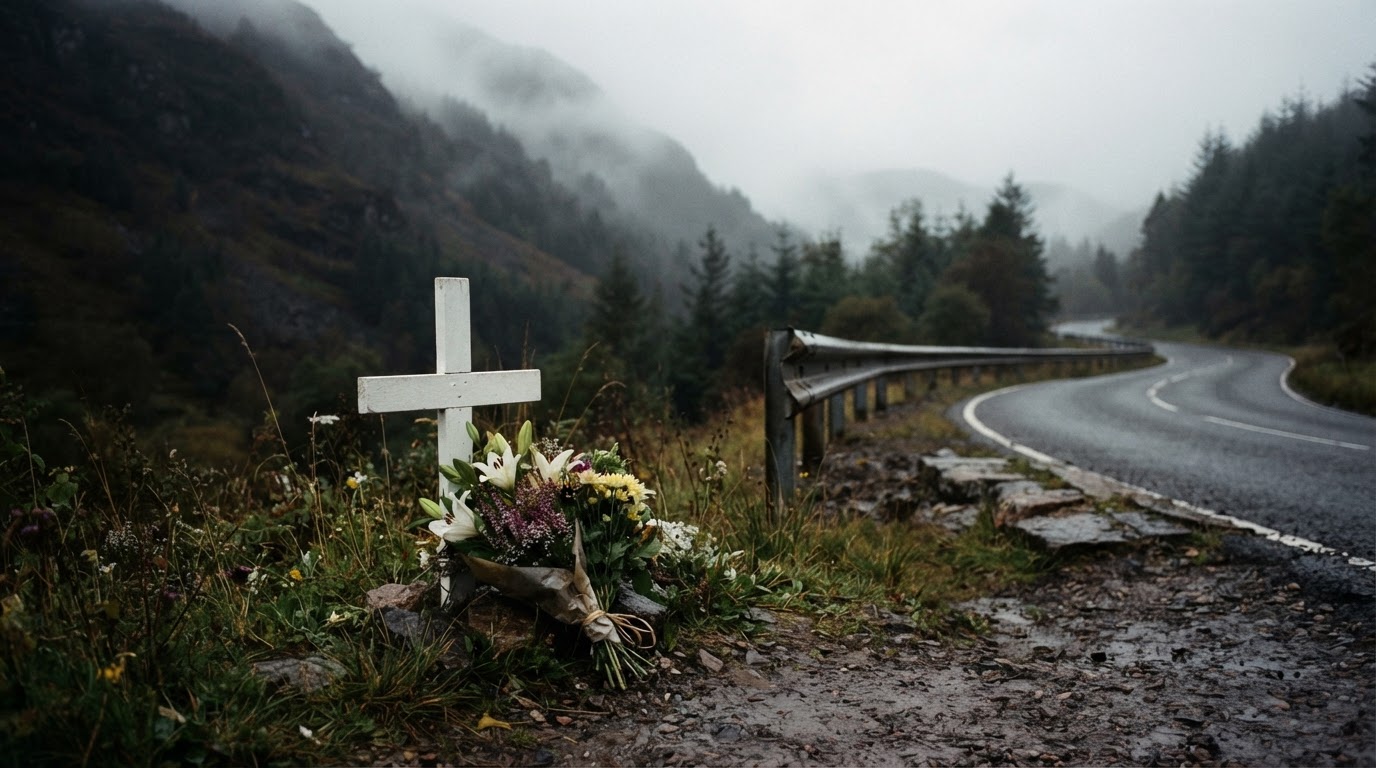
The retellings added a backstory the film never claimed: that a real Teresa Fidalgo had died in a car crash on that Sintra road in 1983, twenty years before the video, and that the ghost in the footage was her returning spirit. This detail is quoted with great confidence across countless reposts, always with the specificity that signals truth — a name, a year, a place. And there are no records of it. No such crash, no such death, no such person surfaces in any verifiable account. The "1983" layer was not part of A Curva. It was grafted on afterward by people passing the story along, because a ghost feels more real with a date attached, and a date is free to invent. The retellers gave Teresa a death to make her death believable. It is fiction growing a root system into the past, sending fake history down into the ground beneath a fake ghost.

The Chain Message: "I Am Teresa Fidalgo"
The video was the first life of the legend. Its second life — the one most people under thirty actually met first — was as a chain message, and it is here that the story turns from eerie to genuinely absurd, and where it deserves to be dissected rather than feared.
Somewhere in the migration from the email-and-Orkut years of 2003–2007 into the age of WhatsApp and Instagram DMs, Teresa Fidalgo mutated from a found-footage ghost into a forwarded curse. The text, in its most common form, reads roughly like this:
Hi, I am Teresa Fidalgo, and if you don't post this on 20 other pages I will sleep with you forever. A girl ignored this and her mother died 29 days later.
Read it once as a frightened person is meant to read it, and then read it again as what it is, because the second reading is the cure. Look at how much it is asking you to swallow. A dead woman is personally monitoring your Instagram reposting habits. She has set a threshold — not ten, not fifty, but exactly twenty pages — and she enforces it with the vague menace of "sleep with you forever," a threat so poorly worded it lands somewhere between a haunting and an unwanted sleepover. There is the obligatory cautionary tale of the girl who ignored it and whose mother died, on the oddly precise timetable of twenty-nine days, a number chosen to feel specific enough to be real. Every beat of it is a machine for producing anxiety and then offering, for the low price of one forward, a way to make the anxiety go away.
The absurdity is not a flaw in the chain message. It is how the chain message survives. It does not need to be believed. It only needs to make you slightly uneasy about not forwarding it — to plant the small, irrational thought but what if — because forwarding costs you nothing and the imagined downside, however ridiculous, is not nothing. The message is engineered to exploit the cheapness of the click. And so it spreads, not on conviction but on the faint discomfort of deleting it, carried by people who mostly don't believe a word of it and pass it on anyway, just in case.
The Oldest Trick: Curse-Forwarding from Edo to the DM
The chain message feels like a modern, faintly ridiculous artifact of the smartphone. It is nothing of the sort. It is one of the oldest pieces of social technology we have, and Teresa Fidalgo is only its most recent envelope.
The chain letter — a message that instructs you to copy it and pass it to others, promising reward for compliance and disaster for breaking the chain — long predates the internet. In Edo-period Japan there were tenmei and votive letters copied and passed hand to hand to spread blessing or ward off misfortune. Nineteenth- and twentieth-century Europe and America had the "luck letters" and prayer chains that arrived by post, threatening ruin to anyone who broke them and promising fortune to those who mailed on the required number of copies. When email arrived, the chain letter simply changed clothes — forward this to ten people or bad luck follows you. When social media arrived, it changed clothes again, into the repost and the tagged DM. The medium keeps modernizing. The mechanism has not changed in centuries.
Why does it work, over and over, on people who would swear they know better? Because it targets something underneath belief. The chain letter does not ask you to believe in the curse. It asks you to weigh a tiny, certain cost — a few seconds, a forward — against a vague, unlikely, but unbounded catastrophe, and it exploits the fact that human beings are miserable at that particular arithmetic. And it works best of all on children, which is why so many of us first met Teresa in a school corridor or a class group chat. A child has less scaffolding of skepticism, feels social obligation more sharply, and is more susceptible to the pure suggestion of if you don't, something bad happens. The chain letter is, in a sense, a piece of folklore that reproduces itself specifically by finding the youngest and least armored host and asking it, gently, to make twenty copies.
Why the Vanishing Hitchhiker Is the World's Most Universal Ghost
Strip Teresa Fidalgo back to her bones and she is not a Portuguese original at all. She is a local performance of the single most widely told ghost story on Earth: the vanishing hitchhiker.
The structure is almost identical everywhere it appears. A traveler on a lonely road at night encounters a person — nearly always a young woman, very often in white — who asks for or accepts a ride. She is quiet, sorrowful, strange. And before the journey ends she vanishes, or reveals that she has been dead all along, usually killed at that very spot years before. Folklorists have collected versions of this on nearly every continent, and the local costumes are wonderful in their variety while the skeleton never changes.
In Chicago there is Resurrection Mary, the young woman in a white dress who has flagged down cars along Archer Avenue since the 1930s, is given a ride toward Resurrection Cemetery, and disappears at its gates. In Japan, in the aching years after the 2011 tsunami, taxi drivers in the devastated Tōhoku region reported — quietly, and with a grief that deserves to be treated gently — picking up passengers who asked to be taken to neighborhoods that no longer existed, and who were gone from the back seat when they arrived; these accounts read less as horror than as a nation's mourning taking the shape of the oldest story it had. And in Korea, the Jayuro ghost — the woman said to appear along the Jayu Expressway at night, flagging down cars on a road with its own long history of accidents — is the same figure again, wearing a Korean highway instead of a Portuguese mountain pass. (She has a Latin American sister too, in La Llorona, the weeping woman in white who haunts the roadsides and waterways of Mexico and beyond.)
Why this shape, in every culture that drives at night? Because the road at night is where the modern world manufactures its ghosts. A lonely stretch of dark asphalt is genuinely dangerous — it is where people actually die, suddenly, in metal, at speed, often young and often alone. The vanishing hitchhiker is what happens when a real fear finds a human face to wear: the fear of the road, dressed as a woman who died on it and cannot leave. Teresa Fidalgo is that universal template given a camera, a curve outside Sintra, and a filmmaker who understood exactly which ancient story he was retelling.

Found-Footage Grammar: Why Shaky Night Video Reads as True
There is one more reason Teresa Fidalgo fooled so many people, and it has nothing to do with ghosts. It has to do with a language of images the internet had, at that exact moment, only just learned to read.
Four years before A Curva, in 1999, a tiny American film called The Blair Witch Project arrived pretending to be recovered footage of three student filmmakers who had walked into the woods and never come back. It was marketed as real. Some people believed it was real. And it worked because it discovered a grammar: that if a video is shaky, dark, badly framed, unlit, full of overlapping unscripted-sounding talk, and cuts off abruptly without resolution, our instincts read all of those flaws as authenticity. A polished image, well lit and steadily framed, announces itself as made — someone chose that shot, someone paid for that light. A jittering handheld phone-camera clip in the dark announces the opposite: no one is in control here, no one is performing, this is just happening and someone is barely managing to capture it. We have been trained, by a lifetime of real amateur video and news footage and dashcams, to trust the ugly image over the beautiful one.
A Curva is built entirely in that grammar. The camera is propped and jostling. The road is black and the framing is accidental. The talk overlaps and trails off. And the crucial move — the cut to nothing at the instant of the crash — is exactly what a real camera in a real wreck would do, and exactly what a filmmaker who wanted to be believed would engineer. The very things that would make a Hollywood film look cheap are the things that made this clip look true. Teresa Fidalgo did not fool people despite looking like a bad home video. She fooled them because she looked like one.

The Actress, the Film, and What Became of Them
There is a quiet epilogue to all of this, and it is worth sitting with because it is the opposite of a ghost story.
The woman in white was an actress. She went home after the shoot. She has, presumably, gone on living an ordinary life for the twenty-odd years since — a person who once played a ghost for a friend's short film and then went back to the world, entirely alive, while a version of her face travels the internet as the dead girl of the Sintra road, quoted in chain messages by children who will never know her name. David Rebordão went on making films and being, for a while, the man who had to keep explaining that his own creation was not a corpse. A Curva became far more famous as a rumor than it ever was as a film, which is a strange fate for a filmmaker: to have made the most-watched thing of your life and to have most of its viewers not know it was yours, not know it was a film at all, believe instead that they were watching real people die.
The fiction outgrew everyone who made it. The actress, the director, the crew, the real curve outside Sintra where a crew once parked their cars and set up a light — all of them are footnotes now to a ghost who has no author, no origin anyone bothers to check, and an afterlife measured in forwards.
A Ghost Made Entirely of Forwarding
Here is the thing that stays with you, once the fright of the video has worn off and the chain message has been dissected down to its silly bones.
Teresa Fidalgo is not, in the end, a story about a woman who died on a road. She is a story about a story — about how a piece of fiction, honestly made and honestly signed, can slip its author, grow a fake history, mutate into a curse, and spread across the entire planet on the back of a single human weakness: our reluctance to be the one who breaks the chain. Every other ghost needs a haunting. Teresa needs only a forward. She does not appear at your bedside; she appears in your notifications. She does not point at the curve where she died; she points at the twenty pages you haven't posted to yet. She is a ghost with no substance at all except the act of being passed on, which means that she is, quite precisely, as real as the number of people willing to pass her on and not one soul more.
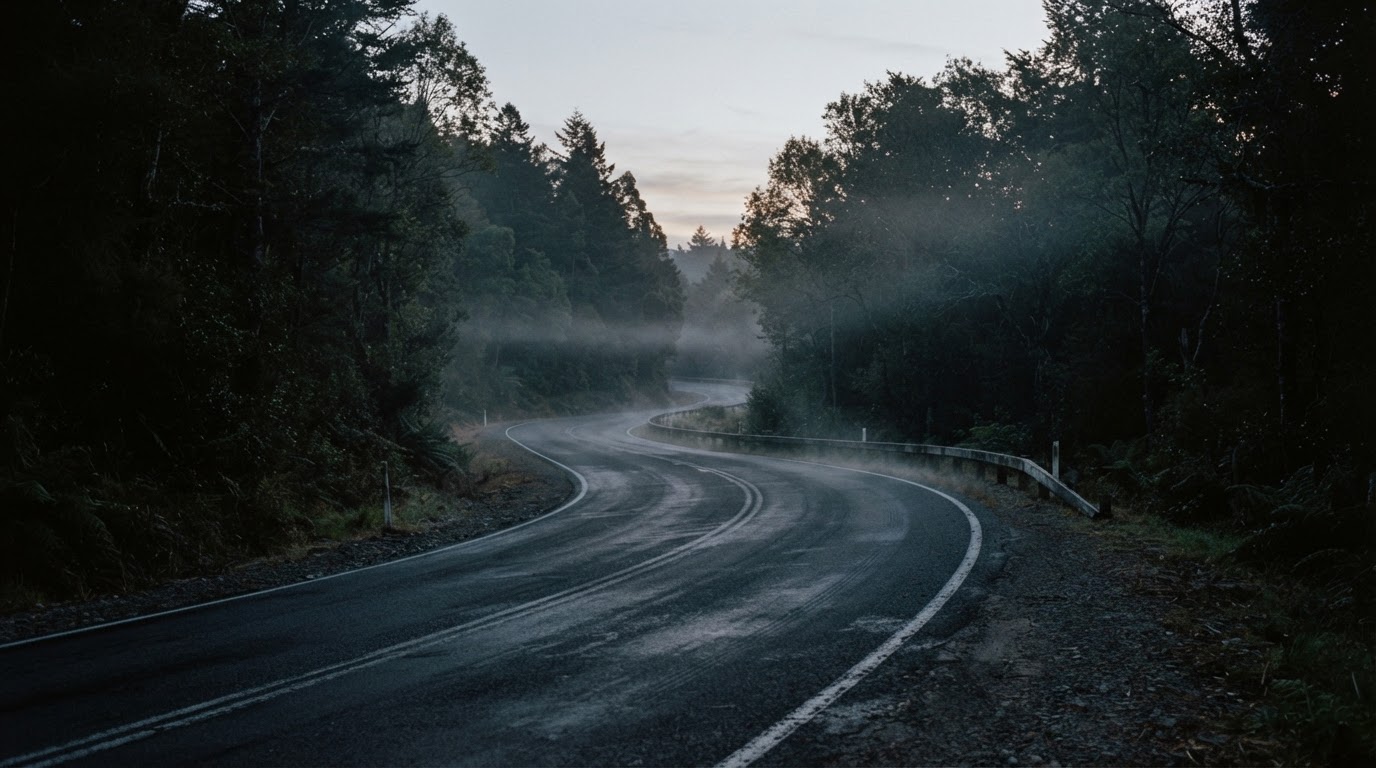
Which leaves the whole legend resting, as these things always do, on you. The video is a film; its maker said so and said so plainly. The 1983 death has no records. The chain message is a curse letter in Instagram's clothing, and its curse has never harmed a single person who deleted it. There is a dark road outside Sintra, and there is a real curve on it, and if you drove it tonight you would find only asphalt and forest and fog, and no woman in white, because there never was one — only an actress, a crew, and a light, one evening two decades ago.
And still, somewhere right now, a phone lights up in a dark room, and a message arrives that says I am Teresa Fidalgo, and a thumb hovers over it, and a small irrational voice says but what if, and the ghost gets to live for exactly as long as that hesitation lasts. That hesitation is the whole of her. She was never on the road. She was always in the forwarding. And the only place she can be stopped is the one place the chain has always secretly depended on — the moment someone reads it, understands exactly what it is, smiles, and lets it go.
There is a version of this file I cannot finish. Rebordão signed his own work, publicly, more than once, and I can pull up the statements in a few minutes. Everything needed to end the story has been sitting in the open for nearly twenty years. And still, sorting the material by date, the copies of the chain message keep arriving — newer than the confession, newer than the correction, newer than every attempt anyone has made to close the file. Truth was available the entire time and lost anyway. That is the part I keep re-reading, and it has nothing to do with a woman on a road.
---
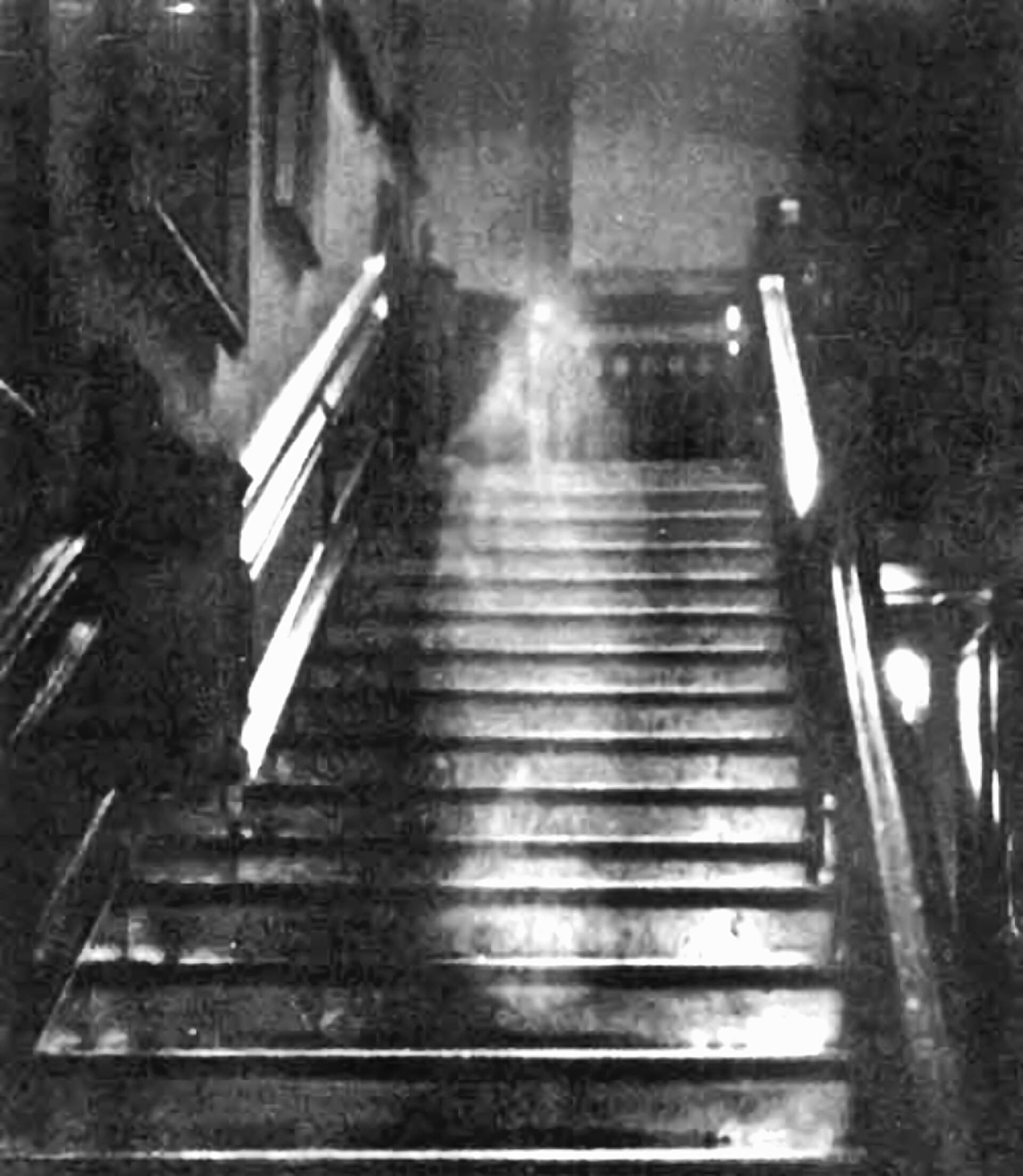
The images and video in this article are AI-generated works produced to convey the mood of the story, and are not photographs of any actual person or event.

Comments
No comments yet — leave the first one.