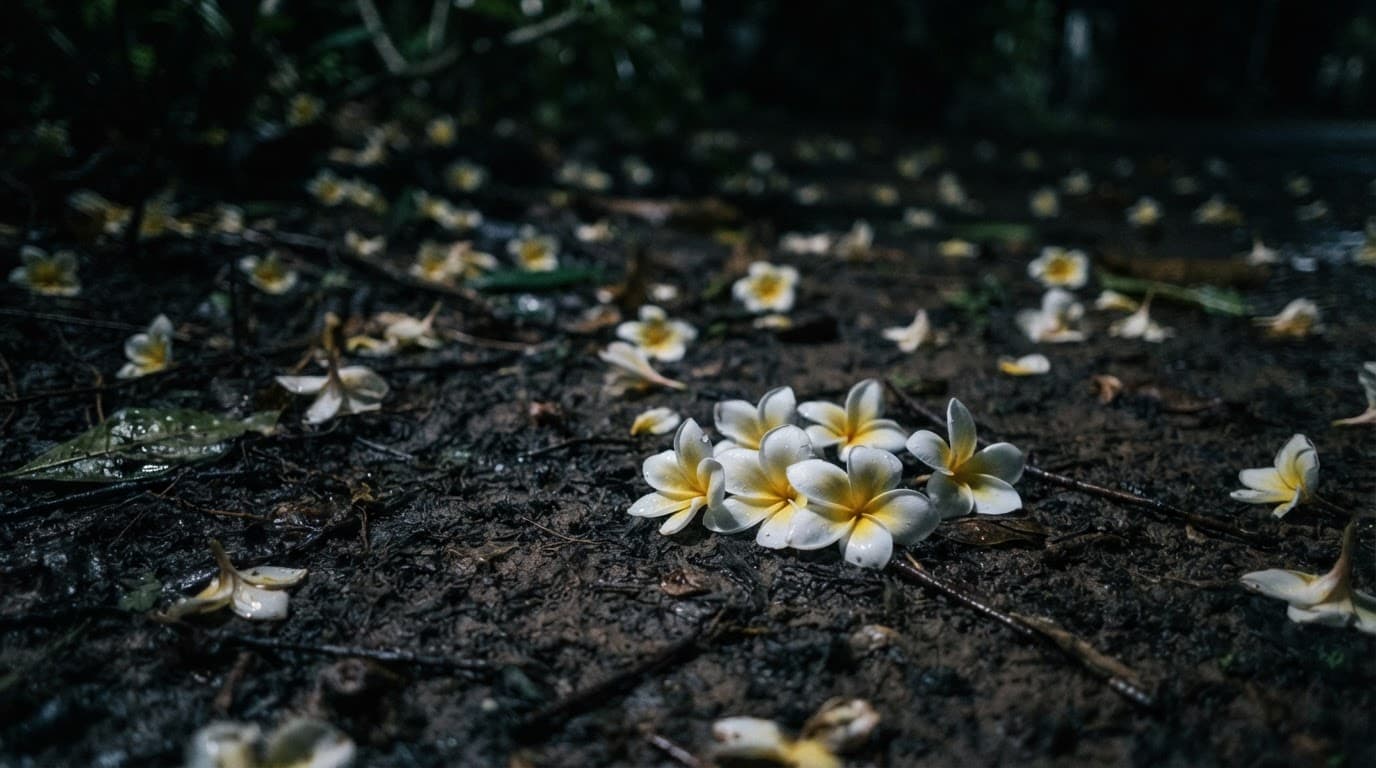
First comes the smell of flowers.
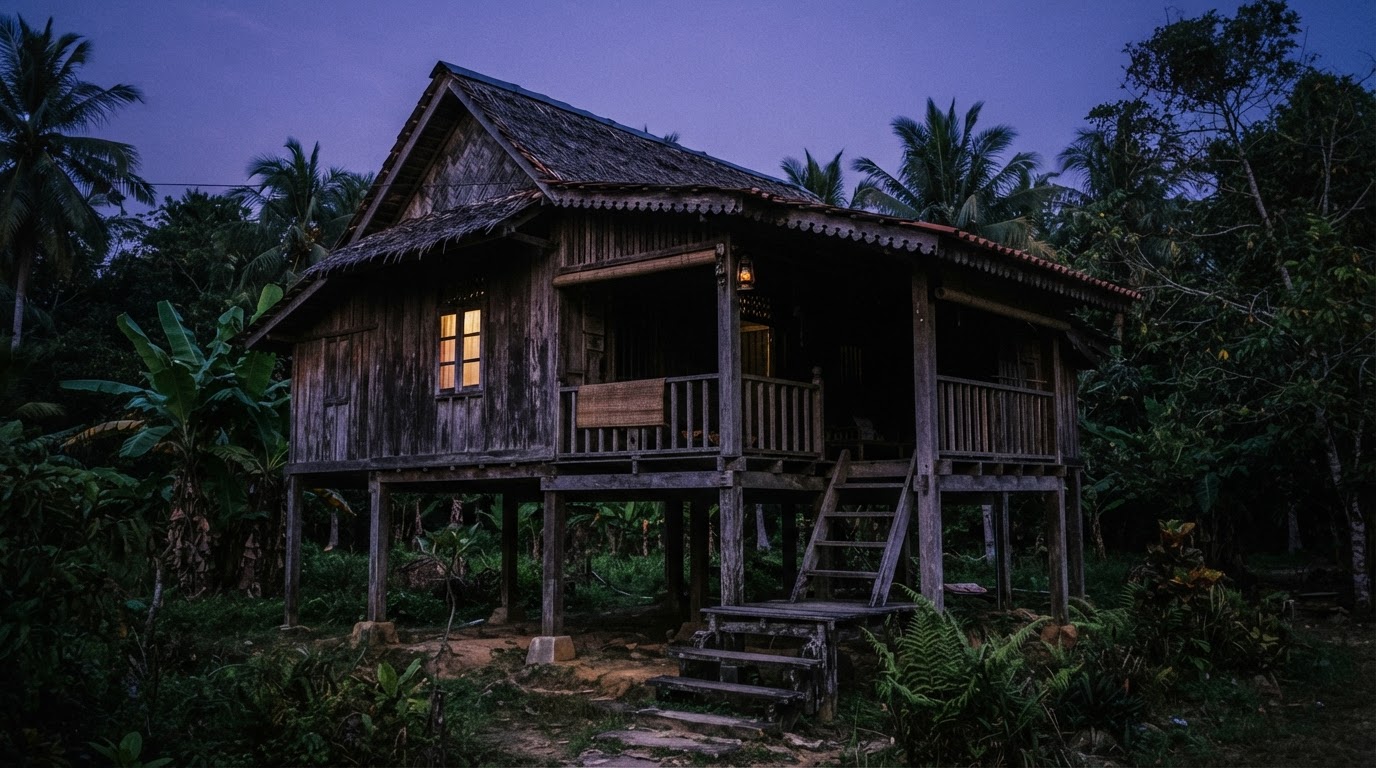
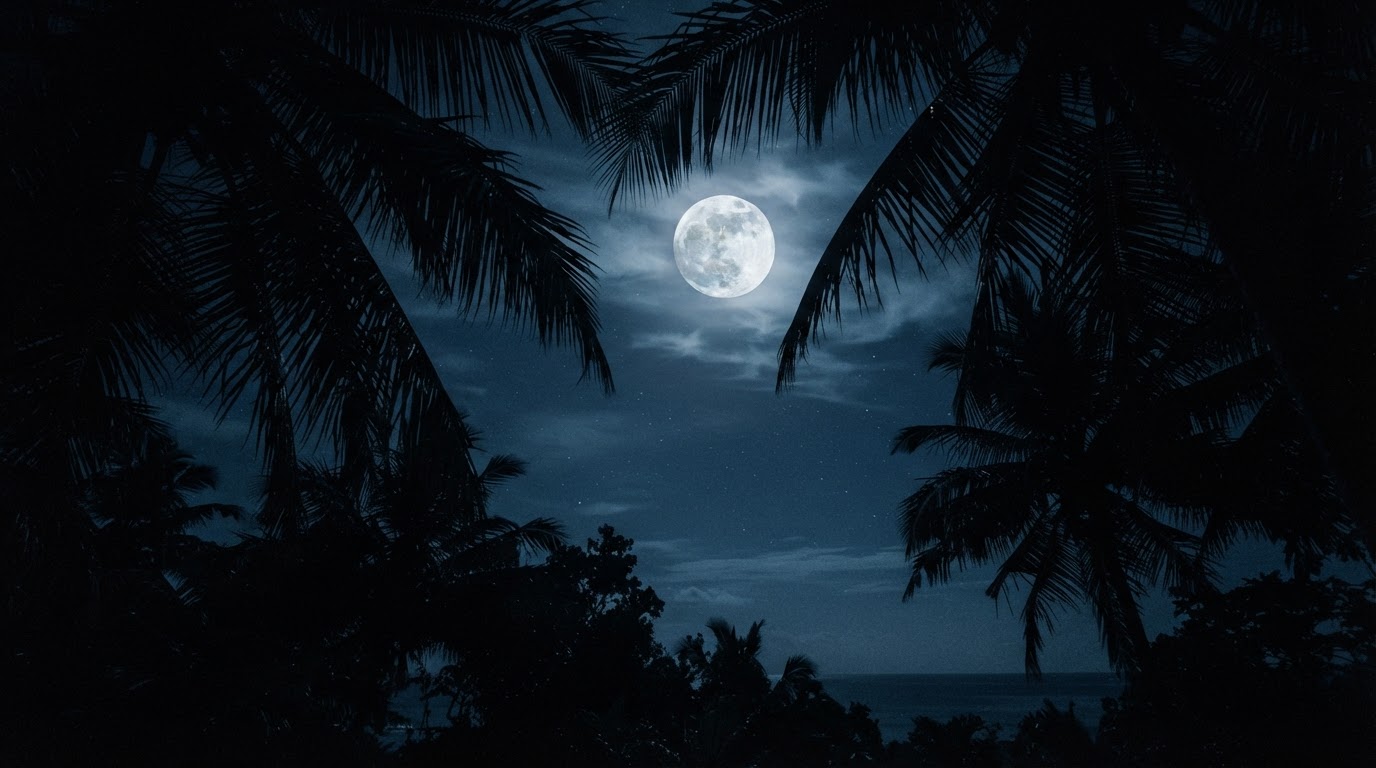
On a still night in a Malay village, when the air is thick and warm and nothing moves in the banana grove, a sweetness drifts in from nowhere — the heavy, sugared scent of frangipani, the plumeria flower that is planted in graveyards across the region. There is no tree nearby. There is no reason for the smell. And then, somewhere in the dark, a baby begins to cry.
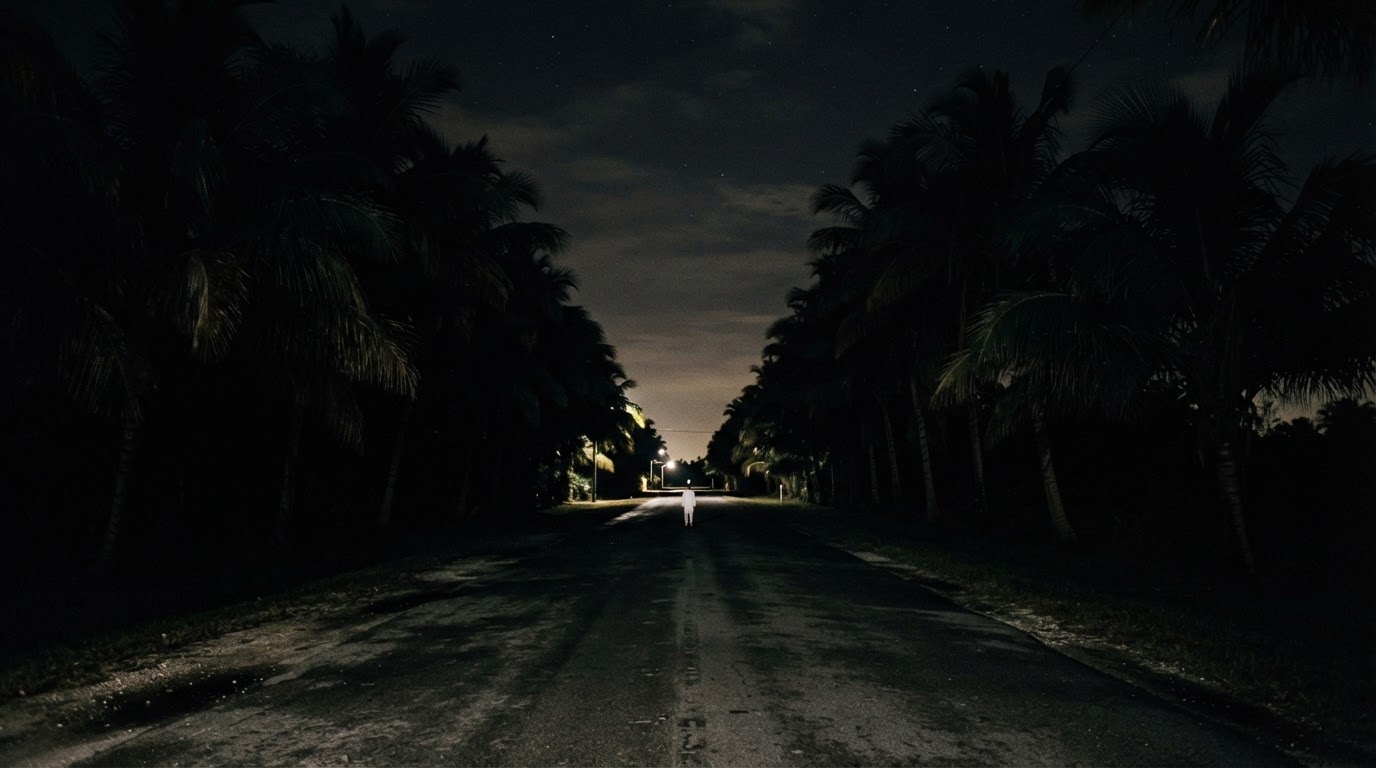
You would think the crying means she is far away. The story goes that it is the opposite. The fainter and more distant the cry sounds, the closer she already is. The louder it seems, the further off she stands. By the time the crying is a whisper at the edge of hearing, she is standing just behind you — a beautiful woman in a long white dress, her black hair falling past her waist, smiling. This is the Pontianak.
The Ghost the Whole Region Fears
In much of the West, the famous ghosts are local — a haunted house, a single grey lady on a single staircase. In Southeast Asia, the Pontianak is something larger. She is shared across borders, languages, and religions. In Malaysia and Singapore she is the pontianak. In Indonesia she is the kuntilanak. Malay grandmothers, Javanese farmers, Chinese shopkeepers, taxi drivers in Jakarta and Kuala Lumpur alike — most can tell you her rules without hesitating. She is not one town's ghost. She belongs to a whole civilization of islands.
And unlike many horror figures who are simply monsters, the Pontianak has a story that begins in grief. That is part of what makes her so enduring. Before she was feared, she was pitied.
There is one rule in this entry I had to check three times before I would write it down, because I assumed I had transcribed it backwards. The crying gets fainter as she gets closer. Every folklore file I keep runs the other way — the signal strengthens as the thing approaches, because that is how the world works and how stories are usually built. This one inverts the instinct deliberately. Whoever first told it understood that the safest-sounding moment is the one to be afraid of, and I have not found another spirit in the region's records who is announced by relief.
Born of a Death in Childbirth
The origin, as it is most commonly told, is this. A woman dies while giving birth. Or she dies while pregnant. Or she dies soon after, still bleeding, her child lost with her. In the older tellings, she may have been wronged in life — abandoned, betrayed, assaulted, killed — and her death carries an unfinished account, a debt the living never paid.
Whatever the exact path, she does not rest. The transition that should have made her a mother instead makes her something else. She rises as a spirit bound to the moment of her greatest pain, and she returns to the world of the living carrying all of it: the labor that killed her, the child she never held, and — in the harshest versions — a rage at the men and the world that failed her.
It is worth saying plainly that this is a legend, not a report. No death registry names a Pontianak. But the shape of the story — a young woman lost in childbirth, coming back — meant something very concrete in a time and place where dying in labor was a real and common terror. We will come back to that.
How You Know She Is Near
Every great ghost has her signs, and the Pontianak's are unusually specific. This is one of the reasons she frightens: the story gives you a checklist, and each item is worse than the last.
The scent of frangipani. She is announced by a sudden, cloying sweetness of flowers — plumeria, the graveyard flower — where no flowers grow. In some tellings the sweetness curdles, an instant later, into the stench of rot and decay. Perfume, then the grave.
The cry of a baby. She lures with the sound of an infant weeping in the dark. A kind soul, hearing a baby abandoned in the night, might go toward it. That is the trap. And the cruel rule of distance: the closer the crying sounds, the further away she is; the fainter and more far-off it sounds, the nearer she has come.
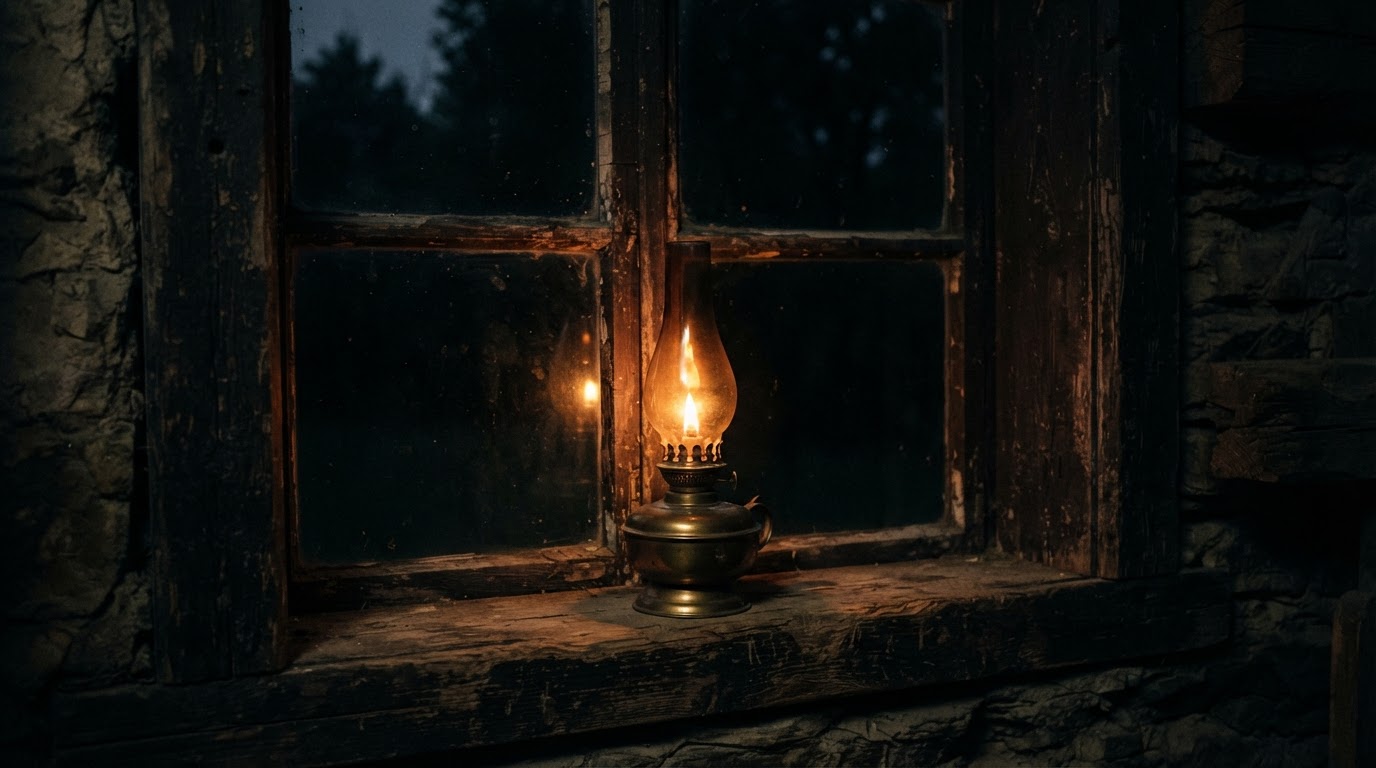
The wind and the dogs. A sudden cold gust with no source. Dogs that howl at nothing, or fall dead silent all at once. The night insects going quiet.
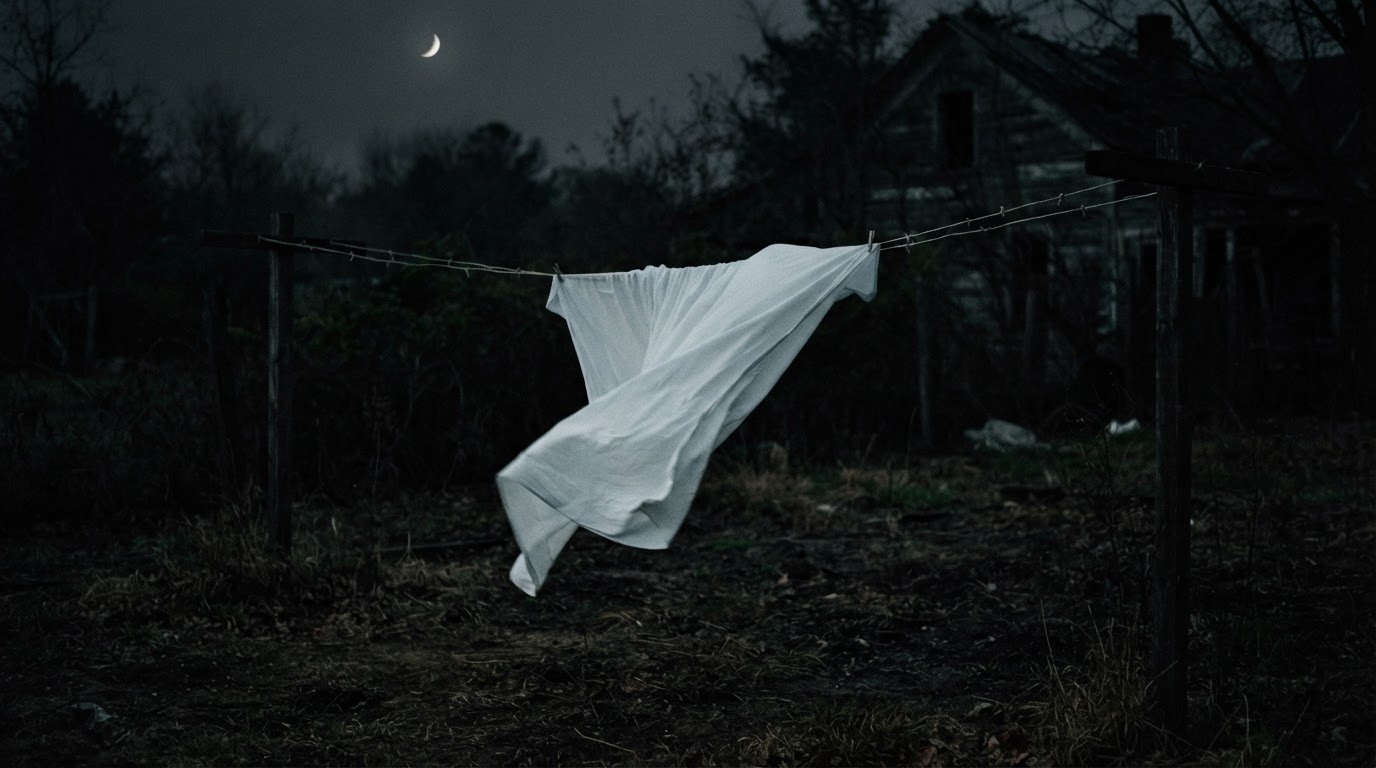
Long hair, white dress, and the hole. She appears as a beautiful woman, pale, in a white gown, with black hair to her waist. In the most feared versions there is a hollow in her back, hidden by that curtain of hair — a wound where her spirit is exposed. To see it is to have already looked too long.
The Banana Tree and the Offerings
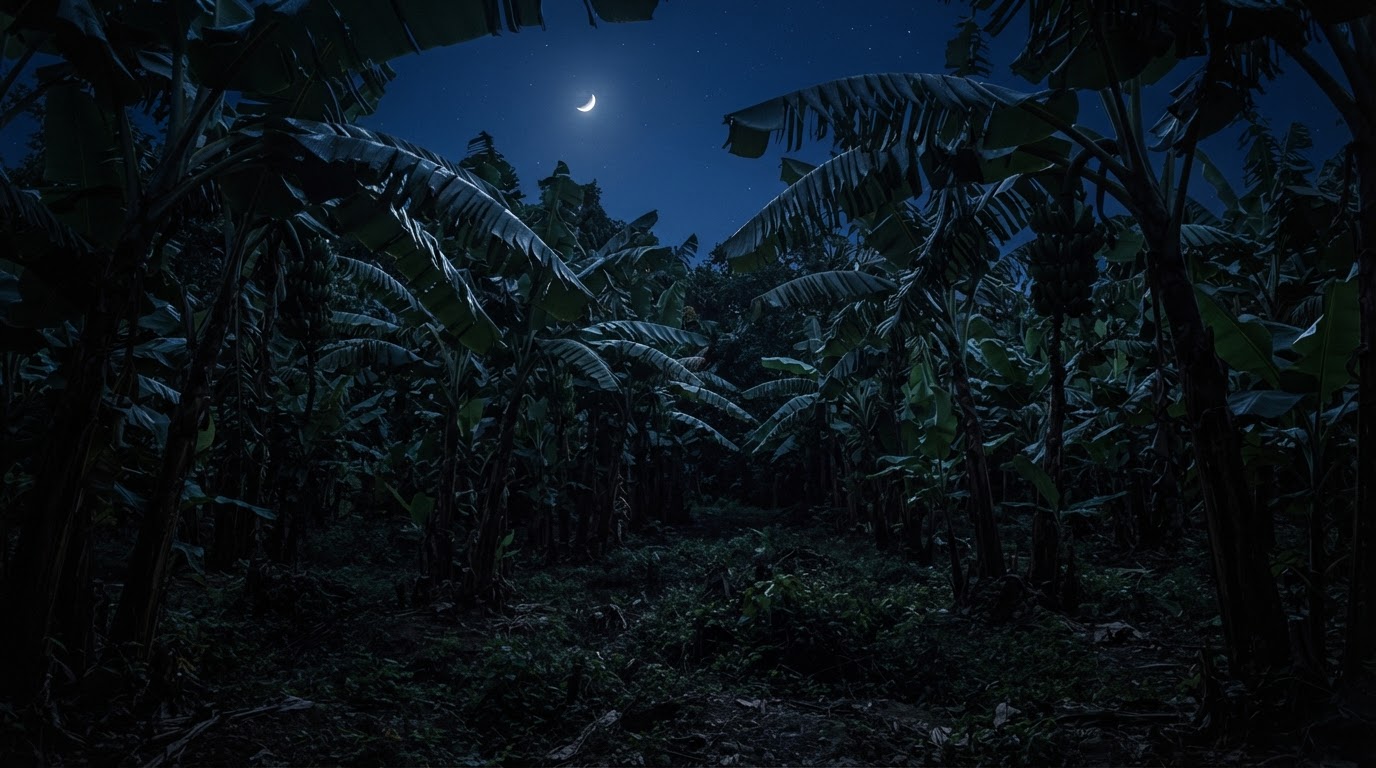
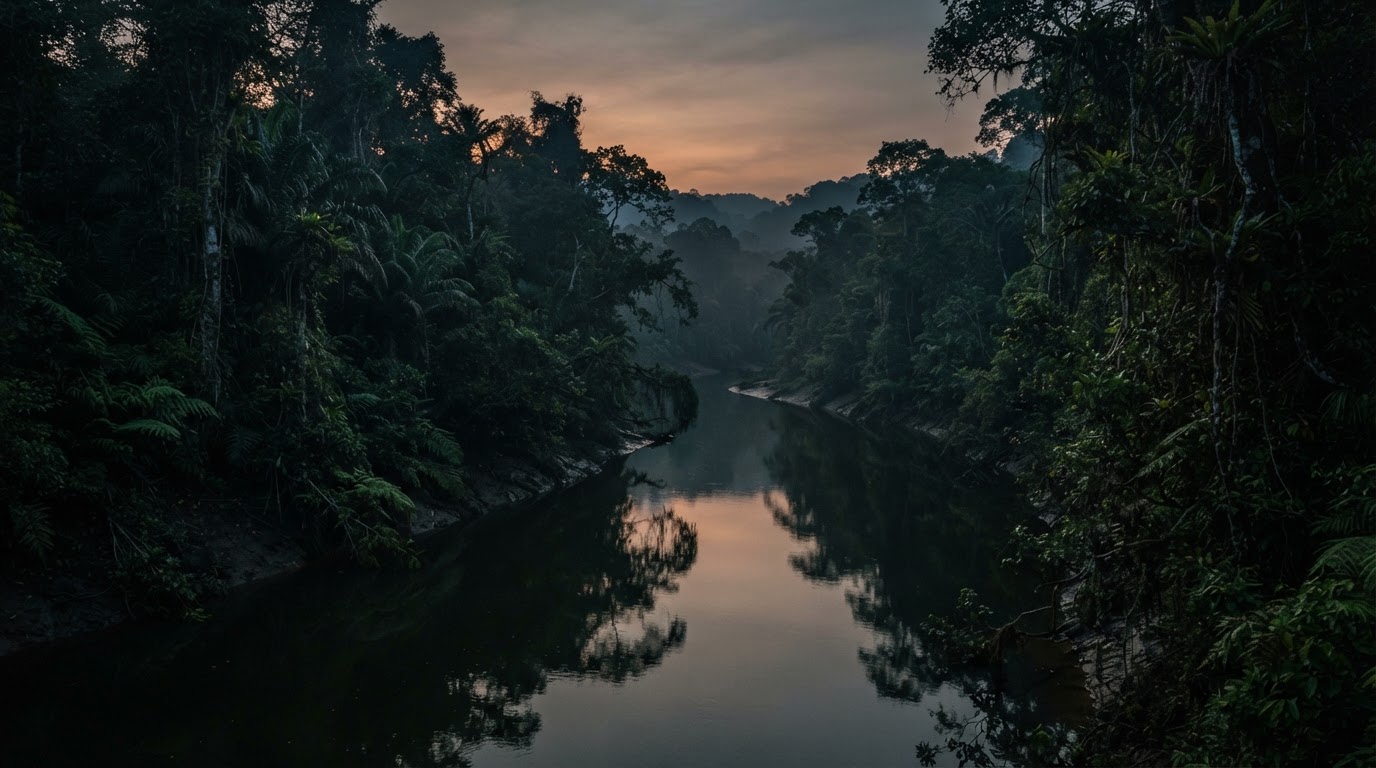
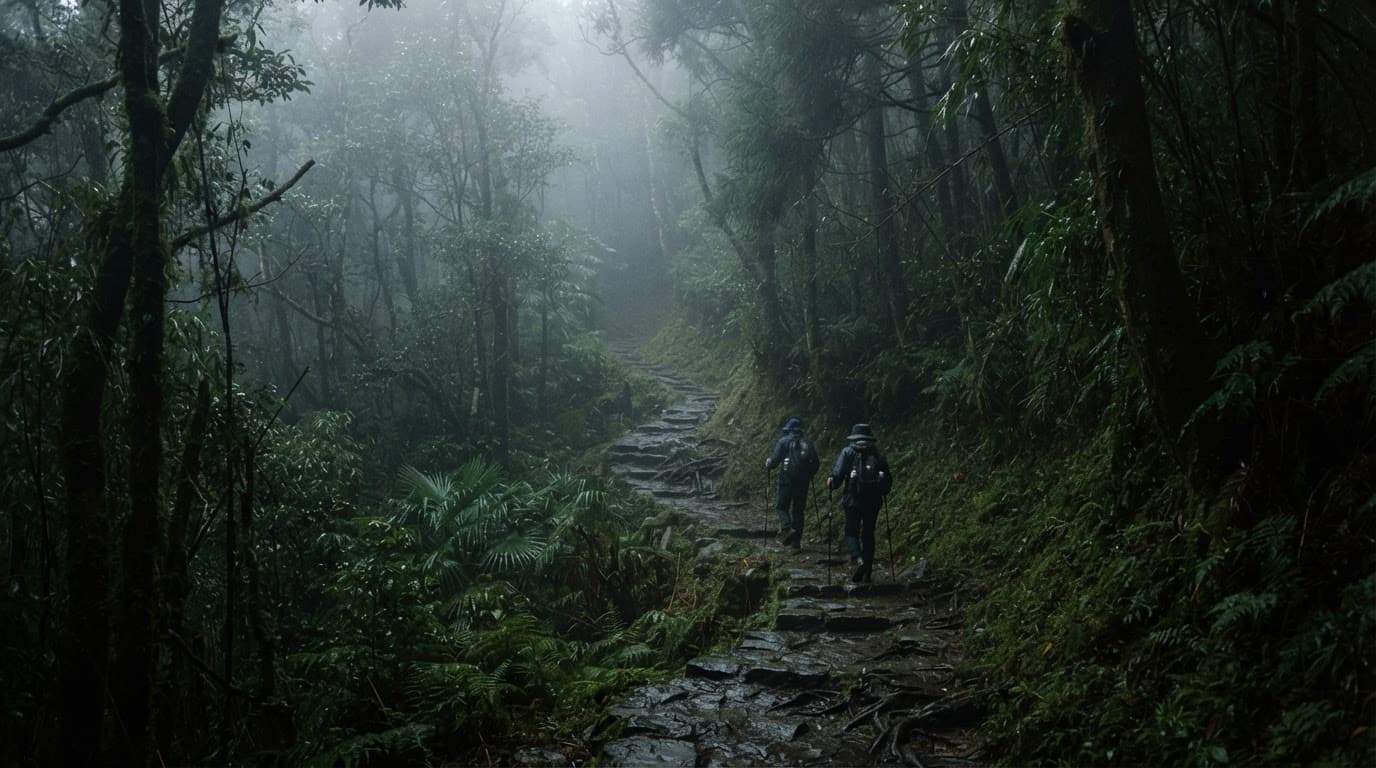
Ask where she lives, and the answer across the region is the same: the banana tree. The Pontianak is said to dwell in the pokok pisang, the plantain and banana groves that stand at the dark edge of every kampong. On certain nights, they say, you can see her spirit as a pale light hovering among the broad leaves, or hear a woman's laughter — high and sweet, then suddenly wrong — coming from the grove where no one is.
There is a folk belief, half-remembered and often repeated, that a person can tie a magical thread or a sacred cord around a banana tree at night to bind the spirit within it, and that a Pontianak so bound might even be made to serve — but that if the thread is ever loosened, she returns to what she was, and to whoever loosened it. Whether anyone truly believed this or simply enjoyed the shiver of telling it, the banana grove remains, to this day, a place village children are told not to wander near after dark.
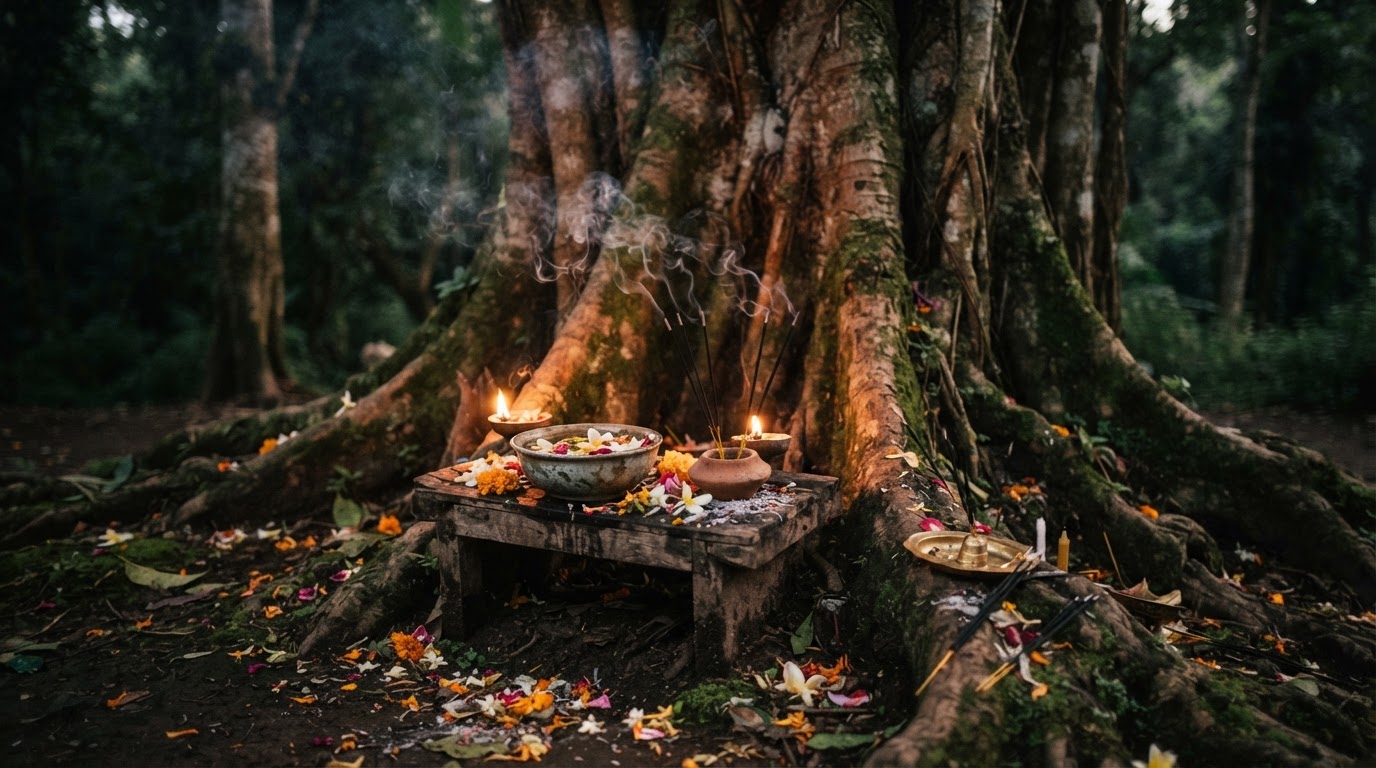
At the base of certain old trees you may still find offerings — incense, betel, flowers, a little food — left by those who would rather keep a restless spirit contented than provoke it. The gesture is old and quiet, and it says something true about how the living have always handled the dead here: not only with fear, but with a kind of careful courtesy.
The Nail in the Neck
Here the legend takes its strangest and most unsettling turn.
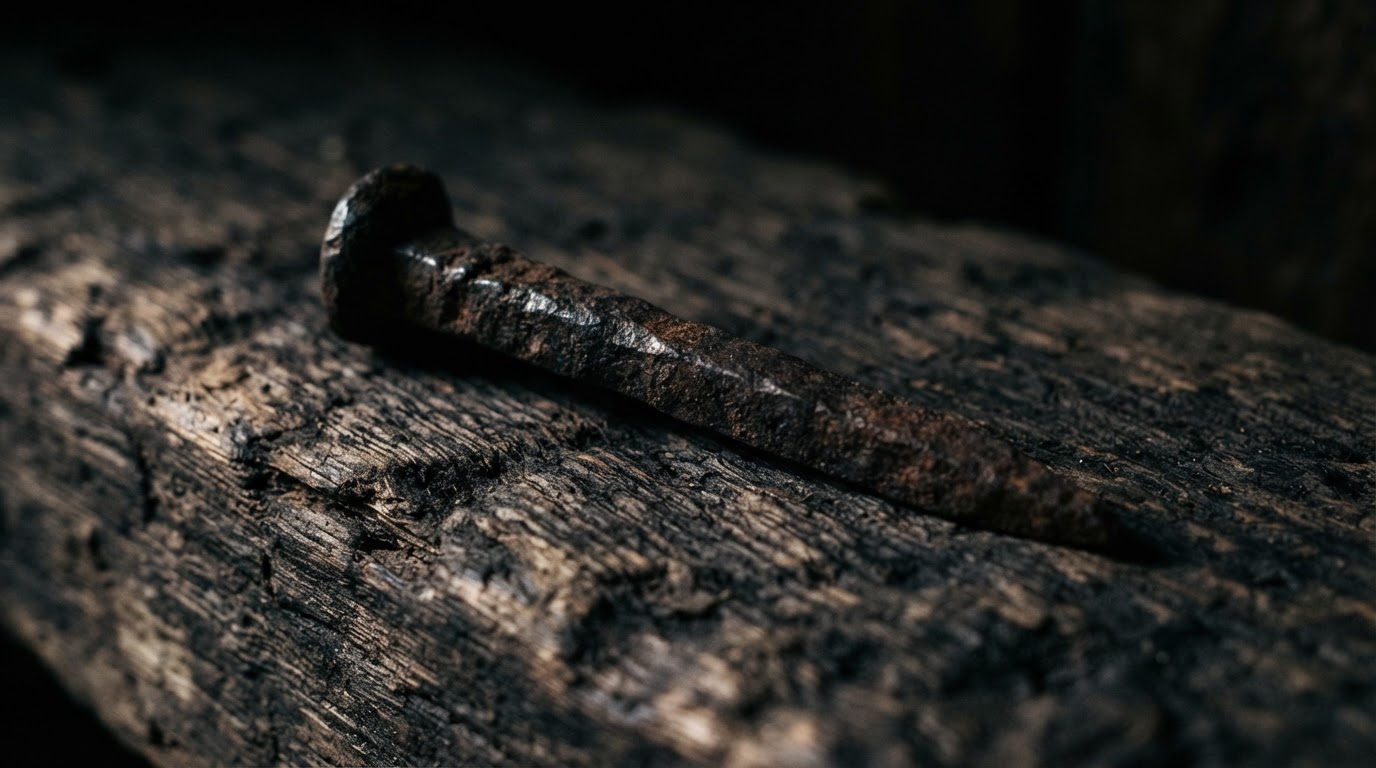
The story goes that a Pontianak can be tamed — subdued, domesticated, even married — by driving a nail into the back of her neck, or into the crown of her head, at the very spot of the hole in her nape. With the nail in place, the tale says, the monstrous spirit becomes a woman: beautiful, quiet, obedient. She will keep a house. She will be a wife. In many versions she becomes, in fact, a remarkably good and gentle one, and years pass, and children are born, and no one remembers what she was.
Until someone pulls the nail out. A husband combing her hair, a child at play, a careless hand — and the nail slips free. In an instant the wife is gone and the Pontianak stands in her place, and the household that tamed her pays for having done so.
It is difficult to read this one without a chill of a different kind. A raging woman, wronged and dangerous, made silent and serviceable by a single spike driven into her — and monstrous again the moment the spike is removed. The story is centuries old, and it is impossible not to hear in it something about how a certain kind of woman's anger was regarded, and what was thought necessary to hold it down. We will come back to this too.
A City Named After a Ghost
Of all the strange facts about the Pontianak, this may be the strangest: there is a real city, home to more than half a million people, that is named after her.
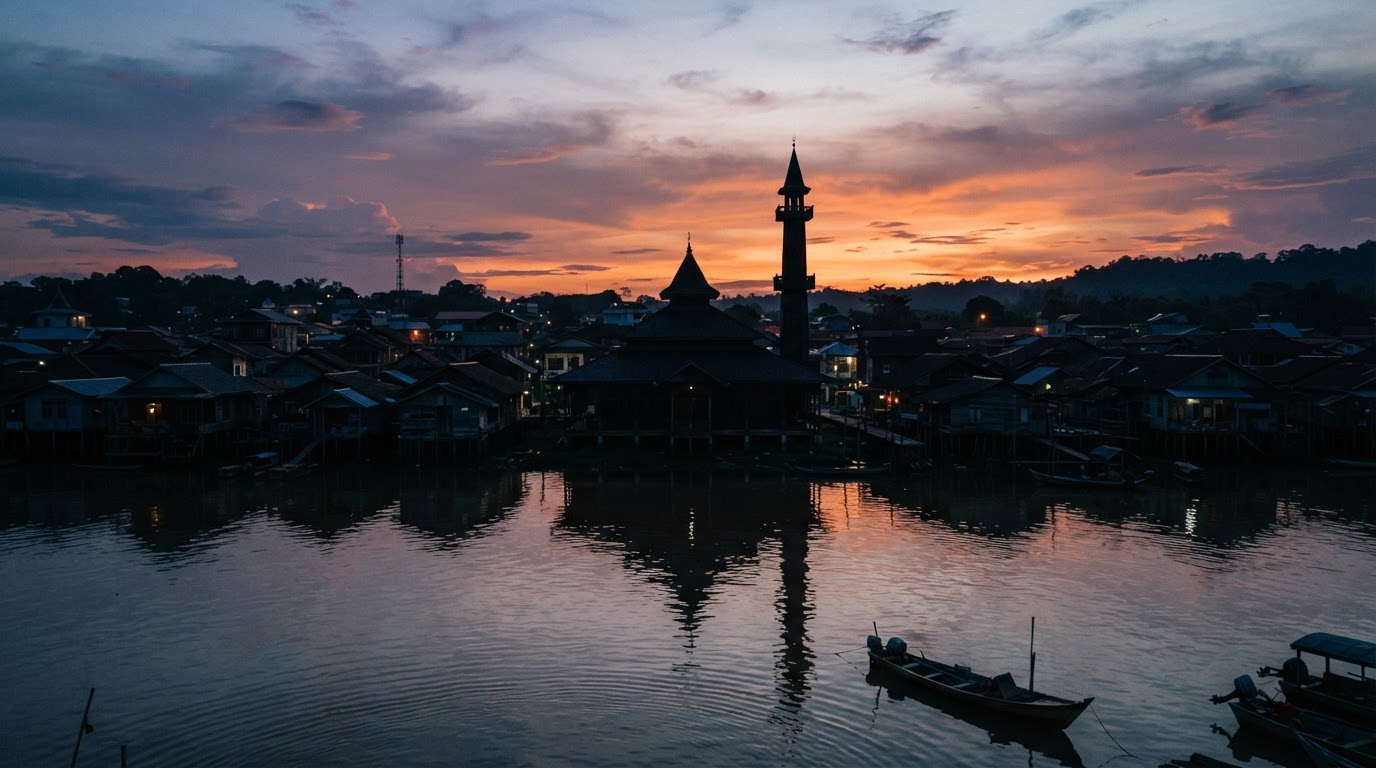
Pontianak is the capital of the Indonesian province of West Kalimantan, on the island of Borneo, sitting almost exactly on the equator where the Kapuas and Landak rivers meet. It is a working river city of markets and mosques and shophouses. And its name, the story goes, comes straight from the ghost.
The founding legend runs like this. In 1771, a Hadhrami-Arab Malay leader named Syarif Abdurrahman Alkadrie arrived at this stretch of jungle river to establish a settlement and a sultanate. But the site was said to be haunted — troubled by pontianak spirits that would not let the newcomers rest. As the tale is told, Abdurrahman ordered his men to fire cannon into the dark to drive the ghosts away, and where the cannonballs fell, he built. The mosque and the palace of the new sultanate rose on ground reclaimed from the spirits. And the city took the name of the very thing it had been founded by defeating: Pontianak.
Historians will note, reasonably, that the etymology may be tidier than the legend — that the name could derive from other roots, and that founding stories tend to grow in the telling. But the people who live there have kept the ghostly version alive by choice. It is a rare thing in the world: a city that wears the name of a phantom, and does not seem to mind.
Pontianak, Kuntilanak, Langsuir: A Small Taxonomy of a Great Fear
Travel across the region and the ghost shifts her shape and her name, and the differences are worth knowing.
Pontianak is the Malay name, dominant in Malaysia, Singapore, and Brunei. Here she tends to be the vengeful spirit of a woman who died in or around childbirth — beautiful, deadly, drawn to men, capable of tearing a victim apart or feeding on blood. In some Malay tradition a distinction is drawn between the pontianak proper and a related spirit born specifically of a stillborn child.
Kuntilanak is the Indonesian name for essentially the same being, familiar across Java, Sumatra, and Kalimantan. The two words are close cousins and are often used interchangeably; both are commonly traced to older roots meaning, roughly, a woman dead in childbirth. In Indonesian tellings she is strongly associated with the banana tree and the cry-in-the-dark lure, and she is a fixture of national pop culture.
Langsuir (or langsuyar) is the older, and in some ways more terrible, Malay relative — often described as the original from which the pontianak springs. In the classic accounts recorded by colonial-era folklorists, the langsuir is a woman who died in childbirth and became a flying, shrieking spirit with long nails, hair to the ground, and a fondness for the blood of children; her stillborn infant, in turn, becomes a small ghost of its own. The langsuir, the old texts say, could be prevented — or tamed — by placing glass beads in the mouth of the corpse, eggs under the arms, and needles in the palms of the hands, so that she could not fly, could not open her mouth to shriek, and could not spread her hands to take flight.
The lines between these figures are blurred, and were blurred even in the earliest written accounts. That is the nature of living folklore. What they share is the core: a woman, a death tied to birth, and a return that the living must guard against.
What the Colonial Records Say
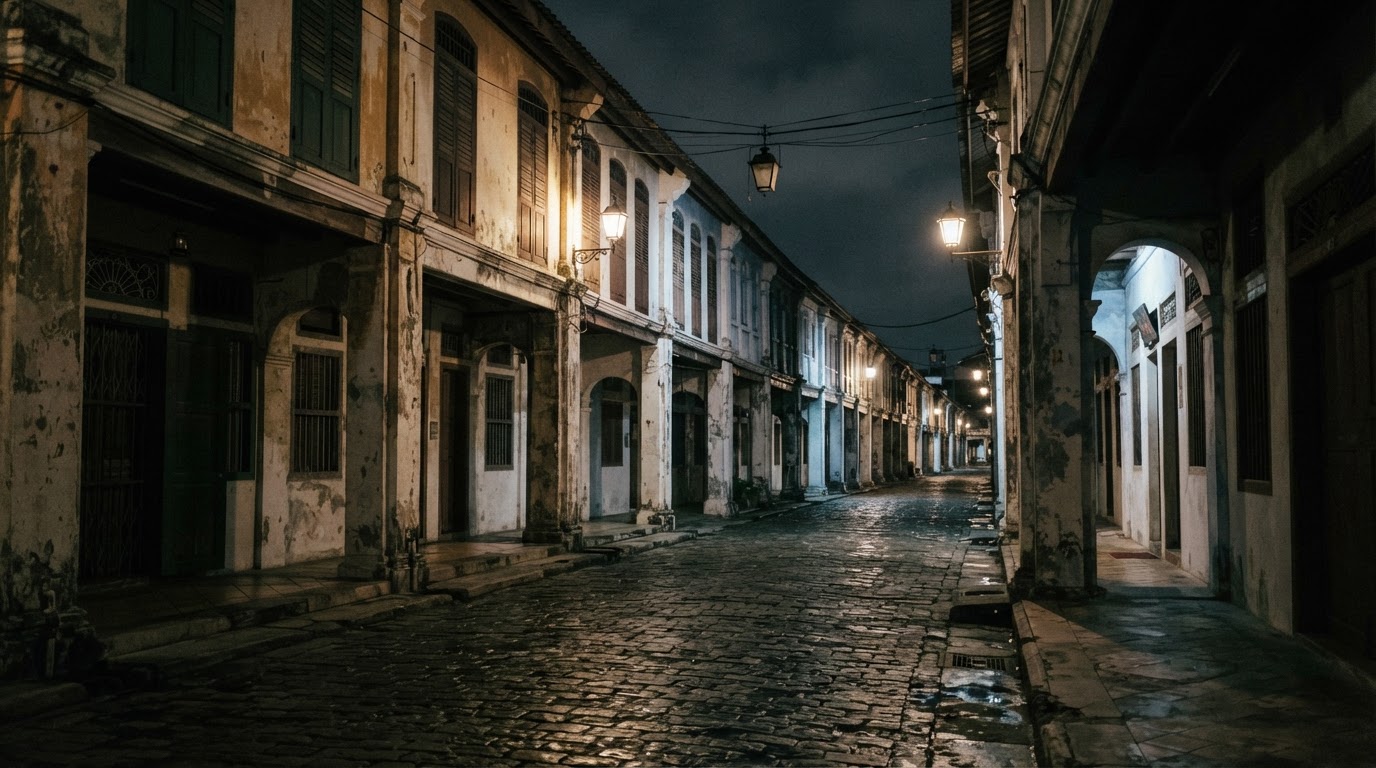
The Pontianak is not only a village whisper. She is written down, and some of the earliest written accounts come from British and Dutch observers in the eighteenth and nineteenth centuries who set out to catalogue the beliefs of the Malay world.
The most influential of these is Walter William Skeat's Malay Magic of 1900, a dense compendium of Malay spirit-lore in which the langsuir and the pontianak are described in the very terms that survive today — the death in childbirth, the hole in the neck, the long nails and trailing hair, the nail and beads used to bind them. Earlier travelers and administrators recorded the banana-tree dwelling and the scent that precedes her. Through the nineteenth and early twentieth centuries, colonial newspapers in the Straits Settlements and the Dutch East Indies carried breathless items about pontianak sightings, panics in kampongs, and the occasional trial where a killing or a disappearance was blamed on the spirit.
What these records preserve is not proof of a ghost — it is proof of a fear, deep and continuous, running from long before the colonial period through it and out the other side, unbroken, into the age of cinema and the internet. The Pontianak was old when the Europeans wrote her down, and she outlasted them.
The Ghost Who Owns the Cinema
If you want to measure how large the Pontianak looms, look at the movies.
Southeast Asian horror cinema was, in many ways, born from her. In 1957, the Singapore studio Cathay-Keris released Pontianak, a Malay-language film that became a phenomenon — a smash hit that spawned sequels and imitators and effectively launched a whole regional genre. The wronged beautiful woman, the transformation, the white dress and streaming hair, the terror in the kampong: the template was set, and for decades filmmakers returned to it again and again.
She never left. In modern Indonesian and Malaysian horror she remains a central figure, and the genre she anchors has become one of the most commercially powerful in the region. KKN di Desa Penari — drawn from a supposedly true viral tale of students who trespass on a haunted village and pay for it — became one of the highest-grossing Indonesian films of all time, riding exactly the vein of dread the Pontianak legend cut. Joko Anwar's acclaimed Impetigore took the horror of village curses and dead women and the debts of the past to international festivals. The specific ghost varies; the ancestor is the same. The woman in white who smells of flowers has been frightening audiences in the dark, on screens, for the better part of a century.
What She Is Really About
Strip the legend down and something honest shows through.
The Pontianak is, at her origin, a woman killed by childbirth. For most of human history, in most of the world, this was among the commonest ways for a young woman to die — a healthy person, full of life, gone in a night of blood and screaming, often with the child gone too. In the villages where this ghost was born, every family knew it could happen, and to many it had. A spirit who returns from exactly that death is not a random monster. She is the shape a whole society's grief and terror took. She is maternal death, walking.
But there is a second reading, and it has grown louder in modern times. The Pontianak is also a woman wronged — betrayed, abandoned, assaulted, denied justice in life — who comes back with power she never had while living, and turns it on the men and the world that failed her. And the "cure" for her, remember, is a nail hammered into her neck to make her a silent, obedient wife, monstrous again only if the nail comes out. Read that way, she is a story about female rage: rage at a raw deal, feared and pitied and, above all, forcibly contained. Modern filmmakers and writers have leaned hard into this, reclaiming her less as a monster than as a woman with an unpaid debt, and audiences have understood exactly what they mean.
Both readings can be true at once. The most powerful ghosts usually carry more than one grief.
The Scent That Lingers
The Pontianak has survived everything. She survived the colonial folklorists who tried to catalogue her, the modernity that was supposed to banish her, the century of films that turned her into entertainment. She has a city named after her, offerings left at the roots of trees for her, and a place in the imagination of a hundred million people who would never say aloud, in daylight, that they believe.
And perhaps that is her real power. She lives in the seam between what we know and what we feel. In daylight, no one dies from the smell of frangipani. But on a hot, still night, in a village at the edge of a banana grove, when the air goes suddenly sweet and a baby cries somewhere far off in the dark — the oldest part of the mind still stiffens, still listens, still counts the distance in the crying and hopes it is growing louder, not softer.
Cross-referencing Skeat's 1900 compendium against the newspaper items from the Straits Settlements, I kept arriving at the nail. It survives everything — the colonial cataloguers, the film studios, the century. Beads in the mouth, needles in the palms, a spike at the nape: a whole grammar of hardware for holding a woman still. I set the sources side by side expecting the detail to soften somewhere along the line, and it never does. That is the part of this file I close last and think about longest.
She was a woman, the story goes, who died bringing life into the world, or who was wronged and denied her rest. That is a grief old as humanity and common as the villages that remember her. Whether or not she walks the groves at night, the fear that made her is entirely real — and as long as flowers are planted in graveyards and children are told not to wander after dark, the woman in white who smells of flowers will be waiting, just behind the leaves, for someone to follow the crying.
---
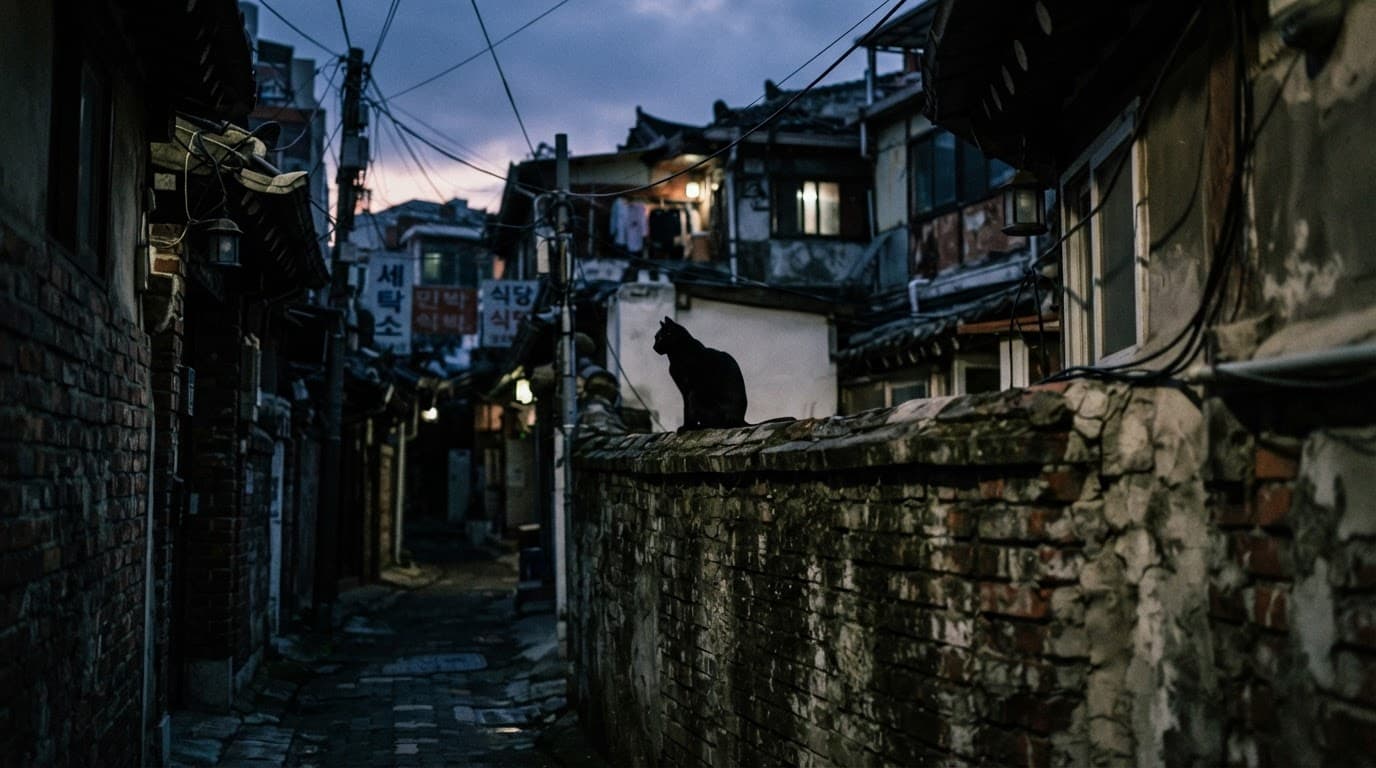
The images and video in this article are AI-generated works produced to convey the mood of the story, and are not photographs of any actual person or event.

Comments
No comments yet — leave the first one.