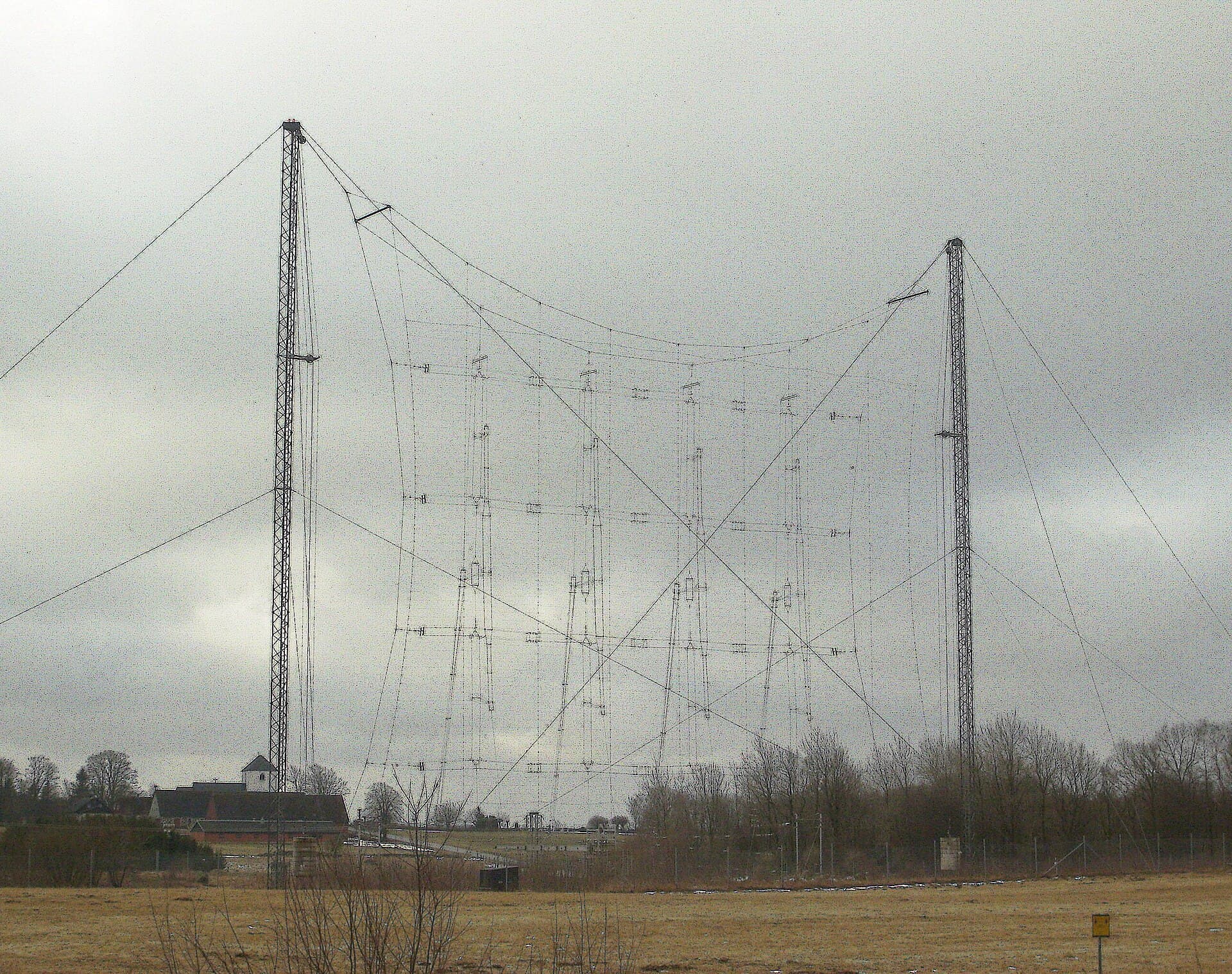
Somewhere on the shortwave band, right now, a voice is reading numbers. Not to you. It does not know you are listening, and it does not care. It repeats the digits in the same flat, unhurried tone it has used for years — a woman's voice, or a child's, or a synthesizer pretending to be either — and when it reaches the end of the list it either falls silent or starts again from the top. Elsewhere on the dial, a single electronic tone buzzes without pause, as it has buzzed since before most people alive today were born. These are number stations: radio broadcasts that carry nothing but numbers, tones, and the occasional strange word, transmitted by governments to agents who could be anywhere on Earth. For decades no one would admit they existed. Then, in a Miami courtroom, one of them was proven real. And far from being relics, some are still on the air tonight — including, most unsettlingly of all, broadcasts aimed straight at the Korean Peninsula.
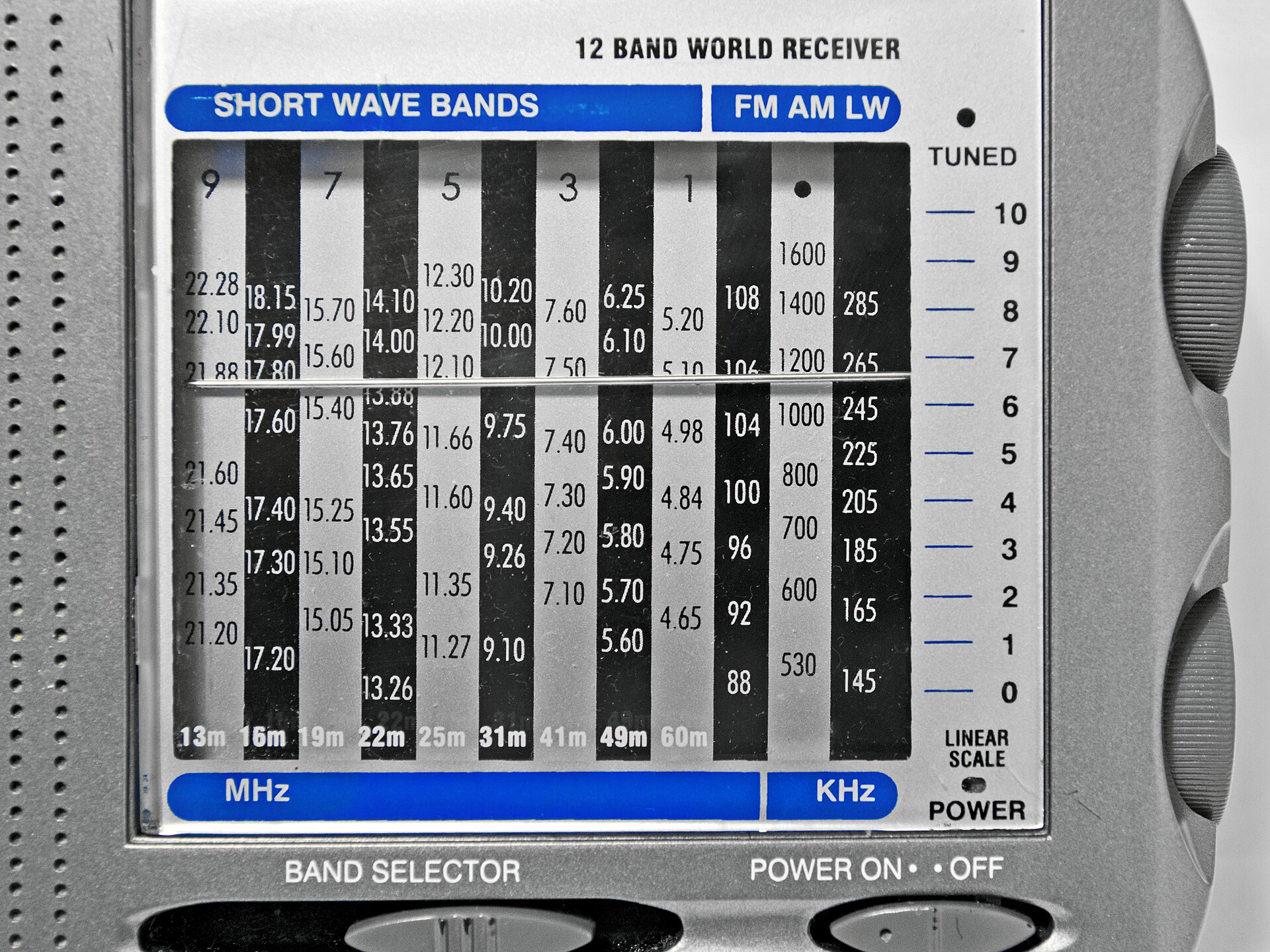
Photo: Wikimedia Commons, CC BY 4.0
Almost everything else in my archive is closed material — an inquiry that ended, a body that was found, a legend that stopped being told. This is the only subject I keep that is still producing new evidence while I sit here. I am K. Woo, and what pulled me into it was the ENIGMA catalogue: page after page of station designations, E03, V02, S28, assigned by hobbyists to voices that no government has ever admitted owning. It is the strangest index I have ever worked from. Every entry describes something real, audible, and ongoing, and not one entry can tell you who is speaking.
The Voices That Come From Nowhere
A number station is one of the simplest and strangest ideas in the history of espionage. A transmitter, usually broadcasting on the shortwave bands that can bounce off the upper atmosphere and travel around the world, sends out a stream of numbers. A synthetic or recorded voice reads them aloud, group by group — "seven two zero, four one nine, eight eight three" — often for many minutes at a time. There is no station identification in the ordinary sense, no music, no explanation. Sometimes the numbers are preceded by a call-up phrase, a few bars of a tune, or a burst of tones. Then the digits begin, and they do not stop until the message is done.
To anyone who stumbles across one while spinning a radio dial, the effect is deeply eerie. The voices are calm to the point of being inhuman. They speak into total indifference, reciting figures that clearly mean something to someone, somewhere, while meaning nothing at all to the person hearing them. That is precisely the point. A number station is not trying to communicate with the public. It is a one-way channel between an intelligence agency and its spies in the field — a way of delivering secret orders that anyone in the world can hear but no one but the intended recipient can read.
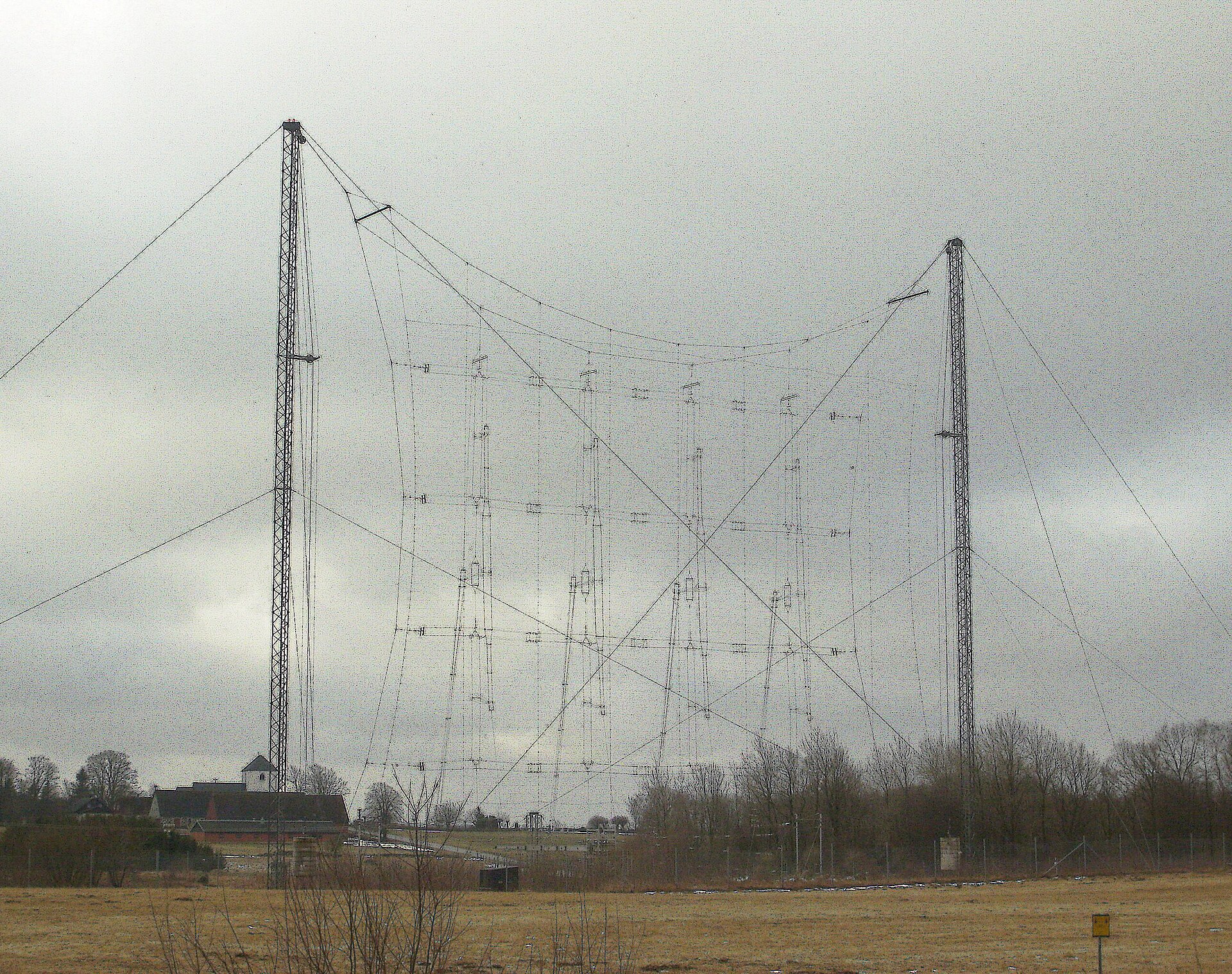
Photo: Wikimedia Commons, CC BY-SA 3.0
The Buzzer: A Sound That Has Not Stopped in Forty Years
The most famous number station of all barely uses numbers. On 4625 kHz, a Russian transmitter sends out a short, monotonous buzz — roughly twenty-five tones a minute — around the clock, day and night, year after year. Radio enthusiasts call it "The Buzzer." Its widely used name, UVB-76, is actually a Western mis-hearing of an older Russian callsign; monitors have logged it under the designation S28, and it has carried a shifting series of callsigns over the years, MDZhB among them.
The buzz itself is thought to be a channel marker — a way of keeping a frequency claimed and audible so that it is ready the moment an operator needs it. And every so often, that is exactly what happens. The tone stops. A human voice cuts in and reads a short message: a callsign, a code word spelled out with names, and a handful of number groups. On Christmas Eve of 1997, after years of nothing but buzzing, a male voice broke through and read one such message, spelling out a word letter by letter with Russian first names — the kind of voice break that sends the small worldwide community who monitor the station into a frenzy of transcription and speculation. The Buzzer's transmitter was for years located near Povarovo, northwest of Moscow, until it was moved around 2010.
There is a popular legend that The Buzzer is wired to a "dead hand" doomsday system, poised to trigger a nuclear response if the tone ever falls silent. It is a wonderful story and almost certainly false: the signal has been interrupted, jammed, and drowned out many times over the years, and the world is still here. What The Buzzer actually is — a military channel marker, a command net, something else entirely — has never been officially confirmed. It simply buzzes on.
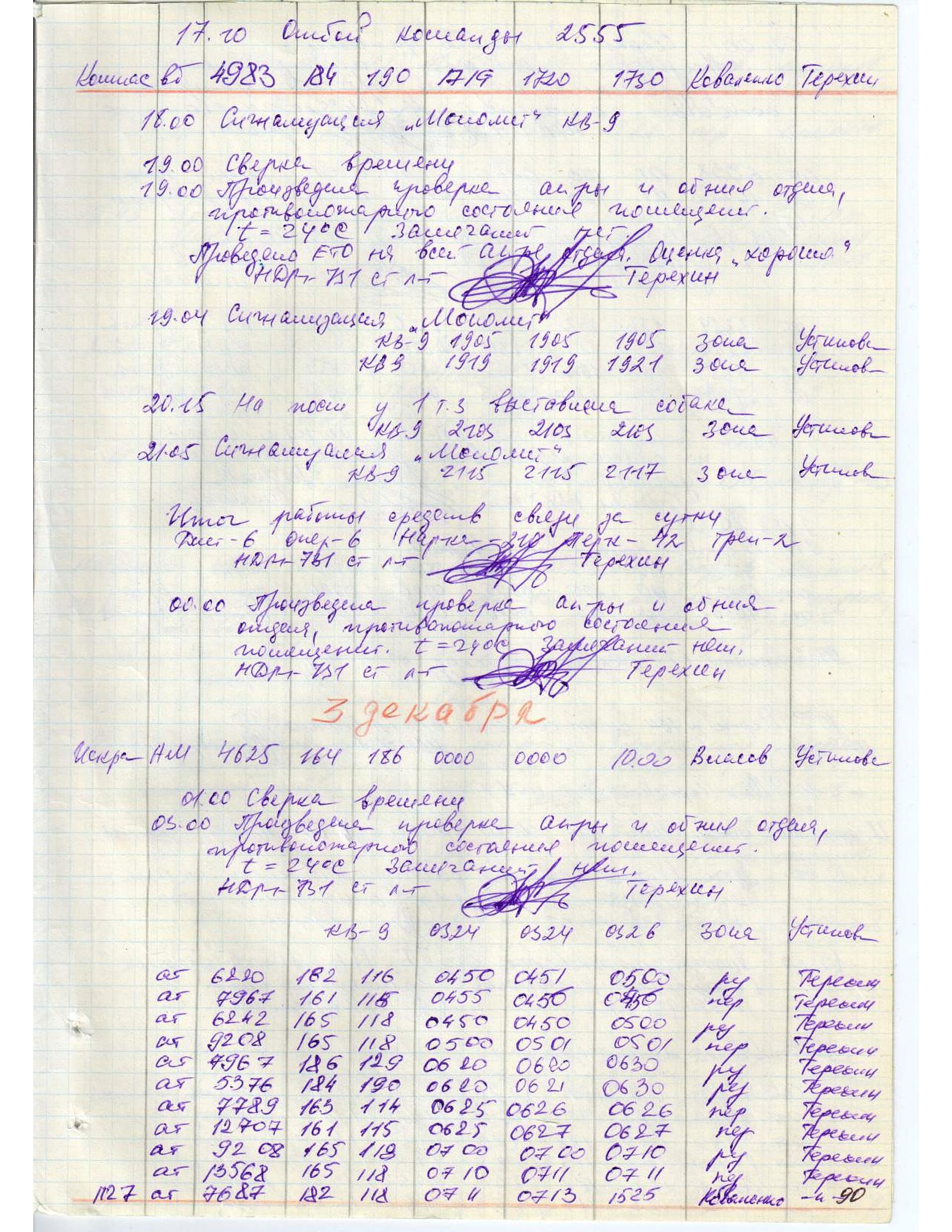
The Lincolnshire Poacher and a Song That Meant "Listen"
Not every number station is a bare electronic drone. One of the most storied, active from roughly the early 1970s until 2008, opened each transmission with something almost gentle: two bars of an old English folk song called "The Lincolnshire Poacher," played on a synthesized organ, over and over, before a female synthetic voice began reading groups of five figures. Monitors gave the station the very folk tune's name, and catalogued it under the designation E03.
The Lincolnshire Poacher was widely believed to be run by British intelligence and broadcast from a Royal Air Force base on Cyprus, aimed at agents across the Middle East — though, as with almost every number station, no government ever confirmed it. It even had a twin. A near-identical station opening with a different folk melody, nicknamed "Cherry Ripe," pointed instead toward the Far East. That a cheerful scrap of English folk music, looping endlessly, was in fact the doorbell for a spy's secret orders is the kind of detail that captures exactly why these stations haunt people. The most ordinary sounds were hiding the most clandestine business of the state.
The One Proven in Court: Cuba's "Atención" Station
For decades, everything about number stations lived in the realm of near-certainty and denial. Enthusiasts knew what they were; governments said nothing. Then a single case dragged one of them into the daylight of a courtroom.
The station in question broadcast in Spanish from Cuba, opening with a woman's voice repeating "¡Atención! ¡Atención!" before reciting groups of five digits; monitors catalogued it as V02. In the late 1990s, the FBI was building a case against a ring of Cuban intelligence agents operating in Florida — the network that became known as the Wasp Network, whose convicted members were later called the Cuban Five. Crucially, investigators had earlier copied a decryption program from a suspect's apartment. Using it, the FBI intercepted the Atención broadcasts and decoded the number messages, revealing them to be genuine operational instructions to the agents. Those decoded transmissions became evidence at the group's trial in Miami, which ended in convictions in 2001. It was, and remains, the only case in which a number station's use has been proven in a court of law. (It is worth noting this is entirely separate from the case of Ana Belén Montes, a US analyst convicted of spying for Cuba — a different investigation altogether, often confused with this one.)
Yosemite Sam, and the Numbers That Turn Into Nonsense
Number stations also have their oddities and jokes. In December 2004, listeners in North America began hearing a bizarre transmission on several frequencies: a short burst of data, followed by a clip of the cartoon character Yosemite Sam growling his catchphrase about blowing someone "to smithereenies," then the same thing stepping up the dial to the next frequency. Enthusiasts naturally named it "Yosemite Sam." Its origin was never confirmed, and it is often assumed to have been some kind of American transmitter test or marker. But the sheer surrealism of a Warner Bros. cartoon voice erupting out of the espionage bands, on a schedule, captures how genuinely alien this corner of the radio spectrum can feel.
And why numbers at all? Because when a number station's message is properly encrypted, the digits it reads are not a code to be cleverly cracked — they are, mathematically, unbreakable. The method is the one-time pad. Each agent holds a booklet of pages filled with truly random numbers, and the sending agency holds an identical copy. The secret message is combined with a page of random numbers to produce the string of digits that goes out over the air; the agent subtracts the same random page to recover the message, then destroys that page forever. In 1949 the mathematician Claude Shannon proved that if the pad is truly random, at least as long as the message, used only once, and kept secret, the resulting broadcast reveals literally nothing about its contents — no computer, however powerful, can break it, because every possible message is equally consistent with what was heard. That is why, in an age of satellites and encrypted internet, spies still fall back on a booklet of numbers and a voice on the radio. It is the one system that cannot be hacked.
The Broadcasts Aimed at Korea — Switched Back On in 2016
For Korean listeners this is not distant Cold War history. It is current events. For years, North Korea had gone quiet on the number bands, having largely stopped such broadcasts around the year 2000 during the era of inter-Korean thaw. Then, in the summer of 2016, the numbers came back. Over Pyongyang Broadcasting Station — the Korean-language service aimed southward — a broadcast resumed that had every hallmark of an agent transmission, and South Korean media, led by Yonhap, reported it immediately.
What made it especially chilling was its disguise. The broadcast framed itself as a homework assignment for a distance-learning university. An announcer would say, in effect, that they were now delivering the review assignments for a remote-education college — for "exploration agents" — and then read out strings of page and question numbers: on such-and-such a page, question number so-and-so; on another page, another question number, and on and on for many minutes. Dressed up as a mathematics revision list, it was in form indistinguishable from the classic spy number broadcast. Analysts have cautioned that it is genuinely unclear whether these were real orders to real agents in the South or a psychological operation designed to unnerve — but either way, decades after the technology should have been obsolete, coded numbers were once again crossing the DMZ by radio. South Korea, for its part, is long thought to have run number stations of its own, and reportedly answered in kind.
Who Is Still Listening
The strangest thing about number stations may be who tracks them now. Not spies — enthusiasts. A worldwide volunteer community, centred today on a project called priyom.org, records, transcribes, and logs these broadcasts, publishes their schedules, and maintains the catalogue of station designations first devised in the 1990s by a hobbyist group called ENIGMA (the European Numbers Information Gathering and Monitoring Association). It is thanks to these listeners, not to any government, that we know as much as we do: which station buzzes on which frequency, when the voices tend to appear, how the formats have shifted over the decades.
The 2016 Pyongyang transmissions are the ones I keep coming back to, and not for the reason I expected. I had assumed the homework-assignment framing was a thin disguise. Reading through the logged transcripts, I no longer think it is a disguise at all. Page numbers and question numbers are what the message honestly consists of; the fiction is only that a student exists. Analysts cannot say whether anyone in the South was ever actually copying those figures down, and that gap is where the whole thing lives for me. Either a person sat somewhere below the DMZ with a pencil and a booklet, doing their assigned reading — or nobody did, and the voice read out the lesson anyway.
So picture it. A car parked on a dark road, or a bedroom desk lit by the glow of a receiver's dial, somewhere in the world tonight. A person leans in toward the static, waiting. The tone breaks. A voice, flat and patient, begins to read: numbers, groups of numbers, on and on into the night. Most of us will never know what a single one of them means. Somewhere, perhaps, one person does — and for that one person, the message was never noise at all. The Cold War taught the world's secret services a trick so simple and so unbreakable that they never bothered to give it up. On the shortwave band, quietly, it is still switched on.
---
This article combines photographs of real transmitting sites, receivers and archival documents with AI-generated images and video produced to convey the mood of the story.



Comments
No comments yet — leave the first one.