Hagley Wood, in Worcestershire in the English Midlands, looks at first glance like any ordinary wood. Trees crowding the lower slopes of Wychbury Hill, moss on the trunks, the smell of wet earth. A walker passing through would think nothing of it. Yet those who know the wood's name remember it for something else: a hollow old elm, a dark cavity in its trunk, and the nameless woman found inside. Even the name "Bella" was only given to her later, by someone else. Who she really was, no one has ever discovered — not in eighty years.
The story always begins at that hollow in the tree. At that one image, so hard to shake off: a tree that had swallowed a person.
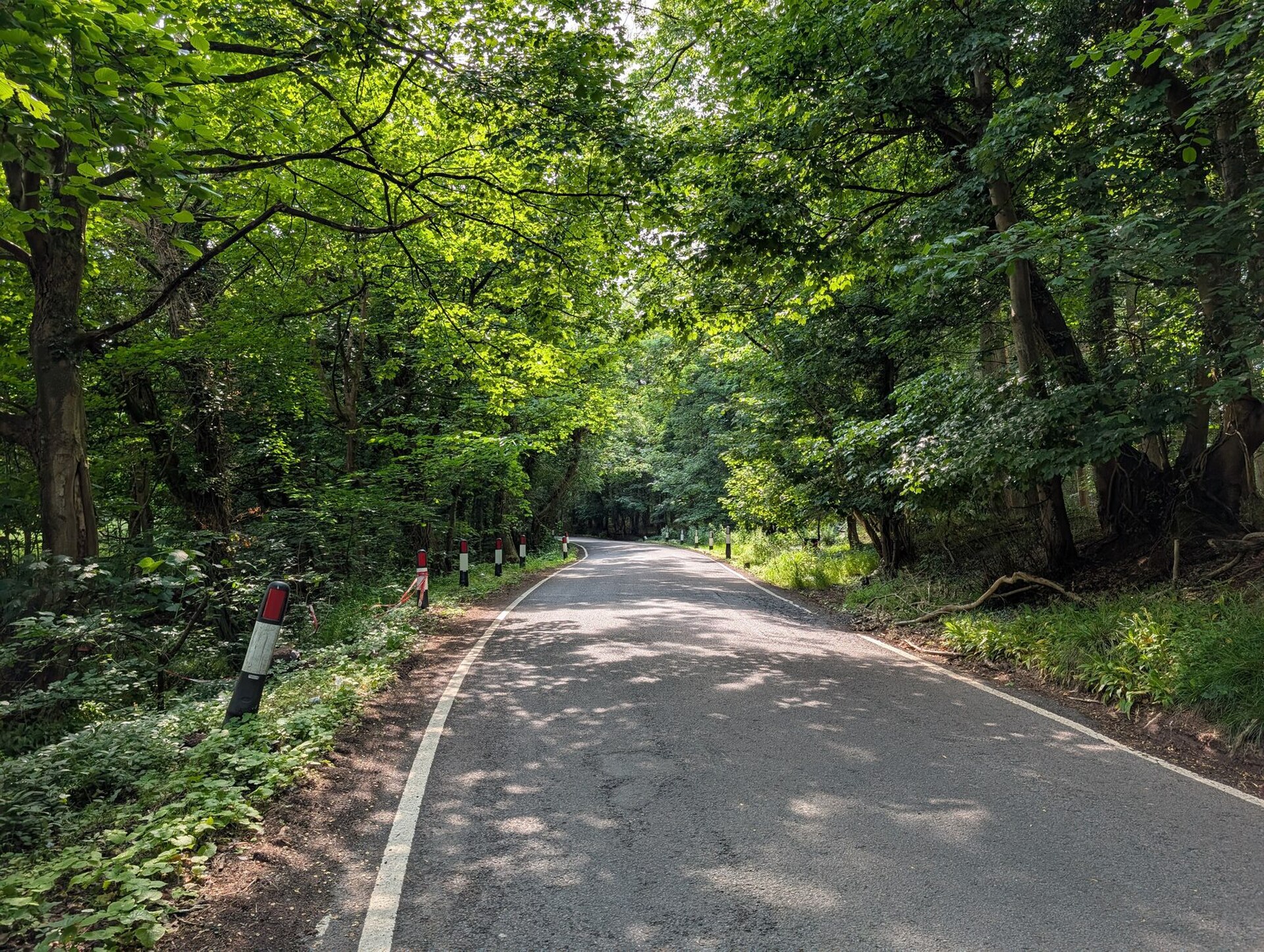
Photo: Wikimedia Commons, CC BY-SA 2.0
Of everything in this file, the detail that keeps me returning is the piece of cloth in her mouth — because of what it does to the timeline. The pathologist read the body as having been put into the hollow before rigor set in, which means somebody was working fast, in a wood, in the dark, against a clock only they knew about. And yet the cloth had been placed. That is not haste. Two different tempos are recorded in the same body, and I have never managed to make them belong to the same night.
Spring 1943: The Boys Who Looked Inside the Tree
It was 18 April 1943, a spring day just before Easter. Four local boys had slipped into Hagley Wood, hunting for birds' nests or poaching — the sort of mischief boys their age got up to. Britain was in the thick of the war then, and food was scarce; anything caught in the wood might make the supper table a little better.
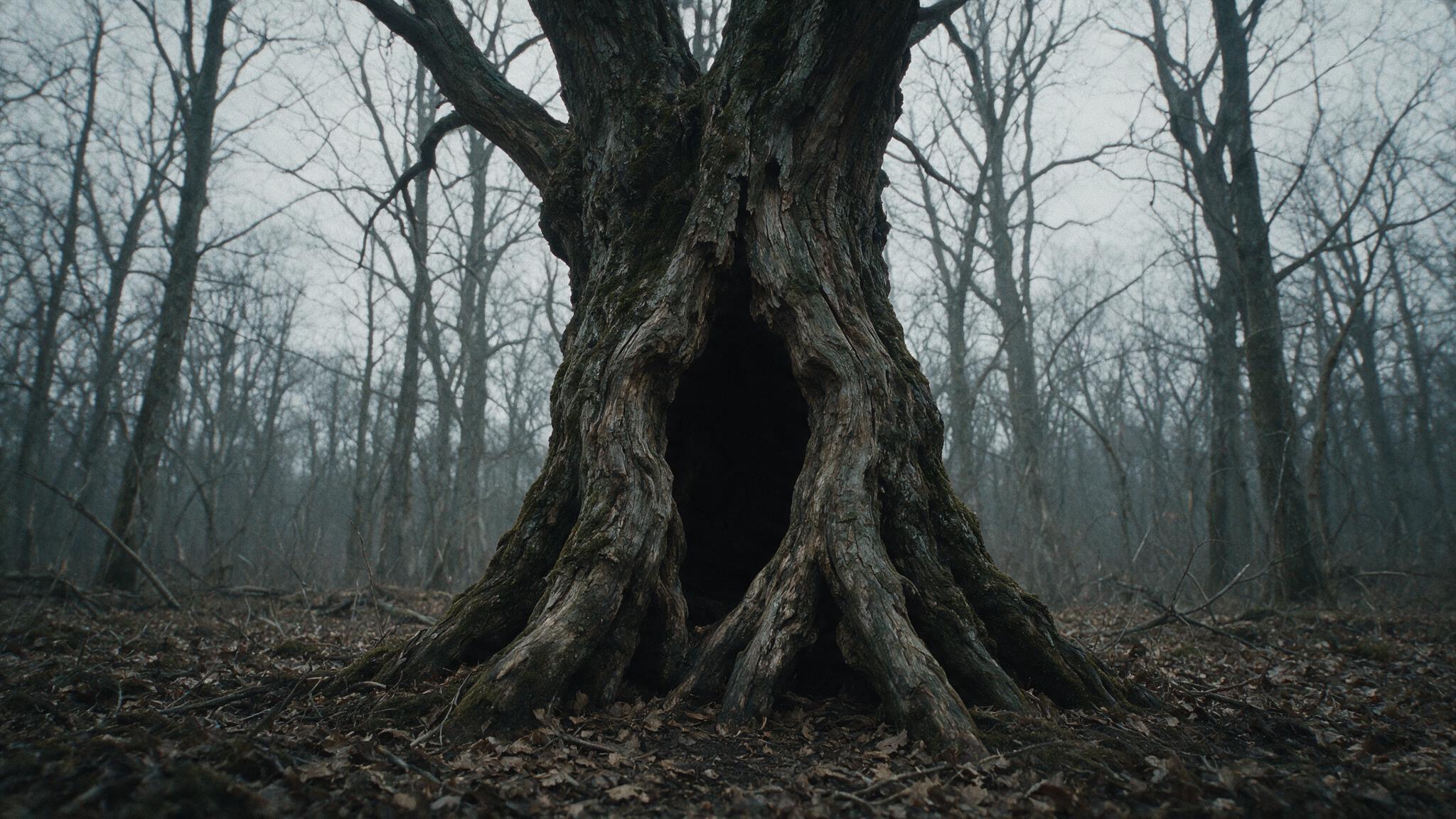
Their eyes fell on an old elm — a hollow tree, its base split into several trunks. Birds often nested in the cavities of such trees. One boy climbed up and peered into the dark hollow. Instead of a nest, there was something that looked like a human skull. At first they thought it was an animal's bone. But with its teeth still set neatly in place, it was, however they looked at it, human.
Frightened, the boys swore to tell no one — they had trespassed, and that alone would earn them a hiding. But the youngest of the four could not get the dark hollow out of his mind after that night, and in the end he went home and told his parents. Before long, the police were standing at that tree.
The Woman the Tree Swallowed
What the police recovered from the hollow was a set of remains, almost complete, that had lain trapped inside the tree for a long time. A few objects had survived alongside them, offering the faintest of clues about her. A gold ring on one finger, fragments of old clothing, and a single shoe. These small things alone bore witness that this nameless woman had once been a living, breathing person.
The pathologist's findings turned the case from a simple discovery of remains into a genuine mystery. The person had been a woman. She had died at least eighteen months before she was found — meaning around the autumn of 1941, or earlier. In her mouth was found a piece of thin cloth, which pointed to the possibility that she had died by suffocation.
Coldest of all was the question of how she had come to be inside that narrow hollow at all. The pathologist judged that the body had been placed into the tree soon after death, before it had stiffened. A little more time, and the body would have set rigid and could never have been fitted into so tight a space. In other words: someone had pushed her, newly dead, into the dark of the tree in haste, hiding her from the eyes of the world. The tree had not swallowed the woman. Someone had fed the woman to the tree.
But who that "someone" was, and who the woman was, turned up nowhere. Wartime Britain held countless people who had vanished without trace, and among them no face was ever found to match this nameless woman.
The Name That Appeared on the Wall: Bella
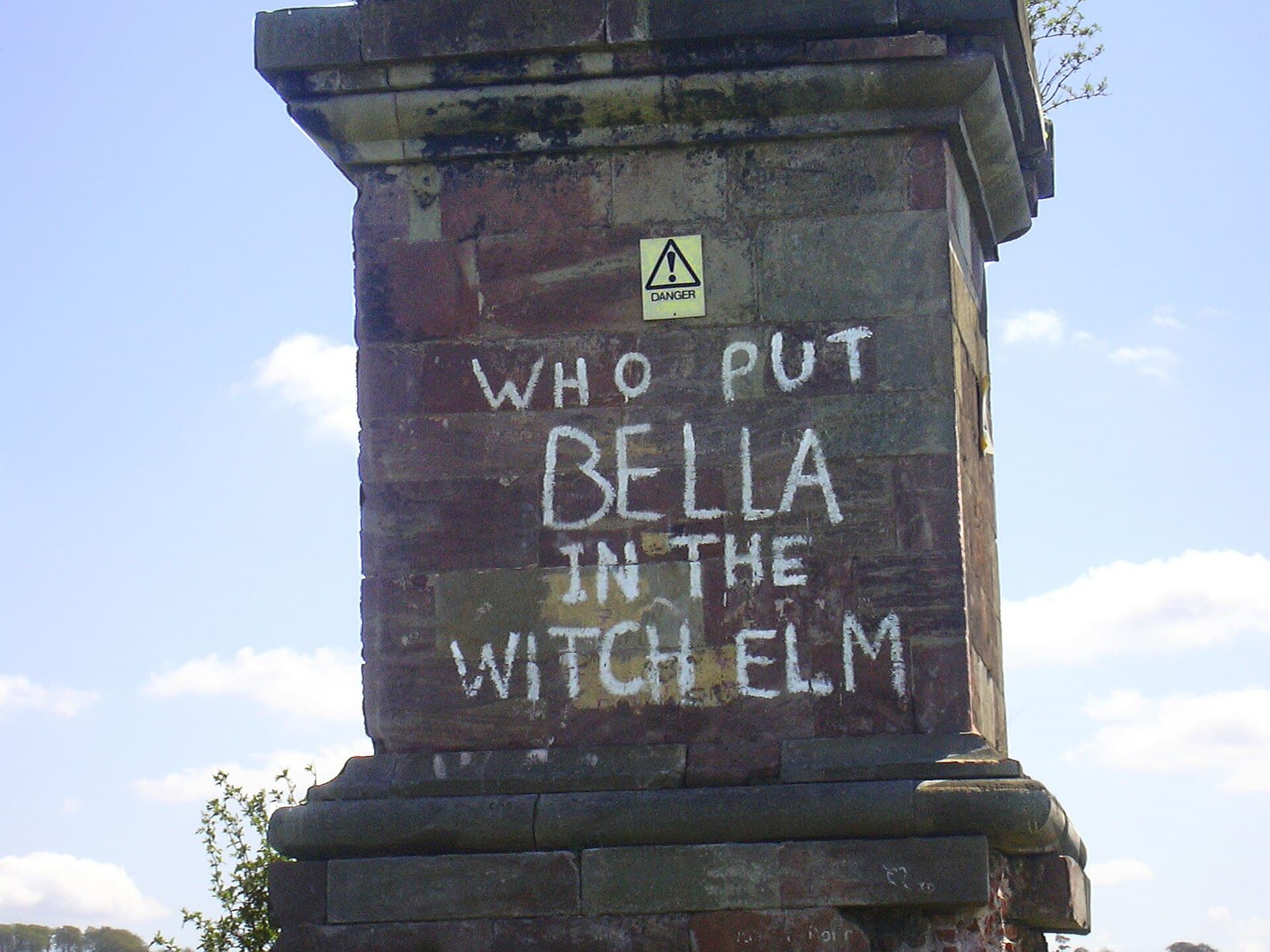
By the following year, with the case at a dead end, something strange began that would keep this story from ever being forgotten. In 1944, a single line of graffiti, scrawled in white, started appearing on walls around the district.
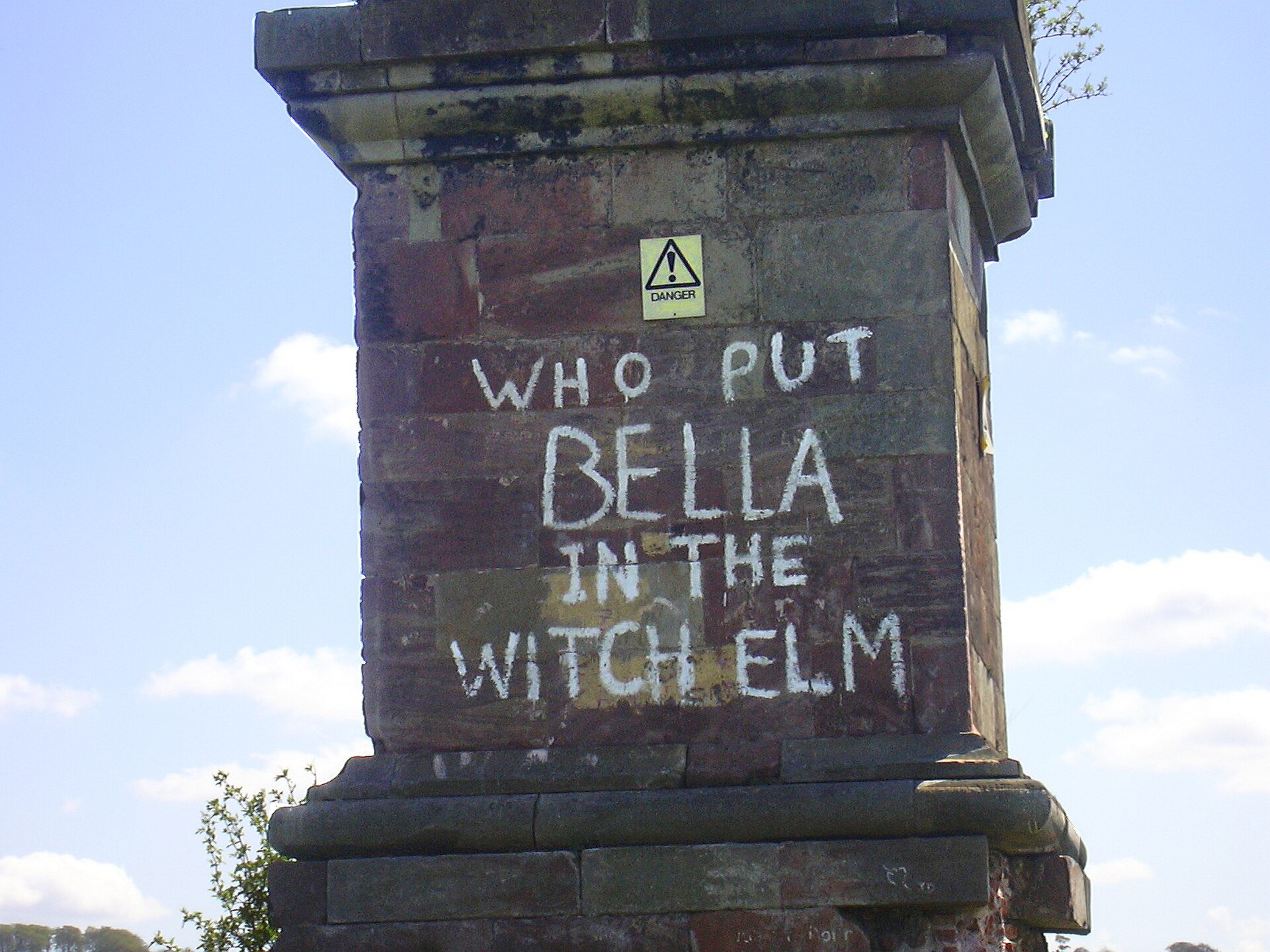
"Who put Bella down the wych elm?"
Who wrote it, and why, no one could say. Stranger still was the name — Bella. The very woman the police had failed to identify, the writer called "Bella," as though they had known her all along. Whether this was truly her name, or merely something invented, no one knows even now. What is certain is that this one line of graffiti gave the nameless remains a name — and that name became the name for the whole case.
Had the graffiti appeared only that once, the story would likely have been forgotten long ago. But it did not go away. When the years wore it off, one day the same sentence would come back to life on another wall. As though someone had resolved never to let this woman be forgotten.
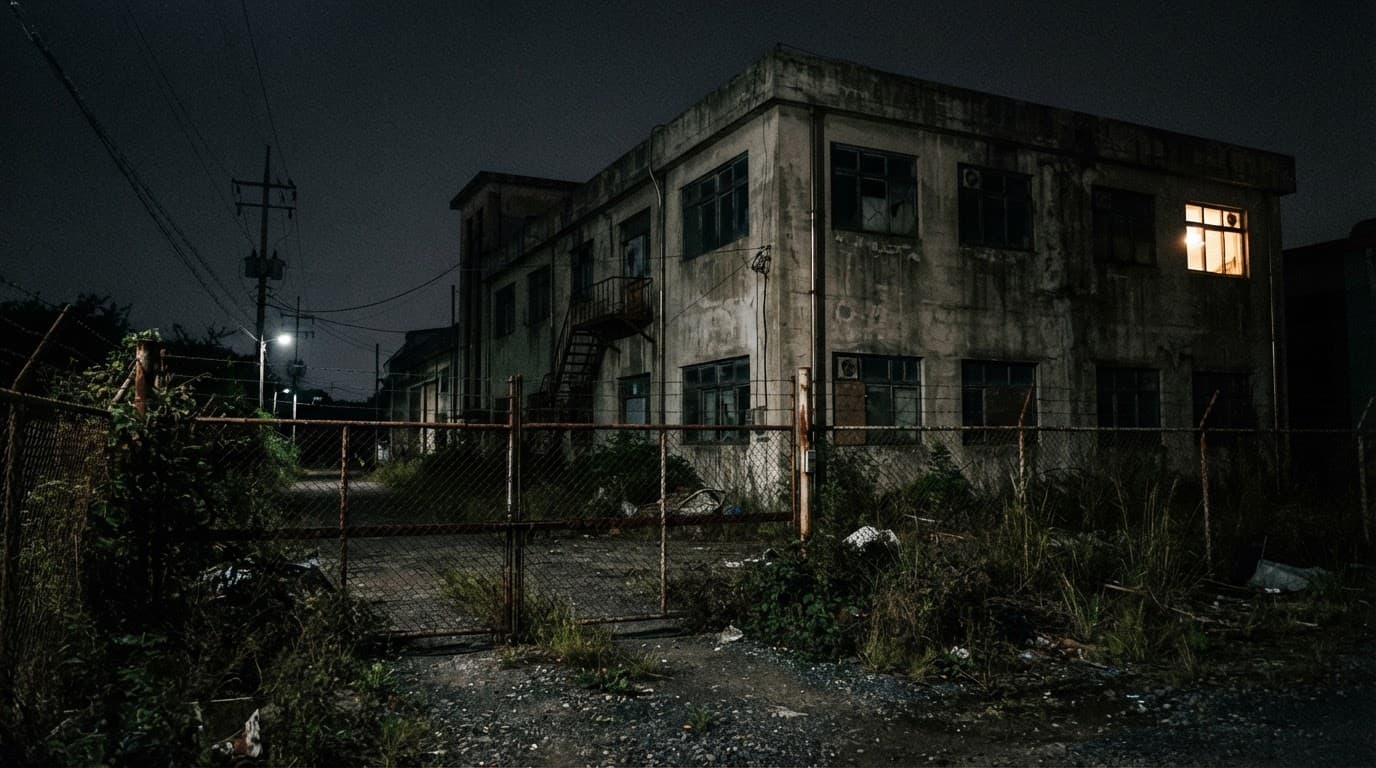
A mist-drowned winter wood and a hollow old tree, an eerie air drifting over an ancient wall — a mood recreation, not real footage.
The Graffiti That Has Repeated for Over 70 Years
Here is the part that chills the most. This graffiti did not appear once in 1944 and stop. Over the decades that followed, the same sentence has risen again, like a ghost, in place after place across the district. The old stone monument — the obelisk — standing on Wychbury Hill in particular became, over the years, the stage on which this graffiti kept reappearing.
The sentence returned in slightly changed forms. In one year "wych elm" was written instead as "witch elm"; in another, the first word was painted over in a different colour, subtly twisting the meaning of the line. But the heart of it stayed the same. Who put Bella in the tree. Wiped away and wiped away again, this question has surfaced on walls again and again, right up to recent years.
Many guesses circle this recurring graffiti. Perhaps someone who knows the truth, unable to bear the case being forgotten, has written it down generation after generation. Perhaps people captivated by the mystery have simply imitated and carried it on. But no one has ever uncovered who keeps bringing this sentence back to life, or why. As much as the woman's identity, the hand that writes the graffiti remains in the dark — never once, in more than seventy years, showing its face.
Witches, Spies, and a Truth No One Knows
Over the long years, every kind of theory has bloomed around who Bella was and who put her in the tree.
The grimmest run to witchcraft and the occult. One anthropologist noted that the bones of one hand had been found apart from the rest, scattered around the tree. He believed this might be linked to an old ritual practice, and from there spread the chilling speculation that this had been a ritual killing. Woven together with witch legends long told in the district, the Bella story quickly took on the colours of sorcery and curse.
A theory running in an entirely different direction also arose. This was the thick of the Second World War, and this was the Midlands, dense with munitions factories. So the idea circulated that Bella had in fact been a spy working for the German side, silenced once her cover was blown. A captured German agent of that period, and the name of a cabaret singer said to be tied to him, were even brought into it. But the singer's height and the time of her death did not match the remains, and this theory too scattered without ever reaching proof.
There were other stories still. A tip about a woman known as "Bella" who had disappeared; a hazy confession that surfaced only years afterward. Yet every one of them, pushed to its end, hit a point where it fell apart. Only one thing was certain: that nothing was certain. Investigations were reopened more than once, and in recent years there were even moves to recover the remains and attempt DNA analysis — but so much time had passed that even the whereabouts of the remains had become hard to trace.
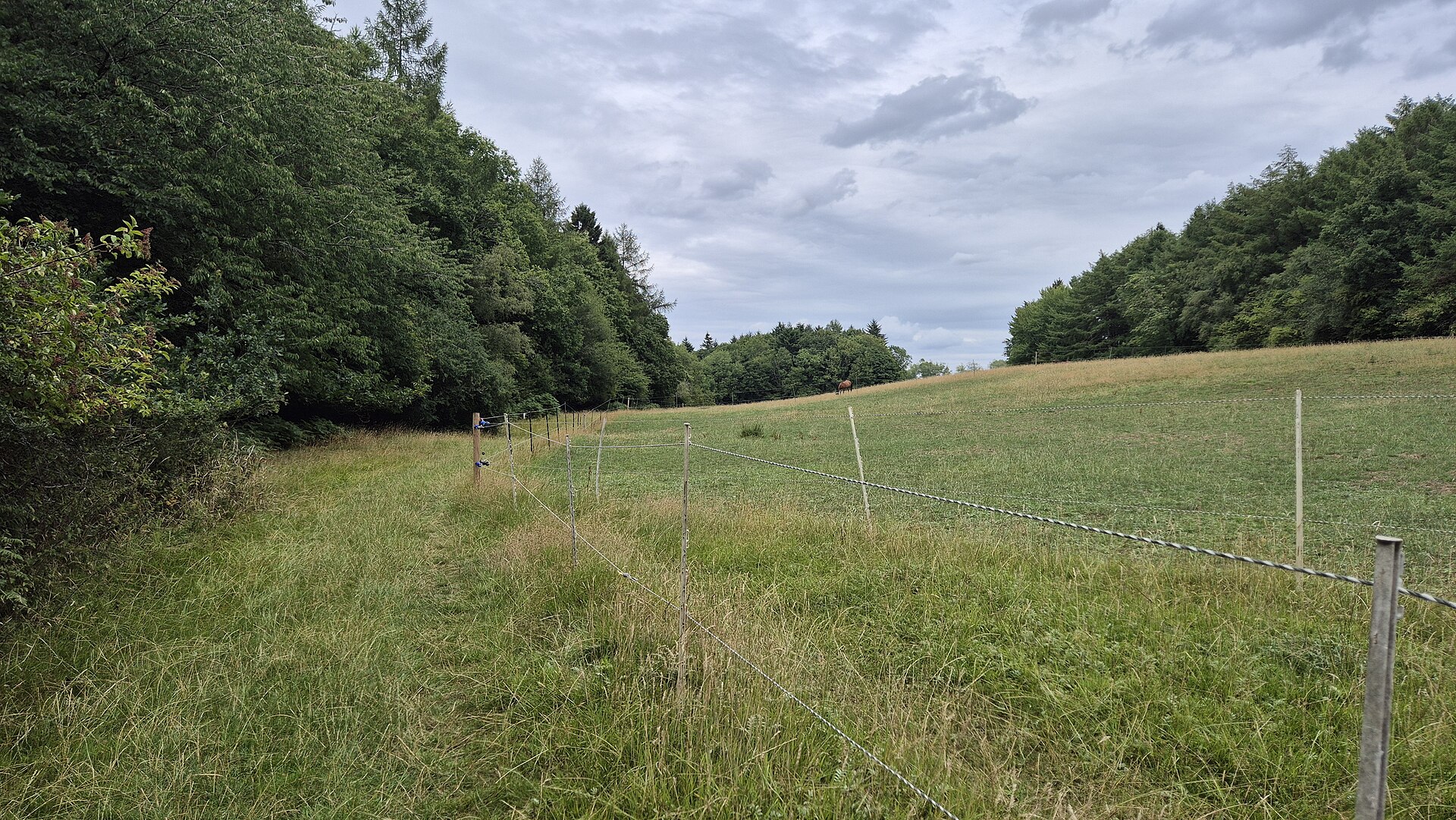
Photo: Wikimedia Commons, CC BY-SA 2.0
The Question Left Inside the Tree
The reason Bella's story still runs a chill down the spine, all these years on, is not any supernatural curse. Quite the opposite. This story has too many blanks that will not be filled. Who she was, what life she led, why it had to be inside that tree — only question marks remain, and not one of them closes into a full stop. We know one scene for certain: a hollow old tree, its dark cavity, and the nameless woman hidden inside.
And the graffiti lays one more layer of dread on top. Most unsolved cases in the world fade quietly with time. But Bella was not forgotten. Because someone — or many someones — kept bringing the same question back to the wall for more than seventy years. That question seems at once to demand an answer and to be the quiet taunt of one who knows it. Who put Bella in the wych elm? Wiped off, it comes back; on the verge of being forgotten, it rises again on some wall.
Today, still, mist drifts through Hagley Wood. The old elm itself, they say, is no longer standing — but the ancient monument on Wychbury Hill remains where it always was. And one day again, perhaps, on a wall in some overcast morning, a single line in white will rise like a ghost. As though it would never let the nameless woman be forgotten. Who put Bella in the wych elm — the question, still without an answer, watches us today from a wall somewhere.
I keep a list of the recorded variants — wych becoming witch one year, the first word overpainted in a different colour another, the phrasing sliding a word or two between sightings — and it is the most unsettling page in this whole file. Legends drift like that. Copies drift like that. But so does a hand that has been writing the same sentence for seventy years and is getting older. Somewhere in that list is either a chain of imitators or one person, and I have never been able to work out which reading frightens me more.
---
This article uses both genuine archival and on-site photographs and AI-generated images and video produced to convey the mood of the story.

Comments
No comments yet — leave the first one.