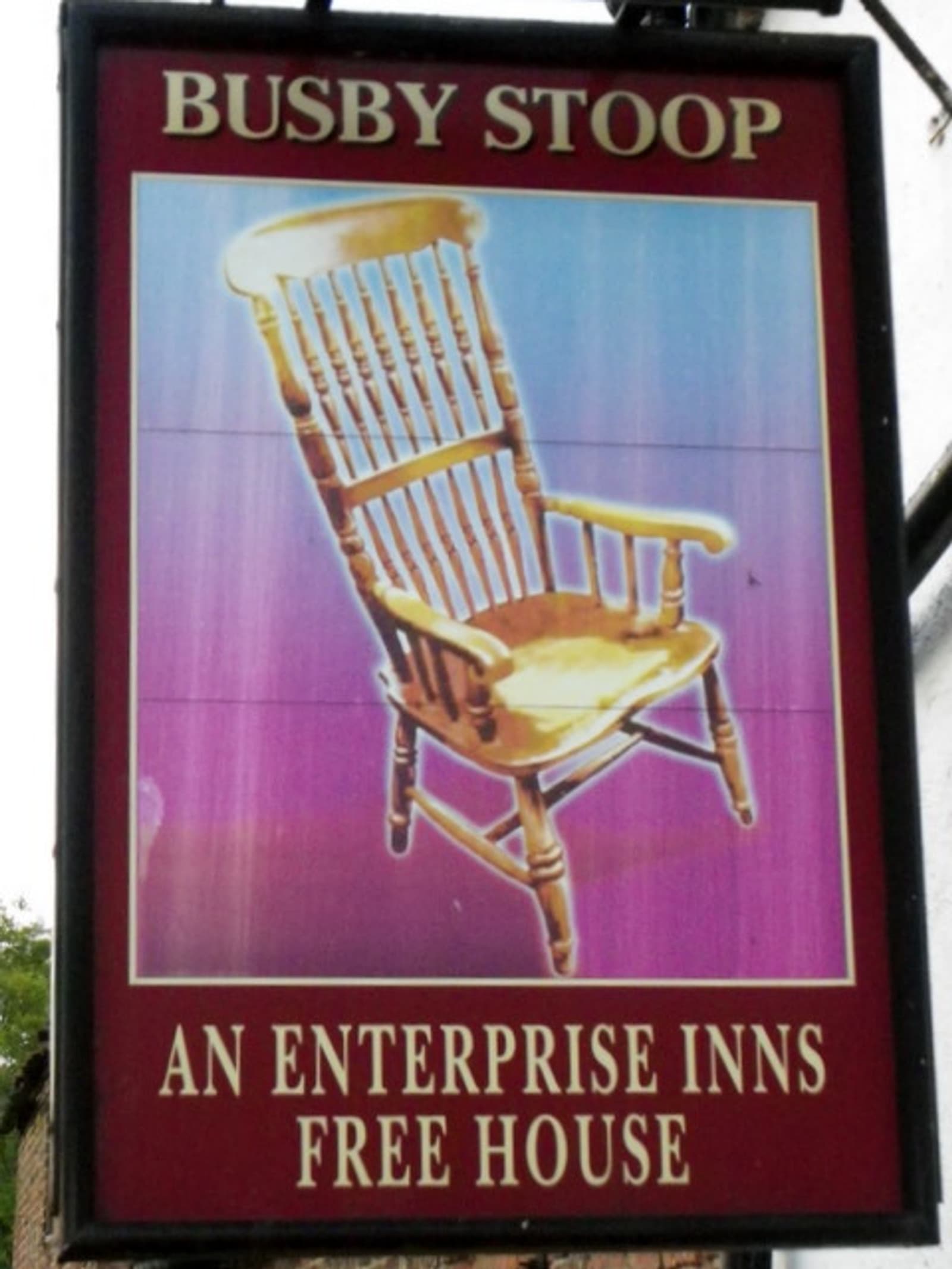
There is an ordinary-looking oak chair in a small museum in the North Yorkshire town of Thirsk, and it hangs from the ceiling. Not displayed on a plinth, not roped off behind glass — suspended in the air, well above head height, so that no living person can lower themselves into it. The museum did this deliberately, in 1978, and it has never been undone. The reason given is simple, and it is the reason people travel to see it: everyone who is said to have sat in this chair is said to have died soon after. This is the story of the Busby Stoop Chair — the Dead Man's Chair — and before we go any further, one honest thing needs saying. Almost the entire body count belongs to legend. What is documented, and what is strange, is that a museum looked at that legend and decided the safest thing to do with a wooden chair was to hang it out of everyone's reach.
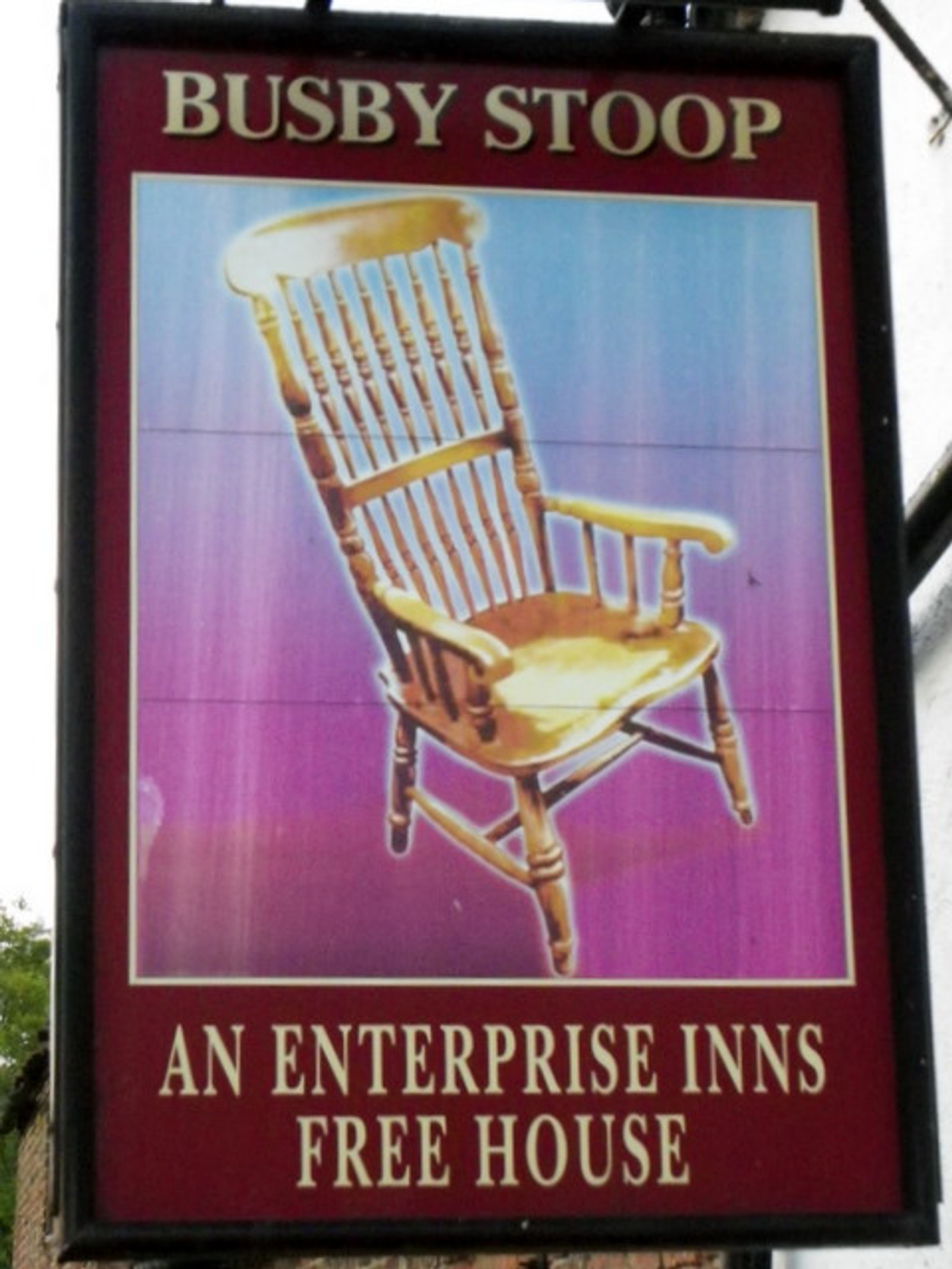
Photo: Wikimedia Commons, CC BY-SA 2.0
Cursed objects are usually the easiest entries to dismiss, and that is why this one has stayed in my archive. My name is K. Woo; I collect these cases and check what can be checked. Most cursed-object files dissolve the moment you look for a paper trail. This one holds a document nobody had to produce: a transfer of ownership in 1978 with a condition attached — that the thing never be set on a floor again. I have read a great many bequests. I have not read another one written to keep people from sitting down.
The Man Who Was Hanged at the Crossroads
The story begins in 1702, in North Yorkshire, with a man named Thomas Busby. By most tellings Busby was a heavy-drinking counterfeiter, and he was in business with his own father-in-law, a man named Daniel Auty. The two ran a coin-forging operation together, and — as such arrangements tend to — it soured into a violent quarrel. In the version passed down, Busby killed Auty, and for that murder he was arrested, tried, and condemned to death.
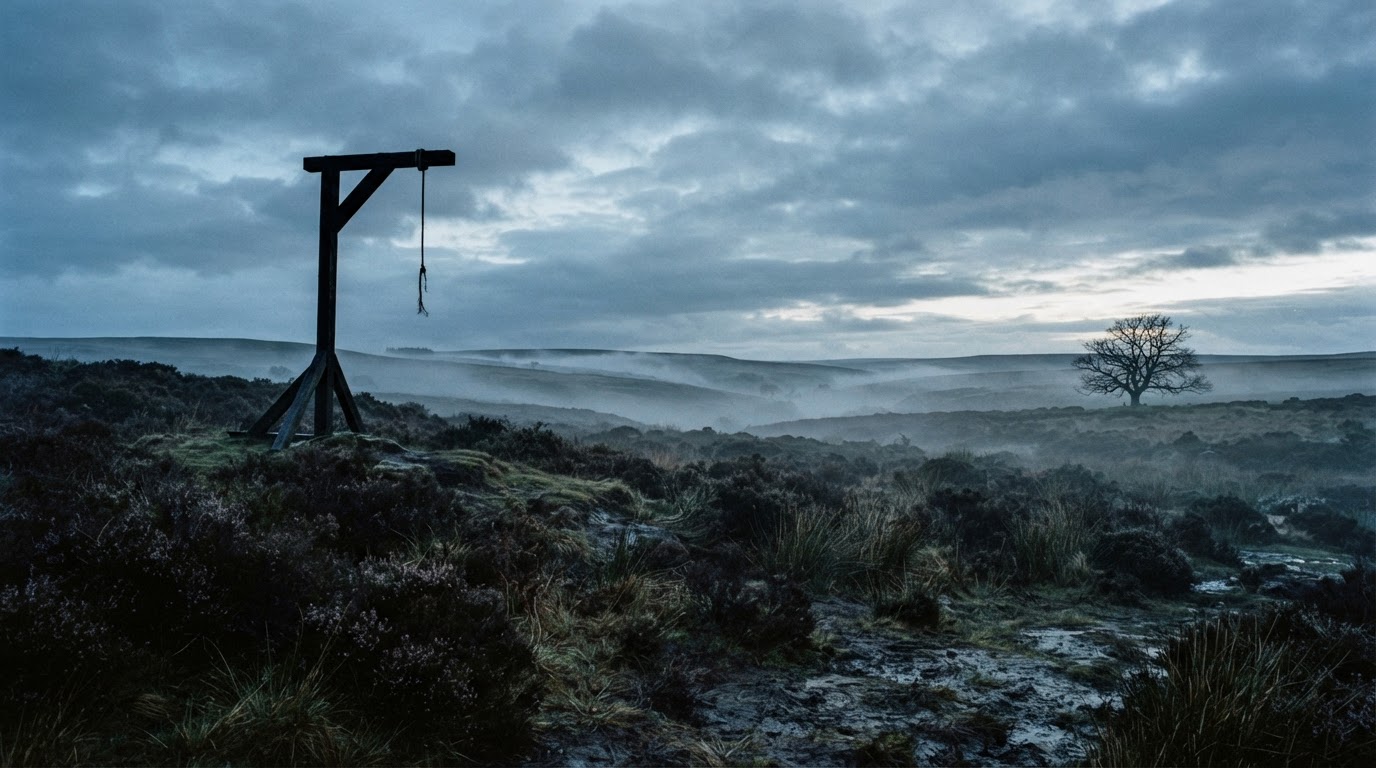
His execution followed the grim custom of the age. Busby was hanged, and then his body was gibbeted — hung in an iron frame in public view as a warning — at a crossroads near Sandhutton. Beside that crossroads stood an inn. In time the inn took its grisly landmark for a name and became known as the Busby Stoop Inn, the "stoop" being the local word for the post from which his corpse had swung. For centuries afterward the pub carried the name of the man who had died in chains at its door.
The Curse Spoken on the Way to the Gallows
Here the legend supplies its crucial detail. Busby, the story goes, had a favorite chair inside the inn — a particular seat he always took, and guarded jealously as his own. On the day he was led out to be hanged, he is said to have looked back at that chair and pronounced a curse over it: may sudden death come to anyone who dares to sit in my chair.
There is a competing version, quieter but no less common, in which the curse was spoken earlier — Busby was drunk in the chair when the constables came to arrest him, and he cursed it in that moment, as they hauled him out of it. Either way, the shape of the legend is the same. A condemned man, in the last hours of his life, laid a death sentence on a piece of furniture. And for the next two and a half centuries, according to those who repeated the tale, the chair kept that promise.
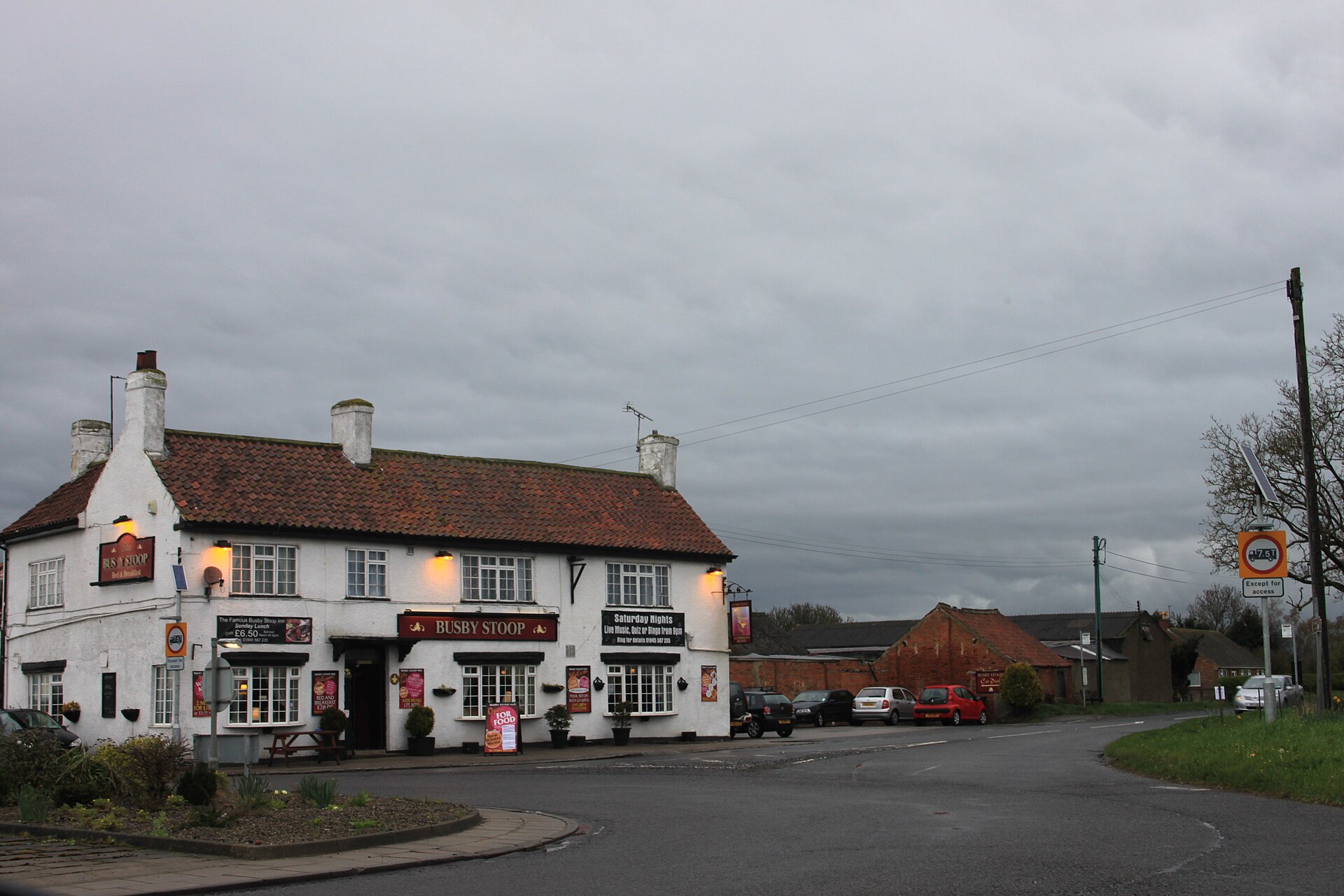
Photo: Wikimedia Commons, CC BY-SA 2.0
The Deaths, As the Legend Tells Them
What makes the Busby chair endure is not the curse alone but the long, accumulating list of the dead — and it is worth stating plainly that this list is folklore, repeated and embroidered over decades, not a coroner's record. With that understood, here is roughly how the tale is told.
The earliest death often attached to the site dates to 1894, when a local chimney sweep, drunk after a night at the inn, was found the next morning hanging from the very post beside the old gibbet. (In the fuller telling this turned out to be no supernatural death at all, but a murder by a companion — a reminder of how easily an ordinary crime gets folded into a curse.) The chair's real reputation, though, was built in the twentieth century. During the Second World War, Canadian airmen stationed at the nearby base of Skipton-on-Swale are said to have drunk at the pub, and it was whispered that any airman who sat in Busby's chair before a mission never came back from the skies over Europe.
The deaths that cemented the legend came later, clustered in the late 1960s and early 1970s. In 1968, two RAF airmen are said to have dared one another to sit in the chair; driving away afterward, their car left the road and struck a tree, and both men died. In the years that followed the toll mounts in the retelling: a hitchhiker who had spent two nights at the pub, run down on the road; a builder who sat in the chair and later fell through a roof to the concrete below; a local man dead of a heart attack soon after taking the seat; a cleaning woman who merely knocked against the chair and was afterward diagnosed with a brain tumor. The account most often repeated concerns a brewery delivery man. Down in the cellar, where the chair had been moved, he sat in it and joked to the landlord that it was far too comfortable to be left down there. He was killed a short time later when his van ran off the road.
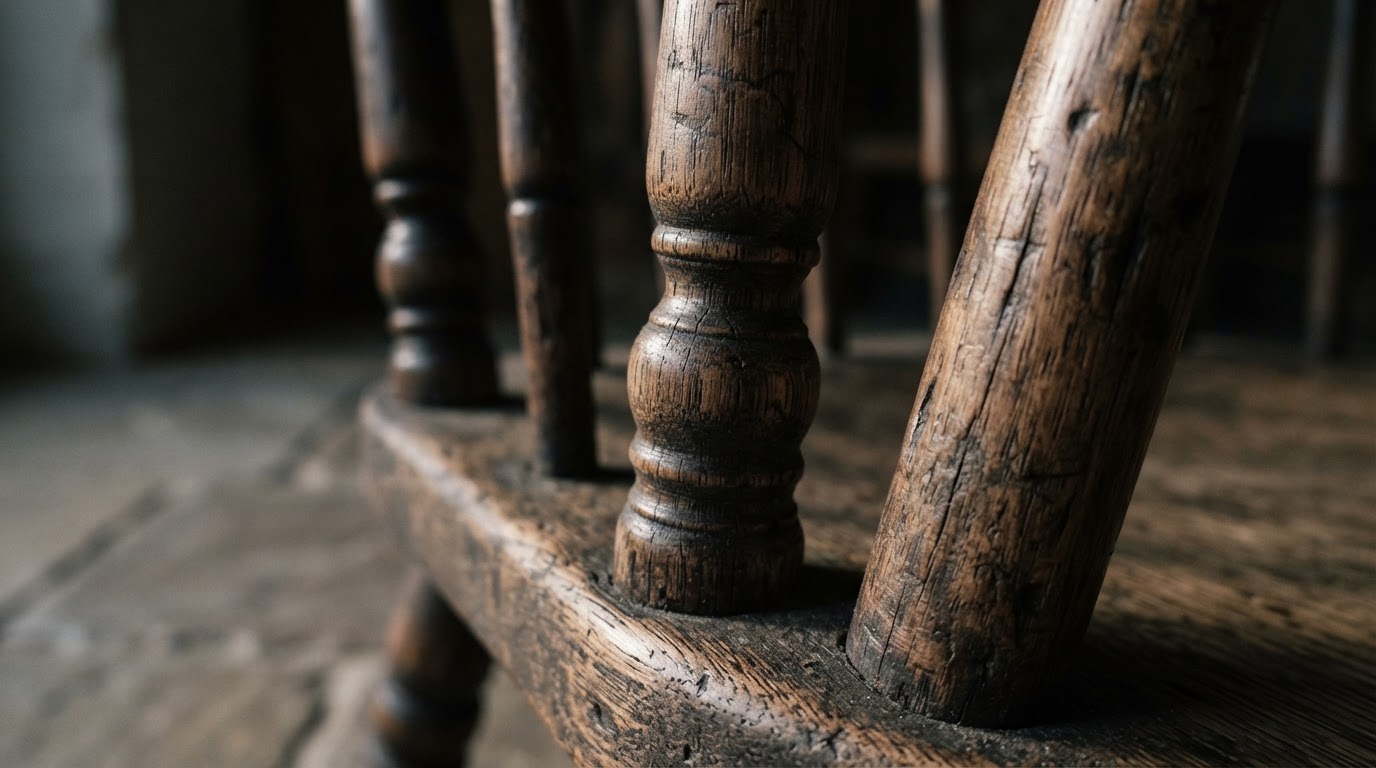
The Landlord Who Had Seen Enough
By the 1970s the pub's landlord, a man named Tony Earnshaw, had heard one death too many told back to him with the chair in it. Whatever he privately believed, the practical problem was real: customers kept sitting in the chair, and the stories kept coming, and he did not want the next one on his conscience or his premises. So he made a decision that, in its way, is the most telling fact in the whole affair. He did not throw the chair away, and he did not keep it. He gave it away — to the local museum — on the explicit condition that it be put somewhere no one could ever sit in it again.
In 1978 the chair passed to the Thirsk Museum, and the museum honored that condition in the most literal way imaginable. They raised the chair off the floor entirely and suspended it from the ceiling, high enough that no visitor could reach it, no cleaner could brush against it, no curious hand could pull it down for a moment's dare. There it has hung ever since. A cursed chair, according to legend; but the hanging of it is plain, documented fact — an institution's sober response to a story it could not quite dismiss.
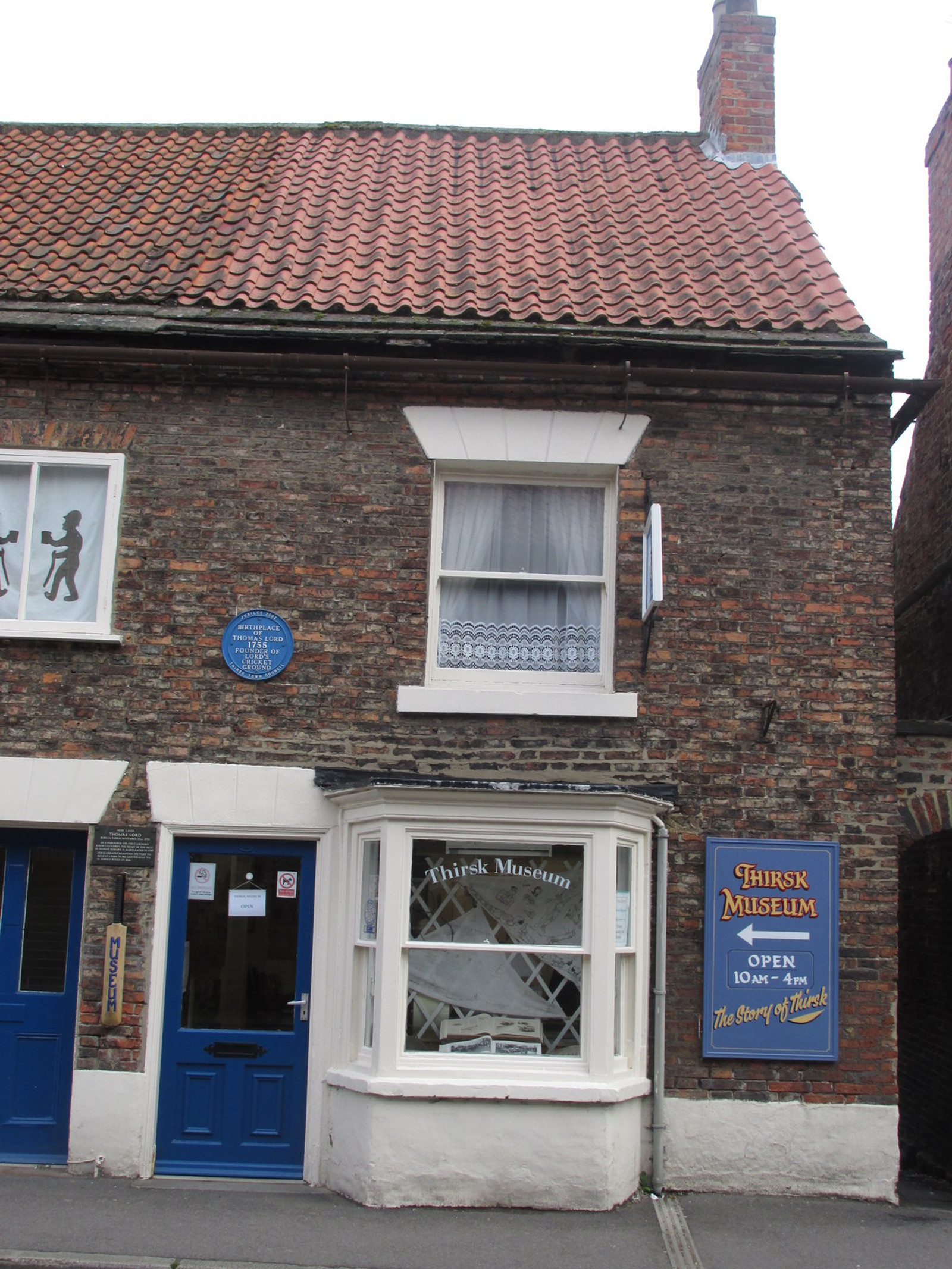
Photo: Wikimedia Commons, CC BY-SA 2.0
What the Wood Actually Says
And now the part of the story that the curse would rather you skipped. At some point the chair was examined by a furniture historian — someone who could read the object itself rather than the tale wrapped around it — and the wood told a very inconvenient truth. The chair's spindles, the historian found, were machine-turned. That matters, because a chair genuinely made in Thomas Busby's lifetime would have had its parts shaped on a pole lathe, by foot and by hand. Machine turning of this kind does not appear until well into the nineteenth century.
On that evidence the historian dated the chair to around 1840 — roughly 138 years after Busby was hanged. If the dating is right, the conclusion is unavoidable: the chair now hanging in Thirsk cannot be the chair Thomas Busby sat in and cursed, because it did not yet exist when he died. Whatever seat the real Busby favored in 1702, this is not it. The relic at the heart of the legend is, in all likelihood, an ordinary Victorian chair that inherited a dead man's story it was never present for.
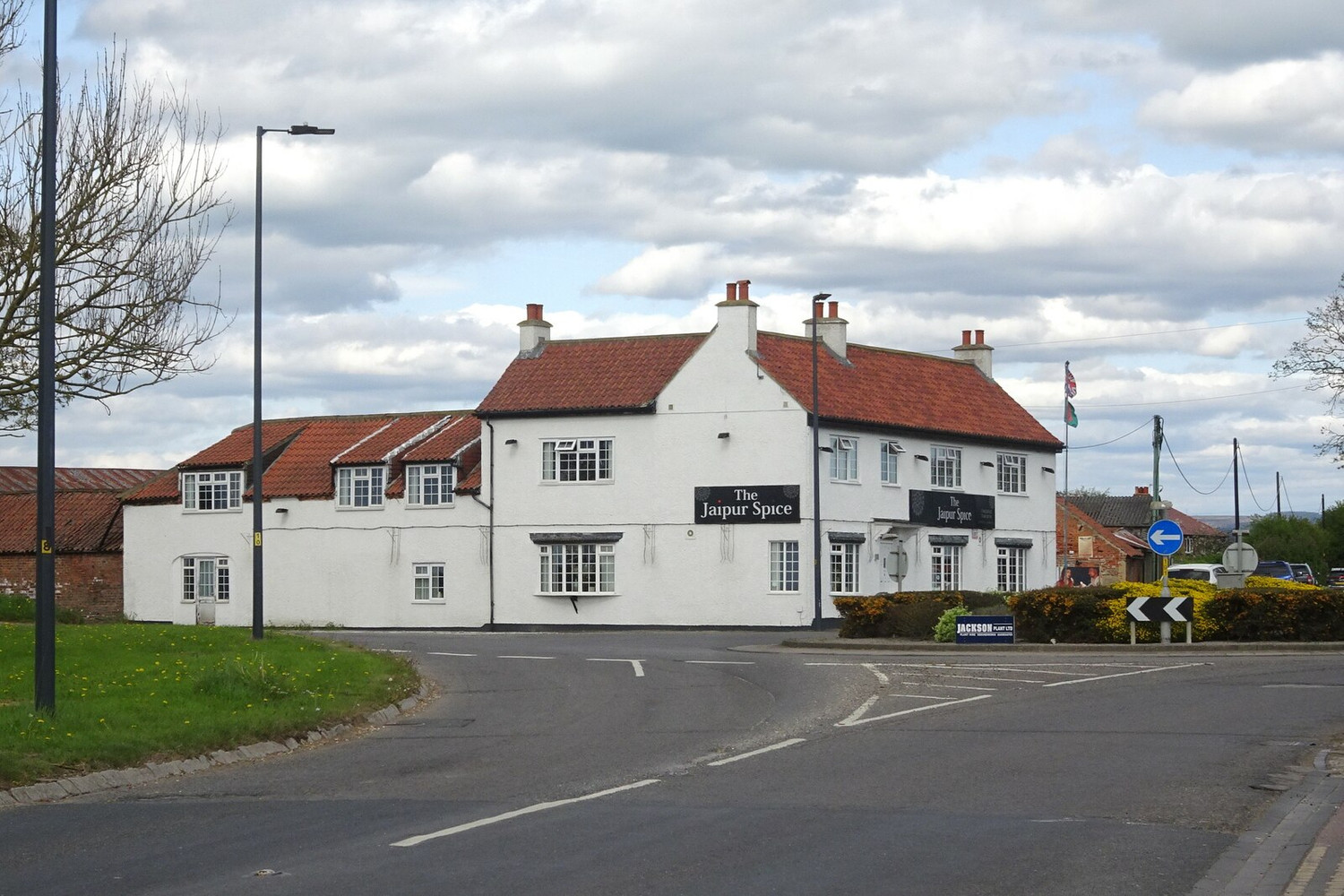
Photo: Wikimedia Commons, CC BY-SA 2.0
The Chair in Its Own Town
Most accounts of the Dead Man's Chair stay at the crossroads and the inn. The chair itself has had a different life, in a different building, and that building says something about how the legend is held in England. Thirsk Museum occupies the house where Thomas Lord, founder of Lord's Cricket Ground, was born in 1755. The museum's listing gives its hours as Monday to Saturday, 10 a.m. to 4 p.m., closed Sundays, with free entry and donations welcome, and it takes school parties of up to thirty by arrangement. It says the chair arrived in 1978 and has not been sat on since. School groups are pointed toward the World of James Herriot and St Mary's Parish Church on the same trip. The cursed chair is one stop among cricket history and a country vet's memoirs.
The execution site has changed more. The Wikipedia entry places it opposite the pub at the junction of the A61 and A167, a crossroads that is now a roundabout. The place where Busby's body was gibbeted is, today, a piece of road engineering. I have not found a reliable account of what the pub building is used for now, and I would rather leave that gap than fill it from a forum.
The legend travelled outward through television. The Wikipedia entry notes that the chair was mentioned in an episode of the American series Unsolved Mysteries, and that a similar cursed-chair story appeared in Beyond Belief: Fact or Fiction. Programmes like those sell a single object and a single sentence of explanation. The furniture historian's finding, that the spindles are machine-turned and the chair dates to about 1840, 138 years after the hanging, is in the record too, and it has plainly not stopped the telling. The dating describes a different chair from the one the legend describes.
Reading about its display, what stays with me is the instruction attached to it. The 1978 arrangement was not a request that visitors be careful. It was a condition that nobody sit in it, even for maintenance, enforced by height. Anyone can check the other half of the legend, that the chair is up there, by walking into a small museum on a weekday morning without paying. What nobody can check is why that has seemed necessary for so long.
The Chair That Still Hangs
So where does that leave us. The deaths are folklore — a real chimney sweep's murder, a wartime superstition, a run of 1960s and 1970s accidents gathered up and threaded onto a single object by people who wanted, as people always do, to find a pattern in misfortune. The curse cannot be tested, and the one hard piece of physical evidence — the machine-turned spindles — suggests the "cursed" chair is a Victorian stand-in for a lost original. On the facts, there is nothing here that a wooden chair actually did.
The machine-turned spindles should have closed my file, and for a while I let them. What reopened it was cross-referencing the deaths against the dating. If the chair is from around 1840, then every death in the twentieth-century list — the two airmen, the roofer, the delivery driver in the cellar — was attached to an object that had no connection whatsoever to Thomas Busby. The pattern was assembled around the wrong chair, by people who never checked, and it worked anyway. I find I am less interested now in whether the curse is real than in how little the story needed to be true in order to get a chair hoisted into the rafters and left there for fifty years.
And yet. A pub landlord who had every commercial reason to keep an eye-catching curiosity on his floor chose instead to give it away, on the condition it be put beyond human reach. A museum agreed, and lifted a chair into the air rather than let anyone sit in it, and has kept it there for nearly half a century. Those are not the actions of people laughing at a story. That is the strange, durable power of the Busby chair — not that it ever killed anyone, which no one can show, but that the legend around it grew heavy enough that the safest thing to do with an old oak chair was to hang it, like the man himself, and never let it down.
---
This article combines genuine archival and on-site photographs with AI-generated images and video produced to convey the mood of the story.

Comments
No comments yet — leave the first one.