
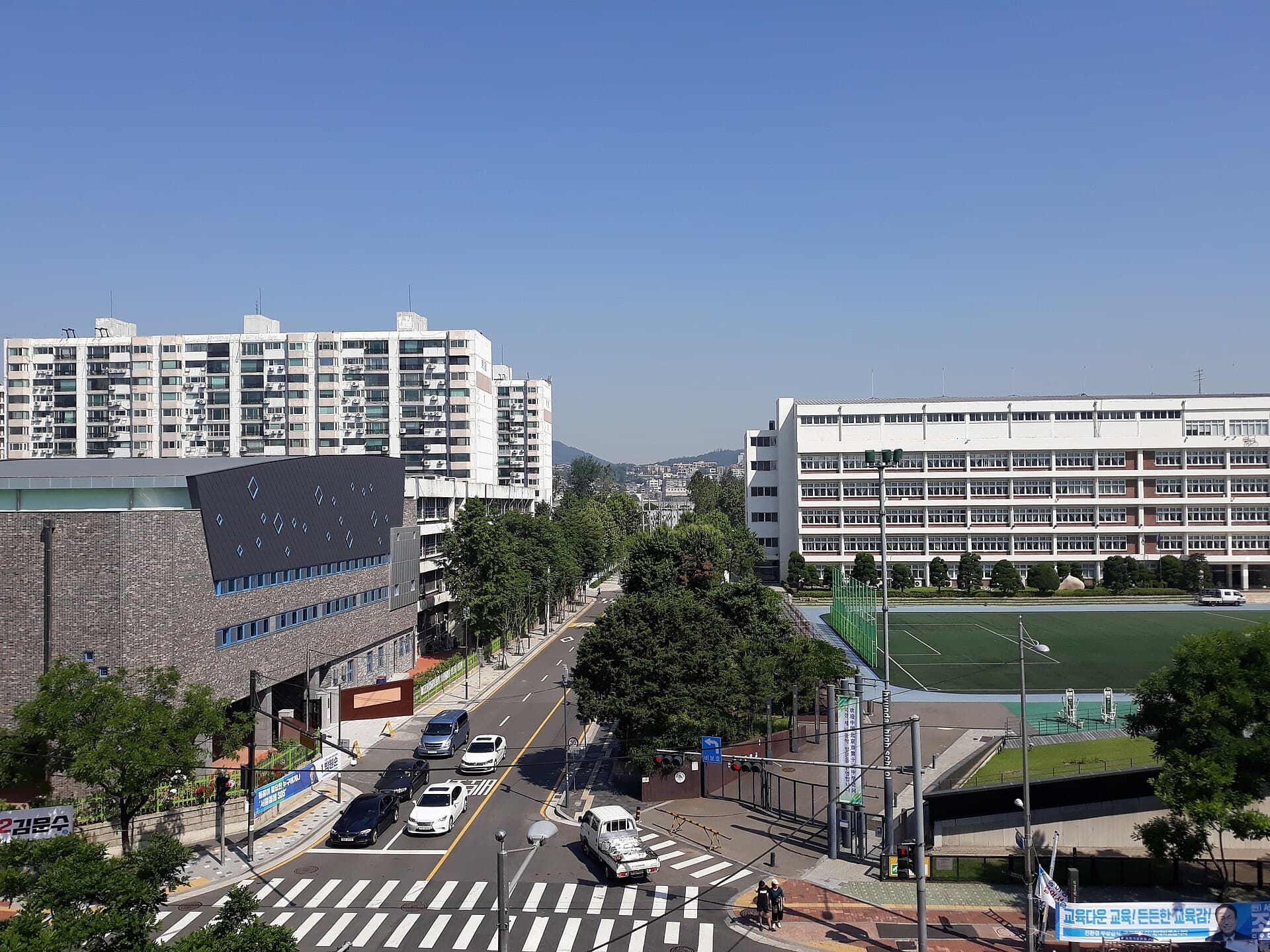
Sinjeong-dong, in the Yangcheon district of Seoul. It is an ordinary residential neighborhood — subway lines and buses threading through it, semi-basement rooms and low-rise multi-family houses standing shoulder to shoulder. Between 2005 and 2006, three crimes took place here. Two women lost their lives; one narrowly survived. Two things kept this case burning in people's memories for years. The first was that the perpetrator appeared only on days off — a national memorial day, a Sunday, an election day. The second was a strange object described by the woman who survived: a cute little white rabbit sticker stuck to a small flowerpot on top of a shoe cabinet. And so, incongruously, the case came to be nicknamed "the Cute Rabbit case." Then, in 2025, twenty years later, a single fragment of DNA drawn from old evidence finally named the true perpetrator. But that answer was not the end of the maze. It was the beginning of another one that no one had seen coming.
I filed this case under the wrong heading for years. Three dates, one neighborhood, one method — the pattern was so tidy that I never thought to test it, and neither, for a long time, did anyone else. What I had actually been looking at, I now know, was two men's work sitting in the same folder because the calendar made them look like one. The thing that shames me is the detail I trusted most: the holidays. Memorial Day, a Sunday, an election day. It read like a signature. It turned out to be a coincidence that two different people found convenient.


A Killer Who Struck Only on Days Off
The most unsettling feature of the case was its calendar. Everything that happened in Sinjeong-dong took place on days when people were home and off work. The first was June 6, 2005 — Korea's Memorial Day. The second was November 20 of that same year, a Sunday. The third was May 31, 2006, the day of Korea's nationwide local elections. All three fell on days marked red on the calendar, or on days when people had left the streets to go and vote.
This regularity was hard to dismiss as coincidence. On a weekday, streets fill with people going to work, students heading to school, neighbors coming and going — all potential witnesses. But a residential neighborhood on a day off is different. The streets stay quiet even in daylight, shops are shuttered, and the people who might have seen something have vanished indoors. The perpetrator targeted exactly that empty stretch of time. It was as if he read the rhythm of the city and chose the moment when people were most at ease, the day with the fewest watching eyes. The very peace of a holiday became, for someone, the condition for a hunt. That detail alone gave the Sinjeong-dong case the impression of something not impulsive but coldly calculated.


The First and the Second — Vanished Traces
The victim in the first case was a woman in her late twenties. She went missing on Memorial Day, June 6, 2005, and was found the next day in an illegal-dumping site in a nearby residential area. An autopsy determined the cause of death to be asphyxiation from pressure to the neck. Then, roughly five months later, on Sunday, November 20, a woman in her forties was found dead in a similar manner. The cause of death, again, was asphyxiation from pressure to the neck. The two cases resembled one another in location and method, yet at the time there was not enough conclusive physical evidence to bind them into one.
The investigation ran into trouble from the start. The scenes yielded few clear traces that could pin down a perpetrator. Witness accounts diverged, and in a busy residential neighborhood with people constantly coming and going, narrowing down a suspect was no simple matter. Above all, the forensic technology of the mid-2000s could not extract from tiny trace evidence a genetic profile precise enough to identify an individual. Even with decisive evidence sitting right in front of them, the technology to fully read it had not yet caught up to the era. And so the case slowly slid into the dark.



2006 — The Woman Who Survived, and the Rabbit on the Shoe Cabinet
The third case differed from the first two in one decisive way: the victim survived. On election day, May 31, 2006, a woman was confined in a semi-basement dwelling in Sinjeong-dong. In a desperate moment she seized her chance and attempted to flee. She climbed the stairs leading from the semi-basement up to the floor above and hid behind the shoe cabinet in the entryway of an unfamiliar home. From there she made her way to a nearby elementary school, called her boyfriend, and pleaded for help. Out of a darkness that had already taken two lives, for the first time, a living witness had emerged.
For the police, this survivor was an irreplaceable lead. At last there was someone who could describe the appearance of the faceless perpetrator. Based on her testimony, a composite sketch was drawn up, and the investigation seemed to enter a new phase. But no one imagined that a single object she had glimpsed on top of that shoe cabinet, while hiding for her life during her escape, would become the name by which this entire case would be remembered.


The Birth of a Bizarre Nickname — 'The Cute Rabbit'
On top of the shoe cabinet in the home where the survivor had hidden sat a crudely made flowerpot — the sort of thing a child might have crafted in a school art class. And stuck to that flowerpot was a small, cute sticker in the shape of a white rabbit. That trivial object, which happened to catch her eye while she crouched in terror, would later become the name of the case. People began calling it "the Cute Rabbit case."
The "cute rabbit" here refers to a character that was enormously popular in early-2000s Korea. This white rabbit, drawn with a blank or mischievous expression, exploded in popularity at the time on messenger emoticons, stationery, and stickers. For anyone who grew up in Korea, it was a familiar, practically national icon that everyone had seen at least once. And it was precisely that adorable, familiar character — its sticker sitting casually in a corner of a brutal crime scene — that gave people an eerie chill. The uncanny contrast of the most ordinary and lovable thing overlapping, in a single frame, with the darkest of events was another reason the case proved impossible to forget. That a fearsomely cruel story should be given such an incongruously cute name was, in the end, both irony and inevitability.


Twenty Years Cold — The Evidence That Was Not Forgotten
Despite the survivor's testimony and the composite sketch, the perpetrator was never caught. As the years passed, the Sinjeong-dong case became one of Seoul's most notorious long-term cold cases. The detectives who had worked it moved on or retired one by one, and in the public memory the case slowly faded. Even so, it was never entirely forgotten — Korean current-affairs and true-crime programs, such as the long-running "Unanswered Questions," revisited it several times. The names "the holiday killer" and "the Cute Rabbit case" resurfaced whenever people talked about unsolved crimes.
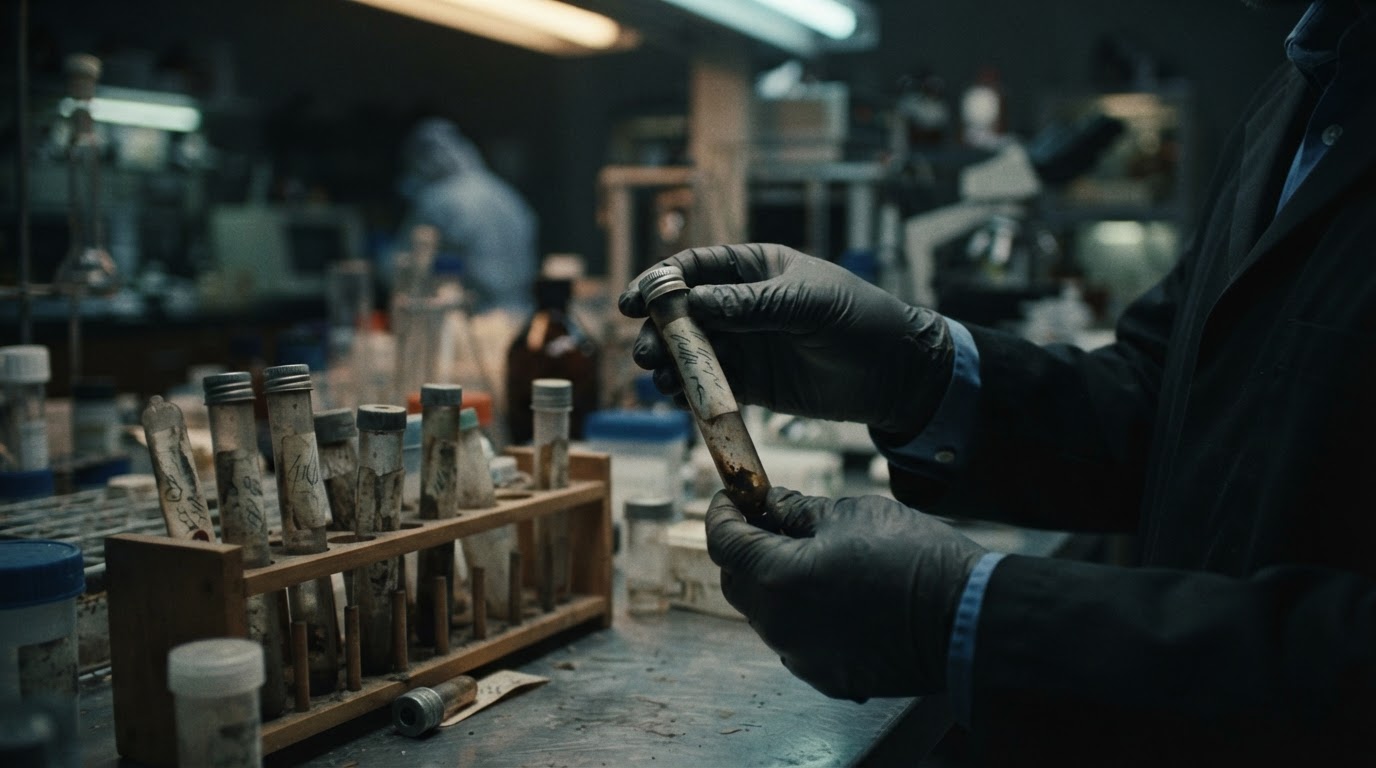
But there was one more thing that had not been forgotten: the evidence recovered from the scenes and stored away all those years. Trace material that could not be analyzed in the mid-2000s lay dormant in a corner of a police evidence room. In the meantime, science had advanced dramatically. DNA analysis capable of identifying an individual from even a minute sample had grown far more refined, and police began re-examining old cold cases with the latest technology. According to news reports, police submitted the scene evidence to the National Forensic Service for re-analysis in 2016 and again in 2020. The moment for evidence that had slept for nearly twenty years to finally speak was drawing near.


The DNA Twist — There Were Two Perpetrators
The re-analysis revealed that the evidence recovered in connection with the first victim and the evidence from the second scene bore the same genetic profile. Two cases that for nearly twenty years might have been viewed as separate were, at last, scientifically confirmed to be the work of a single hand. The question was: whose DNA was it? According to reports, police traced the detected profile and pointed to a man who had worked as a building caretaker in the area at the time of the crimes. In his early sixties when the crimes occurred, this man had, however, already died — in 2015.
How could an already-deceased individual be identified? He had been cremated after his death, leaving no way to obtain a sample directly. According to reports, police did not give up; they combed through dozens of medical institutions in the region until they located a specimen of his that had been preserved by a hospital during his lifetime. The DNA from that specimen was confirmed to match the genetic profile from the crime-scene evidence. Across a wall of twenty years and death itself, science had at last named the faceless perpetrator. And yet, right here, the case veered in a direction no one had anticipated. Because the DNA recovered from the very 2006 kidnapping scene that had branded this case with the "Cute Rabbit" name did not match this man's DNA at all.

The Other Man Who Was Never Caught
The DNA split the story in two. The two murders of 2005 were confirmed to be the work of that building caretaker. But the 2006 kidnapping — the very one that had given the case its "Cute Rabbit" name — turned out to be a separate crime, unconnected to him. There was decisive grounds for this. According to reports, the caretaker identified as the perpetrator of the two 2005 cases was already in custody on other criminal charges around the time the third case occurred in 2006. He could not, physically, have committed the 2006 abduction. What had once been regarded as a single string of serial crimes was, in truth, two separate strands of darkness left by two different men who happened to be in the same neighborhood at a similar time.
Science delivered an answer for two of the killings after twenty years. But that answer also brought into sharp focus a place where there is still no answer at all. Who was the man who, in 2006, confined a woman in a semi-basement and then let her slip away? His identity remains unknown to this day. And because the true perpetrator of the two 2005 cases had already died, police could not punish him and had no choice but to close the case with no grounds for prosecution. The truth revealed only half of itself; the other half still lingers, like a shadow, at the mouth of some Sinjeong-dong alley. The identity of the killer who appeared only on days off has been uncovered — but the other shadow, the one that the cute little rabbit sticker on the shoe cabinet pointed toward, still has no name. There is only one thing we can say for certain about this case. Evidence does not vanish, no matter how much time passes, and science will someday shine a light on the truth in the dark. It is only the places that light has not yet reached that remain, quietly, somewhere still near us.
The rabbit sticker is what I cannot sort. It belongs to no perpetrator, proves nothing, and gave the case the name it will carry forever — a character from a messenger app, stuck to a flowerpot a child probably made, in an entryway a stranger's home that a woman chose at random because it was the first door she reached. I have re-read her account several times looking for something usable in it. There is nothing. She noticed it because a person hiding from someone will look at whatever is in front of her face. The man she was hiding from is still uncounted in every file I keep.


---
This article uses both genuine archival and on-site photographs and AI-generated images and video produced to convey the mood of the story.



Comments
No comments yet — leave the first one.