
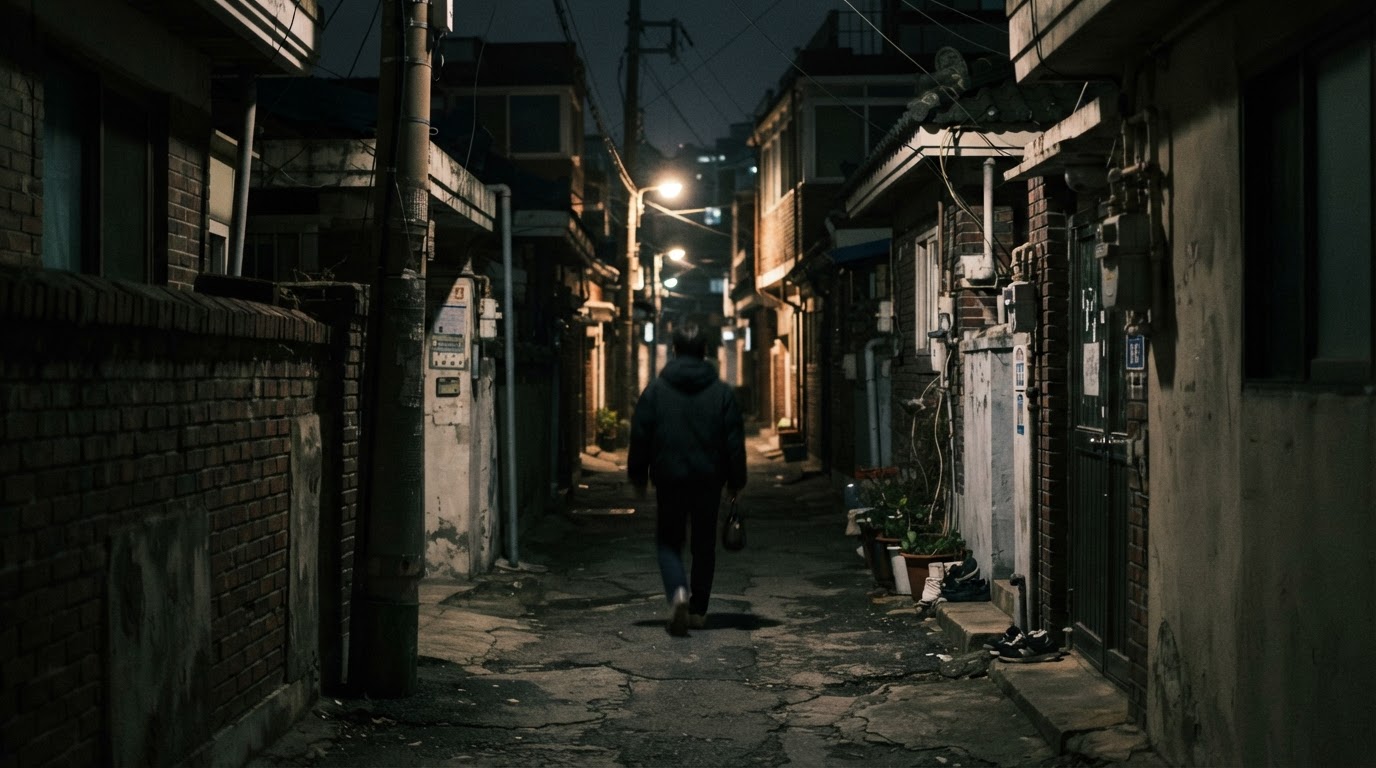
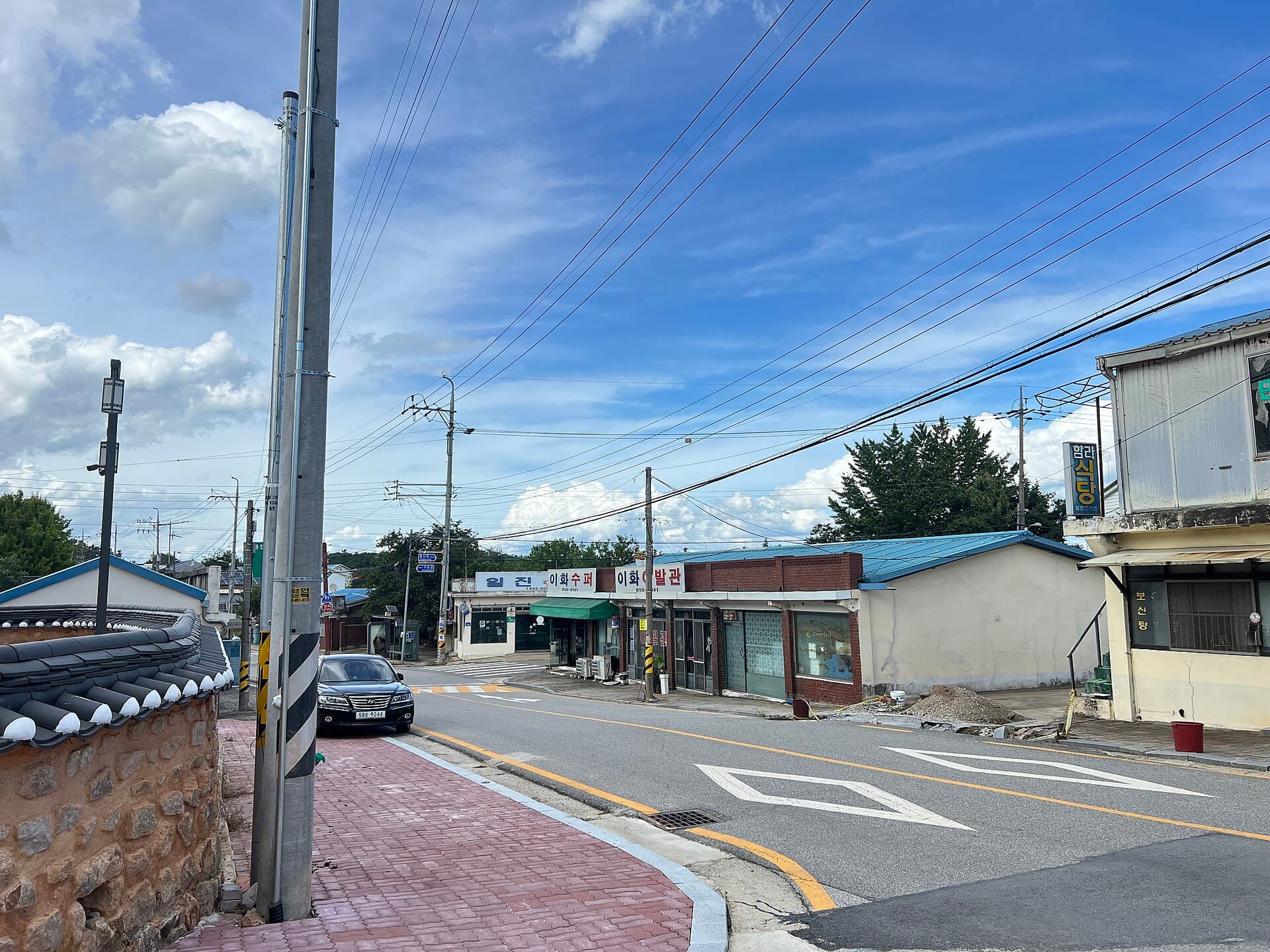
May 1999, Hyomok-dong in the Dong-gu district of Daegu, South Korea. It was an ordinary neighborhood, no different from any other in a Korean city — low houses shoulder to shoulder, a shallow alley curving gently between them. In that alley, a six-year-old boy was attacked with acid by someone whose identity is unknown to this day. The boy's name was Kim Tae-wan. People came to call him simply "Tae-wan." After that spring day he held on in a hospital bed for forty-nine days before he passed away, and the person who did it was never caught. More than two decades later, the case remains unsolved. Yet Tae-wan's death did not end as one child's tragedy. It changed the law of an entire nation.
Most of what I keep in this archive is unsolved by accident — evidence lost, witnesses gone. This one is unsolved on a schedule, and that is why I kept the folder. What stopped me, the first time I worked through the paperwork, was the arithmetic of those forty-nine days: a boy who never reached seven, measured out against a statutory clock that was already running the moment he was hurt. I have read the timeline more times than the material warrants, and I still cannot make those two counts sit beside each other comfortably.

Photo: Wikimedia Commons, CC BY-SA
A Spring Day in 1999, in an Alley
It happened around midday on May 20, 1999. Tae-wan was playing in the alley near his home — the kind of familiar, supposedly safe space a six-year-old rarely strays far from. There, in that alley, the child was exposed to acid by an assailant no one could identify.
Sulfuric acid is a powerful corrosive substance that leaves severe injury where it touches skin. Tae-wan was rushed to a hospital, and in a bed at a university hospital in Daegu he fought for a long time. His parents and the medical staff stayed by his side, but the wounds were too much for so small a body to bear. On the forty-ninth day after the attack, Tae-wan closed his eyes for the last time. It was a short life that did not reach a seventh year.
This article will not recount in detail the suffering the child endured that day. That is not the heart of the story, and there is no reason to put it on display. What we should remember is not the pain itself, but the fact that a child died for no reason at all — and what those left behind had to fight against afterward.

Photo: Wikimedia Commons, CC BY-SA
Who, and Why
The hardest question was always "who, and why." A six-year-old could not have made an enemy. He could not have stolen anything, could not have quarreled with anyone. And yet someone in an alley inflicted an irreversible harm upon him. That the motive could not even be guessed made the case only darker.
Early in the investigation, several circumstances and pieces of testimony were said to have surfaced. There were various accounts about what the boy managed to say right after the attack and about what witnesses may have seen, but none of it led to decisive physical evidence. The forensic technology of the late 1990s made it difficult to secure firm clues in an open space like an alley. This was before closed-circuit cameras blanketed streets, and an era when it was hard to identify an individual from trace evidence with any precision.
Above all, one thing must be made clear here. There is no established basis for declaring any specific person to be the culprit. Suspicion was raised around a particular individual during the investigation, but that was only suspicion, and it was never legally proven. To this day the case remains unsolved, with no perpetrator identified. Carelessly pointing a finger at anyone would only create another wound.

Photo: Wikimedia Commons, CC BY-SA

A Stalled Investigation and a Looming Deadline
As time passed, the investigation hit a wall. The dedicated manpower shrank, and by the mid-2000s the unit handling the case is said to have been disbanded. As the years slipped by without a decisive lead, another weight pressed down on the bereaved family: the statute of limitations.
A statute of limitations is a system under which, once a certain period has passed after a crime, that crime can no longer be brought to trial. It has long existed for practical reasons — evidence disappears, memories fade — and as a device for legal stability. But the system has a chilling flip side. If a perpetrator simply hides and holds out until the limit expires, the state can no longer punish them, no matter how grave the crime.
The charge first applied to Tae-wan's case concerned an injury that led to death, and its statute of limitations was not very long. It was later extended when investigators reexamined the case as a murder, but even that had a fixed end. That date was approaching with no culprit caught. For the family, the statute of limitations was like a time bomb — a clock forcing the case to be sealed forever, the truth still unknown.

Knocking on the Door Again
It was those left behind who could not give up. Tae-wan's parents, his father above all, never let the case go. In 2013, police reopened the investigation. They pulled out the long-dormant files and reviewed the old circumstances with fresh eyes. In this process the case was considered anew — not as a simple injury but as a murder — which changed how the statute of limitations was judged.
But the reinvestigation, too, failed to identify a suspect. In 2014, the family formally objected to the prosecutors' decision and filed a petition asking the court to review it. Such a petition is a procedure by which, when prosecutors decline to send a case to trial, one can ask a court to decide again whether that decision was right. It was the last struggle of those left behind, who could not let the case end this way.
The legal fight reached the Supreme Court. And in July 2015, the Supreme Court declined to accept the final appeal. Legally, the door to the case closed. The truth was never uncovered, and the perpetrator remained a nameless shadow. Up to this point, it looked like just one more heartbreaking cold case.


A Law Made in a Child's Name
Yet Tae-wan's case did not stay confined to the courtroom. Many people were outraged that a six-year-old had lost his life for no reason, and that even the time to catch the culprit was slipping away because of a deadline the state itself had set. Why should a clear-cut murder have a time limit? Should a murderer be spared punishment merely because time has passed? This question grew beyond the family into a question for society as a whole.
Citizens' voices gathered, and the National Assembly moved. In July 2015, the Assembly amended the Criminal Procedure Act to abolish the statute of limitations for murder. For the gravest killings — those carrying a maximum penalty of death — there would now be no time limit; they could be investigated and prosecuted whenever, no matter how many years had gone by. The amendment took effect at the end of that month.
In the vote, not a single lawmaker voted against it. It was a decision very nearly unanimous. And people did not call this simply an amended Criminal Procedure Act. They named it after the boy who died at six: "Tae-wan's Law." A child's death had left its name in the law of a nation.
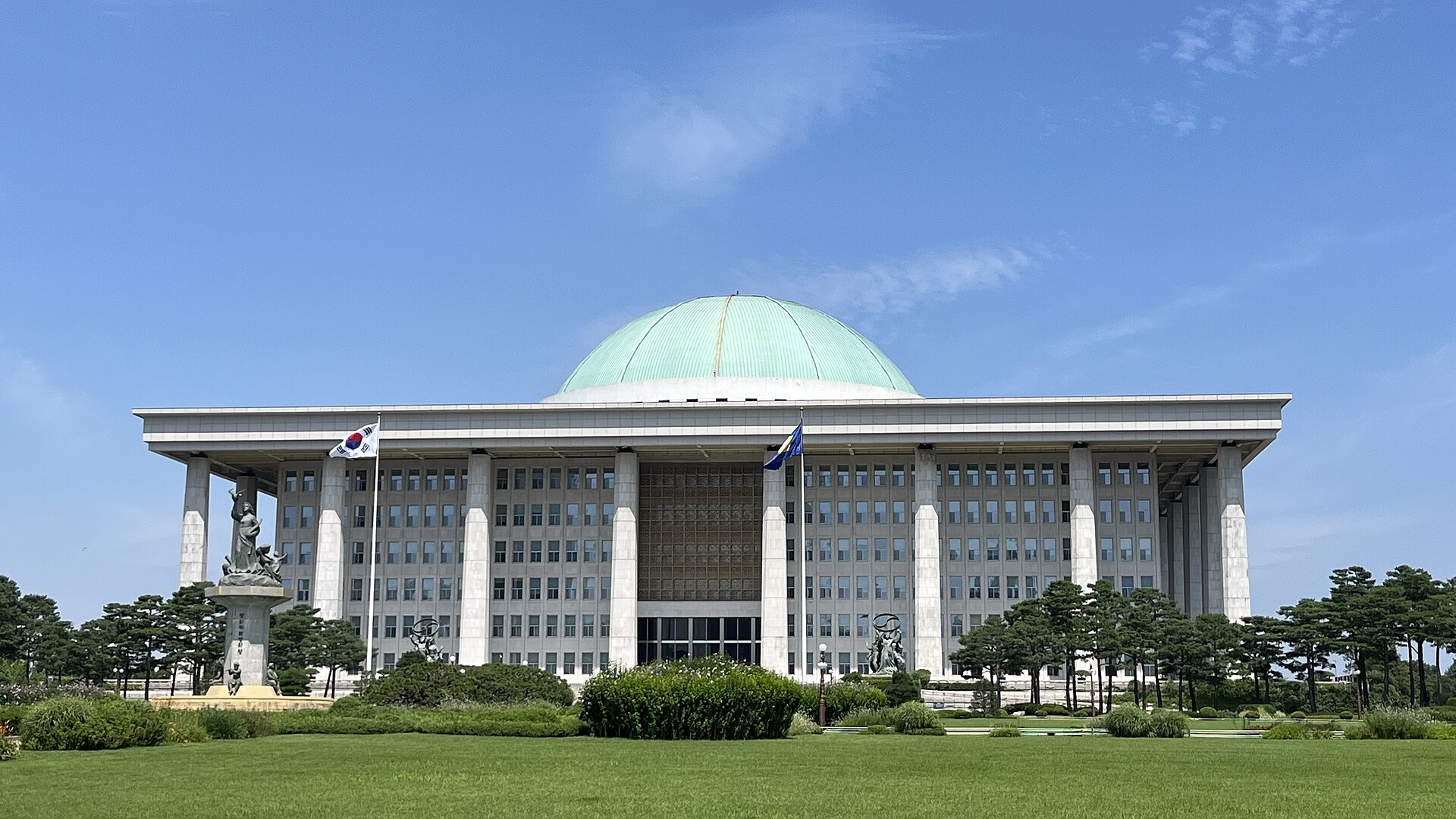
Photo: Wikimedia Commons, CC BY-SA

The One Case the Law Could Not Save
But this story holds a turn that weighs on the heart. "Tae-wan's Law" could not, in the end, save Tae-wan's own case.
The law had limits on how it applied. The new statute applied only to cases whose statute of limitations had not yet expired as of the moment it took effect. It could not reach back and revive cases already sealed and legally closed. And Tae-wan's case had already passed its deadline before the law came into force. The Supreme Court closed the door on the case in July 2015 — the very same month the law abolishing the statute of limitations for murder took effect. By the narrowest margin of time, the very case that gave the law its name was left outside the law's protection.
A law that would go on to save countless future cases could not save the single case that gave rise to it. This cruel misalignment comes up every time Tae-wan's Law is discussed. It quietly reminds us that institutions are always slower than the people they serve — and that someone, in the end, pays the price for that delay.


What Remained, and What Changed
After Tae-wan's Law took effect, a number of long-unsolved murder cases became the subject of investigation once more. Cases that had been untouchable behind the wall of the statute of limitations were reopened, and in some of them the culprit was finally identified years later. Whatever calculation someone may once have made — that they need only outlast the deadline — no longer holds. That is the concrete change one child's name left behind.
Of course, that change does not bring Tae-wan back. The truth of the case still lies in darkness. We still do not know who did such a thing to a six-year-old in that alley, or why. That question will likely remain unanswered for a long time to come.
Even so, what this case has left us is clear. When those left behind refuse to give up and keep knocking on the door even in despair, one person's grievance can become the voice of a society — and that voice can, in the end, change the law of a nation. Tae-wan's name is no longer merely a cold case; it is quietly inscribed in the statutes of South Korea. And because of that name, someone who might one day lose their life unjustly will at least not be defeated again by the wall of time.
There is one line in my notes I have never been able to file away properly. July 2015 — the month the Supreme Court closed the case, and the month the law bearing the boy's name took effect. I have cross-checked those dates against every version of the record I could find, half expecting one of them to be wrong, because a coincidence that neat feels like something a person arranged. It is not. It is only time, doing what it does. And somewhere in the years between that alley and that courtroom, someone read the news about a law named after a six-year-old and understood, precisely, that it did not apply to them.


---
This article uses both real archival and on-location photographs and AI-generated images created to convey the mood of the story.

Comments
No comments yet — leave the first one.